




Top 20 Most Common Bird in San Andres y Providencia
San Andres y Providencia is a splendid paradise with a unique combination of marine and continental ecosystems. This environment is home to 20 common bird species, each distinct in their appearance, behavior, and adaptation. These birds add a vivid spectrum of biodiversity to this incredible habitat, demonstrating a remarkable spectacle of evolution and survival.

Most Common Bird
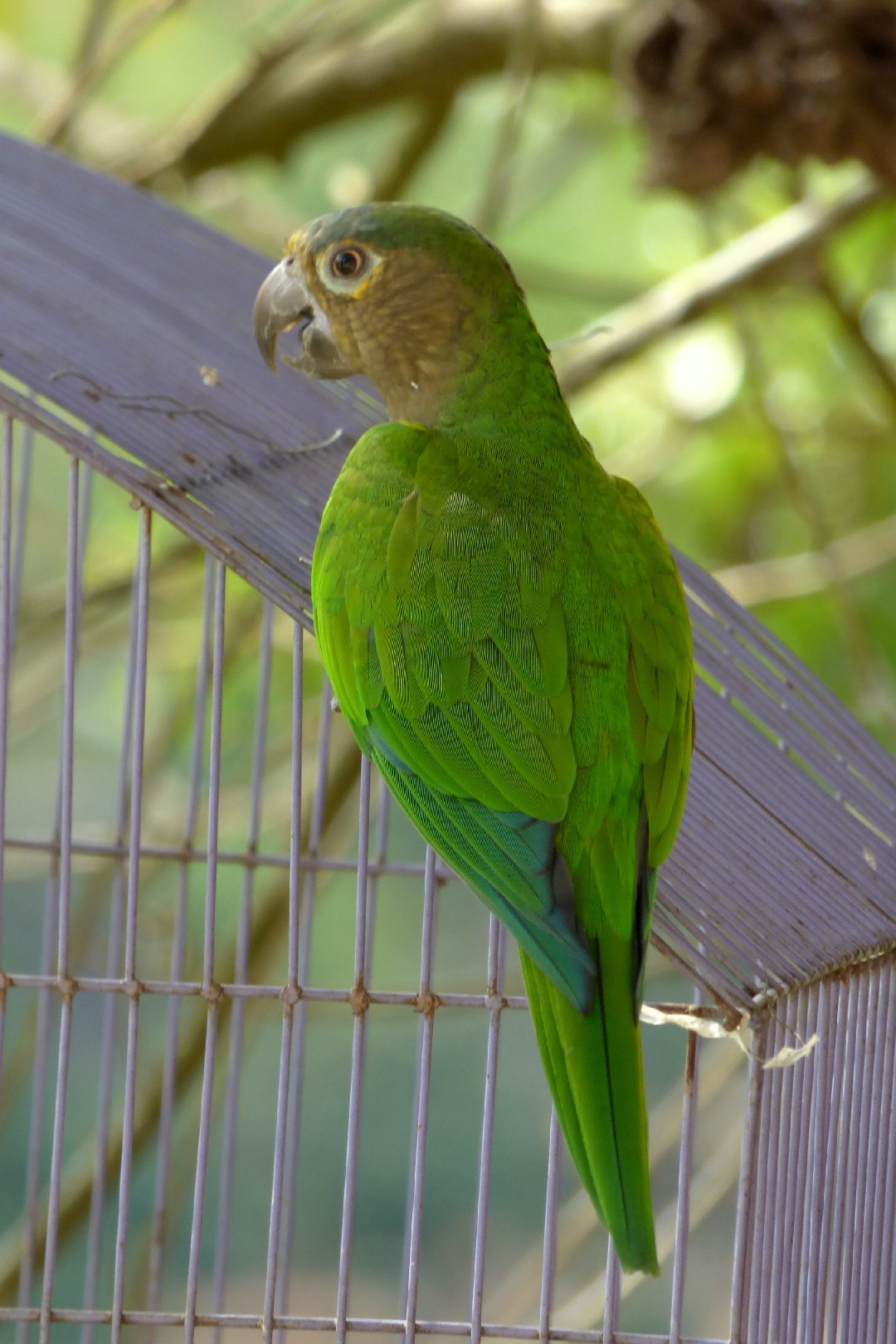
1. Brown-throated Parakeet
The brown-throated Parakeet has a varied habitat. This parakeet is found in semi-open areas, parks, and gardens where it feeds on fruit and second growth on trees. The brown feathers on its throat make the bird easy to recognize. It is also why the bird is commonly referred to as the 'Brown-throated Parakeet'.
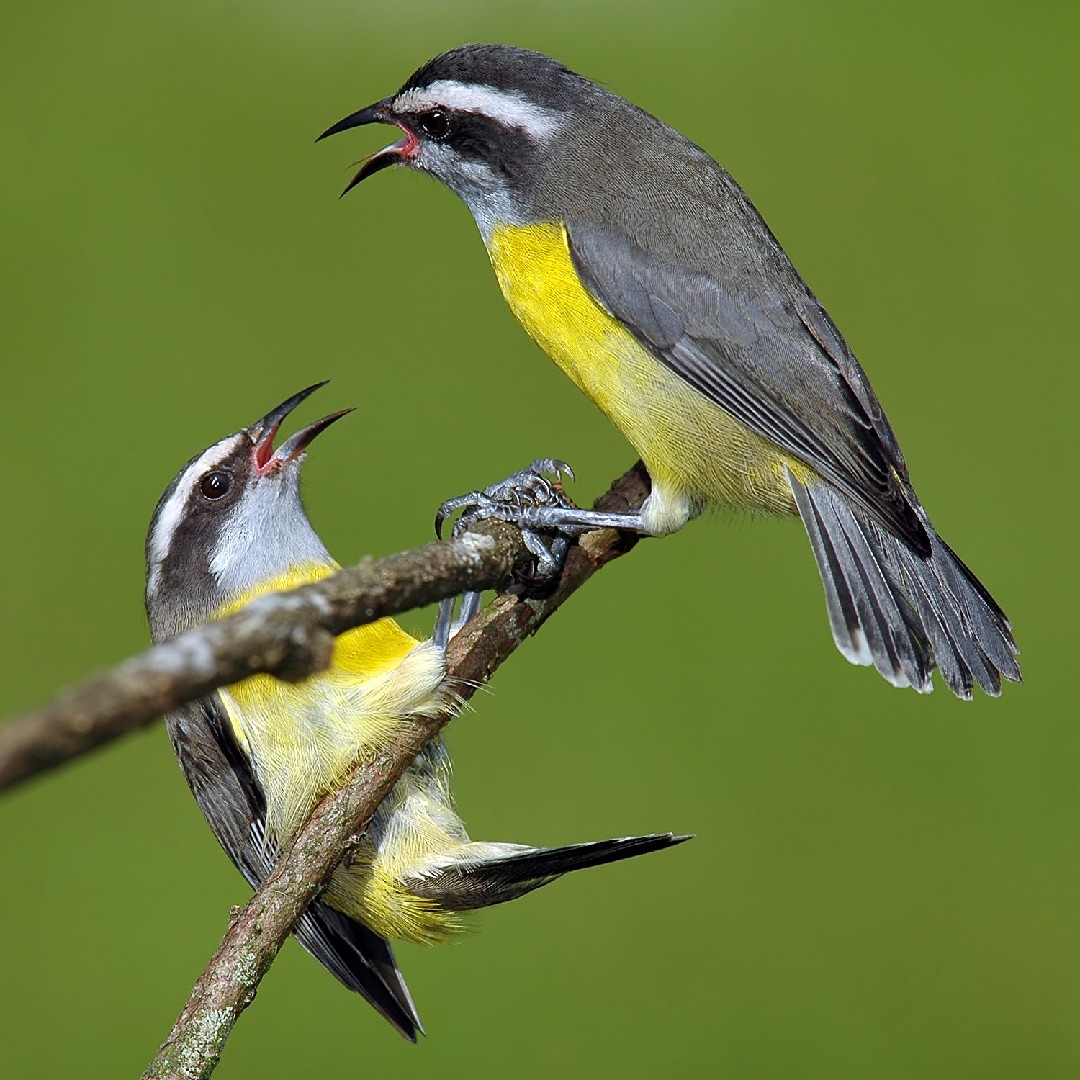
2. Bananaquit
The bananaquit is a common bird found in tropical forests, woodlands, and home gardens where they primarily feed on nectar and fruit. There are over 40 known subspecies endemic to specific regions with noticeable differences in appearance. The exact taxonomic placement of Coereba flaveola is a subject of much debate among ornithologists, with some suggesting it should be split into at least three different species.
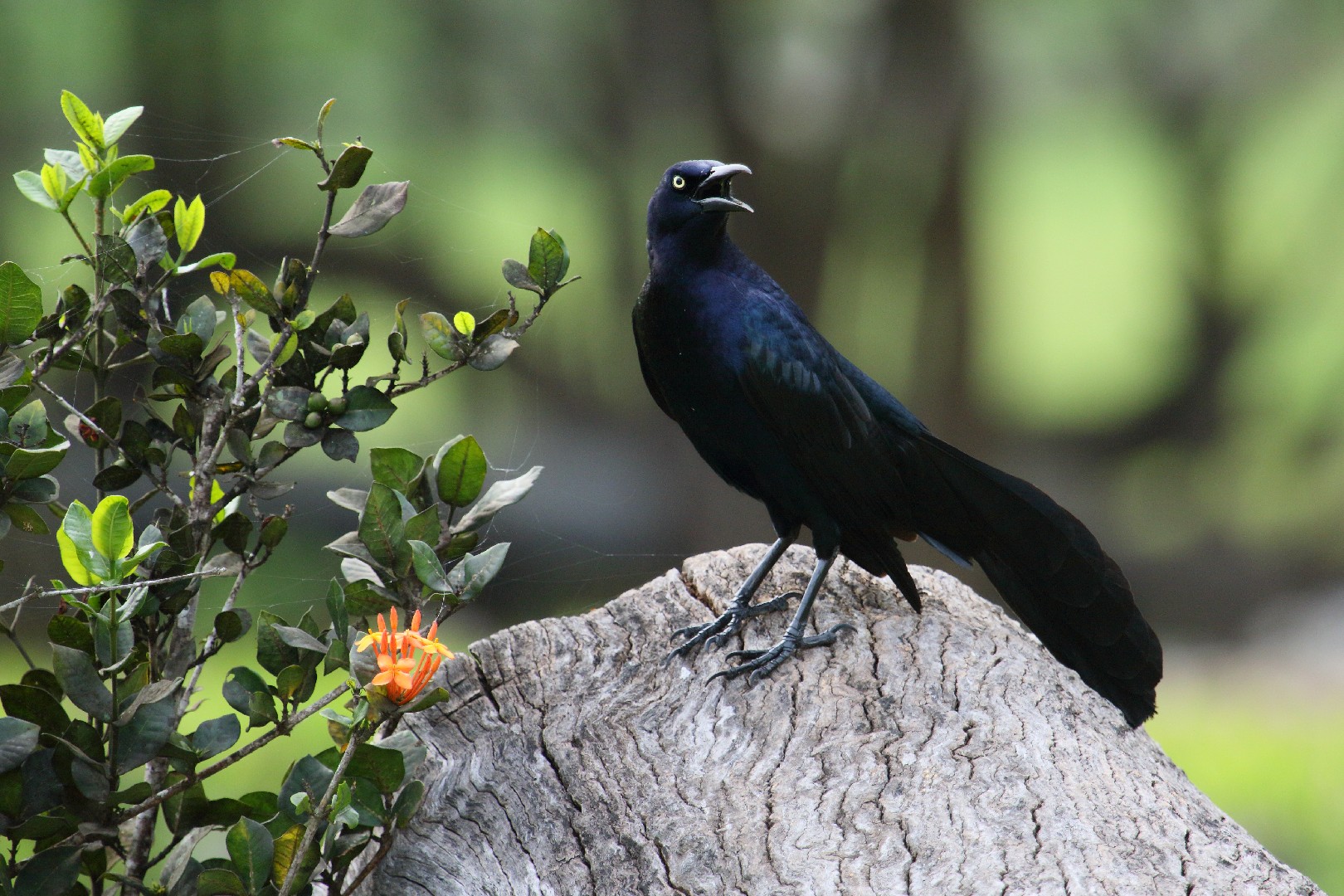
3. Great-tailed Grackle
The medium-sized great-tailed Grackle is notable for its long tail, shaped like a V, and deep black coloring offset by bright yellow eyes. This loud bird can be easily found just by following the sharp sounds of its calls and shrieks. Males in particular shriek and ruffle up their feathers to defend their territory or if they feel threatened.
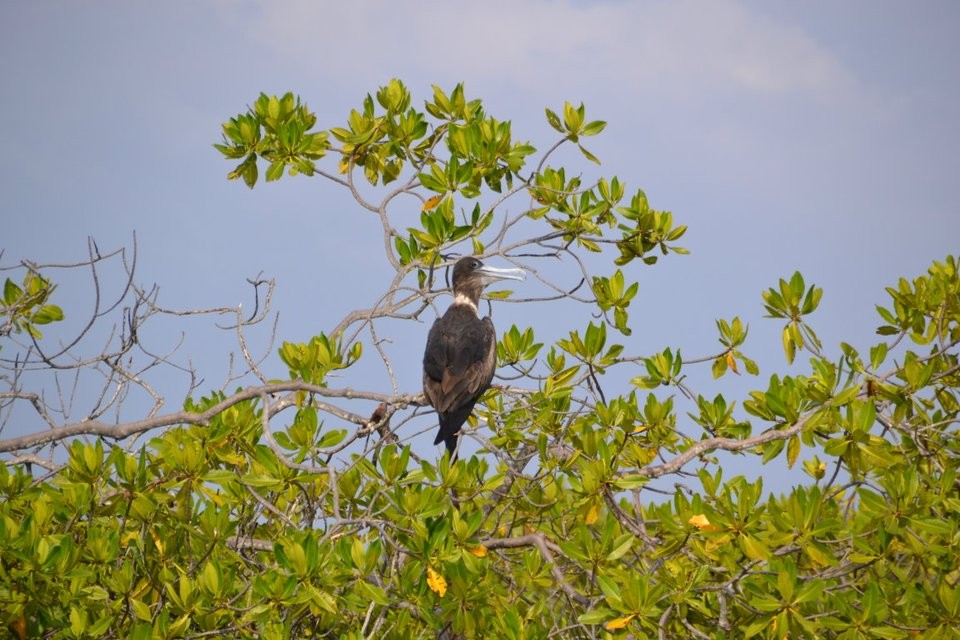
4. Magnificent Frigatebird
The magnificent frigatebird is the largest species of frigatebird. It measures 89–114 cm (35–45 in) in length, has a wingspan of 2.17–2.44 m (7.1–8.0 ft) and weighs 1.1–1.59 kilograms (2.4–3.5 lb). Males are all-black with a scarlet throat pouch that is inflated like a balloon in the breeding season. Although the feathers are black, the scapular feathers produce a purple iridescence when they reflect sunlight, in contrast to the male great frigatebird's green sheen. Females are black but have a white breast and lower neck sides, a brown band on the wings, and a blue eye-ring that is diagnostic of the female of the species. Immature birds have a white head and underparts. This species is very similar to the other frigatebirds and is similarly sized to all but the lesser frigatebird. However, it lacks a white axillary spur, and juveniles show a distinctive diamond-shaped belly patch. The magnificent frigatebird is silent in flight, but makes various rattling sounds at its nest. It spends days and nights on the wing, with an average ground speed of 10 km/h (6.2 mph), covering up to 223 km (139 mi) before landing. They alternately climb in thermals, to altitudes occasionally as high as 2,500 m (8,200 ft), and descend to near the sea surface. The only other bird known to spend days and nights on the wing is the common swift. 
5. White-crowned Pigeon
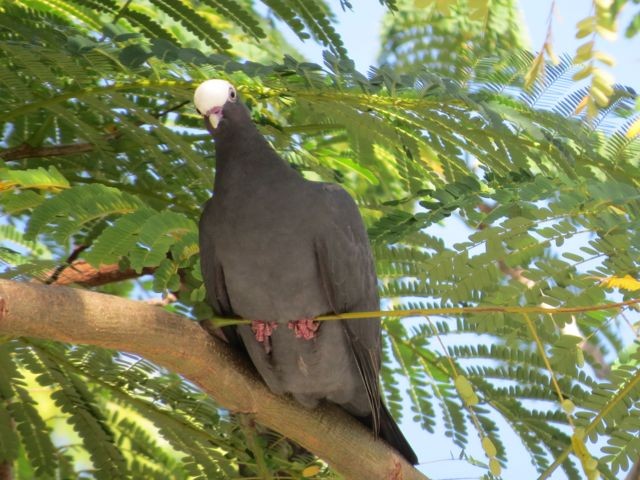
The white-crowned pigeon can measure 29–35 cm (11–14 in) in length, span 48–59 cm (19–23 in) across the wings, and weigh 150–301 g (5.3–10.6 oz). It is around the same size as the common rock pigeon, but weighs a bit less since it is generally less chunky and has a relatively longer and more square tail. Adult birds' plumage varies from a slate gray to an almost-black color. Its iridescent collar-patch is notably only seen under good lighting, shining a barred white pattern with green. Their distinct crown-patch can vary in shade of color from a more bright white in males to a more gray-white in most females. Juveniles can have a grayish-brown color for They have a white iris and a pale-tipped red bill. Juveniles are a less dark shade of grey, lack the nape pattern and white iris, and show only a few pale feathers on the crown. Their call is a loud, deep coo-cura-coo or coo-croo. This species is a member of a diverse clade of Patagioenas which vary much in appearance, but are united by their triple coos (except in the scaled pigeon).
6. Tropical Mockingbird
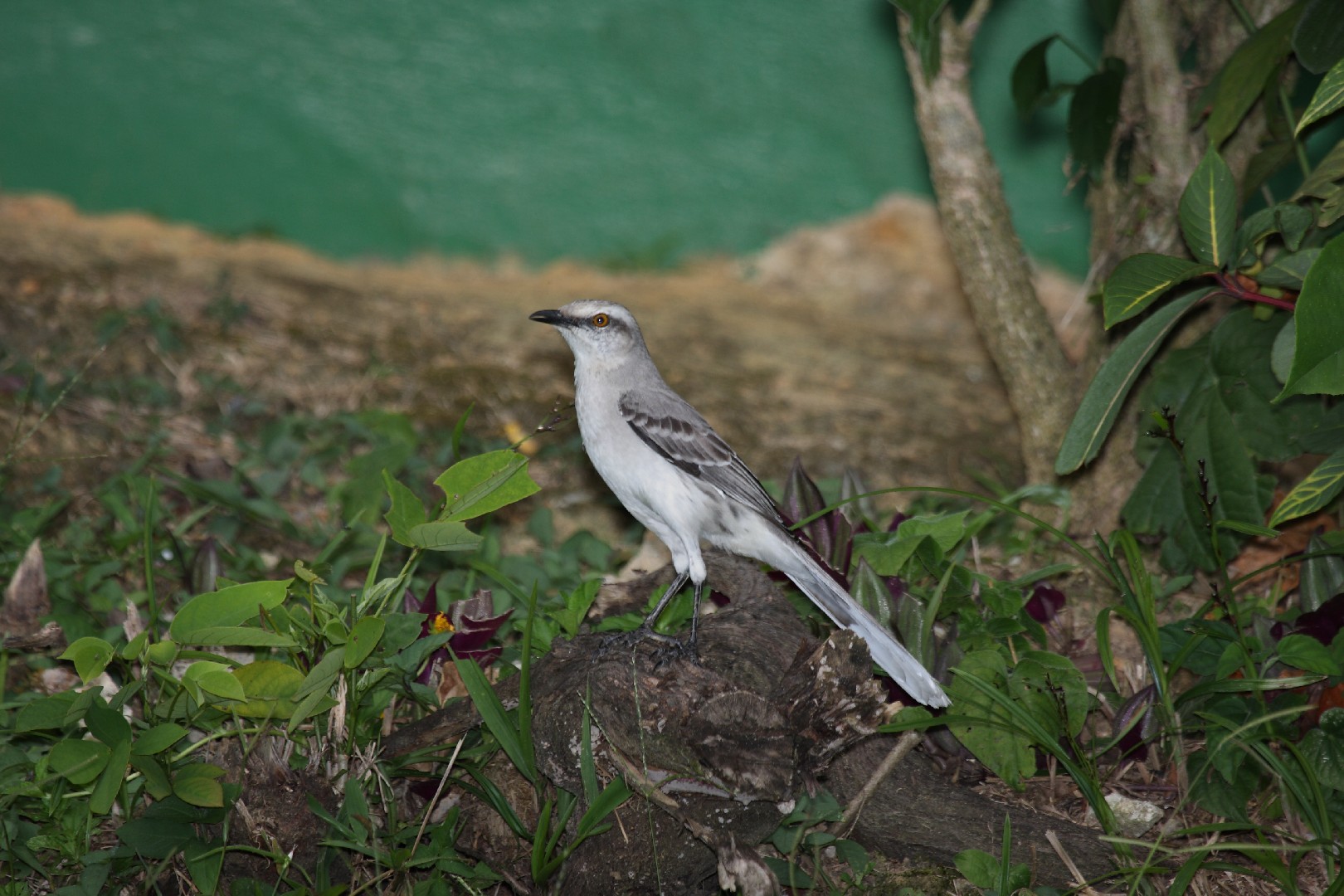
The tropical Mockingbird is named after its wide range throughout the coastal tropics of Central and South America. These birds are common in their natural habitats and can also regularly be seen sitting on telephone wires. They are very similar to the long-tailed mockingbird (Mimus longicaudatus) in appearance and call, but the two ranges do not overlap.
7. Green-breasted Mango
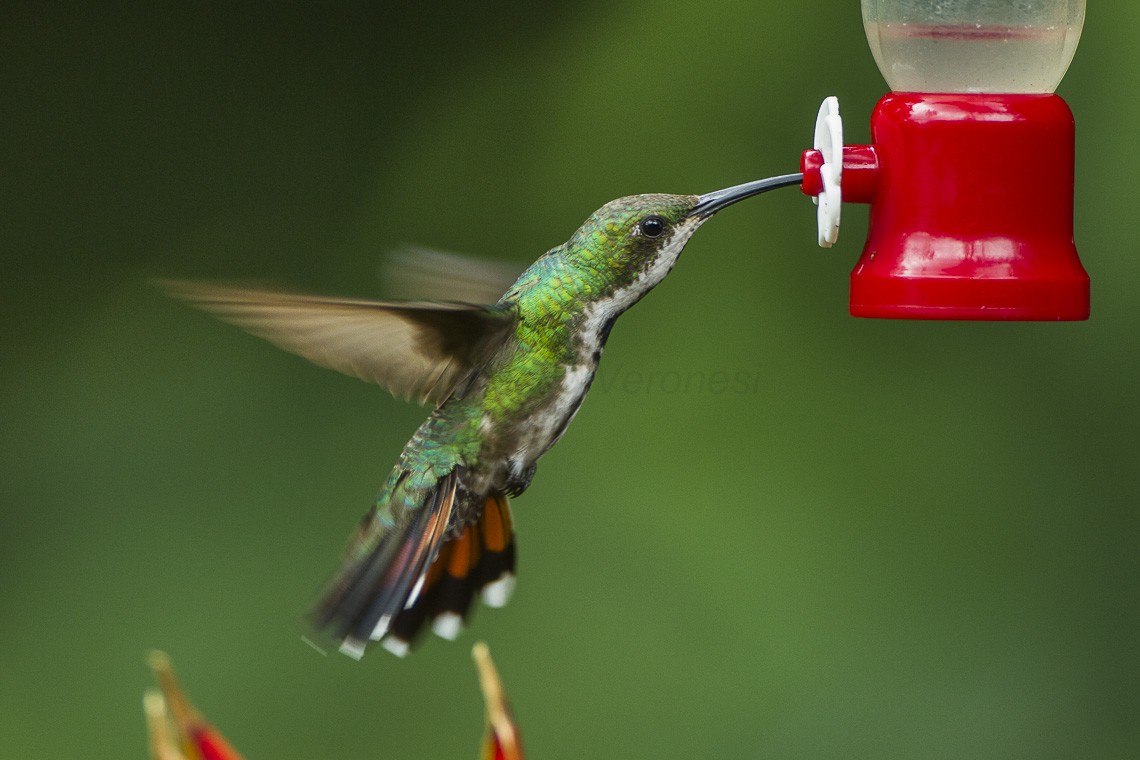
Adults of this medium-sized hummingbird species are 11–12 cm in length. Males average 7.2 g, females, 6.8 g. The longish black bill is slightly decurved. The tail in both sexes has dark central feathers. In adult males, the outer tail feathers are deep magenta to wine purple tipped with black. In females and juvenile males, the outer tail feathers are broadly banded in magenta and iridescent dark blue, with narrow white tips on the outer 3–4 feathers. The adult male has glossy bright green upperparts. His throat and chest have a relatively narrow matte black central area, bordered with blue-green. The flanks are bright green, and the black of the chest tapers onto the belly. Females and immature males have bronze-green upperparts and largely white underparts with a dark central stripe that changes from black at the chin to blue-green on the throat. Immature birds of both sexes usually show some gray or buff feather edges on the head and wings and are mottled with cinnamon to rusty brown along the edges of the white breast-belly stripe. Immature females have less extensive magenta in the outer tail feathers than adult females or immature males. The call of the green-breasted mango is a high-pitched tsup, and the song is a buzzing kazick-kazee-kazick-kazee-kazick-kazee-kazick-kazee. This species is very similar to the closely related black-throated mango. Although the male green-breasted mango has less extensive black on the underparts, this and other plumage differences are not always easy to confirm in the field because the birds appear all-black. The females of the two species can be almost inseparable, although green-breasted has more extensively coppery upperpart tones than its relative.
8. White-winged Dove
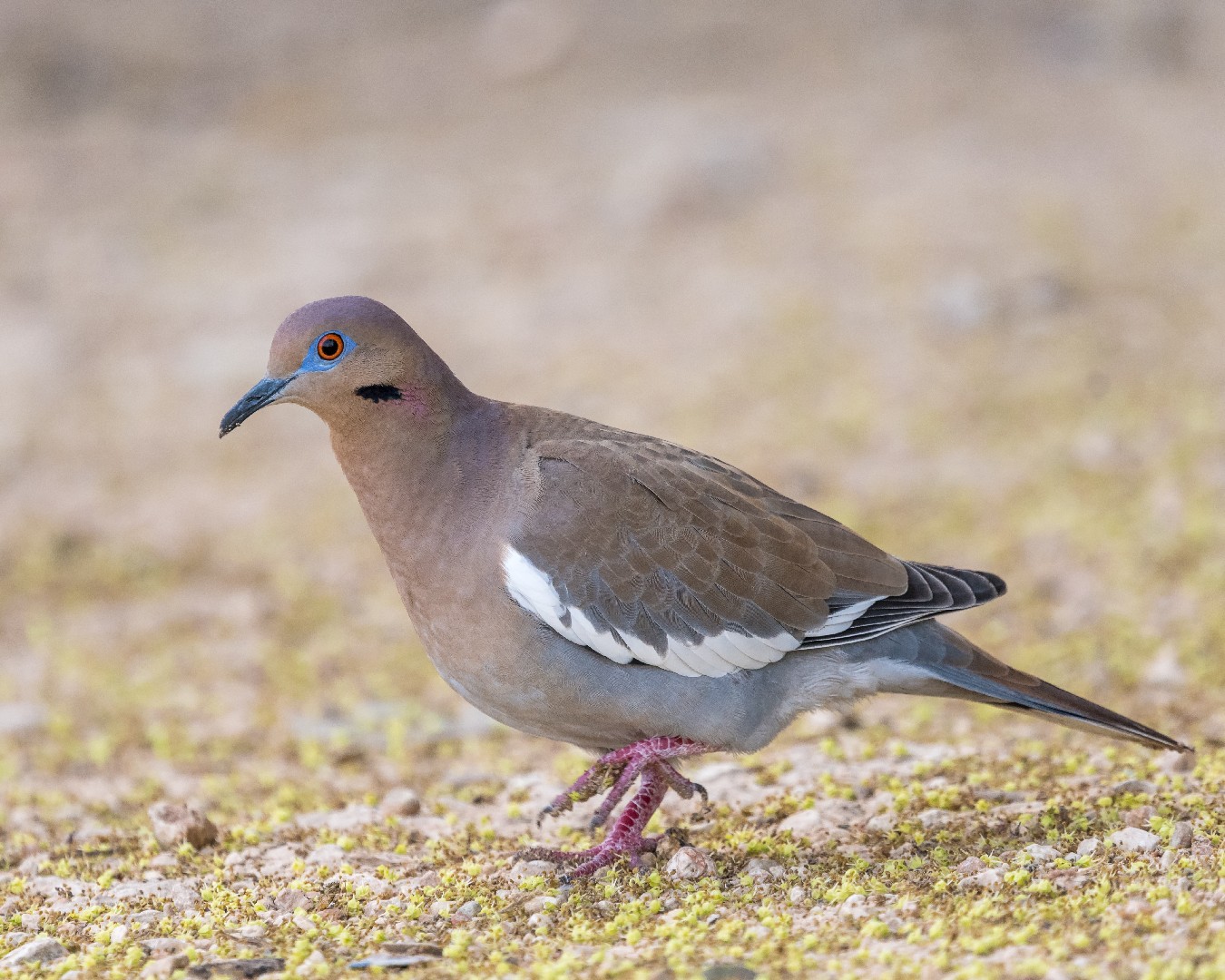
The medium-sized, distinctively patterned white-winged Doves practically live on Saguaro cactus, consuming its nectar, pollen, fruit, and seeds. In fact, they are so dependent on this plant that they match their migration schedule to its fruiting schedule. White-winged Doves were heavily hunted in Texas in the 20th century and their population dropped from 12 million to fewer than 1 million by 1939. Since then proactive hunting management and the species ability to adapt to urban living has helped their numbers rebound.
9. San Andres Vireo
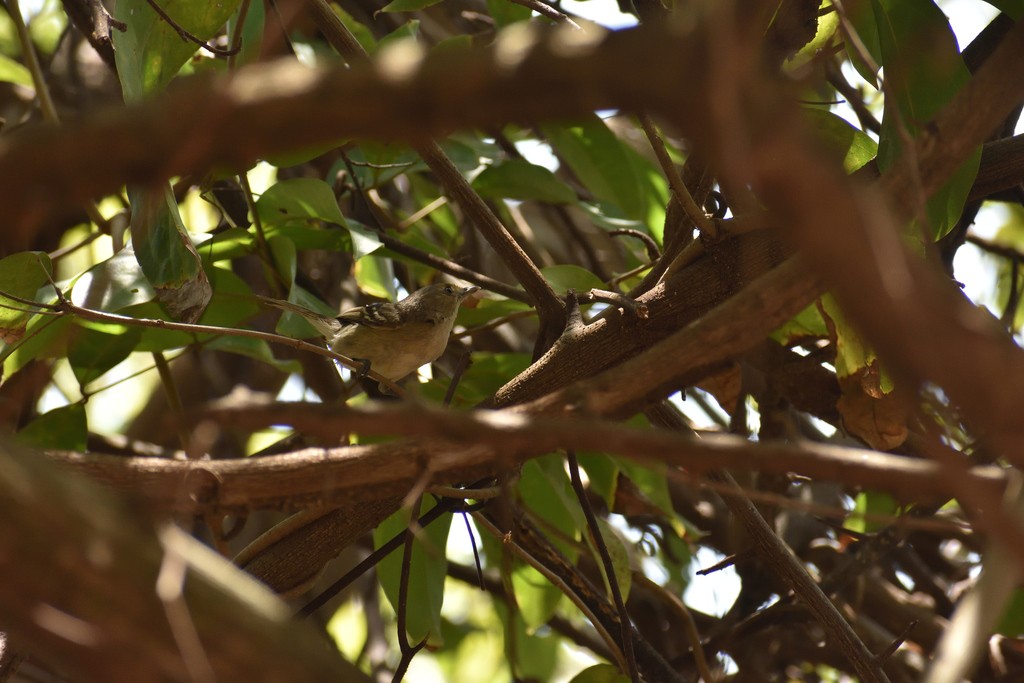
It is a small bird, 12.5 cm in length. It is olive-green above and whitish or pale yellow below. It has two white bars on the wing, pale edges to the flight-feathers and a pale yellow stripe between the bill and eye. The eye is grey-brown. It has several songs and calls, producing a one-syllable chattering, a repeated two-syllable song and a three-syllable song. It is very similar to the mangrove vireo (V. pallens) and Jamaican vireo (V. modestus). It has a slightly thinner and darker bill than the mangrove vireo. Its bill is slightly longer and darker than that of the Jamaican vireo which also differs in having a whitish eye and fainter stripe between the bill and eye.

10. Barn Swallow
A familiar sight in rural and semi-open areas, the small barn Swallow can often be spotted by its distinctly graceful flight as it travels low over fields. Seemingly unbothered by having human neighbors, they nest unafraid in barns, garages, beneath bridges or wharves. Interestingly enough, they have come to prefer these locations so much that you are unlikely to spot a nest in a place that is not a human-made structure.

11. Black-faced Grassquit
A male black-faced grassquits is around 10 cm (3.9 in) long and weighs approximately 10 g (0.35 oz). It has a short conical black bill, a black head and breast with an olive green back. Females and immature birds have dull olive-grey upperparts and head, and paler grey underparts becoming whiter on the belly. Males on the South American mainland have more extensively black underparts, shading to a grey belly. The male has a display flight in which he flies for short distances, vibrating his wings and giving a buzzing dik-zeezeezee call.
12. Common Ground Dove
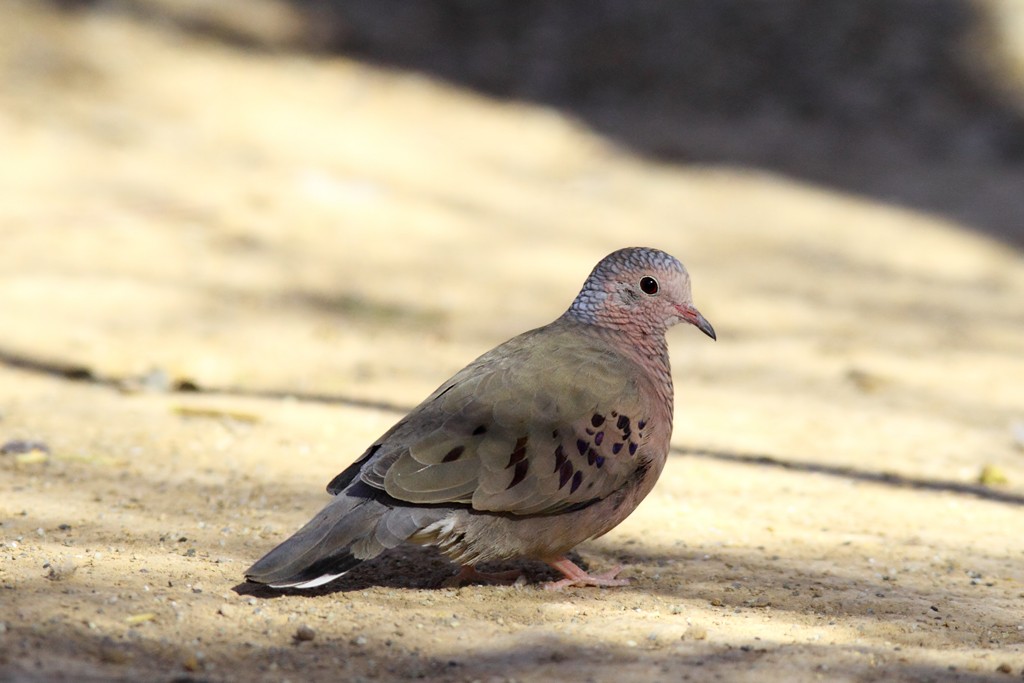
The common ground dove is North America's smallest dove and is one of the world's smallest by mass. This species ranges from 15–18 cm (5.9–7.1 in) in length, spans 27 cm (11 in) across the wings and weighs 26–40 g (0.92–1.41 oz). The common ground dove has a yellow beak with a black tip. Feathers surrounding the beak are pink in colour. The feathers on the head and the upper breast have a scale like appearance. The tail feathers are very short and similar colour to the back. The plumage on the back of the bird is brown. The coverts and wing feathers are also brown but have black spotting on them. The common ground dove has chestnut primaries and wing borders, which can only been seen when the bird is flying. The common ground dove shows some sexual dimorphism in their plumage. The males have slate gray feathers on the top of their heads and pink-gray colouration on their belly. Females on the other hand are more gray than their male counterparts and are more evenly coloured. The common ground dove's call can be described as soft whoops that increase in pitch. Often the call is heard in repetition, and is quite distinct. To hear the call of the common ground dove see the external links for a link to a website.
13. Yellow Warbler
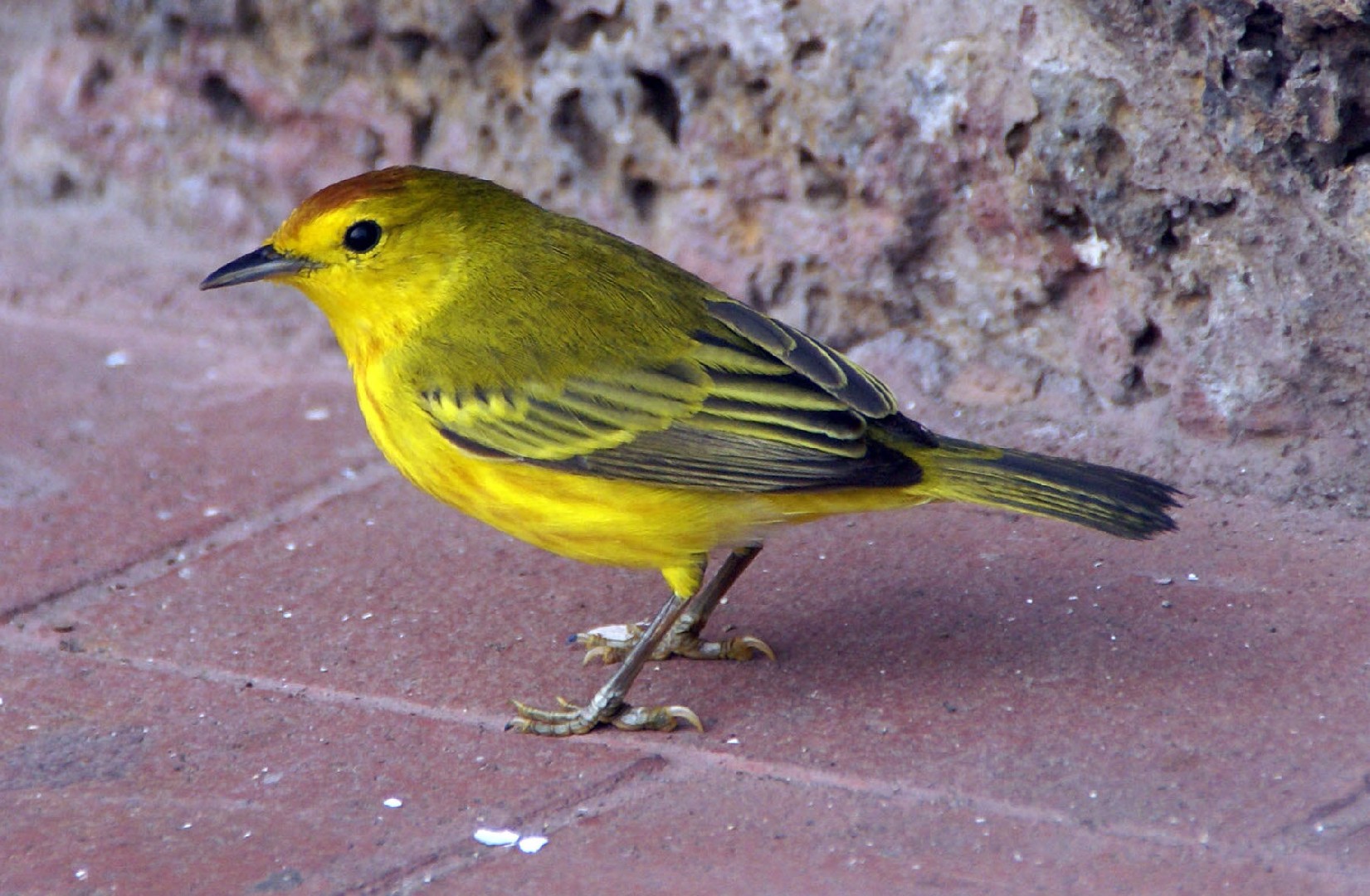
Yellow Warblers are small birds that are so tiny they are known to get tangled up in orb-weaver spiders' webs. Their nests are often parasitized by Brown-headed Cowbirds. No worries, says the yellow Warbler, for I'll just rebuild a new nest on top of the one you took from me. This sometimes goes on and on to the point where the nest grows to six tiers high.
14. Great Egret
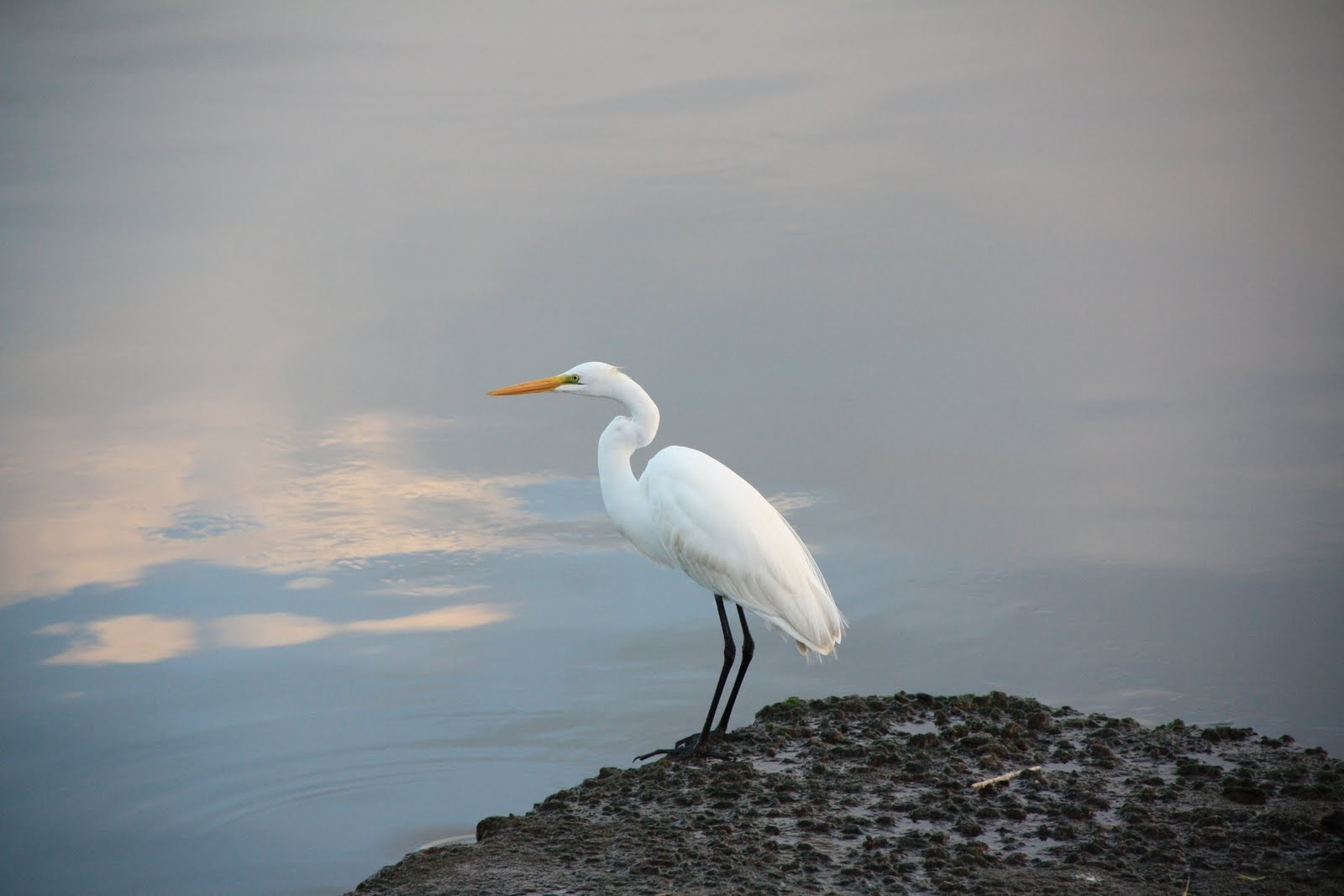
These tall birds are quite distinctive with their bright white feathers, black legs, and orange beaks. Great Egrets live near both fresh and saltwater, nesting high in trees to protect their eggs from predatory mammals. They are colonial nesters, living in large groups (colonies), and they find the majority of their food in the nearest body of water.
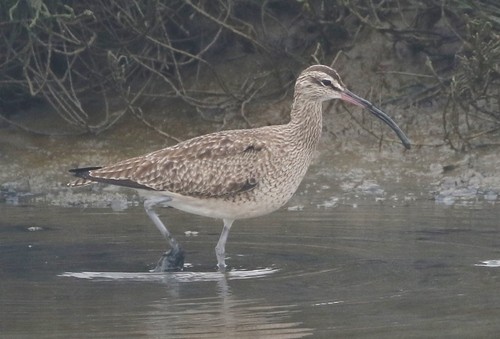
15. Whimbrel
The whimbrel is a shorebird that is often found in coastal areas. It is often present in flocks, mixing with other shorebirds. It is distinguishable by its short, high-pitch whistles that males often emit to warn others of potential predators. A primary food source for the shorebird in the winter is the fiddler crab. Its curved bill allows the bird to easily dig into the crab’s burrow.
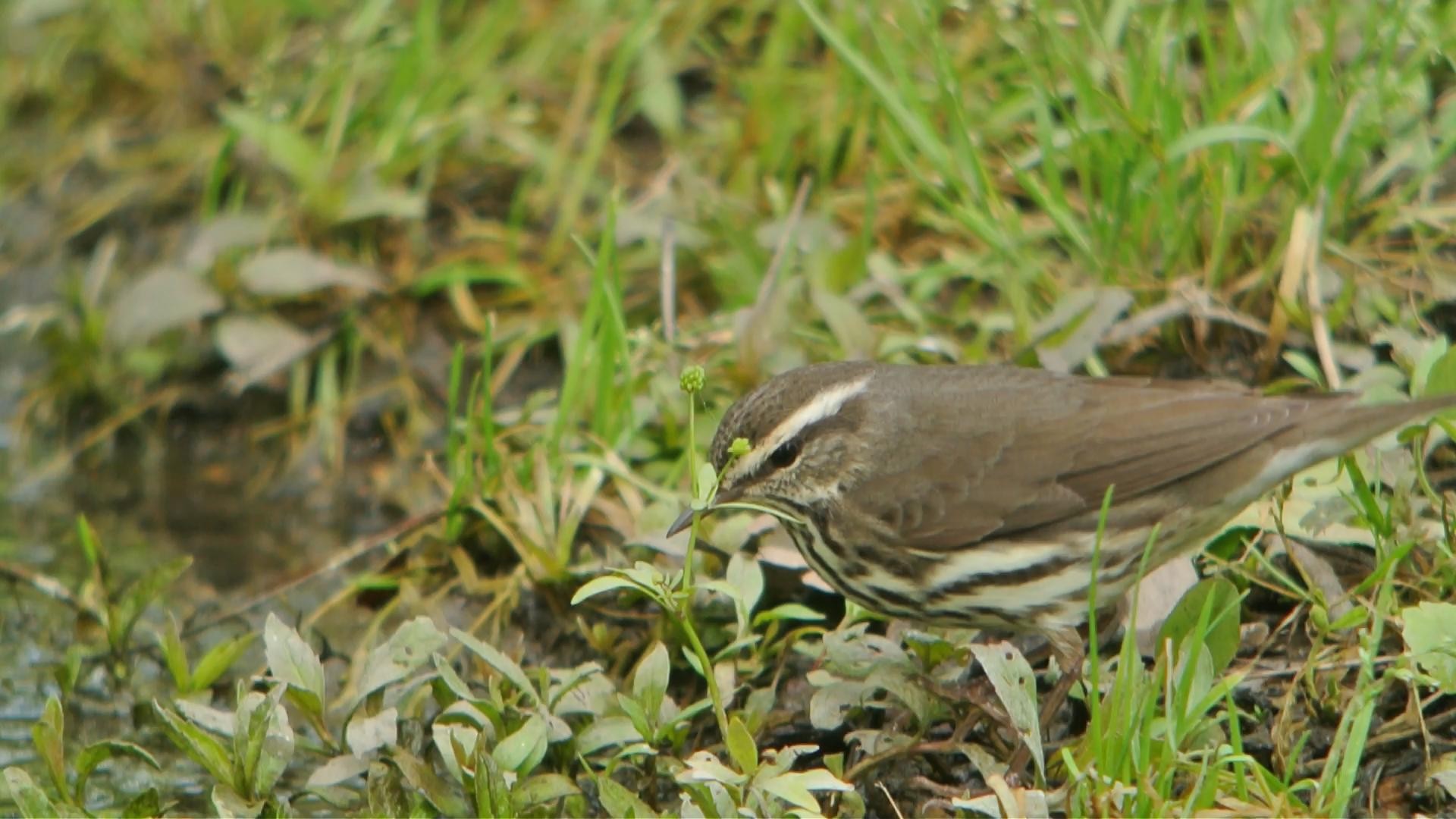
16. Northern Waterthrush
The northern waterthrush is a large New World warbler (and not a thrush, despite the name). It has a length of 12–15 cm (4.7–5.9 in), wingspan of 21–24 cm (8.3–9.4 in) and weighs between 13 and 25 g (0.46 and 0.88 oz) Among standard measurements, the wing chord is 6.8 to 8.2 cm (2.7 to 3.2 in), the tail is 4.5 to 5.7 cm (1.8 to 2.2 in), the bill is 1.1 to 1.2 cm (0.43 to 0.47 in) and the tarsus is 1.9 to 2.3 cm (0.75 to 0.91 in). On the head, the crown is brown with a white supercilium. The bill is pointed and dark. The throat is lightly streaked brown to black with heavier streaking continuing onto the breast and flanks. The back is evenly brown. Sexes are morphologically similar. Young birds have buff, rather than white underparts. The only species bird watchers confuse with the northern waterthrush is the closely related Louisiana waterthrush (Parkesia motacilla), which has buff flanks, a buff undertail, and bright pink legs. The Louisiana waterthrush also has a whiter throat with fewer streaks. More subtle clues include smaller size and smaller bill, a narrower and darker eye-line, and different call note and habits. Both waterthrush species walk rather than hop, and seem to teeter, since they bob their rear ends as they move along.
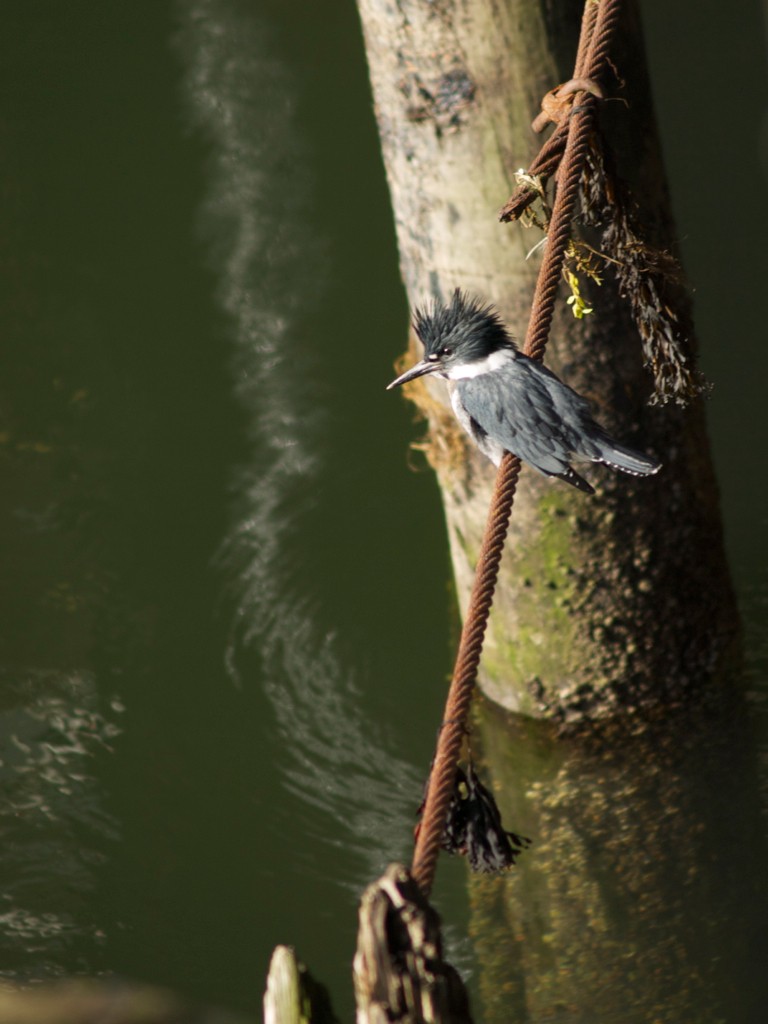
17. Belted Kingfisher
The belted kingfisher is a stocky, medium-sized bird that measures between 28–35 cm (11–14 in) in length with a wingspan of between 48–58 cm (19–23 in). This kingfisher can weigh from 113 to 178 g (4.0 to 6.3 oz). The adult female averages slightly larger than the adult male. This species has a large head with a shaggy crest. Its long, heavy bill is black with a grey base. These features are common in many kingfisher species. This kingfisher shows reverse sexual dimorphism, with the female more brightly coloured than the male. Both sexes have a slate blue head, large white collar, a large blue band on the breast, and white underparts. The back and wings are slate blue with black feather tips with little white dots. The female features a rufous band across the upper belly that extends down the flanks. Juveniles of this species are similar to adults, but both sexes feature the rufous band on the upper belly. Juvenile males will have a rufous band that is somewhat mottled while the band on females will be much thinner than that on adult females.
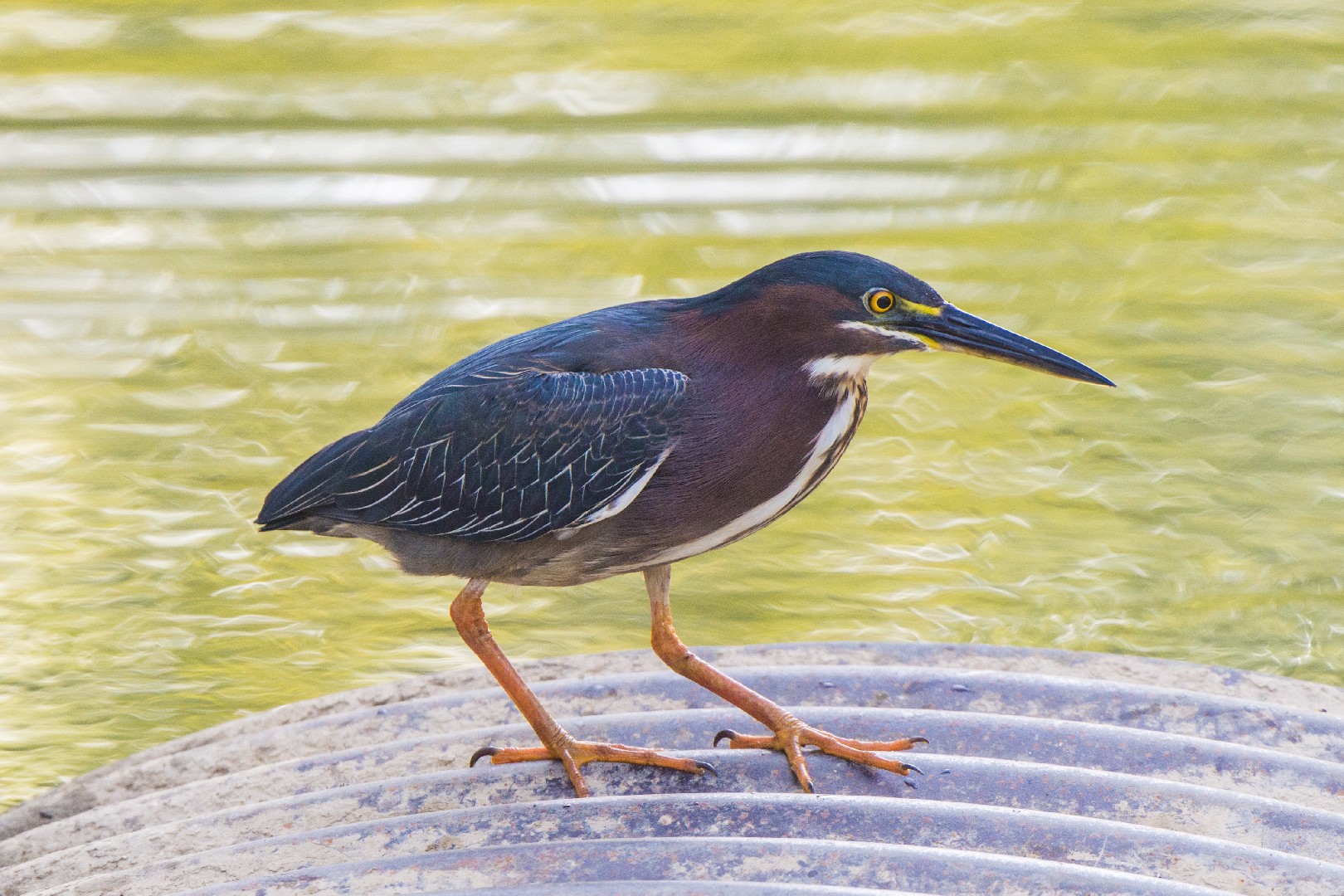
18. Green Heron
The green Heron is a shorter member of the long-legged heron family. This solitary bird can be tough to spot, for it grows nervous if out in the open and prefers to be tucked away safely. In fact, if you spot one out in the open, you’ll likely notice it flicking its tail and lifting and dropping its crest. If the green Heron becomes frightened, it typically responds with a squawk and then defecating behind itself as it flees.
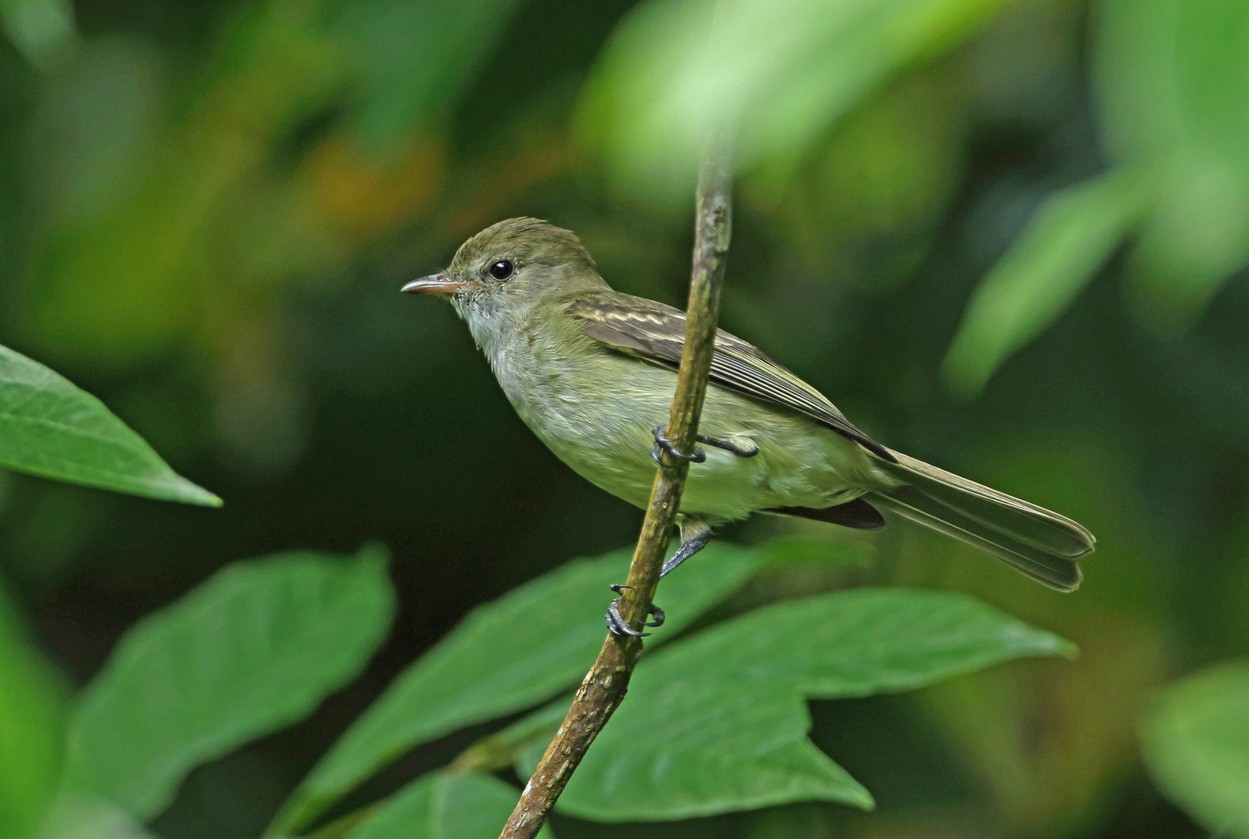
19. Caribbean Elaenia
The Caribbean elaenia (Elaenia martinica) is a species of bird in the family Tyrannidae found in the West Indies and parts of Central America. Its natural habitats are tropical and subtropical dry broadleaf forest, subtropical or tropical moist lowland forest, and heavily degraded former forest.
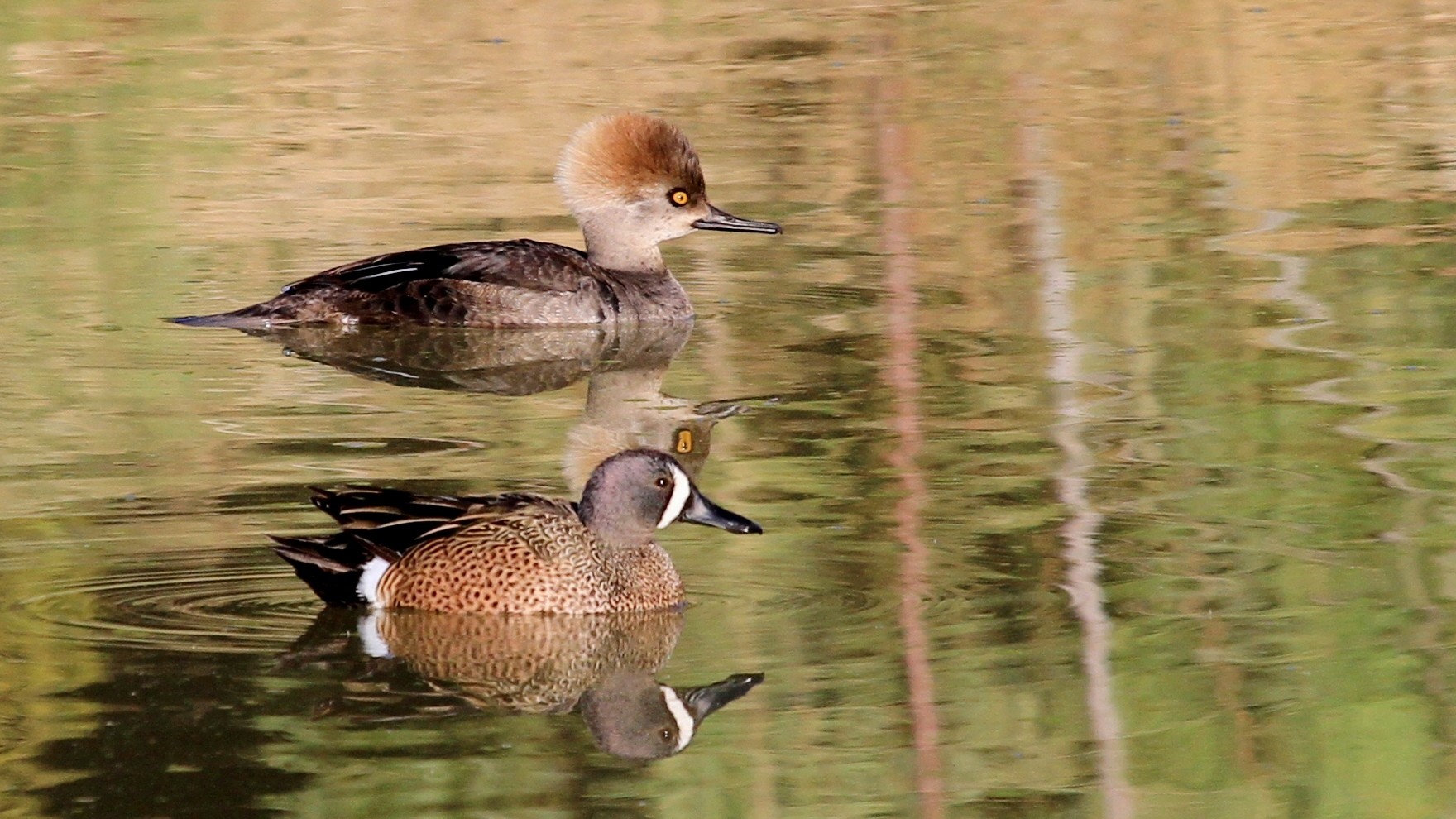
20. Blue-winged Teal
The blue-winged teal is 40 cm (16 in) long, with a wingspan of 58 cm (23 in), and a weight of 370 g (13 oz). The adult male has a greyish blue head with a white facial crescent, a light brown body with a white patch near the rear and a black tail. The adult female is mottled brown, and has a whitish area at base of bill. Both sexes have sky-blue wing coverts, a green speculum, and yellow legs. They have two molts per year and a third molt in their first year. The call of the male is a short whistle; the female's call is a soft quack.