




Top 20 Most Common Bird in Ciudad de Mexico
Ciudad de Mexico, nestled in the heart of Mexico, is a vibrant habitat teeming with diverse bird species. Within its lush parks and verdant greenspaces, 20 bird species are commonly observed. These birds not only captivate with their physical charm, ranging from dazzling plumage to unique silhouettes, but also exhibit intriguing behaviors adapted to the urban environment of Ciudad de Mexico. A closer look reveals a fascinating array of avian life awaiting discovery.

Most Common Bird

1. House Finch
Frequent in urban environments and human-created habitats such as parks and backyards, the little house Finch is known for its loud but pleasant, cheerful singing. It feeds on the ground, mostly on seeds, berries, and other plant material. This bird is highly sociable and very adaptable. It often visits feeders.
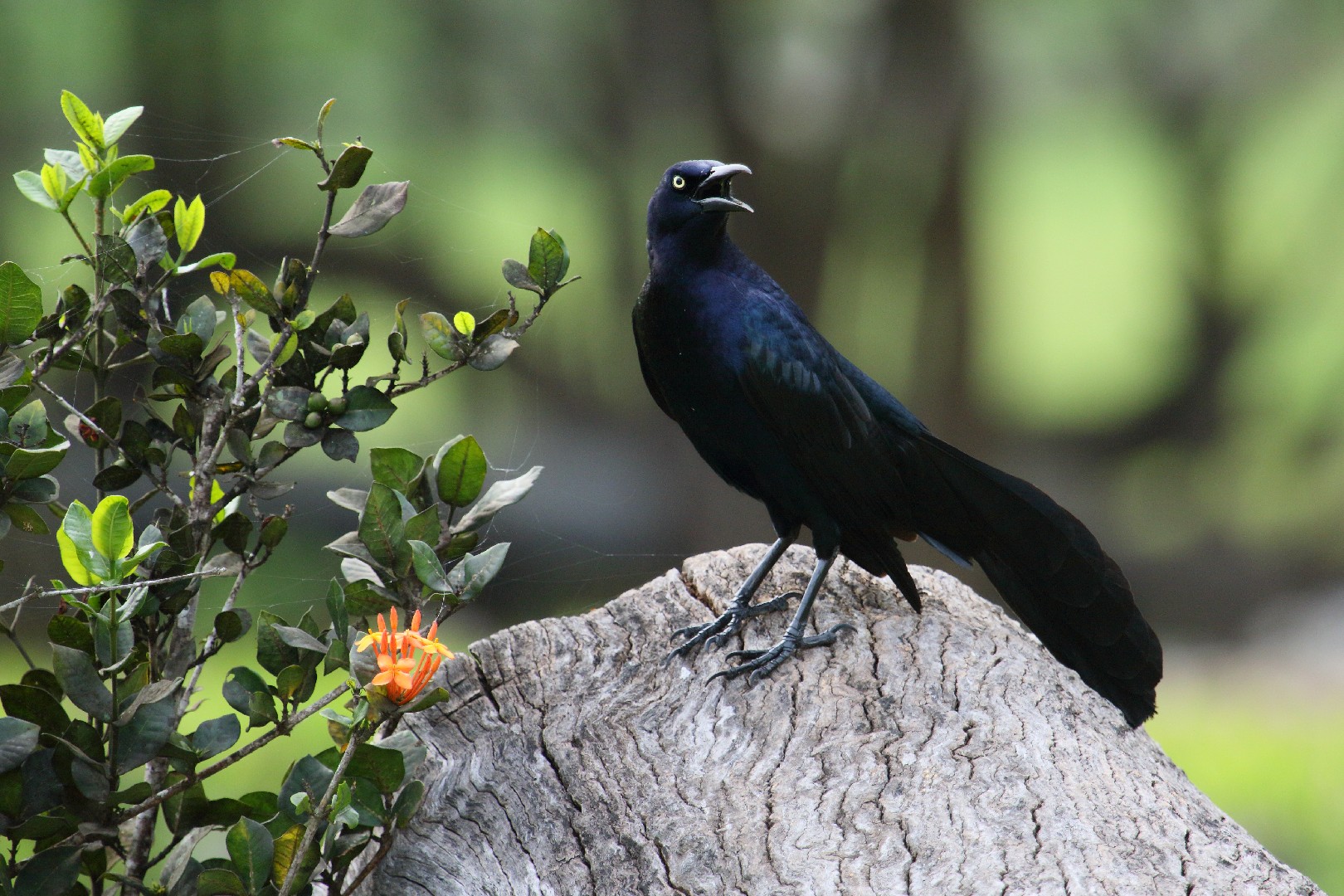
2. Great-tailed Grackle
The medium-sized great-tailed Grackle is notable for its long tail, shaped like a V, and deep black coloring offset by bright yellow eyes. This loud bird can be easily found just by following the sharp sounds of its calls and shrieks. Males in particular shriek and ruffle up their feathers to defend their territory or if they feel threatened.
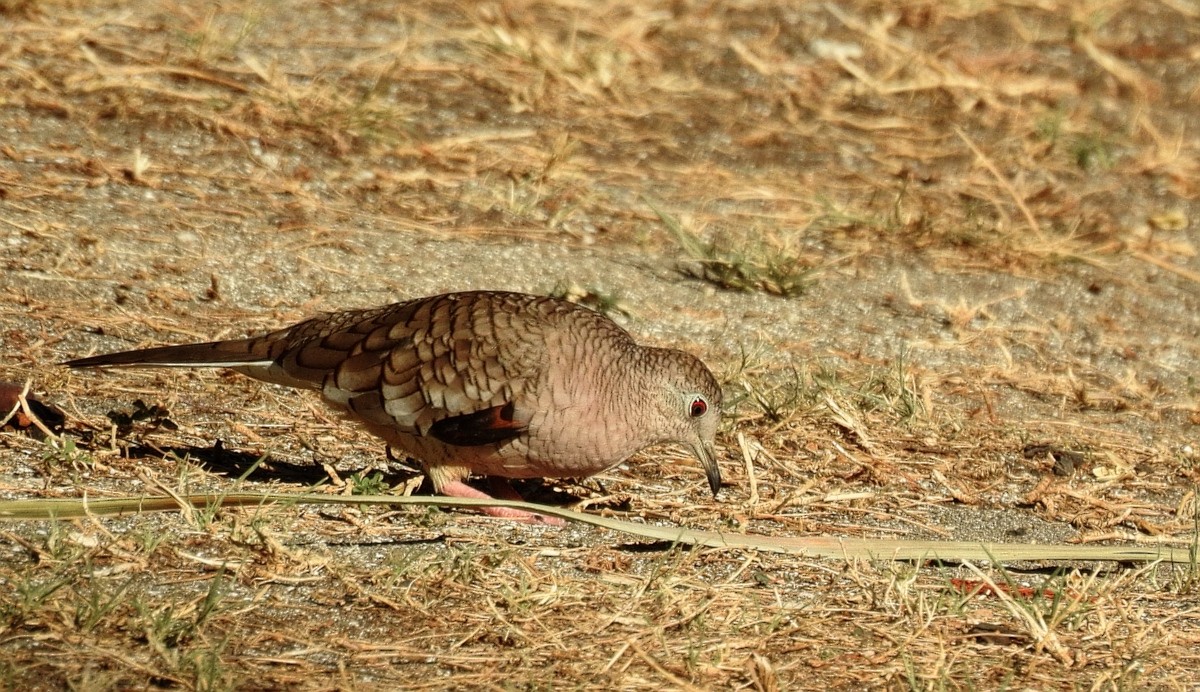
3. Inca Dove
The inca Dove is a small, compact dove with distinctive pale gray plumage and a long tail. It is found in a wide range of habitats, including urban areas, deserts, and grasslands throughout the southwestern United States and northern Mexico. The Inca Dove feeds mainly on seeds, and their cooing call is a common sound in their habitats. They are known for their fast, bouncy flight and their tendency to mate for life. 
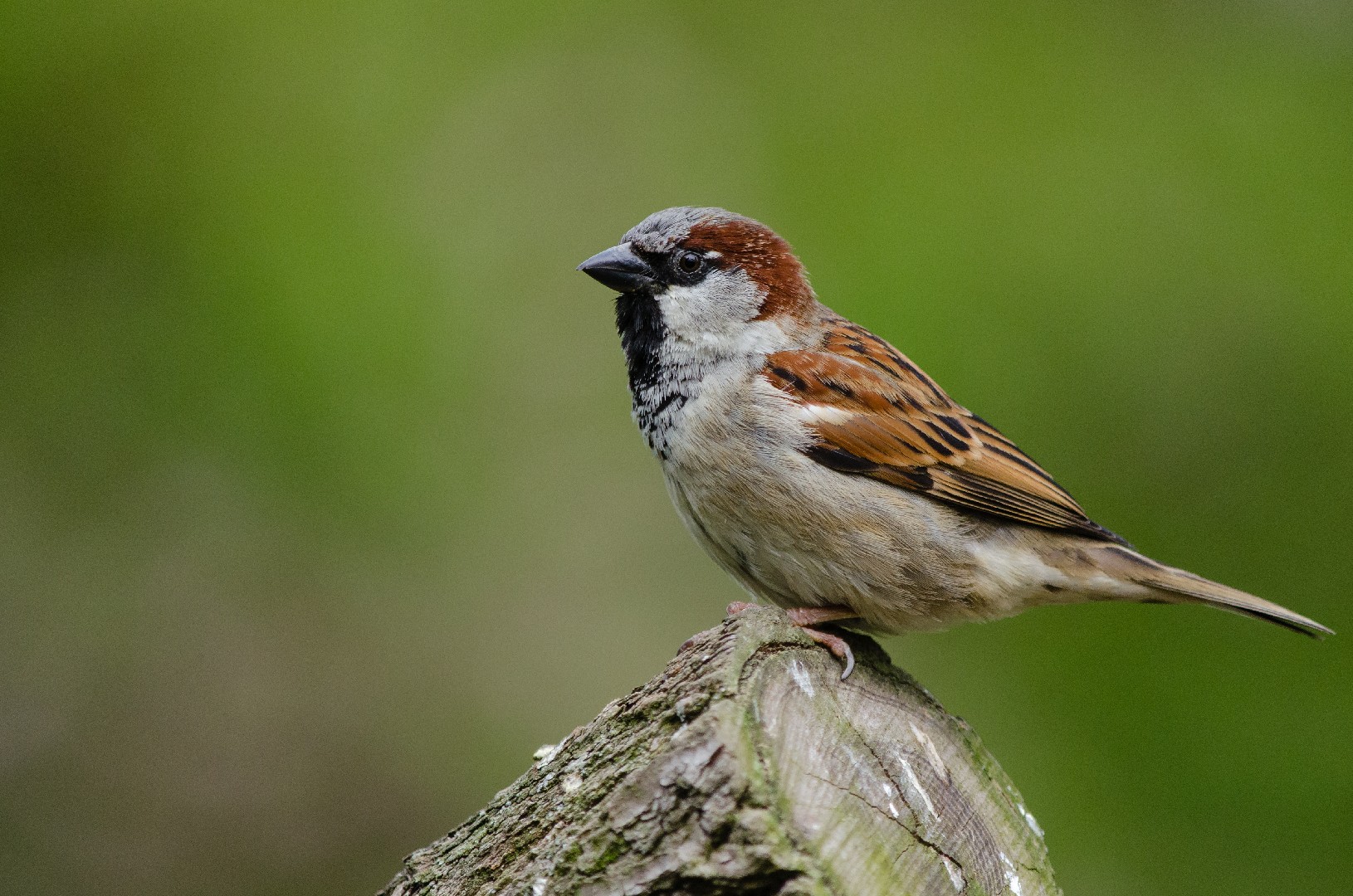
4. House Sparrow
Just as its name implies, the little house Sparrow socializes with humans more than any other bird species. Able to adapt and thrive in almost any habitat, excluding the extremes such as deserts and mountain peaks, this species was once restricted only to North Africa and Eurasia but now is found across the globe. Unfortunately, this opportunistic eater is not completely harmless—it can cause considerable damage to crops.

5. Barn Swallow
A familiar sight in rural and semi-open areas, the small barn Swallow can often be spotted by its distinctly graceful flight as it travels low over fields. Seemingly unbothered by having human neighbors, they nest unafraid in barns, garages, beneath bridges or wharves. Interestingly enough, they have come to prefer these locations so much that you are unlikely to spot a nest in a place that is not a human-made structure.
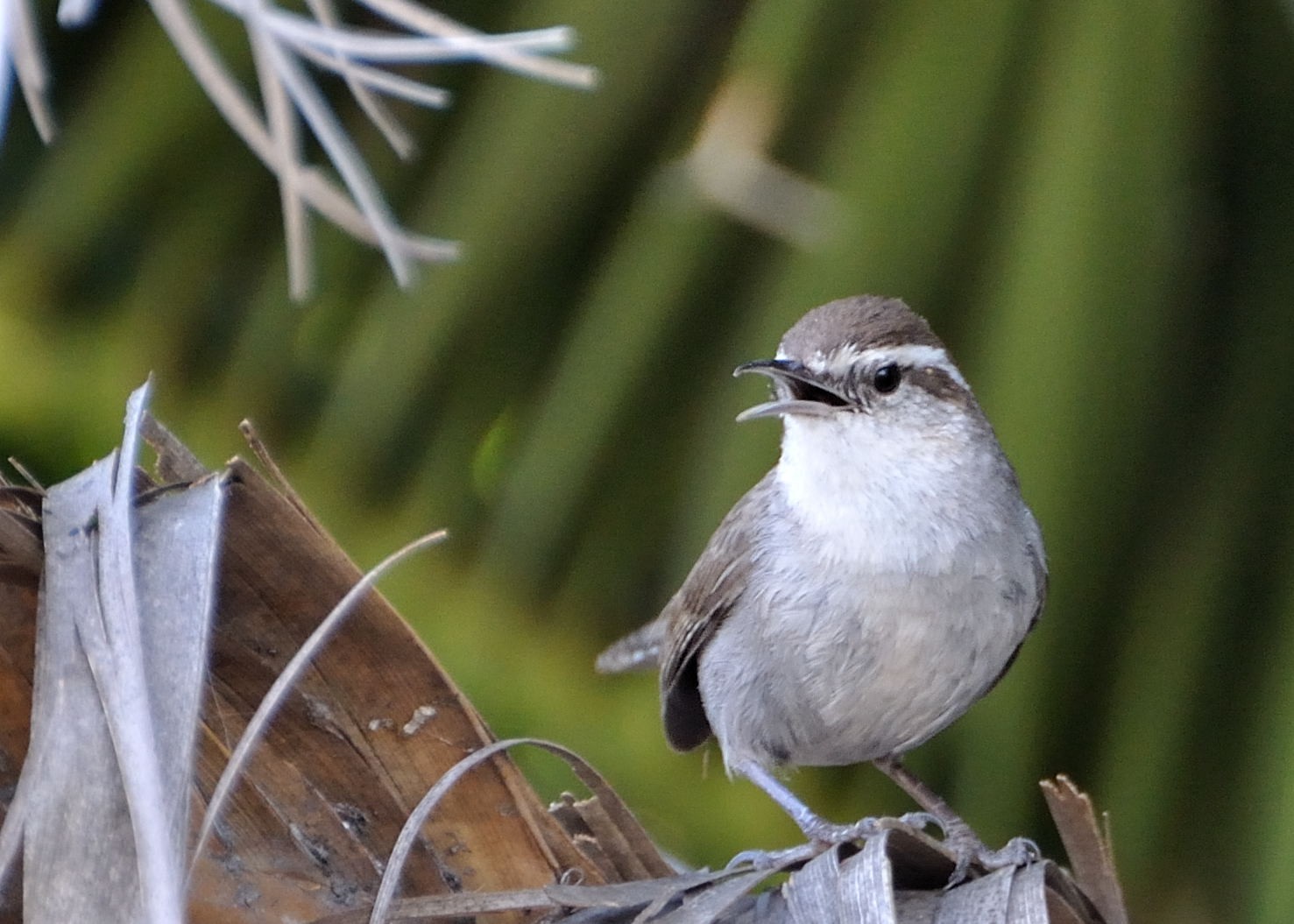
6. Bewick's Wren
The Bewick's wren has an average length of 5.1 inches (13 cm) an average weight of 0.3 to 0.4 ounces (8 -12 g), and a wingspan of 18 cm. Its plumage is brown on top and light grey underneath, with a white stripe above each eye. Its beak is long, slender, and slightly curved. Its most distinctive feature is its long tail with black bars and white corners. It moves its tail around frequently, making this feature even more obvious for observers. Juveniles look similar to adults, with only a few key differences. Their beaks are usually shorter and stockier. In addition, their underbelly might feature some faint speckling. Males and females are very similar in appearance.
7. Berylline Hummingbird
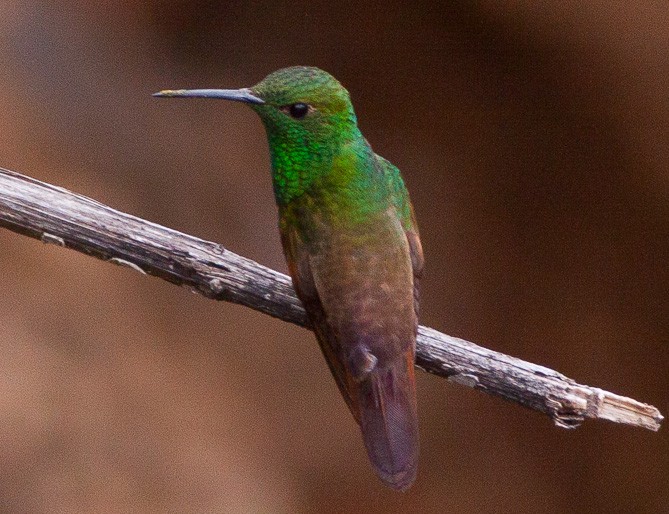
The berylline hummingbird (Saucerottia beryllina) is a medium-sized hummingbird. It is 8–10 cm long, and weighs 4-5 g. Adults are colored predominantly metallic olive green with a rusty gray lower belly. The tail and primary wings are rufous in color and slightly forked. The underwing is also rufous. The bill of the male is straight and very slender. It is very dark red in coloration, almost black. The female is less colorful than the male. The breeding habitat is in forests and thickets of western Mexico to central Honduras in Central America. It regularly strays to southeasternmost Arizona in the United States where it occasionally breeds–(the Madrean sky islands). The female builds a nest in a protected location in a shrub or tree. Females lay two white eggs. This hummingbird is essentially non-migratory. These birds feed on nectar from flowers and flowering trees using a long extendable tongue or catch insects on the wing. This species was formerly placed in the genus Amazilia. A molecular phylogenetic study published in 2014 found that the genus Amazilia was polyphyletic. In the revised classification to create monophyletic genera, the berylline hummingbird was moved to the resurrected genus Saucerottia.
8. Lesser Goldfinch
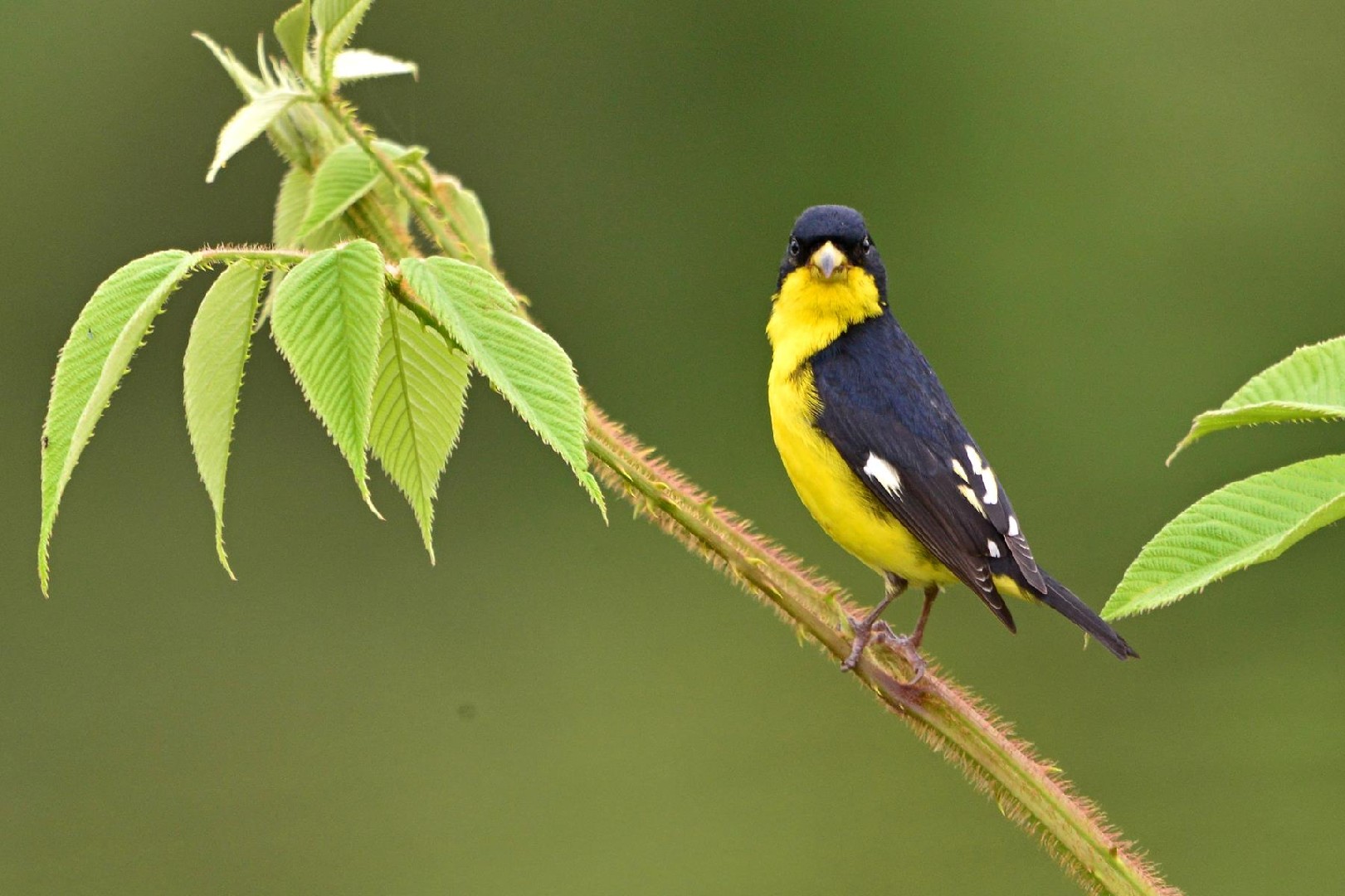
A common visitor of birdhouses or anywhere with birdseed, the lesser Goldfinch is a small, notch-tailed bird that enjoys gardens and open wooded areas. Its size has made it commonly overlooked, but listen out for its charming, chiming song. Social birds, they are often seen in large groups of hundreds traveling together at a time.
9. Canyon Towhee
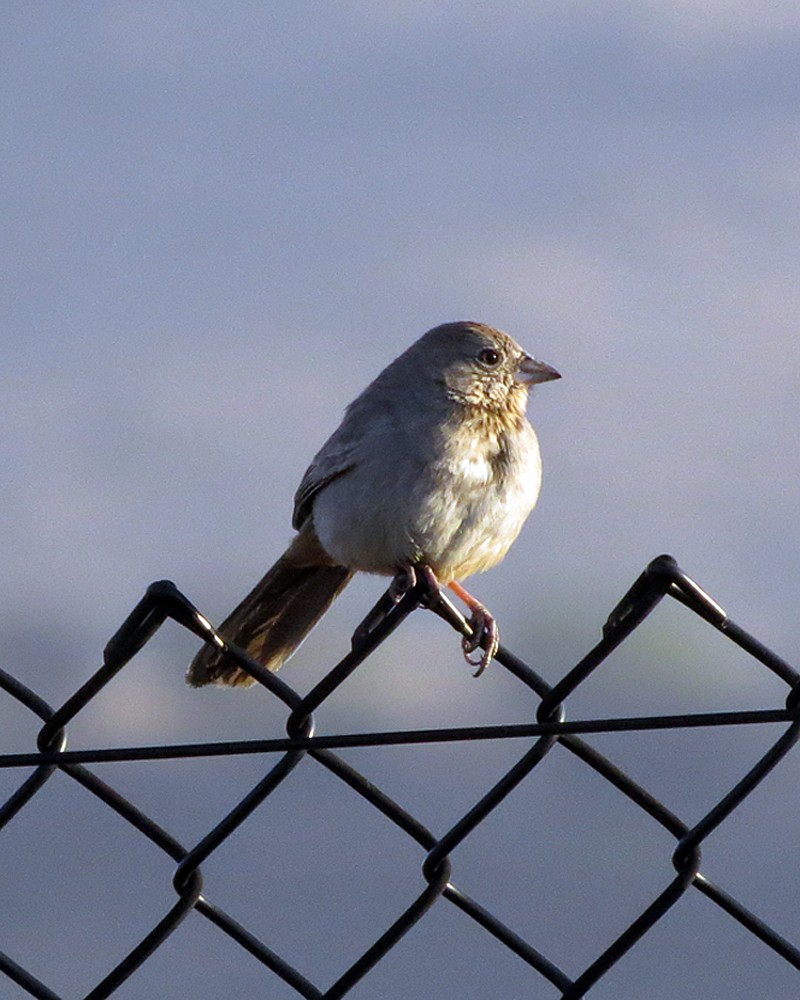
It is 19 to 25 cm (7.5 to 9.8 in) long, and has a noticeably long tail, at 8.2 to 11 cm (3.2 to 4.3 in). This species weighs from 36.5 to 67 g (1.29 to 2.36 oz), though on average weigh only around 45 g (1.6 oz). Among standard measurements, the wing chord is 8.2 to 10.1 cm (3.2 to 4.0 in), the bill is 1.4 to 1.7 cm (0.55 to 0.67 in) and the tarsus is 2.3 to 2.7 cm (0.91 to 1.06 in). It is earthy brown in colour, with somewhat lighter underparts and a somewhat darker head with a rufous cap (except that birds in central Mexico have the cap the same color as the back); there is also a slightly reddish area beneath the tail. There is little sexual dimorphism.
10. Song Sparrow
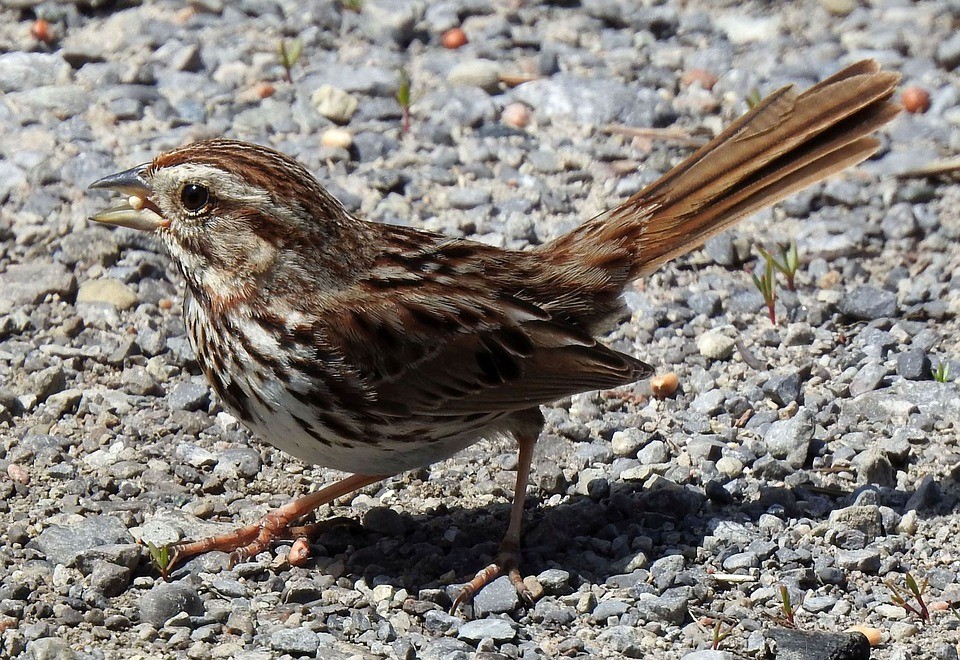
The song Sparrow can be found low to the ground in vegetation and thickets in nearly all habitat conditions, including suburban areas. They are frequent visitors to home birdfeeders but can also be seen foraging for food on the ground. Their appearance can differ across the 24 known subspecies, but all of them tend to only make short, fluttery flights.
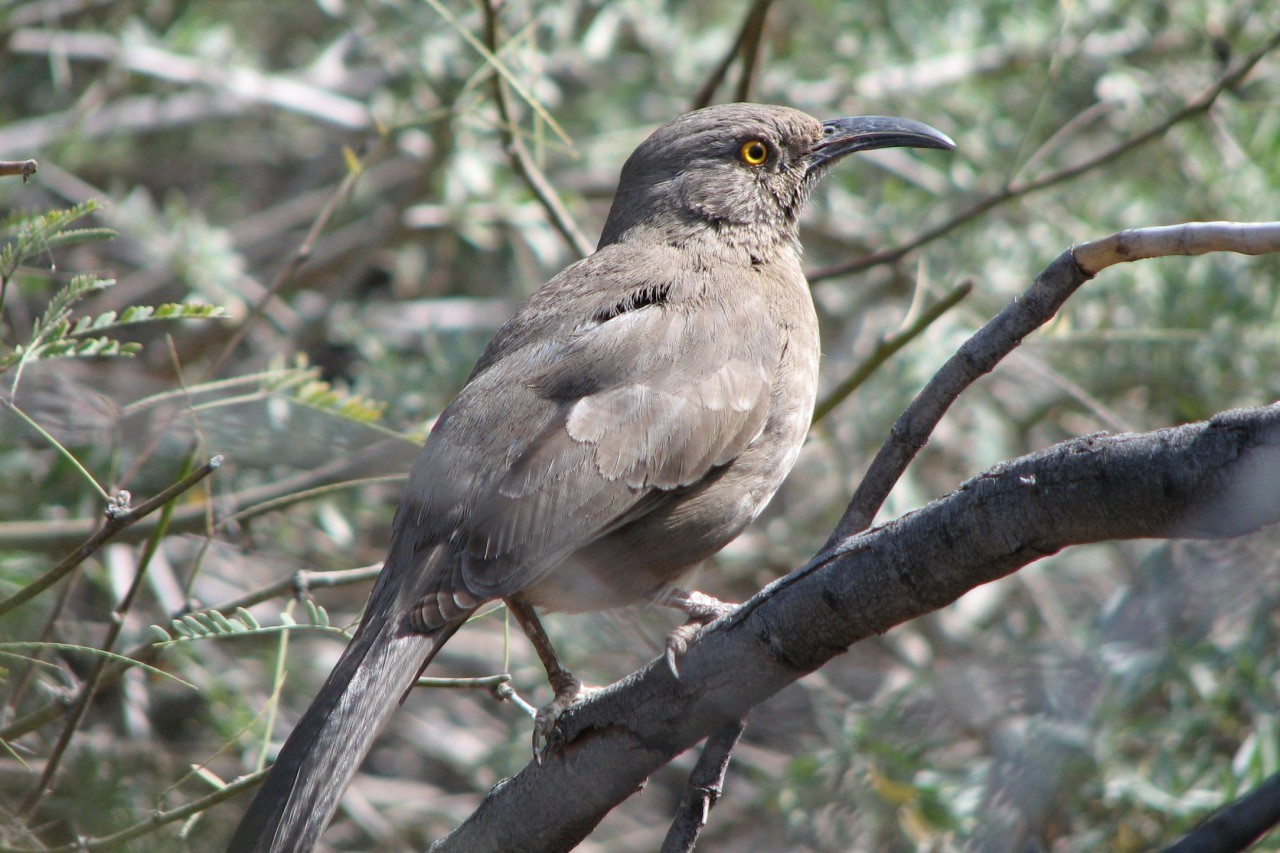
11. Curve-billed Thrasher
The curve-billed thrasher generally measures 25 to 28 cm (10 to 11 in) long, and is immediately recognized as a thrasher by its long tail and short wings. It is also recognized for its sickle-shaped bill, almost as long as its head width and brownish black in color. The body is compact with a large head, short wings and long tail. However, the tail is short relative to other thrasher species. The chest is grayish brown with circular brown-gray spots. The eyes are generally orange, shading to golden in adulthood. Juveniles are lacking in pale tips, rectrices, abdominal feathers are unkempt and upper parts and chest are washed rufously. Variations are markedly different with each subspecies. The eastern subspecies has more distinct spots on its chest, more white along the tips and retraces and obvious wing bars. T.c. palmeri has less spotting on chest and tips and less obvious wing bars. Other examples include T.c. curvirostre possessing longer wings and a tail than T.c. oberholseri; T.c. insularum is paler with more grey than T.c. palmeri and has more visible spotting on its breast. One study published in 2003 suggested that curve-billed speciation was due to climate, which could be explained by molt and feather wear. The same study suggested that the Sierra Madre Occidental acts as a barrier to initiate differentiation within the species.
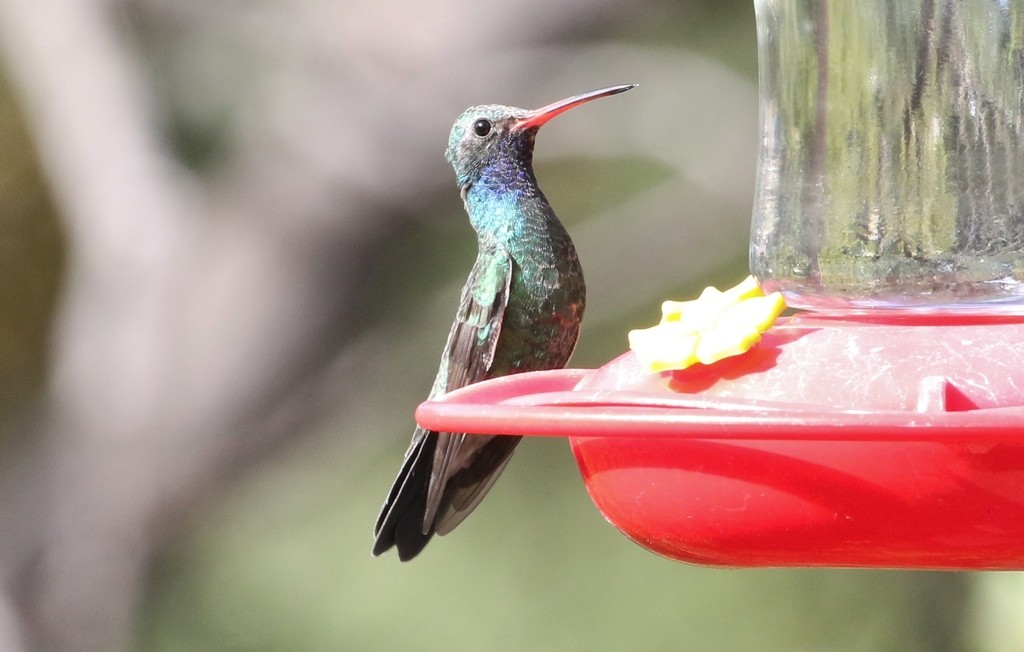
12. Broad-billed Hummingbird
The broad-billed hummingbird is a small-sized hummingbird at about 8–10 cm (3.1–3.9 in) long. It weighs only 3–4 grams, with the male weighing slightly more than the female. The wingspan of the hummingbird is about 13 cm (5.1 in). It has a long, bright reddish coloured bill that has a black tip. The birds are metallic green dorsally with more dull colouring on the crown and forehead. The hummingbird is sexually dimorphic, with the adults appearance varying significantly. The male is dark green with white undertail-coverts and a blue throat. The adult males tail is blackish-blue and broad. The flight feathers are brownish-gray. The adult female has a pale belly and has a white eyestripe behind her eye. Her tail feathers are white-tipped. The bill of the male is shorter but brighter red. As for size, both the juvenile and adult males have larger wings and tails than the female. The colouring of the juveniles tends to resemble the adult female. With time, the bill of the juvenile males will redden, and iridescent feathers will appear on its throat. Unlike the females, the juvenile males do not have a white-tipped tail. The hatchings have a brown body and orange downy feathers and an orange bill. Not much is known about hatchlings, but in captivity, the juvenile birds have been seen to have adult plumage within 6–8 months.
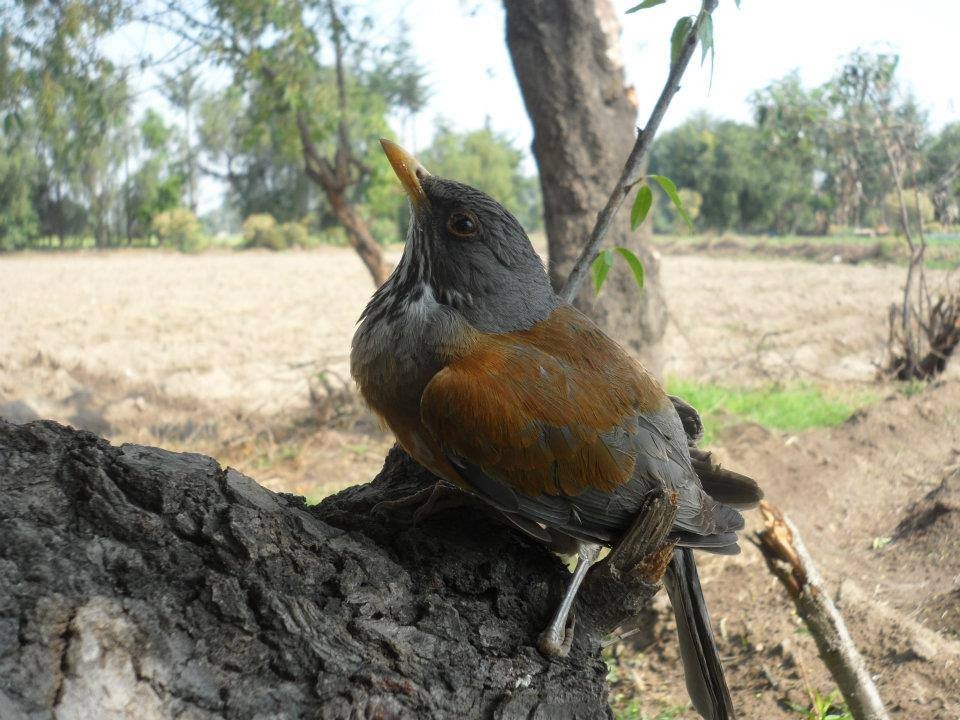
13. Rufous-backed Robin
This species resembles its widespread relative the American robin in general appearance, but is a bit smaller at 21.5–24 cm (8.5–9.4 in) long, with an average wingspan of 39.4 cm (15.5 in) and weight of 74 g (2.6 oz). It is named for the adult's rufous or olive-rufous upper back, which contrasts with the grayish head, nape, and rump. The chest and flanks are also rufous. The belly and undertail coverts are white; the throat is white with many black streaks. The bill and eye-ring are yellow. Females are typically somewhat duller-colored than males. Juveniles, like other juvenile Turdus thrushes, are spotted below; they are browner and have pale flecks above. The subspecies of the Islas Tres Marías, also found around San Blas, Nayarit, is sometimes considered a separate species, Grayson's robin or Grayson's thrush, Turdus graysoni (Ridgway, 1882). It looks "washed out", with little rufous tinting. The song is slow and warbling, with repetition of phrases. An example is "weedele loo loo freerlii..." The alarm call is a long, mellow, descending whistle, "cheeoo or teeeuu". Other calls resemble those of the American robin; the flight call is thinner.
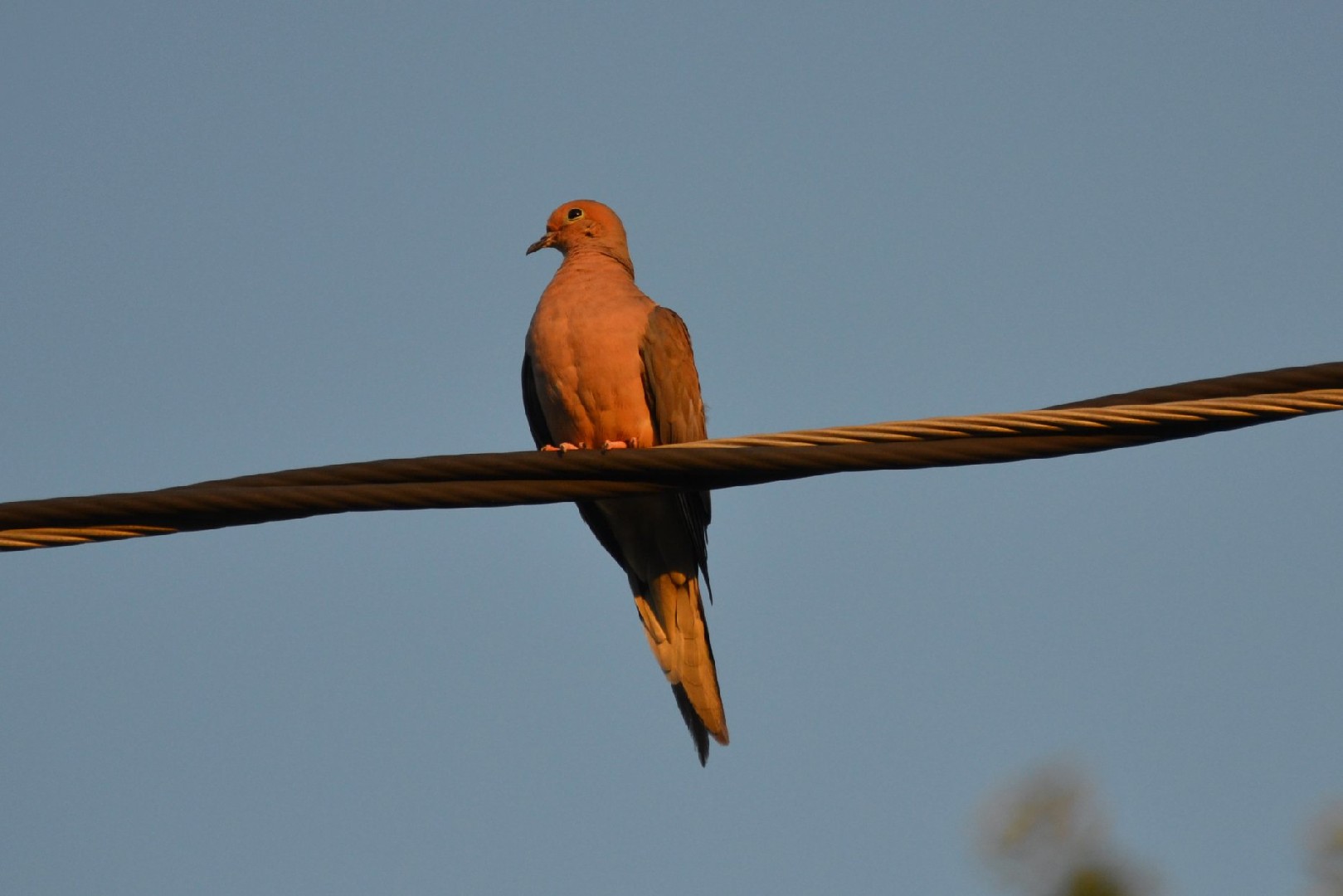
14. Mourning Dove
One of the most famous and widespread doves of North America, the mourning Dove can be often seen in urban areas perching on telephone wires. It is named after its distinctive, plaintive-sounding song. It is also a popular game bird, but its population is still abundant thanks to the prolific breeding and its ability to raise up to five to six broods in a single year.
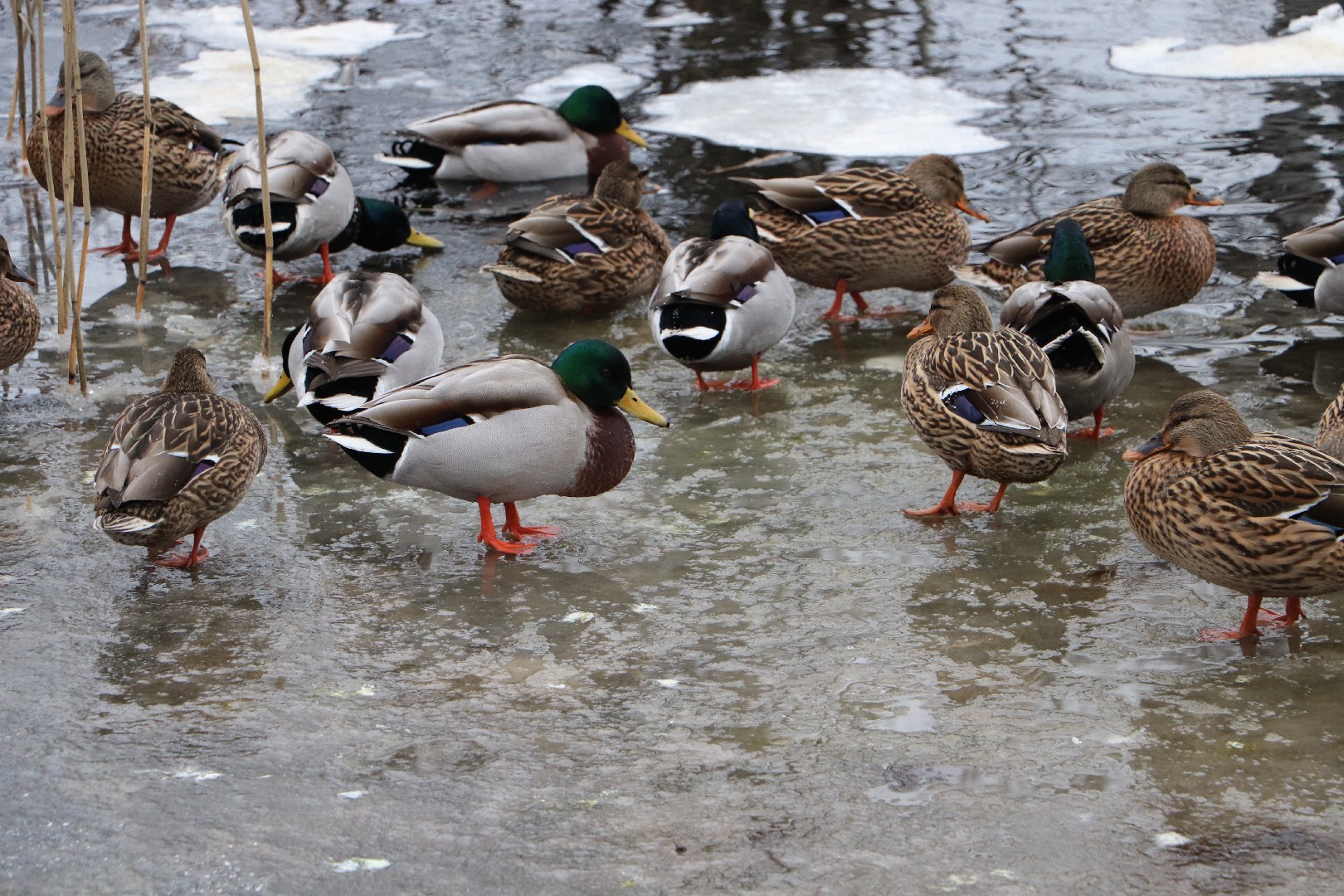
15. Mallard
The mallard is the most abundant duck species in the world, and the ancestor of all domestic ducks. Only the female can produce the distinctive "quack" sound. When the female lays eggs, the male abandons its mate, while the protective mother stays with the ducklings for a long time. This migratory species inhabits shallow waters and it's one of the most popular game birds.
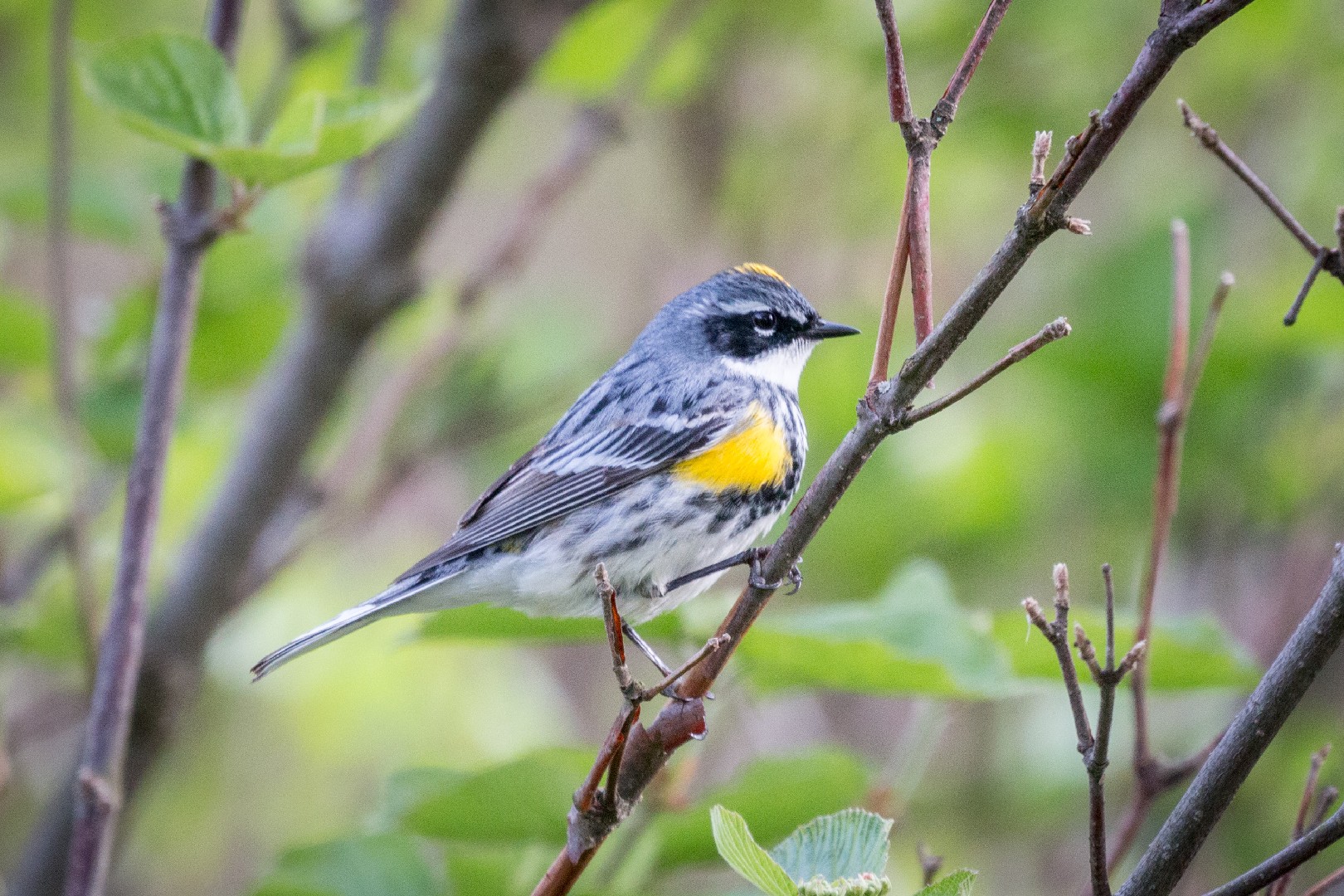
16. Yellow-rumped Warbler
The foraging yellow-rumped Warbler is quick-moving and appealingly colored. Both male and female are a sharp gray, with white on their wings and flashes of yellow on their rump (as the name suggests), sides, and face. Most striking about this bird is the large groups of them that spread across North America in the autumn season.
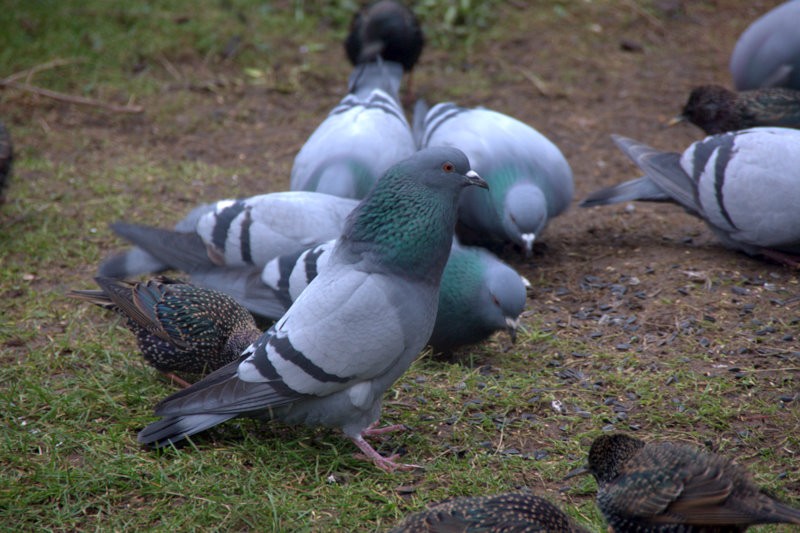
17. Rock Pigeon
The rock Pigeon is a wild ancestor of all domestic and feral pigeons, inhabiting coasts, cliffs, and caves. Pairs nest in rock crevices, often mating for life. They are known for their ability to fly very long distances to return to their homes, navigating using the sun's position and the earth's magnetic fields. Thanks to this ability, pigeons were used as messengers, particularly during World Wars I and II.
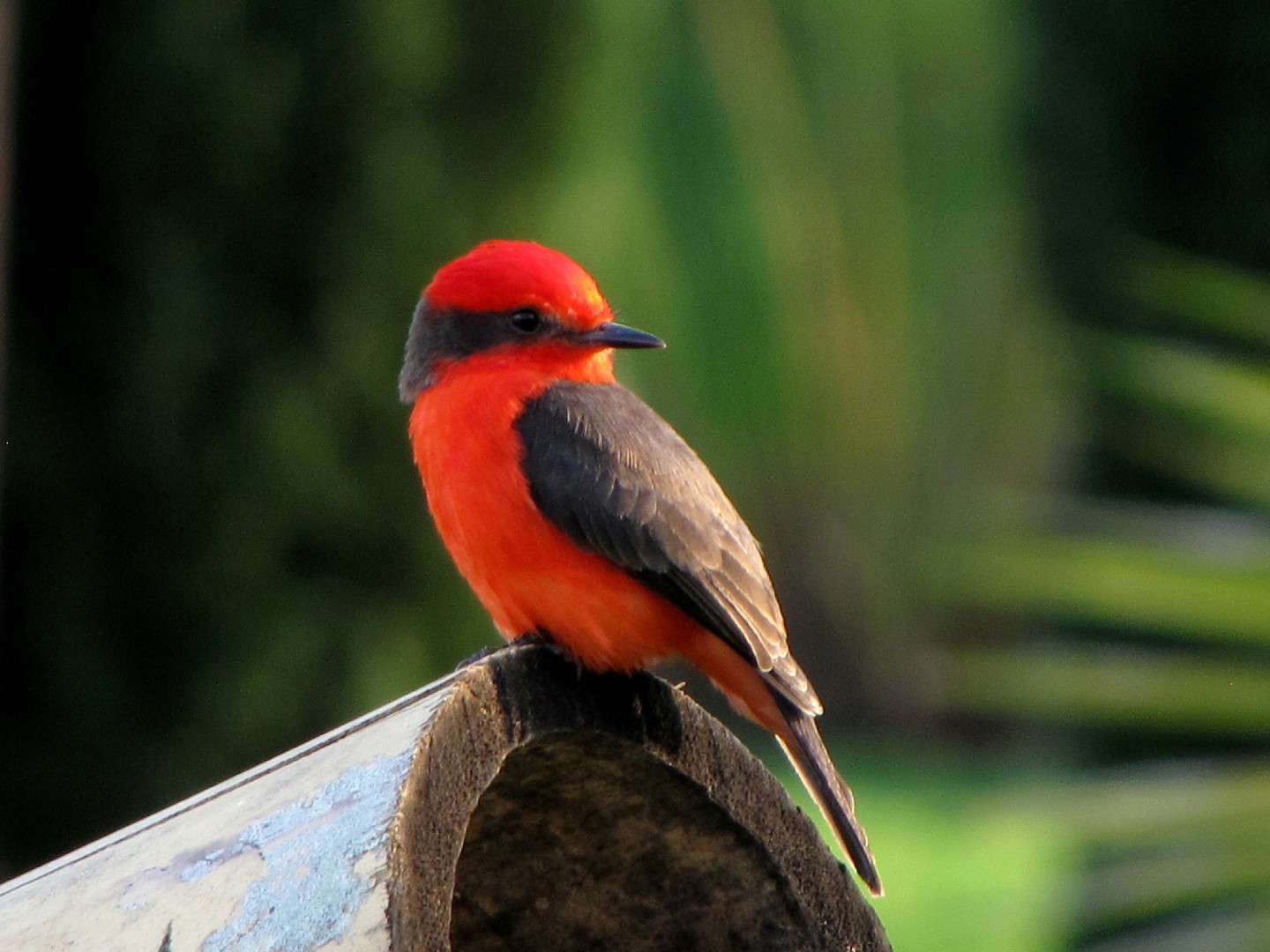
18. Vermilion Flycatcher
The vermilion Flycatcher is a bright species of bird found in many open habitats and rarely seen on the ground. These birds sit on a perch until they're ready to take wing and feed on a variety of insects midflight. The vermilion Flycatcher is not a threatened species, but urbanization that eliminates some of thier natural breeding grounds could affect populations.
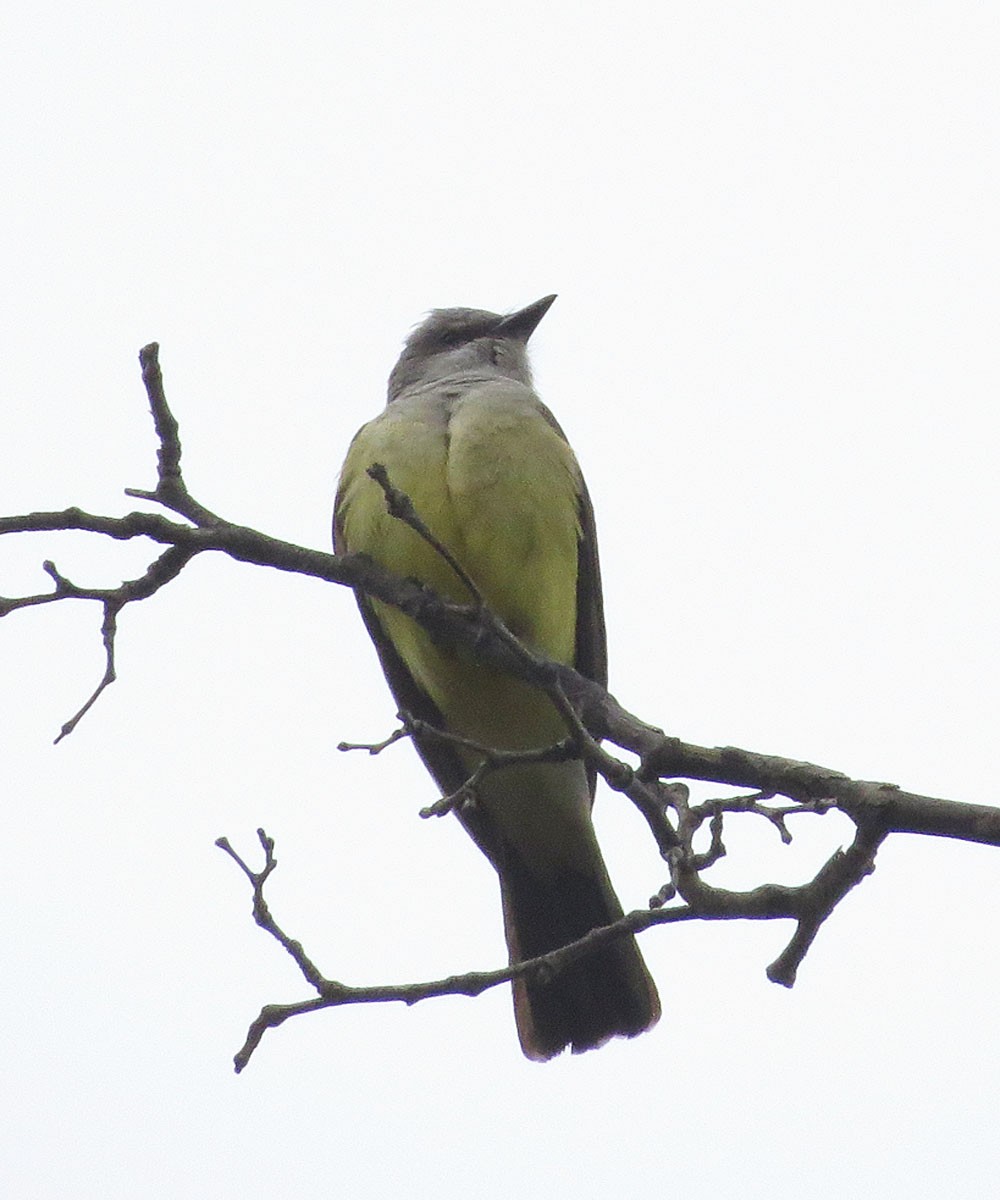
19. Cassin's Kingbird
Adults have a gray head with slightly darker cheeks; a dark unforked tail with a buffy fringe and gray-olive underparts. They have a pale throat and deep yellow lower breast. Juveniles are duller and have pale edges on their wings. Measurements: Length: 8.3-9.1 in (21-23 cm) Weight: 1.6 oz (45 g) Wingspan: 41 cm

20. Killdeer
This shorebird is slender and lanky, with long wings and a long tail that ends at a point. If its nest is being threatened by a predator, the killdeer is known to pretend that it has a broken wing, making itself a target in order to lure the predator away from the nest. They have the curious habit of collecting mostly light colored items to build their nests.