



Top 9 Most Common Bird in Delta
Delta features a diverse range of habitats, from coastal wetlands to mangrove swamps, and forested highlands. This unique topography hosts 9 common bird species. These birds exhibit remarkable features and behaviours, such as vibrant plumage, unique nesting habits, and exceptional survival adaptations, making them fascinating subjects for birdwatchers and nature enthusiasts alike.

Most Common Bird
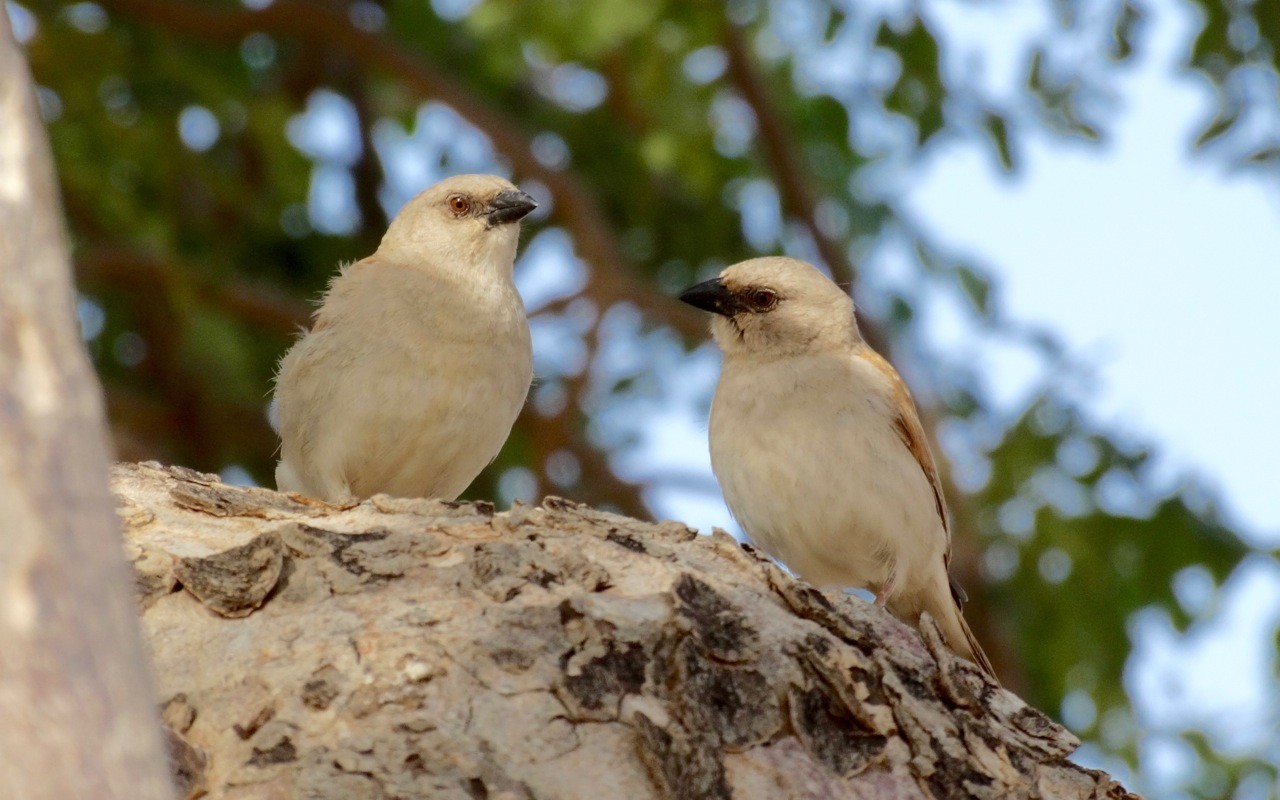
1. Northern Grey-headed Sparrow
The northern grey-headed sparrow (Passer griseus), also known as the grey-headed sparrow, is a species of bird in the sparrow family Passeridae, which is resident in much of tropical Africa. It occurs in a wide range of open habitats, including open woodlands and human habitation, often occupying the same niche as the house sparrow does in Eurasia. The adult northern grey-headed sparrow has a pale grey head with a white moustache stripe, pale brown upperparts, whitish underparts and chestnut wings with a small white shoulder patch. The sexes are similar, but young birds are slightly duller and lack the white wing patch. There are three subspecies, differing in plumage tone, especially with regard to the darkness of the head. This sparrow is mainly resident in its range, but there is some seasonal movement, and flocks of up to 50 birds form outside the breeding season. It builds a cup nest in trees, thatch, or old nests of other birds; 2–4 eggs are laid. This species feeds principally on seeds and grain, like other sparrows, but will readily take insects including termites, especially when feeding young. The calls include cheeps and chirps, and the typical sparrow churring alarm call. The northern grey-headed sparrow is replaced in eastern and southern Africa by very similar birds that are sometimes considered races of this species: Swainson's sparrow, the parrot-billed sparrow, the Swahili sparrow, and the southern grey-headed sparrow. According to phylogenetic studies by Arnaiz-Villena et al., this species is indeed related to the other grey-headed sparrows, and these species together are most closely related within genus Passer to the house sparrow and allies. 
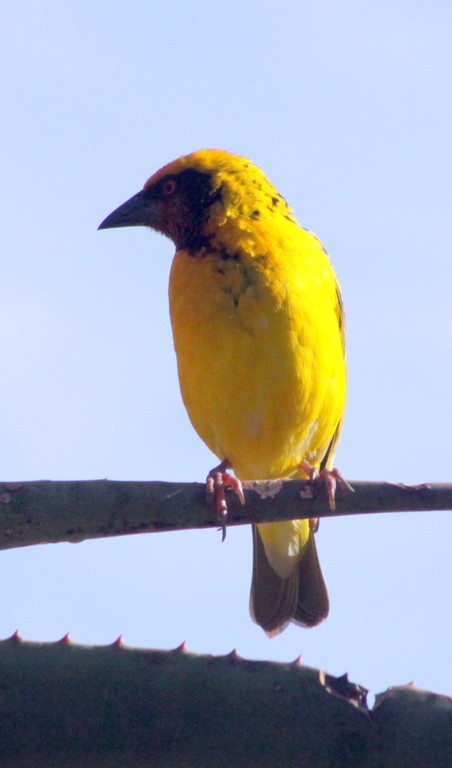
2. Village Weaver
The village weaver is a stocky 15–17 cm bird with a strong conical bill and dark reddish eyes. In the northern part of its range, the breeding male has a black head edged by chestnut (typically most distinct on the nape and chest). Towards the southern part of its range, the amount of black and chestnut diminish, and the breeding males of the southernmost subspecies only have a black face and throat, while the nape and crown are yellow. In all subspecies the breeding male has a black bill, black and yellow upperparts and wings, and yellow underparts. The non-breeding male has a yellow head with an olive crown, grey upperparts and whitish underparts. The wings remain yellow and black. The adult female has streaked olive upperparts, yellow and black wings, and pale yellow underparts. Young birds are like the female but browner on the back.
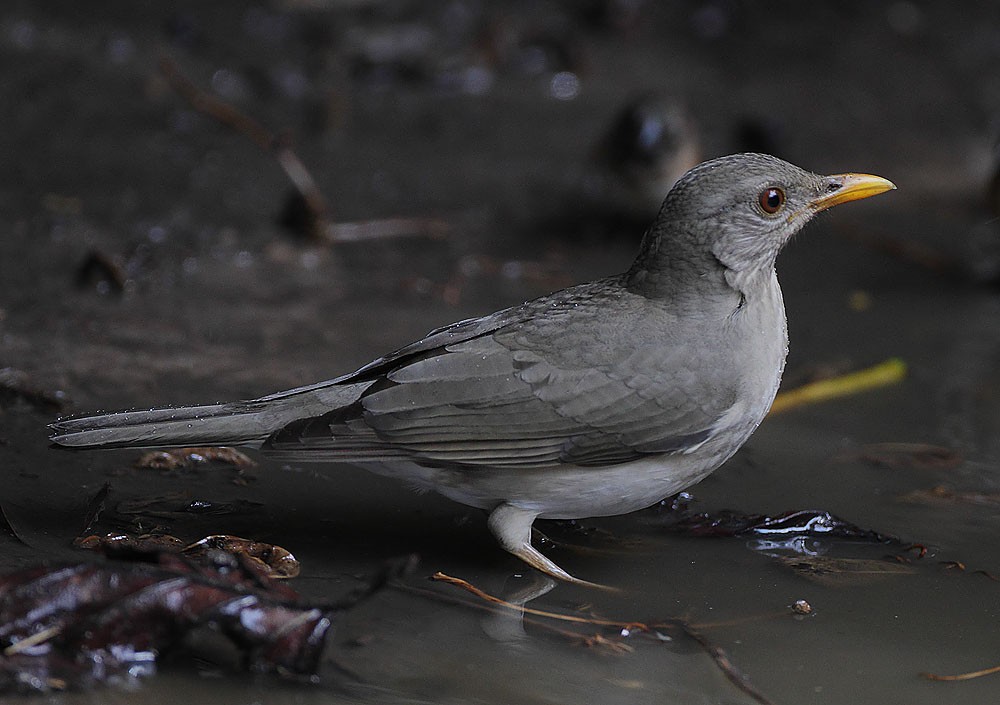
3. African Thrush
The African Thrush has dark olive-grey upperparts. The underparts show a whitish evenly brown- streaked side throat, the breast is greyish brown and the flanks are pale buff-orange with this colour not extending on to the lower breast, the belly and vent are white. It has a yellow-orange bill. It weighs 46–78g and measures 21–23 cm in length.
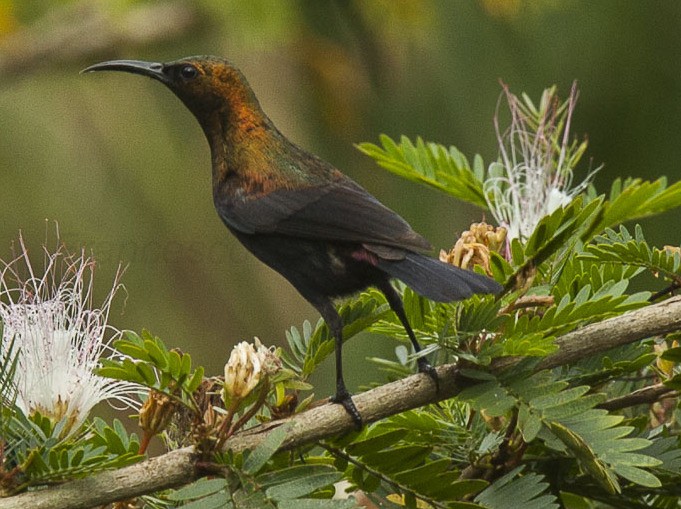
4. Copper Sunbird
The adult male copper sunbird is about 12.5 cm (5 in) long. The subspecies C. c. cupreus inhabits the western part of its range and weighs about 7.5 to 11 g (0.26 to 0.39 oz). The male C. c. chalceus, from the eastern half, weighs 7.5 to 11 g (0.26 to 0.39 oz) while the female of both subspecies weighs 7.3 to 10.2 g (0.26 to 0.36 oz).
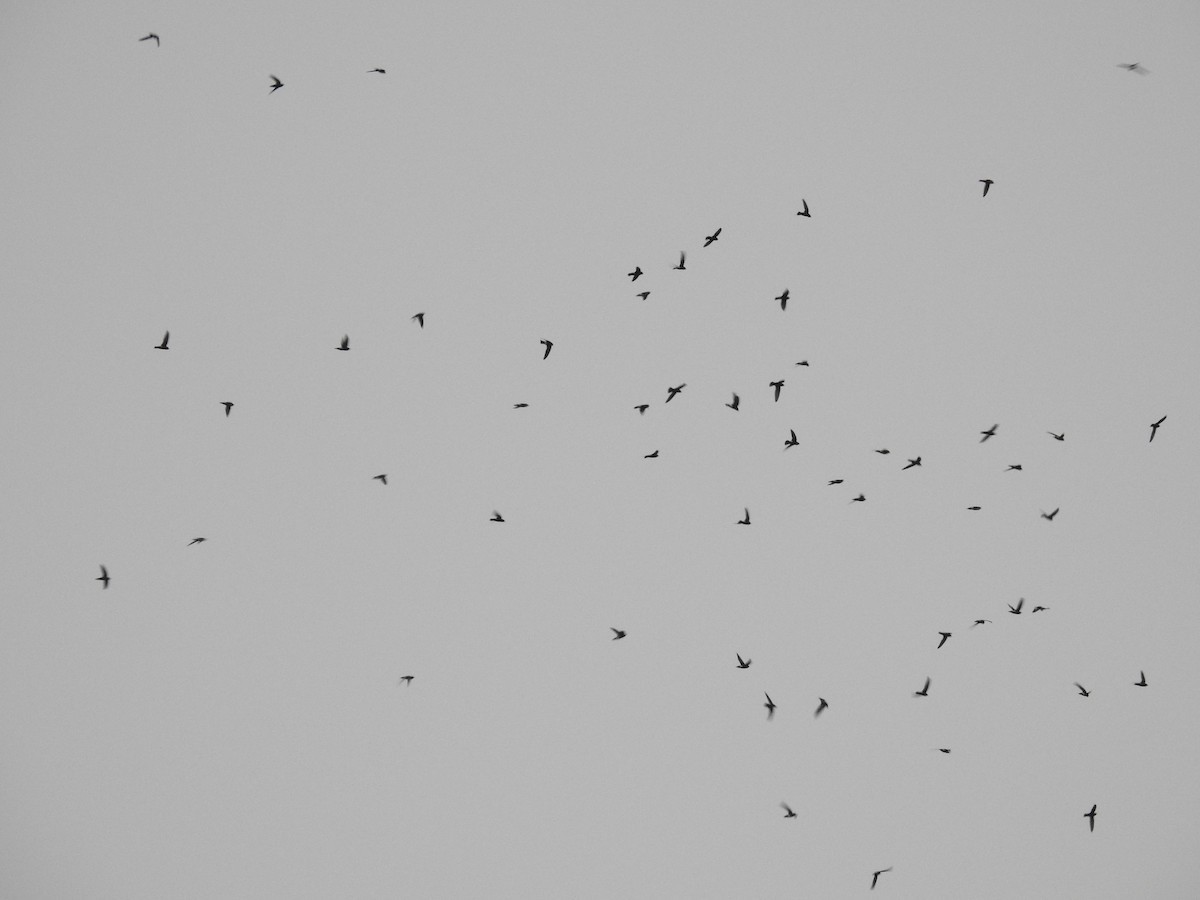
5. Little Swift
Little swifts are readily identified by their small size. Their wingspan is only 33 cm compared to 42 cm in the case of common swift. Their plumage is black except for a white throat and rump, the white rump patch extending onto the flanks. They have a short square tail, with all rectrices round-tipped. The flight is fluttering like that of a house martin, and the call is a high twittering. Like other swifts they are very short-legged. The legs are used for clinging to vertical surfaces only.
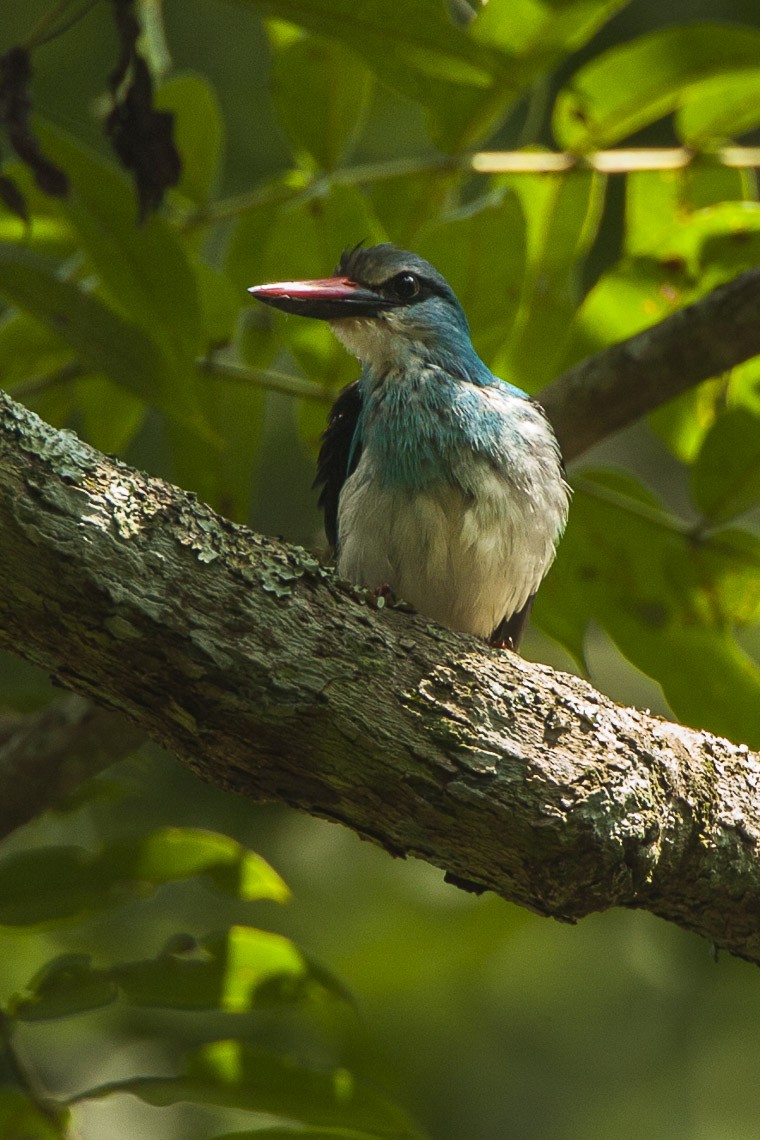
6. Blue-breasted Kingfisher
The blue-breasted kingfisher (Halcyon malimbica) is a tree kingfisher widely distributed across Equatorial Africa. This kingfisher is essentially resident, but retreats from drier savanna areas to wetter habitats in the dry season. This is a large kingfisher, 25 cm in length. The adult has a bright blue head, back, wing panel and tail. Its underparts are white, but it has a blue breast band. The shoulders are black. The flight of the blue-breasted kingfisher is rapid and direct. The large bill has a red upper mandible and black lower mandible. The legs are bright red. Sexes are similar, but juveniles are duller than adults. The call of this noisy kingfisher is a whistled pu-pu-pu-pu-ku-ku-ku-ku. The blue-breasted kingfisher is a species of a variety of well-wooded habitats. It perches quietly in deep shade whilst seeking food. It is territorial but wary. This species mainly hunts large insects, arthropods, fish and frogs, but will also eat the fruit of the Oil Palm. It has a striking display in which the wings are spread to show the white linings. The nest is a hole in a tree termite nest. A single clutch of two round white eggs is typical. One place that it lives in is in Liberia.
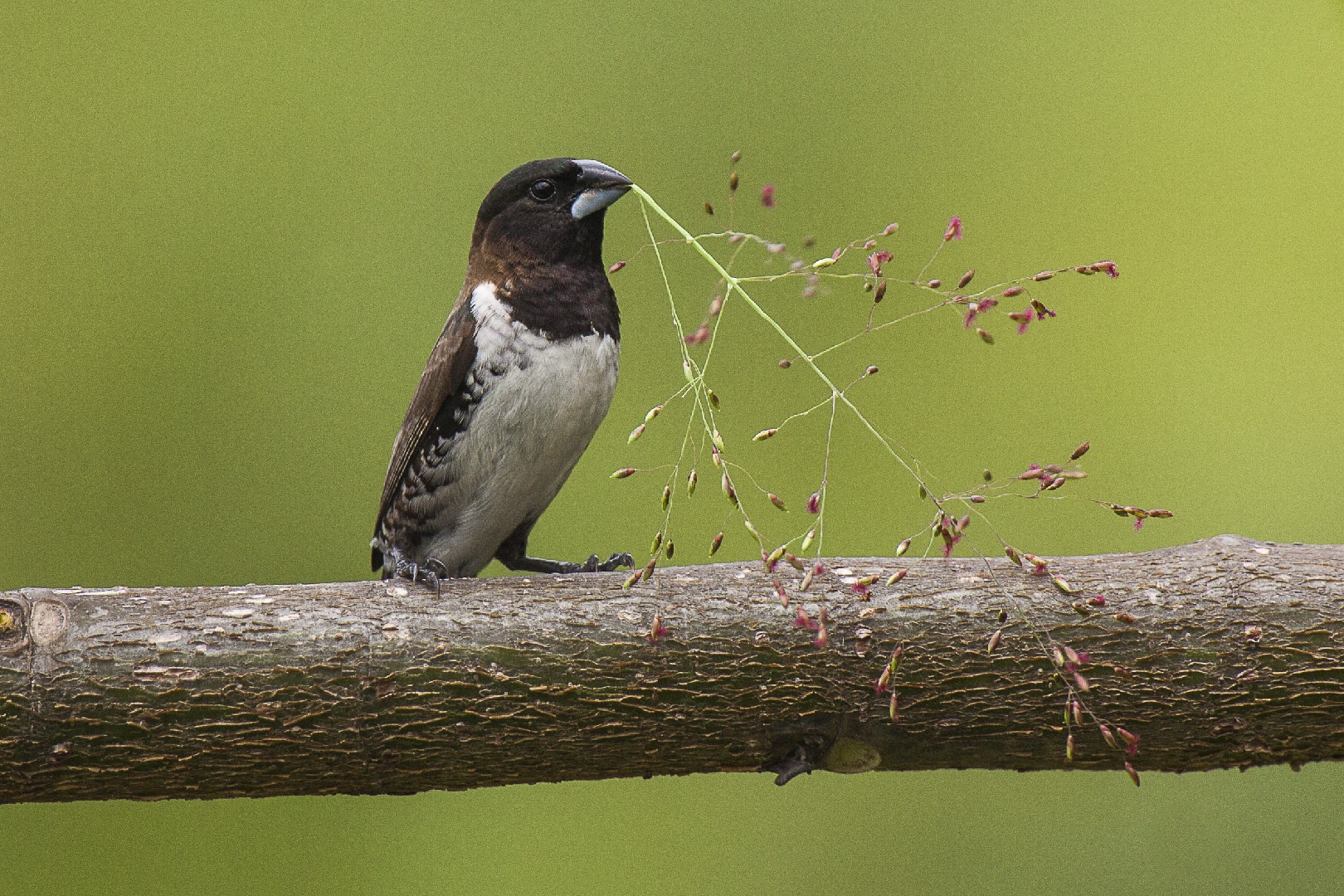
7. Bronze Mannikin
The bronze mannikin is one of the smallest munia species, measuring 9–10 cm in length and weighing 7–12 grams. The adult is a compact bird with a short black tail, and stubby black and pale grey (not distinctly bluish) mandibles. It is black to brownish black on the head, chin, throat and center of the chest, with some purple-green iridescence on the face and sides of the breast. It has greyish brown upper parts and white underparts with irregular barring on the flanks and rump. A small green iridescent patch is present on the outer scapular feathers, besides, especially in the western race, the sides of the lower breast. Wing coverts and remiges are bordered in a paler or warmer tone. The sexes are similar. Immature birds are dun brown above with buff head and underpart plumage. They moult into full adult plumage by age six months, when the males also begin to sing and exhibit breeding behaviour.
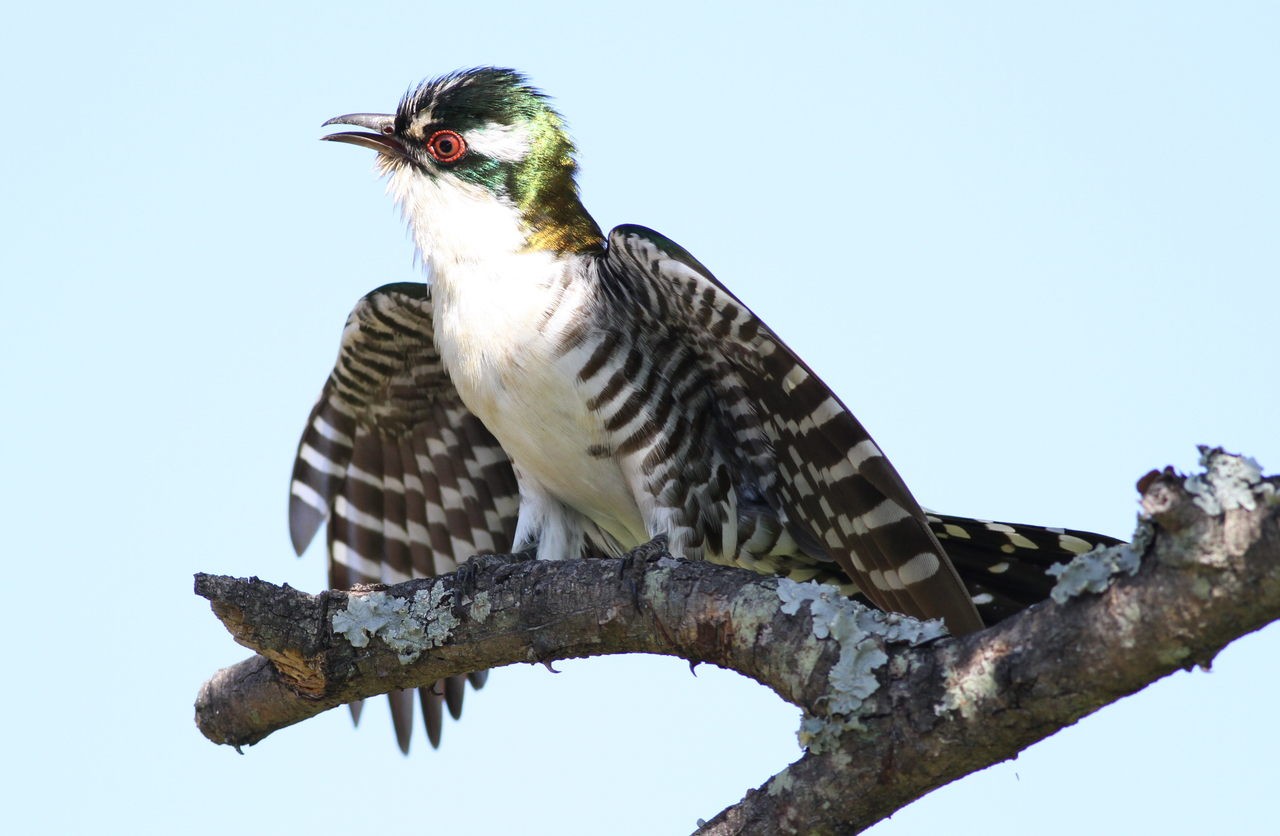
8. Diederik Cuckoo
The diederik cuckoo is a smallish cuckoo at 18 to 20 cm. Adult males are glossy green above with copper-sheened areas on the back and whitish underparts. They have a broken white eye-stripe and a short, green malar stripe. All remiges have three to four white spots on the inner vanes. The four green outer tail feathers are tipped white, and the outermost pair are spotted white on both vanes. Females show more copper above, and have coppery barring on the flanks. The underparts are often washed brownish. Juveniles have a red bill, streaky throat and a white wing-bar. They are more copper-coloured above and browner below than the females, and the flank markings are brown blotches.
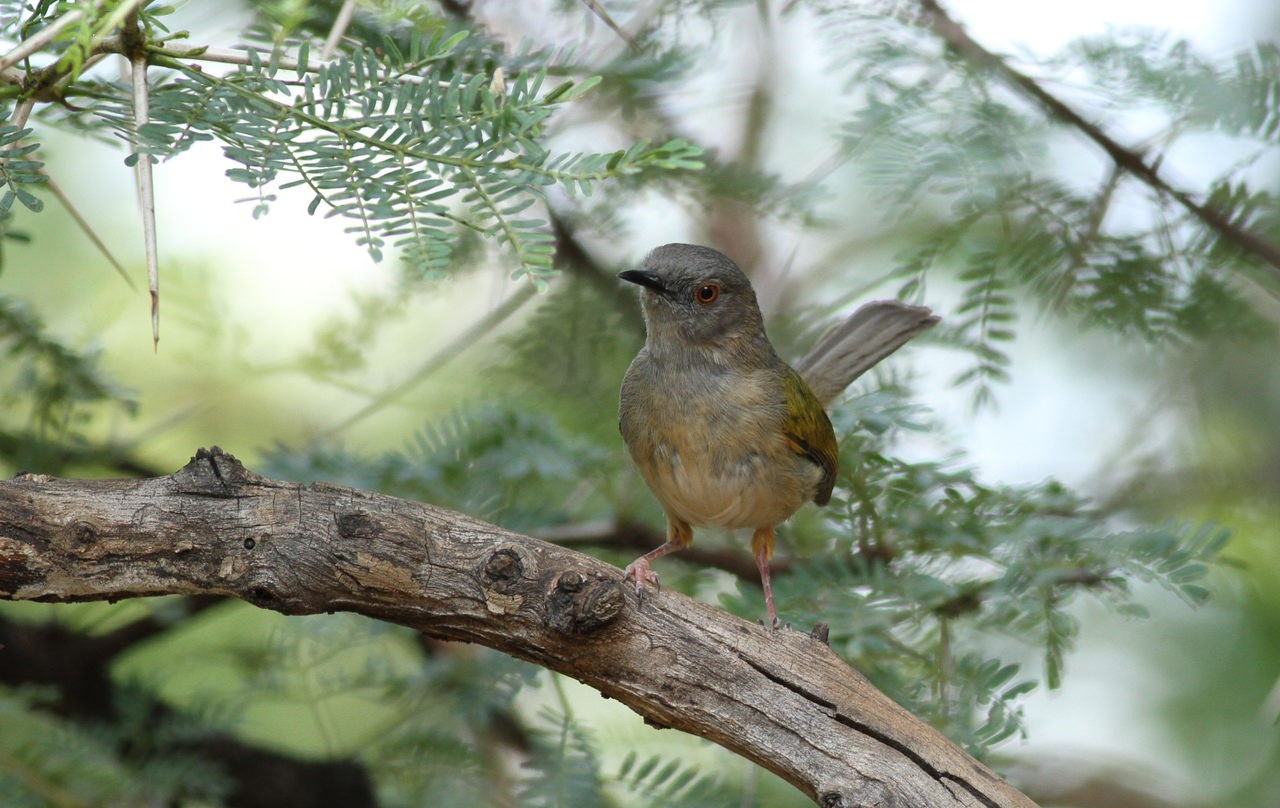
9. Green-backed Camaroptera
The green-backed camaroptera (Camaroptera brachyura), also known as the bleating camaroptera, is a small bird in the family Cisticolidae. This bird is a resident breeder in Africa south of the Sahara Desert. Recent studies suggest this species and the grey-backed camaroptera may be the same species. This skulking passerine is typically found low in dense cover. The green-backed camaroptera binds large leaves together low in a bush and builds a grass nest within the leaves. The normal clutch is two or three eggs. These 11.5 cm long warblers have green upperparts. The wings are olive and the underparts whitish grey. The sexes are similar, but juveniles are paler yellow on the breast. Like most members in the group, green-backed camaroptera is insectivorous. The green-backed camaroptera was described by the French ornithologist Louis Jean Pierre Vieillot in 1821 under the binomial name Sylvia brachyura. The type locality is the Cape of Good Hope. The specific epithet brachyura is from the Ancient Greek brakhus for "short" and -ouros for "-tailed". There are five subspecies: C. b. pileata Reichenow, 1891 – southeast Kenya to southeast Tanzania C. b. fugglescouchmani Moreau, 1939 – northeast Zambia, north Malawi and east Tanzania C. b. bororensis Gunning & Roberts, 1911 – south Tanzania, south Malawi and north Mozambique C. b. constans Clancey, 1952 – southeast Zimbabwe, south Mozambique and northeast South Africa C. b. brachyura (Vieillot, 1821) – south and east South Africa