




Top 20 Most Common Bird in Lapu-Lapu
Nested in the heart of the Philippines, Lapu-Lapu is rich in biodiversity, including a variety of bird species. The 20 most common, each flaunting unique features, span from the vibrant Philippine Bulbul to the elusive Philippine Coucal. These avians display fascinating behaviors and adaptations, such as distinctive calls and specialized foraging skills, making them an integral part of Lapu-Lapu's thriving ecosystems.

Most Common Bird
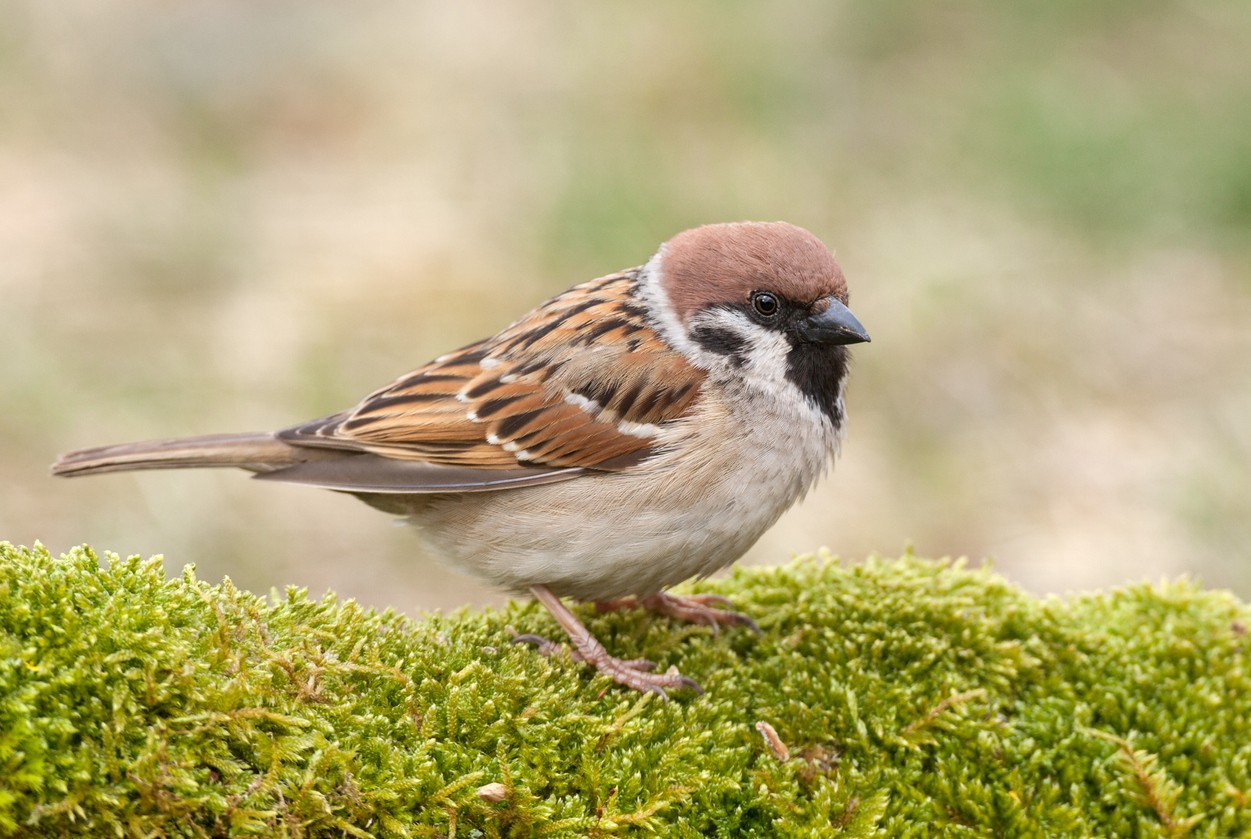
1. Eurasian Tree Sparrow
The eurasian Tree Sparrow (Passer montanus) is a widespread sparrow of the European mainland that has been introduced to some parts of North America. Eurasian Tree Sparrow is very similar to the House sparrow (Passer domesticus) but it's smaller and neater. It prefers more natural habitats, at the edges of human activity, and inhabits farmlands, parklands, and open woods.
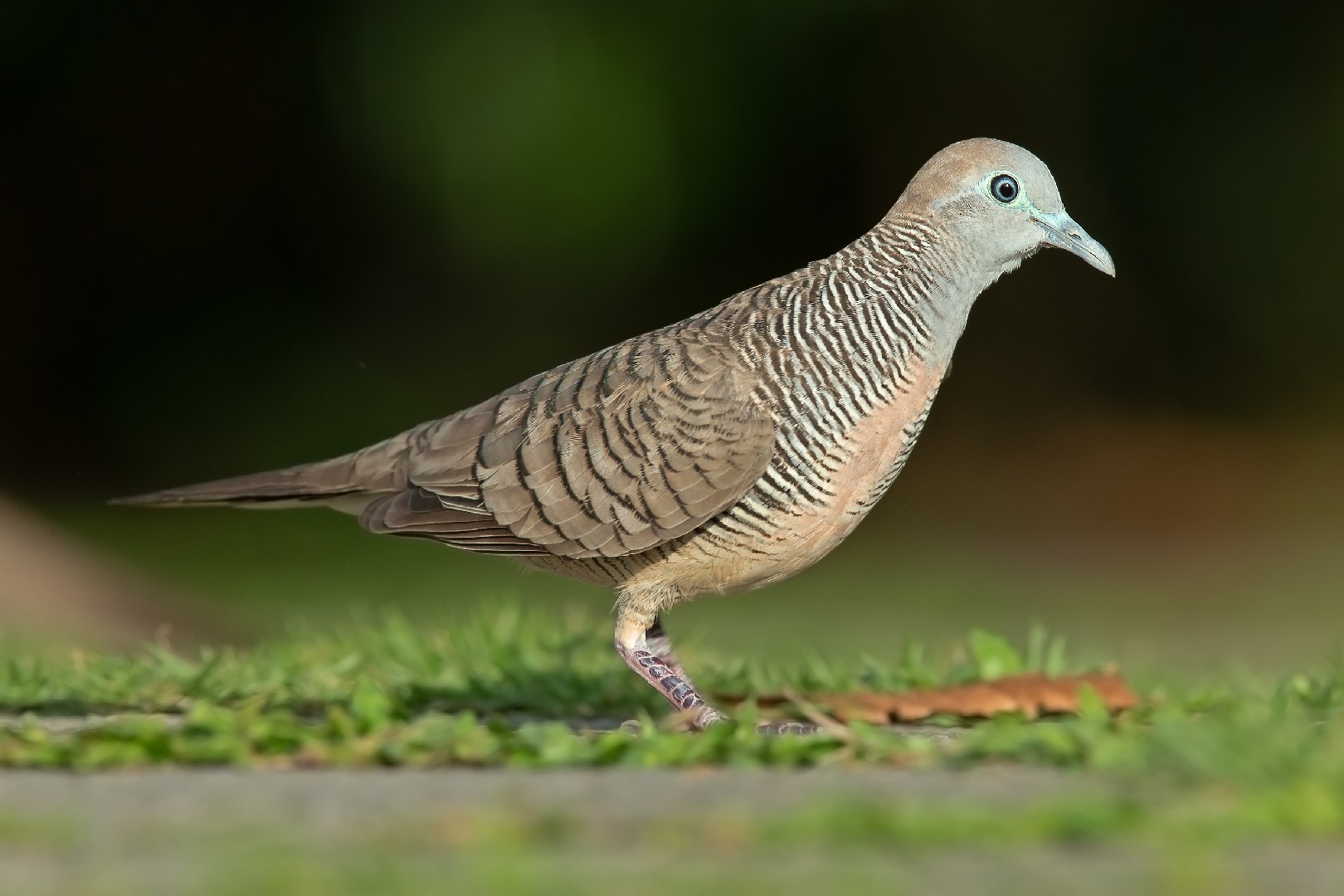
2. Zebra Dove
The zebra Dove is a small dove found in dense forests, open fields, farmlands, and similar suburban areas. Unlike other dove species, this ground-dwelling bird likes to forage alone or in pairs, but not in large groups. The call of this slender dove is often described as very pleasant. Very common in urban areas, they are quite comfortable around humans.
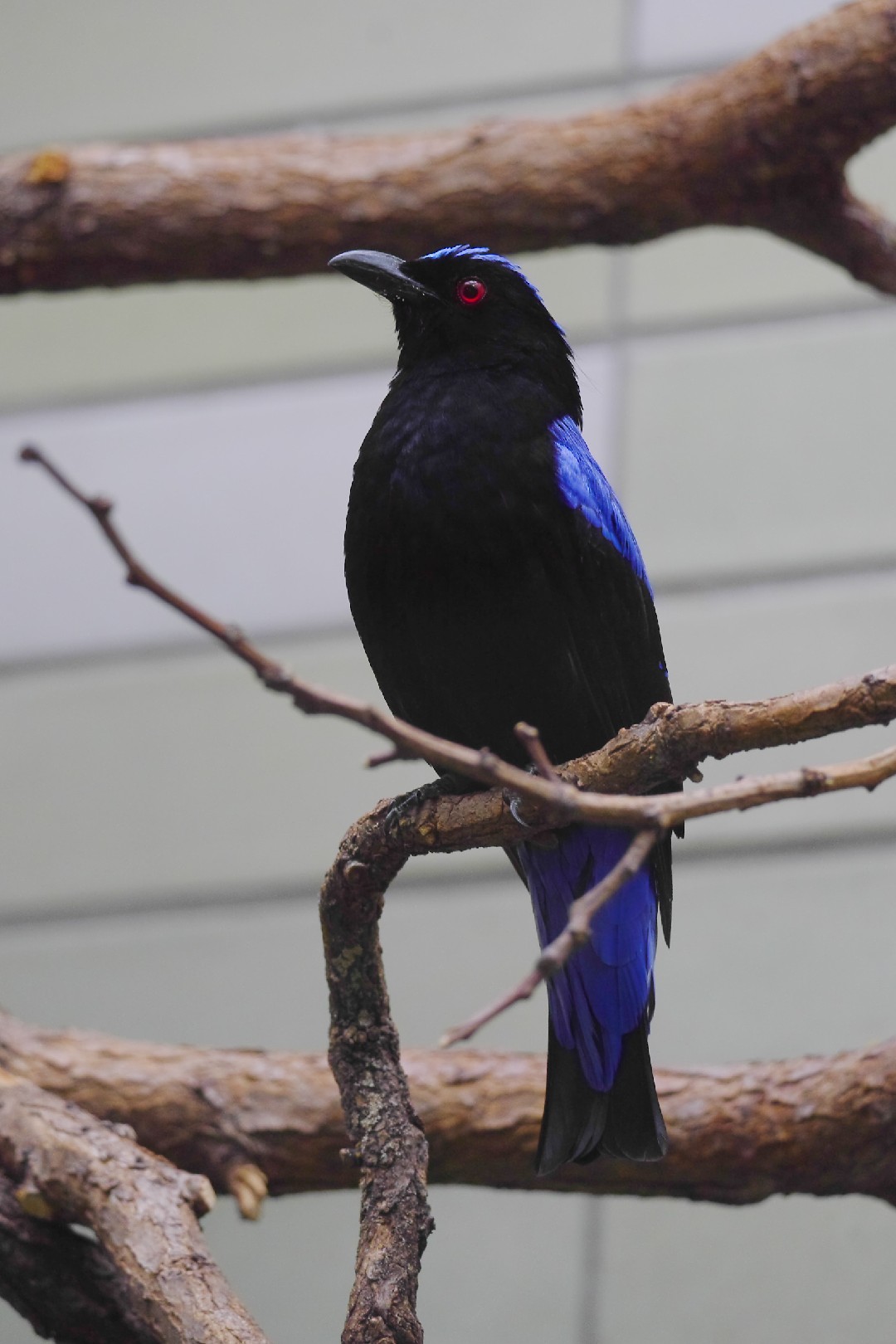
3. Asian Glossy Starling
The Malayan purple starling (Aplonis panayensis) is a starling species from the Indian Subcontinent and the Indian Archipelago. It is a common bird that sometimes occurs en masse in cities. The bird is one of the noisiest bird species.
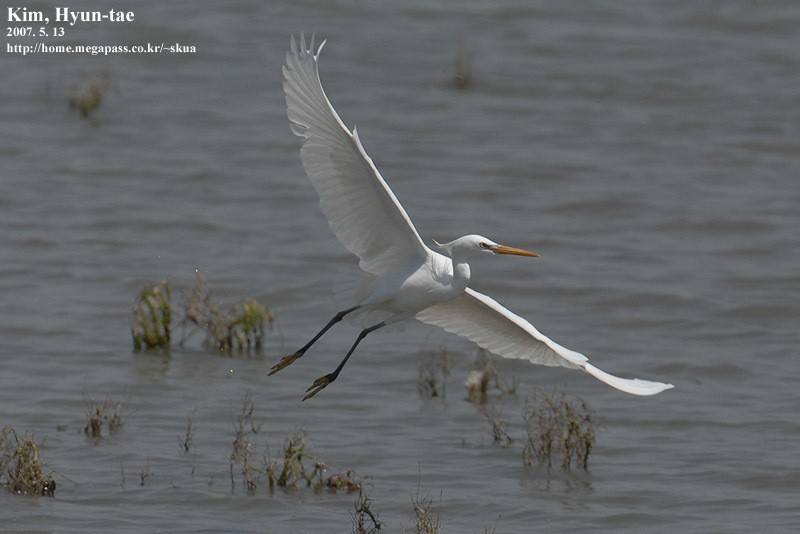
4. Chinese Egret
The Chinese egret averages 68 cm in height. The plumage is white throughout the bird's life and resembles the little egret (Egretta garzetta). Outside the breeding season the bill is dusky with the basal portion being tannish peach and the lores and legs yellow green, while the iris is yellow. All individuals are similar in this season. In the breeding season the adults develop a luxuriant crest which is sometimes over 11 cm long. It also develops long lanceolate plumes on its breast and dorsal plumes extending beyond the tail, called aigrettes and similar to those of little egret. The bare parts change too, the bill becomes a bright, almost orange, yellow while the lores turn bright blue and the legs black with yellow feet. 
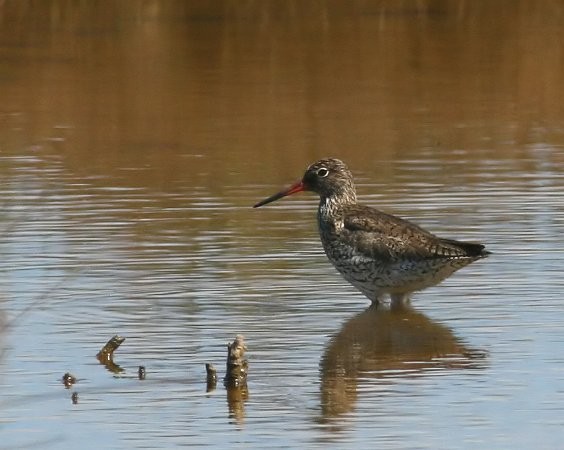
5. Common Redshank
A water bird, the common Redshank is wary of intrusion. It often provides a warning for other birds with its loud calls when potential threats are nearby. It is often seen in coastal and freshwater areas, feeding in the shallows. When the bird bobs its tail, it is an indication it is feeling nervous.
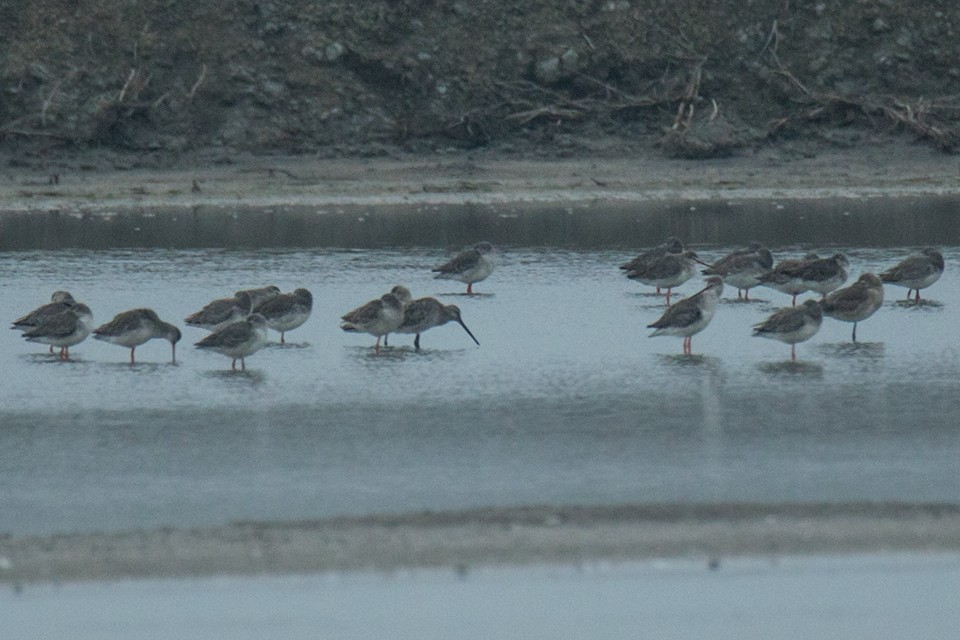
6. Asian Dowitcher
Adults have dark legs and a long straight dark bill, somewhat shorter than that of the long-billed dowitcher. The body is brown on top and reddish underneath in breeding plumage. The tail has a black and white barred pattern. The winter plumage is largely grey. Their breeding habitat is grassy wetlands in inland Siberia and Manchuria. They migrate to southeast Asia as far south as northern Australia, although both the breeding and wintering areas are poorly known. This bird is always found on coasts during migration and wintering. These birds forage by probing in shallow water or on wet mud. They mainly eat insects, mollusks, crustaceans and marine worms, but also eat some plant material.
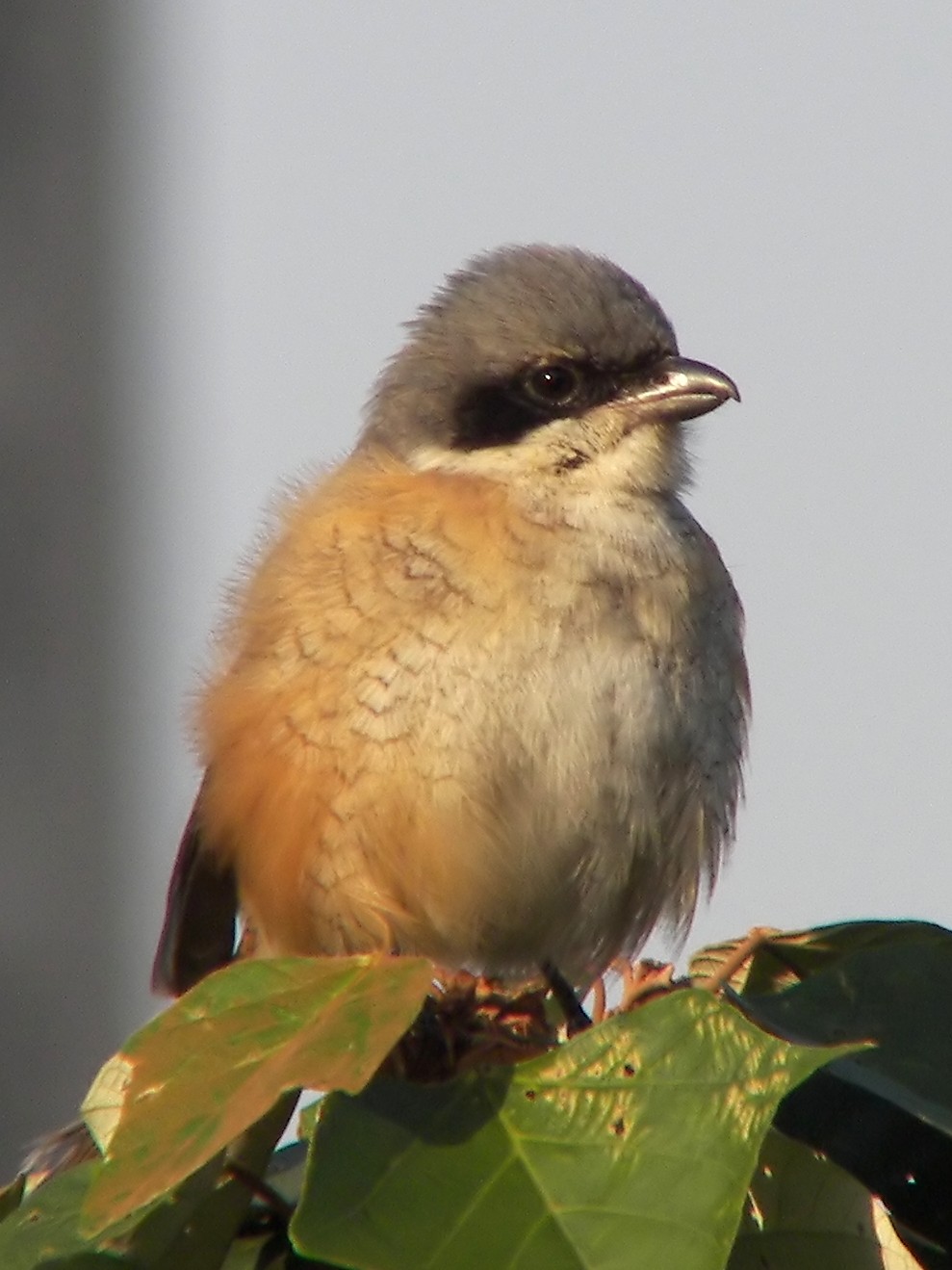
7. Brown Shrike
This shrike is mainly brown on the upper parts and the tail is rounded. The black mask can be paler in winter and has a white brow over it. The underside is creamy with rufous flanks and belly. The wings are brown and lack any white "mirror" patches. Females tend to have fine scalloping on the underside and the mask is dark brown and not as well marked as in the male. The distinction is not easy to use in the field but has been tested with breeding birds in Japan where the female can be identified from the presence of a brood patch. The use of multiple measurements allows discrimination of the sex of about 90% of the birds. Subspecies lucionensis has a grey crown shading into the brown upperparts and the rump appears more rufous than the rest of the upper back. The tail is more brownish and not as reddish as in the red-backed shrike. Younger birds of lucionensis have a brown crown and lack the grey on the head. Subspecies superciliosus has a broad white supercilium and a richer reddish crown. The tail is redder and tipped in white. A number of confusing forms are known from central Asia where the populations of cristatus, isabellinus and collurio overlap. The taxonomy has been in a state of flux and some forms such as phoenicuroides formerly considered as subspecies of L. cristatus have been moved to the species L. isabellinus. Subspecies lucionensis has been recorded interbreeding with superciliosus in Ishikawa, Japan while superciliosus has interbred with Lanius tigrinus in central Japan.
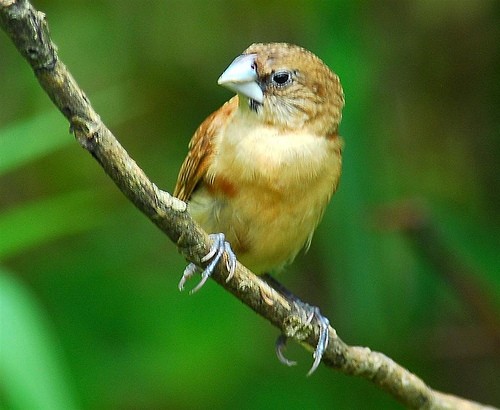
8. Chestnut Munia
The chestnut munia or black-headed munia (Lonchura atricapilla) is a small passerine. It was formerly considered conspecific with the closely related tricoloured munia, but is now widely recognized as a separate species. This estrildid finch is a resident breeding bird in Bangladesh, Brunei, Cambodia, China, India, Indonesia, Laos, Malaysia, Burma, Nepal, the Philippines, Singapore, Taiwan, Thailand, Vietnam and Hawaii. It also has been introduced to all the Greater Antilles and Martinique in the Caribbean. Before 1995, it was the national bird of the Philippines, where it is known as mayang pula ("red maya") because of its brick red patch on the lower back which is visible only when it flies. (This distinguishes it from other birds locally called maya, notably the predominantly brownish "mayang simbahan" (tree sparrow) which is more common in urban areas.)
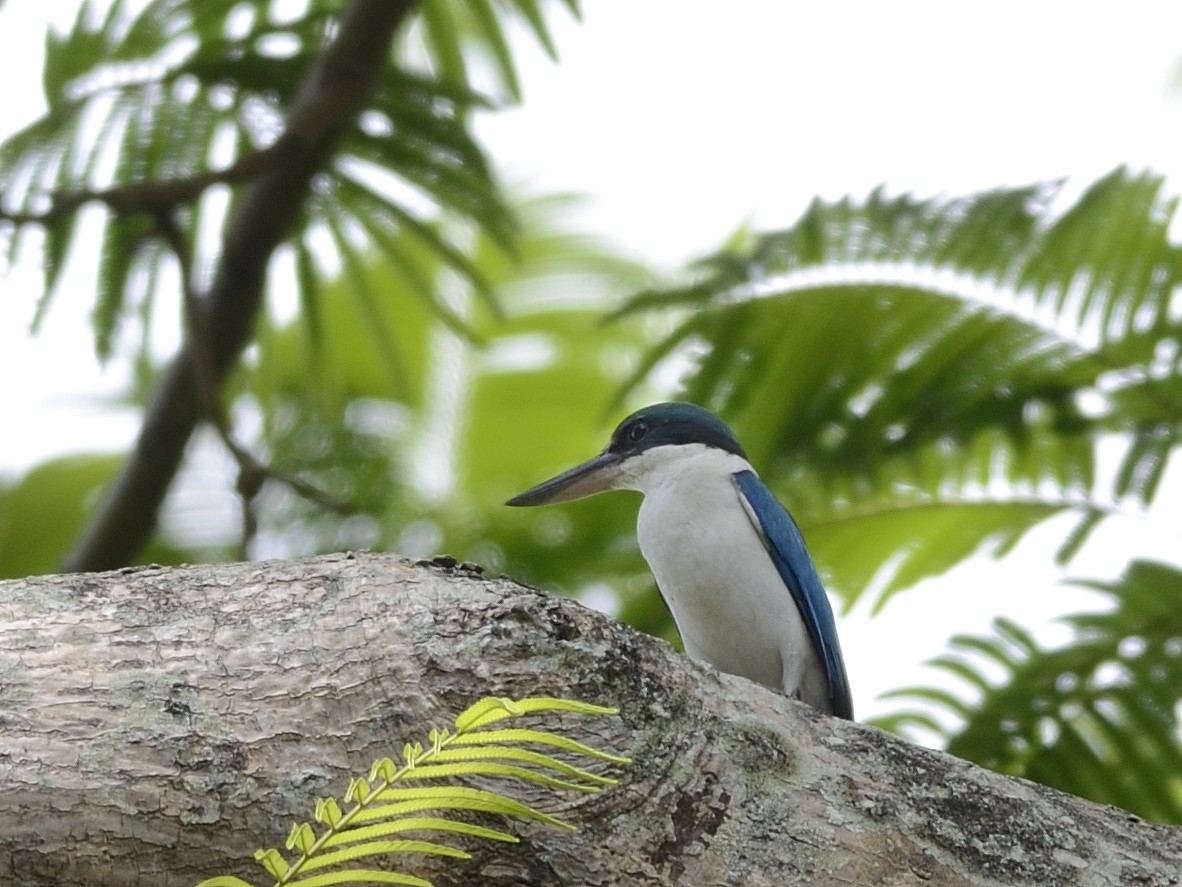
9. Collared Kingfisher
The collared kingfisher is 23 to 25 cm (9.1 to 9.8 in) long and the male weighs 51 to 90 g (1.8 to 3.2 oz), while the female weighs 54–100 g (1.9–3.5 oz). It varies from blue to green above while the underparts can be white or buff. There is a white collar around the neck, giving the bird its name. Some races have a white or buff stripe over the eye while others have a white spot between the eye and bill. There may be a black stripe through the eye. The large bill is black with a pale yellow base to the lower mandible. Females tend to be greener than the males. Immature birds are duller than the adults with dark scaly markings on the neck and breast. It has a variety of calls which vary geographically. The most typical call is a loud, harsh and metallic "kee-kee-kee" repeated several times.
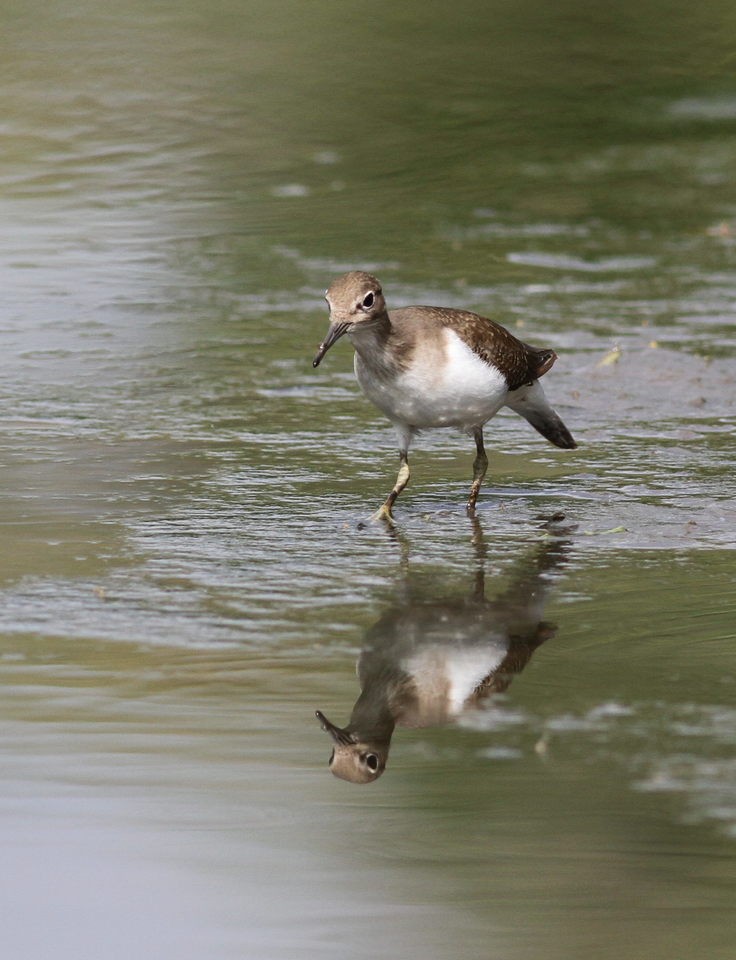
10. Common Sandpiper
While the common Sandpiper is considered a common shorebird around lakes and rivers, it does have a unique trait. The small bird bobs its tail, giving the appearance of wagging. The bird communicates with others by chirping in the air, but is silent when feeding on small crustaceans and invertebrates.
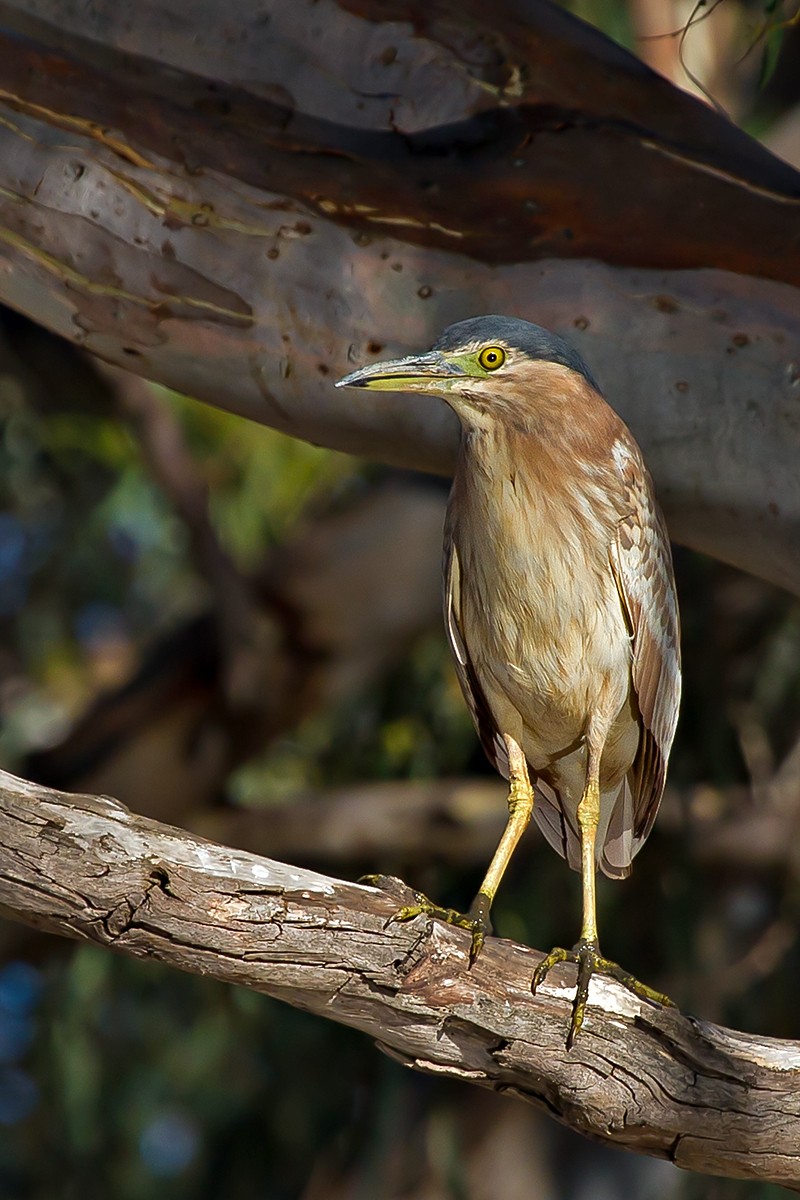
11. Nankeen Night Heron
The nankeen night heron is a medium-sized heron. The adult male is 55 to 65 cm in length, while the female is slightly smaller, measuring 55 to 60 cm. Its weight varies from 810 g to 1014 g, and the wingspan ranges from 95 to 105 cm. Other than females being smaller in most measurements, the sexes of the nankeen night heron are alike in appearance. The nankeen night heron has a heavy black bill, which is similar in length as its head. The face is white with a cinnamon tint, and the nape and crown of breeding adults is a grey-black. During the breeding season, there are also usually two or three thin, white plumes from the crown in a downward direction to the neck. These are tipped with black when newly grown. The heron has a rich chestnut colour across the upperparts, and the colours are more intense in the breeding season. The underparts of the nankeen night heron are white, and there is a gradual blend of the chestnut colour and the white on its neck and upper breast. The back, tail, and upper wing of the bird are a rich rufous colour. The iris is of a straw yellow and can be tinged with orange during the breeding season, while the legs and feet are a creamy yellow. Their legs are relatively shorter than that of other herons, and can become bright pink during courtship and early breeding. Juvenile nankeen night herons are quite different in appearance compared to adults, with the top of their head and their nape being a black-brown colour and streaked with beige. The upper throat and chin are white, while the rest of the neck is heavily streaked with brown. The tail of juveniles is rufous-brown, the legs and feet are lime-green to olive-grey, and the bill is a dull olive-yellow colour with black on the tip. Nankeen night heron chicks are covered with dark brown down feather on their back and white on the undersides. They have cream coloured beaks with a dark grey edge, and the legs are olive. Voice Adult male nankeen night herons give a qu-arck sound when departing their roost at night, while females and juvenile nankeen night herons give a higher pitched qu-ook sound. When disturbed during roosting, the heron gives a short, deep quock. The nankeen night heron gives a hoarse, croaking quok when in flight, and a harsh croak sound while feeding in a group. The threat call of the bird is a rok sound and is used when in aggregations. Nankeen night heron chicks are described to beg with a kak-kakkak call in their first two weeks, in order to obtain the attention of their parents for feeding. They also squawk as they dispute among themselves. After leaving their nest, during the period when they are still flightless, young nankeen night herons utter a noisy high-pitched screech when alarmed.
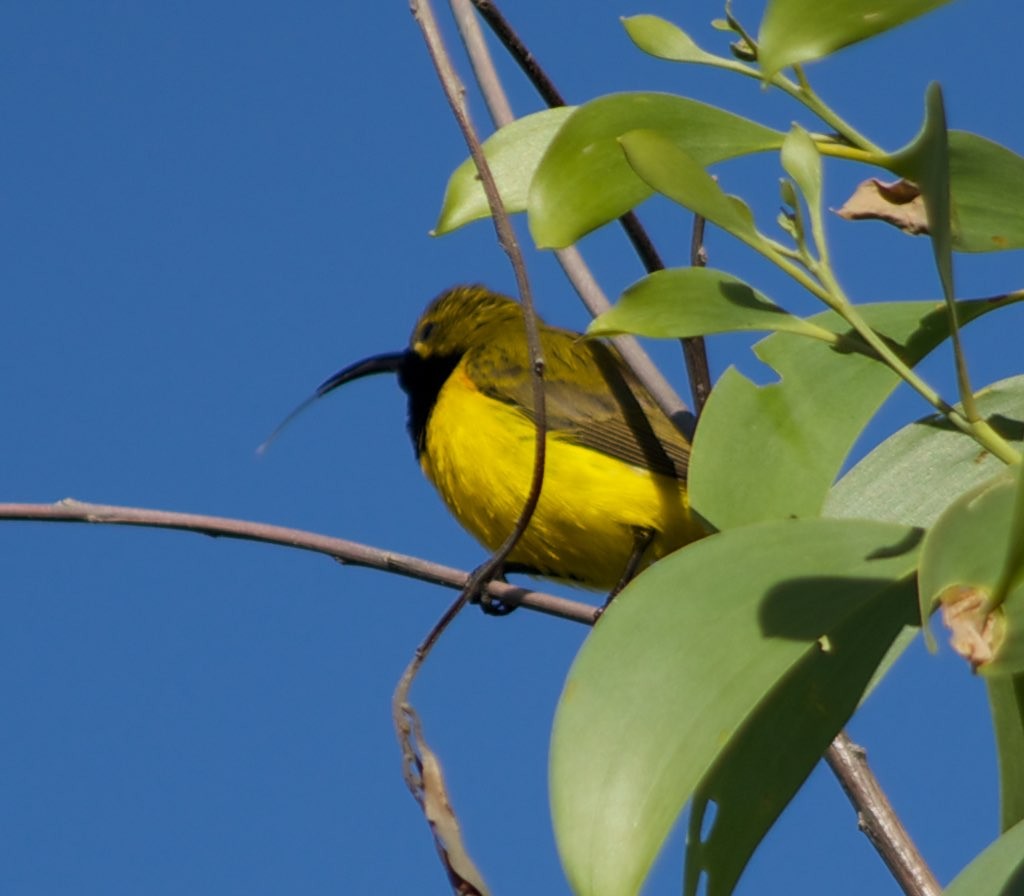
12. Olive-backed Sunbird
In most subspecies, the underparts of both male and female are bright yellow, the backs are a dull brown colour. The forehead, throat and upper breast of the adult male is a dark, metallic blue-black. In the Philippines the males of some subspecies have an orange band on the chest, in Wallacea and northern New Guinea some subspecies have most of the underparts blackish, and in southern China and adjacent parts of Vietnam most of the underparts of the male are greyish-white.
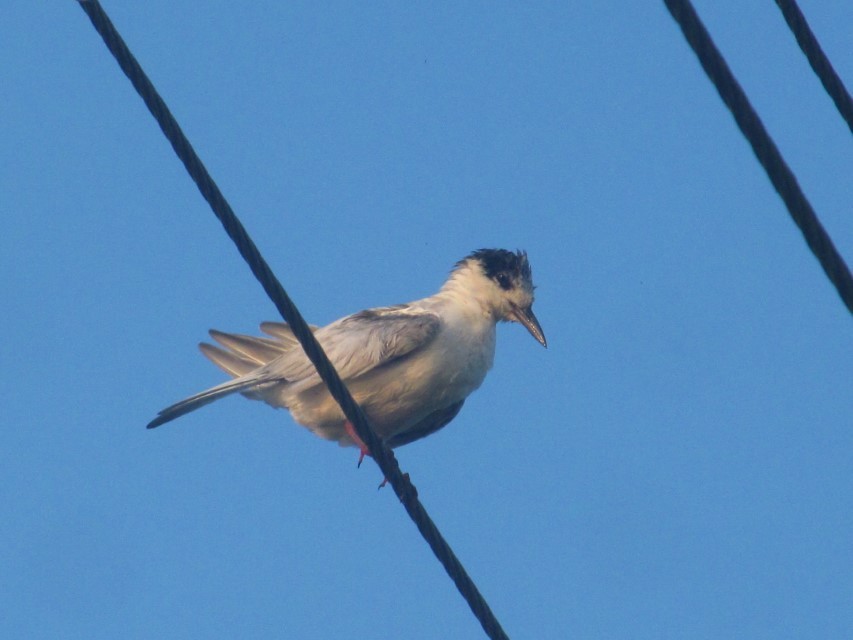
13. Whiskered Tern
The size, black cap, strong bill (29–34 mm in males, 25–27 mm and stubbier in females, with a pronounced gonys) and more positive flight recall common or Arctic tern, but the short, forked-looking tail and dark grey breeding plumage above and below are typically marsh tern characteristics. The summer adult has white cheeks and red legs and bill. The crown is flecked with white in the juvenile, and the hindcrown is more uniformly blackish, though in the winter adult this too is flecked with white. The black ear-coverts are joined to the black of the hindcrown, and the space above is mottled with white, causing the black to appear as a C-shaped band. The sides of the neck are white; this sometimes continues across the nape. The collar is less sharply defined. All through the year the rump is pale grey. In the juvenile, the mantle (279 mm) has a variegated pattern. The feathers of the back and scapulars are dark brown, with prominent broad buff edgings and often subterminal buff bars or centers. There is usually an admixture of new gray feathers, especially on the mantle, quite early in the fall. The mantle is silvery-gray in the adult. The call is a characteristic krekk. In winter, the forehead becomes white and the body plumage a much paler grey. Juvenile whiskered terns have a ginger scaly back, and otherwise look much like winter adults. The first winter plumage is intermediate between juvenile and adult winter, with patchy ginger on the back. The whiskered tern eats small fish, amphibians, insects and crustaceans.
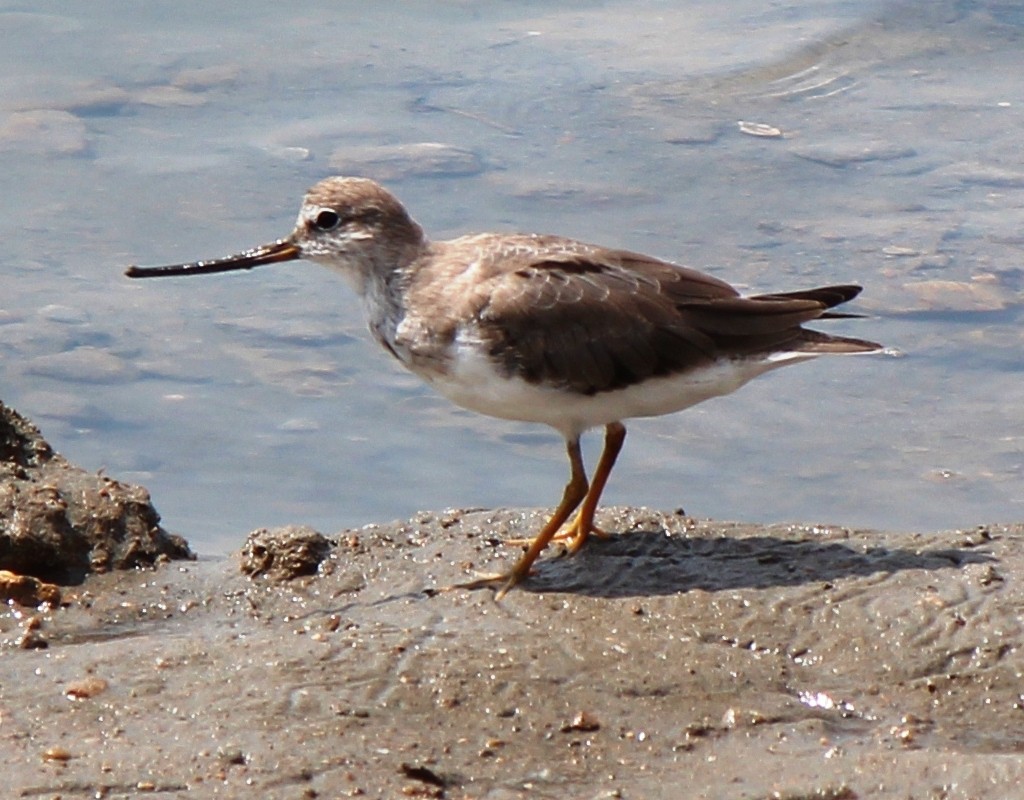
14. Terek Sandpiper
Slightly larger than the common sandpiper at 22–25 cm (8.7–9.8 in) length, its long upcurved bill – somewhat reminiscent of an avocet's, but not as strongly curved – makes it very distinctive. As the scientific specific name implies, this wader has a grey back, face and breast in all plumages; a white supercilium may appear more or less distinct. The belly is whitish and the feet yellow; the bill has a yellowish base, with the rest being black. The call is a high whistle. Among the Scolopacidae, Xenus is part of the shank-tattler-phalarope clade and less closely related to the calidrid sandpipers. Based on the degree of DNA sequence divergence and putative shank and phalarope fossils from around the Oligocene/Miocene boundary some 23–22 million years ago, the Terek sandpiper presumably diverged from their relatives in the Late Oligocene. Given the numerous basal fossils of the group found in Eurasia it is likely that the Terek sandpiper lineage originated there, possibly by being isolated as the remains of the Turgai Sea dried up, which happened just around this time.
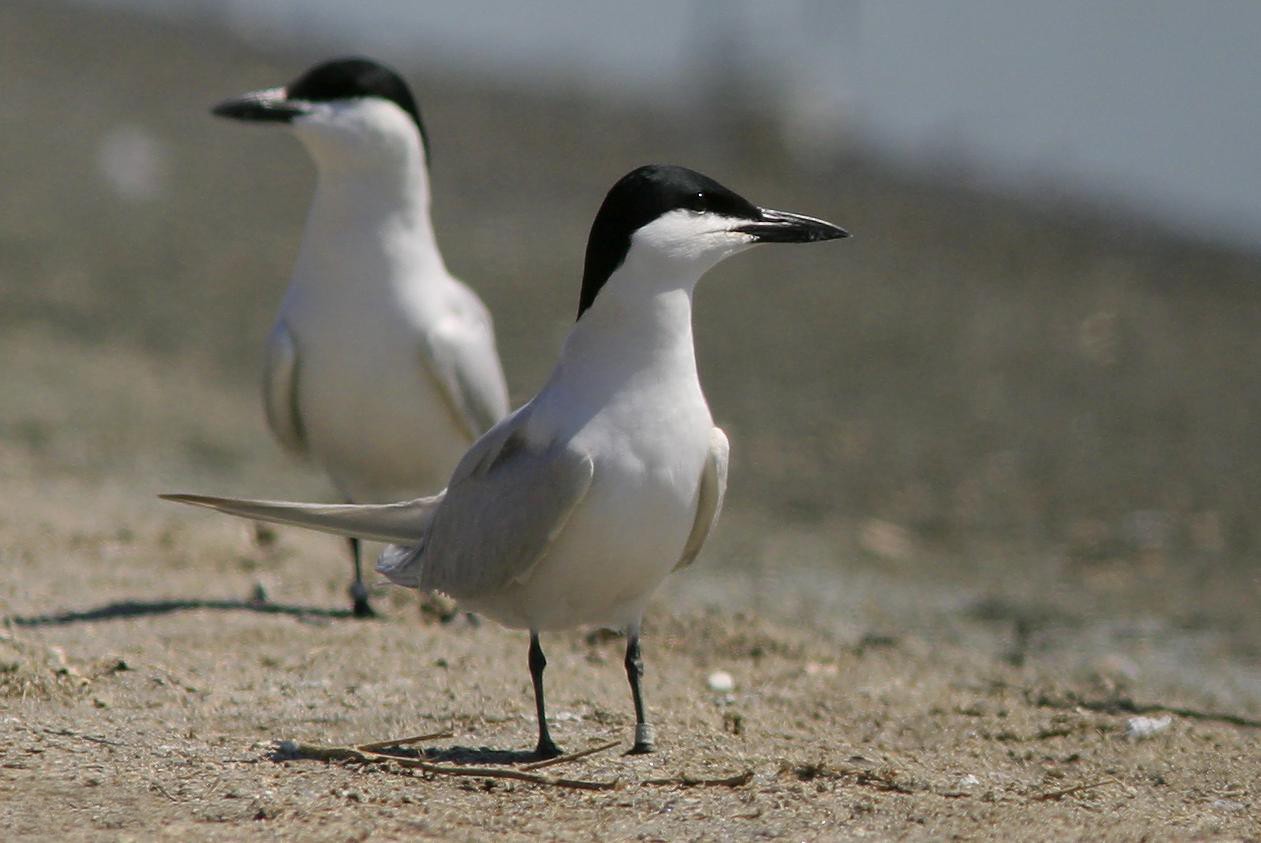
15. Gull-billed Tern
This is a fairly large and powerful tern, similar in size and general appearance to a Sandwich tern, but the short thick gull-like bill, broad wings, long legs and robust body are distinctive. The summer adult has grey upperparts, white underparts, a black cap, strong black bill and black legs. The call is a characteristic ker-wik. It is 33–42 cm (13–17 in) in length and 76–91 cm (30–36 in) in wingspan. Body mass ranges from 150–292 g (5.3–10.3 oz). In winter, the cap is lost, and there is a dark patch through the eye like a Forster's tern or a Mediterranean gull. Juvenile gull-billed terns have a fainter mask, but otherwise look much like winter adults. Juvenile Sandwich terns have a short bill, and are frequently mistaken for gull-billed tern where the latter species is uncommon, such as North Sea coasts.
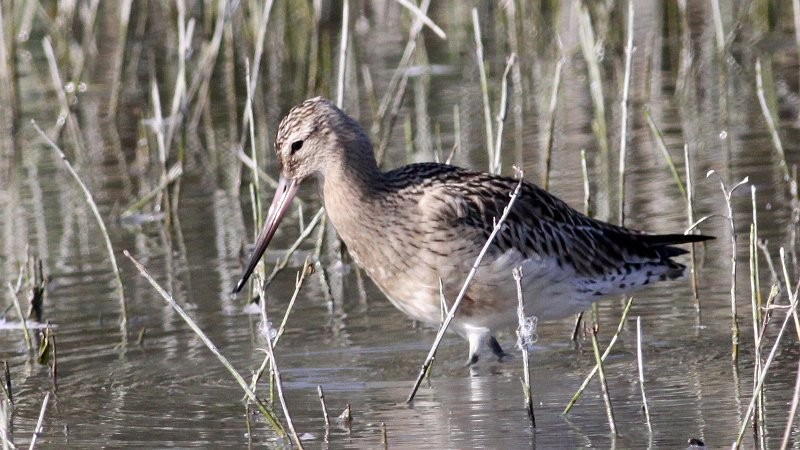
16. Bar-tailed Godwit
The bar-tailed godwit is a relatively short-legged species of godwit. The bill-to-tail length is 37–41 cm (15–16 in), with a wingspan of 70–80 cm (28–31 in). Males average smaller than females but with much overlap; males weigh 190–400 g (6.7–14.1 oz), while females weigh 260–630 g (9.2–22.2 oz); there is also some regional variation in size (see subspecies, below). The adult has blue-grey legs and a long, tapering, slightly upturned bi-colored bill: pink at the base and black towards the tip. The neck, breast and belly are unbroken brick red in breeding plumage, and dark brown above. Females breeding plumage is much duller than males, with a chestnut to cinnamon belly. Breeding plumage is not fully apparent until the third year, and there are three distinguishable age classes; during their first migration north immature males are noticeably paler in colour than more mature males. Non-breeding birds seen in the Southern Hemisphere are plain grey-brown with darker feather centres, giving them a striped look, and are whitish underneath. Juveniles are similar to non-breeding adults but more buff overall with streaked plumages on flanks and breast. Alaska-breeding bar-tailed godwits show an increase in body size from north to south, but this trend is not apparent in their non-breeding grounds in New Zealand; birds of different sizes mix freely. Limosa lapponica is distinguished from the black-tailed godwit (Limosa limosa) by its black-and-white horizontally-barred (rather than wholly black) tail, and lack of white wing bars. The most similar species is the Asiatic dowitcher (Limnodromus semipalmatus). There are now five generally accepted subspecies of bar-tailed godwit, listed from west to east: L. l. lapponica - (Linnaeus, 1758): Breeds from northern Scandinavia east to the Yamal Peninsula; winters western coasts of Europe and Africa from the British Isles and the Netherlands south to South Africa, and also around the Persian Gulf. Smallest subspecies, males up to 360 g (13 oz), females to 450 g (16 oz). L. l. taymyrensis: Engelmoer & Roselaar, 1998: Breeds in central Siberia from the Yamal Peninsula east to the Anabar River delta. L. l. menzbieri - Portenko, 1936: Breeds northeastern Asia from the Anabar River east to the Kolyma River delta; winters in Australia. L. l. anadyrensis: Engelmoer & Roselaar, 1998: from the Anadyr lowlands in far northeastern Asia east of the Kolyma River; the second largest subspecies, smaller than L. l. baueri L. l. baueri - Naumann, 1836: (called ) Breeds in western Alaska; winters in Australia and New Zealand. Largest subspecies.

17. Little Bronze Cuckoo
The little bronze cuckoo (Chrysococcyx minutillus) is a species of cuckoo in the family Cuculidae. It is found in Southeast Asia, New Guinea and northern and eastern Australia, where its natural habitat is subtropical or tropical moist lowland forest. It is the world's smallest cuckoo, at 17 grams (0.60 oz) and 15 cm (6 in). The subspecies rufomerus and crassirostris are sometimes given specific status.
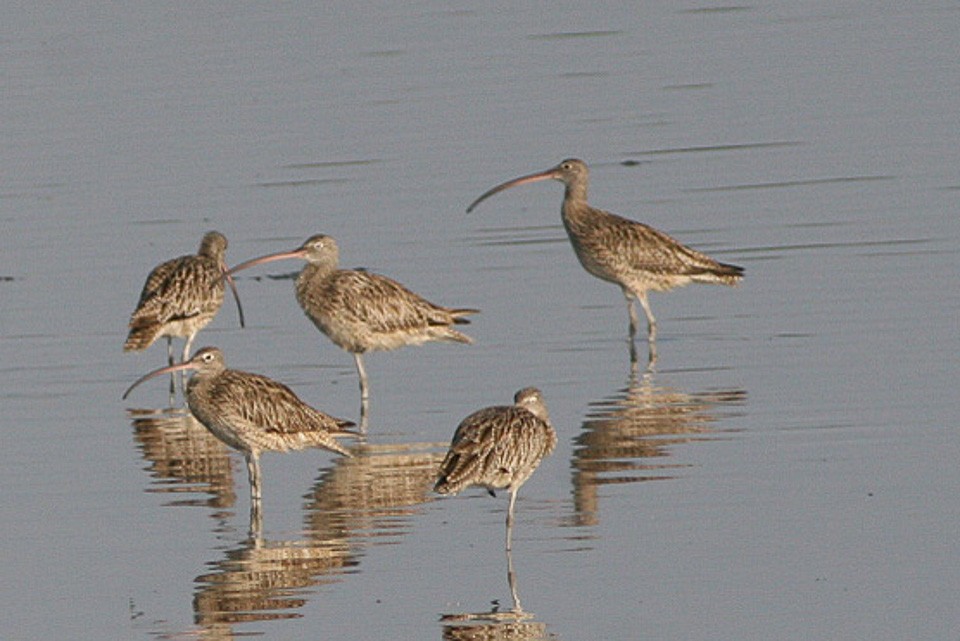
18. Far Eastern Curlew
The Far Eastern curlew (Numenius madagascariensis) is a large shorebird most similar in appearance to the long-billed curlew, but slightly larger. It is mostly brown in color, differentiated from other curlews by its plain, unpatterned brown underwing. It is not only the largest curlew but probably the world's largest sandpiper, at 60–66 cm (24–26 in) in length and 110 cm (43 in) across the wings. The body is reportedly 565–1,150 g (1.246–2.535 lb), which may be equaled by the Eurasian curlew. The extremely long bill, at 12.8–20.1 cm (5.0–7.9 in) in length, rivals the bill size of the closely related long-billed curlew as the longest bill for a sandpiper. The Far Eastern curlew spends its breeding season in northeastern Asia, including Siberia to Kamchatka, and Mongolia. Its breeding habitat is composed of marshy and swampy wetlands and lakeshores. Most individuals winter in coastal Australia, with a few heading to South Korea, Thailand, Philippines and New Zealand, where they stay at estuaries, beaches, and salt marshes. During its migration the Far Eastern curlew commonly passes the Yellow Sea. It uses its long, decurved bill to probe for invertebrates in the mud. It may feed in solitary but it generally congregates in large flocks to migrate or roost. Its call is a sharp, clear whistle, cuuue-reee, often repeated. As of 2006, there are an estimated 38,000 individuals in the world. Formerly classified as least concern by IUCN, it was found to have been rarer than previously believed and thus its status was updated to "vulnerable" in the 2010 IUCN red list of threatened species. In Australia its status under the Environment Protection and Biodiversity Conservation Act is "critically endangered".
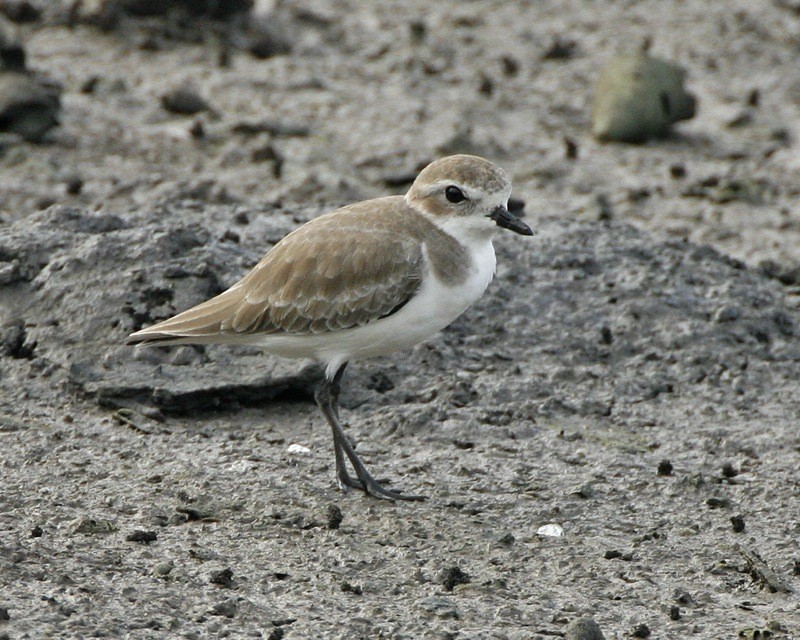
19. Lesser Sand Plover
This chunky plover is long-legged and long-billed. Breeding males have grey backs and white underparts. The breast, forehead and nape are chestnut, and there is a black eye mask. The female is duller, and winter and juvenile birds lack the chestnut, apart from a hint of rufous on the head. Legs are dark and the bill black. In all plumages, this species is very similar to the greater sand plover, Charadrius leschenaultii. Separating the species may be straightforward in mixed wintering flocks on an Indian beach, where the difference in size and structure is obvious; it is more difficult to identify a lone vagrant to western Europe, where both species are very rare. The problem is compounded in that the Middle Eastern race of greater sand plover is the most similar to the lesser. The lesser usually has darker legs, a white forehead, and a more even white wing bar than the greater.

20. Common Greenshank
A larger-sized wading bird, the common Greenshank has wide eyes that give it a gentle-looking appearance. It is often seen wading along shorelines picking up small aquatic insects and fish with its upturned beak. It is a vocal bird with a mellow call it emits whether it is searching for food in a small group or by itself.