




Top 20 Most Common Bird in Buriram
Buriram has an abundant supply of diverse bird species. The 20 most common birds capture a unique combination of beauty and survival adaptations. They display a remarkable spectrum of colors and intriguing behaviors, adapted to Buriram's moist climate and richly forested regions. Observing these birds provides a captivating insight into Buriram's vibrant birdlife.

Most Common Bird
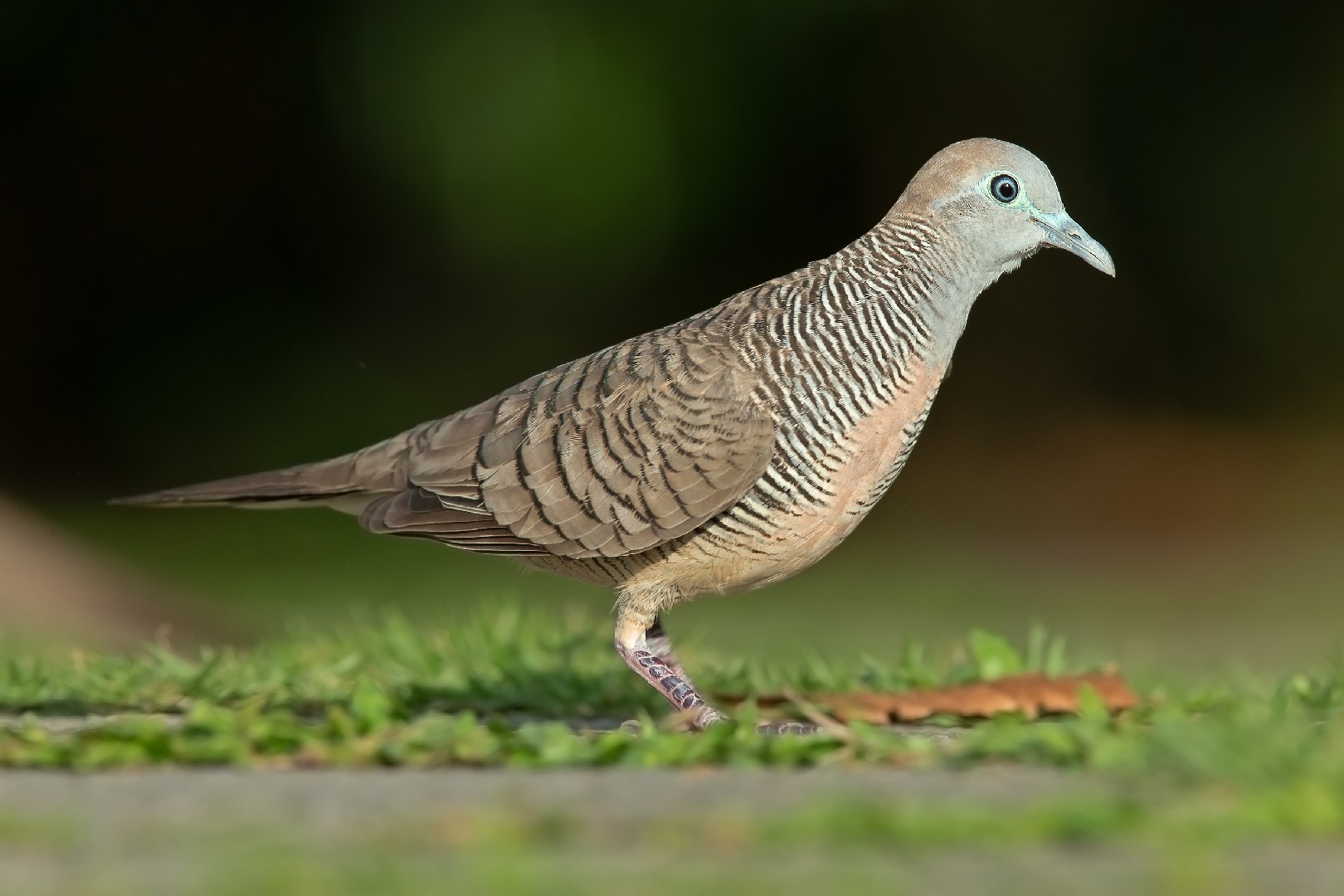
1. Zebra Dove
The zebra Dove is a small dove found in dense forests, open fields, farmlands, and similar suburban areas. Unlike other dove species, this ground-dwelling bird likes to forage alone or in pairs, but not in large groups. The call of this slender dove is often described as very pleasant. Very common in urban areas, they are quite comfortable around humans.
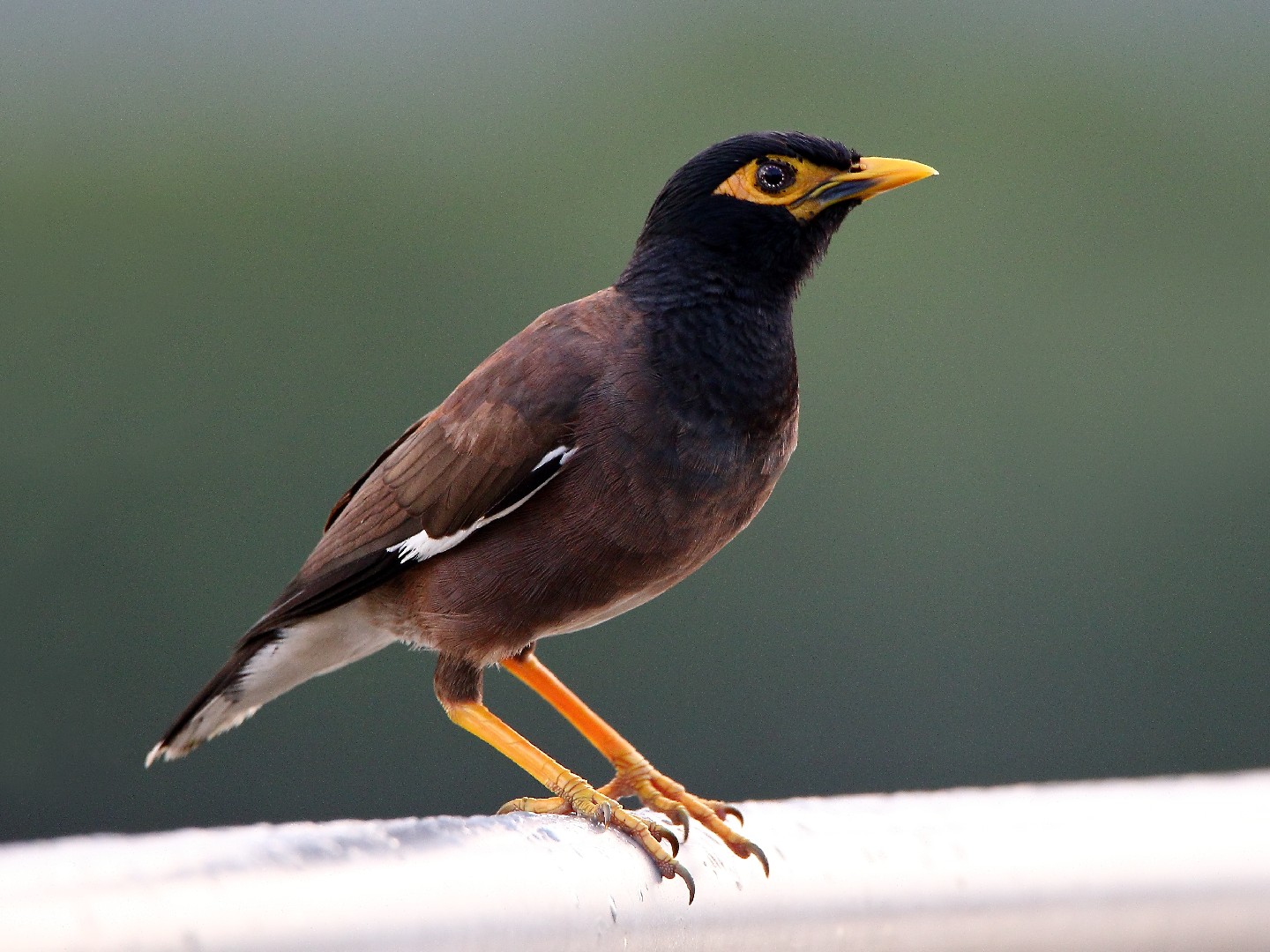
2. Common Myna
The common Myna is a large, stocky starling that prefers to live near humans in towns and suburban areas. It forages among tall grasses for grasshoppers; in fact, its scientific name, Acridotheres tristis, means "grasshopper hunter." The common Myna likes to maintain two roosts at the same time - both a temporary summer roost near the breeding site as well as a year-round roost where the female can sit and brood.
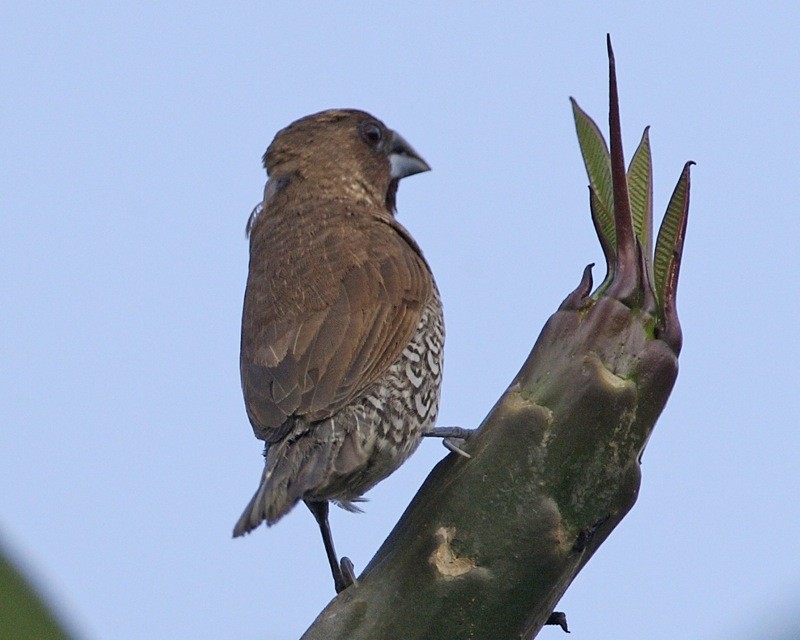
3. Scaly-breasted Munia
The scaly-breasted munia is about 11–12 centimetres (4.3–4.7 in) long and weighs 12–16 grams (0.026–0.035 lb). The adult has a stubby dark bill typical of grain eating birds, brown upperparts and a dark brown head. The underparts are white with dark scale markings. The sexes are similar, although males have darker markings on the underside and a darker throat than females. Immature birds have pale brown upperparts, lack the dark head found in adults, and have uniform buff underparts that can be confused with juveniles of other munia species such as the tricolored munia (Lonchura malacca) across the Asian and island populations and the black-throated munia (Lonchura kelaarti) in parts of India or Sri Lanka. Populations within their wide distribution range show variations in plumage color and size. Along with other Estrildines, these species are thought to have originated in Asia. The species has been introduced to other parts of the world due to its popularity as a cage bird and populations have established in the wild. 
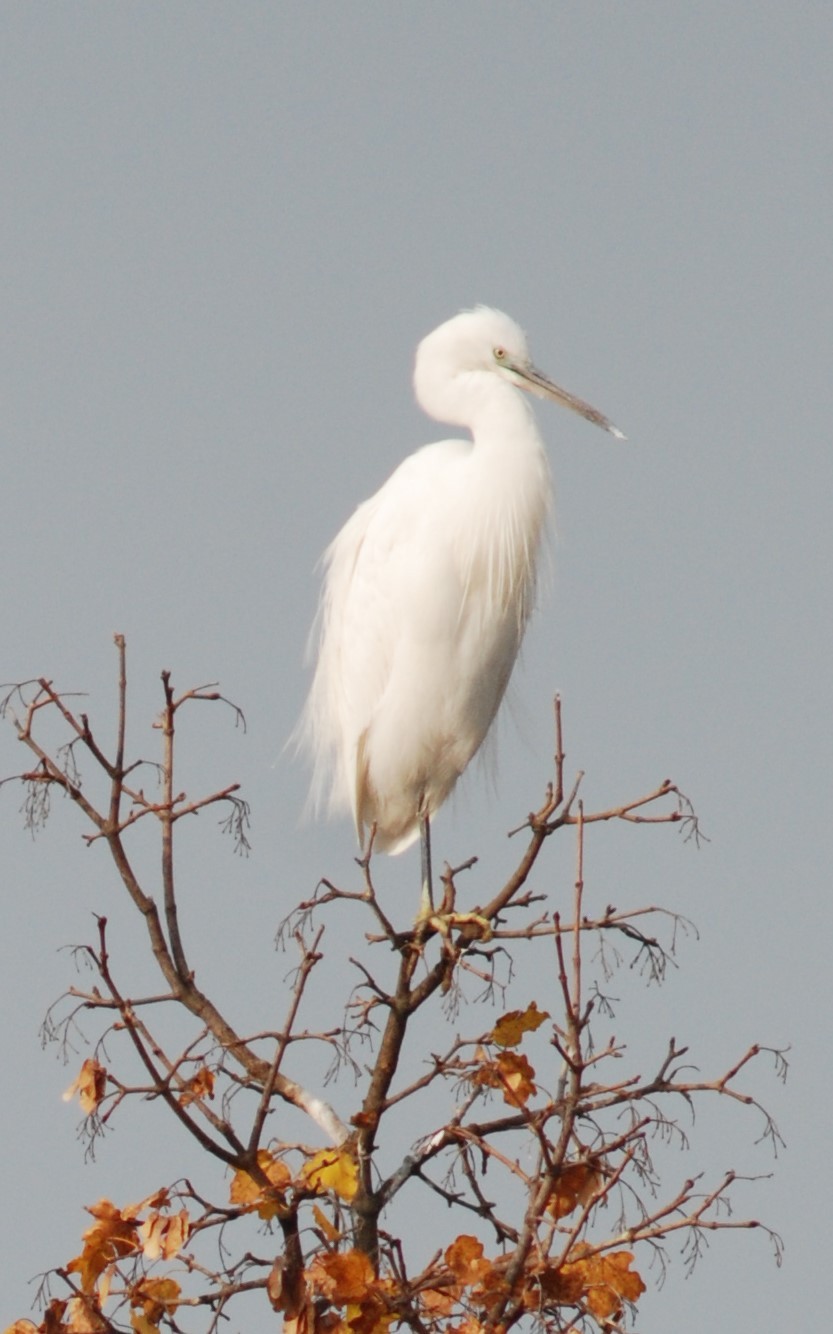
4. Little Egret
The small size of the little Egret makes the bird easily recognizable among larger species that share the same range. The egret is seen almost anywhere there are small fish including marshes, estuaries, and rivers. The bird often searches for food by itself but prefers to build nests in communities, occasionally with other bird species.
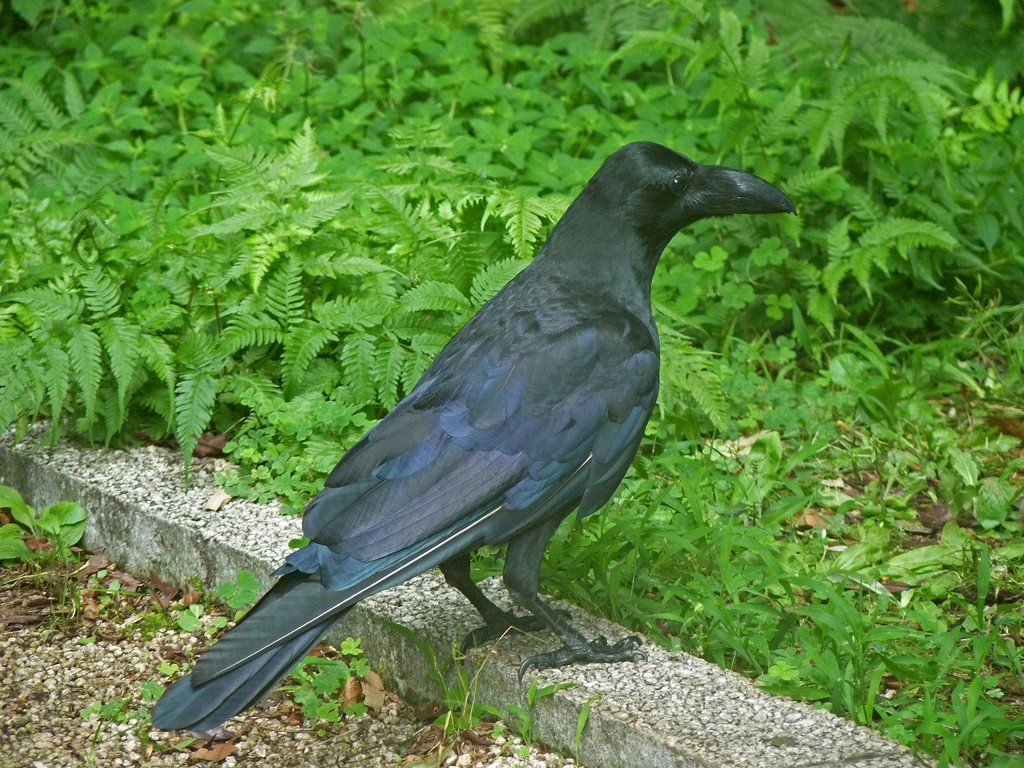
5. Large-billed Crow
The overall size (length: 46–59 cm; 18–23 in.) and body proportions vary regionally. In the far northeast in Japan, the Kuriles and the Sakhalin peninsula, it is somewhat larger than the carrion crow. All taxa have a relatively long bill with the upper one quite thick and arched, making it look heavy and almost raven-like. Generally, all taxa have dark greyish plumage from the back of the head, neck, shoulders and lower body. Their wings, tail, face, and throat are glossy black. The depth of the grey shading varies across its range.
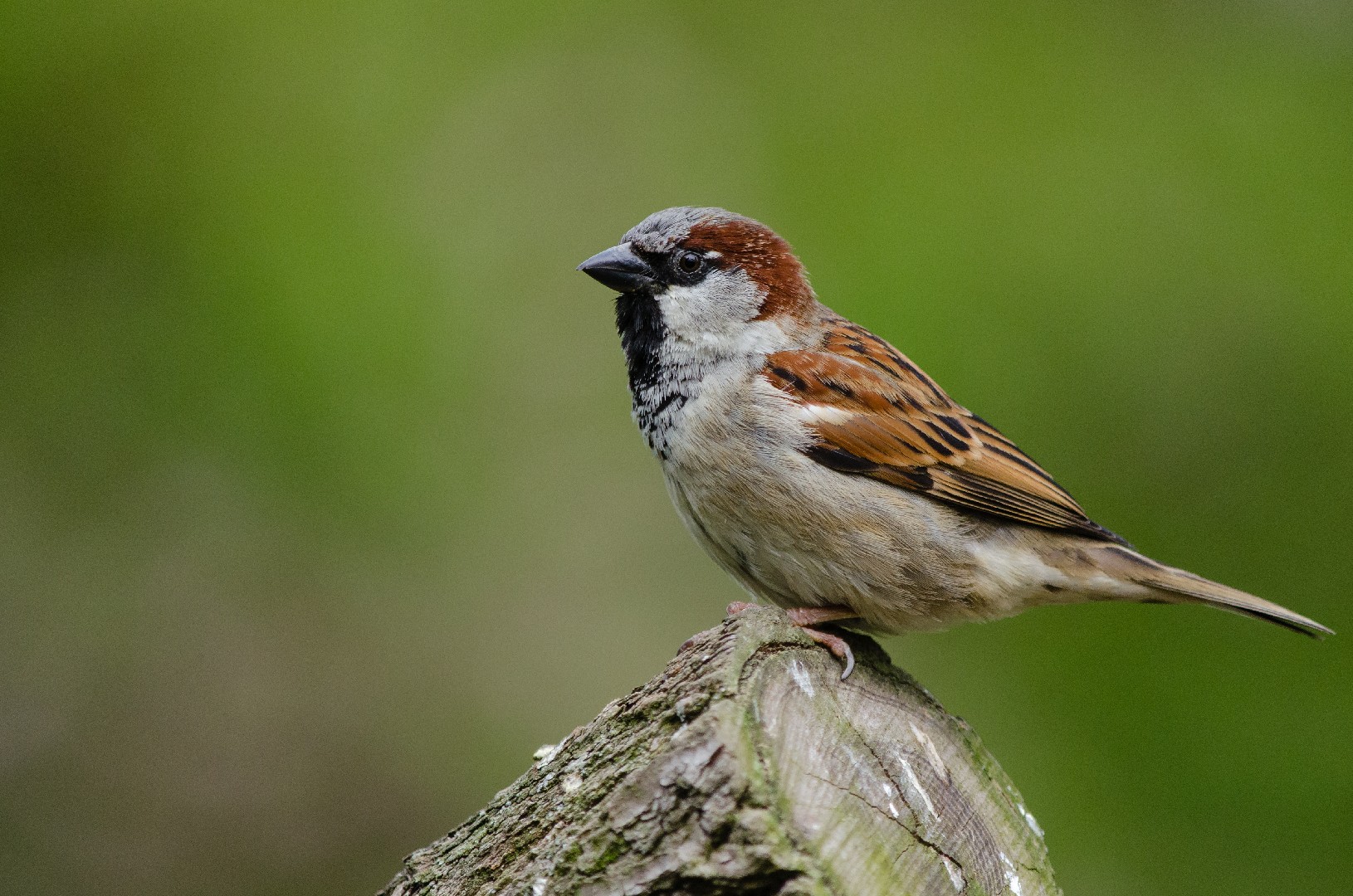
6. House Sparrow
Just as its name implies, the little house Sparrow socializes with humans more than any other bird species. Able to adapt and thrive in almost any habitat, excluding the extremes such as deserts and mountain peaks, this species was once restricted only to North Africa and Eurasia but now is found across the globe. Unfortunately, this opportunistic eater is not completely harmless—it can cause considerable damage to crops.
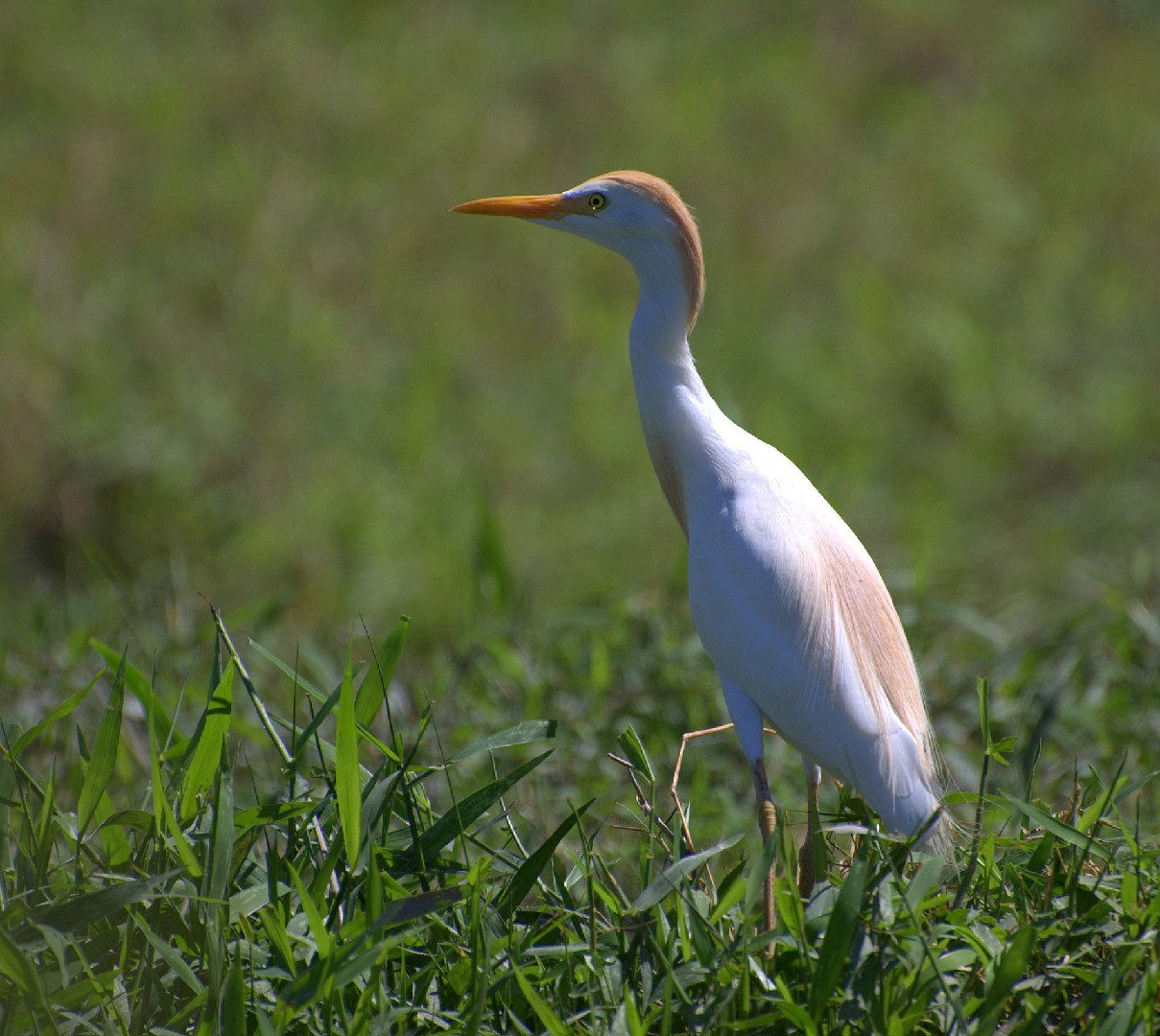
7. Cattle Egret
Cattle Egrets are short, thick-necked egrets. Their name refers to their preference to follow along with livestock as they forage in fields. Cattle Egrets were native only to Africa until the late 1800s when they somehow made their way throughout the Americas. They can often be found along airport runways waiting for planes to take off and blow insects out of the grass and weeds. They also follow behind farm equipment and do the same thing.
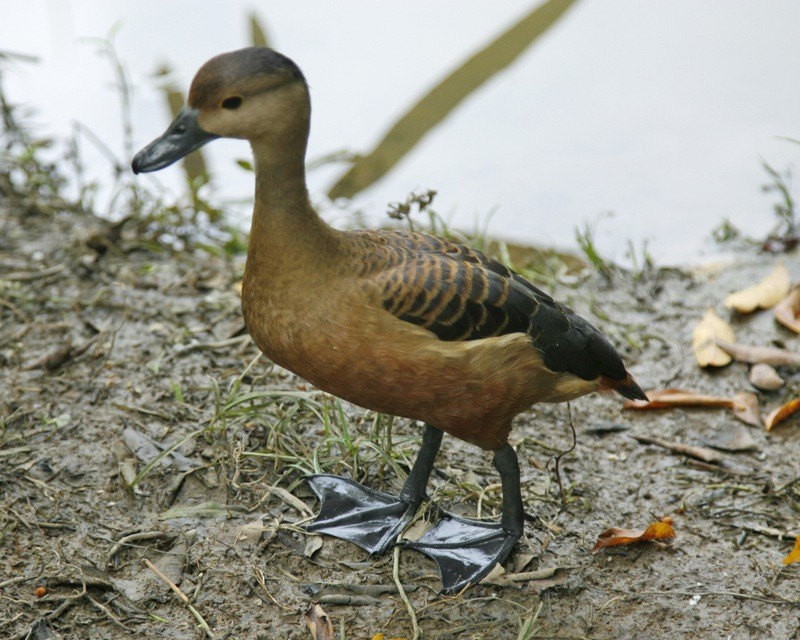
8. Lesser Whistling Duck
This chestnut brown duck is confusable only with the fulvous whistling duck (D. bicolor) but has chestnut upper-tail coverts unlike the creamy white in the latter. The ring around the eye is orange to yellow. When flying straight, their head is held below the level of the body as in other Dendrocygna species. The crown appears dark and the sexes are alike in plumage. They fly slowly but with rapid wing-flapping and usually produce a repetitive wheezy seasick call as they circle overhead. They are very nocturnal and often rest during the day. The outermost primary feather has the inner vane modified. They produce very prominent whistling sound while flying.
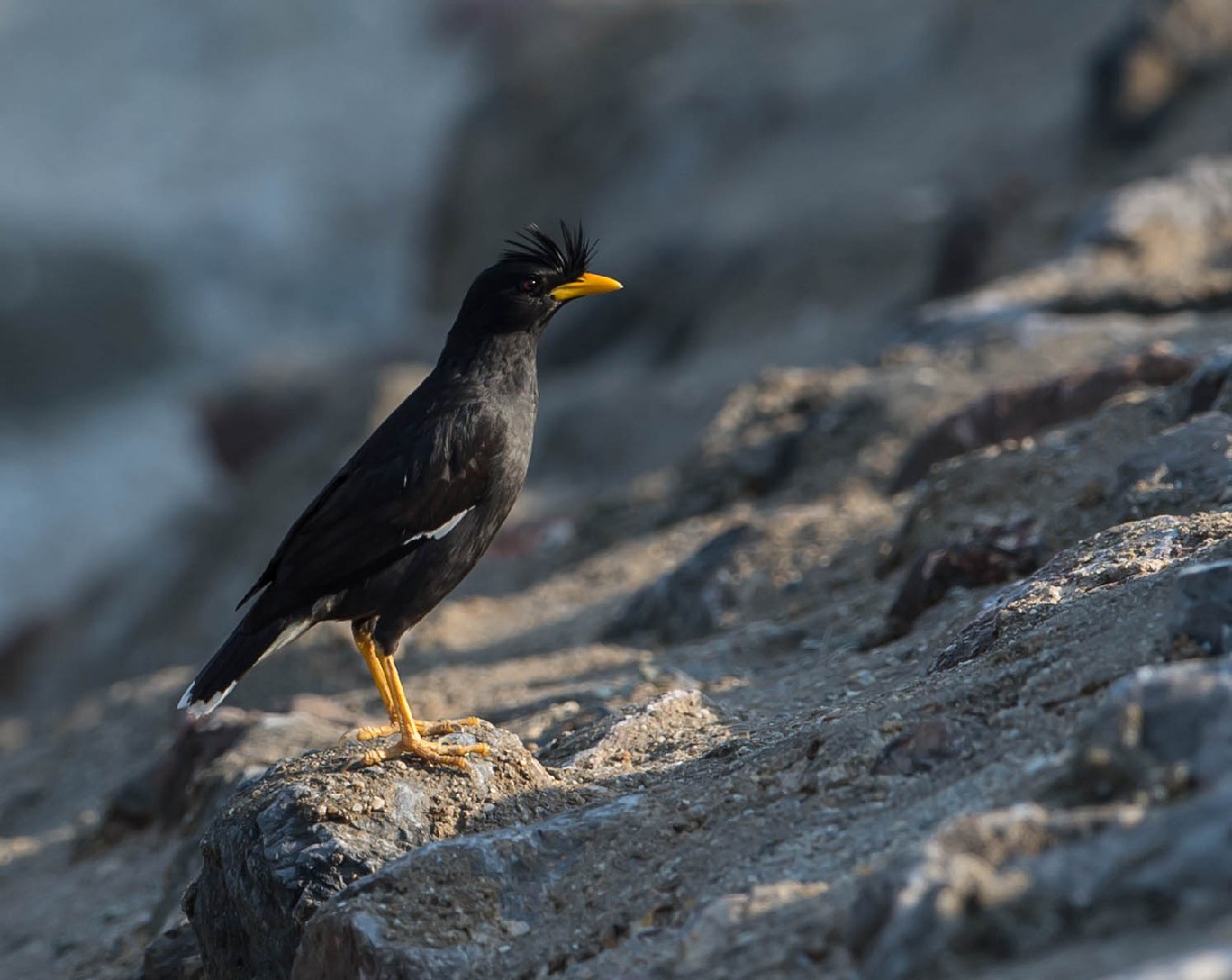
9. Great Myna
It is black with elongated forehead feathers, forming a frontal crest that may curl backwards. Its beak and feet are yellow. It has white from the vent to the tip of the tail and a white wing patch.
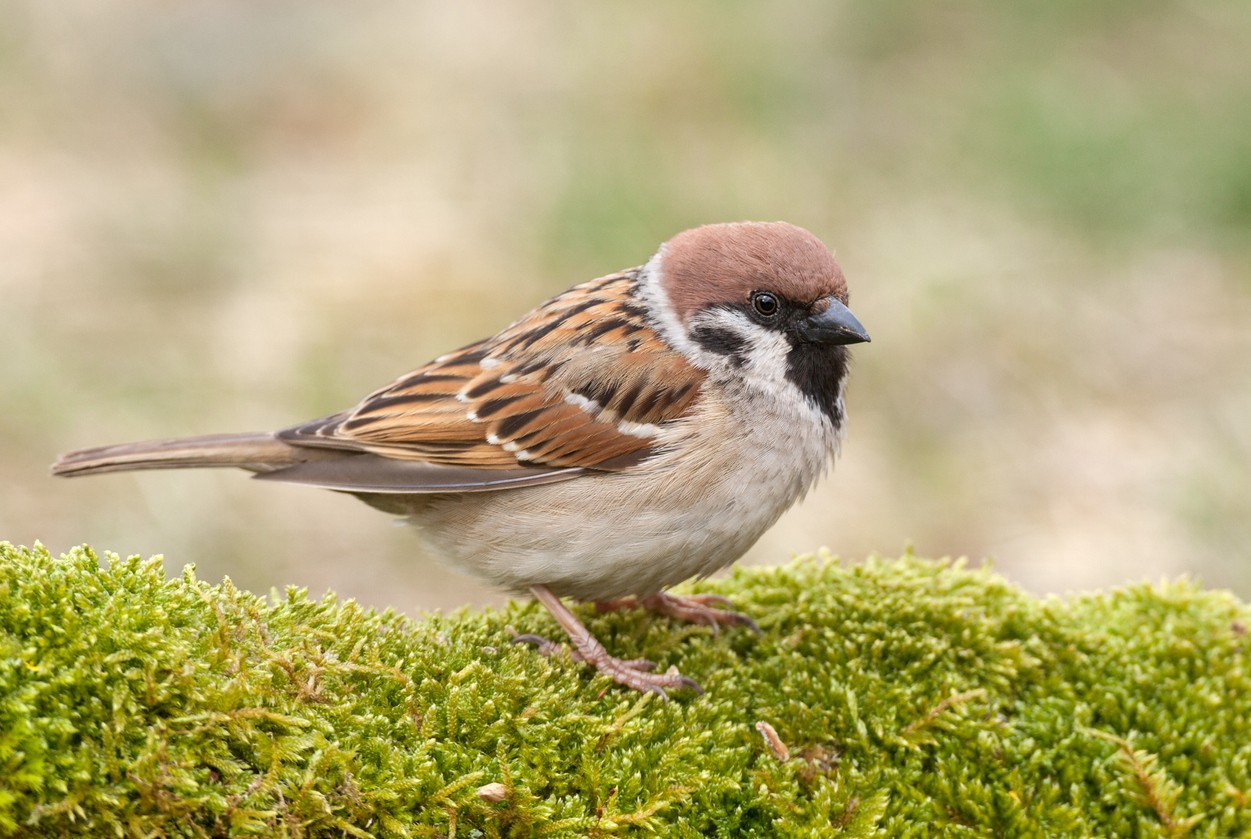
10. Eurasian Tree Sparrow
The eurasian Tree Sparrow (Passer montanus) is a widespread sparrow of the European mainland that has been introduced to some parts of North America. Eurasian Tree Sparrow is very similar to the House sparrow (Passer domesticus) but it's smaller and neater. It prefers more natural habitats, at the edges of human activity, and inhabits farmlands, parklands, and open woods.
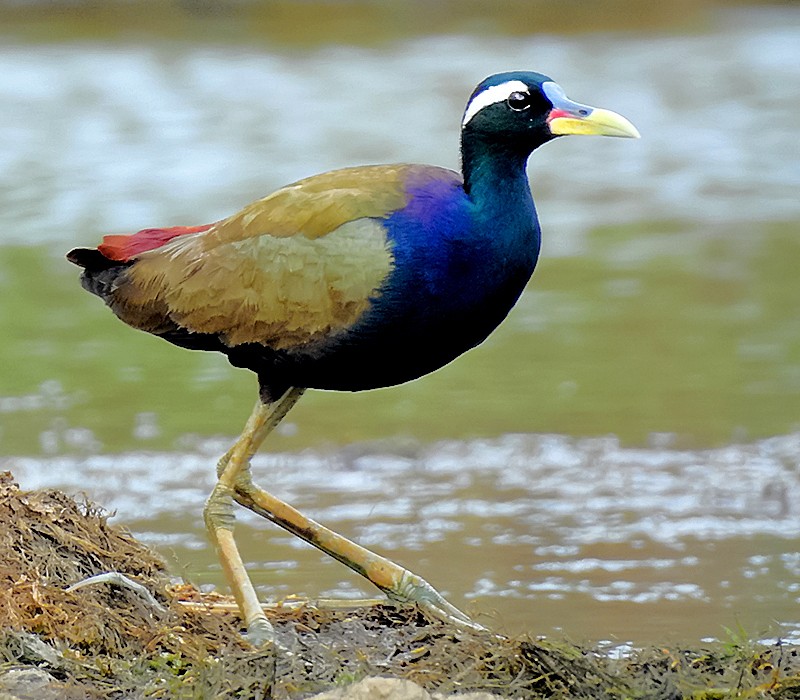
11. Bronze-winged Jacana
Bronze-winged jacanas are rail-like, large, short tailed birds that appear dark at a distance except for the supercilium. They are 29 cm (11 in) in length. The sexes are similar but the females are slightly larger than the males. The wings are bronzy brown with a green sheen and have a reduced tubercular carpal spur. The head, neck and breast are black and contrast with the broad white supercilium that runs from over the eye to the back of the neck. The lower back and tail coverts are chestnut. The tail is stubby and reddish brown with black terminal band. The greenish yellow bill has a red-base to the upper mandible. A lappet or frontal shield extends up over the forehead and is reddish purple. The legs are greenish. The toes are long and the straight and the elongated nail on the hind toe is longer than the toe. Downy chicks are light brown with a dark stripe running down the nape. Young birds have brown upperparts, a rufous crown, white underparts, a buff foreneck, an undeveloped frontal shield, and may have a dull supercilium. Adults can be confused at a distance with the common moorhen (which is found in similar habitat) and with the watercock and while young can appear similar to the young of the pheasant-tailed jacana, they lack the black necklace seen in that species.
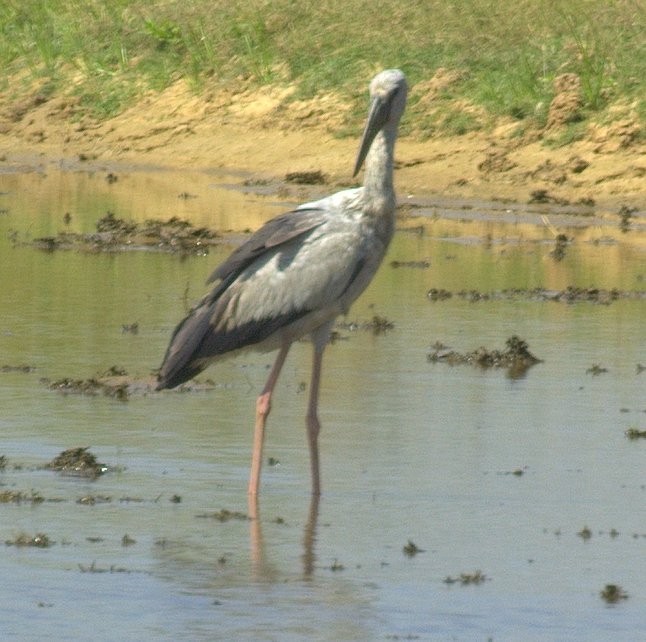
12. Asian Openbill
The Asian openbill stork is predominantly greyish (non-breeding season) or white (breeding season) with glossy black wings and tail that have a green or purple sheen. The name is derived from the distinctive gap formed between the recurved lower and arched upper mandible of the beak in adult birds. Young birds do not have this gap. The cutting edges of the mandible have a fine brush like structure that is thought to give them better grip on the shells of snails. The tail consists of twelve feathers and the preen gland has a tuft. The mantle is black and the bill is horn-grey. At a distance, they can appear somewhat like a white stork or Oriental stork. The short legs are pinkish to grey, reddish prior to breeding. Non-breeding birds have a smoky grey wings and back instead of white. Young birds are brownish-grey and have a brownish mantle. Like other storks, the Asian openbill is a broad-winged soaring bird, which relies on moving between thermals of hot air for sustained flight. They are usually found in flocks but single birds are not uncommon. Like all storks, it flies with its neck outstretched. It is relatively small for a stork and stands at 68 cm height (81 cm long).
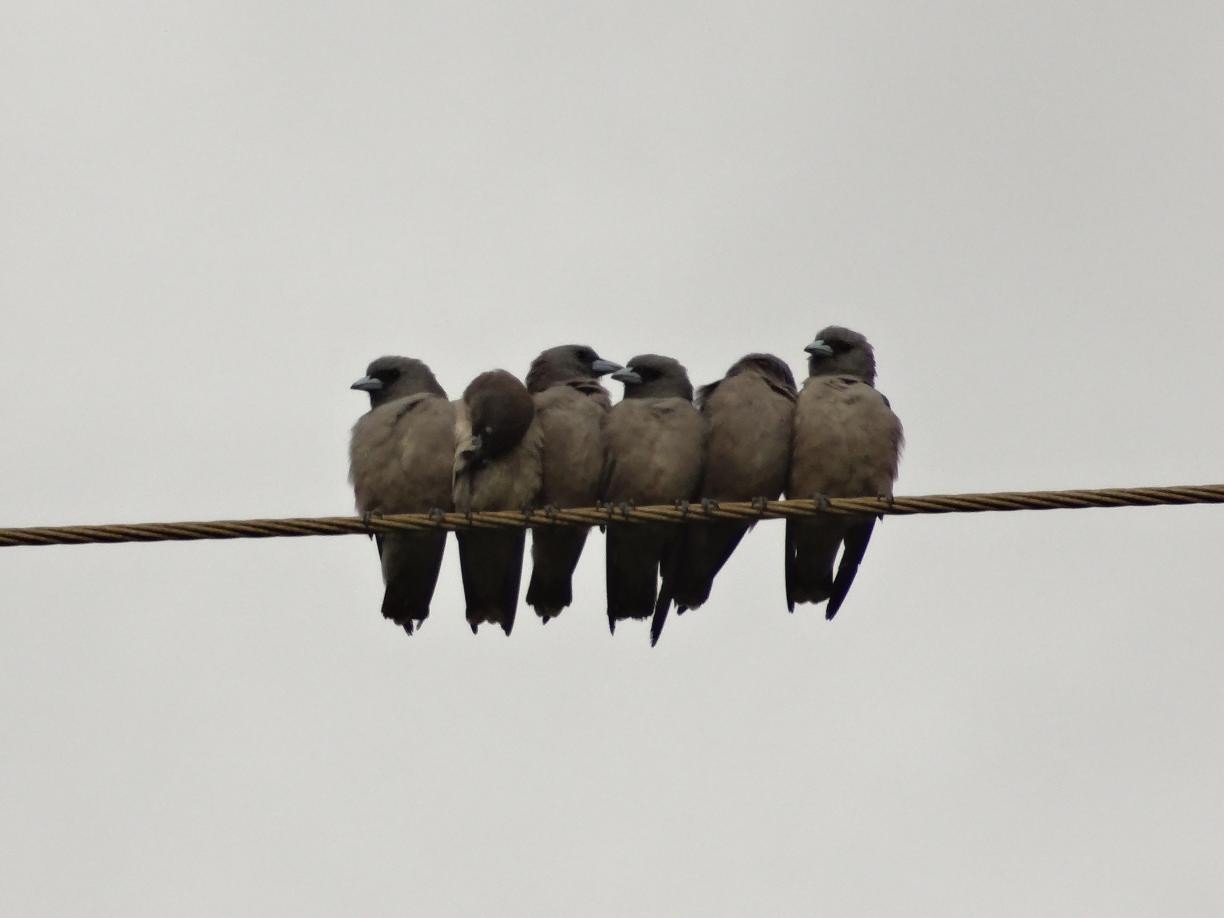
13. Ashy Woodswallow
This stocky woodswallow has an ashy grey upperparts with a darker head and a narrow pale band on the rump. The underside is pinkish grey and the short slaty black tail is tipped in white. The finch-like bill is silvery. In flight the long wing looks very broad at the base giving it a very triangular outline. The first primary is very short. The legs are short and the birds usually perch on high vantage points from which they make aerial sallies. There are no geographic variations in plumage and no subspecies have been designated. Males and females are indistinguishable in the field, however an old report suggests that the sexes differ in the colour of the inside of the mouth. Young birds appear barred on the underside.
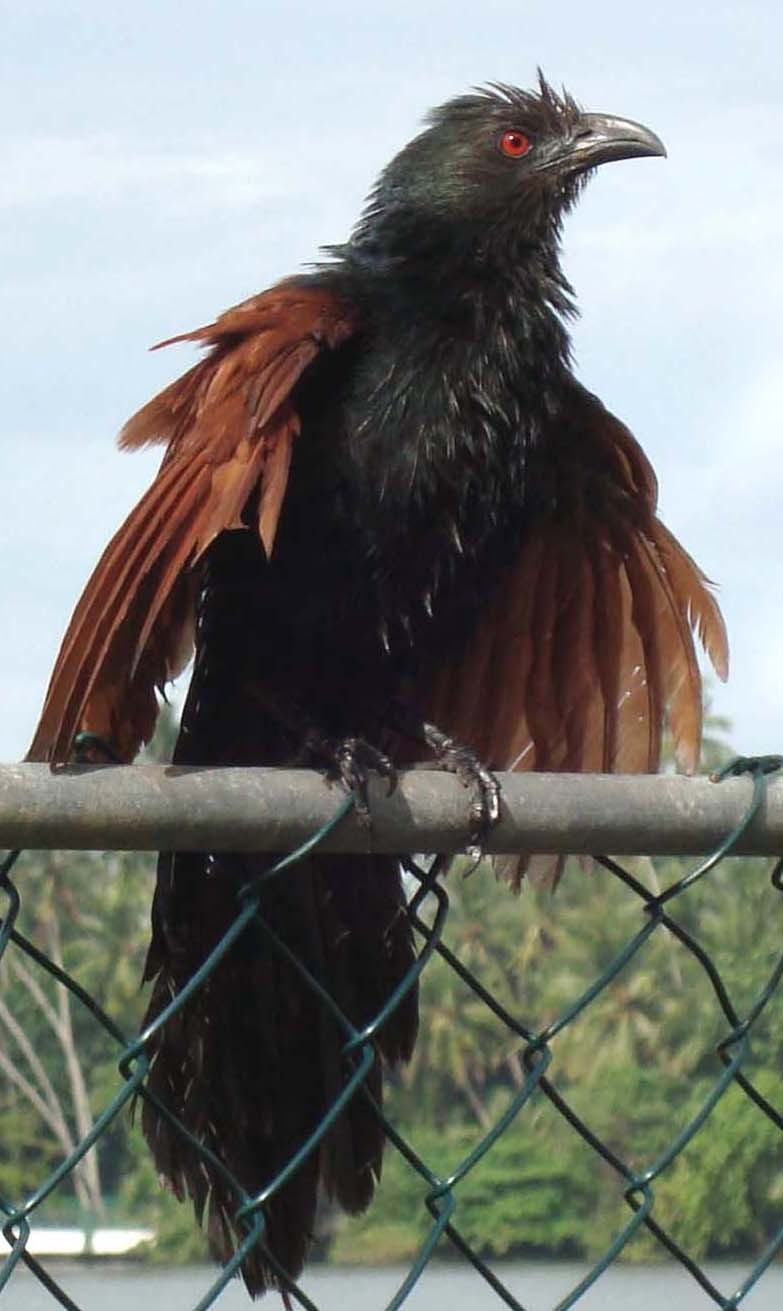
14. Greater Coucal
This is a large species of cuckoo. The head is black, upper mantle and underside are black glossed with purple. The back and wings are chestnut brown. There are no pale shaft streaks on the coverts. The eyes are ruby red. Juveniles are duller black with spots on the crown and there are whitish bars on the underside and tail. There are several geographic races and some of these populations are sometimes treated as full species.
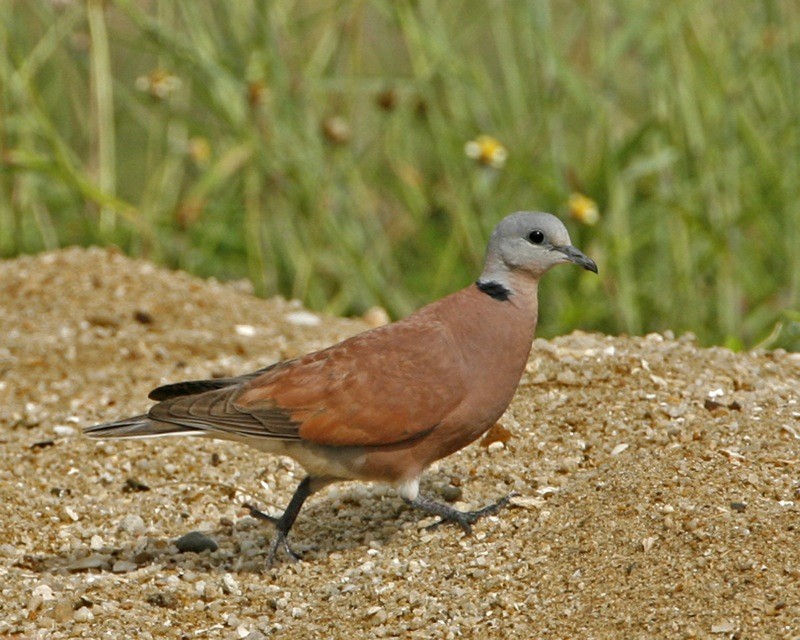
15. Red Collared Dove
The red turtle dove is a relatively small species. The male has a bluish head and light red-brown body with a black ring round its neck, while the female is similar but pinkish all over.
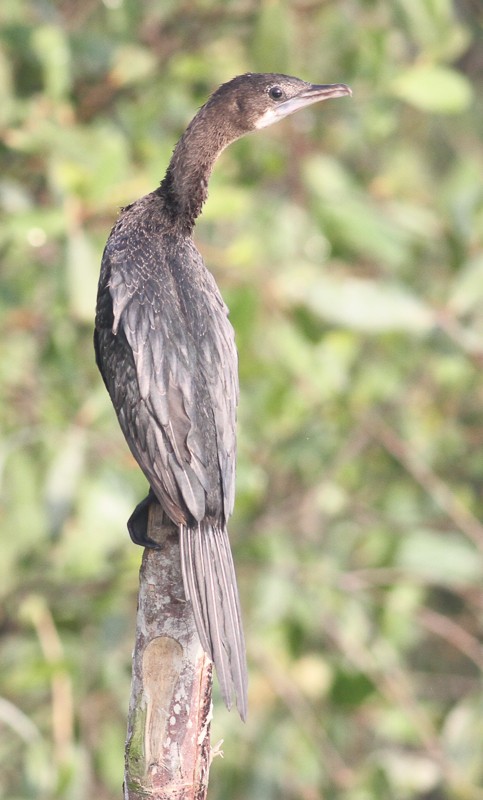
16. Little Cormorant
The little cormorant is about 50 centimetres (20 in) long and only slightly smaller than the Indian cormorant (Phalacrocorax fuscicollis). The Indian cormorant has a narrower and longer bill which ends in a prominent hook tip, blue iris and a more pointed head profile. The breeding adult bird has a glistening all black plumage with some white spots and filoplumes on the face. There is also a short crest on the back of the head. The eyes, gular skin and face are dark. In the non-breeding bird or juvenile, the plumage is brownish and the bill and gular skin can appear more fleshy. The crest becomes inconspicuous and a small and well-marked white patch on the throat is sometimes visible. Towards the west of the Indus River valley, its range can overlap with vagrant pygmy cormorants (Microcarbo pygmaeus), which can be difficult to differentiate in the field and are sometimes even considered conspecific. The sexes are indistinguishable in the field, but males tend to be larger. Some abnormal silvery-grey plumages have been described. The species was described by Vieillot in 1817 as Hydrocorax niger. The genus Hydrocorax literally means water crow. It was later included with the other cormorants in the genus Phalacrocorax but some studies place the smaller "microcormorants" under the genus Microcarbo.
17. Brahminy Kite
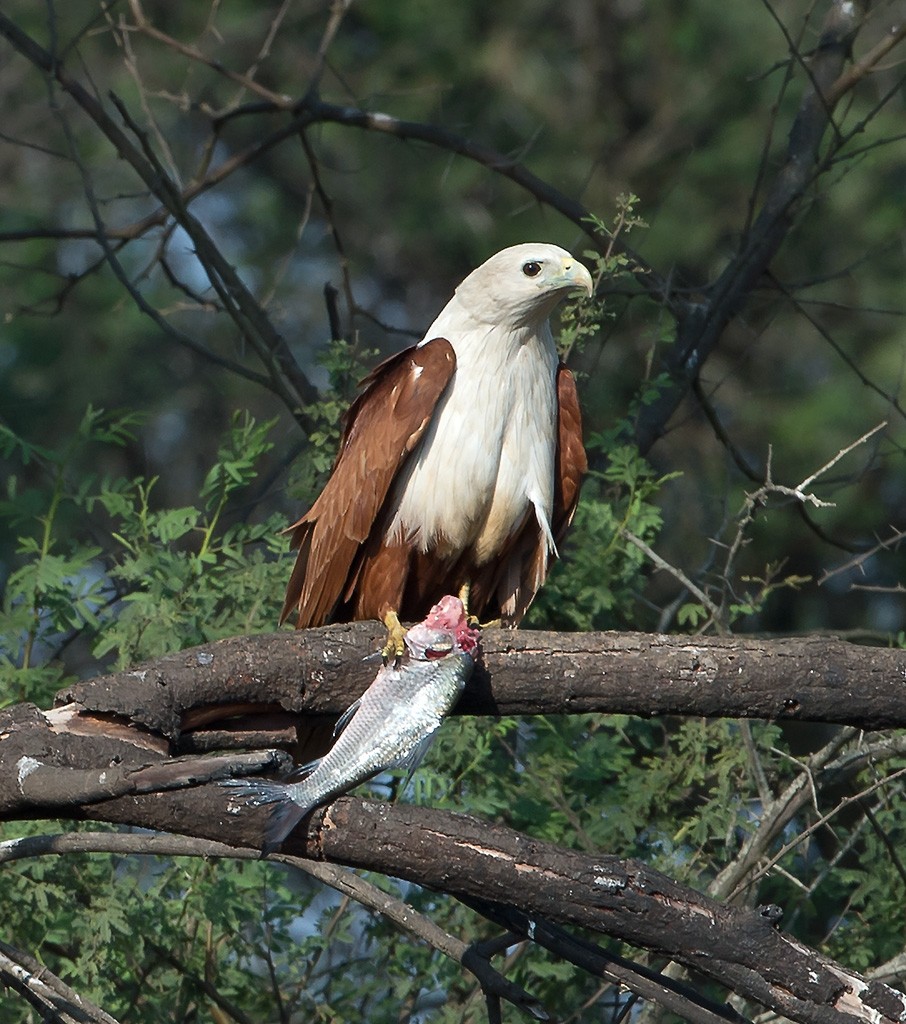
The brahminy kite is distinctive and contrastingly coloured, with chestnut plumage except for the white head and breast and black wing tips. The juveniles are browner, but can be distinguished from both the resident and migratory races of black kites in Asia by the paler appearance, shorter wings, and rounded tail. The pale patch on the underwing carpal region is of a squarish shape and separated from Buteo buzzards. The brahminy kite is about the same size as the black kite (Milvus migrans) and has a typical kite flight, with wings angled, but its tail is rounded unlike the Milvus species, red kite, and black kite, which have forked tails. The two genera are, however, very close. The call is a mewing keeyew.

18. Ayeyarwady Bulbul
The Ayeyarwady bulbul (Pycnonotus blanfordi) is a member of the bulbul family of passerine birds. It is endemic to Myanmar. Its natural habitat is subtropical or tropical moist lowland forests. Until 2016, the Ayeyarwady bulbul was considered to be conspecific with the streak-eared bulbul (now Pycnonotus conradi).
19. Rock Pigeon
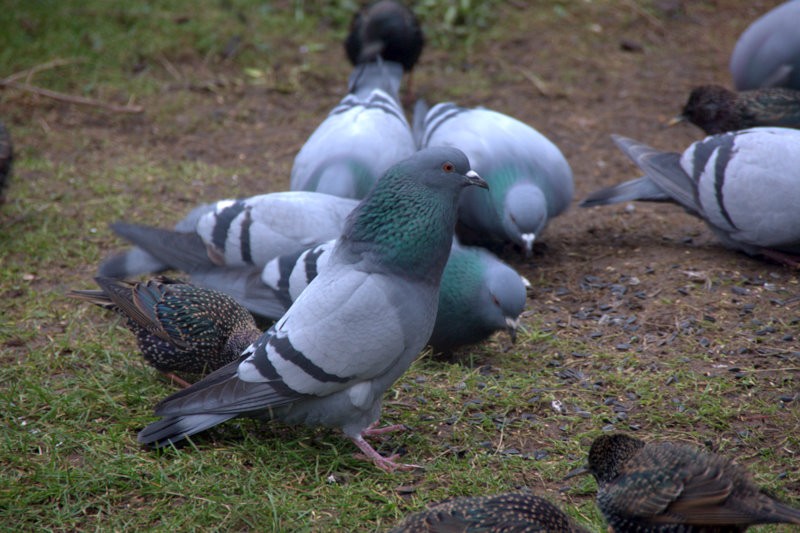
The rock Pigeon is a wild ancestor of all domestic and feral pigeons, inhabiting coasts, cliffs, and caves. Pairs nest in rock crevices, often mating for life. They are known for their ability to fly very long distances to return to their homes, navigating using the sun's position and the earth's magnetic fields. Thanks to this ability, pigeons were used as messengers, particularly during World Wars I and II.
20. Spotted Dove
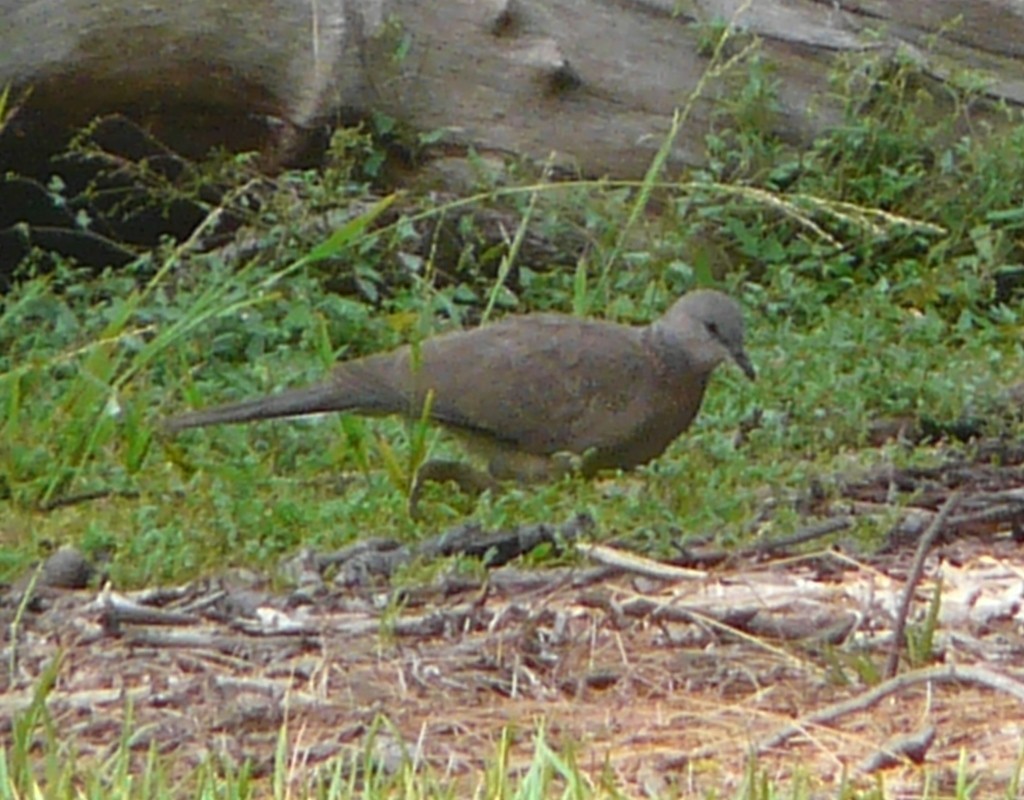
The spotted Dove is a medium-sized bird that is swift in flight. It prefers to live year-round in warm climates in suburban areas, especially in parks. Their nests are mostly made out of sticks and they like to dine on insects and seeds.