



Top 20 Most Common Bird in Malibu
Known for its remarkable biodiversity, Malibu hosts an enthralling variety of avian species, making it a bird watcher's paradise. Its distinct habitats, ranging from rugged coastal areas to chaparral-covered hills, foster the richness and uniqueness of its bird population. Iconic species like the Red-tailed Hawk, Western Gull, and Anna’s Hummingbird are among the 20 common birds that embellish the region's skies, setting the scene for an immersive exploration of Malibu's birdlife.

Most Common Bird
1. American Crow
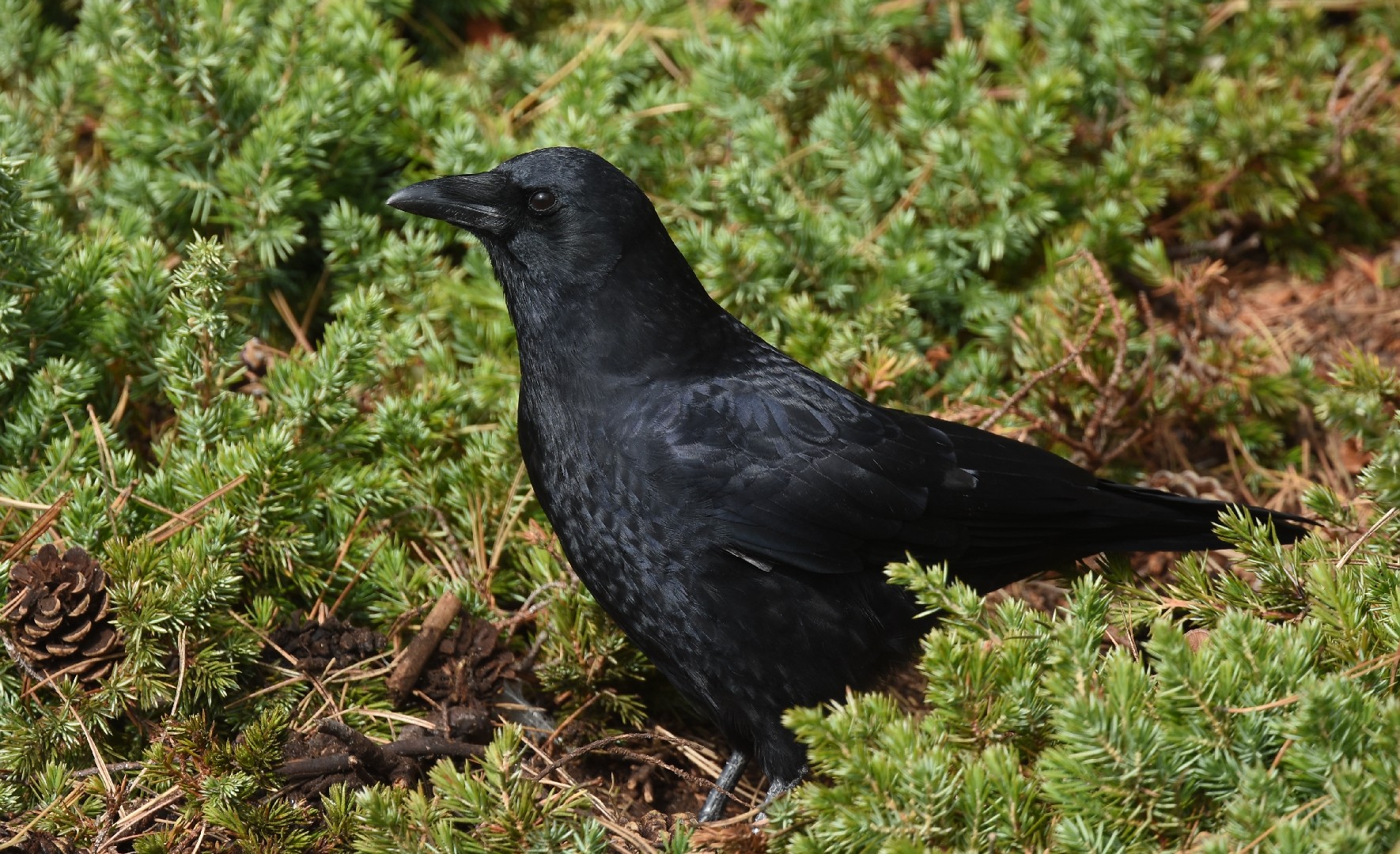
The american Crow is a big black bird that can be found in forests, fields, river groves, and among human habitations. Interestingly, it is known to stand atop ant hills and allow ants to climb onto its feathers; this apparently discharges their formic acid and makes them more palatable for the crow to eat. Sadly, american Crow numbers have been substantially affected by the West Nile virus in North America. Infected birds die from West Nile in less than a week.

2. House Finch
Frequent in urban environments and human-created habitats such as parks and backyards, the little house Finch is known for its loud but pleasant, cheerful singing. It feeds on the ground, mostly on seeds, berries, and other plant material. This bird is highly sociable and very adaptable. It often visits feeders.
3. Black Phoebe
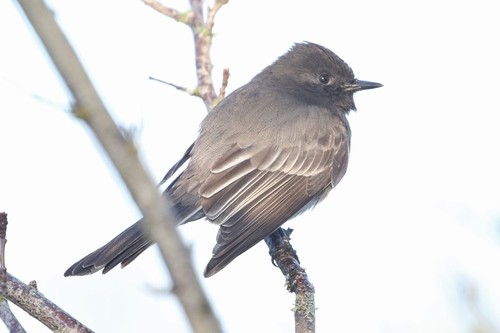
Often spotted near creeks and ponds after you hear its sharp, whistling call, the small, plump black Phoebe is a sooty gray. Look for its white belly and squared tail to properly identify it. When perched, it wags its tail constantly. This bird feeds by taking short, quick flights to skim the water’s surface and snag an insect.
4. California Towhee
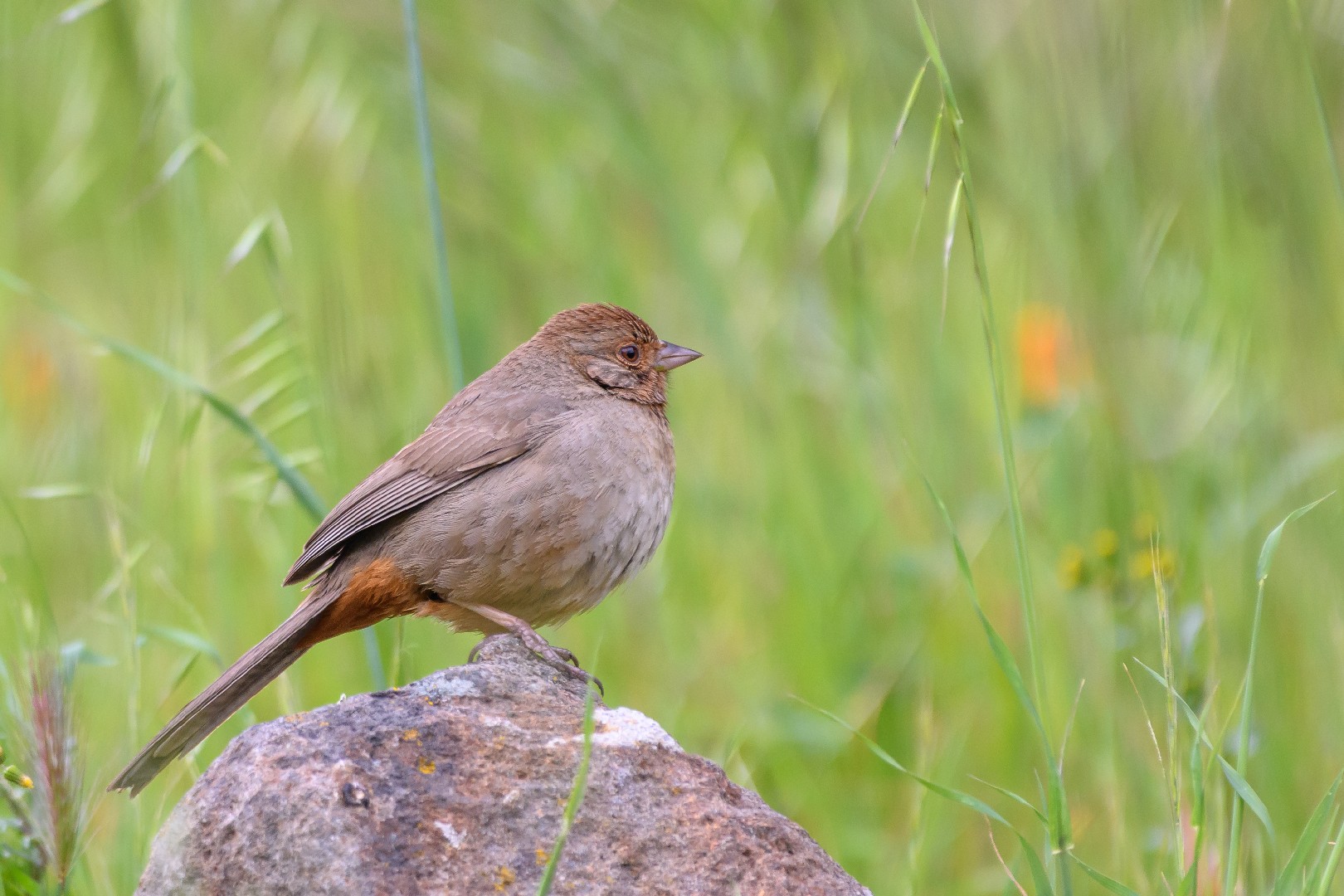
This california Towhee looks basically like a larger sparrow, sharing the beak designed for seed cracking, the long tail, and the short, round wings. Their longer tail and shorter wings, however, give them a less graceful look while they’re in flight. This bird is unique in its uniform, matte brown coloring across the entire body.
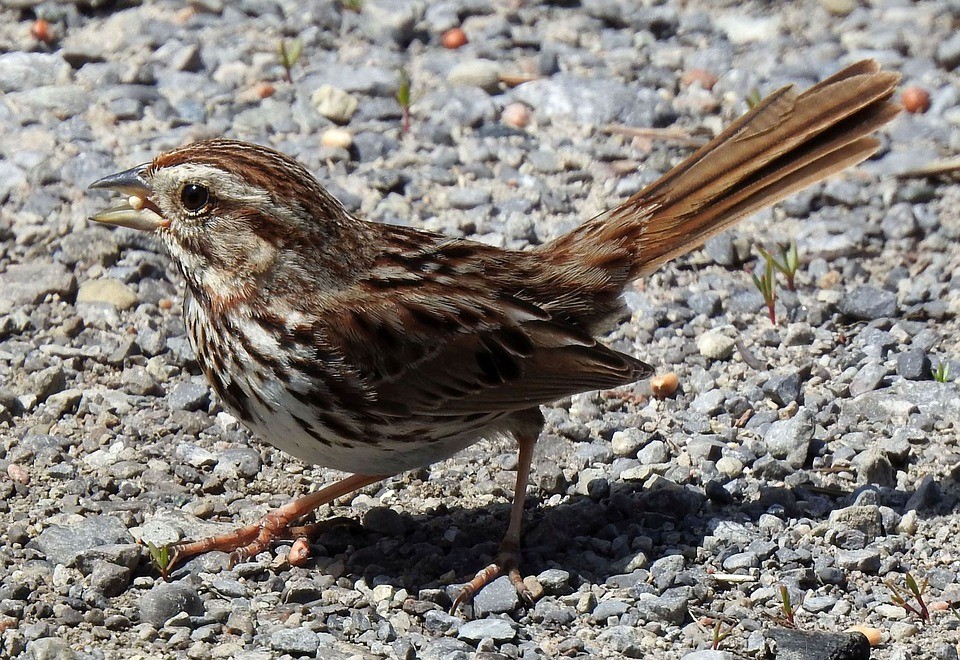
5. Song Sparrow
The song Sparrow can be found low to the ground in vegetation and thickets in nearly all habitat conditions, including suburban areas. They are frequent visitors to home birdfeeders but can also be seen foraging for food on the ground. Their appearance can differ across the 24 known subspecies, but all of them tend to only make short, fluttery flights.
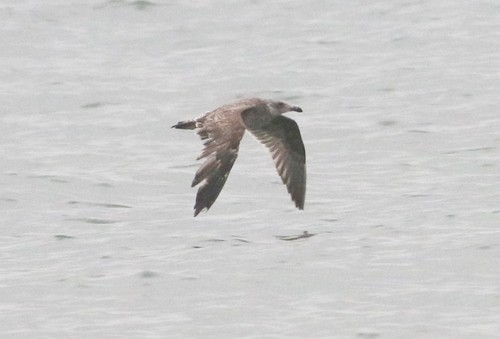
6. Western Gull
The western Gull's dark back feathers and its large size set it apart from other gulls. It is a voracious feeder, eating fish, carrion, and invertebrates. It forages for food along shorelines and in the ocean. The bird is even known to take milk from female seals while they are sleeping.
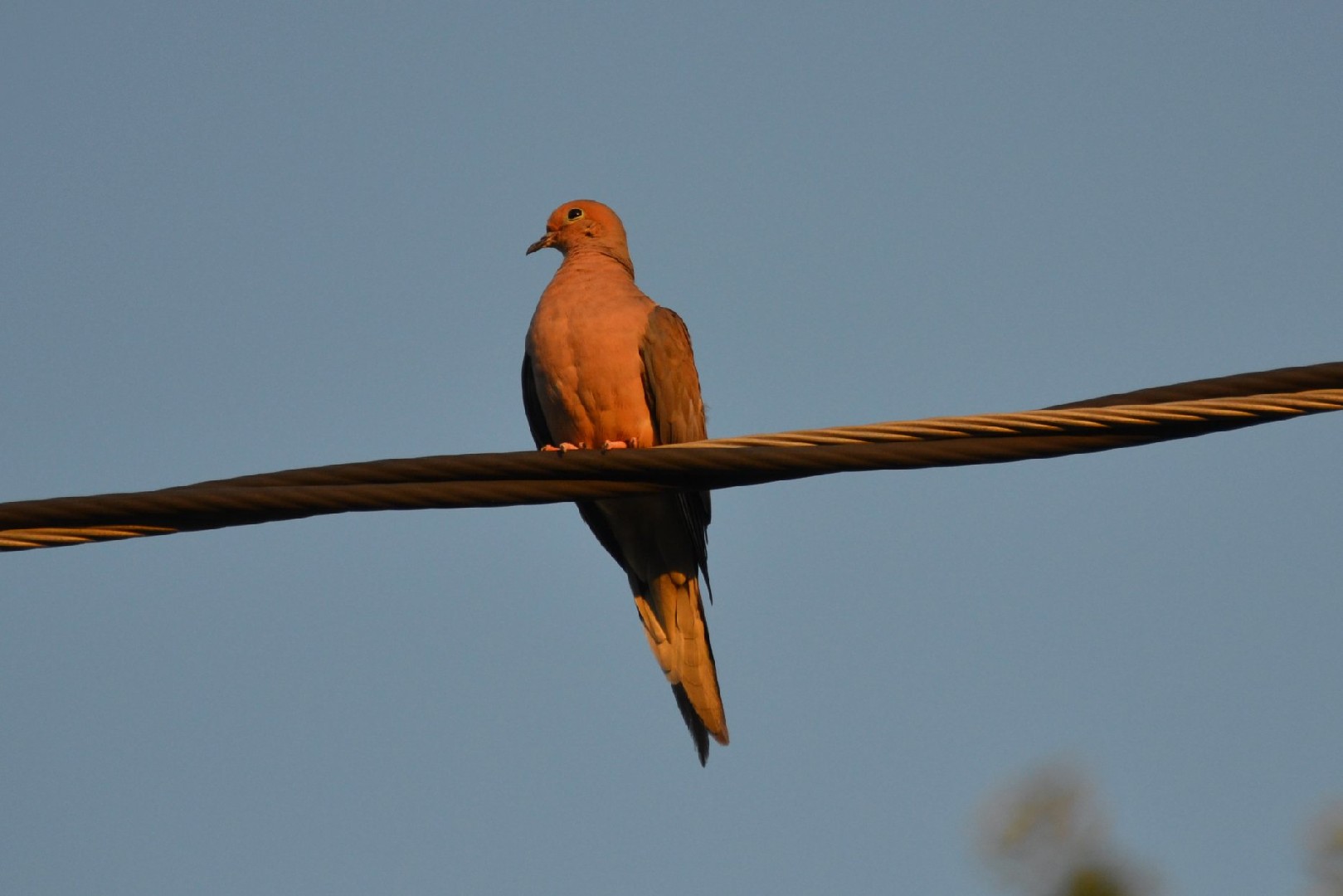
7. Mourning Dove
One of the most famous and widespread doves of North America, the mourning Dove can be often seen in urban areas perching on telephone wires. It is named after its distinctive, plaintive-sounding song. It is also a popular game bird, but its population is still abundant thanks to the prolific breeding and its ability to raise up to five to six broods in a single year.
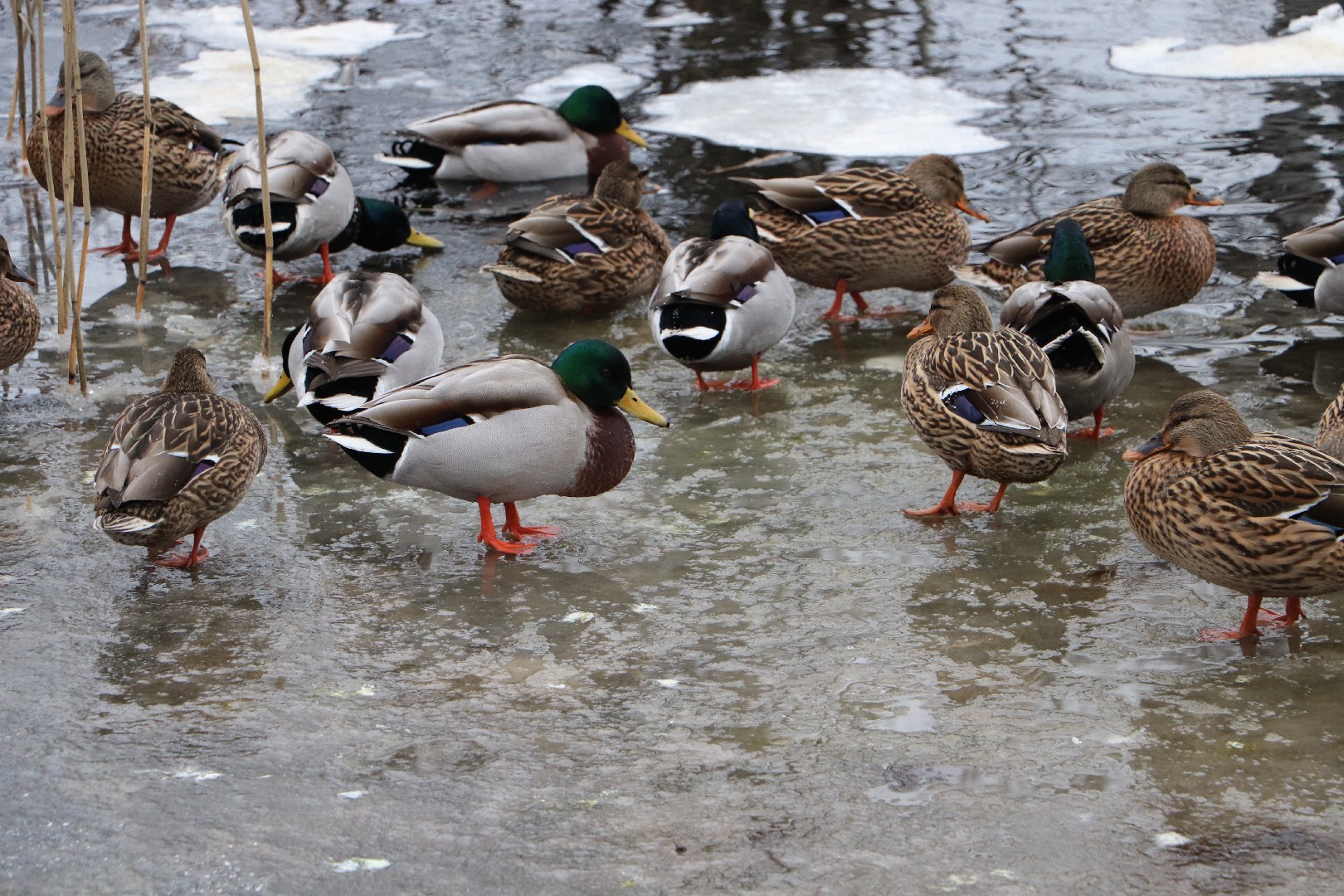
8. Mallard
The mallard is the most abundant duck species in the world, and the ancestor of all domestic ducks. Only the female can produce the distinctive "quack" sound. When the female lays eggs, the male abandons its mate, while the protective mother stays with the ducklings for a long time. This migratory species inhabits shallow waters and it's one of the most popular game birds.
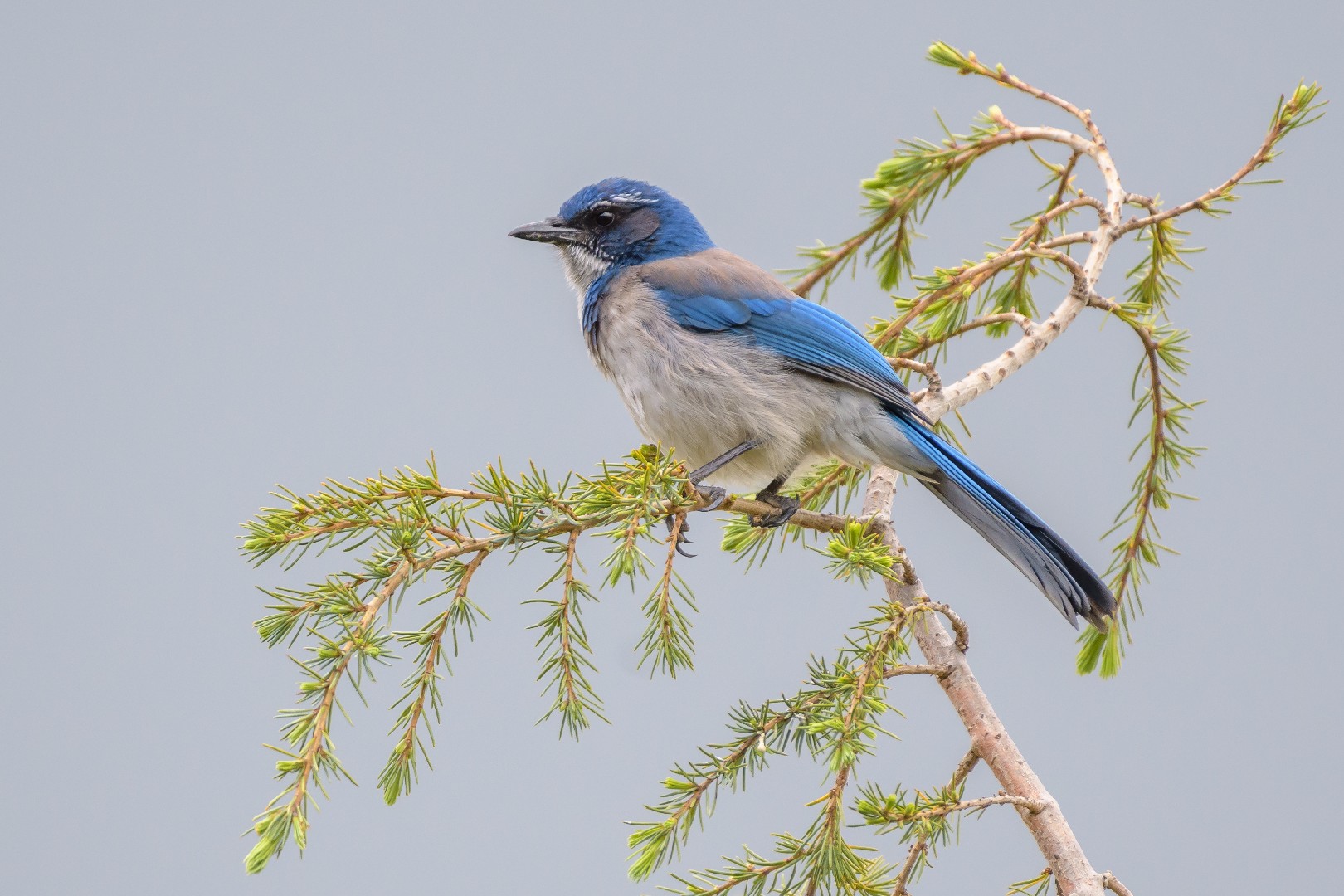
9. California Scrub-jay
California Scrub-jays prefer to live in dry shrublands, oak forests, and treed backyards. These are mischievous little birds that like to steal acorns from Woodpecker hiding spots. However, when the scrub jays hide the acorns in a new spot they rarely remember where they've hidden them! It's a lose-lose situation. When not stealing acorns they like to spend time eating ticks and other parasites off the backs of mule deer. The deer seem to appreciate the attention and often hold up their ears to give the jays access.
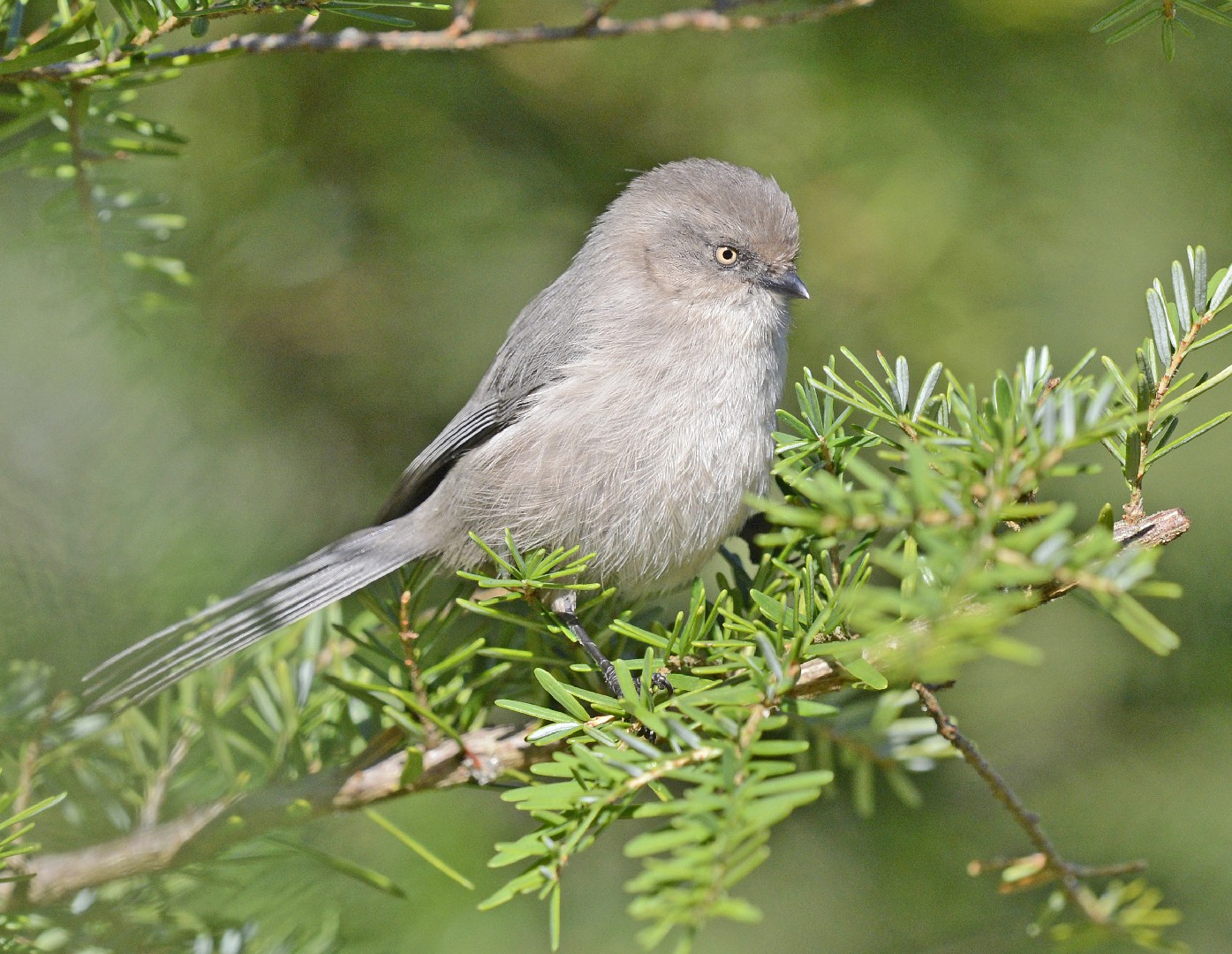
10. Bushtit
The social bushtit can often be found in deciduous and mixed forests as well as in home gardens and backyards. They have a characteristic upside-down feeding behavior as they search for spiders and insects on the undersides of leaves. These birds like to decorate their nests with flowers and lichens.
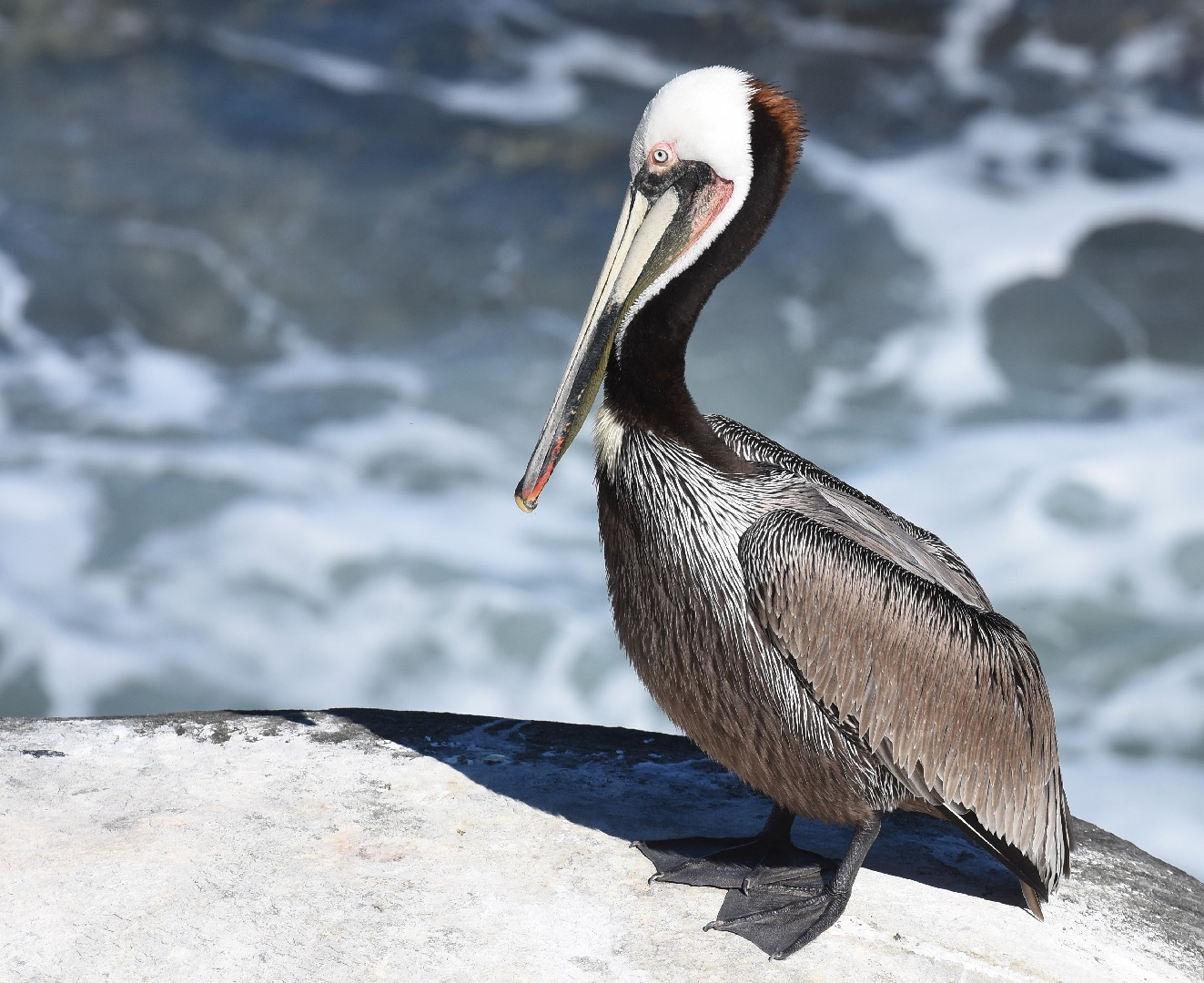
11. Brown Pelican
The brown Pelican is a large seabird frequently found in and around marine and estuarine habitats as well as manufactured docks and jetties. They can be seen effortlessly gliding in the air along the coast when not feeding. These birds have a unique feeding behavior where they dive head-first into the water, using their throat pouches to capture their prey. They often nest in large colonies on islands with no natural predators.
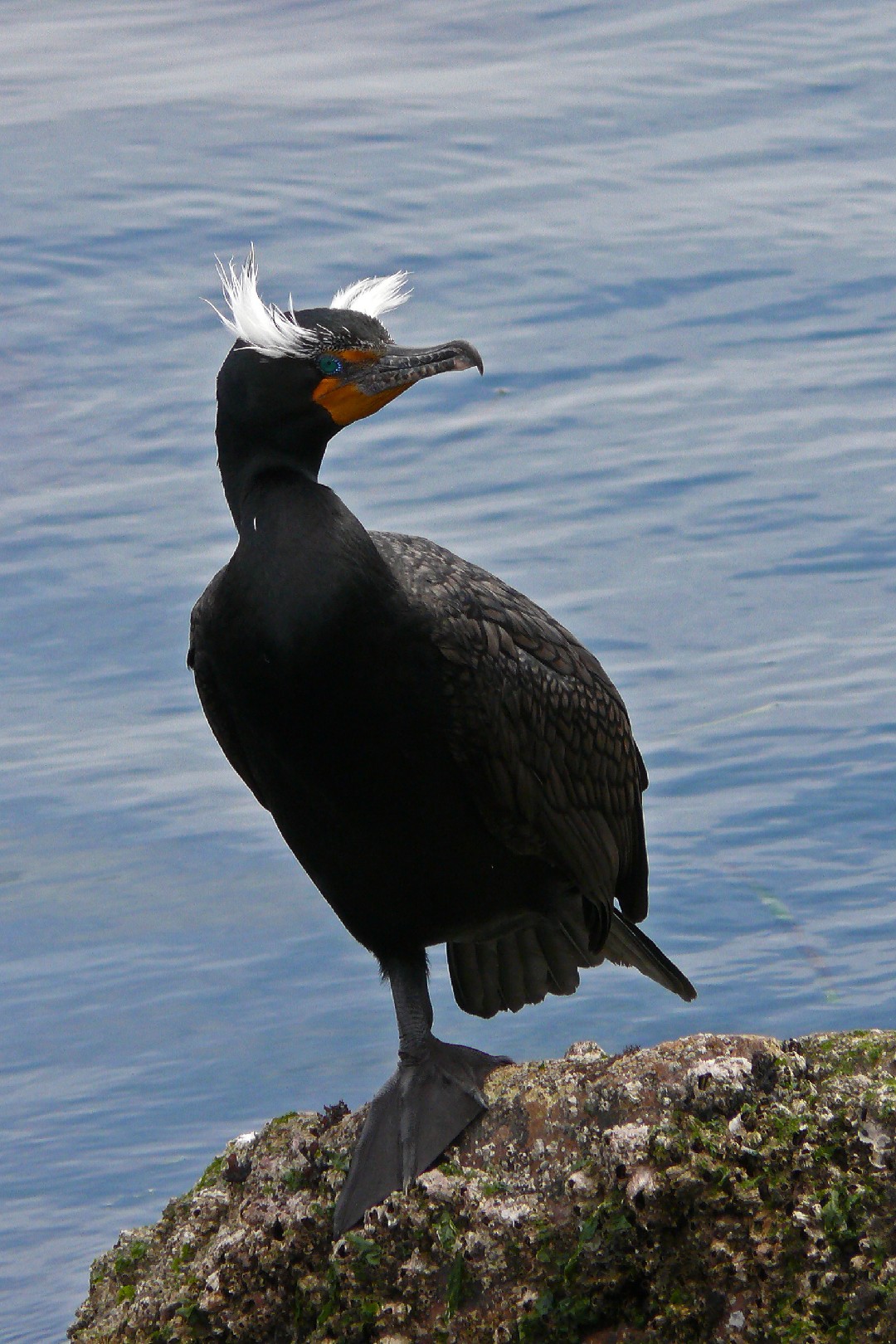
12. Double-crested Cormorant
This large, dinosaur-like bird is the most common form of cormorant. A frequent visitor to bodies of fresh water, look out for double-crested Cormorants at the water's edge when they “wing-spread”. They will stand with their wings opened wide and tilted towards the sun to dry their feathers, because they are not waterproof.
13. Snowy Egret
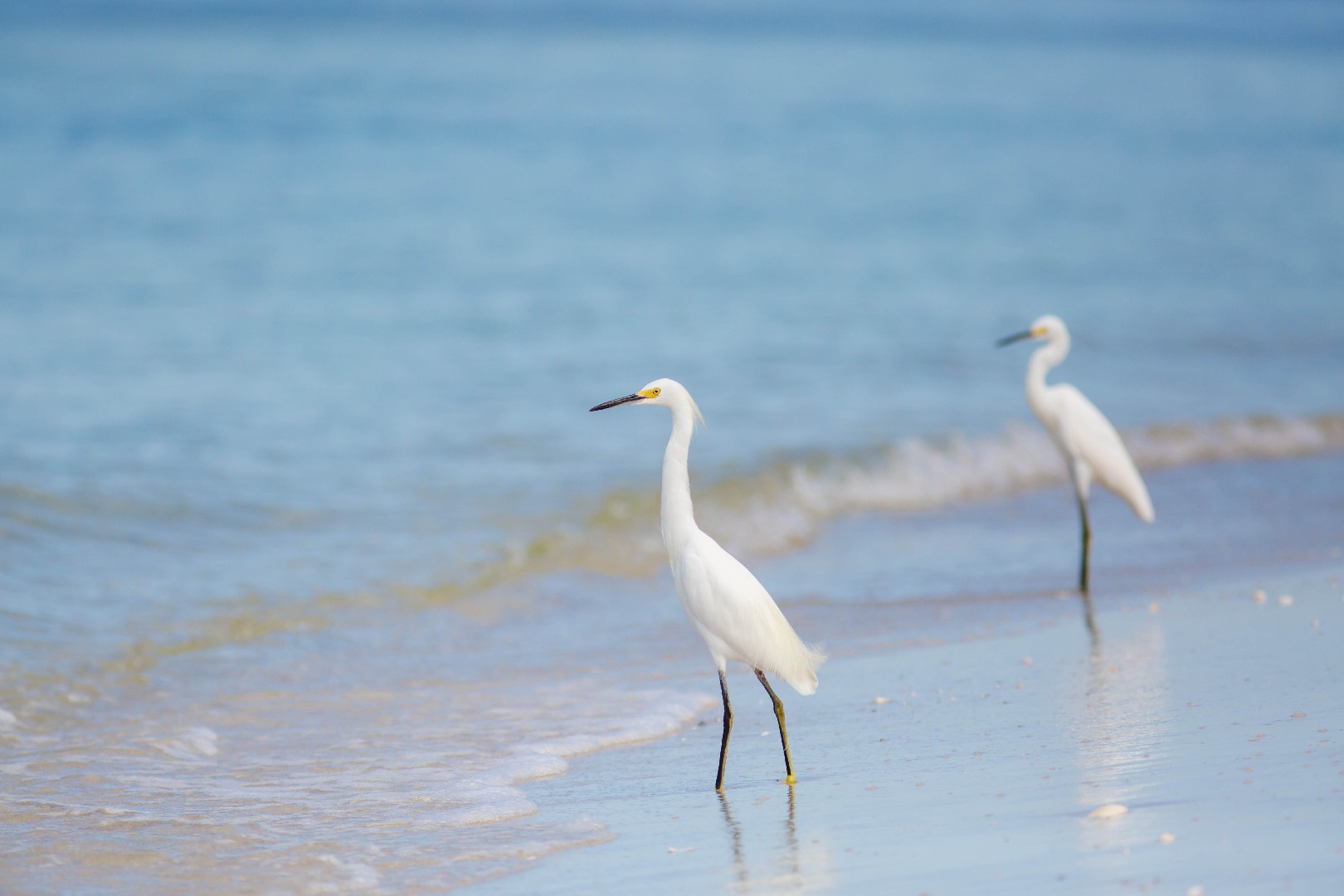
The snowy Egret is a mid-sized, totally white egret that prefers nesting in urban areas rather than in isolated locations where there are more predators. In the late 1800s, the bird's beautiful plumes were in great demand as decoration for women's hats. Because of this snowy Egrets were hunted to near extinction before laws came into effect to protect them.
14. Lesser Goldfinch
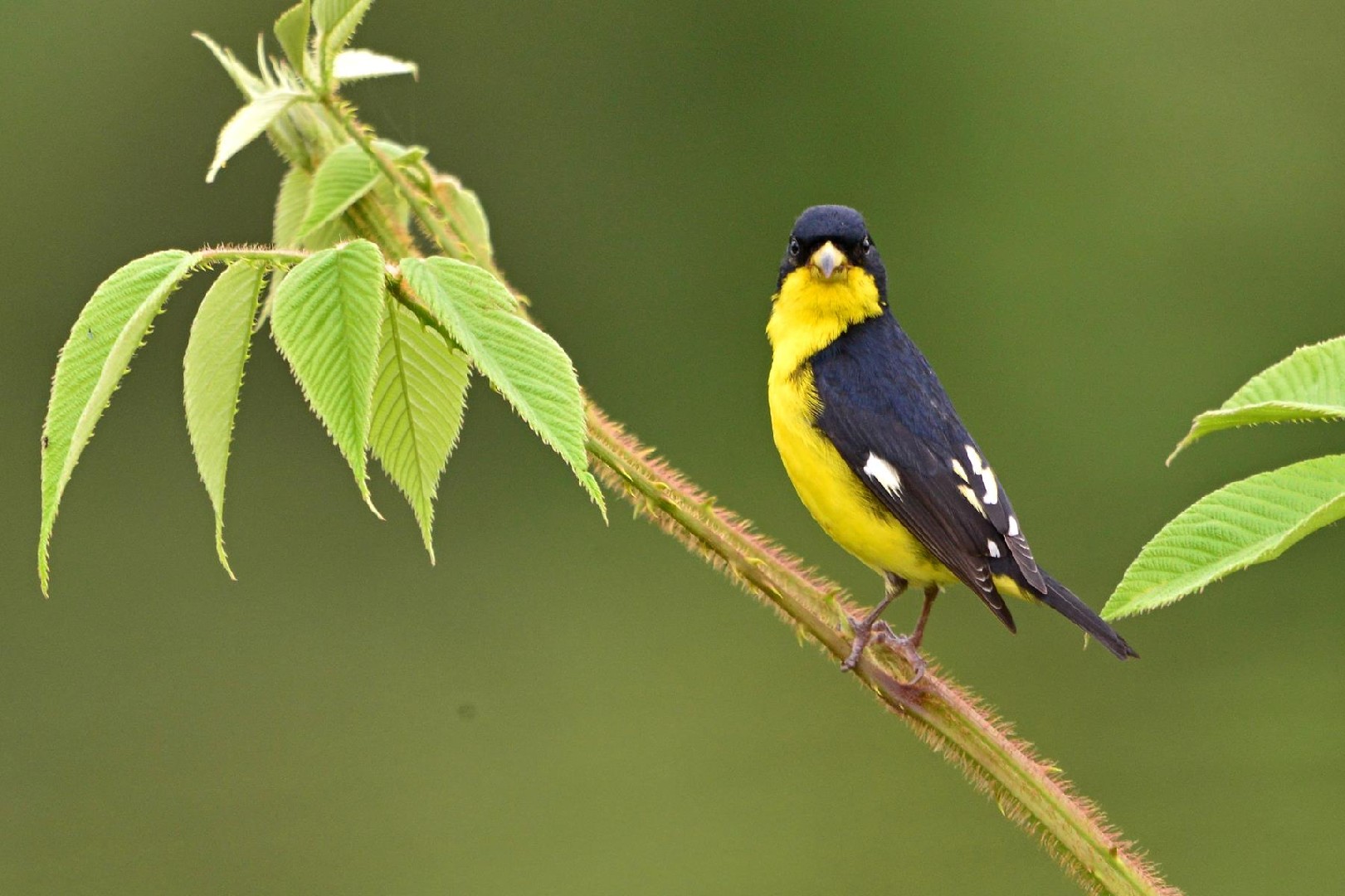
A common visitor of birdhouses or anywhere with birdseed, the lesser Goldfinch is a small, notch-tailed bird that enjoys gardens and open wooded areas. Its size has made it commonly overlooked, but listen out for its charming, chiming song. Social birds, they are often seen in large groups of hundreds traveling together at a time.
15. Rock Pigeon
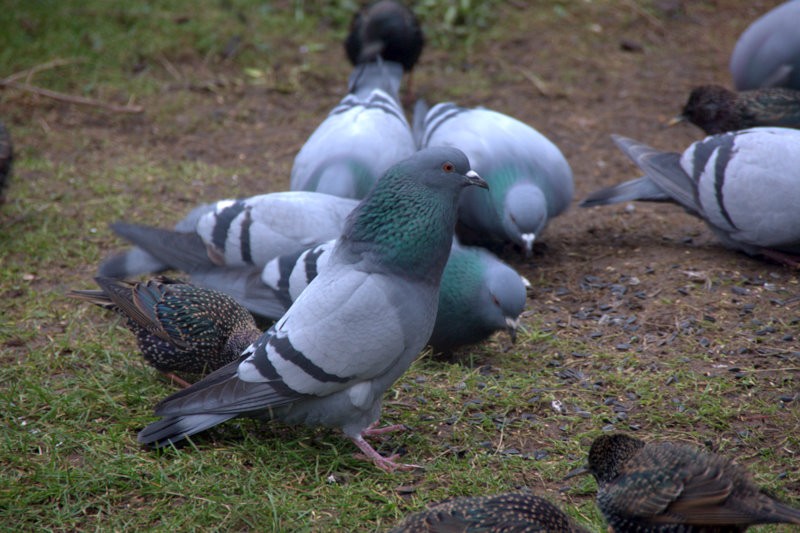
The rock Pigeon is a wild ancestor of all domestic and feral pigeons, inhabiting coasts, cliffs, and caves. Pairs nest in rock crevices, often mating for life. They are known for their ability to fly very long distances to return to their homes, navigating using the sun's position and the earth's magnetic fields. Thanks to this ability, pigeons were used as messengers, particularly during World Wars I and II.
16. Great Blue Heron
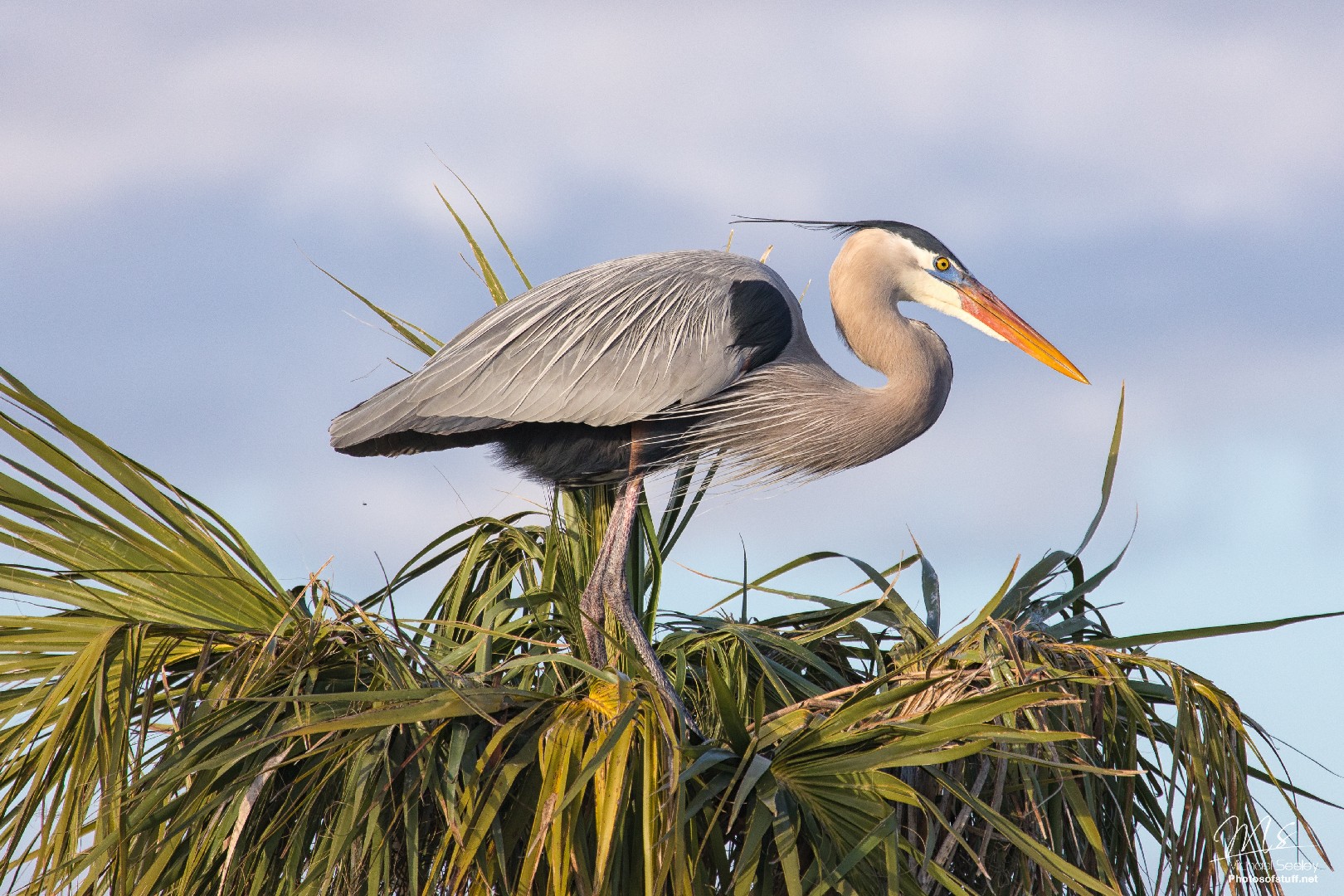
The great Blue Heron, the largest such bird in North America, is quite adaptable and thrives in various wet habitats. Silent, patient, and often motionless, this majestic bird always makes a spectacular sight. Thanks to its specially shaped neck and extremely good night vision, this wading bird is a quick and skilled fish predator. Since the great Blue Heron accumulates toxins in its body, researchers use it as an indicator of dangerous contaminants in local wetlands.
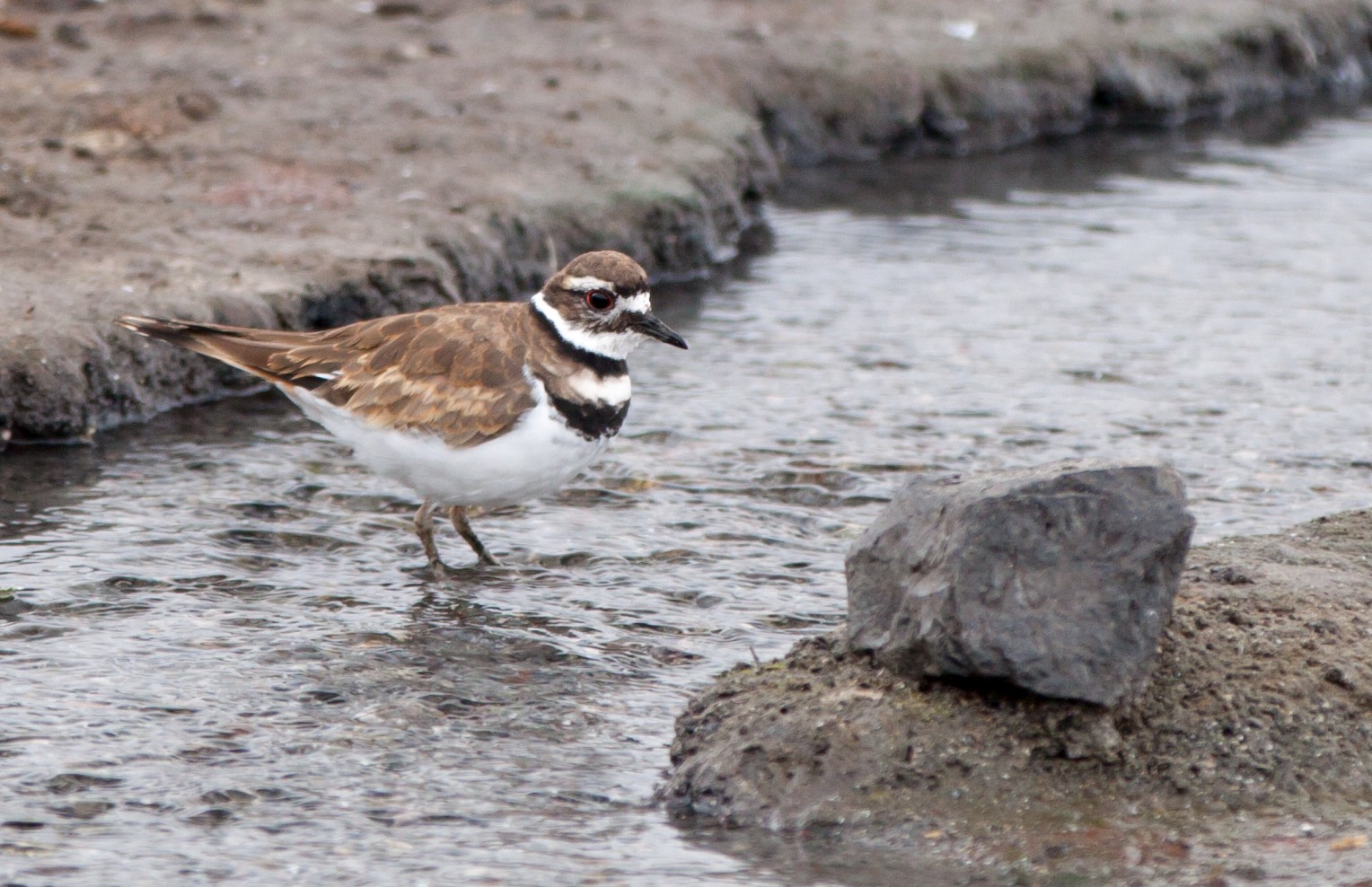
17. Killdeer
This shorebird is slender and lanky, with long wings and a long tail that ends at a point. If its nest is being threatened by a predator, the killdeer is known to pretend that it has a broken wing, making itself a target in order to lure the predator away from the nest. They have the curious habit of collecting mostly light colored items to build their nests.
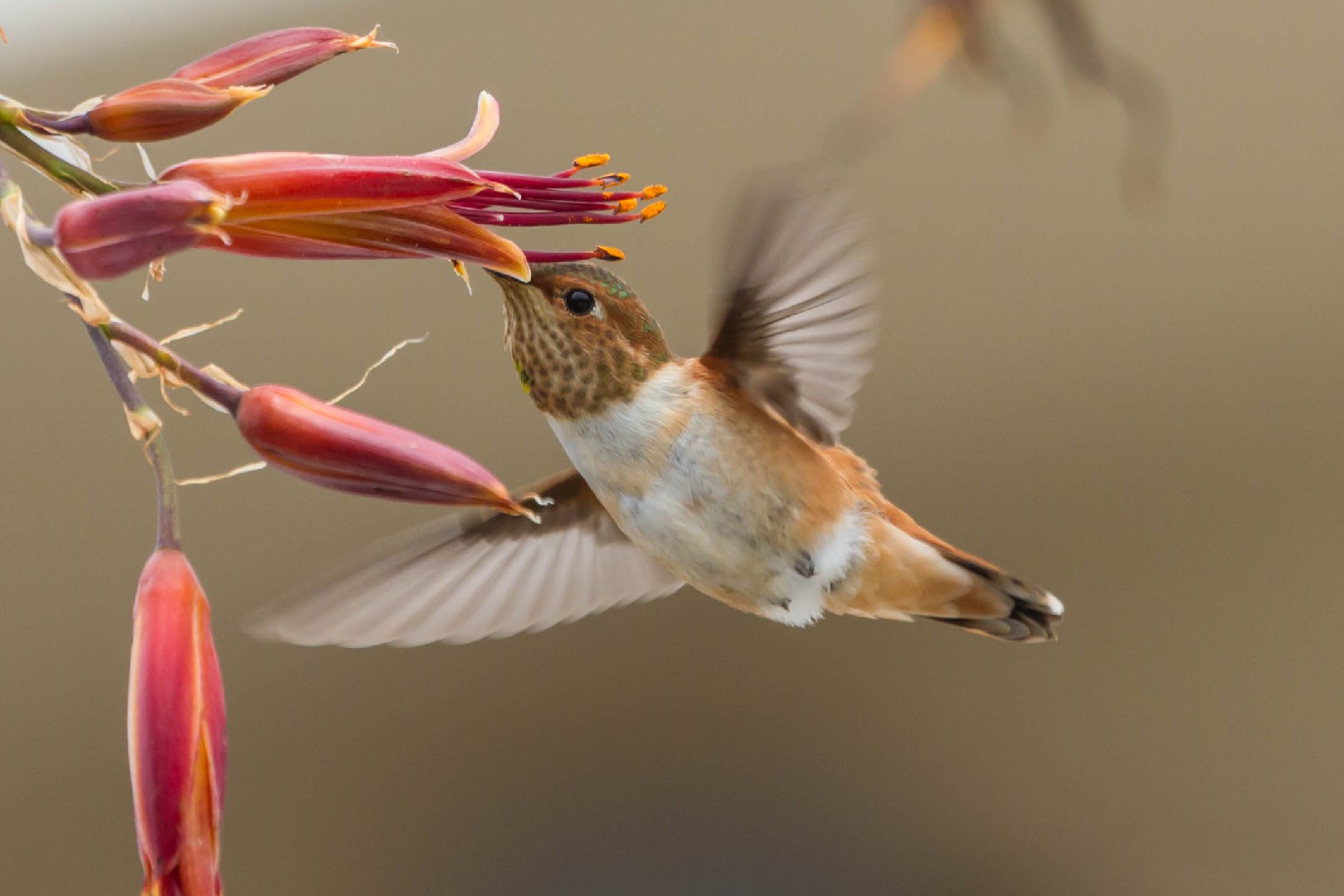
18. Allen's Hummingbird
Allen's hummingbird (Selasphorus sasin) is a species of hummingbird. It is a small bird, with mature adults reaching only 3 to 3.5 in (76 to 89 mm) in length. The male has a green back and forehead, with rust-colored (rufous) flanks, rump, and tail. The male's throat is an iridescent orange-red. The female and immature Allen's hummingbirds are similarly colored, but lack the iridescent throat patch, instead having a series of speckles on their throats. Females are mostly green, featuring rufous color only on the tail, which also has white tips. Immature Allen's hummingbirds are so similar to the female rufous hummingbird, the two are almost indistinguishable in the field. Both species' breeding seasons and ranges are common factors used to differentiate between the two species in a particular geographical area. 
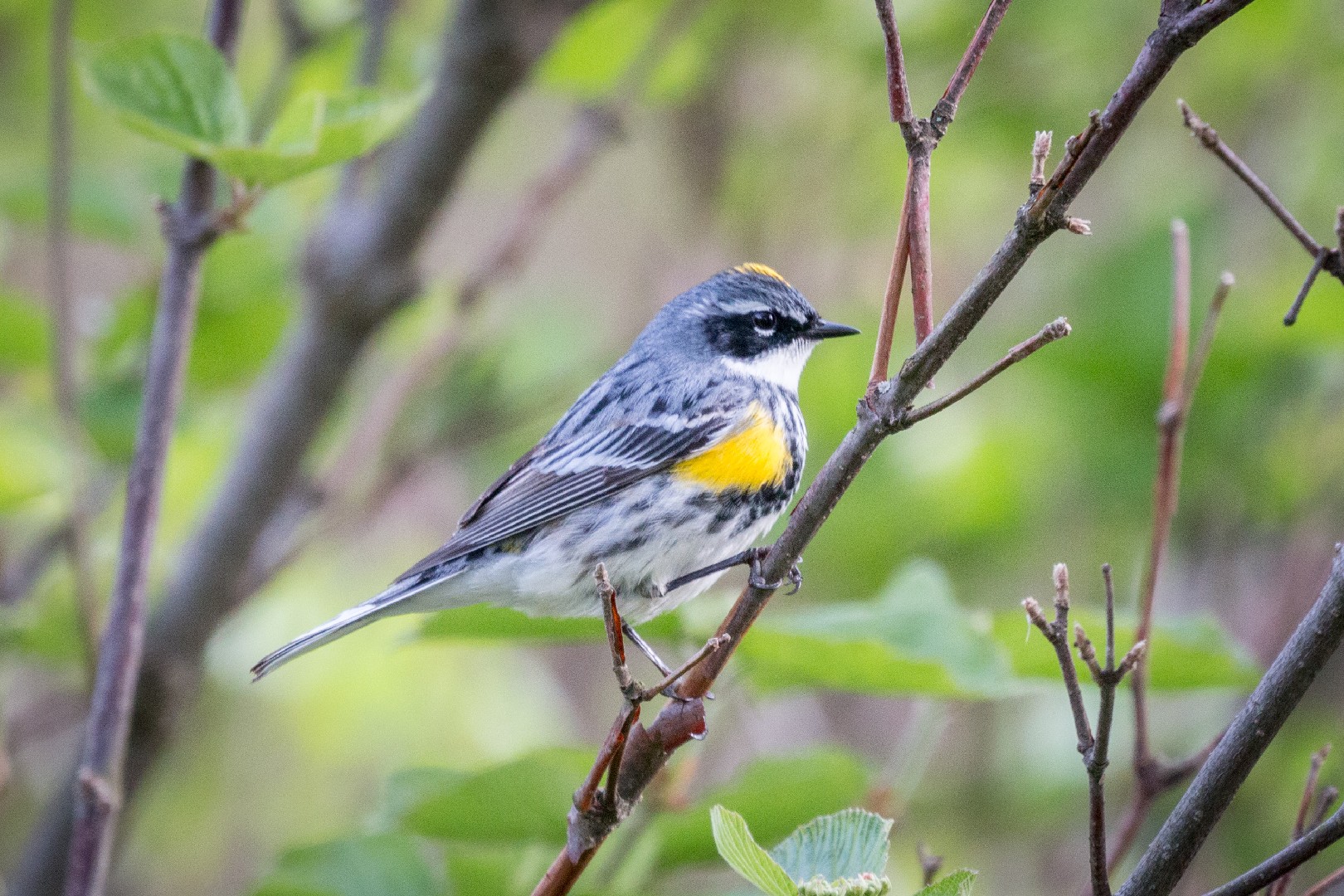
19. Yellow-rumped Warbler
The foraging yellow-rumped Warbler is quick-moving and appealingly colored. Both male and female are a sharp gray, with white on their wings and flashes of yellow on their rump (as the name suggests), sides, and face. Most striking about this bird is the large groups of them that spread across North America in the autumn season.
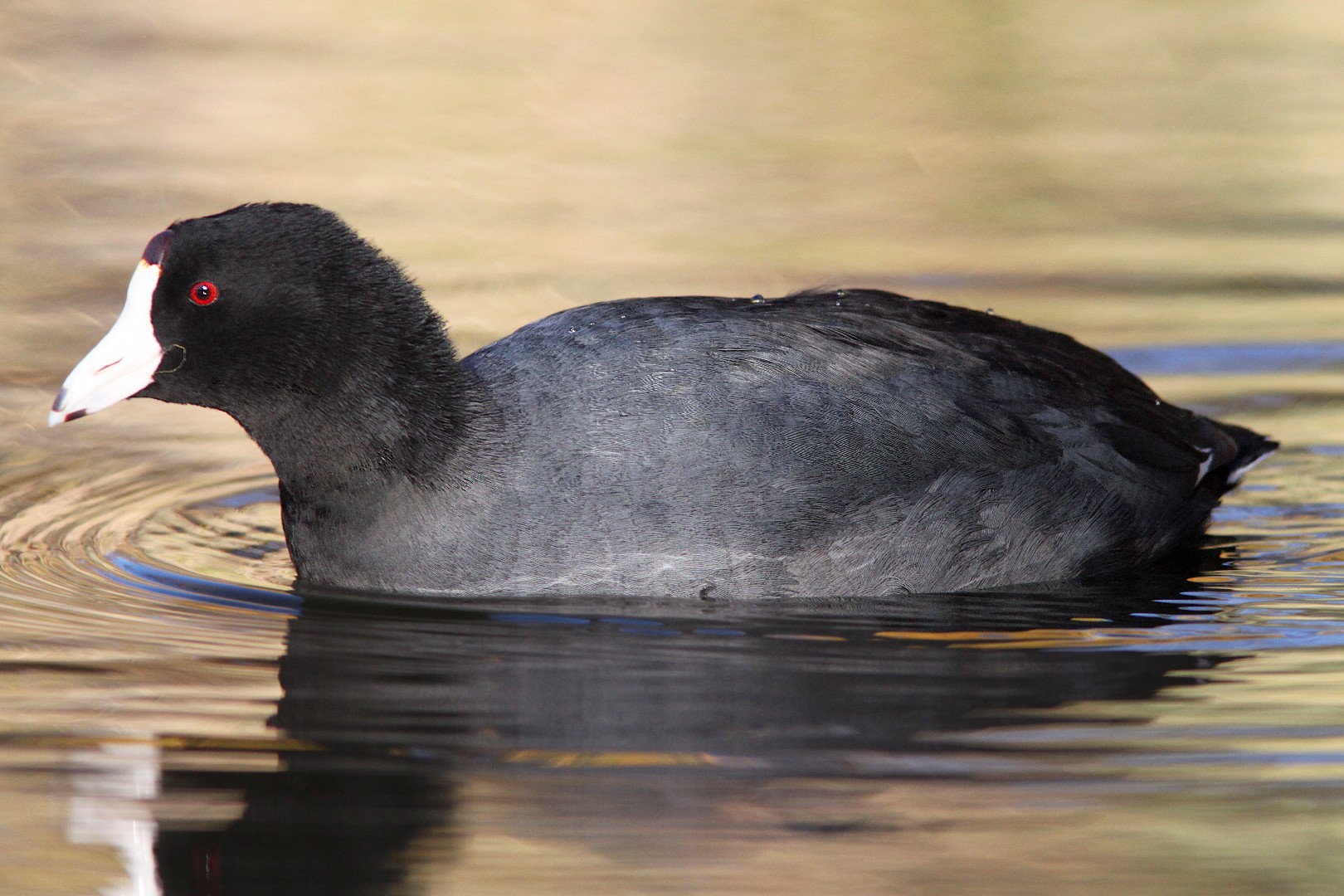
20. American Coot
The american Coot is easily mistaken for a species of duck but does not have webbed feet and does not have a waddling gait. They can be found in and around ponds and lakes and frequently dive under the surface to feed on algae and other vegetation. These birds can live to be 22 years old!