




Top 20 Most Common Bird in Zephyrhills
In the heartland of Florida's Nature Coast, Zephyrhills fosters a diverse avian population. Here, distinctive ecosystems from wetlands to pine forests harbor a dynamic array of 20 bird species. Celebrated favorites include the melodic Mockingbird, the resplendent Northern Cardinal, and the bright-eyed Barred Owl. Each species brings a unique flair to the vibrant birdlife tableau of Zephyrhills, a paradise for bird watchers and nature enthusiasts alike.

Most Common Bird
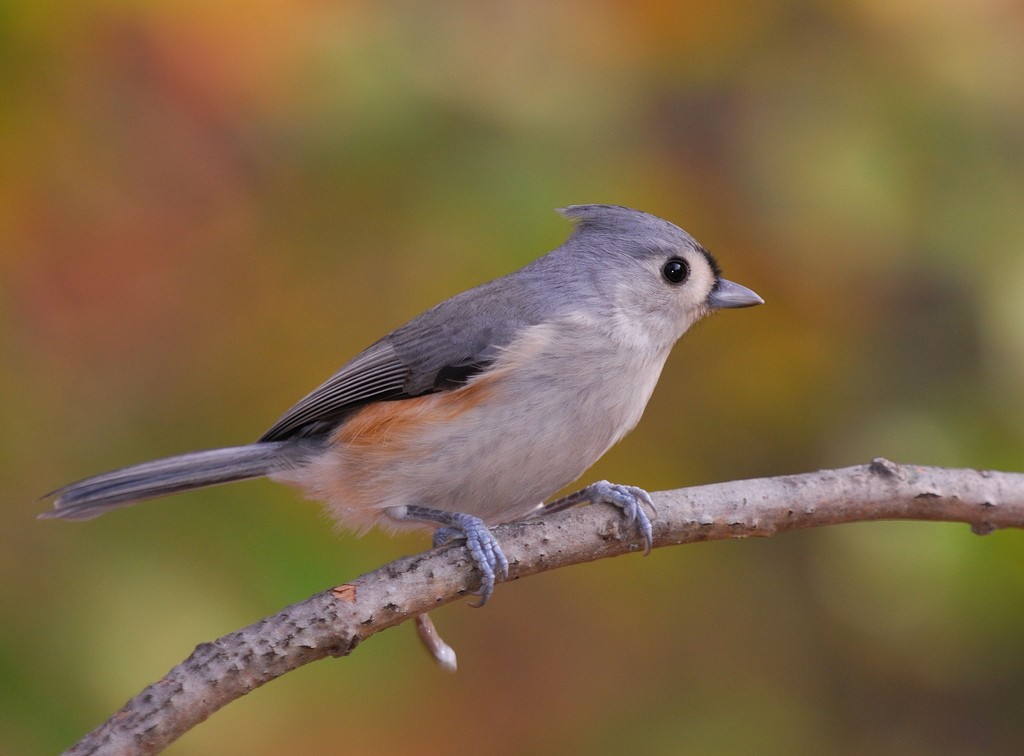
1. Tufted Titmouse
The tufted Titmouse is the largest of all titmouse species. Quite plain in appearance, but known for its echoing song, this woodland bird is a frequent visitor to urban areas, particularly during winter. It's a highly territorial bird that mostly feeds on insects, but won't shy away from seeds when need be. As a non-migratory species, it prepares food supplies for the winter by hiding seeds from birdfeeders for later use.
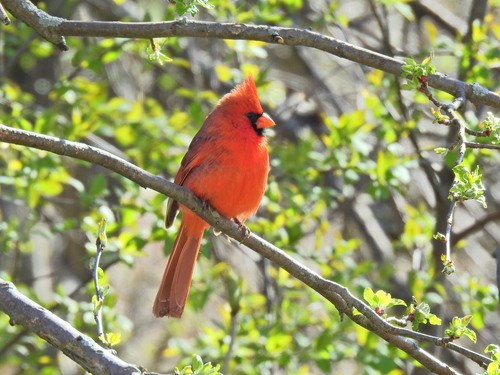
2. Northern Cardinal
The northern Cardinal is a distinctive, medium-sized songbird that inhabits temperate forests and yards. Its name is derived from the male's brilliant red plumage color which resembles red-robed Roman Catholic cardinals, while its crest looks like a bishop's mitre. Compared to the male, the female is much duller in color. The highly territorial males can be quite aggressive. Quite popular, this is the state bird of seven U.S. states.
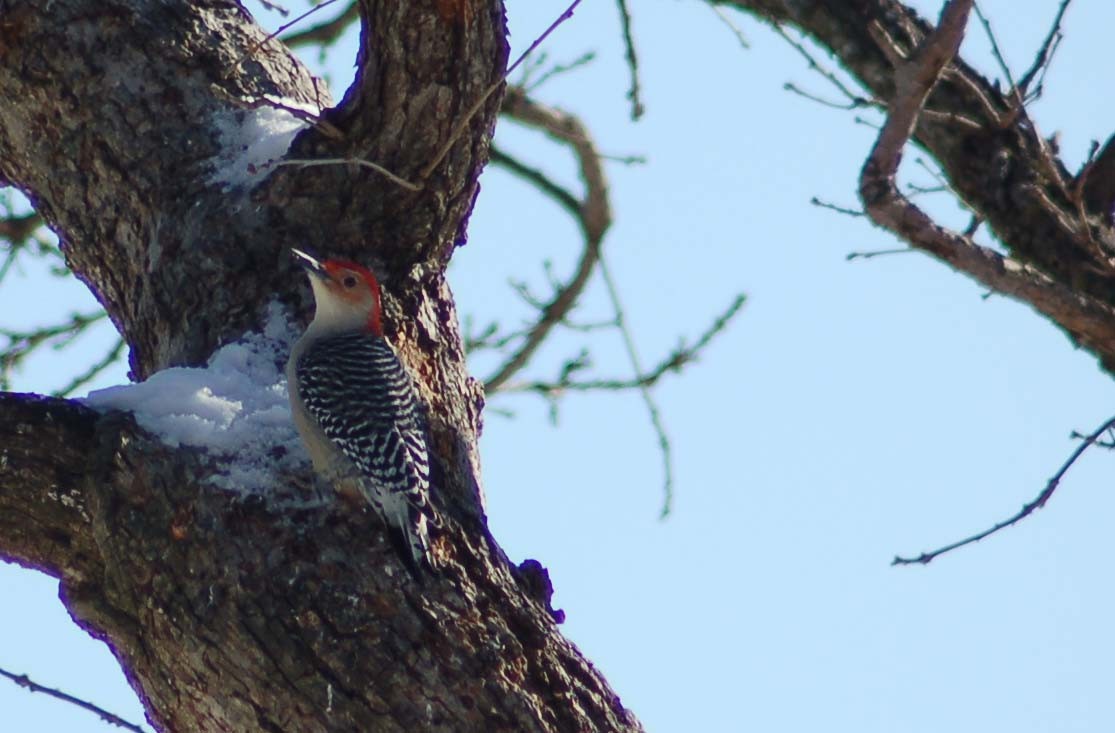
3. Red-bellied Woodpecker
The red-bellied Woodpecker is a medium-sized woodpecker that commonly nests in dead trees, sometimes taking over other birds' nests. In the search of insects inside tree cavities, it can extend its tongue almost 5 cm past its beak. By excavating insects and larvae from tree bark, this bird is able to "clean" the infested tree. The red-bellied Woodpecker is known to hide food in all kinds of places as a store for later use.

4. Turkey Vulture
The turkey Vulture is a common sight, especially around roads, where they keep a sharp eye out for roadkill. Seeing these large birds in the sky can often make you take a second look to see if it’s an eagle or a hawk. Here’s one quick way to tell the difference. When in flight, a turkey Vulture will circle unsteadily, with its wings lifted to make a V shape. Though they are not appreciated, they do the dirty work of the animal kingdom by cleaning up the countryside as they scavenge.
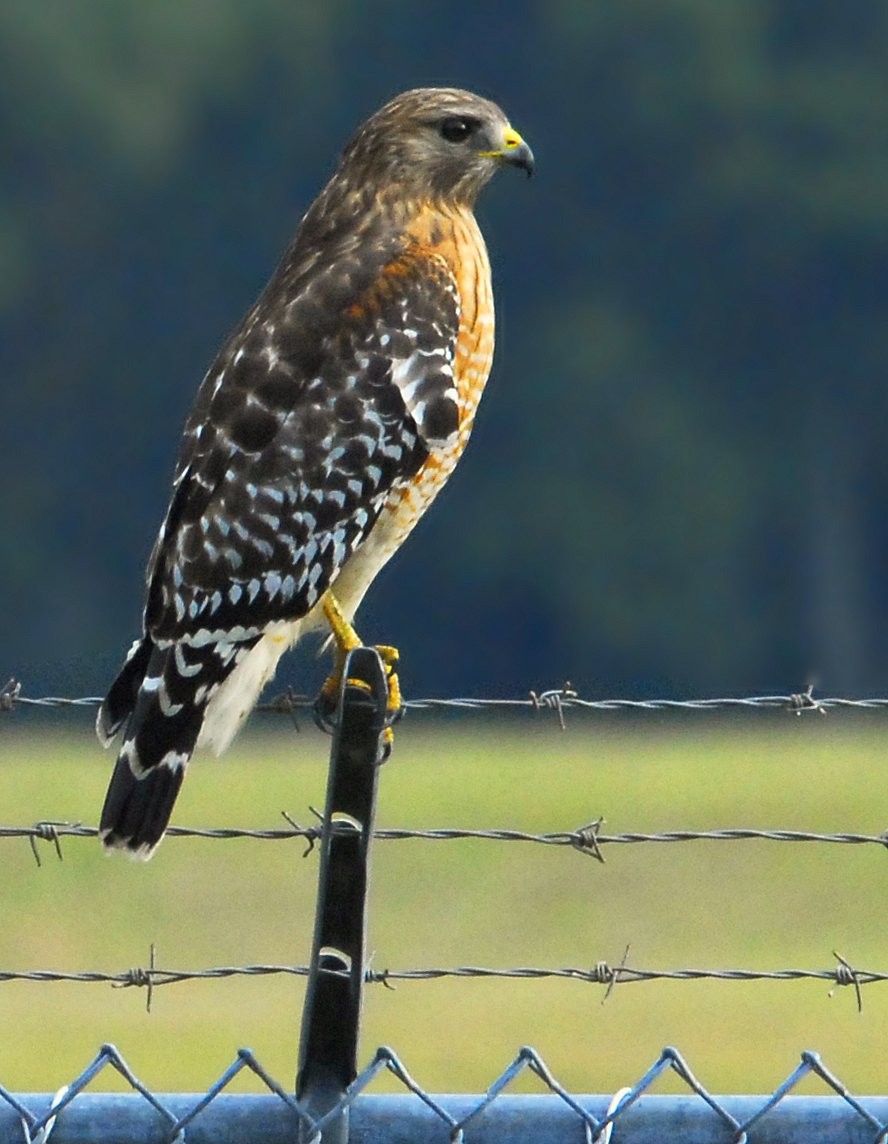
5. Red-shouldered Hawk
The red-shouldered Hawk is a medium-sized hawk and can be found as a permanent resident in most parts of North America. The hawk species is scientifically called Buteo lineatus and is known for being territorial and monogamous. To attract a mate, the hawk takes part in a courtship flight where it dances by flying high and making steep dives.
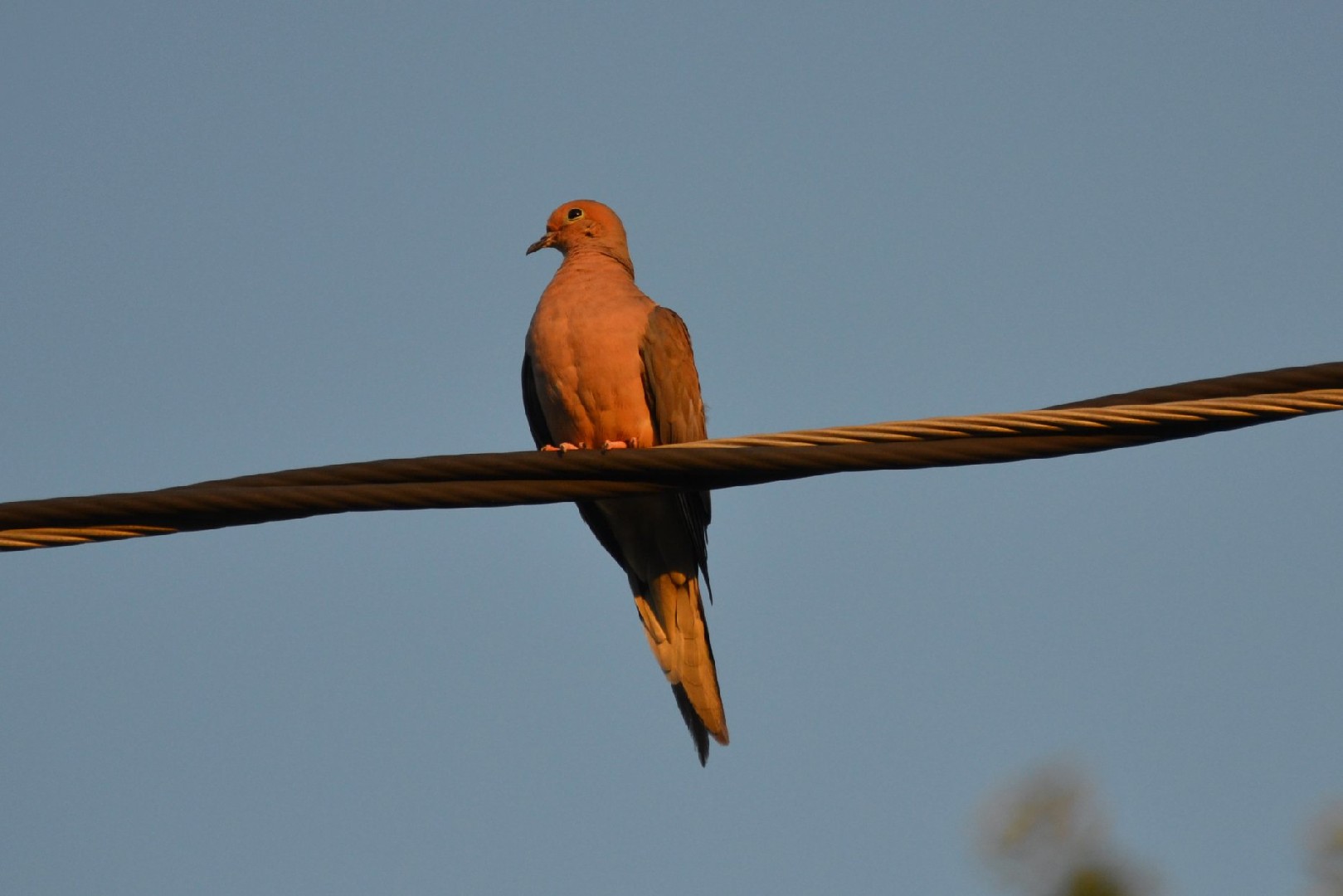
6. Mourning Dove
One of the most famous and widespread doves of North America, the mourning Dove can be often seen in urban areas perching on telephone wires. It is named after its distinctive, plaintive-sounding song. It is also a popular game bird, but its population is still abundant thanks to the prolific breeding and its ability to raise up to five to six broods in a single year.
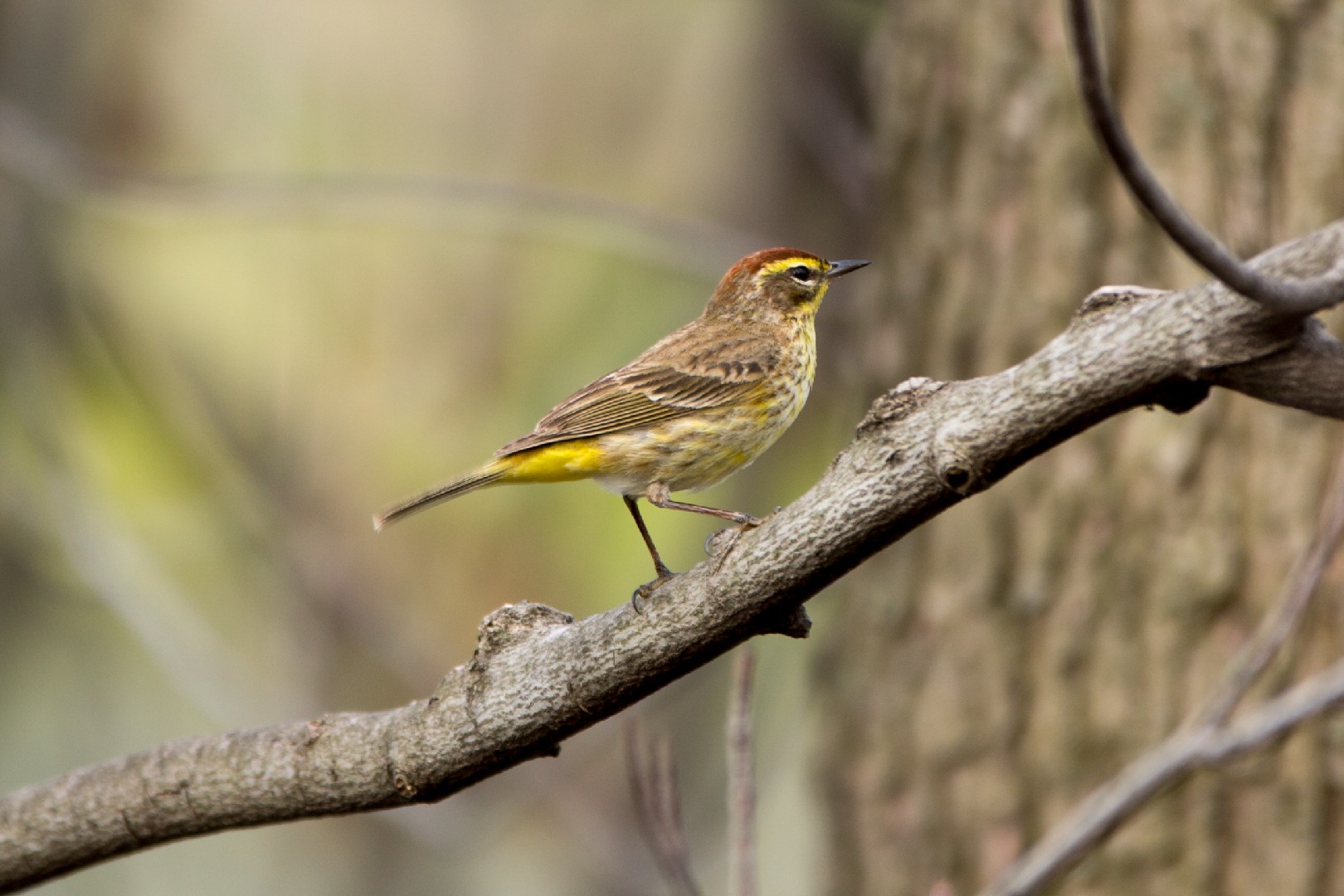
7. Palm Warbler
The palm Warbler is a large warbler known for wagging its tail as it forages. These birds look for insects and berries on and near the ground, unlike other related species that stick to the trees. The palm Warbler is a migratory species that travels to the denser coverage in boreal forests in the north for breeding.
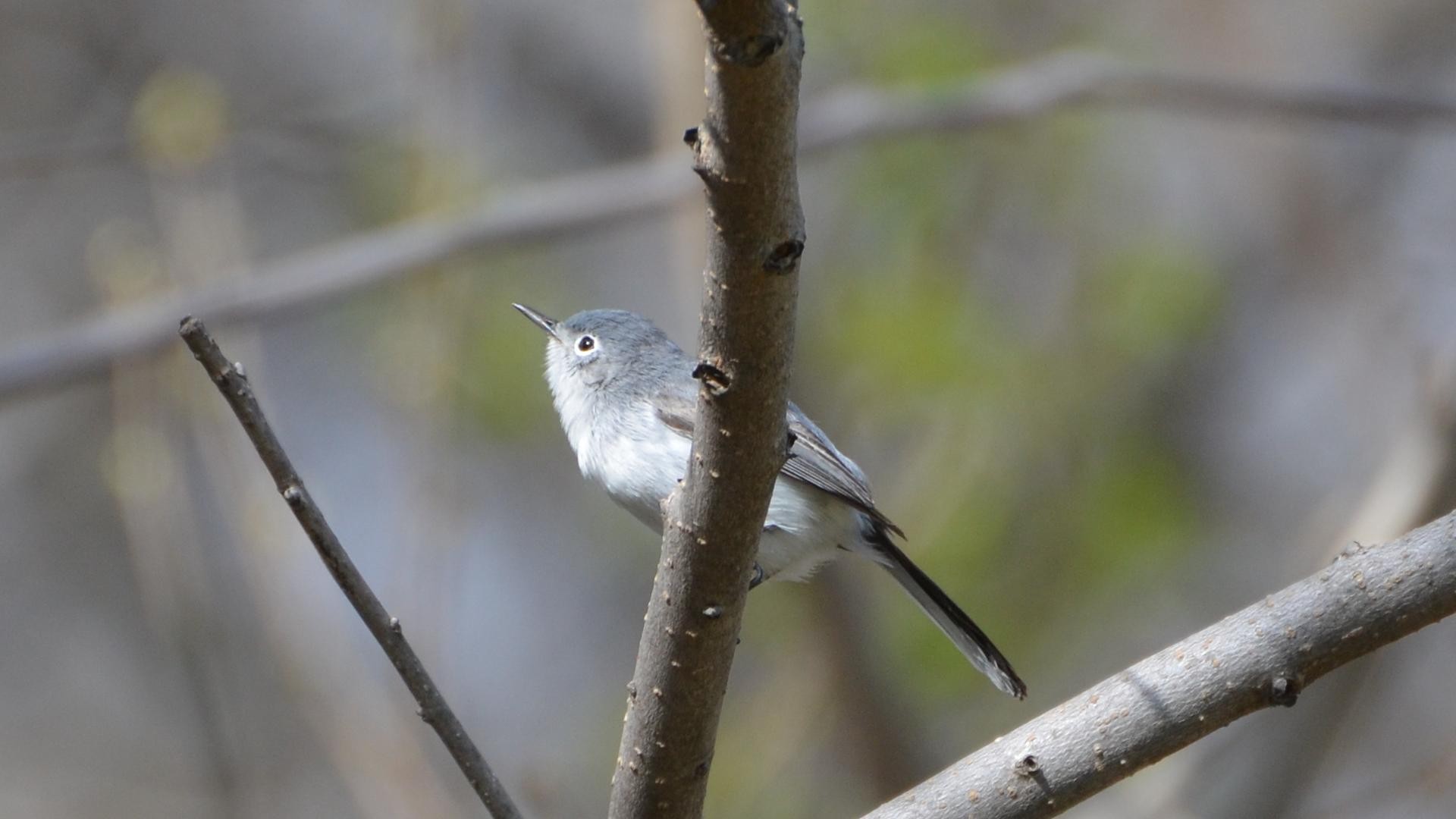
8. Blue-grey Gnatcatcher
The blue-gray gnatcatcher or blue-grey gnatcatcher (Polioptila caerulea) is a very small songbird, 10–13 cm (3.9–5.1 in) in length, 6.3 in (16 cm) in wingspan, and weighing only 5–7 g (0.18–0.25 oz). Adult males are blue-gray on the upperparts with white underparts, have a slender dark bill, and a long black tail edged in white. Females are less blue, while juveniles are greenish-gray. Both sexes have a white eye ring. The blue-gray gnatcatcher's breeding habitat includes open deciduous woods and shrublands in southern Ontario, the eastern and southwestern United States, and Mexico. Though gnatcatcher species are common and increasing in number while expanding to the northeast, it is the only one to breed in Eastern North America. Both parents build a cone-like nest on a horizontal tree branch, and share feeding the young. The incubation period is 13 days for both sexes, and two broods may be raised in a season. These birds migrate to the southern United States, Mexico, northern Central America-(Belize, Guatemala, and Honduras), Cuba, Bahamas, Turks and Caicos Islands, and the Cayman Islands. They forage actively in trees or shrubs, mainly eating insects, insect eggs and spiders. They may hover over foliage while snatching prey (gleaning), or fly to catch insects in flight (hawking). The tail is often held upright while defending territory or searching for food. 
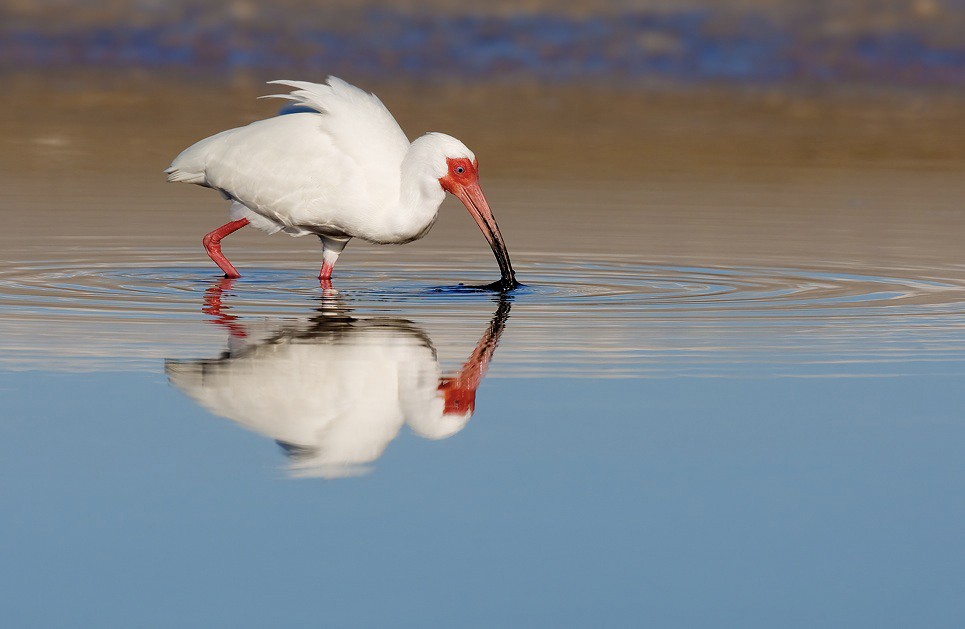
9. White Ibis
The white Ibis is a medium-sized bird with beautiful white plumage that is a known wanderer. It makes a quiet grunting "croo croo" noise as it forages for food. Unfortunately, these birds have been heavily impacted by the pollutant methylmercury. In the Everglades high concentrations of methylmercury from human pollution have greatly impacted the mating behavior and mating frequency of the white Ibis.
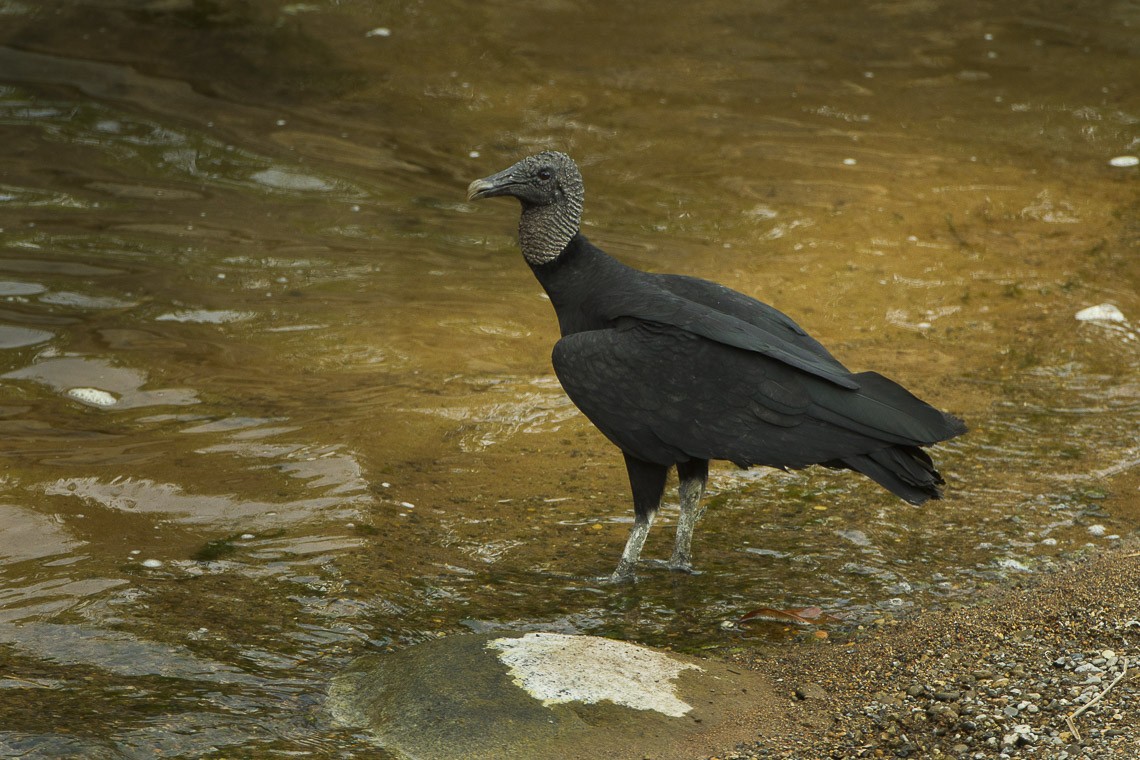
10. Black Vulture
Although quite dapper in appearance, the black Vulture's name comes from the Latin vulturus meaning “tearer" and that is just what that hooked beak is for. These birds are highly social, with fierce family loyalty and will share food with relatives and with their young long after the babies have fledged. Because they lack a voice box, their calls are limited to grunts and hisses.
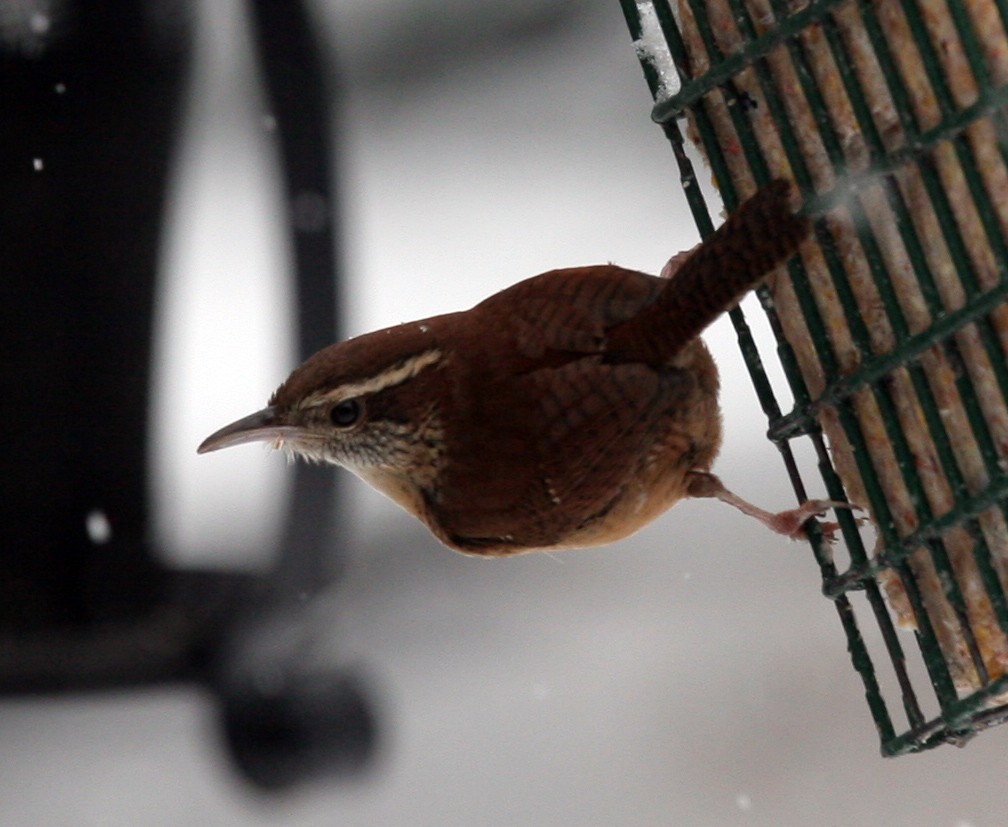
11. Carolina Wren
The musical song of the carolina Wren can be heard all year round. This small, chunky songbird inhabits undergrowth, dense vegetation, and low tangles. Its nests can be found in backyards, often in most unusual places such as drain pipes. They live in pairs and do not migrate, so you can enjoy their love songs all winter.
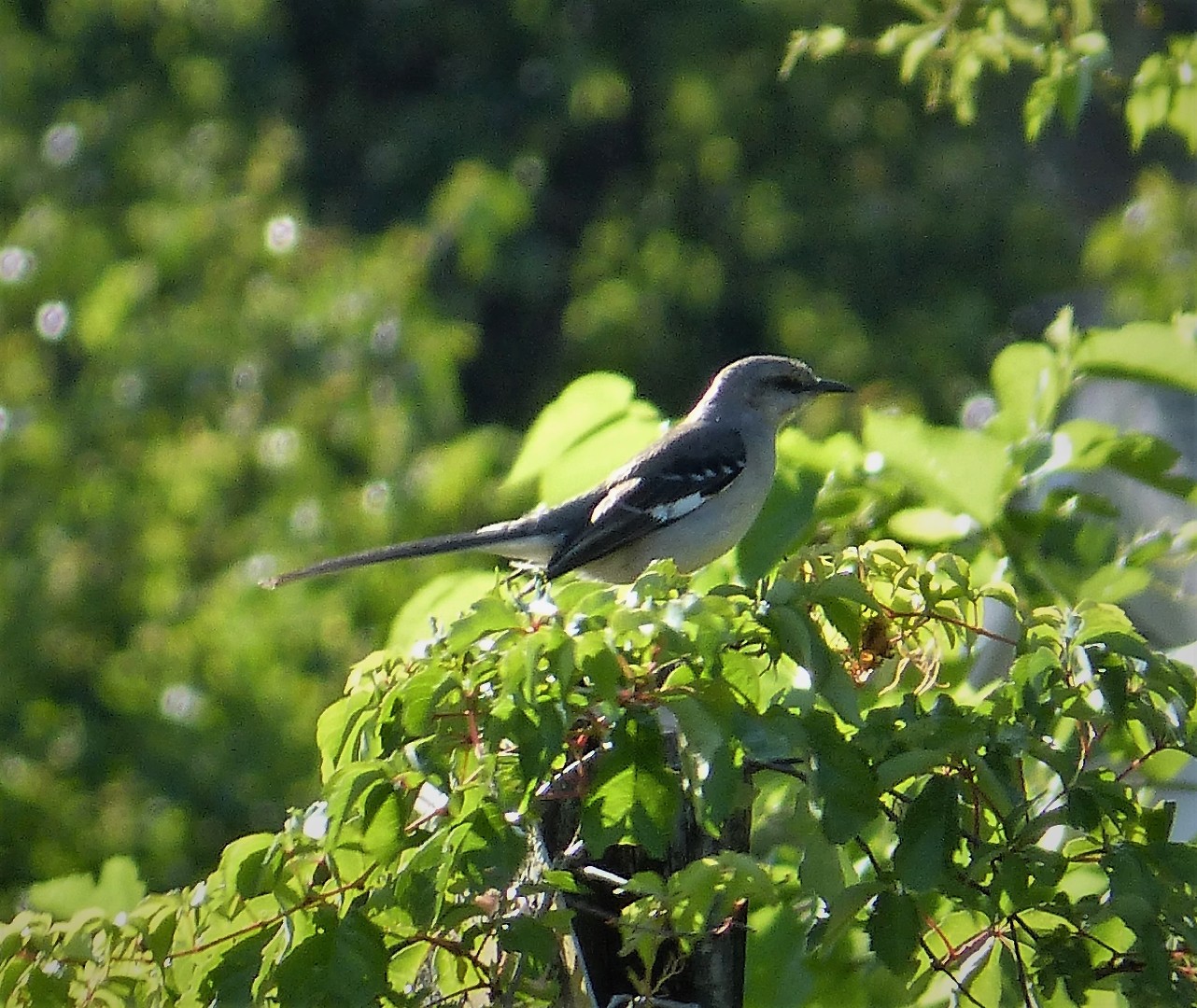
12. Northern Mockingbird
The northern Mockingbird is able to mimic the sound of more than 30 bird species, but this master mocker has also been known to imitate the sounds of a whistle, frog call, or a dog's bark. The mimicry keeps other birds out of the mockingbird's territory, but it also plays an important role in courtship - the male with the best mimicking skills is the most attractive to females. You will often hear this mockingbird singing on moonlit nights. Widespread throughout the US, the northern Mockingbird is a state bird of Arkansas, Florida, Texas, Mississippi, and Tennessee.

13. Blue Jay
The blue Jay is the largest and the most common Jay in North America. This frequent visitor of birdfeeders is quite opportunistic when it comes to food - it is known as "a nest robber." Able to produce a wide range of musical sounds, this loud songbird can even imitate a Red-shouldered hawk (Buteo lineatus). Intelligent and sociable, the blue Jay is said to form strong family bonds.
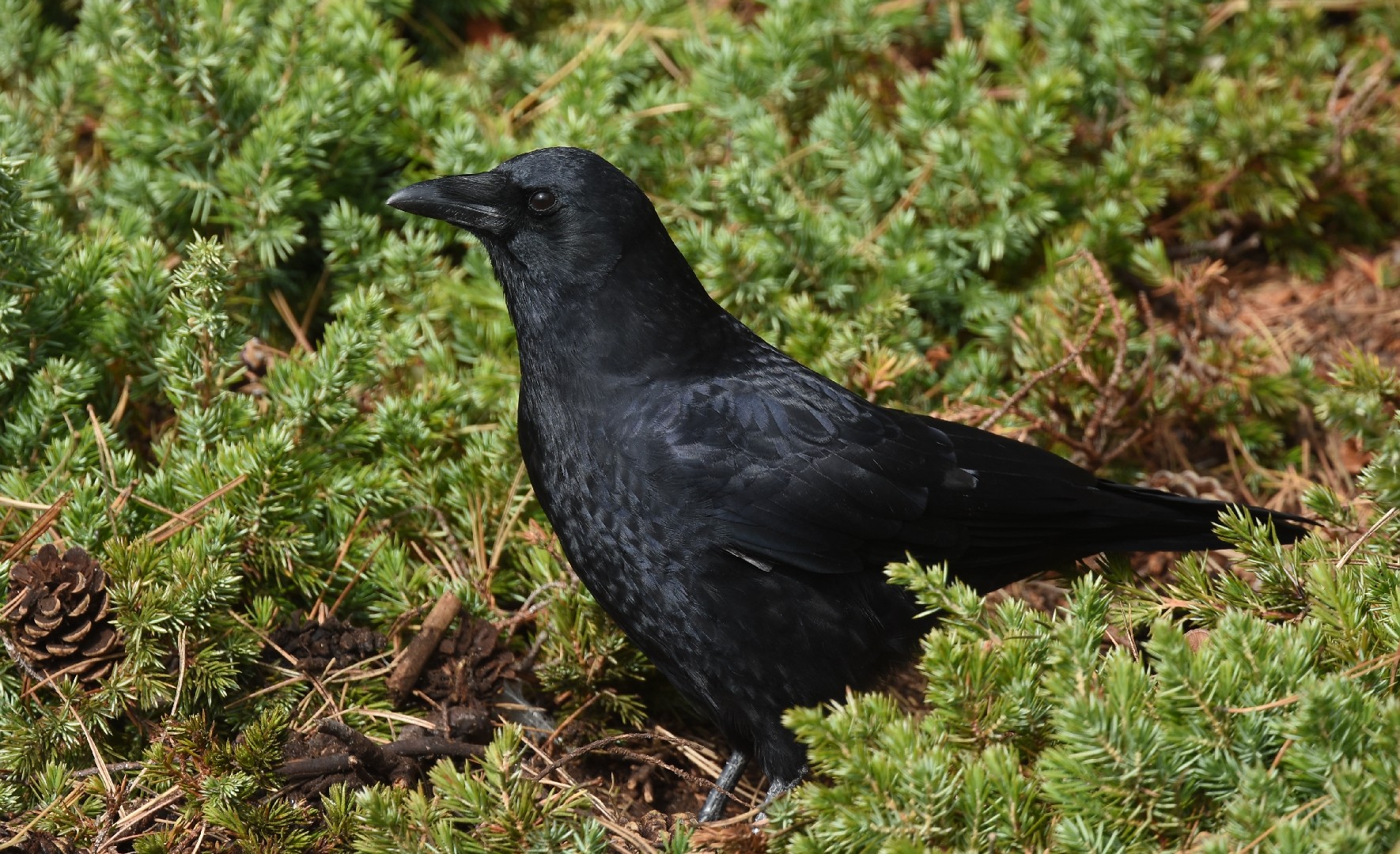
14. American Crow
The american Crow is a big black bird that can be found in forests, fields, river groves, and among human habitations. Interestingly, it is known to stand atop ant hills and allow ants to climb onto its feathers; this apparently discharges their formic acid and makes them more palatable for the crow to eat. Sadly, american Crow numbers have been substantially affected by the West Nile virus in North America. Infected birds die from West Nile in less than a week.
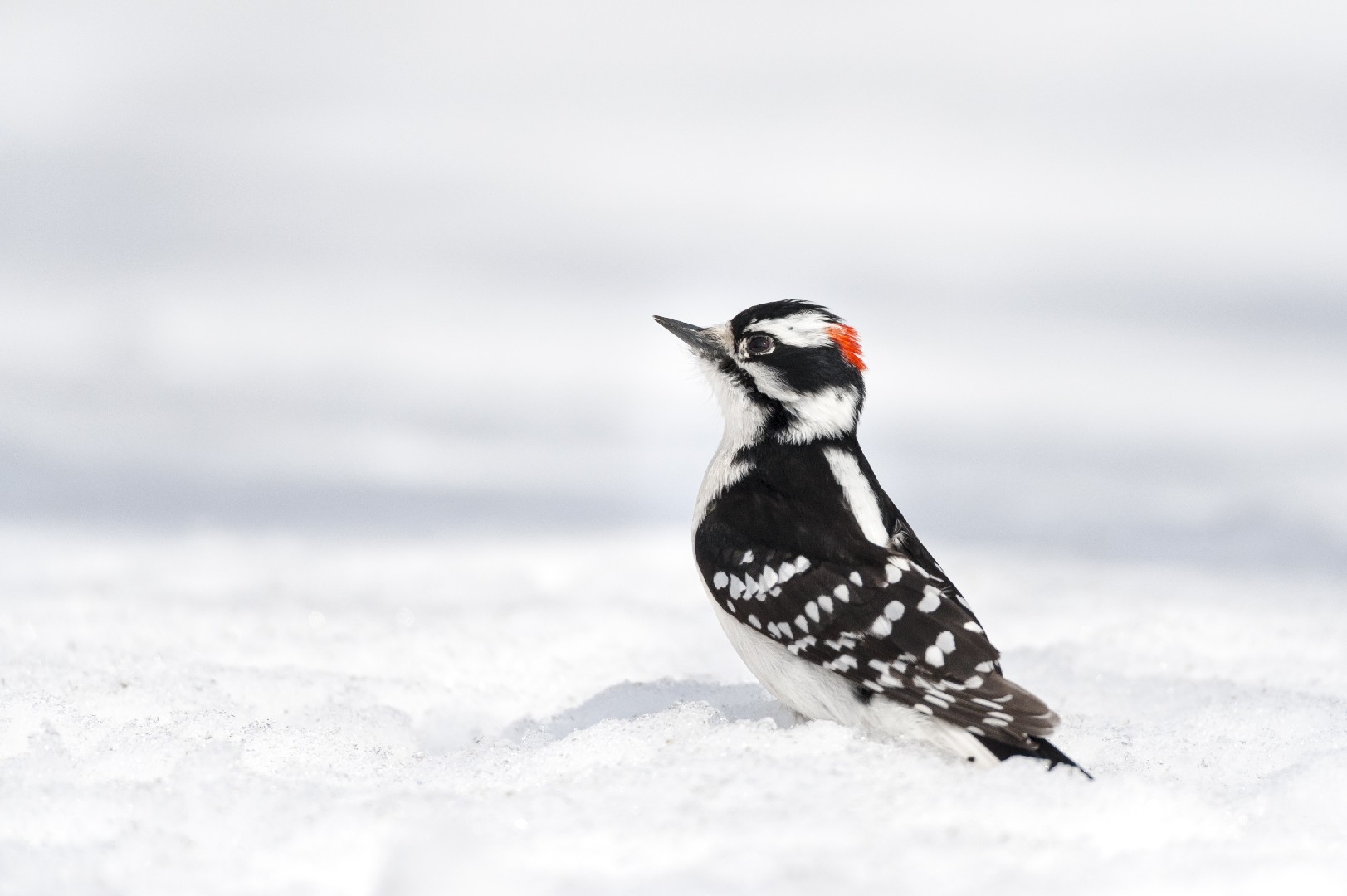
15. Downy Woodpecker
The smallest woodpecker in North America, the downy Woodpecker is almost identical to the Hairy woodpecker (Picoides villosus), but it's significantly smaller and has a shorter bill. It inhabits woods and wooded areas, but is also regularly encountered in urban environments. It often visits birdfeeders, which is an unusual behavior among woodpeckers.
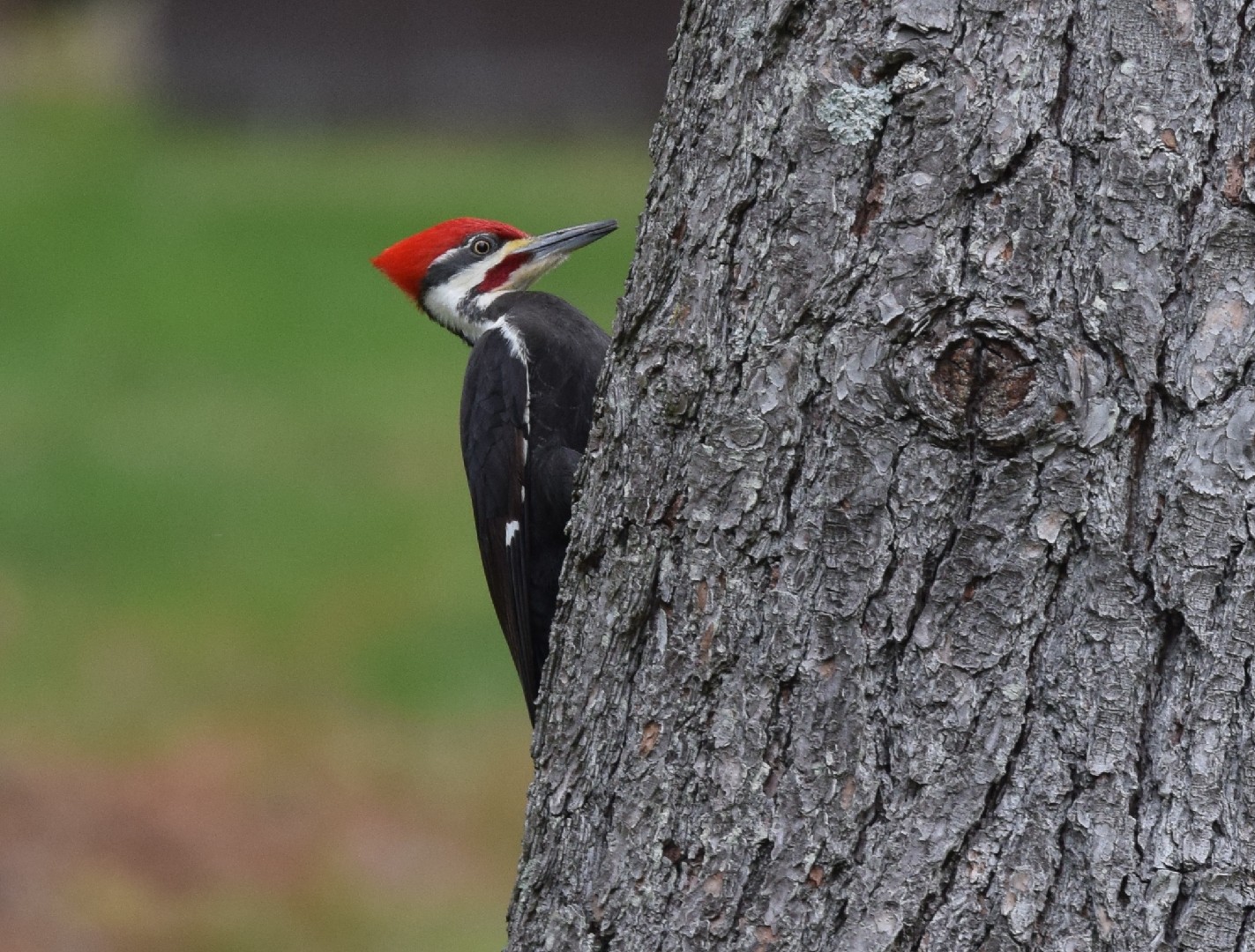
16. Pileated Woodpecker
The largest woodpecker in North America, nearly the size of a crow, the pileated Woodpecker is recognizable by its distinct red crest. When clinging to trees in search of food, the pileated Woodpecker uses his strong tail as additional support. It excavates rectangular cavities in trees for nesting, where it stays with its pair the entire year.
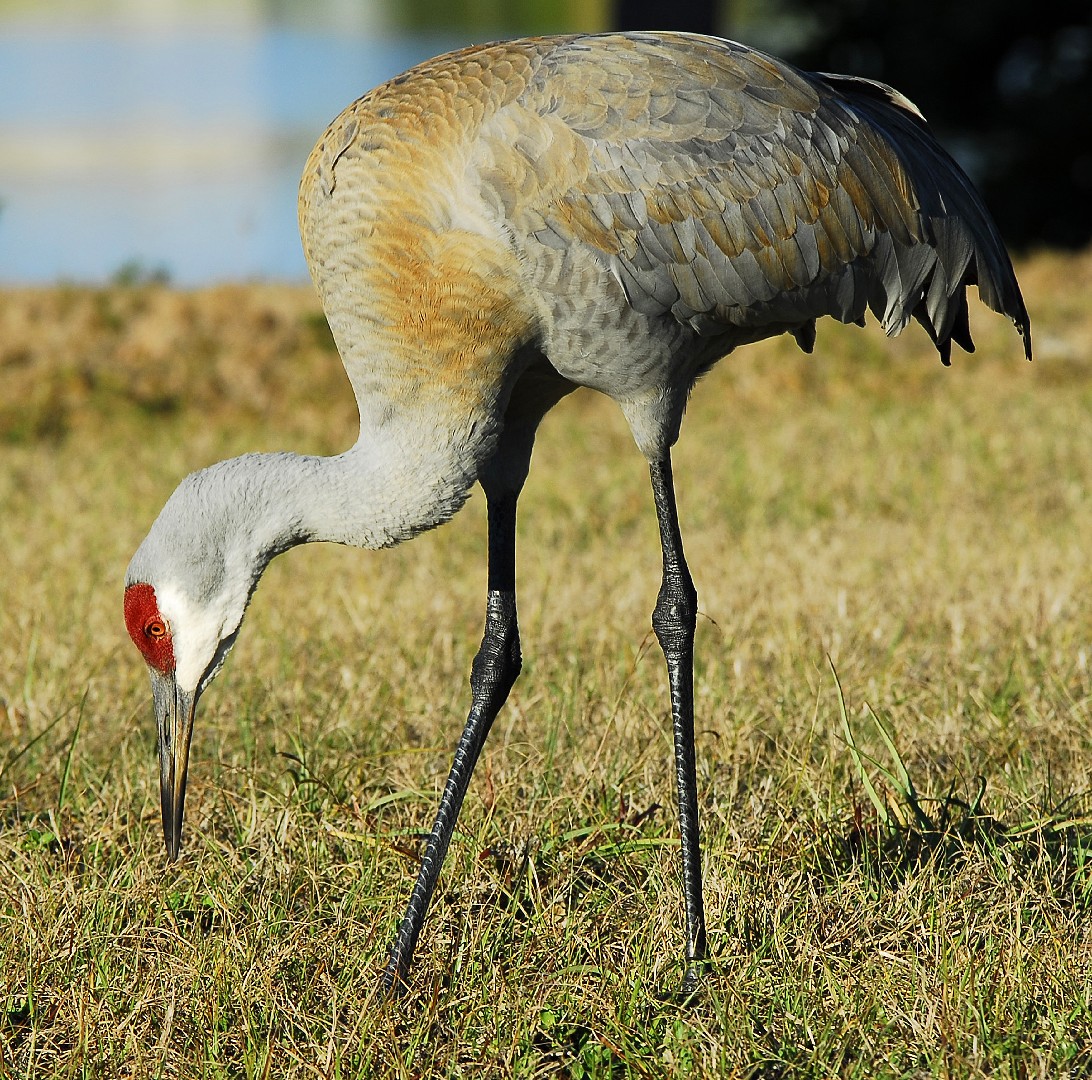
17. Sandhill Crane
The large sandhill Crane is found in open grasslands and wetland ecosystems, usually far away from human civilization. However, during the migratory periods they can be seen feeding on farmland. These birds have many physical cues for socializing and mating. For protection, they may even defend themselves by kicking their feet.
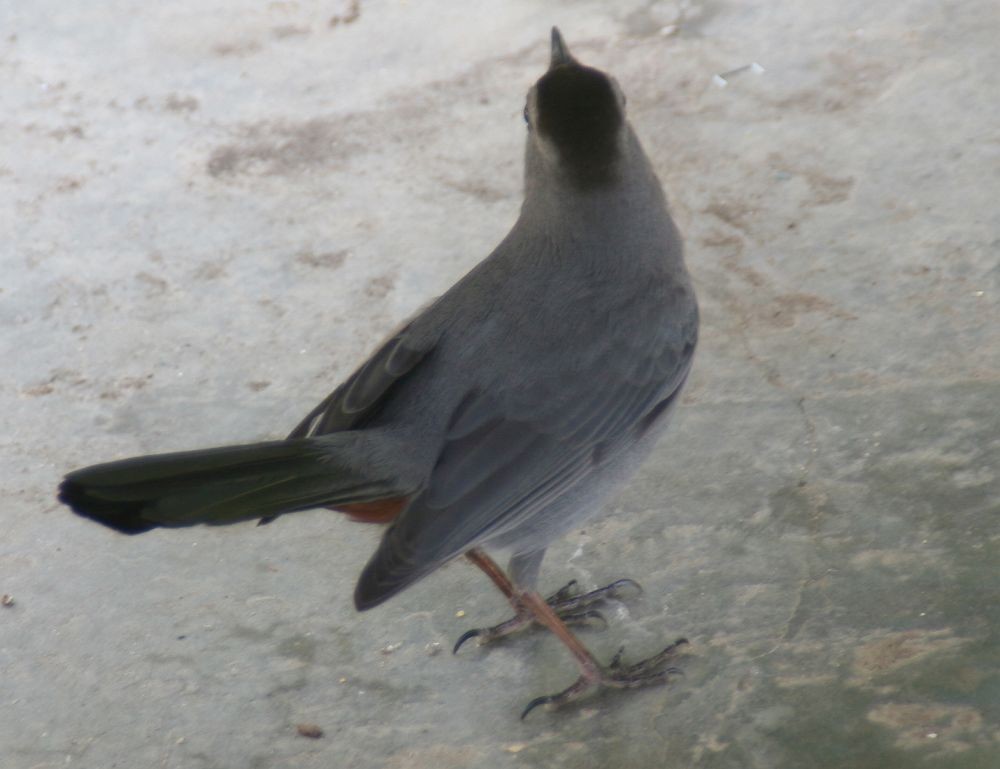
18. Grey Catbird
The grey Catbird is a medium-sized songbird commonly found among thickets and dense shrubs, where it searches for berries and insects. Named after its cat-like call, the grey Catbird is actually able to produce numerous complex sounds. It can mimic the calls of other birds, frogs, and machines much like its close relatives, the mockingbirds.
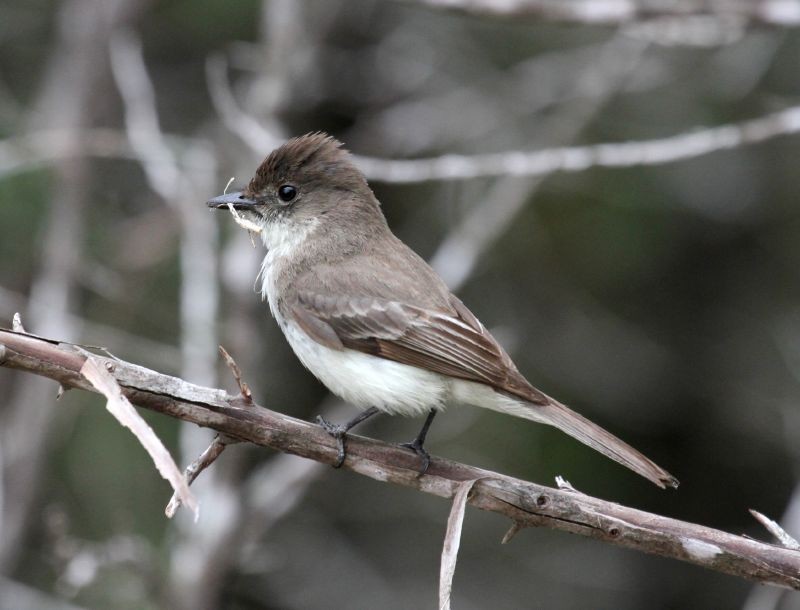
19. Eastern Phoebe
The eastern Phoebe is a familiar songbird in North America. It often nests in urban areas, particularly around buildings and bridges. It can be seen on exposed perches, constantly moving its long, dark tail. The species is partially migratory, with the northern populations migrating south. They return early in spring, being one the first messengers of warmer weather.
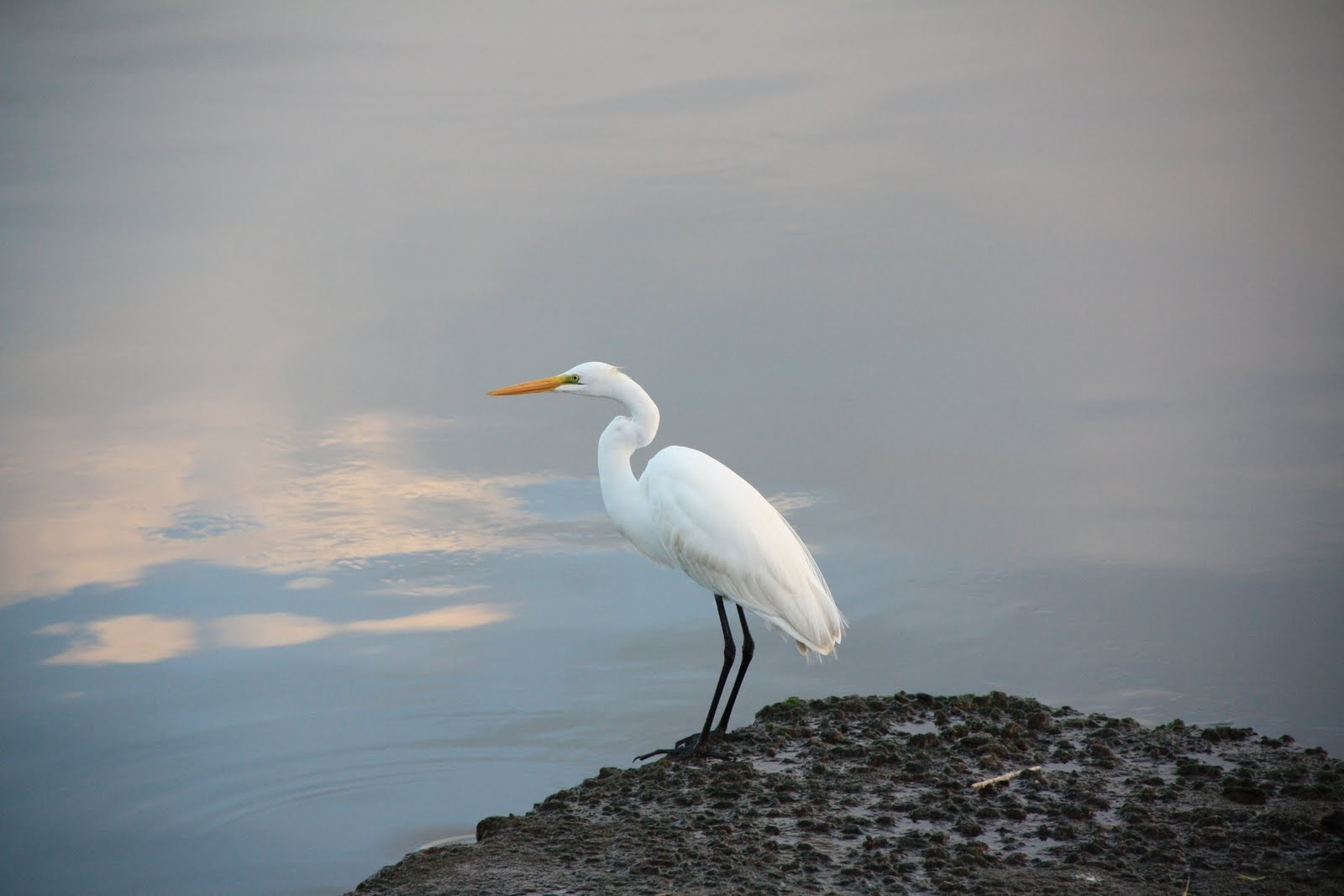
20. Great Egret
These tall birds are quite distinctive with their bright white feathers, black legs, and orange beaks. Great Egrets live near both fresh and saltwater, nesting high in trees to protect their eggs from predatory mammals. They are colonial nesters, living in large groups (colonies), and they find the majority of their food in the nearest body of water.