




Top 20 Most Common Bird in Seguin
In the verdant heartland of Seguin, a mesmerizing variety of bird species find their sanctuary. Owing much to Seguin's diverse ecological landscape, ranging from lush parks to serene waterfronts, 20 common bird species have made this region their home. From the iconic Scissor-tailed Flycatcher to the vibrant Northern Cardinal, these feathered inhabitants symbolize the rich biodiversity inherent in Seguin. This summary provides a captivating glimpse into the avian life that awaits in this uniquely varied habitat.

Most Common Bird
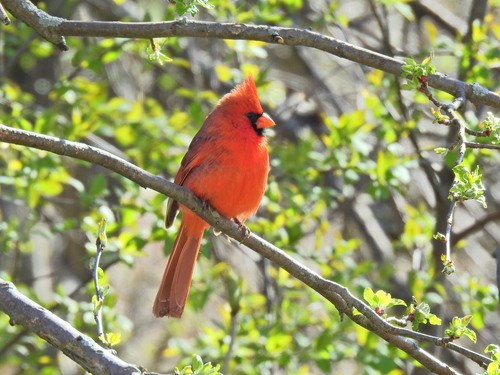
1. Northern Cardinal
The northern Cardinal is a distinctive, medium-sized songbird that inhabits temperate forests and yards. Its name is derived from the male's brilliant red plumage color which resembles red-robed Roman Catholic cardinals, while its crest looks like a bishop's mitre. Compared to the male, the female is much duller in color. The highly territorial males can be quite aggressive. Quite popular, this is the state bird of seven U.S. states.
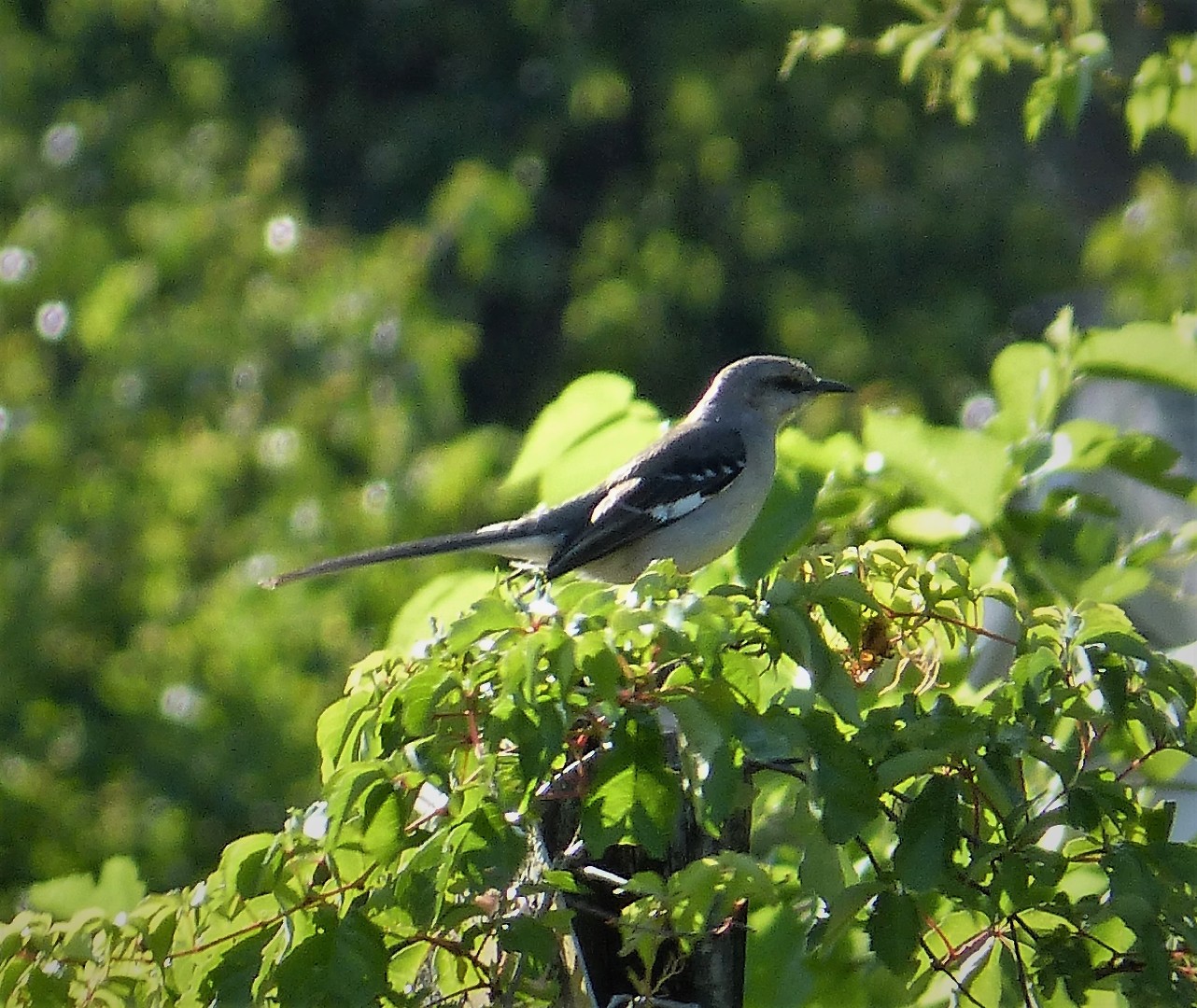
2. Northern Mockingbird
The northern Mockingbird is able to mimic the sound of more than 30 bird species, but this master mocker has also been known to imitate the sounds of a whistle, frog call, or a dog's bark. The mimicry keeps other birds out of the mockingbird's territory, but it also plays an important role in courtship - the male with the best mimicking skills is the most attractive to females. You will often hear this mockingbird singing on moonlit nights. Widespread throughout the US, the northern Mockingbird is a state bird of Arkansas, Florida, Texas, Mississippi, and Tennessee.
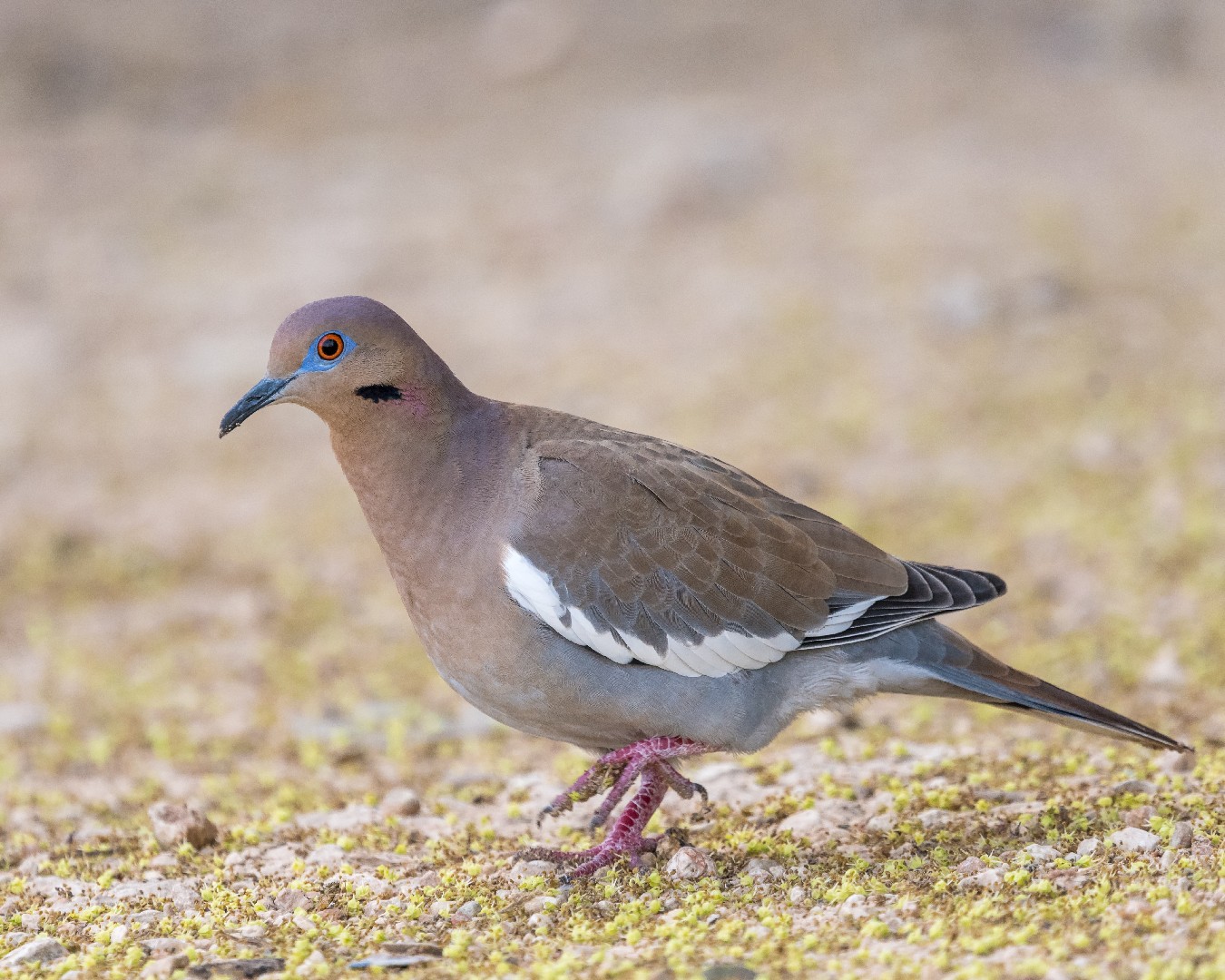
3. White-winged Dove
The medium-sized, distinctively patterned white-winged Doves practically live on Saguaro cactus, consuming its nectar, pollen, fruit, and seeds. In fact, they are so dependent on this plant that they match their migration schedule to its fruiting schedule. White-winged Doves were heavily hunted in Texas in the 20th century and their population dropped from 12 million to fewer than 1 million by 1939. Since then proactive hunting management and the species ability to adapt to urban living has helped their numbers rebound.
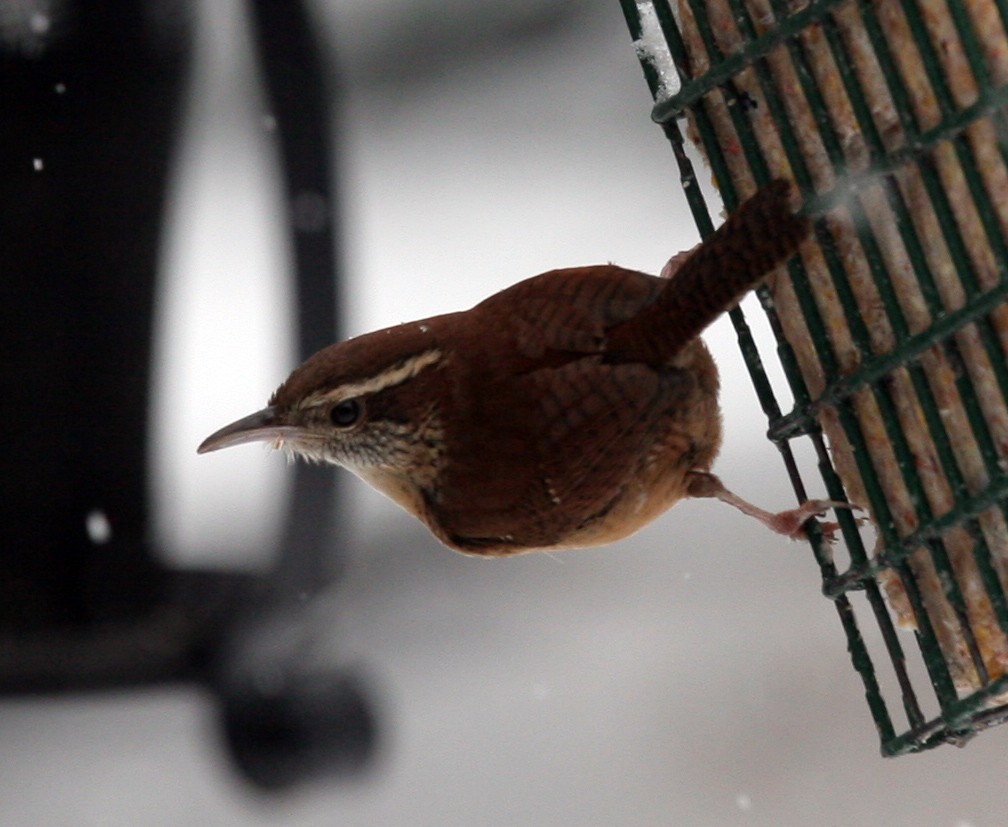
4. Carolina Wren
The musical song of the carolina Wren can be heard all year round. This small, chunky songbird inhabits undergrowth, dense vegetation, and low tangles. Its nests can be found in backyards, often in most unusual places such as drain pipes. They live in pairs and do not migrate, so you can enjoy their love songs all winter.
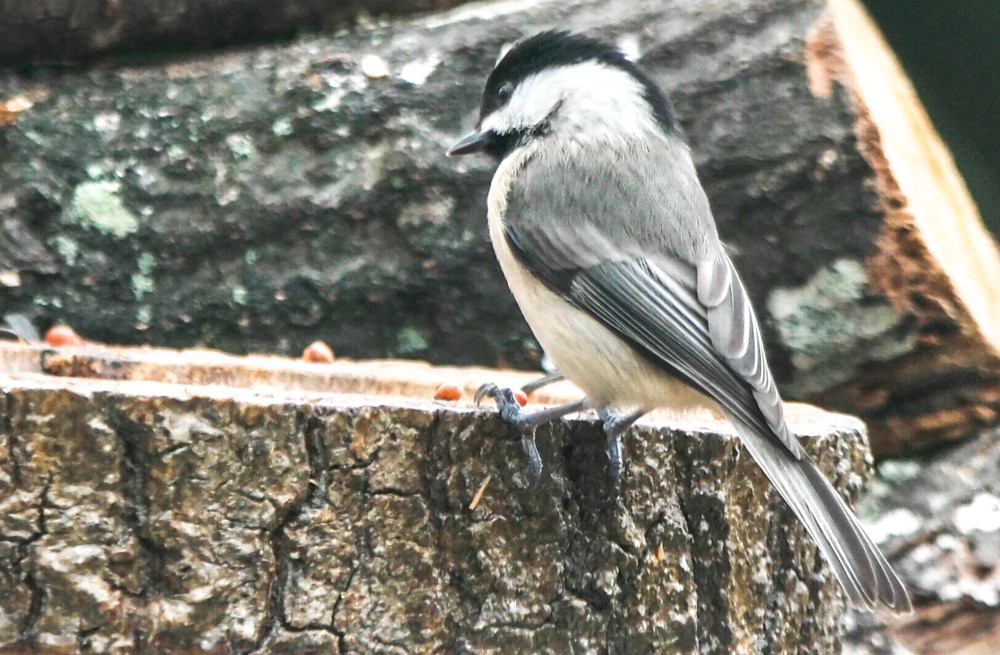
5. Carolina Chickadee
This tiny and round songbird is often seen in urban environments, although the carolina Chickadee primarily inhabits woodlands. These birds mate for life, but the pairs live in a larger flock. The carolina Chickadee (Poecile carolinensis) is almost identical to the Black-capped chickadee (Poecile atricapillus), but their distribution rarely overlaps. In places where it does, the two species commonly interbreed, producing hybrids that can confuse birdwatchers.
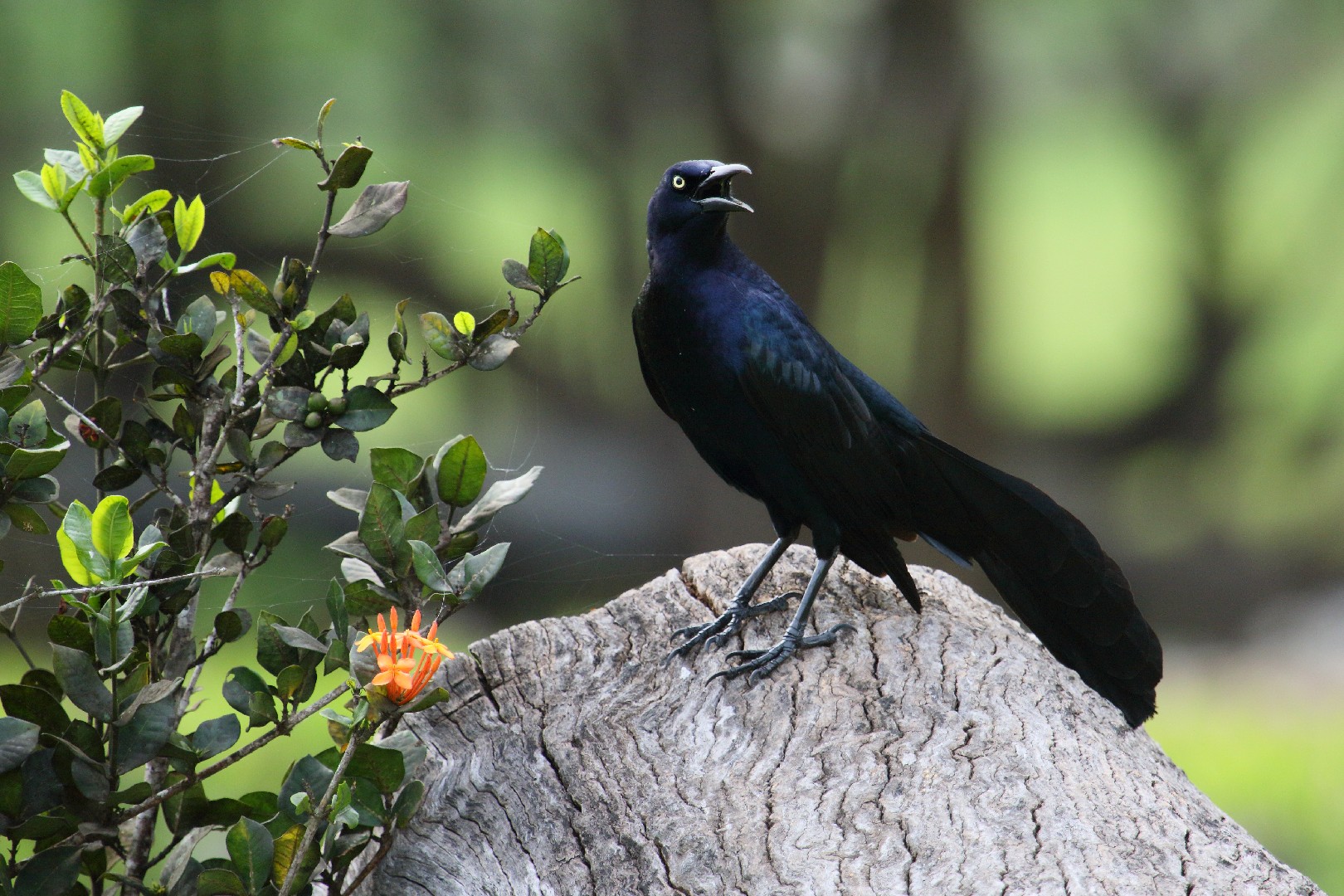
6. Great-tailed Grackle
The medium-sized great-tailed Grackle is notable for its long tail, shaped like a V, and deep black coloring offset by bright yellow eyes. This loud bird can be easily found just by following the sharp sounds of its calls and shrieks. Males in particular shriek and ruffle up their feathers to defend their territory or if they feel threatened.
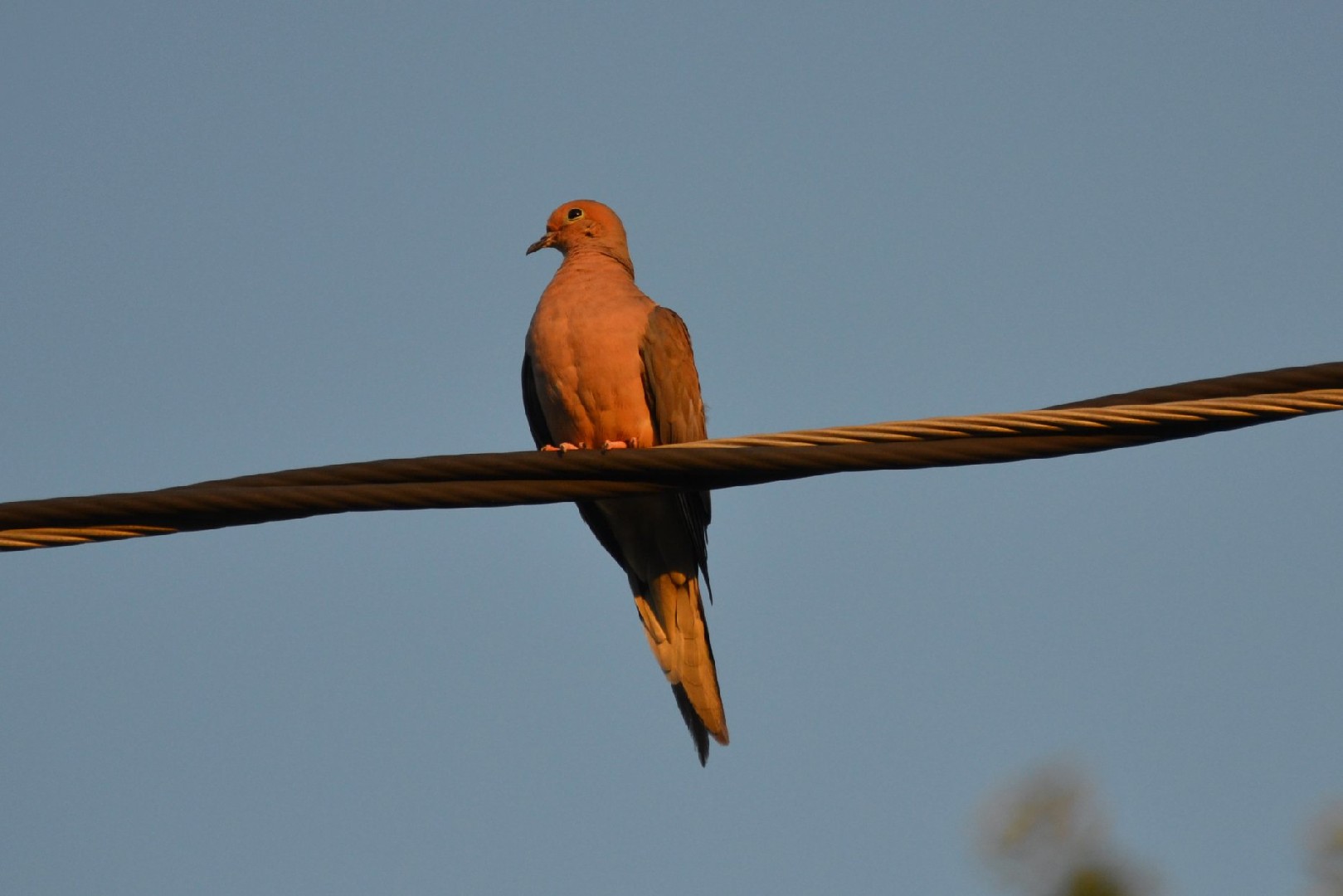
7. Mourning Dove
One of the most famous and widespread doves of North America, the mourning Dove can be often seen in urban areas perching on telephone wires. It is named after its distinctive, plaintive-sounding song. It is also a popular game bird, but its population is still abundant thanks to the prolific breeding and its ability to raise up to five to six broods in a single year.
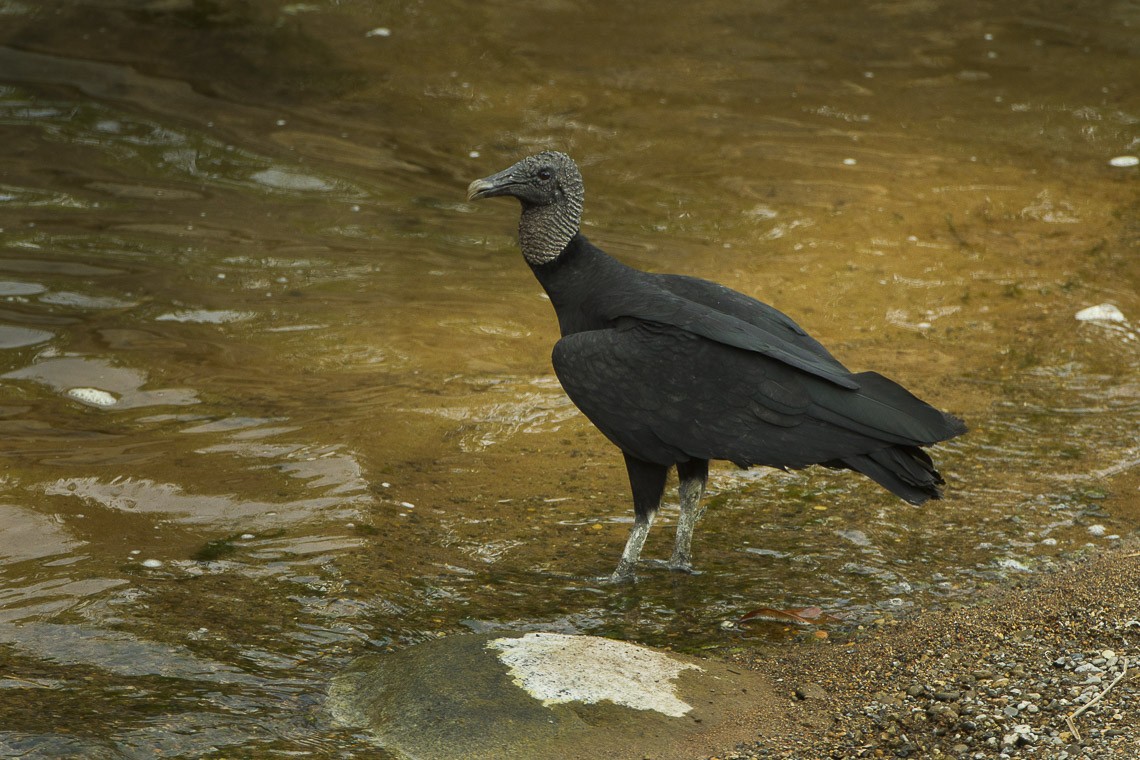
8. Black Vulture
Although quite dapper in appearance, the black Vulture's name comes from the Latin vulturus meaning “tearer" and that is just what that hooked beak is for. These birds are highly social, with fierce family loyalty and will share food with relatives and with their young long after the babies have fledged. Because they lack a voice box, their calls are limited to grunts and hisses.

9. Turkey Vulture
The turkey Vulture is a common sight, especially around roads, where they keep a sharp eye out for roadkill. Seeing these large birds in the sky can often make you take a second look to see if it’s an eagle or a hawk. Here’s one quick way to tell the difference. When in flight, a turkey Vulture will circle unsteadily, with its wings lifted to make a V shape. Though they are not appreciated, they do the dirty work of the animal kingdom by cleaning up the countryside as they scavenge.
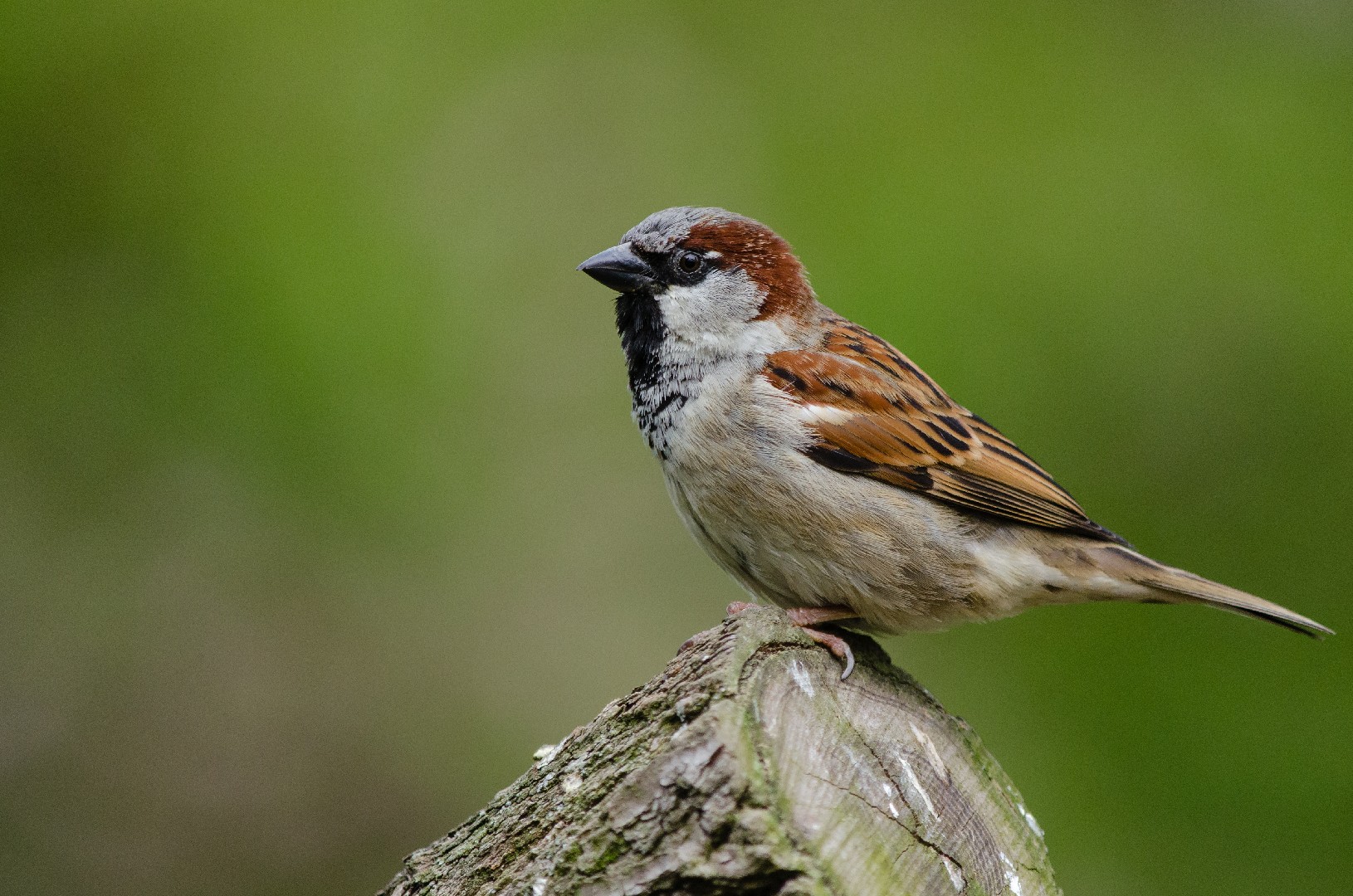
10. House Sparrow
Just as its name implies, the little house Sparrow socializes with humans more than any other bird species. Able to adapt and thrive in almost any habitat, excluding the extremes such as deserts and mountain peaks, this species was once restricted only to North Africa and Eurasia but now is found across the globe. Unfortunately, this opportunistic eater is not completely harmless—it can cause considerable damage to crops.
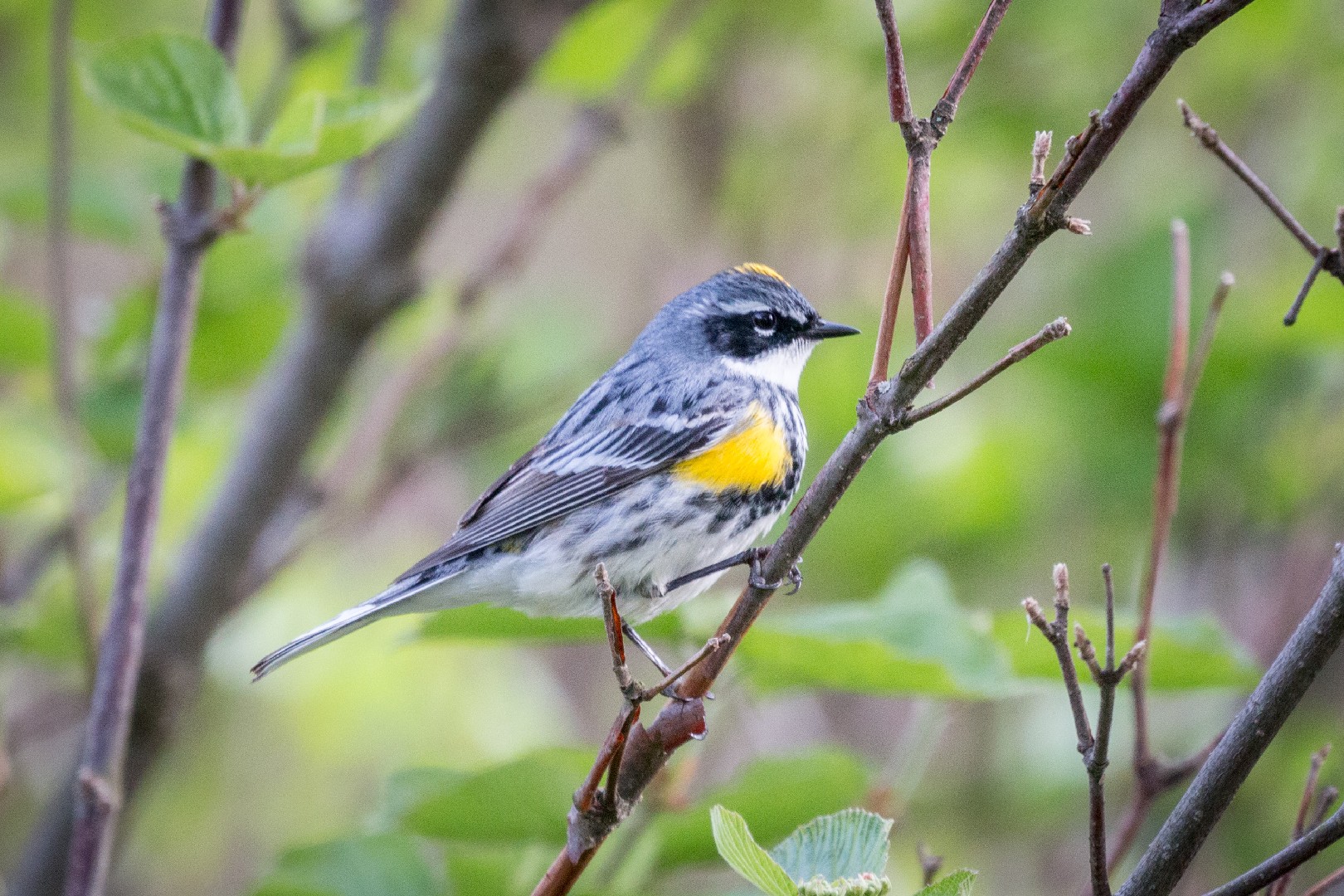
11. Yellow-rumped Warbler
The foraging yellow-rumped Warbler is quick-moving and appealingly colored. Both male and female are a sharp gray, with white on their wings and flashes of yellow on their rump (as the name suggests), sides, and face. Most striking about this bird is the large groups of them that spread across North America in the autumn season.

12. Blue Jay
The blue Jay is the largest and the most common Jay in North America. This frequent visitor of birdfeeders is quite opportunistic when it comes to food - it is known as "a nest robber." Able to produce a wide range of musical sounds, this loud songbird can even imitate a Red-shouldered hawk (Buteo lineatus). Intelligent and sociable, the blue Jay is said to form strong family bonds.
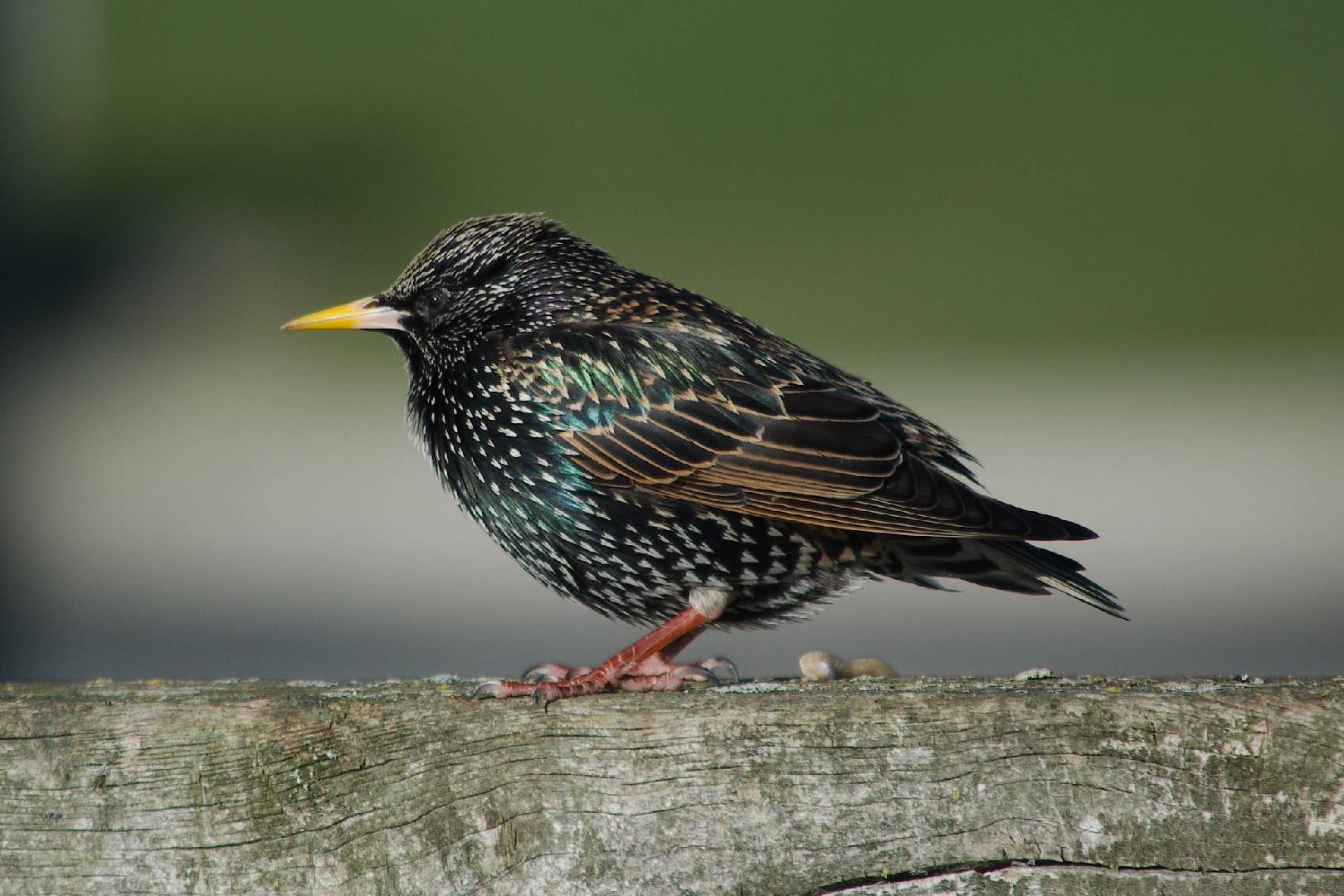
13. European Starling
The european Starling, a large, hardy songbird, is one of the most commonly seen bird species in North America. Originally from Europe, this species was brought to the U.S. in the 1890s by enthusiasts of William Shakespeare, who had the unique goal of bringing over every single species of bird that was mentioned in Shakespeare's collective works. Unfortunately, the european Starling, being an adaptable, generalist species, spread invasively across the continent, hurting many native species' populations in the process.
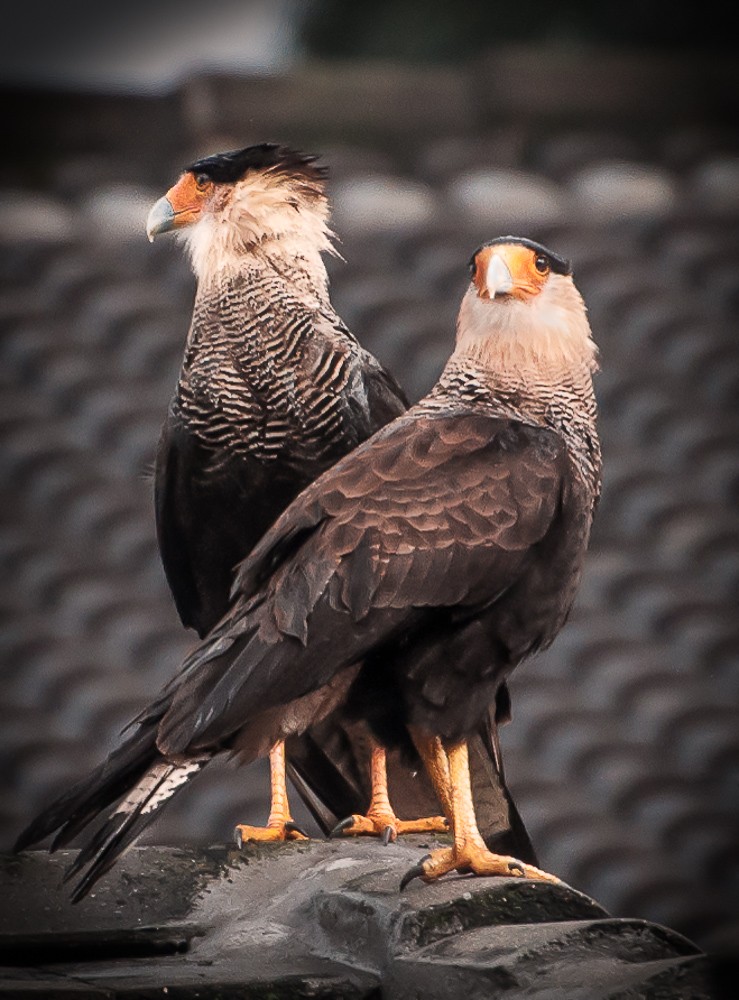
14. Crested Caracara
It has a total length of 50–65 cm (20–26 in) and a wingspan of 120–132 cm (47–52 in). Weight is 0.9-1.6 kg (2-3.5 lbs), averaging 1,348 g (2.972 lb) in 7 birds from Tierra del Fuego. Individuals from the colder southern part of its range average larger than those from tropical regions (as predicted by Bergmann's rule) and are the largest type of caracara. In fact, they are the second largest species of falcon in the world by mean body mass, second only to the gyrfalcon. The cap, belly, thighs, most of the wings and tail-tip are dark brownish, the auriculars, throat and nape are whitish-buff, and the chest, neck, mantle, back, uppertail-coverts, crissum (the undertail coverts surrounding the cloaca) and basal part of the tail are whitish-buff barred dark brownish. In flight, the outer primaries show a large conspicuous whitish-buff patch ('window'), as in several other species of caracaras. The legs are yellow and the bare facial skin and cere are deep yellow to reddish-orange. Juveniles resemble adults, but are paler, with streaking on the chest, neck and back, grey legs, and whitish, later pinkish-purple, facial skin and cere. It can be separated from the similar northern caracara by its more extensive barring on the chest, brownish and often lightly mottled/barred scapulars (all blackish in northern), and pale lower back with dark barring (uniform blackish in northern). Individuals showing intermediate features are known from the small area of contact in north-central Brazil, but intergradation between the two species is generally limited. 
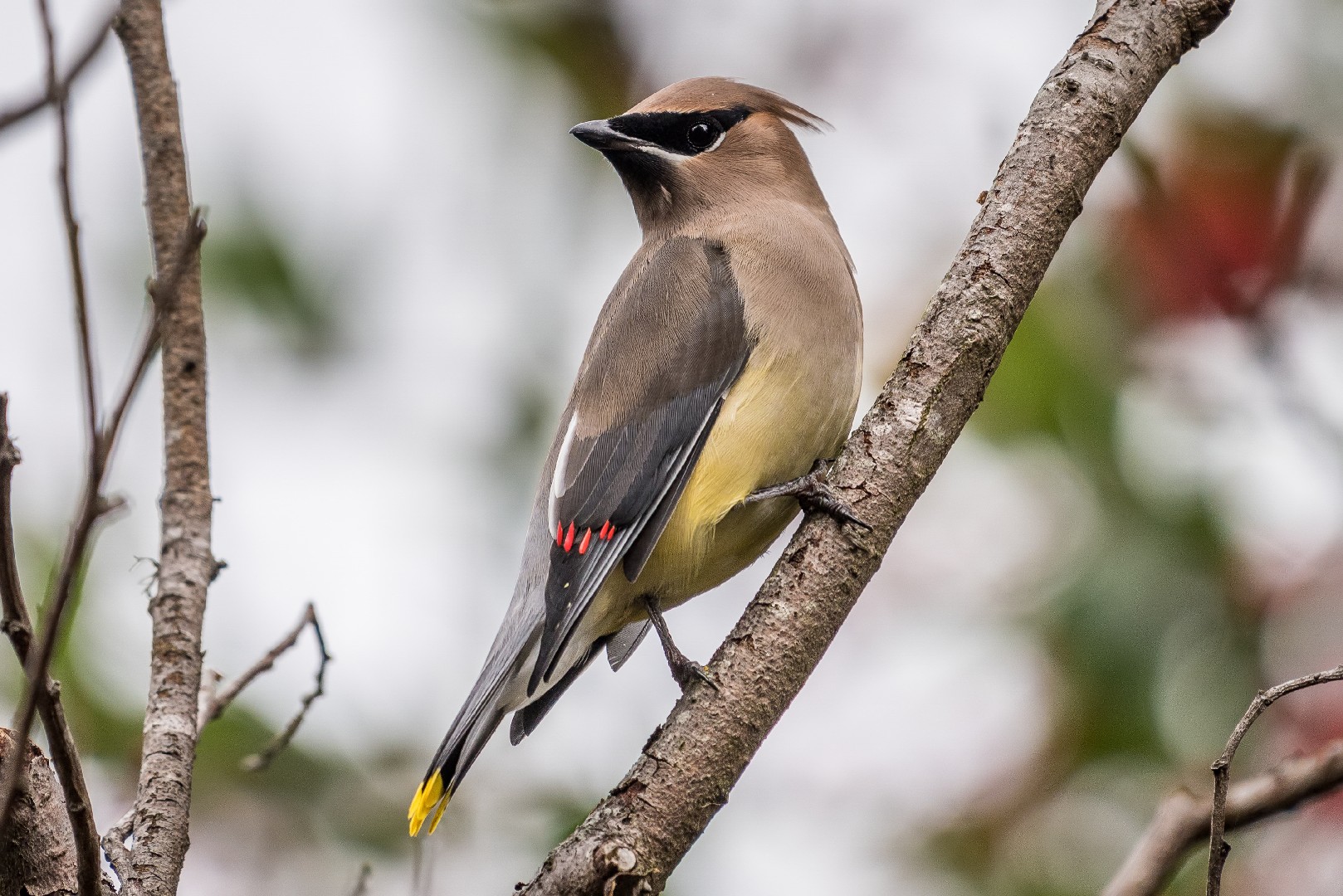
15. Cedar Waxwing
The cedar Waxwing is a sleek bird recognizable by its soft coloring and the red, waxy tips found on their wing feathers—although those tips can be hard to spot from far away. A social bird, they stay together in flocks throughout the year, plucking berries from trees and insects from the water. Keep an ear out for their thin, piping call.
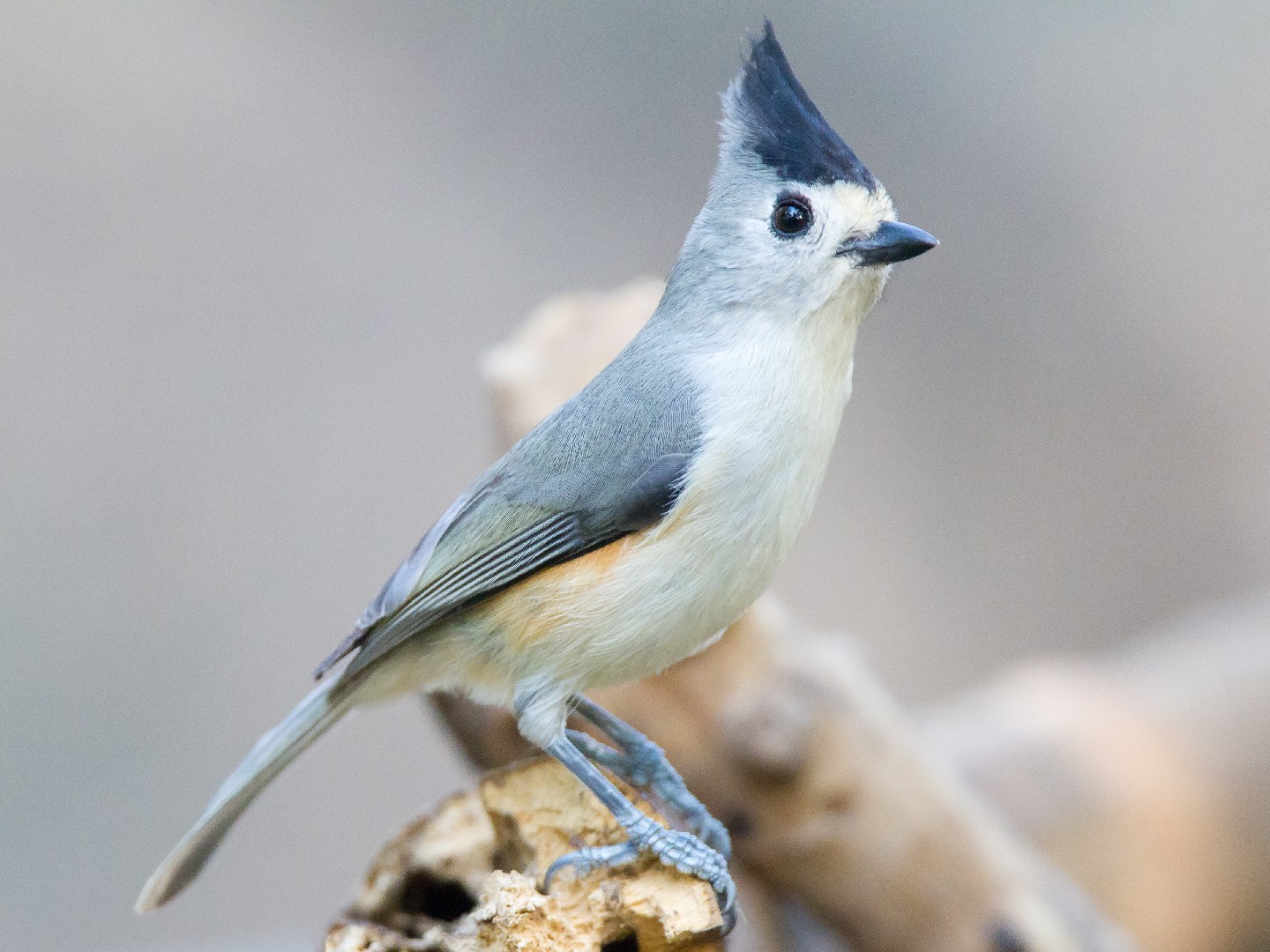
16. Black-crested Titmouse
The black-crested Titmouse is a small species of songbird with a relatively small distribution in North America. These birds are easy to find in their oak woodland habitats, but difficult to find anywhere else. They like to travel with other small birds and can be differentiated by their clear whistle call.

17. House Finch
Frequent in urban environments and human-created habitats such as parks and backyards, the little house Finch is known for its loud but pleasant, cheerful singing. It feeds on the ground, mostly on seeds, berries, and other plant material. This bird is highly sociable and very adaptable. It often visits feeders.
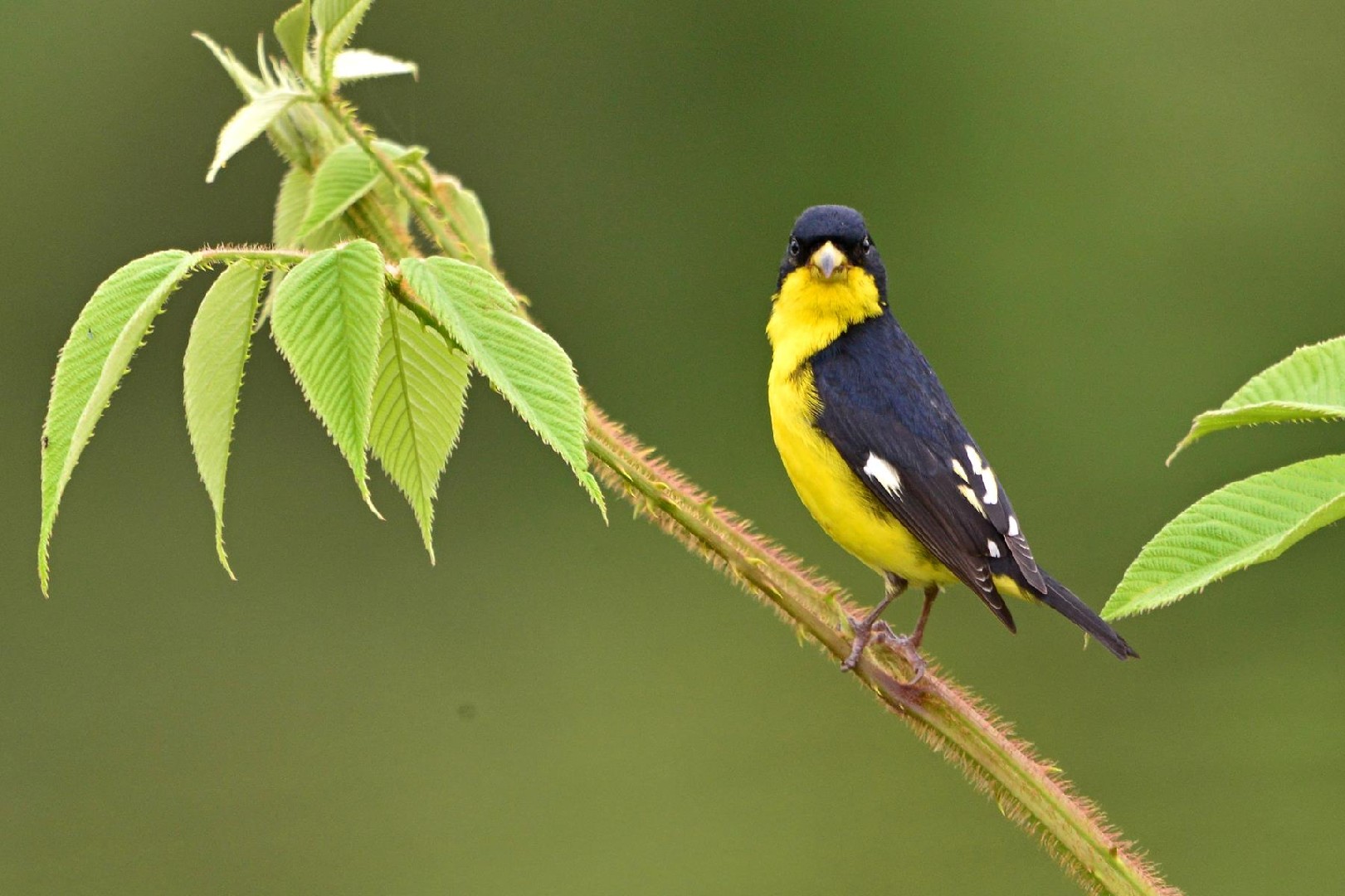
18. Lesser Goldfinch
A common visitor of birdhouses or anywhere with birdseed, the lesser Goldfinch is a small, notch-tailed bird that enjoys gardens and open wooded areas. Its size has made it commonly overlooked, but listen out for its charming, chiming song. Social birds, they are often seen in large groups of hundreds traveling together at a time.
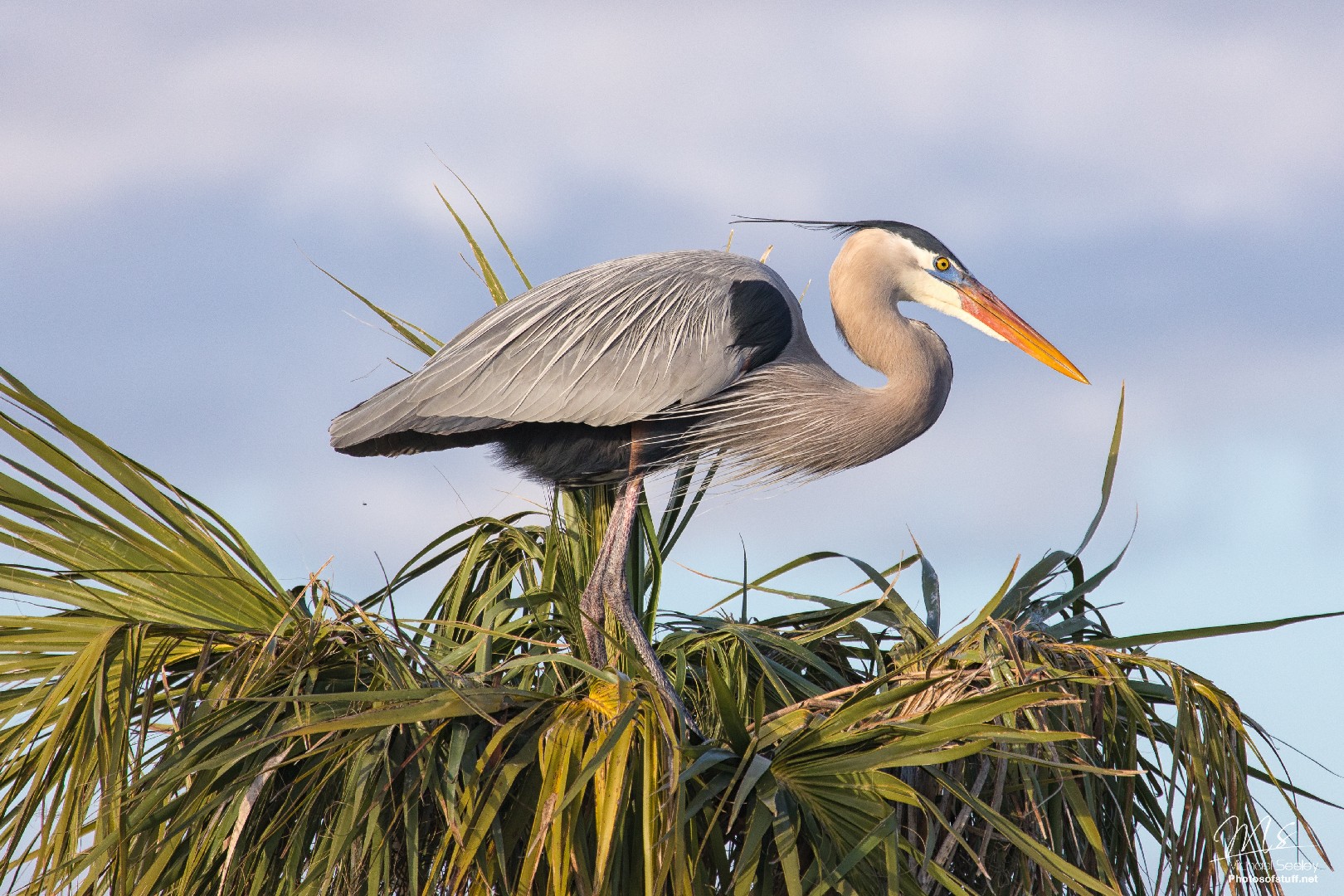
19. Great Blue Heron
The great Blue Heron, the largest such bird in North America, is quite adaptable and thrives in various wet habitats. Silent, patient, and often motionless, this majestic bird always makes a spectacular sight. Thanks to its specially shaped neck and extremely good night vision, this wading bird is a quick and skilled fish predator. Since the great Blue Heron accumulates toxins in its body, researchers use it as an indicator of dangerous contaminants in local wetlands.
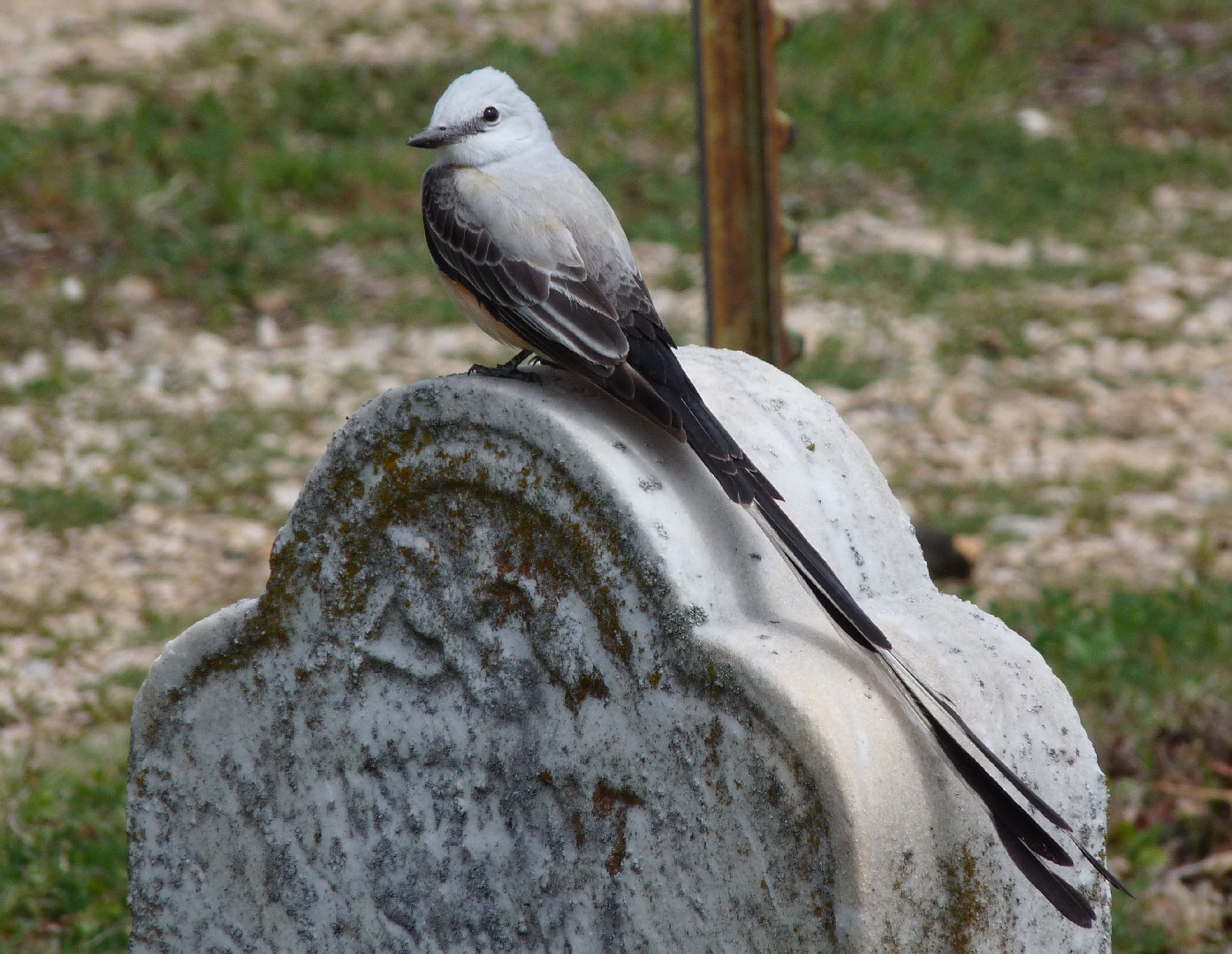
20. Scissor-tailed Flycatcher
The scissor-tailed Flycatcher has a relatively small range in the southern United States and migrates to Central America for the winter months. Otherwise, these birds can be found in savanna and grassland habitats with little to no foliage. The scissor-tailed Flycatcher is territorial but is a useful insectivore for farmers dealing with pest species.