




Top 20 Most Common Bird in Tarija
In the diverse environment of Tarija, captivating avifauna thrive. The 20 most common birds, noted for their distinct features and behavior, embody the rich biodiversity of this area. Their adaptability to Tarija's varying climates, from semi-tropical valleys to drier Andean highlands, is remarkable. These birds offer a unique glimpse into Tarija's complex ecosystems.

Most Common Bird
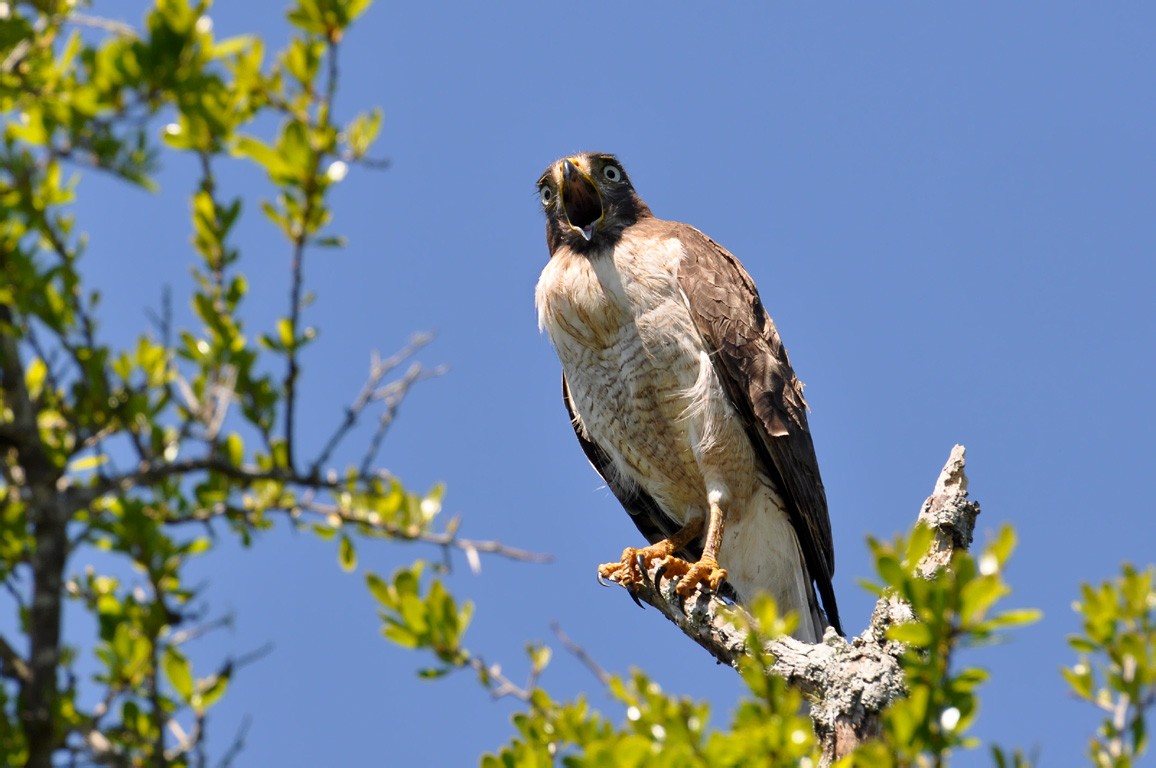
1. Roadside Hawk
The roadside hawk is 31–41 cm (12–16 in) long and weighs 250–300 g (8.8–10.6 oz). Males are about 20% smaller than females, but otherwise the sexes are similar. In most subspecies, the lower breast and underparts are barred brown and white, and the tail has four or five grey bars. Twelve subspecies are usually recognised and there is significant plumage variation between these. Depending on the subspecies involved, the roadside hawk is mainly brown or grey. It is fairly common to observe a touch of rufous (i.e., a light reddish-brown) on the bird's wings, especially when seen in flight. Its call is a very high-pitched piercing squeak. The eyes of adult roadside hawks are whitish or yellow. As suggested by its specific name (magni = large; rostri = beak), its beak is relatively large. The roadside hawk may be marginally the smallest hawk in the widespread genus Buteo, although Ridgway's hawk and the white-rumped hawk are scarcely larger. In flight, the relatively long tail and disproportionately short wings of the roadside hawk are distinctive. It frequently soars, but does not hover. 

2. Turkey Vulture
The turkey Vulture is a common sight, especially around roads, where they keep a sharp eye out for roadkill. Seeing these large birds in the sky can often make you take a second look to see if it’s an eagle or a hawk. Here’s one quick way to tell the difference. When in flight, a turkey Vulture will circle unsteadily, with its wings lifted to make a V shape. Though they are not appreciated, they do the dirty work of the animal kingdom by cleaning up the countryside as they scavenge.
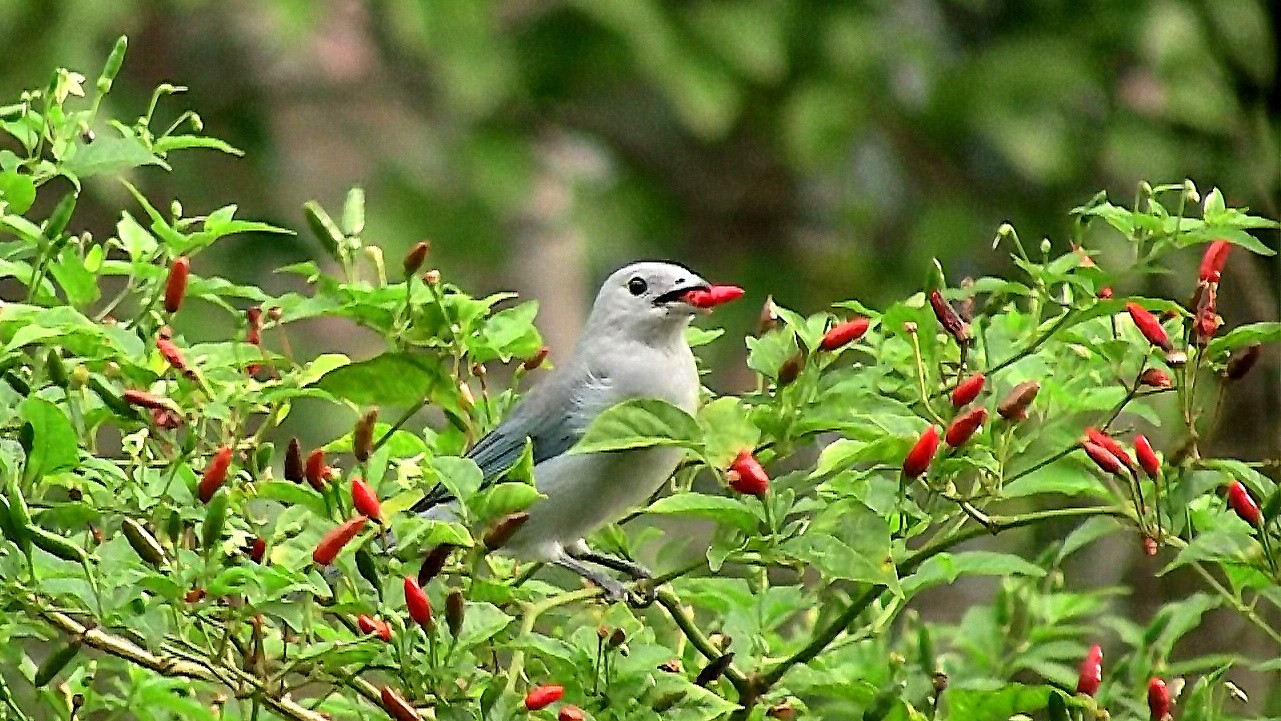
3. Sayaca Tanager
The sayaca tanager (Thraupis sayaca) is a species of bird in the family Thraupidae, the tanagers. It is a common resident in northeastern, central, and southeastern Brazil (Portuguese: sanhaço [sɐ̃ˈɲasu], sanhaço-cinzento [sɐ̃ˈɲasu sĩˈzẽtu]), and Bolivia, Paraguay, Uruguay, and northeastern Argentina (where they are known as celestinos or celestinas). A few are recorded from far southeastern Peru, but its status there is unclear, in part due to the potential of confusion with the very similar juveniles of the blue-grey tanager. It occurs in a wide range of open to semiopen habitats, but generally avoids the interior of dense forest (such as the Amazon). This tanager visits farmland in search of orchards and adapts readily to urban environment, as long as some arboreal cover and a supply of fruits are available. It feeds on flowers, buds, and insects, and this omnivorous lifestyle has helped it to become perhaps the most — or one of the most — common urban birds in southeastern Brazil, along with the rufous-bellied thrush.
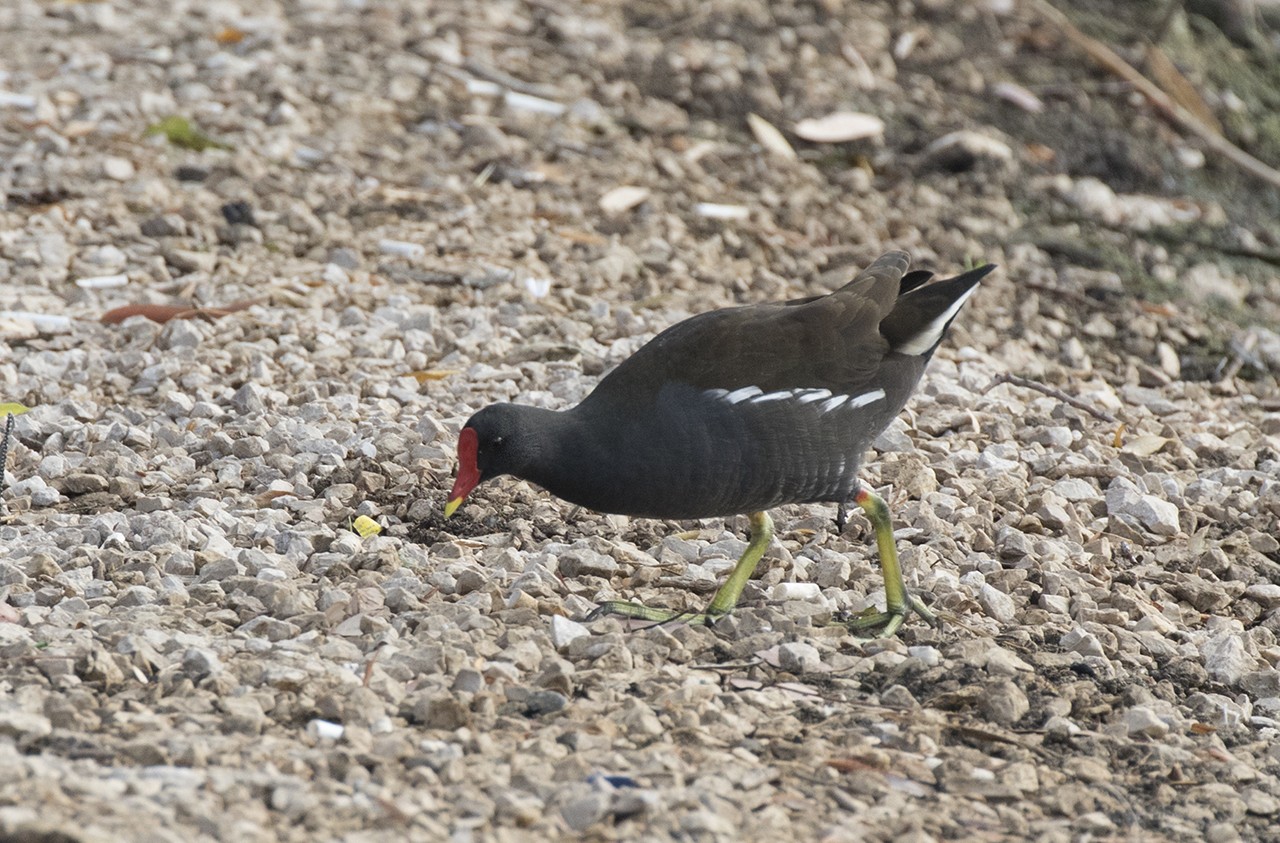
4. Common Moorhen
The common Moorhen is often found in slow-moving or standing-water aquatic ecosystems with dense vegetation coverage where they can hide and forage for food. If vegetation is dense enough, their large feet even enable them to walk across the floating plants. These birds are opportunistic feeders and will eat any food that is currently available.
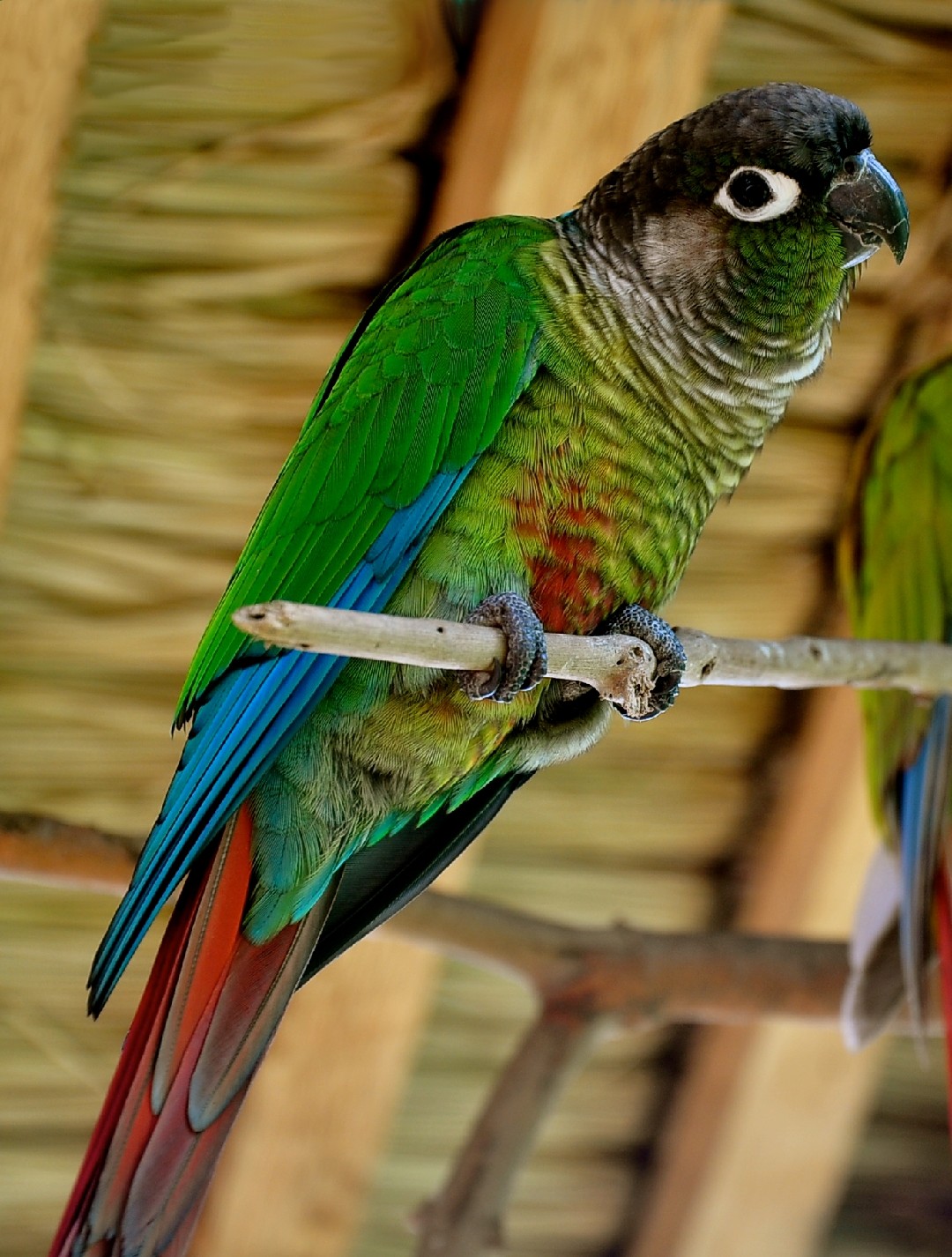
5. Green-cheeked Parakeet
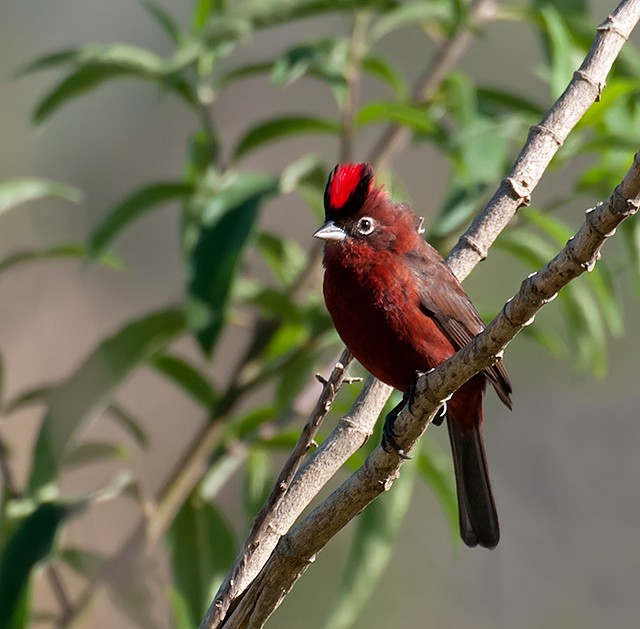
6. Red Pileated Finch
The red pileated finch is about 13.5 cm (5.3 in) long. Both the male and female have a white eye ring. The male has a red crest and a black crown, just as the grey pileated finch does, however its upper parts are dark wine red, with a reddish rump, and the underparts are a drab reddish colour. The red crest and black head are absent in the female and the upper parts are a little more brown than those of the male. The throat of the female is white and the underparts pink.
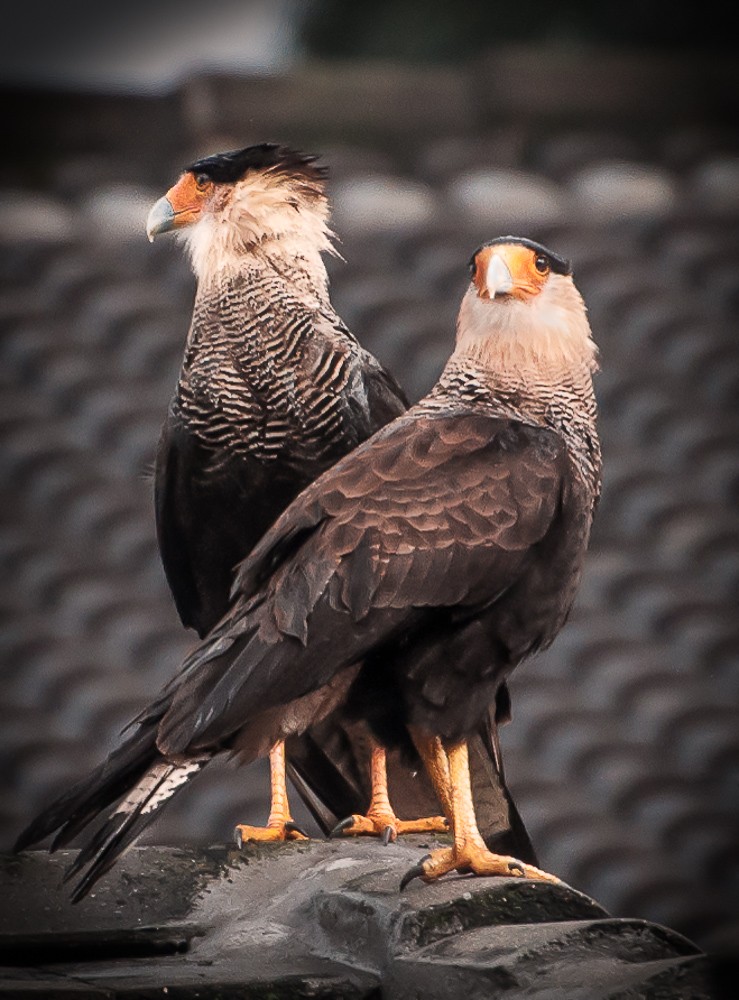
7. Crested Caracara
It has a total length of 50–65 cm (20–26 in) and a wingspan of 120–132 cm (47–52 in). Weight is 0.9-1.6 kg (2-3.5 lbs), averaging 1,348 g (2.972 lb) in 7 birds from Tierra del Fuego. Individuals from the colder southern part of its range average larger than those from tropical regions (as predicted by Bergmann's rule) and are the largest type of caracara. In fact, they are the second largest species of falcon in the world by mean body mass, second only to the gyrfalcon. The cap, belly, thighs, most of the wings and tail-tip are dark brownish, the auriculars, throat and nape are whitish-buff, and the chest, neck, mantle, back, uppertail-coverts, crissum (the undertail coverts surrounding the cloaca) and basal part of the tail are whitish-buff barred dark brownish. In flight, the outer primaries show a large conspicuous whitish-buff patch ('window'), as in several other species of caracaras. The legs are yellow and the bare facial skin and cere are deep yellow to reddish-orange. Juveniles resemble adults, but are paler, with streaking on the chest, neck and back, grey legs, and whitish, later pinkish-purple, facial skin and cere. It can be separated from the similar northern caracara by its more extensive barring on the chest, brownish and often lightly mottled/barred scapulars (all blackish in northern), and pale lower back with dark barring (uniform blackish in northern). Individuals showing intermediate features are known from the small area of contact in north-central Brazil, but intergradation between the two species is generally limited.
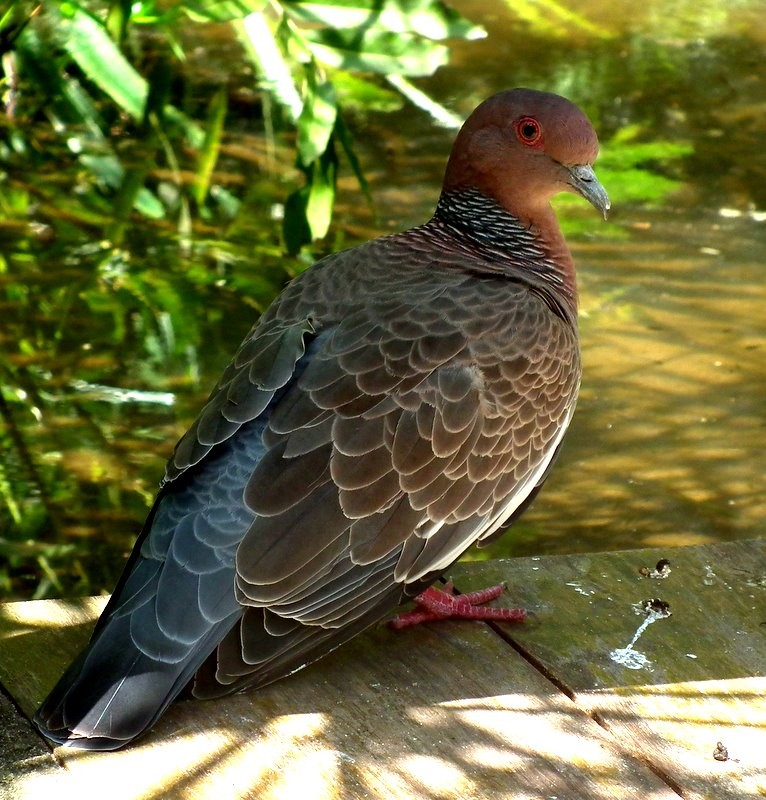
8. Picazuro Pigeon
Patagioenas picazuro is a brown bird with white dashes on the back of its neck and darker brown wing patterns. It is similar in appearance to the spotted dove.
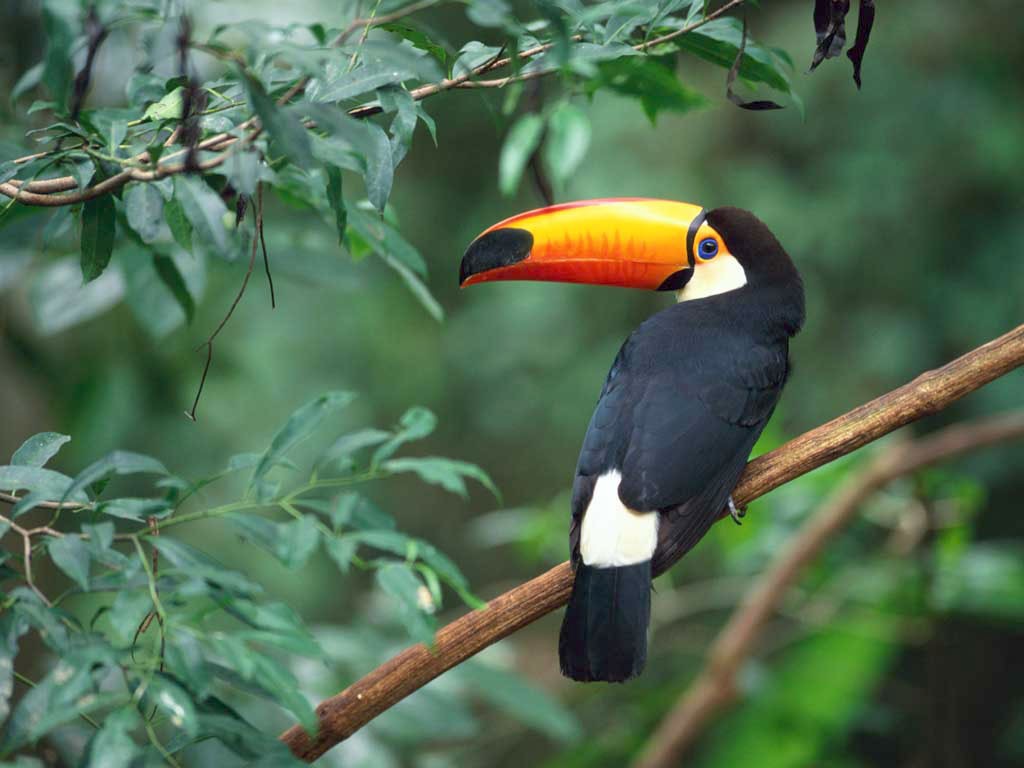
9. Toco Toucan
The toco toucan has a striking plumage with a mainly black body, a white throat, chest and uppertail-coverts, and red undertail-coverts. What appears to be a blue iris is actually thin blue skin around the eye. This blue skin is surrounded by another ring of bare, orange skin. The most noticeable feature, however, is its huge bill, which measures from 15.8 to 23 cm (6 ⁄4 to 9 in) in length, which is yellow-orange, tending to deeper reddish-orange on its lower sections and culmen, and with a black base and large spot on the tip. It looks heavy, but as in other toucans it is relatively light because the inside largely is hollow. The tongue is nearly as long as the bill and very flat. This species is the largest toucan and the largest representative of the order Piciformes. The total length of the species is 55–65 cm (21 ⁄2–25 ⁄2 in). Body weight in these birds can vary from 500 to 876 g (1 lb 1 ⁄8 oz to 1 lb 14 ⁄8 oz), with males averaging 723 g (1 lb 9 ⁄2 oz) against the smaller female, which averages 576 g (1 lb 4 ⁄8 oz). Among standard measurements, the wing chord is 22 to 26 cm (8 ⁄2 to 10 in), the tail is 14.1 to 17.9 cm (5 ⁄16 to 7 ⁄16 in) and the tarsus is 4.8 to 6.5 cm (1 ⁄8 to 2 ⁄16 in). Other than the size difference, there are no external differences between the sexes. Juveniles are duller and shorter-billed than adults. Its voice consists of a deep, coarse croaking, often repeated every few seconds. It also has a rattling call and will bill-clack. The bill is the largest relative to body size of all birds providing 30 to 50% of its body surface area, although another Neotropical species, the sword-billed hummingbird, has a longer bill relative to its body length. It was called by Buffon a “grossly monstrous” appendage. Diverse functions have been suggested. Charles Darwin suggested it was a sexual ornament: “toucans may owe the enormous size of their beaks to sexual selection, for the sake of displaying the diversified and vivid stripes of colour with which these organs are ornamented". Further suggestions have included aid in peeling fruit, intimidating other birds when robbing their nests, social selection related to defense of territory, and as a visual warning. Research has shown that one function is as a surface area for heat exchange. The bill has the ability to modify blood flow and so regulate heat distribution in the bird, allowing it to use its bill as a thermal radiator. In terms of surface area used for this function, the bill relative to the bird's size is amongst the largest of any animal and has a network of superficial blood vessels supporting the thin horny sheath on the bill made of keratin called the rhamphotheca. In its capacity to remove body heat the bill is comparable to that of elephant ears. The ability to radiate heat depends upon air speed: if this is low only 25% of the adult bird's resting heat production to as much as four times this heat production. In comparison, the bill of a duck and the ears of elephant can shed only 9 to 9.1% of resting heat production. The bill normally is responsible for 30 to 60% of heat loss. The practice of toco toucans of placing their bills under their wings may serve to insulate the bill and reduce heat loss during sleep. It has been observed that "complexities of the vasculature and controlling mechanisms needed to adjust the blood flow to the bill may not be completely developed until adulthood."
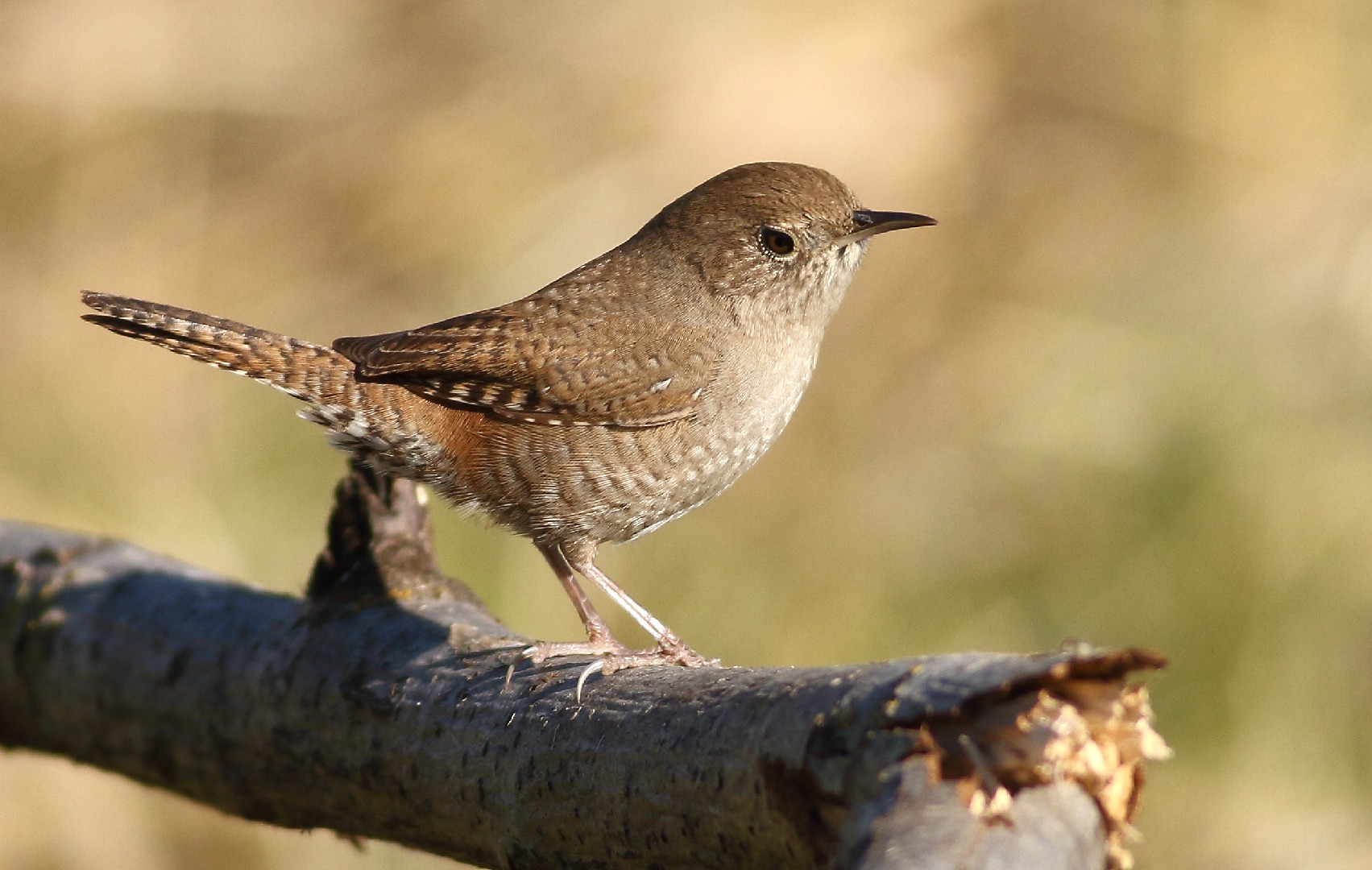
10. House Wren
Watch out for the small yet aggressive house Wrens; they are extremely territorial and think nothing of harassing other birds and their nestlings if they want to take their spot! They have been known to kill nestlings and even adult birds to get a nest hole they want. Once house Wrens lay eggs, the nest needs to stay below 100 degrees and above 65 degrees or the eggs will not survive—this could be the reason they are so particular about their nesting spots.
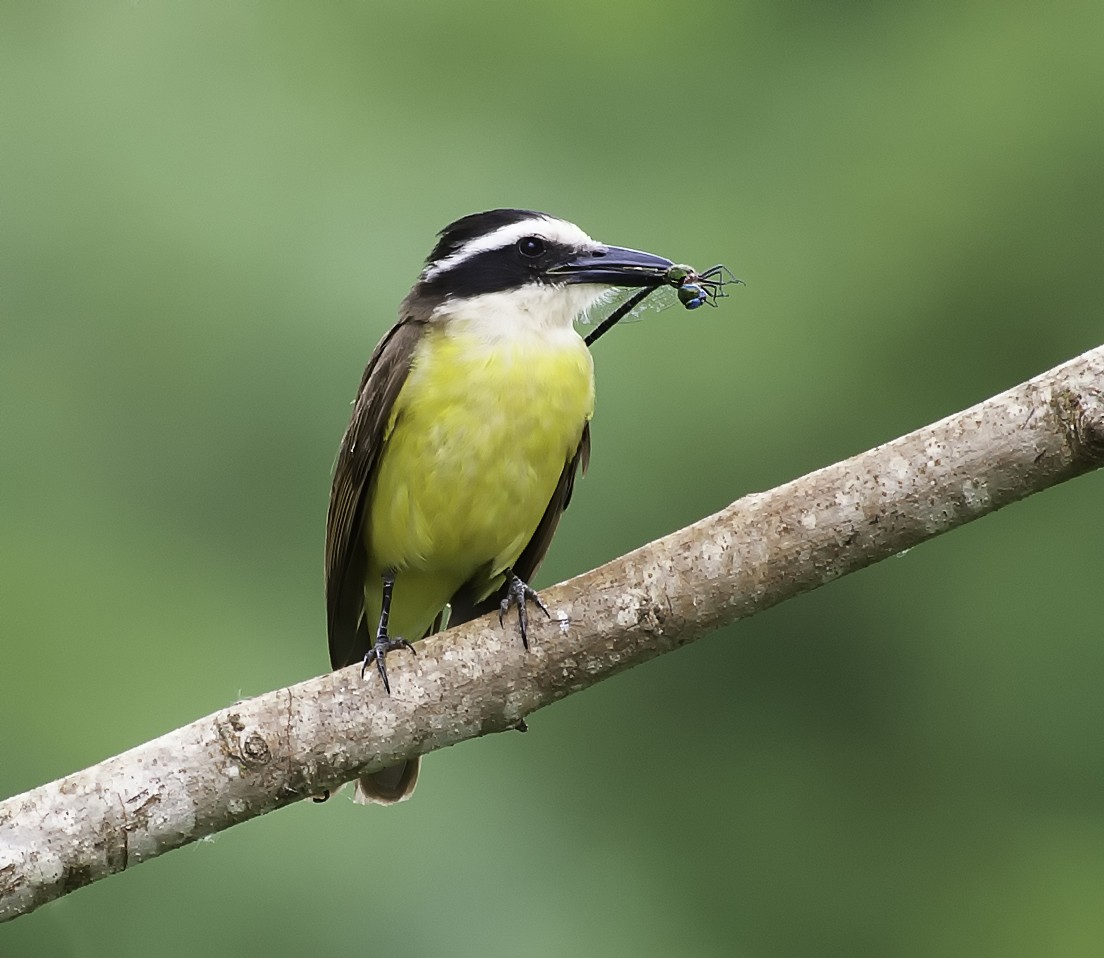
11. Great Kiskadee
The great Kiskadee is a large bird with bold markings that make this flycatcher easily recognizable. is a bright-colored bird that prefers woodland habitats close to water or open areas. It eats a lot of insects, but also forages for seeds and berries and is known to dive into shallow water for small fish.
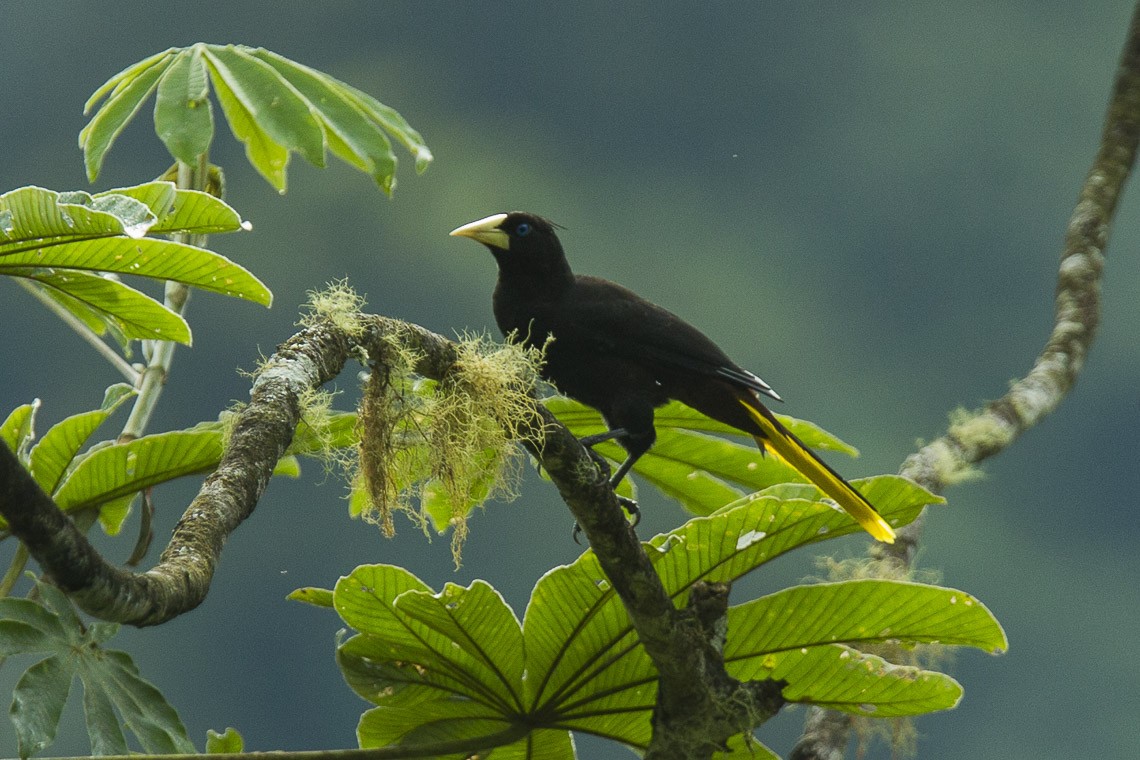
12. Crested Oropendola
Adult males are mainly black with a chestnut rump and a tail which is bright yellow apart from two dark central feathers. There is a long narrow crest which is often difficult to see. The iris is blue and the long bill is whitish. Females are similar but smaller, duller, and crestless.
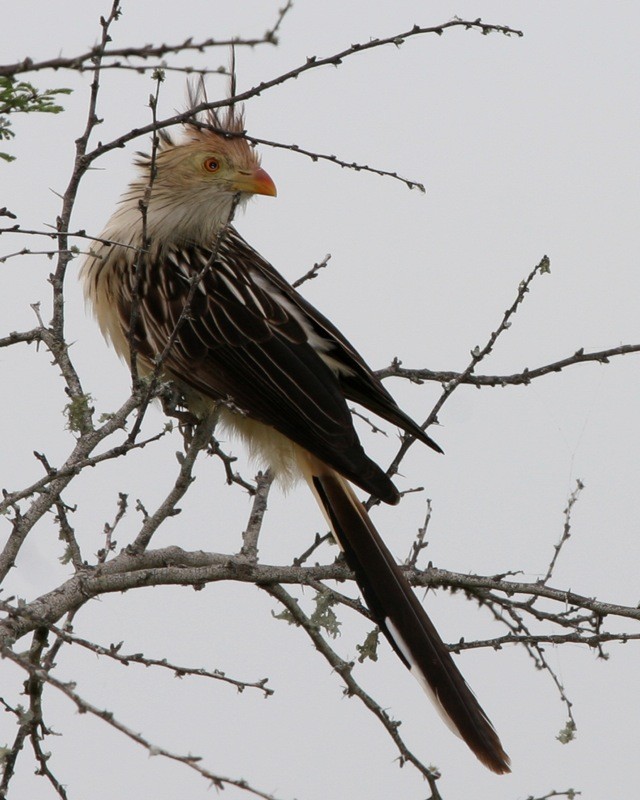
13. Guira Cuckoo
It is a rather scruffy-looking bird, with a total length of approximately 34 cm (13 in). The sexes are very similar in appearance, except that the female is slightly larger than the male. Juveniles appear quite similar to adults. The species has dark brown upperparts streaked with white, and whitish-buff throat, breast, underparts and rump. The tail is relatively long and broad, dark brown in color with a white-tip, and the legs are dark gray. The eyes and beak are yellow to orange, with a thin ring of featherless yellow skin around the eye (this commonly fades in captivity). There is a prominent orange-rufous crest. Like other members of the subfamily Crotophaginae, the guira cuckoo gives off a strong, pungent odour.
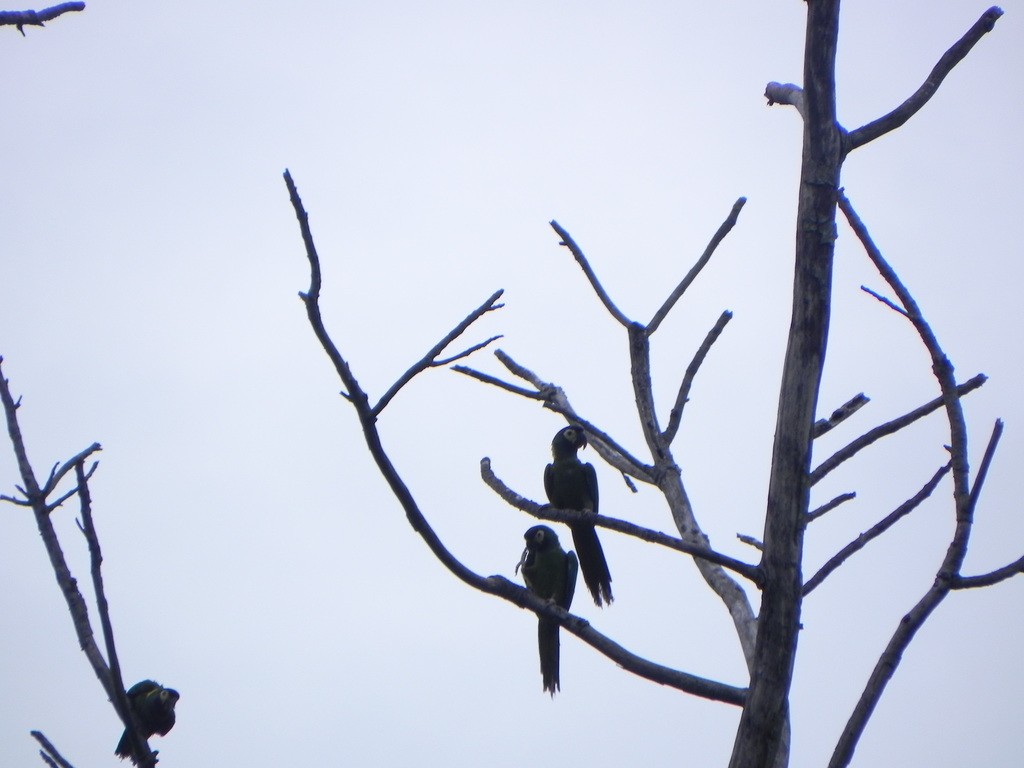
14. Golden-collared Macaw
It has a total length of about 38 cm (15 in), of which almost half is tail feathers. The general plumage is green, with a distinct yellow collar that is broadest on the back of the neck. The yellow collar develops as the bird ages, with more vibrant colors found in mature birds. The front and crown is brownish black. The remiges and primary coverts are blue and the long, pointed tail has a red base, a narrow green center and a blue tip. The underside of the tail and flight feathers are greenish-yellow, similar to that of several other small macaws such as the blue-winged and red-bellied macaw. The legs are a dull pinkish color, and the iris is reddish to dull yellow. It has extensive bare white facial skin and the heavy bill is black, often tipped pale grey.
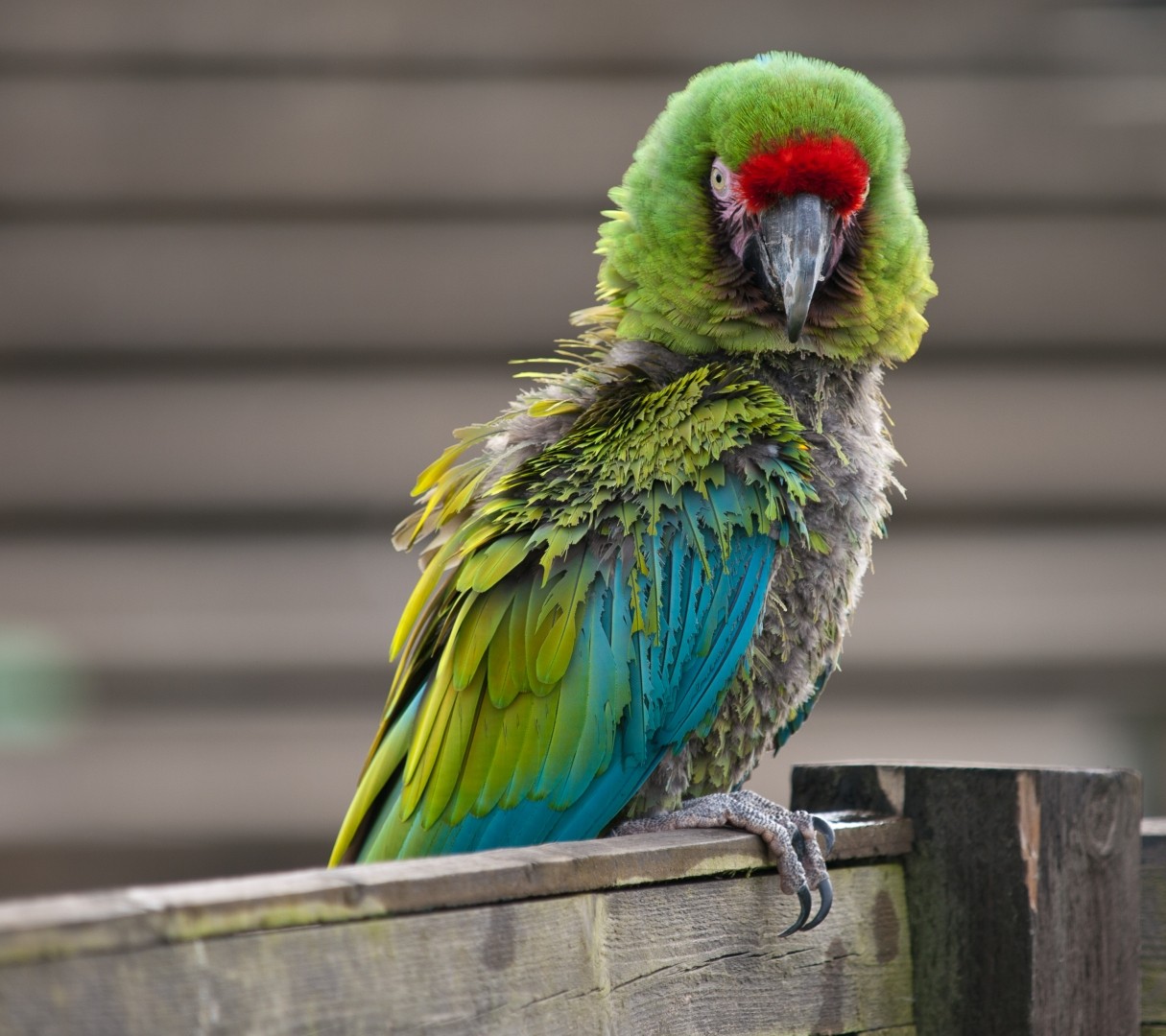
15. Military Macaw
The military macaw is 70 to 85 centimeters (27.5 to 33.5 inches) long on average, and 99–110 (33–43 in) across the wings. Military macaws are mostly green with light blue and yellow flight and tail feathers and a bright red patch on their forehead. Their face is bare and white in color with black striations. The large strong beak is grey-black and the iris is yellow. They greatly resemble great green macaws and are usually distinguished from great green macaws by their smaller size, completely black bill, and overall darker color. They can also be separated by differences in vocalization and the tendency for great green macaws to be a humid forest species while military macaws are usually a deciduous forest species. Phylogenetic studies have shown that the two species are sister clades.
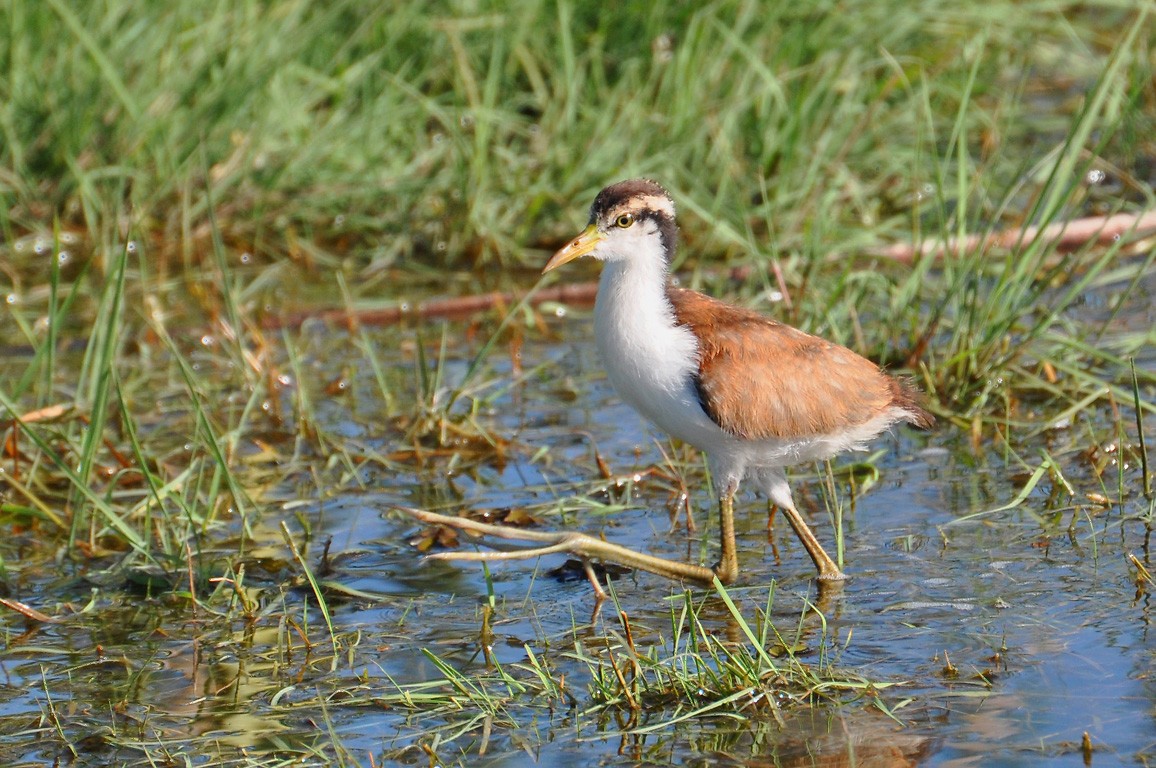
16. Wattled Jacana
The wattled jacana (Jacana jacana) is a wader which is a resident breeder from western Panama and Trinidad south through most of South America east of the Andes. The jacanas are a group of wetland birds, which are identifiable by their huge feet and claws that enable them to walk on floating vegetation in the shallow lakes that are their preferred habitat. They are found worldwide within the tropical zone. For the origin and pronunciation of the name, see Jacana. The wattled jacana lays four black-marked brown eggs in a floating nest. The male, as with other jacanas and some other wader families like the phalaropes, takes responsibility for incubation, with two eggs held between each wing and the breast. The females are polyandrous and will help to defend the nests of up to four mates. These are conspicuous and unmistakable birds. They are 17–23 cm (6.7–9.1 in) long, but the females are larger than the males. The adults have a chestnut back and wing coverts, with the rest of the body mainly black. In flight the greenish yellow flight feathers are obvious. Also visible are yellow bony spurs on the leading edge of the wings, which it can use to defend itself and its young. The yellow bill extends up as a red coot-like head shield and a reddish wattle, and the legs and very long toes are dull blue-grey. Young birds initially have entirely white underparts, and can always be identified by the presence of white in their plumage. There are six subspecies, with the nominate J. j. jacana being the most widespread. Several of the other subspecies are similar, but J. j. hypomelaena of western Panama and northern Colombia has all the chestnut plumage replaced by black, and J. j. scapularis of western Ecuador has some black feathers on its chestnut shoulders, and white outer primary feathers.
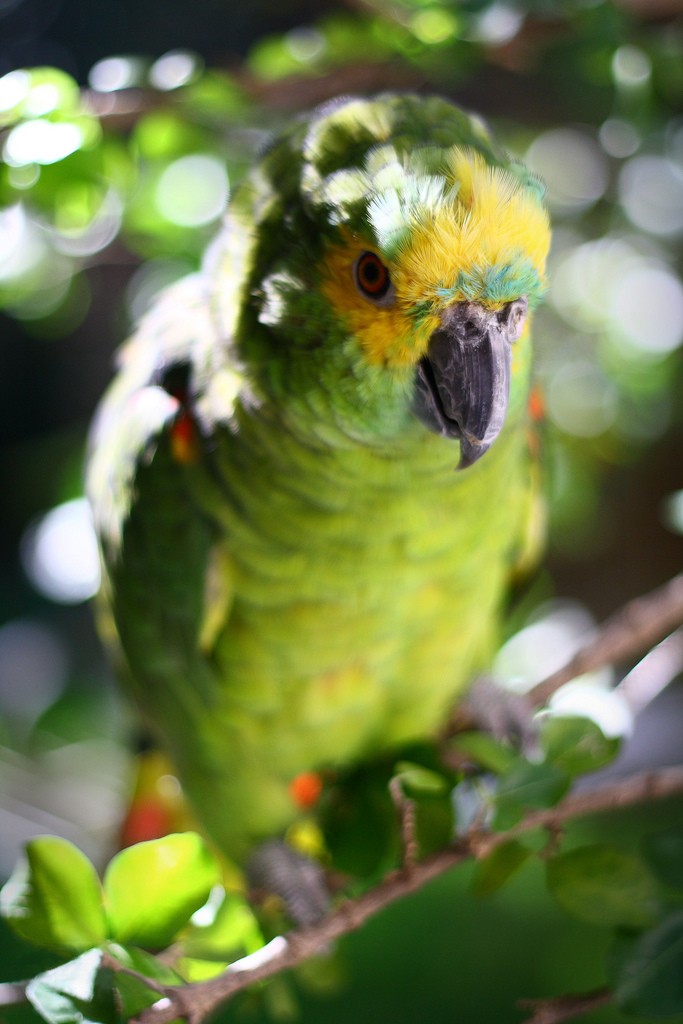
17. Turquoise-fronted Amazon
The turquoise-fronted amazon is a mainly green parrot about 38 cm (15 in) long. They have blue feathers on the forehead above the beak and yellow on the face and crown. Distribution of blue and yellow varies greatly among individuals. Unlike most other Amazona parrots, its beak is mostly black. There is no overt sexual dimorphism to the human eye, but analysis of the feathers using spectrometry, a method which allows the plumage to be seen as it would be by a parrot's tetrachromatic vision, shows clear differences between the plumage of the sexes. Juveniles of parrots are duller and have dark irises.
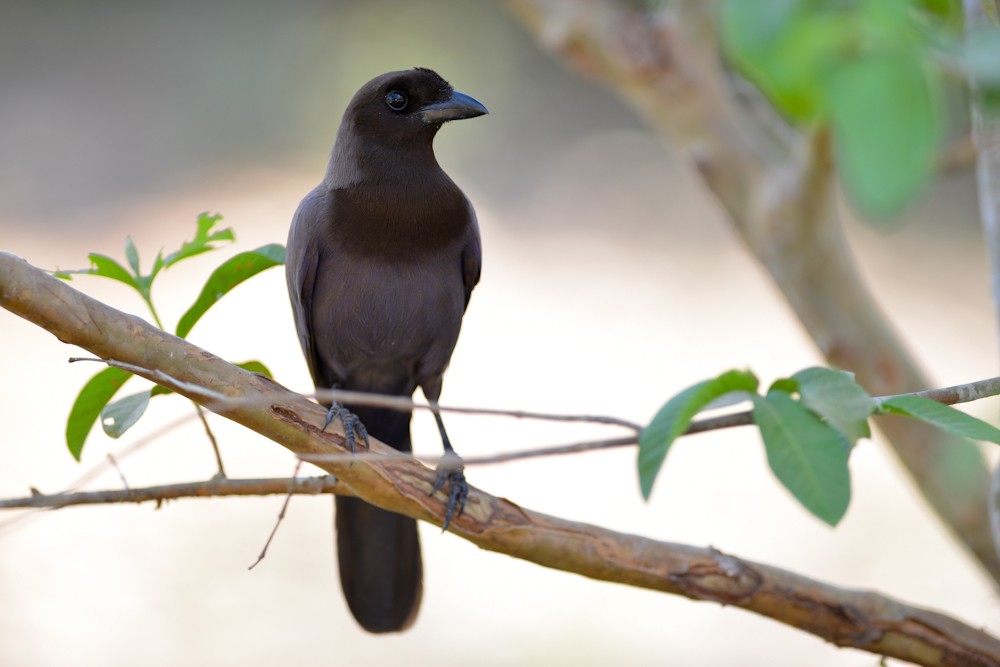
18. Purplish Jay
The purplish jay (Cyanocorax cyanomelas) is a species of bird in the family Corvidae. It is found in northern Argentina, Bolivia, southern Brazil, Paraguay and southeastern Peru. Its natural habitats are subtropical or tropical dry forest, subtropical or tropical moist lowland forest, and heavily degraded former forest.
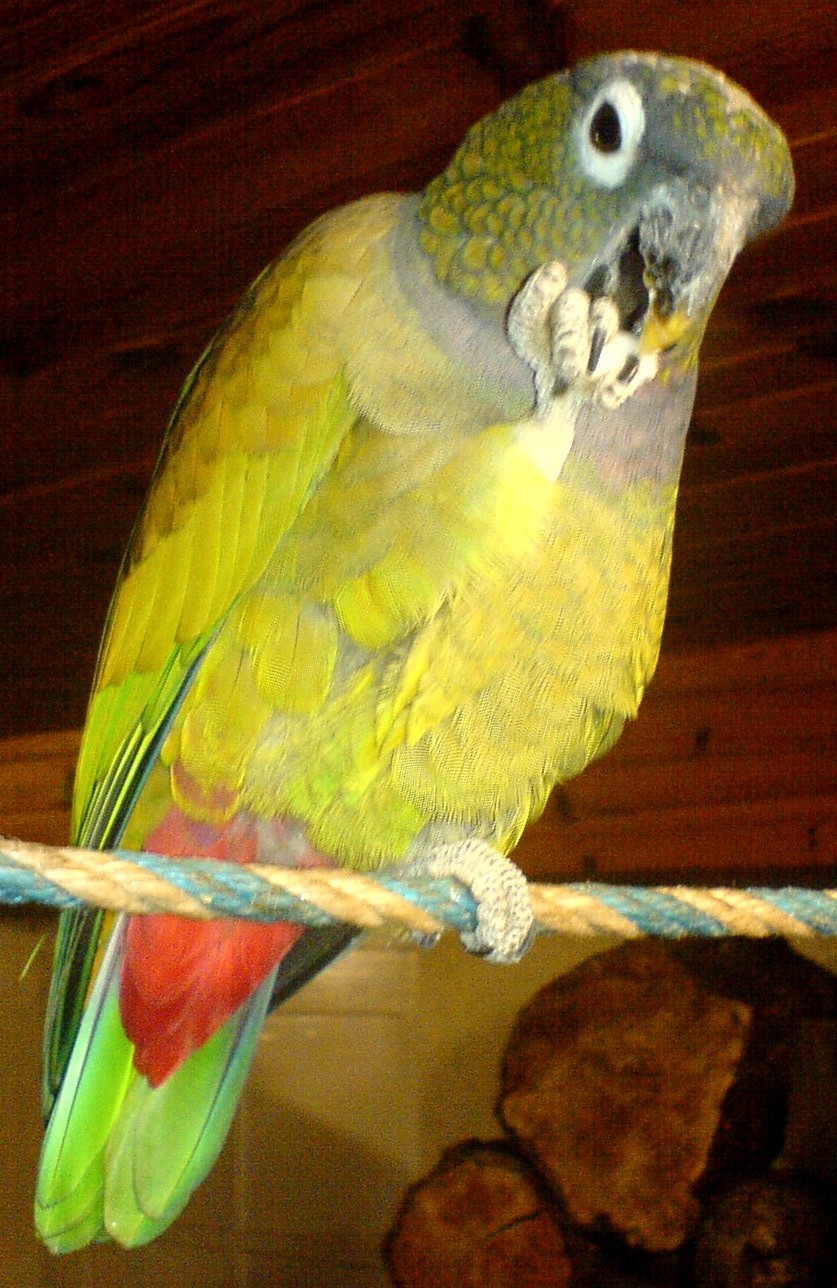
19. Scaly-headed Parrot
The scaly-headed parrot (Pionus maximiliani) is a species of bird in the family Psittacidae, the true parrots. It is also called scaly-headed pionus, Maximilian pionus, Maximilian parrot, Maximilian's pionus, or Maximilian's parrot. It is found in eastern Brazil, central and eastern Bolivia, Paraguay, and northern Argentina. It is found in a wide range of wooded habitats, from humid subtropical forest to arid Caatinga. It is fairly common throughout a large part of its range. It is typically seen in pairs or small flocks. The scaling to the head for which it is named is typically far less distinct than the bright red undertail coverts (a feature found in all members of the genus Pionus). Its name is a reference to Prince Maximilian of Wied-Neuwied, a nobleman and naturalist who explored the hinterlands of southeastern Brazil in the early 19th century. In Brazil, they are called cocotas or maritacas (from mbaé'taka, tupi for "noisy bird") Seen by lecturer from malaga university, beading pair in a Malaga Park, Spain in December 2017. This article refers http://www.surinenglish.com/local/201712/15/malaga-park-parrot-invasion-20171215101030-v.html
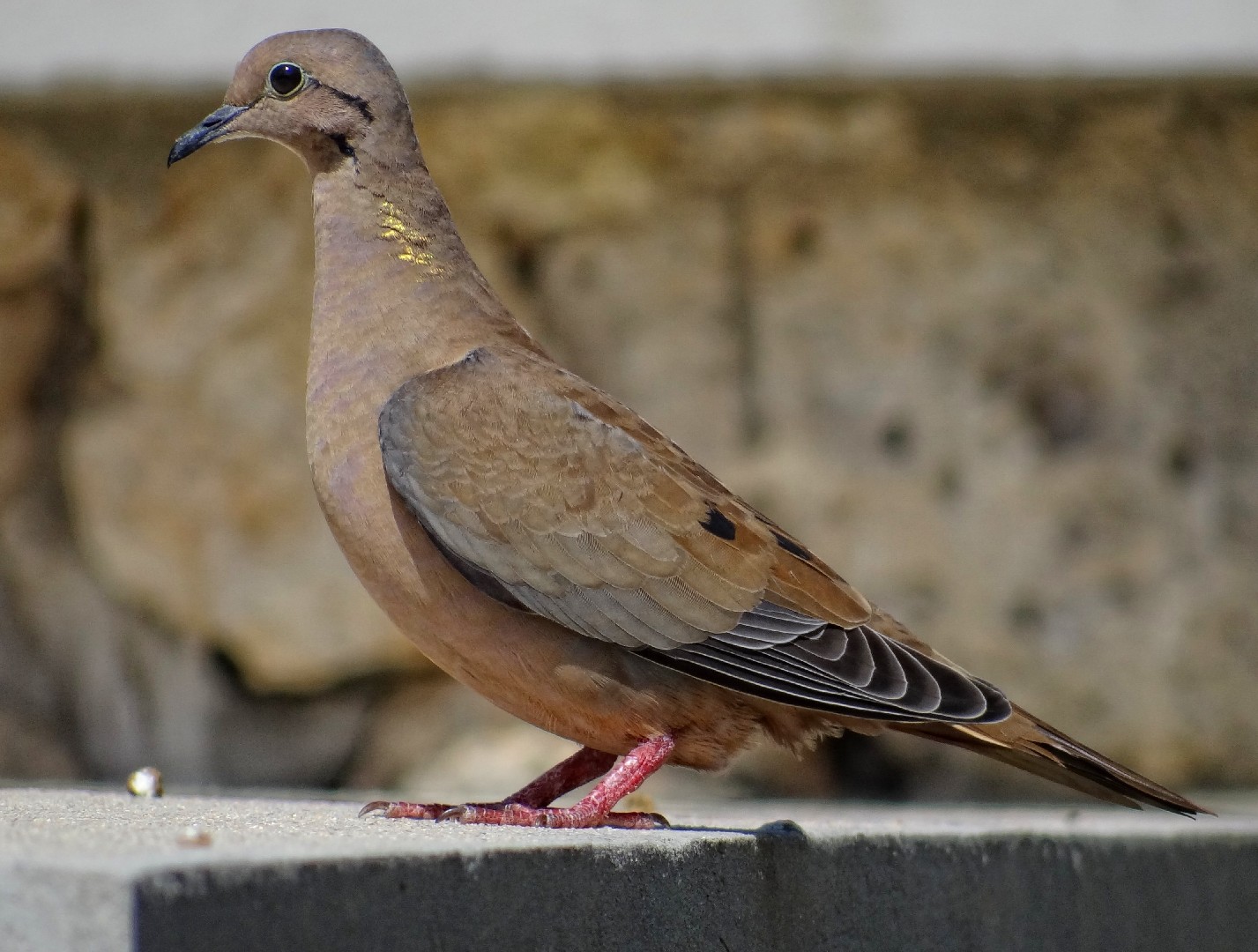
20. Eared Dove
The most widely-spotted dove of South America, the small eared Dove thrives in high altitudes. You can find this dove in the scrubland of areas that are around 4500 meters above sea level. Their easy association with humans has made them acclimate more easily to urban environments and rising human population levels.