




Top 20 Most Common Bird in Ahuachapan
Ahuachapan' is a region of natural beauty and biodiversity in El Salvador, offering an ideal habitat for diverse bird species. The 20 most common birds showcase unique attributes, presenting a charming mixture of brilliant colors, fascinating behavior, and specialized adaptations. Ethereal songs and impressive flights, these feathered inhabitants are an essential part of the region's vibrant ecosystem.

Most Common Bird
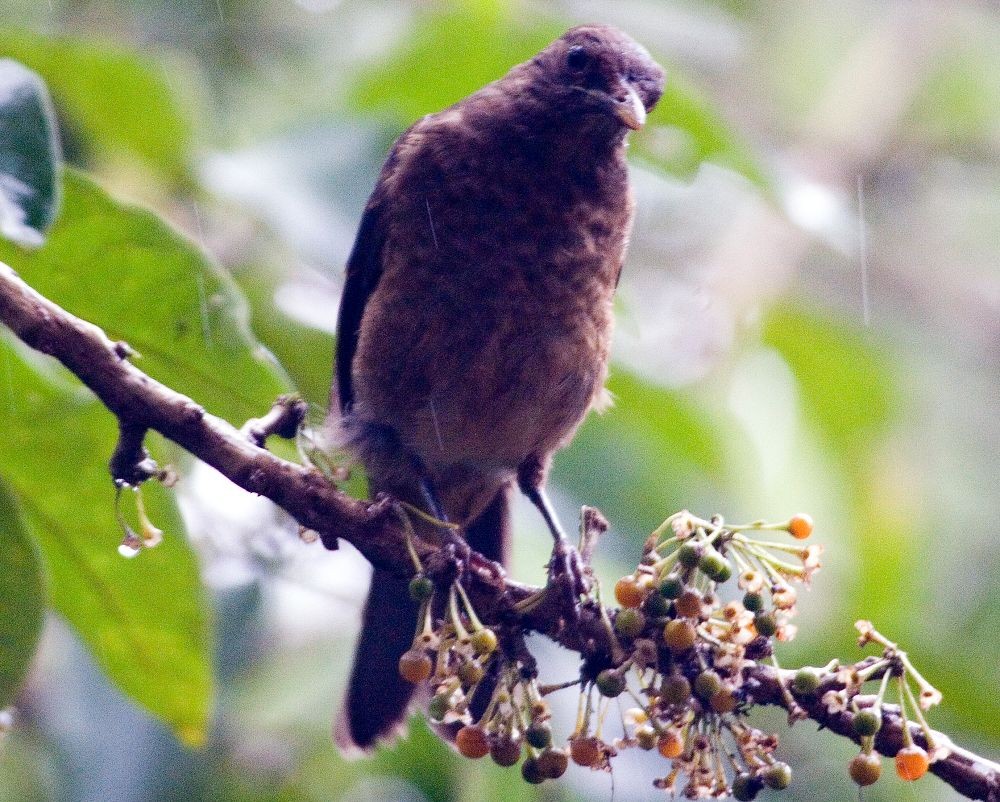
1. Clay-colored Thrush
The clay-colored Thrush is a stunning bird known for its melodious song and distinctive appearance. With its clay-colored upperparts, rusty underparts, and dark brown crown, it stands out in its habitats, which can range from forests to suburban parks. It feeds on various food sources including insects, fruits, and berries. The bird has a melodious song consisting of clear, ringing phrases. 
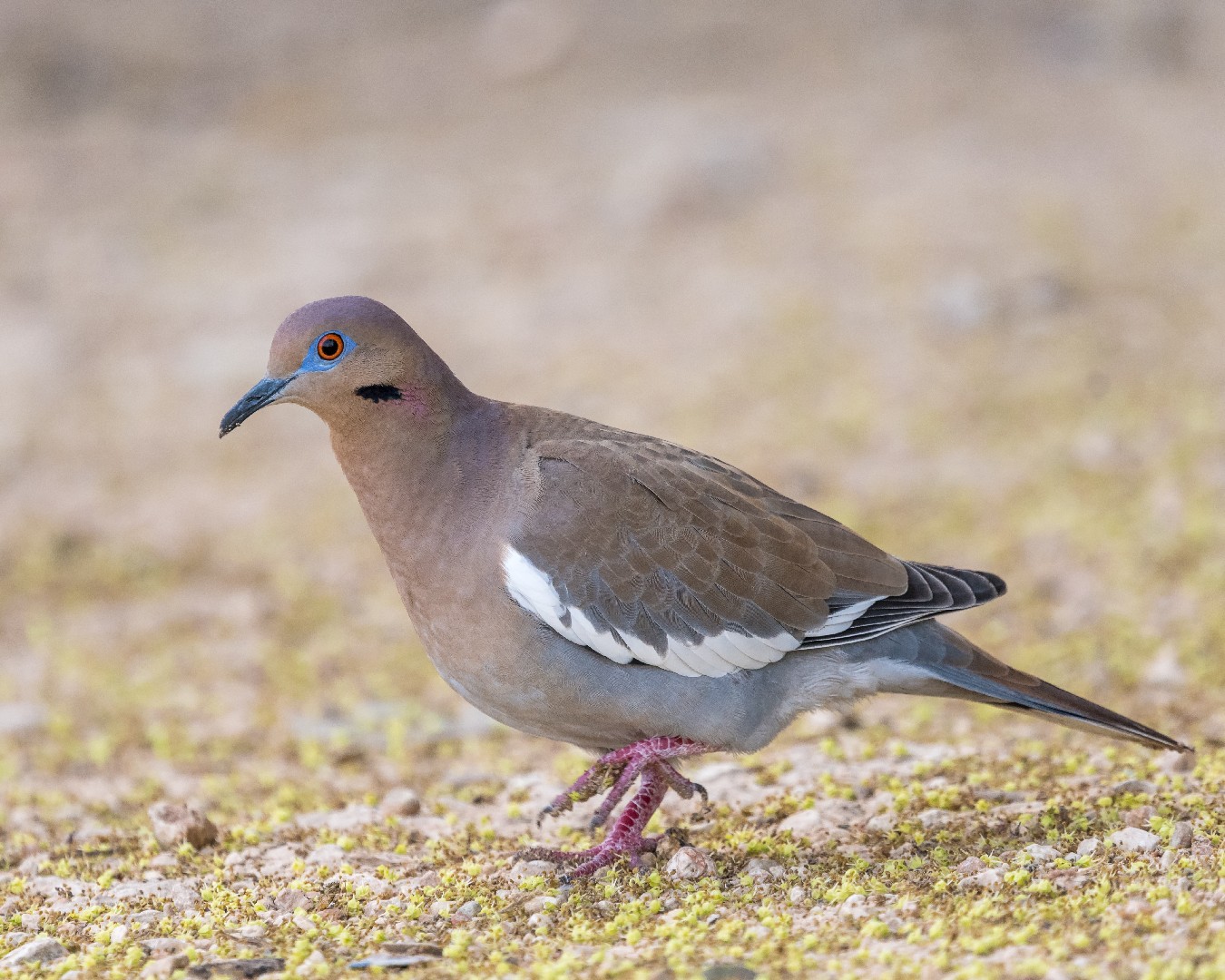
2. White-winged Dove
The medium-sized, distinctively patterned white-winged Doves practically live on Saguaro cactus, consuming its nectar, pollen, fruit, and seeds. In fact, they are so dependent on this plant that they match their migration schedule to its fruiting schedule. White-winged Doves were heavily hunted in Texas in the 20th century and their population dropped from 12 million to fewer than 1 million by 1939. Since then proactive hunting management and the species ability to adapt to urban living has helped their numbers rebound.
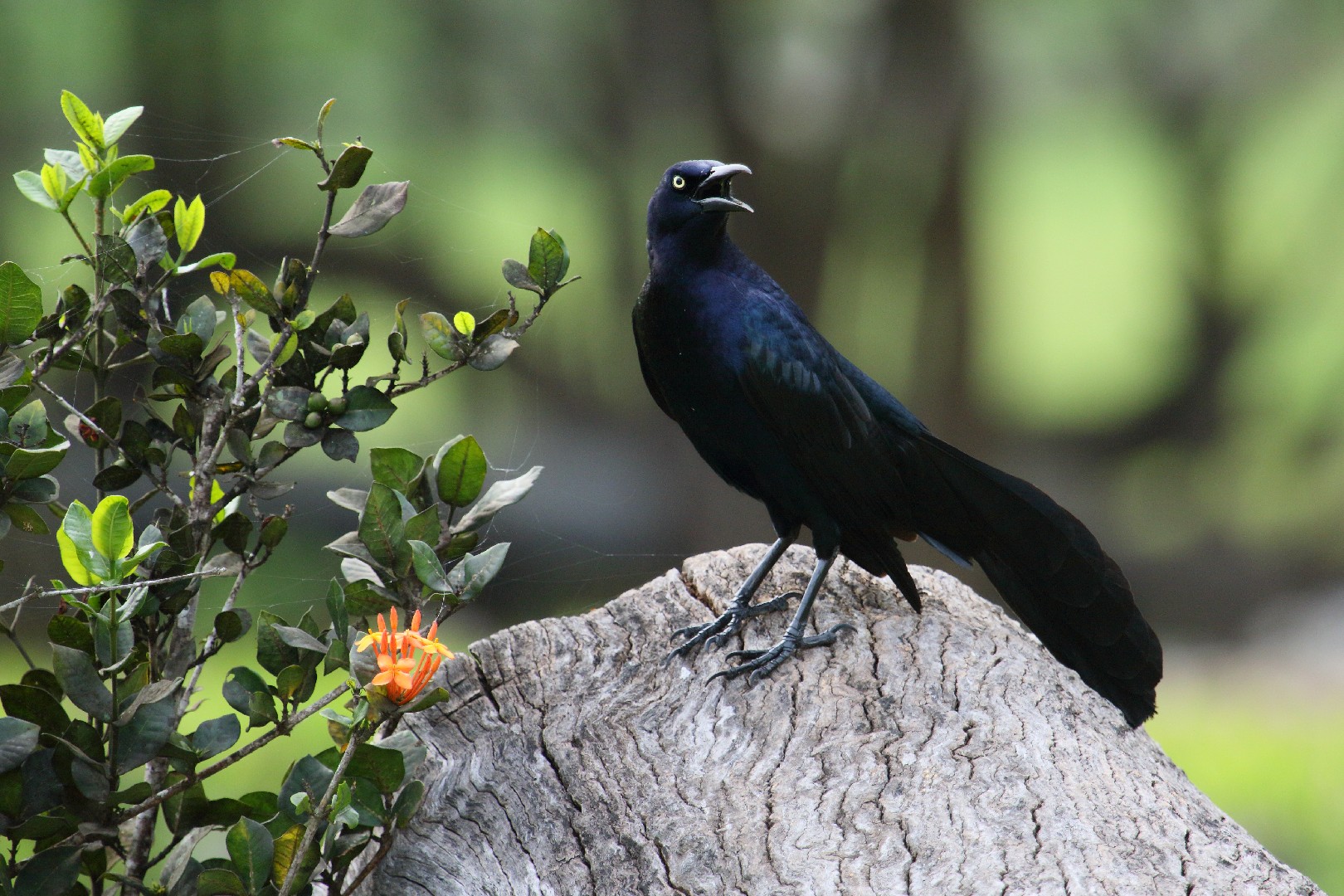
3. Great-tailed Grackle
The medium-sized great-tailed Grackle is notable for its long tail, shaped like a V, and deep black coloring offset by bright yellow eyes. This loud bird can be easily found just by following the sharp sounds of its calls and shrieks. Males in particular shriek and ruffle up their feathers to defend their territory or if they feel threatened.
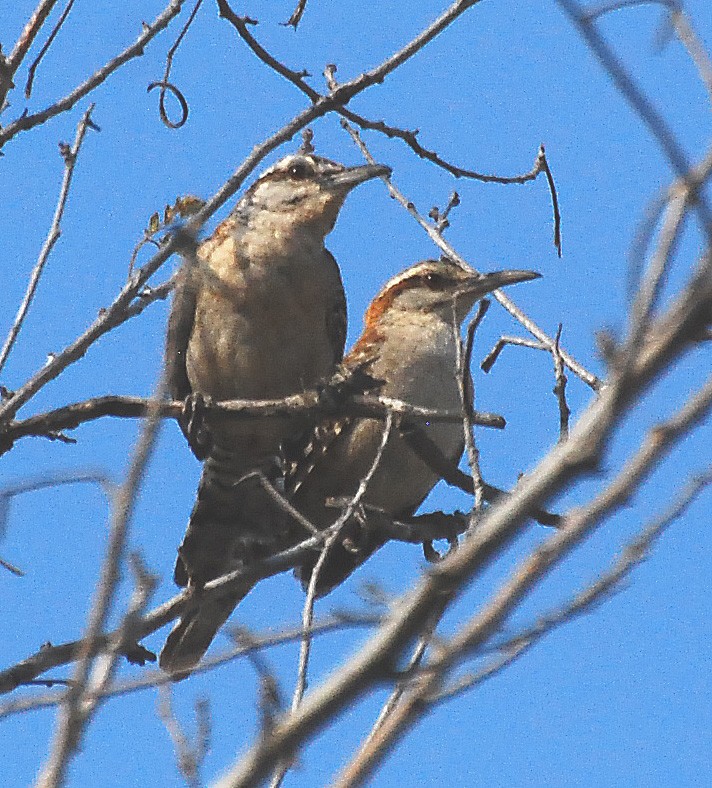
4. Rufous-naped Wren
The Veracruz wren (Campylorhynchus rufinucha) is a songbird of the family Troglodytidae, the wrens. It is a resident breeding species in central Veracruz, Mexico. This species was split from the rufous-naped wren when it was determined three main populations vary markedly in size and coloration, and represented separate species: Veracruz wren (restricted to central coastal Veracruz), Sclater's wren (north and west from western Chiapas), and rufous-backed wren (south and east from western Chiapas). This species sometimes retains the name rufous-naped wren by some taxonomists. Some taxonomic authorities do not recognize the split, including the American Ornithological Society.
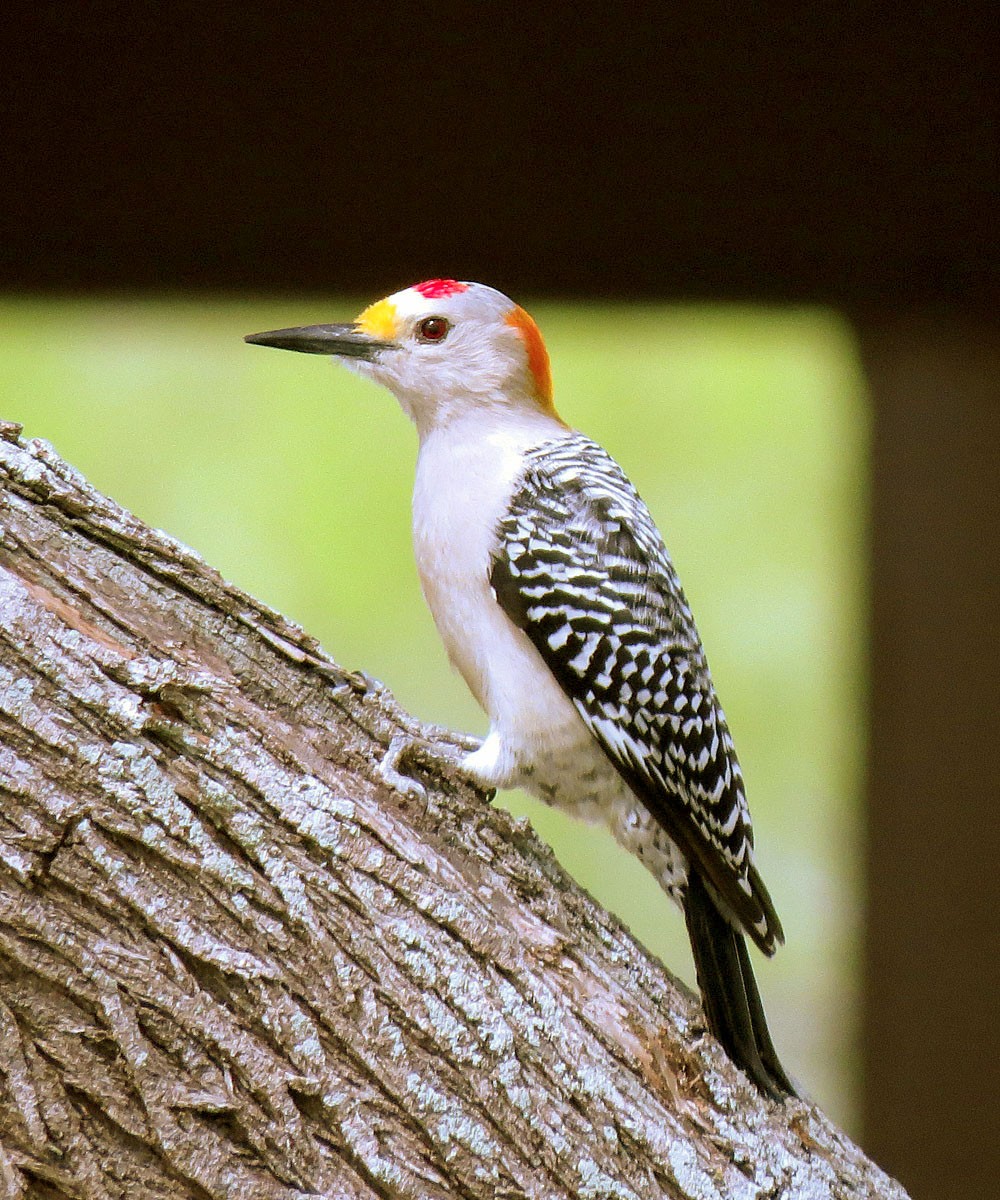
5. Golden-fronted Woodpecker
The golden-fronted woodpecker (Melanerpes aurifrons) is a North American woodpecker. Its preferred habitat is mesquite, riparian woodlands, and tropical rainforest. It is distributed from Texas and Oklahoma in the United States through Mexico to Honduras and northern Nicaragua. Cooke listed this species as an abundant resident of the lower Rio Grande Valley, Texas, in 1884.

6. Turkey Vulture
The turkey Vulture is a common sight, especially around roads, where they keep a sharp eye out for roadkill. Seeing these large birds in the sky can often make you take a second look to see if it’s an eagle or a hawk. Here’s one quick way to tell the difference. When in flight, a turkey Vulture will circle unsteadily, with its wings lifted to make a V shape. Though they are not appreciated, they do the dirty work of the animal kingdom by cleaning up the countryside as they scavenge.
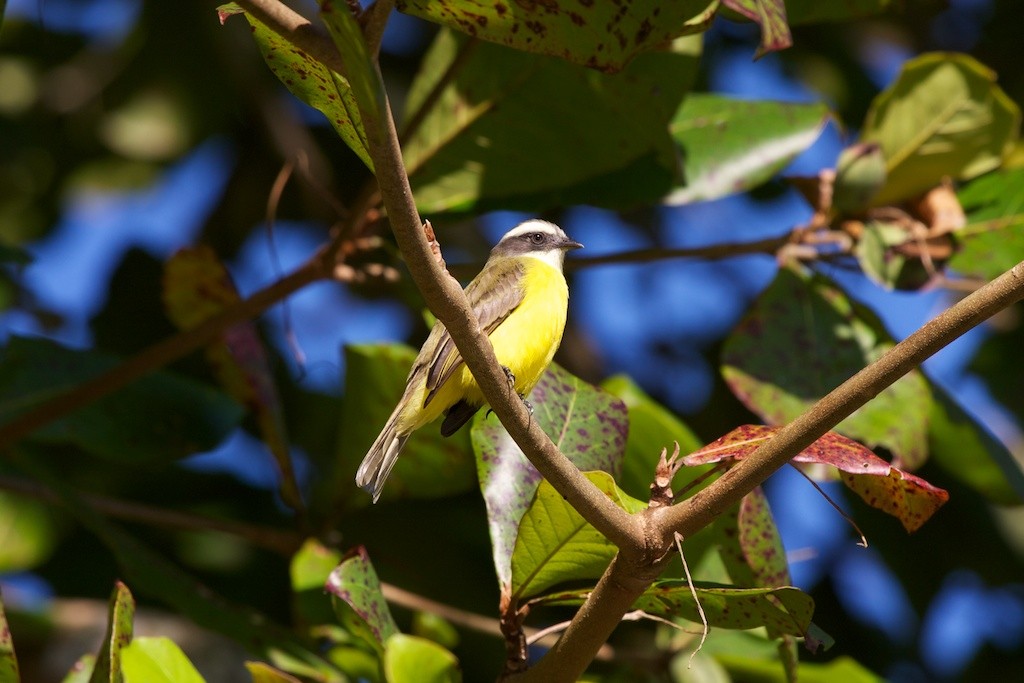
7. Social Flycatcher
In appearance, the social flycatcher resembles a smaller boat-billed flycatcher or great kiskadee. The adult is 16–18 cm (6.3–7.1 in) long and weighs 24–27 g (0.85–0.95 oz). The head is dark grey with a strong white eyestripe and a usually concealed orange to vermilion crown stripe. The upperparts are olive-brown, and the wings and tail are brown with only faint rufous fringes. The underparts are yellow and the throat is white. Young birds have a paler eye mask, reduced crown stripe, and have chestnut fringes to the wing and tail feathers. The call is a sharp peeurrr and the dawn song is a chips-k’-cheery. As the specific epithet similis (Latin for "the similar one") indicates, this species looks much like its closest living relative the rusty-margined flycatcher (Myiozetetes cayanensis), and also like the white-bearded flycatcher (Phelpsia inornatus), white-ringed flycatcher (Conopias albovittatus) and lesser kiskadee (Pitangus/Philohydor lictor). In fact, except at close range, these are all but indistinguishable from appearance alone. They and the two larger similar species mentioned above share much of their range. Though they all are apparently fairly close relatives, the group to which they seem to belong also includes species with rather different head-pattern, like the grey-capped flycatcher which also belongs to Myiozetetes.
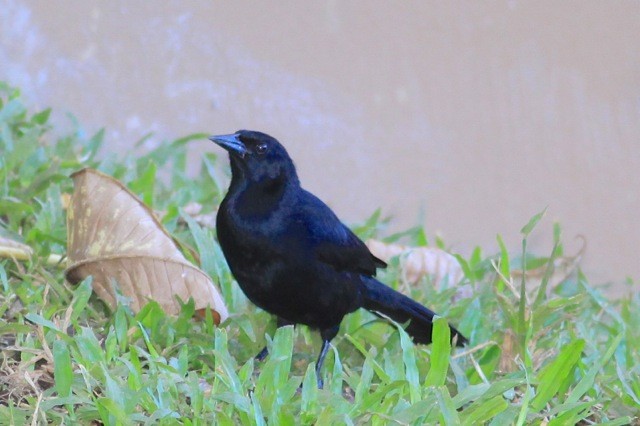
8. Melodious Blackbird
The adult is a medium-sized blackbird with a rounded tail. The male is 25.5 cm (10.0 in) long and weighs 108 g (3.8 oz). The slightly smaller female is 23 cm (9.1 in) long and weighs 95 g (3.4 oz). The adult plumage is entirely black with a bluish gloss, and the bill, legs and feet are also black. The iris is brown. Females are identically plumaged to the males; young birds are brownish black and lack iridescence. There are no subspecies.
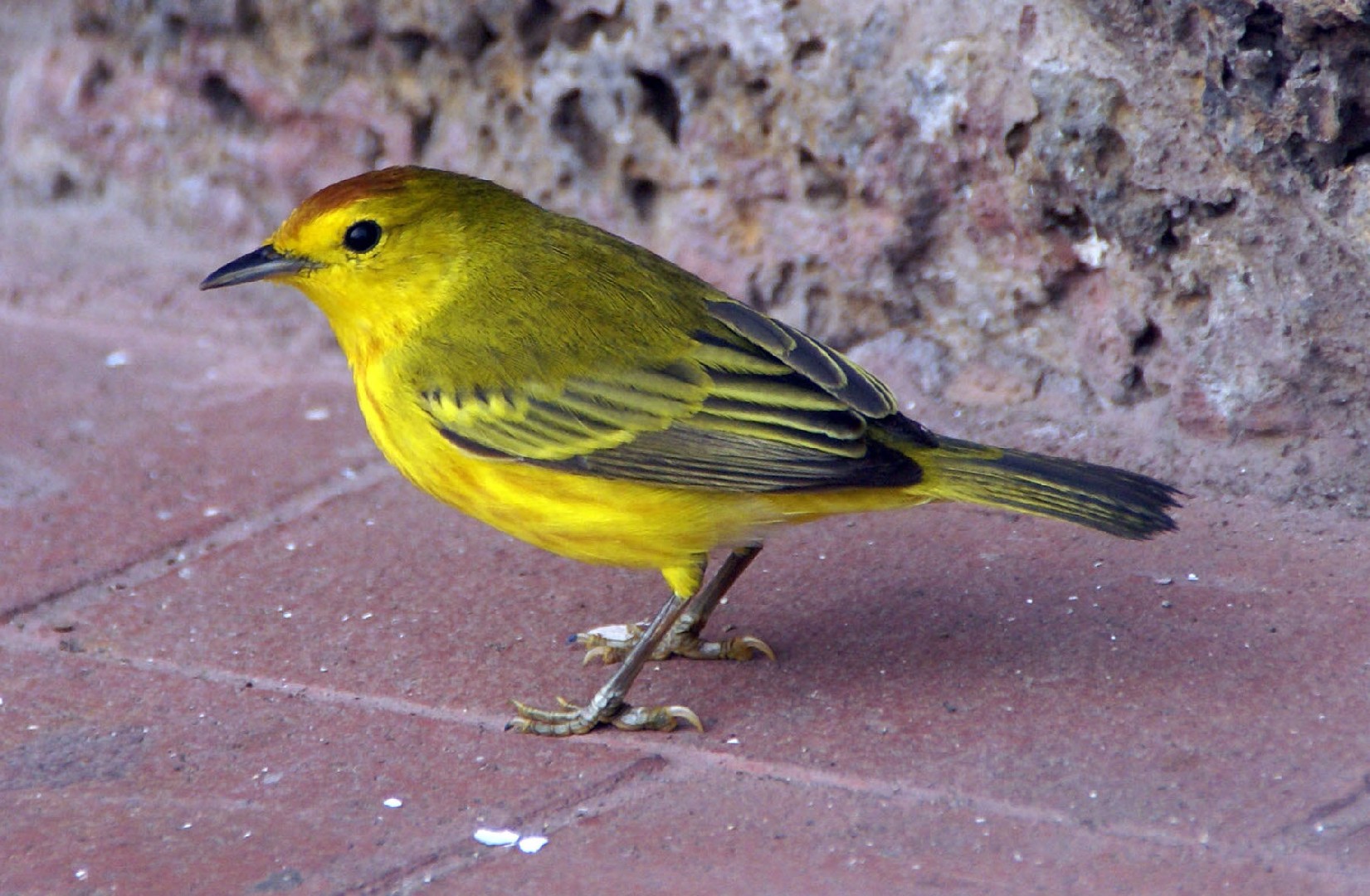
9. Yellow Warbler
Yellow Warblers are small birds that are so tiny they are known to get tangled up in orb-weaver spiders' webs. Their nests are often parasitized by Brown-headed Cowbirds. No worries, says the yellow Warbler, for I'll just rebuild a new nest on top of the one you took from me. This sometimes goes on and on to the point where the nest grows to six tiers high.
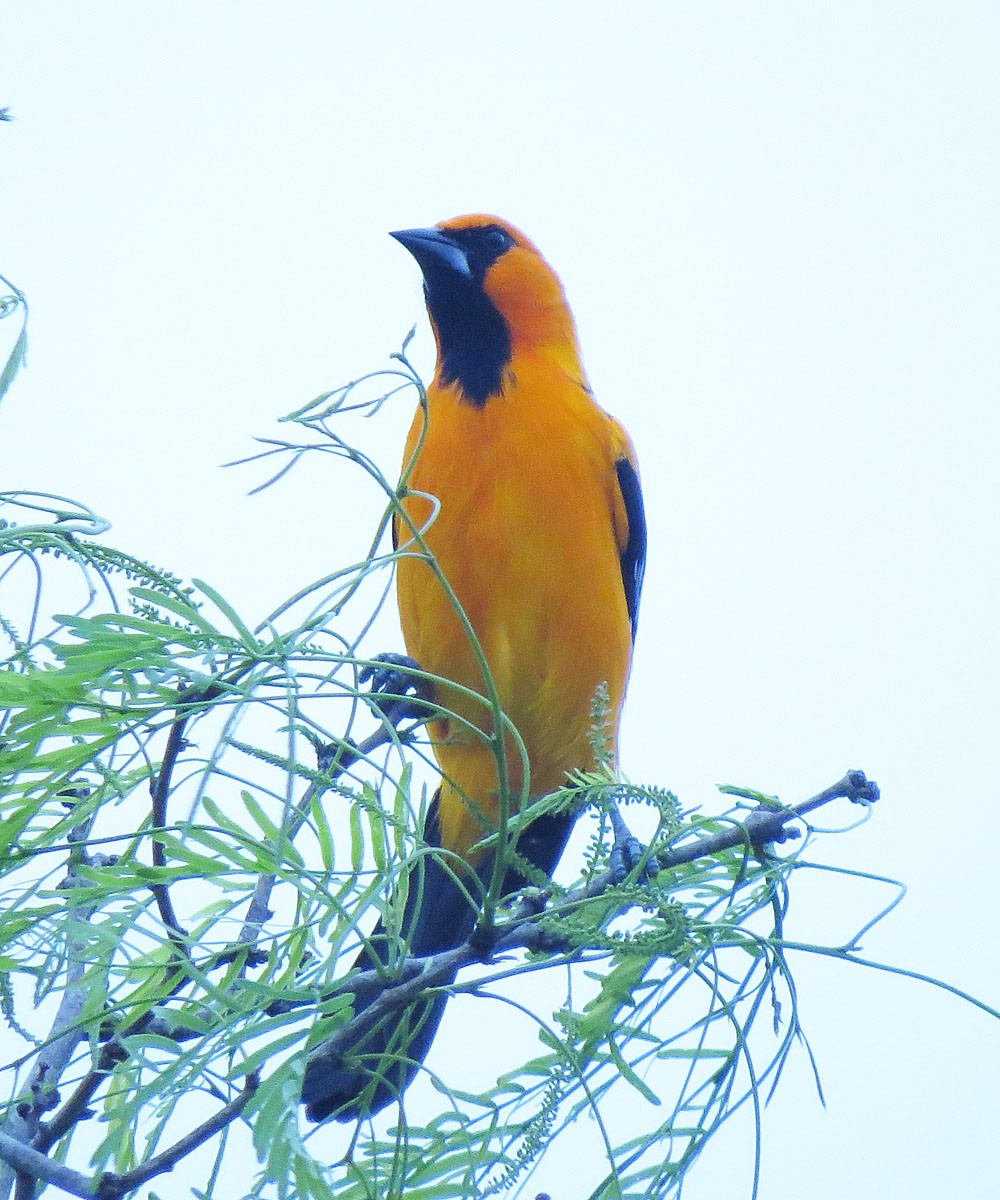
10. Altamira Oriole
Both males and females have a black mandible and throat, as well as a black back and long black tail. Wings are black, but the remiges and rectrices (flight feathers) are fringed with white. These form a single white wing bar and white wing spots when folded. The secondary coverts form orange epaulets. The underside is almost uniformly orange or yellowish-orange. In general, immature specimens have an olive back, and a dull yellow on its head and its body. The first-year bird is similar to the adult, but it has an olive, not black, back, and yellow-olive tail.
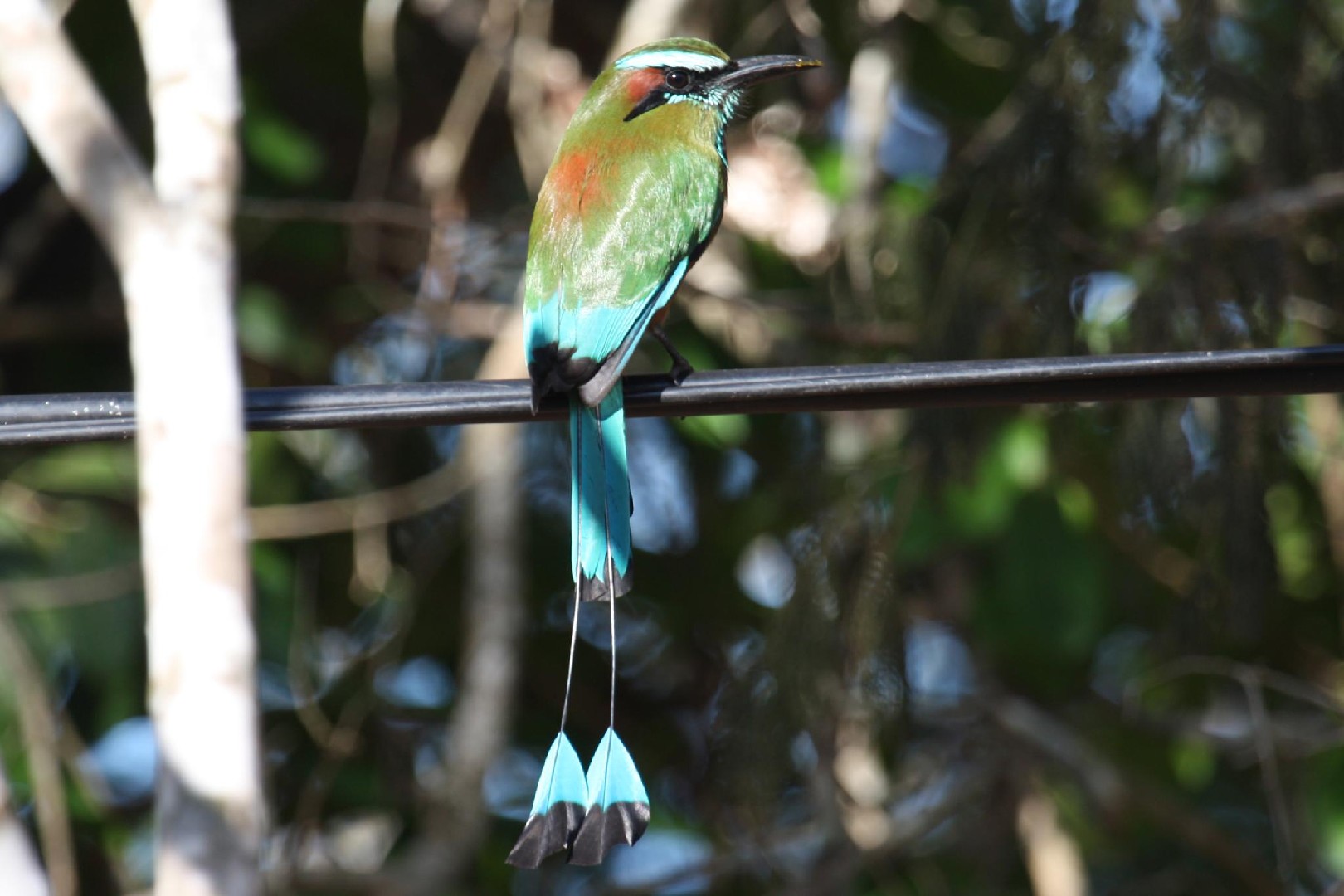
11. Turquoise-browed Motmot
The turquoise-browed motmot (Eumomota superciliosa) also known as Torogoz, is a colourful, medium-sized bird of the motmot family, Momotidae. It inhabits Central America from south-east Mexico (mostly the Yucatán Peninsula), to Costa Rica, where it is common and not considered threatened. It lives in fairly open habitats such as forest edge, gallery forest and scrubland. It is more conspicuous than other motmots, often perching in the open on wires and fences. From these perches it scans for prey, such as insects and small reptiles. White eggs (3–6) are laid in a long tunnel nest in an earth bank or sometimes in a quarry or fresh-water well. Its name originates from the turquoise color of its brow. It was first declared as the official national bird of El Salvador in 1999, where the bird is known as Torogoz. The bird is 34 cm (13 in) long and weighs 65 g (2.3 oz). It has a mostly grey-blue body with a rufous back and belly. There is a bright blue strip above the eye and a blue-bordered black patch on the throat. The flight feathers and upperside of the tail are blue. The tips of the tail feathers are shaped like rackets and the bare feather shafts are longer than in other motmots. Although it is often said that motmots pluck the barbs off their tail to create the racketed shape, this is not true; the barbs are weakly attached and fall off due to abrasion with substrates and with routine preening. Unlike most bird species, where only males express elaborate traits, the turquoise-browed motmot expresses the extraordinary racketed tail in both sexes. Research indicates that the tail has evolved to function differently for the sexes. Males apparently use their tail as a sexual signal, as males with longer tails have greater pairing success and reproductive success. In addition to this function, the tail is used by both sexes in a wag-display, whereby the tail is moved back-and-forth in a pendulous fashion. The wag-display is performed in a context unrelated to mating: both sexes perform the wag-display in the presence of a predator, and the display is thought to confer naturally selected benefits by communicating to the predator that it has been seen and that pursuit will not result in capture. This form of interspecific communication is referred to as a pursuit-deterrent signal. The call is nasal, croaking and far-carrying. The turquoise-browed motmot is a well-known bird in its range and has been chosen as the national bird of both El Salvador and Nicaragua. It has acquired a number of local names including guardabarranco ("ravine-guard") in Nicaragua, Torogoz in El Salvador (based on its call) and pájaro reloj ("clock bird") in the Yucatán, based on its habit of wagging its tail like a pendulum. In Costa Rica it is known as momoto cejiceleste or the far-less flattering pájaro bobo ("foolish bird"), owing to its tendency to allow humans to come very near it without flying away.
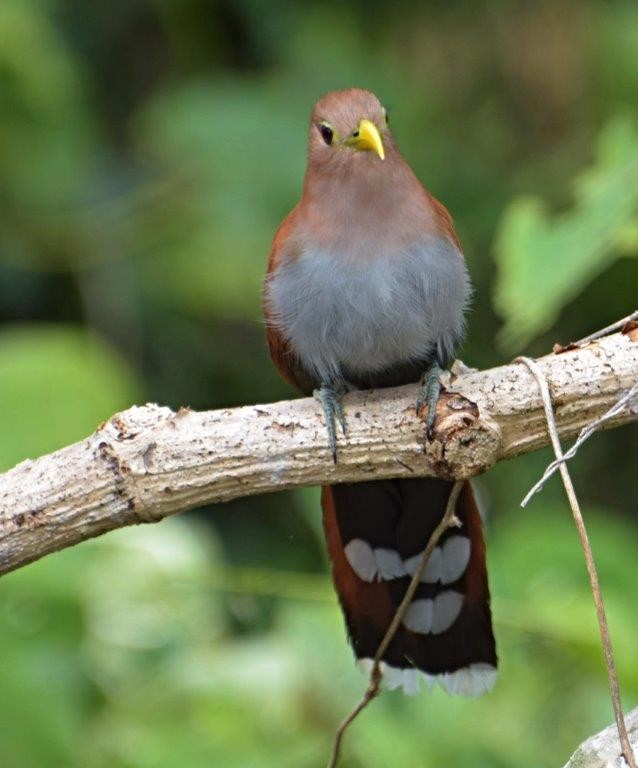
12. Squirrel Cuckoo
This large and extremely long-tailed cuckoo is 40.5–50 cm (15.9–19.7 in) long and weighs 95–120 g (3.4–4.2 oz). The adult has mainly chestnut upperparts and head, becoming paler on the throat. The lower breast is grey and the belly is blackish. The central tail feathers are rufous, but the outer are black with white tips. The bill is yellow and the iris is red. Immature birds have a grey bill and eyering, brown iris, and less white in the tail. It resembles the little cuckoo, but that species is smaller and has a darker throat. There are a number of subspecies with minor plumage variations. For example, P. c. mehleri, one of the South American subspecies, has mainly brown (not black) outer tail feathers. Additionally, the subspecies from Mexico, Central America, and northern and western South America have a yellow eye-ring, but this is red in the remaining part of South America. It makes explosive kip! and kip! weeuu calls, and the song is a whistled wheep wheep wheep wheep.
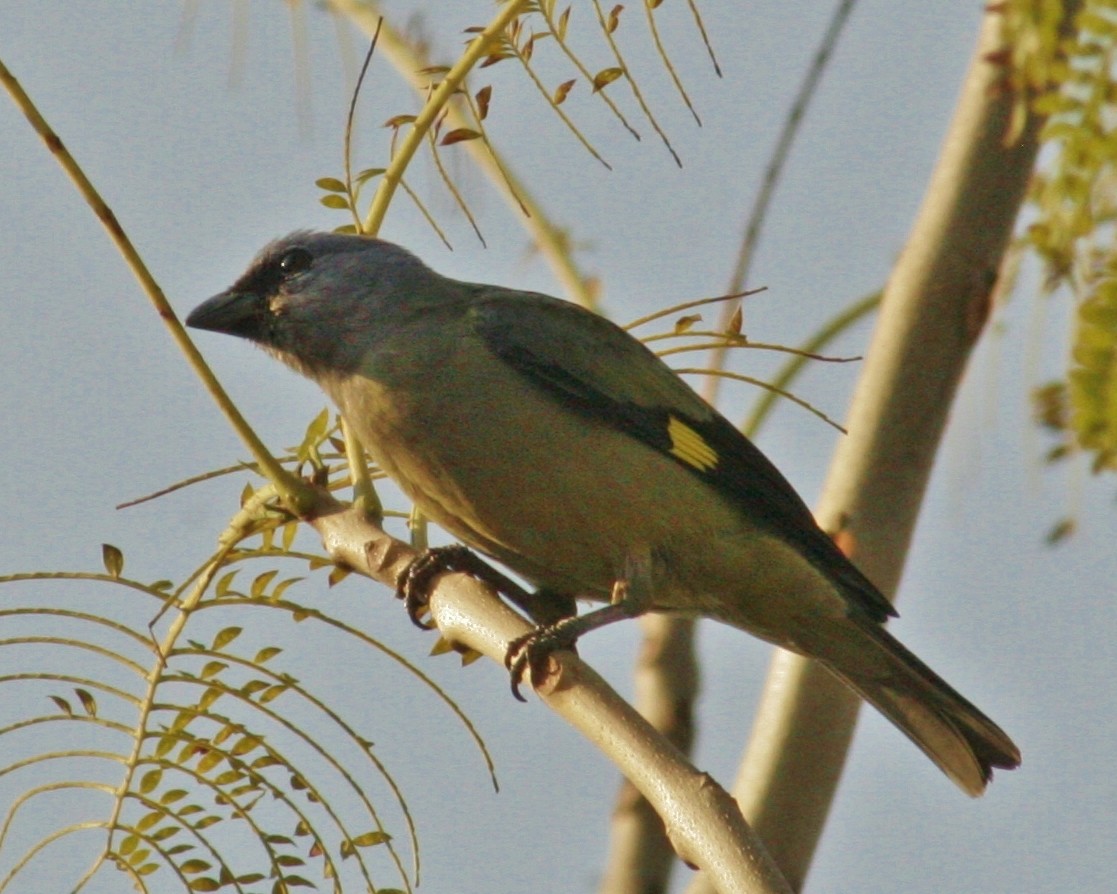
13. Yellow-winged Tanager
The yellow-winged tanager (Thraupis abbas) is a neotropical member of the tanager family. It is of average size for a tanager, about 18 centimetres (7 inches long). It is distinguished by the yellow patches on its dusky green wings, marking an otherwise dark bluish and gray body. It has a pale lavender tone on its throat and breast. The juvenile lacks this color, but has an olive-green head and upper back.
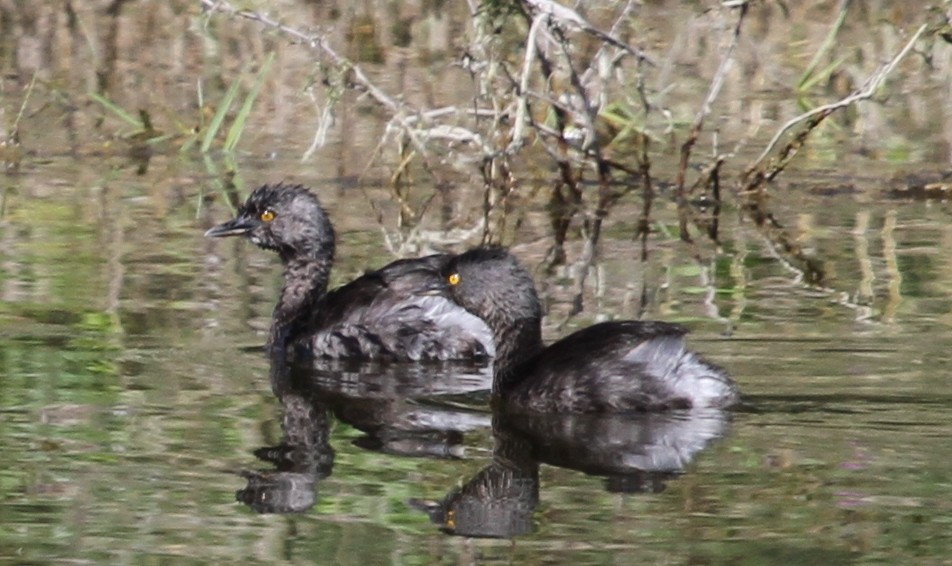
14. Least Grebe
The least grebe ranges in length from 21–27 cm (8.3–10.6 in) (depending on the subspecies) and in weight from 112–180 g (4.0–6.3 oz). Weights are variable based on region and subspecies, being smaller in Panama, where males weighed a mean of 129 g (4.6 oz) against the females 116 g (4.1 oz) and larger in the West Indies, where the sexes weigh a mean of 161 g (5.7 oz) and 133 g (4.7 oz), respectively. In Texas, size is intermediate at 139 g (4.9 oz) and 122 g (4.3 oz). Even in the largest races, the least grebe is still smaller and lighter than any other grebe species. Like all grebes, its legs are set far back on its body and it cannot walk well, though it is an excellent swimmer and diver. Small and plump, with a fairly short, sharp-pointed beak and bright yellow eyes, it typically appears quite dark all over. The breeding adult is brownish grey above with a darker blackish crown and throat. It has a brownish chest and pale underparts. It shows a white wing patch in flight. Non-breeding birds are paler with a whitish throat, and immatures are paler and greyer than adults. Unlike all other members of its genus, it lacks any chestnut coloring on its neck.
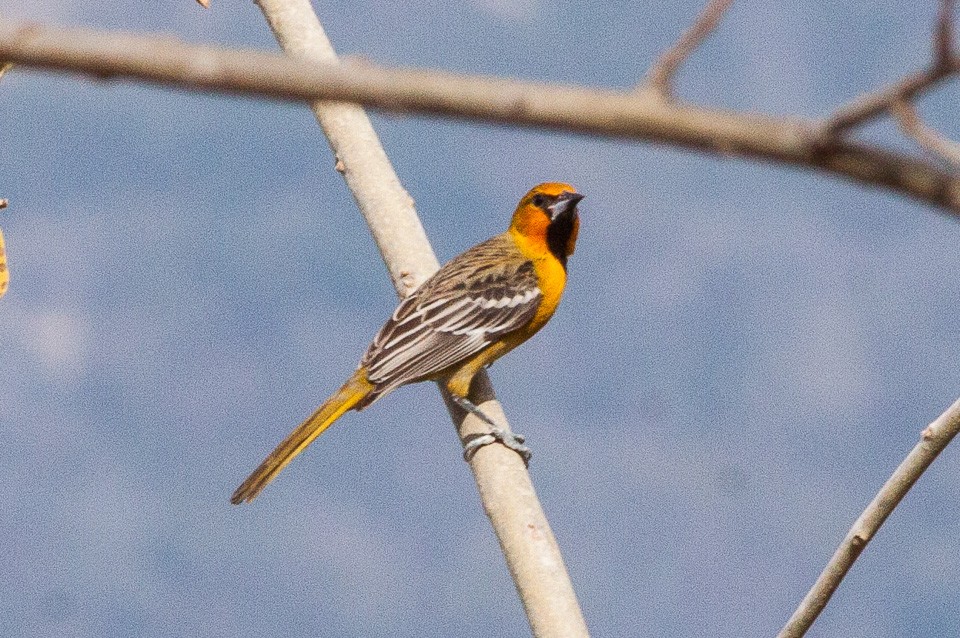
15. Streak-backed Oriole
The streak-backed oriole (Icterus pustulatus) is a medium-sized species of passerine bird from the icterid family (the same family as many blackbirds, meadowlarks, cowbirds, grackles, and others, including the New World orioles). It is native to Central America and Mexico and is an occasional visitor to the United States.
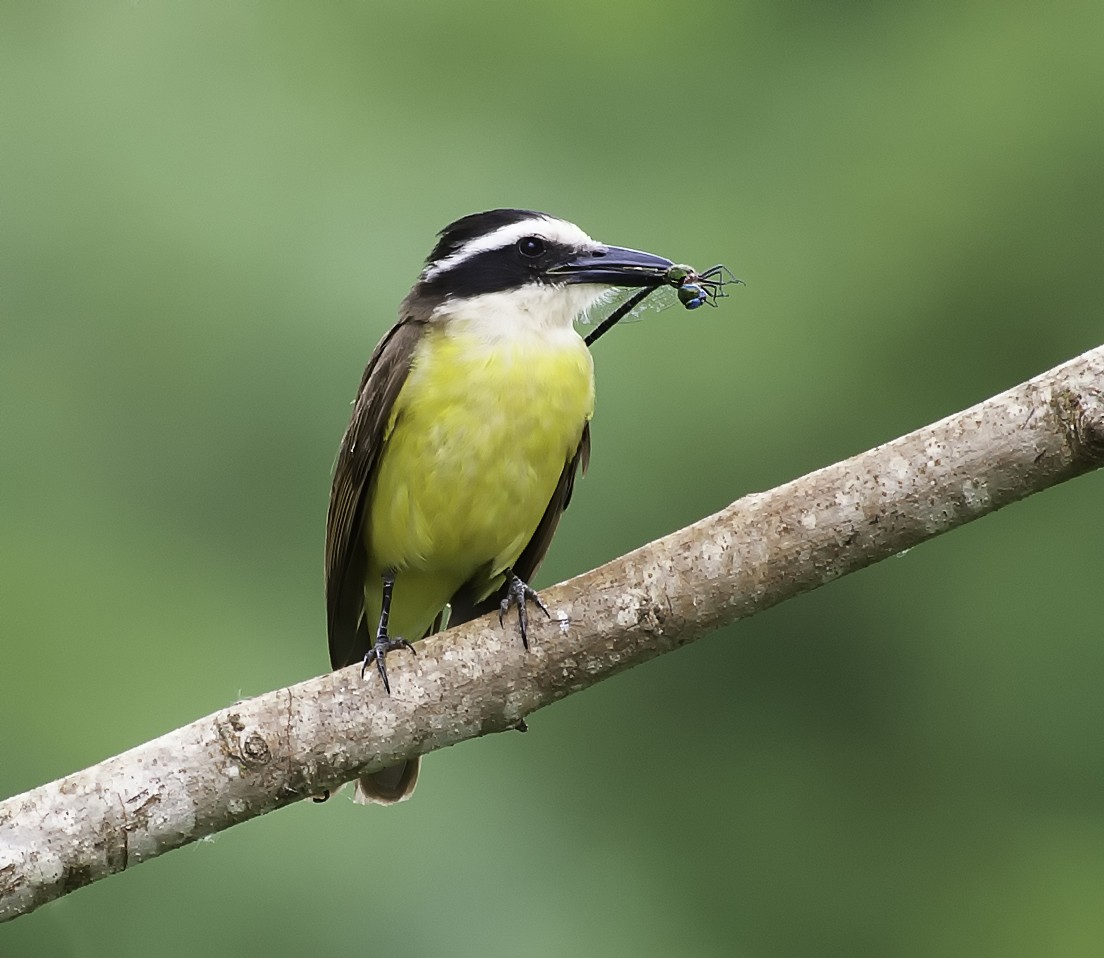
16. Great Kiskadee
The great Kiskadee is a large bird with bold markings that make this flycatcher easily recognizable. is a bright-colored bird that prefers woodland habitats close to water or open areas. It eats a lot of insects, but also forages for seeds and berries and is known to dive into shallow water for small fish.
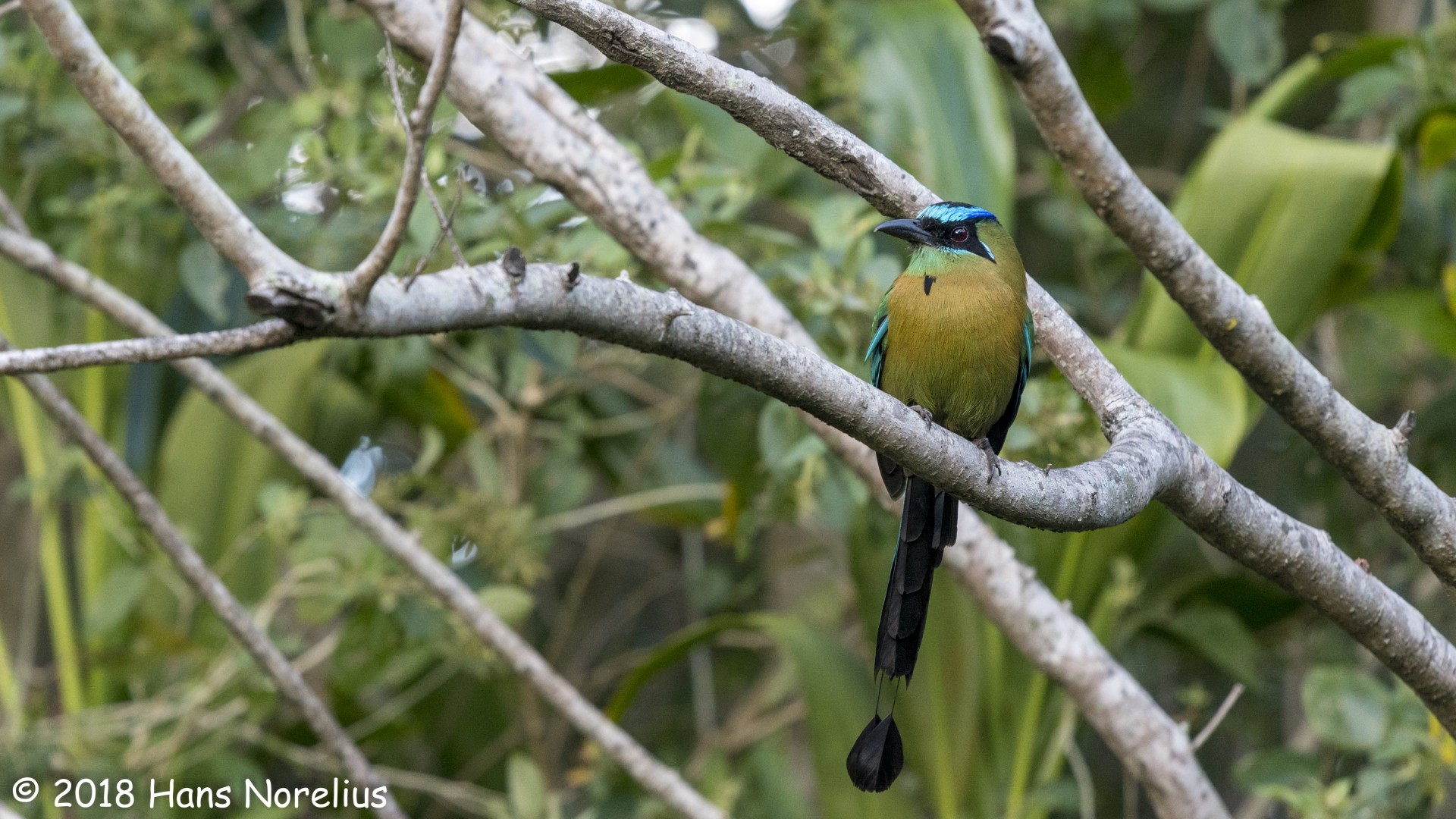
17. Lesson's Motmot
The central crown is black and surrounded by a blue band. There is a black eyemask. The call is a low owl-like ooo-doot. These birds often sit still, and in their dense forest habitat can be difficult to see, despite their size. They eat small prey such as insects and lizards, and will also regularly take fruit. Like most of the Coraciiformes, motmots nest in tunnels in banks, laying about three or four white eggs.
18. Black Vulture
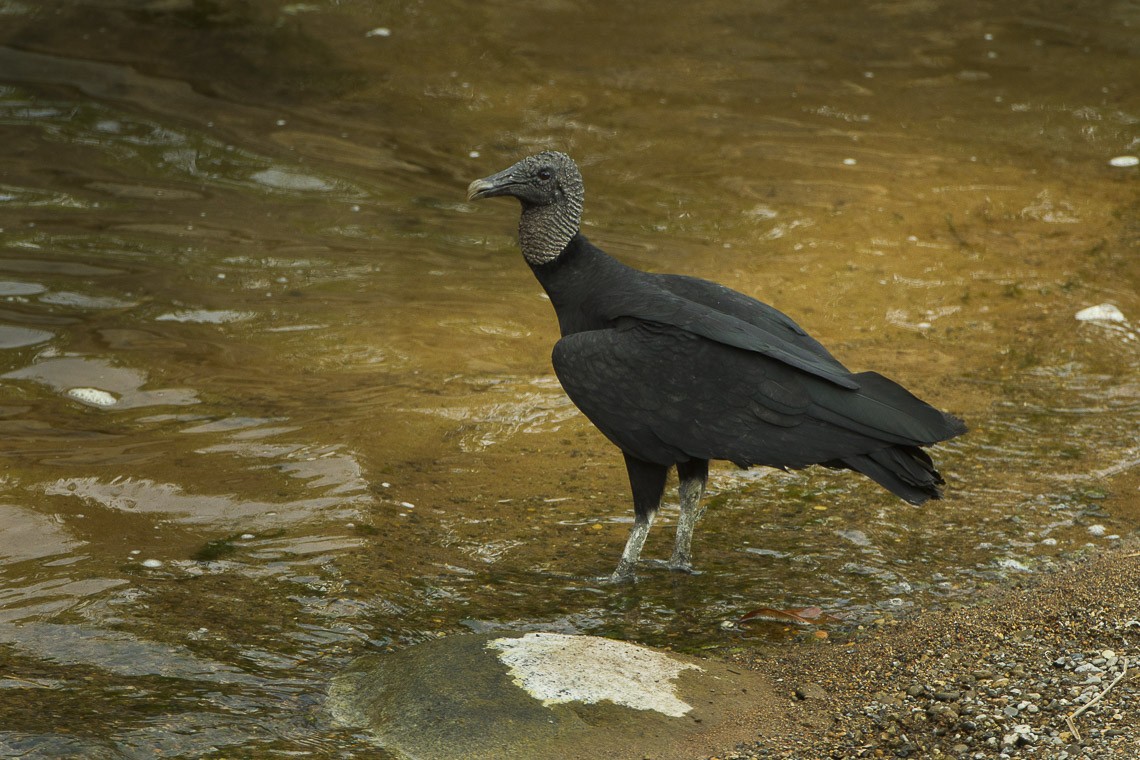
Although quite dapper in appearance, the black Vulture's name comes from the Latin vulturus meaning “tearer" and that is just what that hooked beak is for. These birds are highly social, with fierce family loyalty and will share food with relatives and with their young long after the babies have fledged. Because they lack a voice box, their calls are limited to grunts and hisses.
19. Tropical Kingbird
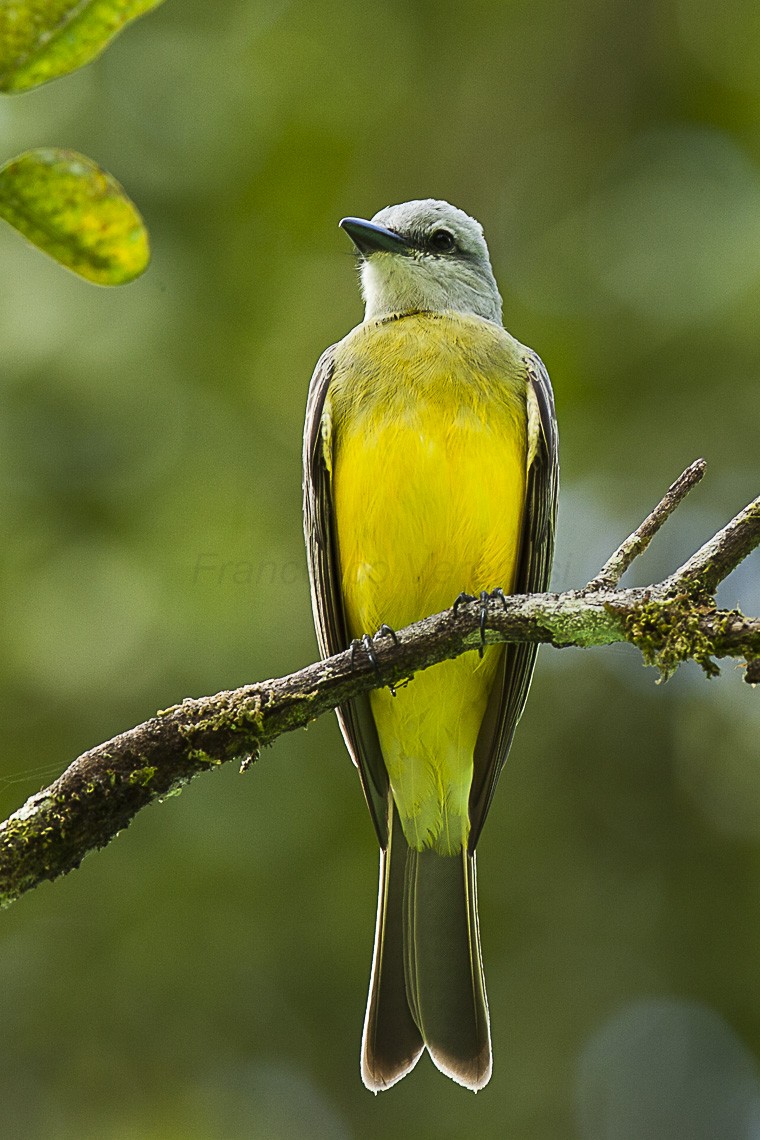
An adult tropical kingbird is 22 cm (8.7 in) long, weighs 39 g (1.4 oz) and has a wingspan range of 38–41 cm. The head is pale gray, with a darker eye mask, an orange crown stripe, and a heavy gray bill. The back is grayish-green, and the wing and forked tail are brown. The throat is pale gray, becoming olive on the breast, with the rest of the underparts being yellow. The sexes are similar, but young birds have pale buff edges on the wing coverts. Tropical Kingbirds appear to be monogamous. In most parts of the species' range, they are permanent residents and remain together in pairs year-round.(Sibley 2014) The call is a high-pitched twittering trill, tree-e-e-e-e-e-e, with a more complex version sung by the male at dawn. Their breeding habitat is semi-open areas with trees and shrubs, including gardens and roadsides. Tropical kingbirds like to observe their surroundings from a prominent open perch, usually high in a tree, undertaking long flights to acrobatically catch insects in mid-air (hawking), sometimes hovering to pick food off vegetation (gleaning). They also eat some fruit from such diverse species as tamanqueiro (Alchornea glandulosa), the Annonaceae, Cymbopetalum mayanum and gumbo-limbo (Bursera simaruba); foraging for these even in disturbed habitat. As they keep mainly to the upper levels of trees, they find little profit in following mixed-species feeding flocks in the understory. These birds aggressively defend their territory against intruders, even much larger birds such as magnificent frigatebirds, toucans, caracaras or hawks. In a study in Parque Nacional de La Macarena of Colombia, parasitism by microfilariae and trypanosomas (presumably T. everetti) was infrequently recorded in tropical kingbirds. The male and female inspect potential sites together before selecting a site, typically a fork or crotch high in a tree (up to 66 feet high) but sometimes just a few feet above water.(Sibley 2014) The female builds a bulky, sloppy-looking, shallow nest of vines, rootlets, twigs, weeds, and grasses; it is unlined or lined with hair. Nests average about 5.2 inches across and 3 inches tall, with interior cup about 3 inches across and 1.6 inches deep. The female incubates the typical clutch of two to four eggs for approximately 16 days, and the nestlings fledge in another 18 or 19 days. The eggs are whitish or pale pink with variable amounts of dark blotching. The tropical kingbird is one of the most widespread and conspicuous inhabitants of open forest, forest edge, scrub and agricultural land from the southwestern United States south to Argentina (Jahn, Stouffer, & Chesser, 2013). As a result, the bird is considered as being of Least Concern and their population is increasing, according to the IUCN. According to Partners in Flight, global estimates of tropical kingbird breeding population is around 200 million. They rate the species as 4 out of 20 on the continental concern scale, indicating that this species is of low conservation concern.
20. Green Heron
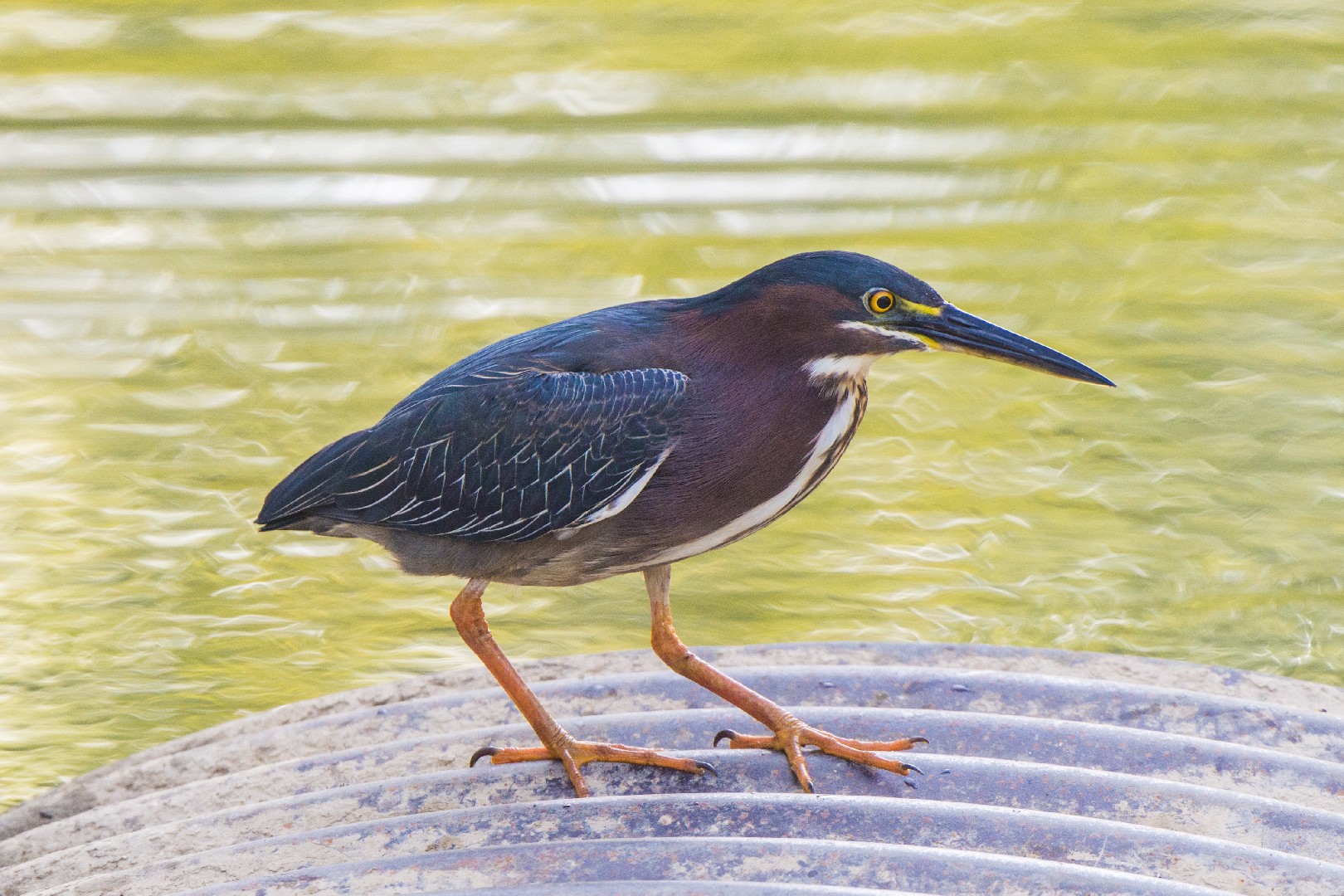
The green Heron is a shorter member of the long-legged heron family. This solitary bird can be tough to spot, for it grows nervous if out in the open and prefers to be tucked away safely. In fact, if you spot one out in the open, you’ll likely notice it flicking its tail and lifting and dropping its crest. If the green Heron becomes frightened, it typically responds with a squawk and then defecating behind itself as it flees.