




Top 20 Most Common Bird in Laikipia
Located in Kenya's highland region, Laikipia is a mix of bushland, savanna, and riverine ecosystems. Habitats to 20 common species of birds, each distinguished by unique behavior and adaptations. Some are known for their extravagant plumage, singing prowess, or migratory patterns, making Laikipia a bird watcher's paradise.

Most Common Bird
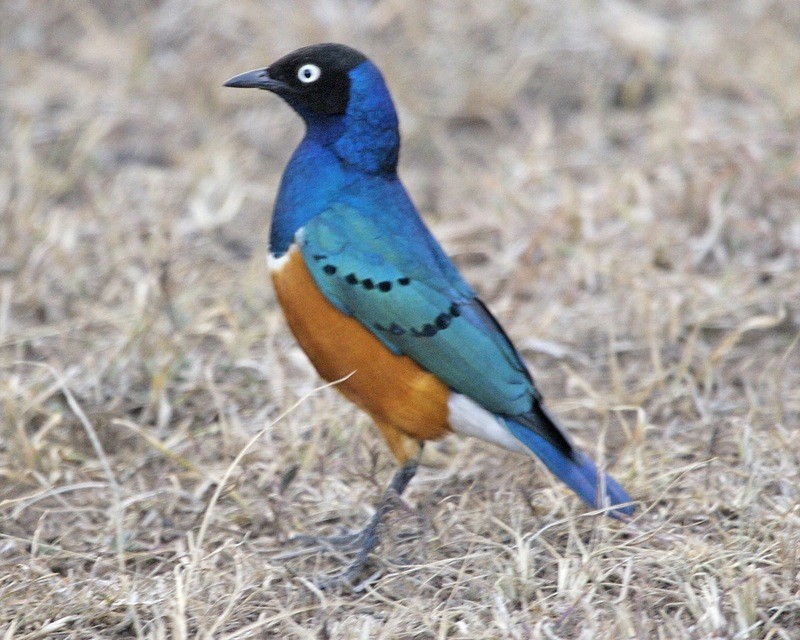
1. Superb Starling
This species is 18 to 19 cm (7.1 to 7.5 in) long. These small short-tailed starlings have a long narrow bill, robust bodies, strong feet and a distinctive plumage pattern. Adults have black heads and iridescent blue-to-green back, upper breast, wings, and tail. The belly is red-orange, separated from the blue breast by a white bar. The undertail coverts and the wing linings are white. Juveniles have duller plumage with no more than a suggestion of the white breast band. Their eyes are brown at first, later grayish white. The superb starling has a long and loud song consisting of trills and chatters. At midday it gives a softer song of repeated phrases. There are several harsh calls, the most complex of which is described as "a shrill, screeching skerrrreeee-cherrrroo-tcherreeeeeet." The appearance of the superb starling is very similar to Hildebrandt's starling, also found in East Africa. The superb starling is distinguished by having pale creamy-white eyes, as opposed to red eyes in the Hildebrandt's. Moreover, only adult superb starlings have a white breast band. 
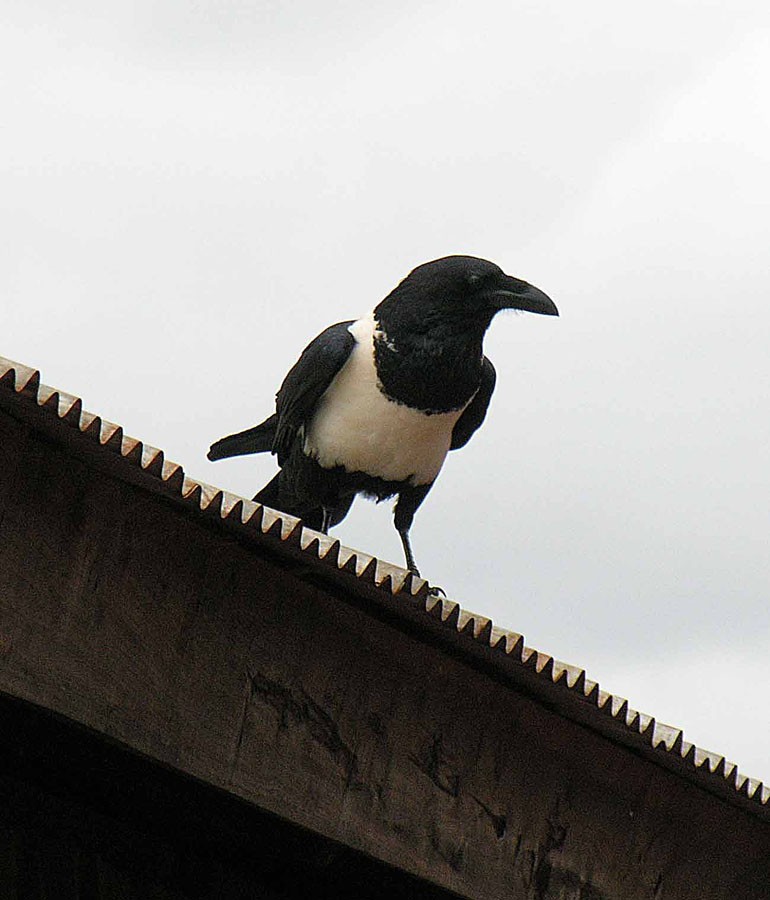
2. Pied Crow
It is approximately the size of the European carrion crow or a little larger (46–50 cm in length) but has a proportionately larger bill, slightly longer tail and wings, and longer legs. As its name suggests, its glossy black head and neck are interrupted by a large area of white feathering from the shoulders down to the lower breast. The tail, bill and wings are black too. The eyes are dark brown. The white plumage of immature birds is often mixed with black. It resembles the white-necked and thick-billed ravens but has a much smaller bill.
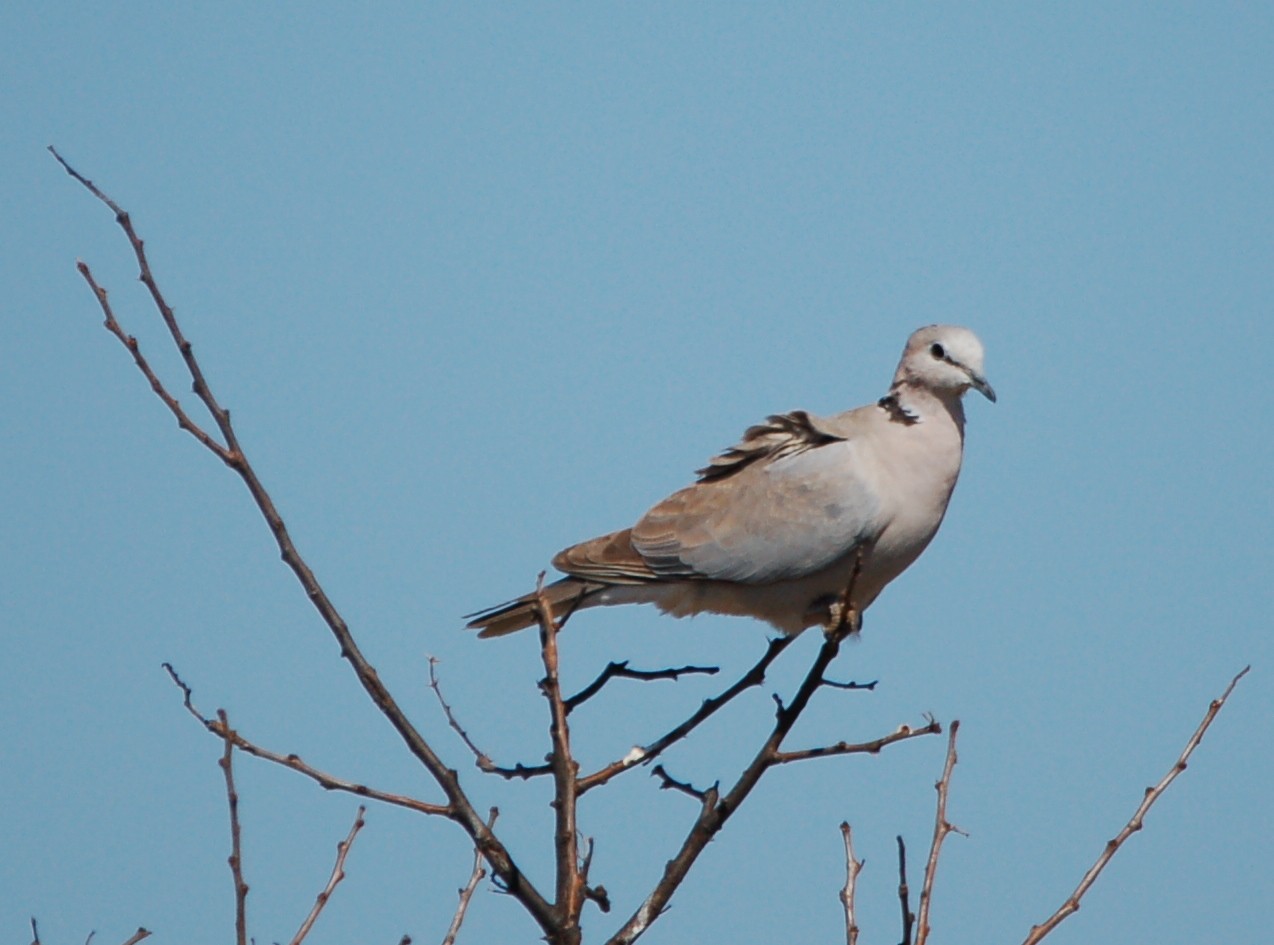
3. Ring-necked Dove
Their body feathers are darkest on the upper side, where they are coloured in dull tones of grey and brown, with shades of lavender on the nape. It is paler below, where a tint of pinkish lavender is usually present. The lower belly and crissum (the undertail coverts surrounding the cloaca) is white. As with related species, they have white fringes and conspicuous white tips to the otherwise slate grey tail feathers. The tail pattern is particularly noticeable during the display flight. Individual plumage variation is high, with some light and others almost sooty. Males and females look alike, although the males are slightly bigger. They measure 25–26.5 cm (9.8–10.4 in) in length and weigh 92–188 g (3.2–6.6 oz). The eyes are almost black, the bill is black and the feet are dark purple. An immature is duller and lacks the semi-collar of an adult. It also has buff edges to all the upper part and wing covert feathers, while the plumage below is broadly edged greyish-white.
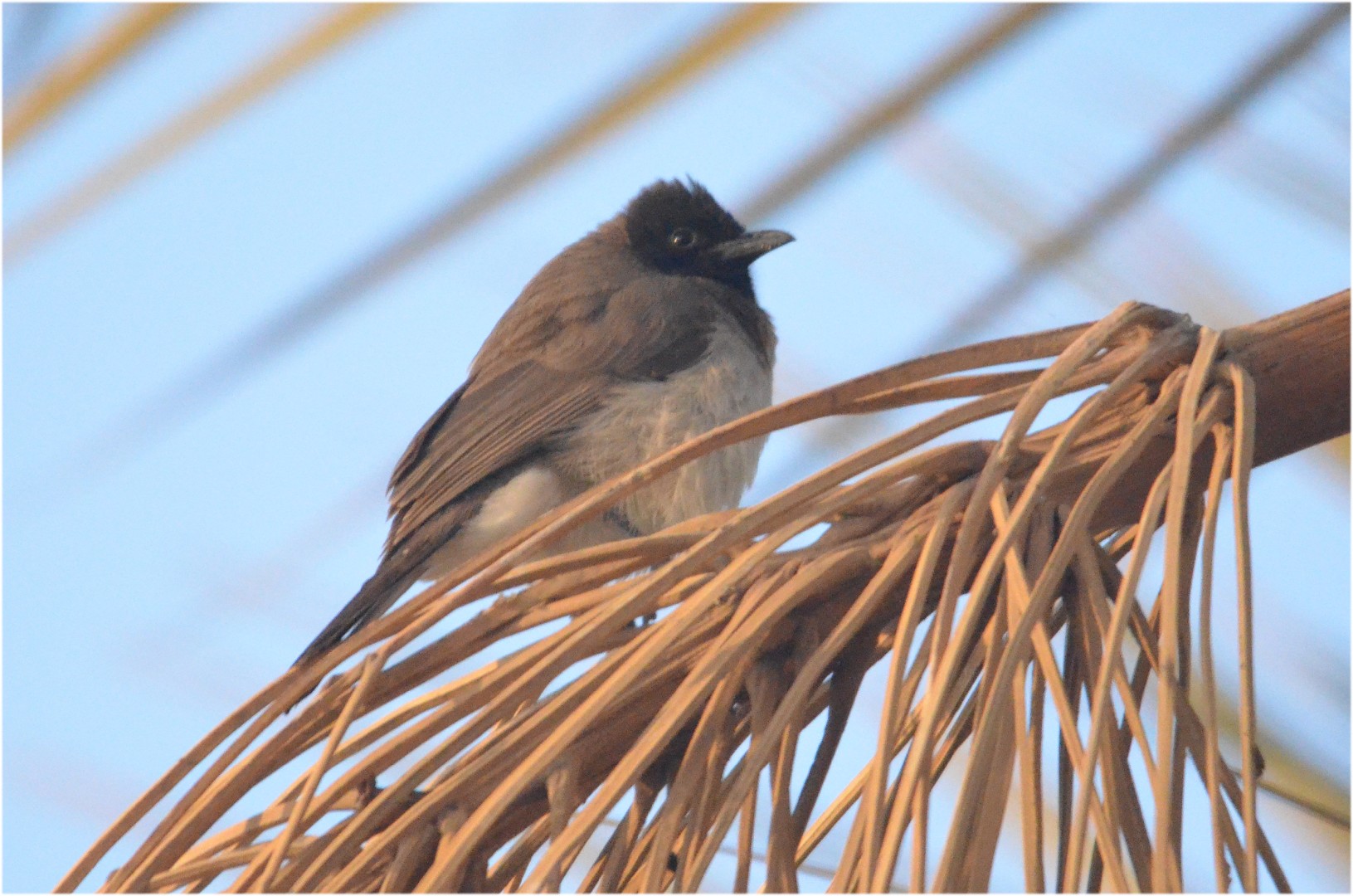
4. Common Bulbul
The bill is fairly short and thin, with a slightly downcurving upper mandible. The bill, legs, and feet are black and the eye is dark brown with a dark eye-ring, which is not readily visible. It is about 18 cm in length, with a long tail. It has a dark brown head and upperparts. Sexes are similar in plumage.
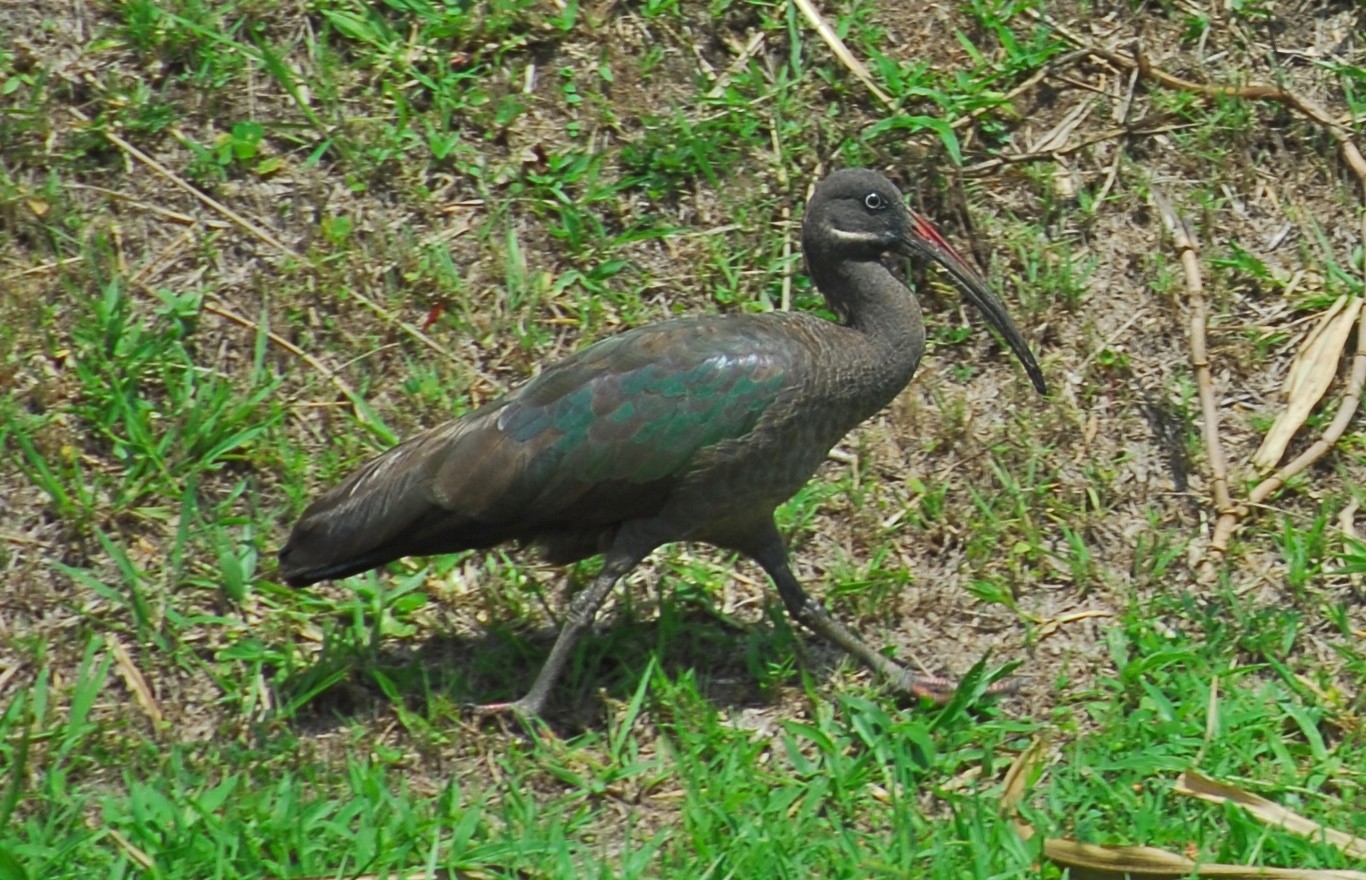
5. Hadada Ibis
The hadeda is a large (about 76 cm long), grey-to-partly brown species of ibis. Males and females are alike in plumage. It has a narrow, white, roughly horizontal stripe across its cheeks. This is sometimes called the "moustache" though it does not reach the mouth corners. The plumage over the wings has an iridescent purple sheen produced by optical microstructures within the feathers. The bird has blackish legs and a large grey-to-black bill but during the breeding season it has a red culmen on the basal half of the upper mandible. The upper surfaces of the toes are of a similar red during the onset of breeding. The wings are powerful and broad, enabling quick take-offs and easy manoeuvring through dense tree cover. It has an extremely loud and distinctive "haa-haa-haa-de-dah" call—hence the onomatopoetic name. The call is often heard when the birds are flying or are startled, or when the birds communicate socially, for example early in the morning in residential suburbs. While roosting they produce a single loud "haaaa". When foraging, their contact call is a low growl similar to that made by a young puppy.
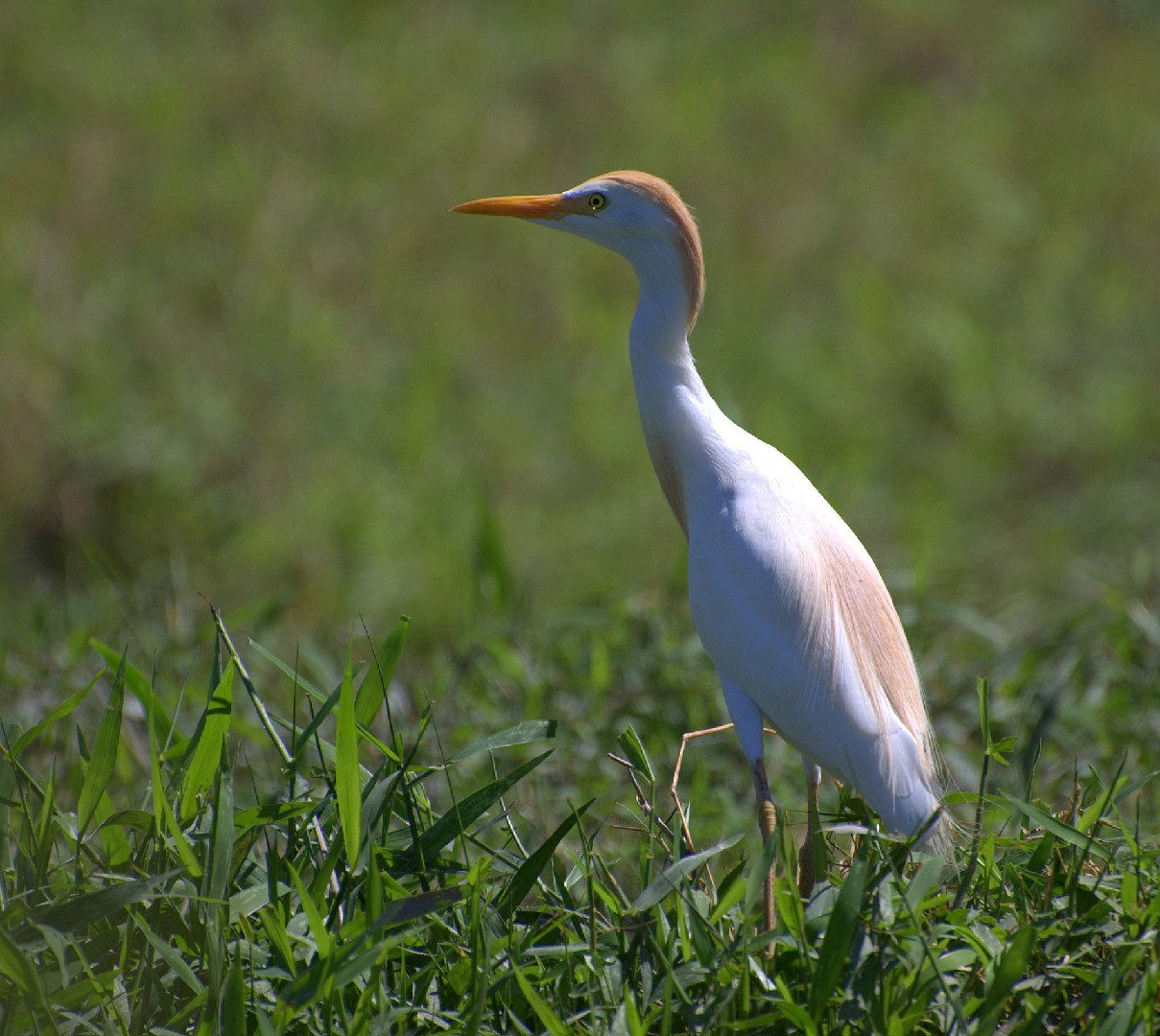
6. Cattle Egret
Cattle Egrets are short, thick-necked egrets. Their name refers to their preference to follow along with livestock as they forage in fields. Cattle Egrets were native only to Africa until the late 1800s when they somehow made their way throughout the Americas. They can often be found along airport runways waiting for planes to take off and blow insects out of the grass and weeds. They also follow behind farm equipment and do the same thing.
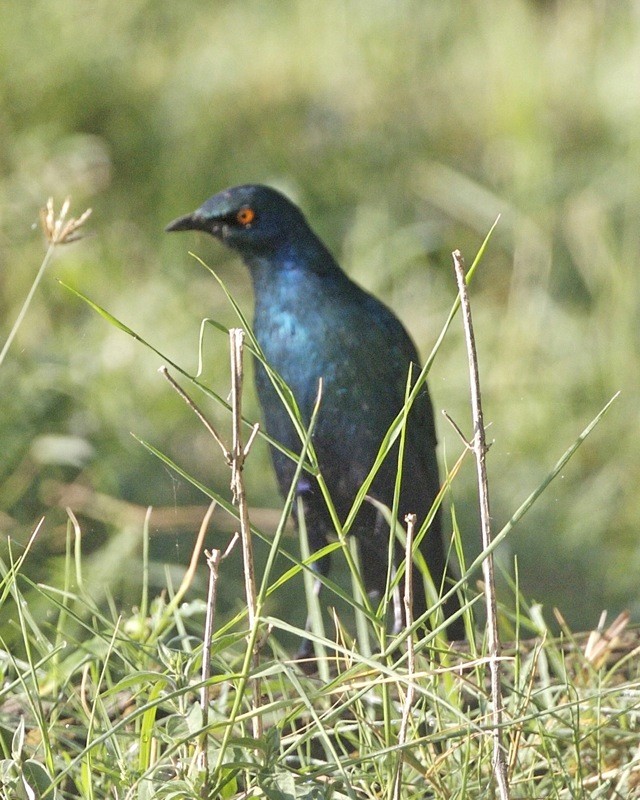
7. Greater Blue-eared Starling
The greater blue-eared starling is a 22 cm long, short tailed bird. This starling is glossy blue-green with a purple-blue belly and blue ear patch. Its iris is bright yellow or orange. The sexes are similar, but the juvenile is duller and has blackish brown underparts. The populations from southern Kenya southwards are smaller than northern birds and are sometimes considered to be a separate subspecies, L. c. sycobius. The lesser blue-eared starling is similar to this species, but the blue of the belly does not extend forward of the legs. The greater blue-eared starling has a range of musical or grating calls, but the most familiar is a nasal squee-ar.
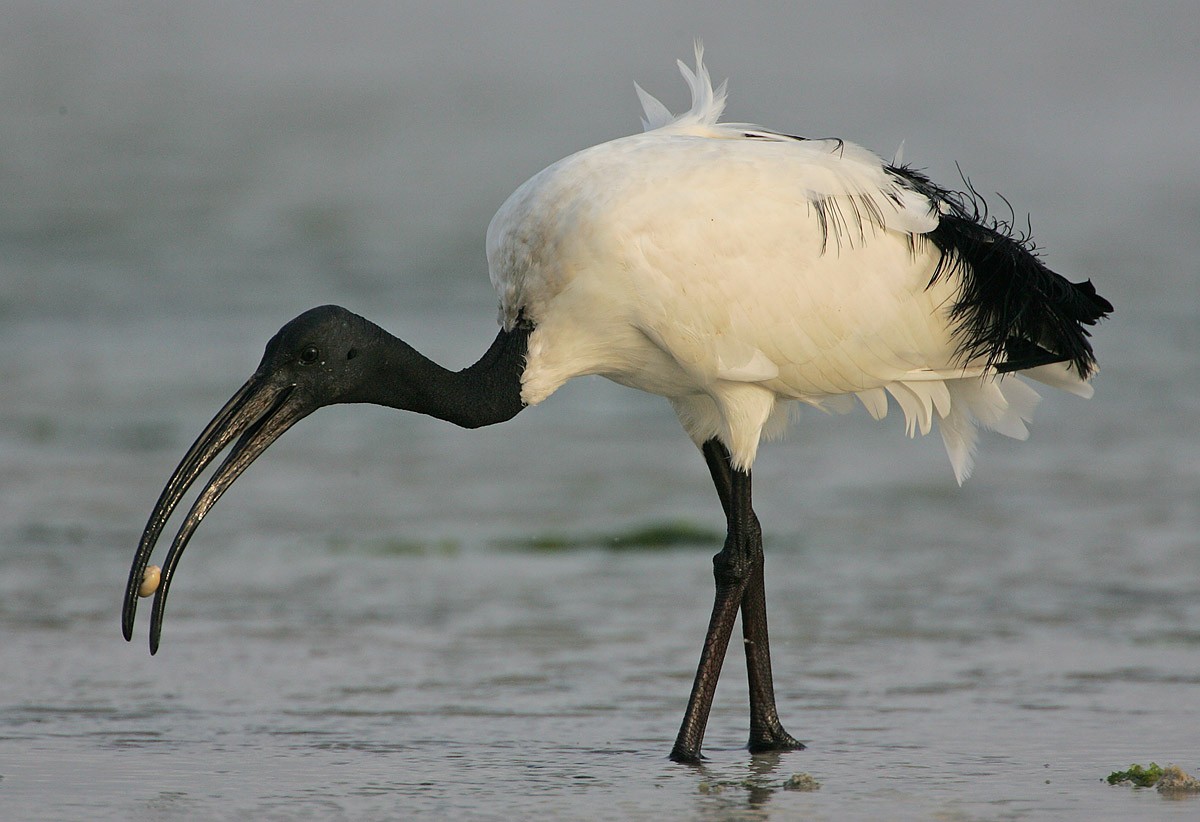
8. African Sacred Ibis
An adult individual is 68 cm (27 in) long with all-white body plumage apart from dark plumes on the rump. Wingspan is 112 to 124 cm (44 to 49 in) and body weight 1.35 to 1.5 kg (3.0 to 3.3 lb). Males are generally slightly larger than females. The bald head and neck, thick curved bill and legs are black. The white wings show a black rear border in flight. The eyes are brown with a dark red orbital ring. Sexes are similar, but juveniles have dirty white plumage, a smaller bill and some feathering on the neck, greenish-brown scapulars and more black on the primary coverts. This bird is usually silent, but occasionally makes puppy-like yelping noises, unlike its vocal relative, the hadada ibis.
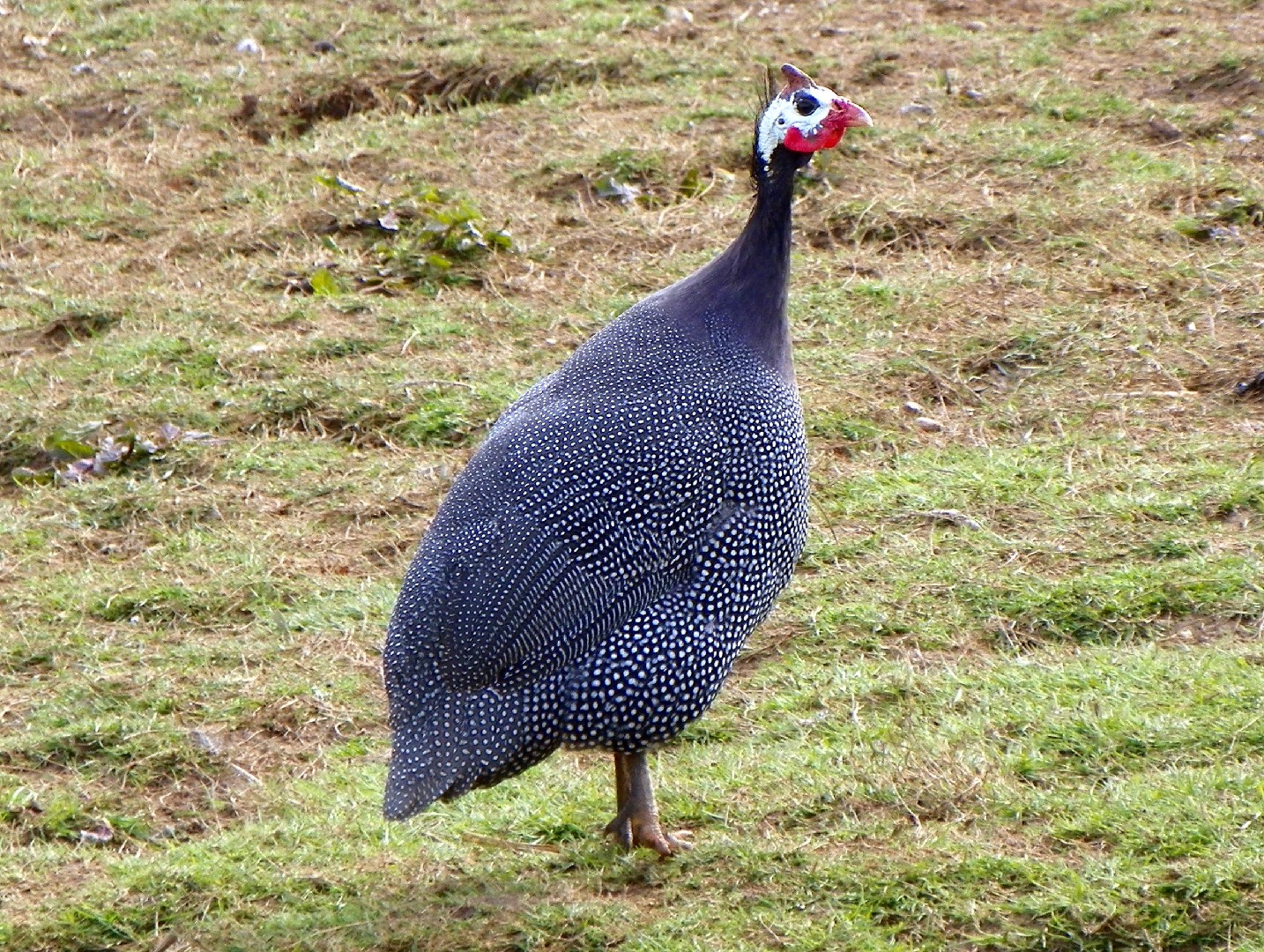
9. Helmeted Guineafowl
Helmeted Guineafowls are large birds with featherless blue heads. They are native to open habitats in Africa, but in the U.S. they're kept in parks, farms, and backyards to combat and control ticks that are known to spread Lyme disease. In an effort to intimidate, the males will bristle their feathers, raise their wings, and run at their opponents while squawking and gaping at the beak. They are neither subtle in their behavior nor subtle in their looks.
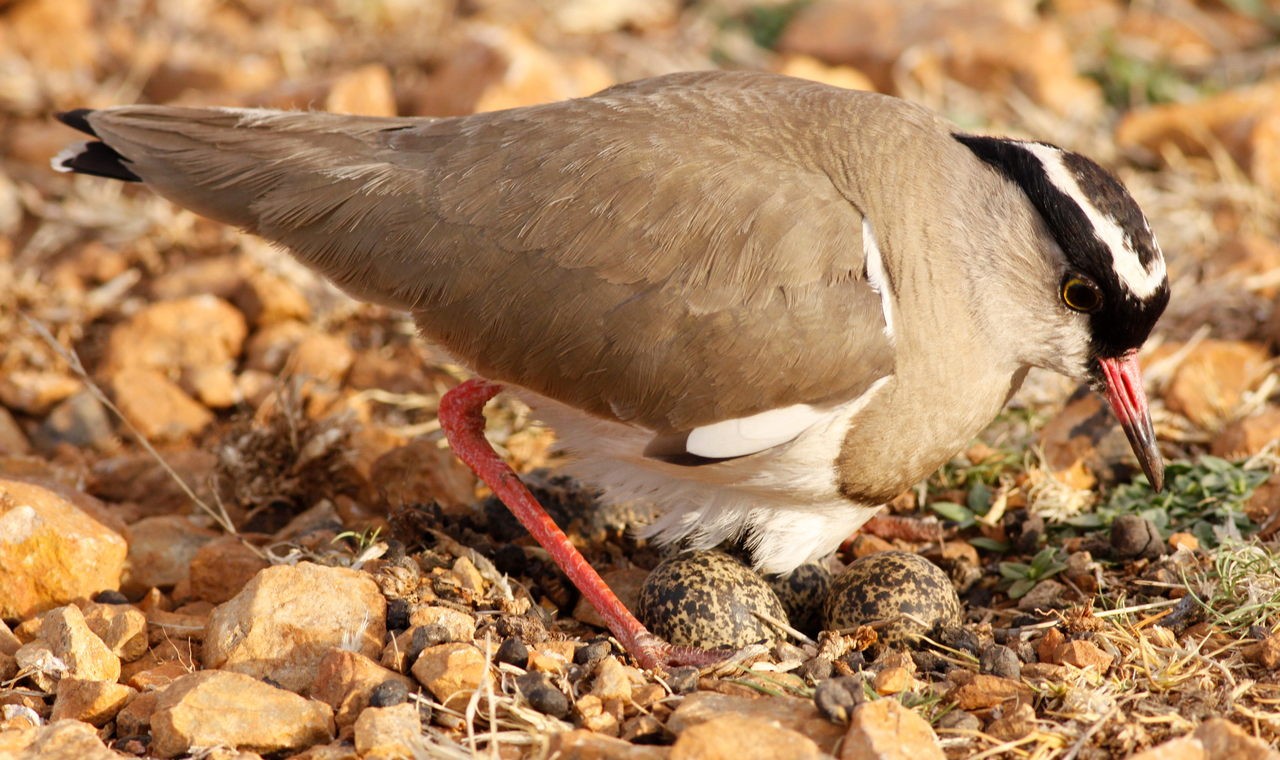
10. Crowned Lapwing
The crowned lapwing is easily recognized by its combination of brown and white colours, with most tellingly, a black crown intersected by an annular white halo. Adults are noisy and conspicuous. Males measure on average 3% larger than females. Juveniles are dull versions of adults, vermiculated on the wings and mantle, the legs yellowy rather than red and the bill lacking the red base.
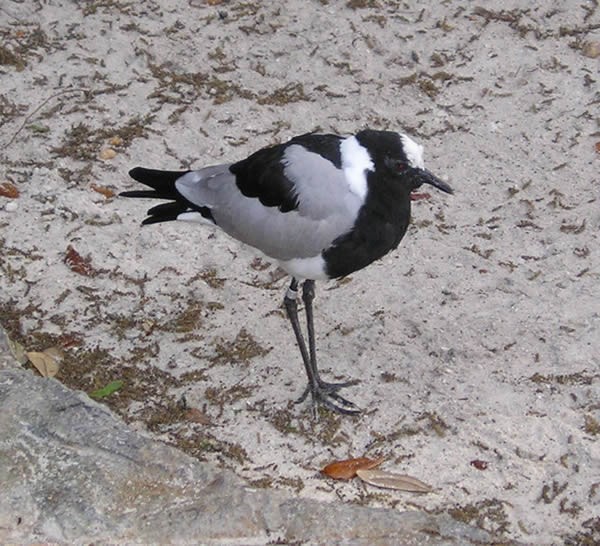
11. Blacksmith Lapwing
Blacksmith lapwings are very boldly patterned in black, grey and white, possibly warning colours to predators. It is one of five lapwing species (two African, one Asian and two Neotropical) that share the characteristics of red eyes and a bold pied plumage, with a carpal (wing) spur adorning the wrist joint; a sharp black protrusion which they use to aggressively defend their young from potential threats, through persistent aerial dives typically targeting the head. The portions of the bird's body bare to plumage average a black coloration for the bill, and either a black or white-grey dappling on the legs. Females average larger and heavier but the sexes are generally alike.
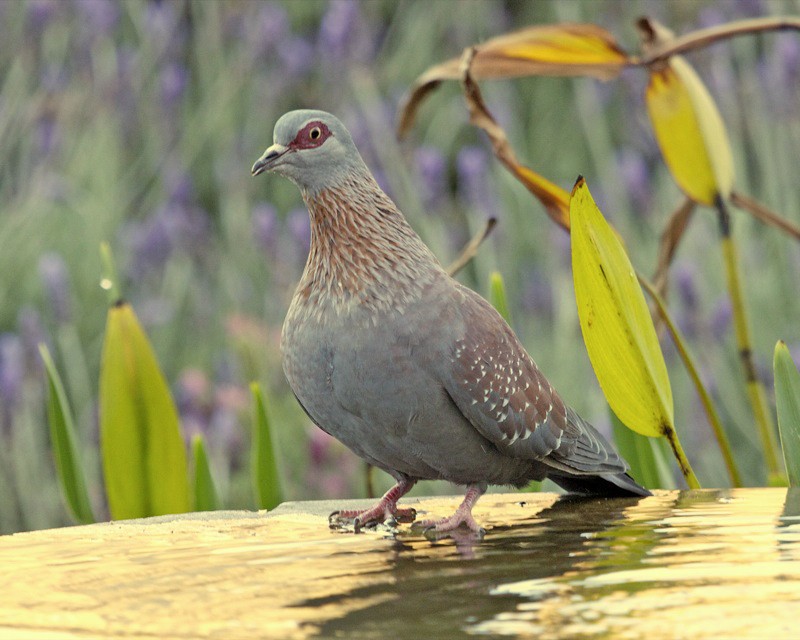
12. Speckled Pigeon
This is a large pigeon at 41 cm in length. Its back and wings are rufous, the latter heavily speckled with white spots. The rest of the upperparts and underparts are blue-grey, and the head is grey with red patches around the eye. The neck is brownish, streaked with white, and the legs are red. Sexes are similar, but immatures are browner than adults and lack the red eye patches. The call is a loud doo-doo-doo.
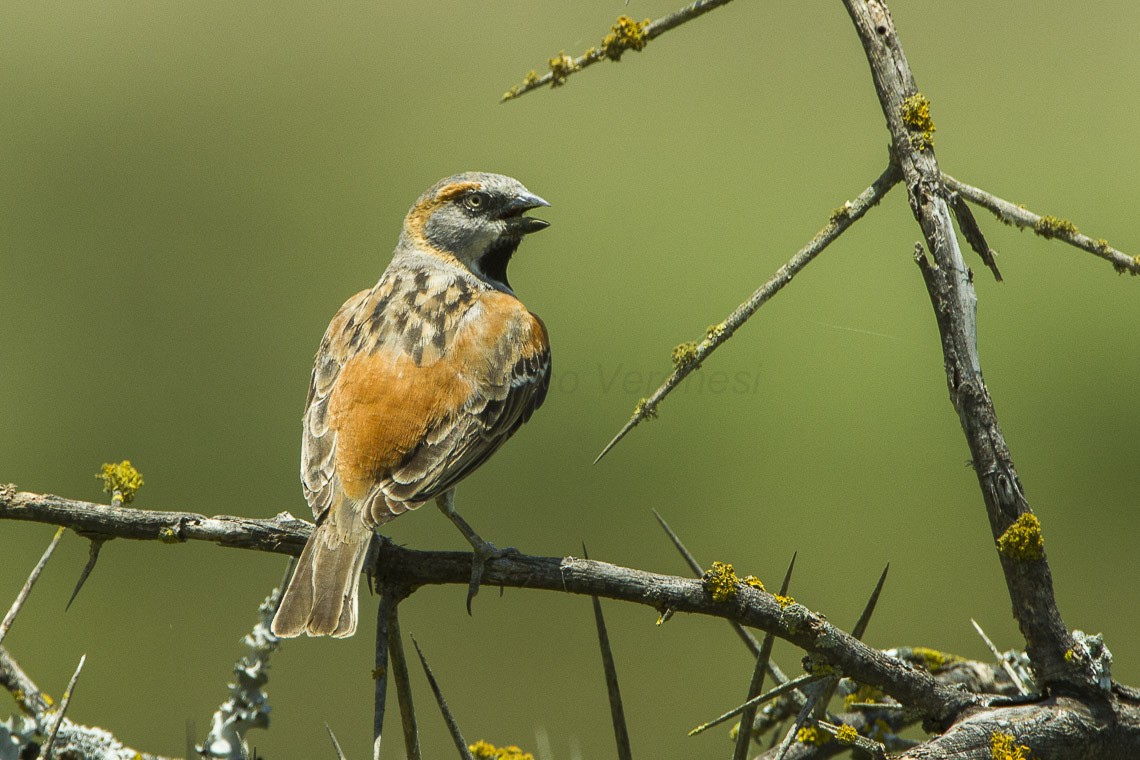
13. Kenya Rufous Sparrow
The Kenya sparrow (Passer rufocinctus), also known as the Kenya rufous sparrow, is a sparrow found in Kenya and Tanzania. It tends to be found in dry wooded savannah and agricultural areas. Some authorities have lumped the great sparrow (P. motitensis), the Kenya sparrow, and the Socotra sparrow (P. insularis) into P. motitensis following Dowsett and Forbes-Watson (1993). Some authorities also lump Shelley's sparrow and the Kordofan sparrow with this species, or all three with the great sparrow.
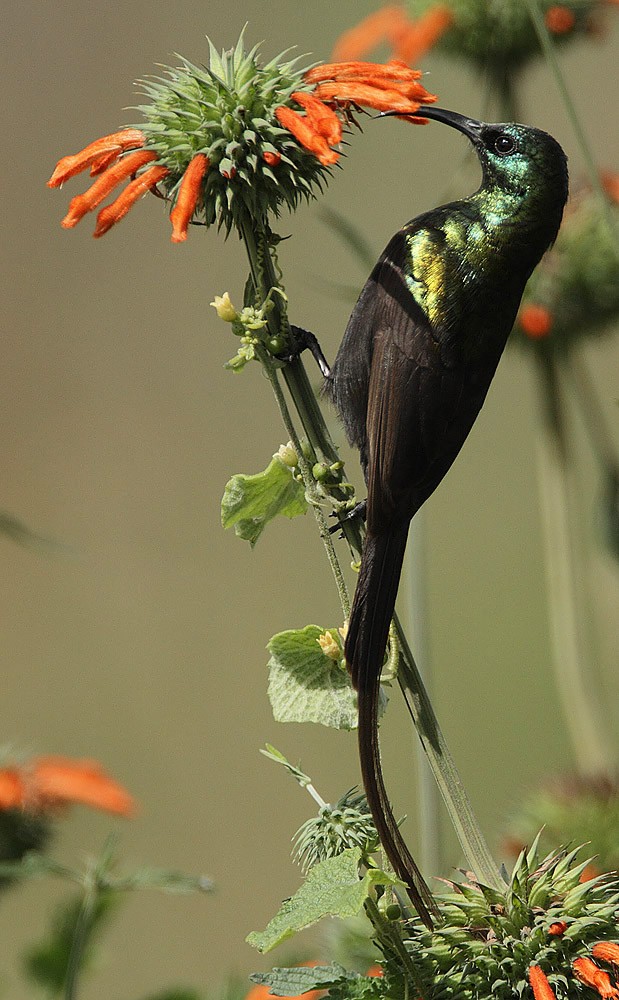
14. Bronze Sunbird
The bronzy sunbird (Nectarinia kilimensis) is a species of bird in the family Nectariniidae. It is found in Angola, Burundi, Democratic Republic of the Congo, Ethiopia, Kenya, Malawi, Mozambique, Rwanda, Tanzania, Uganda, Zambia, and Zimbabwe.

15. Barn Swallow
A familiar sight in rural and semi-open areas, the small barn Swallow can often be spotted by its distinctly graceful flight as it travels low over fields. Seemingly unbothered by having human neighbors, they nest unafraid in barns, garages, beneath bridges or wharves. Interestingly enough, they have come to prefer these locations so much that you are unlikely to spot a nest in a place that is not a human-made structure.
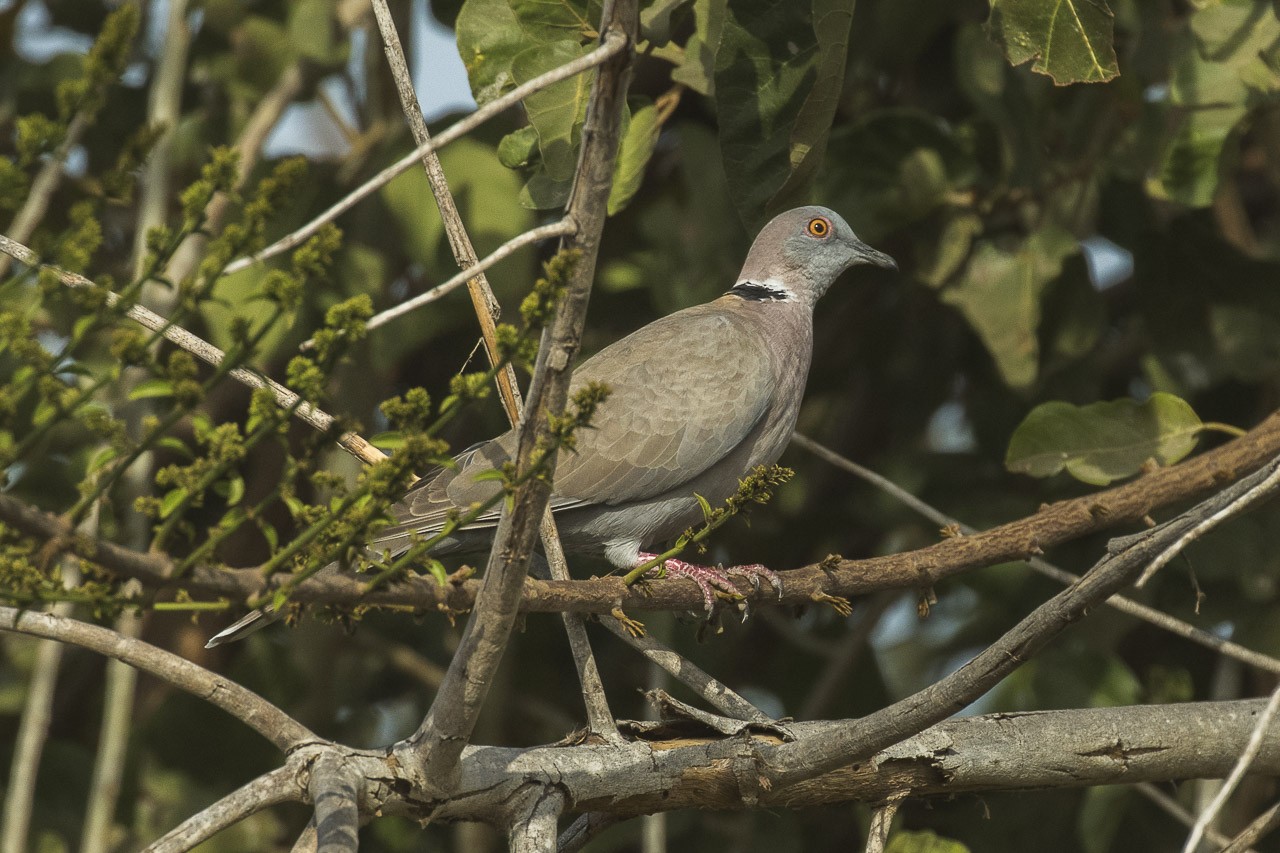
16. Red-eyed Dove
The red-eyed dove is a largish, stocky pigeon, typically 30 cm (12 inches) in length. Its back, wings and tail are pale brown. When flying, it shows blackish flight feathers. The head and underparts are dark vinous-pink, shading to pale grey on the face. There is a black hind neck patch edged with white. The legs and a patch of bare skin around the eye are red. The call is a loud doo-doo-du-du. Sexes are similar, but juveniles are duller than adults, and have scalloping on the body feathers. Red-eyed doves eat grass seeds, grains and other vegetation. They often forage on the ground.
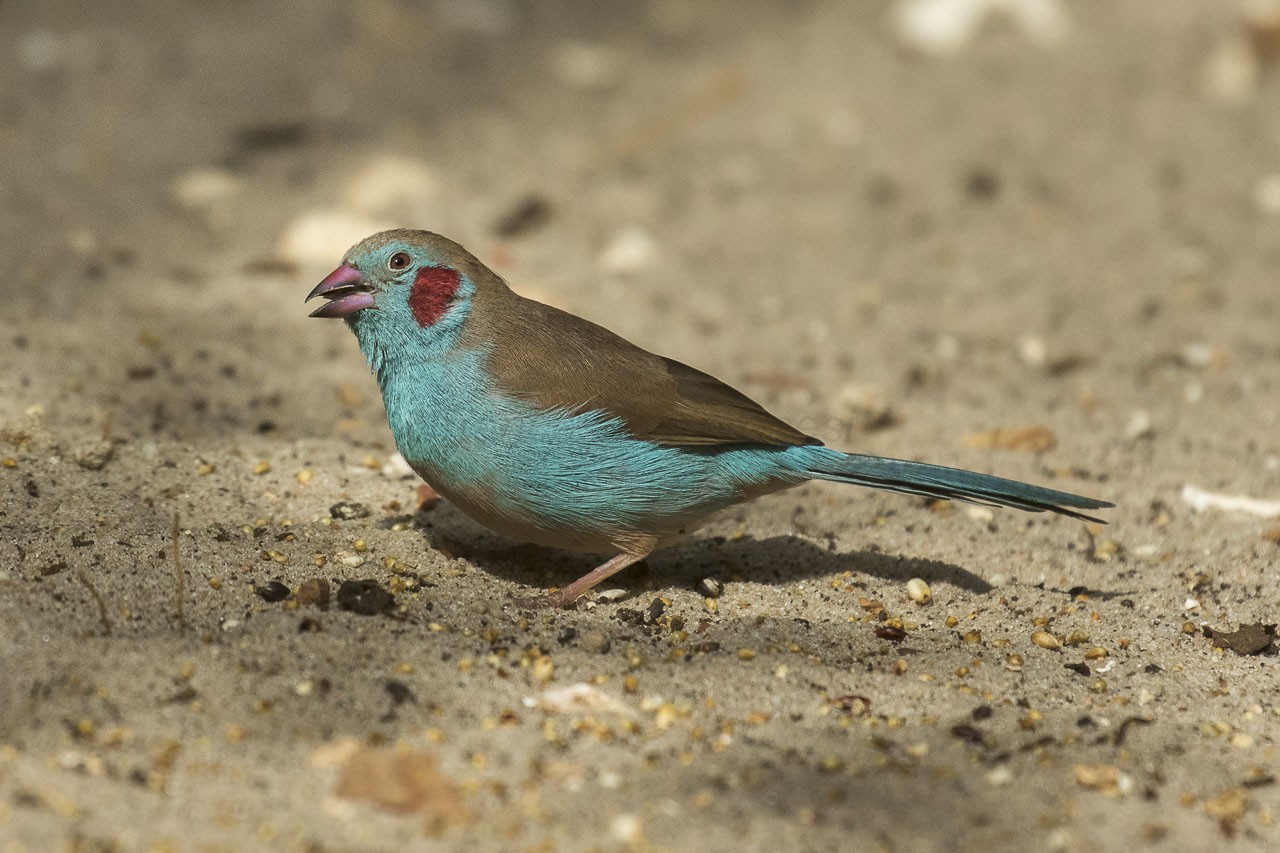
17. Red-cheeked Cordonbleu
Like other members of its genus, the red-cheeked cordon-bleu is a very small finch, measuring only 12.5–13 cm (4.9–5.1 in) in length. It weighs 9.9 g (0.35 oz) on average, with known extremes in wild populations ranging from 8.9–11 g (0.31–0.39 oz). The adult male has uniformly brown upperparts, pale blue breast, flanks and tail and a yellow belly. There is a red patch on each cheek, but this can rarely appear orange or even yellow. Females are similar but duller, and lack the cheek spot. Immature birds are like the female, but with blue restricted to the face and throat.
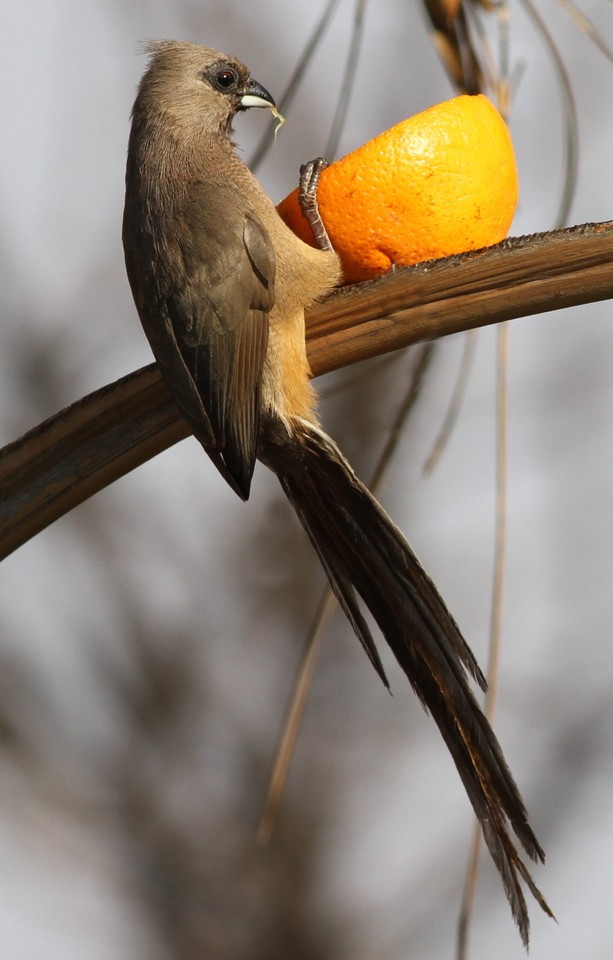
18. Speckled Mousebird
The speckled mousebird is about 35 cm (14 inches) long, with the tail comprising approximately half the length, and weighs about 57 grams (2 oz). It is well-named, because it is dull-mousy brown in overall color on the back and on the head (including a prominent crest). The bill is black on the upper part and is a pinkish color on the lower part. The rare white-headed mousebird can be confused with this species, but the differently colored mandibles and the lack of a bare grey orbital patch render the Speckled species distinctive. The speckled mousebird is not known for its voice, as songbirds are, although it is a noisy creature. They make a warbling tsu-tsu call while in flight, and are known for their tisk-tisk alarm call while in flight.
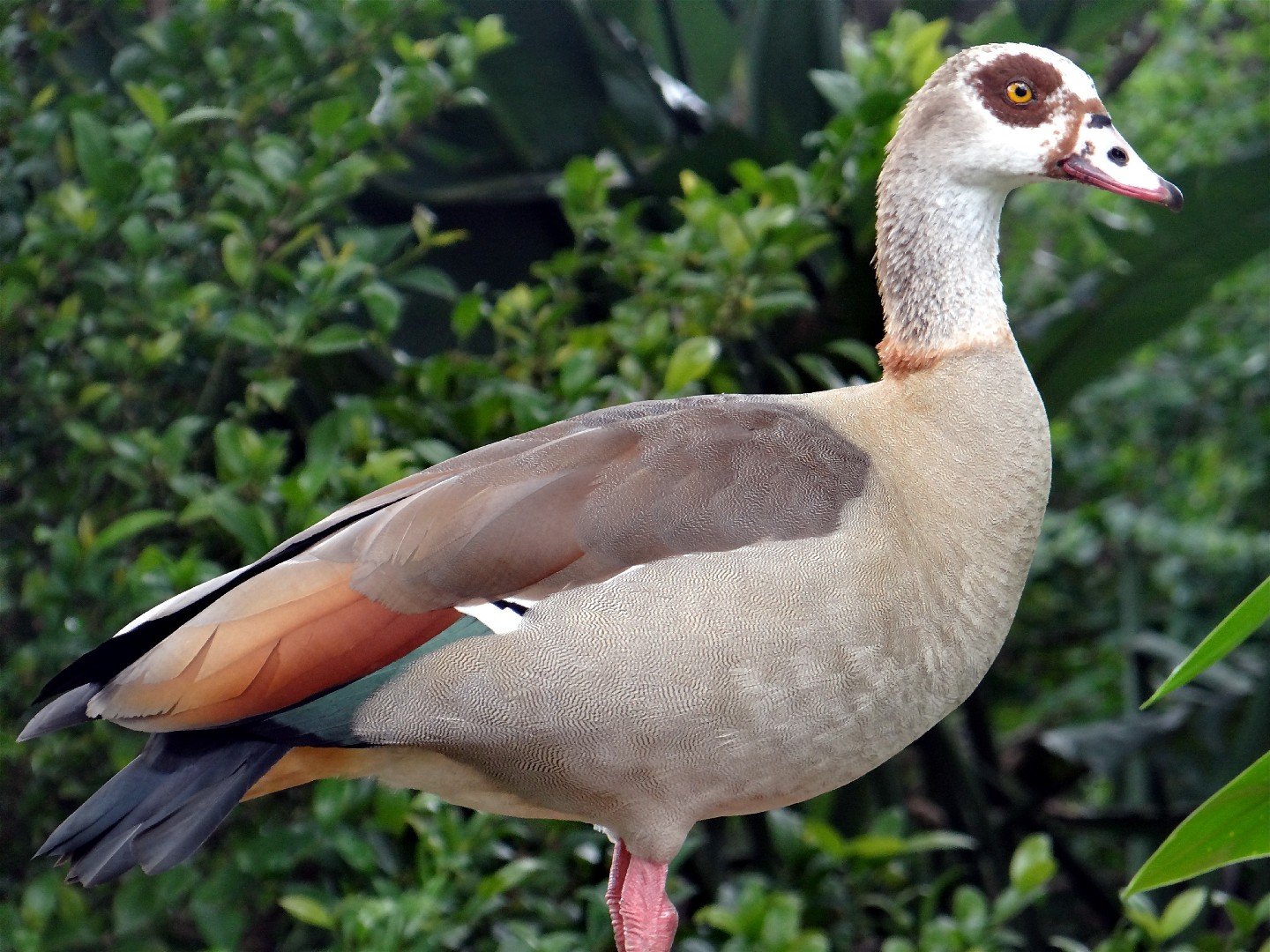
19. Egyptian Goose
The egyptian Goose is found throughout Africa and is an invasive species in Europe - specifically in the Netherlands, Belgium, Germany, and the United Kingdom. These birds are very common in most waterways throughout their natural range. Their name refers to the reverence ancient Egyptians had for the species; many ancient Egyptian artworks depict the species as well.
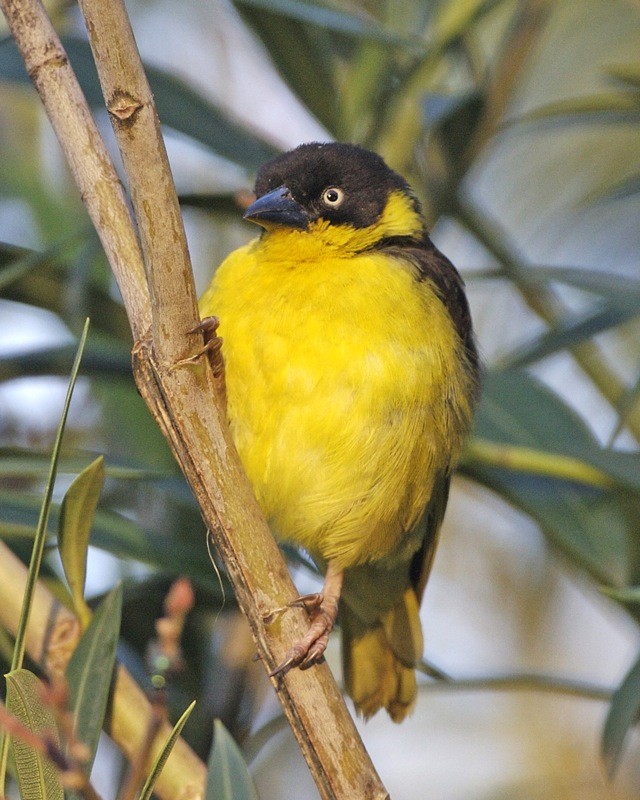
20. Baglafecht Weaver
The baglafecht weaver has a length of 15 cm (5.9 in). The adult male baglafecht weaver has a distinctive black mask which extends from the bill through the eye and onto the ear coverts contrasting with the bright yellow forehead, forecrown and throat. The upperparts are yellowish green with dark centres to the feathers creating a faint streaking. The underparts are bright yellow on the breast fading to white towards the vent. The tail is yellow washed dark brown. The bill is black and the eye is pale yellow. The female baglafecht weaver lacks a mask but has dusky lores with yellowish-green cap, concolorous with the upperparts. In the non breeding plumage the mask is largely lost but there remains a dusky area around the eye, greyish brown on the upperparts, including the crown, with white washed buff underparts. Juveniles and immature birds do not have a mask on the dark-yellowish green head. The nominate race and Emin's weaver assume a distinct non-breeding plumage, but Reichenow's weaver does not.