




Top 20 Most Common Bird in Gaza
Situated in Southern Africa, Gaza thrives on lush landscapes and a tropical climate, providing the perfect habitat for a variety of bird species. The 20 most common birds exhibit unique traits and adaptations, marked by vibrant plumage, distinctive calls or migratory behaviors shaped by Gaza's unique ecology. Through their diverse appearances and fascinating behaviors, these birds add an exclusive charm to Gaza's biodiversity.

Most Common Bird
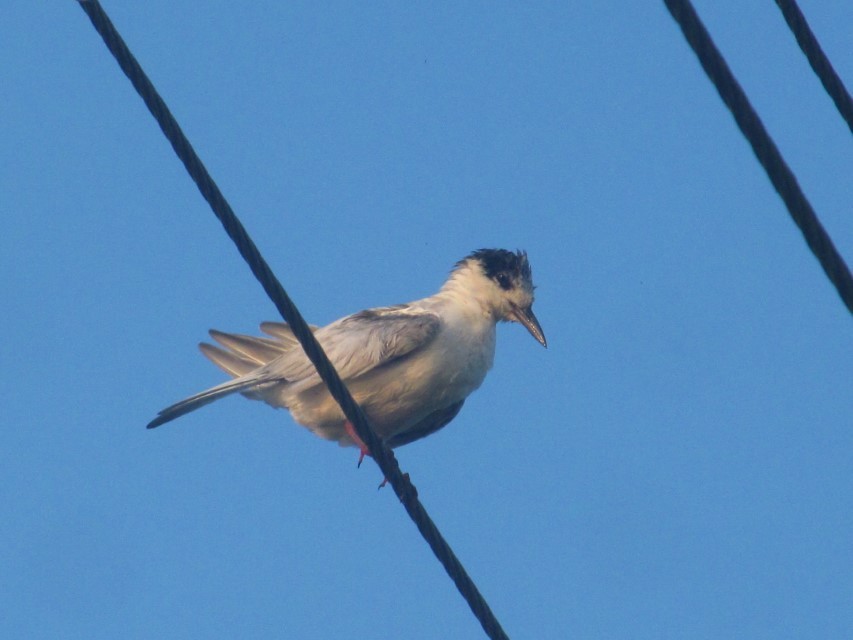
1. Whiskered Tern
The size, black cap, strong bill (29–34 mm in males, 25–27 mm and stubbier in females, with a pronounced gonys) and more positive flight recall common or Arctic tern, but the short, forked-looking tail and dark grey breeding plumage above and below are typically marsh tern characteristics. The summer adult has white cheeks and red legs and bill. The crown is flecked with white in the juvenile, and the hindcrown is more uniformly blackish, though in the winter adult this too is flecked with white. The black ear-coverts are joined to the black of the hindcrown, and the space above is mottled with white, causing the black to appear as a C-shaped band. The sides of the neck are white; this sometimes continues across the nape. The collar is less sharply defined. All through the year the rump is pale grey. In the juvenile, the mantle (279 mm) has a variegated pattern. The feathers of the back and scapulars are dark brown, with prominent broad buff edgings and often subterminal buff bars or centers. There is usually an admixture of new gray feathers, especially on the mantle, quite early in the fall. The mantle is silvery-gray in the adult. The call is a characteristic krekk. In winter, the forehead becomes white and the body plumage a much paler grey. Juvenile whiskered terns have a ginger scaly back, and otherwise look much like winter adults. The first winter plumage is intermediate between juvenile and adult winter, with patchy ginger on the back. The whiskered tern eats small fish, amphibians, insects and crustaceans. 
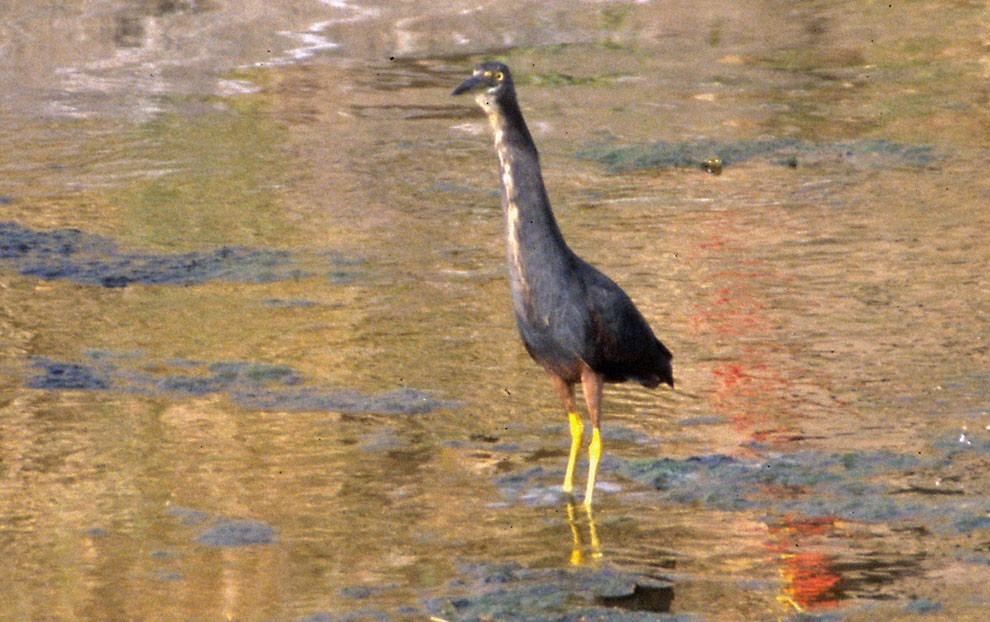
2. Rufous-bellied Heron

3. Black-winged Kite
This long-winged raptor is predominantly grey or white with black shoulder patches, wing tips and eye stripe. The long falcon-like wings extend beyond the tail when the bird is perched. In flight, the short and square tail is visible and it is not forked as in the typical kites of the genus Milvus. When perched, often on roadside wires, it often adjusts its wings and jerks its tail up and down as if to balance itself. The sexes are alike in plumage. Their large forward-facing eyes placed under a bony shelf that shades them is distinctive; their velvety plumage and zygodactyl feet are characters shared with owls and the genus has been considered as a basal group within the Accipitridae. They are thought to have been adapted for living in savanna habitats where seasonal rodent population peaks occur. Such food resources are also favoured by the owls. The inner vanes of the feathers have velvety barbules. They have a diploid chromosome number of 68 (some older studies claimed 64 for E.c.caeruleus and 66 for E.c.vociferus) with a distinct karyotype with resemblances to the kites and honey buzzards and suggesting a basal position within the diurnal birds of prey.
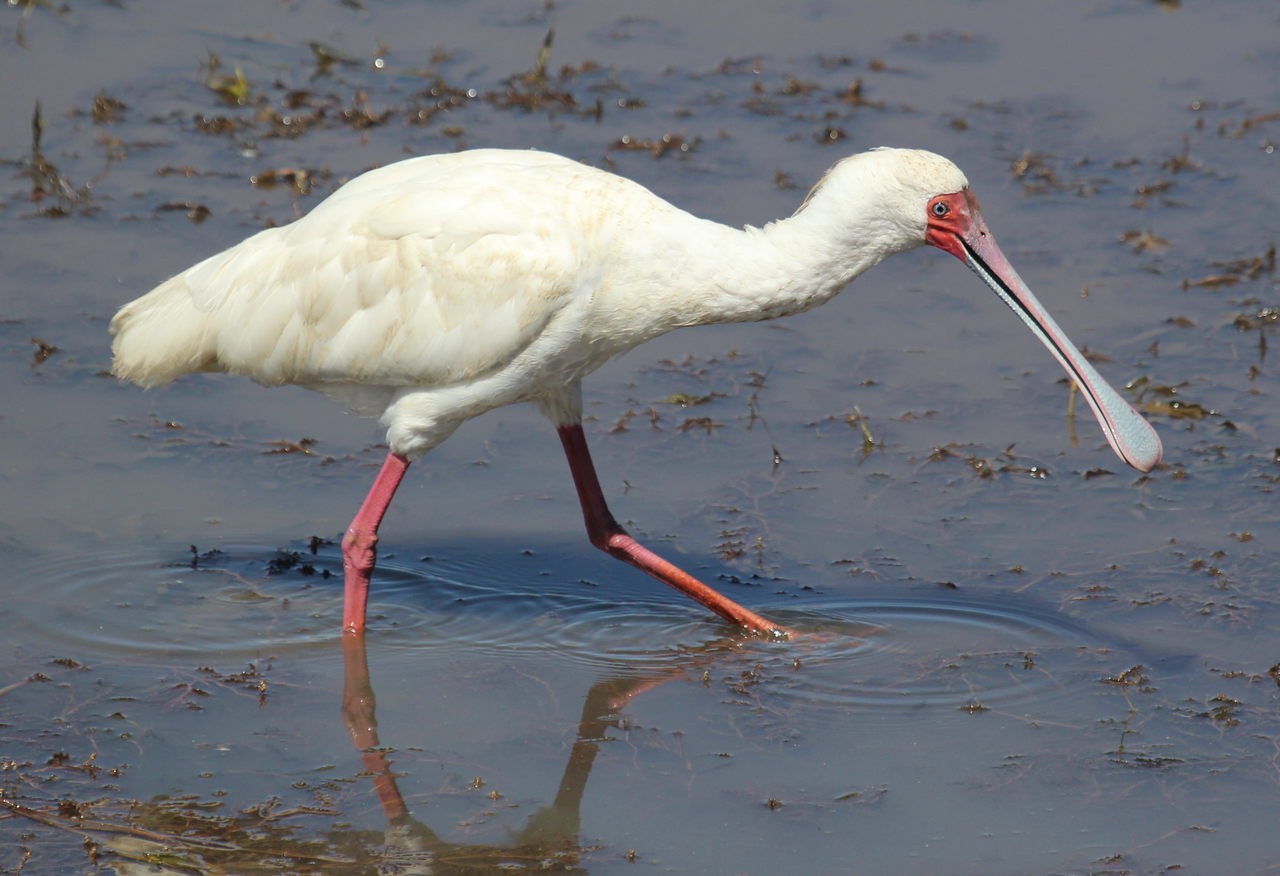
4. African Spoonbill
The African spoonbill (Platalea alba) is a long-legged wading bird of the ibis and spoonbill family Threskiornithidae. The species is widespread across Africa and Madagascar, including Botswana, Kenya, Mozambique, Namibia, South Africa, and Zimbabwe.
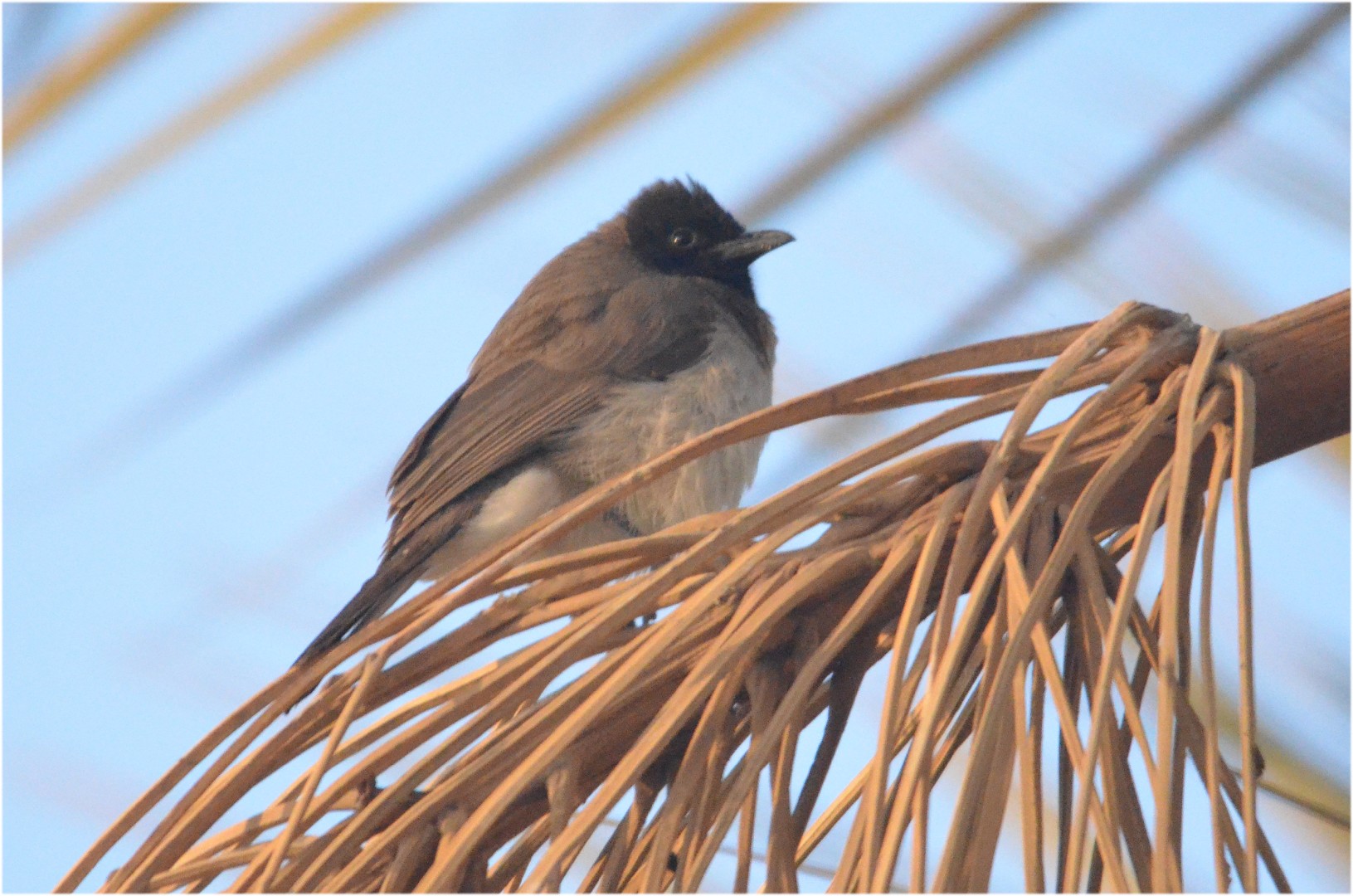
5. Common Bulbul
The bill is fairly short and thin, with a slightly downcurving upper mandible. The bill, legs, and feet are black and the eye is dark brown with a dark eye-ring, which is not readily visible. It is about 18 cm in length, with a long tail. It has a dark brown head and upperparts. Sexes are similar in plumage.
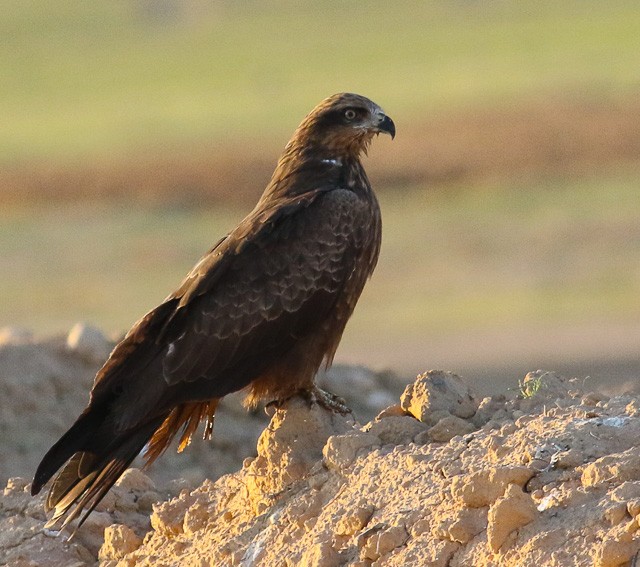
6. Black Kite
Black Kite is a bird of prey known for its aerial skills and hunting ability. Its striking appearance makes it a fascinating species to observe, and it can often be seen soaring through the skies. Black Kite is highly adaptable and can be found in a variety of habitats, making it a common sight in many areas.

7. White-faced Whistling-duck
The white-faced whistling duck a long grey bill, a long head, and longish legs. It has a black neck and head, and distinctive white face that gives them their name, though the amount of white color visible has regional variations among the species. For example, the white-faced whistling ducks with more black coloration are commonly found in western Africa where rainfall supersedes the dry season. The back and wings are dark brown to black, and the underparts are black with a fine white barring on the flanks. The neck is chestnut. Males and females have similar plumage. Juveniles are similar in color to adults, but have a much less contrasted head pattern.
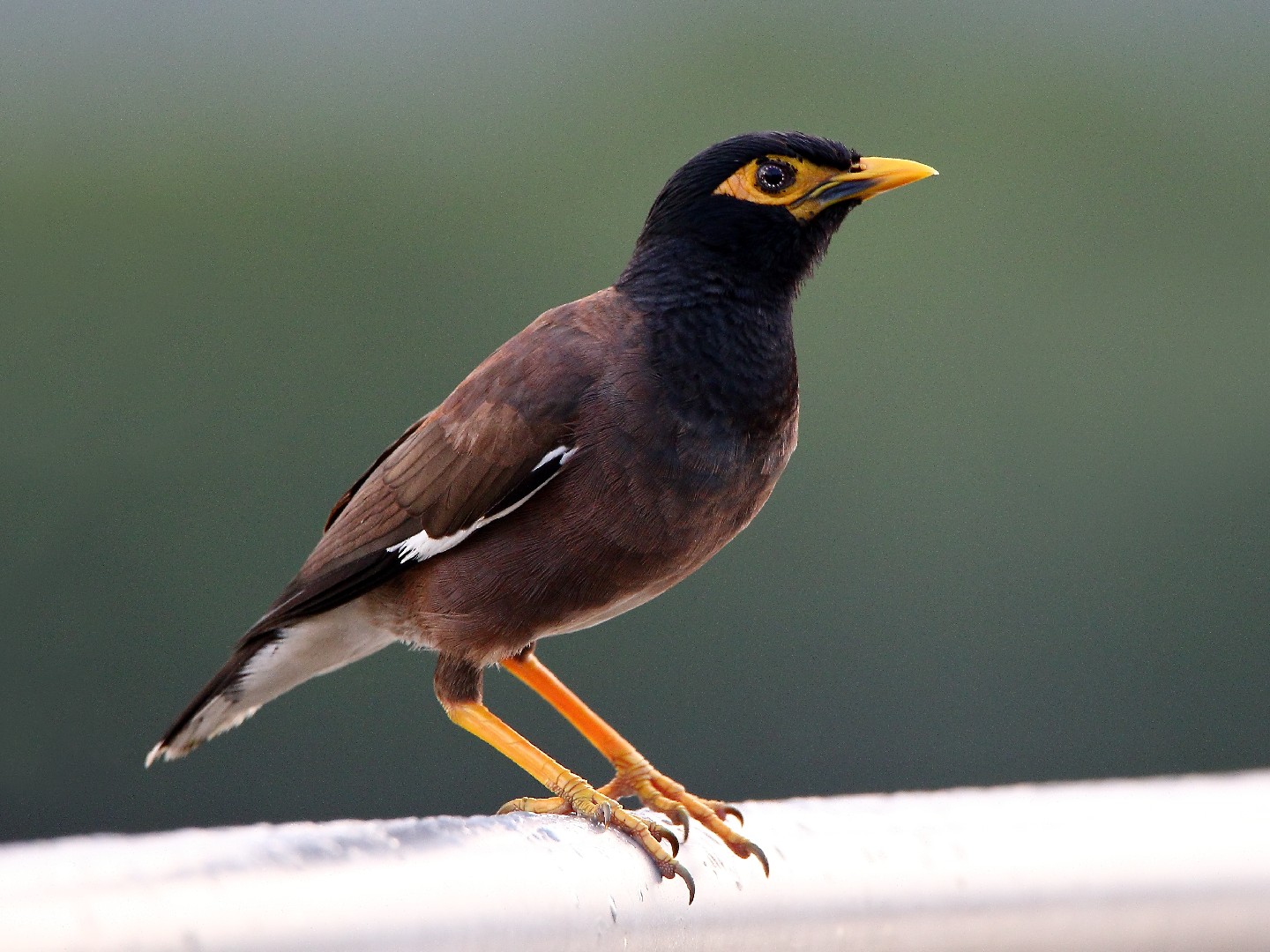
8. Common Myna
The common Myna is a large, stocky starling that prefers to live near humans in towns and suburban areas. It forages among tall grasses for grasshoppers; in fact, its scientific name, Acridotheres tristis, means "grasshopper hunter." The common Myna likes to maintain two roosts at the same time - both a temporary summer roost near the breeding site as well as a year-round roost where the female can sit and brood.
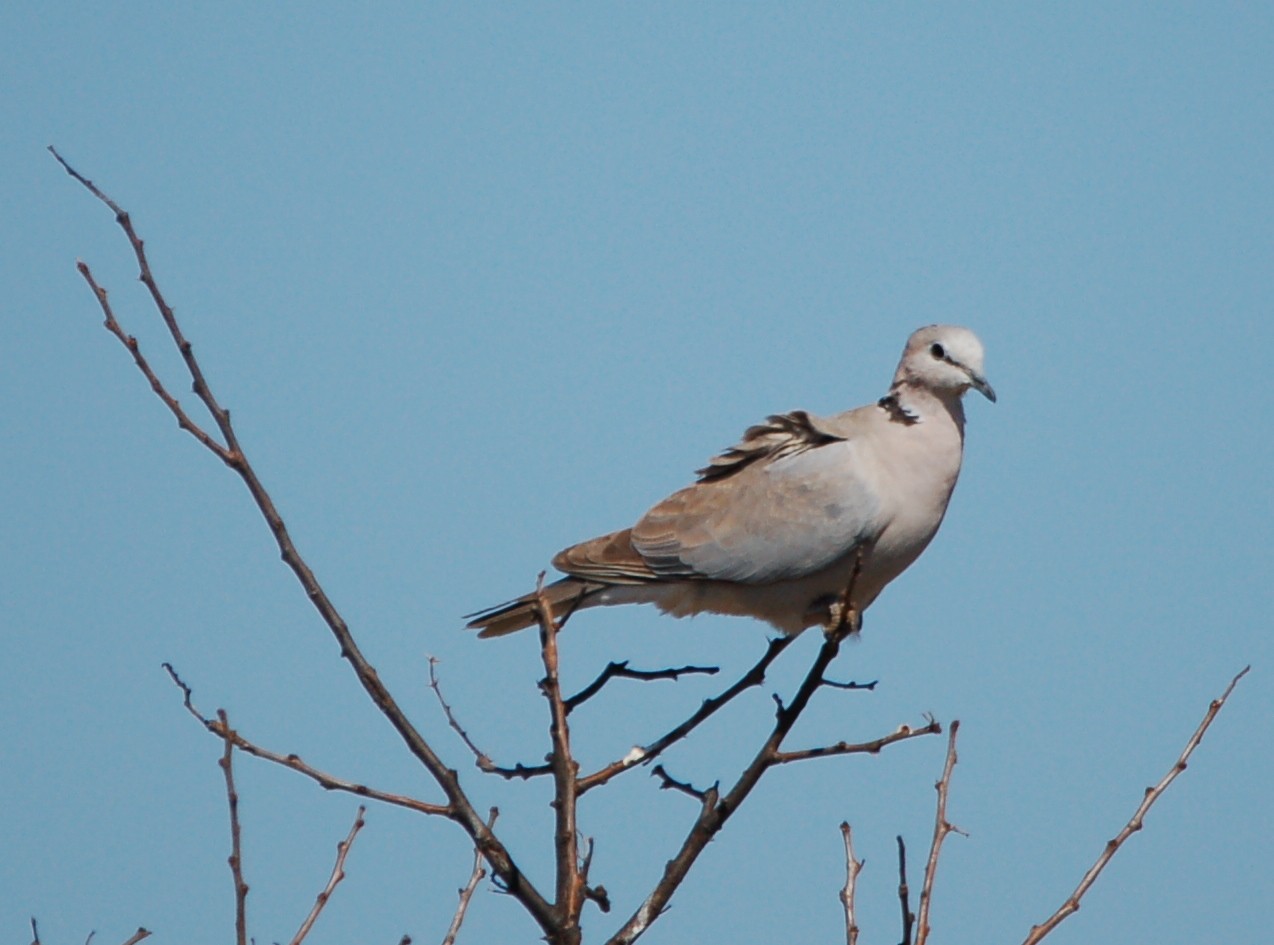
9. Ring-necked Dove
Their body feathers are darkest on the upper side, where they are coloured in dull tones of grey and brown, with shades of lavender on the nape. It is paler below, where a tint of pinkish lavender is usually present. The lower belly and crissum (the undertail coverts surrounding the cloaca) is white. As with related species, they have white fringes and conspicuous white tips to the otherwise slate grey tail feathers. The tail pattern is particularly noticeable during the display flight. Individual plumage variation is high, with some light and others almost sooty. Males and females look alike, although the males are slightly bigger. They measure 25–26.5 cm (9.8–10.4 in) in length and weigh 92–188 g (3.2–6.6 oz). The eyes are almost black, the bill is black and the feet are dark purple. An immature is duller and lacks the semi-collar of an adult. It also has buff edges to all the upper part and wing covert feathers, while the plumage below is broadly edged greyish-white.
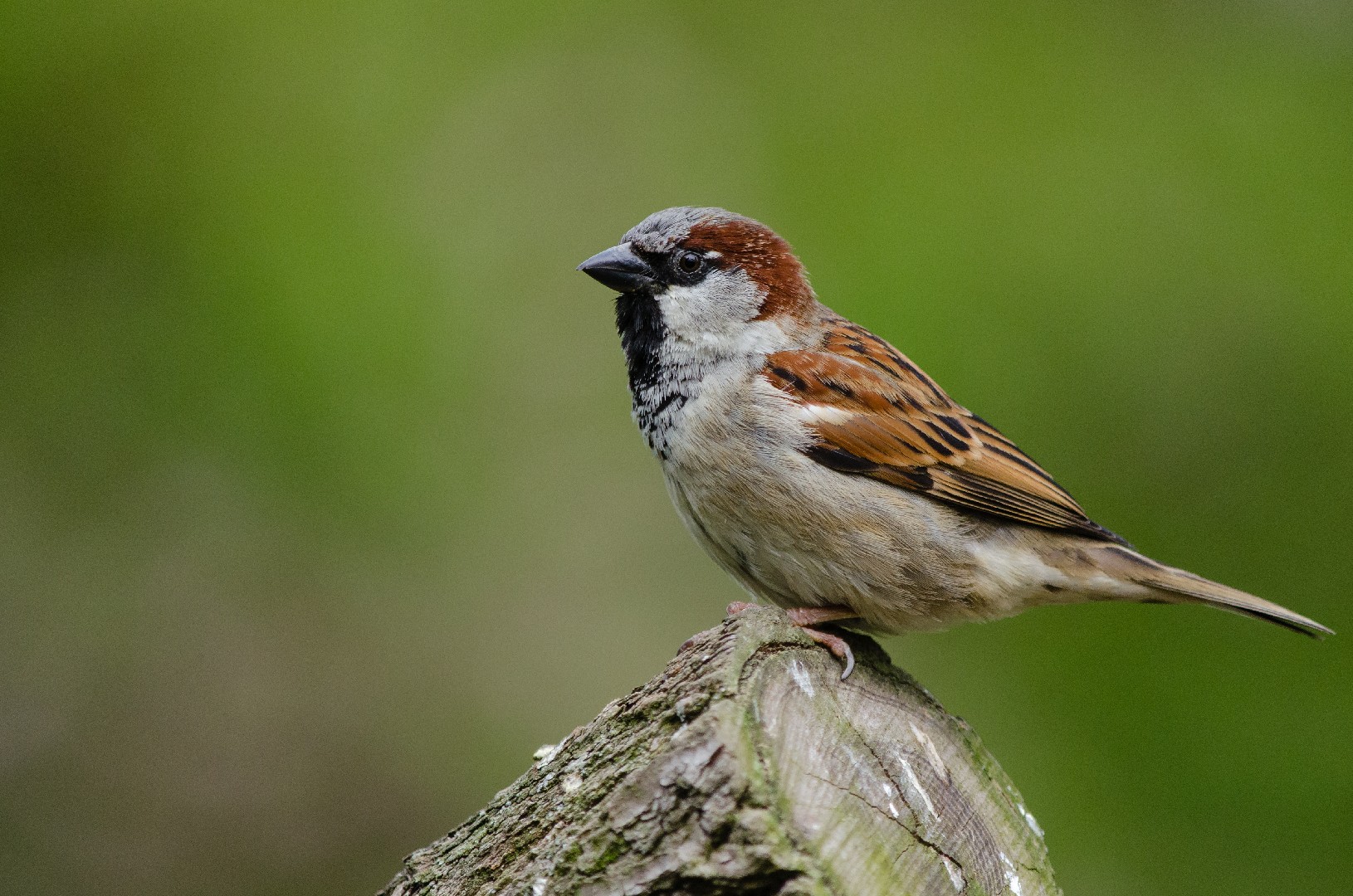
10. House Sparrow
Just as its name implies, the little house Sparrow socializes with humans more than any other bird species. Able to adapt and thrive in almost any habitat, excluding the extremes such as deserts and mountain peaks, this species was once restricted only to North Africa and Eurasia but now is found across the globe. Unfortunately, this opportunistic eater is not completely harmless—it can cause considerable damage to crops.
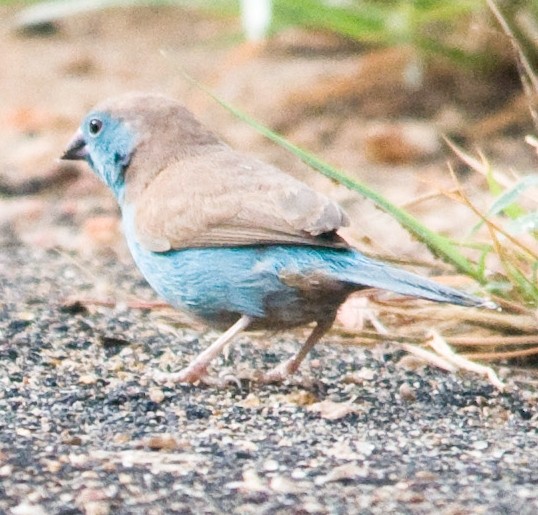
11. Blue-breasted Cordonbleu
The blue waxbill has powder-blue face, breast, rump, and flanks with pale brown upperparts. The female is paler than the male and the blue is confined to the rump, tail, head, and upper breast, with the rest of the underparts being buffy brown. They measure 12–13 cm in length.

12. Reed Cormorant
This is a small cormorant at 50–55 cm length and an 85 cm wingspan. It is mainly black, glossed green, in the breeding season. The wing coverts are silvery. It has a longish tail, a short head crest and a red or yellow face patch. The bill is yellow. Sexes are similar, but non-breeding adults and juveniles are browner, with a white belly. Some southern races retain the crest all year round.
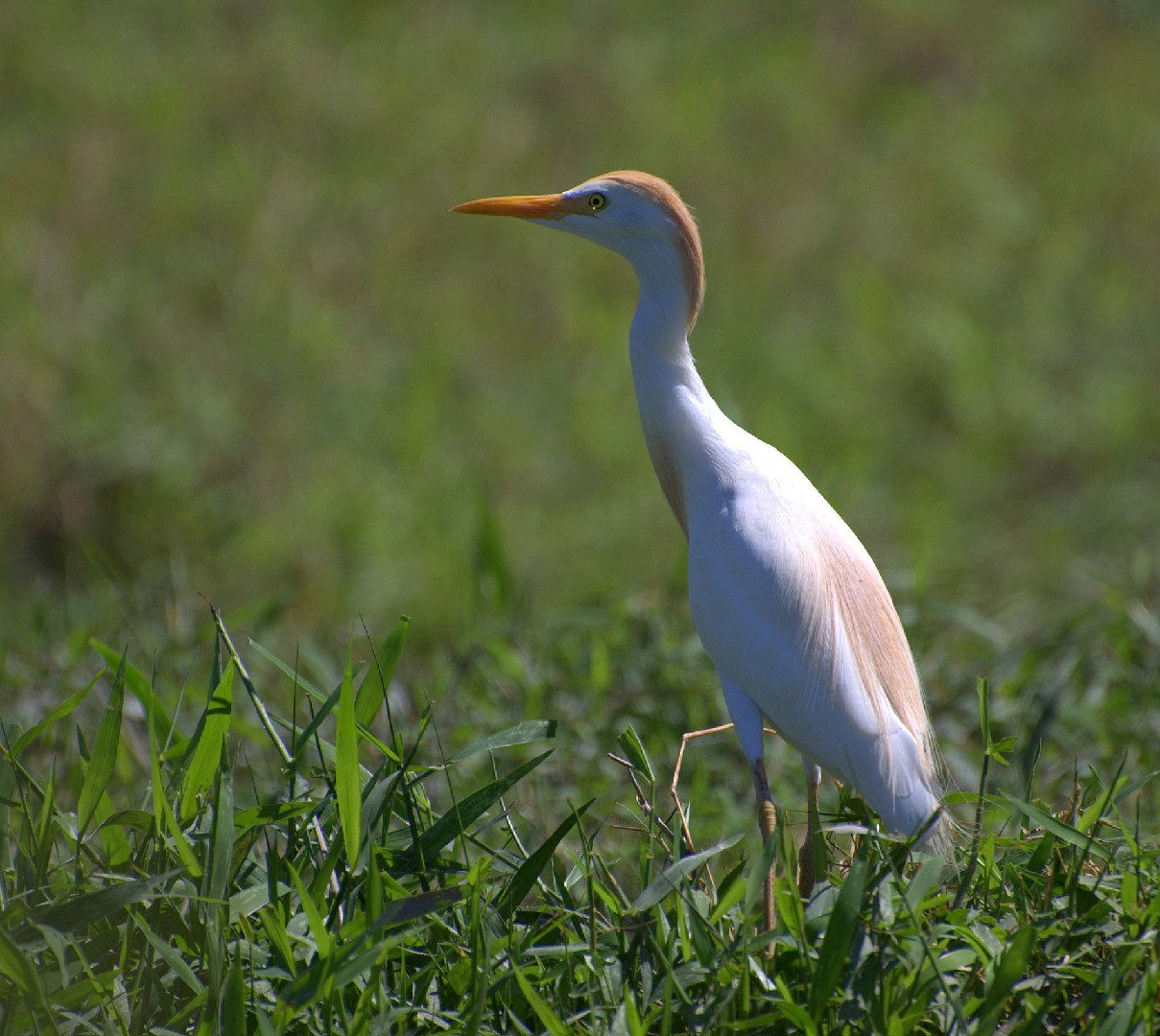
13. Cattle Egret
Cattle Egrets are short, thick-necked egrets. Their name refers to their preference to follow along with livestock as they forage in fields. Cattle Egrets were native only to Africa until the late 1800s when they somehow made their way throughout the Americas. They can often be found along airport runways waiting for planes to take off and blow insects out of the grass and weeds. They also follow behind farm equipment and do the same thing.
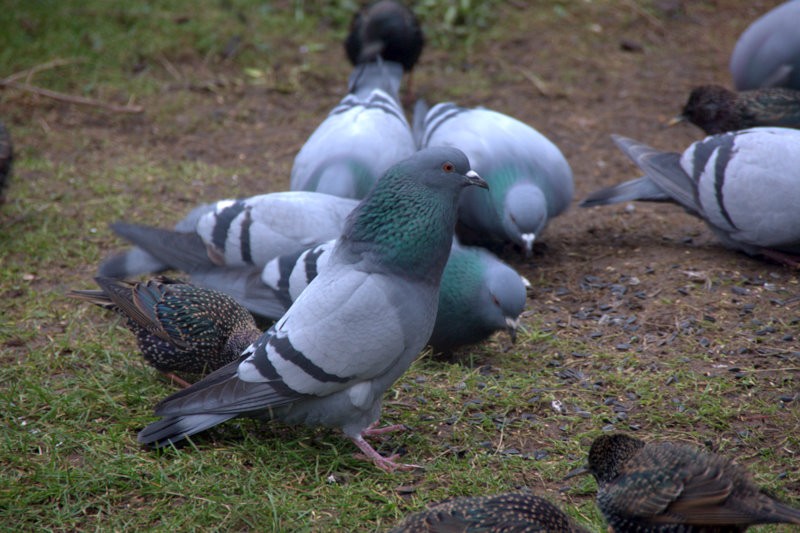
14. Rock Pigeon
The rock Pigeon is a wild ancestor of all domestic and feral pigeons, inhabiting coasts, cliffs, and caves. Pairs nest in rock crevices, often mating for life. They are known for their ability to fly very long distances to return to their homes, navigating using the sun's position and the earth's magnetic fields. Thanks to this ability, pigeons were used as messengers, particularly during World Wars I and II.
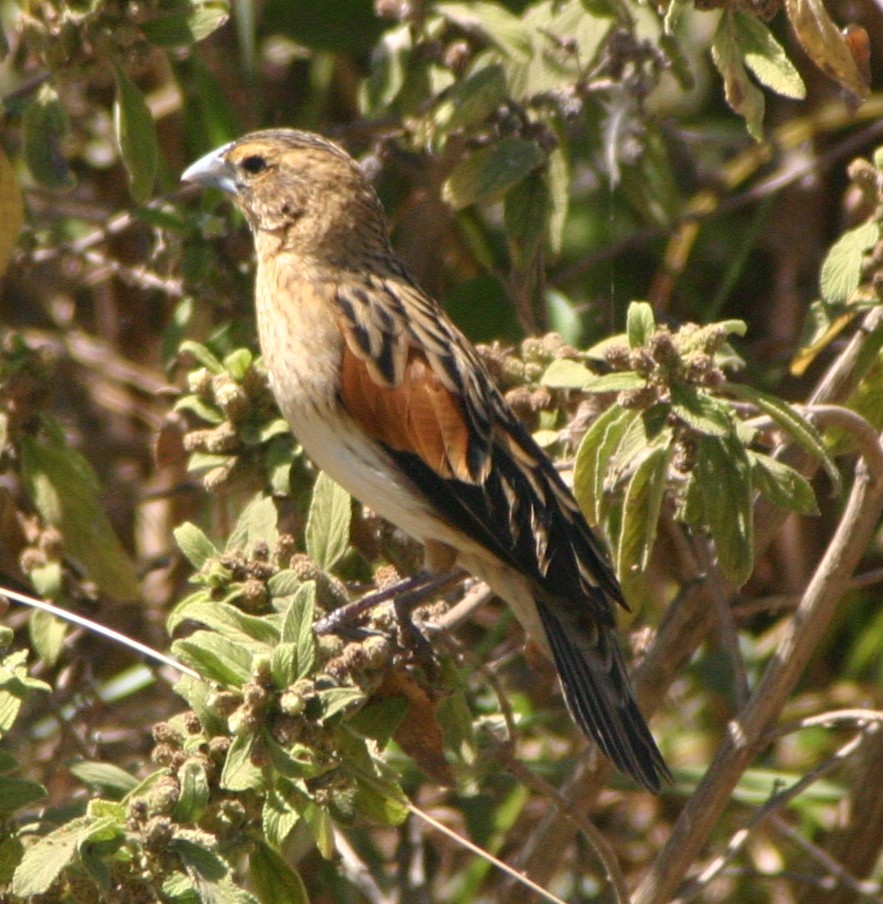
15. Fan-tailed Widowbird
The fan-tailed widowbird (Euplectes axillaris), also known as the red-shouldered widowbird, is a species of bird in the family Ploceidae, which is native to grassy and swampy areas of the tropical and subtropical Afrotropics.
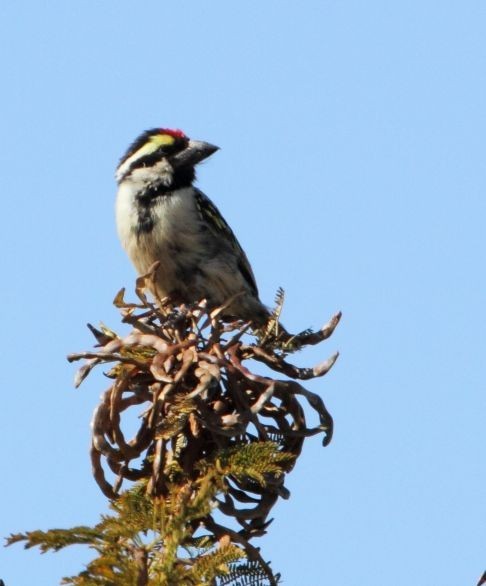
16. Acacia Pied Barbet
The acacia pied barbet has a black-and-white striped head with a red forehead and yellow colouring above the eyes. It has a black bib under the chin, with a white breast and underparts.
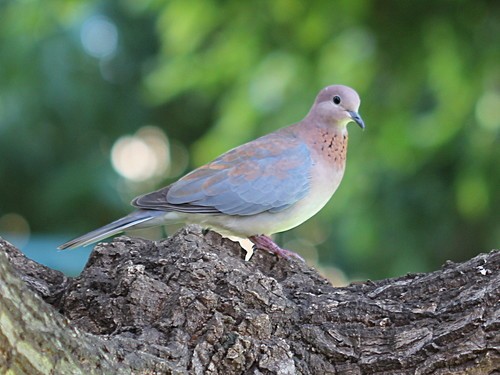
17. Laughing Dove
The laughing Dove is a small dove named after its distinctive laugh-like vocalization. This ground-feeding, non-migratory bird is a regular inhabitant of man-altered environments such as villages, gardens, and orchards. In cities, these doves tend to become quite confident. They pair for life and live in very small communities.
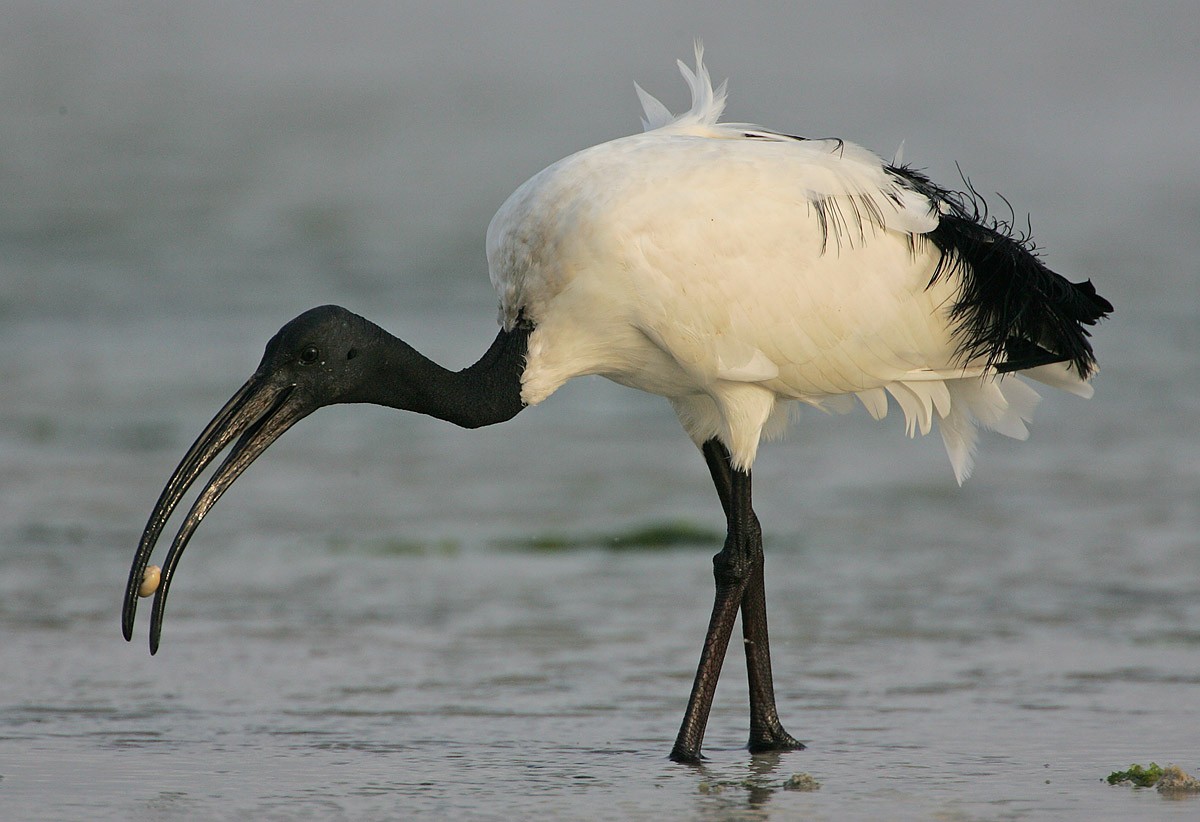
18. African Sacred Ibis
An adult individual is 68 cm (27 in) long with all-white body plumage apart from dark plumes on the rump. Wingspan is 112 to 124 cm (44 to 49 in) and body weight 1.35 to 1.5 kg (3.0 to 3.3 lb). Males are generally slightly larger than females. The bald head and neck, thick curved bill and legs are black. The white wings show a black rear border in flight. The eyes are brown with a dark red orbital ring. Sexes are similar, but juveniles have dirty white plumage, a smaller bill and some feathering on the neck, greenish-brown scapulars and more black on the primary coverts. This bird is usually silent, but occasionally makes puppy-like yelping noises, unlike its vocal relative, the hadada ibis.
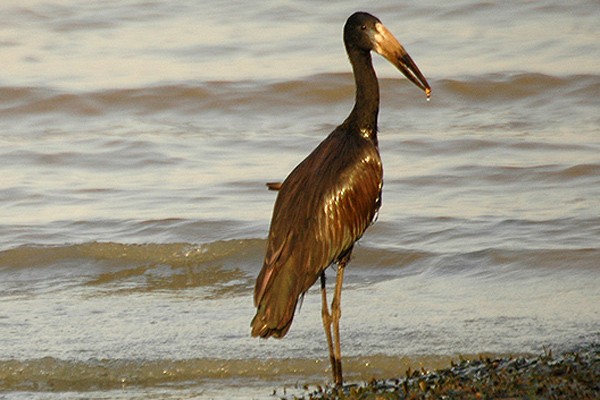
19. African Openbill
The African openbill is a stork 80–94 cm long with a weight of 1–1.3 kg. Its adult plumage is generally dark overall, with glossy green, brown, and purple on the mantle and breast. The bill is brownish and notably large. The legs are black and the eye is grey. The juvenile plumage is more dull and brown, with areas of pale feather tips.
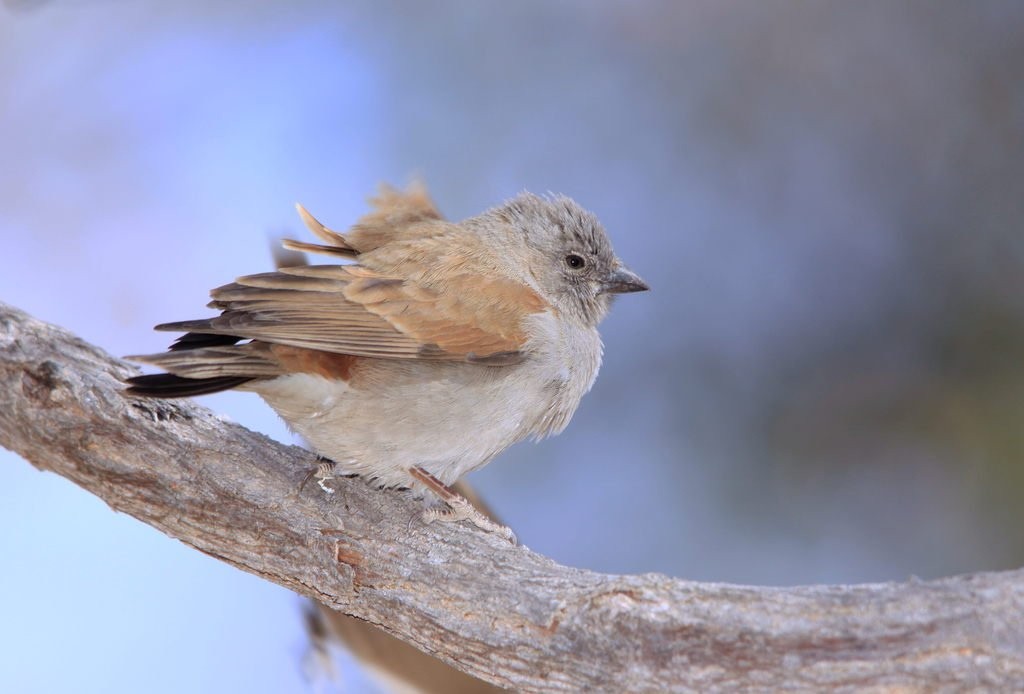
20. Southern Grey-headed Sparrow
The southern grey-headed sparrow (Passer diffusus) is a passerine bird of the sparrow family Passeridae. It is sometimes treated as a subspecies of the grey-headed sparrow. It is found in savanna and woodland in Angola and Zambia southwards into South Africa, where it is expanding its range and is kept as a caged bird, like its relative the white-rumped seedeater.