




Top 18 Most Common Bird in Nay Pyi Taw
Nestled within Myanmar's tropical landscapes, Nay Pyi Taw hosts a diverse variety of bird species. The top 18 common birds feature unique adaptations for this environment. These species are notable for their vibrant coloration, varied calls, and distinct behaviors - fascinating aspects that allow them to thrive in the region's lush vegetation, grand water bodies, and sprawling plains.

Most Common Bird
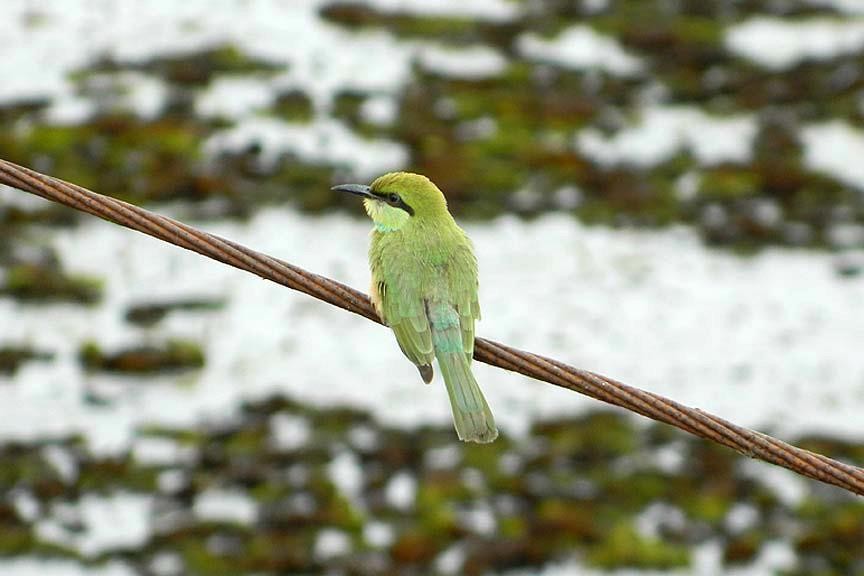
1. Little Green Bee-eater
The entire plumage is bright green and tinged with blue especially on the chin and throat. The crown and upper back are tinged with golden rufous. The flight feathers are rufous washed with green and tipped with blackish. A fine black line runs in front of and behind the eye. The iris is crimson and the bill is black while the legs are dark grey. The feet are weak with the three toes joined at the base. The wings are green and the beak is black. The sexes are not visually distinguishable. 
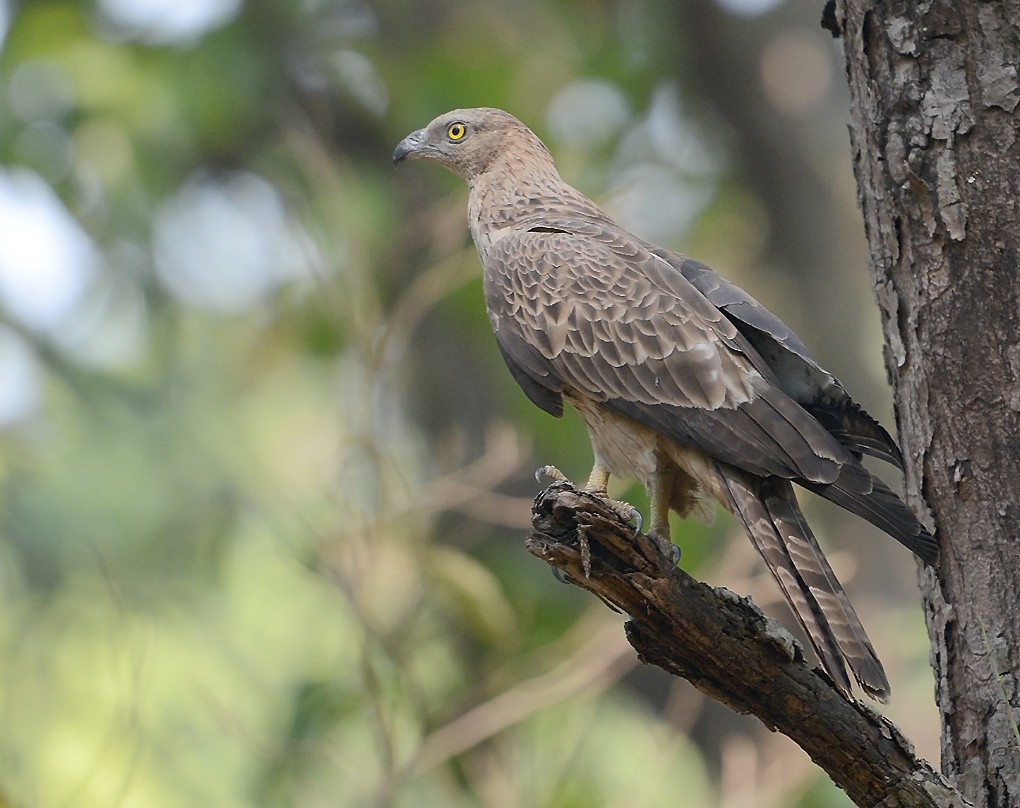
2. Oriental Honey-buzzard
Despite its name, this species is not related to Buteo buzzards, and is taxonomically closer to the kites. It appears long-necked with a small head (resembling that of a pigeon), and soars on flat wings. The head lacks a strong superciliary ridge, giving it a facial appearance very unlike a raptor. It has a long tail and a short head crest. It is brown above, but not as dark as European honey buzzard, and paler below. A dark throat stripe is present. Unusually for a large bird of prey, the sexes can be distinguished. The male has a blue-grey head, while the female's head is brown. She is slightly larger and darker than the male. The male has a black tail with a white band. It breeds in Asia from central Siberia east to Japan. It is a summer migrant to Siberia, wintering in tropical Southeast Asia. Elsewhere, it is more-or-less resident. It is a specialist feeder, living mainly on the larvae of social bees and wasps, and eating bits of comb and honey; it takes other small insect prey such as cicadas. The crested honey buzzard breeds in woodland, and is inconspicuous except in the spring, when the mating display includes wing-clapping. The display of roller-coasting in flight and fluttering wings at the peak of the ascent are characteristic of the genus Pernis. It is larger and longer-winged than its western counterpart, the European honey buzzard, Pernis apivorus.

3. Black-winged Kite
This long-winged raptor is predominantly grey or white with black shoulder patches, wing tips and eye stripe. The long falcon-like wings extend beyond the tail when the bird is perched. In flight, the short and square tail is visible and it is not forked as in the typical kites of the genus Milvus. When perched, often on roadside wires, it often adjusts its wings and jerks its tail up and down as if to balance itself. The sexes are alike in plumage. Their large forward-facing eyes placed under a bony shelf that shades them is distinctive; their velvety plumage and zygodactyl feet are characters shared with owls and the genus has been considered as a basal group within the Accipitridae. They are thought to have been adapted for living in savanna habitats where seasonal rodent population peaks occur. Such food resources are also favoured by the owls. The inner vanes of the feathers have velvety barbules. They have a diploid chromosome number of 68 (some older studies claimed 64 for E.c.caeruleus and 66 for E.c.vociferus) with a distinct karyotype with resemblances to the kites and honey buzzards and suggesting a basal position within the diurnal birds of prey.
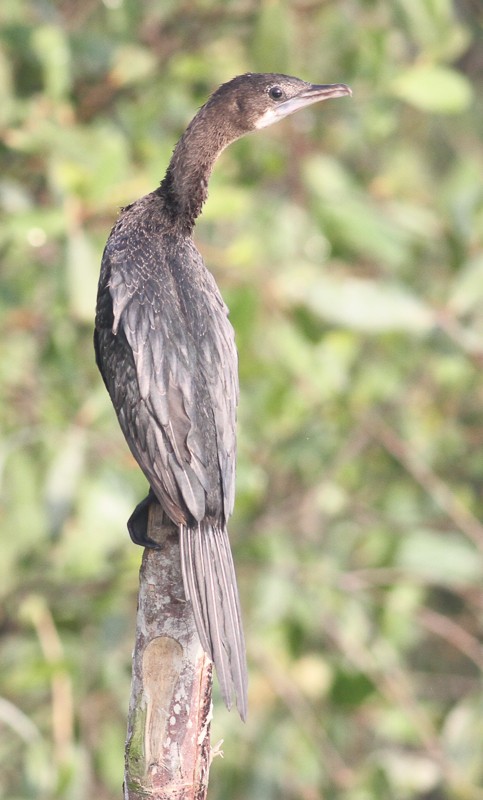
4. Little Cormorant
The little cormorant is about 50 centimetres (20 in) long and only slightly smaller than the Indian cormorant (Phalacrocorax fuscicollis). The Indian cormorant has a narrower and longer bill which ends in a prominent hook tip, blue iris and a more pointed head profile. The breeding adult bird has a glistening all black plumage with some white spots and filoplumes on the face. There is also a short crest on the back of the head. The eyes, gular skin and face are dark. In the non-breeding bird or juvenile, the plumage is brownish and the bill and gular skin can appear more fleshy. The crest becomes inconspicuous and a small and well-marked white patch on the throat is sometimes visible. Towards the west of the Indus River valley, its range can overlap with vagrant pygmy cormorants (Microcarbo pygmaeus), which can be difficult to differentiate in the field and are sometimes even considered conspecific. The sexes are indistinguishable in the field, but males tend to be larger. Some abnormal silvery-grey plumages have been described. The species was described by Vieillot in 1817 as Hydrocorax niger. The genus Hydrocorax literally means water crow. It was later included with the other cormorants in the genus Phalacrocorax but some studies place the smaller "microcormorants" under the genus Microcarbo.
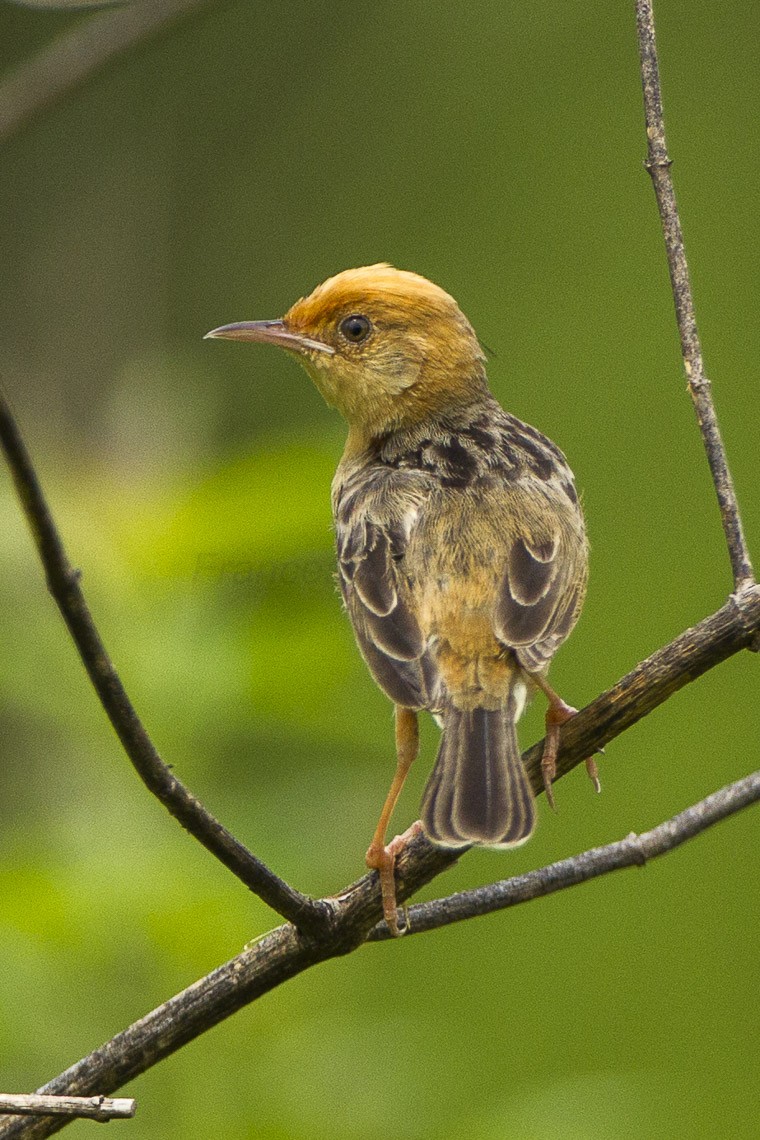
5. Golden-headed Cisticola
The golden-headed cisticola is a small species, growing to 9–11.5 centimetres (3.5–4.5 in) long and weighing 6–10 grams (0.21–0.35 oz), with males slightly heavier than females. Although its appearance is similar to the black-backed cisticola (Cisticola eximius), the golden-headed cisticola has a shorter tail during the breeding season. The zitting cisticola (Cisticola juncidis) is also similar, but does not have the "rich golden" head of the golden-headed cisticola. The male has several characteristics that are only present during the breeding season, including a golden body colour, a golden-orange head, and a dull chin. It also has a shorter tail; this may be a result of sexual selection as a shorter tail has been shown to improve male reproductive success. Females and males outside of the breeding season are similar in appearance, characterized by a cream-coloured underside and a brown upperside. They have streaks of black or dark brown on the upper part of their body, black wings, and a golden head. Their throat is white and the back of their neck is a dull shade of gold. Aside from being lighter in colour, juveniles are similar in appearance to adults. When vocalizing the species exhibits a crest on its head.
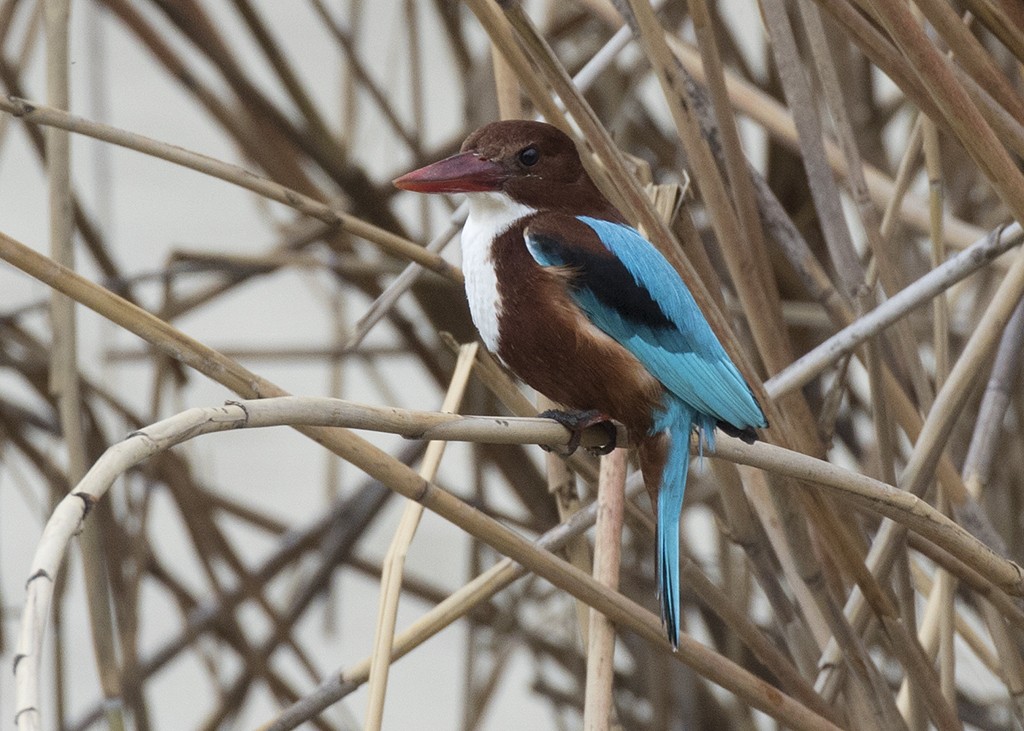
6. White-throated Kingfisher
The white-throated Kingfisher is a brightly colored bird with a distinctive white throat and blue wings. It inhabits rivers, lakes, and coastal areas, and feeds on a variety of prey such as fish, frogs, and insects. The kingfisher is known for its bold, dive-bombing hunting style, diving from a perch to catch prey in the water. During the breeding season, the White-throated Kingfisher is known for its loud, cackling call. This species is widely distributed across Asia.
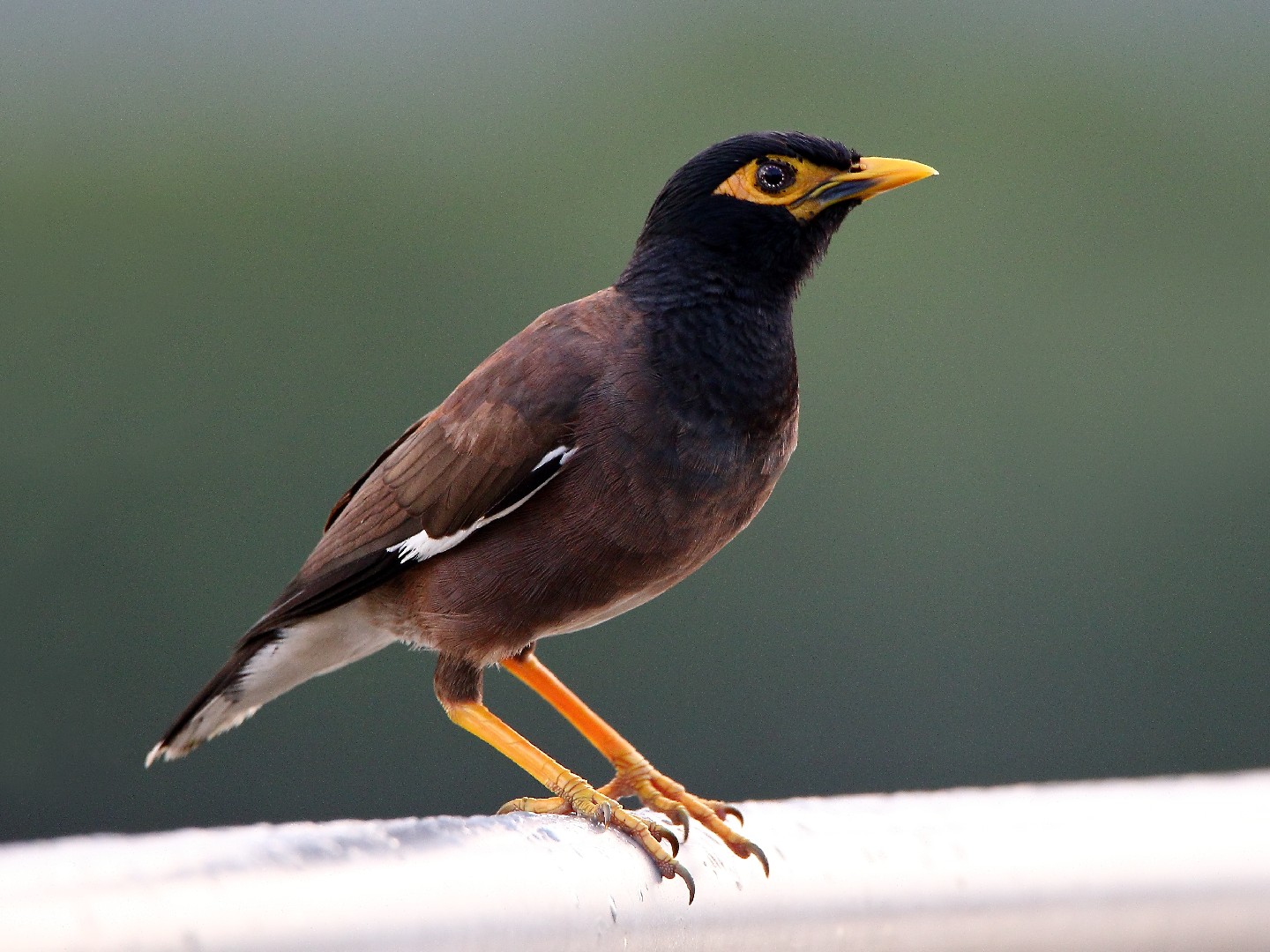
7. Common Myna
The common Myna is a large, stocky starling that prefers to live near humans in towns and suburban areas. It forages among tall grasses for grasshoppers; in fact, its scientific name, Acridotheres tristis, means "grasshopper hunter." The common Myna likes to maintain two roosts at the same time - both a temporary summer roost near the breeding site as well as a year-round roost where the female can sit and brood.
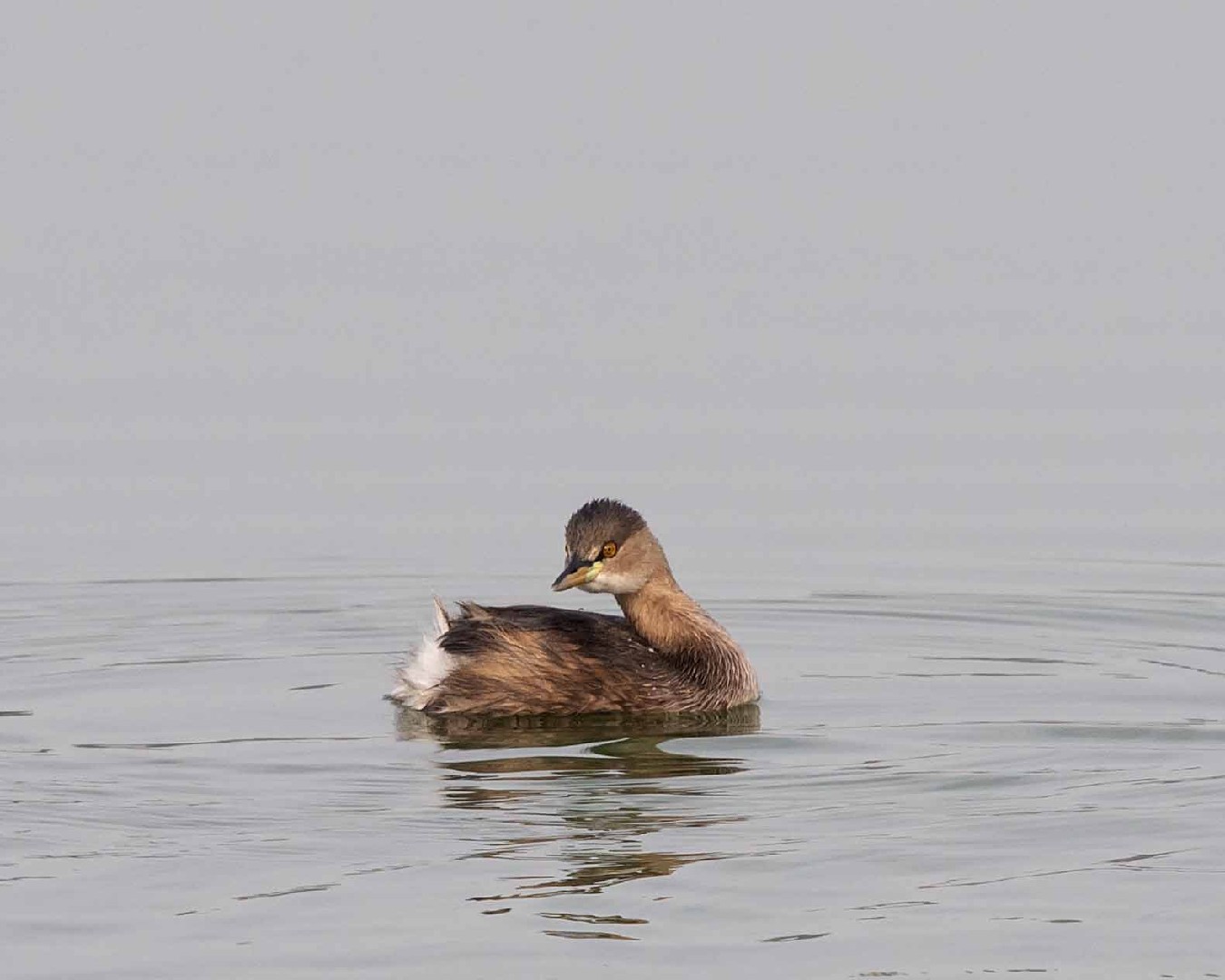
8. Little Grebe
The little Grebe is a diving bird that is easy to miss. Not only is it a small bird with inconspicuous coloring, but it is also shy. The bird prefers hiding in grasses and reeds, instead of being out on the open water. However, the bird is identifiable by its loud trills.
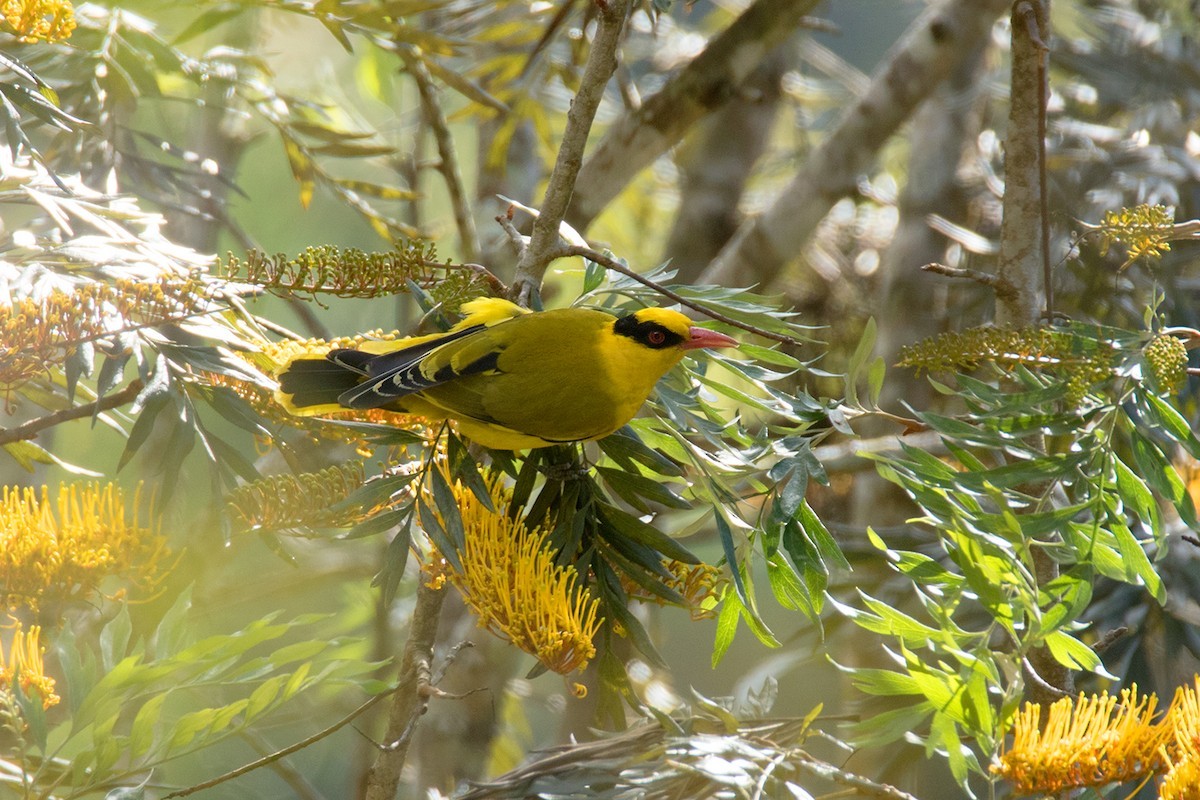
9. Slender-billed Oriole
The slender-billed oriole (Oriolus tenuirostris) is a species of bird in the family Oriolidae found from the eastern Himalayas to Southeast Asia. Its natural habitats are subtropical or tropical moist lowland forests and subtropical or tropical moist montane forests.
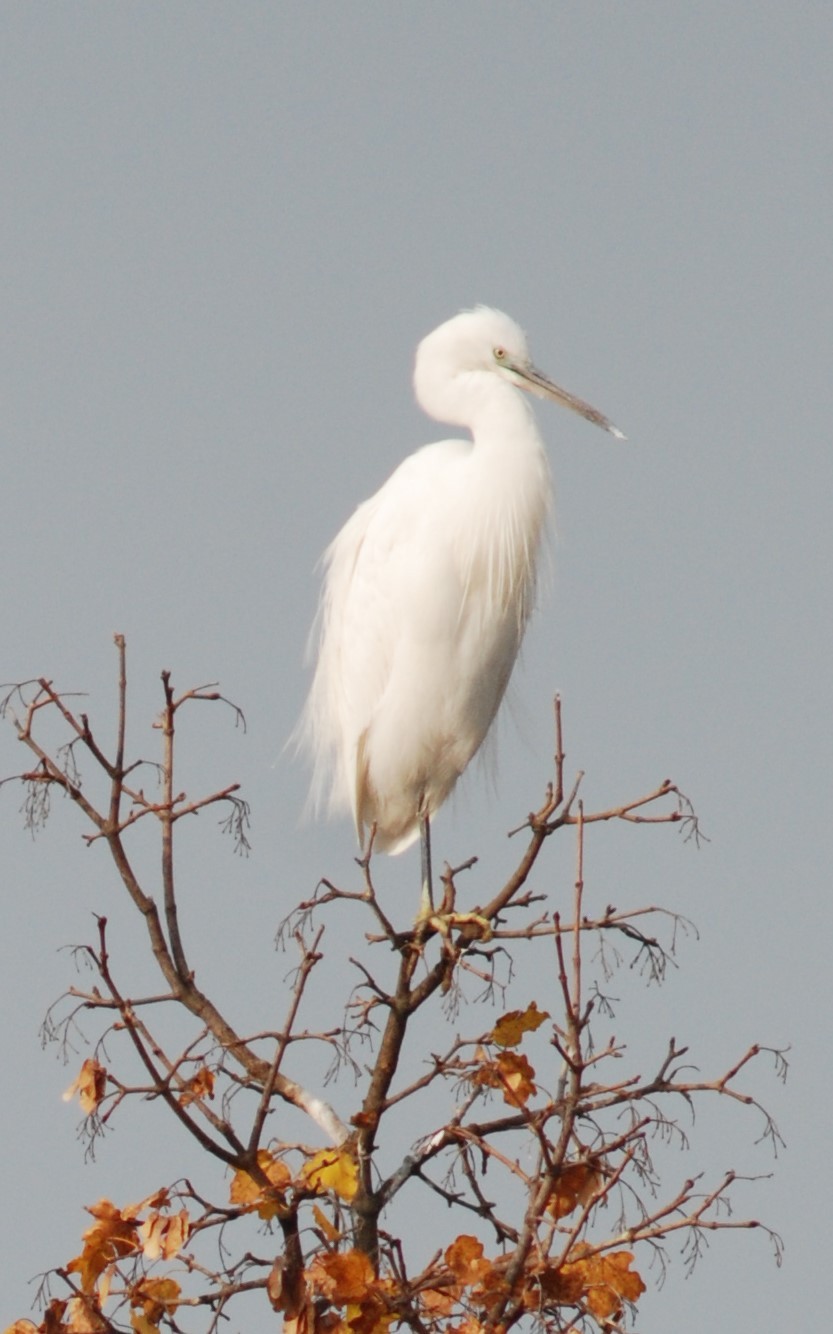
10. Little Egret
The small size of the little Egret makes the bird easily recognizable among larger species that share the same range. The egret is seen almost anywhere there are small fish including marshes, estuaries, and rivers. The bird often searches for food by itself but prefers to build nests in communities, occasionally with other bird species.
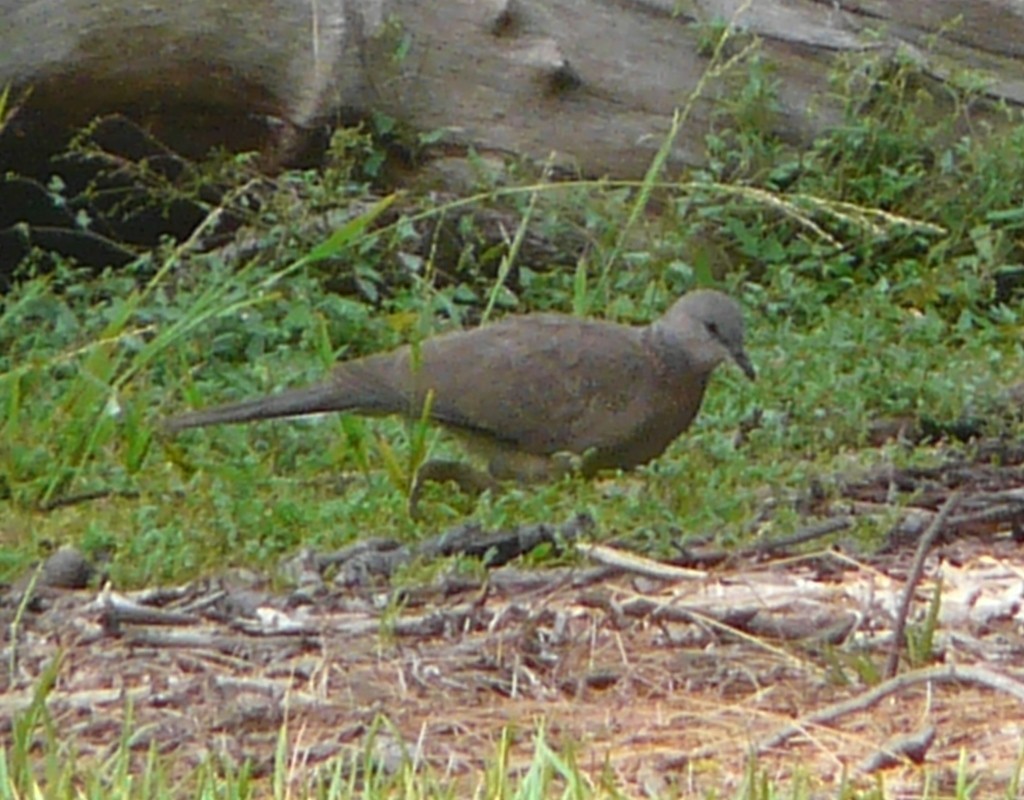
11. Spotted Dove
The spotted Dove is a medium-sized bird that is swift in flight. It prefers to live year-round in warm climates in suburban areas, especially in parks. Their nests are mostly made out of sticks and they like to dine on insects and seeds.

12. Ayeyarwady Bulbul
The Ayeyarwady bulbul (Pycnonotus blanfordi) is a member of the bulbul family of passerine birds. It is endemic to Myanmar. Its natural habitat is subtropical or tropical moist lowland forests. Until 2016, the Ayeyarwady bulbul was considered to be conspecific with the streak-eared bulbul (now Pycnonotus conradi).
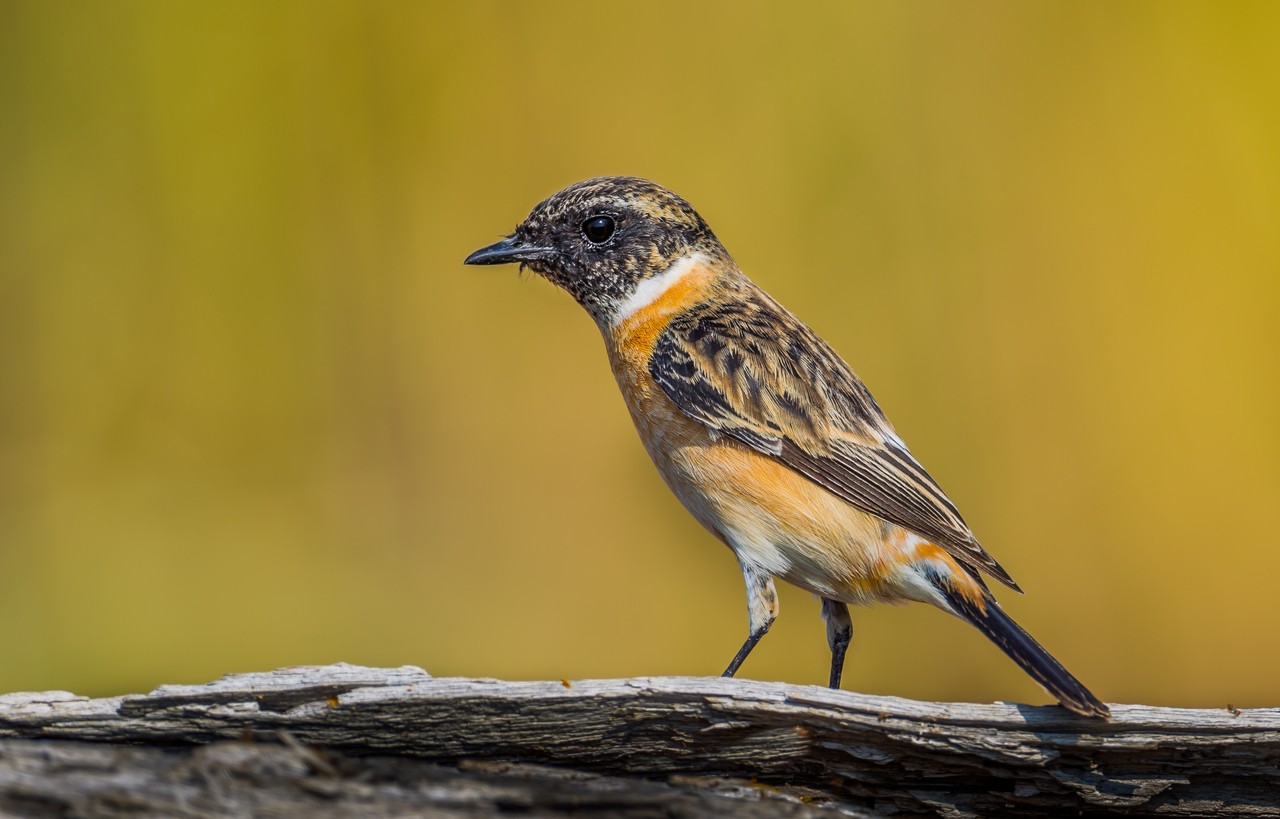
13. Amur Stonechat
It resembles its closest living relative the European stonechat (S. rubicola), but is typically darker above and paler below, with a white rump and whiter underparts with less orange on the breast. The male in breeding plumage has black upperparts and head (lacking the brownish tones of the European stonechat), a conspicuous white collar, scapular patch and rump, and a restricted area of orange on the throat. The female has pale brown upperparts and head, white neck patches (not a full collar), and a pale, unstreaked pinkish-yellow rump. Males in winter plumage are intermediate between summer males and females, with a supercilium resembling the whinchat (S. rubetra); from this species and the female it can be distinguished by the full white collar. If seen at close distance, it can be recognized that its primary remiges are distinctly longer than in S. rubicola. In this, it closely resembles the whinchat, which like S. maurus is adapted to long-distance migrations. The male has a clicking call, like two pebbles knocked together. The song is high and twittering like the dunnock (Prunella modularis), an unrelated passeridan songbird belonging to the Passeroidea. There are five or six subspecies, with S. m. maurus (described above) and the distinct but similar S. m. stejnegeri found across northern and central Asia. The southern S. m. variegatus (west of the Caspian Sea), S. m. armenicus (eastern Turkey to Iran), S. m. indicus (Himalaya) and the Turkestan stonechat S. m. przewalskii (southwest China) are distinguished by larger white areas on the plumage. In the past, S. maurus was usually included in S. torquatus as part of the "common stonechat", but that scientific name nowadays is restricted to the African stonechat. Analysis of mtDNA cytochrome b sequence and nDNA microsatellite fingerprinting data, though not unequivocal, together with the evidence from morphology, behaviour and biogeography seems to indicate that the present bird can be considered a distinct species. The European stonechat is its western sister species in the Eurasian lineage of stonechats; their ancestors separated during the Late Pliocene or Early Pleistocene, roughly 1.5-2.5 million years ago at the onset of the Quaternary glaciation. Its scientific name means "dark rock-dweller". Saxicola derives from Latin saxum "rock" + incola "inhabitant"; maurus is Latinized from Greek maúros (μαύρος) "black" (cf. "moor"), in reference to the upperpart colour as compared to S. rubicola.
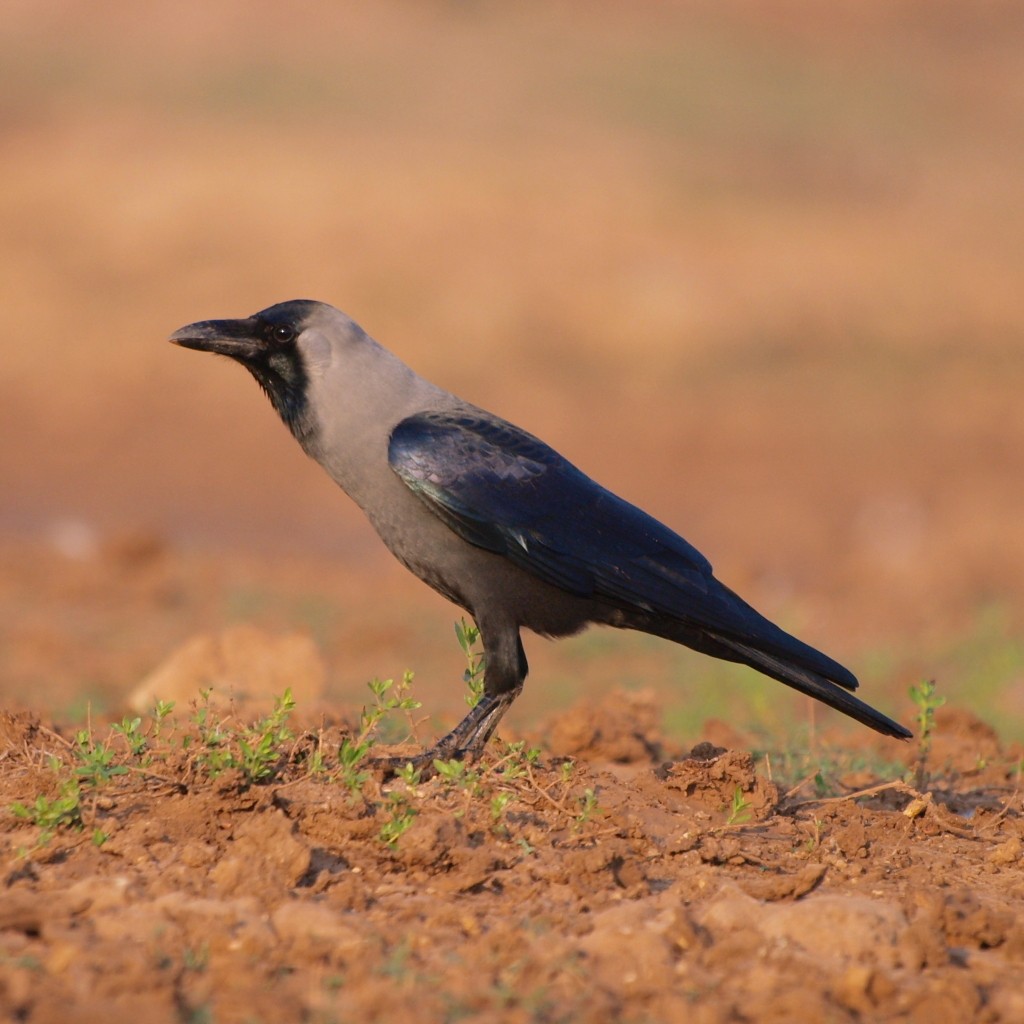
14. House Crow
The house Crow is an intelligent bird that is near becoming a declared invasive species. The house Crow is very common in developed areas and can have a bold, aggressive personality. These birds have been known to damage and steal crops, affect local flora and fauna, create excessive noise, and carry diseases and parasites.
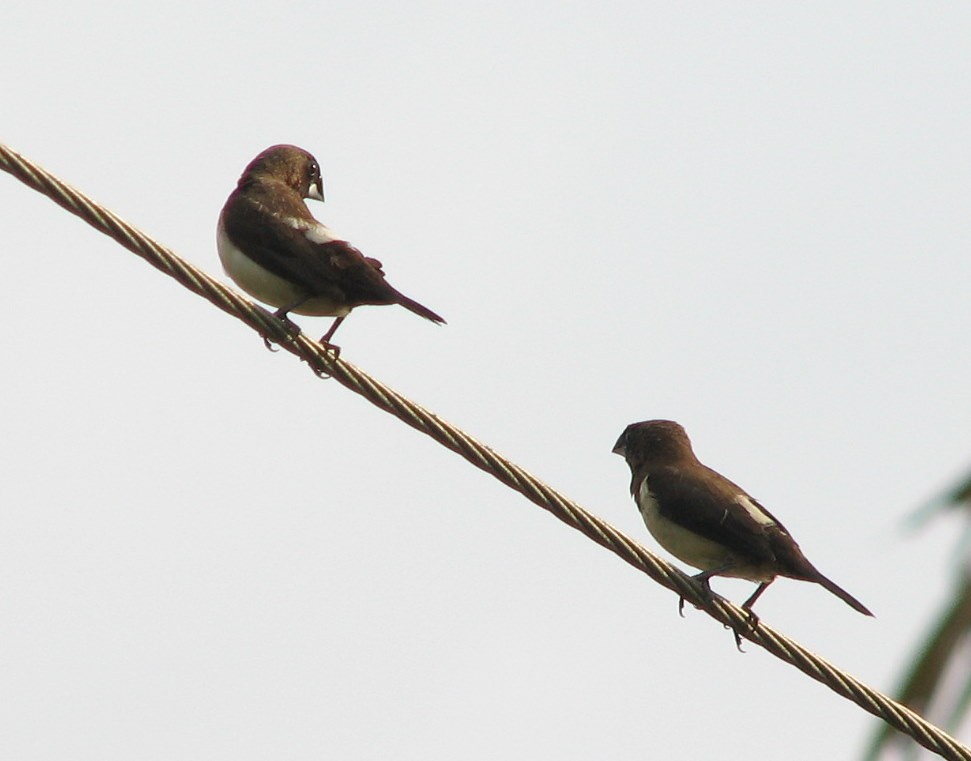
15. White-rumped Munia
The white-rumped munia is approximately 10 to 11 cm in length, with a stubby grey bill and a long black pointed tail. The adults are brown above and on the breast, and lighter below; the rump is white. There is some variation between the subspecies, but the sexes are almost impossible to distinguish in all subspecies; males have a more bulky head and bill.
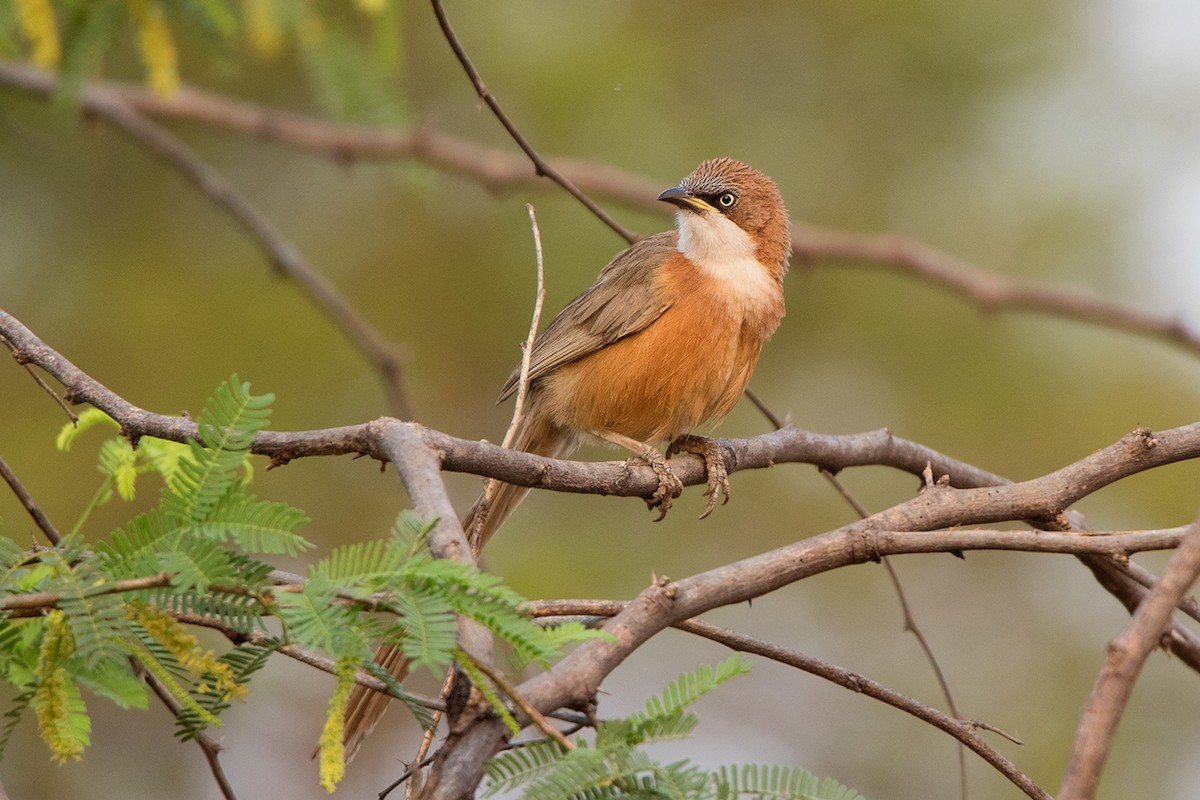
16. White-throated Babbler
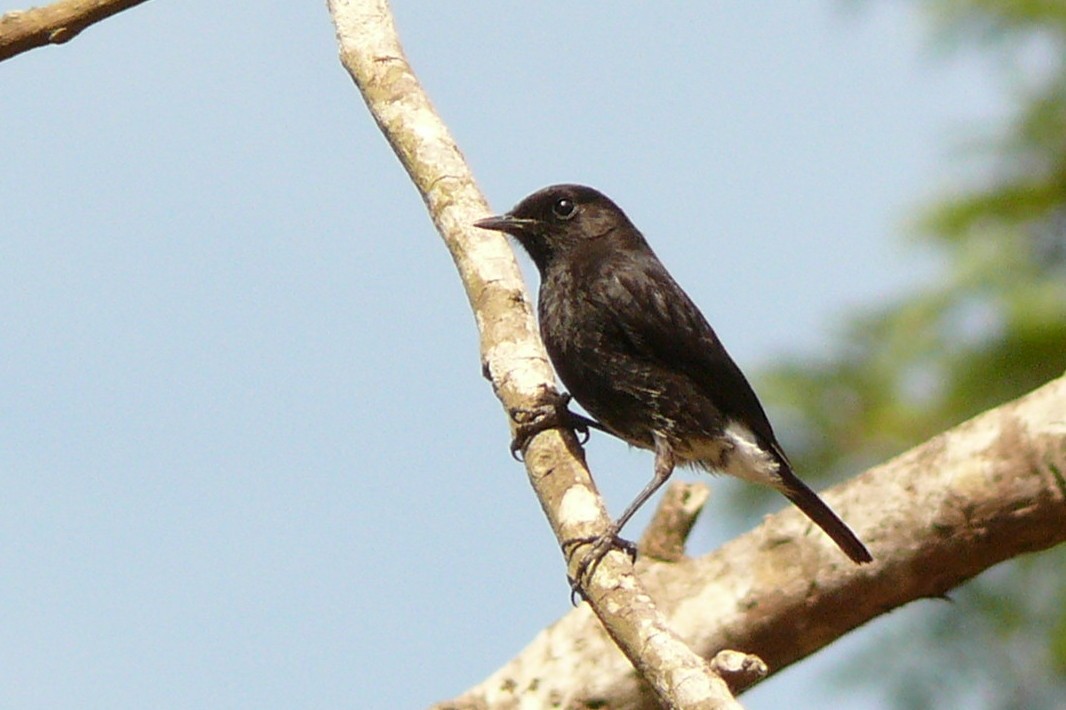
17. Pied Bushchat
The pied bush chat is slightly smaller than the Siberian stonechat, Saxicola maurus, although it has a similar dumpy structure and upright stance. The male is black except for a white rump, wing patch and lower belly. The iris is dark brown, the bill and legs black. The female is drab brown and slightly streaked. Juveniles have a scaly appearance on the underside but dark above like the females.
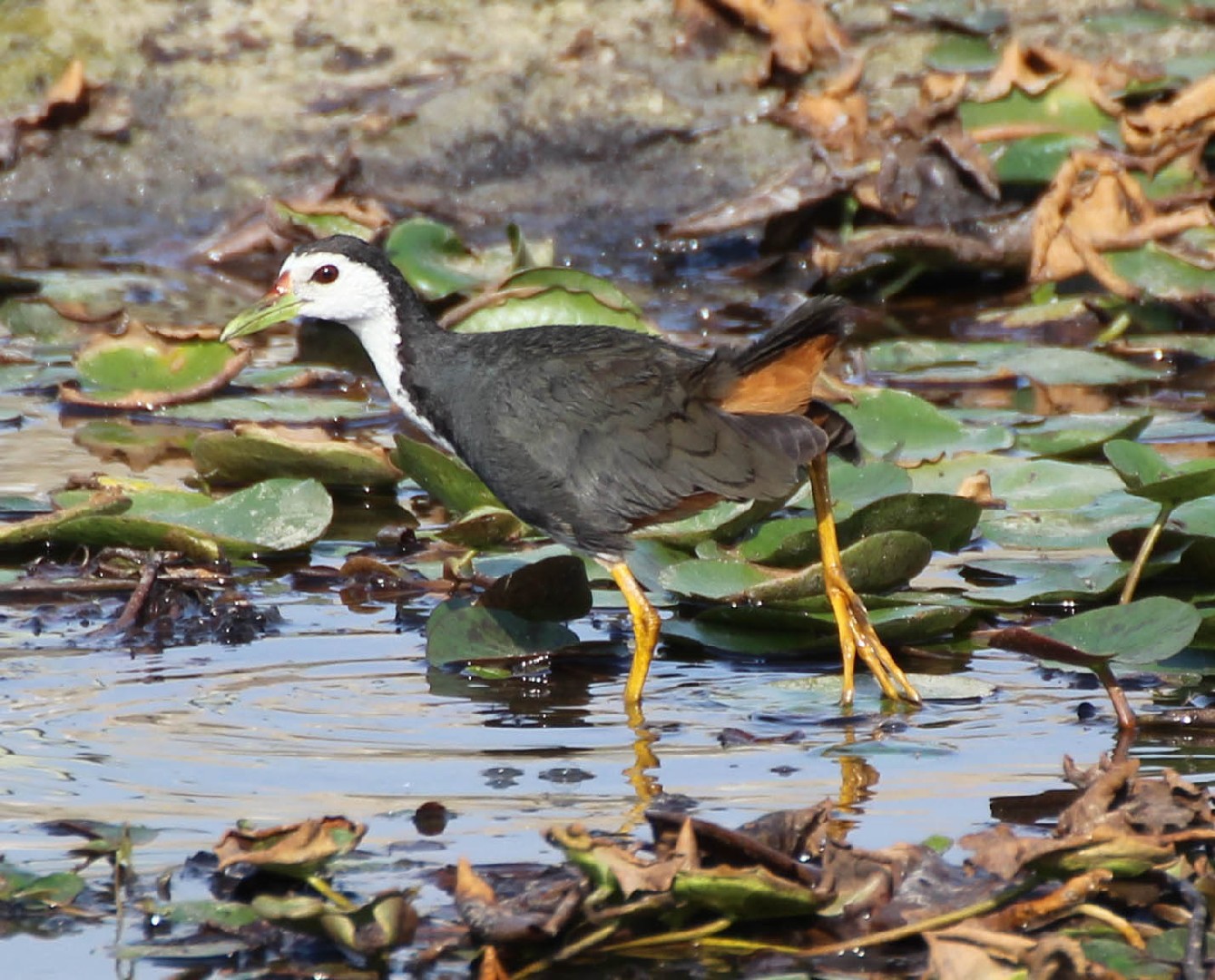
18. White-breasted Waterhen
Adult white-breasted waterhens have mainly dark grey upperparts and flanks, and a white face, neck and breast. The lower belly and undertail are cinnamon coloured. The body is flattened laterally to allow easier passage through the reeds or undergrowth. They have long toes, a short tail and a yellow bill and legs. Sexes are similar but females measure slightly smaller. Immature birds are much duller versions of the adults. The downy chicks are black, as with all rails.