




Top 20 Most Common Bird in Veraguas
Teeming with biodiversity, the tropical landscapes of Veraguas provide a myriad of habitats for different bird species. The 20 most common birds found here are distinguished by their vibrant colors, unique vocalizations, and adaptability to the diverse ecosystems. Each species shows fascinating characteristics connecting it to this rich Panamanian environment.

Most Common Bird
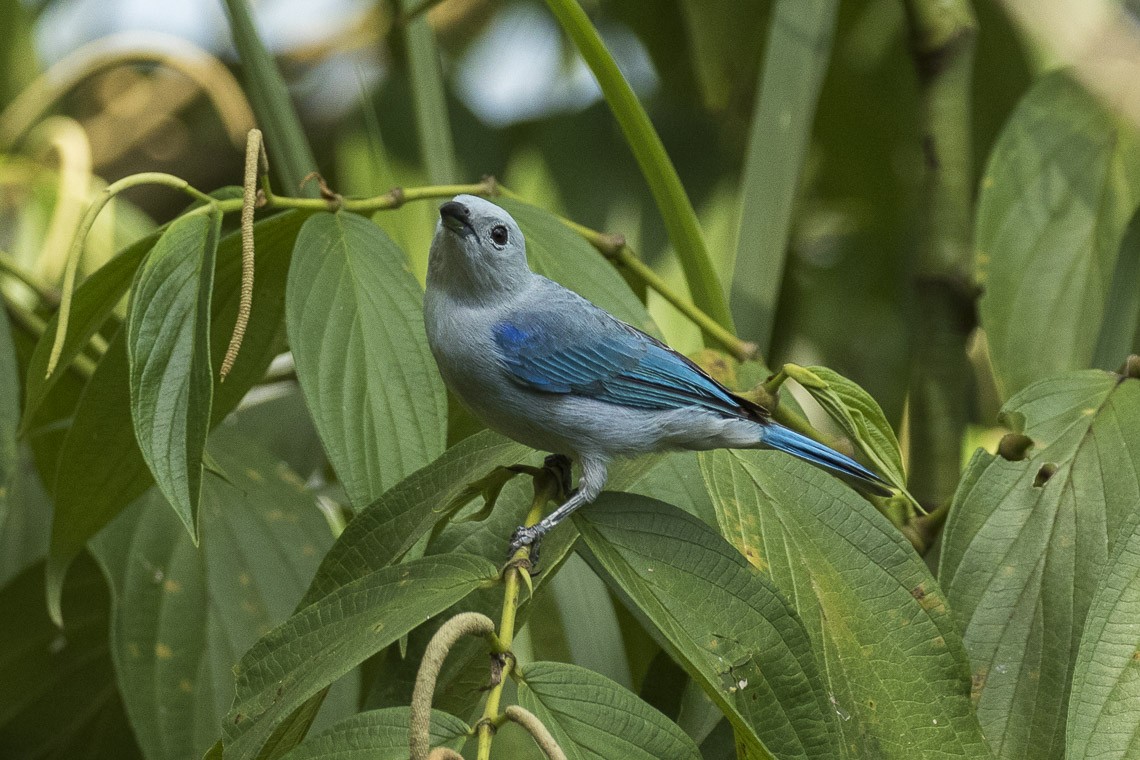
1. Blue-grey Tanager
The blue-gray tanager is 16–18 cm (6.3–7.1 in) long and weighs 30–40 g (1.1–1.4 oz). Adults have a light bluish head and underparts, with darker blue upperparts and a shoulder patch colored a different hue of blue. The bill is short and quite thick. Sexes are similar, but the immature is much duller in plumage. The song is a squeaky twittering, interspersed with tseee and tsuup call notes. 
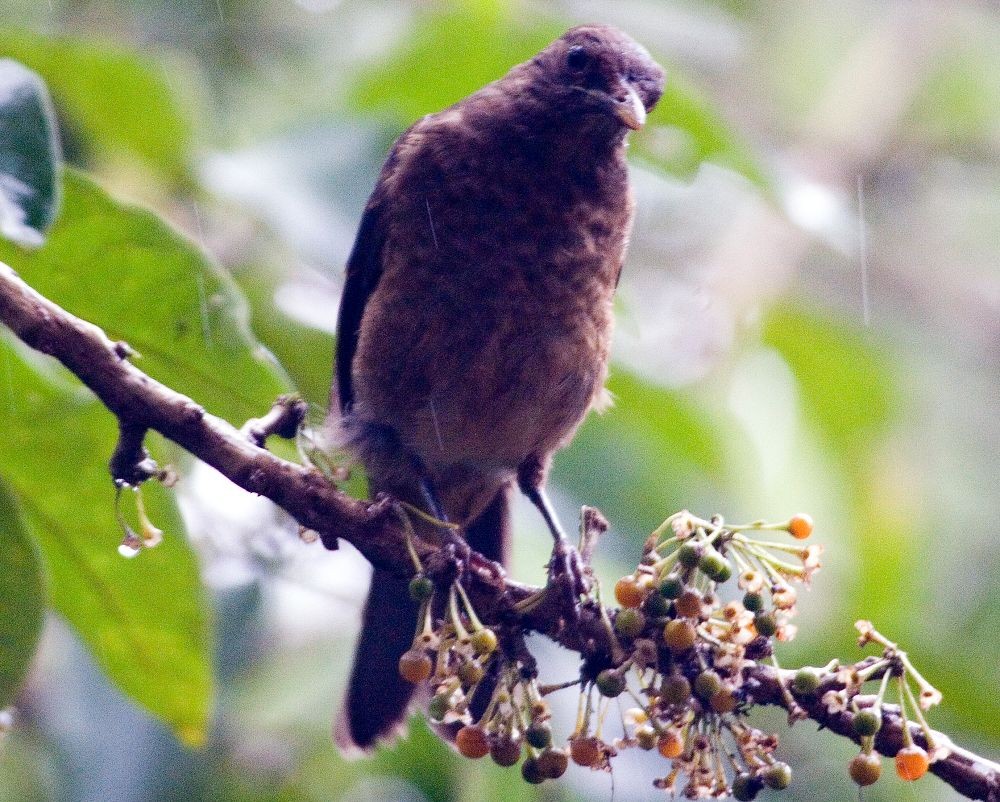
2. Clay-colored Thrush
The clay-colored Thrush is a stunning bird known for its melodious song and distinctive appearance. With its clay-colored upperparts, rusty underparts, and dark brown crown, it stands out in its habitats, which can range from forests to suburban parks. It feeds on various food sources including insects, fruits, and berries. The bird has a melodious song consisting of clear, ringing phrases.
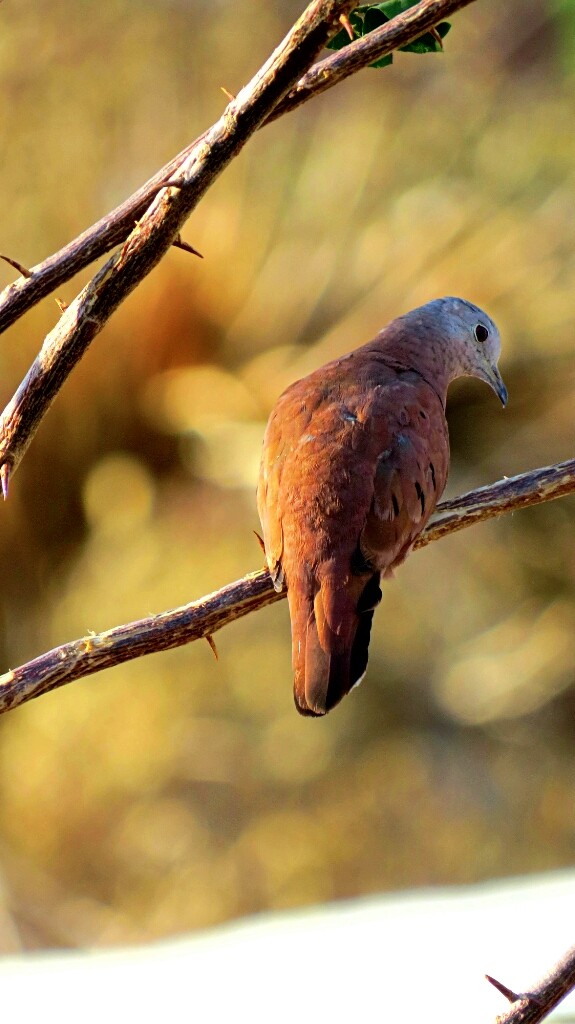
3. Ruddy Ground Dove
The Rosttäubchen (Columbina talpacoti) is a kind of the pigeons birds, which is counted among the subfamily of the American Kleintauben. The species occurs from the extreme south of North America to South America and is considered as not endangered in its population.
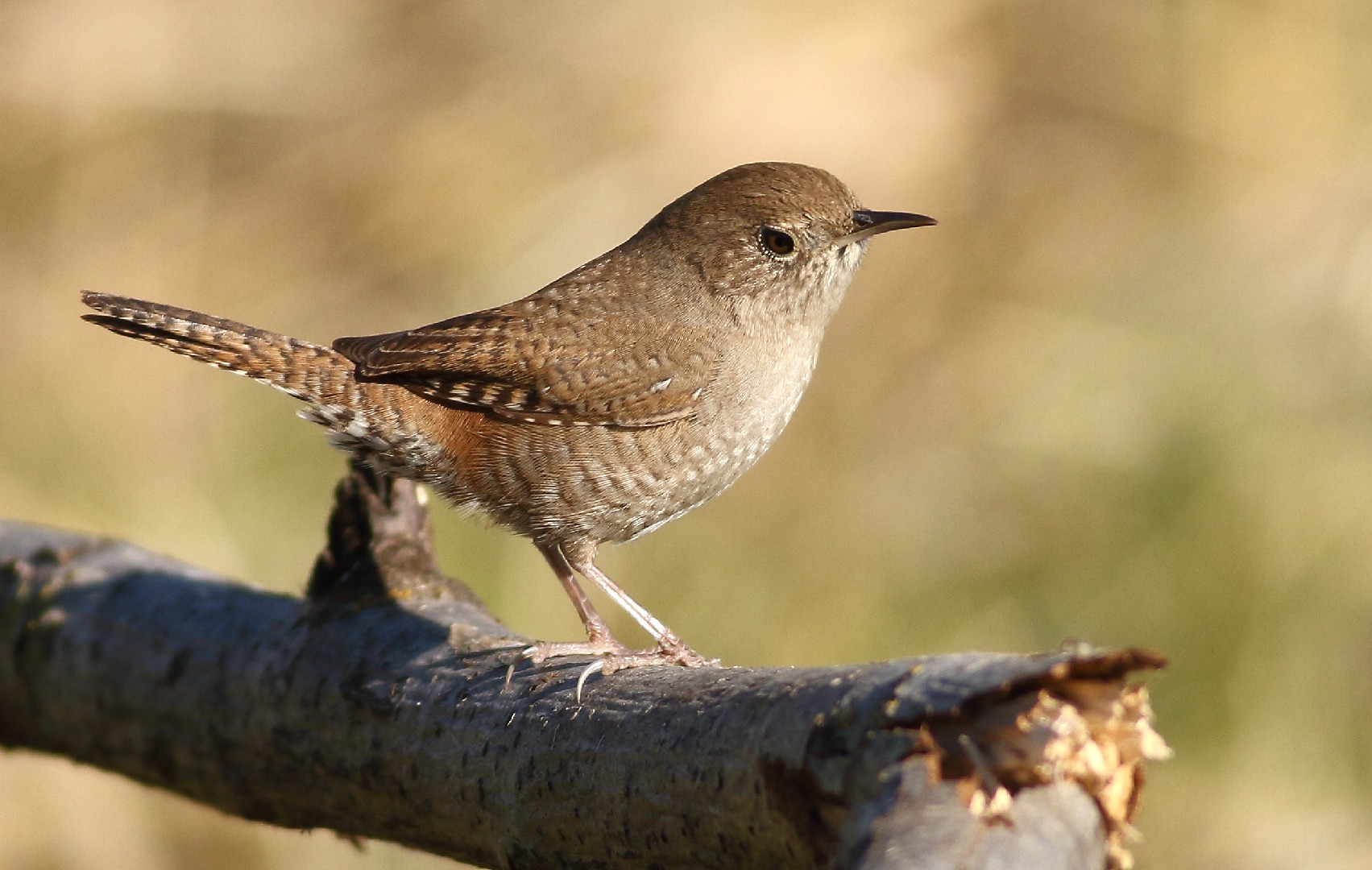
4. House Wren
Watch out for the small yet aggressive house Wrens; they are extremely territorial and think nothing of harassing other birds and their nestlings if they want to take their spot! They have been known to kill nestlings and even adult birds to get a nest hole they want. Once house Wrens lay eggs, the nest needs to stay below 100 degrees and above 65 degrees or the eggs will not survive—this could be the reason they are so particular about their nesting spots.
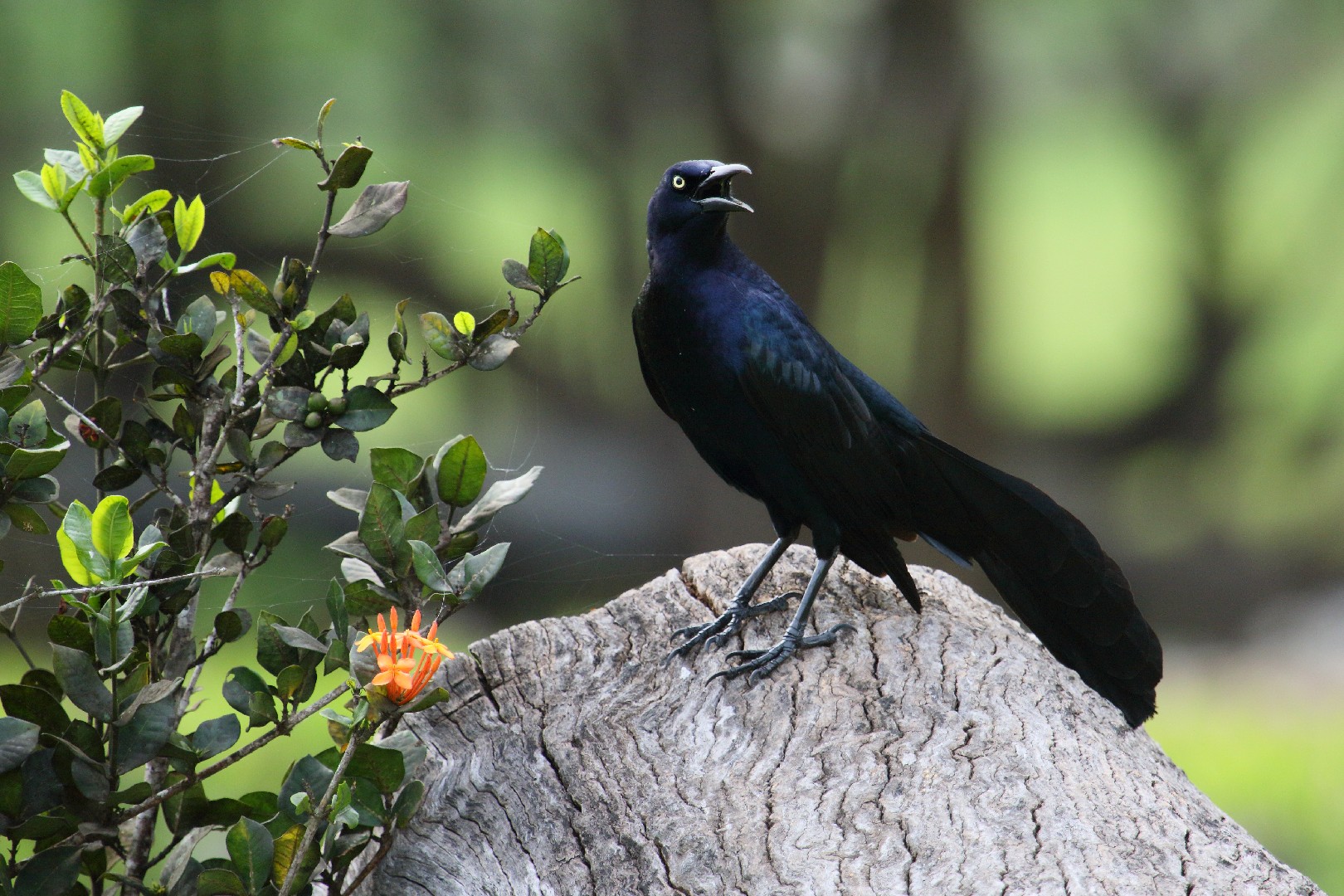
5. Great-tailed Grackle
The medium-sized great-tailed Grackle is notable for its long tail, shaped like a V, and deep black coloring offset by bright yellow eyes. This loud bird can be easily found just by following the sharp sounds of its calls and shrieks. Males in particular shriek and ruffle up their feathers to defend their territory or if they feel threatened.
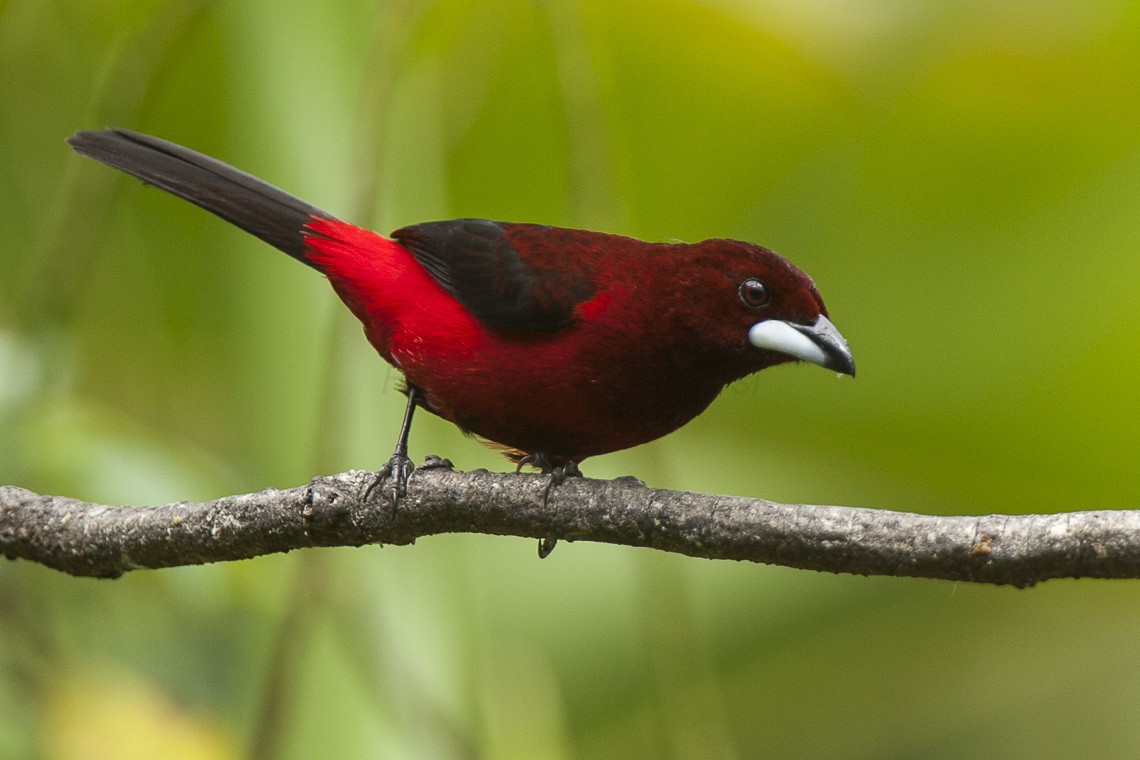
6. Crimson-backed Tanager
The crimson-backed tanager (Ramphocelus dimidiatus) is a species of bird in the family Thraupidae. It is found in Colombia, Panama, and Venezuela, and introduced to French Polynesia. Its natural habitats are subtropical or tropical moist lowland forests and heavily degraded former forest. A nickname in Panama is sangre de toro ("Blood of the bull"). The crimson-backed tanager was first described by French naturalist Frédéric de Lafresnaye in 1837. It is one of nine species of brightly coloured tanagers of the genus Ramphocelus. Mitochondrial DNA evidence indicates its closest relative is the masked crimson tanager (R. nigrogularis), and the two split around 800,000 years ago. Measuring around 18 cm (7.1 in) in length, the adult male has a silver sheen on its lower mandible. Its whole head and chest are a maroon red, brightening to a bright red on its lower back and abdomen. Its wings and tail are black. The female is duller with blackish underparts. It is found in northern and western Colombia (south to Chocó where it is uncommon), the Maracaibo Basin in Venezuela, and over most of Panama, where it extends to Chiriquí and Veraguas Provinces in the west of the country, as well as Coiba, where it is abundant, and Pearl Islands. It inhabits forest, scrub and gardens. A nest with a clutch of two blue eggs with fine dark dots has been recorded. A field study on blood parasites found that two individual crimson-backed tanagers (out of twelve tested) bore Plasmodium, with the study concluding the overall rate was low compared with studies done elsewhere.
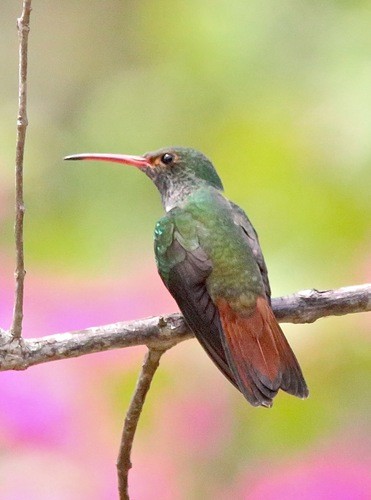
7. Rufous-tailed Hummingbird
The adult rufous-tailed hummingbird is 10–12 cm (3.9–4.7 in) long and weighs approximately 5.2 g (0.18 oz). The throat is green (edged whitish in the female), the crown, back and flanks are green tinged golden, the belly is pale greyish, the vent and rump are rufous and the slightly forked tail is rufous with a dusky tip. The almost straight bill is red with a black tip; the black is more extensive on the upper mandible, which may appear all black. Immatures are virtually identical to the female. The call is a low chut, and the male's song is a whistled tse we ts’ we or tse tse wip tseek tse. The female rufous-tailed hummingbird is entirely responsible for nest building and incubation. She lays two white eggs in a compact cup nest constructed from plant-fibre and dead leaves and decorated with lichens and mosses 1–6 m (3.3–19.7 ft) high on a thin horizontal twig. Incubation takes 15–19 days, and fledging another 20–26.
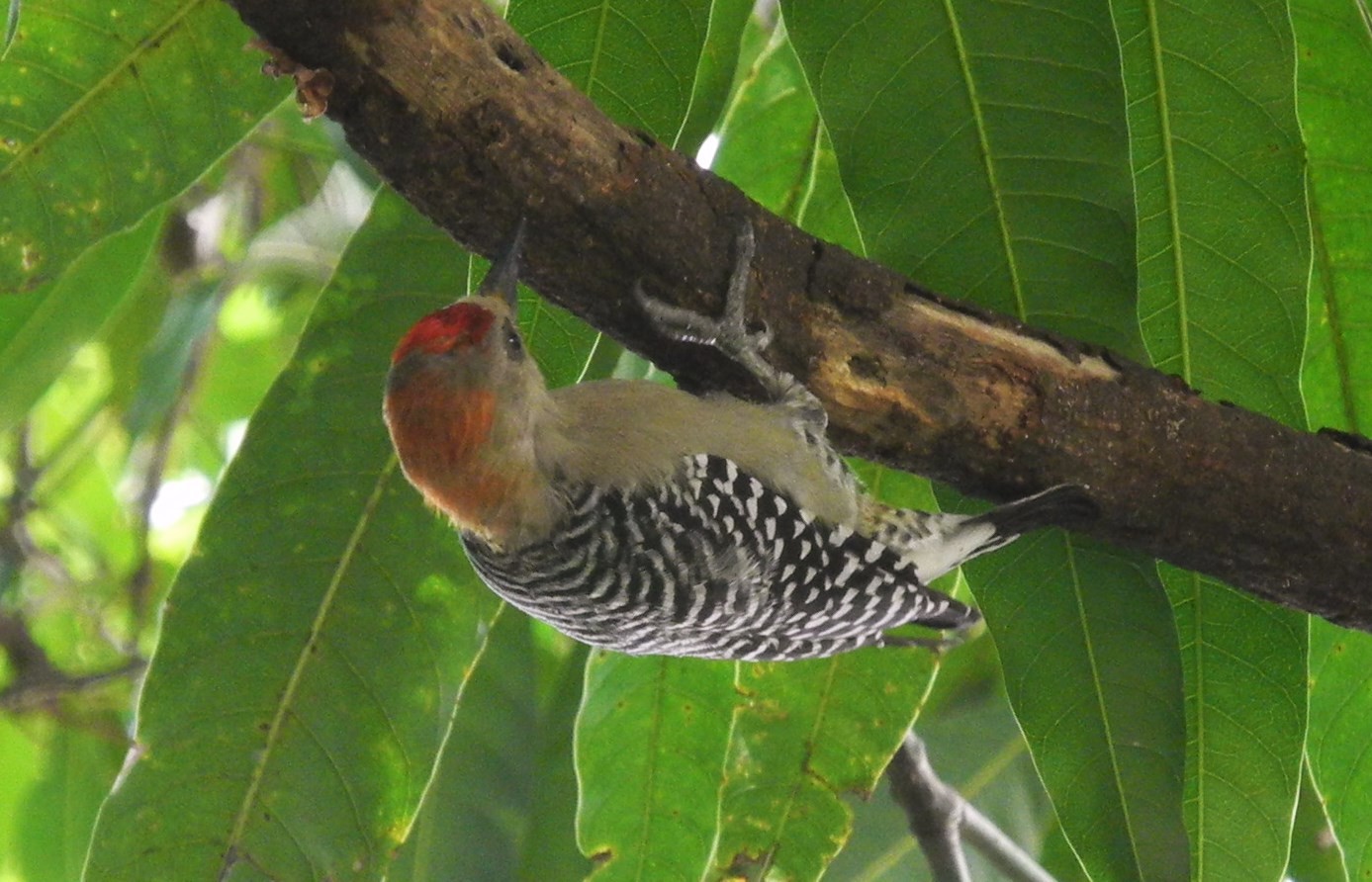
8. Red-crowned Woodpecker
The red-crowned woodpecker (Melanerpes rubricapillus) is a resident breeding bird from southwestern Costa Rica south to Colombia, Venezuela, the Guianas and Tobago. This woodpecker occurs in forests and semi-open woodland and cultivation. It nests in a hole in a dead tree or large cactus. The clutch is two eggs, incubated by both sexes, which fledge after 31–33 days. The adult is 17 cm (6.7 in) long and weighs 55 g (1.9 oz). It has a zebra-barred black and white back and wings and a white rump. The tail is black with some white barring, and the underparts are pale buff-brown. The male has a red crown patch and nape. The female has a buff crown and duller nape. Immature birds are duller, particularly in the red areas of the head and neck. Red-crowned woodpeckers feed on insects, but will take fruit and visit nectar feeders. This common and conspicuous species gives a rattling krrrrrl call and both sexes drum on territory.
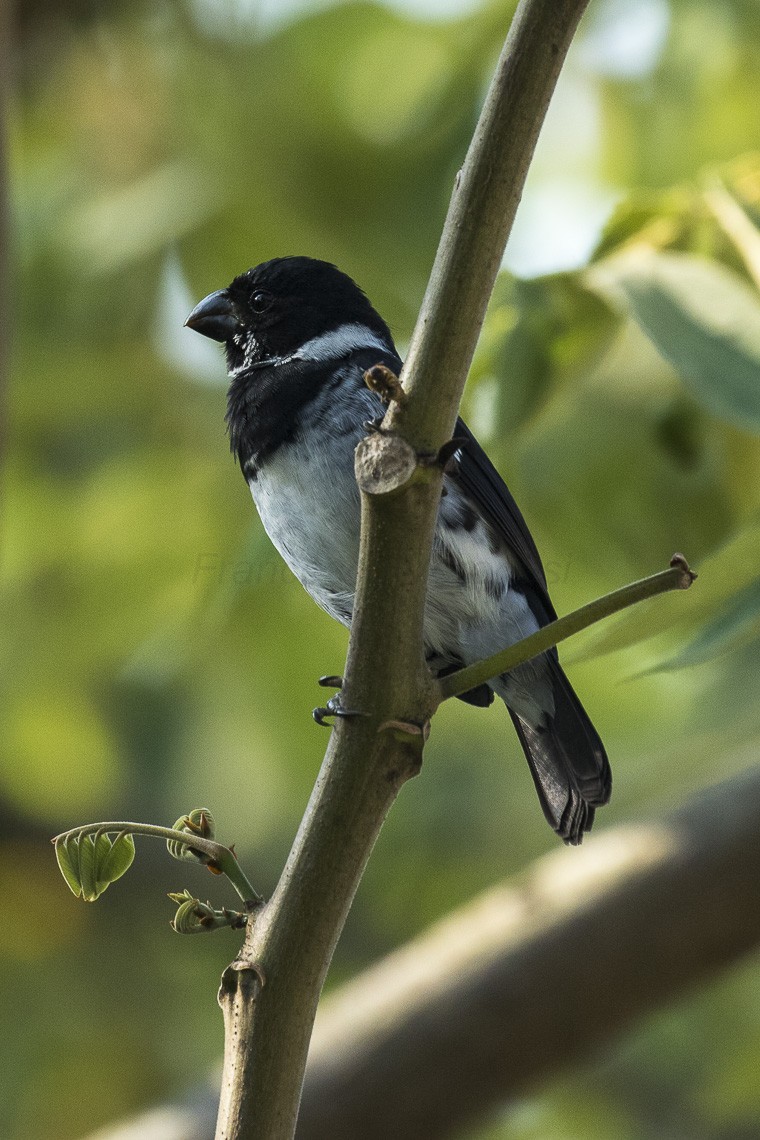
9. Variable Seedeater
The variable seedeater is a small, robust bird with a black conical bill. It is 10.5 cm (4.1 in) long and weighs 11 g (0.39 oz). There are four subspecies, which differ primarily in the plumage of the male: S. c. corvina – (P.L. Sclater, 1860): (nominate), found from southern Mexico and along the Caribbean slope from Belize south to Panama. Adult males are entirely black apart from a small white wing-speculum and white wing linings. S. c. hoffmannii – Cabanis, 1861: found on the Pacific slope of Costa Rica and Panama. Males resemble males S. c. corvina, but with white half-collar, rump and belly (the rump often intermixed with grey and the flanks retain some black mottling or barring). S. c. hicksii – (Lawrence, 1865): found in eastern Panama and adjacent north-western Colombia. Males resemble S. c. hoffmannii, but, except for a small black chin and/or malar, the entire throat is white. S. c. ophthalmica – (P.L. Sclater, 1860): found in southwestern Colombia, western Ecuador, and far north-western Peru. Males are very similar to males of S. c. hicksii, but black malar is very fine or lacking, rump purer white, and shows purer white flanks with little or no black mottling/barring. Previously, additional subspecies have been recognized for the various hybrid populations found where the above-mentioned subspecies meet (see Taxonomy). Females are olive-brown above, paler below, and have white wing linings like the male. The racial differences in the female plumages are minor, with S. c. hoffmannii, S. c. hicksii and S. c. ophthalmica generally being paler and less brown than S. c. corvina, and often with a faint yellow tinge below. Juveniles are like the adult female of their subspecies. Males may not acquire the full adult plumage in their first year, and may breed whilst still showing some immature features in their appearance. A hypermelanic male was reported from Reserva Buenaventura in El Oro Province, Ecuador, in 2005. The bird had increased phaeomelanin; its white areas — except those of the wings — were bright tawny chestnut. A similar bird was collected along the "Pipeline Road" near Gamboa, Panama, in 1963. Such individuals seem to provide a glimpse at the circumstances of speciation: in the genera Sporophila and Oryzoborus, several species exist which differ externally only by one having white areas, the other being hypermelanic just as the two variable seedeaters mentioned here. Of course, there must be some factor maintaining reproductive isolation, but the plumage differences between such seedeater species pairs probably had their origin in such a mutation becoming fixed in a founder population due to genetic drift.
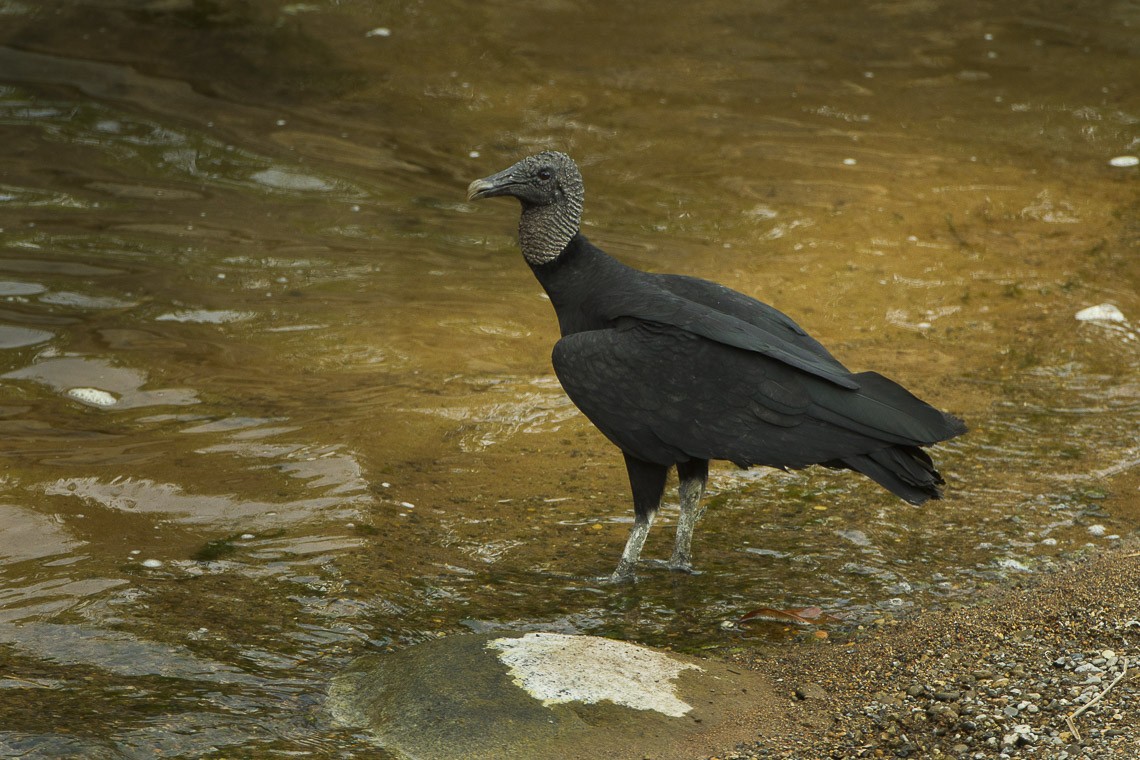
10. Black Vulture
Although quite dapper in appearance, the black Vulture's name comes from the Latin vulturus meaning “tearer" and that is just what that hooked beak is for. These birds are highly social, with fierce family loyalty and will share food with relatives and with their young long after the babies have fledged. Because they lack a voice box, their calls are limited to grunts and hisses.
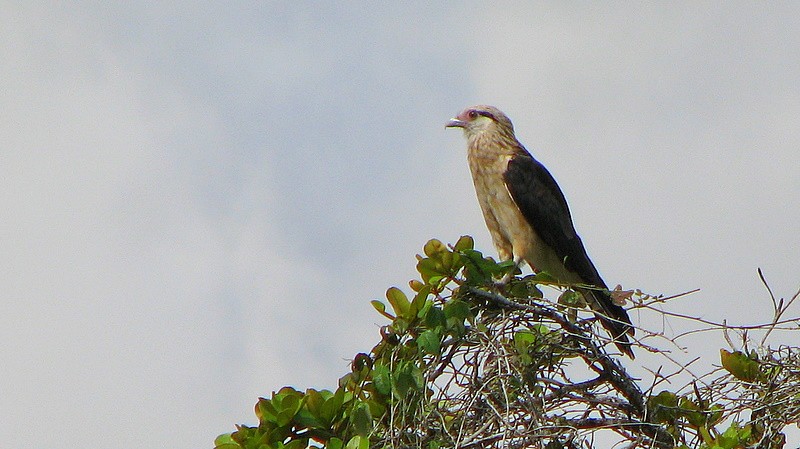
11. Yellow-headed Caracara
The yellow-headed caracara is 41–46 cm (16–18 in) in length and weighs 325 g (11.5 oz) on average. Like many other birds of prey, the female is larger than the male, weighing 310–360 g (11–13 oz) against the male's 280–330 g (9.9–11.6 oz). Apart from the difference in size, there is no significant sexual dimorphism in this species. It is broad-winged and long-tailed, somewhat resembling a small Buteo. The adult has a buff head, with a black streak behind the eye, and buff underparts. The upper plumage is brown with distinctive pale patches on the flight feathers of the wings, and the tail is barred cream and brown. The head and underparts of immature birds have dense brown mottling. The voice is a characteristic screamed schreee.
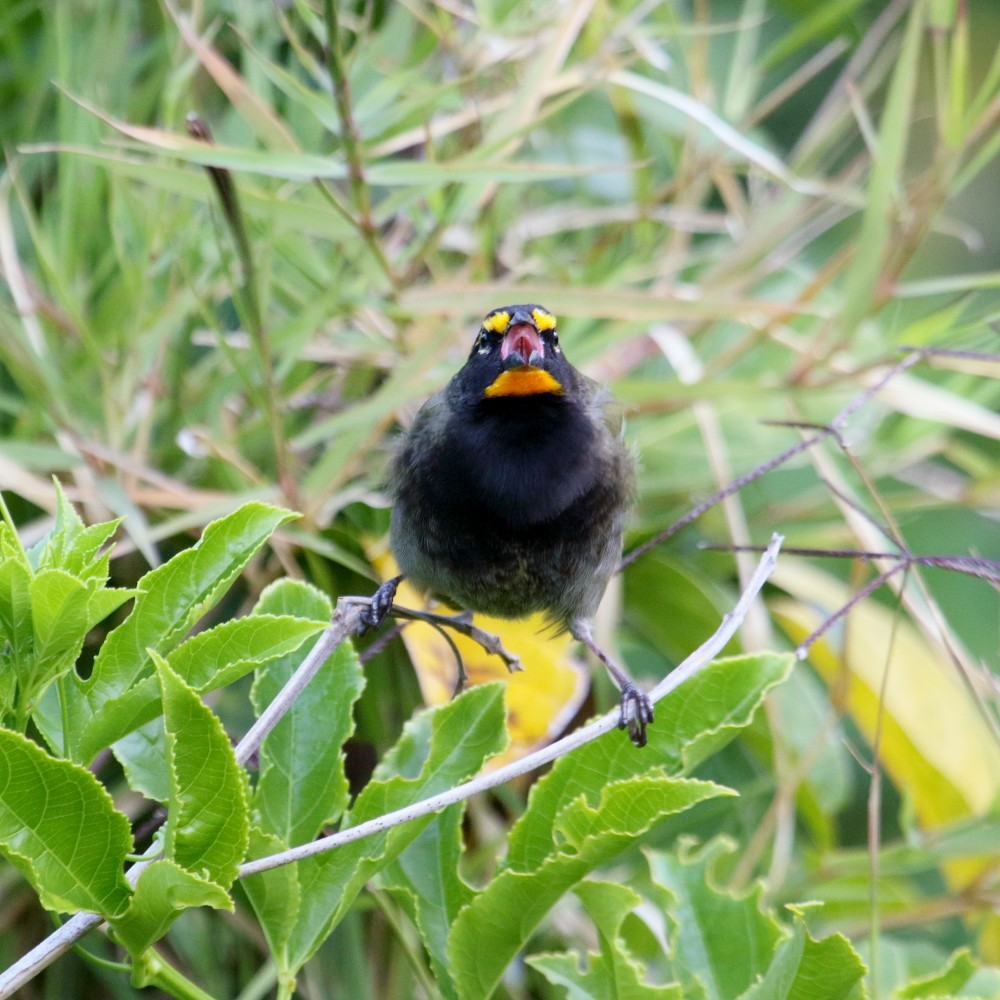
12. Yellow-faced Grassquit
It is a small bird with a conical bill, sharper than that of the related seedeaters. It is 10–10.7 cm (3.9–4.2 in) long and weighs about 8–10 g (0.28–0.35 oz), depending on subspecies. The adult male has an olive-green back, and its face and breast are black apart from a bright yellow throat, supercilia, and lower eyelid spot. The rest of the underparts are greyish olive. The beak and eyes are dark, the legs are grey. The adult female is slightly smaller on average than the male. It is dull olive-green above and paler grey below, and may have some dark breast smudges. The yellow face pattern is much weaker and duller, and may be almost invisible. The lower part of the beak is dark horn-colored (light grey). Young birds are coloured essentially like the adult female, but duller and greyer. Young males begin to acquire full adult plumage in their first year. The yellow-faced grassquit has a weak buzzing trilled ttttt-tee call. The song is a varying series of high thin rapid trills. Given for a prolonged time, it is melodious, yet subdued, and often only heard from a short distance away.
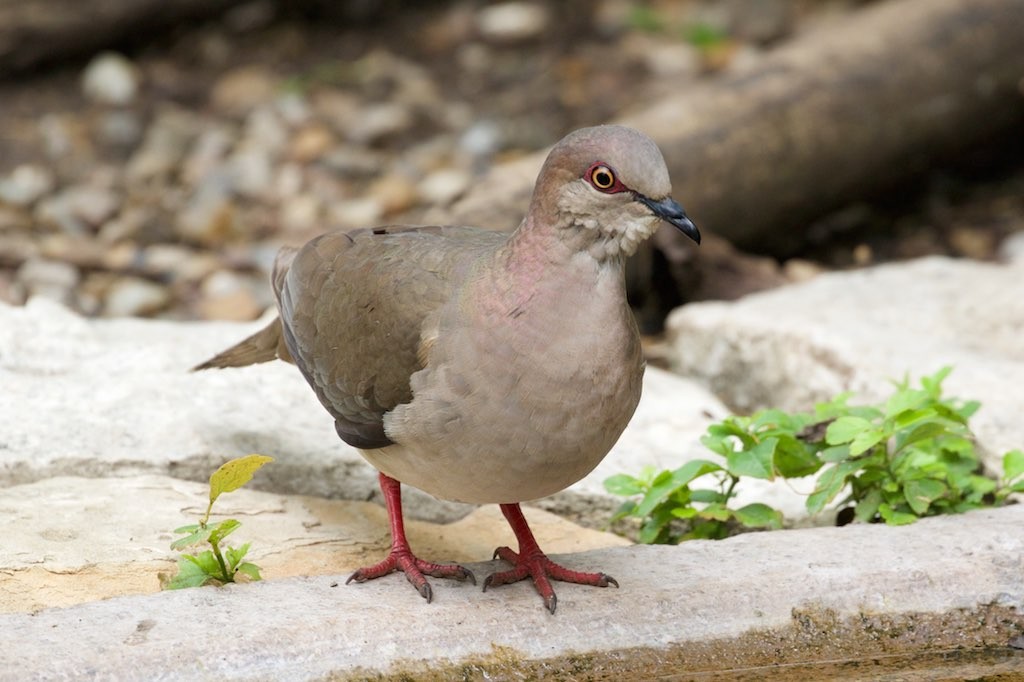
13. White-tipped Dove
The dove is about 28 cm (11 in) long and weighs 155 g (5.5 oz). Adult birds of most races have a grey tinge from the crown to the nape, a pale grey or whitish forehead and a whitish throat. The eye-ring is typically red in most of its range, but blue in most of the Amazon and northern South America. The upperparts and wings are grey-brown, and the underparts are whitish shading to pinkish, dull grey or buff on the chest. The underwing coverts are rufous. The tail is broadly tipped with white, but this is best visible from below or in flight. The bill is black, the legs are red and the iris is yellow. The white-tipped dove resembles the closely related grey-fronted dove (Leptotila rufaxilla), which prefers humid forest habitats. The best distinctions are the greyer forehead and crown, which contrast less with the hindcrown than in the grey-fronted dove. In the area of overlap, the white-tipped dove usually has a blue (not red) eye-ring, but this is not reliable in some parts of Brazil, Argentina, Bolivia, Paraguay and Uruguay, where it typically is red in both species.
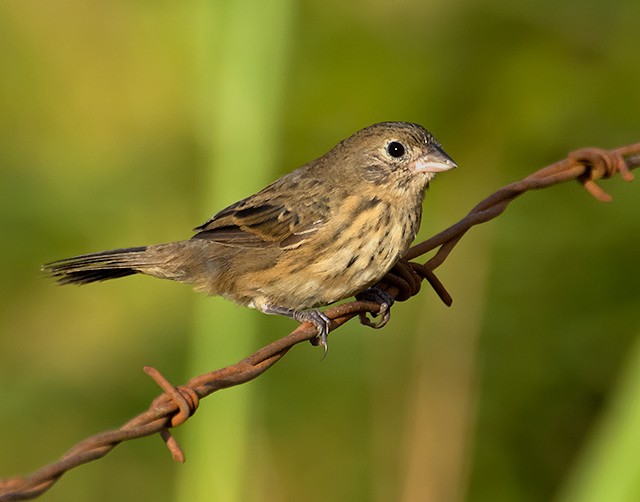
14. Blue-black Grassquit
Adult blue-black grassquits are 10.2 cm (4.0 in) long and weigh 9.3 g (0.33 oz). They have a slender conical black bill. The male is glossy blue-black, with a black tail and wings; the white inner underwing is visible in flight or display. Female and immature birds have brown upperparts and dark-streaked buff underparts.
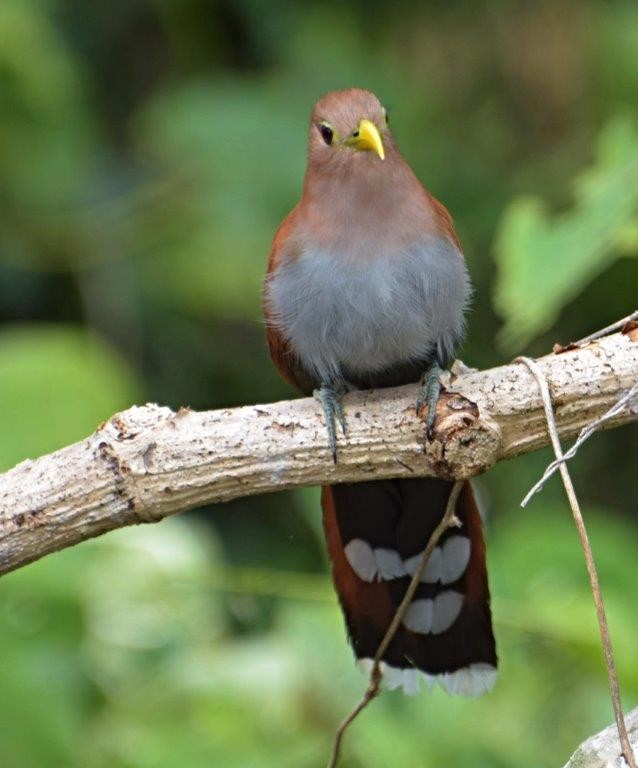
15. Squirrel Cuckoo
This large and extremely long-tailed cuckoo is 40.5–50 cm (15.9–19.7 in) long and weighs 95–120 g (3.4–4.2 oz). The adult has mainly chestnut upperparts and head, becoming paler on the throat. The lower breast is grey and the belly is blackish. The central tail feathers are rufous, but the outer are black with white tips. The bill is yellow and the iris is red. Immature birds have a grey bill and eyering, brown iris, and less white in the tail. It resembles the little cuckoo, but that species is smaller and has a darker throat. There are a number of subspecies with minor plumage variations. For example, P. c. mehleri, one of the South American subspecies, has mainly brown (not black) outer tail feathers. Additionally, the subspecies from Mexico, Central America, and northern and western South America have a yellow eye-ring, but this is red in the remaining part of South America. It makes explosive kip! and kip! weeuu calls, and the song is a whistled wheep wheep wheep wheep.
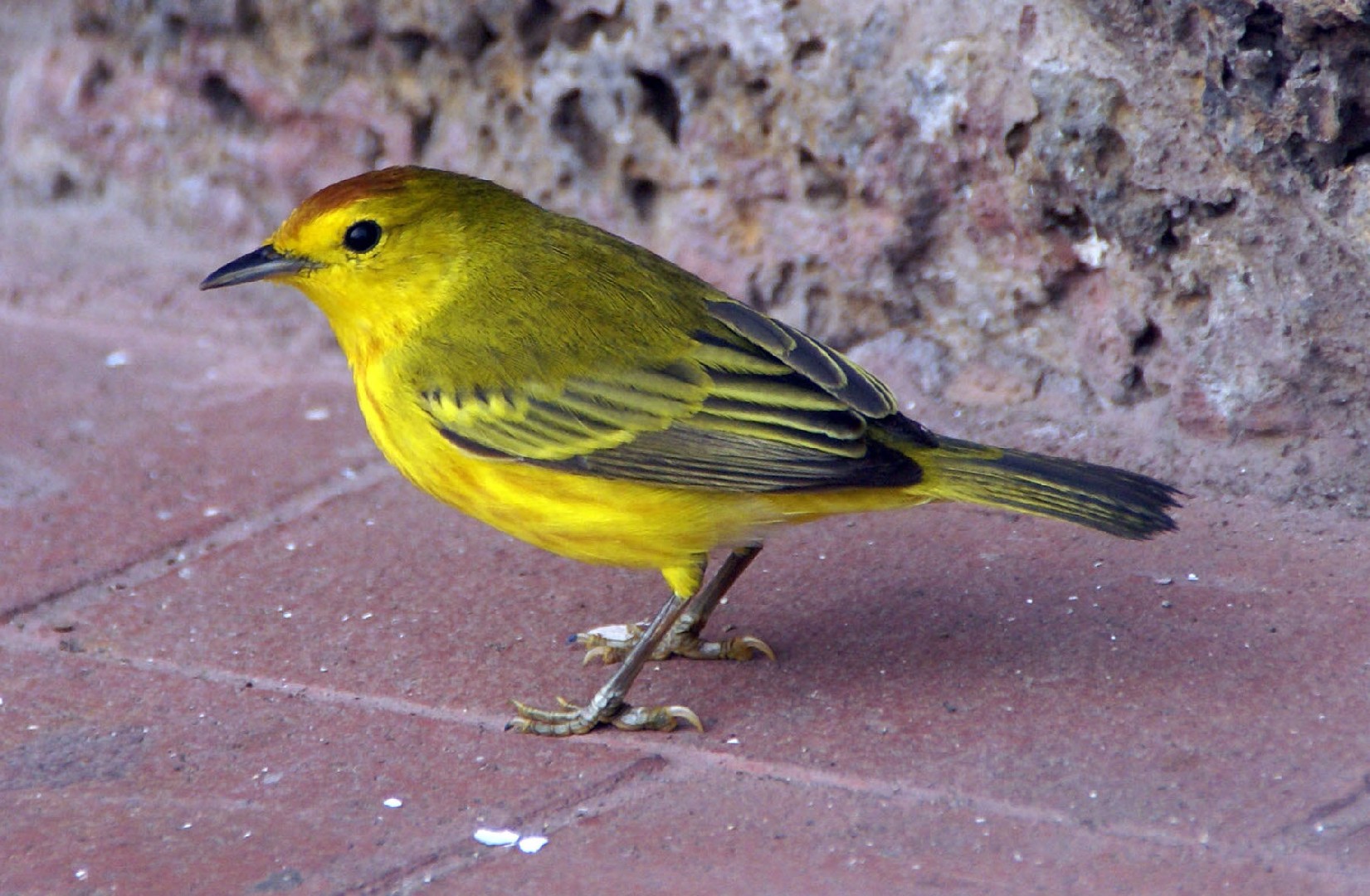
16. Yellow Warbler
Yellow Warblers are small birds that are so tiny they are known to get tangled up in orb-weaver spiders' webs. Their nests are often parasitized by Brown-headed Cowbirds. No worries, says the yellow Warbler, for I'll just rebuild a new nest on top of the one you took from me. This sometimes goes on and on to the point where the nest grows to six tiers high.
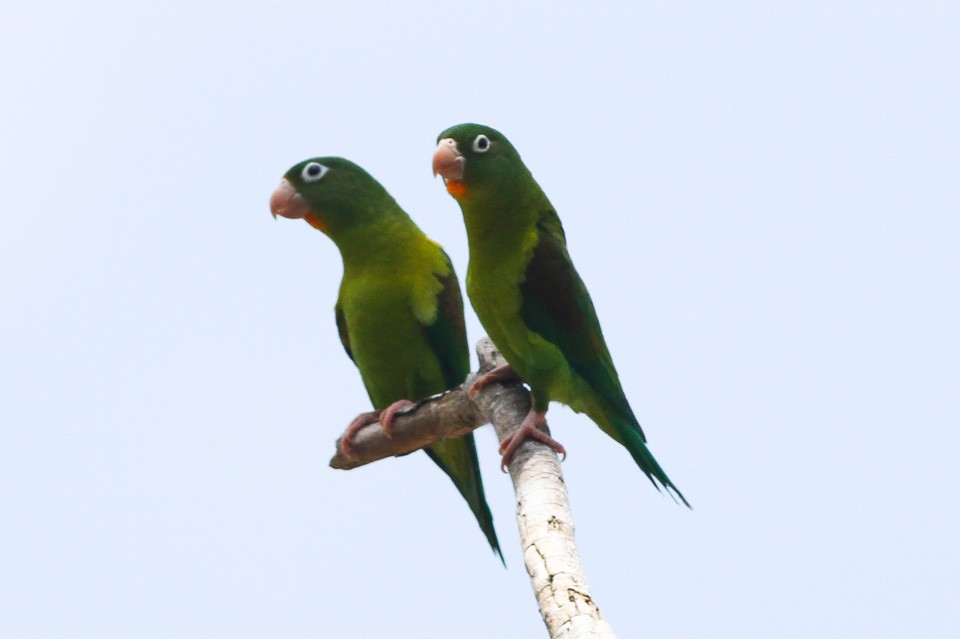
17. Orange-chinned Parakeet
The orange-chinned Parakeet is a lively bird that's hard to miss. Its bright green feathers and striking orange chin make it stand out in a crowd. This species is playful and intelligent, often seen climbing and swinging on branches. It's a social bird, and you'll often see it in flocks, chirping and flying from tree to tree. It has a strong beak, perfect for cracking open nuts and seeds, and it enjoys a diet of a variety of fruits and nuts.
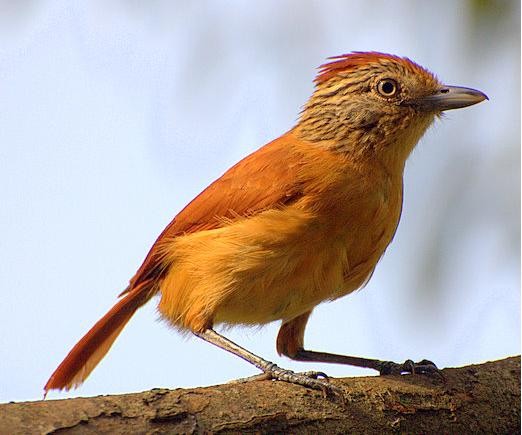
18. Barred Antshrike
The barred antshrike is 15–16 cm (5.9–6.3 in) in length, and weighs 24–30 g (0.85–1.06 oz). This species exhibits marked sexual dimorphism. The male of the nominate race is barred all over with black and white, and has a white-based black crest that is raised in display. The female is rufous above with a chestnut crest. The sides of her head and neck are streaked with black, and the underparts are rich buff. In both sexes, the legs are grey, the bill is black and the iris is pale yellow. The subspecies vary primarily in the overall darkness and the amount of barring and hue of the underparts. For example, in the Tobagonian race T. d. tobagensis, males are whiter below, and females darker, than in the nominate subspecies. The most distinctive subspecies is T. d. capistratus of the Caatinga in north-eastern Brazil, where males have uniform black crown (no white barring to the base) and females have streaked throat and faintly barred belly. It is also the only subspecies where the iris is deep maroon-red. It has been suggested that it should be considered a separate species, the Caatinga barred antshrike.
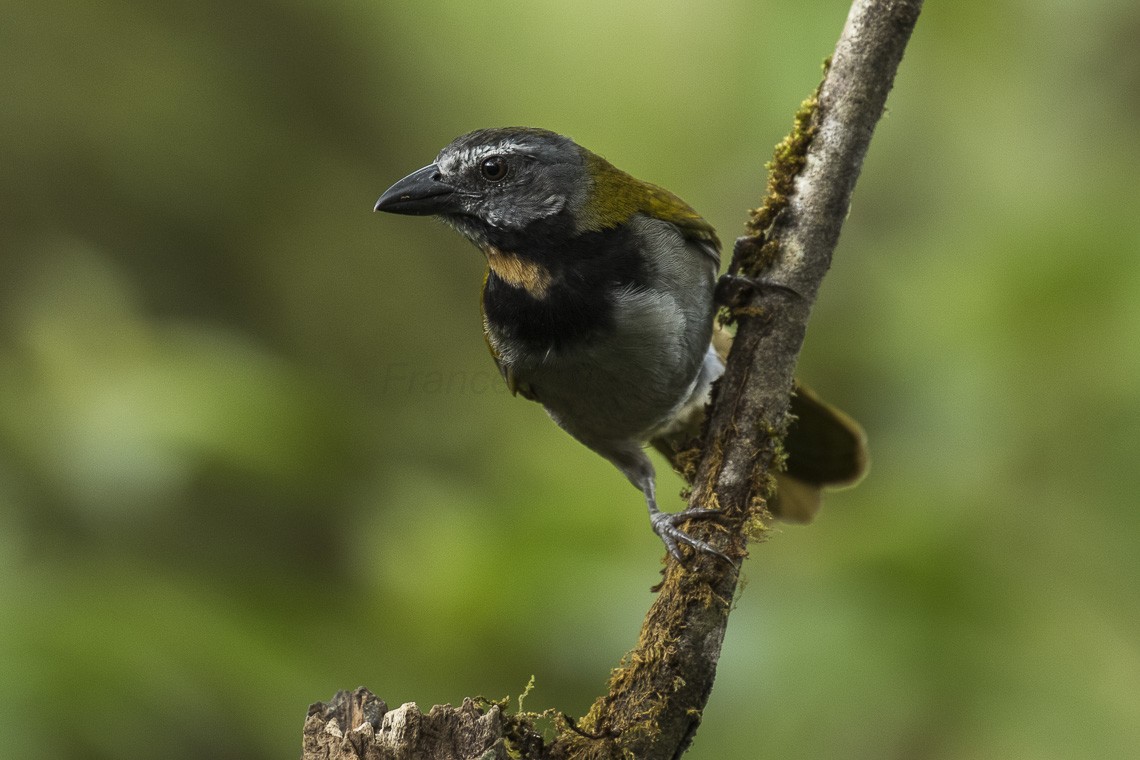
19. Buff-throated Saltator
The buff-throated saltator (Saltator maximus) is a seed-eating bird in the tanager family Thraupidae. It breeds from southeastern Mexico to western Ecuador and northeastern Brazil. The buff-throated saltator is on average 20 cm (7.9 in) long and weighs 42–52 g (1.5–1.8 oz). The adult has a slate-grey head with a white supercilium and a greenish crown. The upperparts are olive green, the underparts are grey becoming buff on the lower belly, and the throat is buff, edged with black. The thick convex bill and legs are black. Young birds are duller, and have a white-mottled blackish throat and breast, and brown markings on the lower underparts. The common call is a high seeeer. Males duet melodiously with a warbled cheery cheery answered by cheery to you. This is a species of dense vegetation. The buff-throated saltator feeds on fruit (e.g. of Cymbopetalum mayanum (Annonaceae), Trophis racemosa (Moraceae), and gumbo-limbo (Bursera simaruba)), buds, nectar and slow-moving insects. It forages at low and mid levels, sometimes with mixed species flocks. The two pale blue eggs per clutch measure some 22–32 mm (0.87–1.26 in) long by about 16.5–21.5 mm (0.65–0.85 in) wide and weigh about 4.8–6.1 g (0.17–0.22 oz) each, which is large among Saltator eggs. They are laid in a bulky cup nest up to 2 m (6.6 ft) high in a tree or bush.
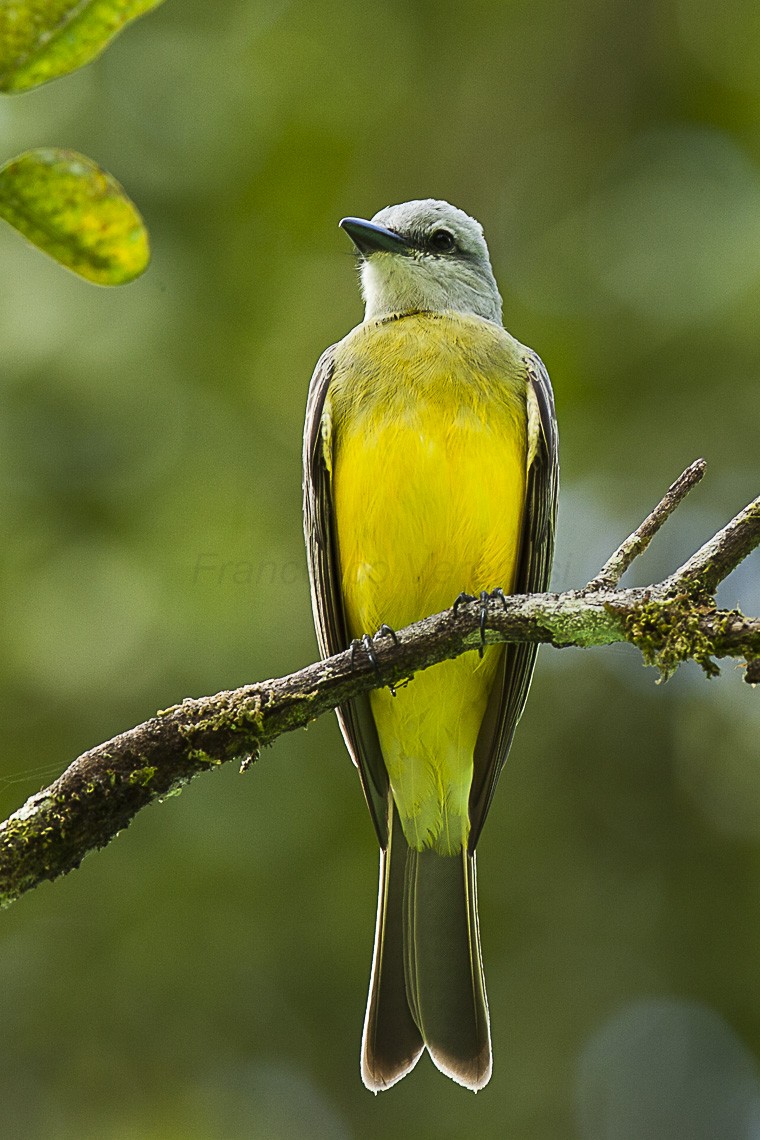
20. Tropical Kingbird
An adult tropical kingbird is 22 cm (8.7 in) long, weighs 39 g (1.4 oz) and has a wingspan range of 38–41 cm. The head is pale gray, with a darker eye mask, an orange crown stripe, and a heavy gray bill. The back is grayish-green, and the wing and forked tail are brown. The throat is pale gray, becoming olive on the breast, with the rest of the underparts being yellow. The sexes are similar, but young birds have pale buff edges on the wing coverts. Tropical Kingbirds appear to be monogamous. In most parts of the species' range, they are permanent residents and remain together in pairs year-round.(Sibley 2014) The call is a high-pitched twittering trill, tree-e-e-e-e-e-e, with a more complex version sung by the male at dawn. Their breeding habitat is semi-open areas with trees and shrubs, including gardens and roadsides. Tropical kingbirds like to observe their surroundings from a prominent open perch, usually high in a tree, undertaking long flights to acrobatically catch insects in mid-air (hawking), sometimes hovering to pick food off vegetation (gleaning). They also eat some fruit from such diverse species as tamanqueiro (Alchornea glandulosa), the Annonaceae, Cymbopetalum mayanum and gumbo-limbo (Bursera simaruba); foraging for these even in disturbed habitat. As they keep mainly to the upper levels of trees, they find little profit in following mixed-species feeding flocks in the understory. These birds aggressively defend their territory against intruders, even much larger birds such as magnificent frigatebirds, toucans, caracaras or hawks. In a study in Parque Nacional de La Macarena of Colombia, parasitism by microfilariae and trypanosomas (presumably T. everetti) was infrequently recorded in tropical kingbirds. The male and female inspect potential sites together before selecting a site, typically a fork or crotch high in a tree (up to 66 feet high) but sometimes just a few feet above water.(Sibley 2014) The female builds a bulky, sloppy-looking, shallow nest of vines, rootlets, twigs, weeds, and grasses; it is unlined or lined with hair. Nests average about 5.2 inches across and 3 inches tall, with interior cup about 3 inches across and 1.6 inches deep. The female incubates the typical clutch of two to four eggs for approximately 16 days, and the nestlings fledge in another 18 or 19 days. The eggs are whitish or pale pink with variable amounts of dark blotching. The tropical kingbird is one of the most widespread and conspicuous inhabitants of open forest, forest edge, scrub and agricultural land from the southwestern United States south to Argentina (Jahn, Stouffer, & Chesser, 2013). As a result, the bird is considered as being of Least Concern and their population is increasing, according to the IUCN. According to Partners in Flight, global estimates of tropical kingbird breeding population is around 200 million. They rate the species as 4 out of 20 on the continental concern scale, indicating that this species is of low conservation concern.