




Top 20 Most Common Bird in Chiang Rai
In the pristine jungles and scenic landscapes of Chiang Rai, a diverse array of bird species thrive. The 20 most common ones display splendid charms, from vibrant feathers to distinct, melodic calls. These birds not only boast unique behavioral traits but also exquisite adaptations for survival in the local environment.

Most Common Bird
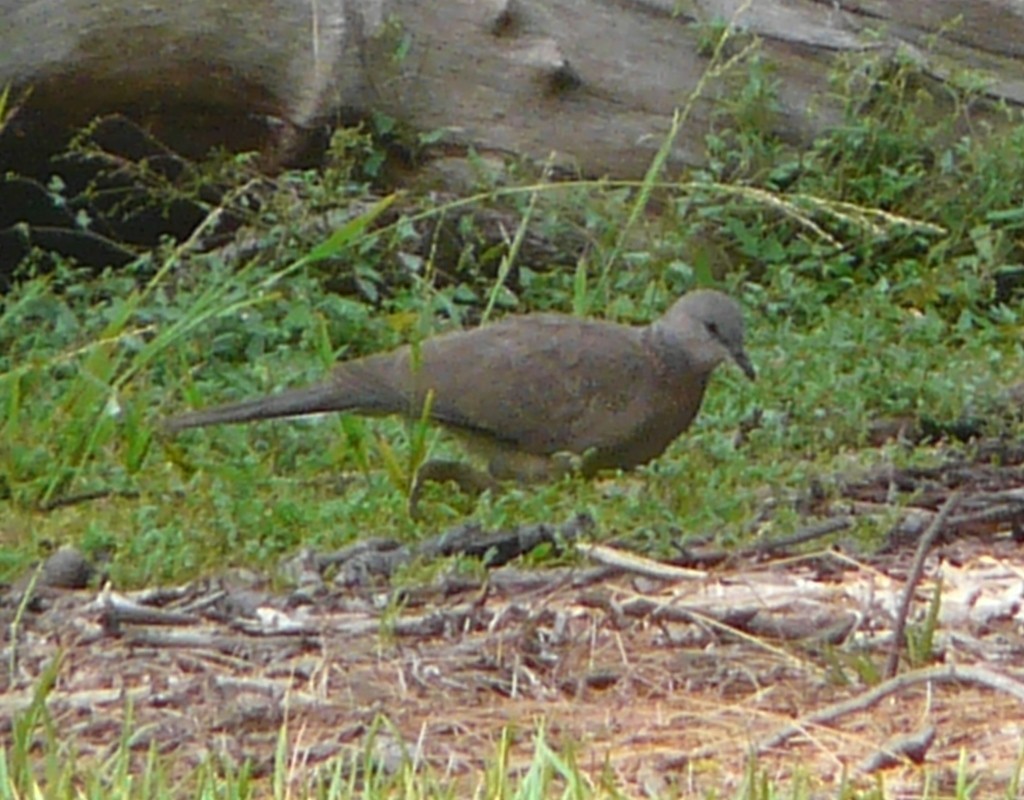
1. Spotted Dove
The spotted Dove is a medium-sized bird that is swift in flight. It prefers to live year-round in warm climates in suburban areas, especially in parks. Their nests are mostly made out of sticks and they like to dine on insects and seeds.
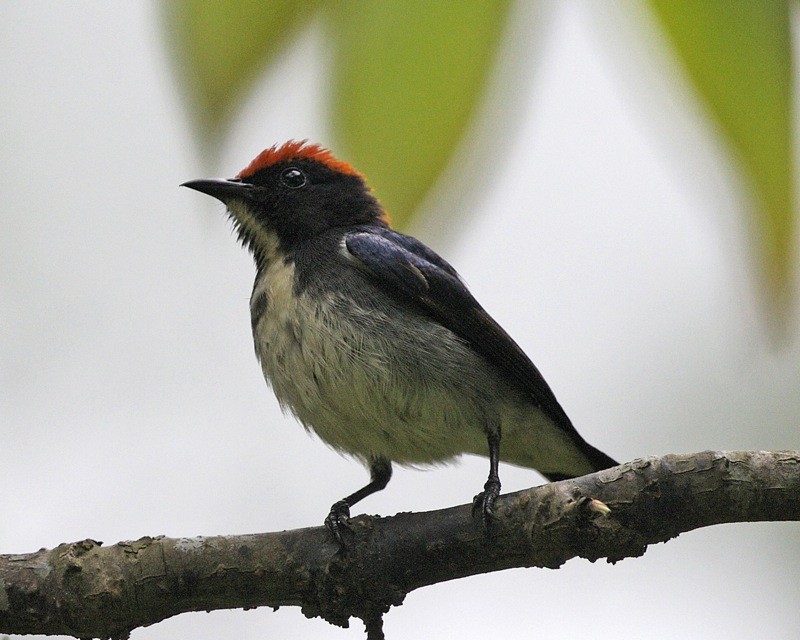
2. Scarlet-backed Flowerpecker
Measuring 9 cm (3.5 in) and weighing 7 to 8 grams (0.25 to 0.28 oz), the scarlet-backed flowerpecker is a small bird with a short tail. It exhibits sexual dimorphism. The male has a navy blue face, wings and tail, with a broad bright red stripe from its crown to its upper tail coverts. The female is predominantly olive green with a black tail and scarlet upper tail coverts and rump. Both sexes have creamy white underparts, black eyes and legs, and a dark grey arched bill. The juvenile has plumage similar to the female but has an orange bill and lacks the bright red rump. 
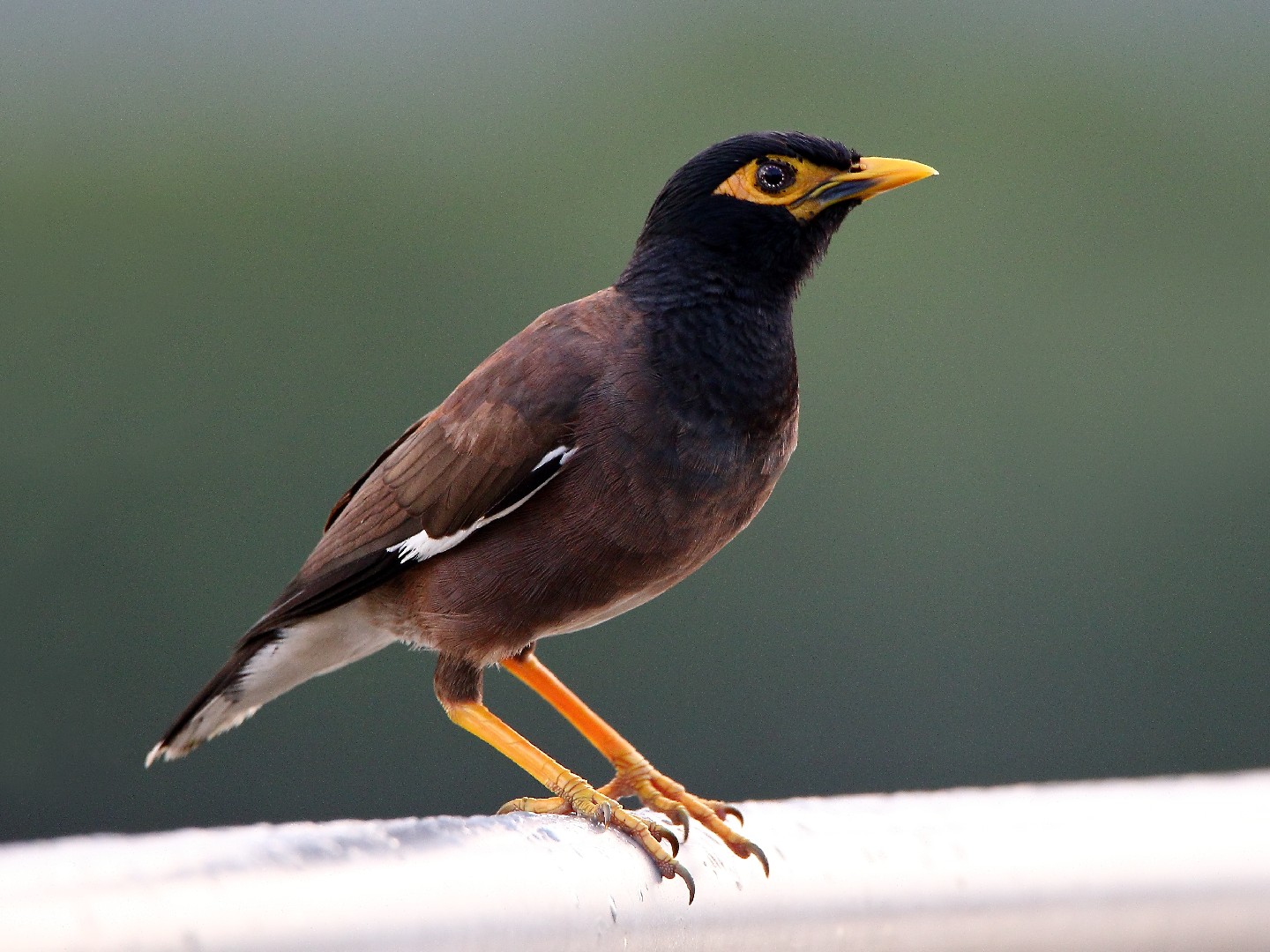
3. Common Myna
The common Myna is a large, stocky starling that prefers to live near humans in towns and suburban areas. It forages among tall grasses for grasshoppers; in fact, its scientific name, Acridotheres tristis, means "grasshopper hunter." The common Myna likes to maintain two roosts at the same time - both a temporary summer roost near the breeding site as well as a year-round roost where the female can sit and brood.
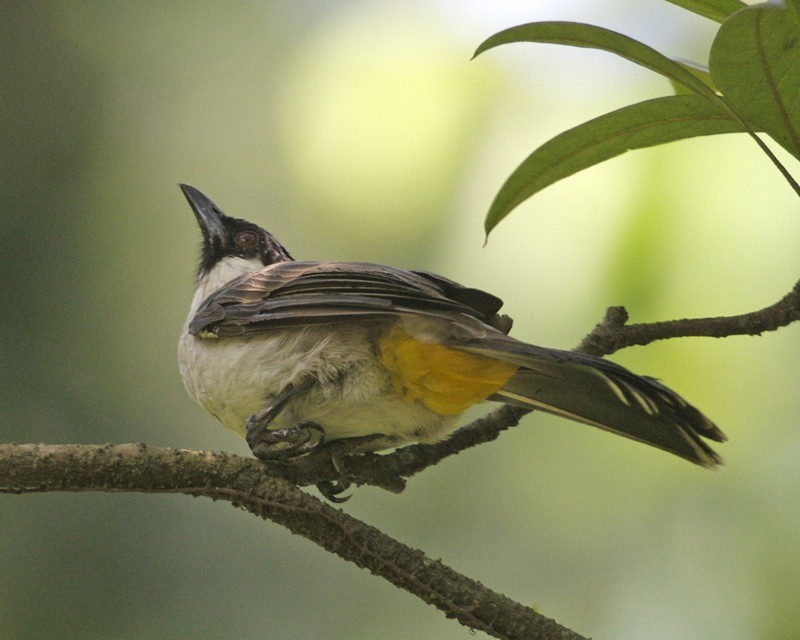
4. Sooty-headed Bulbul
The sooty-headed bulbul (Pycnonotus aurigaster) is a species of songbird in the Bulbul family, Pycnonotidae. It is found in south-eastern Asia. Its natural habitat is subtropical or tropical moist lowland forests.
5. Amur Falcon
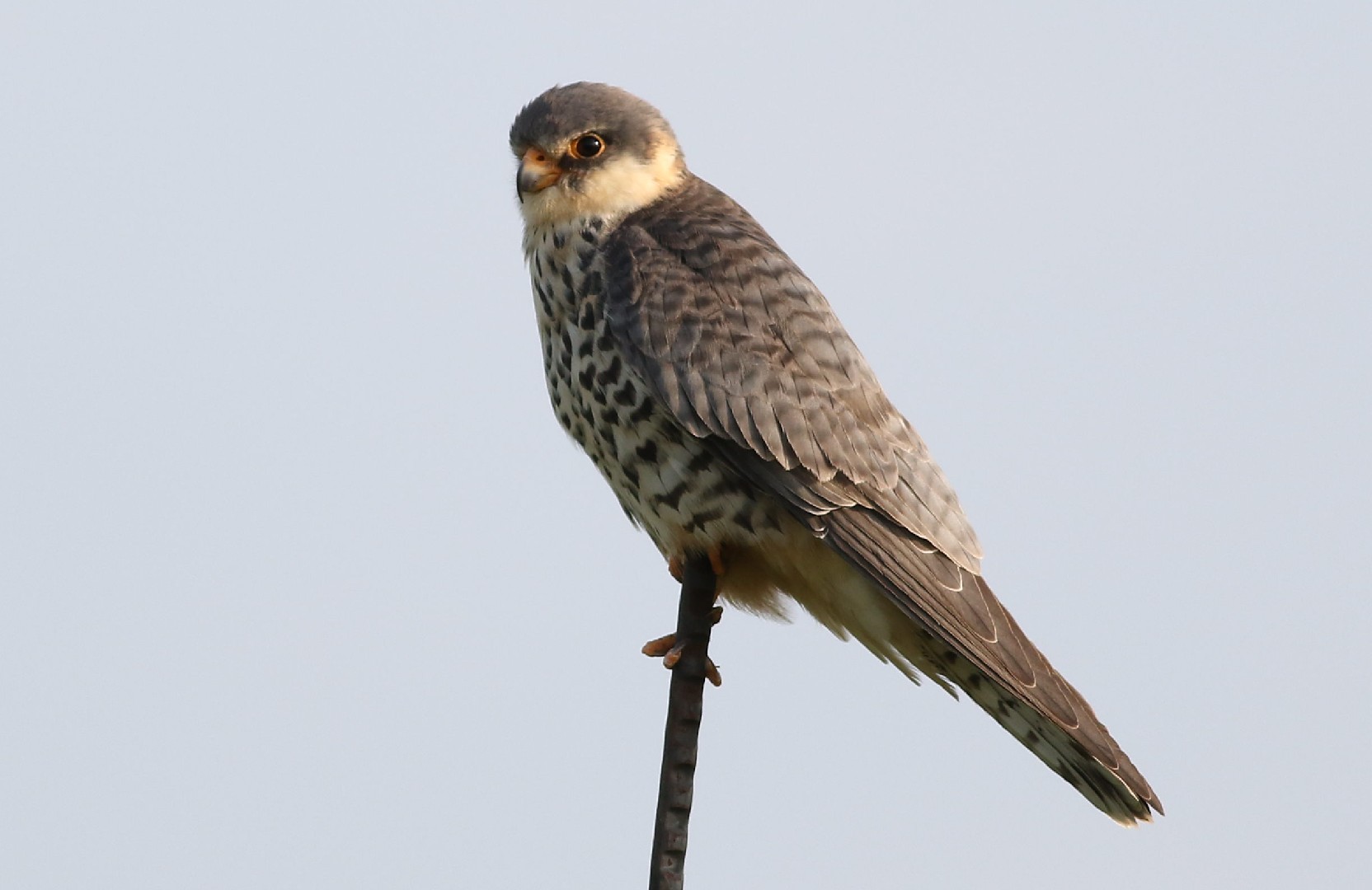
Males are characteristically dark sooty grey above with rufous thighs and vent. In flight, the wing lining is white, contrasting with the dark wing feathers. Adult males of the closely related red-footed falcon have a dark grey wing lining. In Africa, males can be confused with melanistic Gabar goshawks, but the chestnut on the vent is distinctive. Also, there may be some superficial resemblance to the sooty falcon and the grey kestrel, but those two species both have yellow feet and cere. The wings are long as in most falcons (with a span of 63–71 cm) and at rest the wing tip reaches or extends just beyond the tail-tip. Females can be more difficult to identify as they share a pattern common to many falcons, but are distinctive in having an orange eye-ring, a red cere and reddish orange feet. Juveniles can be confused only with those of the red-footed falcon, but lack the buffy underwing coverts.
6. Germain's Swiftlet
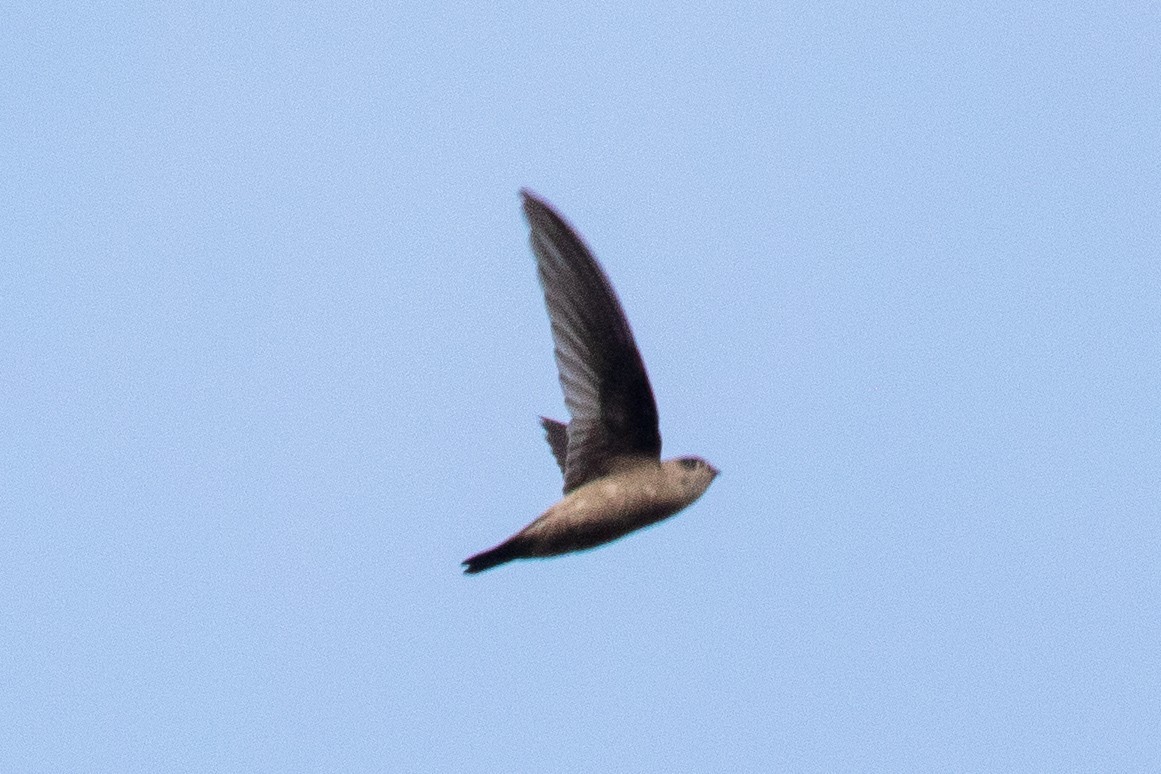
This swiftlet is 12 cm long and weighs 13 to 14 grams. The plumage is blackish-brown above, but much paler on the underparts. The tail is slightly forked and the wings are long and narrow. The bill and feet are black. The nominate subspecies C. g. germani from Hainan south to Thailand and northern Malaysia has a whitish rump, but C. g. amechanus of the rest of Malaysia has a grey rump. These two forms are sometimes considered to be subspecies of the edible-nest swiftlet. Several calls are uttered including a loud zwing and various chip calls used for echolocation in dark caves. Himalayan swiftlet winters within the range of Germain's swiftlet, but is larger and bulkier, and has a greyer rump than C. g. germani.
7. Zebra Dove
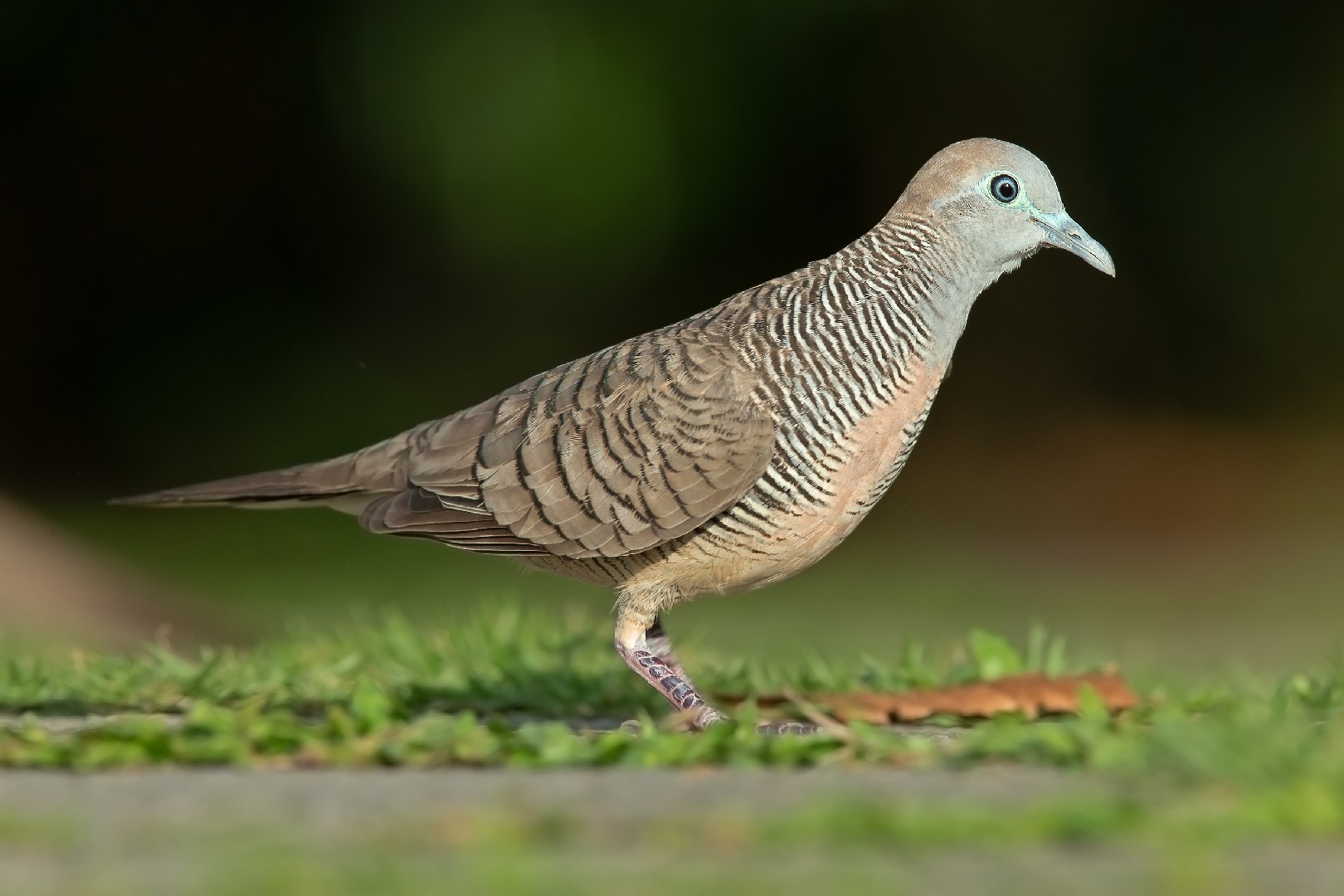
The zebra Dove is a small dove found in dense forests, open fields, farmlands, and similar suburban areas. Unlike other dove species, this ground-dwelling bird likes to forage alone or in pairs, but not in large groups. The call of this slender dove is often described as very pleasant. Very common in urban areas, they are quite comfortable around humans.
8. Eurasian Tree Sparrow
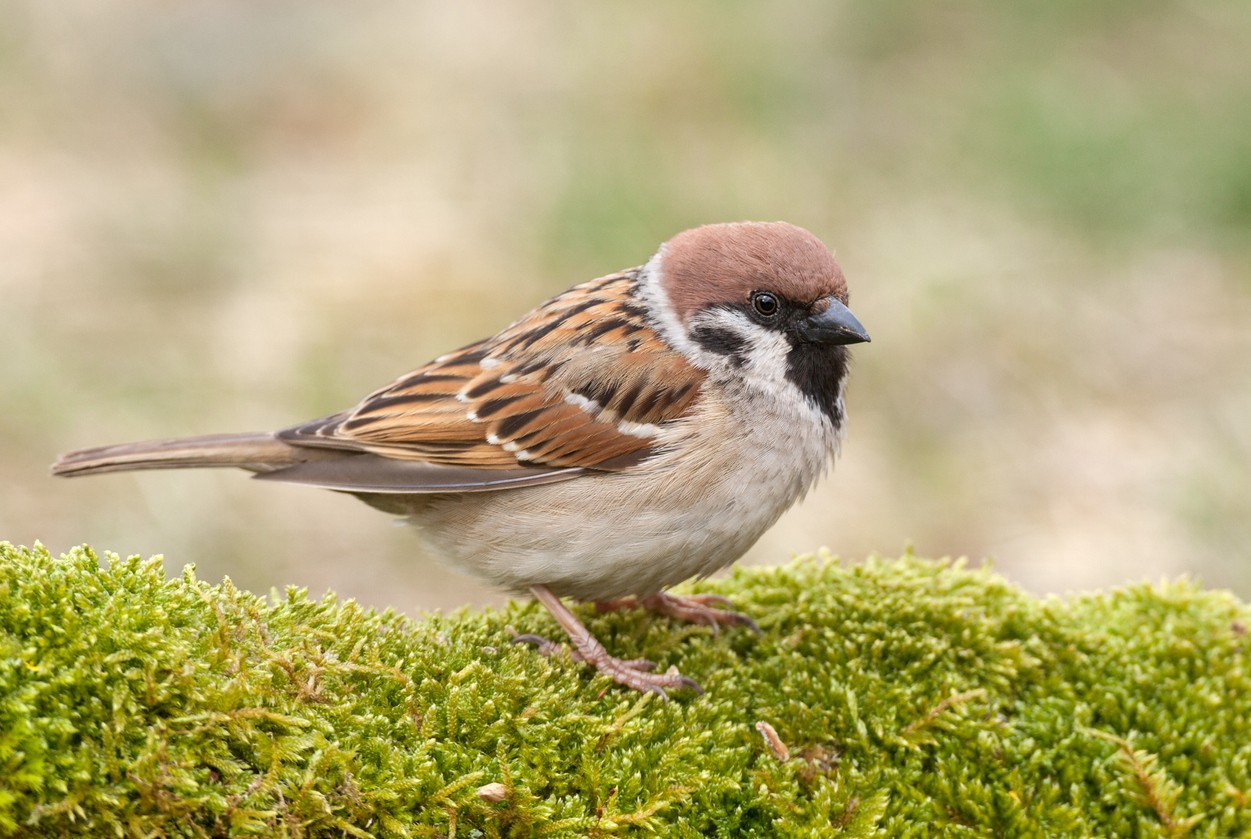
The eurasian Tree Sparrow (Passer montanus) is a widespread sparrow of the European mainland that has been introduced to some parts of North America. Eurasian Tree Sparrow is very similar to the House sparrow (Passer domesticus) but it's smaller and neater. It prefers more natural habitats, at the edges of human activity, and inhabits farmlands, parklands, and open woods.
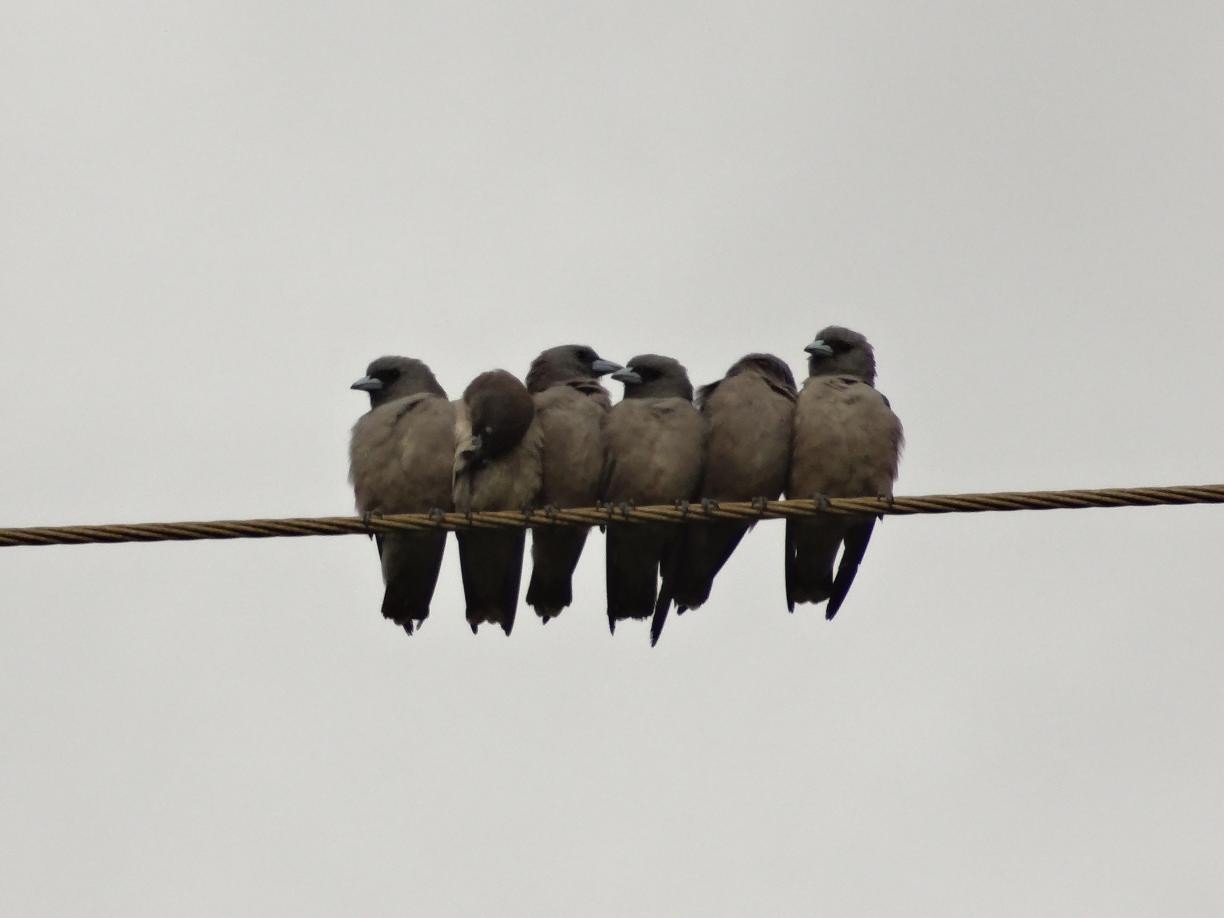
9. Ashy Woodswallow
This stocky woodswallow has an ashy grey upperparts with a darker head and a narrow pale band on the rump. The underside is pinkish grey and the short slaty black tail is tipped in white. The finch-like bill is silvery. In flight the long wing looks very broad at the base giving it a very triangular outline. The first primary is very short. The legs are short and the birds usually perch on high vantage points from which they make aerial sallies. There are no geographic variations in plumage and no subspecies have been designated. Males and females are indistinguishable in the field, however an old report suggests that the sexes differ in the colour of the inside of the mouth. Young birds appear barred on the underside.
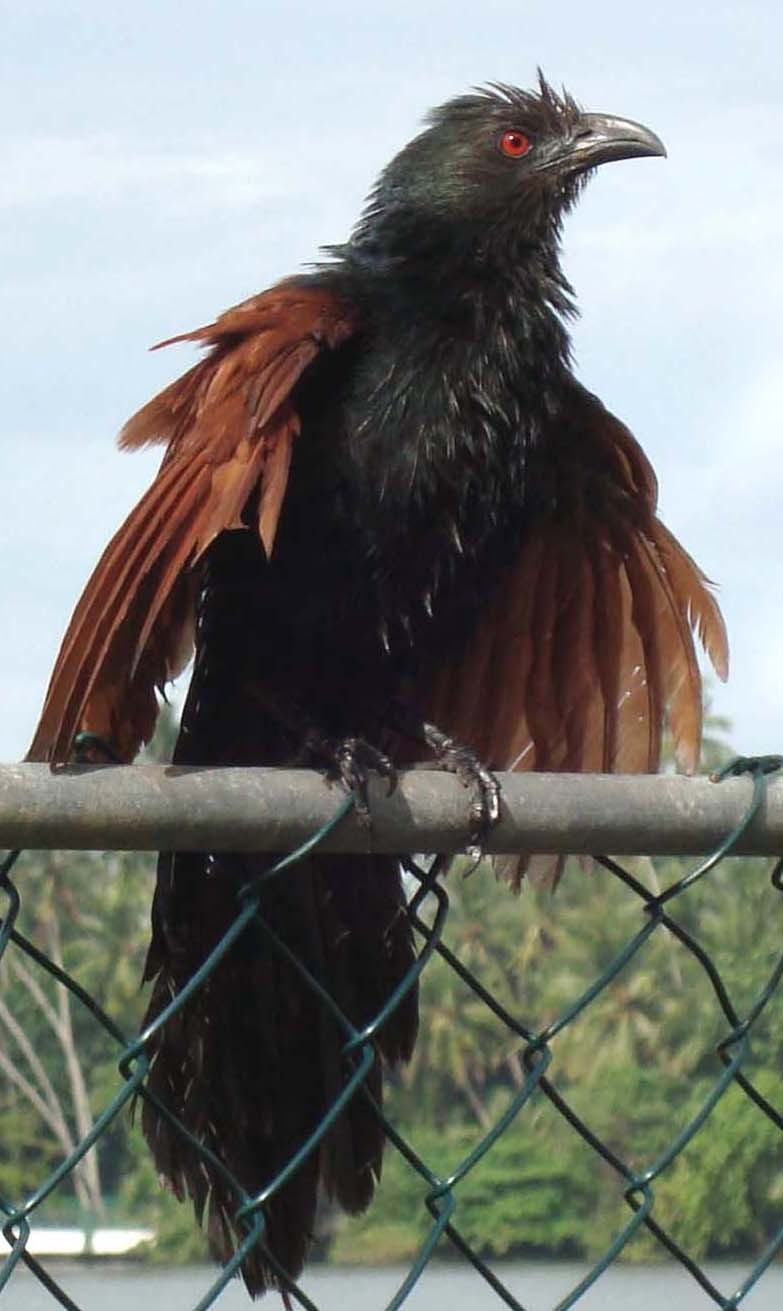
10. Greater Coucal
This is a large species of cuckoo. The head is black, upper mantle and underside are black glossed with purple. The back and wings are chestnut brown. There are no pale shaft streaks on the coverts. The eyes are ruby red. Juveniles are duller black with spots on the crown and there are whitish bars on the underside and tail. There are several geographic races and some of these populations are sometimes treated as full species.
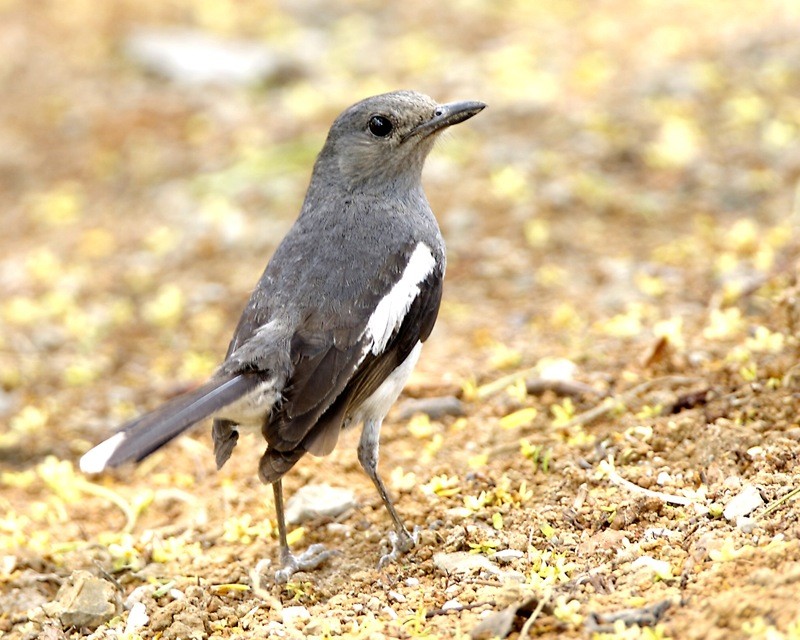
11. Oriental Magpie-robin
This species is 19 centimetres (7.5 in) long, including the long tail, which is usually held cocked upright when hopping on the ground. When they are singing a song the tail is normal like other birds. It is similar in shape to the smaller European robin, but is longer-tailed. The male has black upperparts, head and throat apart from a white shoulder patch. The underparts and the sides of the long tail are white. Females are greyish black above and greyish white. Young birds have scaly brown upperparts and head. It is the national bird of Bangladesh. The nominate race is found on the Indian subcontinent and the females of this race are the palest. The females of the Andaman Islands race andamanensis are darker, heavier-billed and shorter-tailed. The Sri Lankan race ceylonensis (formerly included with the peninsular Indian populations south of the Kaveri River) and southern nominate individuals have the females nearly identical to the males in shade. The eastern populations (Bhutan and Bangladesh) have more black on the tail and were formerly named erimelas. The populations in Burma and further south are named as the race musicus. A number of other races have been named across the range, including prosthopellus (Hong Kong), nesiotes, zacnecus, nesiarchus, masculus, pagiensis, javensis, problematicus, amoenus, adamsi, pluto, deuteronymus and mindanensis. However, many of these are not well-marked and the status of some of them is disputed. Some, like mindanensis, have now been usually recognized as full species (the Philippine magpie-robin). There is more geographic variation in the plumage of females than in that of the males. It is mostly seen close to the ground, hopping along branches or foraging in leaf-litter on the ground with a cocked tail. Males sing loudly from the top of trees or other high perches during the breeding season.
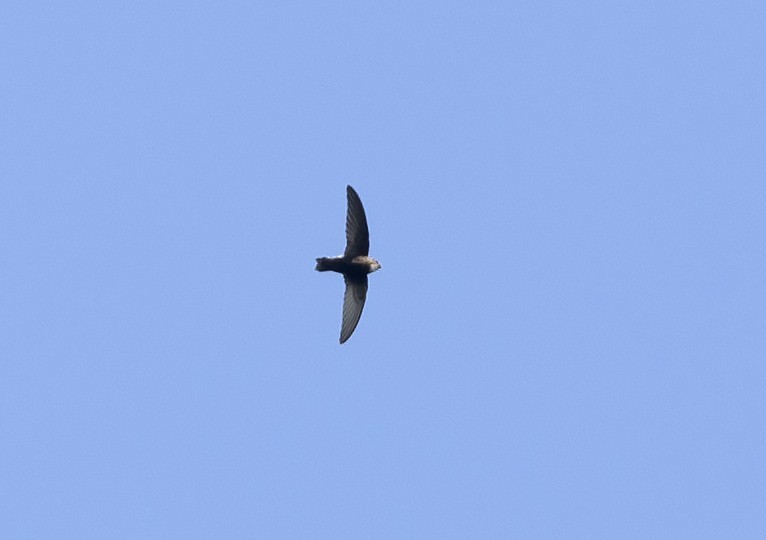
12. House Swift
The Eastern Swift (Apus nipalensis) is a species of bird in the Apodidae family.
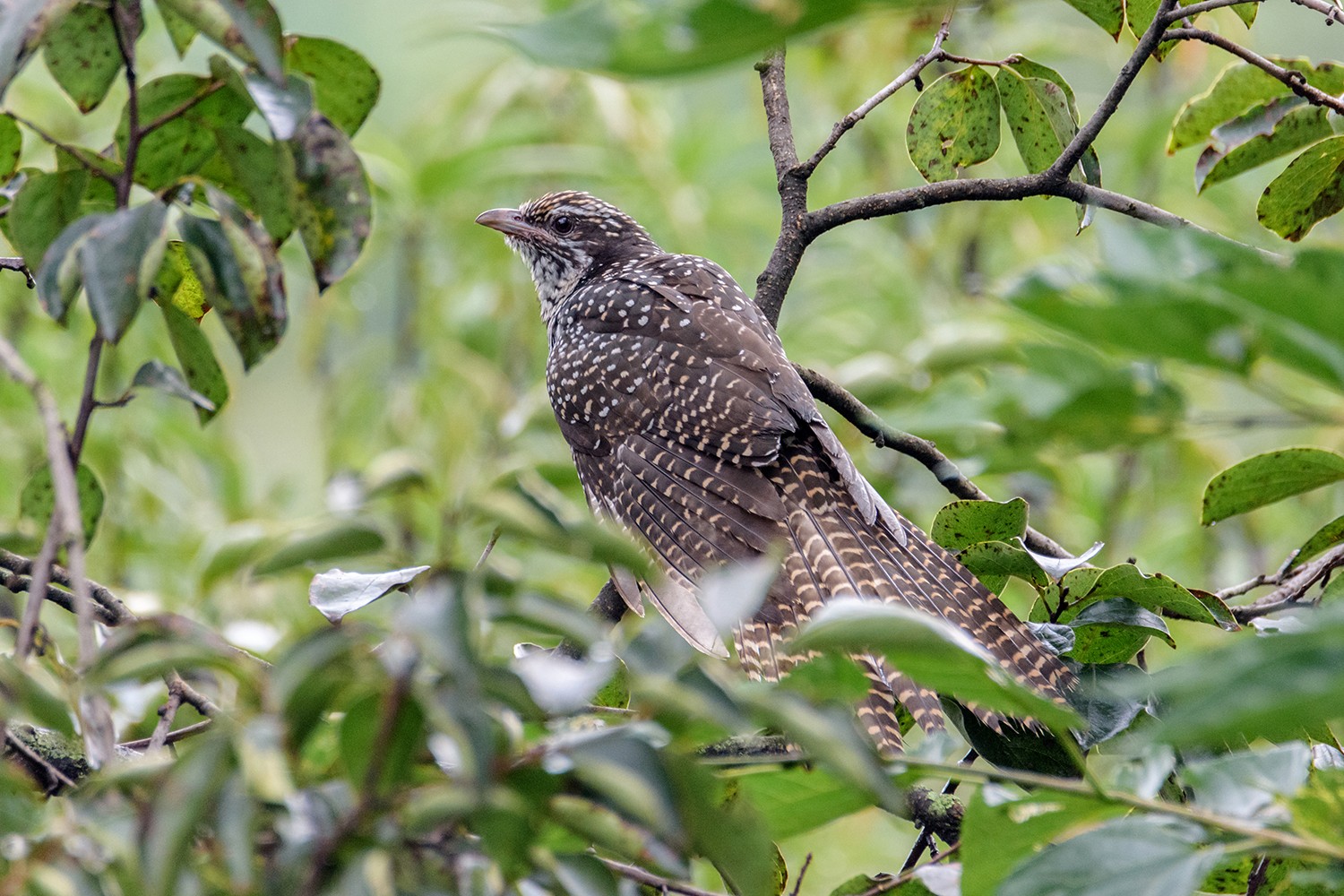
13. Asian Koel
The Eudynamys scolopaceus is commonly called asian Koel, native to China, the Indian Subcontinent and parts of Southeast Asia. This bird is used widely in Indian poetry, and it has a habit of colonizing new areas that it goes to. The bird is also known for stealing nests from other birds and having their chicks raised by the foster parents.
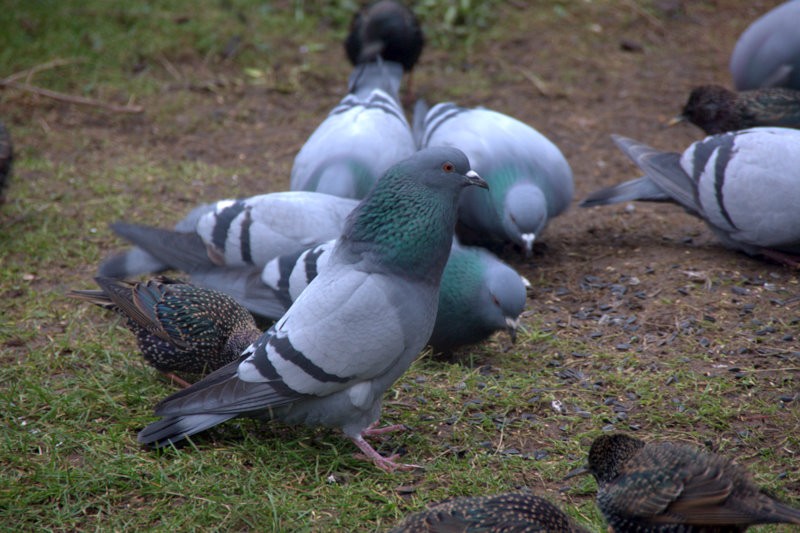
14. Rock Pigeon
The rock Pigeon is a wild ancestor of all domestic and feral pigeons, inhabiting coasts, cliffs, and caves. Pairs nest in rock crevices, often mating for life. They are known for their ability to fly very long distances to return to their homes, navigating using the sun's position and the earth's magnetic fields. Thanks to this ability, pigeons were used as messengers, particularly during World Wars I and II.
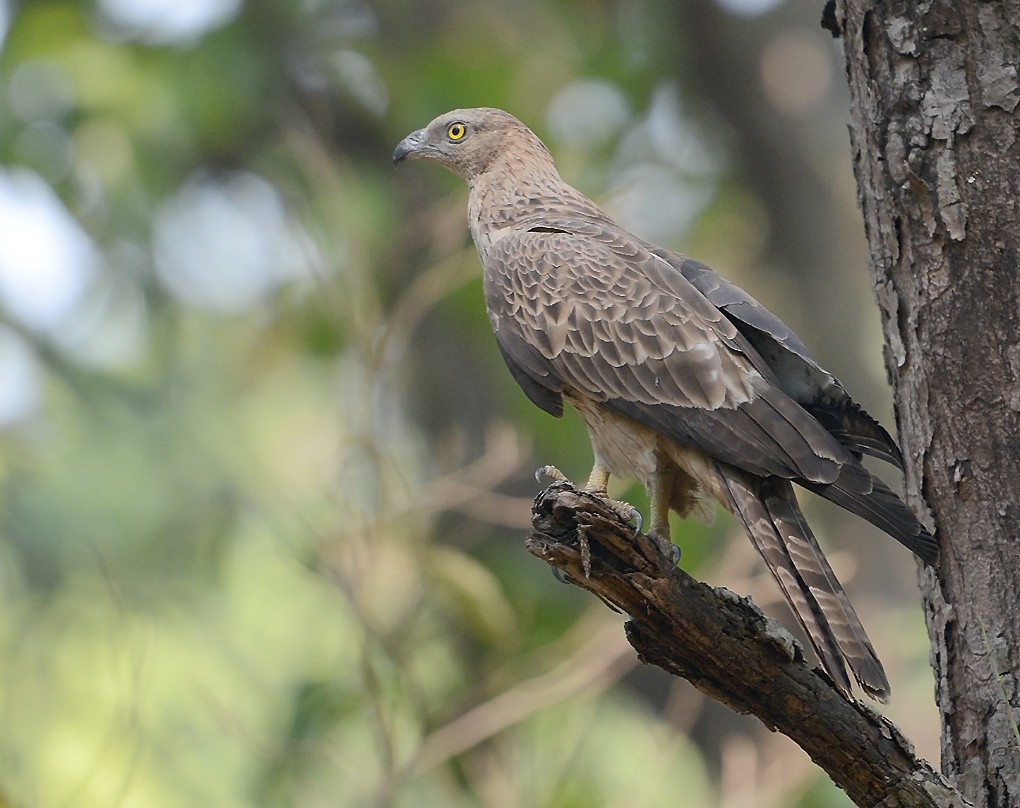
15. Oriental Honey-buzzard
Despite its name, this species is not related to Buteo buzzards, and is taxonomically closer to the kites. It appears long-necked with a small head (resembling that of a pigeon), and soars on flat wings. The head lacks a strong superciliary ridge, giving it a facial appearance very unlike a raptor. It has a long tail and a short head crest. It is brown above, but not as dark as European honey buzzard, and paler below. A dark throat stripe is present. Unusually for a large bird of prey, the sexes can be distinguished. The male has a blue-grey head, while the female's head is brown. She is slightly larger and darker than the male. The male has a black tail with a white band. It breeds in Asia from central Siberia east to Japan. It is a summer migrant to Siberia, wintering in tropical Southeast Asia. Elsewhere, it is more-or-less resident. It is a specialist feeder, living mainly on the larvae of social bees and wasps, and eating bits of comb and honey; it takes other small insect prey such as cicadas. The crested honey buzzard breeds in woodland, and is inconspicuous except in the spring, when the mating display includes wing-clapping. The display of roller-coasting in flight and fluttering wings at the peak of the ascent are characteristic of the genus Pernis. It is larger and longer-winged than its western counterpart, the European honey buzzard, Pernis apivorus.
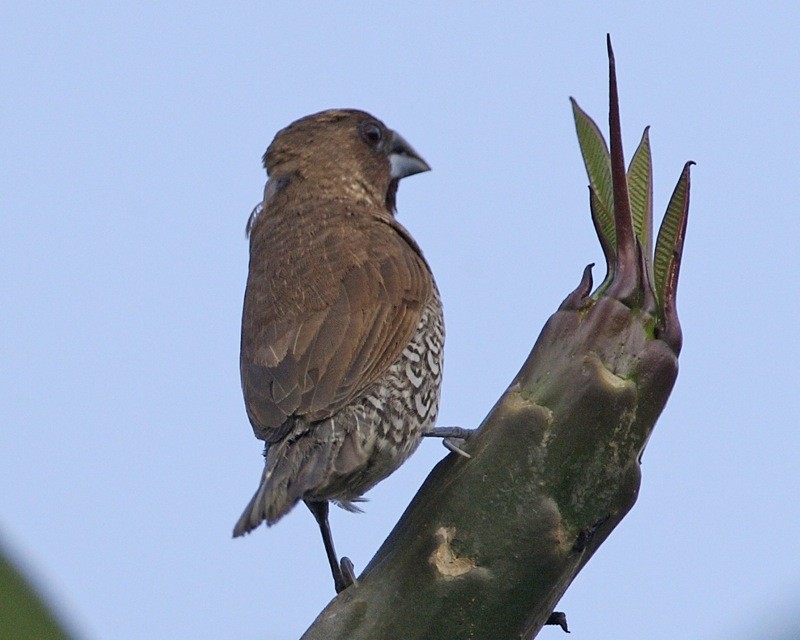
16. Scaly-breasted Munia
The scaly-breasted munia is about 11–12 centimetres (4.3–4.7 in) long and weighs 12–16 grams (0.026–0.035 lb). The adult has a stubby dark bill typical of grain eating birds, brown upperparts and a dark brown head. The underparts are white with dark scale markings. The sexes are similar, although males have darker markings on the underside and a darker throat than females. Immature birds have pale brown upperparts, lack the dark head found in adults, and have uniform buff underparts that can be confused with juveniles of other munia species such as the tricolored munia (Lonchura malacca) across the Asian and island populations and the black-throated munia (Lonchura kelaarti) in parts of India or Sri Lanka. Populations within their wide distribution range show variations in plumage color and size. Along with other Estrildines, these species are thought to have originated in Asia. The species has been introduced to other parts of the world due to its popularity as a cage bird and populations have established in the wild.
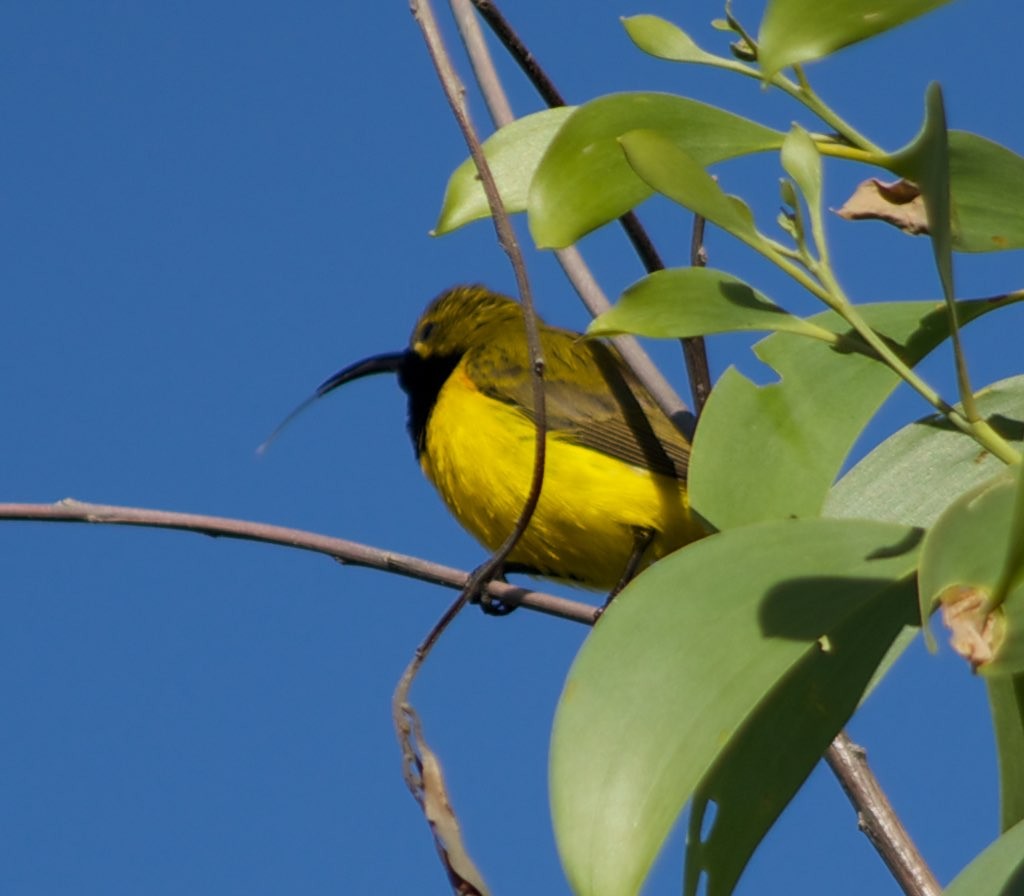
17. Olive-backed Sunbird
In most subspecies, the underparts of both male and female are bright yellow, the backs are a dull brown colour. The forehead, throat and upper breast of the adult male is a dark, metallic blue-black. In the Philippines the males of some subspecies have an orange band on the chest, in Wallacea and northern New Guinea some subspecies have most of the underparts blackish, and in southern China and adjacent parts of Vietnam most of the underparts of the male are greyish-white.
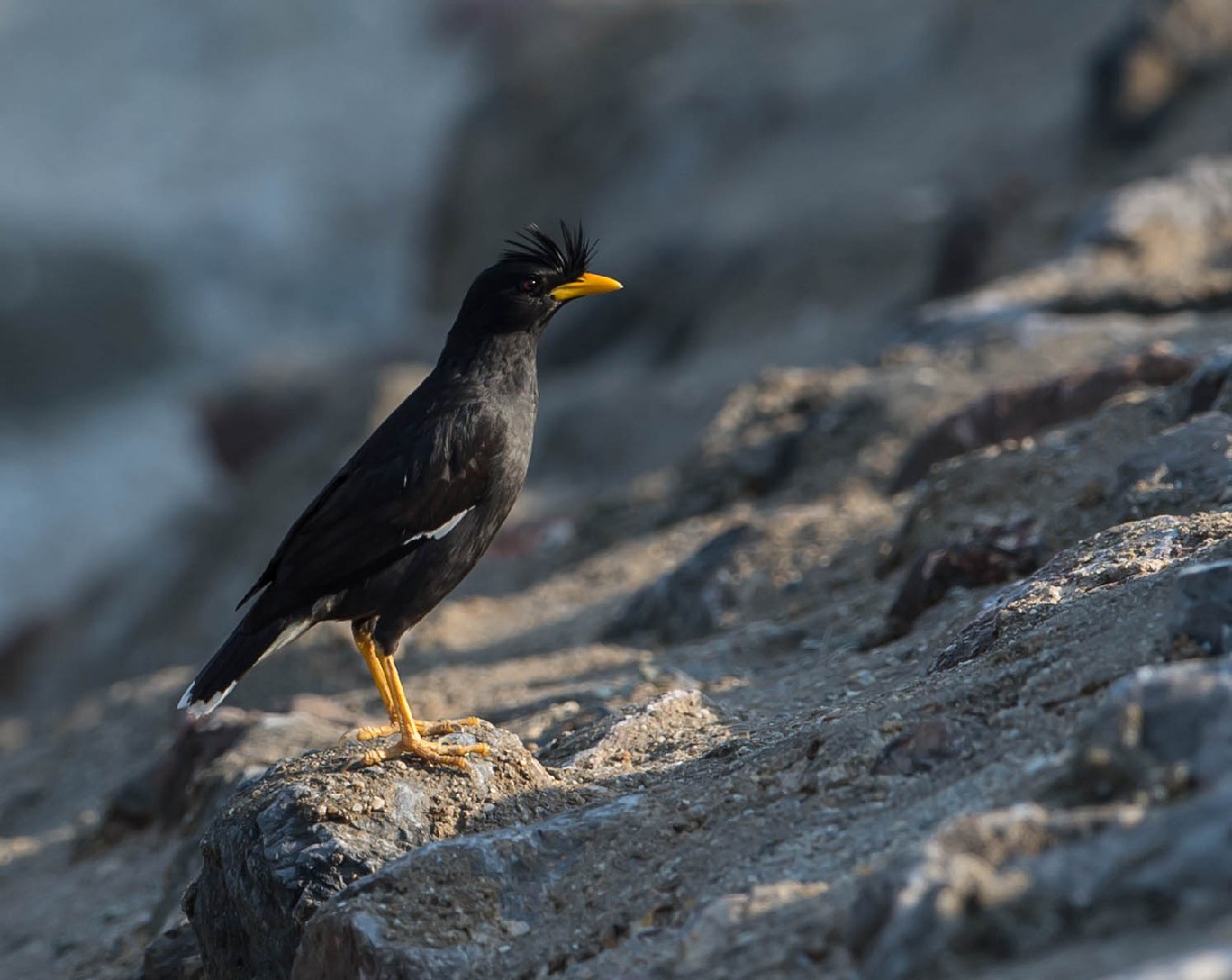
18. Great Myna
It is black with elongated forehead feathers, forming a frontal crest that may curl backwards. Its beak and feet are yellow. It has white from the vent to the tip of the tail and a white wing patch.
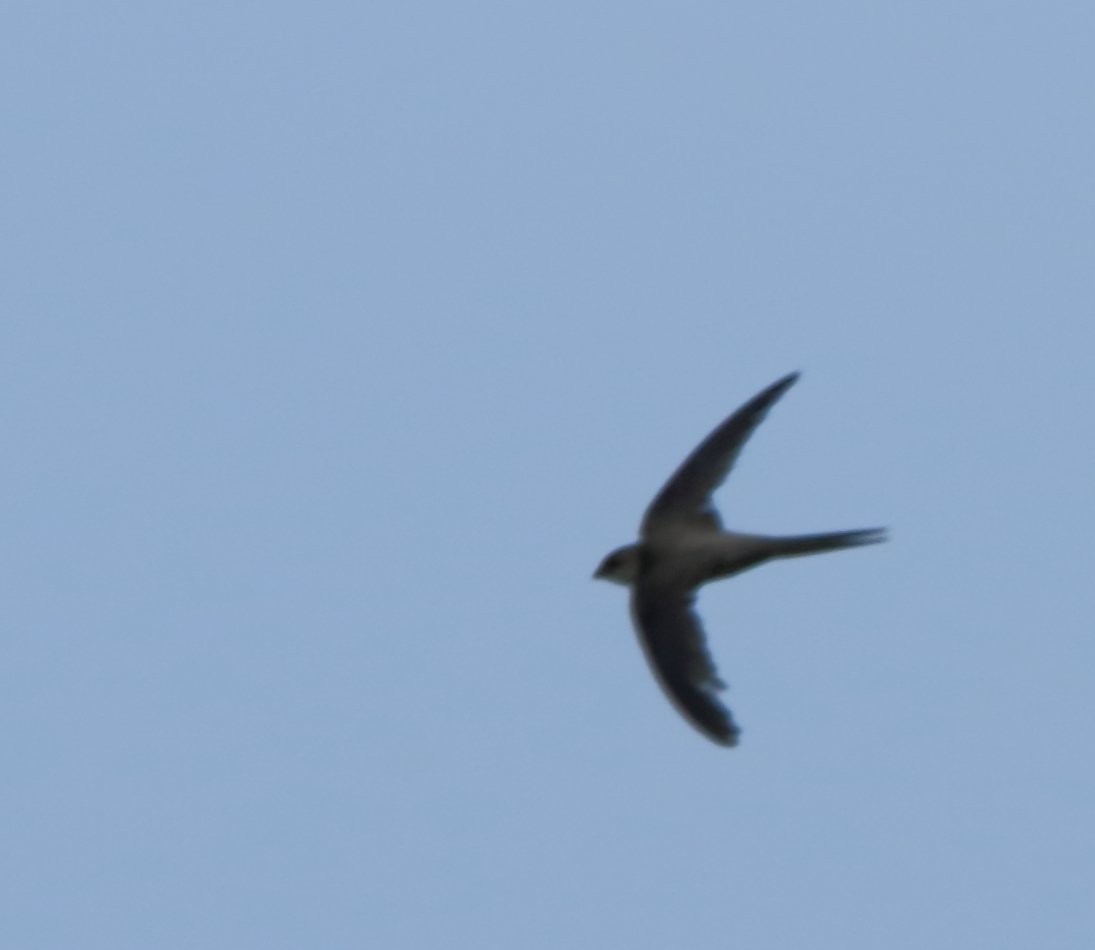
19. Asian Palm Swift
The Asian palm swift (Cypsiurus balasiensis) is a small swift. It is very similar to the African palm swift, Cypsiurus parvus, and was formerly considered to be the same species. It is a common resident breeder in tropical Asia from India to the Philippines. The down and feather nest is glued to the underside of a palm leaf with saliva, which is also used to secure the usually two or three eggs. This is a bird of open country and cultivation, which is strongly associated with oil palms. This 13 cm long species is mainly pale brown in colour. It has long swept-back wings that resemble a crescent or a boomerang. The body is slender, and the tail is long and deeply forked, although it is usually held closed. The call is a loud shrill scream. Sexes are similar, and young birds differ from adults mainly in their shorter tails. Asian palm swift has very short legs which it uses only for clinging to vertical surfaces, since swifts never settle voluntarily on the ground. These swifts spend most of their lives in the air, living on the insects they catch in their beaks. Asian palm swifts often feed near the ground, and they drink on the wing.

20. Common Tailorbird
The common Tailorbird is famous for its nests, which are leaves that have been sewn together. Also known as Orthotomus sutorius, it is found across tropical regions in Asia and can be identified by its long, erect tail. The male and female take care of the chicks, and there have been recorded cases of a pair adopting chicks from another couple.