




Top 20 Most Common Bird in Mardin
Mardin showcases a rich biodiversity due to its unique location straddling various climatic zones. Among its wildlife, 20 of the most common bird species reflect the region's ecological diversity. These birds, remarkable for unique adaptations, vibrant plumage, or distinctive calls, inhabit Mardin's forests, wetlands and urban spaces, contributing to the region's lively soundscape and vibrant biodiversity.

Most Common Bird
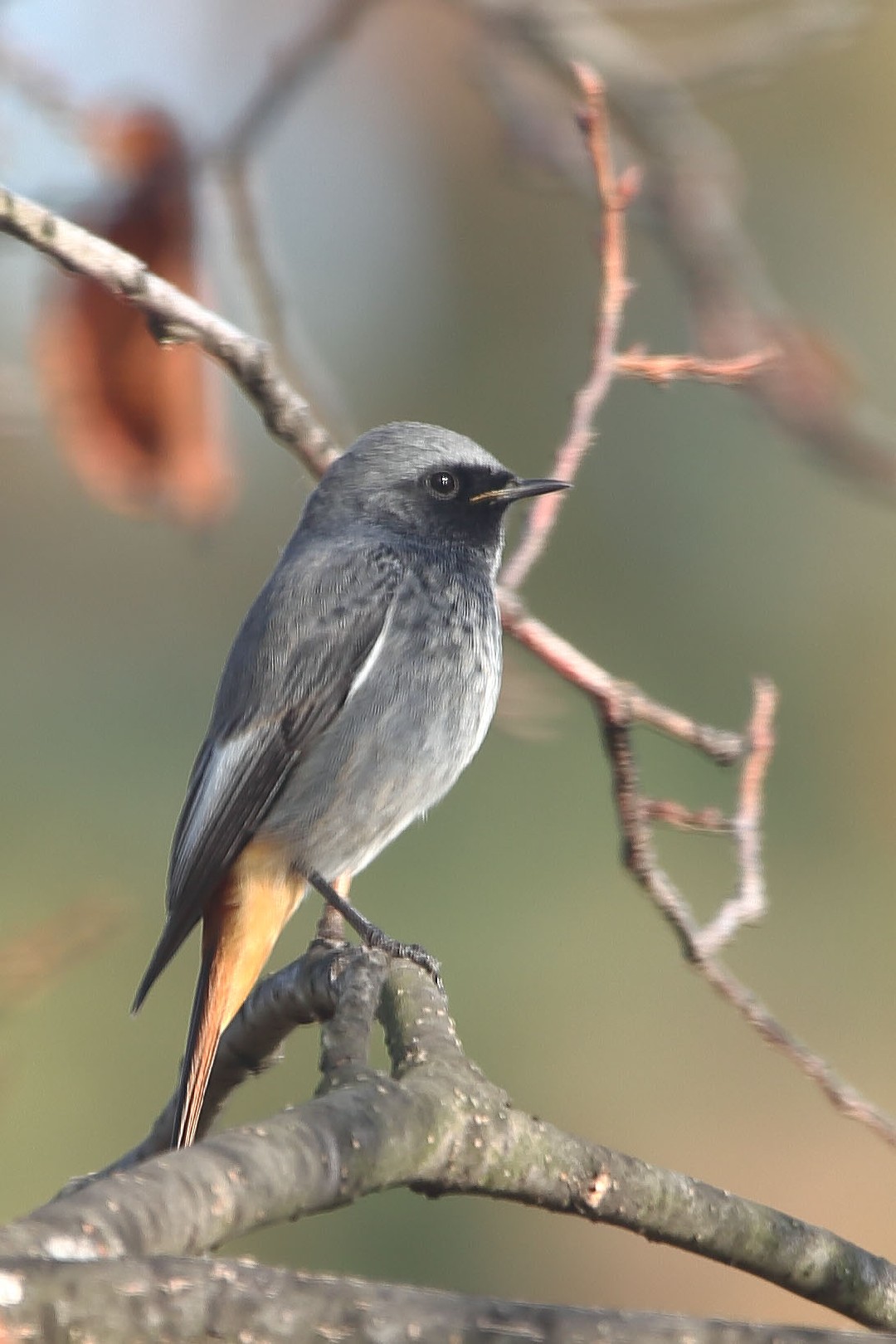
1. Black Redstart
The black Redstart is a small flycatcher that was once present only in natural habitats such as cliffs and rocky, mountainous areas, but now it also inhabits industrial sites, buildings, and rooftops. Although this bird is a remarkable singer, it is quite quiet. The species is very variable in appearance, and dines on insects.
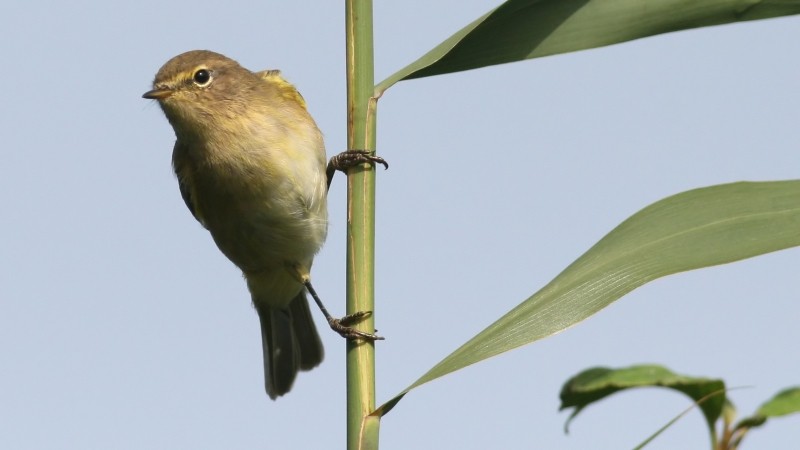
2. Common Chiffchaff
The common Chiffchaff is a small warbler known for its distinctive "chiff-chaff" call. It can be found in woodlands, gardens, and parks throughout Europe and Asia. It feeds on small insects, spiders and other invertebrates, which it catches by gleaning from leaves and branches. In the breeding season, males will sing to attract females and defend their territories. 
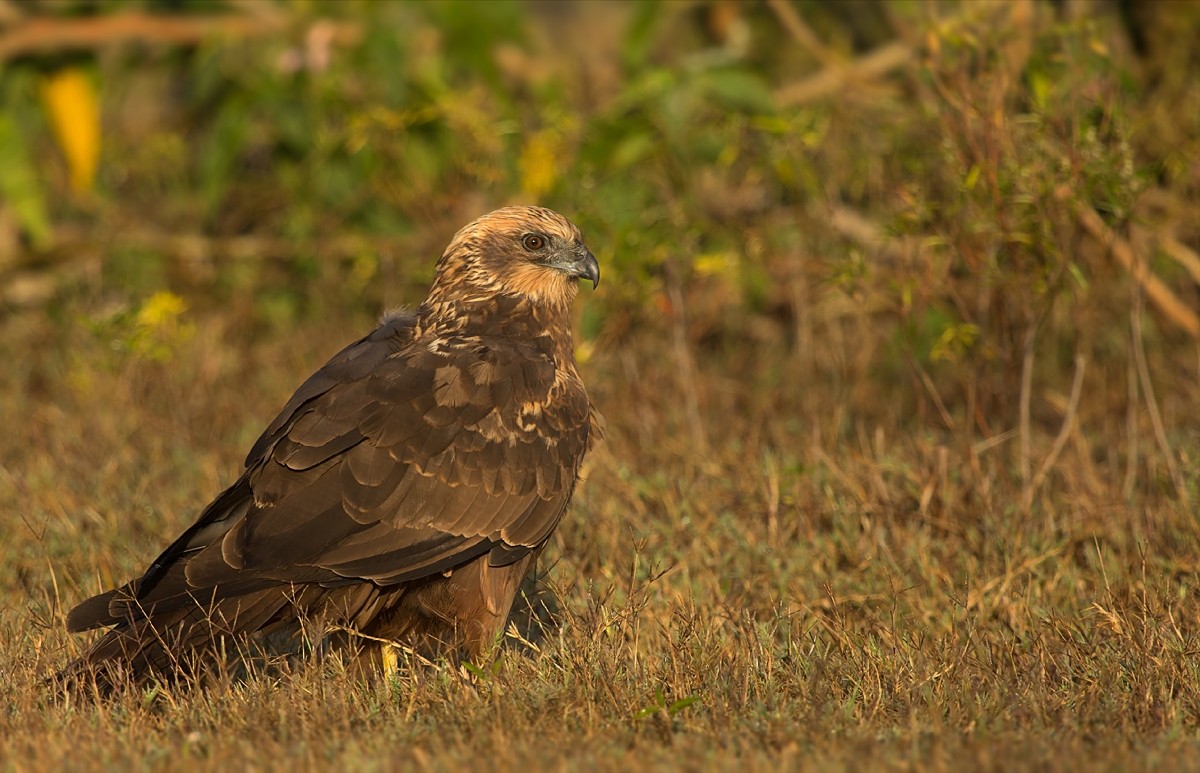
3. Western Marsh Harrier
The western Marsh Harrier’s long tail and wings give the raptor a gangly appearance. It is commonly seen flying low over wetlands and marshes in search of prey. The preferred food sources are small birds and mammals that it catches in its beak or talons. While in flight, the raptor holds its wings in a ‘V’ shape.
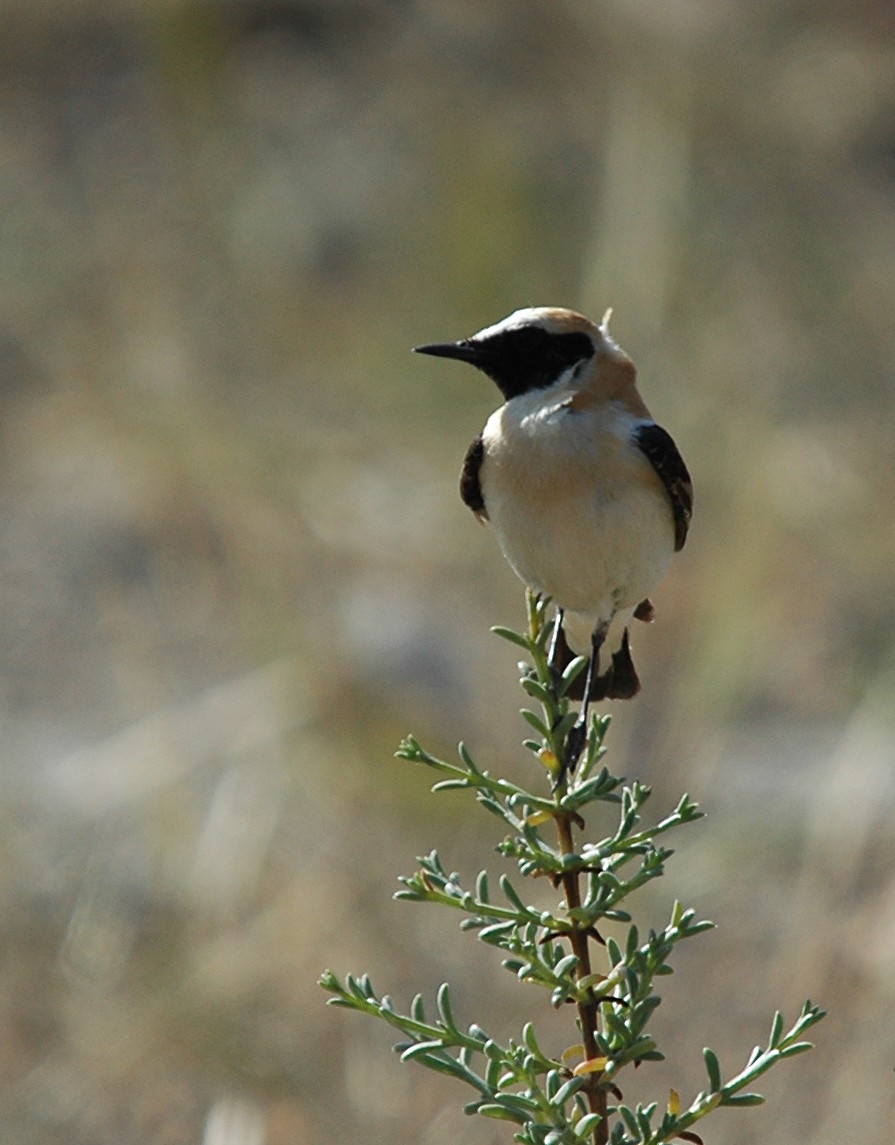
4. Western Black-eared Wheatear
The western black-eared wheatear (Oenanthe hispanica) is a wheatear, a small migratory passerine bird that was formerly classed as a member of the thrush family Turdidae, but is now considered to be an Old World flycatcher (family Muscicapidae). It was formerly (and still is by some authorities) considered conspecific with the eastern black-eared wheatear. The breeding male has the forehead and crown white or nearly white, the mantle buff, and the wings blacker than those of the northern wheatear. The underparts are white tinged with buff. The back, upper tail coverts and most of the tail are white. A black mask extends from the ear coverts to the bill. The throat can be either black or white. In autumn and winter the head and mantle are distinctly buff, as are the underparts (including the throat in non-black-throated individuals), but the buff varies in intensity. Except for the central pair, the tail feathers are much whiter than in the northern wheatear, the white on the inner web often extending to the tip. The female is a browner bird, but has the characteristic white lower back, and her seasonal changes are less marked. The male western black-eared wheatear can be distinguished from the male eastern black-eared wheatear by its more buff-tinged upperparts, giving it a less distinctly black-and-white appearance than the latter species, as well as having the black of the mask stopping at the base of the bill rather than extending slightly above. Black-throated individuals of this species have less black on the throat and face than on the eastern birds, and the black generally terminates less abruptly. Females of this species differ from their eastern counterparts in being warmer brown overall.
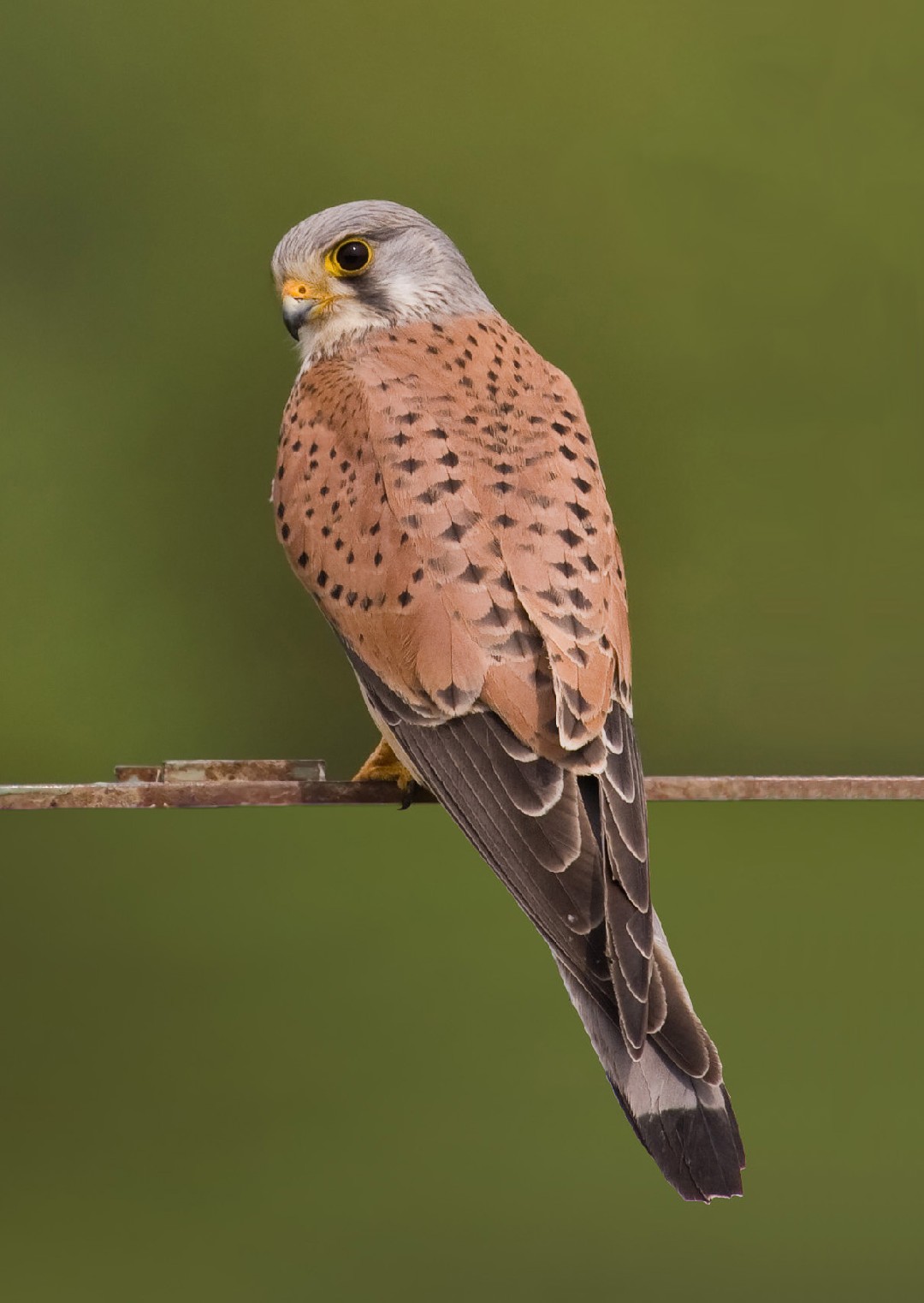
5. Common Kestrel
The common Kestrel is a small falcon found throughout much of Europe, Asia, and Africa. It feeds on small mammals, birds, and insects and is known for its ability to hover in the air to spot prey. It can be found in a variety of habitats. Some populations have declined due to habitat loss.
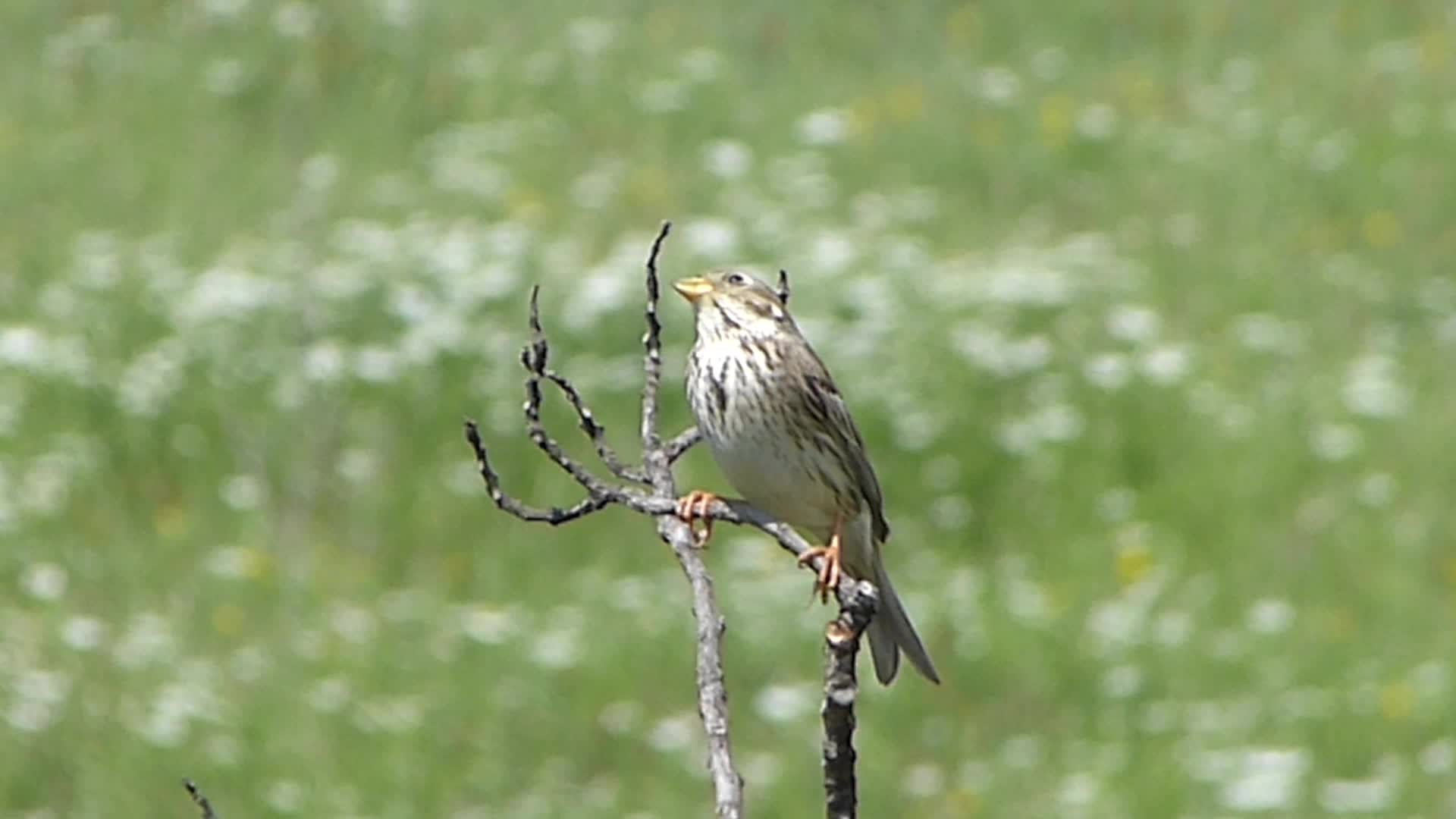
6. Corn Bunting
This is an unusual bunting because the plumages of the sexes are similar in appearance, though the male is approximately 20% larger than the female. This large bulky bunting is 16–19 cm long, with a conspicuously dark eye and yellowish mandibles. Males lack any showy colours, especially on the head, which is otherwise typical of genus Emberiza. Both sexes look something like larks, being streaked grey-brown above with whitish underparts. The underparts are streaked over the flanks and breast, and the streaking forms gorget around the throat. The lesser wing coverts are distinctively dark and white-tipped. The tail is plain brown. The song of the male is a repetitive metallic sound, usually likened to jangling keys, which is given from a low bush, fence post or telephone wires.
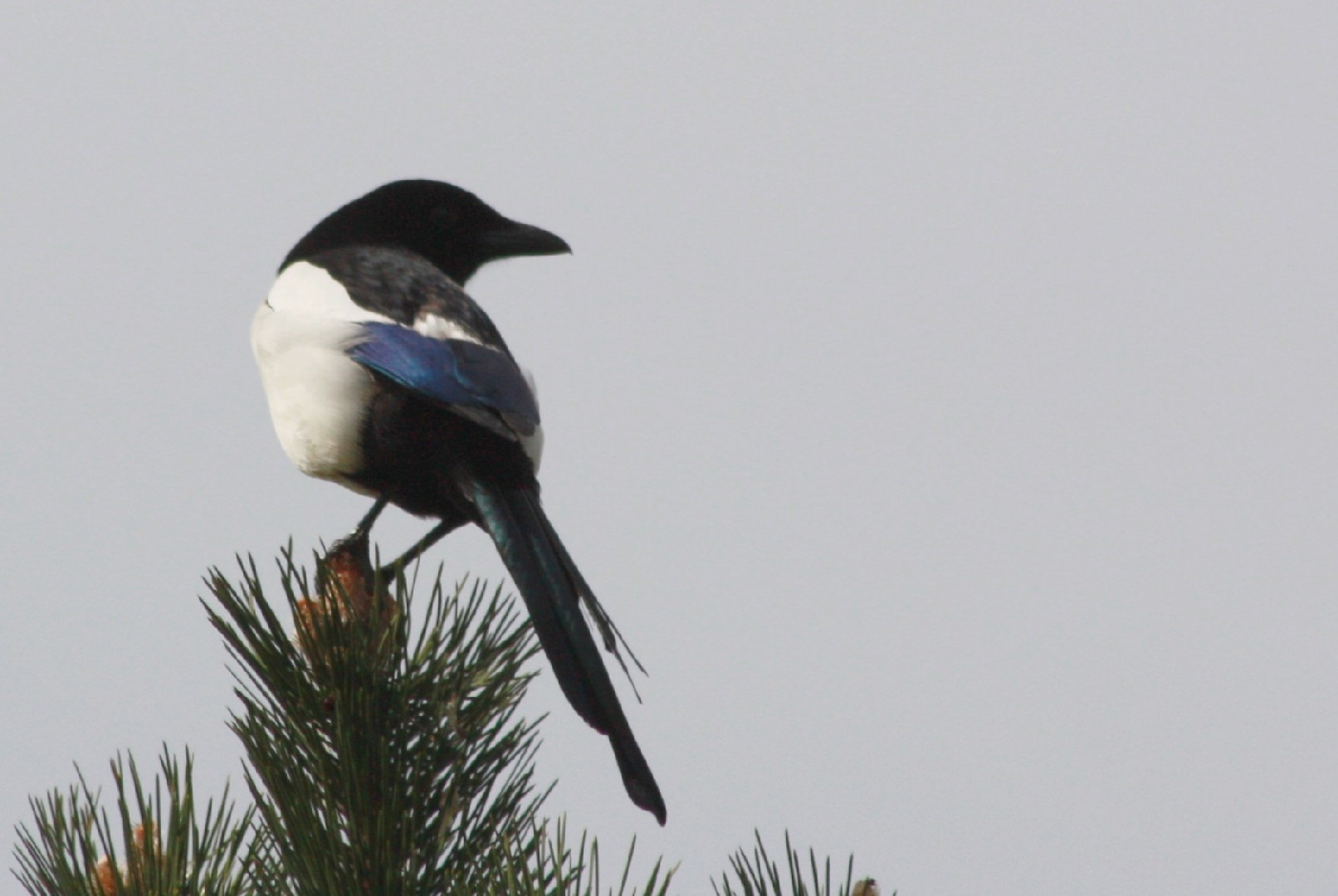
7. Eurasian Magpie
The eurasian Magpie is a striking and intelligent bird known for its black and white plumage and long tail. It is highly adaptable, found in a variety of habitats, and known for its intelligence, similar to that of great apes. It is omnivorous, eating both insects and fruits, and it has a reputation for being mischievous and thieving.
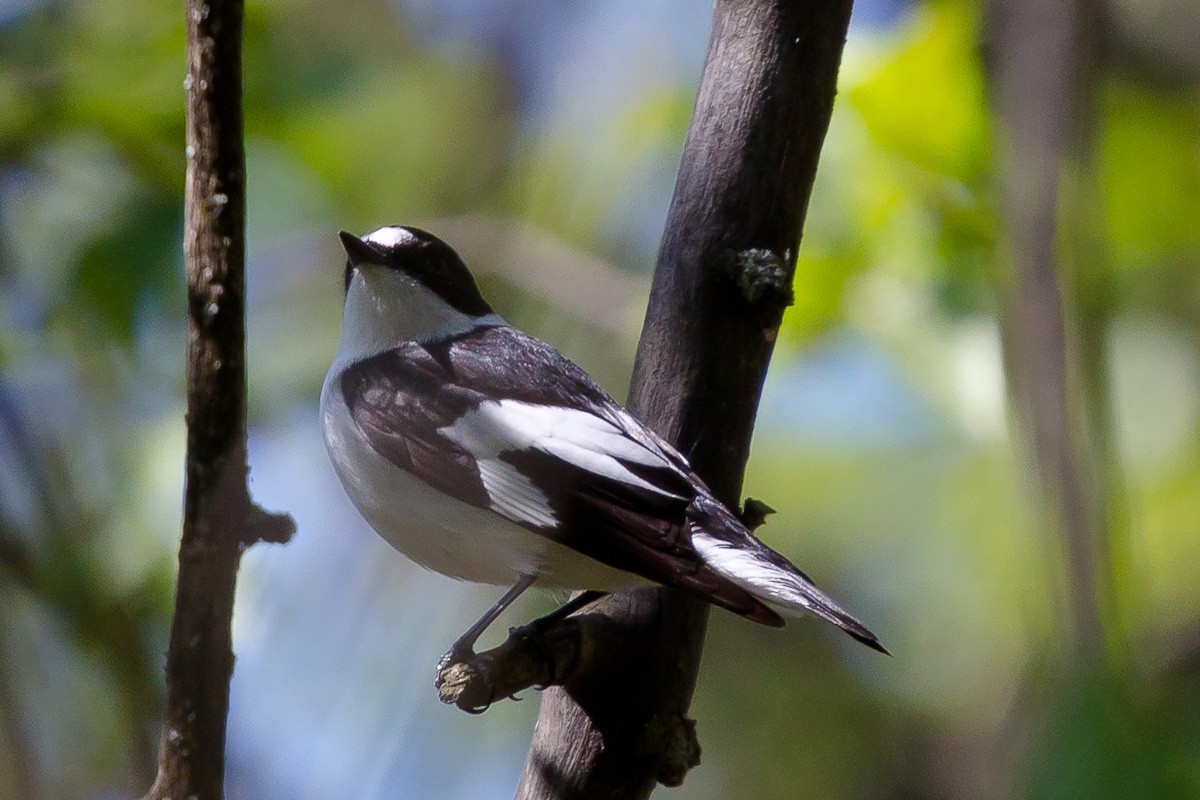
8. Collared Flycatcher
The collared flycatcher (Ficedula albicollis) is a small passerine bird in the Old World flycatcher family, one of the four species of Western Palearctic black-and-white flycatchers. It breeds in southeast Europe (isolated populations are present in the islands of Gotland and Öland in the Baltic Sea, Sweden) and Eastern France to the Balkan Peninsula and Ukraine and is migratory, wintering in sub Sahara Africa. It is a rare vagrant in western Europe. This is a 12–13.5 cm long bird. The breeding male is mainly black above and white below, with a white collar, large white wing patch, black tail (although some males have white tail sides) and a large white forehead patch. It has a pale rump. The bill is black and has the broad but pointed shape typical of aerial insectivores. As well as taking insects in flight, this species hunts caterpillars amongst the oak foliage, and will take berries. Non-breeding males, females and juveniles have the black replaced by a pale brown, and may be very difficult to distinguish from other Ficedula flycatchers, particularly the European pied flycatcher and the semicollared flycatcher, with which this species hybridizes to a limited extent. They are birds of deciduous woodlands, parks and gardens, with a preference for old trees with cavities in which it nests. They build an open nest in a tree hole, or man-made nest-boxes. Normally 5-7 eggs are laid. The song is slow strained whistles, quite unlike the pied flycatcher. Pied flycatchers can mimic the song of the collared flycatcher in sympatric populations. The genus name is from Latin and refers to a small fig-eating bird (ficus, "fig") supposed to change into the blackcap in winter. The specific albicollis is from Latin albus, white, and collum, "neck". The collared flycatcher is used as a model species in both ecology and genetics and it was one of the first birds that had its full genome sequenced. Repeated spectrometric data taken from male Collared Flycatchers has revealed that plumage reflectance should be measured during courtship, the primary period of sexual signalling, with spectral traits declining over the breeding season.
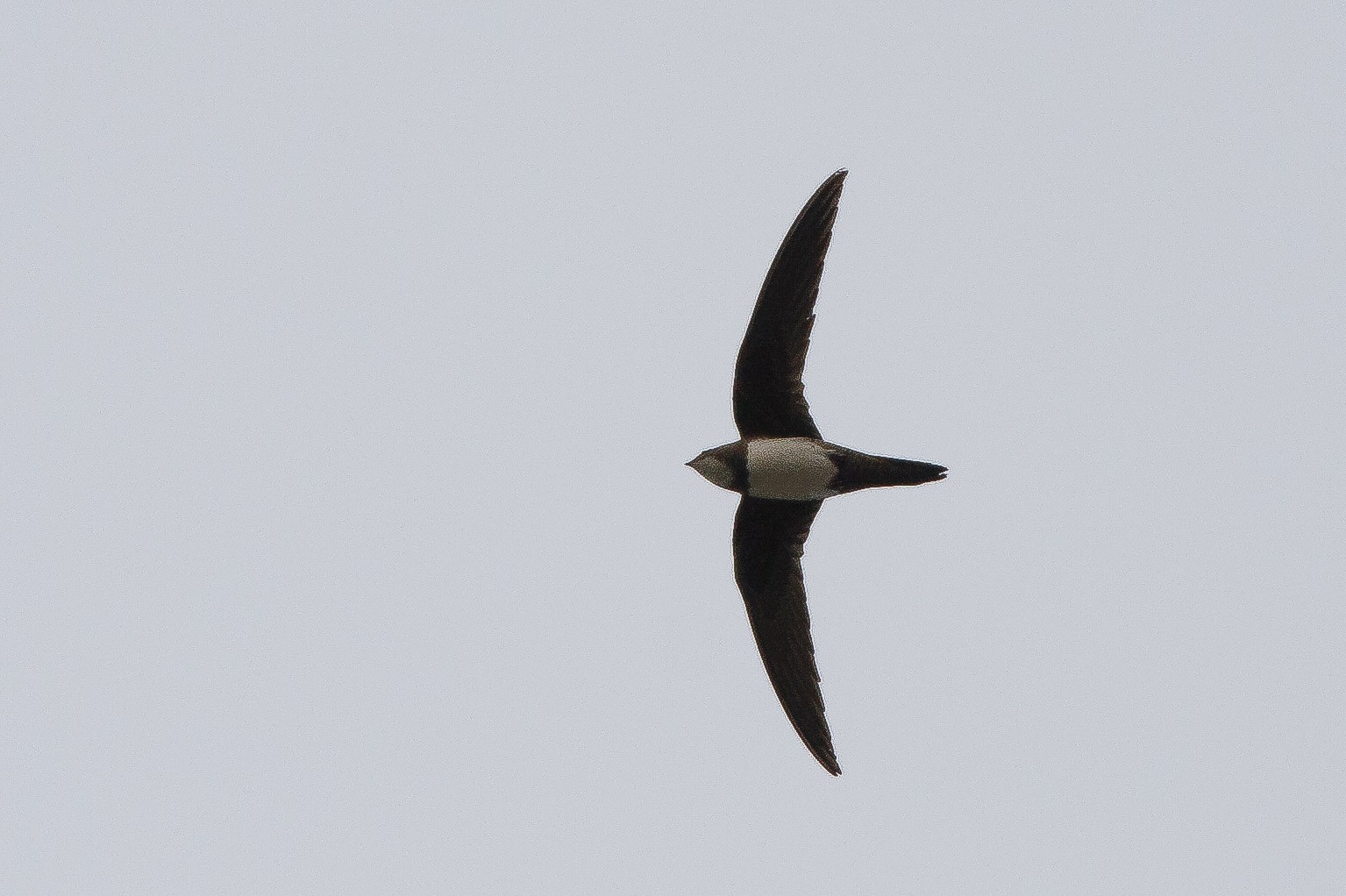
9. Alpine Swift
The bird is superficially similar to a large barn swallow or house martin. It is, however, completely unrelated to those passerine species, since swifts are in the order Apodiformes. The resemblances between the groups are due to convergent evolution, reflecting similar life styles. Swifts have very short legs which they use only for clinging to vertical surfaces. The scientific name Apodidae comes from the Ancient Greek απους, apous, meaning "without feet". They never settle voluntarily on the ground. Alpine swifts breed in mountains from southern Europe to the Himalaya. Like common swifts, they are strongly migratory, and winter much further south in southern Africa. They wander widely on migration, and are regularly seen in much of southern Europe, Salford and Asia. The species seems to have been much more widespread during the last ice age, with a large colony breeding, for example in the Late Pleistocene Cave No 16, Bulgaria, around 18,000–40,000 years ago. The same situation has been found for Komarowa Cave near Częstochowa, Poland during a period about 20,000–40,000 years ago. These apodiformes build their nests in colonies in a suitable cliff hole or cave, laying two or three eggs. Swifts will return to the same sites year after year, rebuilding their nests when necessary, and pairing for life. Young swifts in the nest can drop their body temperature and become torpid if bad weather prevents their parents from catching insects nearby. They have adapted well to urban conditions, frequently nesting in old buildings in towns around the Mediterranean, where large, low-flying flocks are a familiar feature in summer. Alpine swifts have a short forked tail and very long swept-back wings that resemble a crescent or a boomerang but may (as in the image) be held stretched straight out. Their flight is slower and more powerful than that of their smaller relatives, with a call that is a drawn-out twittering (listen at right). Alpine swifts are readily distinguished from the common swifts by their larger size and their white belly and throat. They are around twice as big as most other swifts in their range, about 20 to 23 cm (7.9 to 9.1 in) in length, with a wingspan of 57 cm (22 in) and a weight of around 100 g (3.5 oz). By comparison, the common swift has a wingspan of around 42 cm (17 in). They're largely dark brown in colour with a dark neck band that separates the white throat from the white belly. Juveniles are similar to adults, but their feathers are pale edged.
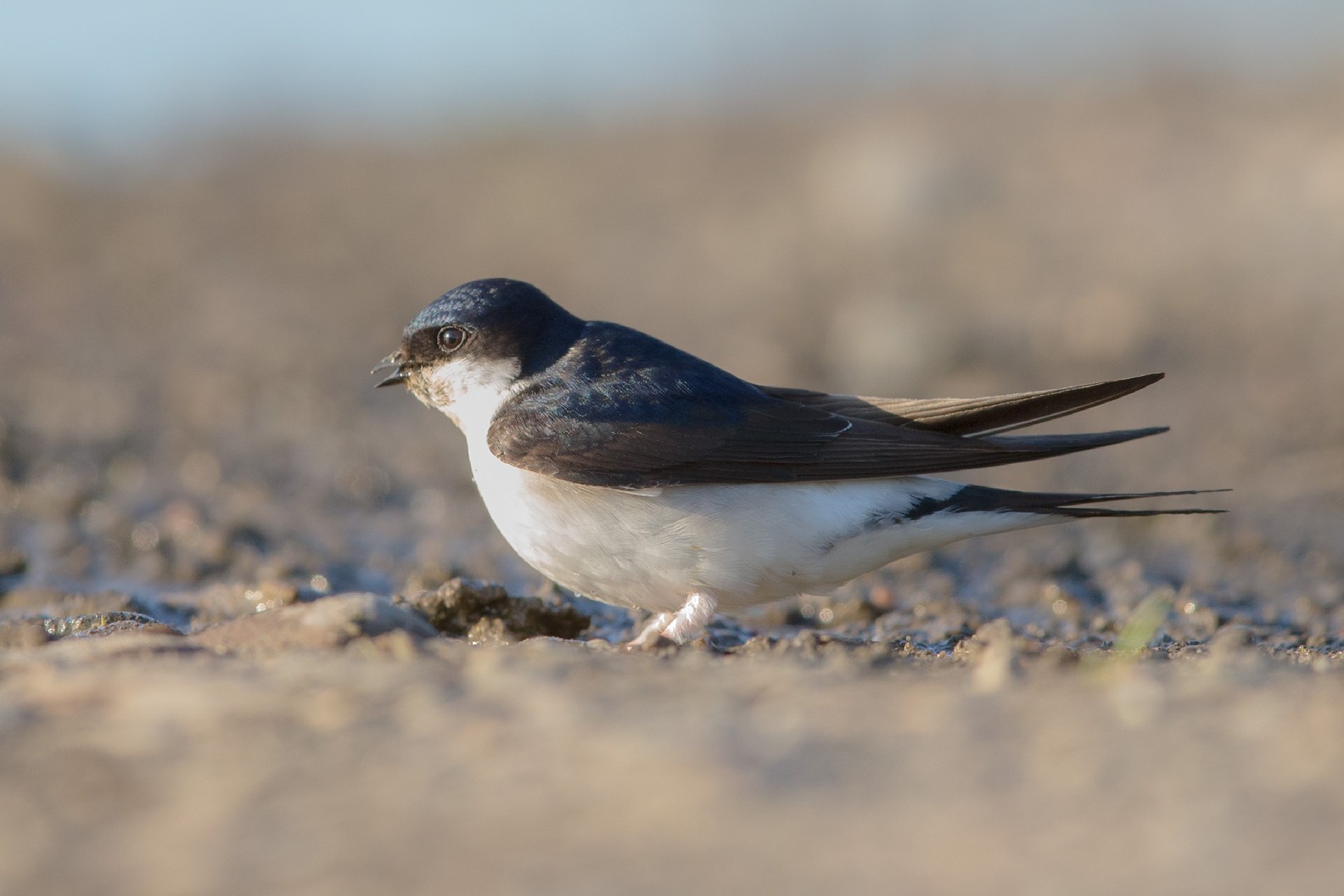
10. Common House-martin
A small, multicolored swallow, the common House-martin has benefited greatly from human habitation and forest clearing, which has created the open habitats and safe man-made nests it prefers. These birds almost always make their homes near water and often perch on utility wires.
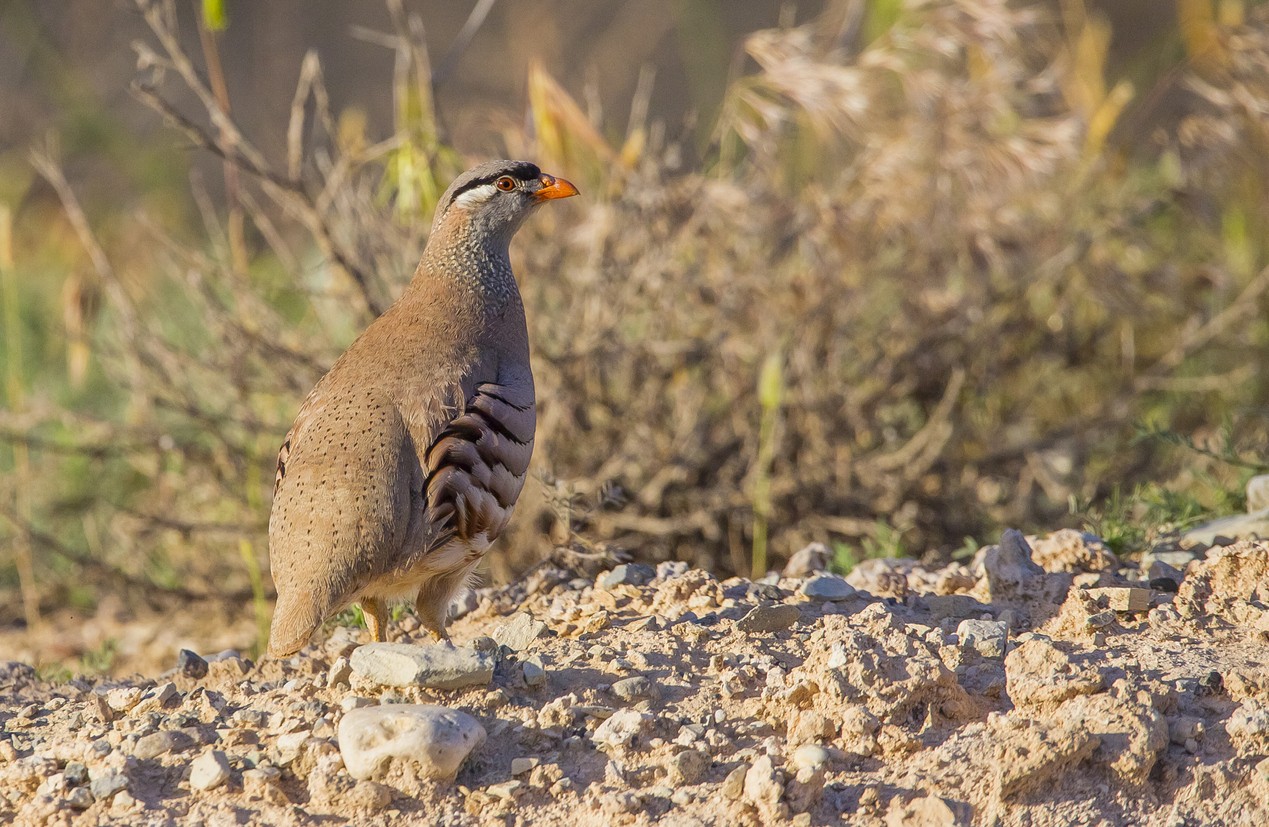
11. See-see Partridge
The see-see partridge (Ammoperdix griseogularis) is a gamebird in the pheasant family Phasianidae of the order Galliformes, gallinaceous birds. This partridge has its main native range from southeast Turkey through Syria and Iraq east to Iran and Pakistan. It is closely related and similar to its counterpart in Egypt and Arabia, the sand partridge, Ammoperdix heyi. This 22–25 cm bird is a resident breeder in dry, open and often hilly country. It nests in a scantily lined ground scrape laying 8-16 eggs. The see-see partridge takes a wide variety of seeds and some insect food. See-see partridge is a rotund bird, mainly sandy-brown with wavy white and brown flank stripes. The male has a grey head with a black stripe through the eye and a white cheek patch. The neck sides are speckled with white. The head pattern is the best distinction from sand partridge. The female is a very washed-out version of the male, and is more difficult to distinguish from its relative due to the weak head pattern. Usually it is seen in pairs or, at the most, in flocks of two to four birds. But flocks of more than fifty birds have also been seen. When disturbed, see-see partridge prefers to run rather than fly, but if necessary it flies a short distance on rounded wings. The song is a whistled hwit-hwit-hwit.
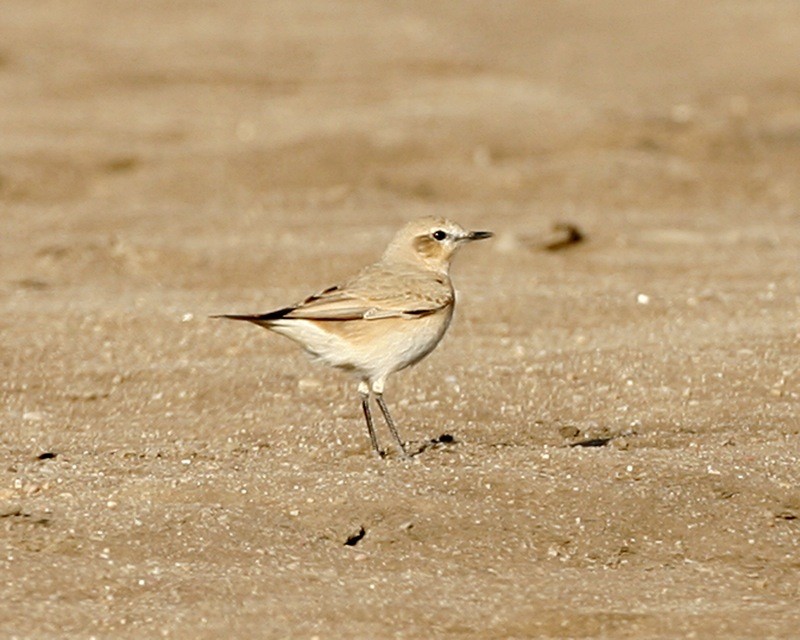
12. Isabelline Wheatear
Male and female isabelline wheatear are similar in appearance. The upper-parts are a pale sandy brown with an isabelline tinge (isabelline is a pale grey-yellow, fawn, cream-brown or parchment colour). The lower back is isabelline and the rump and upper tail-coverts are white. The tail feathers are brownish-black with a narrow edge and tip of buff and a large white base. In the outer tail feathers this occupies more than half the length of the feather but in the central feathers it is about one third. There is an over-eye streak of creamy white and the ear-coverts are pale brown. The chin is pale cream and the throat pale buff. The breast is sandy or isabelline buff and the belly creamy white. The under tail-coverts are pale buff and the under wing-coverts and axilliaries white with dark bases. The wing feathers are brownish-black, tipped and edged with creamy buff. The beak, legs and feet are black and the irises are brown. At a length of 16.5 centimetres (6.5 in) it is rather larger and also paler in colour than the northern wheatear (Oenanthe oenanthe). The beak is longer than that bird and the ear-coverts are paler but otherwise the birds are very similar in appearance and could be confused. The plumage is moulted twice a year, there being a complete moult in late summer and a partial moult of the body feathers in mid-winter. The call note is a chirp, and a loud whistle is sometimes emitted. The song has been described as lark-like and starts with a croaking noise followed by various whistles and includes mimicry of the voices of other birds.
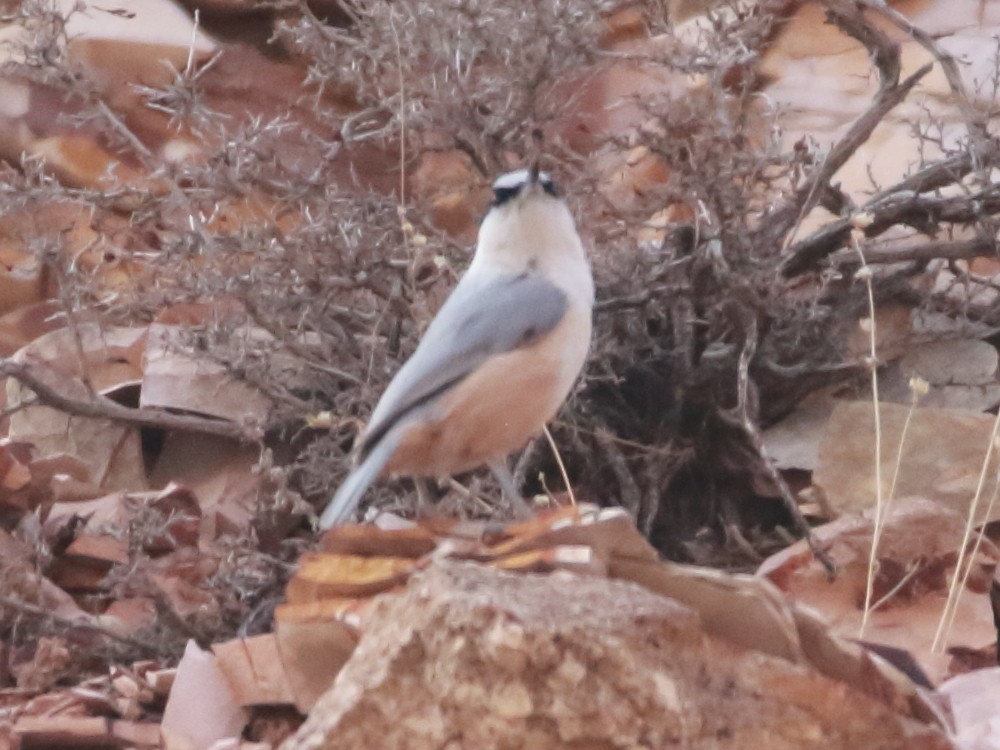
13. Eastern Rock Nuthatch
The Persian nuthatch or the eastern rock-nuthatch (Sitta tephronota) is a species of bird in the family Sittidae. It is found in Afghanistan, Armenia, Azerbaijan, Georgia, India, Iran, Iraq, Kazakhstan, Pakistan, Russia, Tajikistan, Turkey, and Turkmenistan.

14. Common Chaffinch
The common Chaffinch has a varied diet, mainly feeding on seeds and berries, but also eating insects, allowing it to thrive in different habitats. The Common Chaffinch is also known for its melodic song, with the males being particularly vocal during the breeding season. Their songs can often be heard in the spring and early summer.
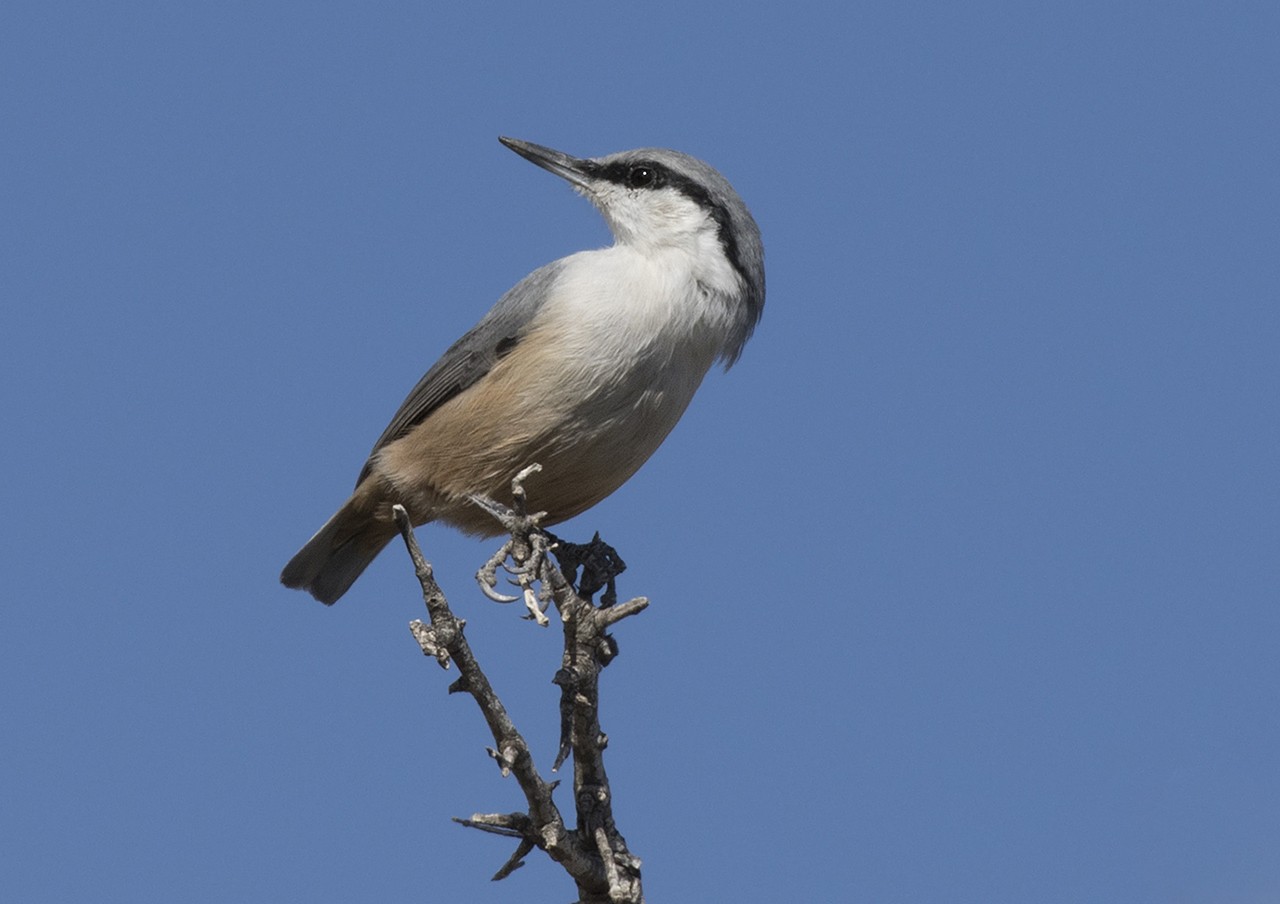
15. Western Rock Nuthatch
The western rock nuthatch (Sitta neumayer) (sometimes known simply as rock nuthatch) is a small passerine bird which breeds from Croatia east through Greece and Turkey to Iran. This nuthatch is largely resident apart from some post-breeding dispersal. The eastern rock nuthatch Sitta tephronota is a separate species, which occurs further east in south-central Asia. The western rock nuthatch is a bird associated with habitats with bare rocks, especially in mountainous areas. Those at the highest altitudes may move lower down in winter. It feeds on insects and spiders in summer, supplemented with seeds and snails in winter. It feeds on the ground, and will wedge larger items in rock crevices while it hammers them open with its strong bill. It will also flycatch. The western rock nuthatch is 13.5 cm long, slightly smaller than Eurasian nuthatch, and has the typical nuthatch big head, short tail and powerful bill and feet. It is long-legged and long-billed compared to most of its relatives. The race S. n. neumayer of southeast Europe is dark grey above, and has a long strong black eyestripe. It has a white throat and underparts shading to buff on the belly. Sexes are similar, and young birds are slightly duller versions of the adults. Two other races in the west of its Asian range are similar but less well marked. S.n. tschitscherini of western Iran is paler grey above and has a much weaker eyestripe. S.n. plumbea of southern Iran resembles tschitscherini, but has grey underparts. This territorial species builds a flask-shaped nest from mud, dung and hair or feathers in a rock crevice, cave, or under an overhang on a rock face. Decorative items may be pushed into crevices and cracks near the entrance to the nest. The nest is lined with softer materials and the entrance is sealed with mud. 4-10 eggs are laid, and are white speckled with yellow. The western rock nuthatch has a tsik call and a trilled tui tui tui song. It is common in suitable habitat in most of its range. Pliny the Elder believed that it was these birds that inspired man to build homes of earth in imitation of the western rock nuthatch's nests.
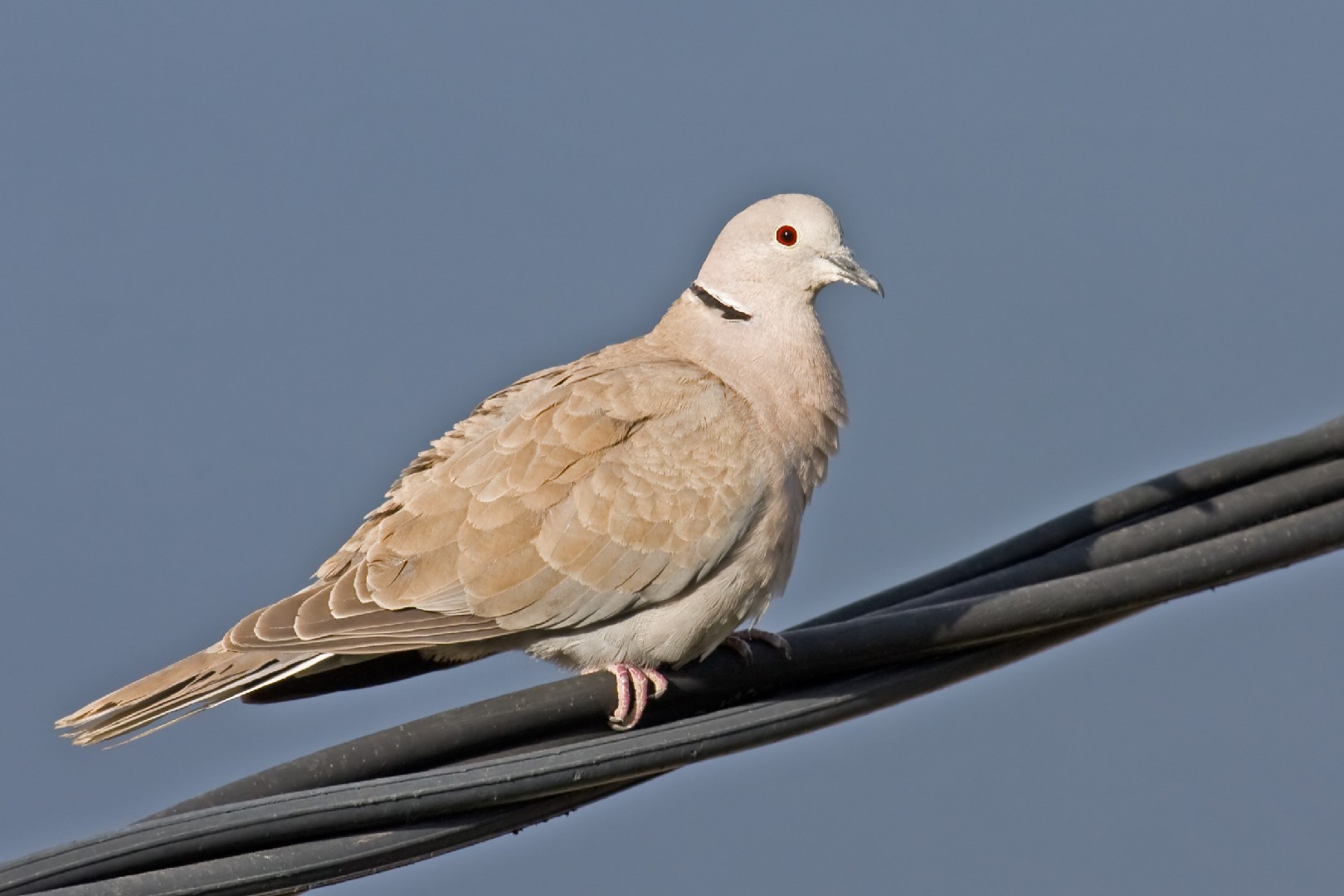
16. Eurasian Collared-dove
This plump, pretty dove with a square-tipped tail is known for bobbing its head and flicking its tail while walking. Though nice to look at, many people are not pleased at the sight of a eurasian Collared-dove walking along. In North America they are considered an invasive species, and one that carries a disease-creating parasite that can spread to native dove populations through birdbaths, feeders, or even through hawks preying on them.
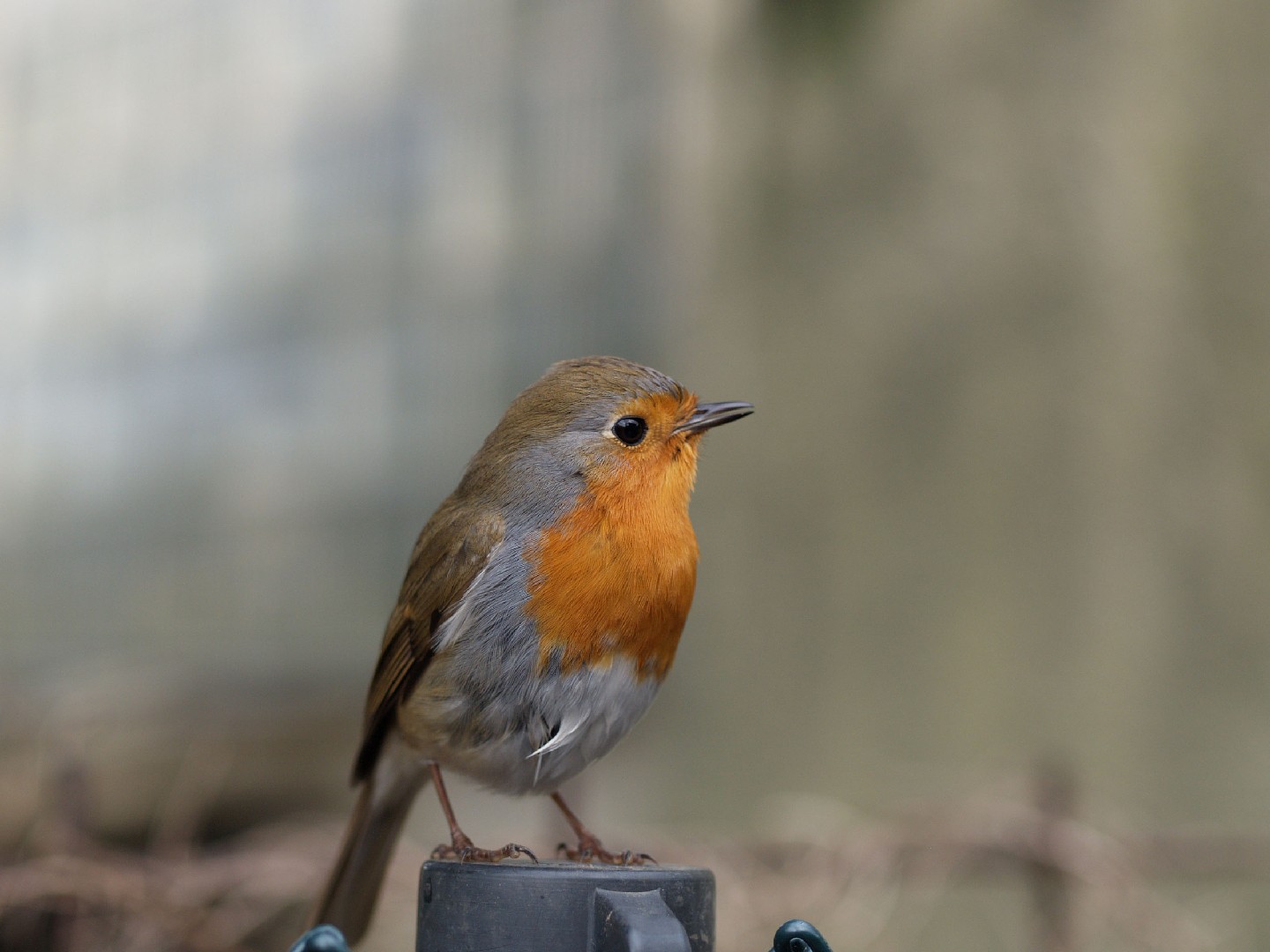
17. European Robin
The european Robin is an aggressive bird that is commonly found throughout farmlands, woodlands, and suburban communities. These birds are mainly helpful insectivores for gardeners, but will also eat various seeds and fruits. The european Robin is used on British Christmas cards to represent postmen from the Victorian era who used to wear red waistcoats while delivering holiday cards.
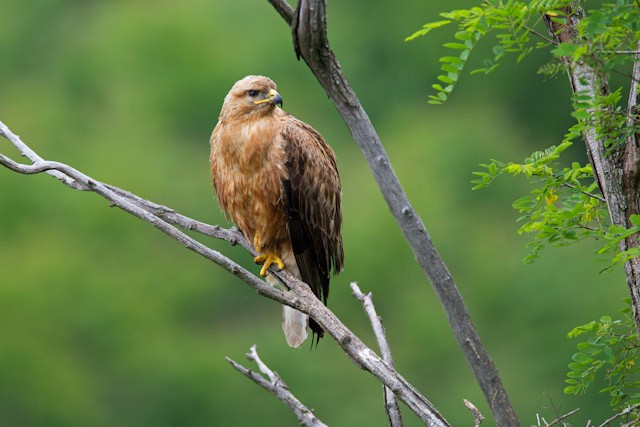
18. Long-legged Buzzard
The long-legged buzzard (Buteo rufinus) is a bird of prey found widely in several parts of Eurasia and in North Africa. This species ranges from Southeastern Europe down to East Africa to the northern part of the Indian subcontinent. The long-legged buzzard is a member of the genus Buteo, being one of the larger species therein. Despite being relatively powerful, it is considered a rather sluggish raptor overall. Like most buzzards, it prefers small mammals such as rodents, including gerbils, ground squirrels, voles and rats, also taking to reptiles, birds and insects as well as carrion. Adaptable to a variety of habitats, long-legged buzzards may nest on a variety of surfaces, including rocks, cliffs and trees. it is a typical buzzard in its reproductive biology. The long-legged buzzard is widely distributed and appears to be quite stable in population. Therefore, it is considered as Least Concern by the IUCN.

19. White Wagtail
The white Wagtail is the national bird of Latvia and is featured in traditional folk songs and placed on some postage stamps. These birds can be found in most habitat types besides deserts. As their name suggests, they exhibit a characteristic tail-wagging behavior as they search along the ground and nearby waterways for insects to eat.
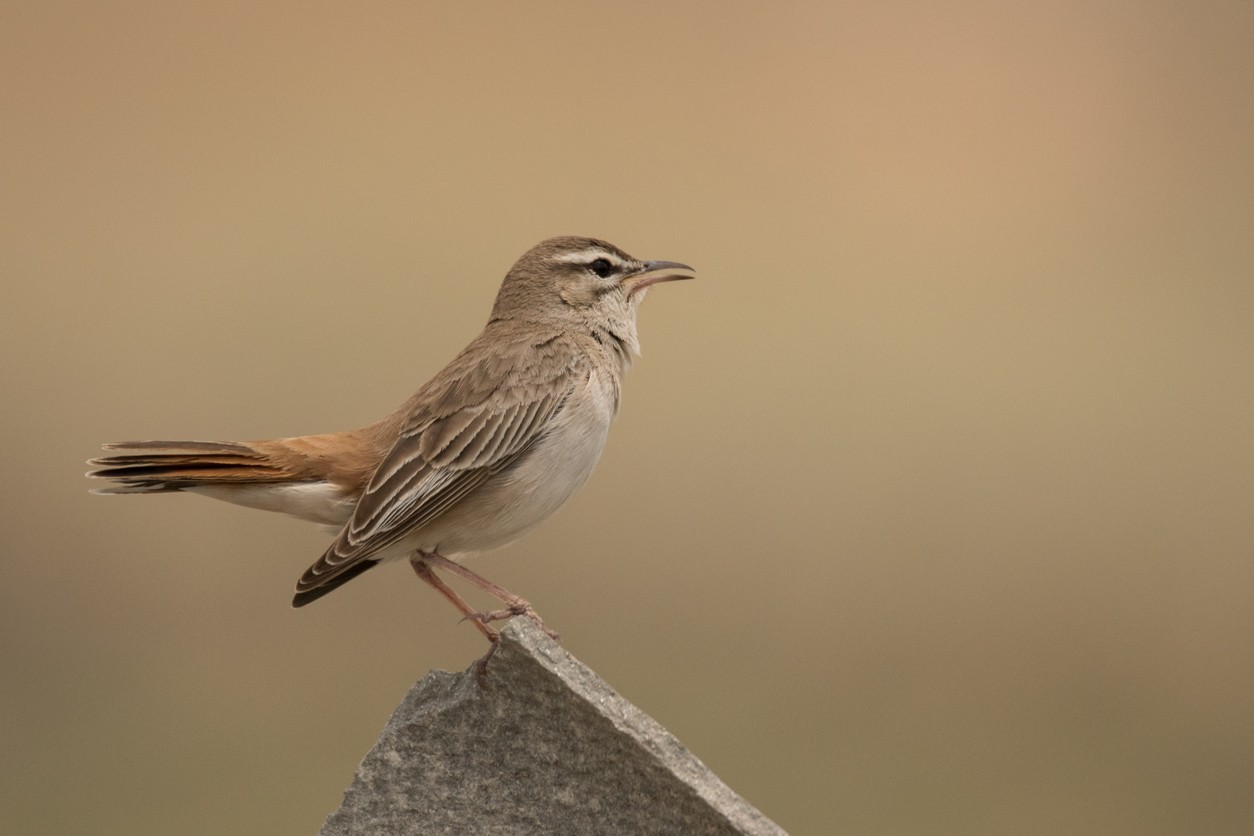
20. Rufous-tailed Scrub Robin
Adult male and female rufous-tailed scrub robin look alike and measure about 6 inches (150 mm) long with relatively long legs and a large rounded tail. The upper parts are a rich brownish chestnut, with the rump and uppertail coverts rather more rufous. There is a distinct curved, creamy-white broad streak from the nostrils to behind the eye and a dark brown line through the eye. The under-eye area is whitish and the ear coverts pale brown. The eye and the beak are both brown but the lower mandible of the beak has a greyish base. The underparts are buffish white, with the chin, central belly and undertail coverts paler than the other parts. The feathers of the wing are dark brown, fringed on the leading edge with buff and on the trailing edge with pale chestnut-brown and with the secondaries tipped with white. The central pair of feathers on the tail are bright rufous-chestnut with narrow black tips and the rest a similar colour with white tips and adjacent broad black bands. The legs and feet are pale brown. Juveniles are similar in appearance but generally a paler sandy-brown colour. The plumage is moulted in the autumn and prior to this, the white tips of the tail feathers may have become reduced in size or worn off. The song is a somewhat lark-like but often disjointed series of notes, sometimes clear and loud but at other times soft, and is sung from an elevated position near the top of a tree, on a pole or on a wire. It has been described as having a sad tone.