



Top 20 Most Common Bird in Mbarara
In the lush environment of Mbarara, a variety of bird species thrive, each exhibiting unique characteristics. Among the 20 most common species are birds with vibrant plumage, intricate song patterns and fascinating ecological adaptations. These birds not only add to the city's biodiversity but are also integral to various ecological functions.

Most Common Bird
1. Rüppell's Starling
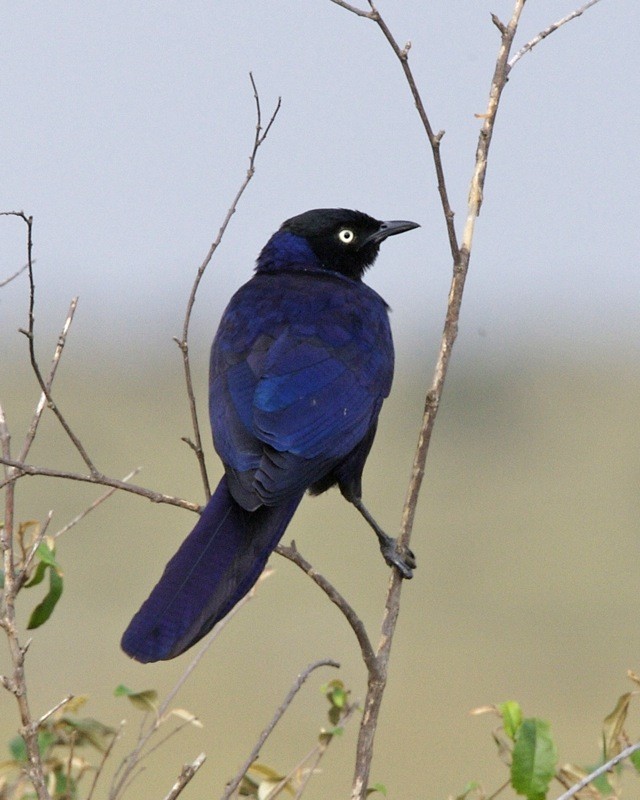
Rüppell's starling (Lamprotornis purpuroptera), also known as Rueppell's glossy-starling or Rueppell's long-tailed starling, is a species of starling in the family Sturnidae. It is found in Burundi, the Democratic Republic of the Congo, Eritrea, Ethiopia, Kenya, Rwanda, Somalia, South Sudan, Sudan, Tanzania, and Uganda. 
2. Ring-necked Dove
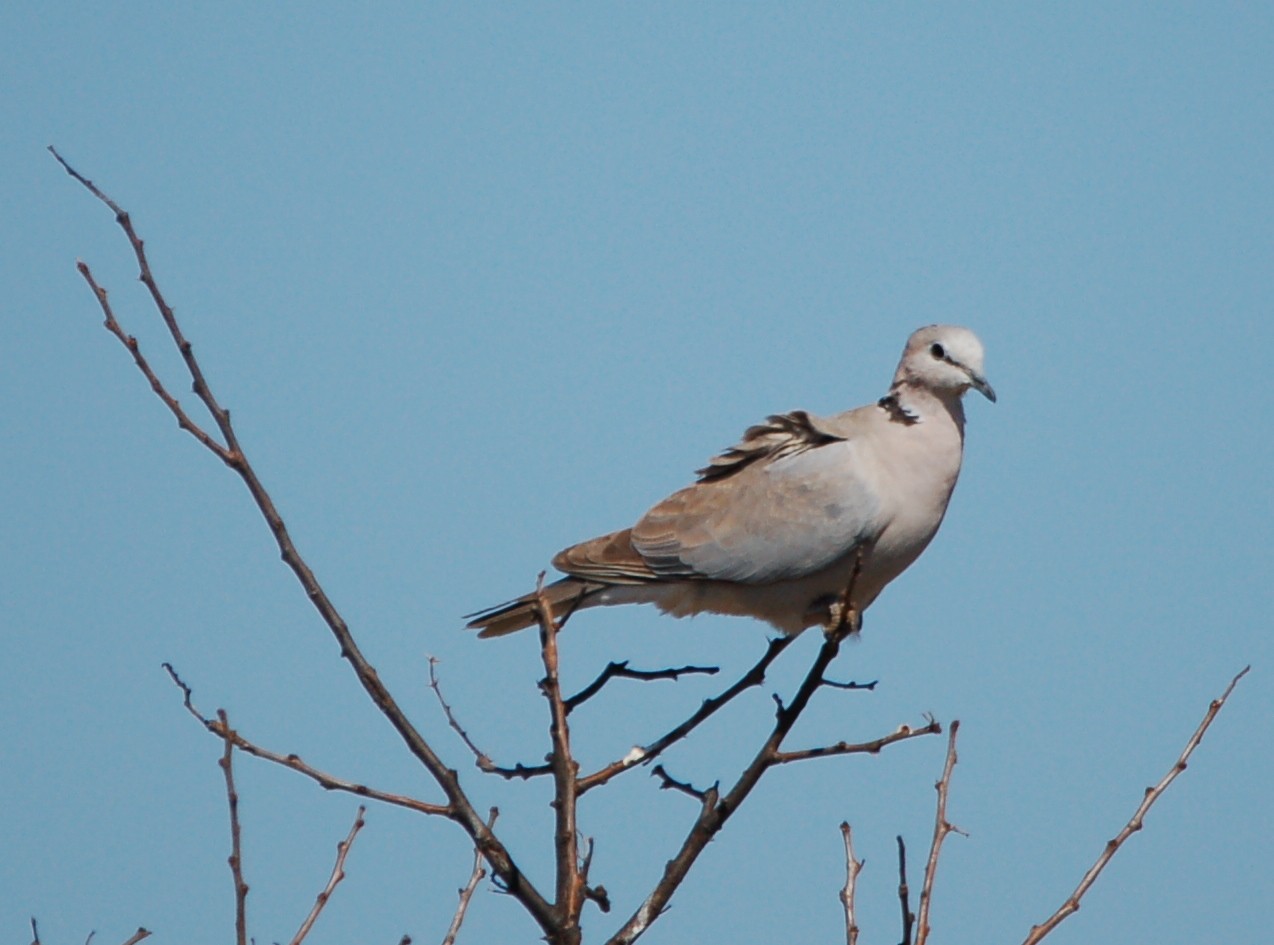
Their body feathers are darkest on the upper side, where they are coloured in dull tones of grey and brown, with shades of lavender on the nape. It is paler below, where a tint of pinkish lavender is usually present. The lower belly and crissum (the undertail coverts surrounding the cloaca) is white. As with related species, they have white fringes and conspicuous white tips to the otherwise slate grey tail feathers. The tail pattern is particularly noticeable during the display flight. Individual plumage variation is high, with some light and others almost sooty. Males and females look alike, although the males are slightly bigger. They measure 25–26.5 cm (9.8–10.4 in) in length and weigh 92–188 g (3.2–6.6 oz). The eyes are almost black, the bill is black and the feet are dark purple. An immature is duller and lacks the semi-collar of an adult. It also has buff edges to all the upper part and wing covert feathers, while the plumage below is broadly edged greyish-white.
3. Hadada Ibis
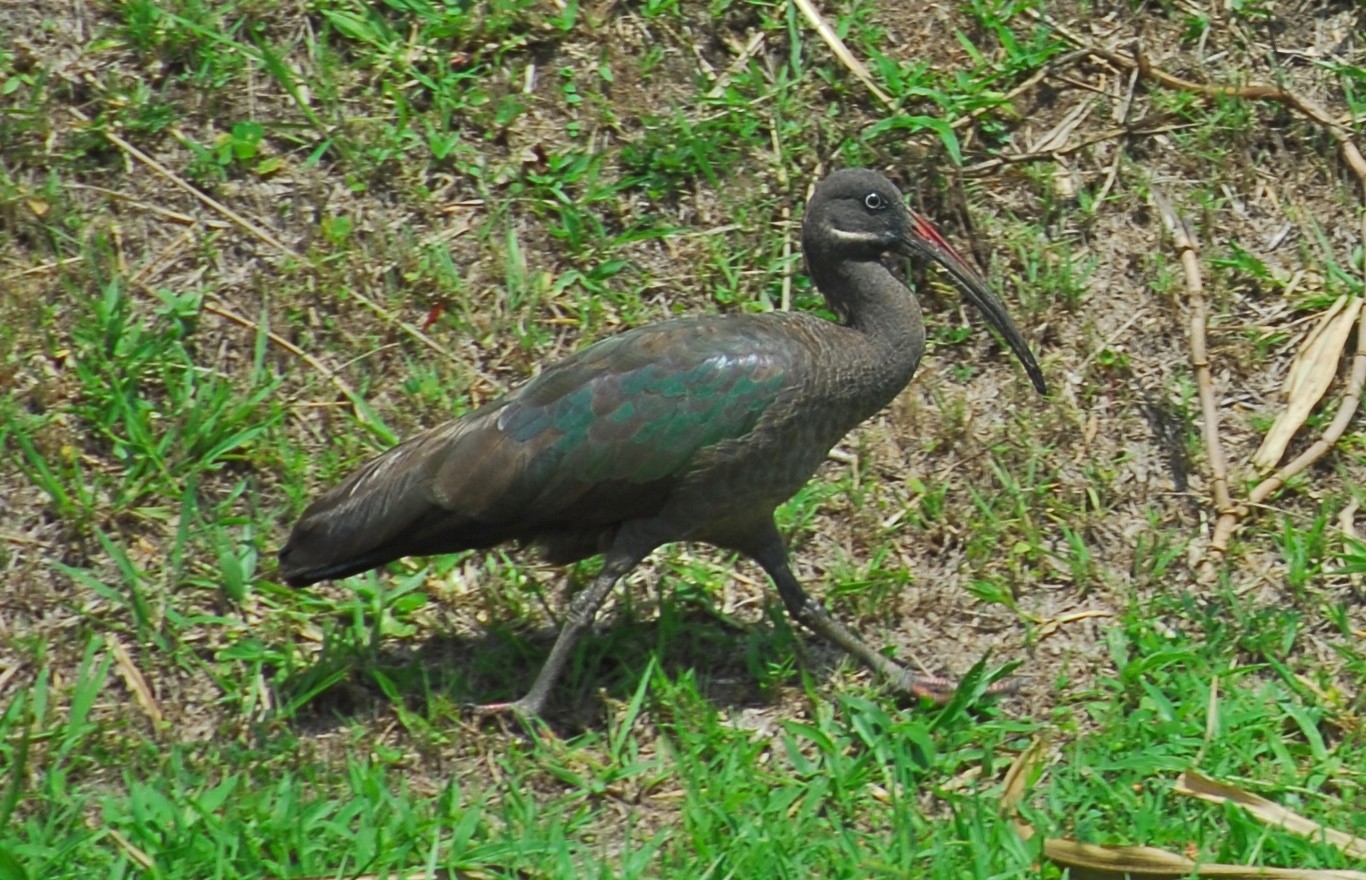
The hadeda is a large (about 76 cm long), grey-to-partly brown species of ibis. Males and females are alike in plumage. It has a narrow, white, roughly horizontal stripe across its cheeks. This is sometimes called the "moustache" though it does not reach the mouth corners. The plumage over the wings has an iridescent purple sheen produced by optical microstructures within the feathers. The bird has blackish legs and a large grey-to-black bill but during the breeding season it has a red culmen on the basal half of the upper mandible. The upper surfaces of the toes are of a similar red during the onset of breeding. The wings are powerful and broad, enabling quick take-offs and easy manoeuvring through dense tree cover. It has an extremely loud and distinctive "haa-haa-haa-de-dah" call—hence the onomatopoetic name. The call is often heard when the birds are flying or are startled, or when the birds communicate socially, for example early in the morning in residential suburbs. While roosting they produce a single loud "haaaa". When foraging, their contact call is a low growl similar to that made by a young puppy.
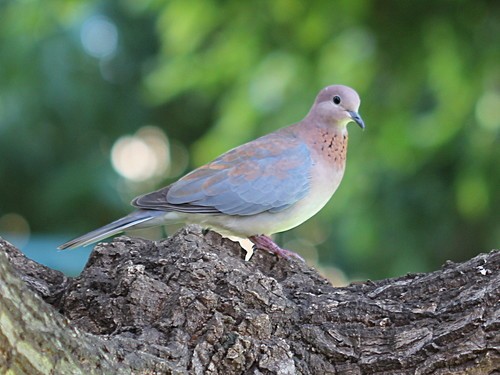
4. Laughing Dove
The laughing Dove is a small dove named after its distinctive laugh-like vocalization. This ground-feeding, non-migratory bird is a regular inhabitant of man-altered environments such as villages, gardens, and orchards. In cities, these doves tend to become quite confident. They pair for life and live in very small communities.
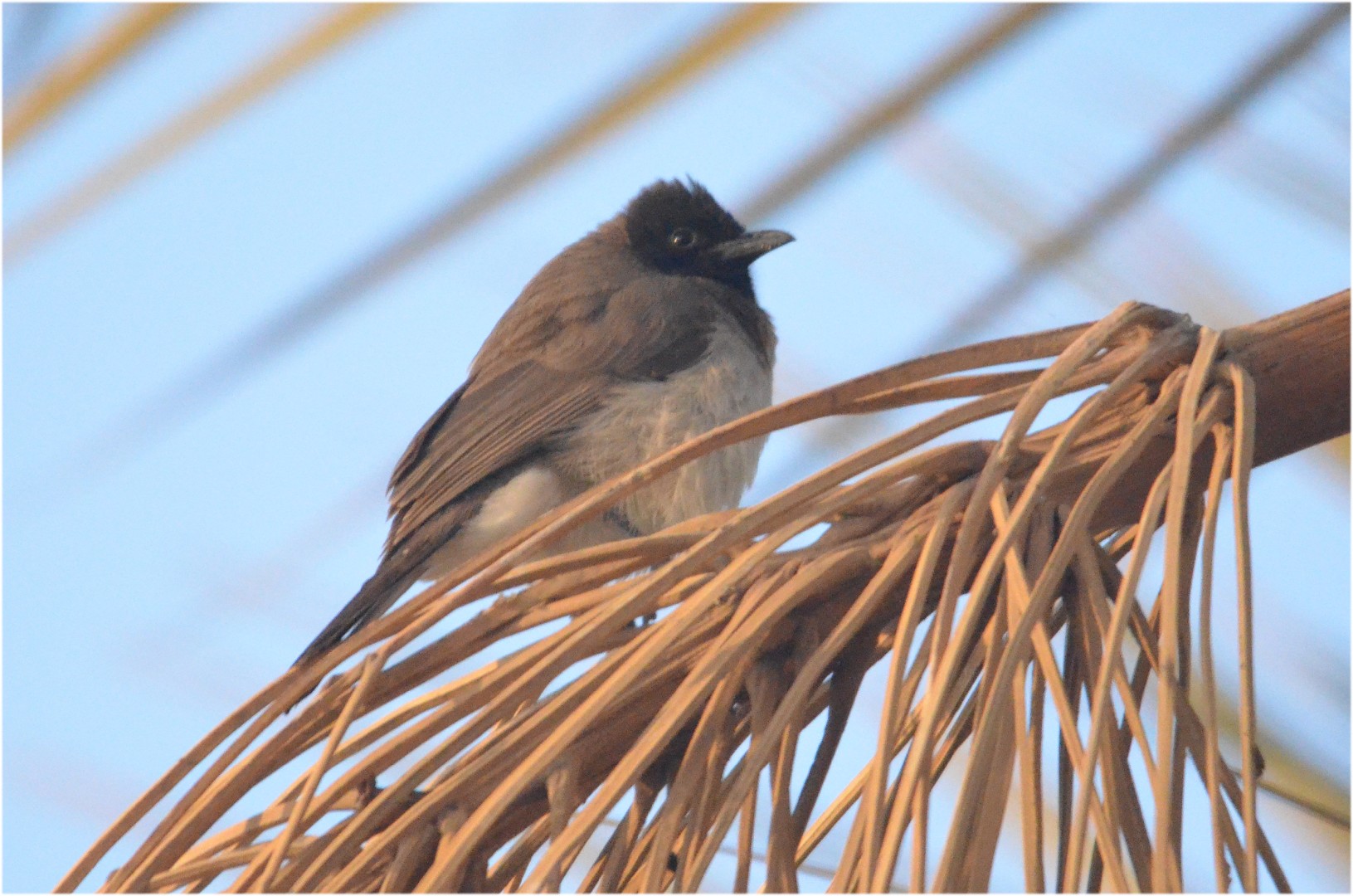
5. Common Bulbul
The bill is fairly short and thin, with a slightly downcurving upper mandible. The bill, legs, and feet are black and the eye is dark brown with a dark eye-ring, which is not readily visible. It is about 18 cm in length, with a long tail. It has a dark brown head and upperparts. Sexes are similar in plumage.
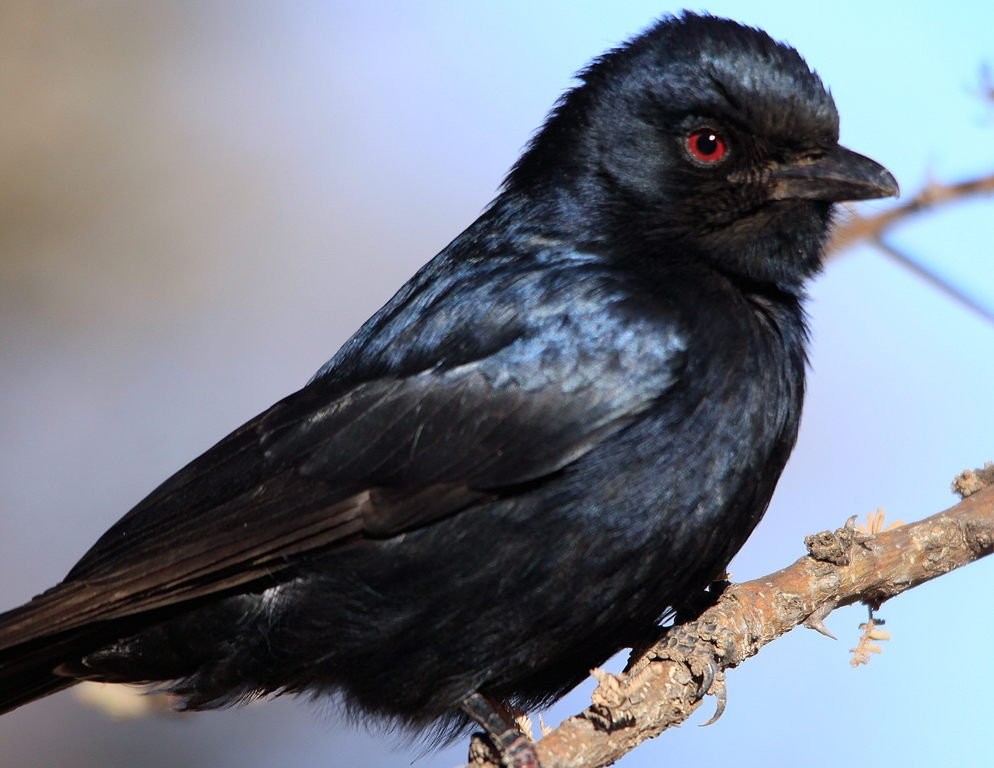
6. Fork-tailed Drongo
The fork-tailed drongo is 25 cm long and has short legs. They are medium sized and usually weigh about 50 grams. Males are mainly glossy black, although their wings are duller. Females are similar but less glossy. It is large-headed with well-developed rictal and nasal bristles, which are used as sensory organs. The rectrices curve outwards, forming the forked tail for which the species is named. The hooked bill is black and heavy, and the eye is red.
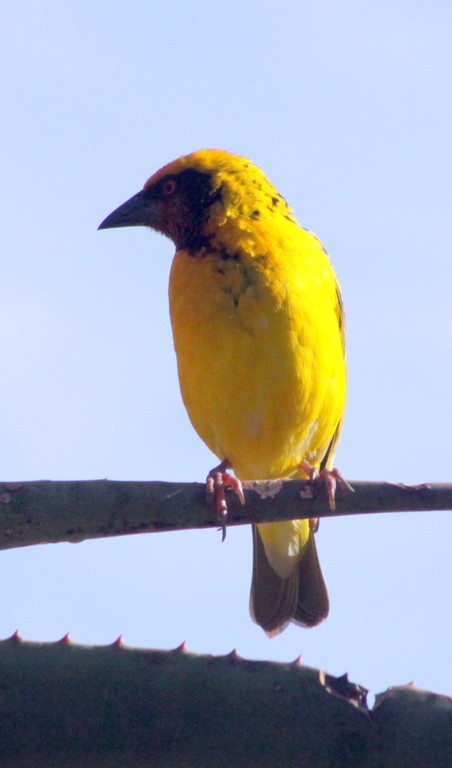
7. Village Weaver
The village weaver is a stocky 15–17 cm bird with a strong conical bill and dark reddish eyes. In the northern part of its range, the breeding male has a black head edged by chestnut (typically most distinct on the nape and chest). Towards the southern part of its range, the amount of black and chestnut diminish, and the breeding males of the southernmost subspecies only have a black face and throat, while the nape and crown are yellow. In all subspecies the breeding male has a black bill, black and yellow upperparts and wings, and yellow underparts. The non-breeding male has a yellow head with an olive crown, grey upperparts and whitish underparts. The wings remain yellow and black. The adult female has streaked olive upperparts, yellow and black wings, and pale yellow underparts. Young birds are like the female but browner on the back.
8. Arrow-marked Babbler
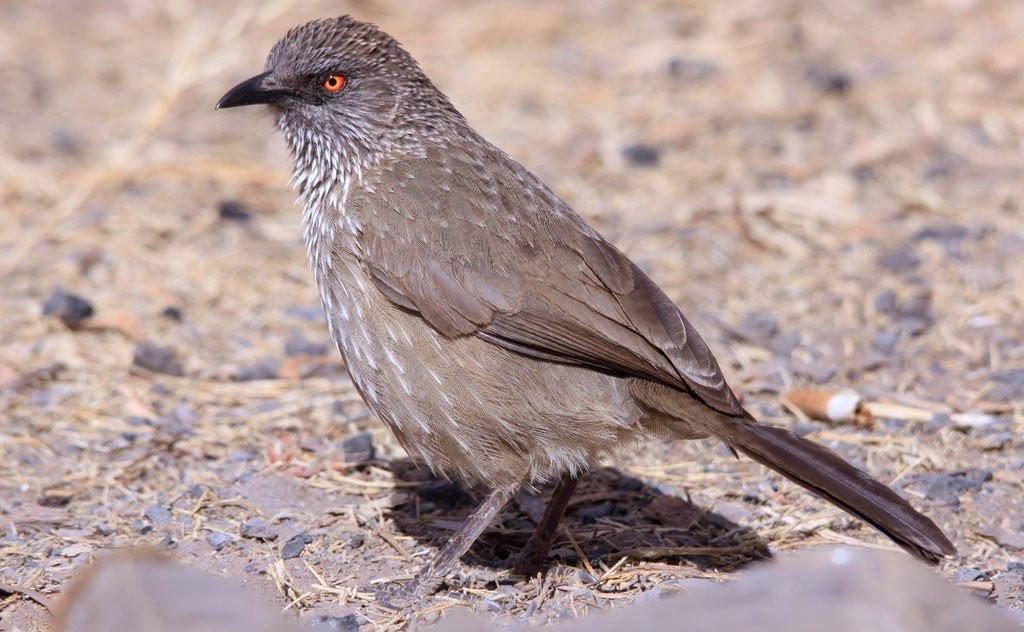
The arrow-marked babbler is a medium-sized babbler, 22 to 25 cm (8.7–9.8 in) in length and weighing 56 to 85 g (2.0–3.0 oz). The common name for the species is derived from its plumage, which is brownish-grey above and lighter below, with white tips to the feathers on the throat, neck and head. The iris is bright red and the inner ring of the eye bright yellow or orange. The males and females are identical in appearance. Juveniles have brown eyes, and less arrow-shaped streaking on the breast.
9. Speckled Mousebird
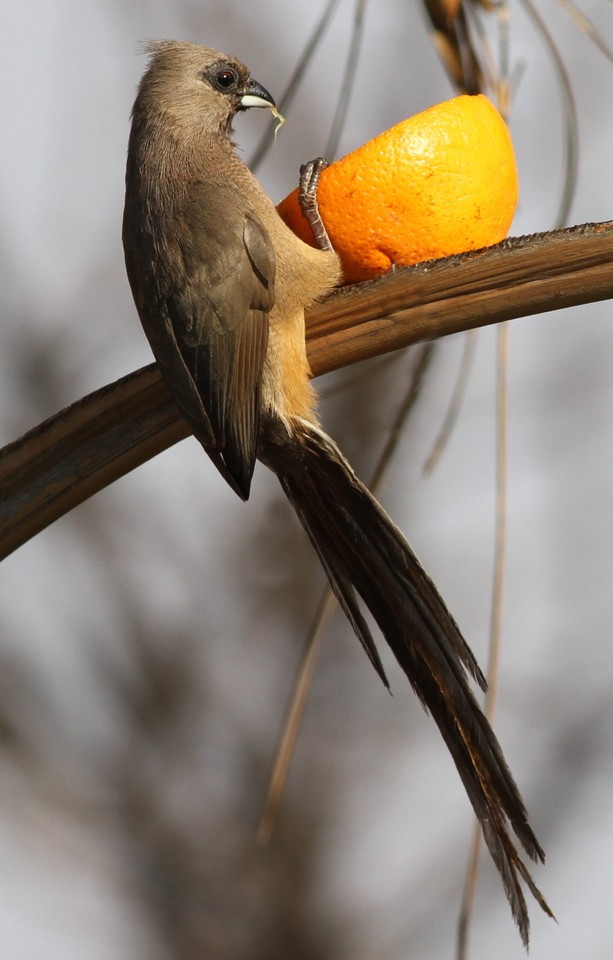
The speckled mousebird is about 35 cm (14 inches) long, with the tail comprising approximately half the length, and weighs about 57 grams (2 oz). It is well-named, because it is dull-mousy brown in overall color on the back and on the head (including a prominent crest). The bill is black on the upper part and is a pinkish color on the lower part. The rare white-headed mousebird can be confused with this species, but the differently colored mandibles and the lack of a bare grey orbital patch render the Speckled species distinctive. The speckled mousebird is not known for its voice, as songbirds are, although it is a noisy creature. They make a warbling tsu-tsu call while in flight, and are known for their tisk-tisk alarm call while in flight.
10. Grey Crowned Crane
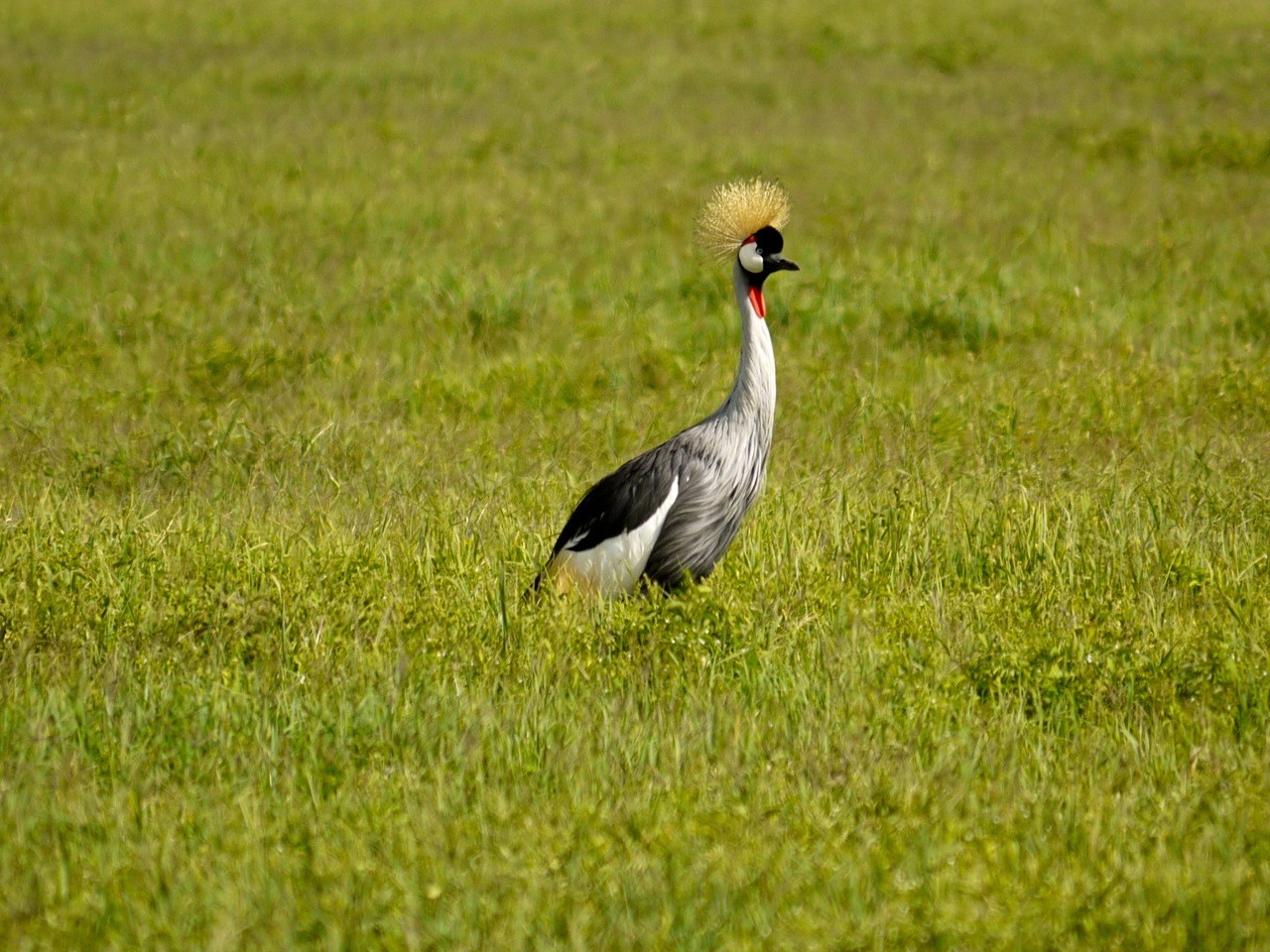
The grey Crowned Crane is a majestic bird known for its striking appearance and elaborate courtship displays. It inhabits grasslands and wetlands in Africa and is omnivorous, feeding on a variety of plants and animals. The species is distinctive for its striking golden crown and elaborate courtship dance, during which pairs leap into the air and make deep, booming calls. The Grey Crowned Crane is an important symbol in many African cultures and is considered a symbol of good luck and longevity.
11. Grey-backed Fiscal
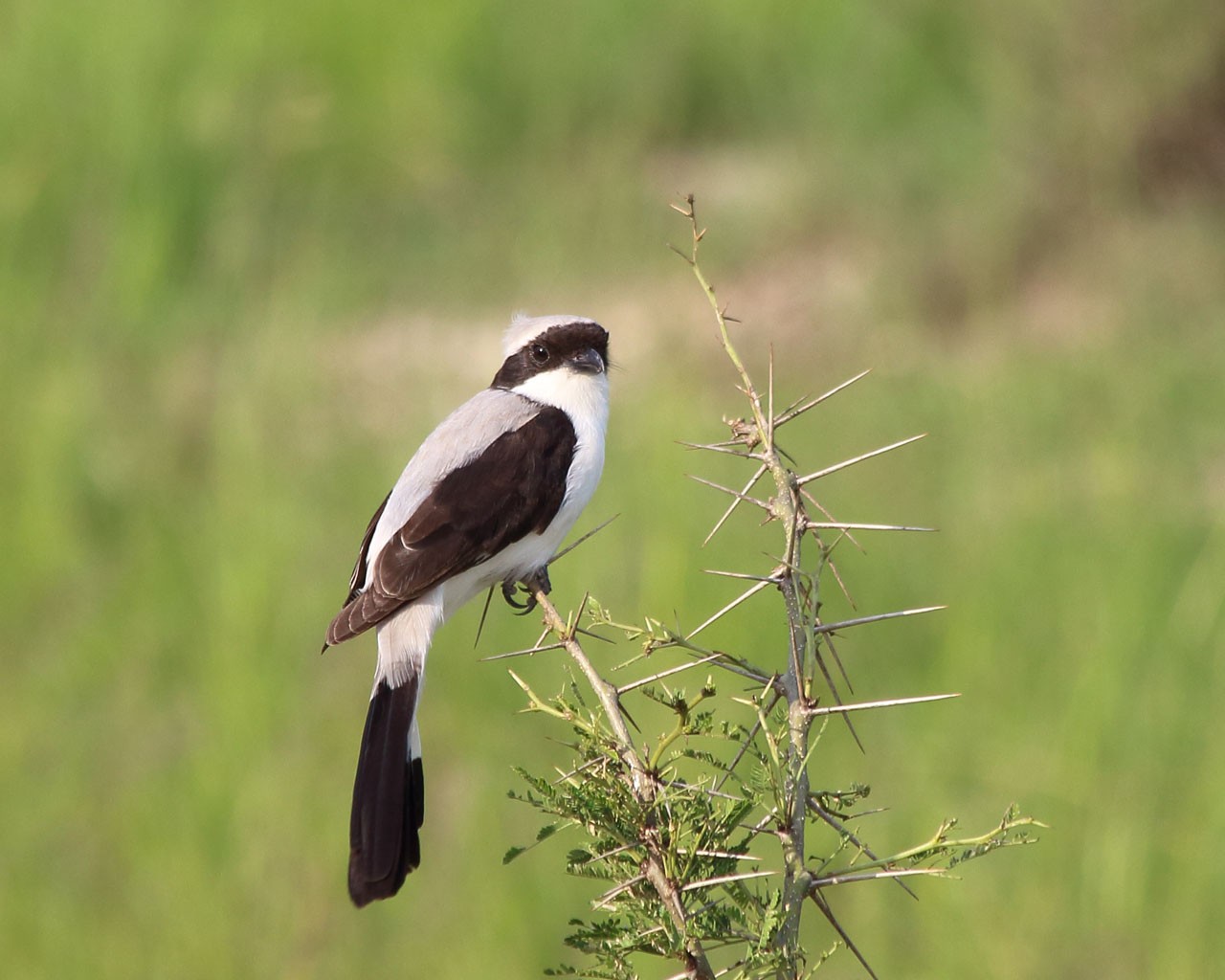
This is a large shrike with a length of about 25 cm (10 in). The head of the male has a grey crown, a white supercilium and a large black mask. The upper parts are medium grey, the rump is white, the wings are blackish, with a white patch which is conspicuous in flight, and the long tail has a white base and a black tip. The underparts and base of the underside of the tail are white. The female is similar but has patches of chestnut on the flanks that are visible during display and when the bird is preening. The juvenile is brownish with brown wings and tail and is heavily barred with grey.
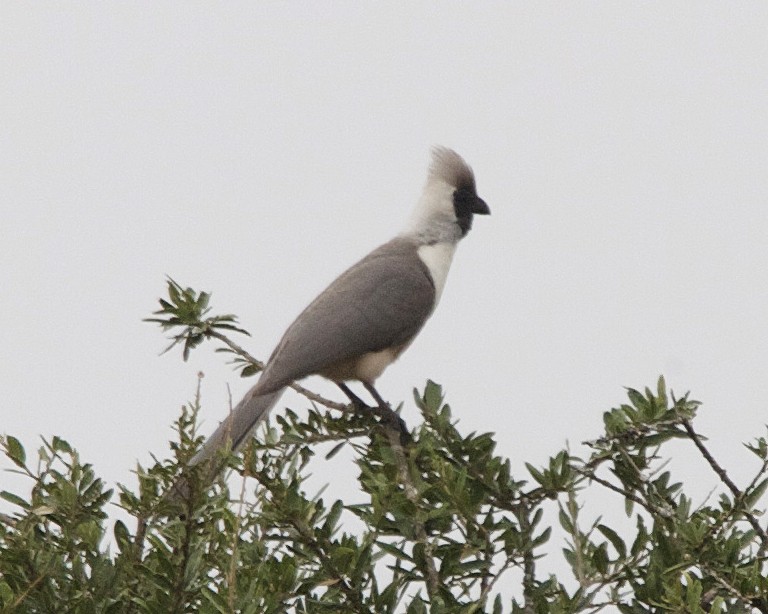
12. Bare-faced Go-away-bird
The sexes are similar, other than the female's green beak. It is 48 cm long beak to tail, and weighs approximately 210 to 300 grams.
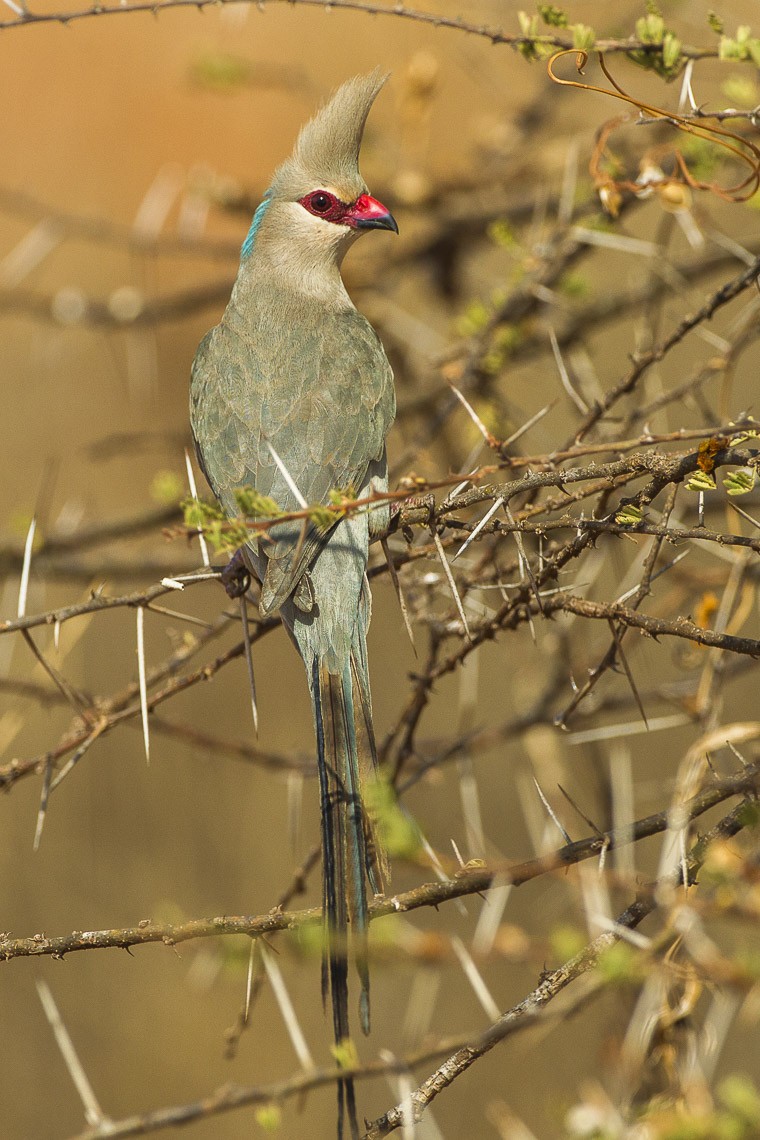
13. Blue-naped Mousebird
The blue-naped mousebird is a fairly small to medium-sized bird, measuring 13-14 inches in length. Adults have an ash brown, grayish body, crested head with a turquoise nape, and a black-and-red bill, whereas juveniles lack the blue on nape, and have pink facial skin and greenish bills. Characteristic of mousebirds, the blue-naped mousebird has widely spaced and large feet for its body size, which are pamprodactylous; they are able to rotate all four toes to face forward at will. Their toes are strong and dextrous, allowing the birds to climb and scurry along branches, to hang by a toenail, or to use one foot to hold food.

14. Barn Swallow
A familiar sight in rural and semi-open areas, the small barn Swallow can often be spotted by its distinctly graceful flight as it travels low over fields. Seemingly unbothered by having human neighbors, they nest unafraid in barns, garages, beneath bridges or wharves. Interestingly enough, they have come to prefer these locations so much that you are unlikely to spot a nest in a place that is not a human-made structure.
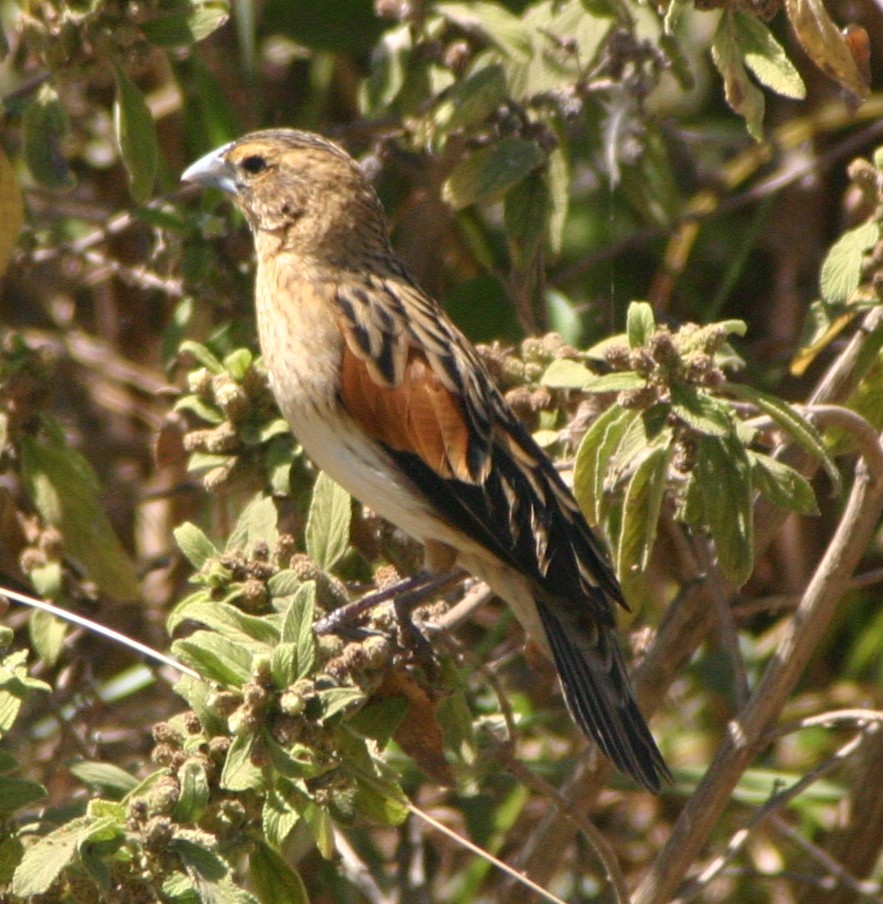
15. Fan-tailed Widowbird
The fan-tailed widowbird (Euplectes axillaris), also known as the red-shouldered widowbird, is a species of bird in the family Ploceidae, which is native to grassy and swampy areas of the tropical and subtropical Afrotropics.
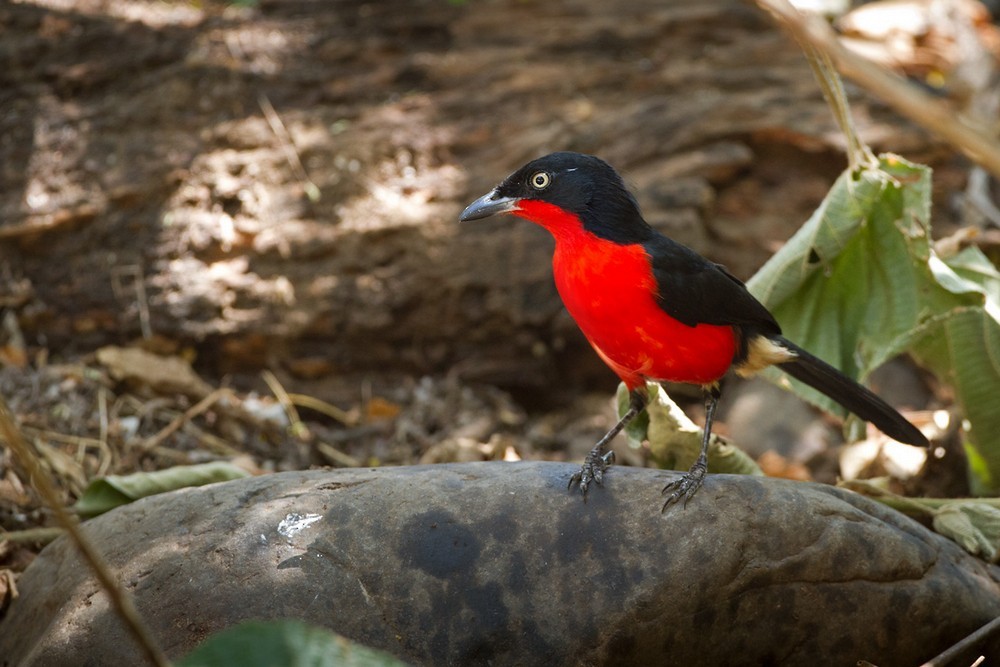
16. Black-headed Gonolek
17. Red-eyed Dove
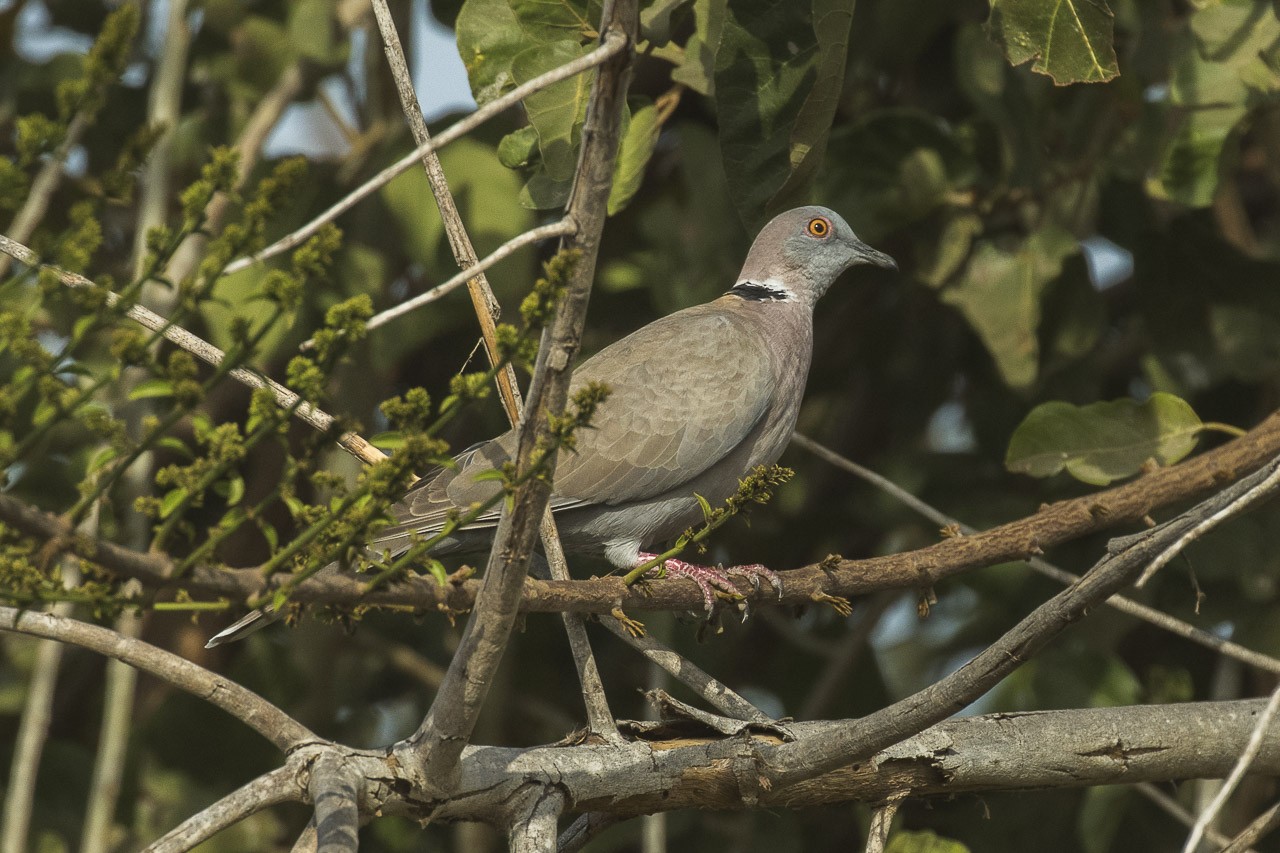
The red-eyed dove is a largish, stocky pigeon, typically 30 cm (12 inches) in length. Its back, wings and tail are pale brown. When flying, it shows blackish flight feathers. The head and underparts are dark vinous-pink, shading to pale grey on the face. There is a black hind neck patch edged with white. The legs and a patch of bare skin around the eye are red. The call is a loud doo-doo-du-du. Sexes are similar, but juveniles are duller than adults, and have scalloping on the body feathers. Red-eyed doves eat grass seeds, grains and other vegetation. They often forage on the ground.
18. Black Kite
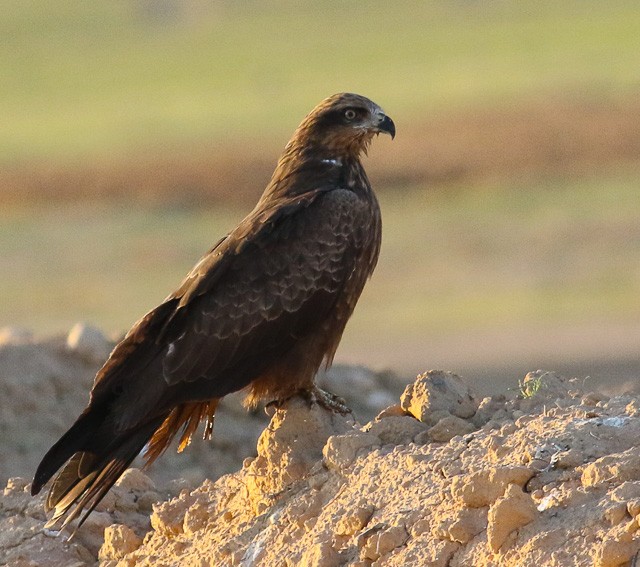
Black Kite is a bird of prey known for its aerial skills and hunting ability. Its striking appearance makes it a fascinating species to observe, and it can often be seen soaring through the skies. Black Kite is highly adaptable and can be found in a variety of habitats, making it a common sight in many areas.
19. Marabou Stork
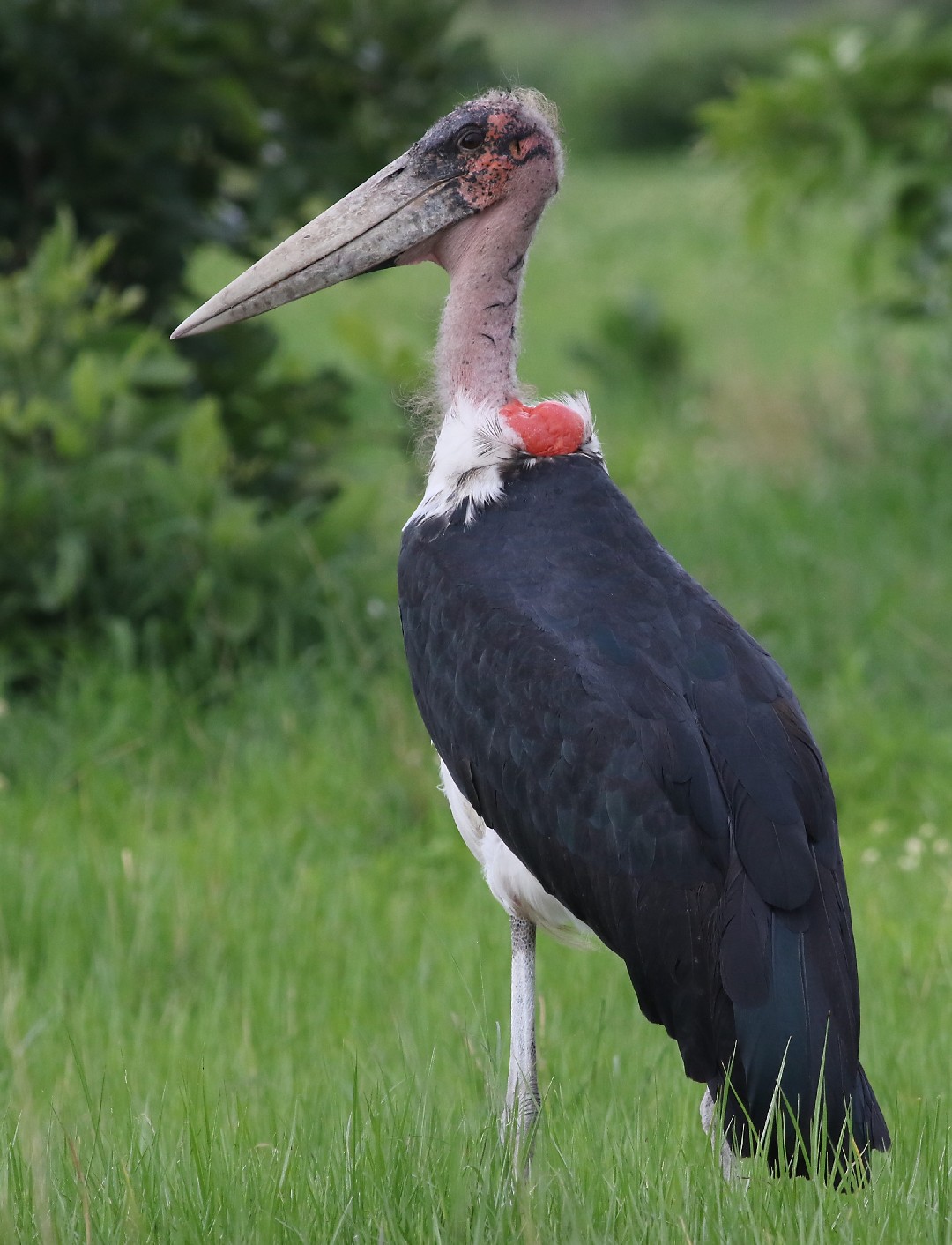
The marabou stork is a massive bird: large specimens are thought to reach a height of 152 cm (60 in) and a weight of 9 kg (20 lb). A wingspan of 3.7 m (12 ft) was accepted by Fisher and Peterson, who ranked the species as having the largest wing-spread of any living bird. Even higher measurements of up to 4.06 m (13.3 ft) have been reported, although no measurement over 3.20 m (10.5 ft) has been verified. It is often credited with the largest spread of any landbird, to rival the Andean condor; more typically, however, these storks measure 225–287 cm (7–9 ft) across the wings, which is about a foot less than the average Andean condor wingspan and nearly two feet less than the average of the largest albatrosses and pelicans. Typical weight is 4.5–8 kg (9.9–17.6 lb), unusually as low as 4 kg (8.8 lb), and length (from bill to tail) is 120 to 130 cm (47 to 51 in). Females are smaller than males. Bill length can range from 26.4 to 35 cm (10.4 to 13.8 in). Unlike most storks, the three Leptoptilos species fly with the neck retracted like a heron. The marabou is unmistakable due to its size, bare head and neck, black back, and white underparts. It has a huge bill, a pink gular sac at its throat (crumenifer(us) means "carrier of a pouch for money"), a neck ruff, and black legs and wings. The sexes are alike, but the young bird is browner and has a smaller bill. Full maturity is not reached for up to four years.
20. Speckled Pigeon
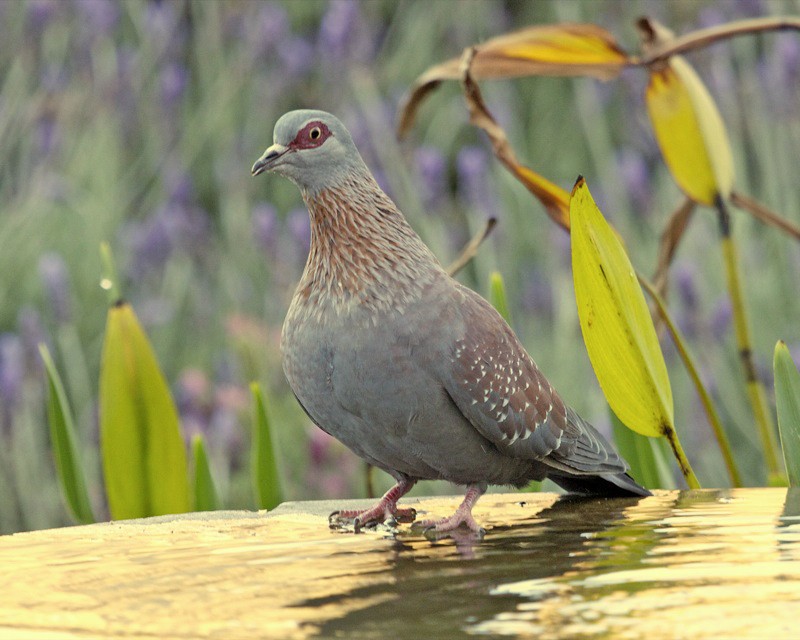
This is a large pigeon at 41 cm in length. Its back and wings are rufous, the latter heavily speckled with white spots. The rest of the upperparts and underparts are blue-grey, and the head is grey with red patches around the eye. The neck is brownish, streaked with white, and the legs are red. Sexes are similar, but immatures are browner than adults and lack the red eye patches. The call is a loud doo-doo-doo.