




Top 20 Most Common Bird in Livingston
In the heartland of California, Livingston provides a rewarding destination for birdwatching enthusiasts. The area boasts a diverse array of ecologies, from lush farmlands to serene wetlands, attracting a diverse range of bird species. This region is home to an estimated 20 distinct bird species, including the dainty hummingbirds and the majestic red-tailed hawks, intriguing with their elegance and air mastery. The bird-life in Livingston, a perfect synergy of variation and uniqueness, offers a fascinating view into the distinctive avian biodiversity of California.

Most Common Bird
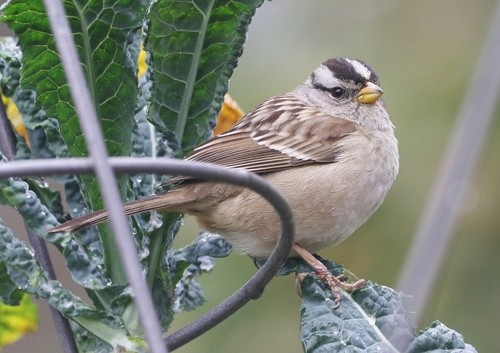
1. White-crowned Sparrow
This common sparrow has a white crown atop its head, which gave it its name, as well as a neat pattern down its wings and a long tail. Some groups of white-crowned Sparrows migrate, while others remain in coastal habitats year-round. Across different groups of these birds are different song “dialects” which are widely studied.
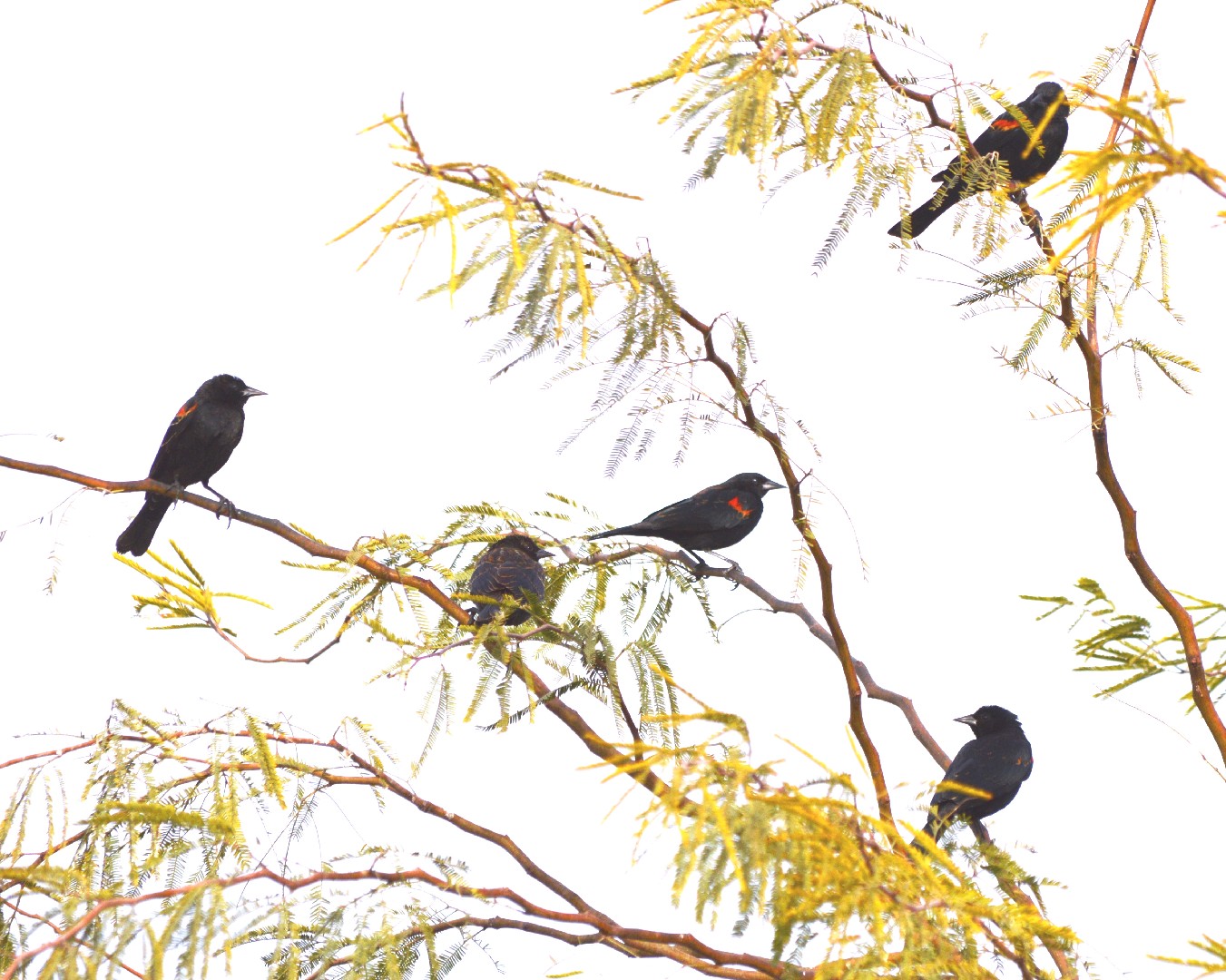
2. Red-winged Blackbird
One of the earliest spring harbingers in North America, the red-winged Blackbird migrates in enormous flocks. Gathered in these large groups, the songbirds produce a loud cacophony. The red-winged Blackbird is an opportunistic omnivore. It feeds on numerous insect species, keeping pests under control, but due to its preference for crops and berries, the red-winged Blackbird is sometimes considered a pest itself.

3. Greater Yellowlegs
The greater Yellowlegs's bright-colored legs make this mid-sized shorebird easily identifiable. It also gives it the occasional common name of 'Greater Yellowlegs'. It is an active forager in shallow freshwater habitats. It is not uncommon to see it mixing with other types of shorebirds. It easily draws attention when potential threats are nearby by producing a loud, long song.
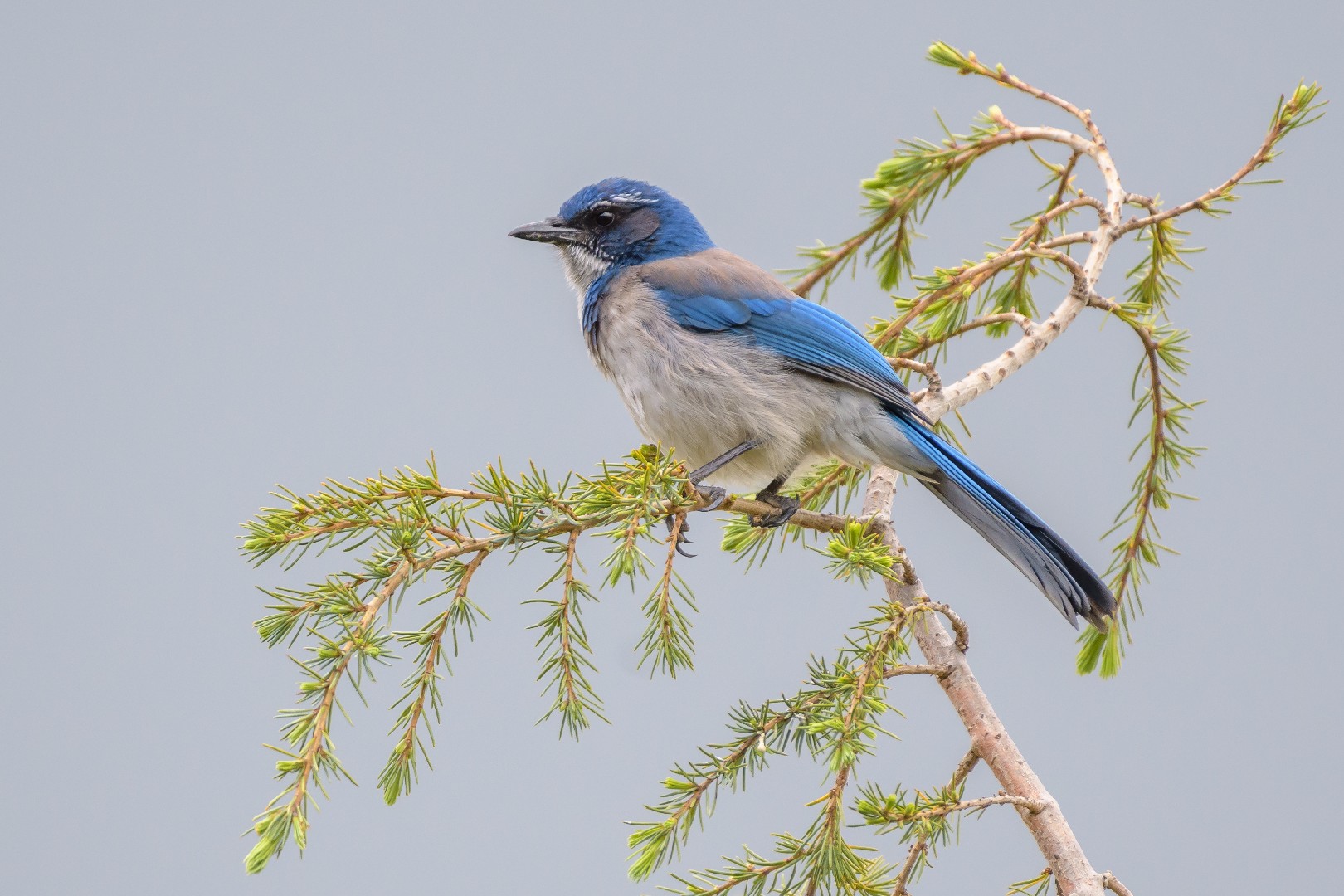
4. California Scrub-jay
California Scrub-jays prefer to live in dry shrublands, oak forests, and treed backyards. These are mischievous little birds that like to steal acorns from Woodpecker hiding spots. However, when the scrub jays hide the acorns in a new spot they rarely remember where they've hidden them! It's a lose-lose situation. When not stealing acorns they like to spend time eating ticks and other parasites off the backs of mule deer. The deer seem to appreciate the attention and often hold up their ears to give the jays access.
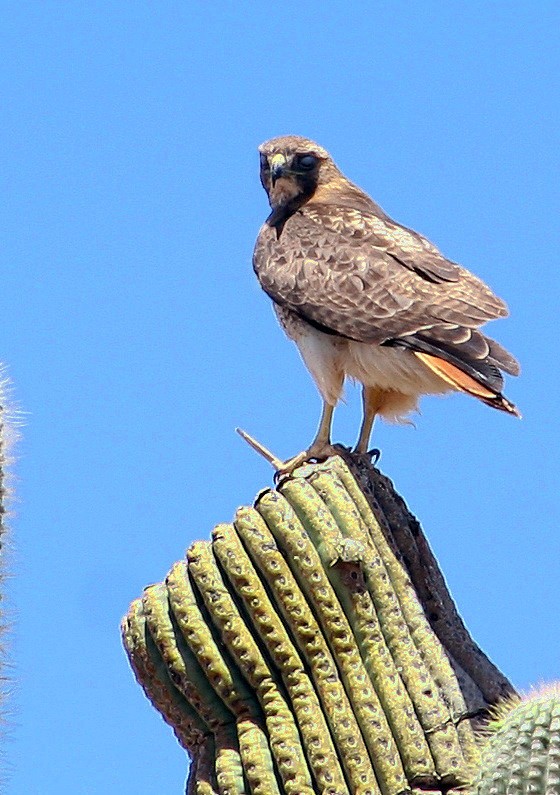
5. Red-tailed Hawk
Perched high in trees, the red-tailed Hawk watches for its prey: mammals, reptiles, birds, amphibians, large insects, and occasionally fish. It's the most common hawk in North America. Highly territorial and monogamous, the red-tailed Hawk is relatively long-lived. Many of them die young, but those who survive can live up to 20 years.
6. Mourning Dove
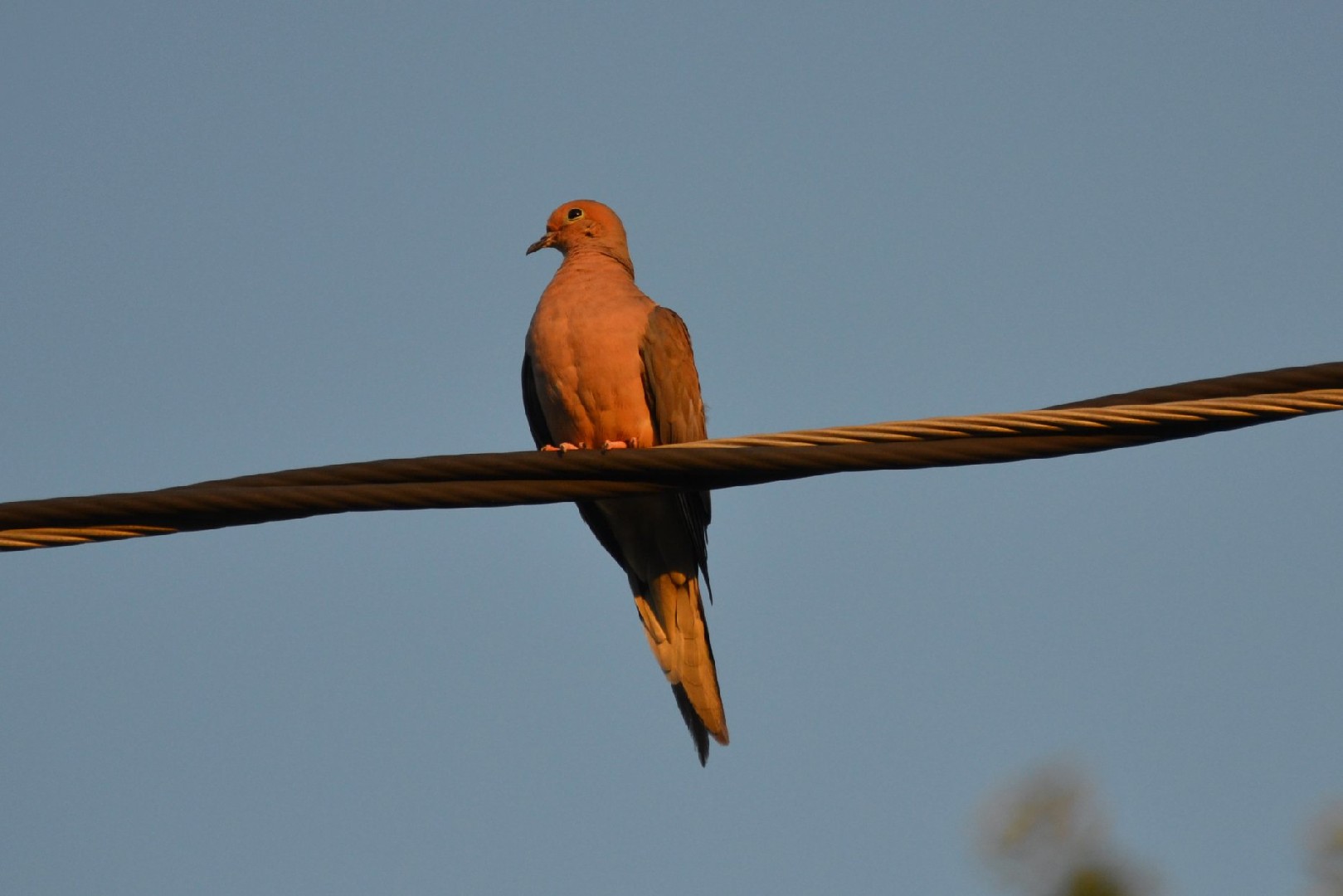
One of the most famous and widespread doves of North America, the mourning Dove can be often seen in urban areas perching on telephone wires. It is named after its distinctive, plaintive-sounding song. It is also a popular game bird, but its population is still abundant thanks to the prolific breeding and its ability to raise up to five to six broods in a single year.
7. Yellow-rumped Warbler
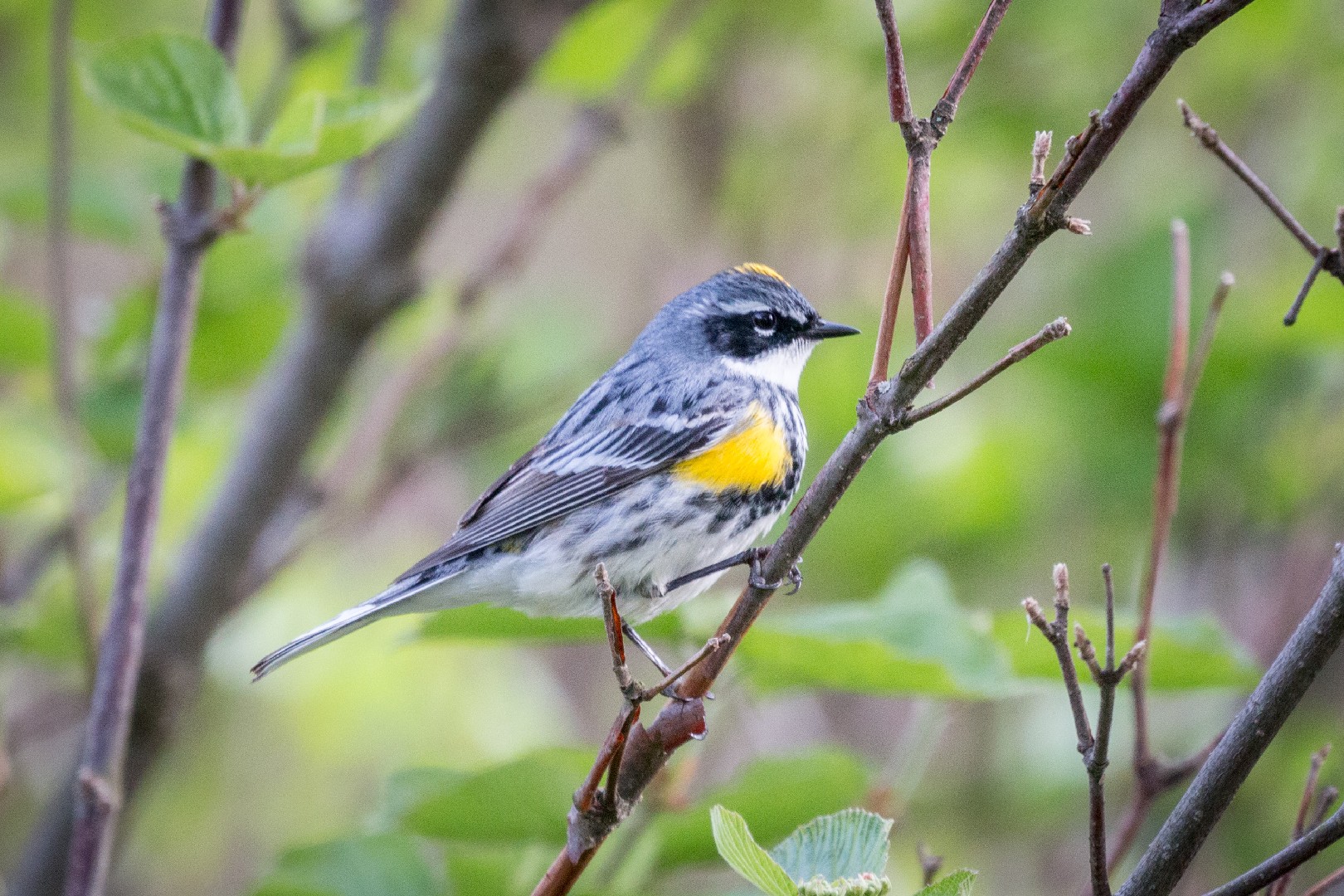
The foraging yellow-rumped Warbler is quick-moving and appealingly colored. Both male and female are a sharp gray, with white on their wings and flashes of yellow on their rump (as the name suggests), sides, and face. Most striking about this bird is the large groups of them that spread across North America in the autumn season.

8. Black-necked Stilt
Measurements: Length: 13.8-15.3 in (35-39 cm) Weight: 5.3-6.2 oz (150-176 g) Wingspan: 28.1-29.7 in (71.5-75.5 cm) They have long pink legs and a long thin black bill. They are white below and have black wings and backs. The tail is white with some grey banding. A continuous area of black extends from the back along the hind neck to the head. There, it forms a cap covering the entire head from the top to just below eye-level, with the exception of the areas surrounding the bill and a small white spot above the eye. Males have a greenish gloss to the back and wings, particularly in the breeding season. This is less pronounced or absent in females, which have a brown tinge to these areas instead. Otherwise, the sexes look alike. Downy young are light olive brown with lengthwise rows of black speckles (larger on the back) on the upperparts – essentially where adults are black – and dull white elsewhere, with some dark barring on the flanks. Where their ranges meet in central Brazil, the black-necked and white-backed stilts intergrade. Such individuals often have some white or grey on top of the head and a white or grey collar separating the black of the hindneck from that of the upper back. The black-necked stilt is distinguished from non-breeding vagrants of the black-winged stilt by the white spot above the eye. Vagrants of the northern American form in turn are hard to tell apart from the resident Hawaiian stilt, in which only the eye-spot is markedly smaller. But though many stilt populations are long-distance migrants and during their movements can be found hundreds of miles offshore, actual trans-oceanic vagrants are nonetheless a rare occurrence. 
9. Killdeer
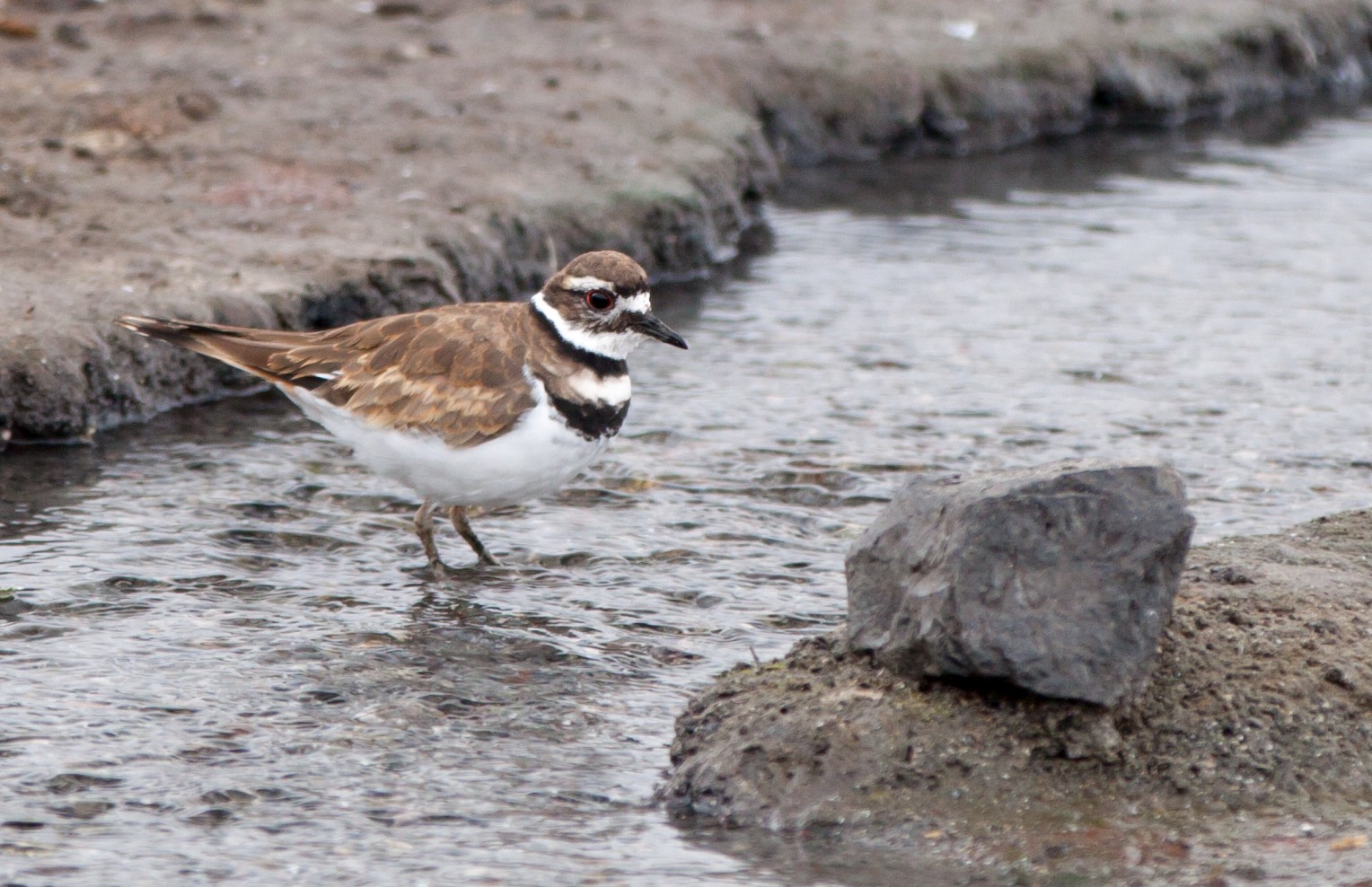
This shorebird is slender and lanky, with long wings and a long tail that ends at a point. If its nest is being threatened by a predator, the killdeer is known to pretend that it has a broken wing, making itself a target in order to lure the predator away from the nest. They have the curious habit of collecting mostly light colored items to build their nests.
10. Black Phoebe
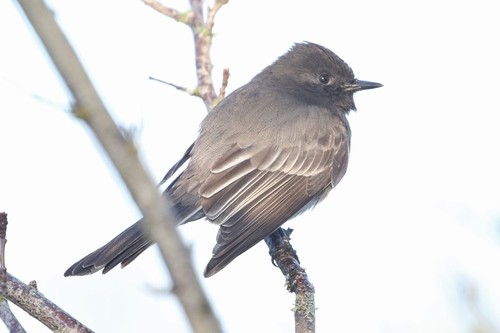
Often spotted near creeks and ponds after you hear its sharp, whistling call, the small, plump black Phoebe is a sooty gray. Look for its white belly and squared tail to properly identify it. When perched, it wags its tail constantly. This bird feeds by taking short, quick flights to skim the water’s surface and snag an insect.
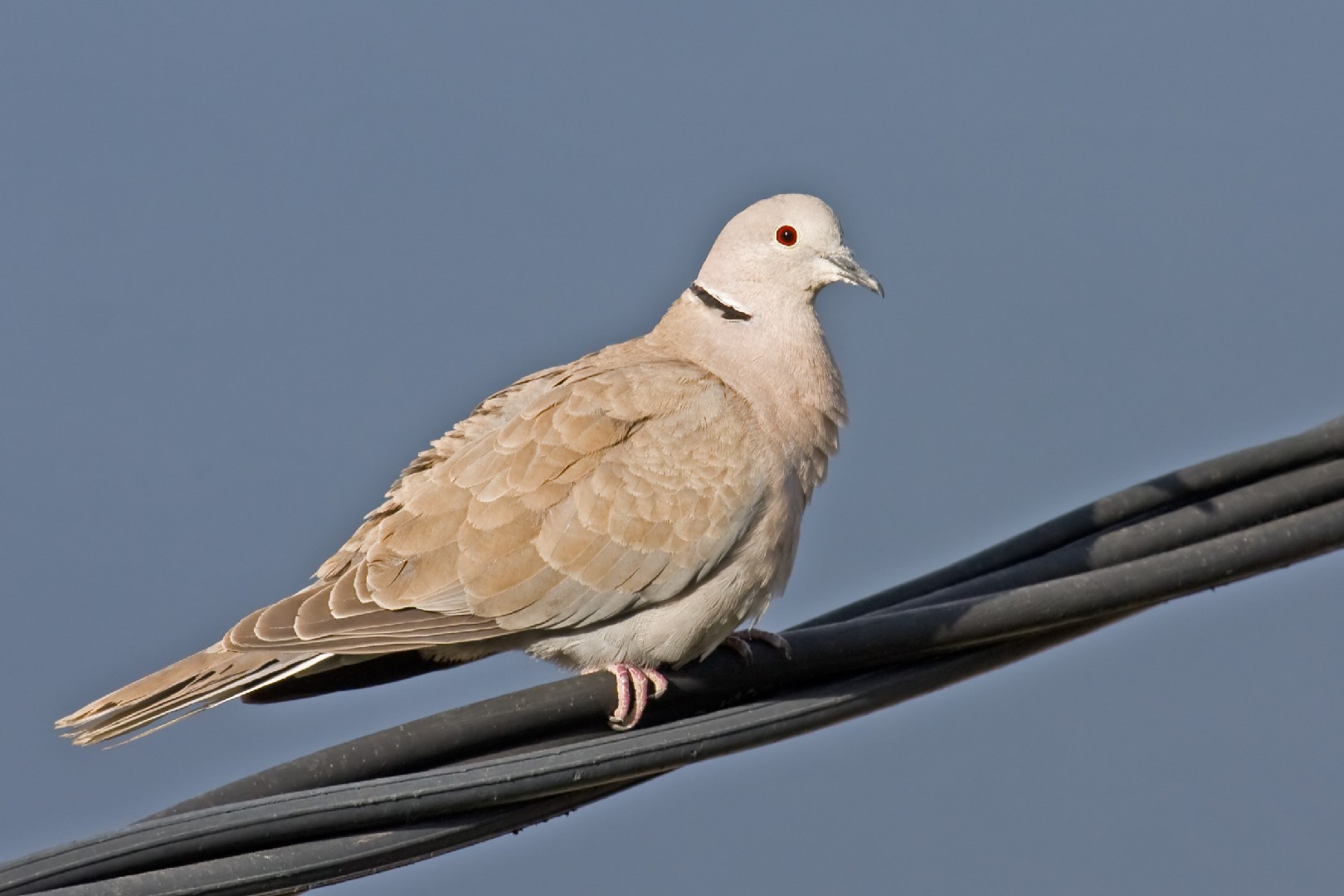
11. Eurasian Collared-dove
This plump, pretty dove with a square-tipped tail is known for bobbing its head and flicking its tail while walking. Though nice to look at, many people are not pleased at the sight of a eurasian Collared-dove walking along. In North America they are considered an invasive species, and one that carries a disease-creating parasite that can spread to native dove populations through birdbaths, feeders, or even through hawks preying on them.
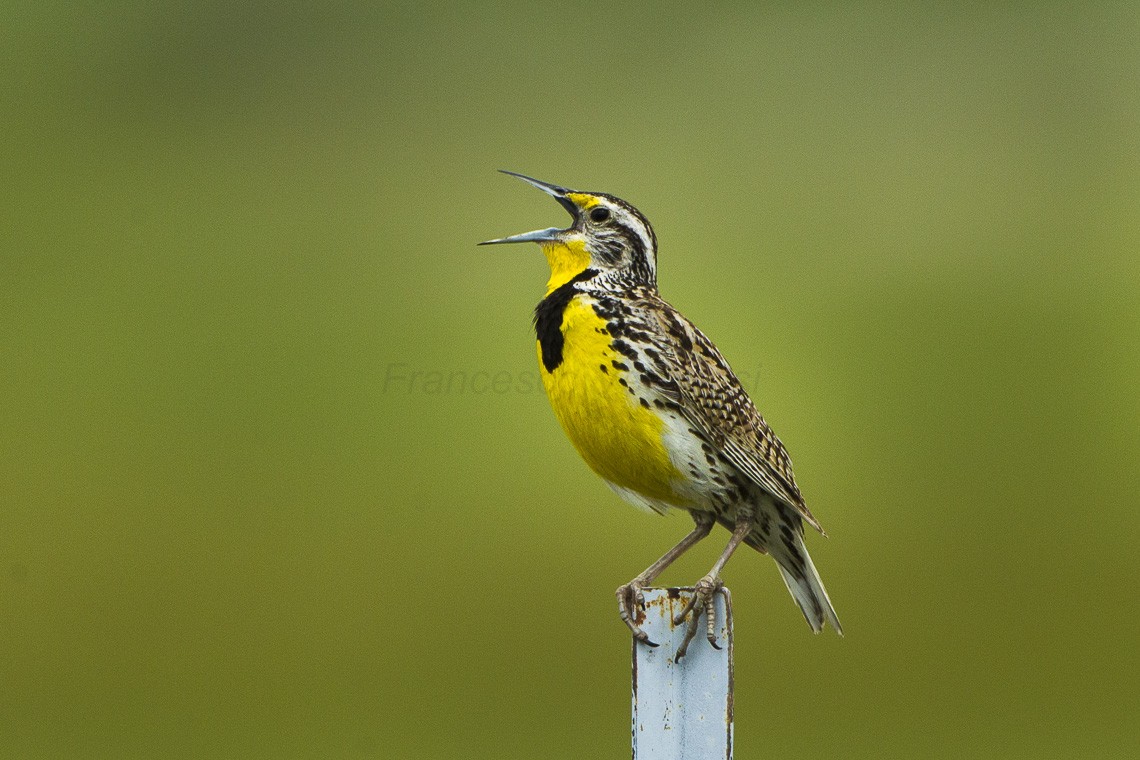
12. Western Meadowlark
Western meadowlark adults have yellow underparts with a black "V" on the breast and white flanks streaked with black. Their upper parts are mostly brown, but also have black streaks. These birds have long, pointed bills and their heads are striped with light brown and black bands. Measurements: Length: 6.3-10.2 in (16-26 cm) Weight: 3.1-4.1 oz (89-115 g) Wingspan: 16.1 in (41 cm) These birds have a flute-like warbled song. These calls contrast with the simple, whistled call of the eastern meadowlark.
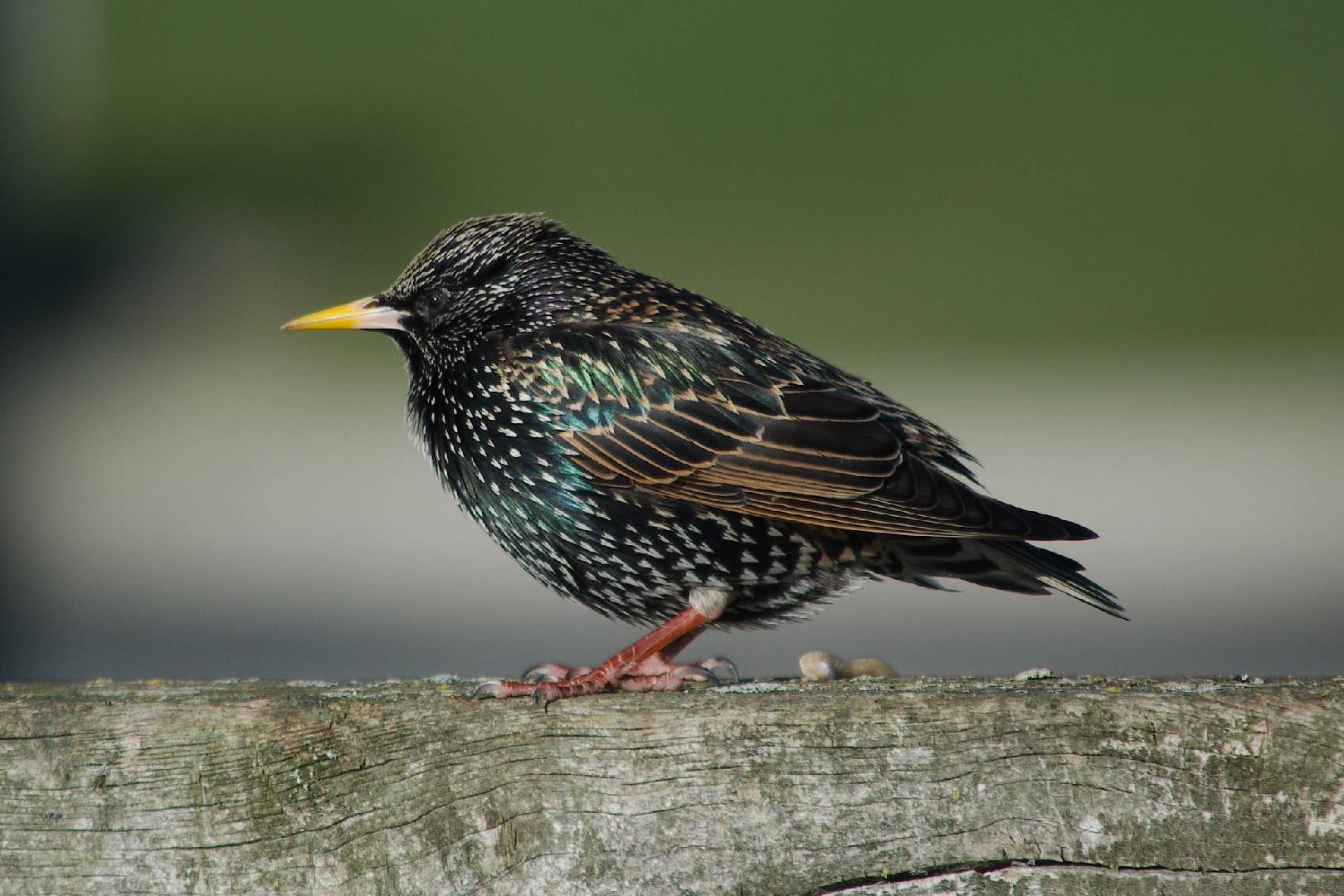
13. European Starling
The european Starling, a large, hardy songbird, is one of the most commonly seen bird species in North America. Originally from Europe, this species was brought to the U.S. in the 1890s by enthusiasts of William Shakespeare, who had the unique goal of bringing over every single species of bird that was mentioned in Shakespeare's collective works. Unfortunately, the european Starling, being an adaptable, generalist species, spread invasively across the continent, hurting many native species' populations in the process.
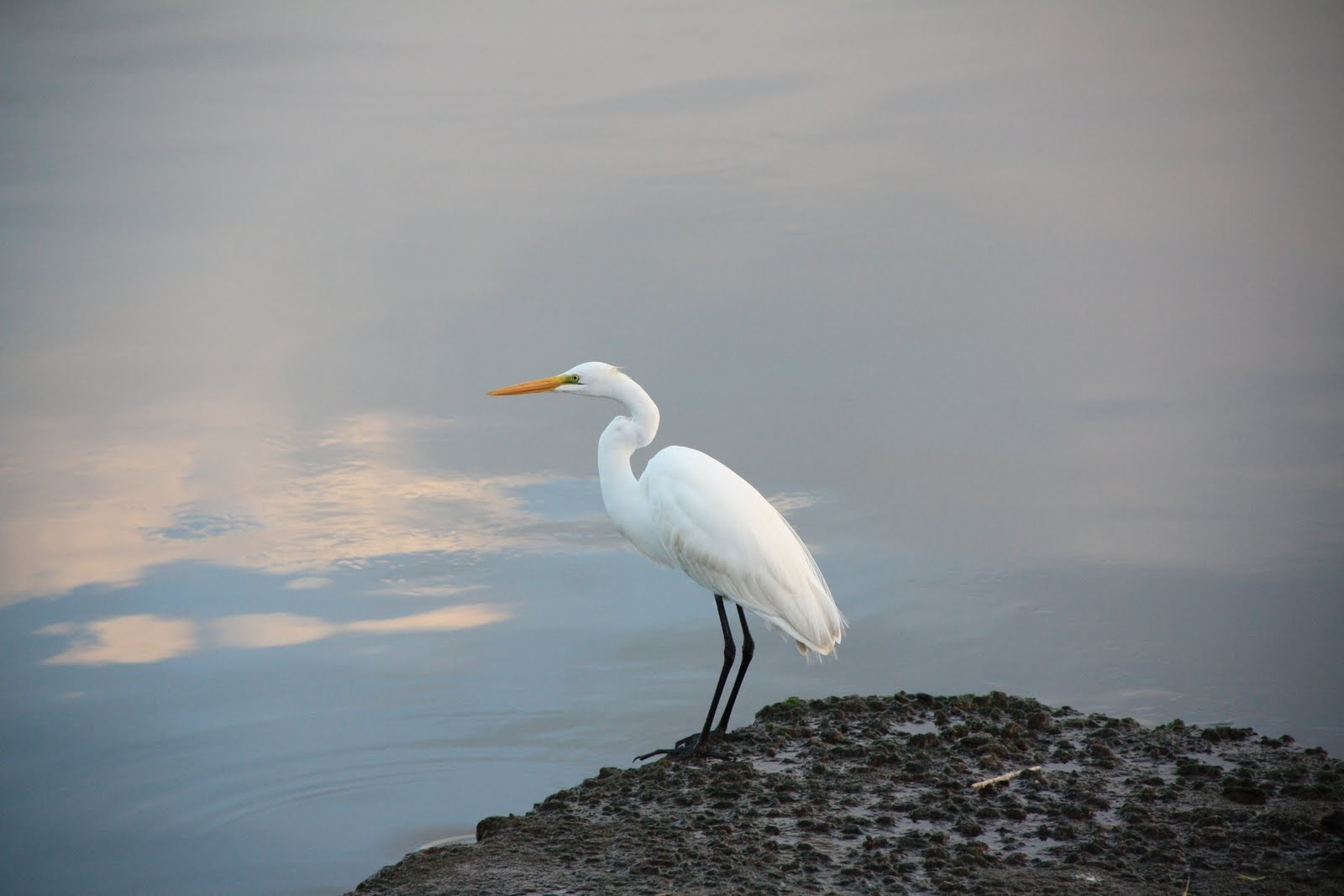
14. Great Egret
These tall birds are quite distinctive with their bright white feathers, black legs, and orange beaks. Great Egrets live near both fresh and saltwater, nesting high in trees to protect their eggs from predatory mammals. They are colonial nesters, living in large groups (colonies), and they find the majority of their food in the nearest body of water.
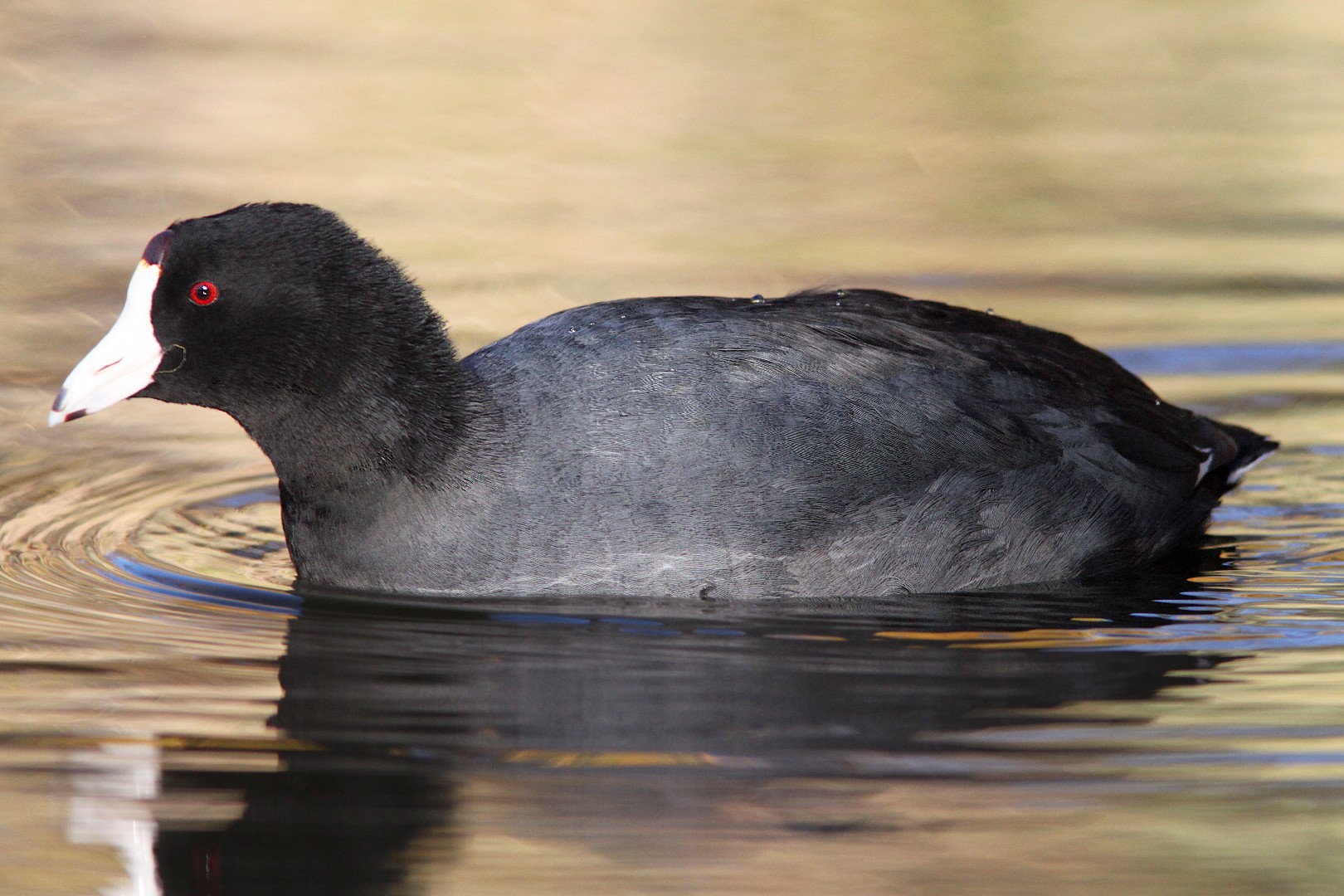
15. American Coot
The american Coot is easily mistaken for a species of duck but does not have webbed feet and does not have a waddling gait. They can be found in and around ponds and lakes and frequently dive under the surface to feed on algae and other vegetation. These birds can live to be 22 years old!
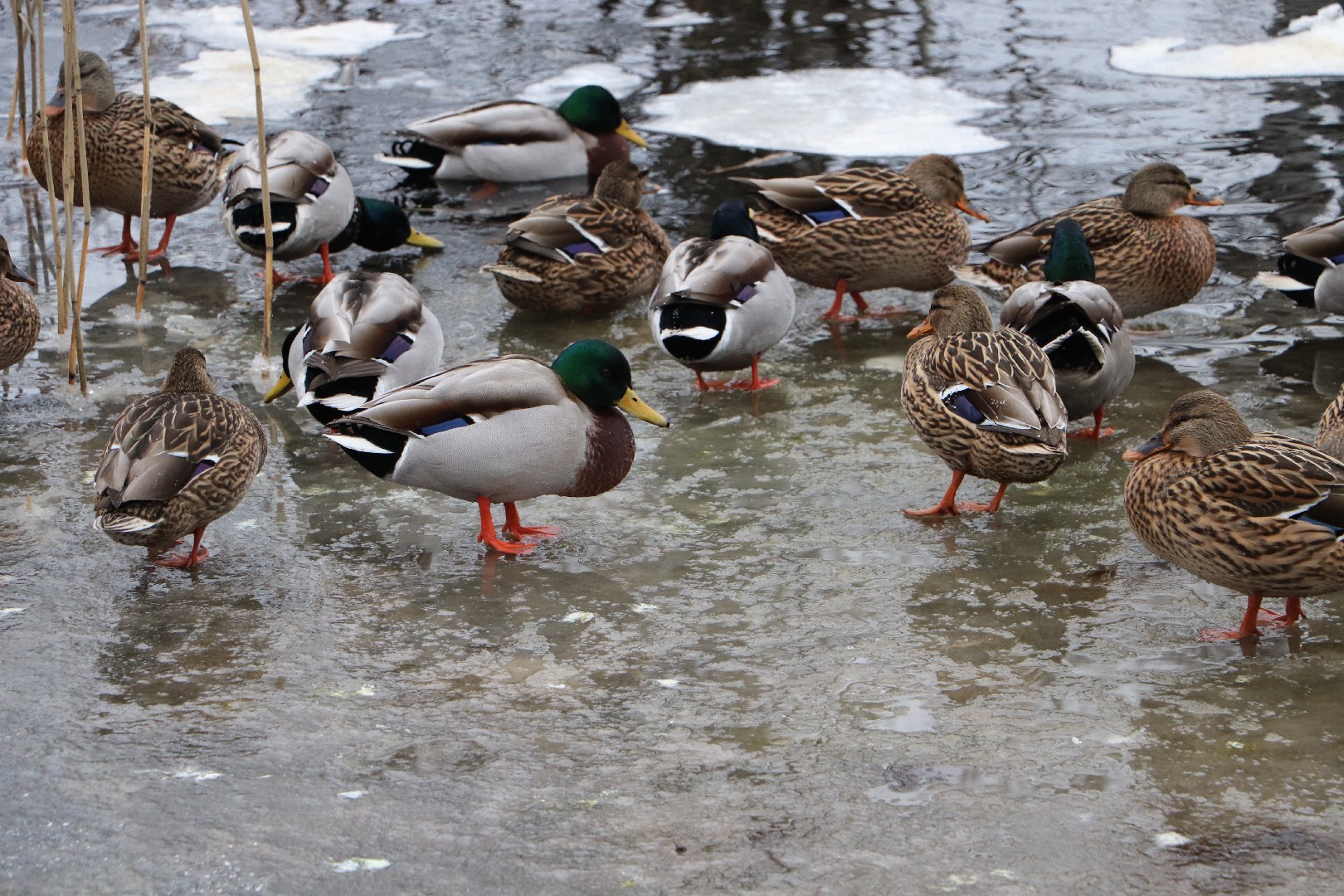
16. Mallard
The mallard is the most abundant duck species in the world, and the ancestor of all domestic ducks. Only the female can produce the distinctive "quack" sound. When the female lays eggs, the male abandons its mate, while the protective mother stays with the ducklings for a long time. This migratory species inhabits shallow waters and it's one of the most popular game birds.
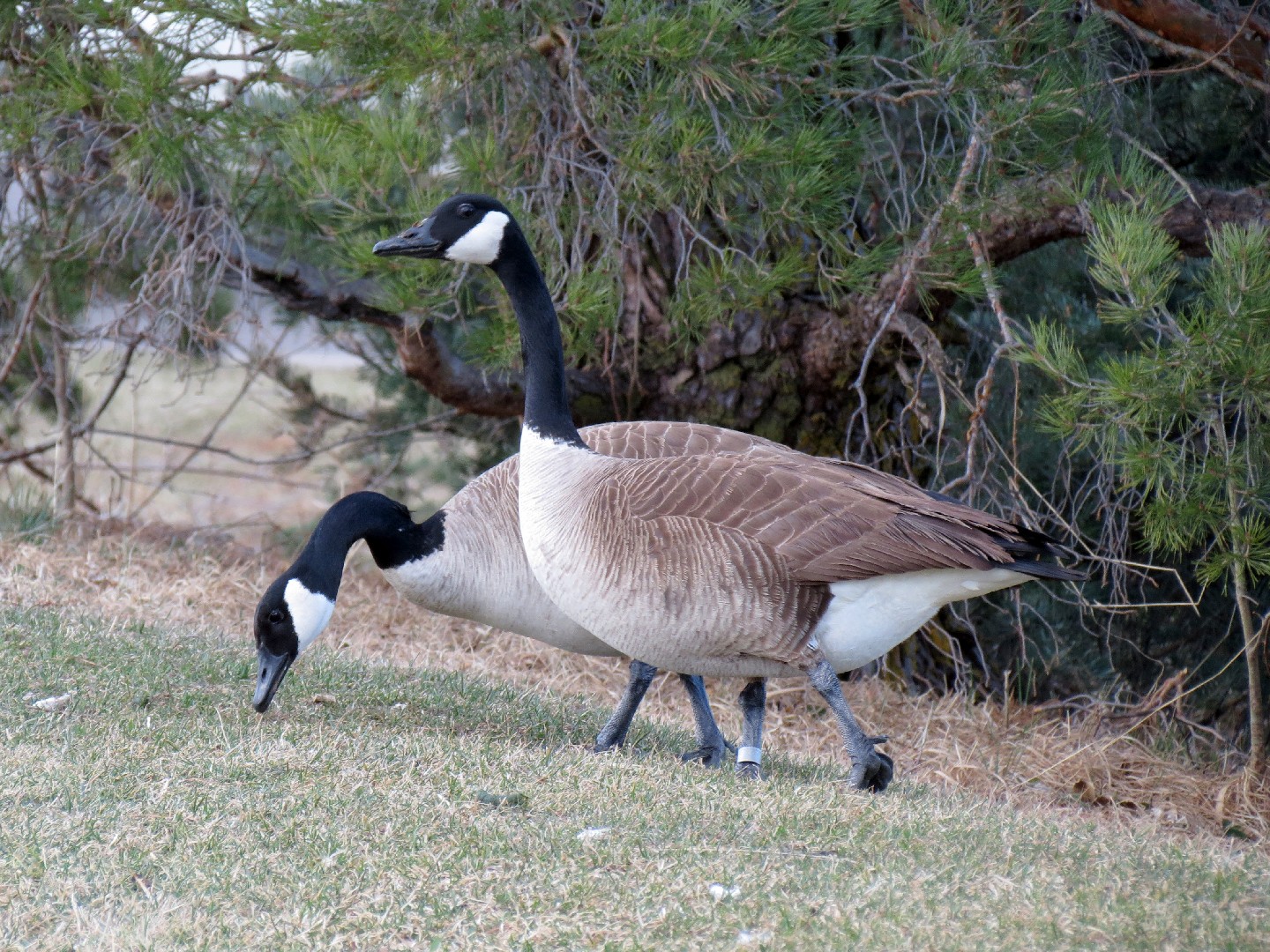
17. Canada Goose
Though this large, widespread bird is mainly known for its aggressively territorial nature, often shown by spitting, chasing, honking, or attacking, the canada Goose does have more loving traits. They mate for life, and this species is one of the birds that has minimal “divorce rates.” Interestingly, they choose mates by size, so smaller geese will mate with other small geese, and larger geese with other large geese.
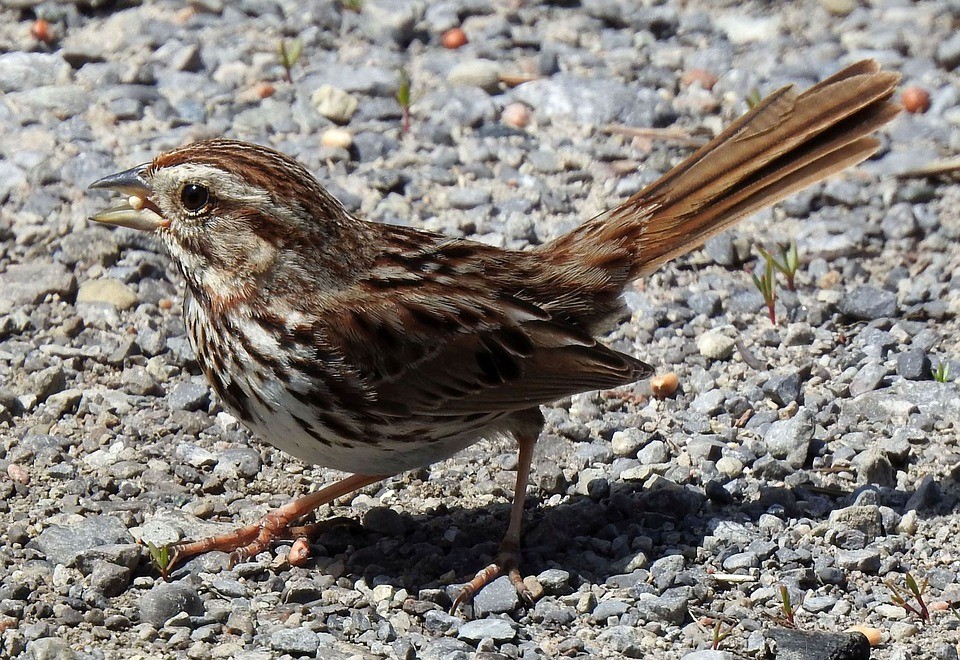
18. Song Sparrow
The song Sparrow can be found low to the ground in vegetation and thickets in nearly all habitat conditions, including suburban areas. They are frequent visitors to home birdfeeders but can also be seen foraging for food on the ground. Their appearance can differ across the 24 known subspecies, but all of them tend to only make short, fluttery flights.
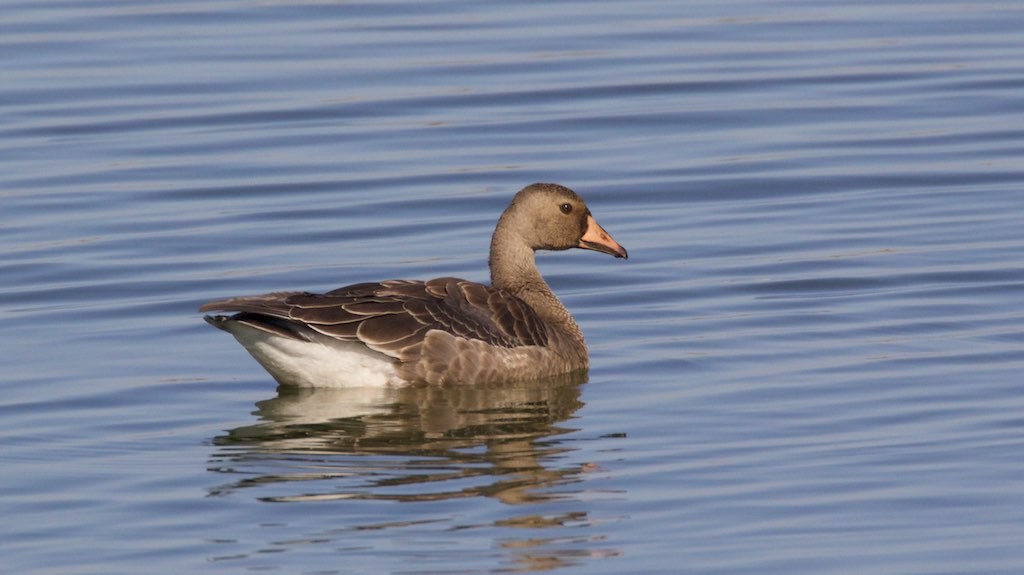
19. Greater White-fronted Goose
Greater white-fronted geese are 64–81 cm (25–32 in) in length, have a 130–165 cm (51–65 in) wingspan, and weigh 1.93–3.31 kg (4 lb 4 oz–7 lb 5 oz). They have bright orange legs and mouse-coloured upper wing-coverts. They are smaller than greylag geese. As well as being larger than the lesser white-fronted goose, the greater white-fronted goose lacks the yellow eye-ring of that species, and the white facial blaze does not extend upwards so far as in lesser. The male is typical larger in size, both sexes are similar in appearance—greyish brown birds with light grey breasts dappled with dark brown to black blotches and bars. Both males and females also have a pinkish bill and orange legs and feet. Greater white-fronted geese make a variation of sounds, but notably the most recognizable is the high pitched cackle that can be imitated by the sounds "he-he." There is a distinct breaking of the note from the first cackle to the second.

20. House Finch
Frequent in urban environments and human-created habitats such as parks and backyards, the little house Finch is known for its loud but pleasant, cheerful singing. It feeds on the ground, mostly on seeds, berries, and other plant material. This bird is highly sociable and very adaptable. It often visits feeders.