



Top 20 Most Common Bird in San Juan Capistrano
Boasting a vibrant tapestry of avian life, San Juan Capistrano serves as a natural habitat for a diverse assemblage of bird species. Its unique ecosystems, enriched by coastal cliffs, river valleys, and marshlands, offer an unmatched sanctuary to its feathered residents. From the iconic Anna's Hummingbird to the distinctive Great Blue Heron, the region is home to 20 common bird species. The variety and abundance of birdlife in San Juan Capistrano fascinatingly reveals the area's thriving biodiversity.

Most Common Bird
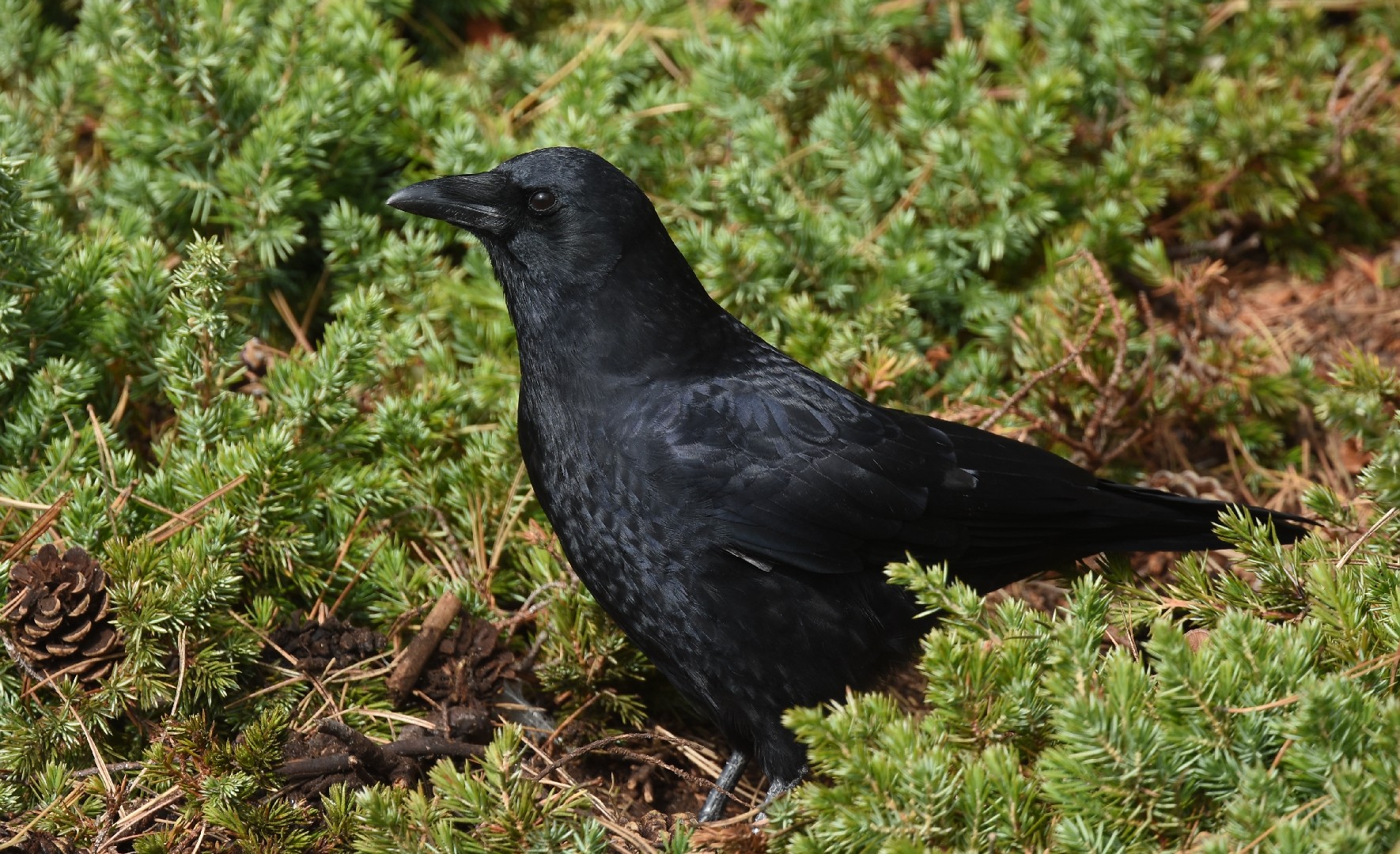
1. American Crow
The american Crow is a big black bird that can be found in forests, fields, river groves, and among human habitations. Interestingly, it is known to stand atop ant hills and allow ants to climb onto its feathers; this apparently discharges their formic acid and makes them more palatable for the crow to eat. Sadly, american Crow numbers have been substantially affected by the West Nile virus in North America. Infected birds die from West Nile in less than a week.

2. House Finch
Frequent in urban environments and human-created habitats such as parks and backyards, the little house Finch is known for its loud but pleasant, cheerful singing. It feeds on the ground, mostly on seeds, berries, and other plant material. This bird is highly sociable and very adaptable. It often visits feeders.
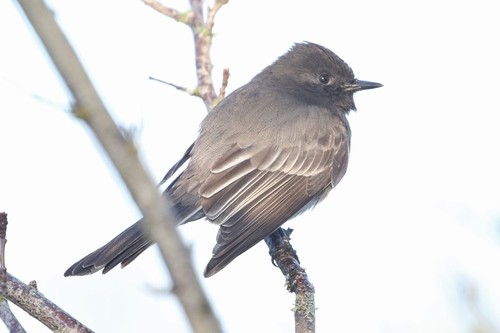
3. Black Phoebe
Often spotted near creeks and ponds after you hear its sharp, whistling call, the small, plump black Phoebe is a sooty gray. Look for its white belly and squared tail to properly identify it. When perched, it wags its tail constantly. This bird feeds by taking short, quick flights to skim the water’s surface and snag an insect.
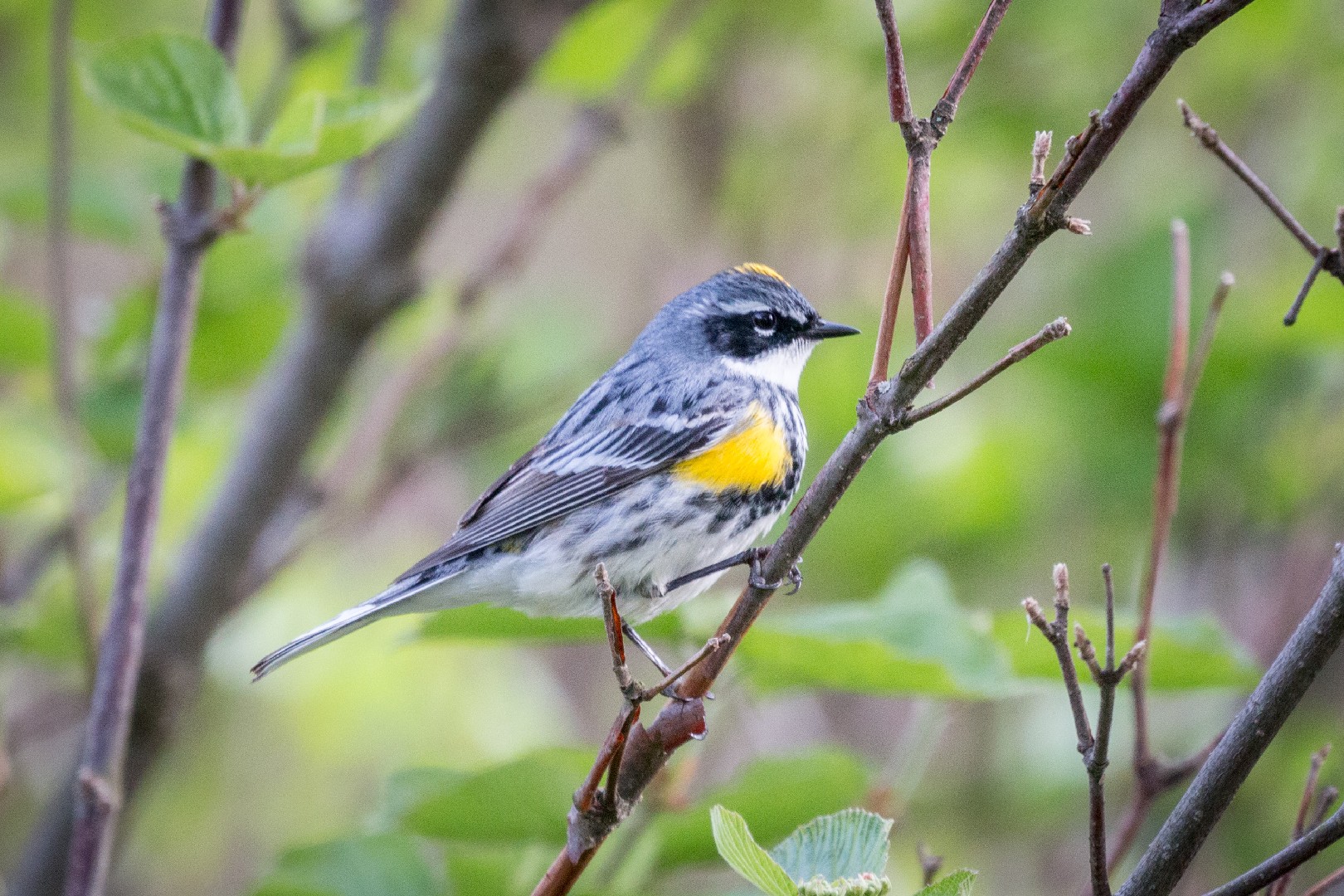
4. Yellow-rumped Warbler
The foraging yellow-rumped Warbler is quick-moving and appealingly colored. Both male and female are a sharp gray, with white on their wings and flashes of yellow on their rump (as the name suggests), sides, and face. Most striking about this bird is the large groups of them that spread across North America in the autumn season.
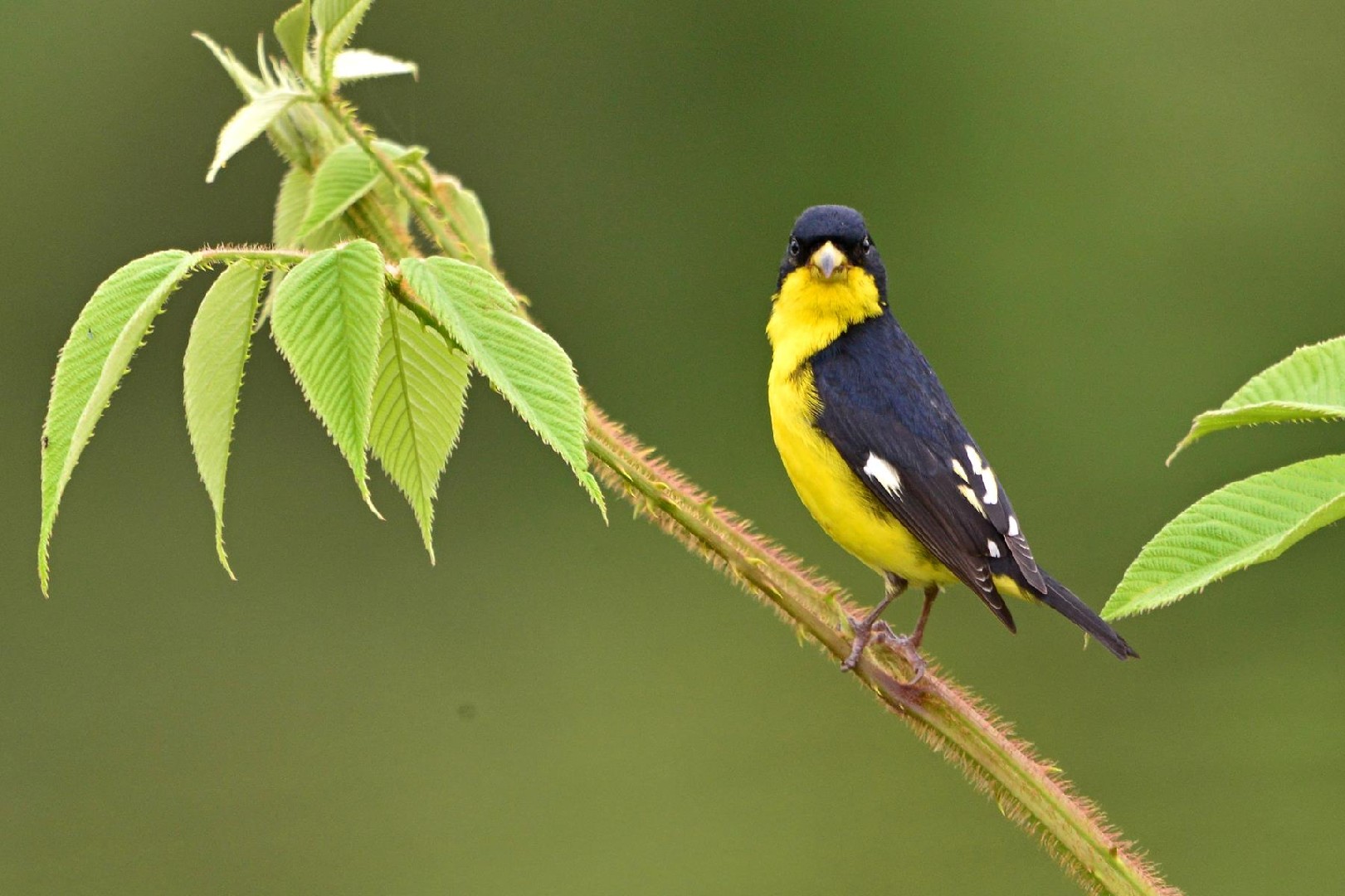
5. Lesser Goldfinch
A common visitor of birdhouses or anywhere with birdseed, the lesser Goldfinch is a small, notch-tailed bird that enjoys gardens and open wooded areas. Its size has made it commonly overlooked, but listen out for its charming, chiming song. Social birds, they are often seen in large groups of hundreds traveling together at a time.
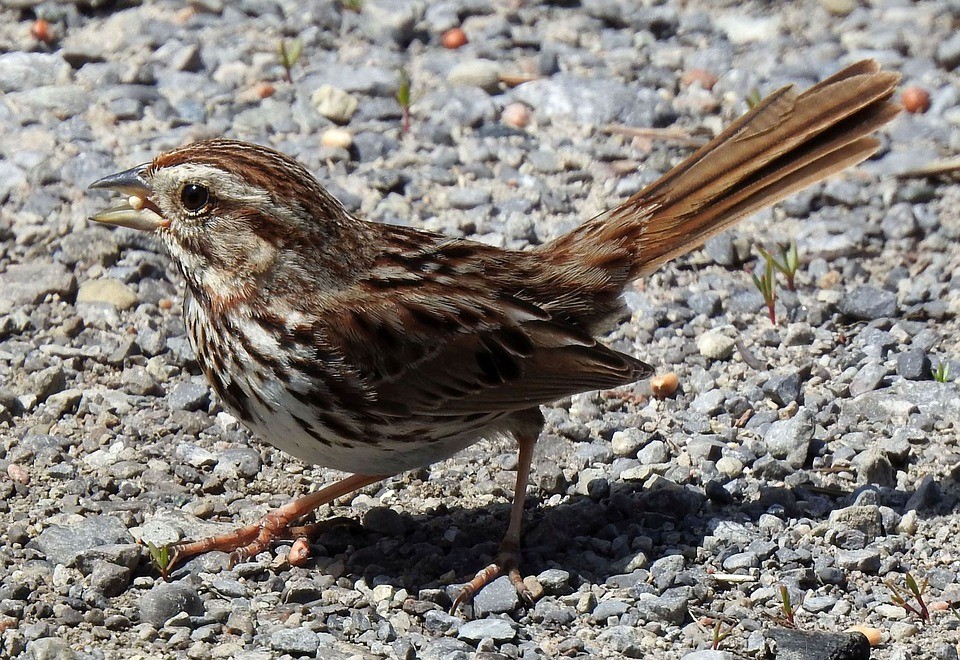
6. Song Sparrow
The song Sparrow can be found low to the ground in vegetation and thickets in nearly all habitat conditions, including suburban areas. They are frequent visitors to home birdfeeders but can also be seen foraging for food on the ground. Their appearance can differ across the 24 known subspecies, but all of them tend to only make short, fluttery flights.
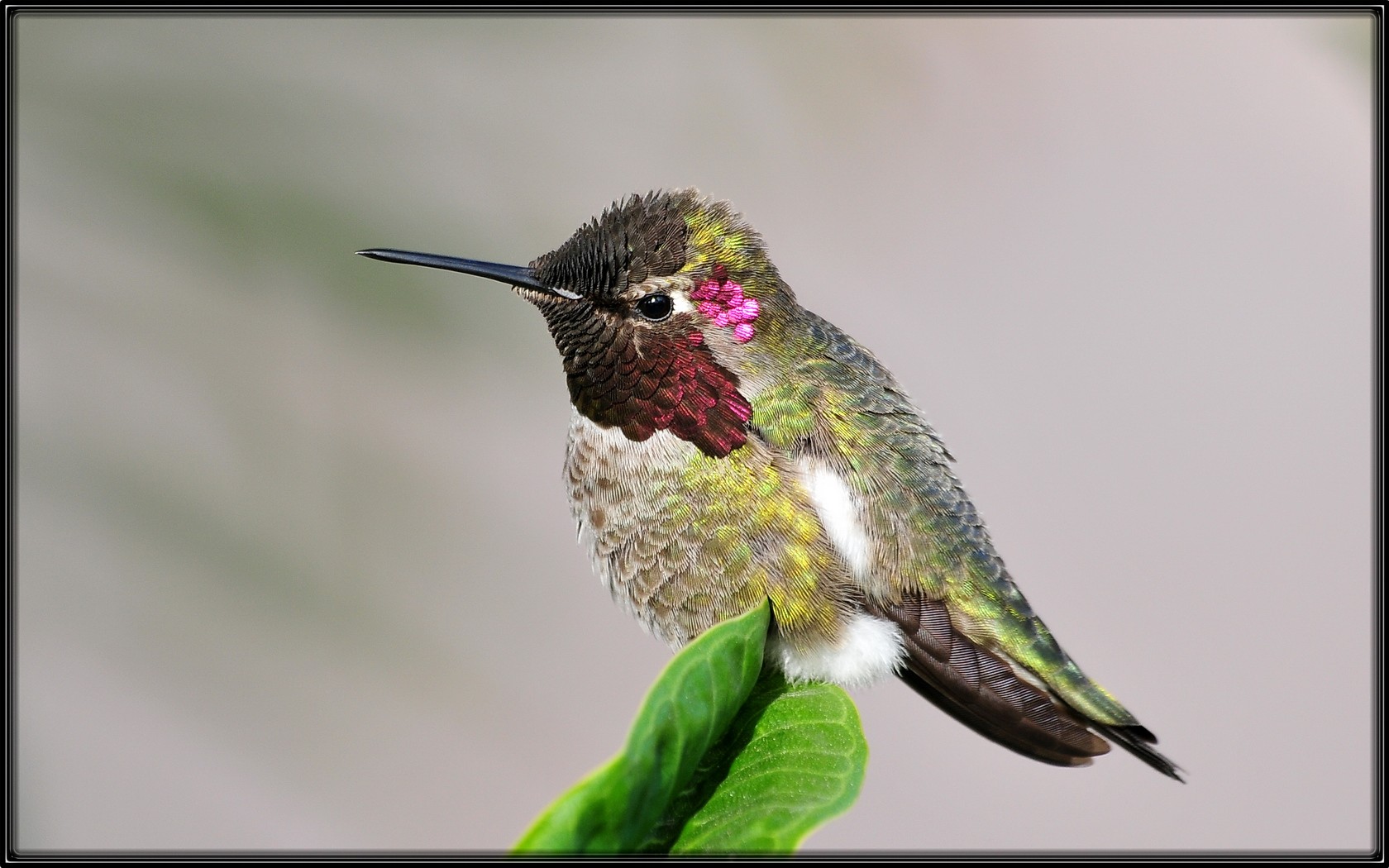
7. Anna's Hummingbird
This hardy bird is a common sight along the Pacific Coast, with a bright, vibrant coloring that is anything but common. Look for their emerald feathers and soft pink throats, which gives them the appearance of a flying jewel. Anna's Hummingbird is more vocal than other hummingbirds, with a buzzy song you may hear from the males when they are perched.
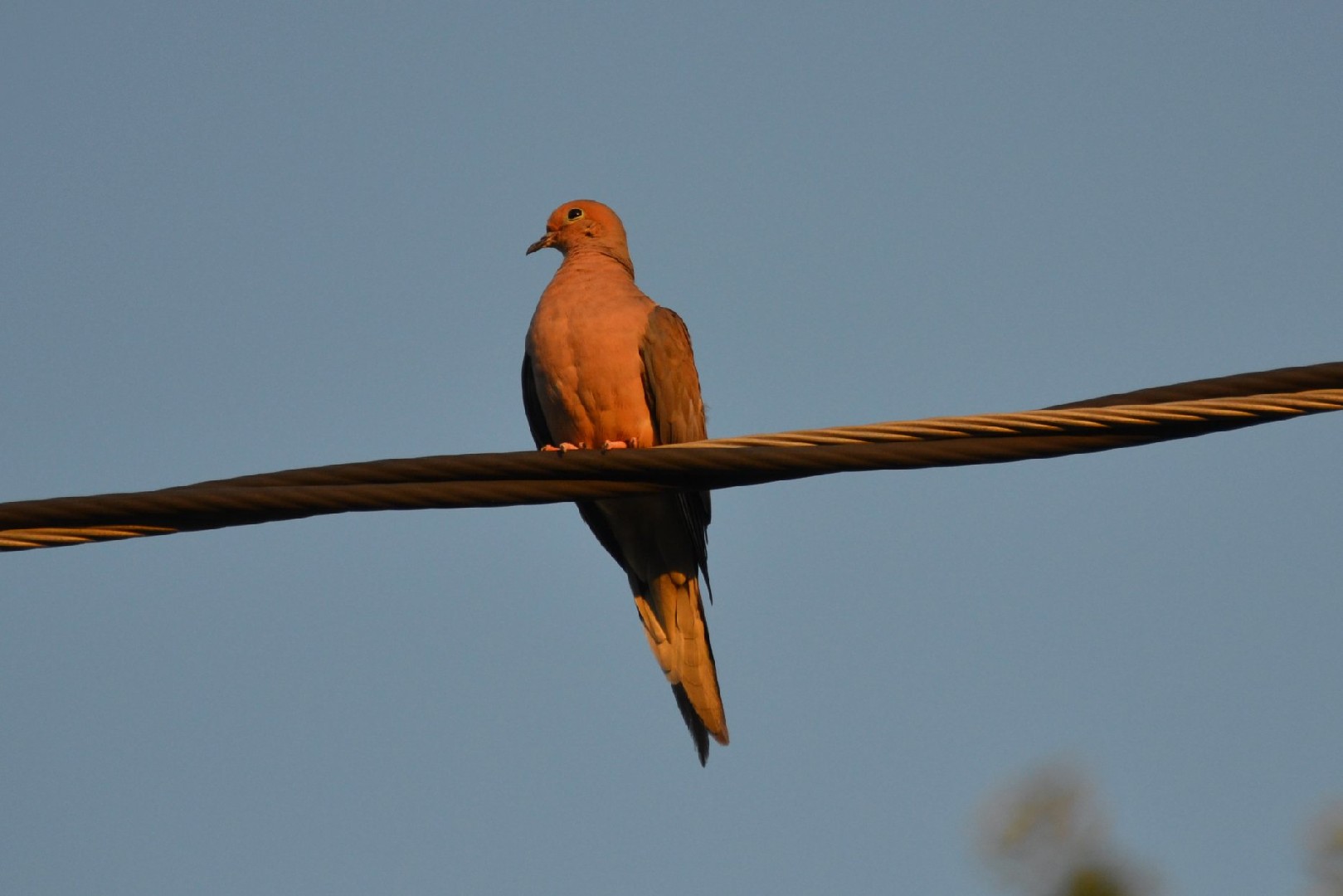
8. Mourning Dove
One of the most famous and widespread doves of North America, the mourning Dove can be often seen in urban areas perching on telephone wires. It is named after its distinctive, plaintive-sounding song. It is also a popular game bird, but its population is still abundant thanks to the prolific breeding and its ability to raise up to five to six broods in a single year.
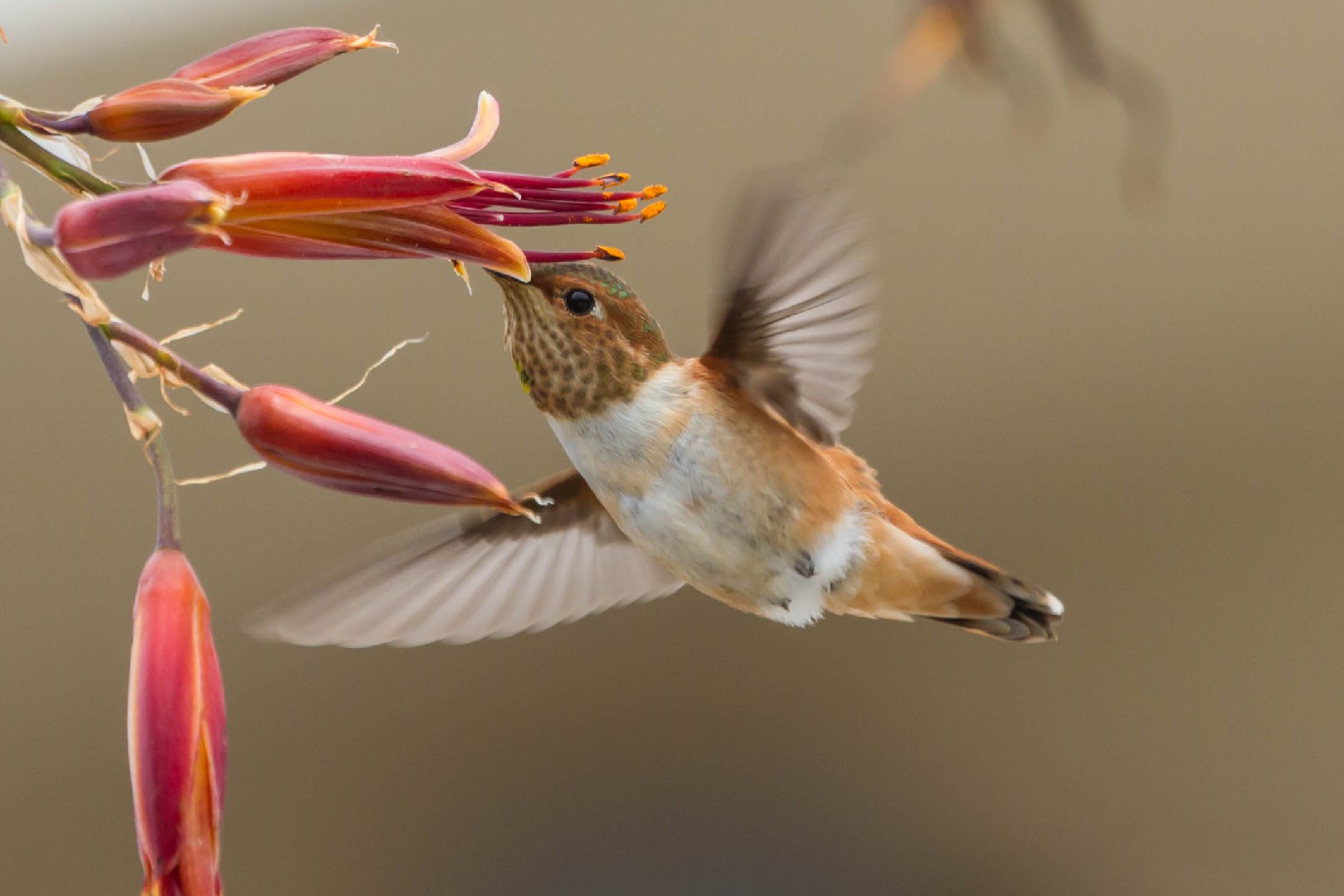
9. Allen's Hummingbird
Allen's hummingbird (Selasphorus sasin) is a species of hummingbird. It is a small bird, with mature adults reaching only 3 to 3.5 in (76 to 89 mm) in length. The male has a green back and forehead, with rust-colored (rufous) flanks, rump, and tail. The male's throat is an iridescent orange-red. The female and immature Allen's hummingbirds are similarly colored, but lack the iridescent throat patch, instead having a series of speckles on their throats. Females are mostly green, featuring rufous color only on the tail, which also has white tips. Immature Allen's hummingbirds are so similar to the female rufous hummingbird, the two are almost indistinguishable in the field. Both species' breeding seasons and ranges are common factors used to differentiate between the two species in a particular geographical area. 
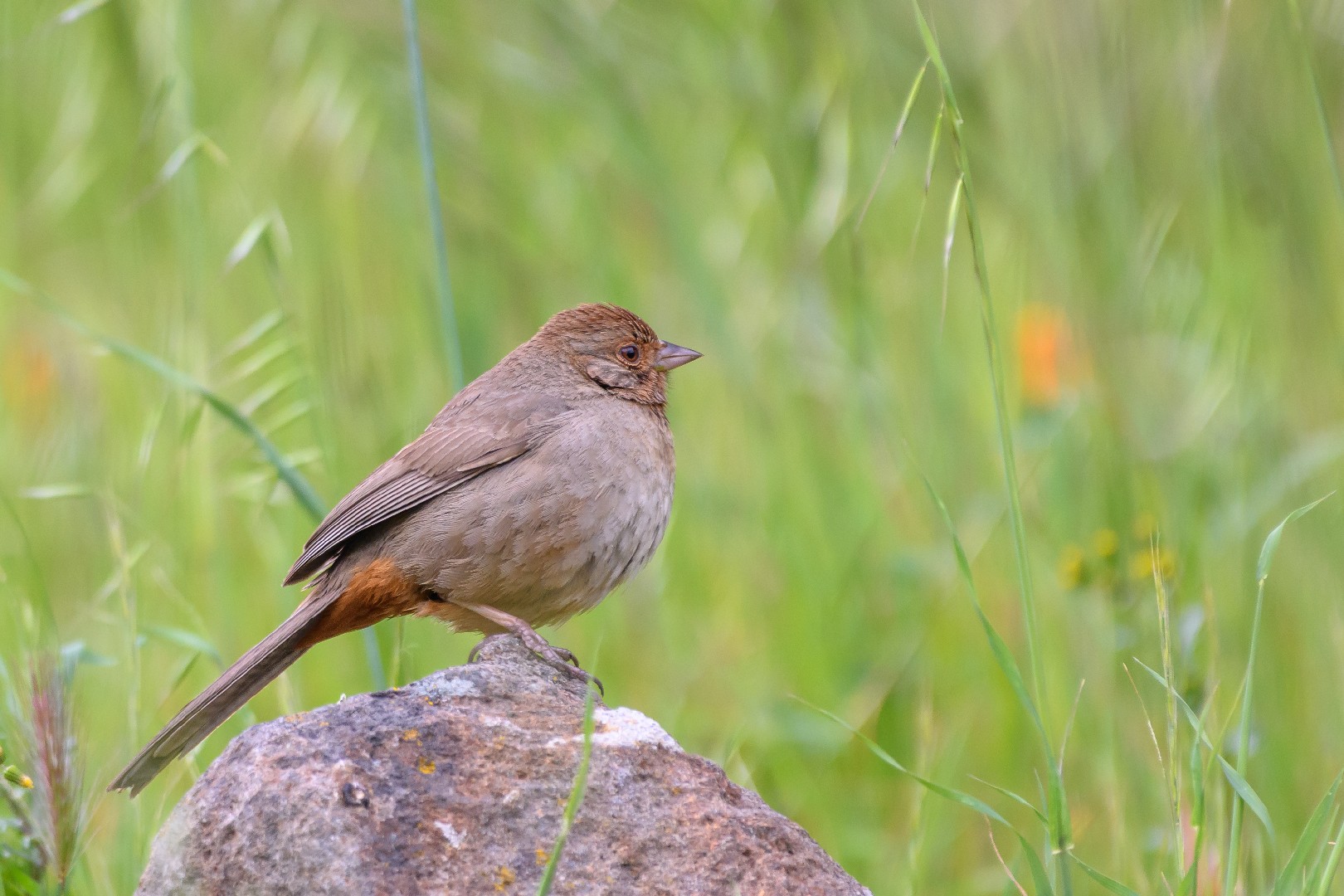
10. California Towhee
This california Towhee looks basically like a larger sparrow, sharing the beak designed for seed cracking, the long tail, and the short, round wings. Their longer tail and shorter wings, however, give them a less graceful look while they’re in flight. This bird is unique in its uniform, matte brown coloring across the entire body.
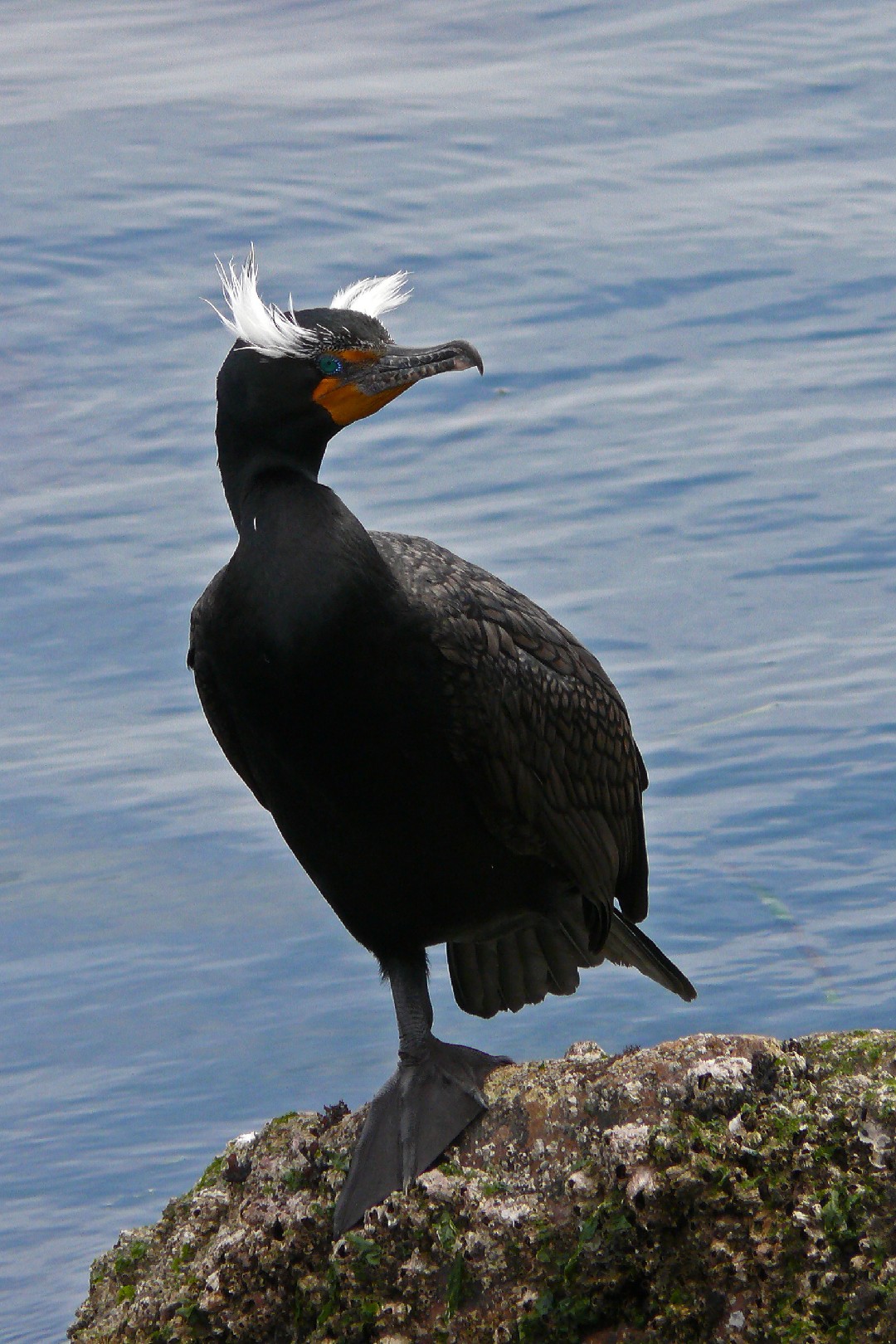
11. Double-crested Cormorant
This large, dinosaur-like bird is the most common form of cormorant. A frequent visitor to bodies of fresh water, look out for double-crested Cormorants at the water's edge when they “wing-spread”. They will stand with their wings opened wide and tilted towards the sun to dry their feathers, because they are not waterproof.
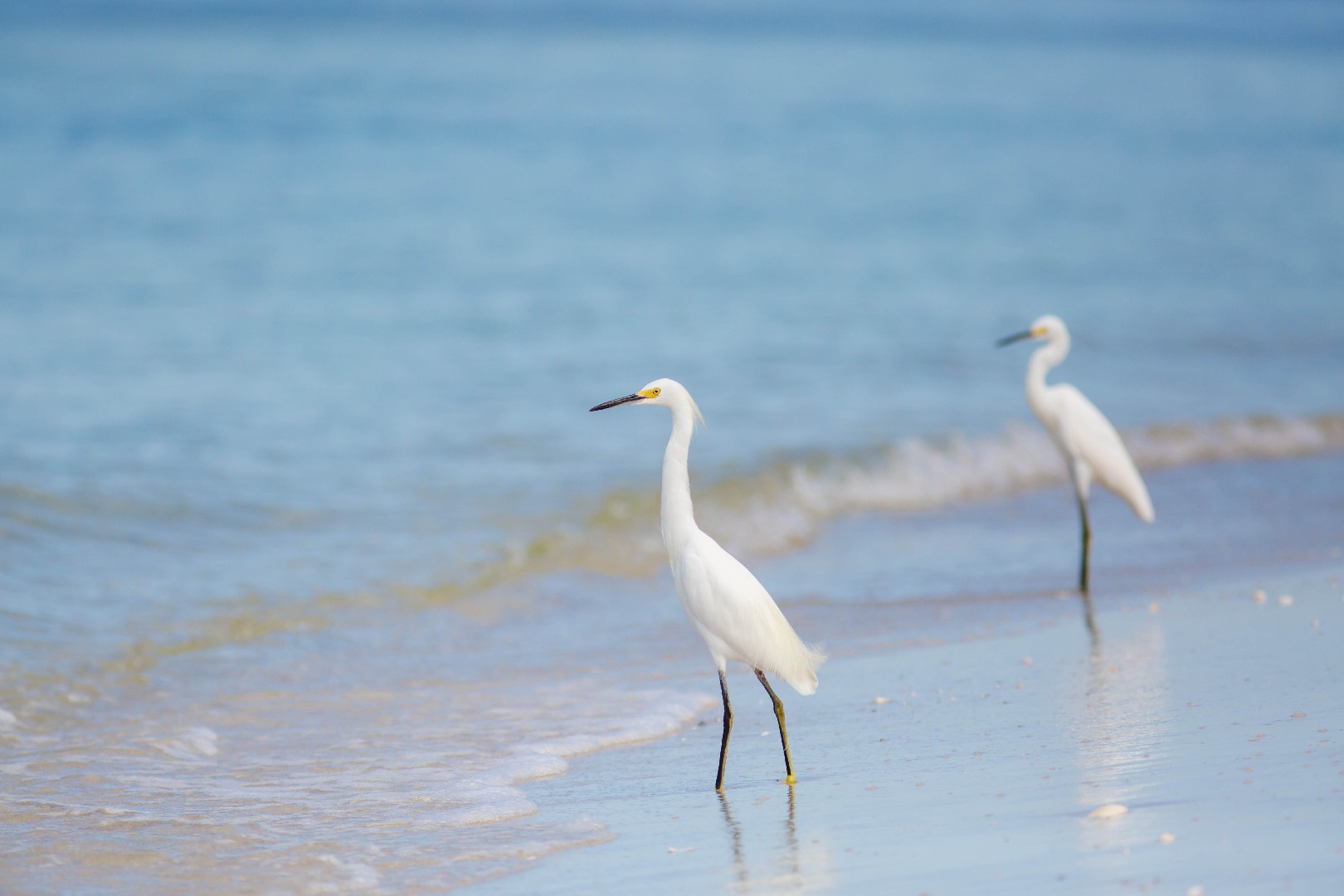
12. Snowy Egret
The snowy Egret is a mid-sized, totally white egret that prefers nesting in urban areas rather than in isolated locations where there are more predators. In the late 1800s, the bird's beautiful plumes were in great demand as decoration for women's hats. Because of this snowy Egrets were hunted to near extinction before laws came into effect to protect them.
13. Mallard
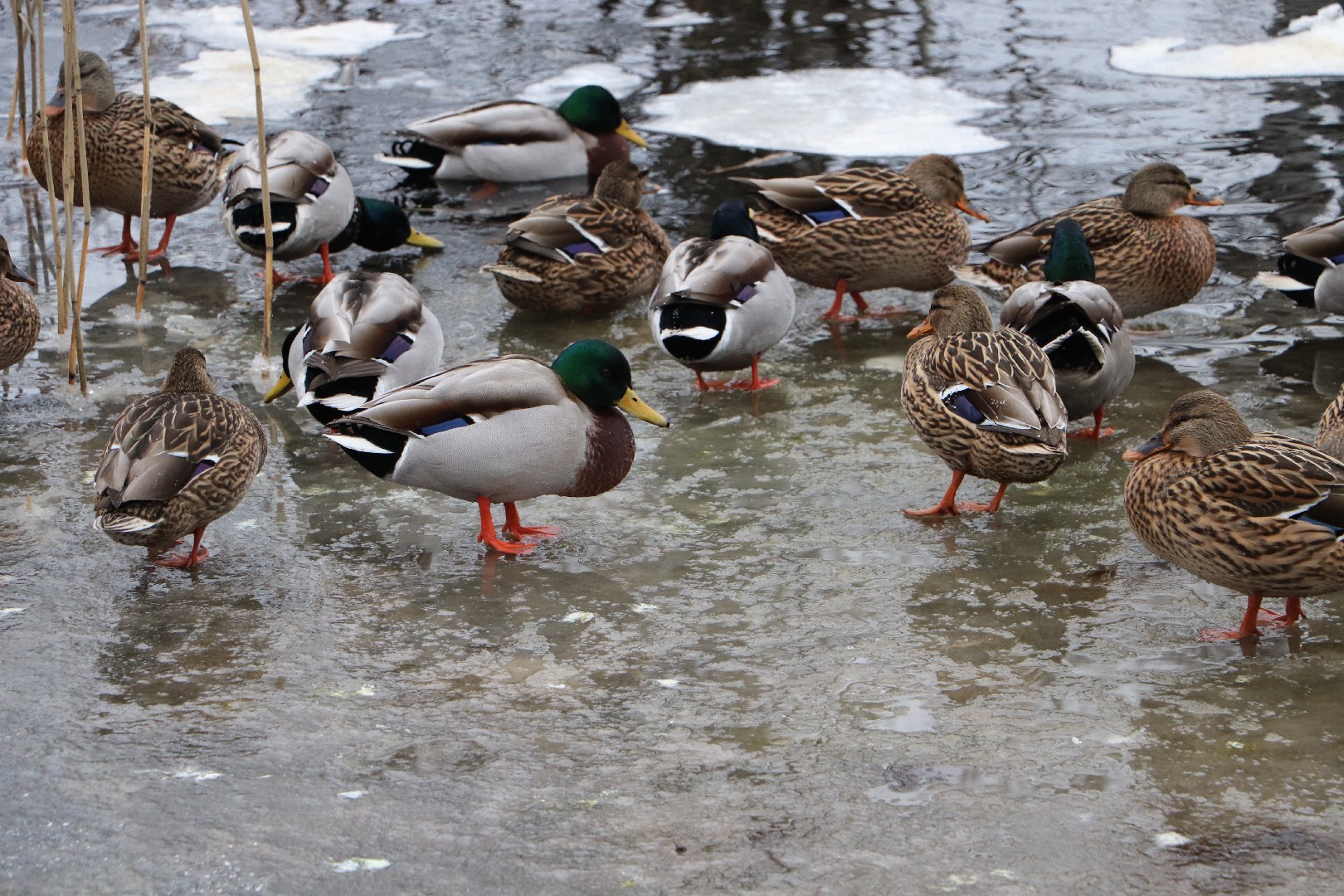
The mallard is the most abundant duck species in the world, and the ancestor of all domestic ducks. Only the female can produce the distinctive "quack" sound. When the female lays eggs, the male abandons its mate, while the protective mother stays with the ducklings for a long time. This migratory species inhabits shallow waters and it's one of the most popular game birds.
14. White-crowned Sparrow
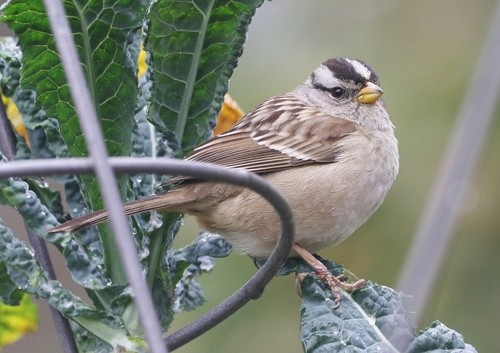
This common sparrow has a white crown atop its head, which gave it its name, as well as a neat pattern down its wings and a long tail. Some groups of white-crowned Sparrows migrate, while others remain in coastal habitats year-round. Across different groups of these birds are different song “dialects” which are widely studied.
15. Western Gull
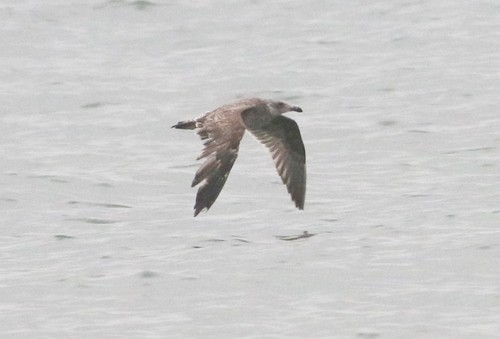
The western Gull's dark back feathers and its large size set it apart from other gulls. It is a voracious feeder, eating fish, carrion, and invertebrates. It forages for food along shorelines and in the ocean. The bird is even known to take milk from female seals while they are sleeping.
16. Cassin's Kingbird
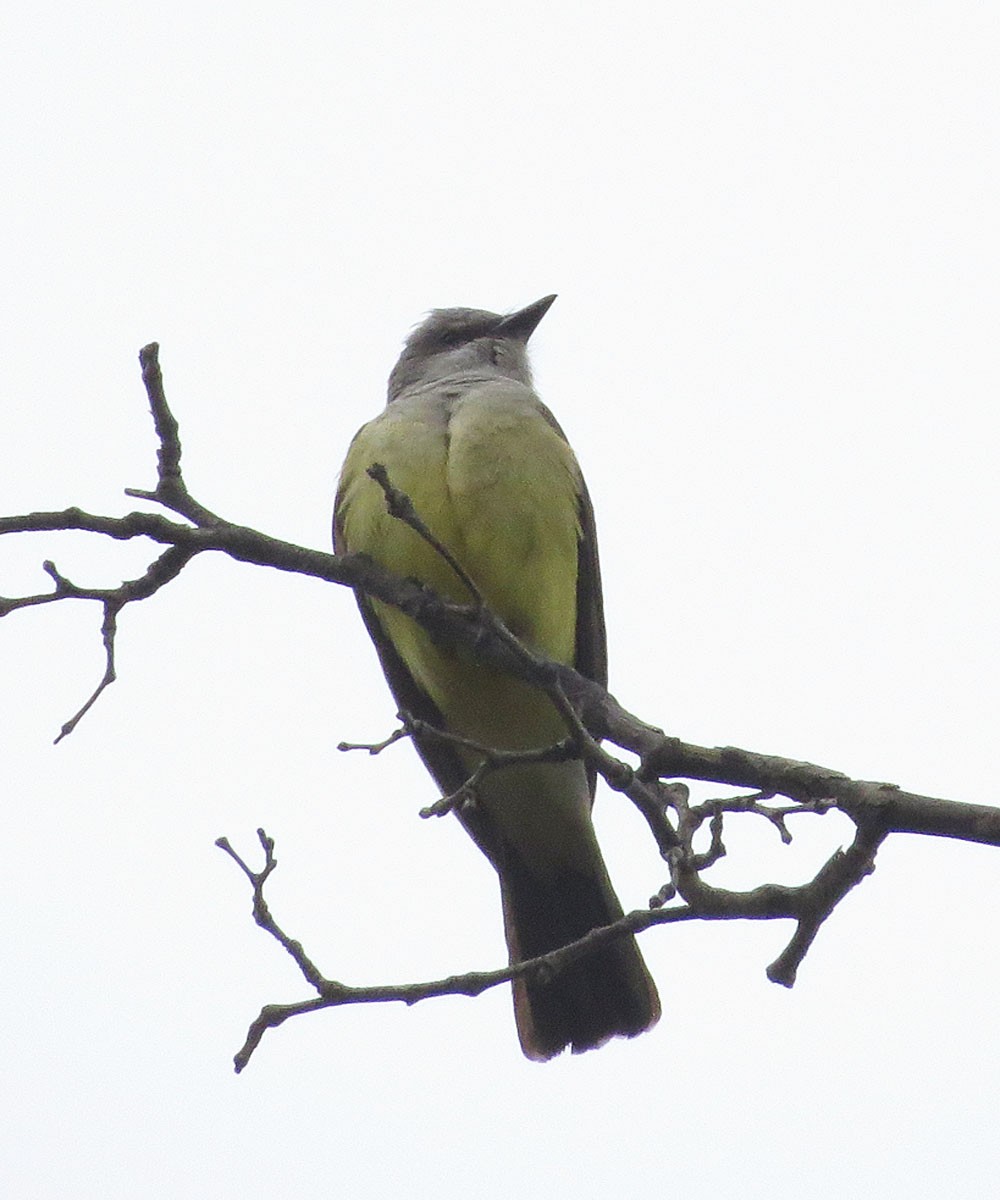
Adults have a gray head with slightly darker cheeks; a dark unforked tail with a buffy fringe and gray-olive underparts. They have a pale throat and deep yellow lower breast. Juveniles are duller and have pale edges on their wings. Measurements: Length: 8.3-9.1 in (21-23 cm) Weight: 1.6 oz (45 g) Wingspan: 41 cm
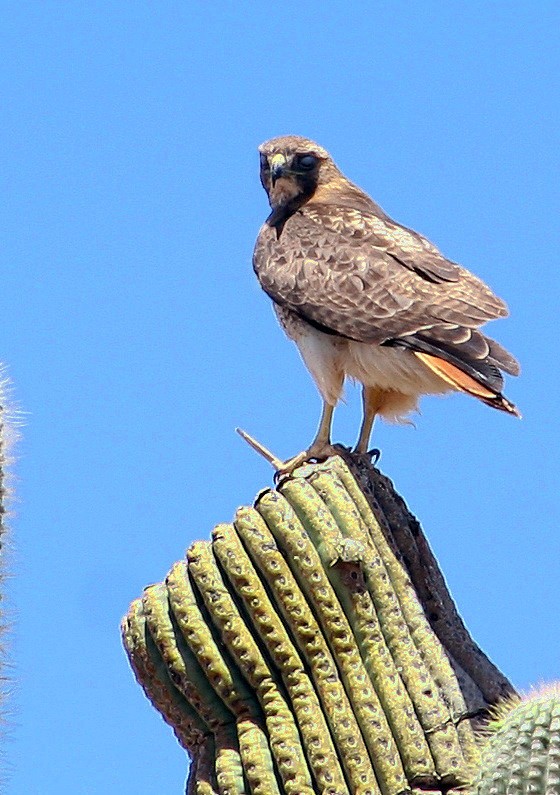
17. Red-tailed Hawk
Perched high in trees, the red-tailed Hawk watches for its prey: mammals, reptiles, birds, amphibians, large insects, and occasionally fish. It's the most common hawk in North America. Highly territorial and monogamous, the red-tailed Hawk is relatively long-lived. Many of them die young, but those who survive can live up to 20 years.
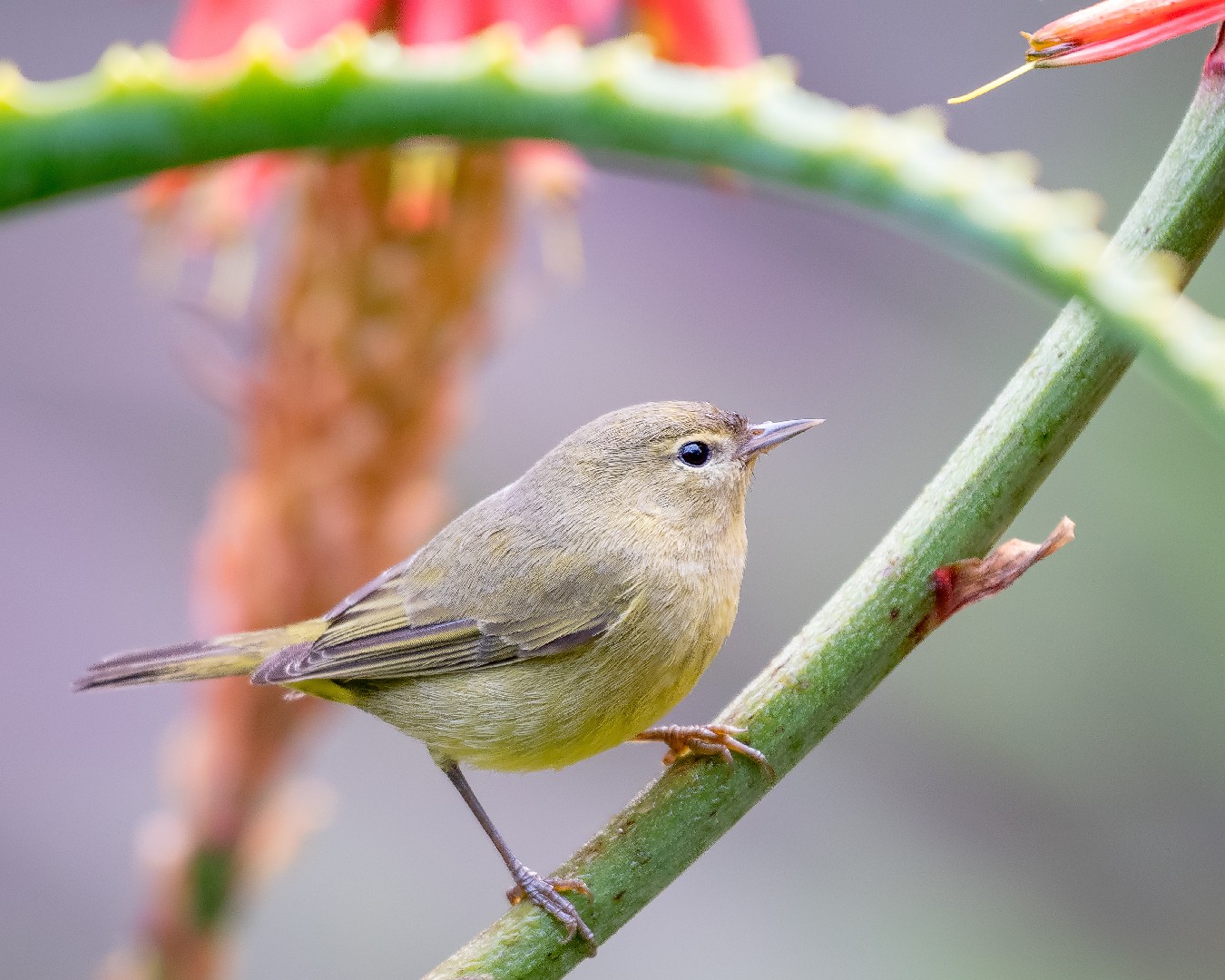
18. Orange-crowned Warbler
The orange-crowned Warbler has a large range but is a rare sight. These birds stay in the coverage of low thickets and dense vegetation in shrubby ecosystems looking for insects and berries. The orange-crowned Warbler also nests on the ground, possibly to avoid other bird species that might commandeer or rob from a nest higher up in the trees.
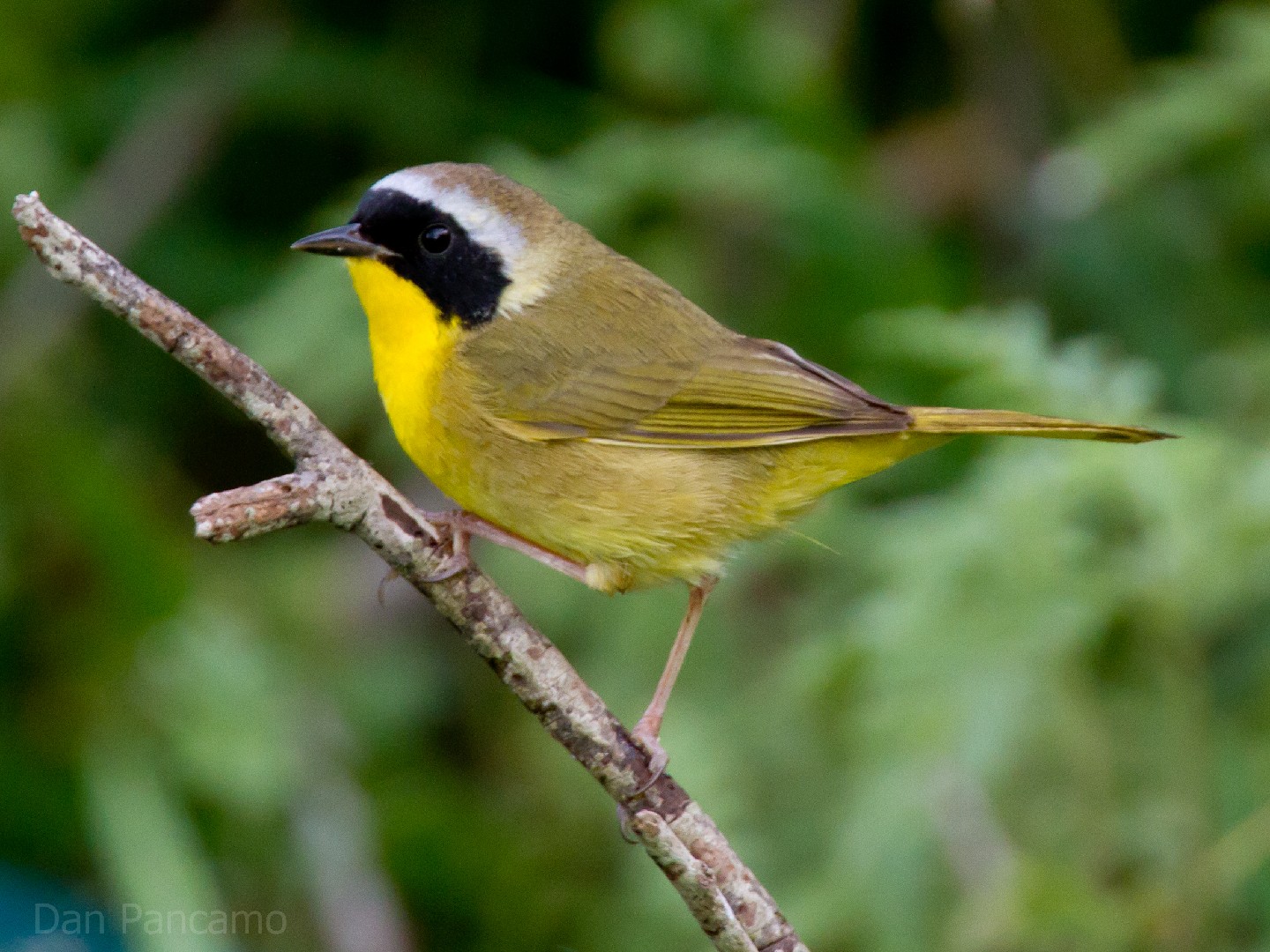
19. Common Yellowthroat
The common Yellowthroat is an inquisitive bird that spends most of its time in marshes and wetlands. The male performs a unique flight song as it rises into the air on its fluttering wings. Sadly, because they are innately curious and tend to pop out into the open whenever they hear a noise, many adult common Yellowthroats fall prey to carnivorous birds like Loggerhead shrikes, as well as fish—one common Yellowthroat was found inside the stomach of a largemouth bass!
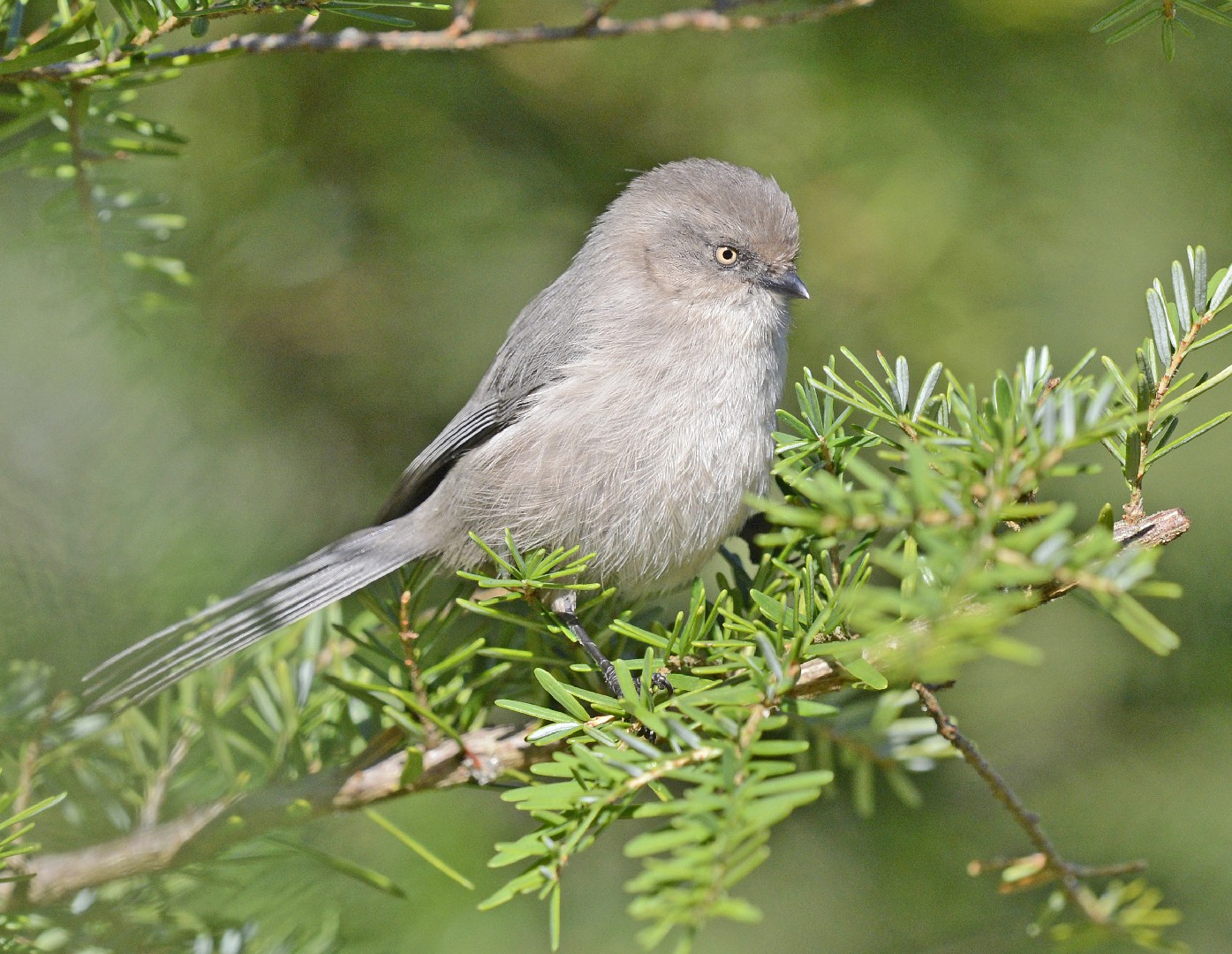
20. Bushtit
The social bushtit can often be found in deciduous and mixed forests as well as in home gardens and backyards. They have a characteristic upside-down feeding behavior as they search for spiders and insects on the undersides of leaves. These birds like to decorate their nests with flowers and lichens.