



Top 20 Most Common Bird in Midlands
Located in the heartland of Zimbabwe, Midlands exhibits a lush environment, hosting various bird species. Their distinct characteristics range from remarkable adaptations fitting the region's climate to fascinating display behavior. Over 20 are commonly found in this area, each uniquely adapted and contributing to the ecological balance of Midlands.

Most Common Bird
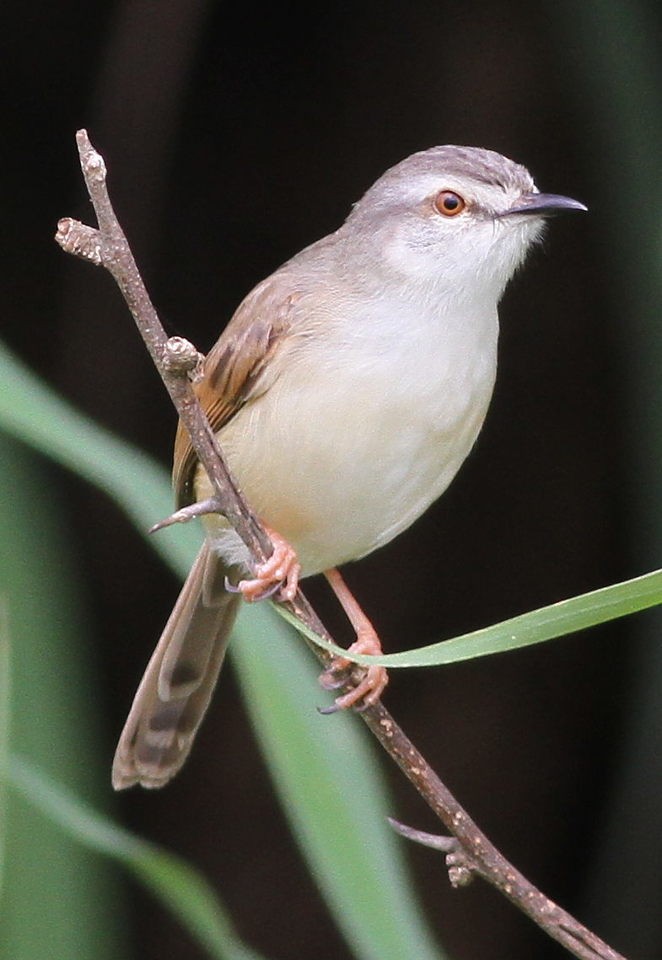
1. Tawny-flanked Prinia
It is 10-13 centimetres in length with a long, narrow, graduated tail and a fairly long, slender bill. The tail is often held erect or waved from side to side. The upperparts are grey-brown with rufous-brown edges to the flight feathers and a rufous tinge to the rump. The throat and breast are whitish while the flanks and vent are warm buff. There is a whitish stripe over the eye and the lores are dark. The tail feathers have a white tip and a dark subterminal band. The sexes are similar in appearance. Non-breeding birds have a longer tail than breeding birds. Juveniles have pale yellow underparts and a yellowish bill. There are many recognised subspecies. The call is short, wheezy and rapidly repeated. The song is a monotonous series of shrill notes. The male often sings from an exposed perch. The pale prinia (P. somalica) of North-east Africa is similar but paler and greyer with whitish flanks. It inhabits drier, more open habitats than the tawny-flanked prinia. The river prinia (P. fluviatilis) of West Africa is also paler and greyer and has a longer tail. It is restricted to waterside vegetation. 
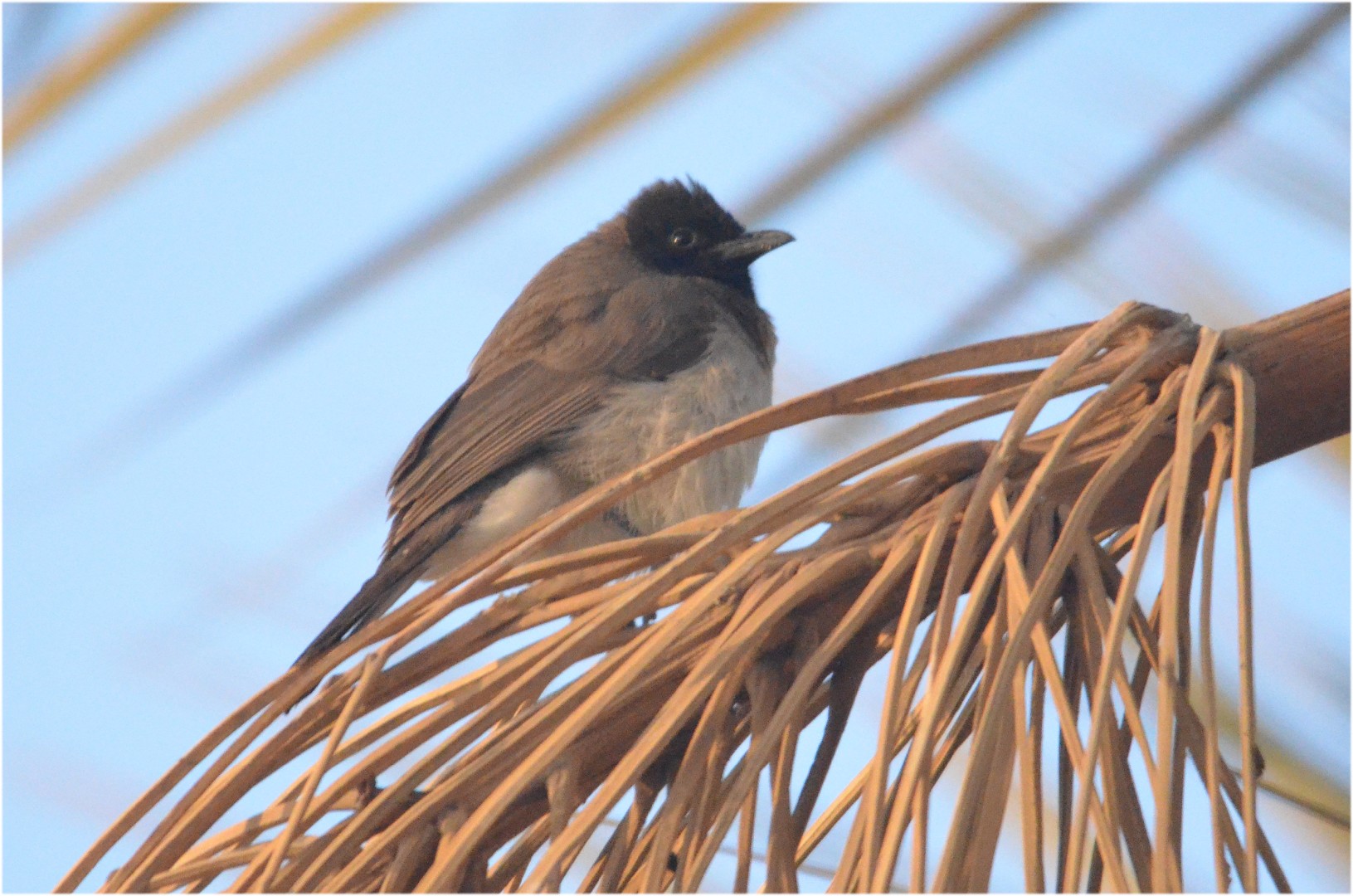
2. Common Bulbul
The bill is fairly short and thin, with a slightly downcurving upper mandible. The bill, legs, and feet are black and the eye is dark brown with a dark eye-ring, which is not readily visible. It is about 18 cm in length, with a long tail. It has a dark brown head and upperparts. Sexes are similar in plumage.
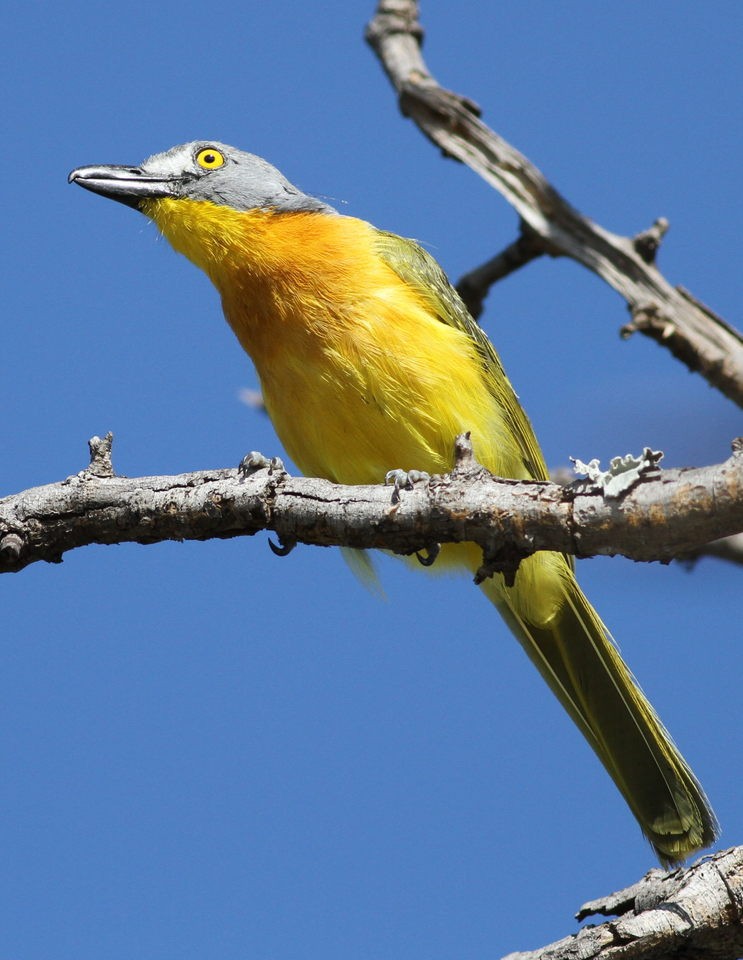
3. Grey-headed Bushshrike
The grey-headed bushshrike (Malaconotus blanchoti) is a species of bird in the family Malaconotidae. It is widespread throughout Sub-Saharan Africa, although relatively absent in Central and Southern Africa. Its natural habitats are dry savannah and moist savannah.
4. Kurrichane Thrush
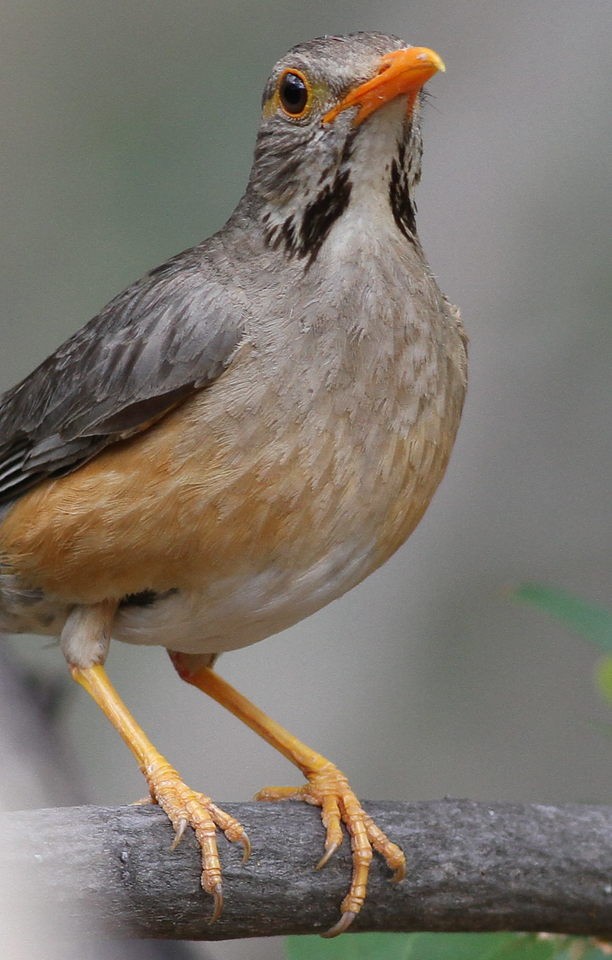
The Kurrichane thrush is 21 to 23 cm (8.3–9.1 in) long and weighs around 46–82 g (1.6–2.9 oz). The head, upperparts and breast are grey, and the belly is whitish with orange flanks. The throat is white with black streaks on the side. The bill is orange, tending to a paler yellow at the base. The legs tend to vary in colour. Both sexes are alike.
5. Brown-hooded Kingfisher
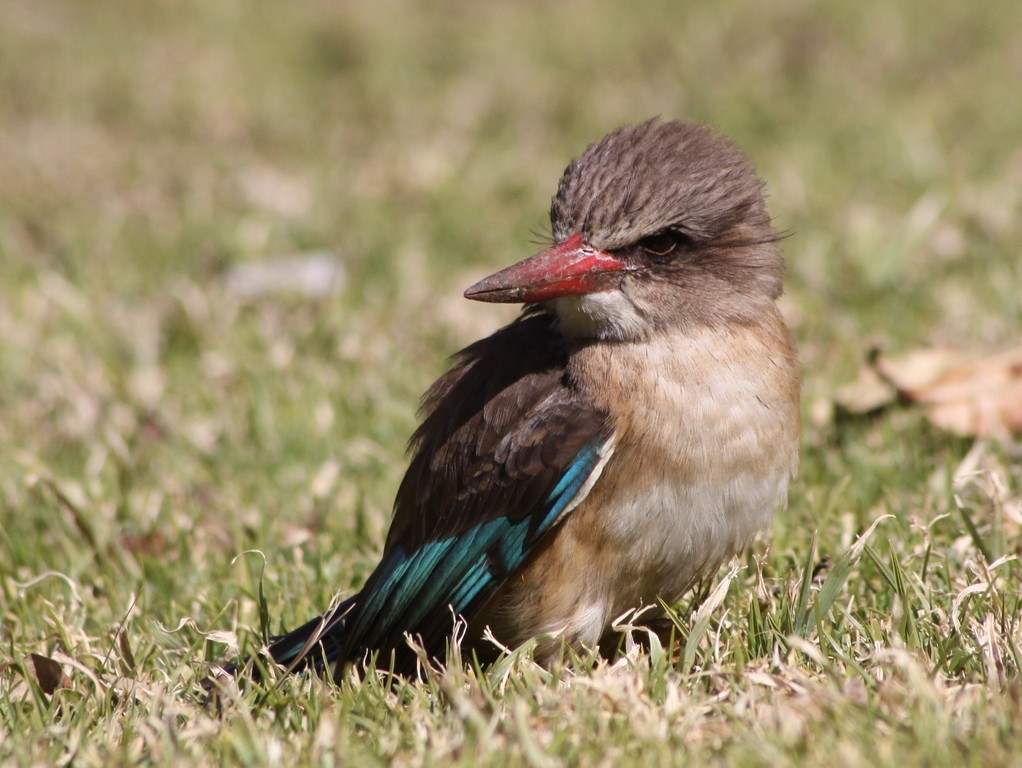
The brown-hooded kingfisher is about 22 cm (8.7 in) long. The head is brown, with blackish streaks. There is a broad buffy collar above the brownish-black mantle. The wing coverts are mostly brownish-black, and the secondary flight feathers are turquoise. The rump is azure-blue. The chin is white, the breast is tawny with some dark streaks, and the belly is buffy. The beak is red, tipped brown, the legs are carmine, and the eyes are dark brown. The female has dark brown upperparts, and its underparts are more streaked than the male. The juvenile bird is duller, with scalloped whitish underparts. The subspecies differ in shade and streaking.
6. Red-faced Cisticola
7. Green Woodhoopoe
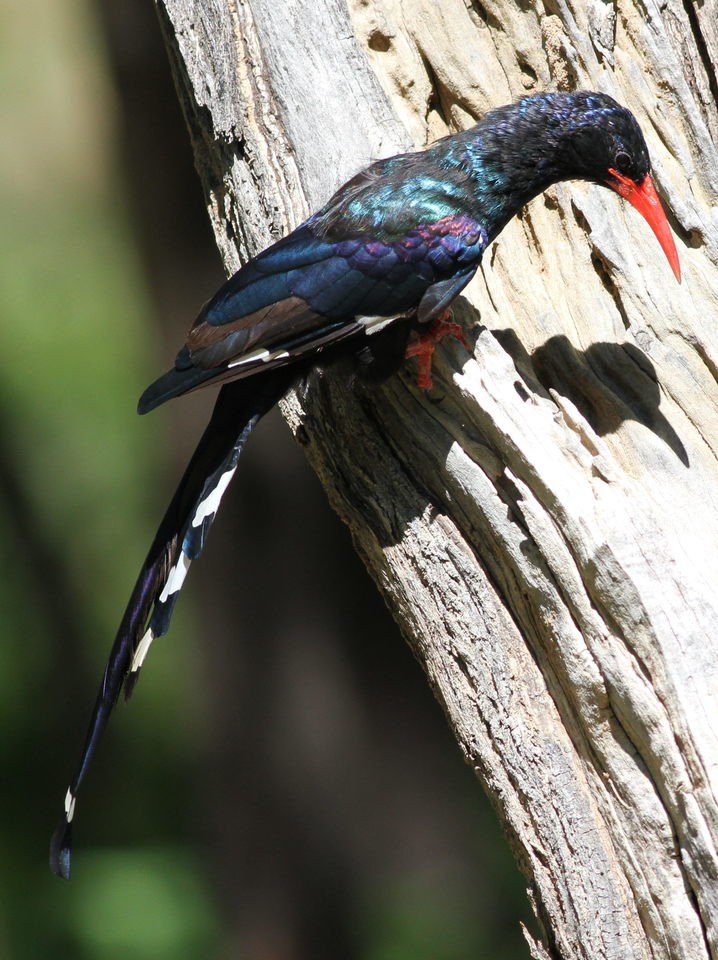
This abundant species is a metallic dark green, with a purple back and very long diamond-shaped purple tail. Distinctive white markings on the wings and white chevrons on the tail edges make it easily identifiable, as does its long, thin, curved red bill. Sexes are similar, but immatures have a black bill.
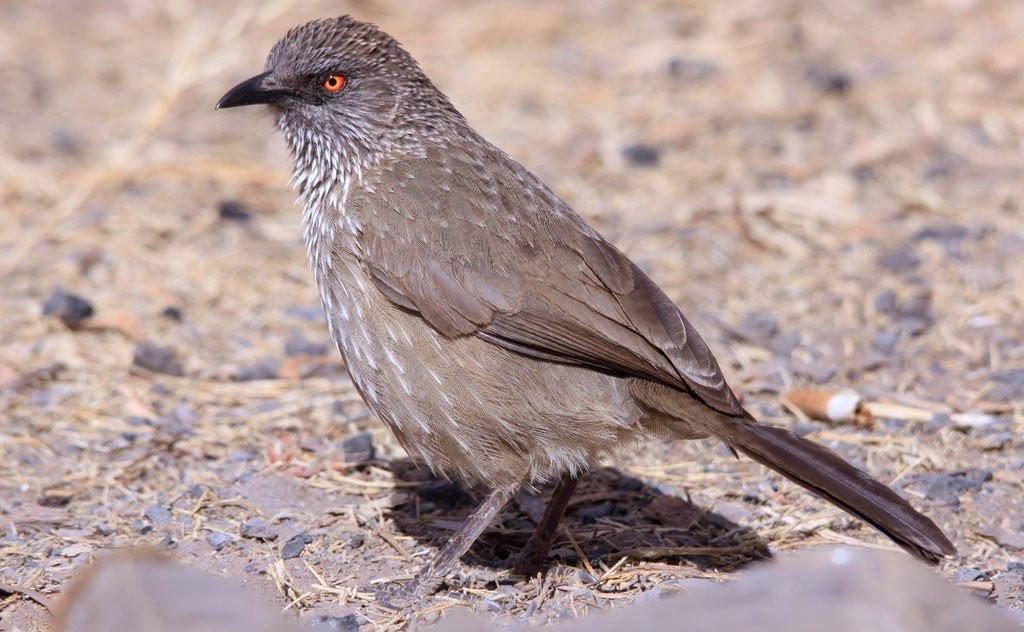
8. Arrow-marked Babbler
The arrow-marked babbler is a medium-sized babbler, 22 to 25 cm (8.7–9.8 in) in length and weighing 56 to 85 g (2.0–3.0 oz). The common name for the species is derived from its plumage, which is brownish-grey above and lighter below, with white tips to the feathers on the throat, neck and head. The iris is bright red and the inner ring of the eye bright yellow or orange. The males and females are identical in appearance. Juveniles have brown eyes, and less arrow-shaped streaking on the breast.
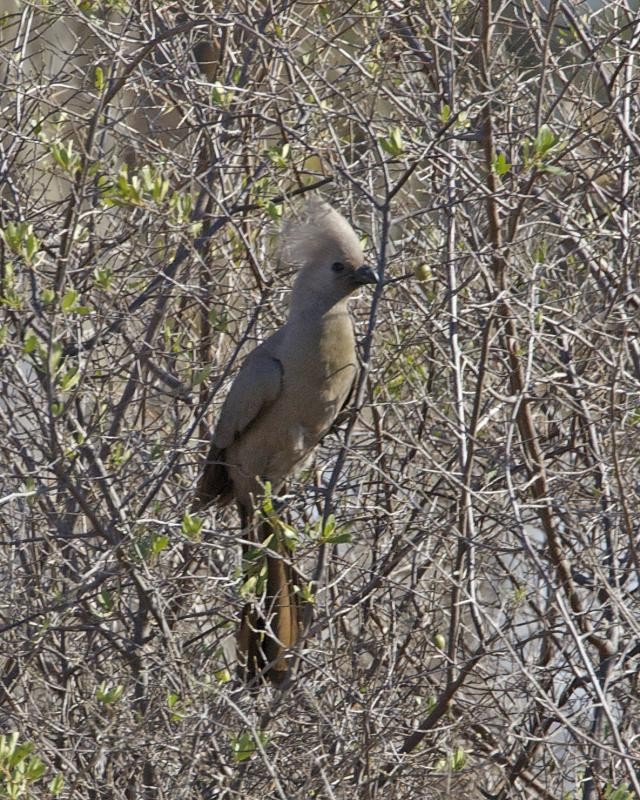
9. Grey Go-away-bird
The sexes are similar. They measure 47–51 cm from bill tip to tail tip, and weigh some 200 to 300 g. They have an almost uniform smoky-grey plumage with long tails and (similar to mousebirds) a wispy, back-swept crest of some 6 to 7 cm in length. The crest can be raised almost vertically when excited. The strong, decurved beak is black and the gape and tongue strikingly pink. The plumage is darkest grey on the chin and throat, and palest around the eyes and on the belly. The breast plumage is washed slightly olive like that of its near relative, the bare-faced go-away-bird.
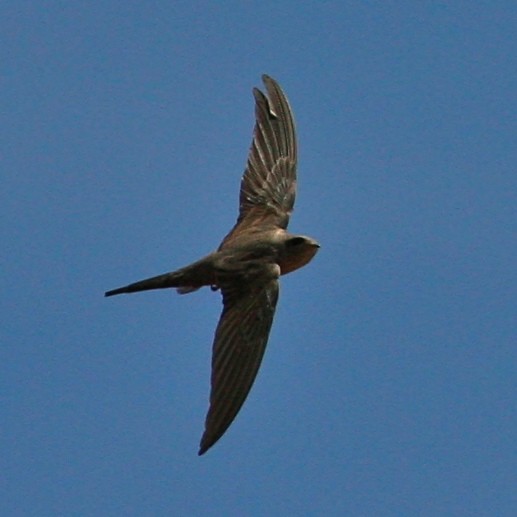
10. African Palm Swift
This 16 cm long species is mainly pale brown in colour. It has long swept-back wings that resemble a crescent or a boomerang. The body is slender, and the tail is long and deeply forked, although it is usually held closed. The call is a loud, shrill scream. Sexes are similar, and young birds differ mainly in their shorter tails. Palm swifts have very short legs which they use only for clinging to vertical surfaces, since swifts never settle voluntarily on the ground.
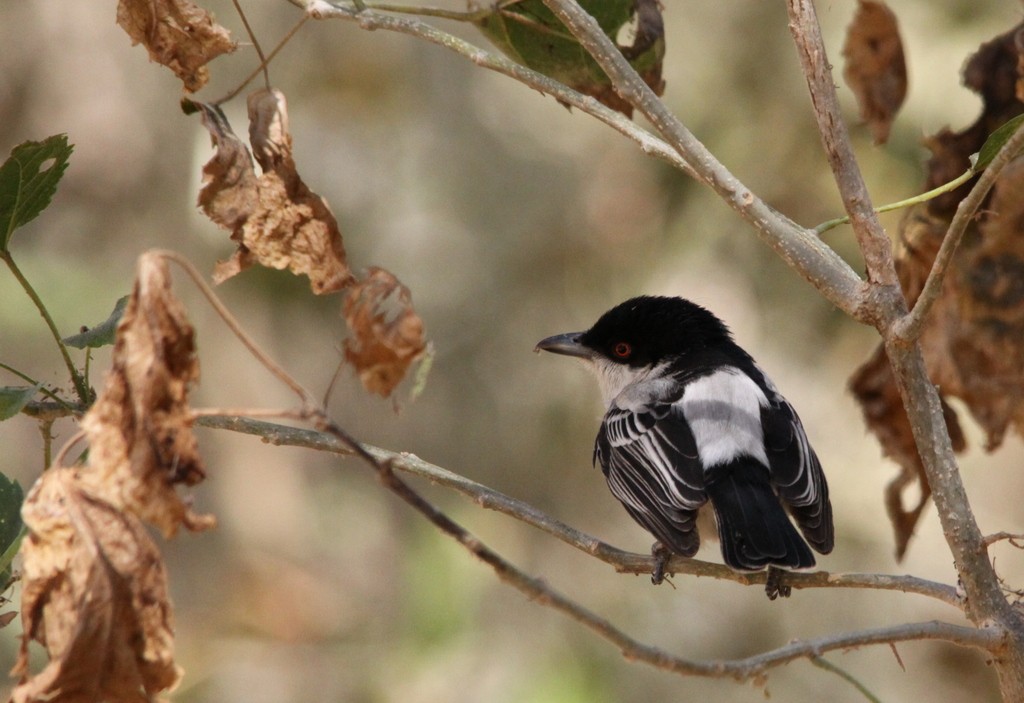
11. Black-backed Puffback
They measure about 17 cm in length, and the sexes are similar though easily distinguishable. Adult males have the upperparts deep blue-black with a slight luster. The black cap subtends the red eye, the upperpart plumage is black-and-white, and the underparts pure white. Females have a black loral stripe and white supraloral feathering, with the ear coverts pale and the crown not solidly black. They also have greyer backs than males, and grey to buffy tones to the white plumage tracts. Immature birds resemble females, but have brownish bills and brown irides, while the upperparts and flanks are still greyer, and the underparts and edges of the wing feathers are yet more buffy. Intraspecific variation is clinal. Range, iris colour, wing markings and the female plumage assist in separating it from other puffback species.
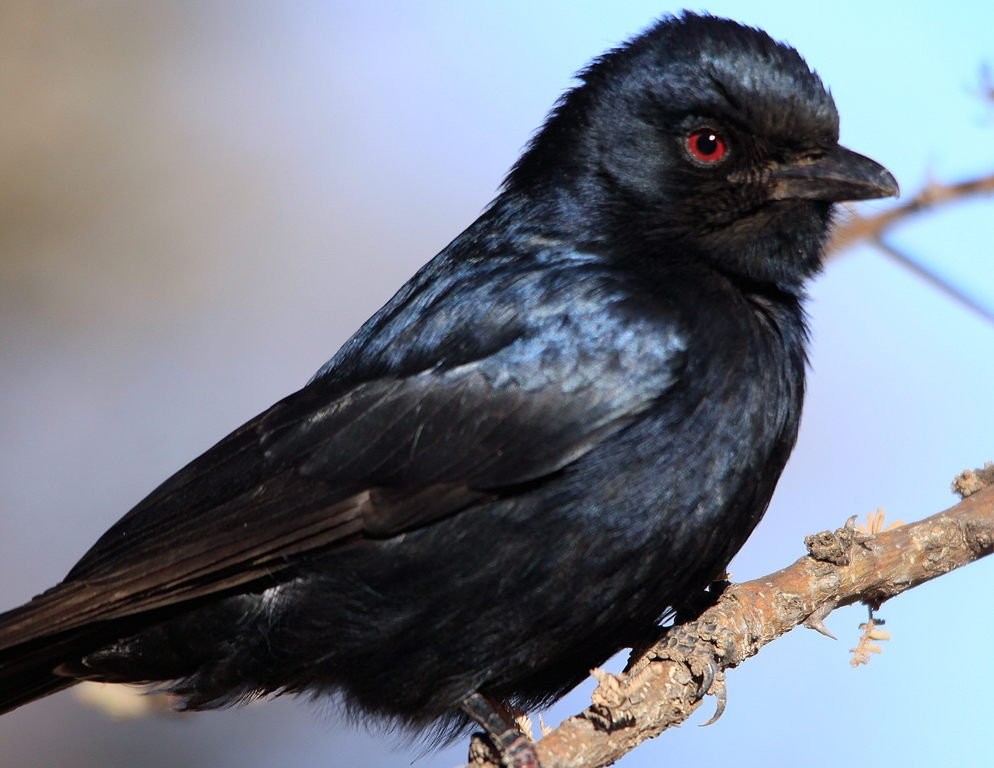
12. Fork-tailed Drongo
The fork-tailed drongo is 25 cm long and has short legs. They are medium sized and usually weigh about 50 grams. Males are mainly glossy black, although their wings are duller. Females are similar but less glossy. It is large-headed with well-developed rictal and nasal bristles, which are used as sensory organs. The rectrices curve outwards, forming the forked tail for which the species is named. The hooked bill is black and heavy, and the eye is red.
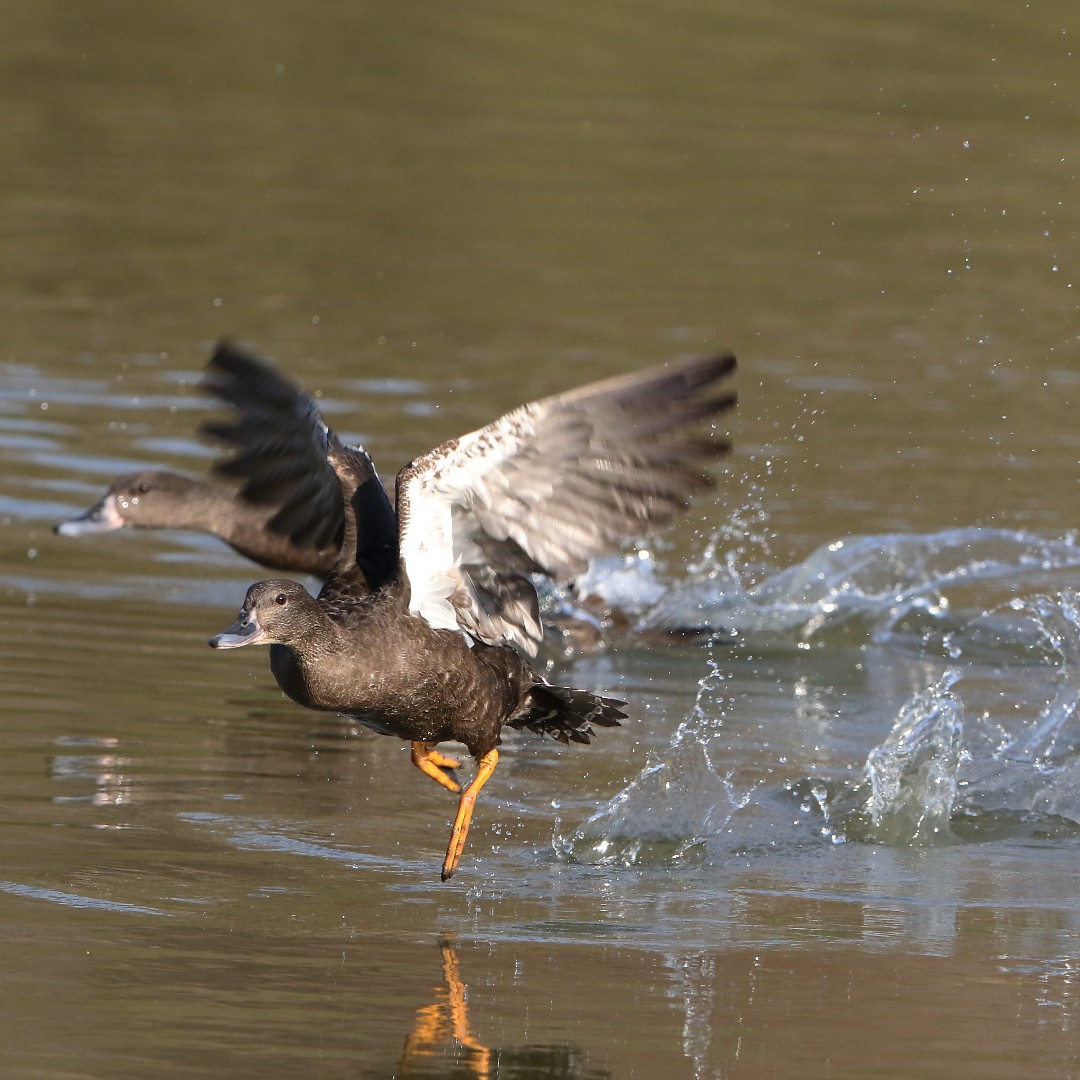
13. African Black Duck
The African black duck is a black duck with pronounced white marks on its back, a dark bill, and orange legs and feet. A purpish-blue speculum is often visible, especially in flight. It lives in central and southern Africa. It is also known as the black river duck, or (A. s. leucostigma) West African black duck or Ethiopian black duck. It is a medium-sized duck, length 48–57 cm, with the male the larger.
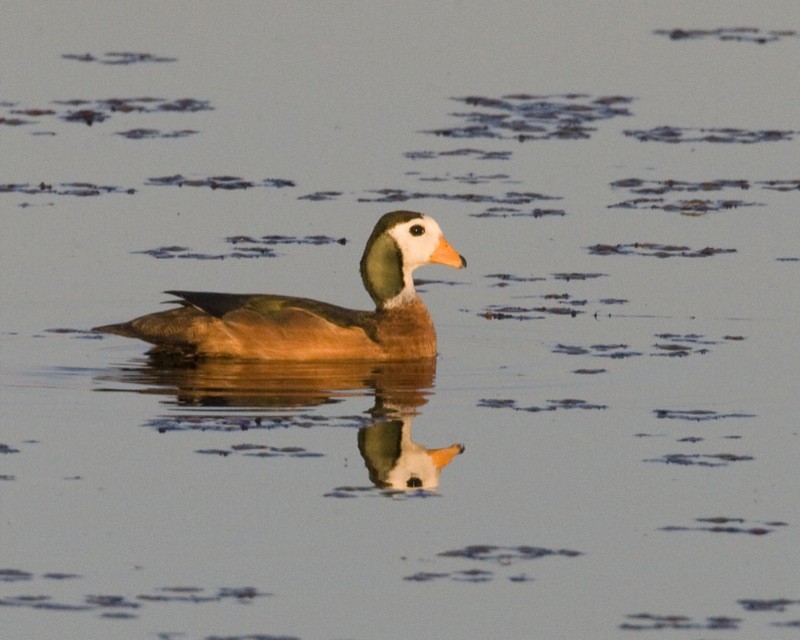
14. African Pygmy Goose
The African pygmy goose is one of the smallest of the perching ducks, and it has the average weight of about 285 grams (10.1 oz) for males and 260 grams (9.2 oz) for females and wingspans between 142 millimetres (5.6 in) and 165 millimetres (6.5 in). They have a short bill which extends up the forehead so they superficially resemble geese. The males have a white face with black eye patches. The iridescent black crown extends down the back of the neck. This structure fringes powder green ear patches. The upper half of the fore neck is white and forms an open collar around the neck whereas the base if the neck and breast are light chestnut colored. The flanks are more intensely chestnut colored and the back is metallic green. The sixteen tail feathers are black. The wing feathers are black with metallic green iridescence on the coverts, with the exemption of a white bar on the distal secondaries. The belly is white. The bill is yellow with a black tip and the feet are dark-gray to black. The iris of there is reddish brown. The females have a gray face with a dark brown eye stripe and smudged brown patches on the cheeks and nape. They have dark-brown a forehead, crown and back of the neck with a slight iridescence. The breast and flanks have a dark chestnut coloration. Their back is dark brown. The wing feathers are dark brown-black with the exemption of a white bar on the distal secondaries. The belly is white. The lower part of the bill is yellow, the upper part mottled brown with a dark brown tip and the feet are dark-gray to black. Ducklings have a white face with a pattern similar to that of the adult female in black and a dark gray eye patch. Their black crown extends in a V-shape from the base of the bill to the back of the neck. The rump and flanks are white, the back and tail black. Neck, breast and belly are light-gray to white the wings are black. The lower part of the bill is pink, the upper part is gray with alight brown tip and the feet are dark-gray to black.
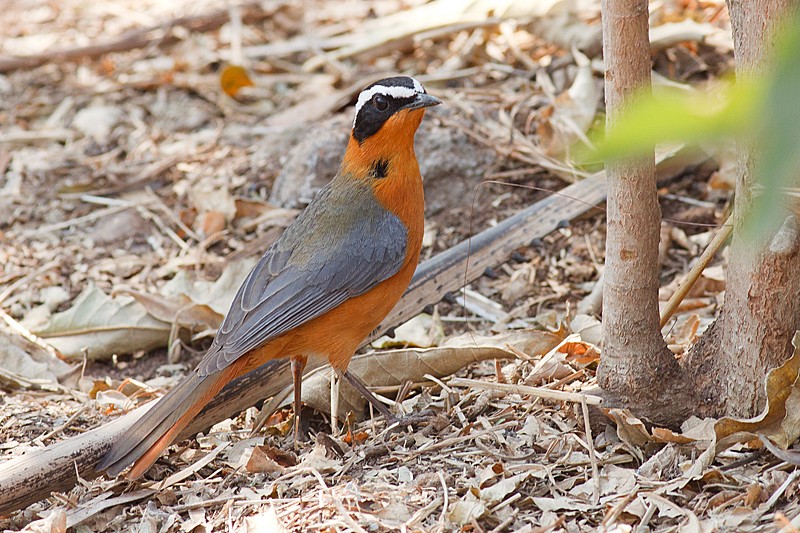
15. White-browed Robin-chat
The white-browed robin-chat is 19–20 cm (7.5–7.9 in) long and weighs 29–51 g (1.0–1.8 oz). The crown and face are black, and there is a white supercilium over the dark brown eye. The back is olive grey-brown, and the rump is rufous. The two central tail feathers are olive-brown, and the other feathers are orange-rufous. The flight feathers and wing coverts are grey-brown, and the underwing coverts are rufous. The underparts are bright orange-rufous. The beak is black, and the legs are pinkish brown, brownish grey or dark brown. The female is a little smaller than the male. The juvenile bird has a brown head and rufous-brown marks on its back. Its throat is pale, its breast is pale orange-buff, and its belly is pale orange.
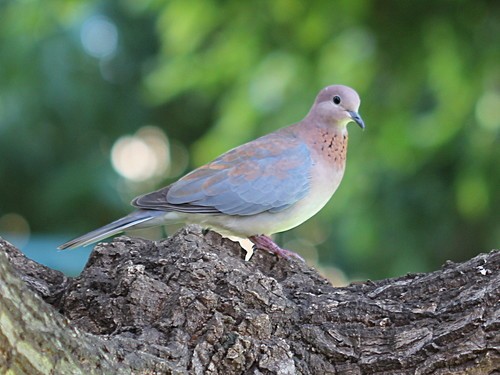
16. Laughing Dove
The laughing Dove is a small dove named after its distinctive laugh-like vocalization. This ground-feeding, non-migratory bird is a regular inhabitant of man-altered environments such as villages, gardens, and orchards. In cities, these doves tend to become quite confident. They pair for life and live in very small communities.
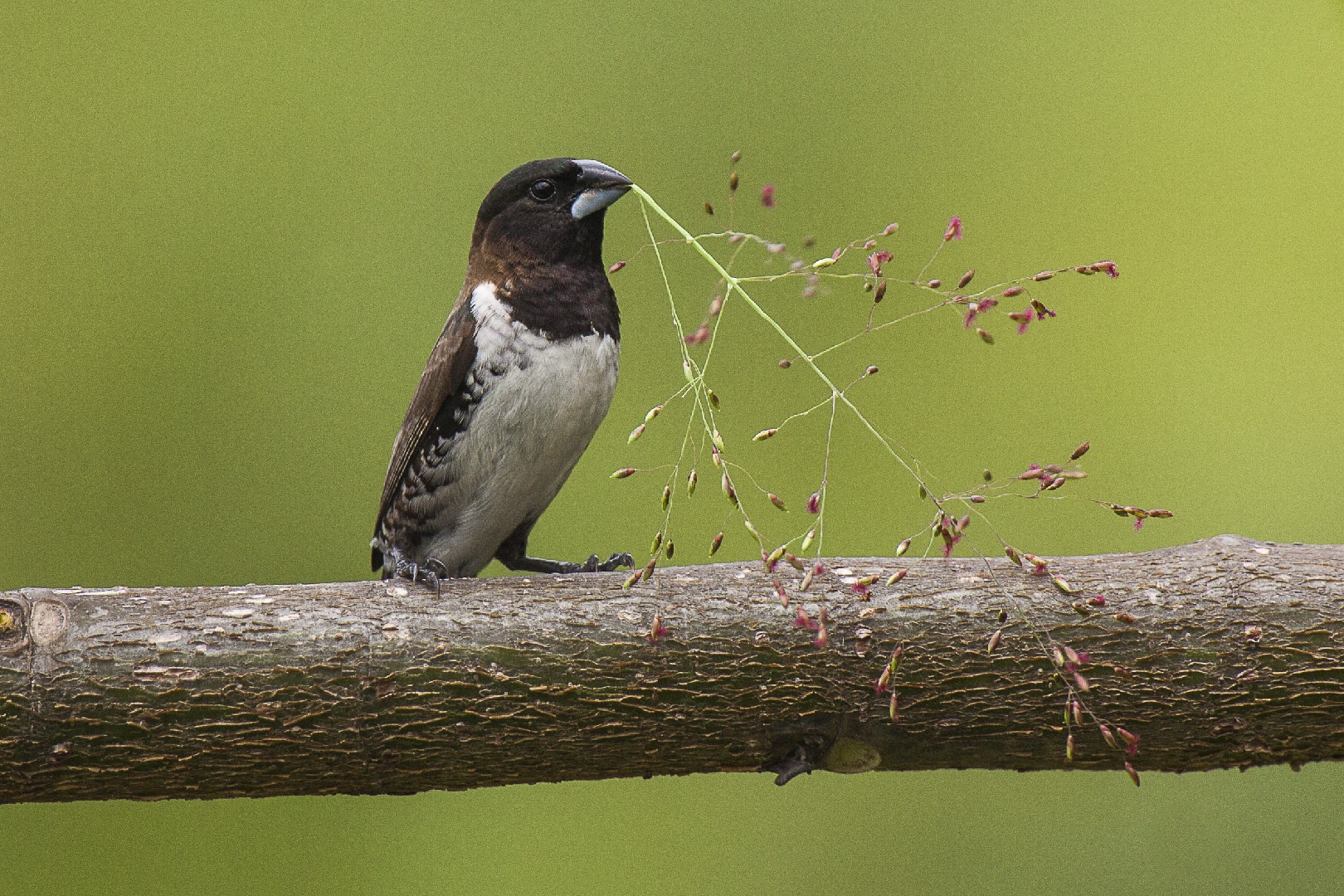
17. Bronze Mannikin
The bronze mannikin is one of the smallest munia species, measuring 9–10 cm in length and weighing 7–12 grams. The adult is a compact bird with a short black tail, and stubby black and pale grey (not distinctly bluish) mandibles. It is black to brownish black on the head, chin, throat and center of the chest, with some purple-green iridescence on the face and sides of the breast. It has greyish brown upper parts and white underparts with irregular barring on the flanks and rump. A small green iridescent patch is present on the outer scapular feathers, besides, especially in the western race, the sides of the lower breast. Wing coverts and remiges are bordered in a paler or warmer tone. The sexes are similar. Immature birds are dun brown above with buff head and underpart plumage. They moult into full adult plumage by age six months, when the males also begin to sing and exhibit breeding behaviour.
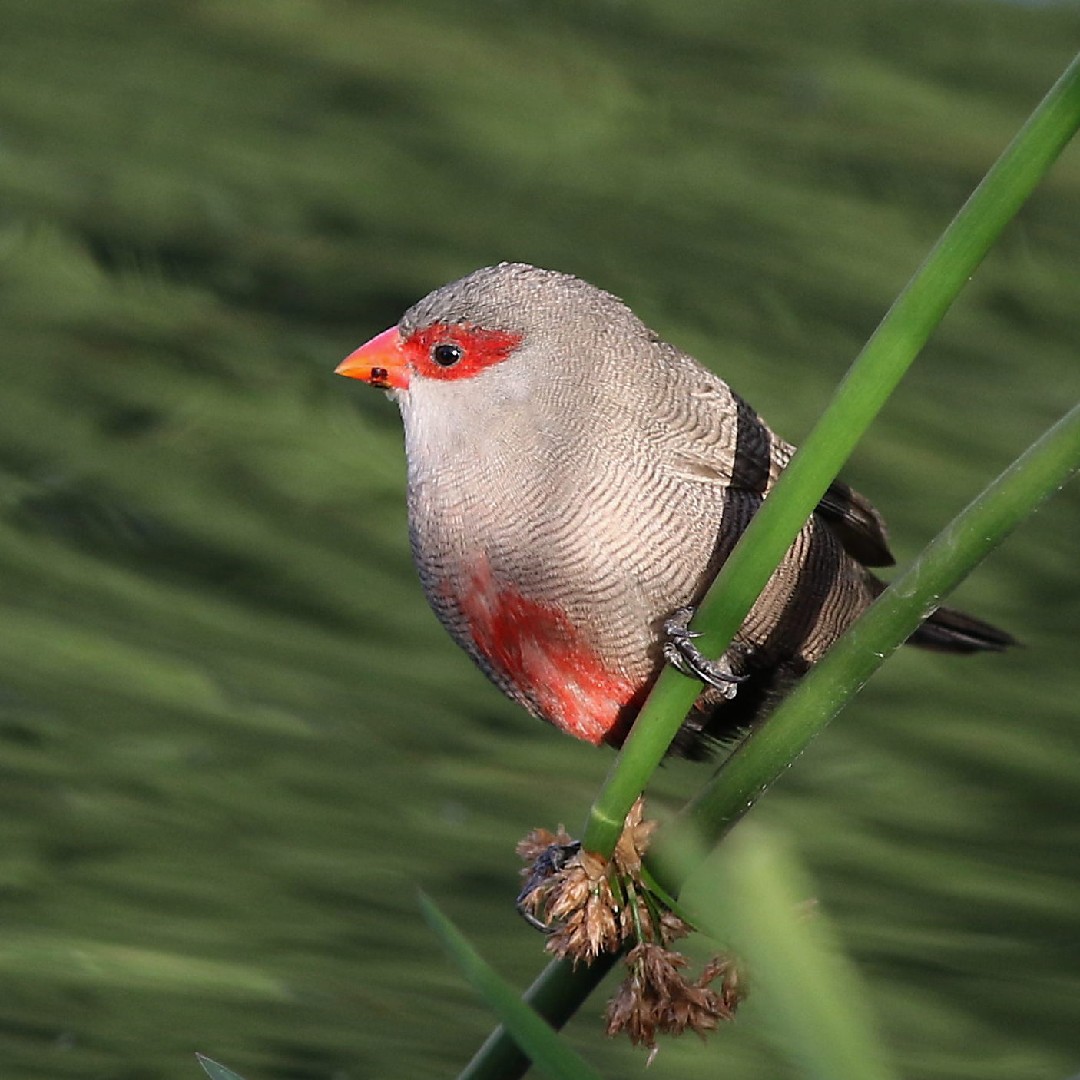
18. Common Waxbill
The common Waxbill is a small and brightly colored bird, native to Africa. It is a highly social bird, often seen in flocks foraging for seeds and insects. With its distinctive red bills and cheerful chirps, the Common Waxbill brings a touch of brightness to its habitat. This charming bird is well-adapted to its environment, making it an important part of the ecosystem. Whether foraging for food or engaging in lively courtship displays, the bird is a delight to observe.
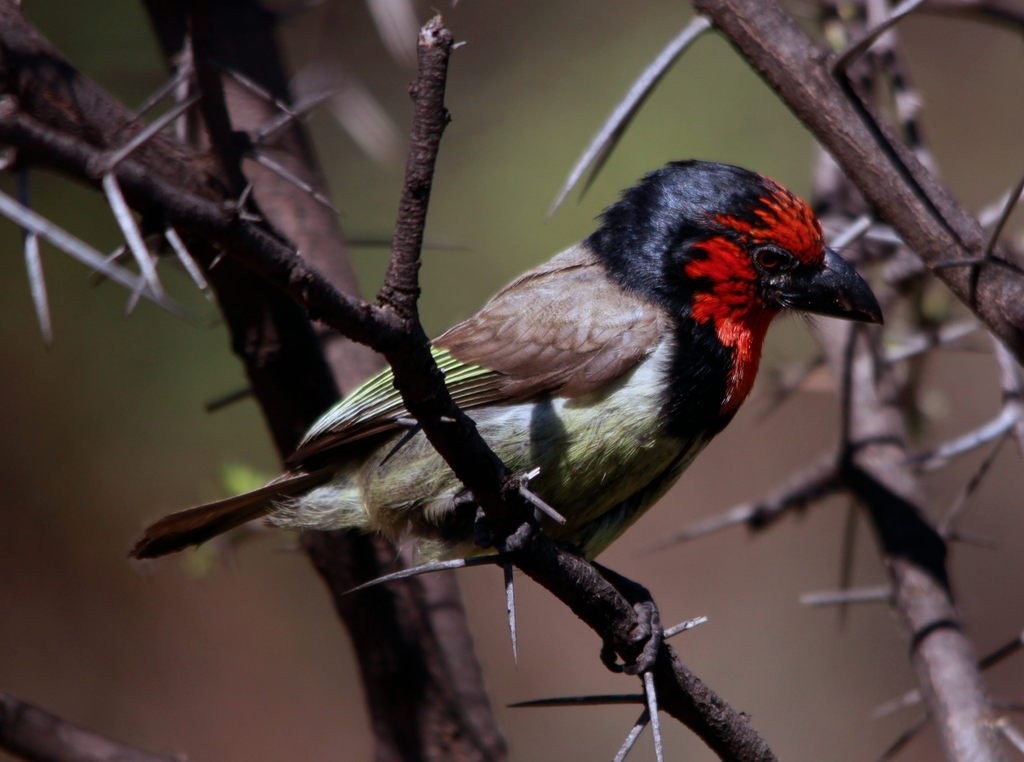
19. Black-collared Barbet
The black-collared barbet usually is about 20–25 cm long, plump-looking and has a large head. It also has the heavy bill fringed with bristles that is characteristic of the genus Lybius. This barbet has a very obvious black collar and head which gives reference to its name. It also has a fire-engine red coloring around the eyes and beak. It has morphologically variable coloring because there is a replacement of a red head with a black head. It also has a more intense color and is larger than other barbets. This bird is also sexually monomorphic, which means that there is generally no phenotypic difference between the males and females of this species. The morphology, size and behavior are basically the same.
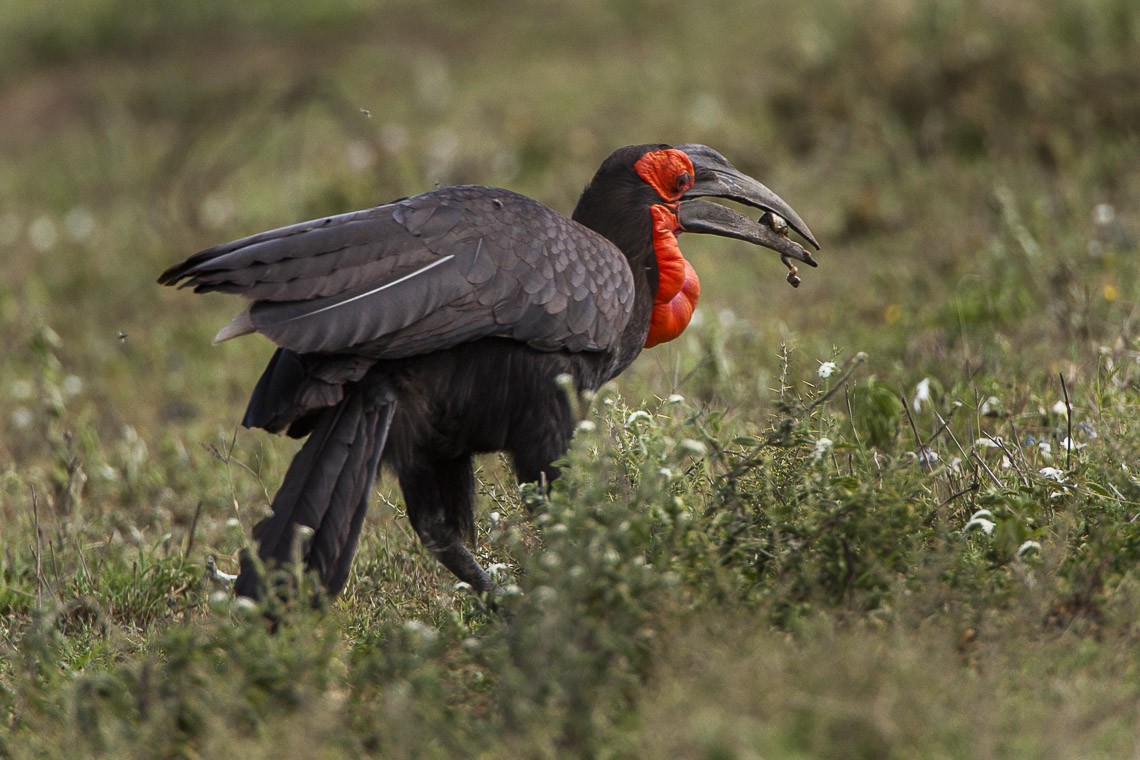
20. Southern Ground Hornbill
This is a large bird, at 90 to 129 cm (2 ft 11 in to 4 ft 3 in) long. Females weigh 2.2 to 4.6 kilograms (4.9 to 10.1 lb), while the larger males weigh 3.5 to 6.2 kilograms (7.7 to 13.7 lb). The average weight of eight females was 3.34 kg (7.4 lb) whilst that of eight males was 4.2 kg (9.3 lb), thus they average around 35% percent heavier than any Asian hornbill species. Wingspan is apparently from 1.2 to 1.8 m (3 ft 11 in to 5 ft 11 in). Among standard measurements, the wing chord has been measured from 49.5 to 61.8 cm (19.5 to 24.3 in), the tail from 29 to 36 cm (11 to 14 in), the tarsus from 13 to 15.5 cm (5.1 to 6.1 in) and the culmen from 16.8 to 22.1 cm (6.6 to 8.7 in). Per Stevenson and Fanshawe, the Abyssinian ground hornbill is the larger species on average, at 110 cm (43 in), than the southern species, at 102 cm (40 in), but published maximum weights and standard measurements contrarily indicate the southern species is indeed slightly larger. Apparently average weights are not known for the Abyssinian species. The southern ground hornbill is characterized by black coloration and vivid red patches of bare skin on the face and throat (yellow in juvenile birds), which are generally believed to keep dust out of the birds eyes while they forage during the dry season. The white tips of the wings (primary feathers) seen in flight are another diagnostic characteristic. The beak is black and straight and presents a casque, more developed in males. Female southern ground hornbills are smaller and have violet-blue skin on their throats. Juveniles to six years old lack the prominent red pouch, but have a duller patch of grey in its place.