


Cretzschmar's Bunting
A species of Old World Buntings Scientific name : Emberiza caesia Genus : Old World Buntings
Cretzschmar's Bunting, A species of Old World Buntings
Botanical name: Emberiza caesia
Genus: Old World Buntings
Content
Description General Info
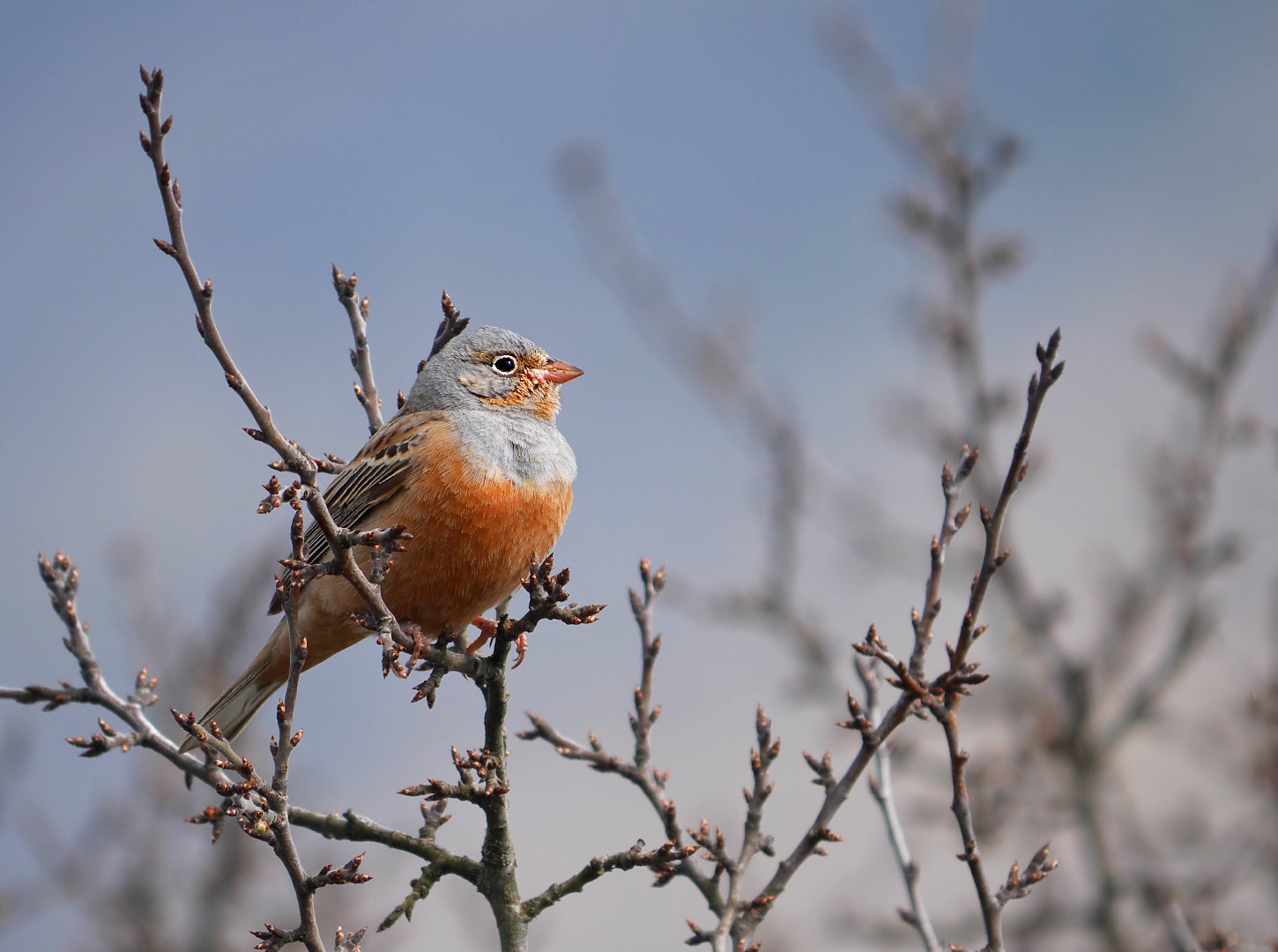 Photo By Frank Vassen from Brussels, Belgium , used under CC-BY-2.0 /Cropped and compressed from original
Description

Cretzschmar's bunting (Emberiza caesia) is a passerine bird in the bunting family Emberizidae, a group now separated by most modern authors from the finches, Fringillidae. It breeds in Greece, Turkey, Cyprus and the Levant. It is migratory, wintering in Sudan and northern Eritrea. It is a very rare wanderer to western Europe. Cretzschmar's bunting breeds on sunny open hillsides with some bushes. It is mainly coastal or insular, and often breeds at lower levels than the closely related ortolan bunting where both occur. It lays four to six eggs in a ground nest. Its natural food consists of seeds and when feeding young, insects. This bird is smaller than ortolan. The breeding male has a grey head with orange moustaches. The upperparts are brown and heavily streaked, except on the rump, and the underparts are rusty orange. The stout bill is pink. Females and young birds have a weaker head pattern, and are more similar to ortolans. They can be distinguished by the warm brown rump and white eye-ring. The English name commemorates the German physician and scientist Philipp Jakob Cretzschmar who founded the Senckenberg Natural History Museum. The genus name Emberiza is from Old German Embritz, a bunting. The specific caesias is from Latin caesius, "bluish-grey". 
Size
16 cm
Nest Placement
Shrub
Feeding Habits
Cretzschmar's Bunting's diet primarily includes a variety of small grass seeds and some invertebrates like ants. They forage on the ground, forming large groups in autumn and winter, occasionally mixing with E. hortulana.
Habitat
The cretzschmar's Bunting typically chooses coastal and boulder-strewn hillside habitats for breeding, favoring areas with sparse vegetation in drier and stonier environments compared to related species. During winter, these birds inhabit dry open landscapes including grassy plains, savannas, semi-arid cultivated lands, and wadis.
Dite type
Granivorous

General Info
Feeding Habits
Bird food type
 Photo By Frank Vassen from Brussels, Belgium , used under CC-BY-2.0 /Cropped and compressed from original
Scientific Classification
Phylum
Chordates Class
Birds Order
Perching birds Family
New world sparrows Genus
Old World Buntings Species
Cretzschmar's Bunting 
Download Picture Bird
Identify any bird by photo or sound in seconds
Identify any bird by photo or sound in seconds








_Mt._Olympus,_Lesvos,_Greece,_14.04.2015_(17294601805).jpg)