


Apostlebird
A species of Apostlebird Scientific name : Struthidea cinerea Genus : Apostlebird
Apostlebird, A species of Apostlebird
Botanical name: Struthidea cinerea
Genus: Apostlebird
Content
Description People often ask General Info

Description

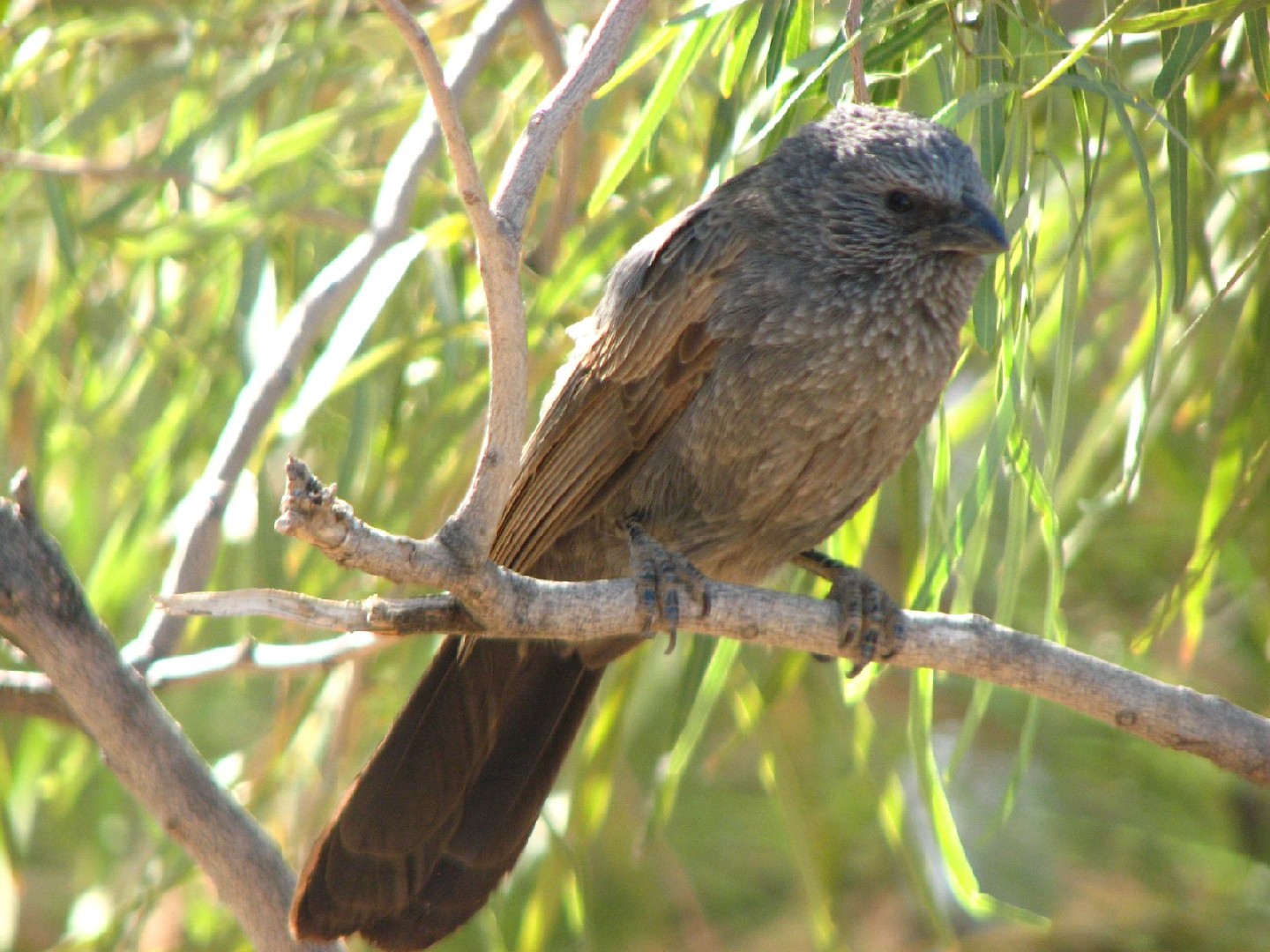
Measuring around 33 cm (13 in) in length, the apostlebird is a predominantly dark grey bird with a long black tail tinted greenish in sunlight. The grey feathers on the head, neck and breast are brushed with paler grey-white and the wings are brownish. The legs and bill are black and the eyes brown or white. 
Size
33 cm
Colors
Brown
Black
Green
Bronze
Gray
White
Life Expectancy
25 years
Nest Placement
Tree
Feeding Habits
Apostlebird primarily consumes insects and seeds. This bird forages in groups on the ground, showing a preference for feeding at sunrise and sunset. It possesses adaptations for communal feeding, which reinforces its social structure.
Habitat
The apostlebird typically inhabits open woodlands and shrublands, thriving particularly in arid and semi-arid regions. These birds prefer areas with dispersed trees, such as Callitris, Casuarina, and in some places, Lancewood-Bulwaddi communities. While they are often found in natural woodland environments, apostlebirds are also known to adapt to modified habitats including farms, camping sites, picnic areas, and rural cemeteries.
Dite type
Omnivorous

People often ask


General Info
Feeding Habits
Bird food type
Distribution Area
The natural range is across inland eastern Australia, from the mallee regions of northern Victoria and eastern South Australia, north through New South Wales and central-western Queensland to the Gulf Country. There is an isolated population in the Northern Territory. Dry open woodland is the preferred habitat, especially Callitris in New South Wales and Casuarina in Queensland, and Lancewood-Bulwaddi communities in the Northern Territory.
Species Status
Apostlebirds are not listed as threatened on the Australian Environment Protection and Biodiversity Conservation Act 1999. However, their conservation status varies from state to state within Australia. For example: The apostlebird is listed as threatened on the Victorian Flora and Fauna Guarantee Act (1988). Under this Act, an Action Statement for the recovery and future management of this species has not yet been prepared. On the 2007 advisory list of threatened vertebrate fauna in Victoria, the apostlebird is not listed as a threatened species.


Scientific Classification
Phylum
Chordates Class
Birds Order
Perching birds Family
Australian mudnesters Genus
Apostlebird Species
Apostlebird 
Download Picture Bird
Identify any bird by photo or sound in seconds
Identify any bird by photo or sound in seconds