




Top 20 Most Common Bird in Cabo Verde
Situated in the Atlantic Ocean, off Africa's northwest coast, 'Cabo Verde' is a bird-watcher's paradise. Hosting a variety of avian species, 'Cabo Verde' is home to '20' of the most common birds, each displaying unique traits such as adaptive coloration or distinctive vocalizations. Their varied behaviors and survival tactics make these birds a fascinating study in island ecology.

Most Common Bird
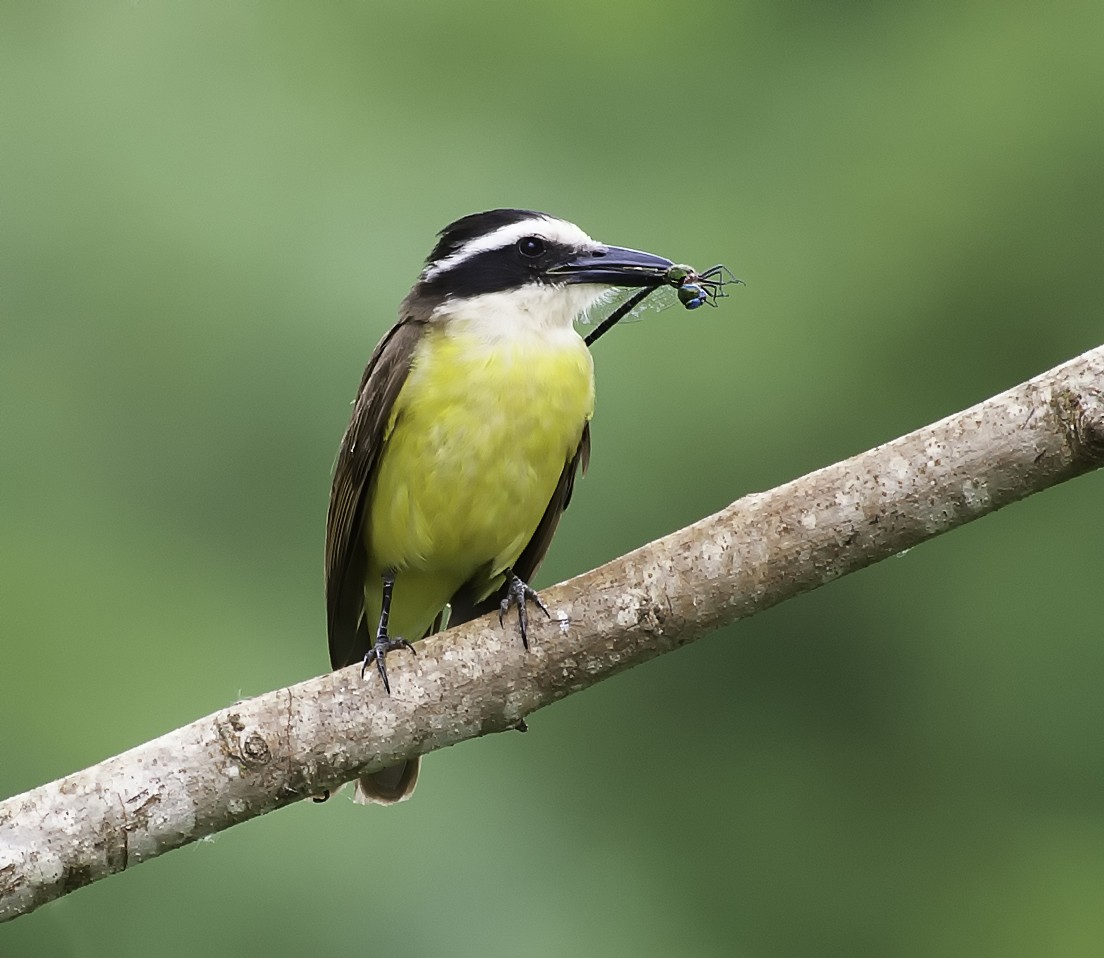
1. Great Kiskadee
The great Kiskadee is a large bird with bold markings that make this flycatcher easily recognizable. is a bright-colored bird that prefers woodland habitats close to water or open areas. It eats a lot of insects, but also forages for seeds and berries and is known to dive into shallow water for small fish.
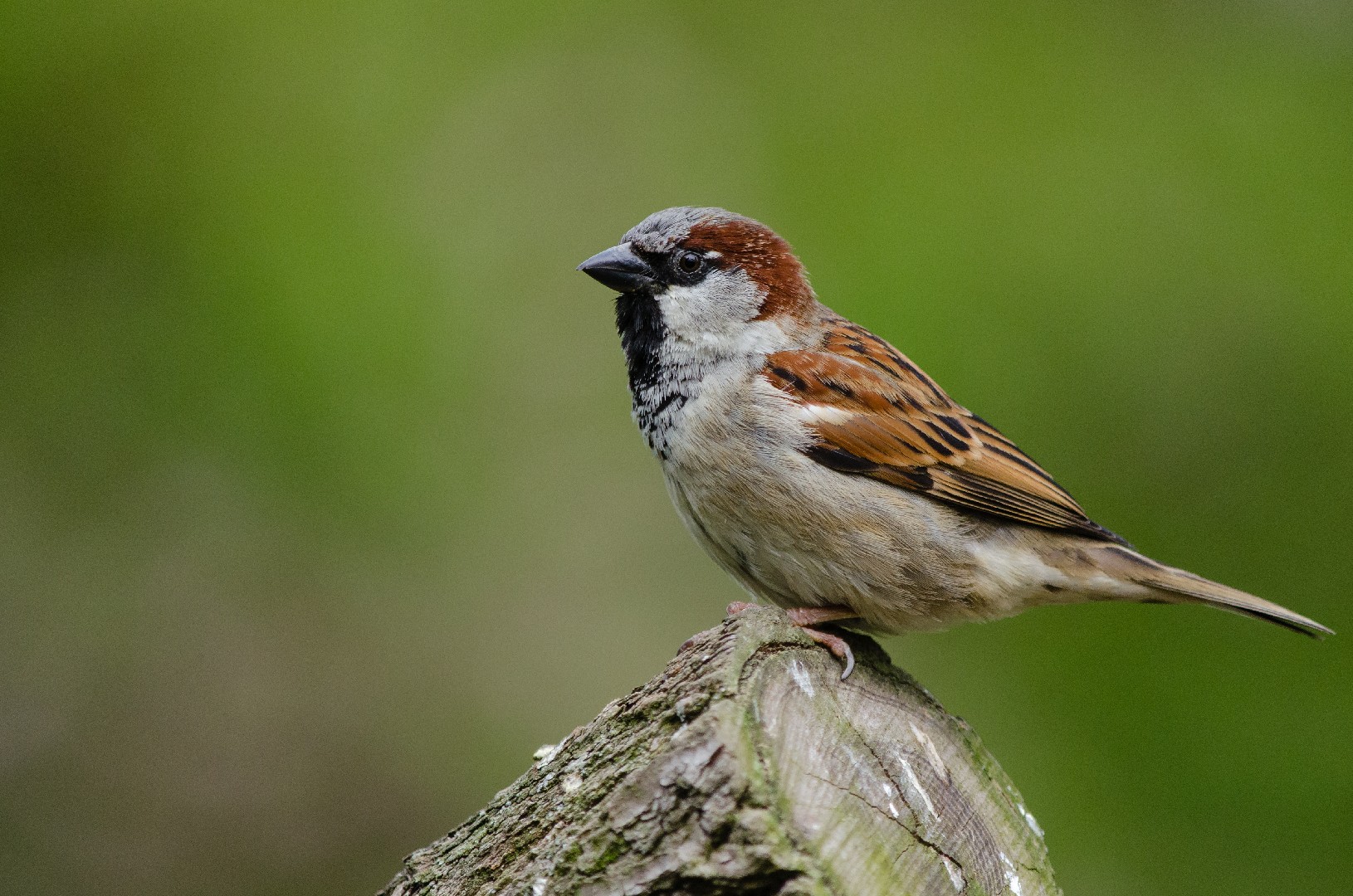
2. House Sparrow
Just as its name implies, the little house Sparrow socializes with humans more than any other bird species. Able to adapt and thrive in almost any habitat, excluding the extremes such as deserts and mountain peaks, this species was once restricted only to North Africa and Eurasia but now is found across the globe. Unfortunately, this opportunistic eater is not completely harmless—it can cause considerable damage to crops.
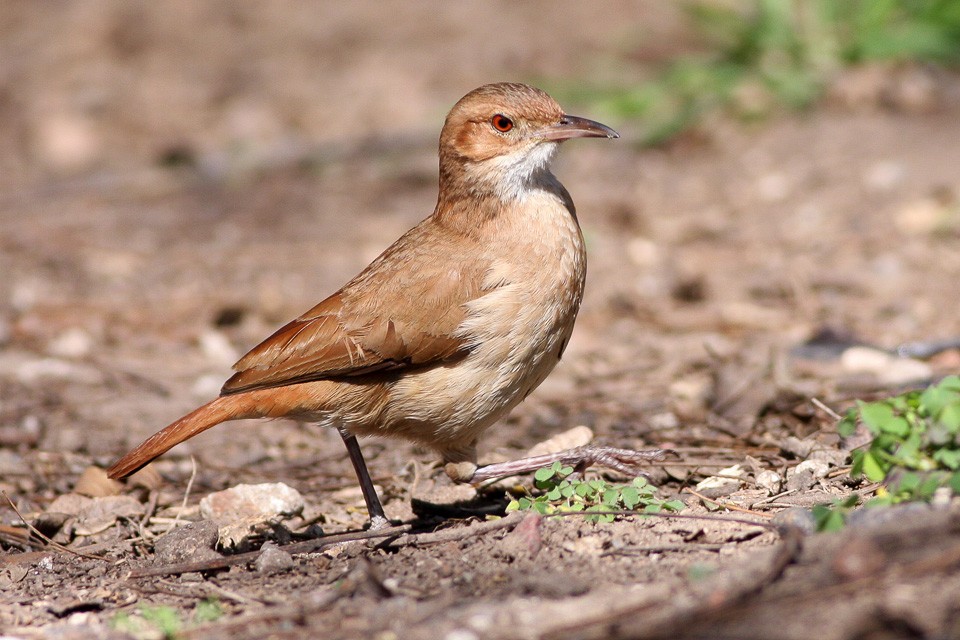
3. Rufous Hornero
The rufous Hornero is a medium-sized ovenbird, found in South America. It is recognized as the national bird in Uruguay and Argentina. Scientifically known as Furnarius rufus, you can differentiate the male from the female depending on how quickly their wings beat while they sing.
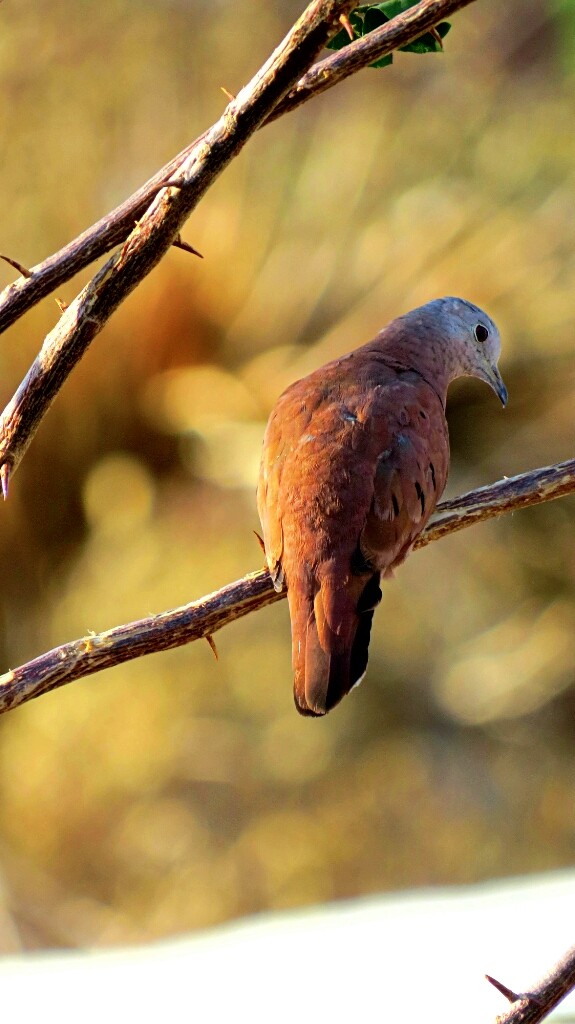
4. Ruddy Ground Dove
The Rosttäubchen (Columbina talpacoti) is a kind of the pigeons birds, which is counted among the subfamily of the American Kleintauben. The species occurs from the extreme south of North America to South America and is considered as not endangered in its population.
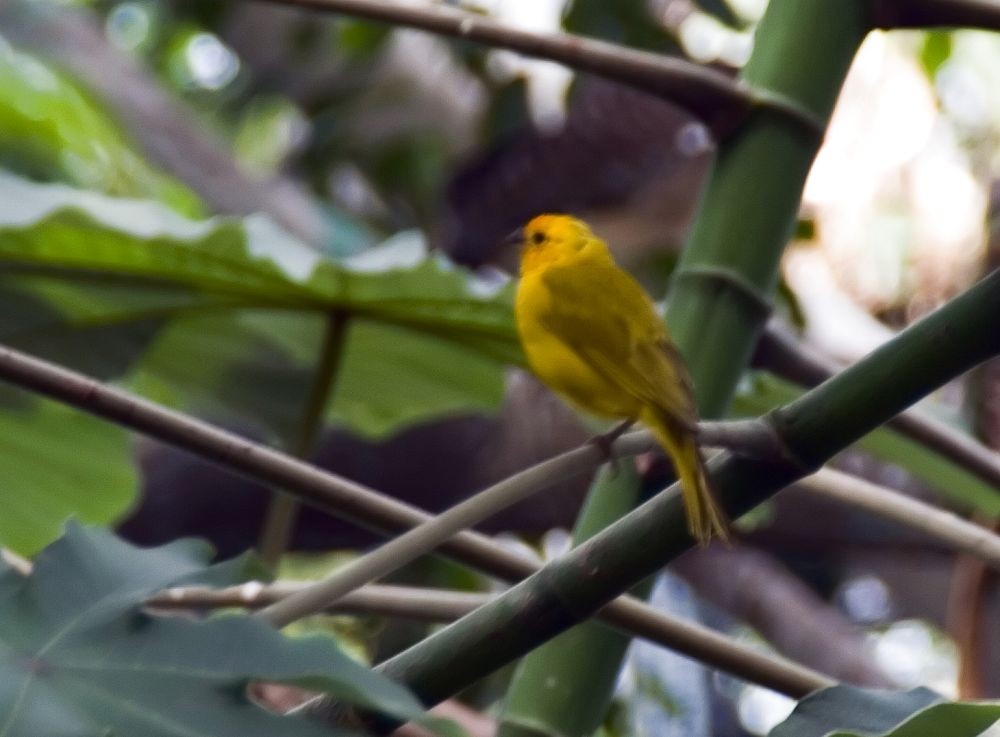
5. Saffron Finch
The saffron Finch is a common finch with a widespread distribution, the male is easy to spot with its bright yellow feathers. It is seen in open areas like agricultural fields and gardens. The bird tends to gather in flocks as they search for seeds. Its large range across multiple warm weather climates keeps it off the vulnerable species list.
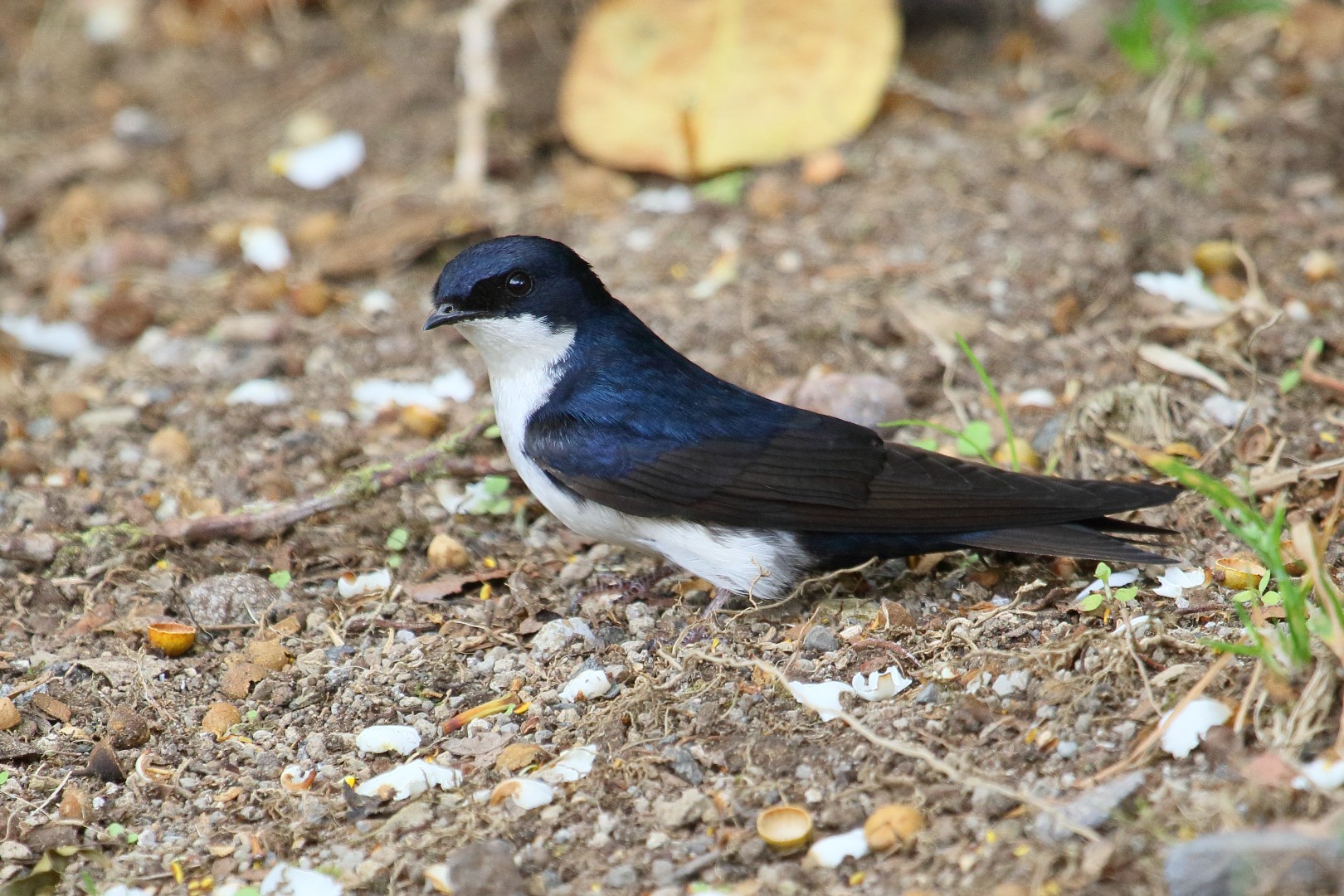
6. Blue-and-white Swallow
The blue-and-white Swallow is a temperate species commonly found in open grasslands and farmlands and, in Central America, it is also common at high elevations. These birds are insectivores and will flock together around swarms of termites. Unfortunately, deforestation has started to affect wild populations, though the extent is unknown.
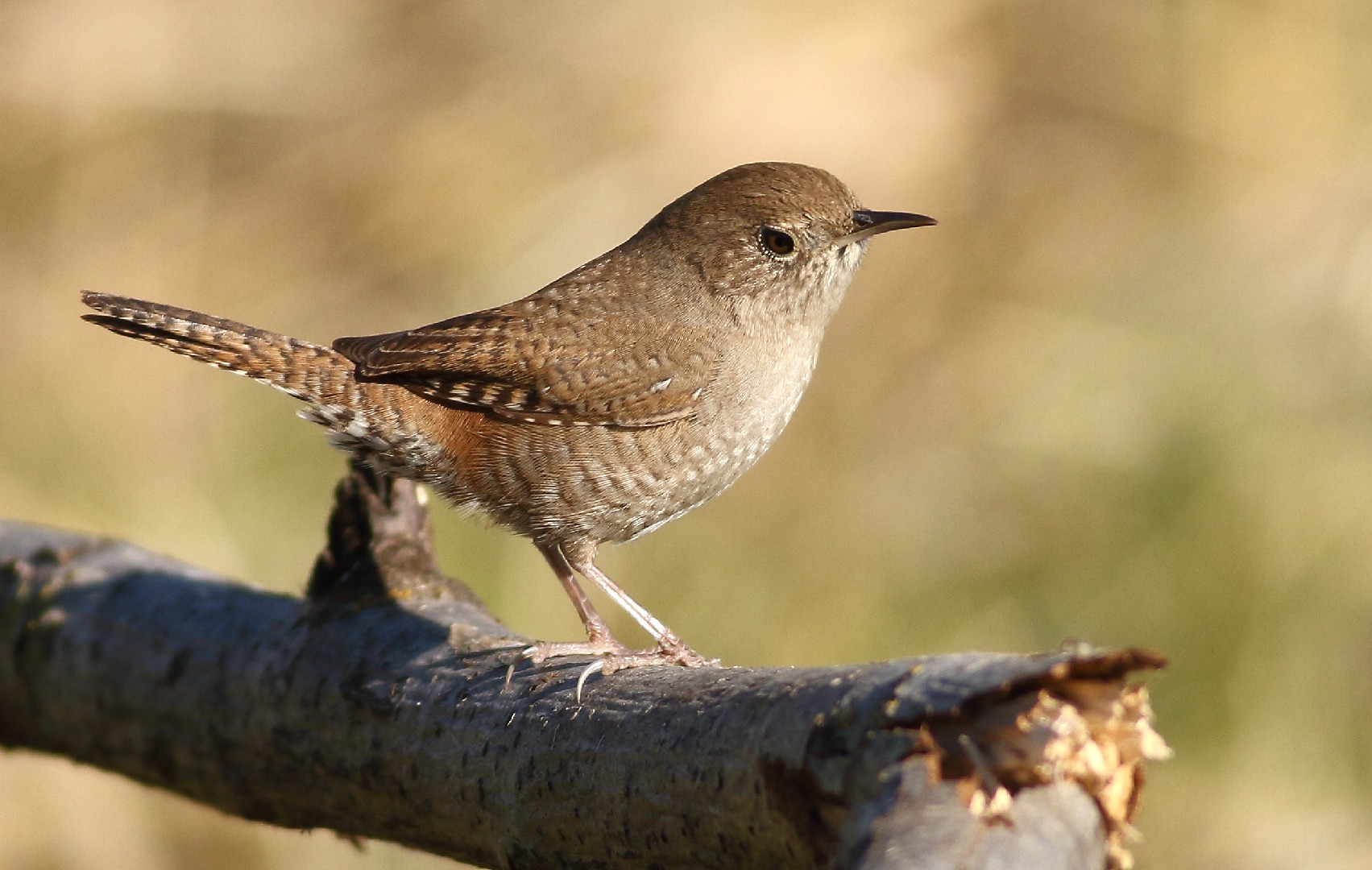
7. House Wren
Watch out for the small yet aggressive house Wrens; they are extremely territorial and think nothing of harassing other birds and their nestlings if they want to take their spot! They have been known to kill nestlings and even adult birds to get a nest hole they want. Once house Wrens lay eggs, the nest needs to stay below 100 degrees and above 65 degrees or the eggs will not survive—this could be the reason they are so particular about their nesting spots.
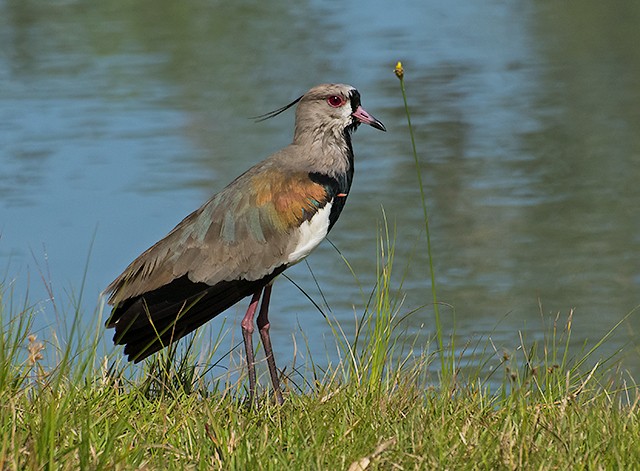
8. Southern Lapwing
This lapwing is the only crested wader in South America. The upperparts are mainly brownish grey. The head is particularly striking; mainly grey with a black forehead and throat patch extending onto the black breast. The rest of the underparts are white, and the eye ring, legs and most of the bill are pink. It is equipped with red bony extensions under the wings (spurs), used to intimidate foes and fight birds of prey. The rump is white and the tail black. 
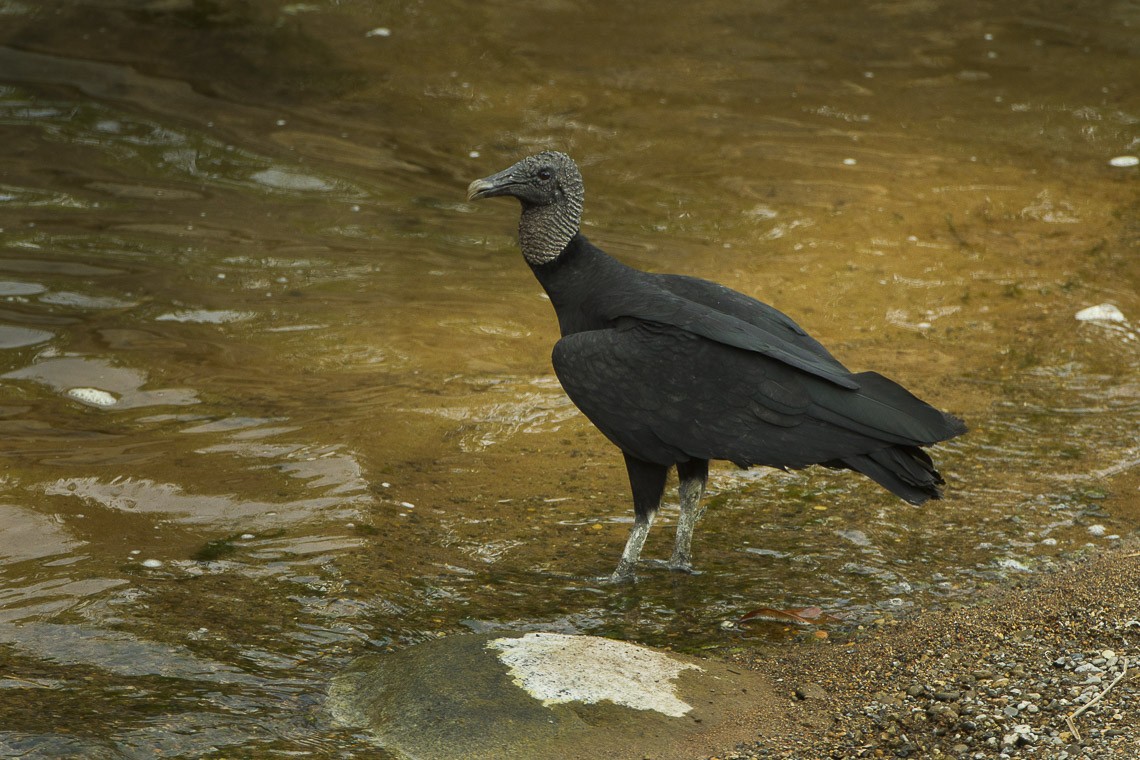
9. Black Vulture
Although quite dapper in appearance, the black Vulture's name comes from the Latin vulturus meaning “tearer" and that is just what that hooked beak is for. These birds are highly social, with fierce family loyalty and will share food with relatives and with their young long after the babies have fledged. Because they lack a voice box, their calls are limited to grunts and hisses.
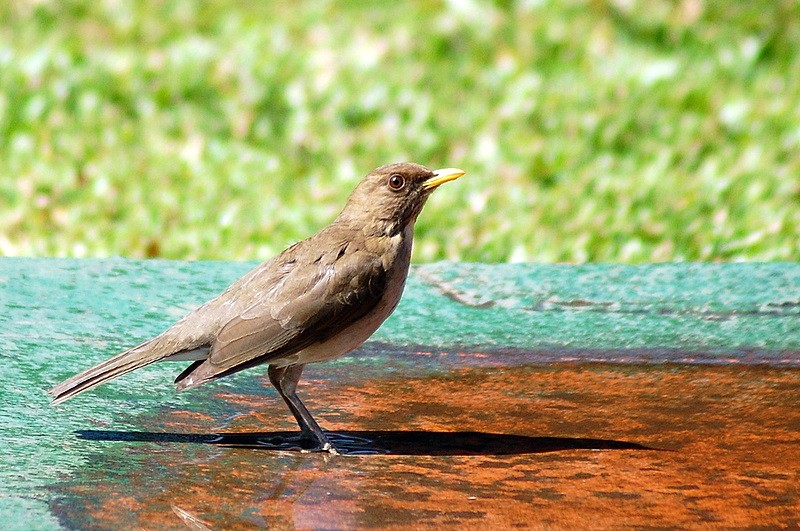
10. Creamy-bellied Thrush
The creamy-bellied thrush (Turdus amaurochalinus) is a species of bird in the family Turdidae. It occurs in a wide range of wooded habitats in a large part of central and eastern South America. It is generally common, even in human altered habitats such as gardens and parks. While the plumage varies from overall greyish to brownish, and the bill from dusky to yellow, adult creamy-breasted thrushes always have distinctive blackish lores. This separates it from other similar thrushes (e.g. the pale-breasted thrush) found in its range.
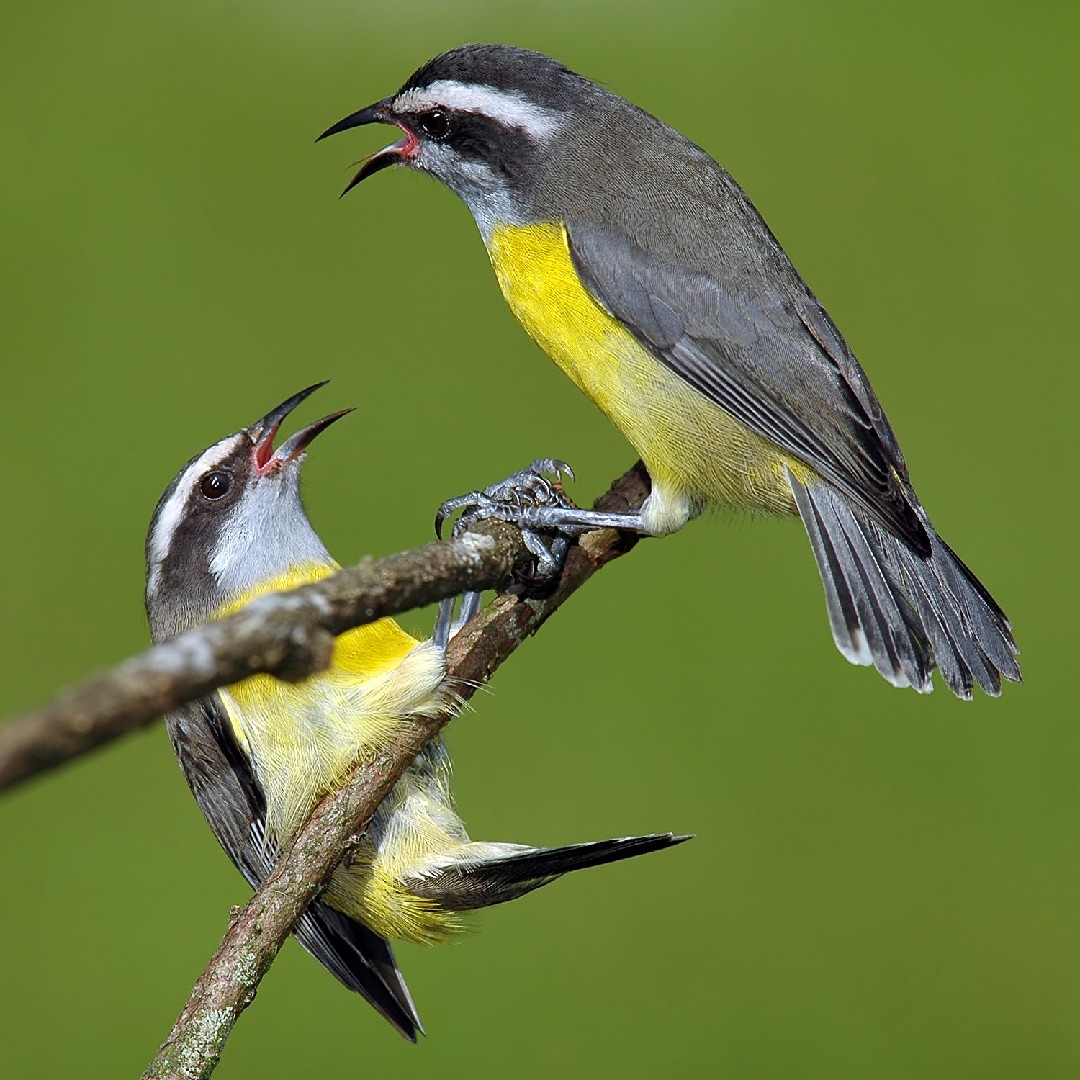
11. Bananaquit
The bananaquit is a common bird found in tropical forests, woodlands, and home gardens where they primarily feed on nectar and fruit. There are over 40 known subspecies endemic to specific regions with noticeable differences in appearance. The exact taxonomic placement of Coereba flaveola is a subject of much debate among ornithologists, with some suggesting it should be split into at least three different species.
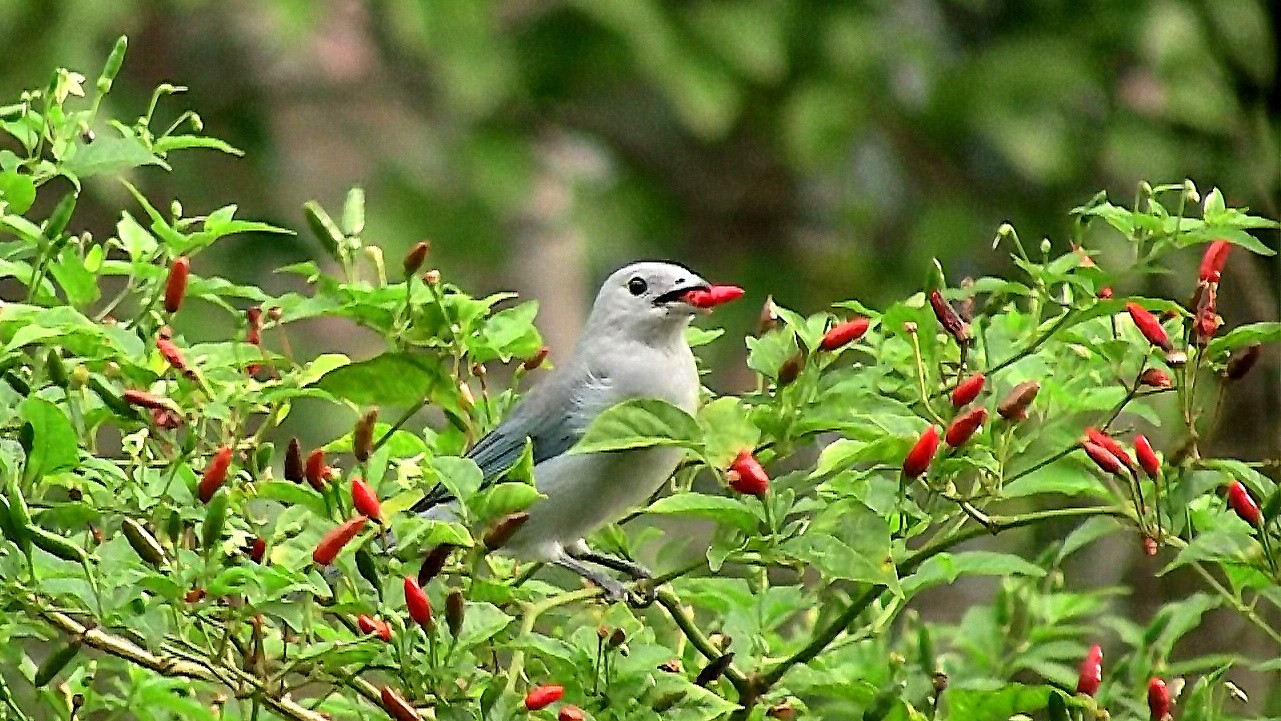
12. Sayaca Tanager
The sayaca tanager (Thraupis sayaca) is a species of bird in the family Thraupidae, the tanagers. It is a common resident in northeastern, central, and southeastern Brazil (Portuguese: sanhaço [sɐ̃ˈɲasu], sanhaço-cinzento [sɐ̃ˈɲasu sĩˈzẽtu]), and Bolivia, Paraguay, Uruguay, and northeastern Argentina (where they are known as celestinos or celestinas). A few are recorded from far southeastern Peru, but its status there is unclear, in part due to the potential of confusion with the very similar juveniles of the blue-grey tanager. It occurs in a wide range of open to semiopen habitats, but generally avoids the interior of dense forest (such as the Amazon). This tanager visits farmland in search of orchards and adapts readily to urban environment, as long as some arboreal cover and a supply of fruits are available. It feeds on flowers, buds, and insects, and this omnivorous lifestyle has helped it to become perhaps the most — or one of the most — common urban birds in southeastern Brazil, along with the rufous-bellied thrush.
13. Palm Tanager
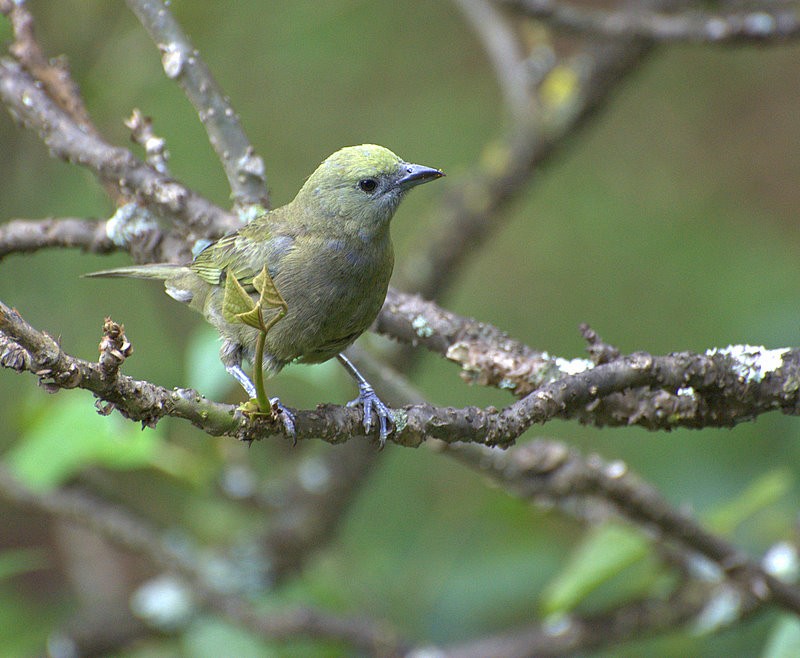
The palm Tanager is a magnificent bird species that steals the show with its olive-green feathers and striking black wings. It is a medium-sized bird that inhabits the palm forests of South America, where it feeds on a diverse diet including fruit, insects, and spiders. The Palm Tanager has a special relationship with palm trees, which provide both food and shelter, and it is perfectly adapted to life in this unique habitat.
14. Rufous-bellied Thrush
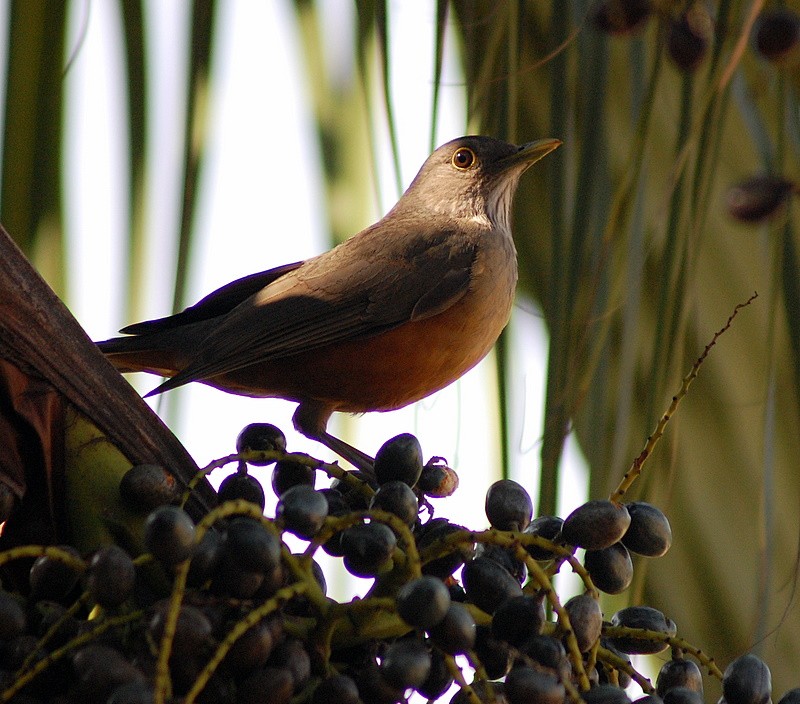
This species is named after its distinctive reddish-orange underparts. Rufous-bellied thrushes can reach a length of 25 cm and weigh up to 68 g (male) or 78 g (female), though weights of about 59 g for males and 64 g for females are more usual. Contrary to what one might expect from the rather marked weight difference, the females are not larger, only plumper; their tarsus is actually a bit shorter than that of males on average.
15. Ruby-crowned Tanager
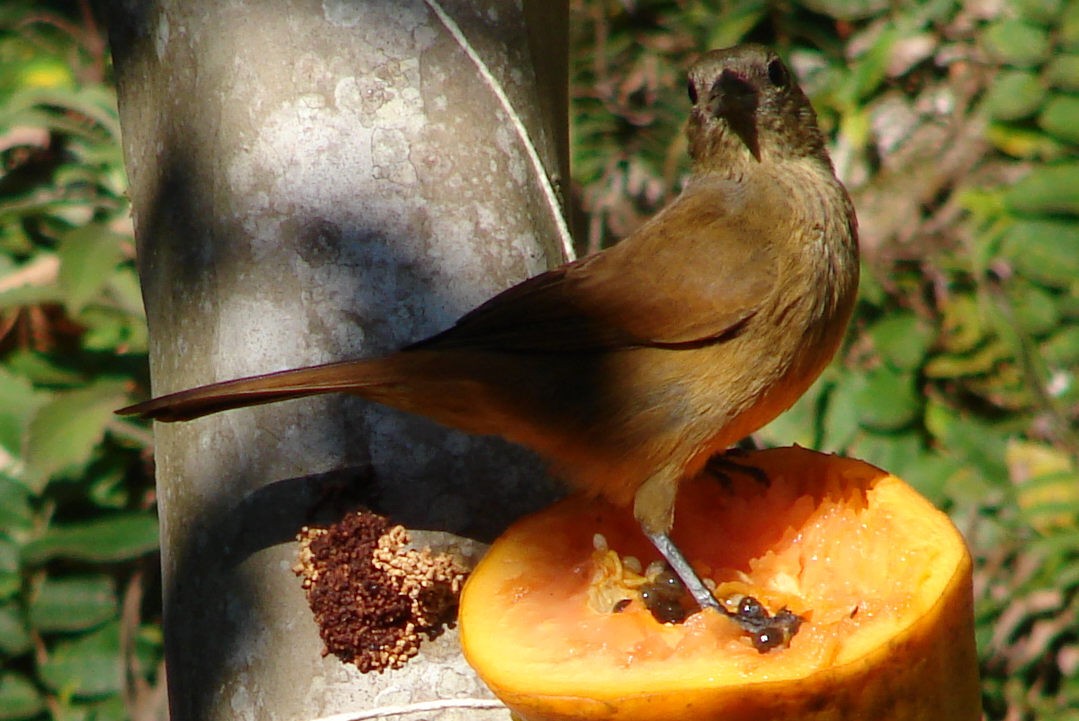
The ruby-crowned tanager (Tachyphonus coronatus) is a species of bird in the family Thraupidae. It is found in the southern areas of Brazil and the Atlantic Forest. Its natural habitats are subtropical or tropical moist lowland forest, subtropical or tropical moist montane forest, and heavily degraded former forest.
16. Rock Pigeon
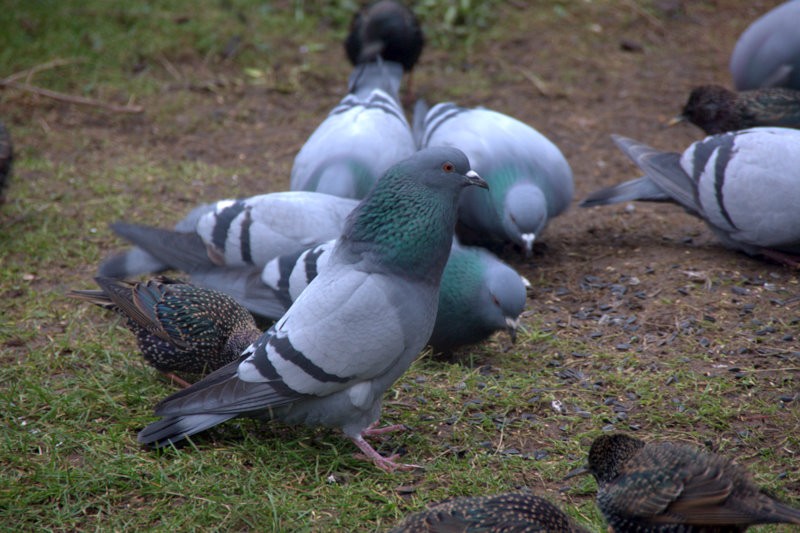
The rock Pigeon is a wild ancestor of all domestic and feral pigeons, inhabiting coasts, cliffs, and caves. Pairs nest in rock crevices, often mating for life. They are known for their ability to fly very long distances to return to their homes, navigating using the sun's position and the earth's magnetic fields. Thanks to this ability, pigeons were used as messengers, particularly during World Wars I and II.
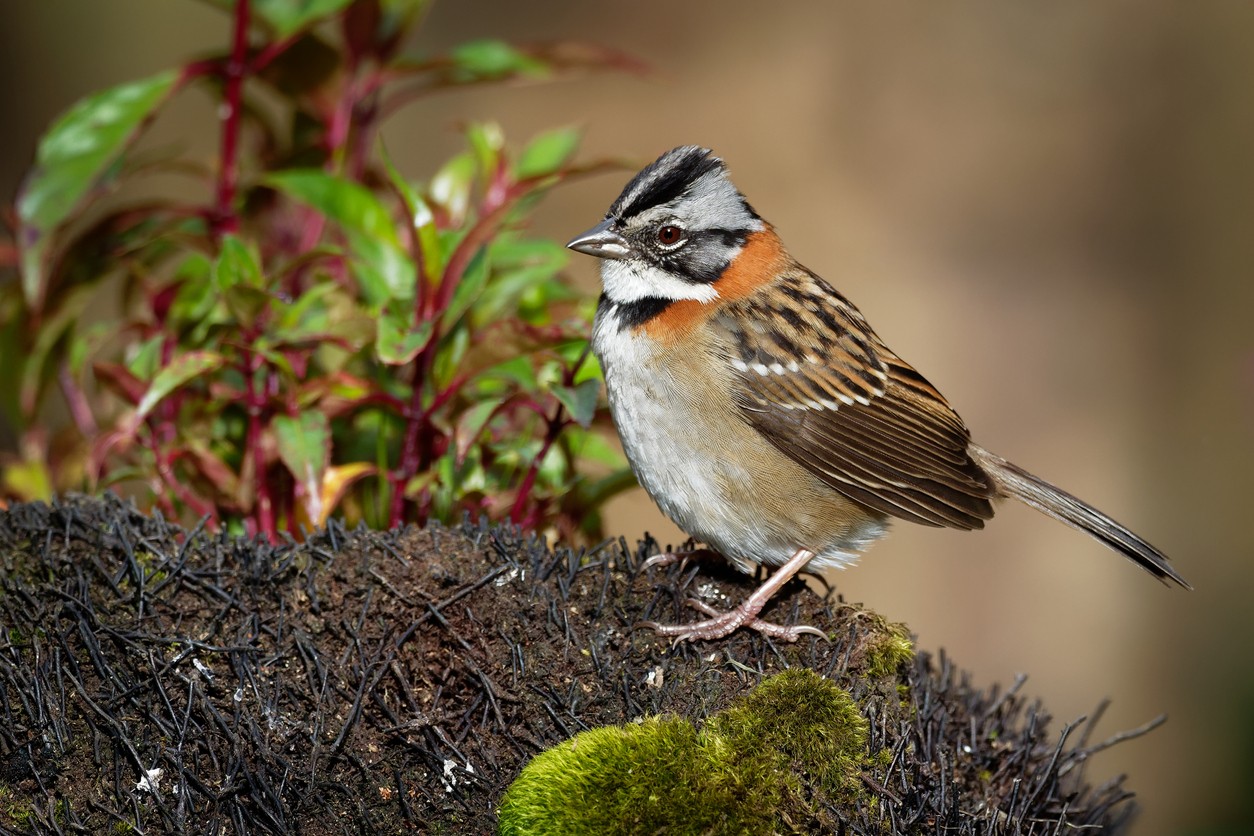
17. Rufous-collared Sparrow
The rufous-collared Sparrow is a small songbird known for its pleasant vocalization and numerous "dialects." The songs peak at dawn and some individuals can sing continuously for half an hour. Found in a wide range of habitats and comfortable around humans, this ground-feeding bird is easily approachable. On the other hand, it's aggressive towards other birds that enter its territory. Individuals have their favorite perching spot where they appear repeatedly.
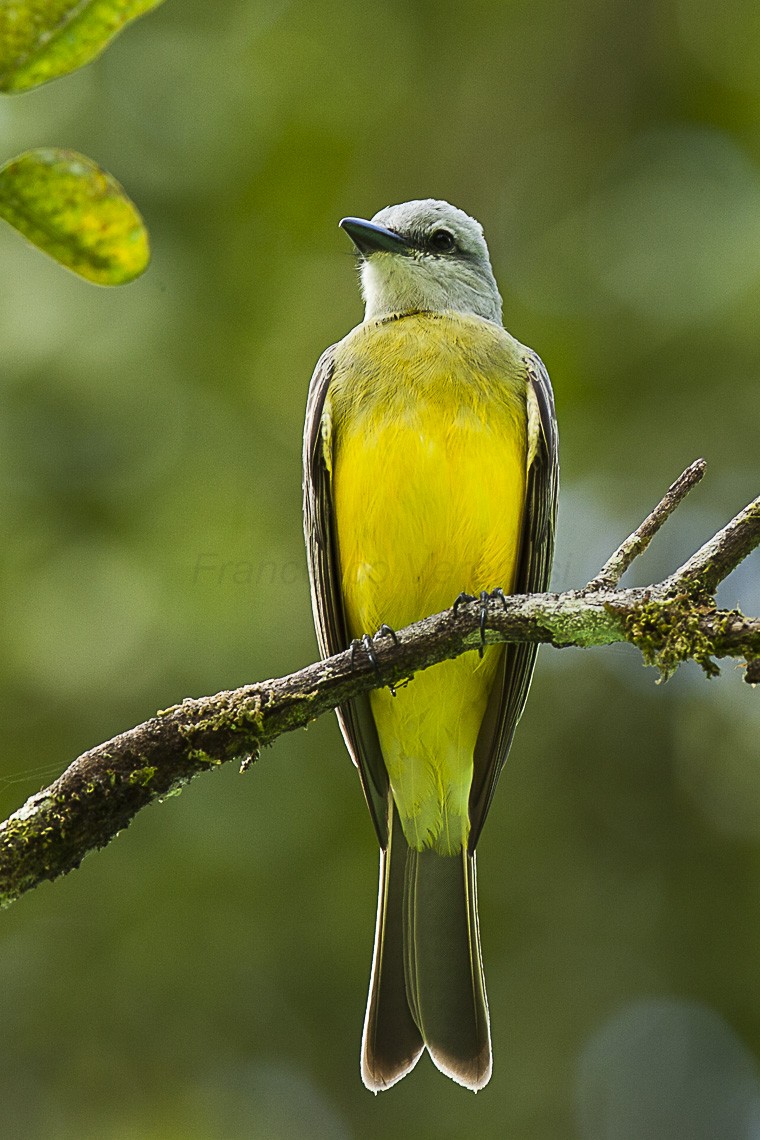
18. Tropical Kingbird
An adult tropical kingbird is 22 cm (8.7 in) long, weighs 39 g (1.4 oz) and has a wingspan range of 38–41 cm. The head is pale gray, with a darker eye mask, an orange crown stripe, and a heavy gray bill. The back is grayish-green, and the wing and forked tail are brown. The throat is pale gray, becoming olive on the breast, with the rest of the underparts being yellow. The sexes are similar, but young birds have pale buff edges on the wing coverts. Tropical Kingbirds appear to be monogamous. In most parts of the species' range, they are permanent residents and remain together in pairs year-round.(Sibley 2014) The call is a high-pitched twittering trill, tree-e-e-e-e-e-e, with a more complex version sung by the male at dawn. Their breeding habitat is semi-open areas with trees and shrubs, including gardens and roadsides. Tropical kingbirds like to observe their surroundings from a prominent open perch, usually high in a tree, undertaking long flights to acrobatically catch insects in mid-air (hawking), sometimes hovering to pick food off vegetation (gleaning). They also eat some fruit from such diverse species as tamanqueiro (Alchornea glandulosa), the Annonaceae, Cymbopetalum mayanum and gumbo-limbo (Bursera simaruba); foraging for these even in disturbed habitat. As they keep mainly to the upper levels of trees, they find little profit in following mixed-species feeding flocks in the understory. These birds aggressively defend their territory against intruders, even much larger birds such as magnificent frigatebirds, toucans, caracaras or hawks. In a study in Parque Nacional de La Macarena of Colombia, parasitism by microfilariae and trypanosomas (presumably T. everetti) was infrequently recorded in tropical kingbirds. The male and female inspect potential sites together before selecting a site, typically a fork or crotch high in a tree (up to 66 feet high) but sometimes just a few feet above water.(Sibley 2014) The female builds a bulky, sloppy-looking, shallow nest of vines, rootlets, twigs, weeds, and grasses; it is unlined or lined with hair. Nests average about 5.2 inches across and 3 inches tall, with interior cup about 3 inches across and 1.6 inches deep. The female incubates the typical clutch of two to four eggs for approximately 16 days, and the nestlings fledge in another 18 or 19 days. The eggs are whitish or pale pink with variable amounts of dark blotching. The tropical kingbird is one of the most widespread and conspicuous inhabitants of open forest, forest edge, scrub and agricultural land from the southwestern United States south to Argentina (Jahn, Stouffer, & Chesser, 2013). As a result, the bird is considered as being of Least Concern and their population is increasing, according to the IUCN. According to Partners in Flight, global estimates of tropical kingbird breeding population is around 200 million. They rate the species as 4 out of 20 on the continental concern scale, indicating that this species is of low conservation concern.
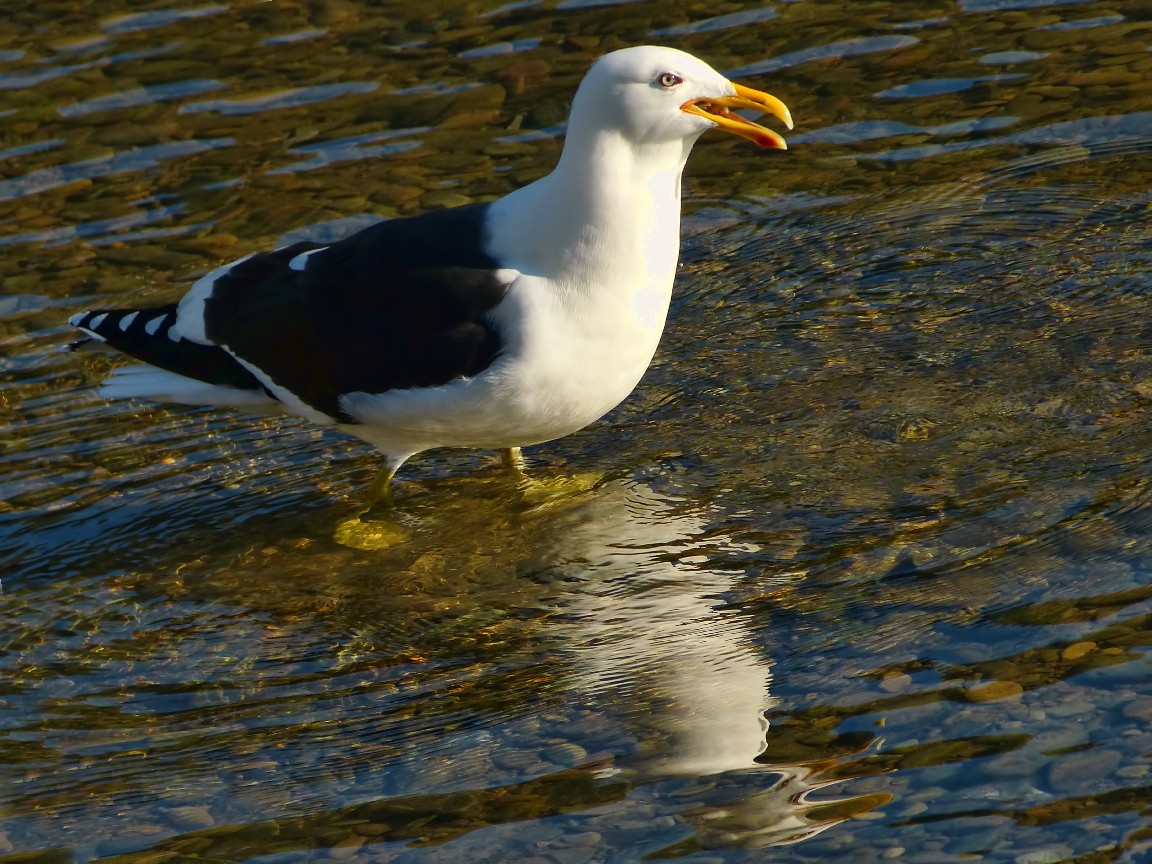
19. Kelp Gull
The kelp gull superficially resembles two gulls from further north in the Atlantic Ocean, the lesser black-backed gull and the great black-backed gull and is intermediate in size between these two species. This species ranges from 54 to 65 cm (21 to 26 in) in total length, from 128 to 142 cm (50 to 56 in) in wingspan and from 540 to 1,390 g (1.19 to 3.06 lb) in weight. Adult males and females weigh on average 1,000 g (2.2 lb) and 900 g (2.0 lb) respectively. Among standard measurements, the wing chord is 37.3 to 44.8 cm (14.7 to 17.6 in), the bill is 4.4 to 5.9 cm (1.7 to 2.3 in) and the tarsus is 5.3 to 7.5 cm (2.1 to 3.0 in). The adult kelp gull has black upperparts and wings. The head, underparts, tail, and the small "mirrors" at the wing tips are white. The bill is yellow with a red spot, and the legs are greenish-yellow (brighter and yellower when breeding, duller and greener when not breeding). The call is a strident ki-och. Juveniles have dull legs, a black bill, a dark band in the tail, and an overall grey-brown plumage densely edged whitish, but they rapidly get a pale base to the bill and largely white head and underparts. They take three or four years to reach maturity.
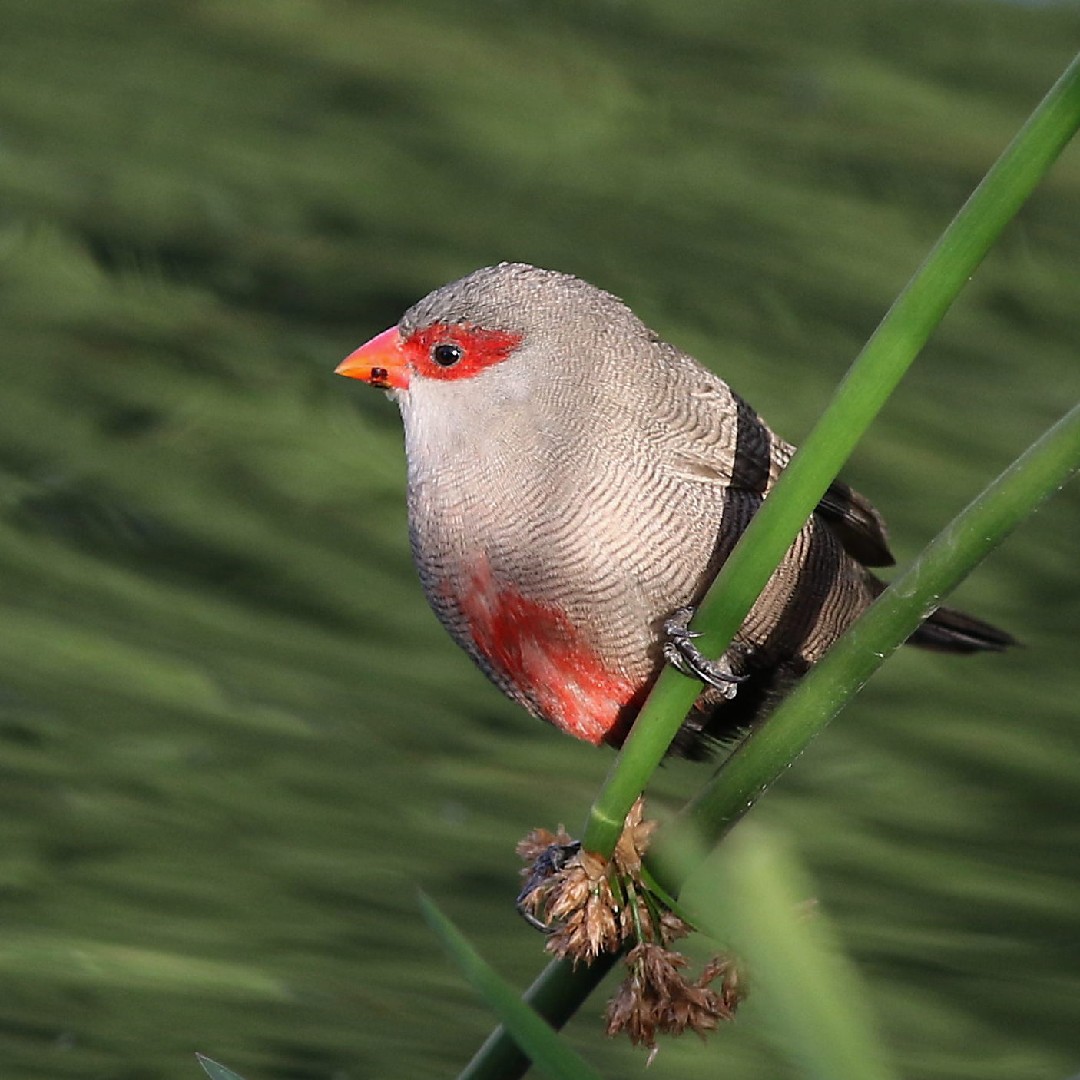
20. Common Waxbill
The common Waxbill is a small and brightly colored bird, native to Africa. It is a highly social bird, often seen in flocks foraging for seeds and insects. With its distinctive red bills and cheerful chirps, the Common Waxbill brings a touch of brightness to its habitat. This charming bird is well-adapted to its environment, making it an important part of the ecosystem. Whether foraging for food or engaging in lively courtship displays, the bird is a delight to observe.