



Top 20 Most Common Bird in Upper Demerara-Berbice
The dense rainforest and diverse ecosystem of Upper Demerara-Berbice is home to an array of bird species. 20 of these birds are particularly common, each showcasing unique characteristics and adaptive behaviors. From vibrant plumage to unusual calls, these species reflect the region's rich biodiversity. This environment propels distinctive adaptations, making the bird life of Upper Demerara-Berbice a fascinating realm to explore.

Most Common Bird
1. Silver-beaked Tanager
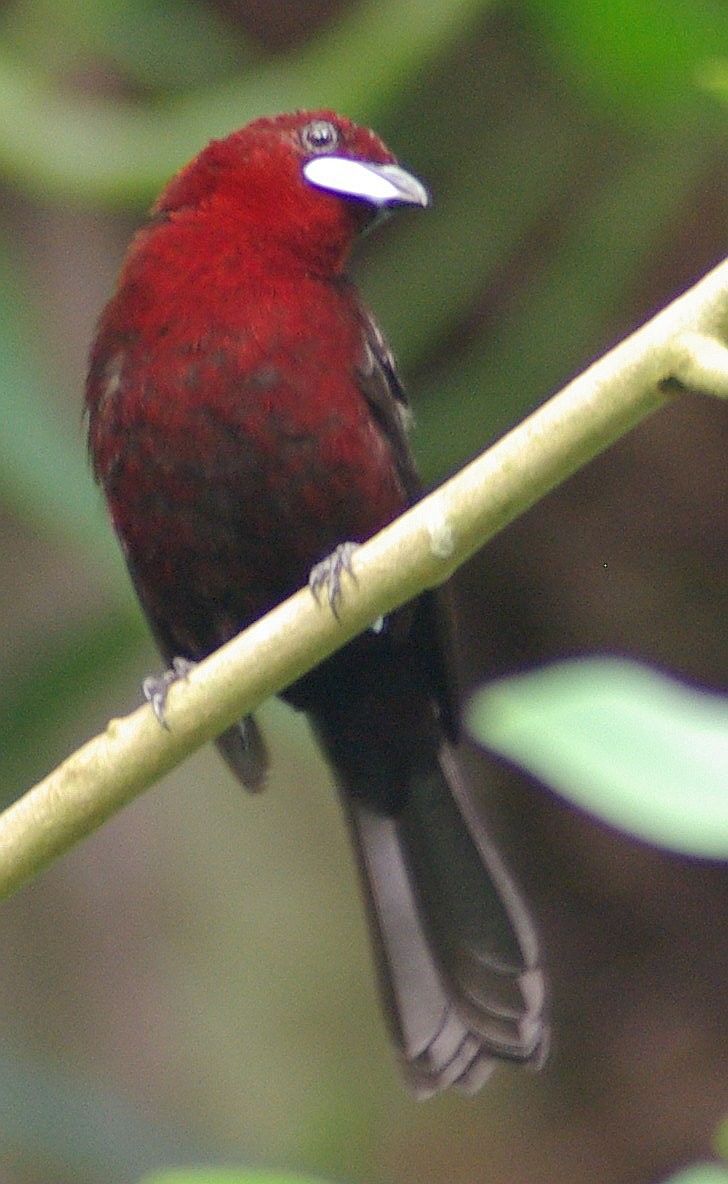
The silver-beaked tanager (Ramphocelus carbo) is a medium-sized passerine bird. This tanager is a resident breeder in South America from eastern Colombia and Venezuela south to Paraguay and central Brazil, Perú and on Trinidad. It is common and conspicuous. Silver-beaked tanagers are 18 centimetres (7 in) long and weigh 25 grams (0.88 oz). Adult males are velvety crimson black with a deep crimson throat and breast. The upper mandible of the bill is black, but the enlarged lower mandible is bright silver in appearance. The bill is pointed upwards in display. The female is much duller, with brownish upperparts, reddish brown underparts and a black bill. There is considerable plumage variation between the various subspecies, differing mainly in the degree of contrast between the upperparts and the throat and breast. It occurs in light woodland and cultivated areas. The bulky cup nest is usually built in a bush, and the normal clutch is two green-blue eggs blotched with black-brown. The female incubates the eggs for 11–13 days before they hatch. The chicks fledge after another 11–12 days. Individuals may live at least 11 years in the wild. These are social birds which eat mainly fruit, but insects are also taken. The silver-beaked tanager is often seen in groups of six to ten, frequently giving a call described as cheeng. Its song is a slow thin kick-wick. The silver-beaked tanager was first described by the German naturalist Peter Simon Pallas in 1764 and given the binomial name Lanius carbo. 
2. Tropical Kingbird
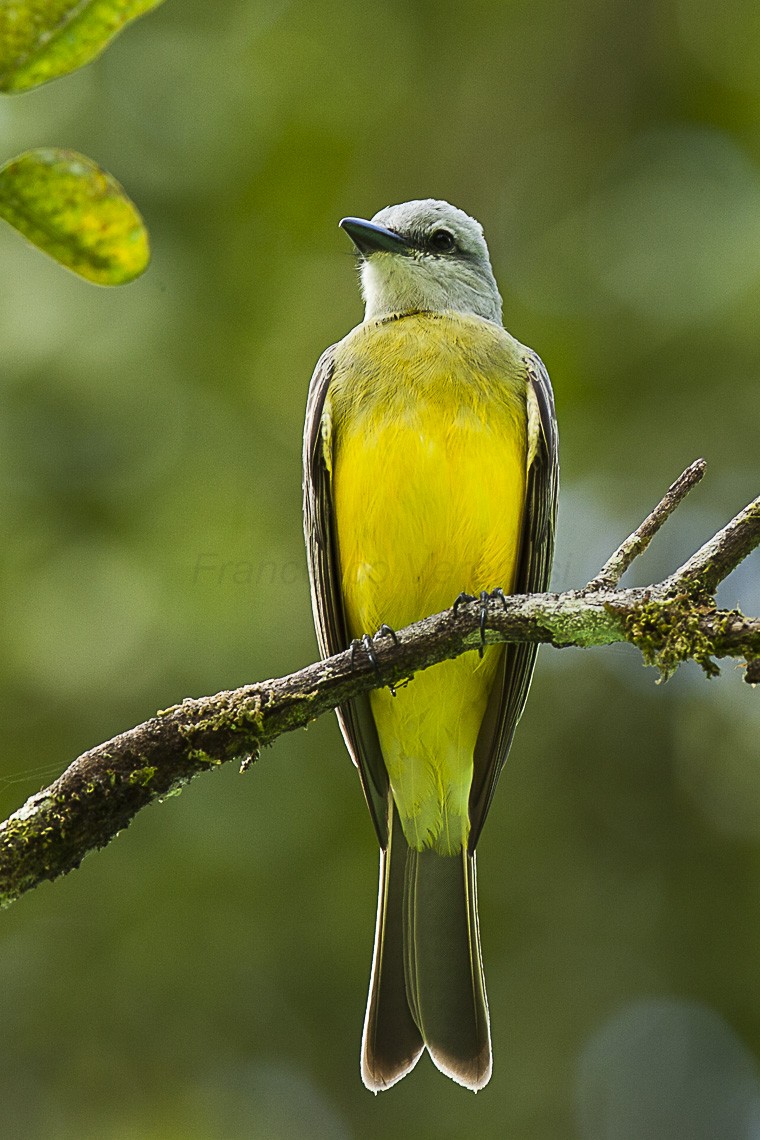
An adult tropical kingbird is 22 cm (8.7 in) long, weighs 39 g (1.4 oz) and has a wingspan range of 38–41 cm. The head is pale gray, with a darker eye mask, an orange crown stripe, and a heavy gray bill. The back is grayish-green, and the wing and forked tail are brown. The throat is pale gray, becoming olive on the breast, with the rest of the underparts being yellow. The sexes are similar, but young birds have pale buff edges on the wing coverts. Tropical Kingbirds appear to be monogamous. In most parts of the species' range, they are permanent residents and remain together in pairs year-round.(Sibley 2014) The call is a high-pitched twittering trill, tree-e-e-e-e-e-e, with a more complex version sung by the male at dawn. Their breeding habitat is semi-open areas with trees and shrubs, including gardens and roadsides. Tropical kingbirds like to observe their surroundings from a prominent open perch, usually high in a tree, undertaking long flights to acrobatically catch insects in mid-air (hawking), sometimes hovering to pick food off vegetation (gleaning). They also eat some fruit from such diverse species as tamanqueiro (Alchornea glandulosa), the Annonaceae, Cymbopetalum mayanum and gumbo-limbo (Bursera simaruba); foraging for these even in disturbed habitat. As they keep mainly to the upper levels of trees, they find little profit in following mixed-species feeding flocks in the understory. These birds aggressively defend their territory against intruders, even much larger birds such as magnificent frigatebirds, toucans, caracaras or hawks. In a study in Parque Nacional de La Macarena of Colombia, parasitism by microfilariae and trypanosomas (presumably T. everetti) was infrequently recorded in tropical kingbirds. The male and female inspect potential sites together before selecting a site, typically a fork or crotch high in a tree (up to 66 feet high) but sometimes just a few feet above water.(Sibley 2014) The female builds a bulky, sloppy-looking, shallow nest of vines, rootlets, twigs, weeds, and grasses; it is unlined or lined with hair. Nests average about 5.2 inches across and 3 inches tall, with interior cup about 3 inches across and 1.6 inches deep. The female incubates the typical clutch of two to four eggs for approximately 16 days, and the nestlings fledge in another 18 or 19 days. The eggs are whitish or pale pink with variable amounts of dark blotching. The tropical kingbird is one of the most widespread and conspicuous inhabitants of open forest, forest edge, scrub and agricultural land from the southwestern United States south to Argentina (Jahn, Stouffer, & Chesser, 2013). As a result, the bird is considered as being of Least Concern and their population is increasing, according to the IUCN. According to Partners in Flight, global estimates of tropical kingbird breeding population is around 200 million. They rate the species as 4 out of 20 on the continental concern scale, indicating that this species is of low conservation concern.
3. Smooth-billed Ani
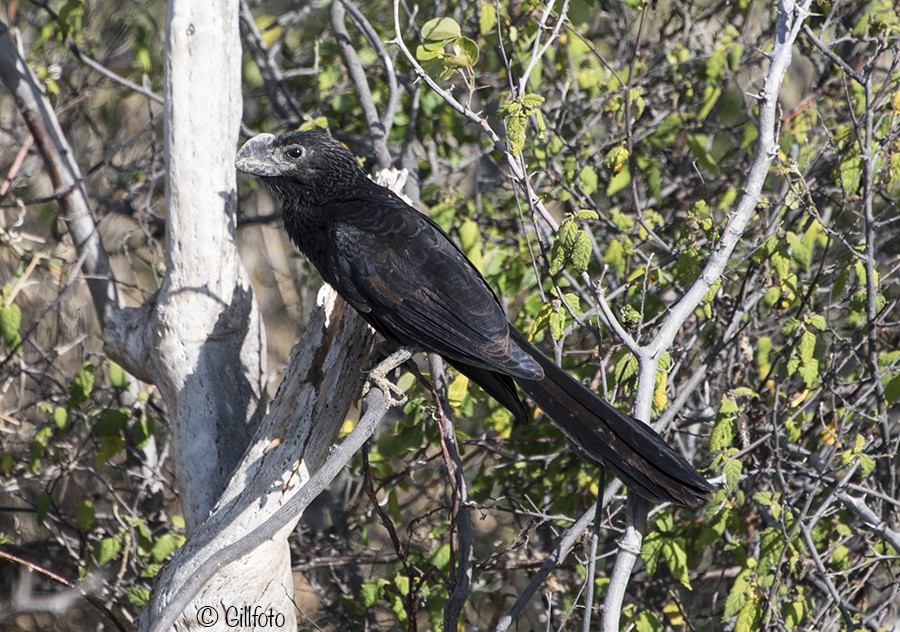
The smooth-billed ani is a mid-sized species, larger on average than the groove-billed ani but smaller than the greater ani. It measures 30–36 cm (12–14 in) in length and weighs 71–133 g (2.5–4.7 oz). The adult is mainly flat black, with a long tail, deep ridged black bill and a brown iris. The flight is weak and wobbly, but the bird runs well and usually feeds on the ground. This species is called "el pijul" in Venezuelan folklore. It is mentioned in the popular Veracruz song "El Pijul".
4. Common Ground Dove
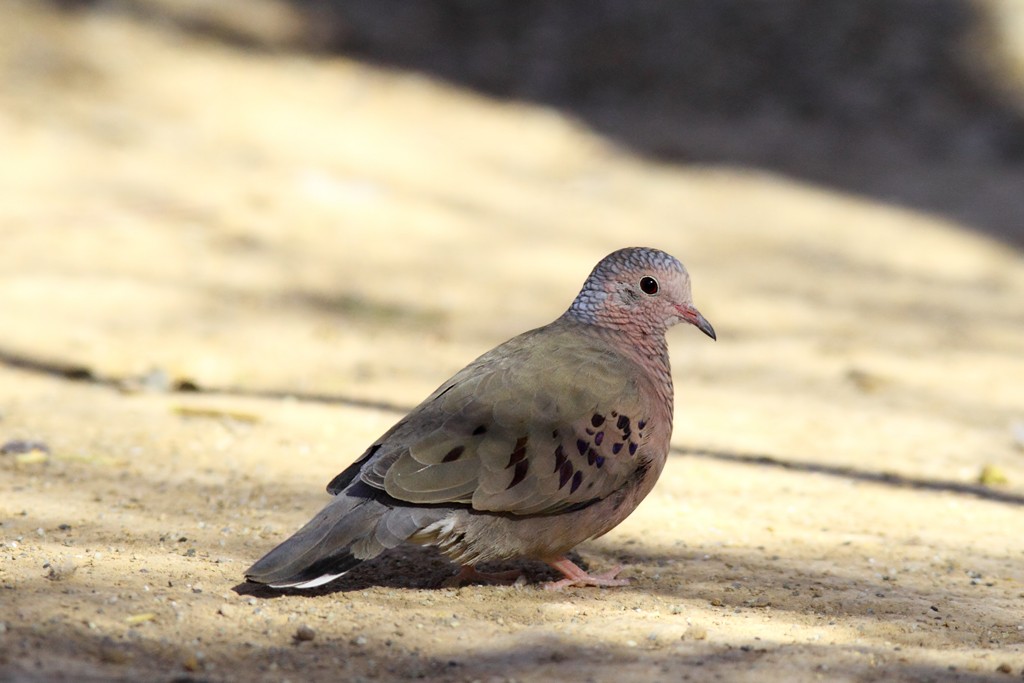
The common ground dove is North America's smallest dove and is one of the world's smallest by mass. This species ranges from 15–18 cm (5.9–7.1 in) in length, spans 27 cm (11 in) across the wings and weighs 26–40 g (0.92–1.41 oz). The common ground dove has a yellow beak with a black tip. Feathers surrounding the beak are pink in colour. The feathers on the head and the upper breast have a scale like appearance. The tail feathers are very short and similar colour to the back. The plumage on the back of the bird is brown. The coverts and wing feathers are also brown but have black spotting on them. The common ground dove has chestnut primaries and wing borders, which can only been seen when the bird is flying. The common ground dove shows some sexual dimorphism in their plumage. The males have slate gray feathers on the top of their heads and pink-gray colouration on their belly. Females on the other hand are more gray than their male counterparts and are more evenly coloured. The common ground dove's call can be described as soft whoops that increase in pitch. Often the call is heard in repetition, and is quite distinct. To hear the call of the common ground dove see the external links for a link to a website.
5. Southern Lapwing
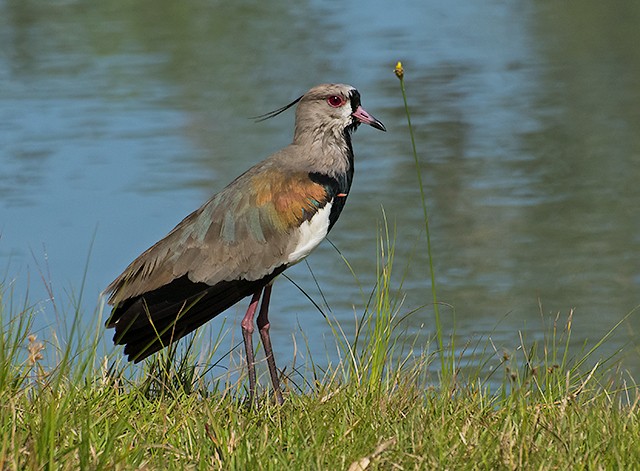
This lapwing is the only crested wader in South America. The upperparts are mainly brownish grey. The head is particularly striking; mainly grey with a black forehead and throat patch extending onto the black breast. The rest of the underparts are white, and the eye ring, legs and most of the bill are pink. It is equipped with red bony extensions under the wings (spurs), used to intimidate foes and fight birds of prey. The rump is white and the tail black.
6. Black Vulture
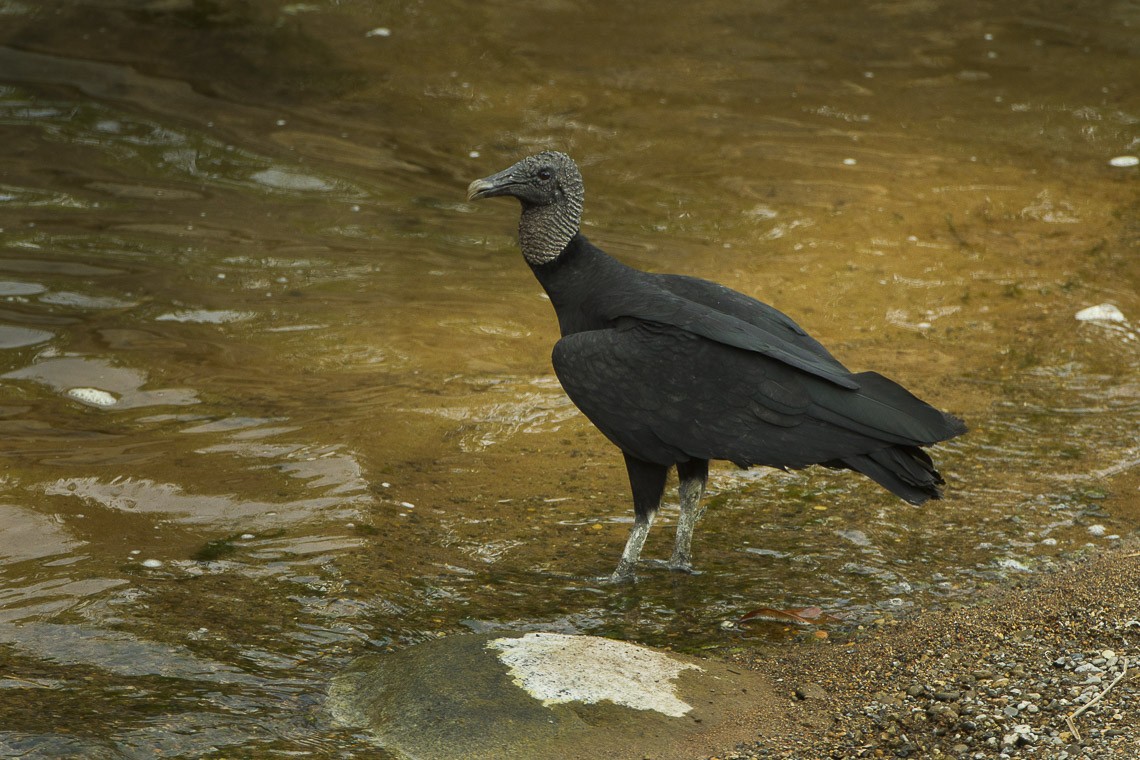
Although quite dapper in appearance, the black Vulture's name comes from the Latin vulturus meaning “tearer" and that is just what that hooked beak is for. These birds are highly social, with fierce family loyalty and will share food with relatives and with their young long after the babies have fledged. Because they lack a voice box, their calls are limited to grunts and hisses.
7. Swallow-winged Puffbird
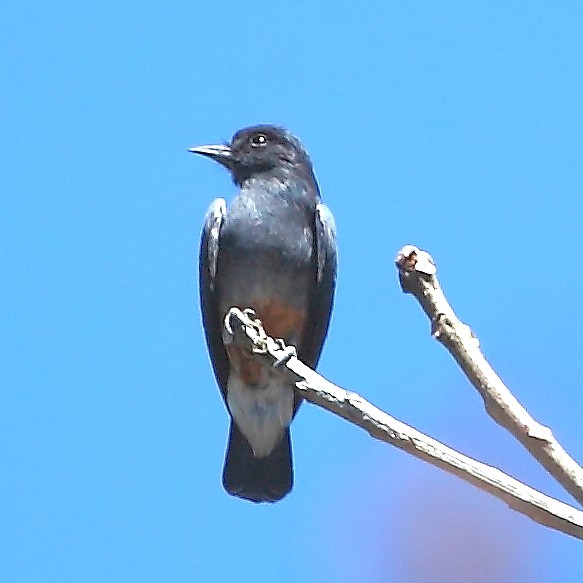
The swallow-winged puffbird (Chelidoptera tenebrosa) is a species of bird in the family Bucconidae, the puffbirds. It is also called the swallow-wing. It is the only species in the genus Chelidoptera. It is found in Brazil and the entire Amazon Basin; also Bolivia, Colombia, Ecuador, the Guianas (Guyana, Suriname, French Guiana), Peru, and Venezuela. Its natural habitats are subtropical and tropical moist lowland forests, subtropical and tropical swamps, and heavily degraded former forest.
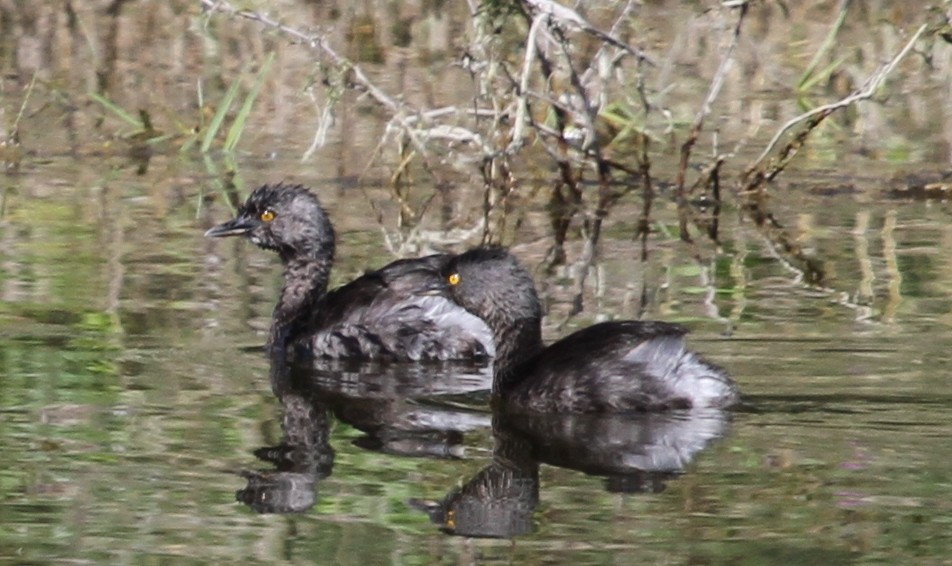
8. Least Grebe
The least grebe ranges in length from 21–27 cm (8.3–10.6 in) (depending on the subspecies) and in weight from 112–180 g (4.0–6.3 oz). Weights are variable based on region and subspecies, being smaller in Panama, where males weighed a mean of 129 g (4.6 oz) against the females 116 g (4.1 oz) and larger in the West Indies, where the sexes weigh a mean of 161 g (5.7 oz) and 133 g (4.7 oz), respectively. In Texas, size is intermediate at 139 g (4.9 oz) and 122 g (4.3 oz). Even in the largest races, the least grebe is still smaller and lighter than any other grebe species. Like all grebes, its legs are set far back on its body and it cannot walk well, though it is an excellent swimmer and diver. Small and plump, with a fairly short, sharp-pointed beak and bright yellow eyes, it typically appears quite dark all over. The breeding adult is brownish grey above with a darker blackish crown and throat. It has a brownish chest and pale underparts. It shows a white wing patch in flight. Non-breeding birds are paler with a whitish throat, and immatures are paler and greyer than adults. Unlike all other members of its genus, it lacks any chestnut coloring on its neck.
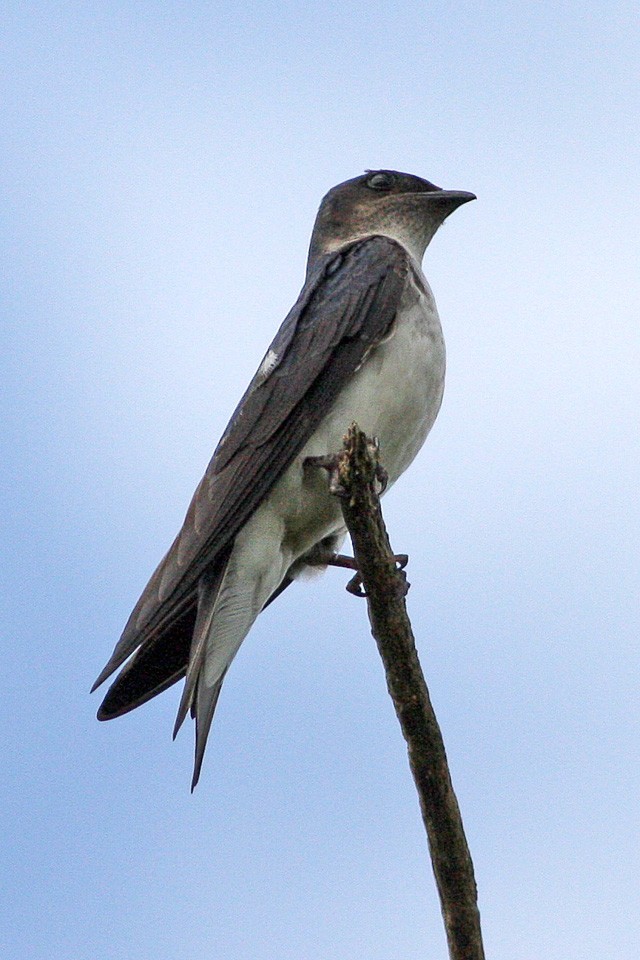
9. Grey-breasted Martin
Adult grey-breasted martins are 18 cm (7.1 in) in length, with a forked tail and relatively broad wings, and weigh 39 g (1.4 oz). Adult males are a glossy blue-black with the grey-brown throat, breast and sides contrasting with the white lower underparts. Females are duller than the male, and juveniles have dull brown upperparts.
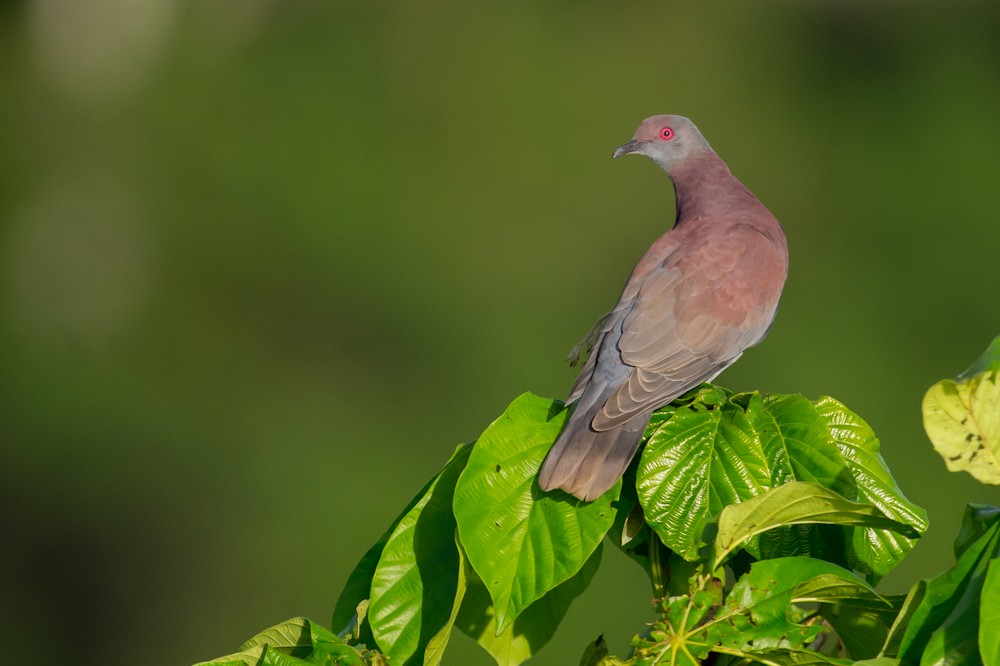
10. Pale-vented Pigeon
The pale-vented pigeon is 30–32 cm long and weighs normally 230–250 g. Adult males have a mainly dull purple head, breast and upperpart plumage, with copper glossing on the nape and a whitish throat. The lower back and tail are dark grey and the lower underparts are pale grey. The bill is black and the legs, iris and eyering are red. The female is similar, but duller than the male, and immatures are greyish-brown, very dull, and mainly greyish brown. The southern subspecies P. c. andersoni has white lower underparts, rather than the pale grey of nominate P. c. cayennensis. The call is a row of soft kuk kuk croo-ooos; the initial short kuk is characteristic for the "cayennensis group" of Patagioenas. Altogether, this species' song is intermediate between that of its close relatives the plain (P. inornata) and red-billed pigeons (P. flavirostris). It may in the field resemble a scaled pigeon (P. speciosa), which has a similar display flight. These two large species are also the only pigeons in their range which are often seen flying in the open away from forests. But of course P. cayennensis lacks the scaly appearance, and the calls and appearance from close by indicate that the two are not particularly close relatives among their congeners.
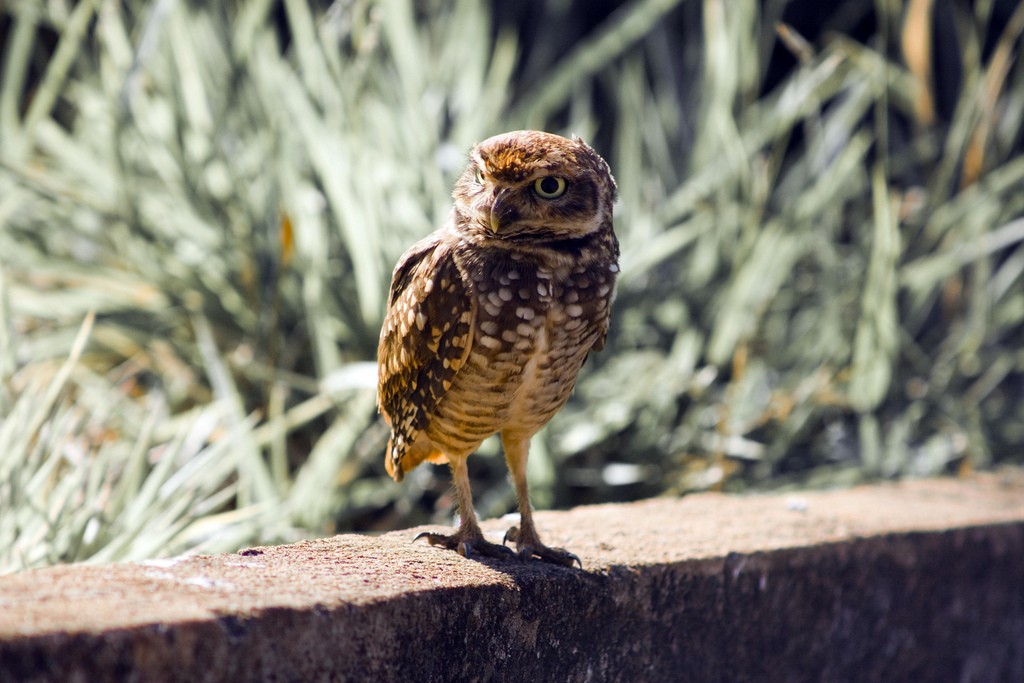
11. Burrowing Owl
Burrowing owls have bright eyes; their beaks can be dark yellow or gray depending on the subspecies. They lack ear tufts and have a flattened facial disc. The owls have prominent white eyebrows and a white "chin" patch which they expand and display during certain behaviors, such as a bobbing of the head when agitated. Adults have brown heads and wings with white spotting. The chest and abdomen are white with variable brown spotting or barring, also depending on the subspecies. Juvenile owls are similar in appearance, but they lack most of the white spotting above and brown barring below. The juveniles have a buff bar across the upper wing and their breast may be buff-colored rather than white. Burrowing owls of all ages have grayish legs longer than those of other owls. Males and females are similar in size and appearance, and display little sexual dimorphism. Females tend to be heavier, but males tend to have longer linear measurements (wing length, tail length, etc.). Adult males appear lighter in color than females because they spend more time outside the burrow during daylight, and their feathers become "sun-bleached". The burrowing owl measures 19–28 cm (7.5–11.0 in) long and spans 50.8–61 cm (20.0–24.0 in) across the wings, and weighs 140–240 g (4.9–8.5 oz). As a size comparison, an average adult is slightly larger than an American robin (Turdus migratorius).
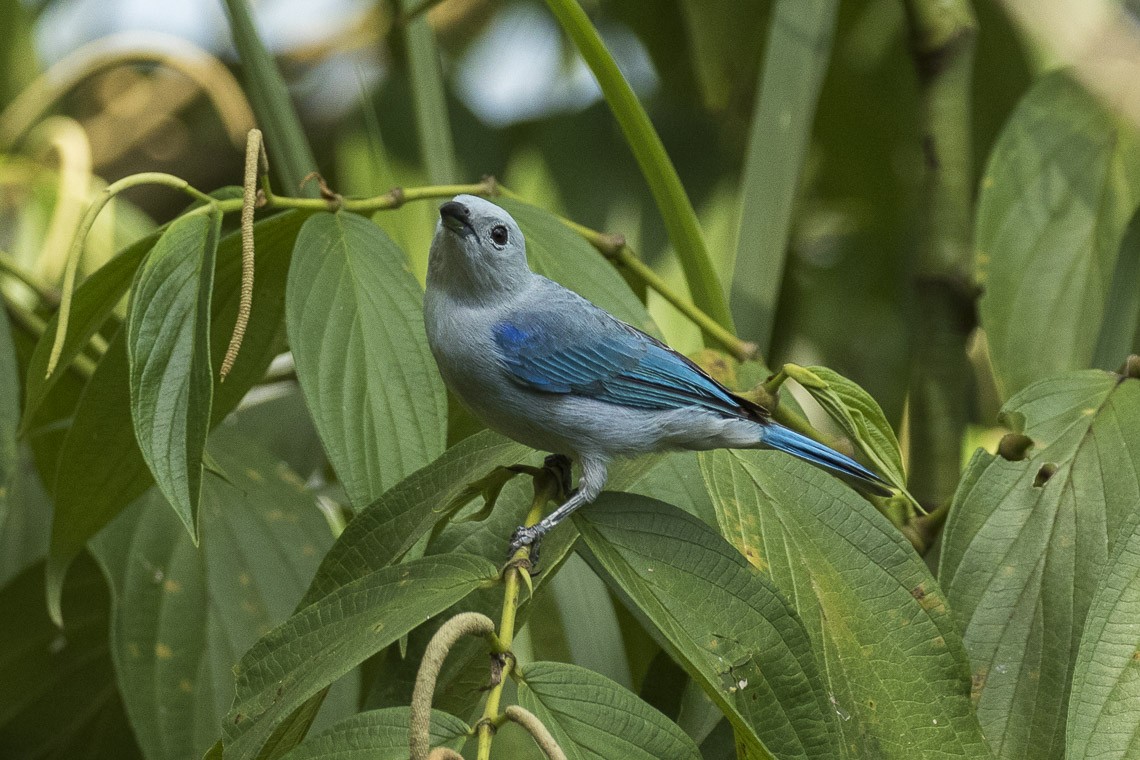
12. Blue-grey Tanager
The blue-gray tanager is 16–18 cm (6.3–7.1 in) long and weighs 30–40 g (1.1–1.4 oz). Adults have a light bluish head and underparts, with darker blue upperparts and a shoulder patch colored a different hue of blue. The bill is short and quite thick. Sexes are similar, but the immature is much duller in plumage. The song is a squeaky twittering, interspersed with tseee and tsuup call notes.
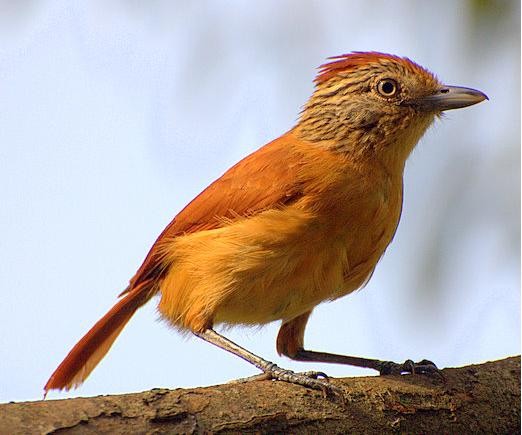
13. Barred Antshrike
The barred antshrike is 15–16 cm (5.9–6.3 in) in length, and weighs 24–30 g (0.85–1.06 oz). This species exhibits marked sexual dimorphism. The male of the nominate race is barred all over with black and white, and has a white-based black crest that is raised in display. The female is rufous above with a chestnut crest. The sides of her head and neck are streaked with black, and the underparts are rich buff. In both sexes, the legs are grey, the bill is black and the iris is pale yellow. The subspecies vary primarily in the overall darkness and the amount of barring and hue of the underparts. For example, in the Tobagonian race T. d. tobagensis, males are whiter below, and females darker, than in the nominate subspecies. The most distinctive subspecies is T. d. capistratus of the Caatinga in north-eastern Brazil, where males have uniform black crown (no white barring to the base) and females have streaked throat and faintly barred belly. It is also the only subspecies where the iris is deep maroon-red. It has been suggested that it should be considered a separate species, the Caatinga barred antshrike.
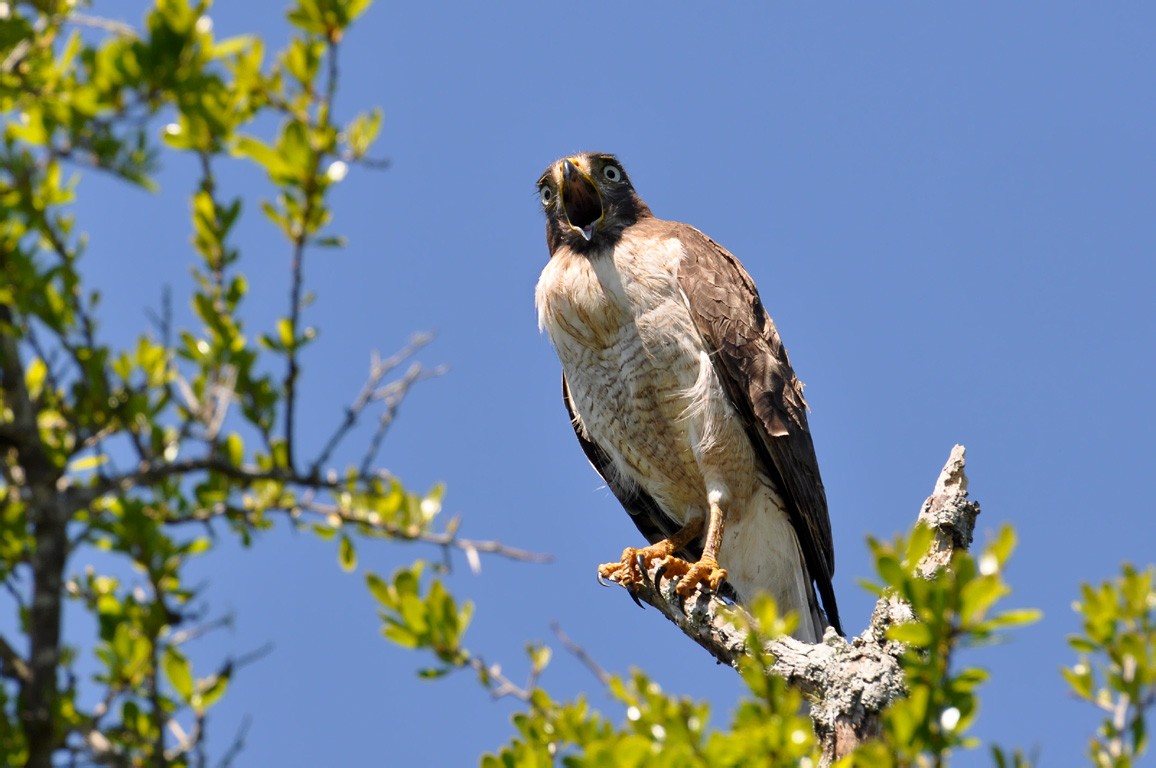
14. Roadside Hawk
The roadside hawk is 31–41 cm (12–16 in) long and weighs 250–300 g (8.8–10.6 oz). Males are about 20% smaller than females, but otherwise the sexes are similar. In most subspecies, the lower breast and underparts are barred brown and white, and the tail has four or five grey bars. Twelve subspecies are usually recognised and there is significant plumage variation between these. Depending on the subspecies involved, the roadside hawk is mainly brown or grey. It is fairly common to observe a touch of rufous (i.e., a light reddish-brown) on the bird's wings, especially when seen in flight. Its call is a very high-pitched piercing squeak. The eyes of adult roadside hawks are whitish or yellow. As suggested by its specific name (magni = large; rostri = beak), its beak is relatively large. The roadside hawk may be marginally the smallest hawk in the widespread genus Buteo, although Ridgway's hawk and the white-rumped hawk are scarcely larger. In flight, the relatively long tail and disproportionately short wings of the roadside hawk are distinctive. It frequently soars, but does not hover.

15. Common Potoo
Common potoos are 34–38 cm long with molted red-brown, white, black, and grey cryptic plumage. This disruptive coloration allows the potoo to camouflage into branches. The sexes appear similar, and cannot be distinguished upon observation. The eyes can appear as giant black dots with a small yellow ring, or as giant yellow irises with small pupils due to voluntary pupil constriction. The potoo has two to three slits in the eyelid so that it can see when the eyelids are closed; these notches are always open. The upper and lower eyelids can be moved independently and rotated so that the bird may adjust its field of vision. The common potoo has an unusually wide mouth with a tooth in its upper mandible for foraging purposes.
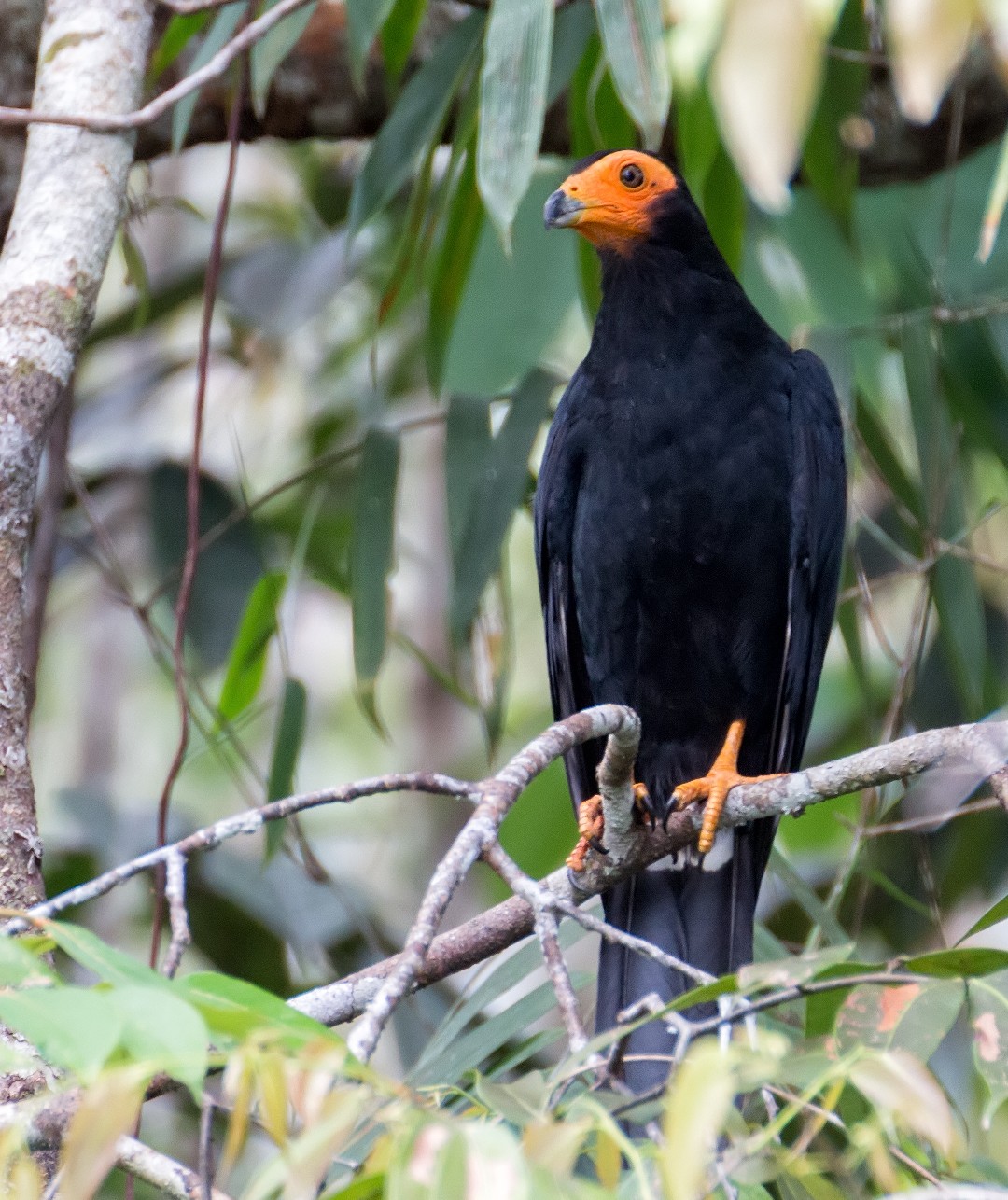
16. Black Caracara
Adult black caracara are a glossy black except for the distinctive white band on the base of the tail, and yellow to orange-red feet and face. The adults appear similar to those of their closest relative, the red-throated caracara, however they have distinctly long and narrow wings and tail, as well as a black beak. Additionally, the red-throated caracara can be distinguished from the black caracara by their red throats. The average adult length is 41-47cm. The females of this species average 350-440g and are typically larger than the males that have an average weight of 330g. Juveniles can be identified by their dull black plumage, pale yellow face and the 3-4 black bars found on the rectrices. When observing flight from a distance, it is notable that Daptrius ater rarely soars, but instead can be seen continuously flapping.
17. Yellow-bellied Elaenia
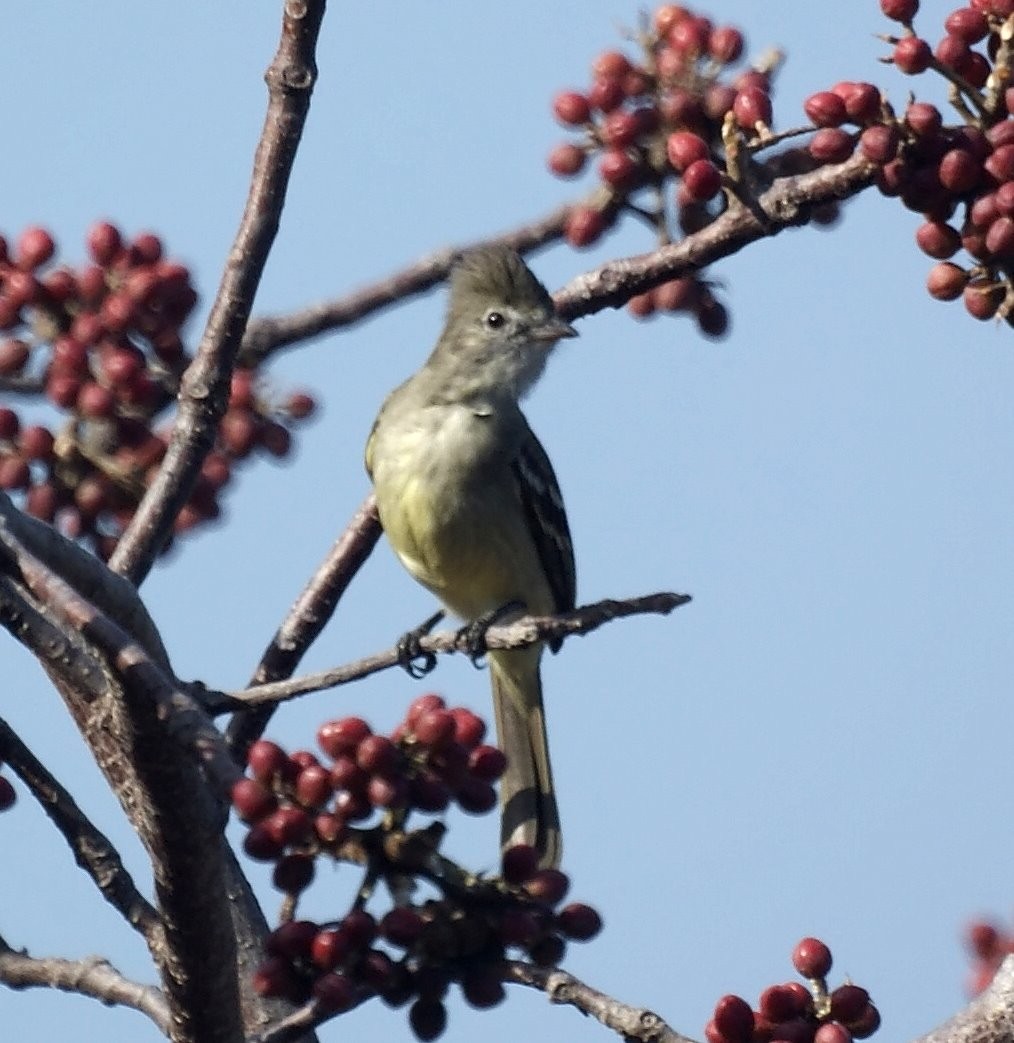
Adults are 16.5 cm (6.5 in) long and weigh 24 g (0.85 oz). They have olive-brown upperparts, a white eye ring, a bushy divided crest and a white crown patch in the parting. The throat is pale and the breast greyish, with pale yellow lower underparts. The call is a nasal breeer, and the song is a wheezing zhu-zhee-zhu-zhee.
18. Brown-throated Parakeet
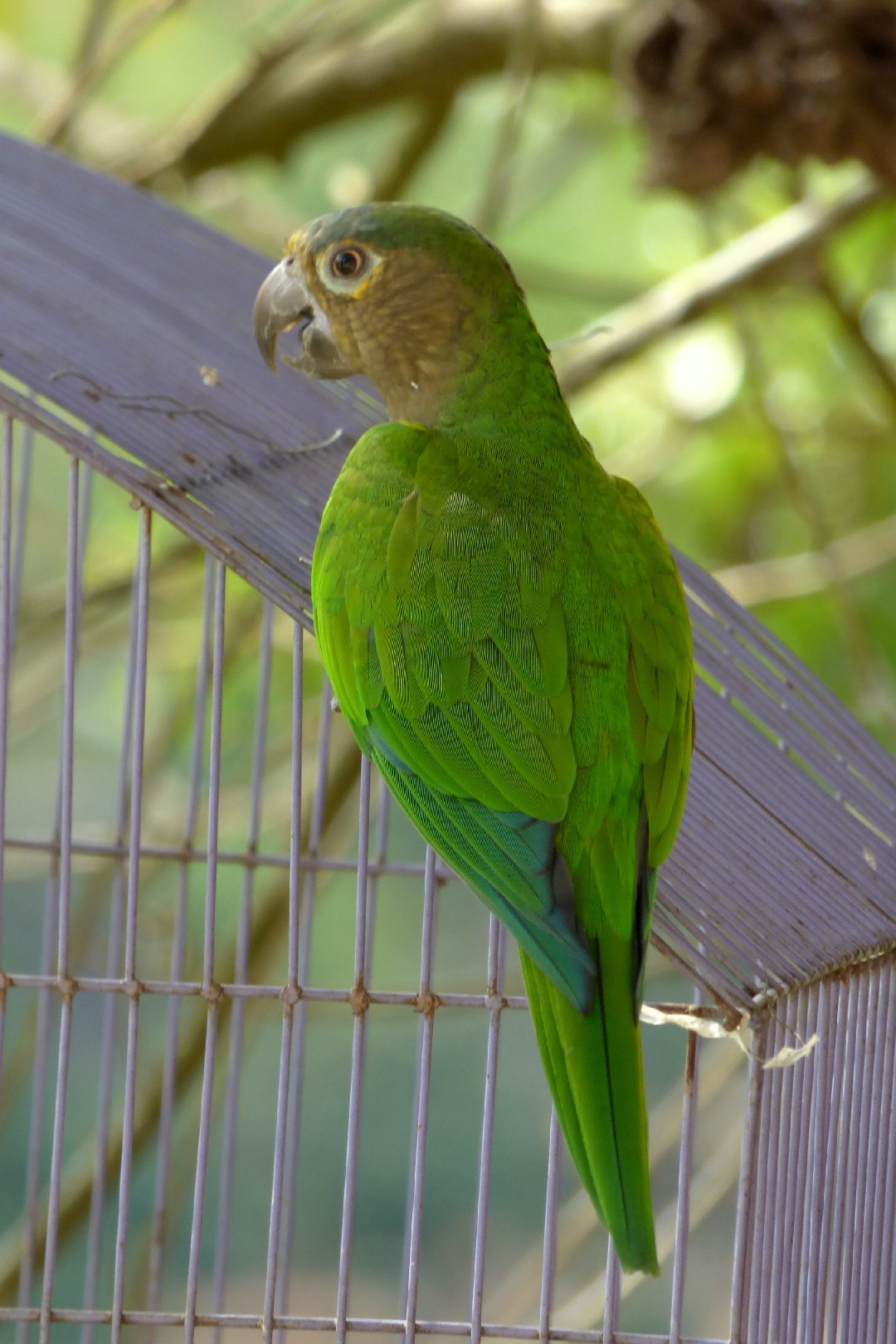
The brown-throated Parakeet has a varied habitat. This parakeet is found in semi-open areas, parks, and gardens where it feeds on fruit and second growth on trees. The brown feathers on its throat make the bird easy to recognize. It is also why the bird is commonly referred to as the 'Brown-throated Parakeet'.
19. White-lined Tanager
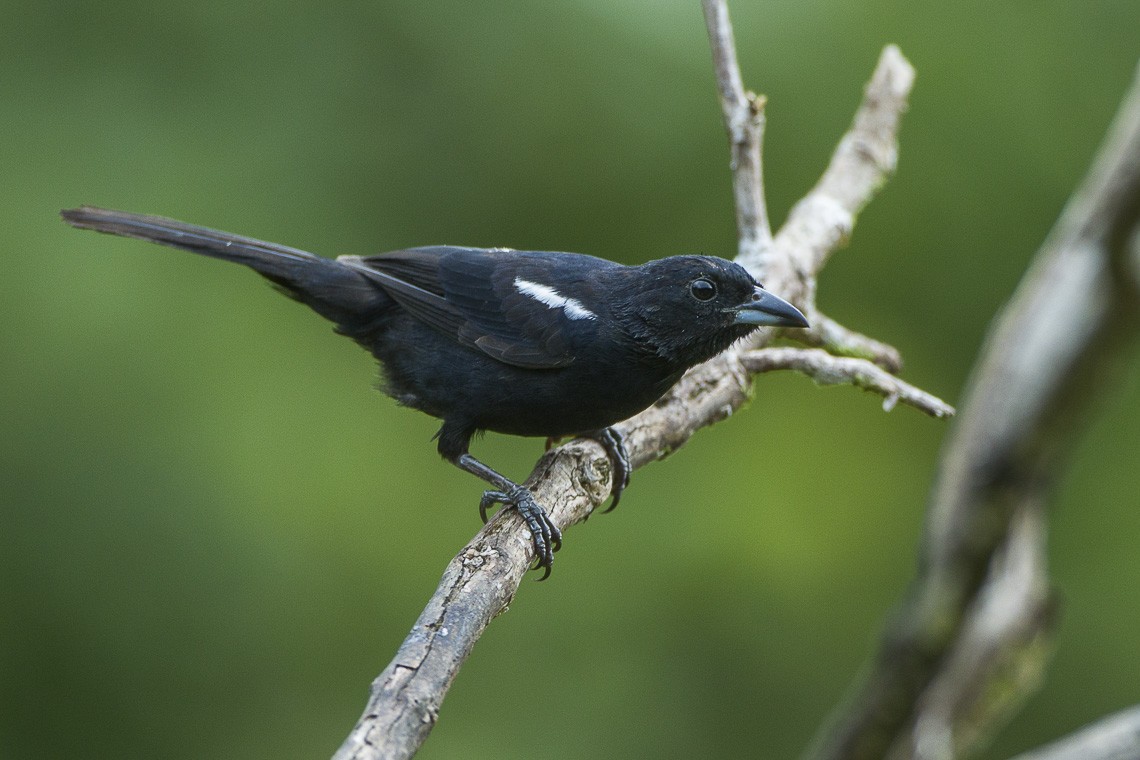
The adult white-lined tanagers is 18.5 cm (7.3 in) long and weighs 33 g (1.2 oz). It has a long tail and a mostly black stout pointed bill. The adult male is glossy black, apart from white underwing coverts and a small white patch on the upperwing. These white areas are conspicuous in flight but otherwise rarely visible. Females and immatures are entirely rufous in plumage, somewhat paler below.
20. Orange-winged Amazon
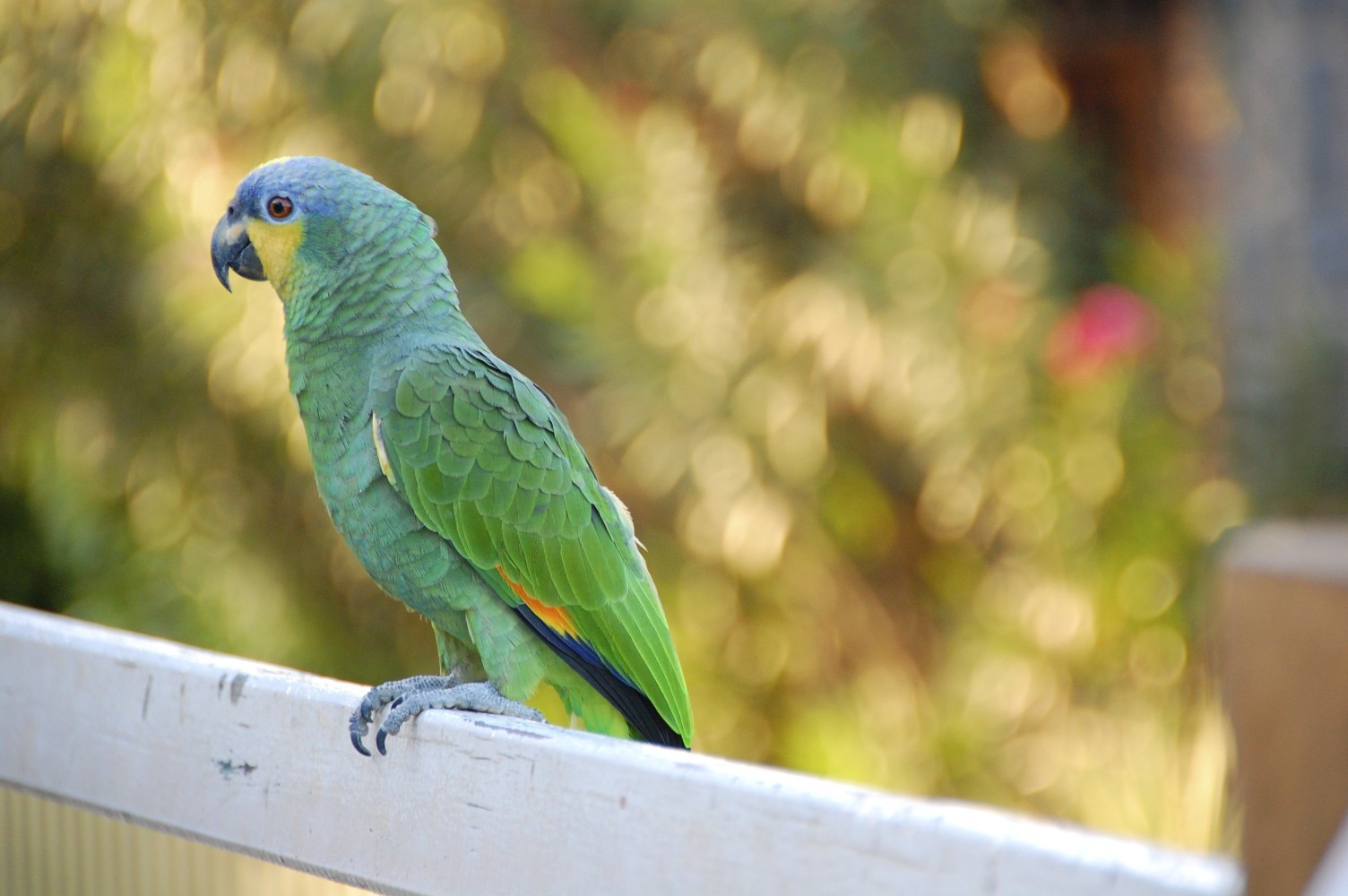
The orange-winged amazon is a mainly green parrot about 33 cm (13 in) long and weighing about 340 g. It has blue and yellow feathers on its head which varies in extent between individuals. The upper mandible is partly horn colored (gray) and partly dark-gray. It has orange feathers in the wings and tail, which can be seen when in flight. The male and female are identical in external appearance.