



Top 20 Most Common Bird in Uasin Gishu
Uasin Gishu hosts a rich variety of bird species, boasting a unique tapestry of native habitats ranging from grasslands to forests. The 20 most common birds exhibit striking adaptations to thrive in these environments, displaying intriguing behaviors, and vivid colorations. Their engaging presence adds a distinctive charm to Uasin Gishu's natural biodiversity, echoing the region's vibrant ecosystemic identity.

Most Common Bird
1. White-eyed Slaty Flycatcher
2. Black Kite
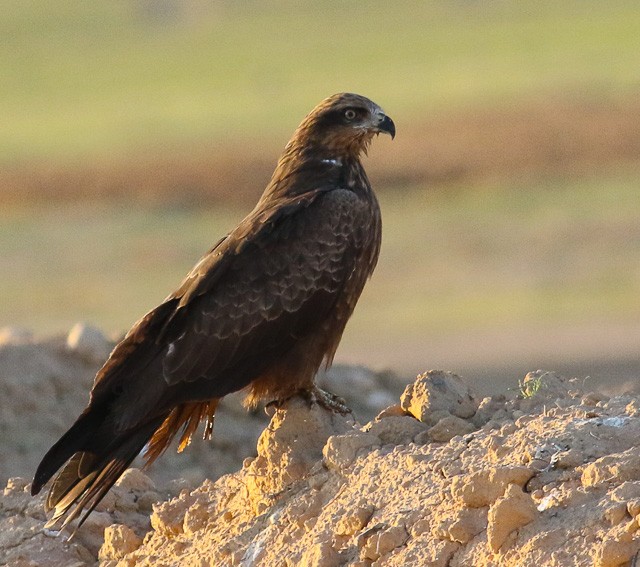
Black Kite is a bird of prey known for its aerial skills and hunting ability. Its striking appearance makes it a fascinating species to observe, and it can often be seen soaring through the skies. Black Kite is highly adaptable and can be found in a variety of habitats, making it a common sight in many areas. 
3. Common Bulbul
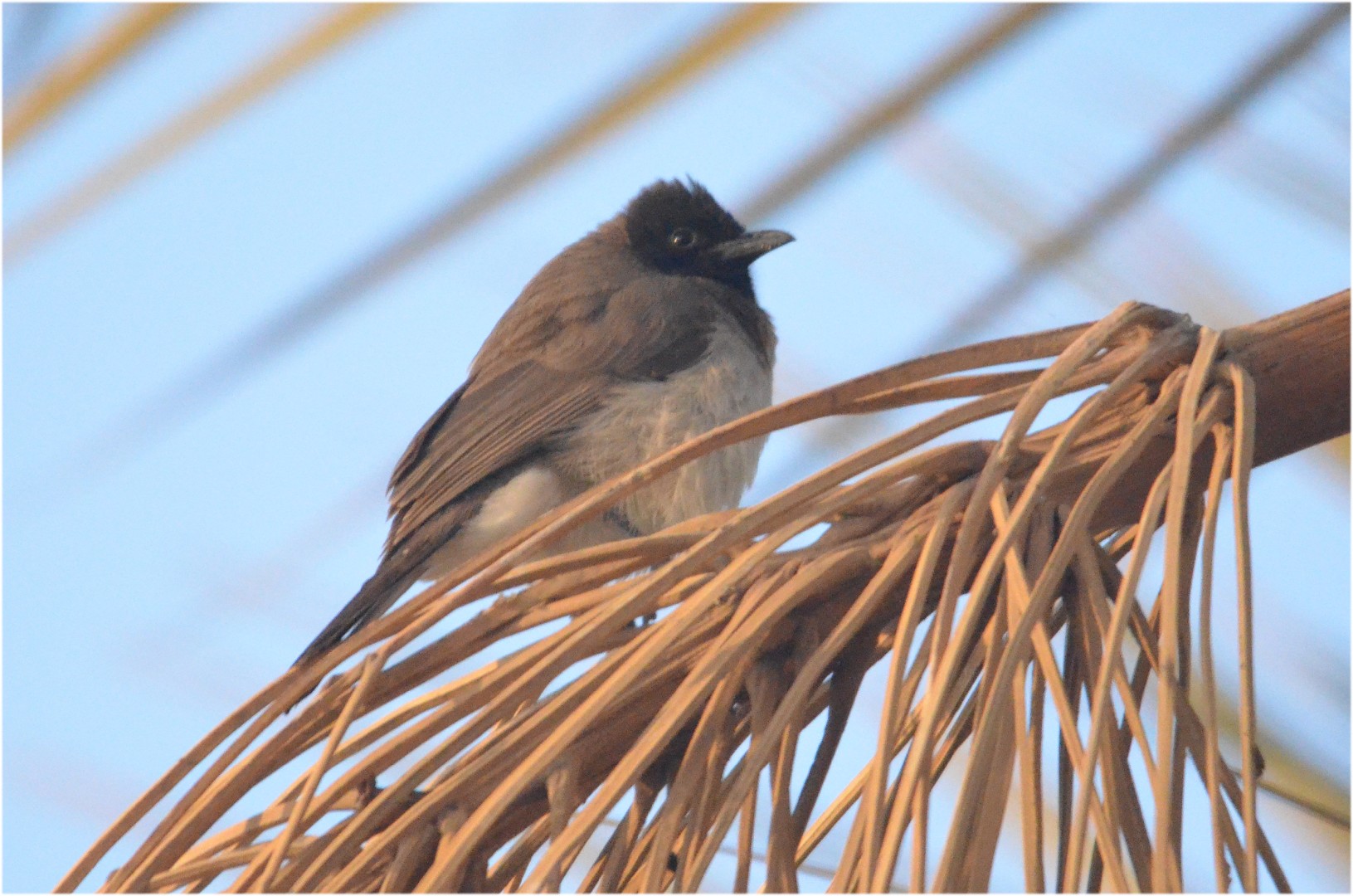
The bill is fairly short and thin, with a slightly downcurving upper mandible. The bill, legs, and feet are black and the eye is dark brown with a dark eye-ring, which is not readily visible. It is about 18 cm in length, with a long tail. It has a dark brown head and upperparts. Sexes are similar in plumage.
4. Bronze Mannikin
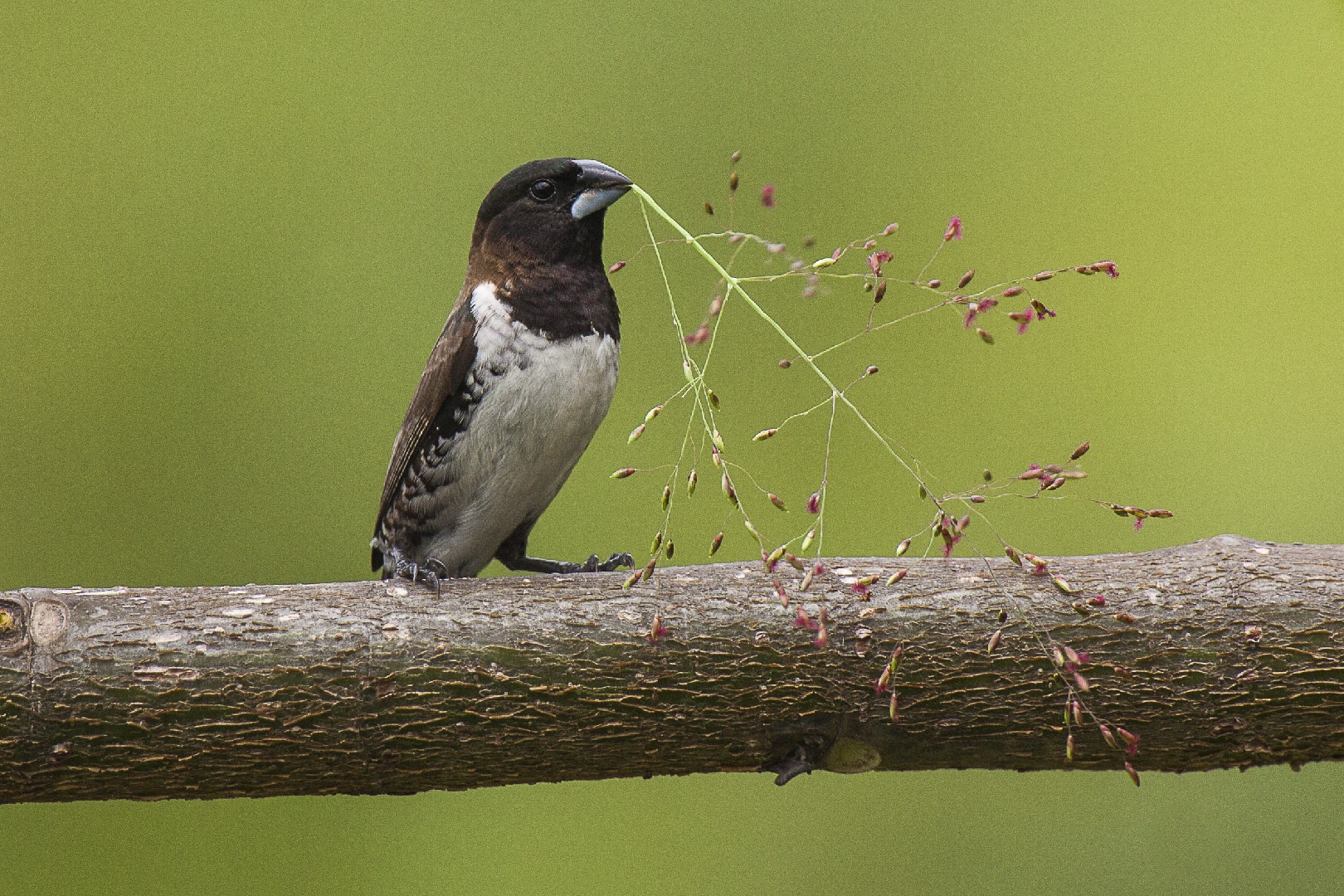
The bronze mannikin is one of the smallest munia species, measuring 9–10 cm in length and weighing 7–12 grams. The adult is a compact bird with a short black tail, and stubby black and pale grey (not distinctly bluish) mandibles. It is black to brownish black on the head, chin, throat and center of the chest, with some purple-green iridescence on the face and sides of the breast. It has greyish brown upper parts and white underparts with irregular barring on the flanks and rump. A small green iridescent patch is present on the outer scapular feathers, besides, especially in the western race, the sides of the lower breast. Wing coverts and remiges are bordered in a paler or warmer tone. The sexes are similar. Immature birds are dun brown above with buff head and underpart plumage. They moult into full adult plumage by age six months, when the males also begin to sing and exhibit breeding behaviour.
5. Bronze Sunbird
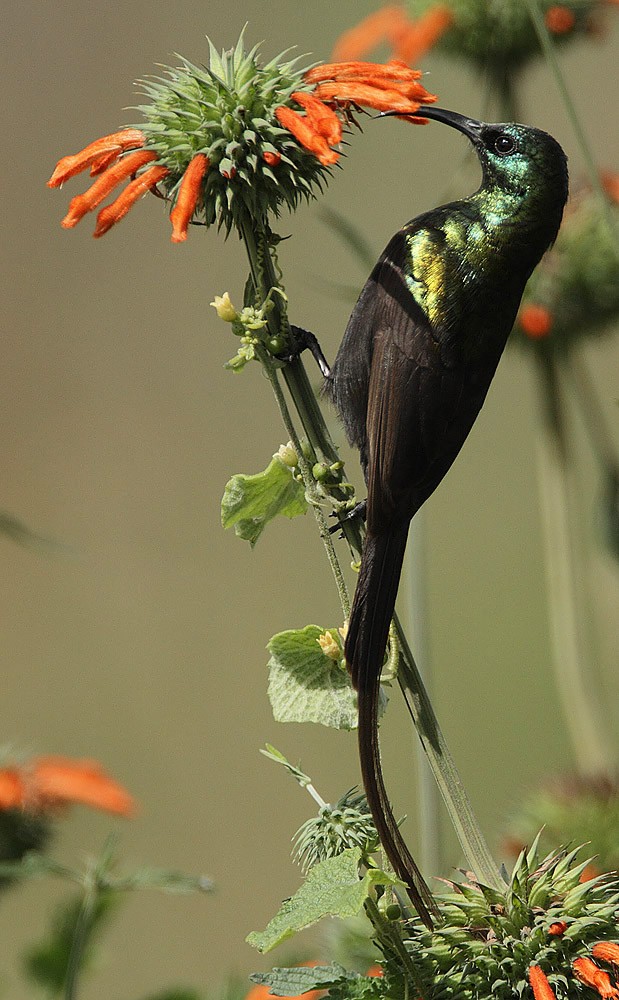
The bronzy sunbird (Nectarinia kilimensis) is a species of bird in the family Nectariniidae. It is found in Angola, Burundi, Democratic Republic of the Congo, Ethiopia, Kenya, Malawi, Mozambique, Rwanda, Tanzania, Uganda, Zambia, and Zimbabwe.
6. Grey Crowned Crane
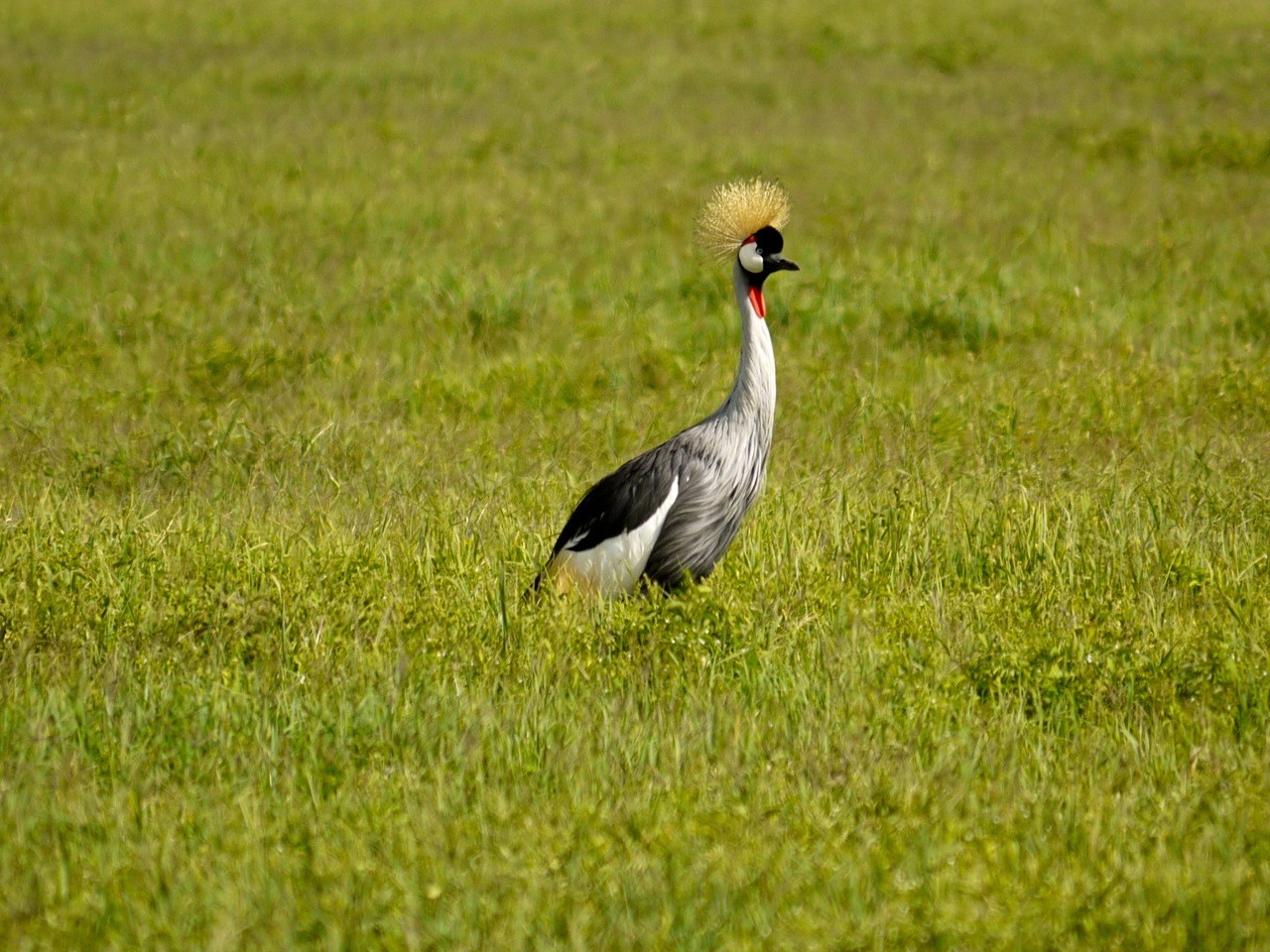
The grey Crowned Crane is a majestic bird known for its striking appearance and elaborate courtship displays. It inhabits grasslands and wetlands in Africa and is omnivorous, feeding on a variety of plants and animals. The species is distinctive for its striking golden crown and elaborate courtship dance, during which pairs leap into the air and make deep, booming calls. The Grey Crowned Crane is an important symbol in many African cultures and is considered a symbol of good luck and longevity.
7. Streaky Seedeater
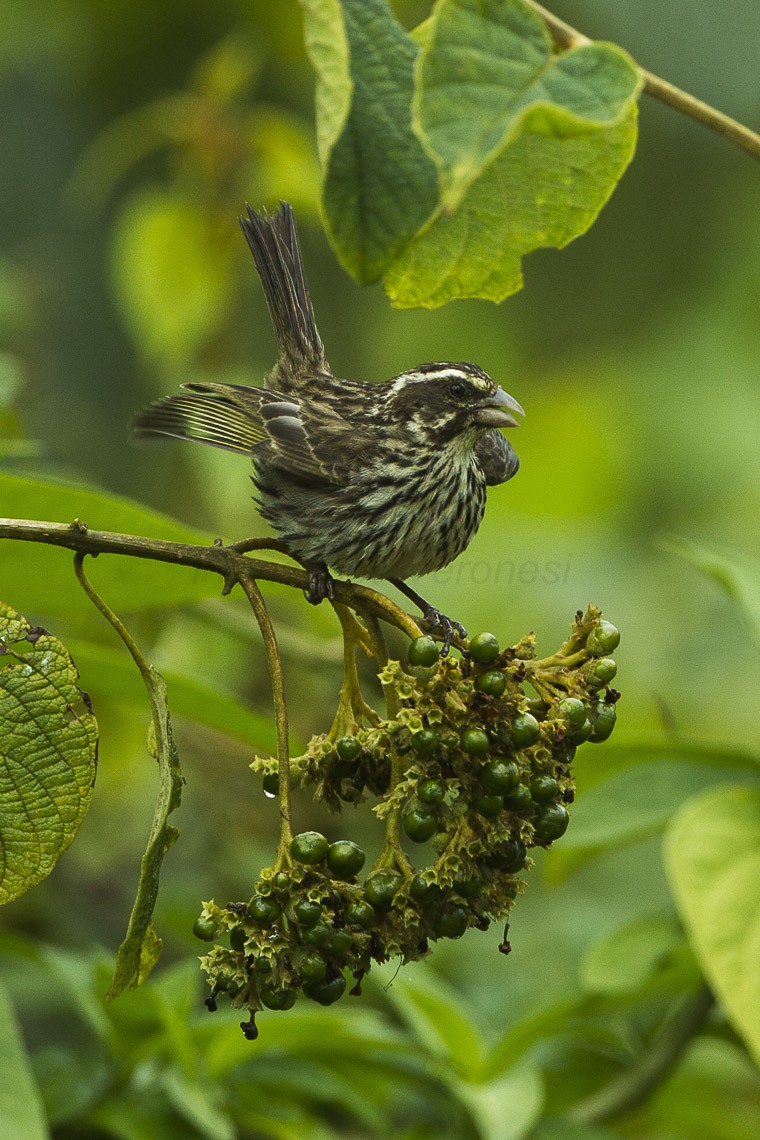
The streaky seedeater (Crithagra striolatus) is a species of finch in the family Fringillidae. It is found in Burundi, Democratic Republic of the Congo, Eritrea, Ethiopia, Kenya, Rwanda, South Sudan, Tanzania, Uganda, and Zambia.
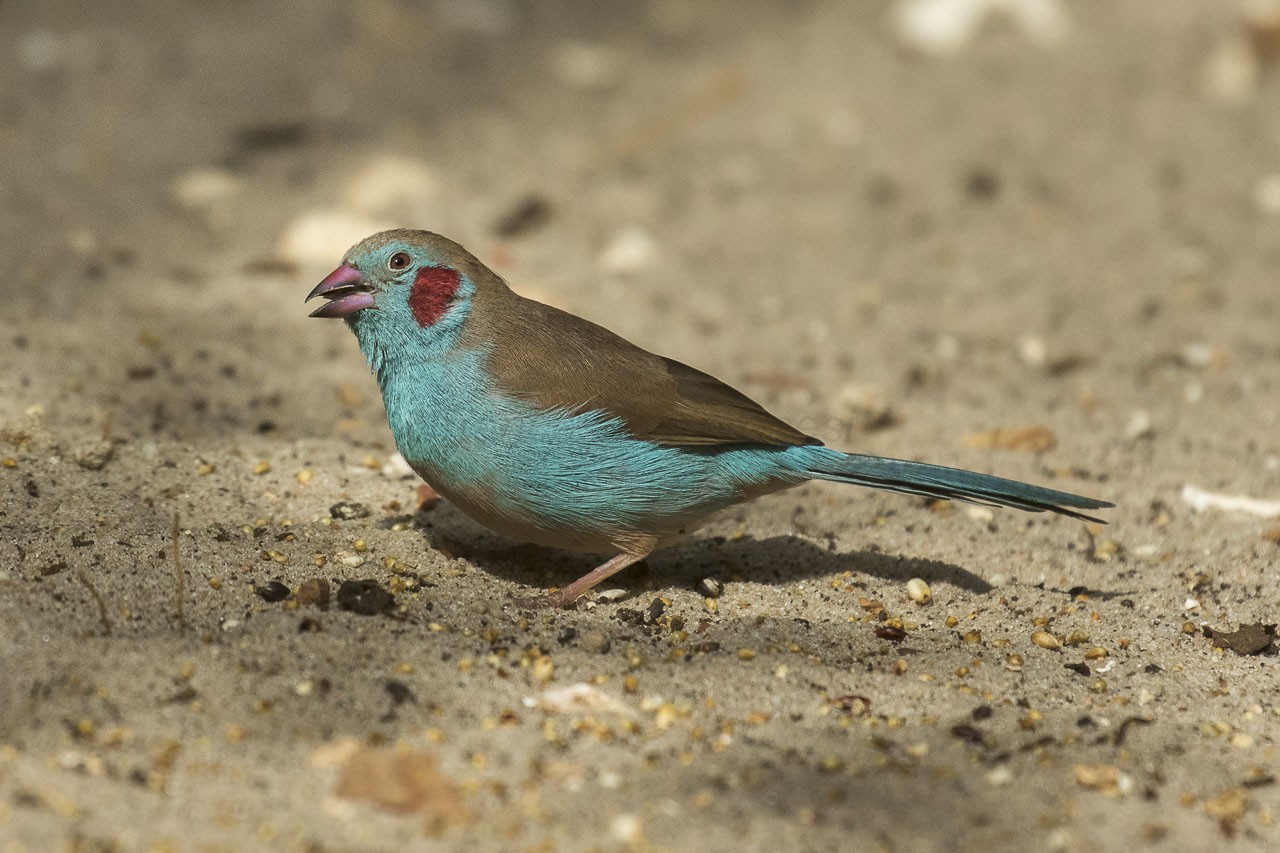
8. Red-cheeked Cordonbleu
Like other members of its genus, the red-cheeked cordon-bleu is a very small finch, measuring only 12.5–13 cm (4.9–5.1 in) in length. It weighs 9.9 g (0.35 oz) on average, with known extremes in wild populations ranging from 8.9–11 g (0.31–0.39 oz). The adult male has uniformly brown upperparts, pale blue breast, flanks and tail and a yellow belly. There is a red patch on each cheek, but this can rarely appear orange or even yellow. Females are similar but duller, and lack the cheek spot. Immature birds are like the female, but with blue restricted to the face and throat.
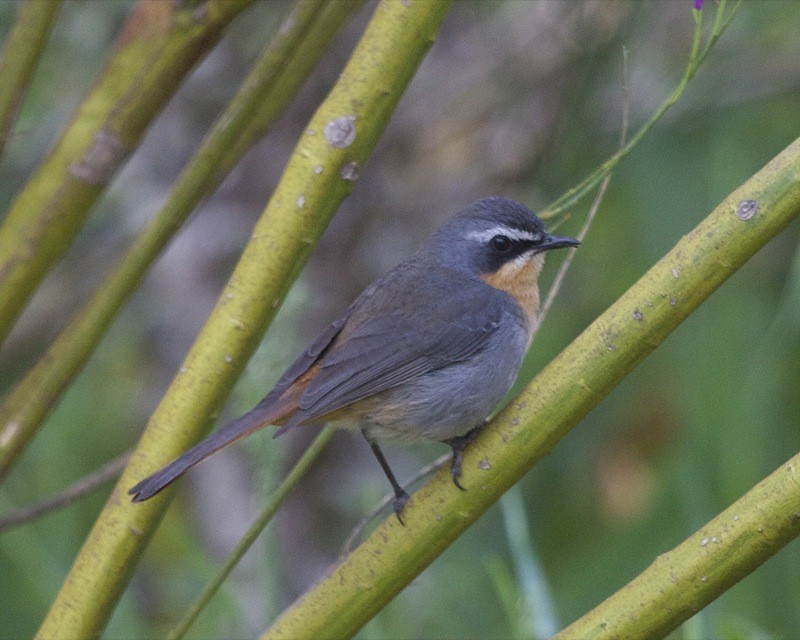
9. Cape Robin-chat
The sexes are similar. The Cape robin-chat measures 16–17 cm from bill tip to tail tip and weighs 28 g. The adult's upper parts are grey, with the mantle and secondary feathers tinged brownish olive. The blackish lores and ear coverts are separated from the crown by a prominent white supercilium. The chin, throat, central breast, rump, upper tail coverts and outer tail feathers are orange. The breast plumage moults to a deeper orange in colour for the non-breeding season. The central tail feathers are greyish-brown, and obscures the bright rufous outer tail feathers when the tail is closed. The belly is pale grey to white, and the undertail coverts buffy. The short, black bill is fairly straight, but with a slightly down-curved upper mandible. The legs and feet are black, and the eye is brown. Juveniles have tails like the adults, but lack a supercilium. They are dark brown above and buff below, heavily marked with buff on the upper parts and grey-brown on the breast. The legs and feet are pinkish grey, and unlike other robin-chats, the soles of their feet are yellow. Immatures are like adults but retain some buff-tipped greater wing coverts.
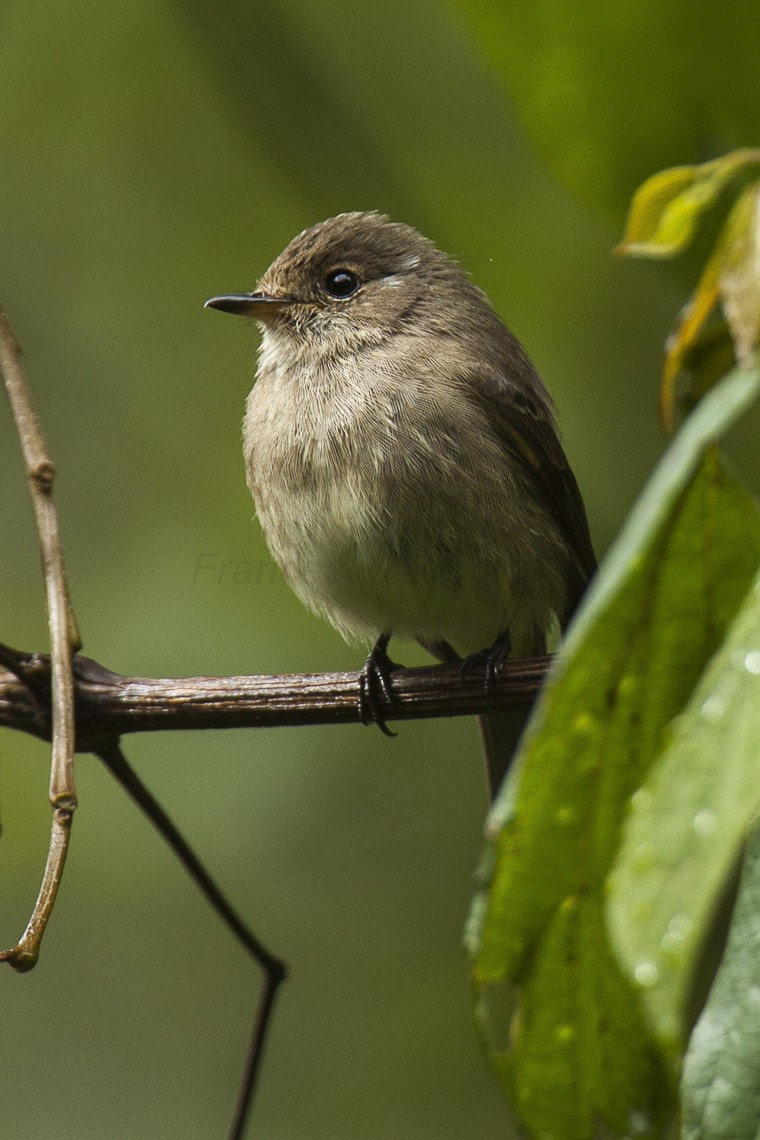
10. African Dusky Flycatcher
The African dusky flycatcher is 13 cm long and weighs around 11 gm. Its upperparts are plain brown, with the only facial marking being an indistinct narrow eye-ring. The chin is plain pale grey, and the rest of the underparts are grey-brown with indistinct streaks. The short, straight, laterally flattened bill is black, the legs and feet are grey, and the eyes are brown. The sexes are similar, but the juvenile is spotted with buff above, and is whitish spotted with brown below. This species is similar to the common migrant, the spotted flycatcher, Muscicapa striata, but is smaller and darker, especially on the underparts, than that species. Spotted flycatcher also has a streaked forehead, a feature not shown by the African dusky flycatcher. The African dusky flycatcher has soft, high-pitched "tzeeet" and tsirit calls.
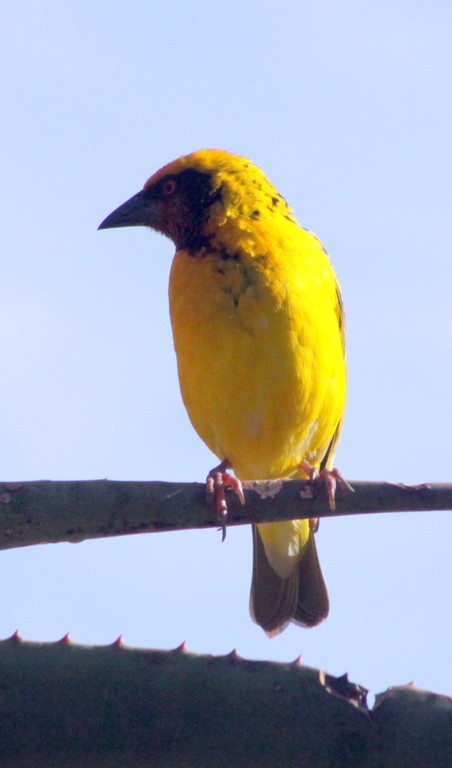
11. Village Weaver
The village weaver is a stocky 15–17 cm bird with a strong conical bill and dark reddish eyes. In the northern part of its range, the breeding male has a black head edged by chestnut (typically most distinct on the nape and chest). Towards the southern part of its range, the amount of black and chestnut diminish, and the breeding males of the southernmost subspecies only have a black face and throat, while the nape and crown are yellow. In all subspecies the breeding male has a black bill, black and yellow upperparts and wings, and yellow underparts. The non-breeding male has a yellow head with an olive crown, grey upperparts and whitish underparts. The wings remain yellow and black. The adult female has streaked olive upperparts, yellow and black wings, and pale yellow underparts. Young birds are like the female but browner on the back.
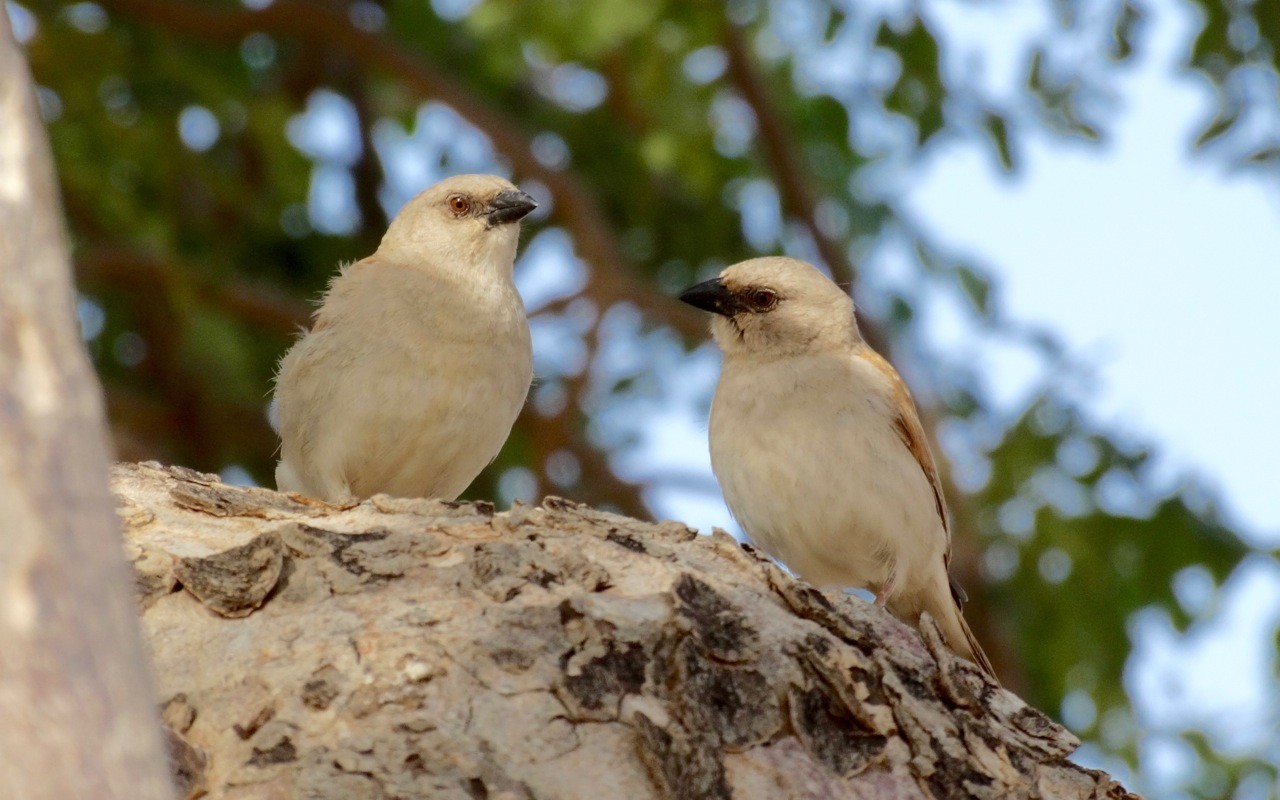
12. Northern Grey-headed Sparrow
The northern grey-headed sparrow (Passer griseus), also known as the grey-headed sparrow, is a species of bird in the sparrow family Passeridae, which is resident in much of tropical Africa. It occurs in a wide range of open habitats, including open woodlands and human habitation, often occupying the same niche as the house sparrow does in Eurasia. The adult northern grey-headed sparrow has a pale grey head with a white moustache stripe, pale brown upperparts, whitish underparts and chestnut wings with a small white shoulder patch. The sexes are similar, but young birds are slightly duller and lack the white wing patch. There are three subspecies, differing in plumage tone, especially with regard to the darkness of the head. This sparrow is mainly resident in its range, but there is some seasonal movement, and flocks of up to 50 birds form outside the breeding season. It builds a cup nest in trees, thatch, or old nests of other birds; 2–4 eggs are laid. This species feeds principally on seeds and grain, like other sparrows, but will readily take insects including termites, especially when feeding young. The calls include cheeps and chirps, and the typical sparrow churring alarm call. The northern grey-headed sparrow is replaced in eastern and southern Africa by very similar birds that are sometimes considered races of this species: Swainson's sparrow, the parrot-billed sparrow, the Swahili sparrow, and the southern grey-headed sparrow. According to phylogenetic studies by Arnaiz-Villena et al., this species is indeed related to the other grey-headed sparrows, and these species together are most closely related within genus Passer to the house sparrow and allies.
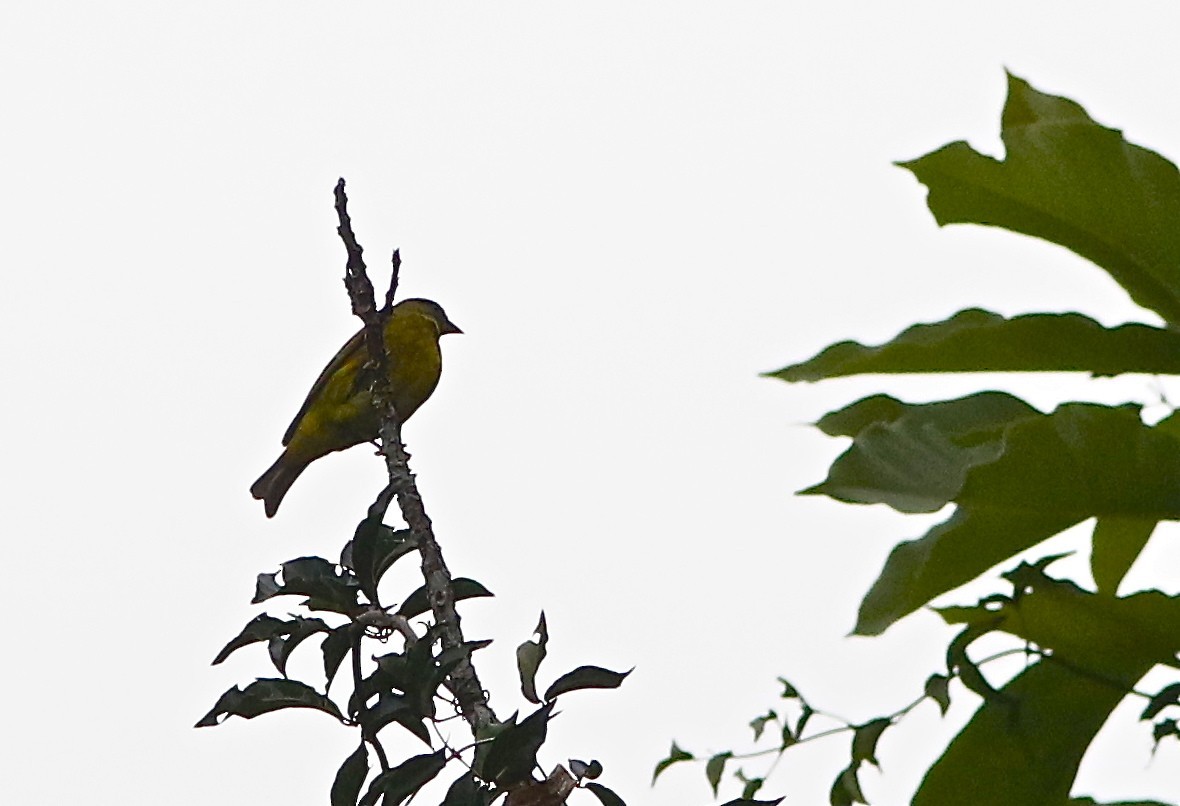
13. Southern Citril
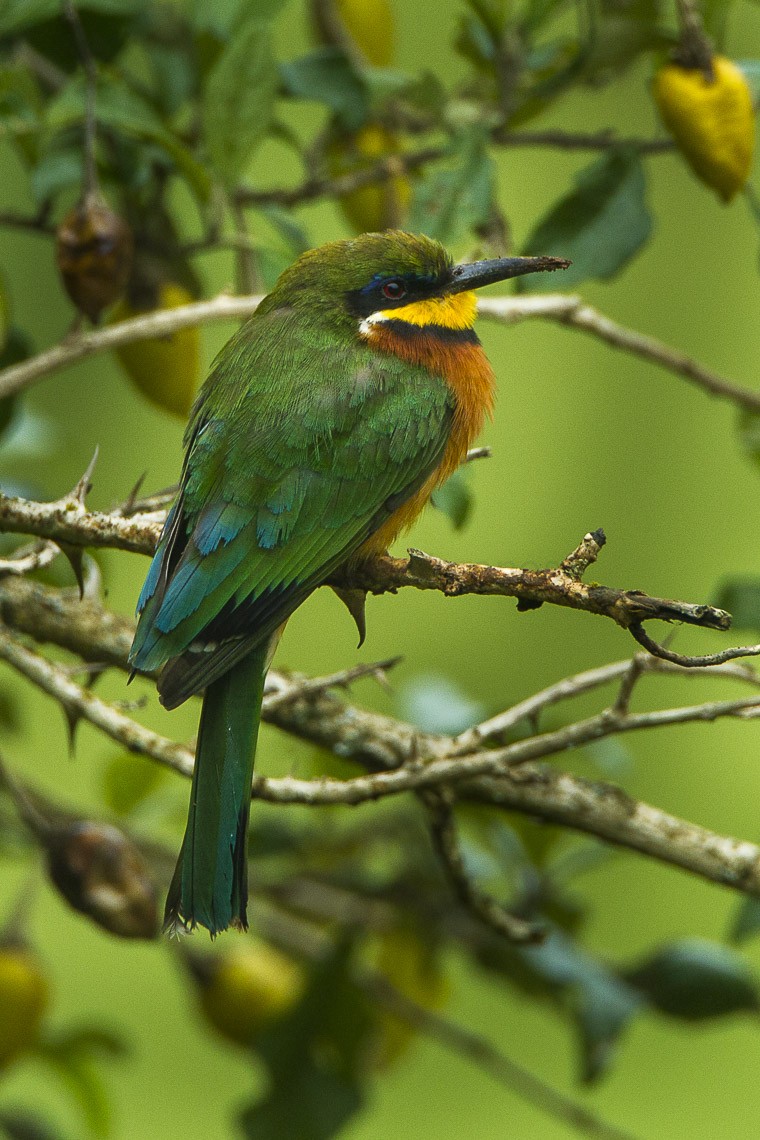
14. Cinnamon-chested Bee-eater
The sexes are alike in the cinnamon-chested bee-eater. They have bright green heads, upper parts, and tails; their chins and throats are yellow and outlined in black, with a white extension to the side; their breasts are cinnamon-brown, darkening towards the belly. When perched, their stance is upright with the tail pointing downward. The tail is blackish with an orange base and white tip when seen from the front, while from the back it is mainly green, with black edges visible when it is flared. This bird can be distinguished from the somewhat similar little bee-eater by their larger size, darker colouring, white cheek patches, and the upland habitat where they are found.
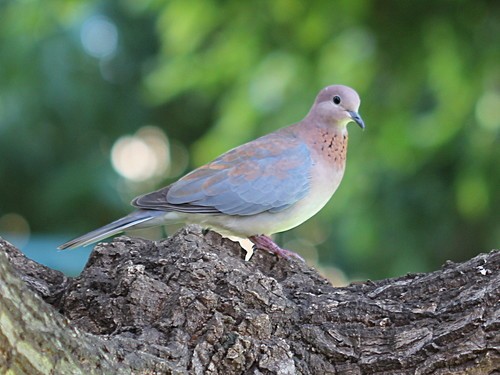
15. Laughing Dove
The laughing Dove is a small dove named after its distinctive laugh-like vocalization. This ground-feeding, non-migratory bird is a regular inhabitant of man-altered environments such as villages, gardens, and orchards. In cities, these doves tend to become quite confident. They pair for life and live in very small communities.
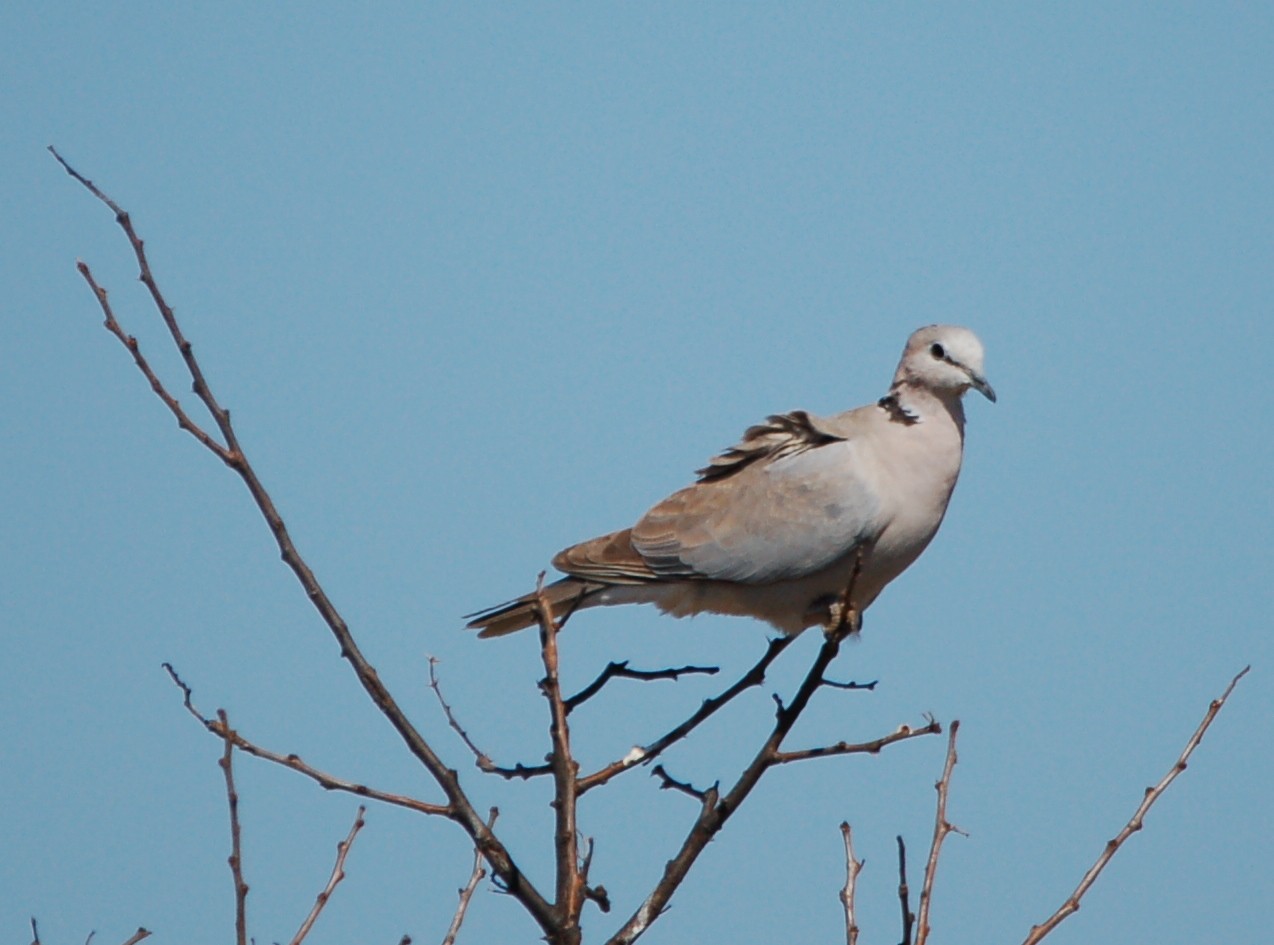
16. Ring-necked Dove
Their body feathers are darkest on the upper side, where they are coloured in dull tones of grey and brown, with shades of lavender on the nape. It is paler below, where a tint of pinkish lavender is usually present. The lower belly and crissum (the undertail coverts surrounding the cloaca) is white. As with related species, they have white fringes and conspicuous white tips to the otherwise slate grey tail feathers. The tail pattern is particularly noticeable during the display flight. Individual plumage variation is high, with some light and others almost sooty. Males and females look alike, although the males are slightly bigger. They measure 25–26.5 cm (9.8–10.4 in) in length and weigh 92–188 g (3.2–6.6 oz). The eyes are almost black, the bill is black and the feet are dark purple. An immature is duller and lacks the semi-collar of an adult. It also has buff edges to all the upper part and wing covert feathers, while the plumage below is broadly edged greyish-white.
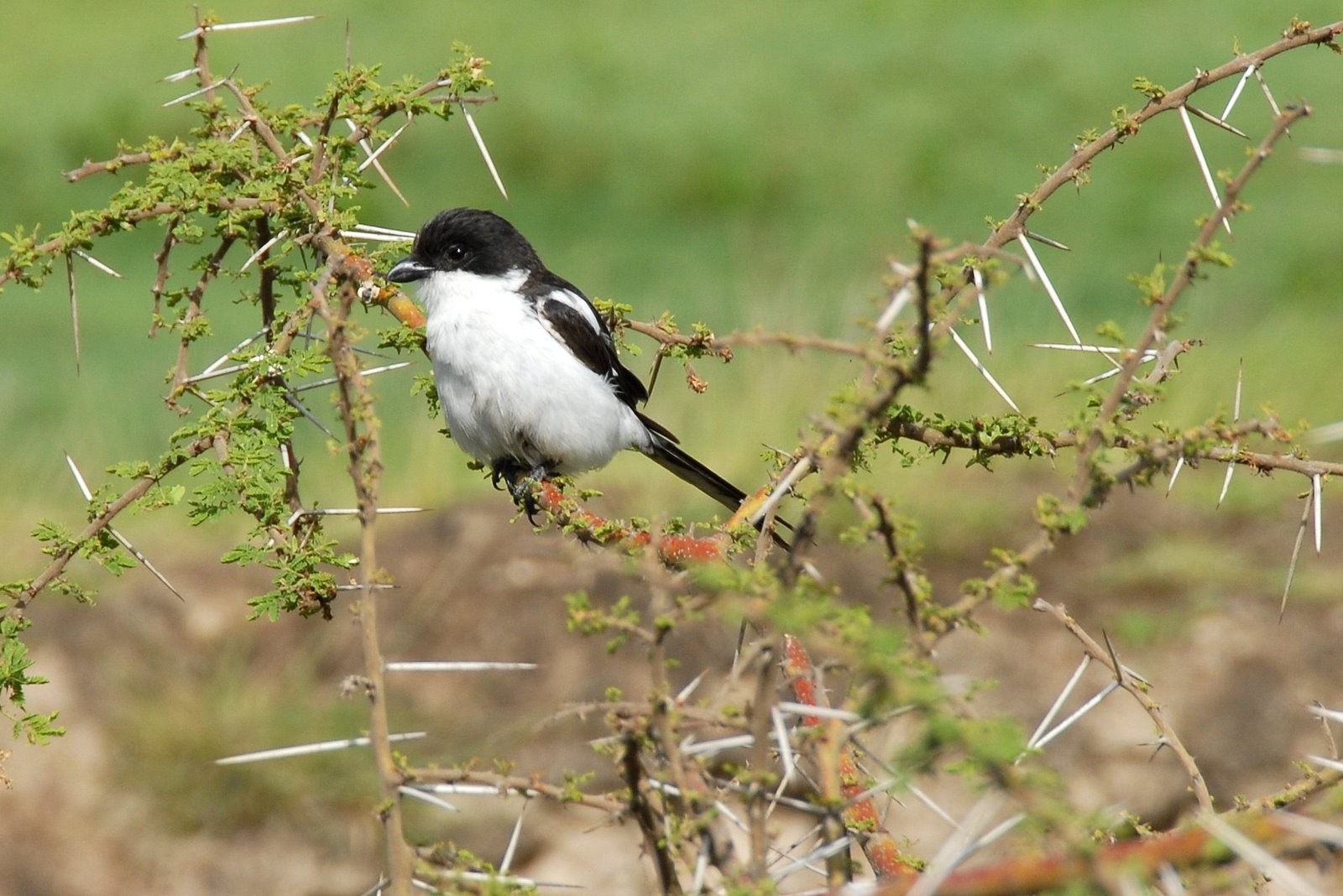
17. Northern Fiscal
The northern fiscal (Lanius humeralis) is a member of the shrike family found through most of Sub-Saharan Africa. It used to be grouped with the southern fiscal (Lanius collaris). Together they were called the common fiscal.
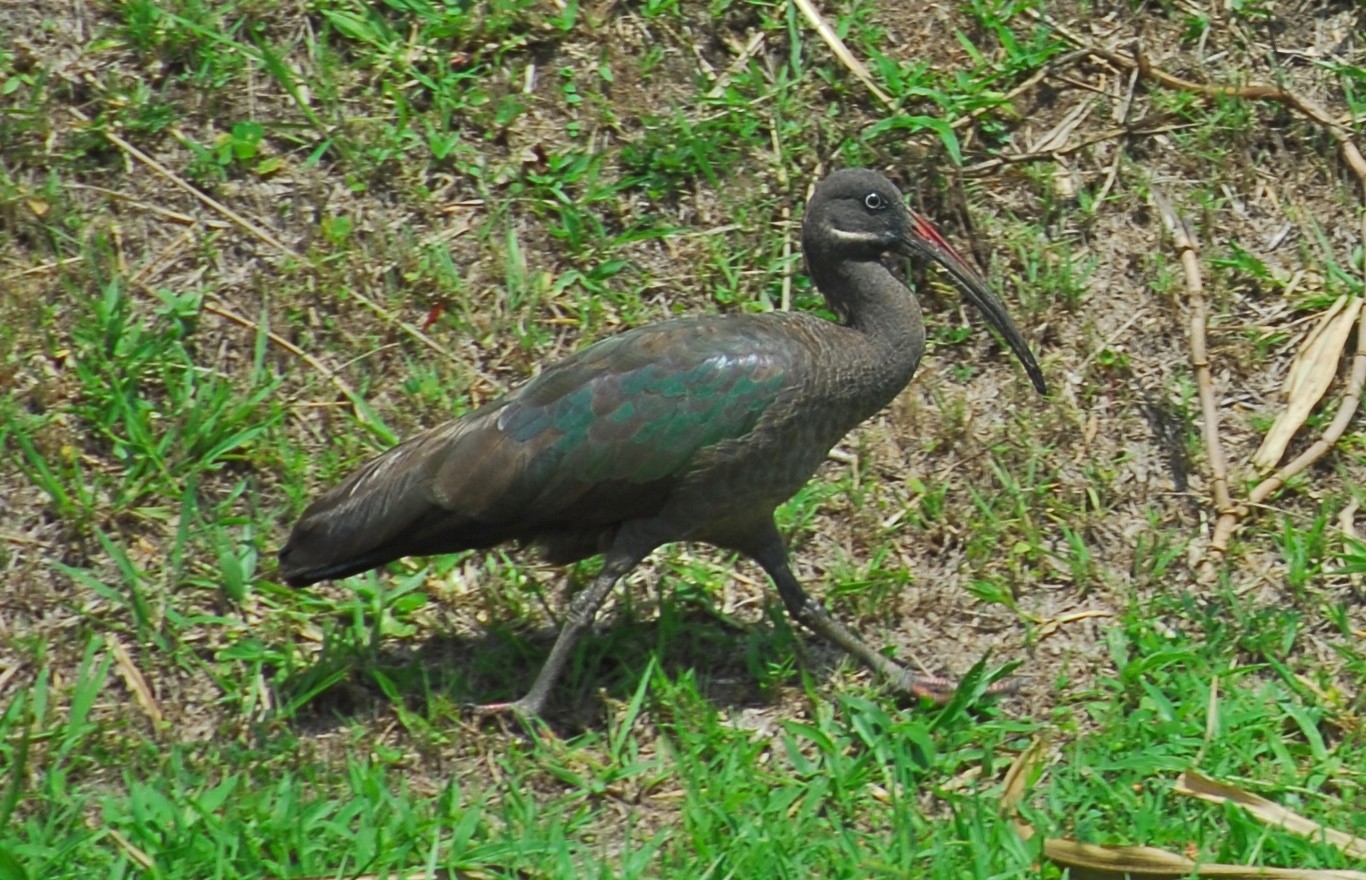
18. Hadada Ibis
The hadeda is a large (about 76 cm long), grey-to-partly brown species of ibis. Males and females are alike in plumage. It has a narrow, white, roughly horizontal stripe across its cheeks. This is sometimes called the "moustache" though it does not reach the mouth corners. The plumage over the wings has an iridescent purple sheen produced by optical microstructures within the feathers. The bird has blackish legs and a large grey-to-black bill but during the breeding season it has a red culmen on the basal half of the upper mandible. The upper surfaces of the toes are of a similar red during the onset of breeding. The wings are powerful and broad, enabling quick take-offs and easy manoeuvring through dense tree cover. It has an extremely loud and distinctive "haa-haa-haa-de-dah" call—hence the onomatopoetic name. The call is often heard when the birds are flying or are startled, or when the birds communicate socially, for example early in the morning in residential suburbs. While roosting they produce a single loud "haaaa". When foraging, their contact call is a low growl similar to that made by a young puppy.
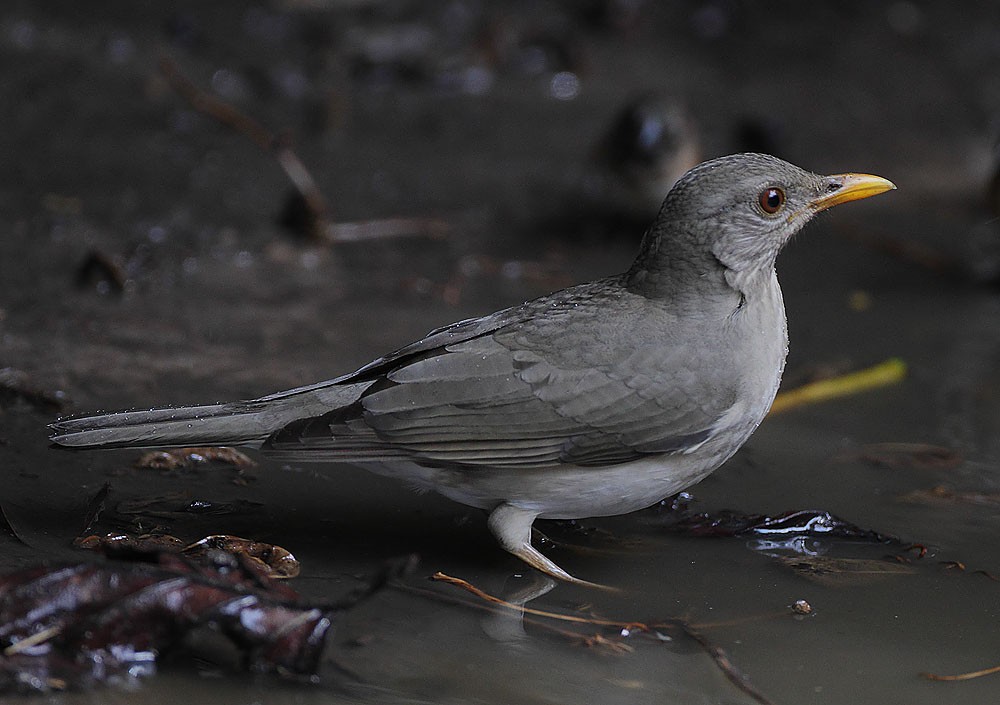
19. African Thrush
The African Thrush has dark olive-grey upperparts. The underparts show a whitish evenly brown- streaked side throat, the breast is greyish brown and the flanks are pale buff-orange with this colour not extending on to the lower breast, the belly and vent are white. It has a yellow-orange bill. It weighs 46–78g and measures 21–23 cm in length.
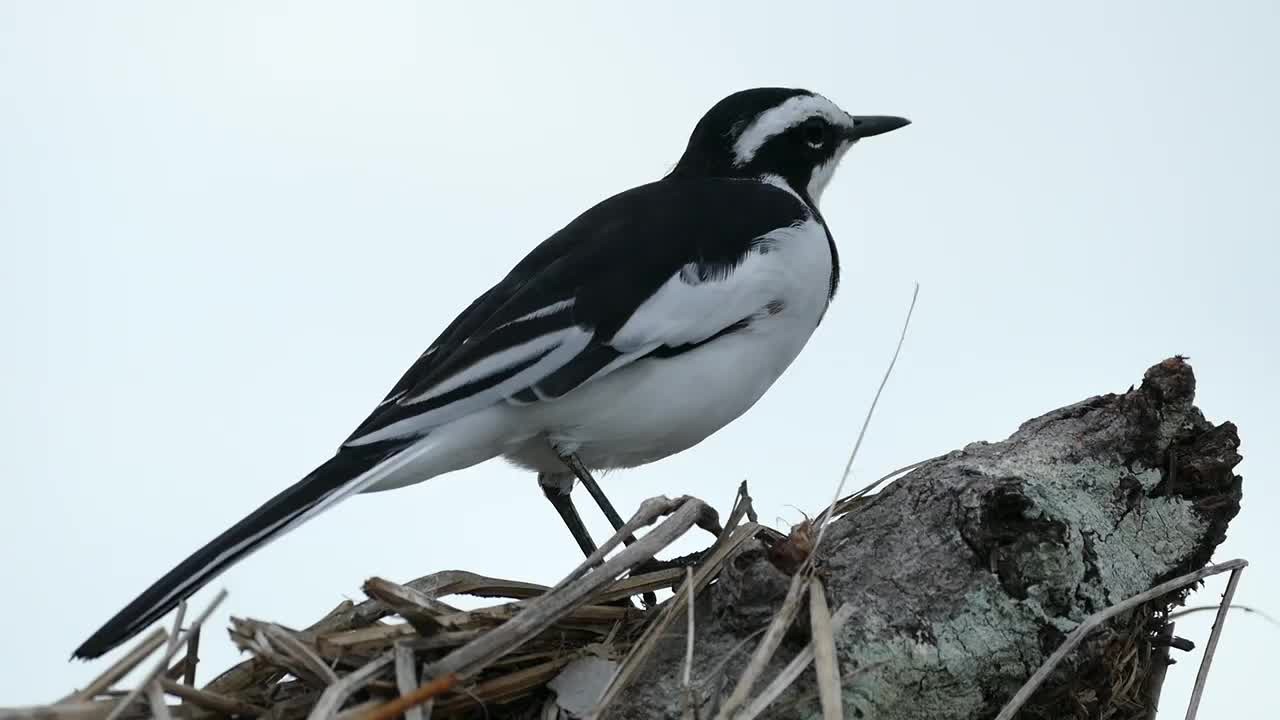
20. African Pied Wagtail
A striking black and white wagtail with black upperparts contrasting with white underparts, a white supercilium and a white patch in the folded wing. Juvenile birds are greyer, while birds of the nominate subspecies show grey flanks. They are 20 cm (7.9 in) long.