



Top 20 Most Common Bird in Pallisa
Located in Eastern Uganda, Pallisa nurtures a striking diversity of avian species within its equatorial climate and acacia-dominated savannahs. The 20 most common birds exhibit captivating features, from flamboyant plumage to innovative survival strategies, testament to the region's rich biodiversity. These adaptations allow them to thrive in the fascinating yet challenging environment of Pallisa.

Most Common Bird
1. African Palm Swift
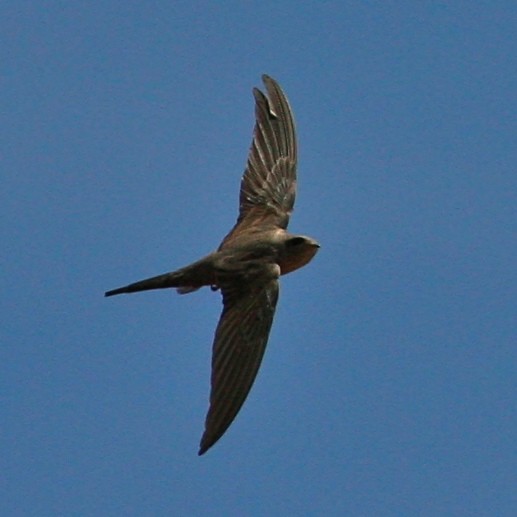
This 16 cm long species is mainly pale brown in colour. It has long swept-back wings that resemble a crescent or a boomerang. The body is slender, and the tail is long and deeply forked, although it is usually held closed. The call is a loud, shrill scream. Sexes are similar, and young birds differ mainly in their shorter tails. Palm swifts have very short legs which they use only for clinging to vertical surfaces, since swifts never settle voluntarily on the ground. 
2. Bronze Mannikin
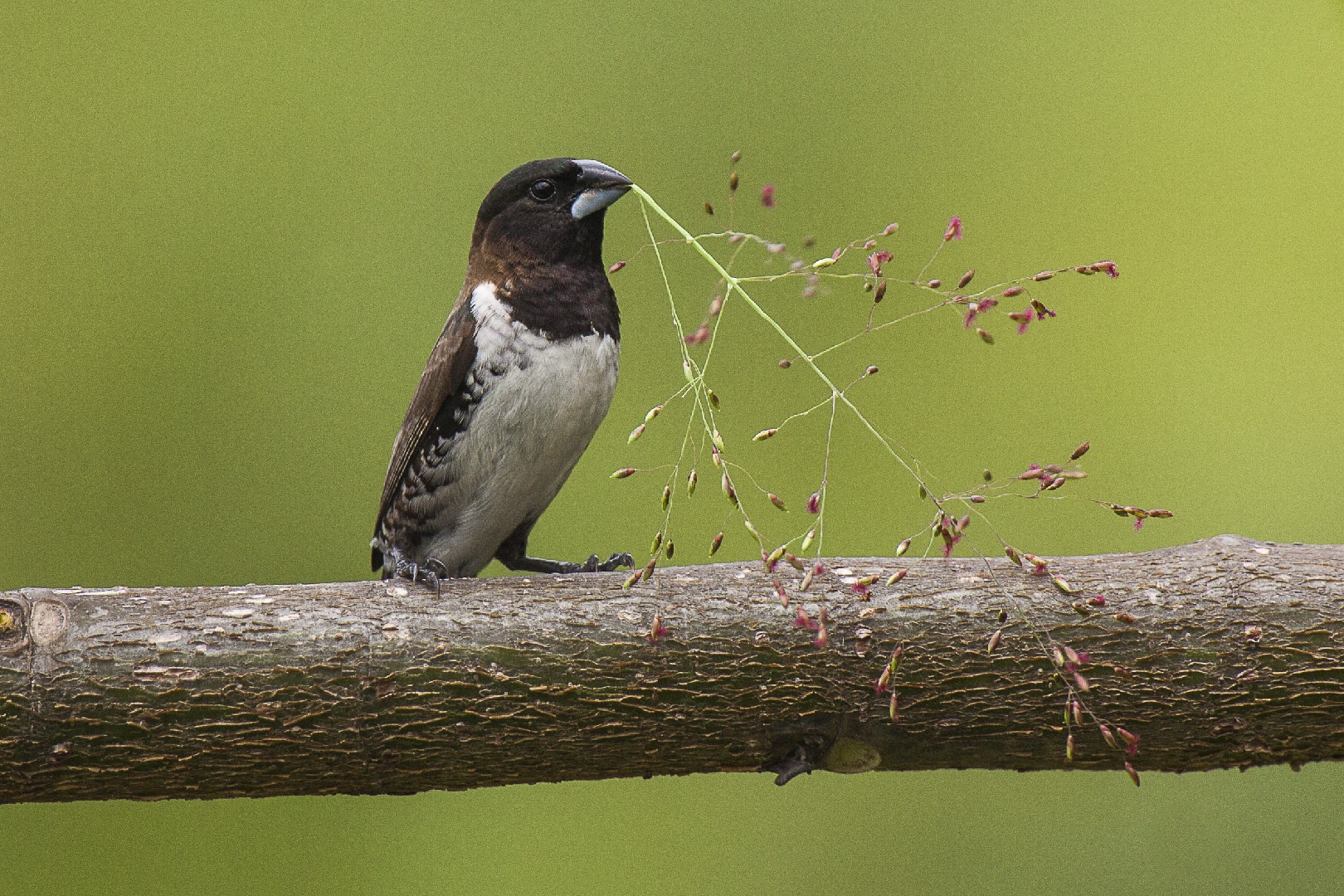
The bronze mannikin is one of the smallest munia species, measuring 9–10 cm in length and weighing 7–12 grams. The adult is a compact bird with a short black tail, and stubby black and pale grey (not distinctly bluish) mandibles. It is black to brownish black on the head, chin, throat and center of the chest, with some purple-green iridescence on the face and sides of the breast. It has greyish brown upper parts and white underparts with irregular barring on the flanks and rump. A small green iridescent patch is present on the outer scapular feathers, besides, especially in the western race, the sides of the lower breast. Wing coverts and remiges are bordered in a paler or warmer tone. The sexes are similar. Immature birds are dun brown above with buff head and underpart plumage. They moult into full adult plumage by age six months, when the males also begin to sing and exhibit breeding behaviour.
3. African Green Pigeon
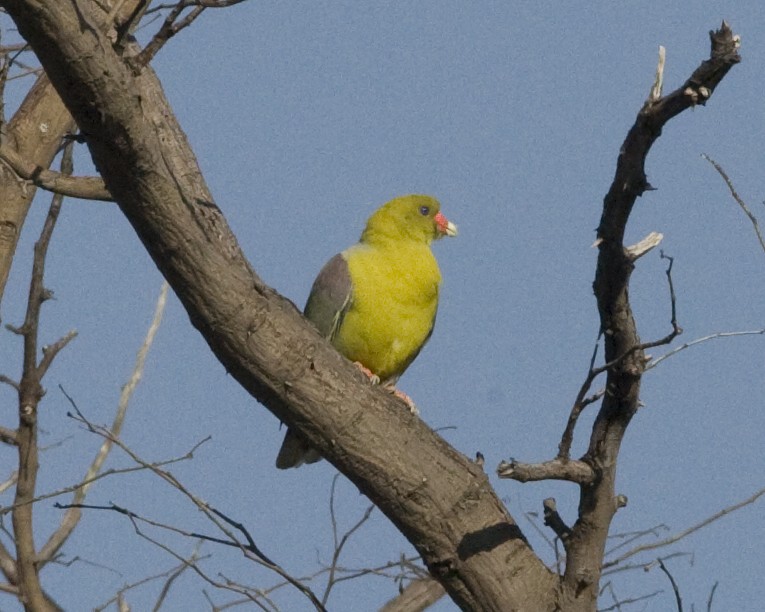
Adult African green pigeons have maroon patches on the top of their wings and the juveniles have an olive color. The upperparts are grayish-green to yellowish-green; the thighs are yellow; and the feet and bill are red with the bill having a white tip
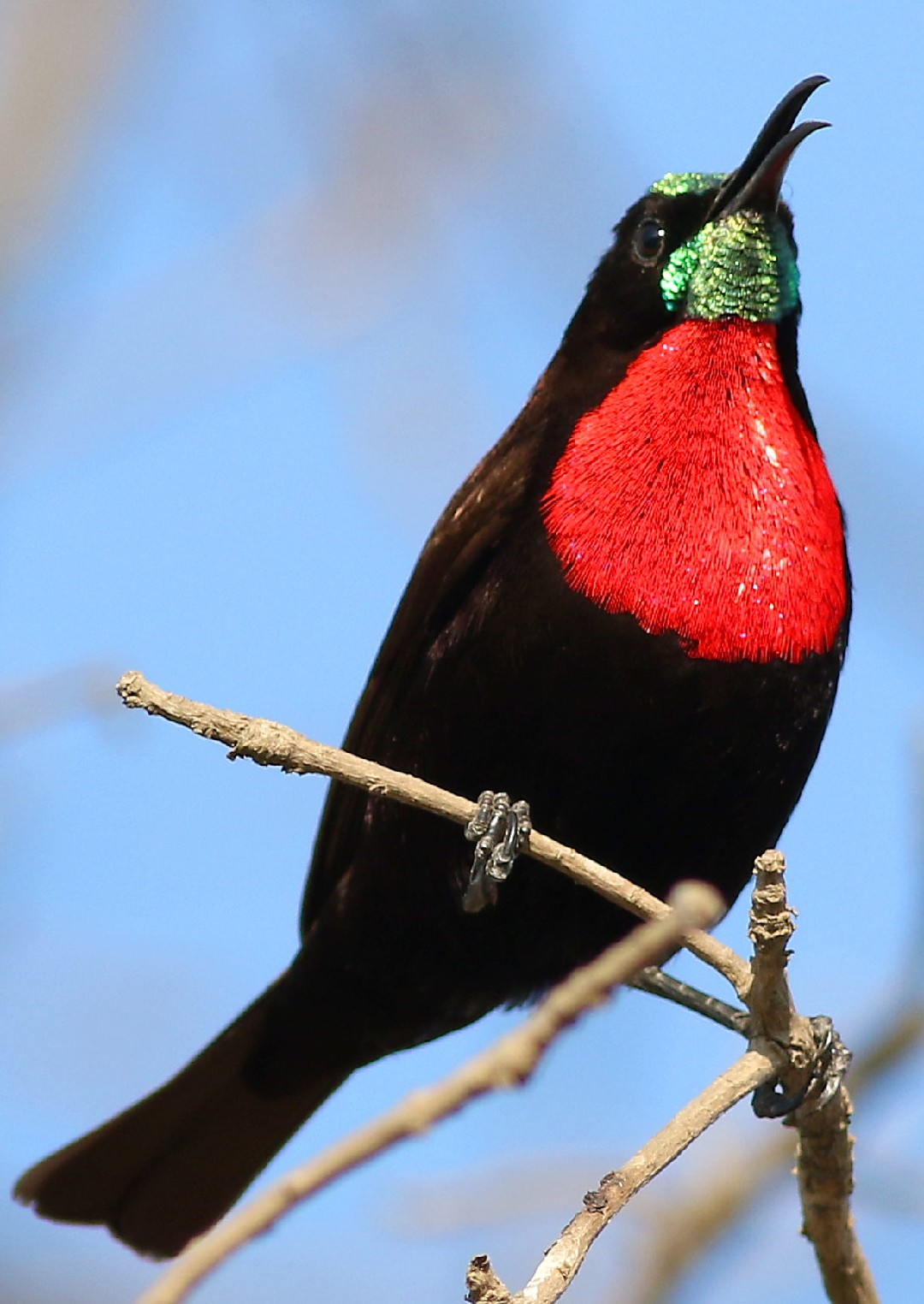
4. Scarlet-chested Sunbird
The scarlet-chested sunbird (Chalcomitra senegalensis) is a species of bird in the family Nectariniidae. It is found in Angola, Benin, Botswana, Burkina Faso, Burundi, Cameroon, Central African Republic, Chad, Democratic Republic of the Congo, Ivory Coast, Eritrea, Ethiopia, Gambia, Ghana, Guinea, Guinea-Bissau, Kenya, Malawi, Mali, Mauritania, Mozambique, Namibia, Niger, Nigeria, Rwanda, Senegal, Sierra Leone, South Africa, Sudan, Swaziland, Tanzania, Togo, Uganda, Zambia, and Zimbabwe.
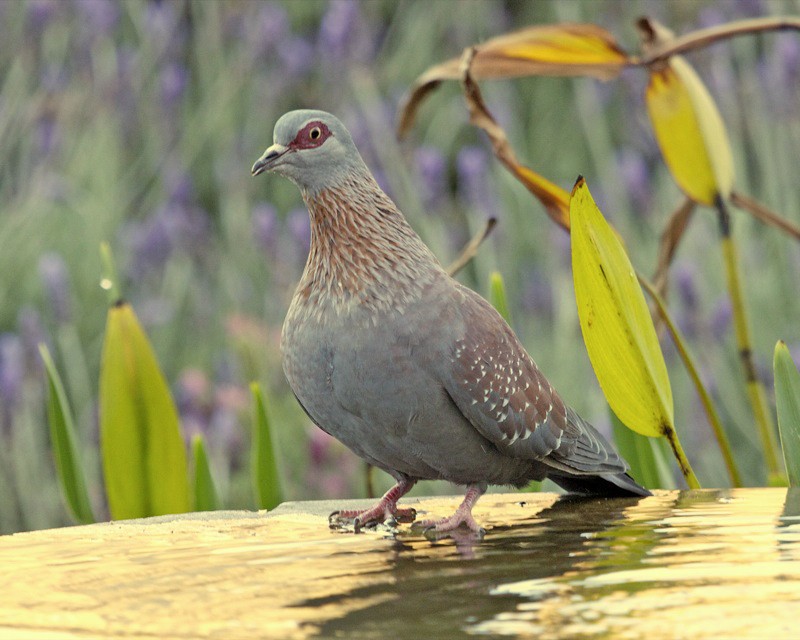
5. Speckled Pigeon
This is a large pigeon at 41 cm in length. Its back and wings are rufous, the latter heavily speckled with white spots. The rest of the upperparts and underparts are blue-grey, and the head is grey with red patches around the eye. The neck is brownish, streaked with white, and the legs are red. Sexes are similar, but immatures are browner than adults and lack the red eye patches. The call is a loud doo-doo-doo.
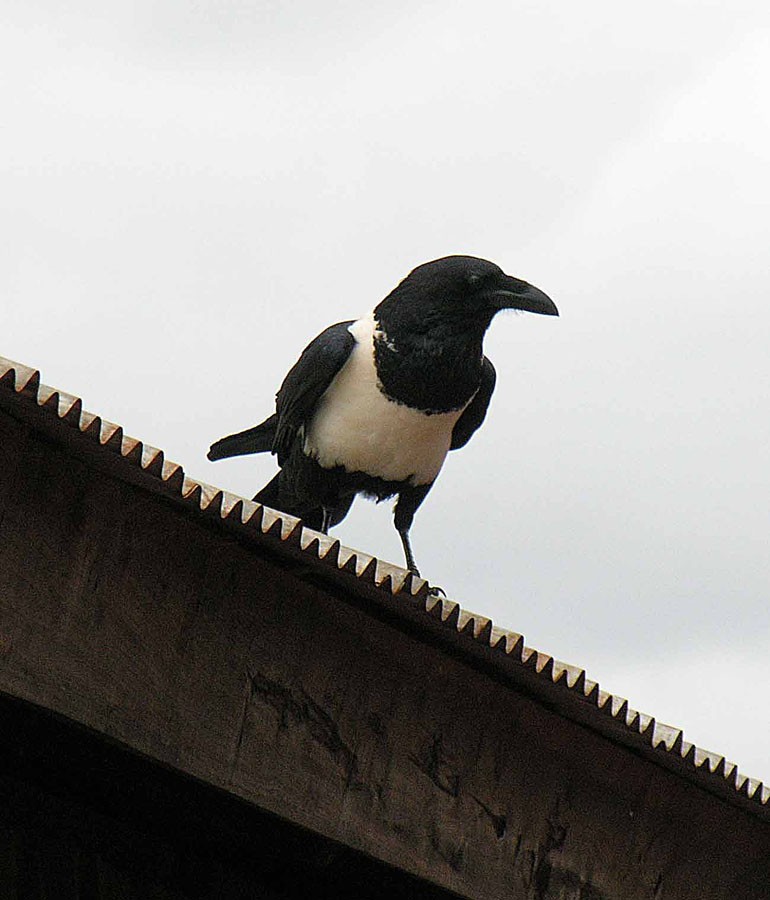
6. Pied Crow
It is approximately the size of the European carrion crow or a little larger (46–50 cm in length) but has a proportionately larger bill, slightly longer tail and wings, and longer legs. As its name suggests, its glossy black head and neck are interrupted by a large area of white feathering from the shoulders down to the lower breast. The tail, bill and wings are black too. The eyes are dark brown. The white plumage of immature birds is often mixed with black. It resembles the white-necked and thick-billed ravens but has a much smaller bill.
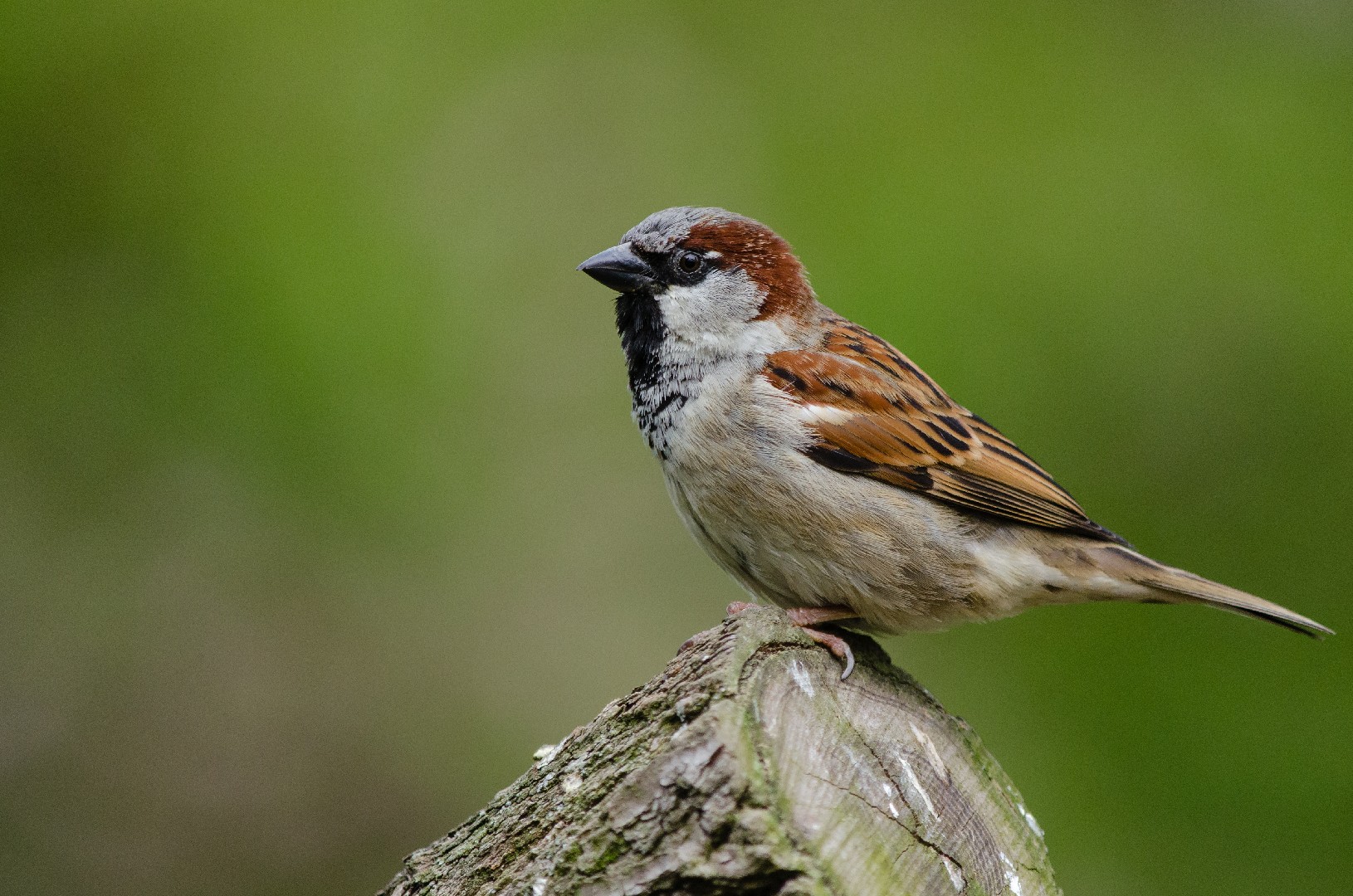
7. House Sparrow
Just as its name implies, the little house Sparrow socializes with humans more than any other bird species. Able to adapt and thrive in almost any habitat, excluding the extremes such as deserts and mountain peaks, this species was once restricted only to North Africa and Eurasia but now is found across the globe. Unfortunately, this opportunistic eater is not completely harmless—it can cause considerable damage to crops.
8. Broad-billed Roller
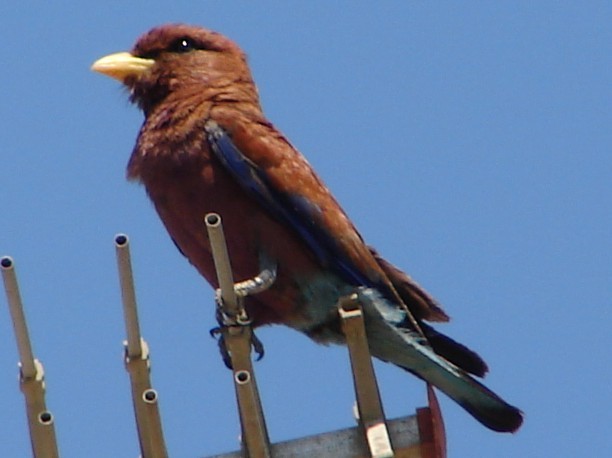
The broad-billed roller is 29–30 cm in length. It has a warm back and head, lilac foreneck and breast, with the rest of the plumage mainly brown. The broad bill is bright yellow. Sexes are similar, but the juvenile is a drabber version of the adult, with a pale breast. The broad-billed roller is striking in its strong direct flight, with the brilliant blues of the wings and tail contrasting with the brown back. The call of the broad-billed roller is a snarling k-k-k-k-k-r-r-r-r-r sound.
9. Red-cheeked Cordonbleu
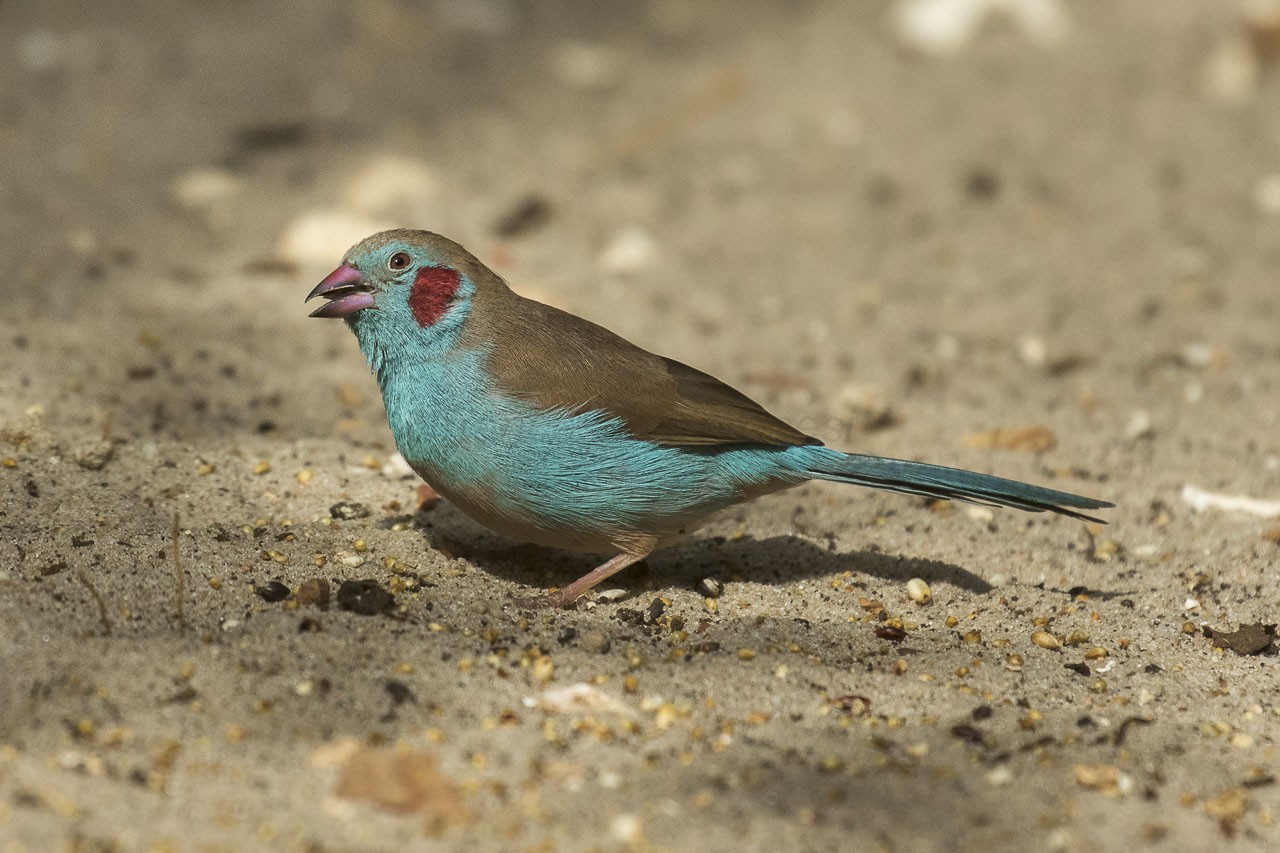
Like other members of its genus, the red-cheeked cordon-bleu is a very small finch, measuring only 12.5–13 cm (4.9–5.1 in) in length. It weighs 9.9 g (0.35 oz) on average, with known extremes in wild populations ranging from 8.9–11 g (0.31–0.39 oz). The adult male has uniformly brown upperparts, pale blue breast, flanks and tail and a yellow belly. There is a red patch on each cheek, but this can rarely appear orange or even yellow. Females are similar but duller, and lack the cheek spot. Immature birds are like the female, but with blue restricted to the face and throat.
10. Common Bulbul
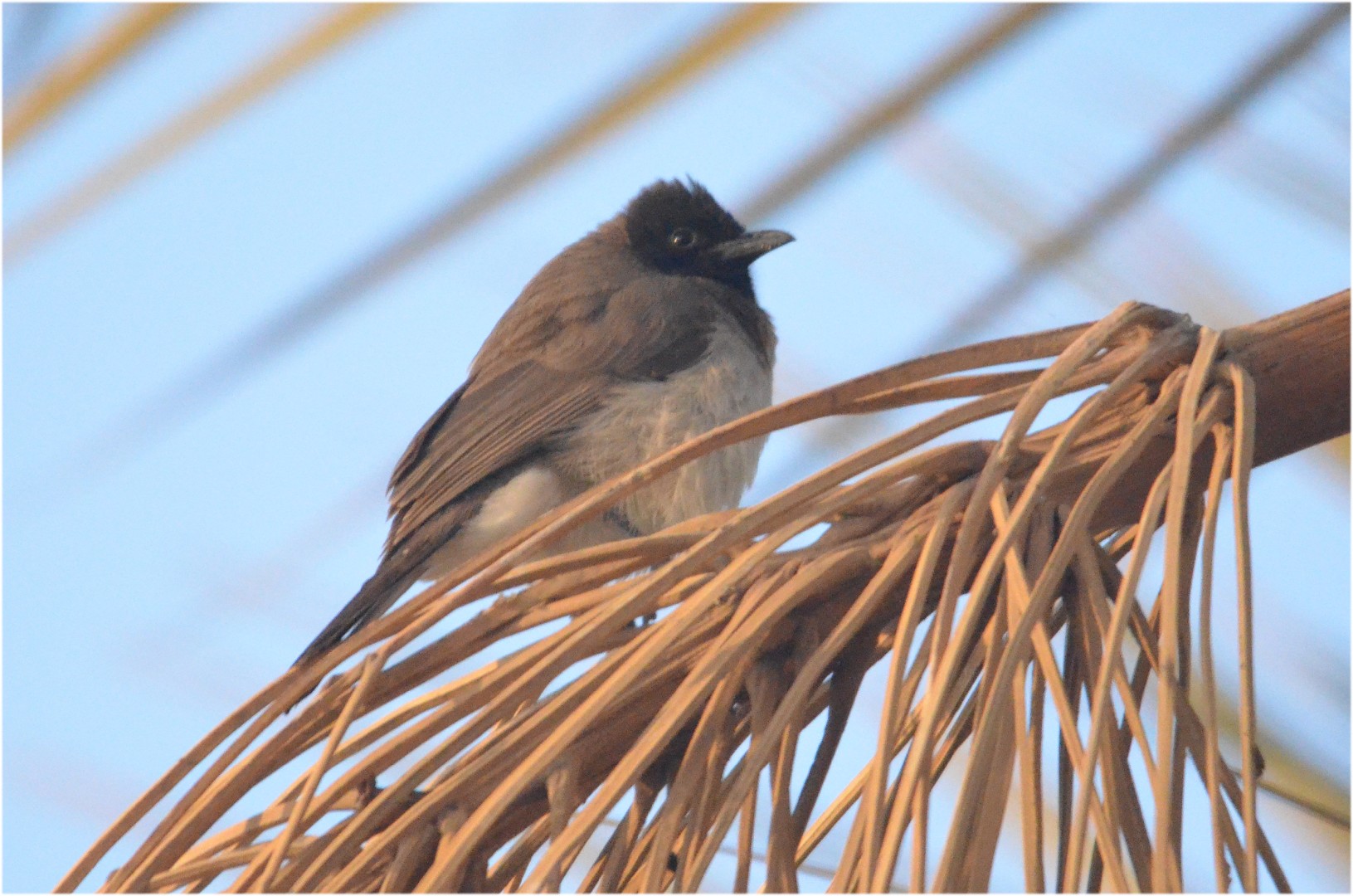
The bill is fairly short and thin, with a slightly downcurving upper mandible. The bill, legs, and feet are black and the eye is dark brown with a dark eye-ring, which is not readily visible. It is about 18 cm in length, with a long tail. It has a dark brown head and upperparts. Sexes are similar in plumage.
11. African Spoonbill
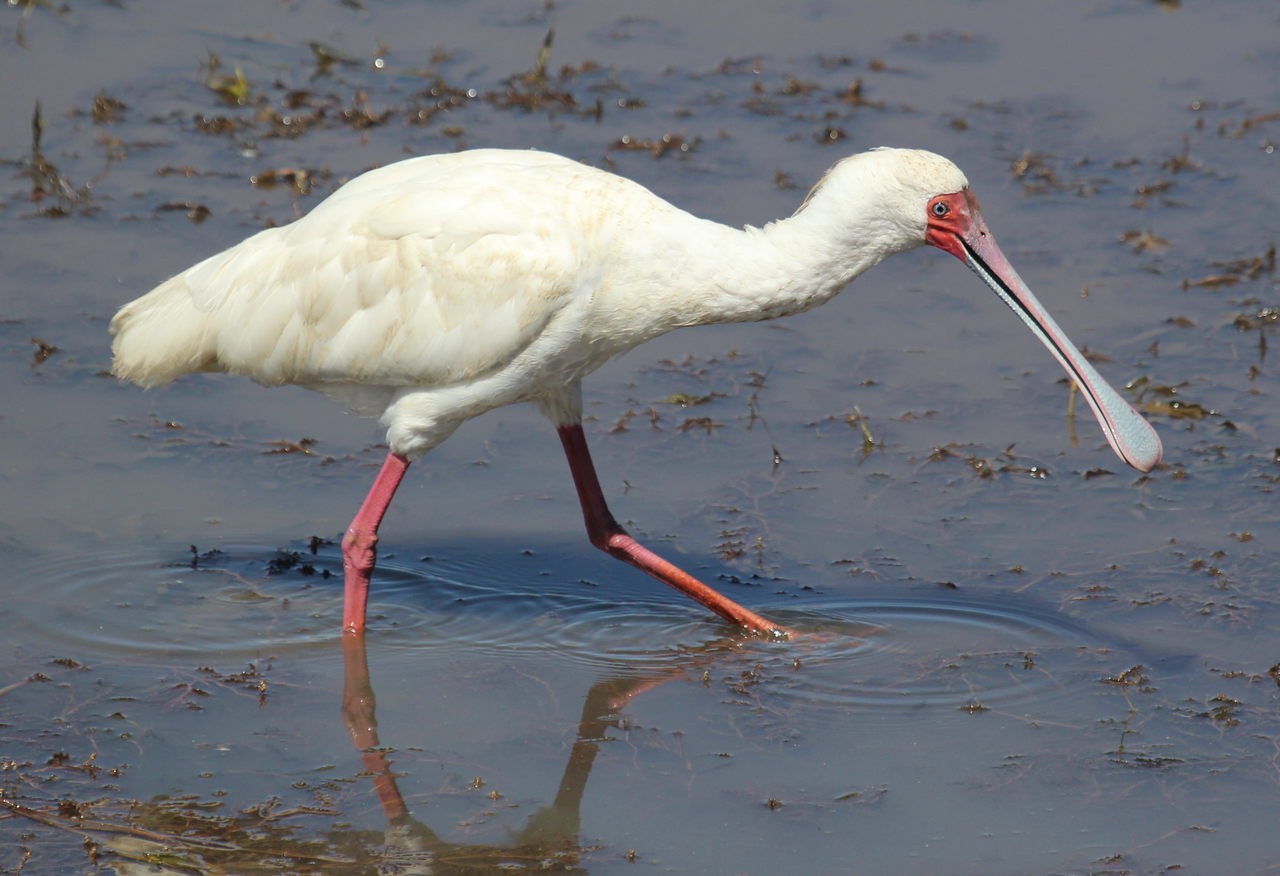
The African spoonbill (Platalea alba) is a long-legged wading bird of the ibis and spoonbill family Threskiornithidae. The species is widespread across Africa and Madagascar, including Botswana, Kenya, Mozambique, Namibia, South Africa, and Zimbabwe.
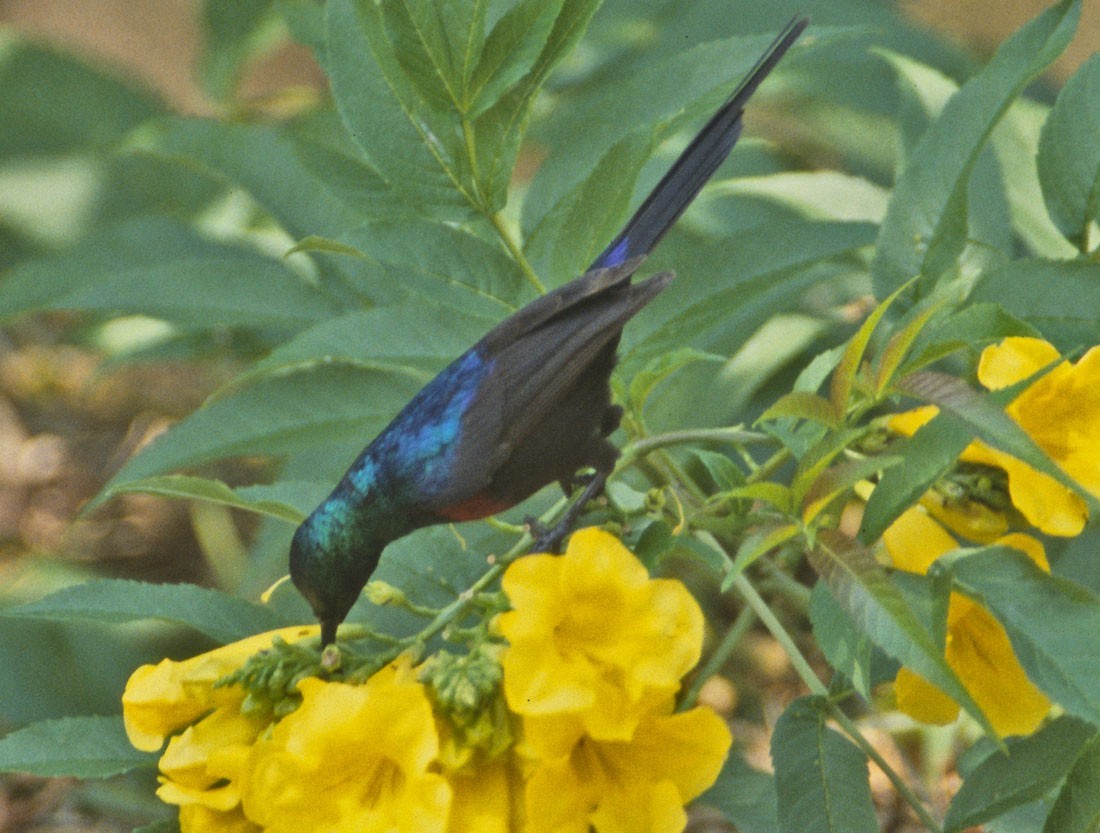
12. Red-chested Sunbird
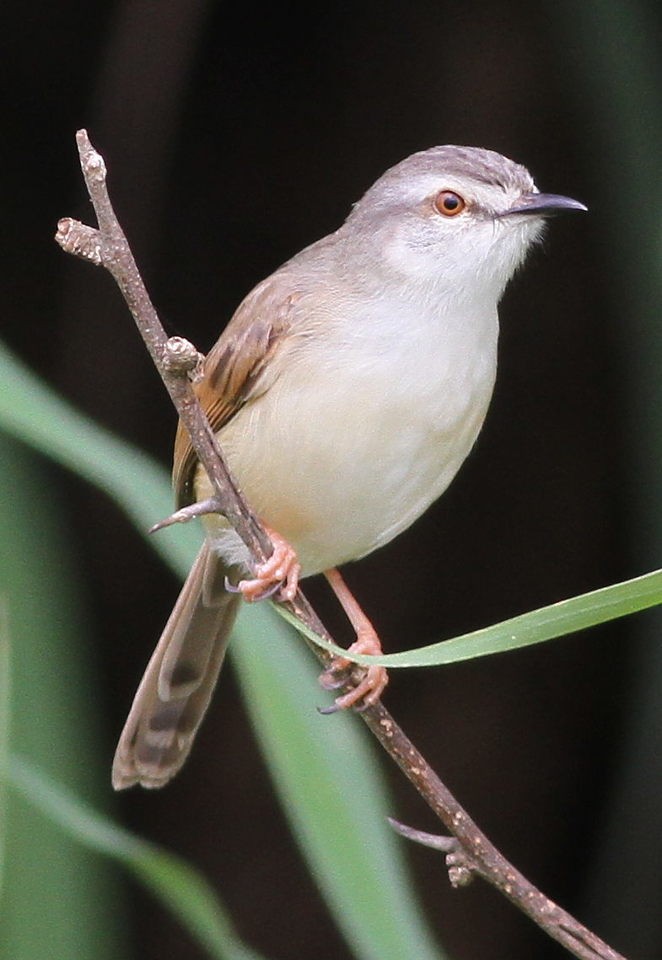
13. Tawny-flanked Prinia
It is 10-13 centimetres in length with a long, narrow, graduated tail and a fairly long, slender bill. The tail is often held erect or waved from side to side. The upperparts are grey-brown with rufous-brown edges to the flight feathers and a rufous tinge to the rump. The throat and breast are whitish while the flanks and vent are warm buff. There is a whitish stripe over the eye and the lores are dark. The tail feathers have a white tip and a dark subterminal band. The sexes are similar in appearance. Non-breeding birds have a longer tail than breeding birds. Juveniles have pale yellow underparts and a yellowish bill. There are many recognised subspecies. The call is short, wheezy and rapidly repeated. The song is a monotonous series of shrill notes. The male often sings from an exposed perch. The pale prinia (P. somalica) of North-east Africa is similar but paler and greyer with whitish flanks. It inhabits drier, more open habitats than the tawny-flanked prinia. The river prinia (P. fluviatilis) of West Africa is also paler and greyer and has a longer tail. It is restricted to waterside vegetation.
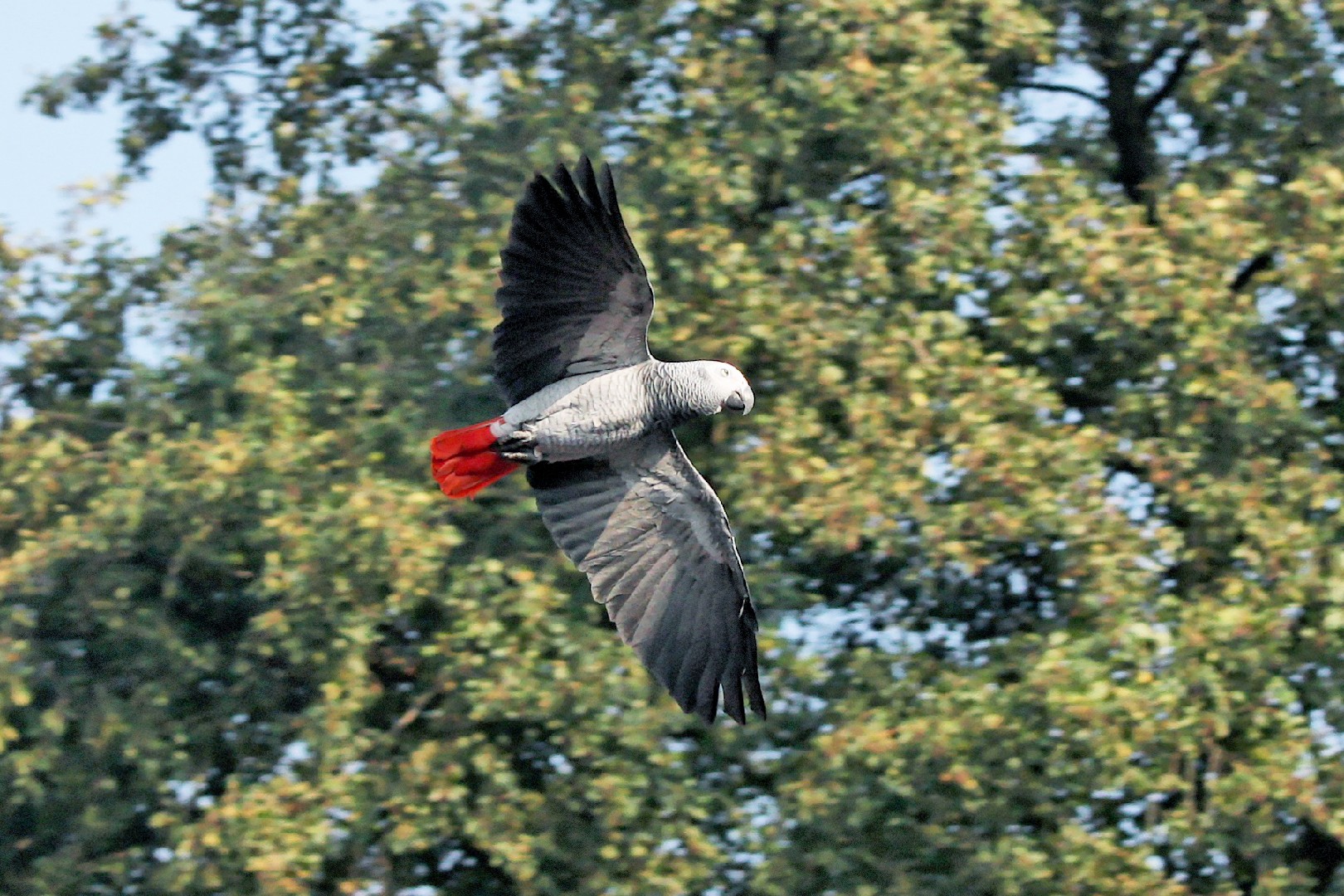
14. Grey Parrot
The grey parrot is a medium-sized, predominantly grey, black-billed parrot. Its typical weight is 400 g (0.88 lb), with an approximate length of 33 cm (13 in), and a wingspan of 46–52 cm (18–20 in). It has darker grey than its body over the head and both wings. The head and body feathers have slight white edges. The tail feathers are red. Due to selection by parrot breeders, some grey parrots are partly or completely red. Both sexes appear similar. The colouration of juveniles is similar to that of adults, but typically, their eyes are dark grey to black, in comparison to the yellow irises around dark eyes of the adult birds, and their undertail coverts are tinged with grey. Adults weigh 418–526 g (0.922–1.160 lb). Grey parrots may live for 40–60 years in captivity, although their mean lifespan in the wild appears to be shorter — approximately 23 years.
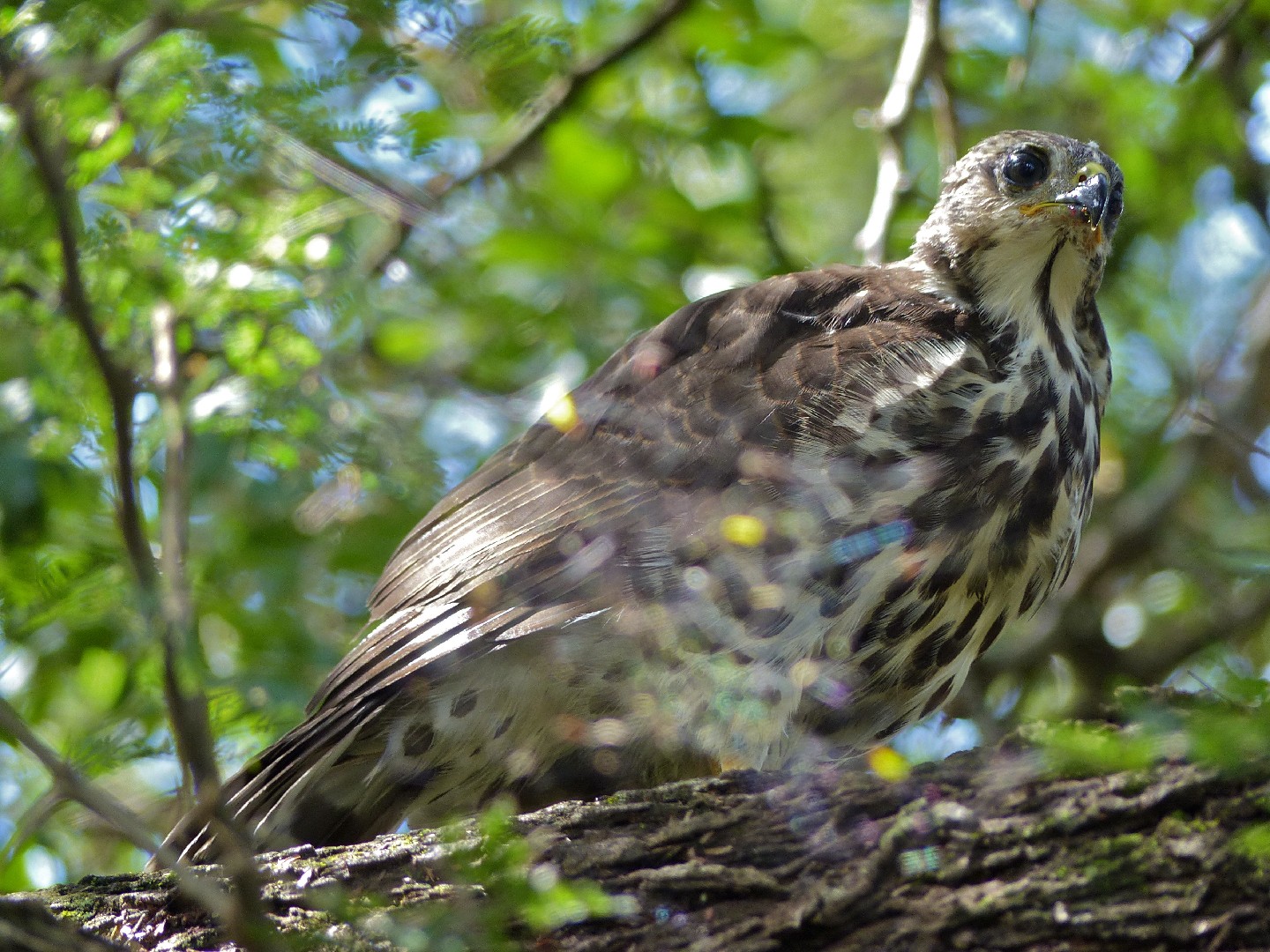
15. African Goshawk
The African goshawk is a medium-sized to large Accipiter which is mainly grey and rufous with the typical broad winged and long tailed shape of its genus. The adult has grey upperparts which tend to be darker in males than in females, the underparts are whitish marked with rufous barring which is more rufous and heavier in the males. The underwing is pale rufous fading to white on some birds and the flight feathers and tail vary from sooty brown to grey with faint grey bars above, white with grey bars below. The bill is black, the cere is greenish-grey, the eyes are yellow and the legs and feet are yellow. Juveniles are brown above and boldly blotched with brown and with brown flank bars too. Females weigh 270–510 g (9.5–18.0 oz), while smaller males weigh 150–340 g (5.3–12.0 oz). They wingspan is 172–225 mm (6.8–8.9 in) for males and 211–275 mm (8.3–10.8 in) in females, the wingspan is 1.7 times the bird's total length.
16. Ring-necked Dove
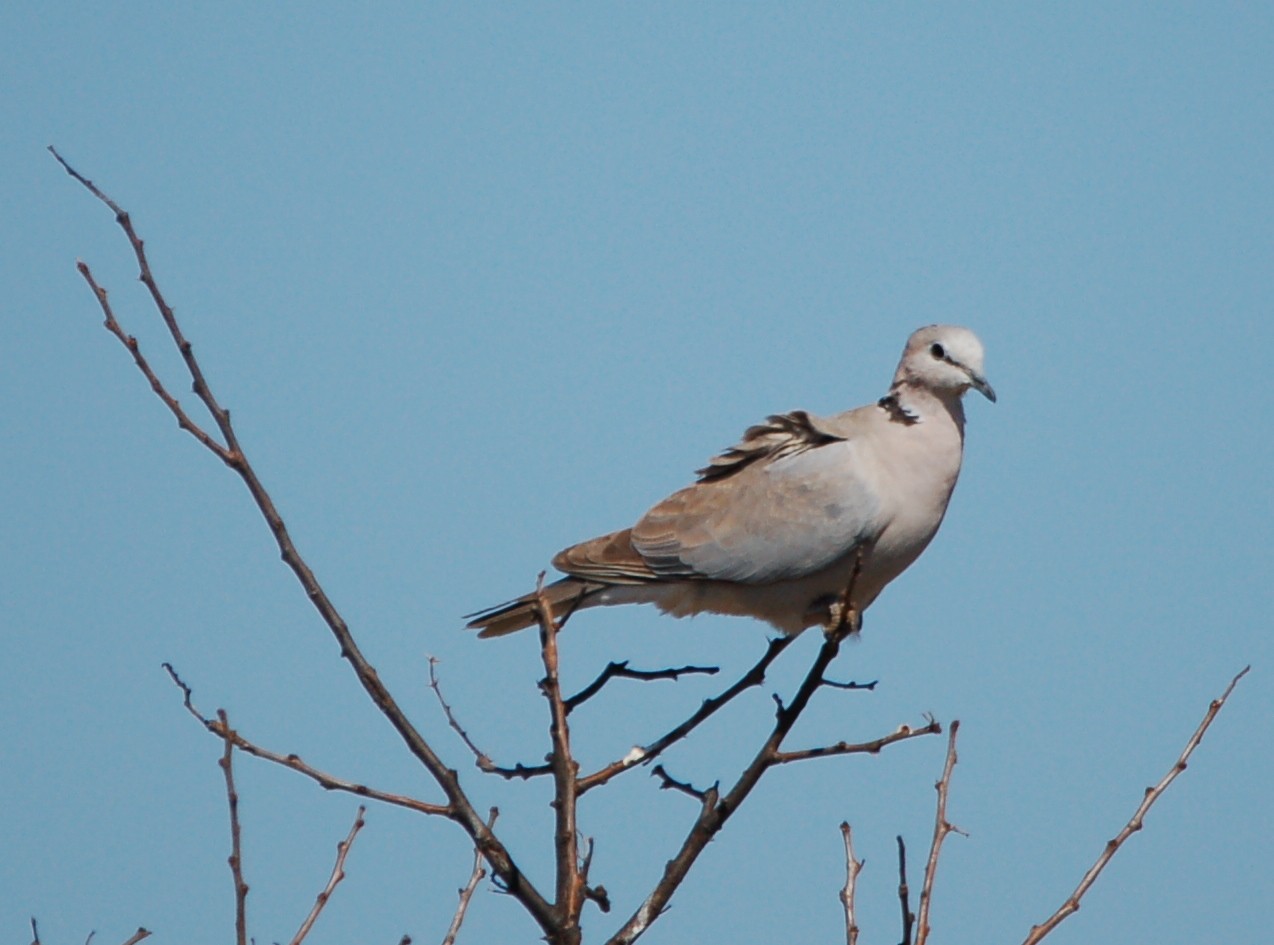
Their body feathers are darkest on the upper side, where they are coloured in dull tones of grey and brown, with shades of lavender on the nape. It is paler below, where a tint of pinkish lavender is usually present. The lower belly and crissum (the undertail coverts surrounding the cloaca) is white. As with related species, they have white fringes and conspicuous white tips to the otherwise slate grey tail feathers. The tail pattern is particularly noticeable during the display flight. Individual plumage variation is high, with some light and others almost sooty. Males and females look alike, although the males are slightly bigger. They measure 25–26.5 cm (9.8–10.4 in) in length and weigh 92–188 g (3.2–6.6 oz). The eyes are almost black, the bill is black and the feet are dark purple. An immature is duller and lacks the semi-collar of an adult. It also has buff edges to all the upper part and wing covert feathers, while the plumage below is broadly edged greyish-white.
17. Red-eyed Dove
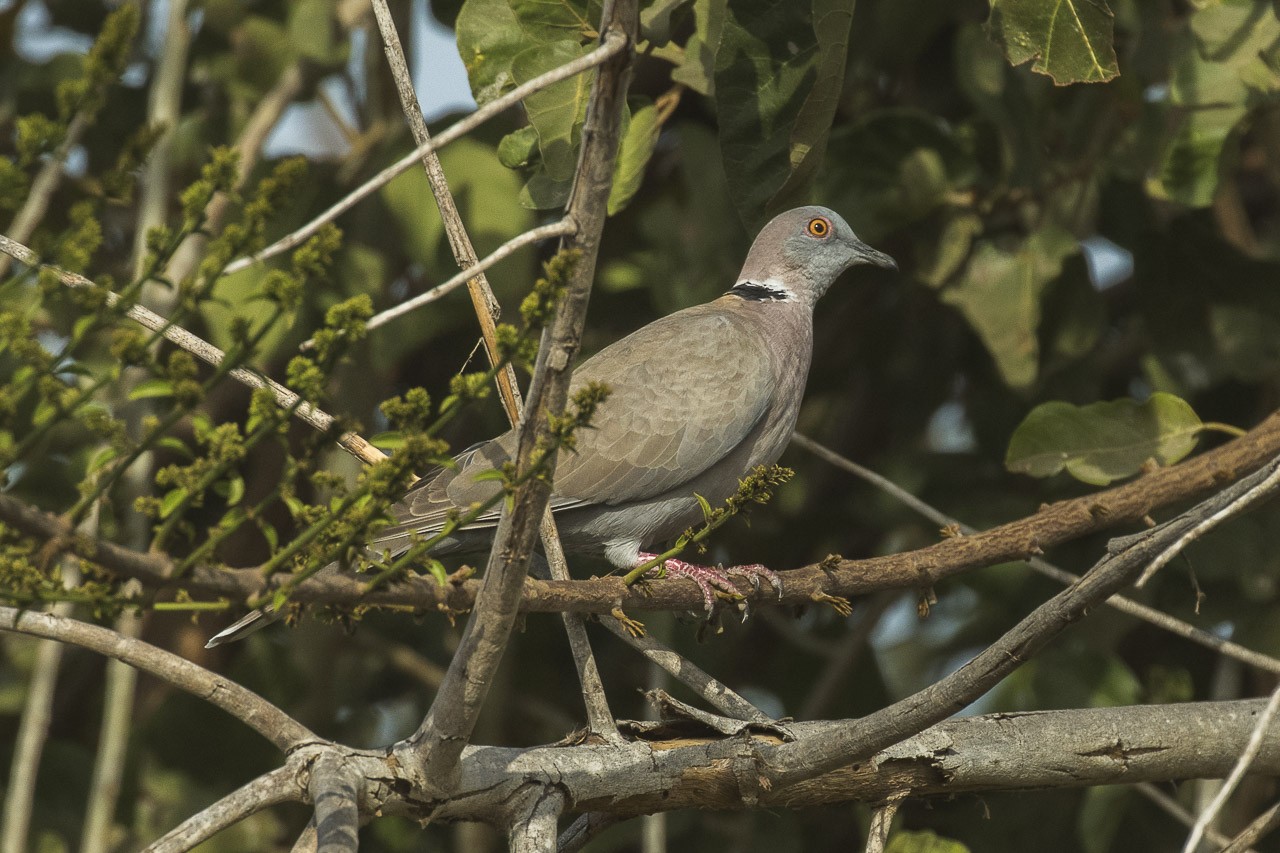
The red-eyed dove is a largish, stocky pigeon, typically 30 cm (12 inches) in length. Its back, wings and tail are pale brown. When flying, it shows blackish flight feathers. The head and underparts are dark vinous-pink, shading to pale grey on the face. There is a black hind neck patch edged with white. The legs and a patch of bare skin around the eye are red. The call is a loud doo-doo-du-du. Sexes are similar, but juveniles are duller than adults, and have scalloping on the body feathers. Red-eyed doves eat grass seeds, grains and other vegetation. They often forage on the ground.
18. Black Kite
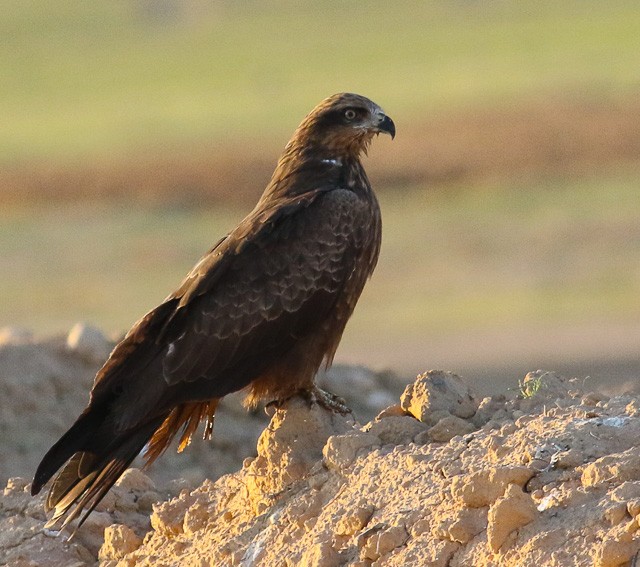
Black Kite is a bird of prey known for its aerial skills and hunting ability. Its striking appearance makes it a fascinating species to observe, and it can often be seen soaring through the skies. Black Kite is highly adaptable and can be found in a variety of habitats, making it a common sight in many areas.
19. African Pied Wagtail
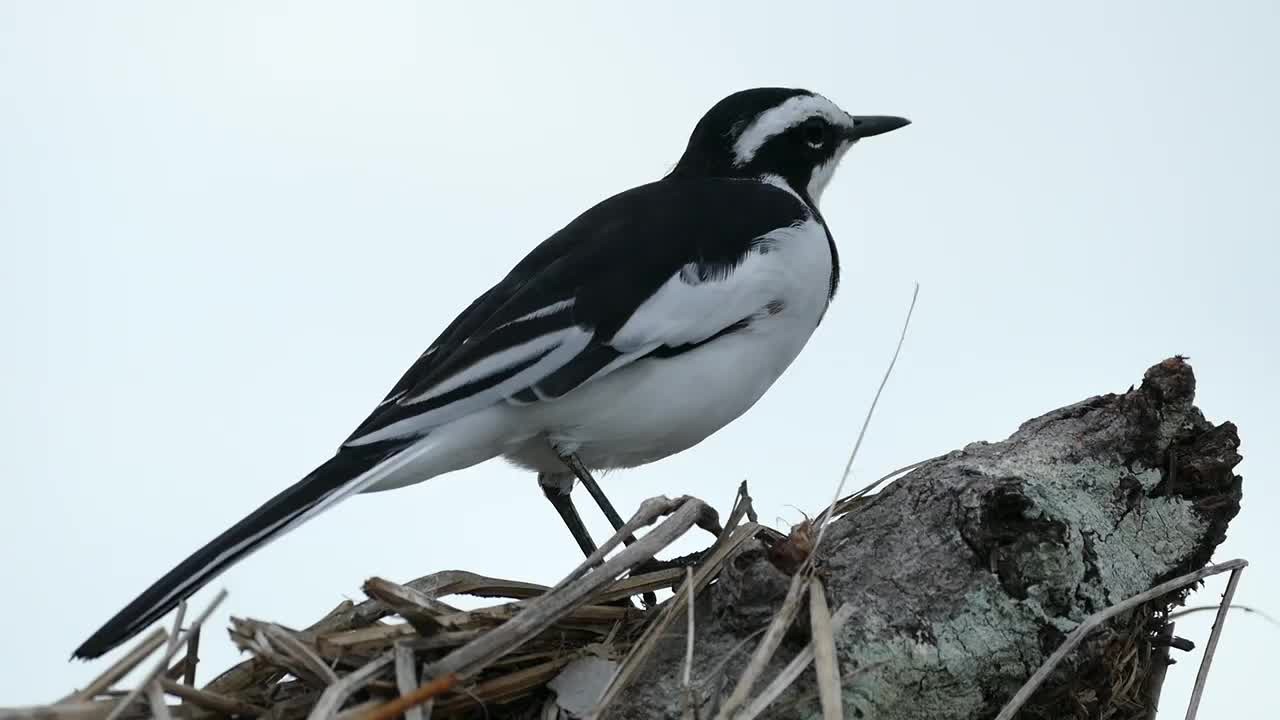
A striking black and white wagtail with black upperparts contrasting with white underparts, a white supercilium and a white patch in the folded wing. Juvenile birds are greyer, while birds of the nominate subspecies show grey flanks. They are 20 cm (7.9 in) long.
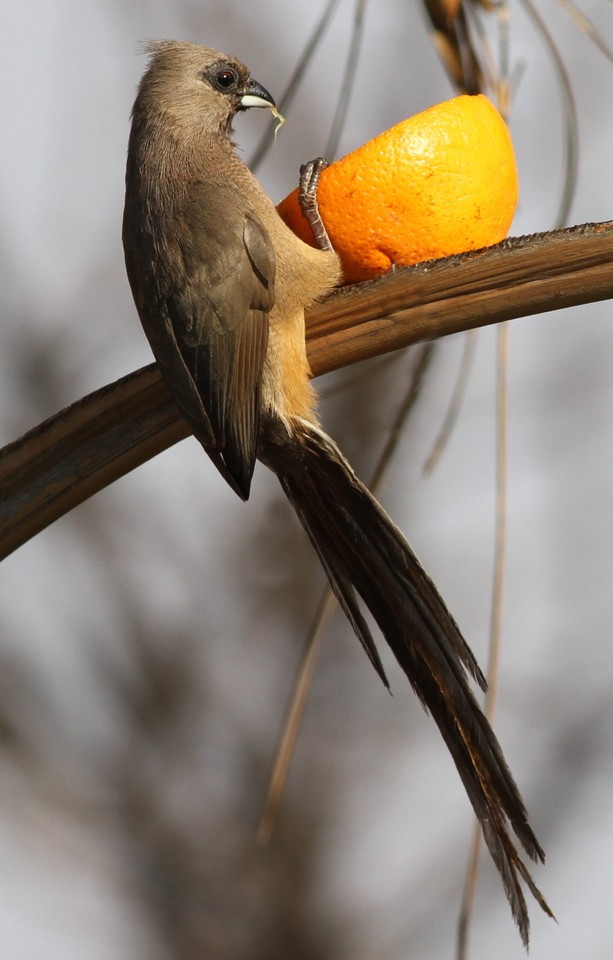
20. Speckled Mousebird
The speckled mousebird is about 35 cm (14 inches) long, with the tail comprising approximately half the length, and weighs about 57 grams (2 oz). It is well-named, because it is dull-mousy brown in overall color on the back and on the head (including a prominent crest). The bill is black on the upper part and is a pinkish color on the lower part. The rare white-headed mousebird can be confused with this species, but the differently colored mandibles and the lack of a bare grey orbital patch render the Speckled species distinctive. The speckled mousebird is not known for its voice, as songbirds are, although it is a noisy creature. They make a warbling tsu-tsu call while in flight, and are known for their tisk-tisk alarm call while in flight.