




Top 20 Most Common Bird in Tottori
Tottori, located in western Japan known best for its pristine coastal and sand dune landscapes, is home to 20 common birds, each showcasing unique characteristics. Notably, their adaptive plumages, vocal prowess or behavior reflect the region's unique ecology. Their existence offers invaluable insights into Tottori's rich and diverse avian life.

Most Common Bird
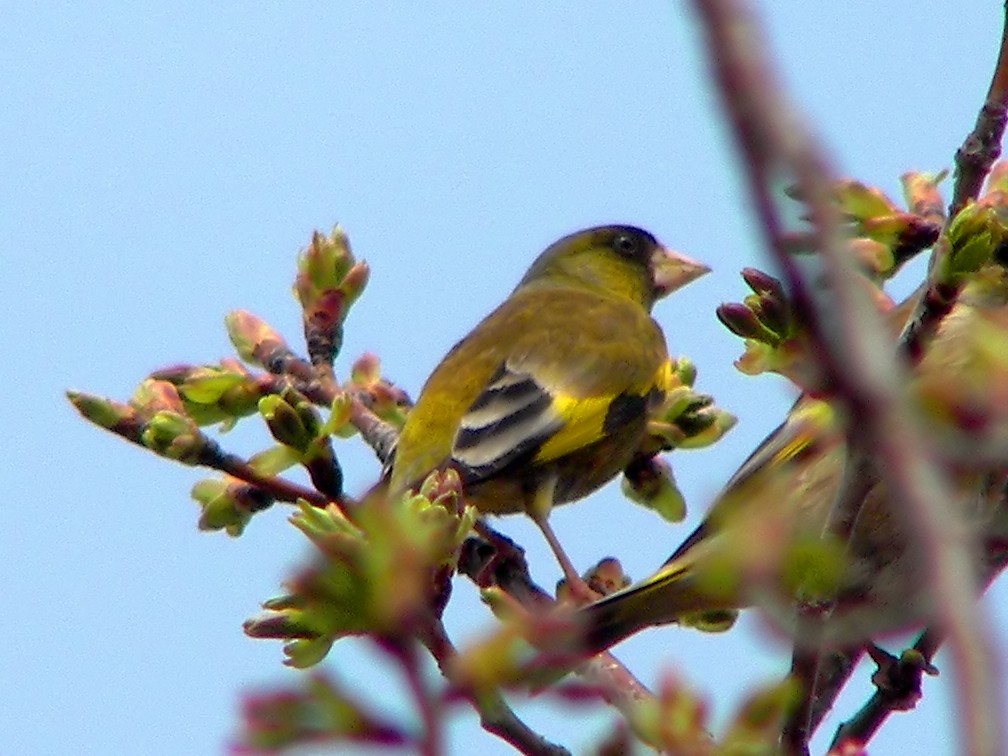
1. Grey-capped Greenfinch
The grey-capped Greenfinch is a friendly bird that likes to twitter while flying. The finch is often seen in woodlands and its yellow feathers distinguish it from other species. The small songbird feeds on seeds, often found on the ground. However, it also eats insects and small invertebrates in the summer.
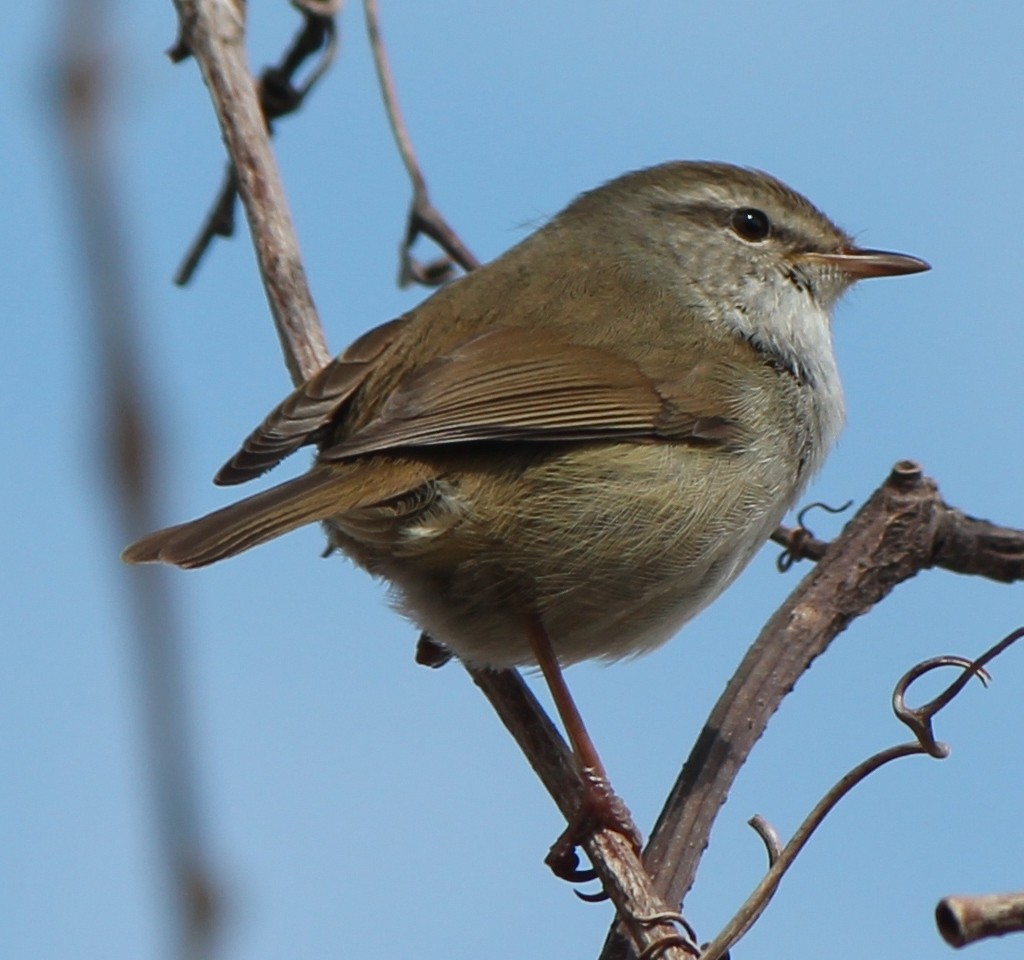
2. Japanese Bush Warbler
The Japanese bush warbler is olive brown above and tending toward dusky colors below. It has pale eyebrows. It has a beak that curves up making it look like it is smiling. The bird is typically 15.5 centimetres (6.1 in) in length. 
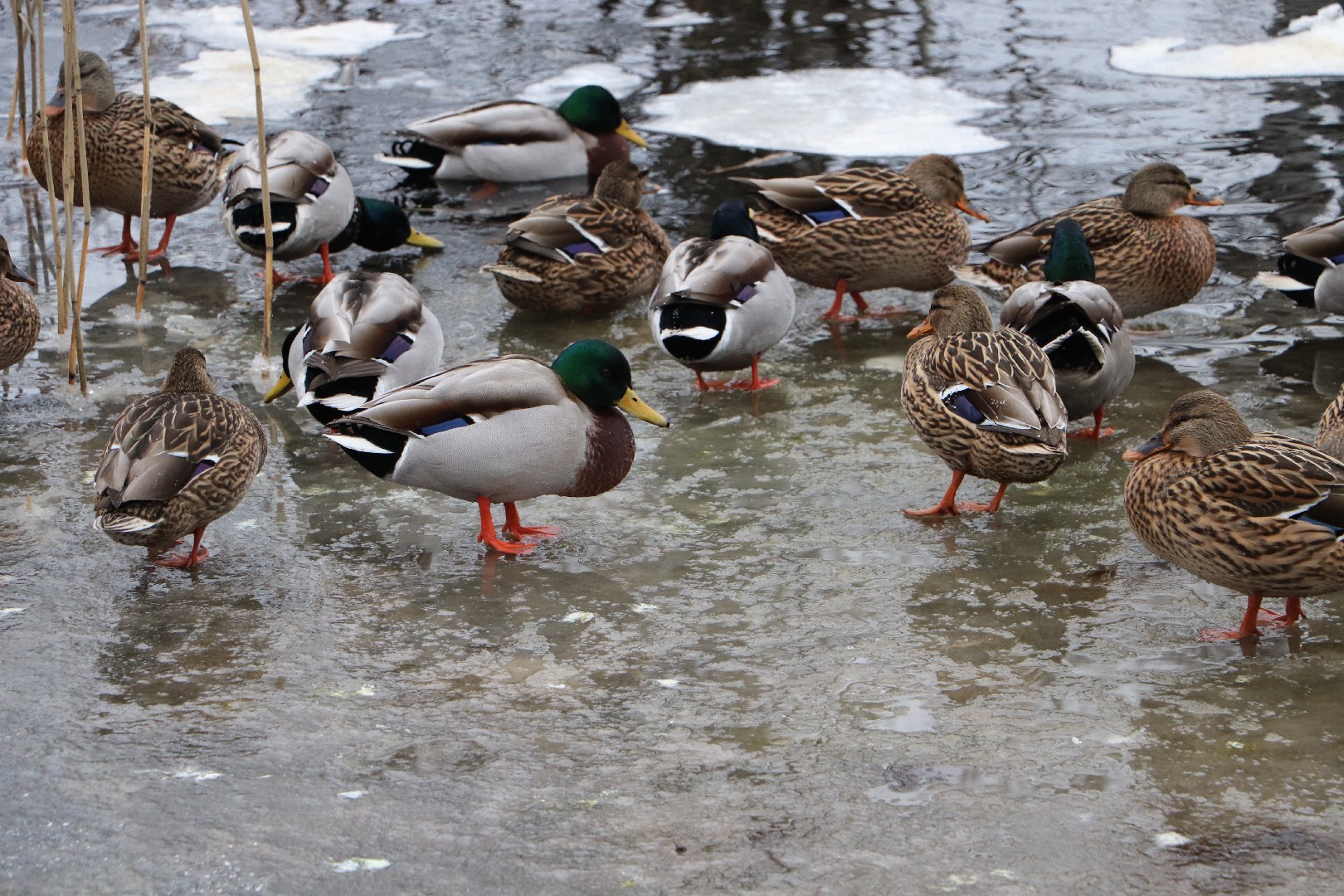
3. Mallard
The mallard is the most abundant duck species in the world, and the ancestor of all domestic ducks. Only the female can produce the distinctive "quack" sound. When the female lays eggs, the male abandons its mate, while the protective mother stays with the ducklings for a long time. This migratory species inhabits shallow waters and it's one of the most popular game birds.
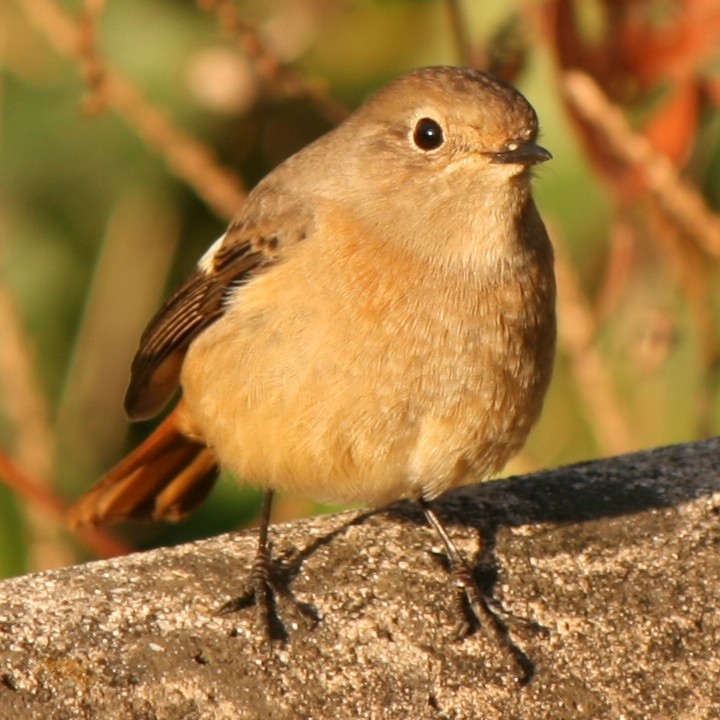
4. Daurian Redstart
The daurian Redstart is an active songbird seen in a variety of habitats. It breeds in open forests and prefers spending the winter in fields and gardens. It is a widespread species of bird across most of Asia, extending into Russia, with a curious personality that often allows humans to get close to the bird before it takes flight.
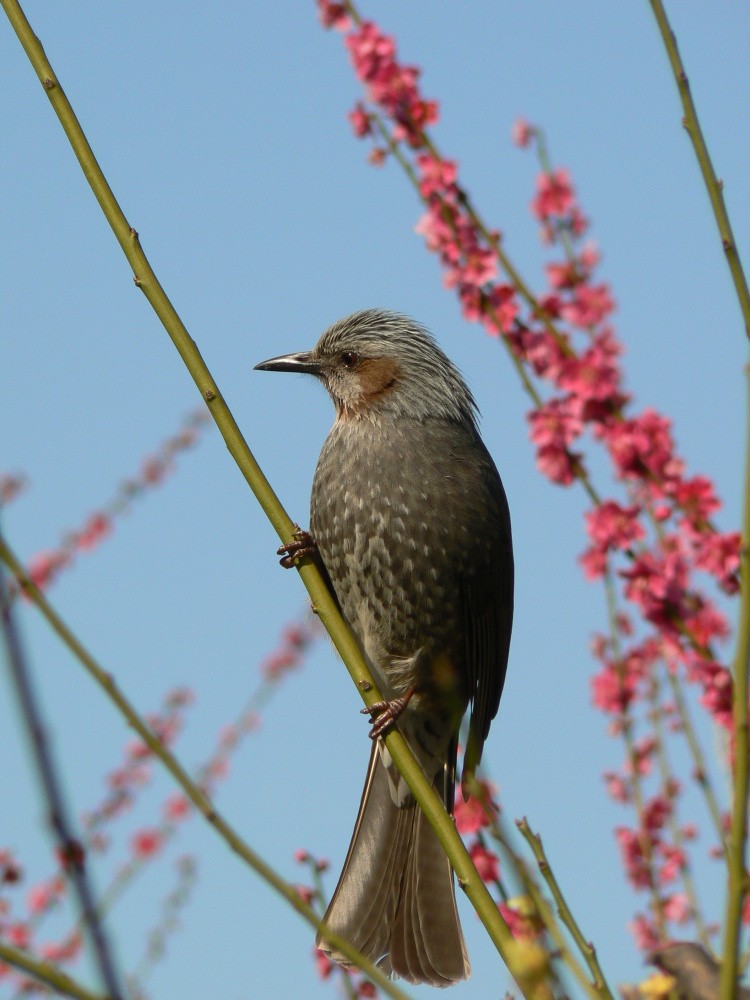
5. Brown-eared Bulbul
The brown-eared Bulbul’s loud cry isn’t the only trait that makes it easy to recognize in rural and suburban habitats. Along with its loud, shrill calls, the songbird has an undulating flight pattern, that makes it easy to distinguish from other species. The bird feeds primarily on insects but will also drink Camellia flower nectar, aiding in pollination.
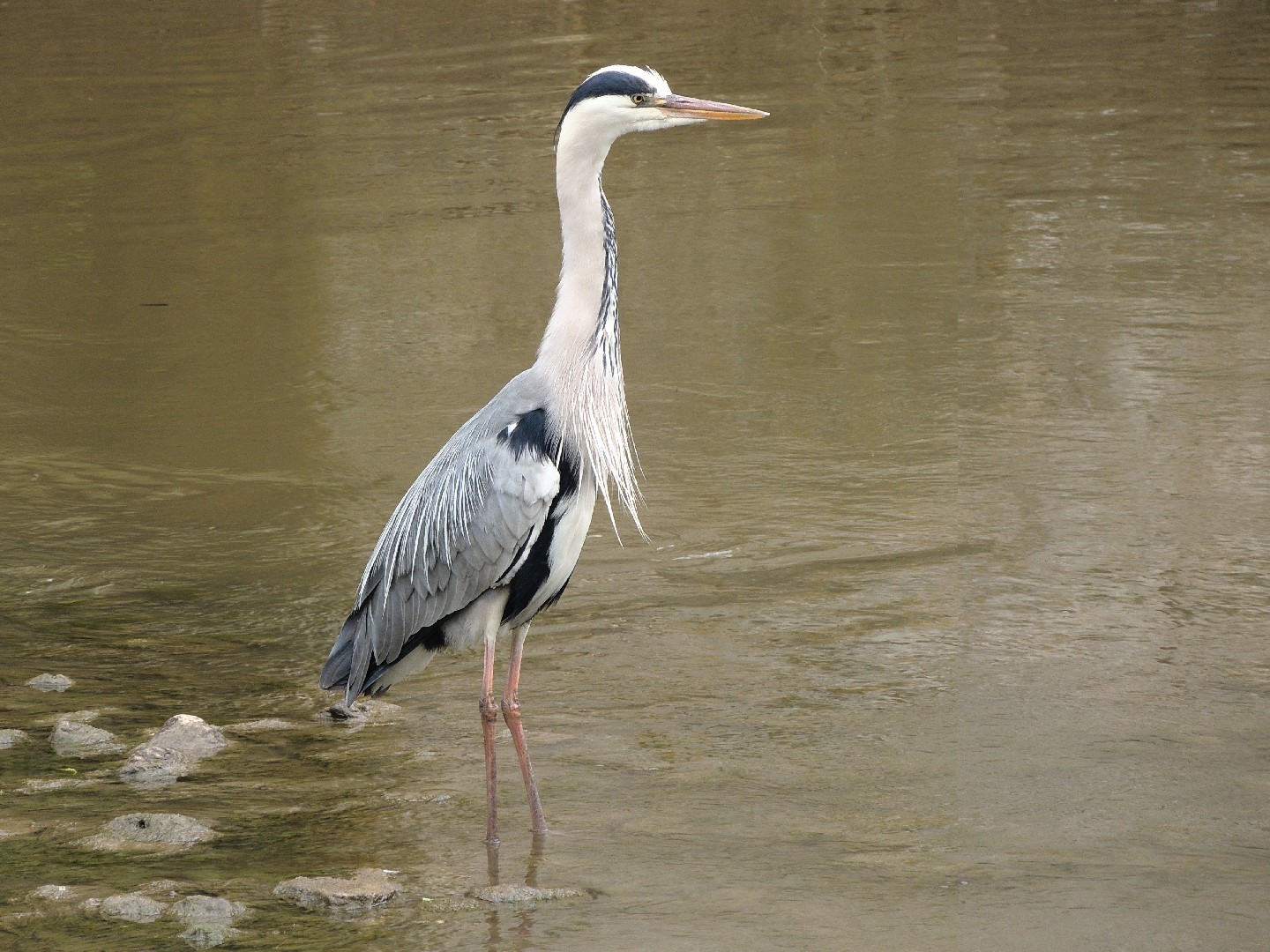
6. Grey Heron
The grey Heron is a very common species to come across in marine, brackish, and freshwater ecosystems; these habitats must have at least four months of warm weather or else these birds will migrate for new breeding grounds. The grey Heron hunts by wading through shallow waters looking for fish and various invertebrates; their natural diet helps control some aquatic species populations.
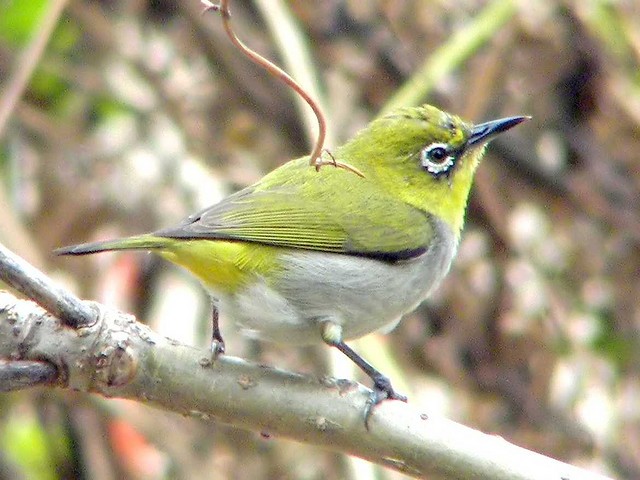
7. Warbling White-eye
The warbling white-eye is olive green on its back, from anterior to posterior, and is pale green on its underside. Its feet, legs, and bill range from black to brown. It has a green forehead and a yellow throat. The white-eye has rounded wings and a long, slender bill – both of which indicate this bird to be very acrobatic. Its wings are dark brown, but outlined in green. Like other white-eyes, this species exhibits the distinctive white eyering that gives it its name.
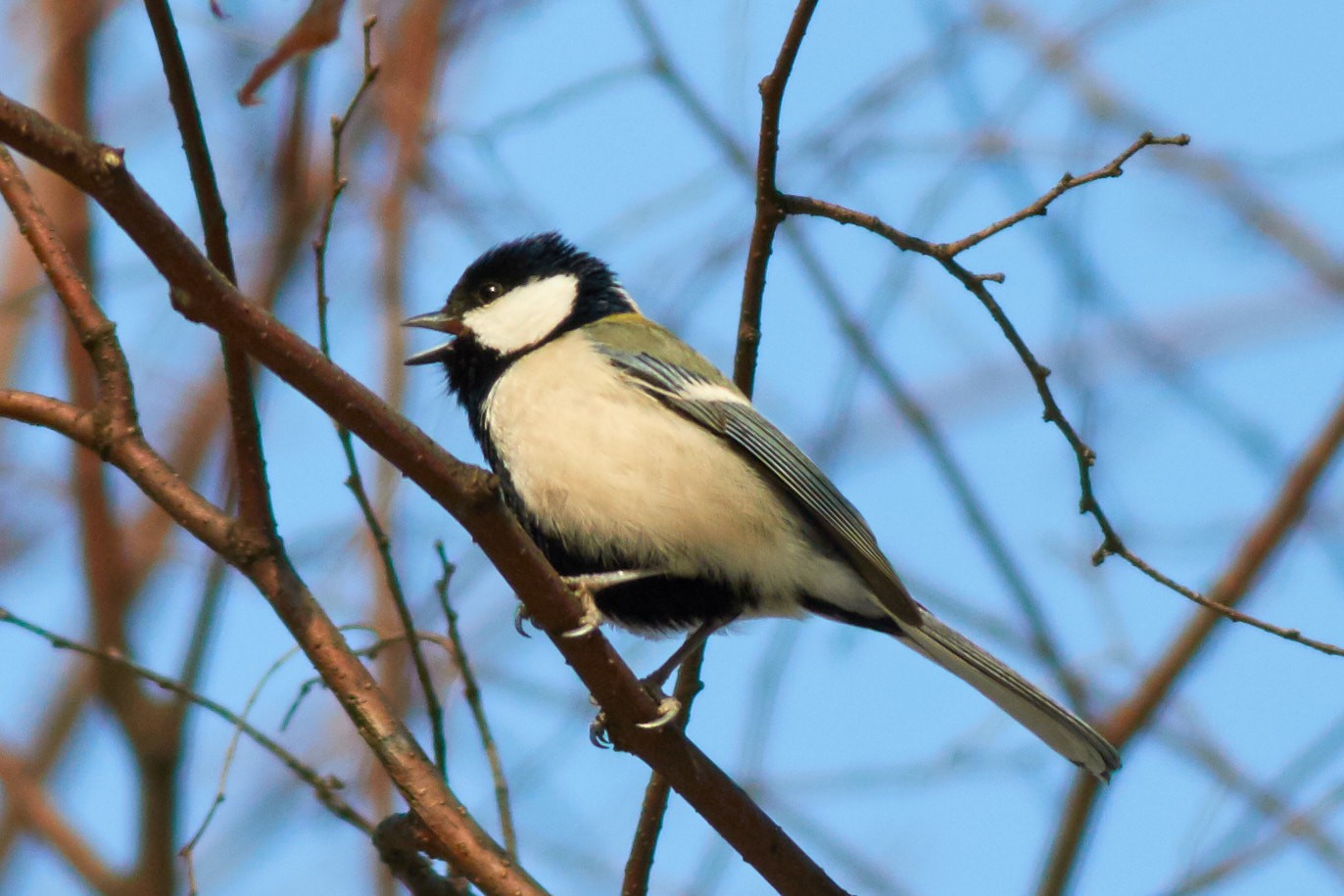
8. Japanese Tit
The japanese Tit is a large bird for its species, it is also extremely vocal with its loud chirps and song. While it can be seen in parks, it prefers wooded habitats. The songbird made headlines when researchers noticed the syntax in its calls. The bird will even respond to other species if they follow the alert call.
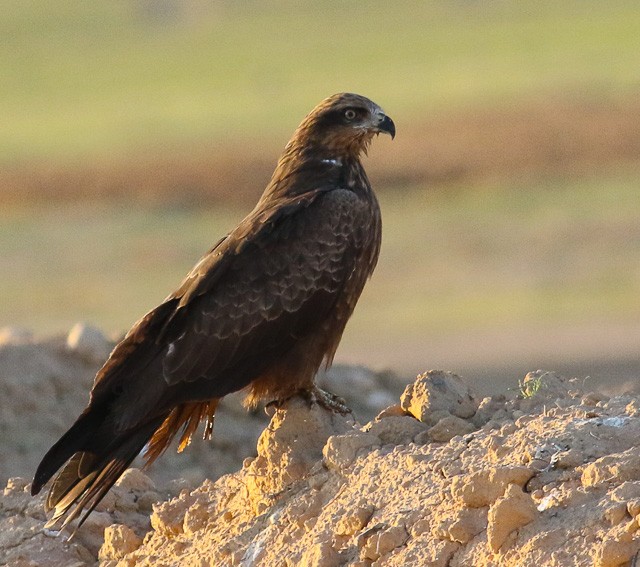
9. Black Kite
Black Kite is a bird of prey known for its aerial skills and hunting ability. Its striking appearance makes it a fascinating species to observe, and it can often be seen soaring through the skies. Black Kite is highly adaptable and can be found in a variety of habitats, making it a common sight in many areas.
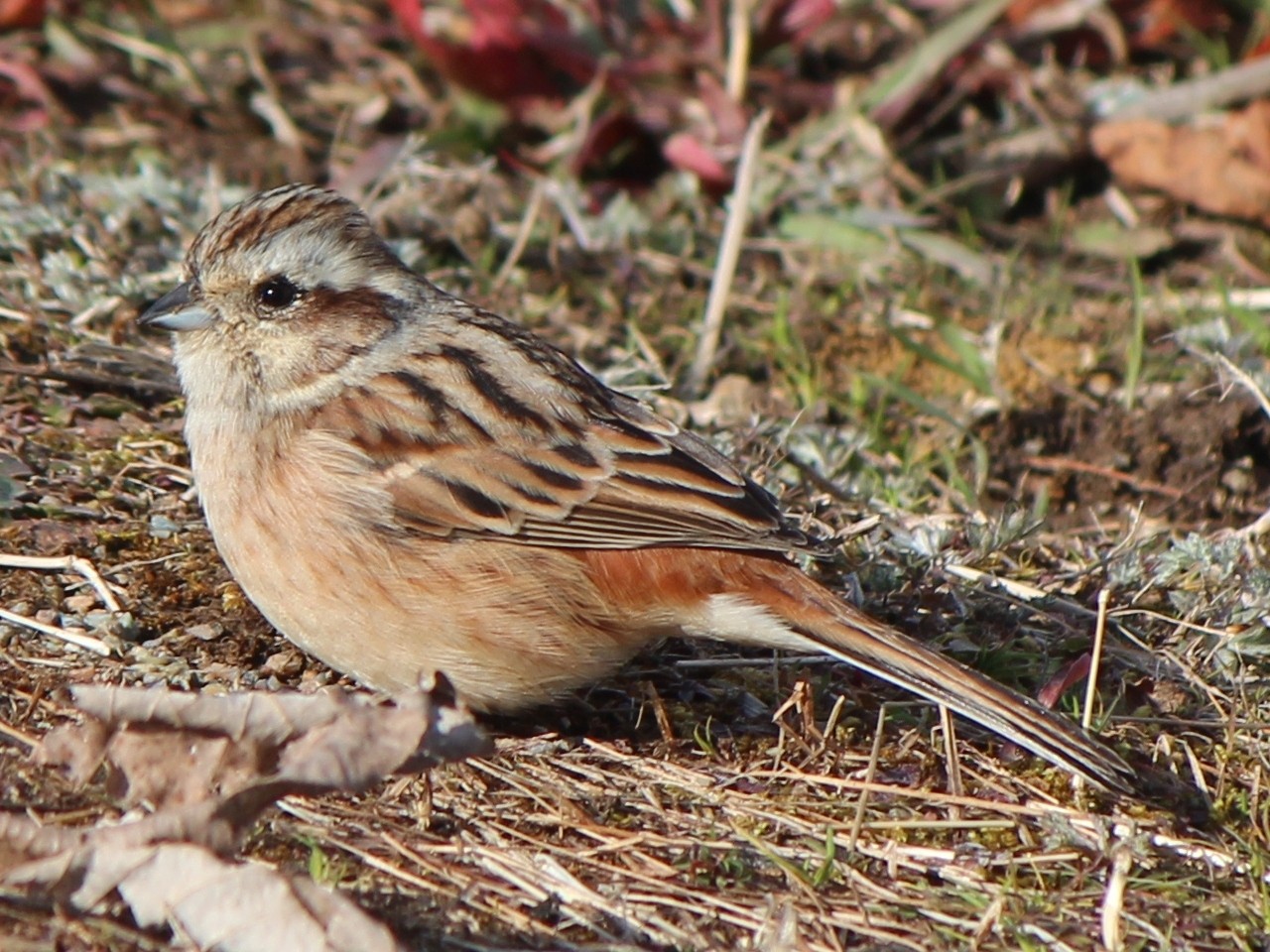
10. Meadow Bunting
The meadow Bunting is often described as a handsome bird due to the distinctive coloring on its face. It is a talkative bird, giving multiple calls instead of single chirps. The best place to spot the large bunting is in open areas with plenty of vegetation like meadows, forest edges, and agricultural fields.
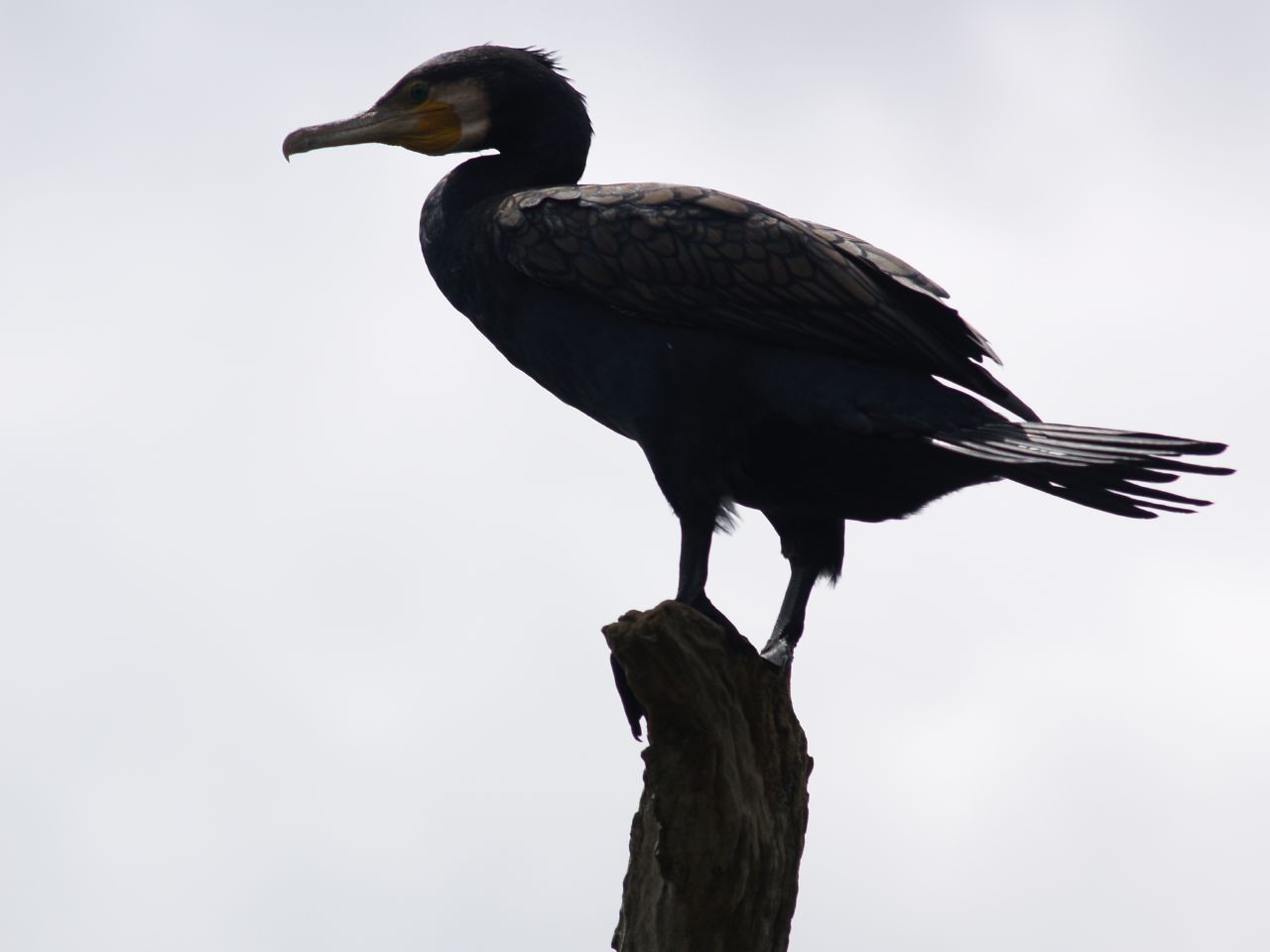
11. Great Cormorant
The great Cormorant is a charismatic bird known for its diving abilities and fishing prowess. It has a glossy black plumage, a long neck, and a hooked beak. It is strong swimmers and divers, capable of reaching depths up to 30 feet to catch fish. It has a unique habit of spreading their wings in the sun to dry them after fishing, helping to maintain their waterproof feathers.

12. White Wagtail
The white Wagtail is the national bird of Latvia and is featured in traditional folk songs and placed on some postage stamps. These birds can be found in most habitat types besides deserts. As their name suggests, they exhibit a characteristic tail-wagging behavior as they search along the ground and nearby waterways for insects to eat.
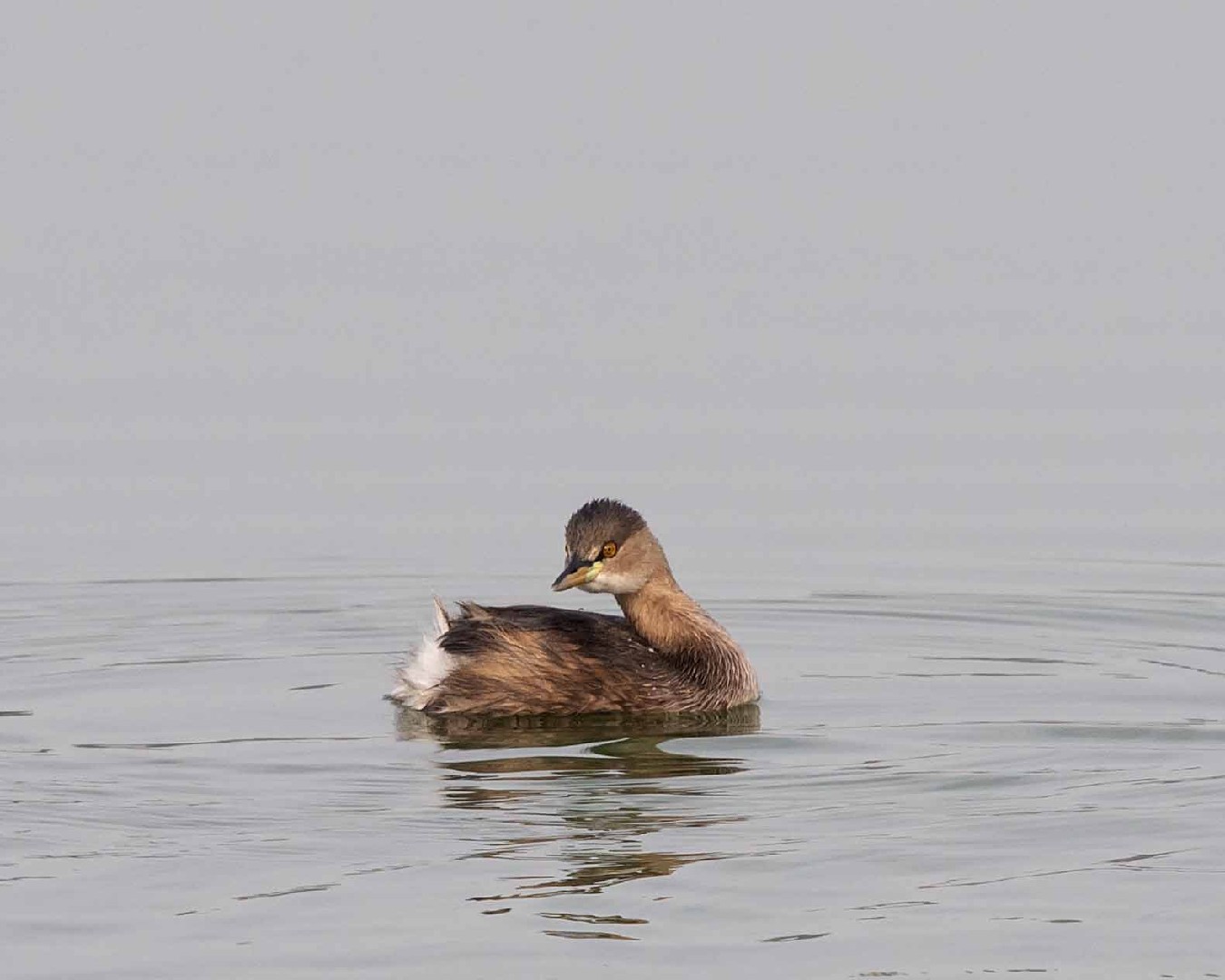
13. Little Grebe
The little Grebe is a diving bird that is easy to miss. Not only is it a small bird with inconspicuous coloring, but it is also shy. The bird prefers hiding in grasses and reeds, instead of being out on the open water. However, the bird is identifiable by its loud trills.
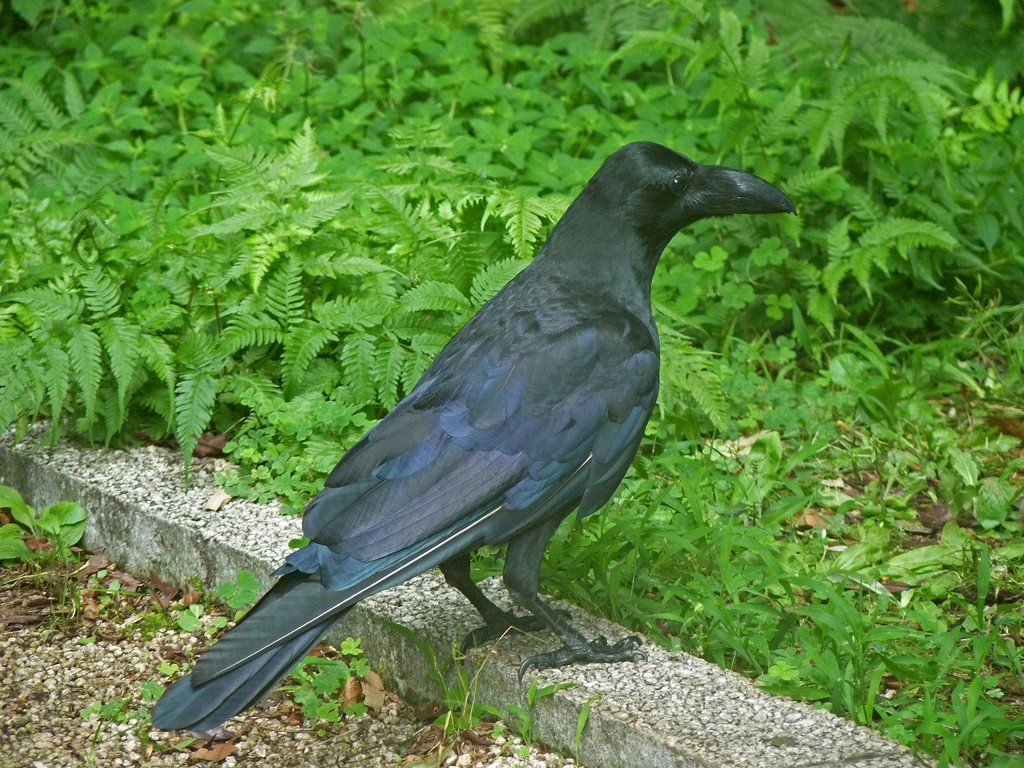
14. Large-billed Crow
The overall size (length: 46–59 cm; 18–23 in.) and body proportions vary regionally. In the far northeast in Japan, the Kuriles and the Sakhalin peninsula, it is somewhat larger than the carrion crow. All taxa have a relatively long bill with the upper one quite thick and arched, making it look heavy and almost raven-like. Generally, all taxa have dark greyish plumage from the back of the head, neck, shoulders and lower body. Their wings, tail, face, and throat are glossy black. The depth of the grey shading varies across its range.
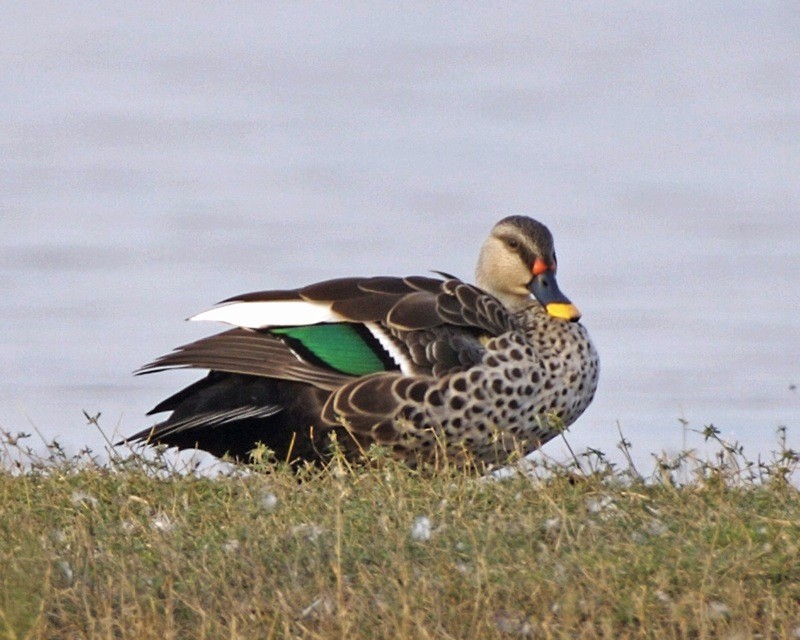
15. Indian Spot-billed Duck
This duck is around the same size as a mallard and has a scaly patterned body with a green speculum bordered by white. At rest the white stripe stands out and the long neck and the bill with yellow tip and orange red spots at the base are distinctive in the nominate subspecies. The red spots at the base of the bills are absent in haringtoni. It measures 55–63 cm (22–25 in) in length and 83–95 cm (33–37 in) across the wings, with a body mass of 790–1,500 g (1.74–3.31 lb). These are mainly grey ducks with a paler head and neck and a black bill tipped bright yellow. The wings are whitish with black flight feathers below, and from above show a white-bordered green The male has a red spot on the base of the bill, which is absent or inconspicuous in the smaller but otherwise similar female. The male does not have an eclipse plumage. The legs and feet are bright orange to coral red. Juveniles are browner and duller than adults. The eastern spot-billed duck is darker and browner; its body plumage is more similar to the Pacific black duck. It lacks the red bill spot, and has a blue speculum. Both males and females undergo a complete post-breeding moult, dropping all their wing feathers simultaneously.
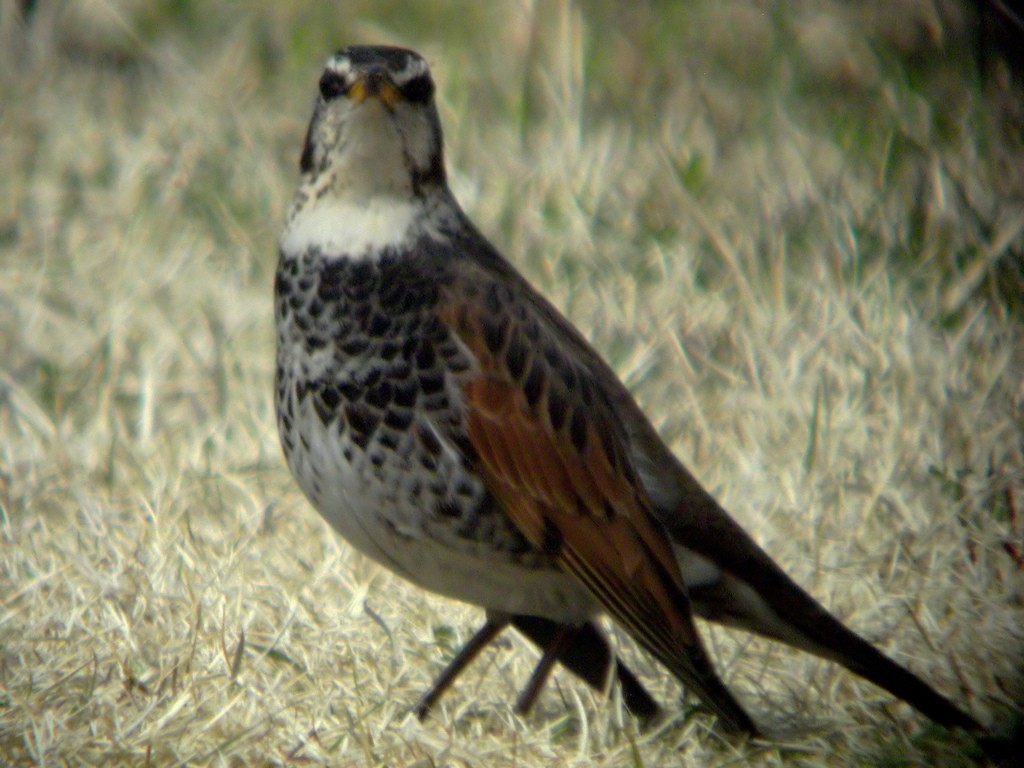
16. Dusky Thrush
A vocal thrush with a wide variety of habitats, the dusky Thrush is seen in tundras, steppe lands, and subarctic forests (taigas). During the winter, the bird prefers open forests and fields. It is a vocal bird that delivers loud chattering in its calls and songs.
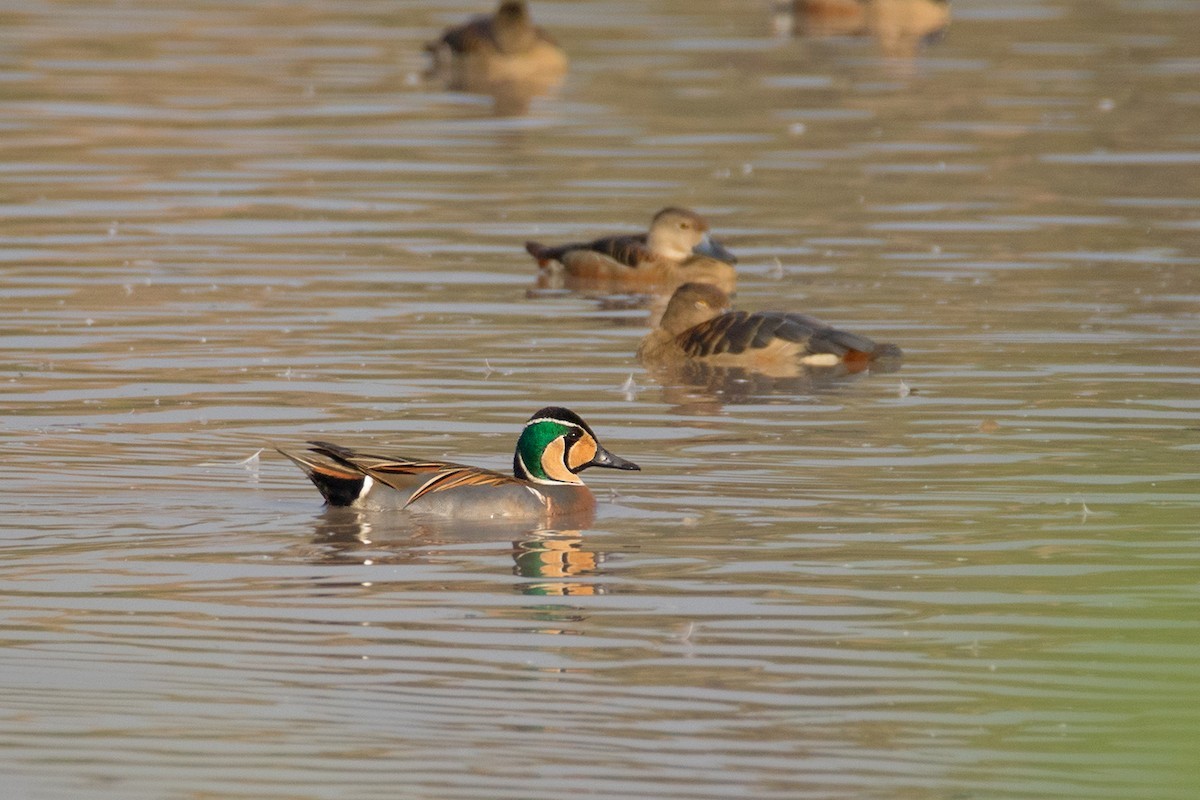
17. Baikal Teal
At between 39 and 43 centimetres (15 and 17 in), this duck is slightly larger and longer-tailed than the common teal. The breeding male is unmistakable, with a striking green nape, yellow and black auriculars, neck, and throat. It has a dark crown, and its breast is light brown with dark spots. It has long dropping dark scapulars, and its grey sides are set off on the front and rear with white bars. The Baikal teal has a height from 11.75 to 15.75 inches and a weighs an average of 1 pound. The female looks similar to a female green-winged teal but with a longer tail, and a distinctive white spot at the base of the bill and a white throat that angles to the back of the eye. She also has a distinct light eyebrow bordered by a darker crown. The underwing is similar to the Green-winged Teal also, but has a darker leading edge. The green speculum has an indistinct cinnamon-buff inner border. Some "females" have "bridle" markings on their faces, but it has been suggested that at least some of these bridled "females," if not all, are in fact juvenile males. The juvenile has a plumage similar to that of the female and can be distinguished from the Common Teal by the pale loral spot. In non-breeding (eclipse) plumage, the drake looks more like the female, but plumage is a much richer reddish-brown (rufous) colour.
18. Bull-headed Shrike
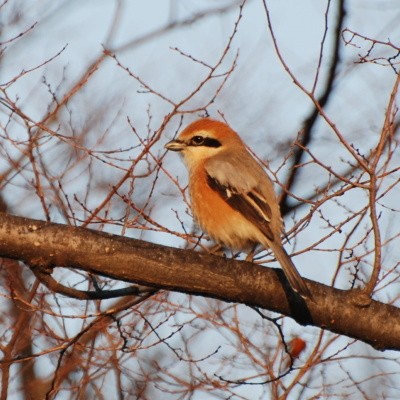
The bull-headed shrike (Lanius bucephalus) is a passerine bird of eastern Asia belonging to the shrike family Laniidae. It is 19–20 cm (approx. 7.48-7.9 inches) long. The male has a brown crown, white eyebrow and black mask. The back is grey-brown while the wings are dark with a white patch. The flanks are rufous and the rest of the underparts are whitish with fine barring. Females are similar but duller and browner with a brown mask and no white wing-patch. The species has harsh grating and chattering calls and will also mimic other birds. It breeds in north-east China, Korea, Japan and far-eastern Russia (Ussuriland, Sakhalin and the Kuril Islands). Northern birds migrate south for the winter with a few reaching southern China. Vagrants have been recorded in Taiwan, Hong Kong and Vietnam. The isolated race sicarius is found only in the mountains of Gansu Province in west-central China. Open habitats such as farmland and woodland edges are preferred. It also visits parks and gardens in urban areas. It sits on a prominent perch, waiting for prey to pass by. It feeds mainly on insects such as beetles and crickets but also preys on lizards and crustaceans. With some other species from the Lanius genus, like the great grey shrike (Lanius excubitor), the bull-headed shrike is known to impale some of its preys upon a sharp point – usually thorns – so the food can be ripped into bite-sized pieces more easily. It may also do this to cache food and to mark a territory boundary. The nest is built among bushes or bamboo. Two to six eggs are laid. They are incubated for 14 to 15 days and the young birds fledge 14 days after hatching.
19. Carrion Crow
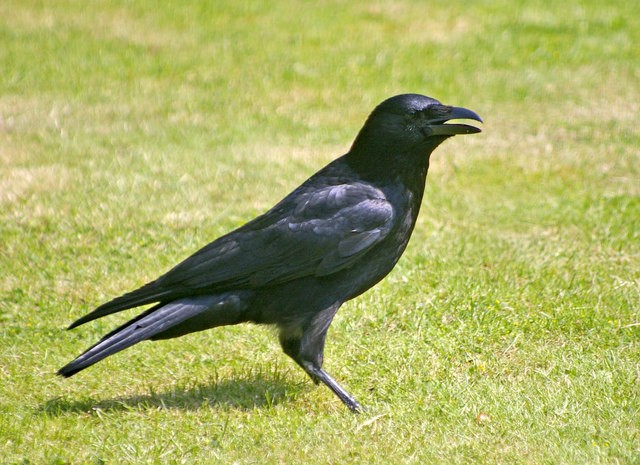
The loud cry from the carrion Crow lets everyone know the bird is in the area. It is often seen in semi and open habitats that include rural and suburban areas. The black-colored bird only gathers in large flocks when it is time to roost. Otherwise, it flies in pairs or small groups scavenging for insects, seeds, and even small animals.
20. Rustic Bunting
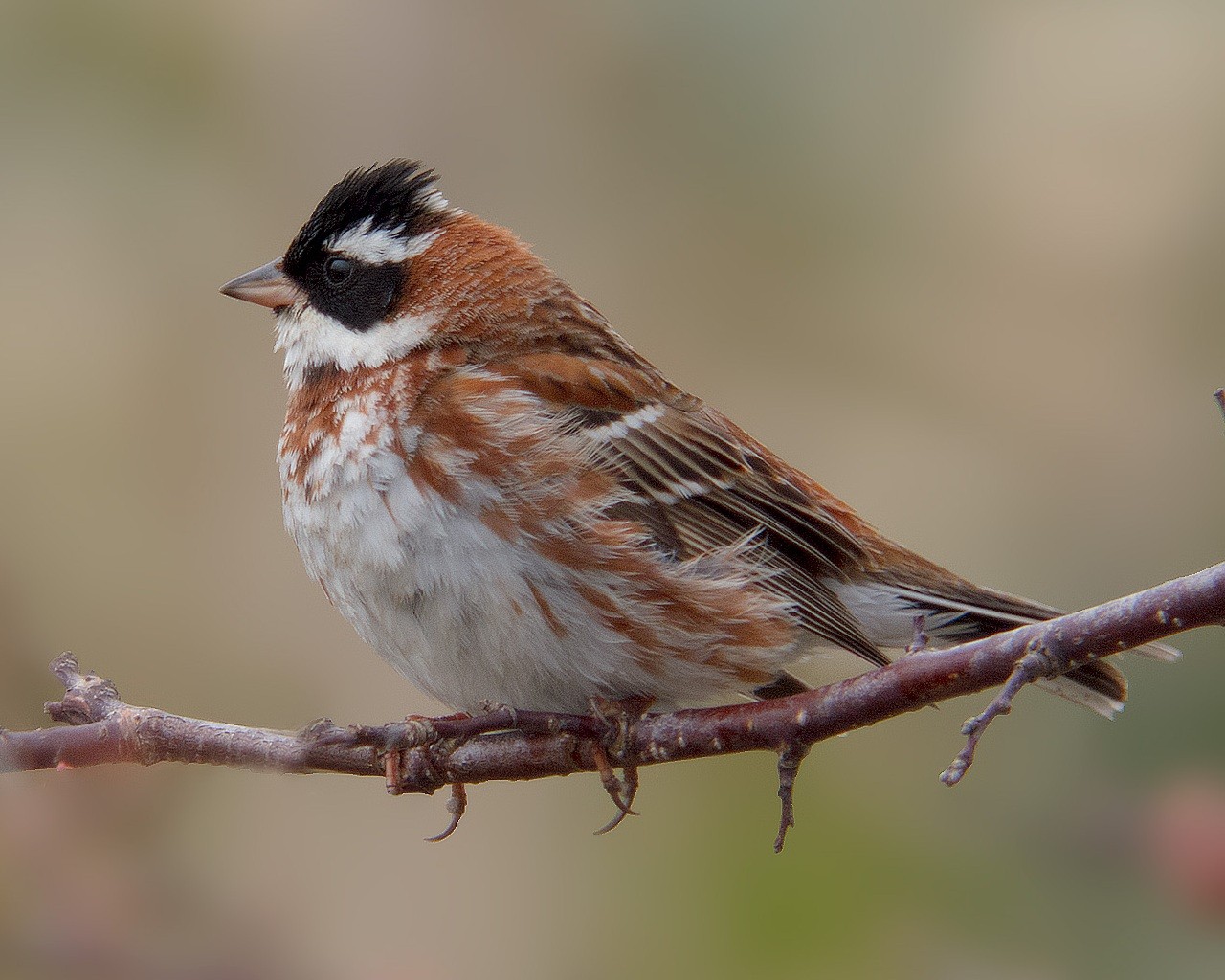
The rustic bunting (Emberiza rustica) is a passerine bird in the bunting family Emberizidae, a group now separated by most modern authors from the finches, Fringillidae. The genus name Emberiza is from Old German Embritz, a bunting. The specific rustica is Latin for "rustic, simple". It breeds across the northern Palearctic. It is migratory, wintering in south-east Asia, Japan, and eastern China. It is a rare wanderer to western Europe. It breeds in wet coniferous woodland. Four to six eggs are laid in a nest in a bush or on the ground. Its natural food consists of seeds, and when feeding young, insects. This bird is similar in size to a reed bunting. It has white underparts with reddish flank, pink legs and a pink lower mandible. The summer male has a black head with a white throat and supercilium and a reddish breast band. The female has a heavily streaked brown back and brown face with a whitish supercilium. She resembles a female reed bunting, but has the reddish flank streaks, a chestnut nape and a pink, not grey, lower mandible. The call is a distinctive zit, and the song is a melancholic delee-deloo-delee.