



Top 20 Most Common Bird in Kiambu
Kiambu is a lush and verdant region of Kenya, teeming with a variety of avian species. The 20 most common birds display a myriad of distinctive features, from diverse plumages to captivating behaviors, each uniquely adapted to the region's diverse ecosystems. These birds are not just part of the scenery, but key players in the ecological balance of Kiambu.

Most Common Bird
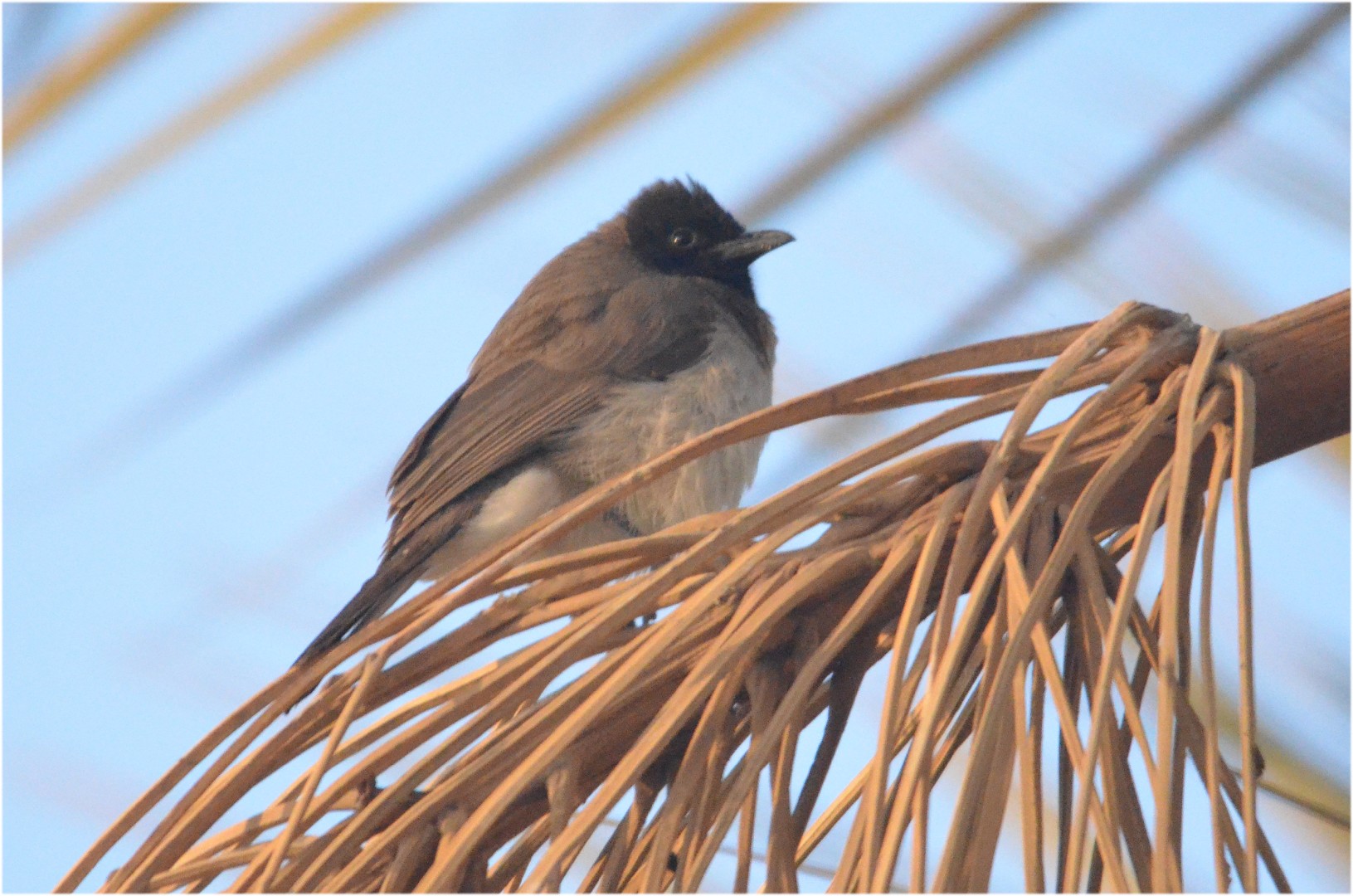
1. Common Bulbul
The bill is fairly short and thin, with a slightly downcurving upper mandible. The bill, legs, and feet are black and the eye is dark brown with a dark eye-ring, which is not readily visible. It is about 18 cm in length, with a long tail. It has a dark brown head and upperparts. Sexes are similar in plumage. 
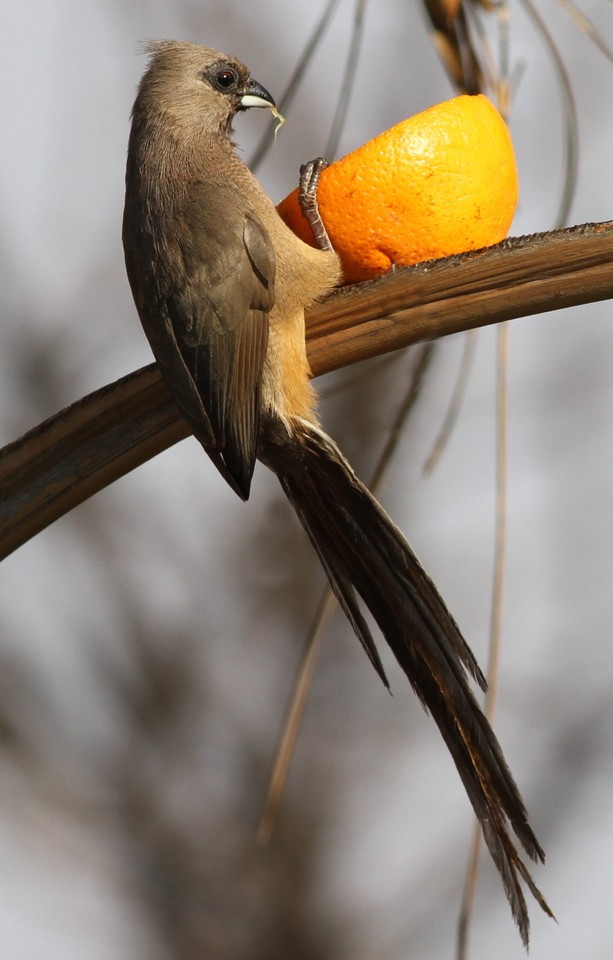
2. Speckled Mousebird
The speckled mousebird is about 35 cm (14 inches) long, with the tail comprising approximately half the length, and weighs about 57 grams (2 oz). It is well-named, because it is dull-mousy brown in overall color on the back and on the head (including a prominent crest). The bill is black on the upper part and is a pinkish color on the lower part. The rare white-headed mousebird can be confused with this species, but the differently colored mandibles and the lack of a bare grey orbital patch render the Speckled species distinctive. The speckled mousebird is not known for its voice, as songbirds are, although it is a noisy creature. They make a warbling tsu-tsu call while in flight, and are known for their tisk-tisk alarm call while in flight.
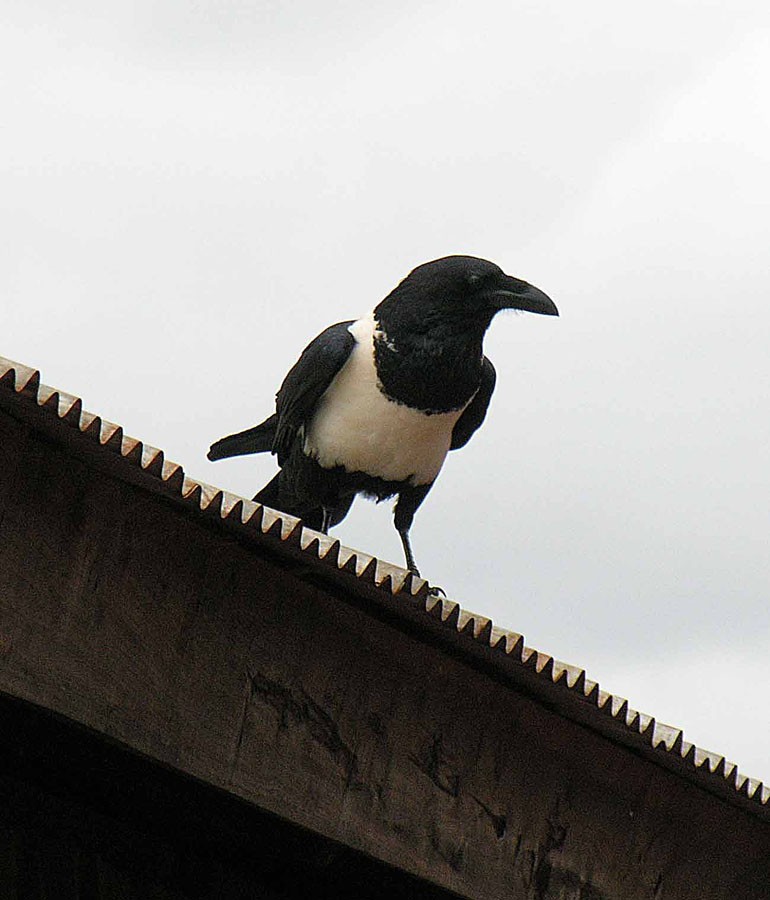
3. Pied Crow
It is approximately the size of the European carrion crow or a little larger (46–50 cm in length) but has a proportionately larger bill, slightly longer tail and wings, and longer legs. As its name suggests, its glossy black head and neck are interrupted by a large area of white feathering from the shoulders down to the lower breast. The tail, bill and wings are black too. The eyes are dark brown. The white plumage of immature birds is often mixed with black. It resembles the white-necked and thick-billed ravens but has a much smaller bill.
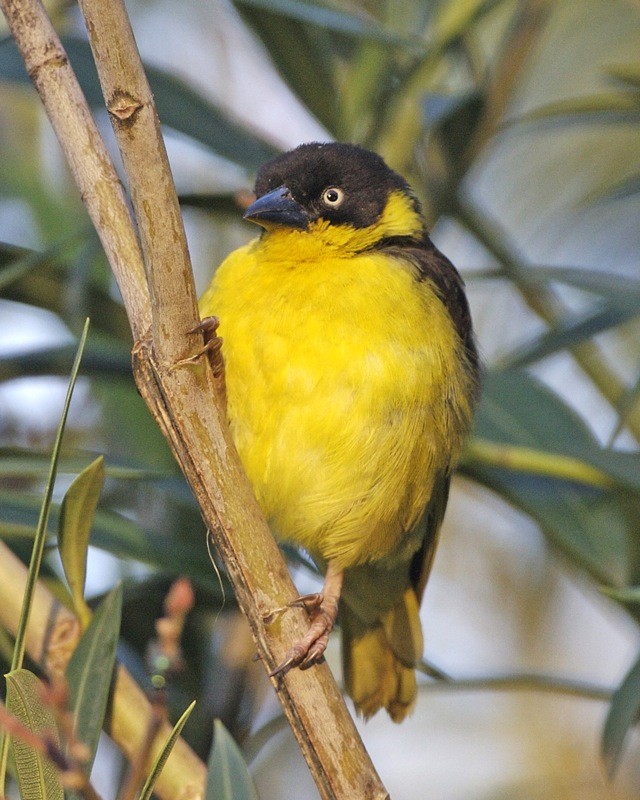
4. Baglafecht Weaver
The baglafecht weaver has a length of 15 cm (5.9 in). The adult male baglafecht weaver has a distinctive black mask which extends from the bill through the eye and onto the ear coverts contrasting with the bright yellow forehead, forecrown and throat. The upperparts are yellowish green with dark centres to the feathers creating a faint streaking. The underparts are bright yellow on the breast fading to white towards the vent. The tail is yellow washed dark brown. The bill is black and the eye is pale yellow. The female baglafecht weaver lacks a mask but has dusky lores with yellowish-green cap, concolorous with the upperparts. In the non breeding plumage the mask is largely lost but there remains a dusky area around the eye, greyish brown on the upperparts, including the crown, with white washed buff underparts. Juveniles and immature birds do not have a mask on the dark-yellowish green head. The nominate race and Emin's weaver assume a distinct non-breeding plumage, but Reichenow's weaver does not.
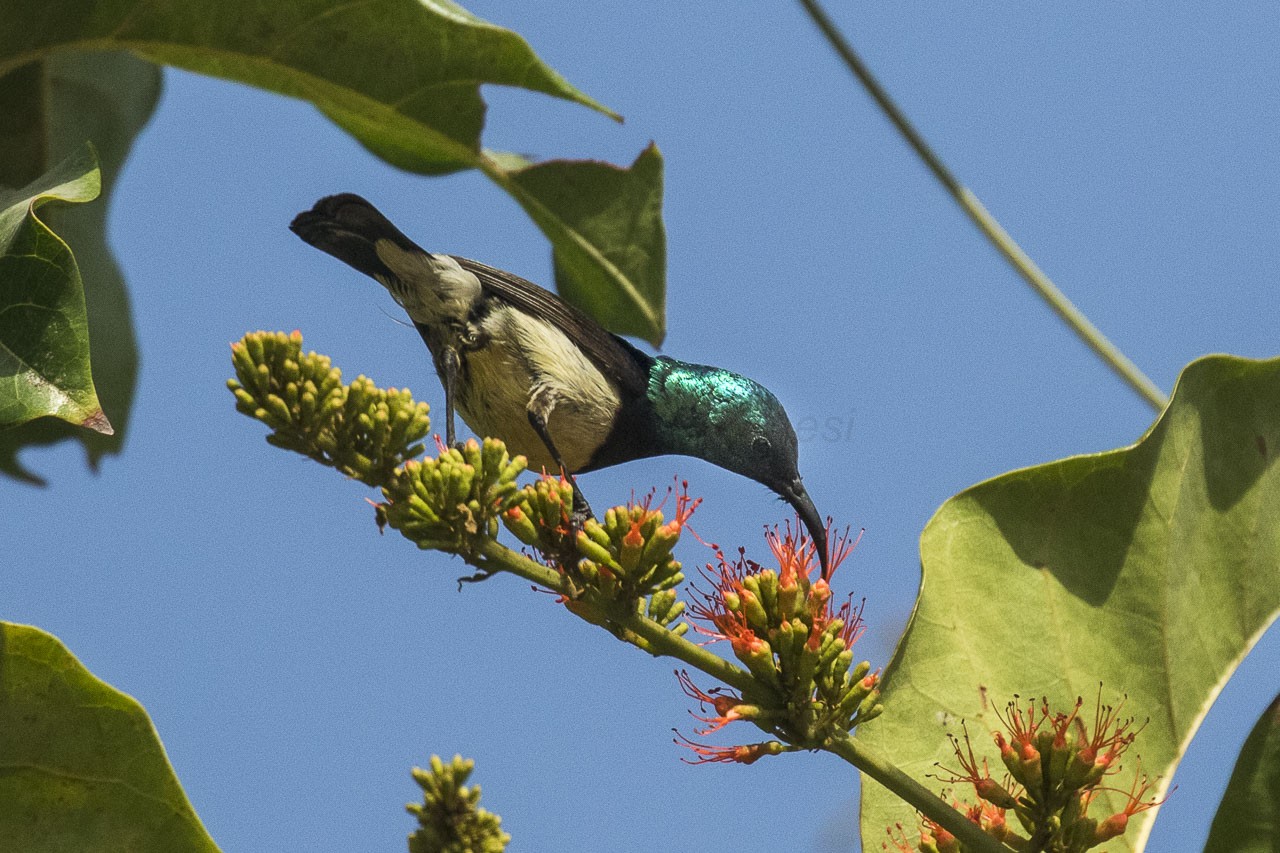
5. Variable Sunbird
The variable sunbird (or yellow-bellied sunbird), Cinnyris venustus (formerly Nectarinia venusta), is a sunbird. The sunbirds are a group of small Old World passerine birds which feed largely on nectar, although they will also take insects, especially when feeding young. Flight is fast and direct on their short wings. Most species can take nectar by hovering like a hummingbird, but usually perch to feed most of the time. The variable sunbird is a fairly common resident breeder in equatorial Africa. Two eggs are laid in a suspended nest in a tree. This species is found in open woodland and cultivation. Variable sunbirds are small, only 10 cm long. They have medium-length thin down-curved bills and brush-tipped tubular tongues, both adaptations to their nectar feeding. The adult male has a glossy green head, throat and nape, and a maroon breast band. In most subspecies, the belly of the male is yellow, but in a few it is orange or white. The female has grey-brown upperparts and yellowish underparts, and an obvious pale supercilium. The eclipse male is like the female, but shows some green, especially on the throat. The call is a clear tew-tew-tew-tew-tew .
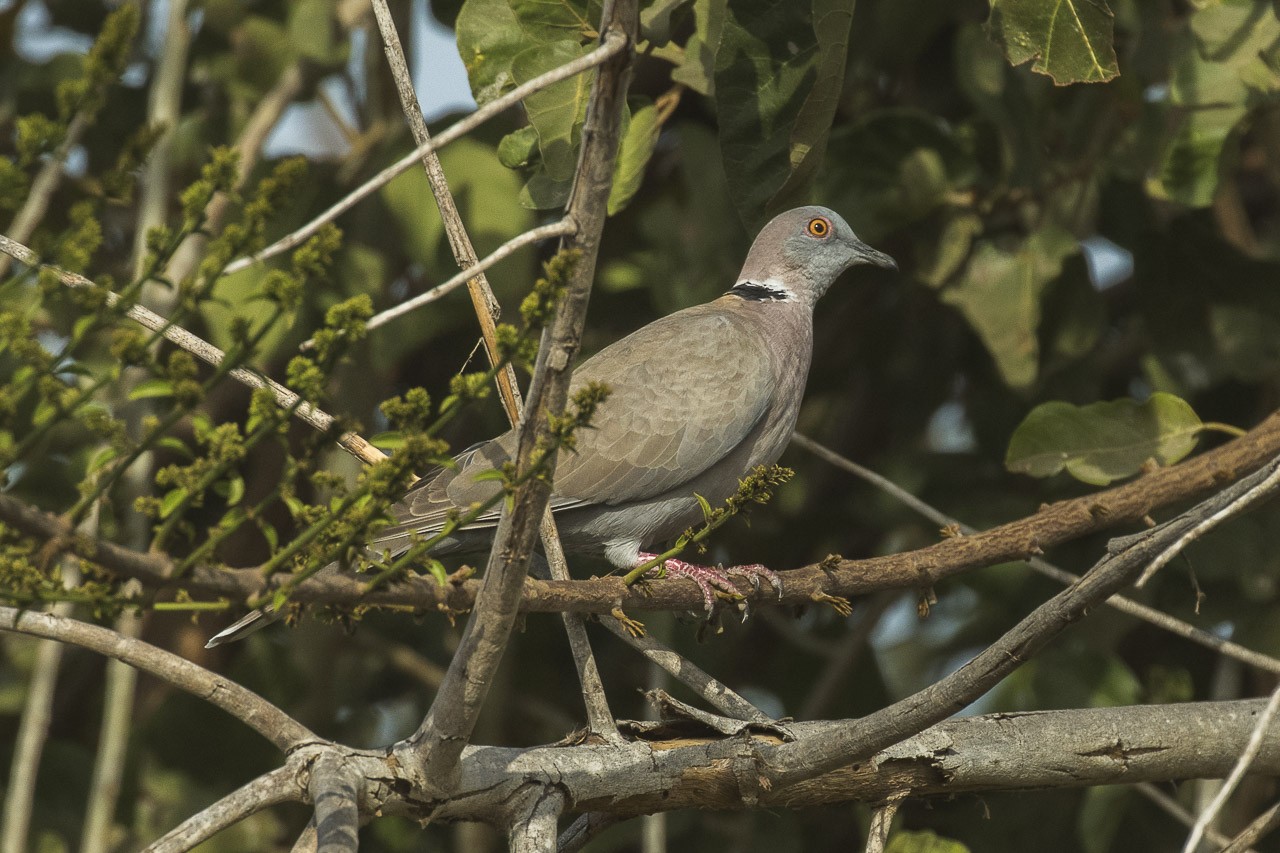
6. Red-eyed Dove
The red-eyed dove is a largish, stocky pigeon, typically 30 cm (12 inches) in length. Its back, wings and tail are pale brown. When flying, it shows blackish flight feathers. The head and underparts are dark vinous-pink, shading to pale grey on the face. There is a black hind neck patch edged with white. The legs and a patch of bare skin around the eye are red. The call is a loud doo-doo-du-du. Sexes are similar, but juveniles are duller than adults, and have scalloping on the body feathers. Red-eyed doves eat grass seeds, grains and other vegetation. They often forage on the ground.
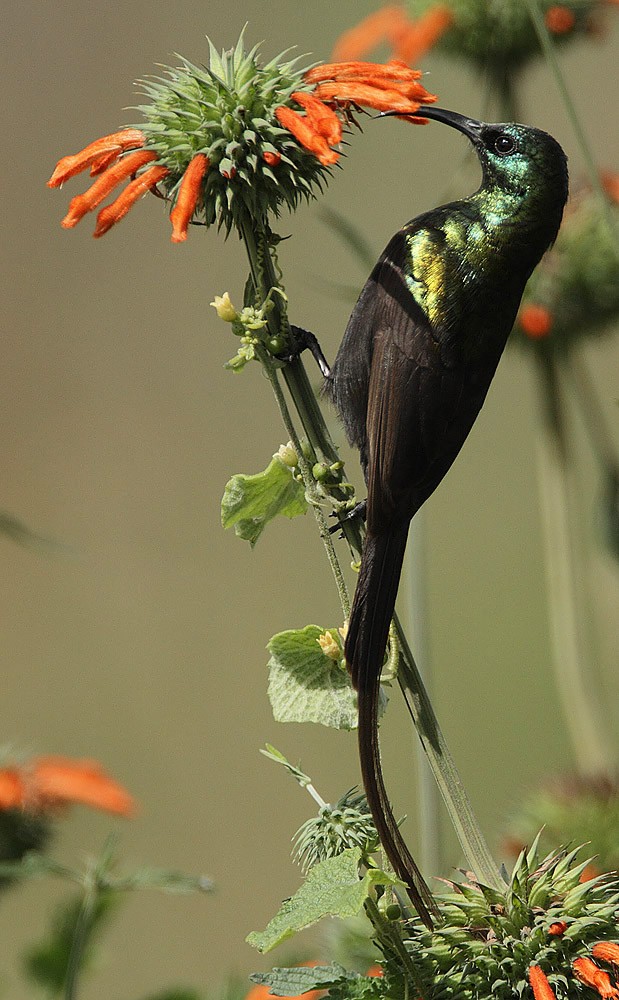
7. Bronze Sunbird
The bronzy sunbird (Nectarinia kilimensis) is a species of bird in the family Nectariniidae. It is found in Angola, Burundi, Democratic Republic of the Congo, Ethiopia, Kenya, Malawi, Mozambique, Rwanda, Tanzania, Uganda, Zambia, and Zimbabwe.
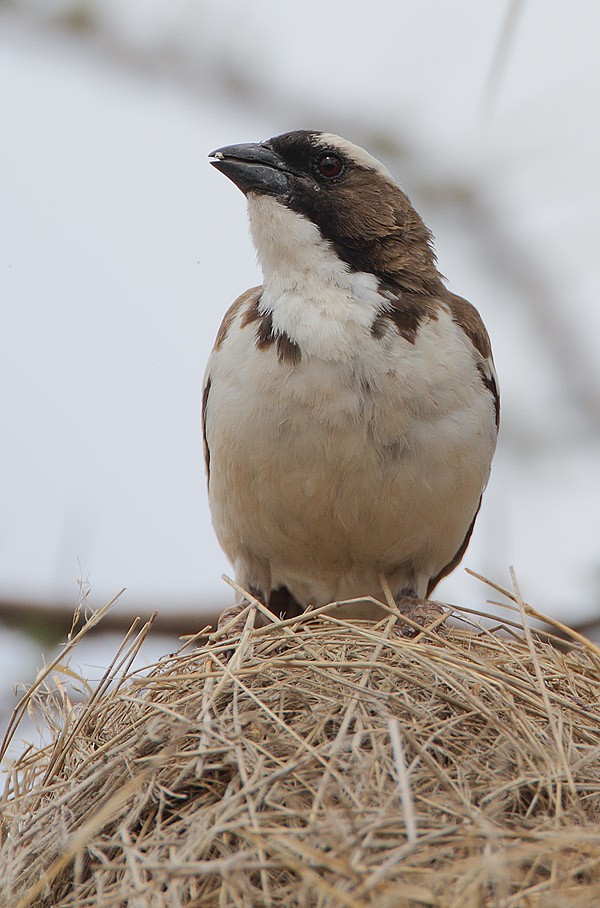
8. White-browed Sparrow-weaver
It ranges from 17 to 19 cm (6.7 to 7.5 in) in length and is characterized by a broad, white eyebrow stripe and white rump visible in flight. While the male white-browed sparrow-weaver sports a black bill, the female's bill is horn-colored (light gray); that of the juvenile is pinkish-brown. In Zimbabwe, the white-browed sparrow-weaver shows faint brown spotting across its white breast.
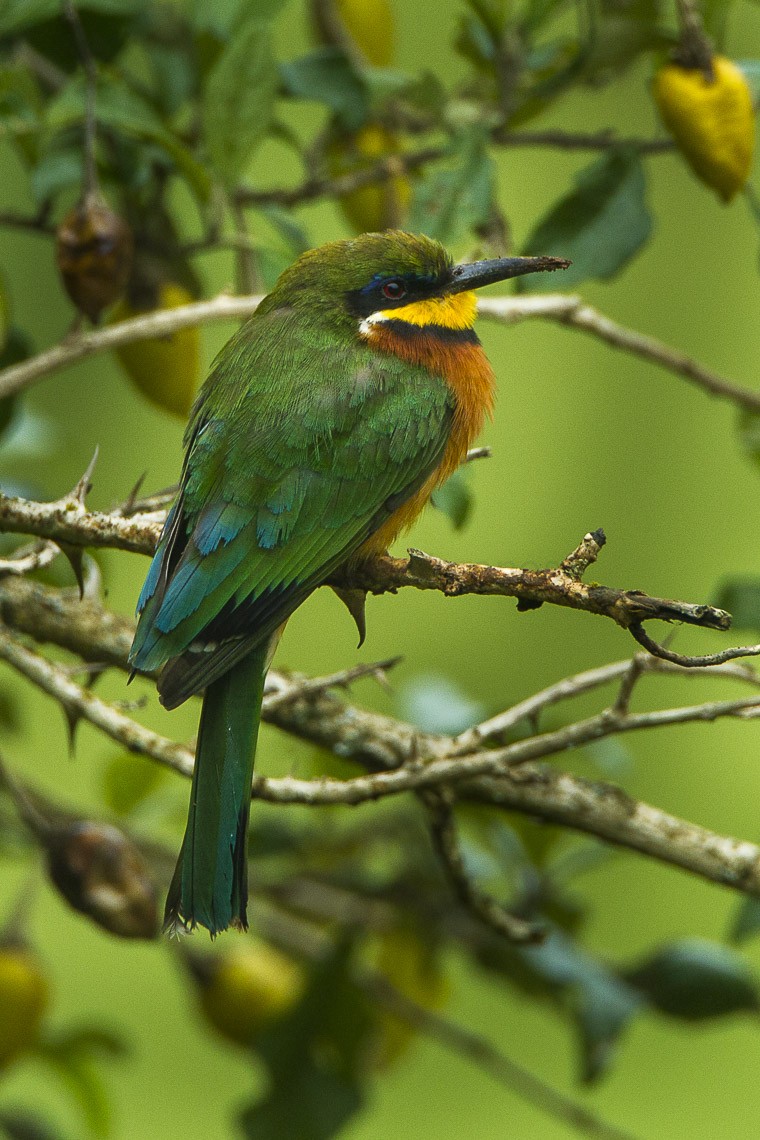
9. Cinnamon-chested Bee-eater
The sexes are alike in the cinnamon-chested bee-eater. They have bright green heads, upper parts, and tails; their chins and throats are yellow and outlined in black, with a white extension to the side; their breasts are cinnamon-brown, darkening towards the belly. When perched, their stance is upright with the tail pointing downward. The tail is blackish with an orange base and white tip when seen from the front, while from the back it is mainly green, with black edges visible when it is flared. This bird can be distinguished from the somewhat similar little bee-eater by their larger size, darker colouring, white cheek patches, and the upland habitat where they are found.
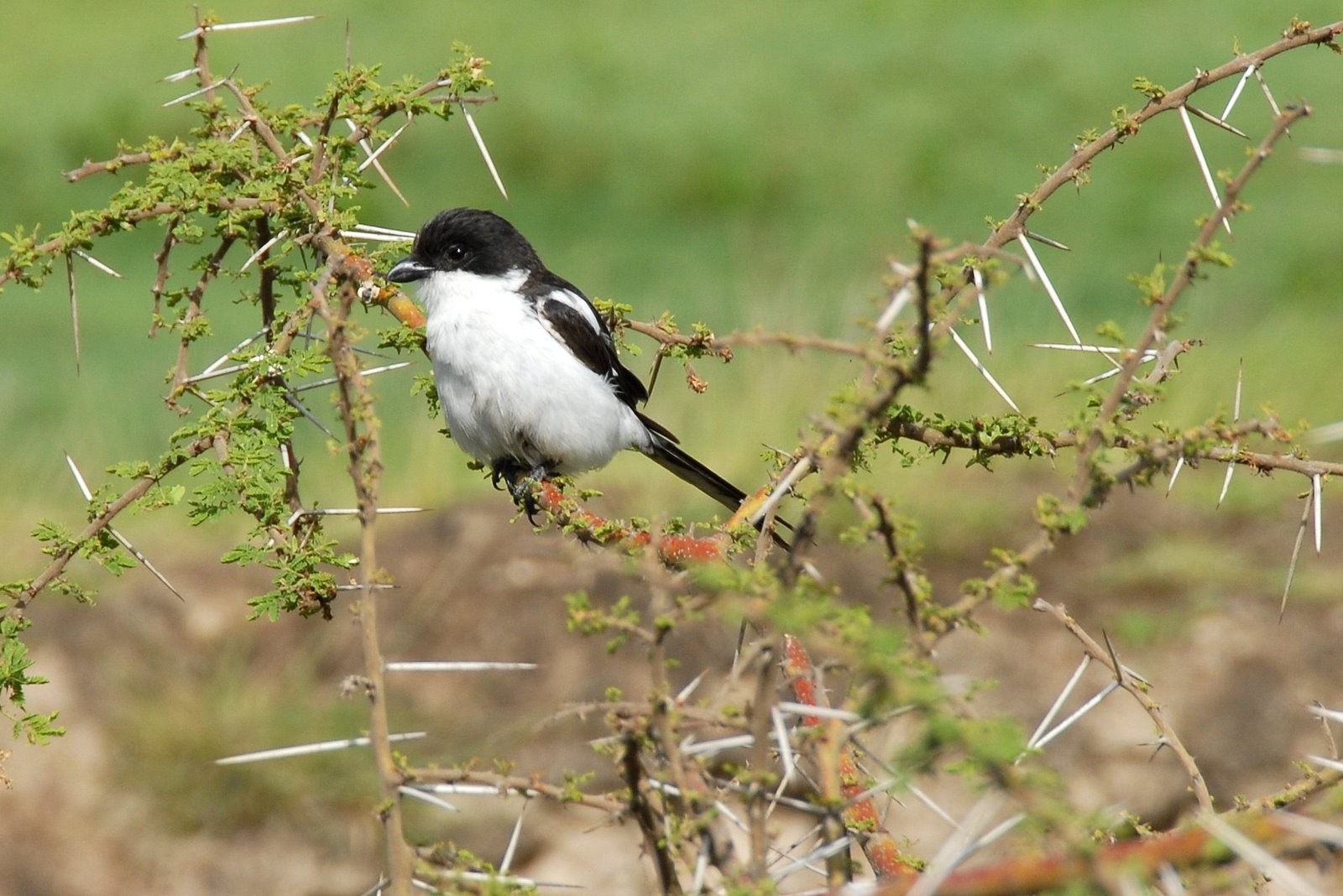
10. Northern Fiscal
The northern fiscal (Lanius humeralis) is a member of the shrike family found through most of Sub-Saharan Africa. It used to be grouped with the southern fiscal (Lanius collaris). Together they were called the common fiscal.
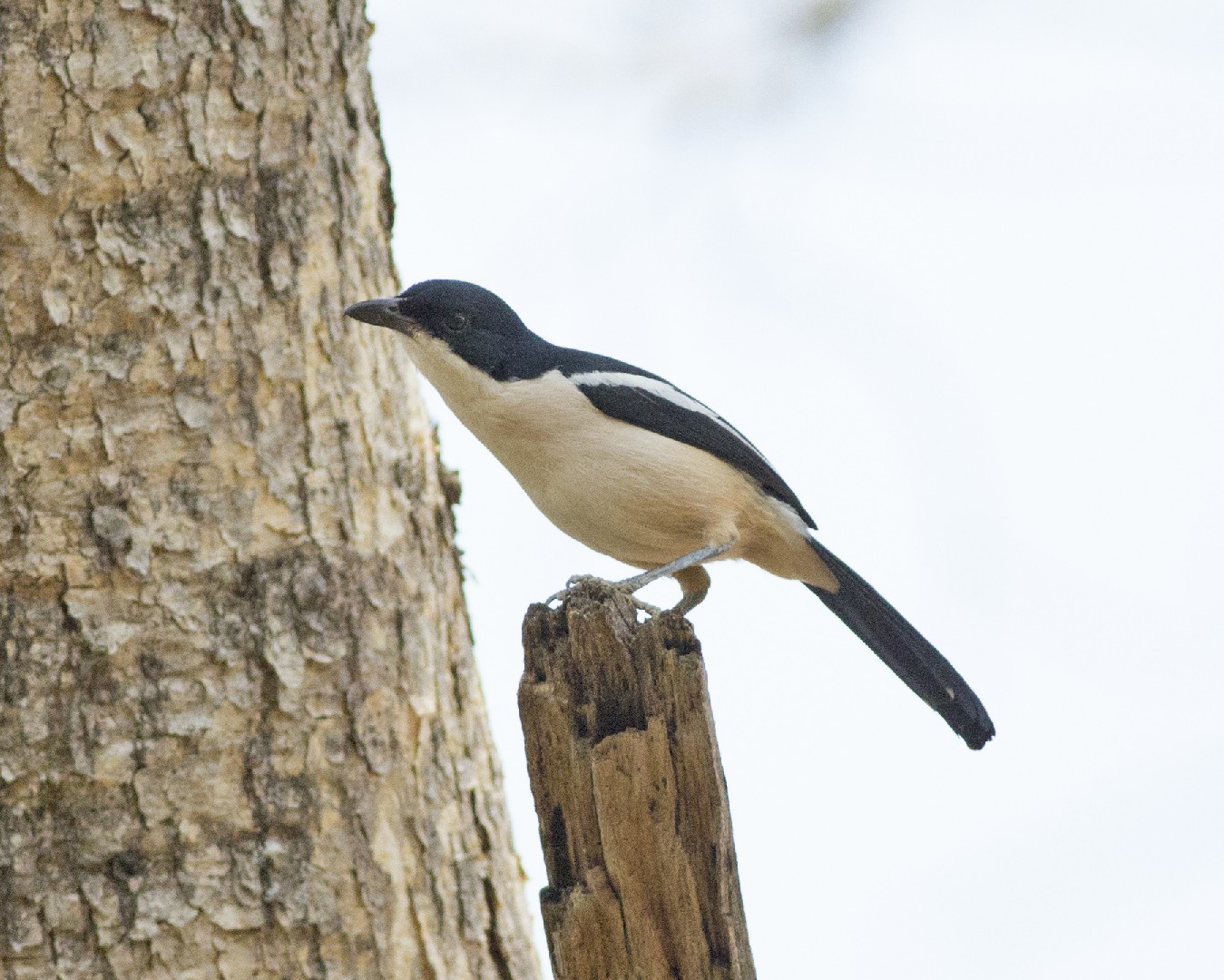
11. Tropical Boubou
The tropical boubou is fairly large for its family (bushshrikes), measuring 23–25 cm in length. Its weight can vary between about 38-70 g, but typically adults weigh between 50 and 60 g. Females are on average a bit smaller than males, but individual variation is so large that for most practical purposes the sexes seem to be of identical size. The wing measures about 98 mm on average (between 85 and 110), the tail is a mere two millimetres longer both on average and as regards variation. The tarsus is c.29–37 mm long, 33 mm on average, while the bill's exposed culmen measures a little over 20 mm in some populations and as much as 25 mm in others. Unlike the other measurements where there is mostly individual variation, the bill length might distinctly vary between subspecies. Not only are males and females the same size, they have identical plumage too. The adults' upper parts and tail are glossy blue-black except for concealed white spots on the rump, visible only when the wings are spread and the rump feathers are erected. The underparts are white, in some populations with a buffy or pinkish tinge on the breast and flanks, which is not always noticeable except in good light. The wings of most subspecies have a white stripe on the wing coverts, in some extending onto the secondary remiges. The tips of the outer tail feathers can be white in some subspecies. The bill is black, the legs and feet bluish grey. The irides are dark reddish brown. Nestlings have pinkish-brown skin and are nude after hatching, later growing sparse down; they apparently have spots inside their bills which they show their parents to get fed. Fledglings are similar to adults but duller, with the brownish head and the upper parts appearing mottled due to yellowish-ochre to tawny feather tips, forming a barring on the lower back and rump. The wing-stripe, if present, is dulled down. The undertail coverts are buff, and there is usually dusky barring on the dull white underside, especially on the flanks. The bill is greyish brown above, paler below. Immature birds independent from their parents have lost most of the mottling (except on the wing coverts) and barring, but their wing stripe and underside are still dull white, shading to brown on the flanks; any white tail feather tips appear at this stage. The northwesternmost populations of major might be confused with Turati's boubou (L. turatii), which has no white wing-band and a buff chin and white belly, while major around the southern edge of the Congo Basin look almost identical to the swamp boubou (L. bicolor), but this is pure white below and its females give a characteristic "ratchet" call in duets. Southeastern birds (mossambicus and especially limpopoensis) resemble the southern boubou (L. ferrugineus) but are black above instead of dark brown and grey – though this may be hard to see at a distance and entirely indistinguishable in the occasionally seen hybrid. When the tropical boubou is sympatric with other Laniarius, they are rarely found in the same habitat.
12. African Paradise Flycatcher
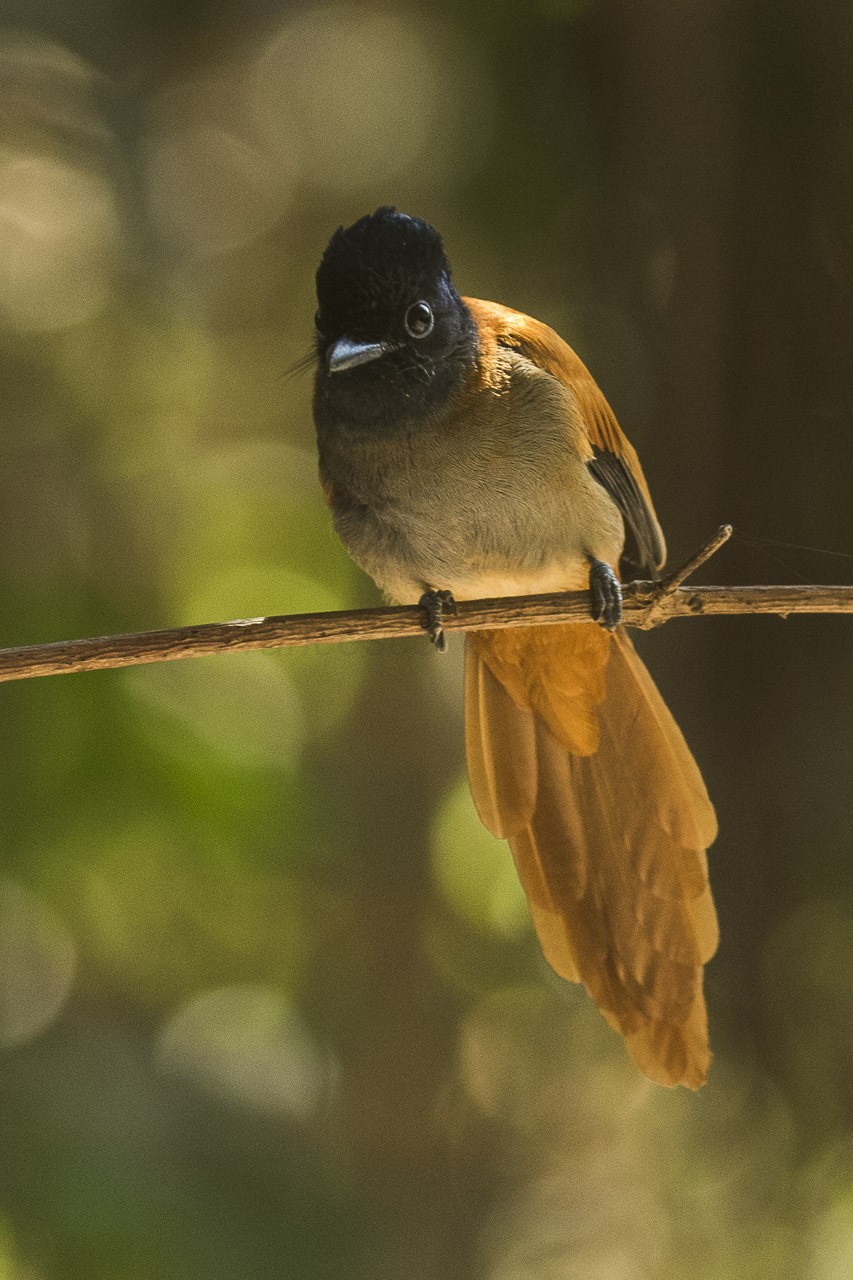
The adult male African paradise flycatcher is about 17 cm long, but the very long tail streamers double this. It has a black head, neck and underparts, and chestnut wings and tail. There is a prominent white wingbar. The female has a browner tint to the underparts and lacks the wingbar and tail streamers. Young birds are similar to the female but duller. The males show considerable variation in plumage in some areas. There is a morph of this species in which the male has the chestnut parts of the plumage replaced by white, and some races have black tail streamers. This species readily hybridizes with the genetically similar Rufous-vented paradise flycatcher. The red-bellied paradise flycatcher is also closely related to this species, and hybrids occur with the underparts a mixture of black and red.
13. Violet-backed Starling
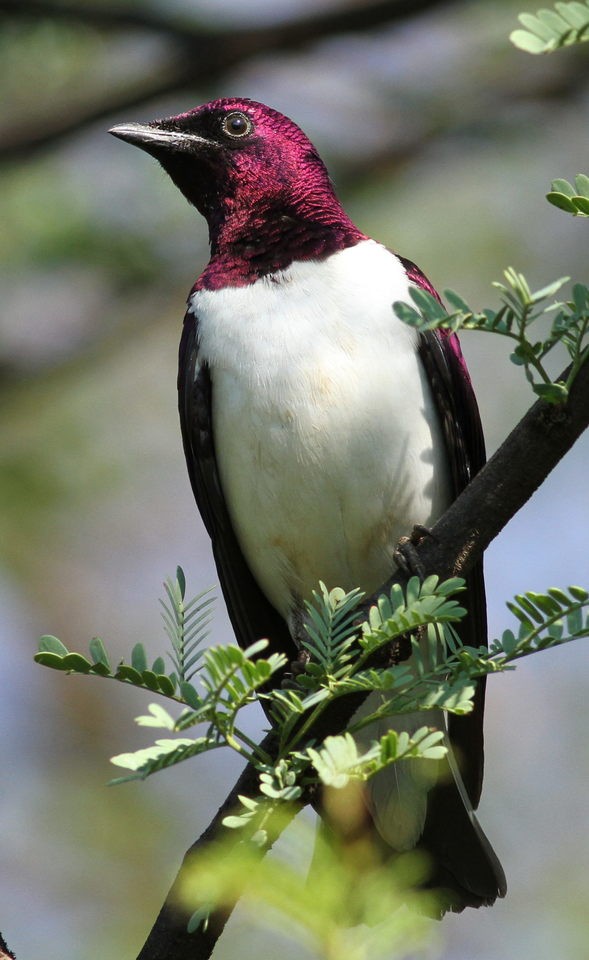
The violet-backed starling is a sexually dimorphic species with adults reaching a length of about 18 cm (7 in). The male has an iridescent violet head and back and pure white underparts. The female has a thrush-like appearance with brown, boldly-streaked upper parts and white, heavily-streaked underparts. Both sexes have yellow irises and black bills and legs.
14. Tawny-flanked Prinia
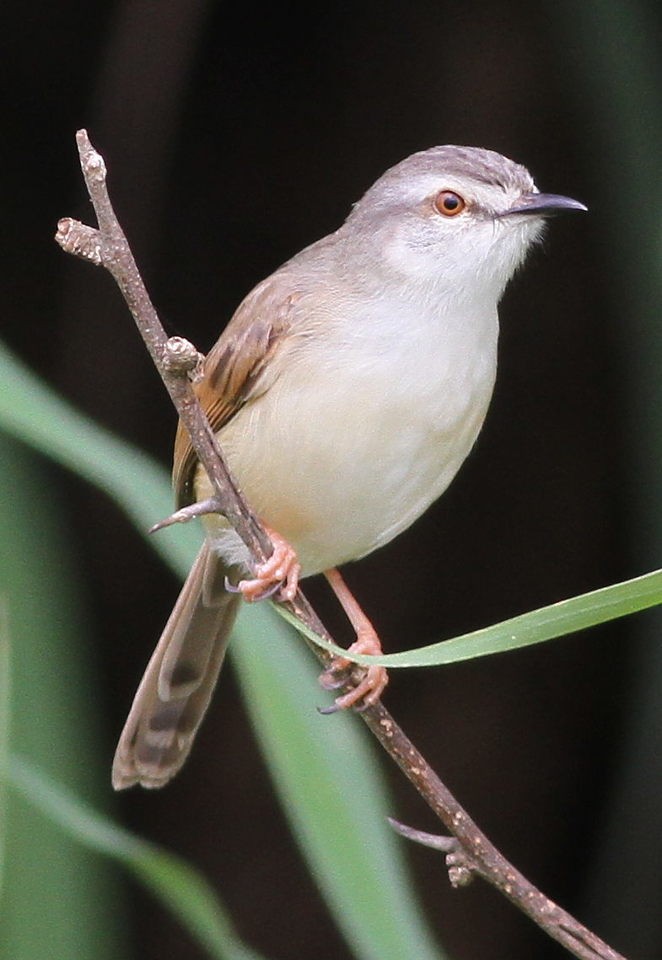
It is 10-13 centimetres in length with a long, narrow, graduated tail and a fairly long, slender bill. The tail is often held erect or waved from side to side. The upperparts are grey-brown with rufous-brown edges to the flight feathers and a rufous tinge to the rump. The throat and breast are whitish while the flanks and vent are warm buff. There is a whitish stripe over the eye and the lores are dark. The tail feathers have a white tip and a dark subterminal band. The sexes are similar in appearance. Non-breeding birds have a longer tail than breeding birds. Juveniles have pale yellow underparts and a yellowish bill. There are many recognised subspecies. The call is short, wheezy and rapidly repeated. The song is a monotonous series of shrill notes. The male often sings from an exposed perch. The pale prinia (P. somalica) of North-east Africa is similar but paler and greyer with whitish flanks. It inhabits drier, more open habitats than the tawny-flanked prinia. The river prinia (P. fluviatilis) of West Africa is also paler and greyer and has a longer tail. It is restricted to waterside vegetation.
15. White-eyed Slaty Flycatcher
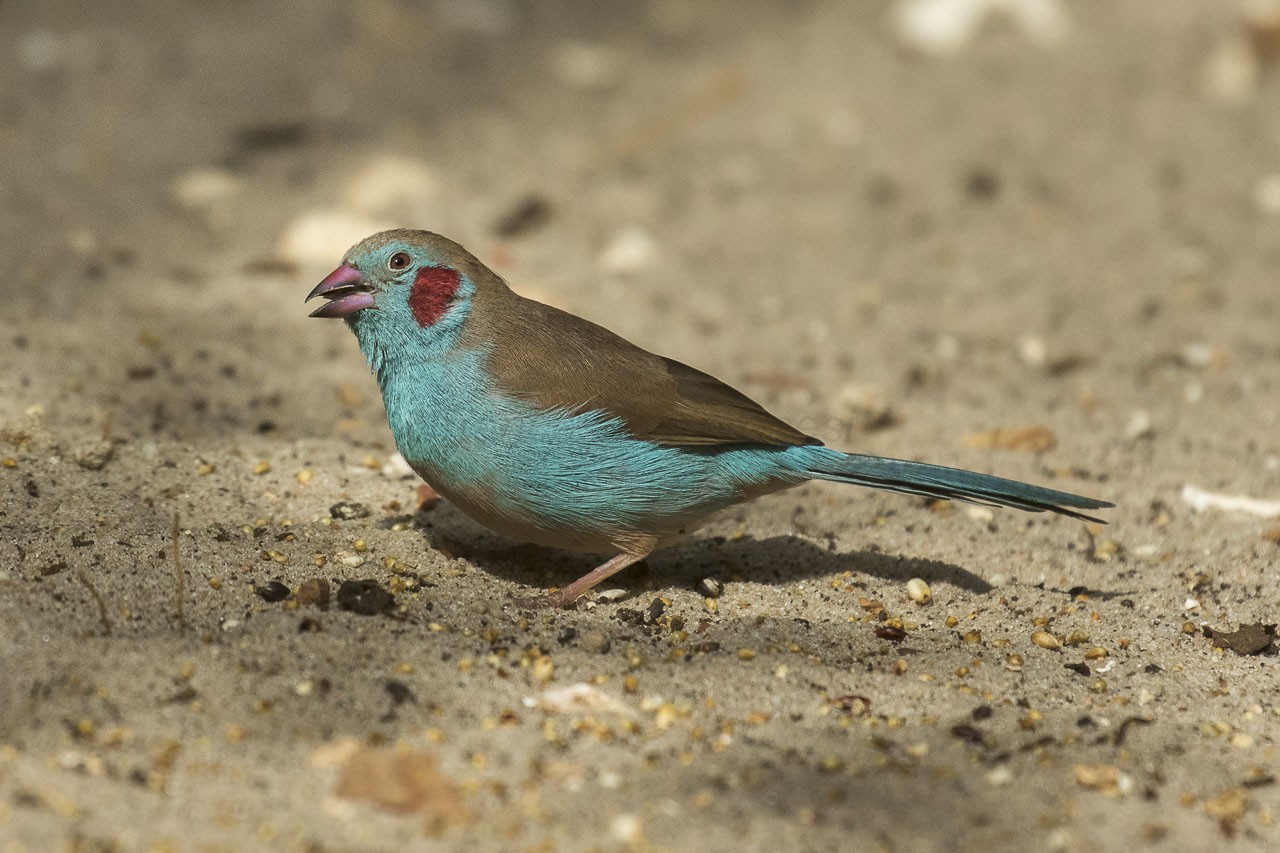
16. Red-cheeked Cordonbleu
Like other members of its genus, the red-cheeked cordon-bleu is a very small finch, measuring only 12.5–13 cm (4.9–5.1 in) in length. It weighs 9.9 g (0.35 oz) on average, with known extremes in wild populations ranging from 8.9–11 g (0.31–0.39 oz). The adult male has uniformly brown upperparts, pale blue breast, flanks and tail and a yellow belly. There is a red patch on each cheek, but this can rarely appear orange or even yellow. Females are similar but duller, and lack the cheek spot. Immature birds are like the female, but with blue restricted to the face and throat.
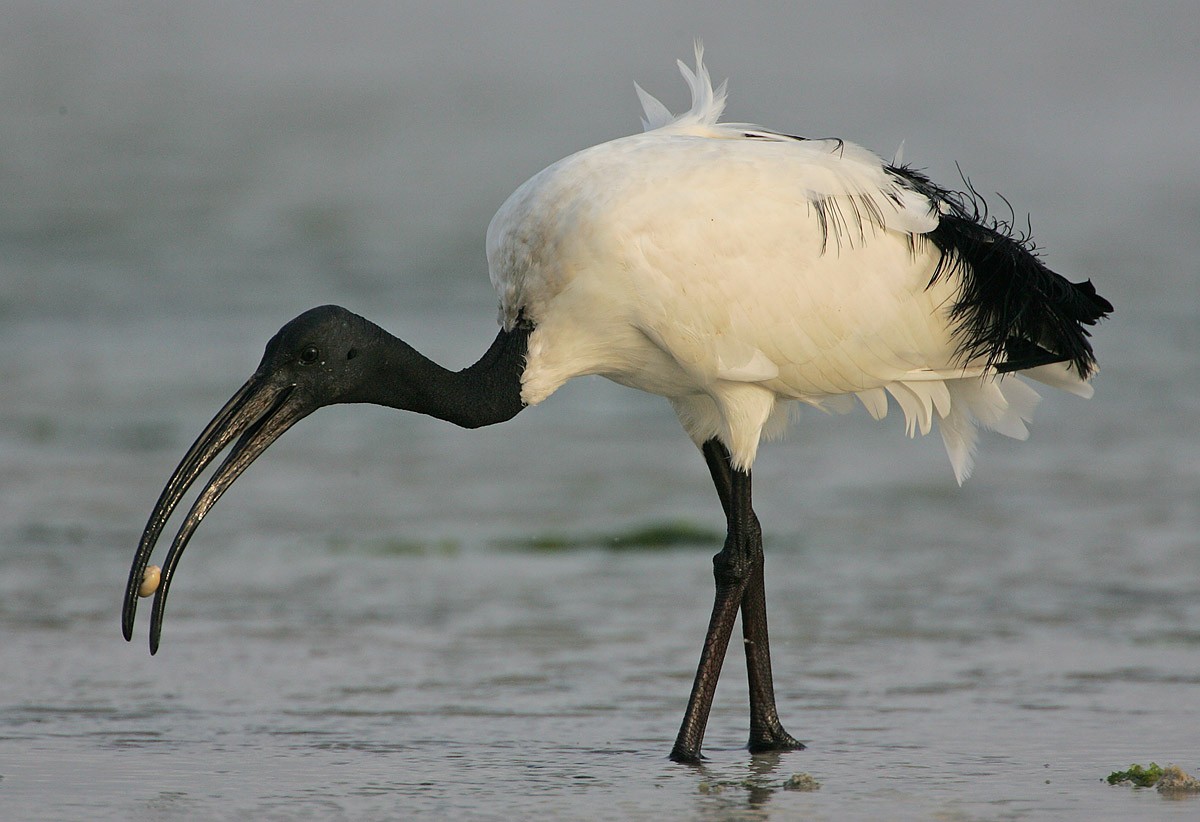
17. African Sacred Ibis
An adult individual is 68 cm (27 in) long with all-white body plumage apart from dark plumes on the rump. Wingspan is 112 to 124 cm (44 to 49 in) and body weight 1.35 to 1.5 kg (3.0 to 3.3 lb). Males are generally slightly larger than females. The bald head and neck, thick curved bill and legs are black. The white wings show a black rear border in flight. The eyes are brown with a dark red orbital ring. Sexes are similar, but juveniles have dirty white plumage, a smaller bill and some feathering on the neck, greenish-brown scapulars and more black on the primary coverts. This bird is usually silent, but occasionally makes puppy-like yelping noises, unlike its vocal relative, the hadada ibis.
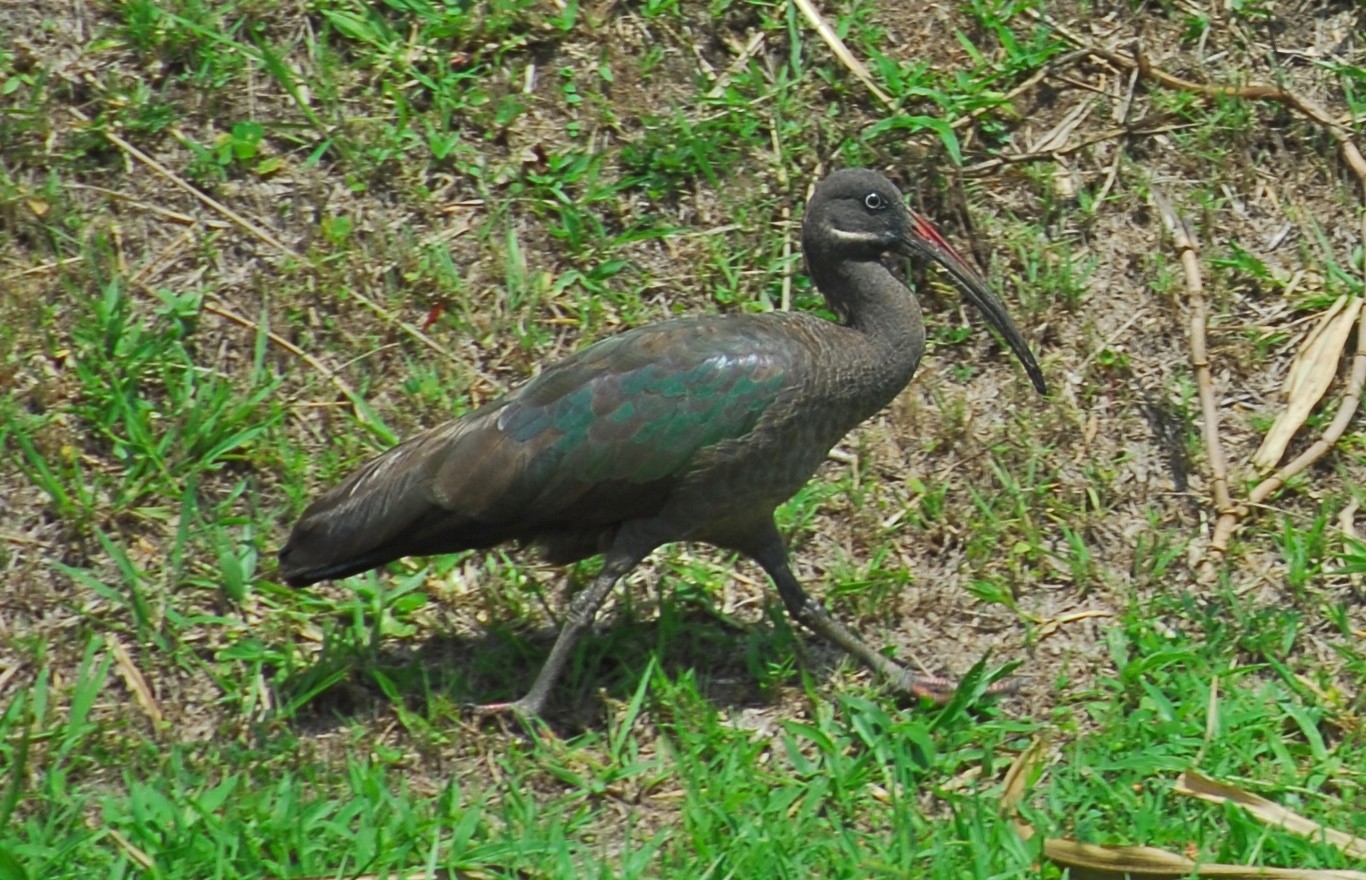
18. Hadada Ibis
The hadeda is a large (about 76 cm long), grey-to-partly brown species of ibis. Males and females are alike in plumage. It has a narrow, white, roughly horizontal stripe across its cheeks. This is sometimes called the "moustache" though it does not reach the mouth corners. The plumage over the wings has an iridescent purple sheen produced by optical microstructures within the feathers. The bird has blackish legs and a large grey-to-black bill but during the breeding season it has a red culmen on the basal half of the upper mandible. The upper surfaces of the toes are of a similar red during the onset of breeding. The wings are powerful and broad, enabling quick take-offs and easy manoeuvring through dense tree cover. It has an extremely loud and distinctive "haa-haa-haa-de-dah" call—hence the onomatopoetic name. The call is often heard when the birds are flying or are startled, or when the birds communicate socially, for example early in the morning in residential suburbs. While roosting they produce a single loud "haaaa". When foraging, their contact call is a low growl similar to that made by a young puppy.
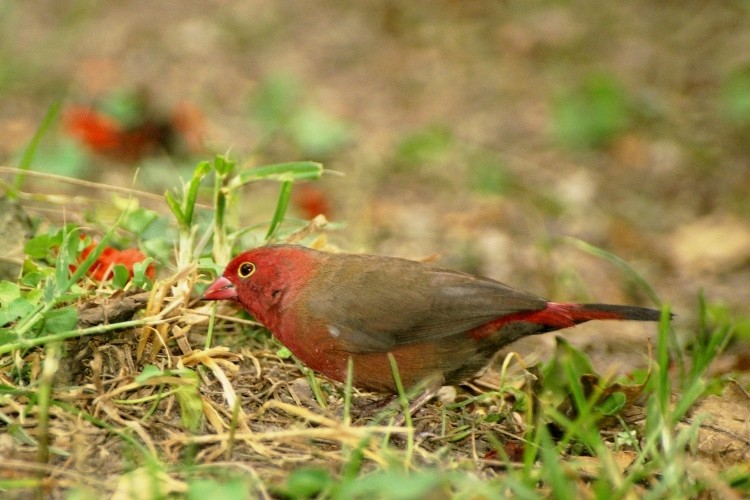
19. Red-billed Firefinch
The red-billed firefinch is 10 cm (3.9 in) in length. The adult male has entirely scarlet plumage apart from brown wings. The bill is pink, and there is a yellow eye-ring. Females have uniformly brown upperparts and buff underparts. There is a small red patch in front of both eyes, with the bill also being pink.
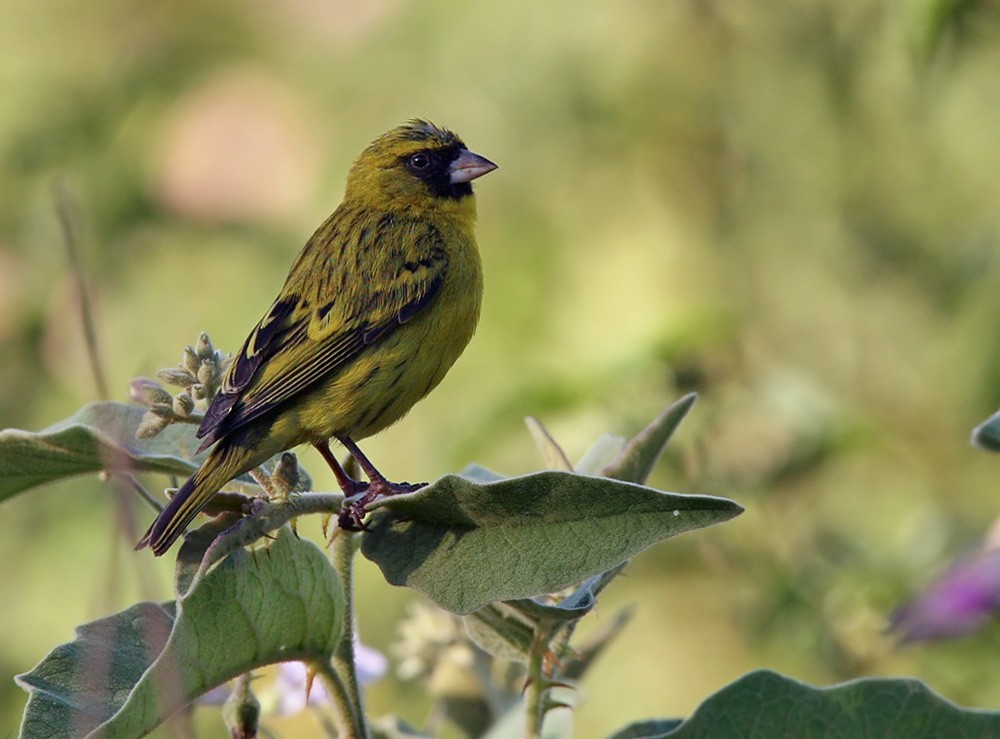
20. African Citril