




Top 20 Most Common Bird in Montserrado
Montserrado is a verdant region in Liberia, marked by tropical rainforests and mangrove swamps. The habitat is home to a diverse range of 20 avian species, each one possessing distinct characteristics. This could range from remarkable plumage, sophisticated bird calls, to intriguing behavior and adaptation traits. Acquainting oneself with these stunning birds provides a deeper insight into Montserrado's vibrant biodiversity.

Most Common Bird
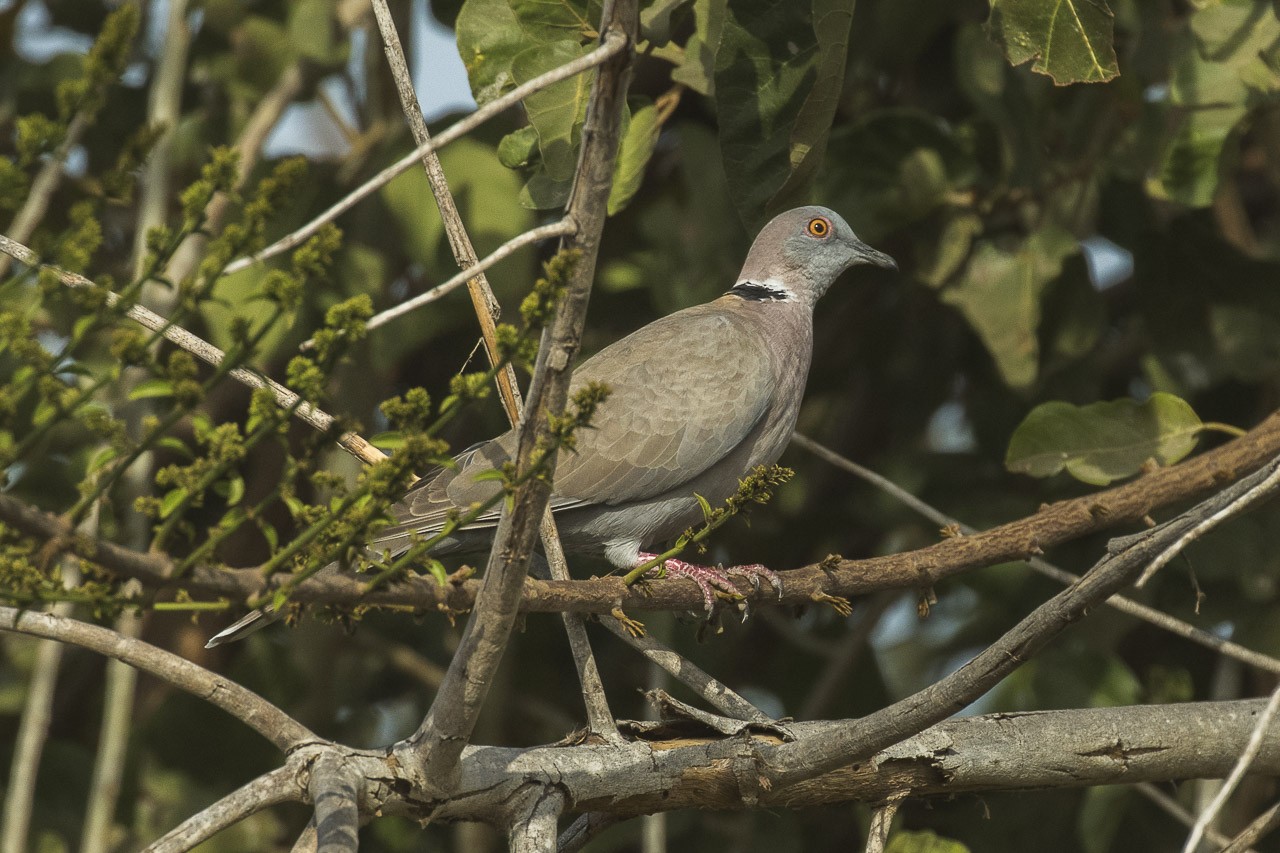
1. Red-eyed Dove
The red-eyed dove is a largish, stocky pigeon, typically 30 cm (12 inches) in length. Its back, wings and tail are pale brown. When flying, it shows blackish flight feathers. The head and underparts are dark vinous-pink, shading to pale grey on the face. There is a black hind neck patch edged with white. The legs and a patch of bare skin around the eye are red. The call is a loud doo-doo-du-du. Sexes are similar, but juveniles are duller than adults, and have scalloping on the body feathers. Red-eyed doves eat grass seeds, grains and other vegetation. They often forage on the ground. 
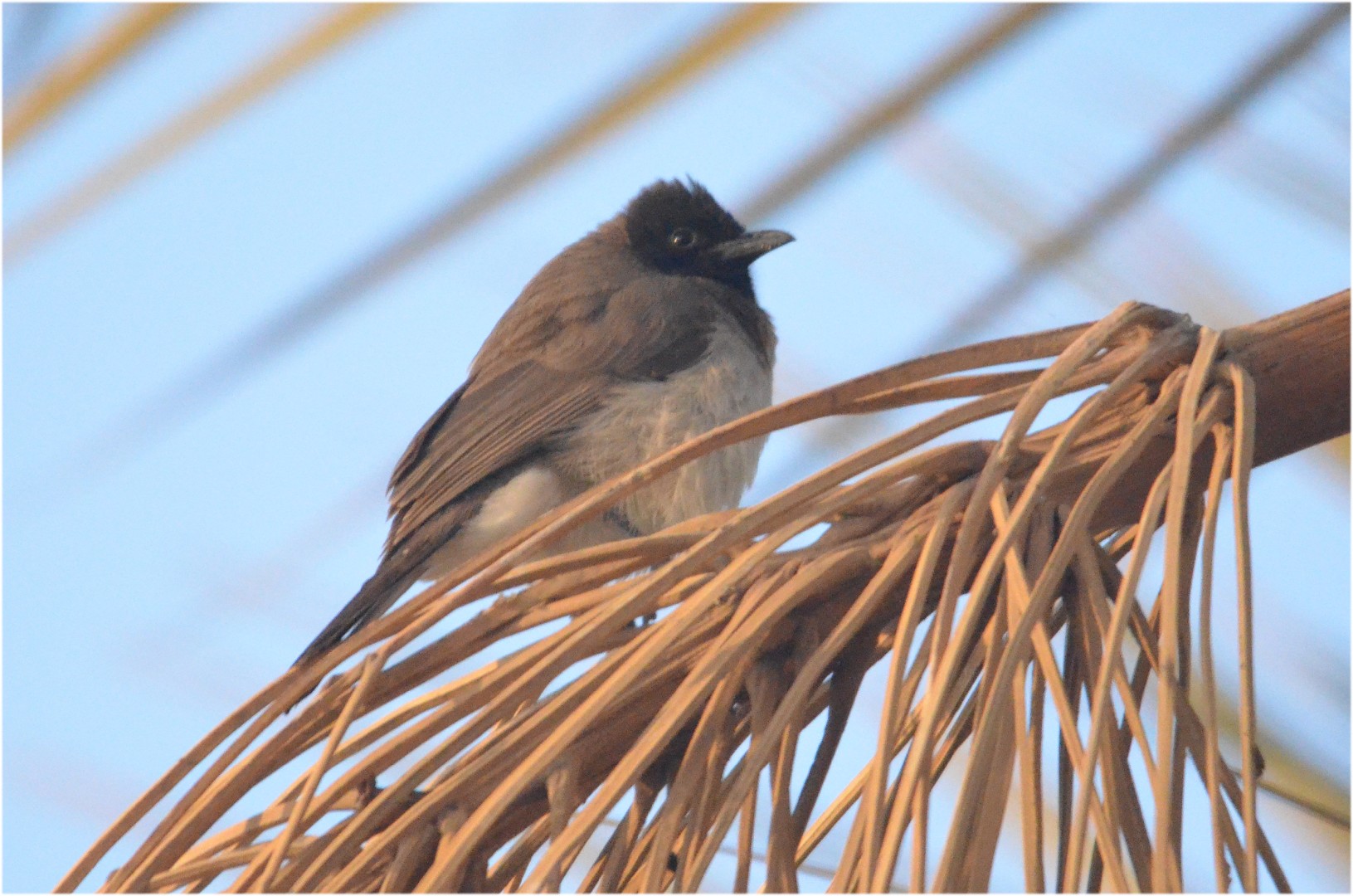
2. Common Bulbul
The bill is fairly short and thin, with a slightly downcurving upper mandible. The bill, legs, and feet are black and the eye is dark brown with a dark eye-ring, which is not readily visible. It is about 18 cm in length, with a long tail. It has a dark brown head and upperparts. Sexes are similar in plumage.
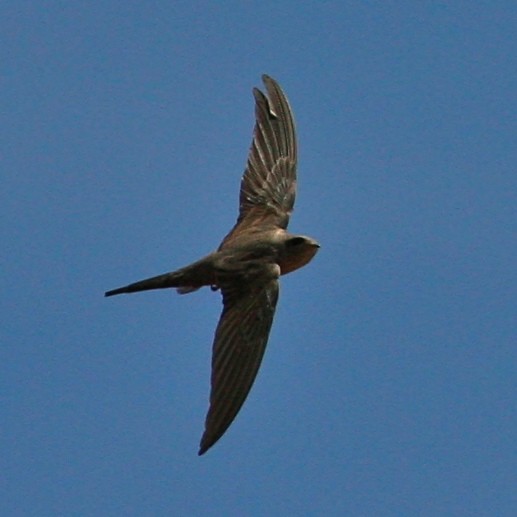
3. African Palm Swift
This 16 cm long species is mainly pale brown in colour. It has long swept-back wings that resemble a crescent or a boomerang. The body is slender, and the tail is long and deeply forked, although it is usually held closed. The call is a loud, shrill scream. Sexes are similar, and young birds differ mainly in their shorter tails. Palm swifts have very short legs which they use only for clinging to vertical surfaces, since swifts never settle voluntarily on the ground.
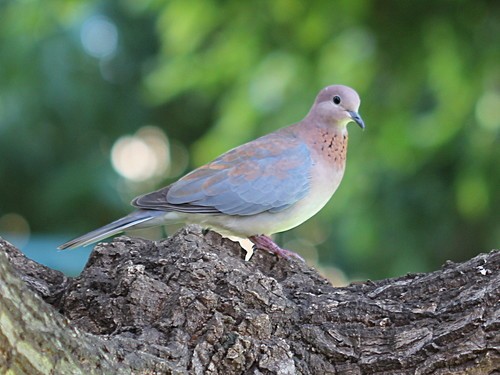
4. Laughing Dove
The laughing Dove is a small dove named after its distinctive laugh-like vocalization. This ground-feeding, non-migratory bird is a regular inhabitant of man-altered environments such as villages, gardens, and orchards. In cities, these doves tend to become quite confident. They pair for life and live in very small communities.

5. Black-winged Kite
This long-winged raptor is predominantly grey or white with black shoulder patches, wing tips and eye stripe. The long falcon-like wings extend beyond the tail when the bird is perched. In flight, the short and square tail is visible and it is not forked as in the typical kites of the genus Milvus. When perched, often on roadside wires, it often adjusts its wings and jerks its tail up and down as if to balance itself. The sexes are alike in plumage. Their large forward-facing eyes placed under a bony shelf that shades them is distinctive; their velvety plumage and zygodactyl feet are characters shared with owls and the genus has been considered as a basal group within the Accipitridae. They are thought to have been adapted for living in savanna habitats where seasonal rodent population peaks occur. Such food resources are also favoured by the owls. The inner vanes of the feathers have velvety barbules. They have a diploid chromosome number of 68 (some older studies claimed 64 for E.c.caeruleus and 66 for E.c.vociferus) with a distinct karyotype with resemblances to the kites and honey buzzards and suggesting a basal position within the diurnal birds of prey.
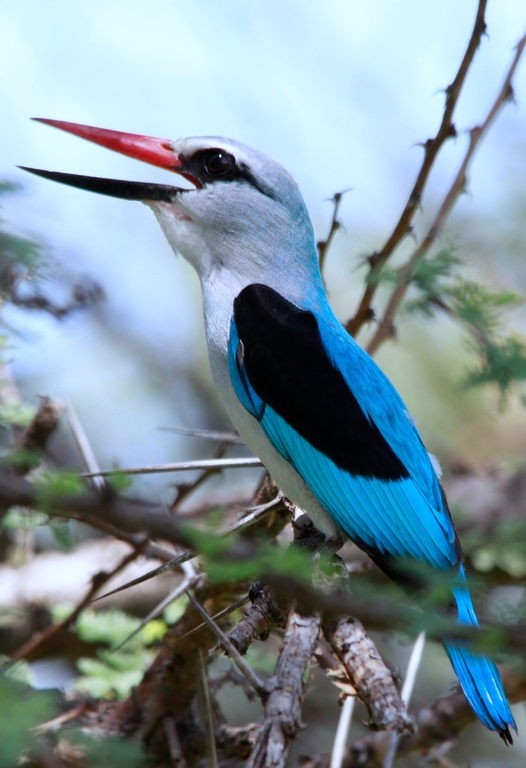
6. Woodland Kingfisher
This is a medium-sized kingfisher, 23 cm (9.1 in) in length. The adult has a bright blue back, wing panel and tail. Its head, neck and underparts are white, and its shoulders are black. The flight of the woodland kingfisher is rapid and direct. The large bill has a red upper mandible and black lower mandible. The legs and feet are dark grey. Some birds may have greyish heads, causing confusion with mangrove kingfisher. However, the lores are dark, creating a dark stripe through the eye (the stripe does not extend through the eye in mangrove kingfisher), and the underwing, primaries and secondaries are black with white underwing coverts (there is a black carpal patch on the white coverts in mangrove kingfisher). The inner webs of the base of the flight feathers are white, creating an indistinct white wingbar (white completely absent from wings in mangrove kingfisher). The breast is white (tends to be much greyer in mangrove kingfisher). The sexes are similar, but juveniles are duller than adults and have a brown bill. The call of this noisy kingfisher is a loud trill sounding like a nail run down the teeth of a comb.
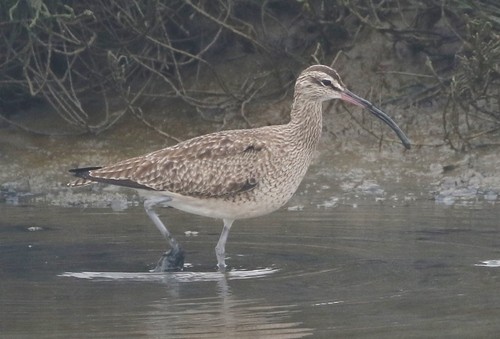
7. Whimbrel
The whimbrel is a shorebird that is often found in coastal areas. It is often present in flocks, mixing with other shorebirds. It is distinguishable by its short, high-pitch whistles that males often emit to warn others of potential predators. A primary food source for the shorebird in the winter is the fiddler crab. Its curved bill allows the bird to easily dig into the crab’s burrow.
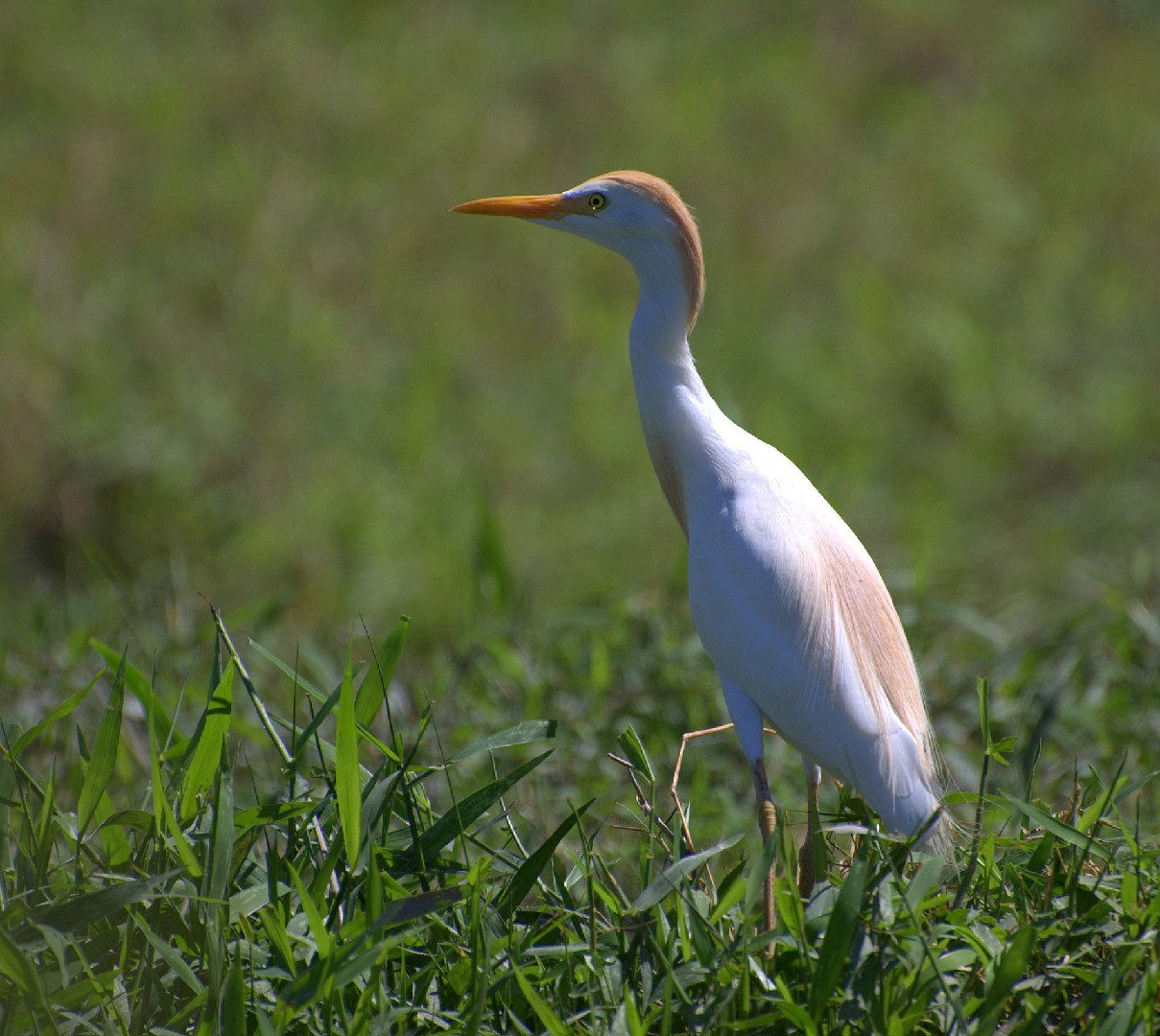
8. Cattle Egret
Cattle Egrets are short, thick-necked egrets. Their name refers to their preference to follow along with livestock as they forage in fields. Cattle Egrets were native only to Africa until the late 1800s when they somehow made their way throughout the Americas. They can often be found along airport runways waiting for planes to take off and blow insects out of the grass and weeds. They also follow behind farm equipment and do the same thing.
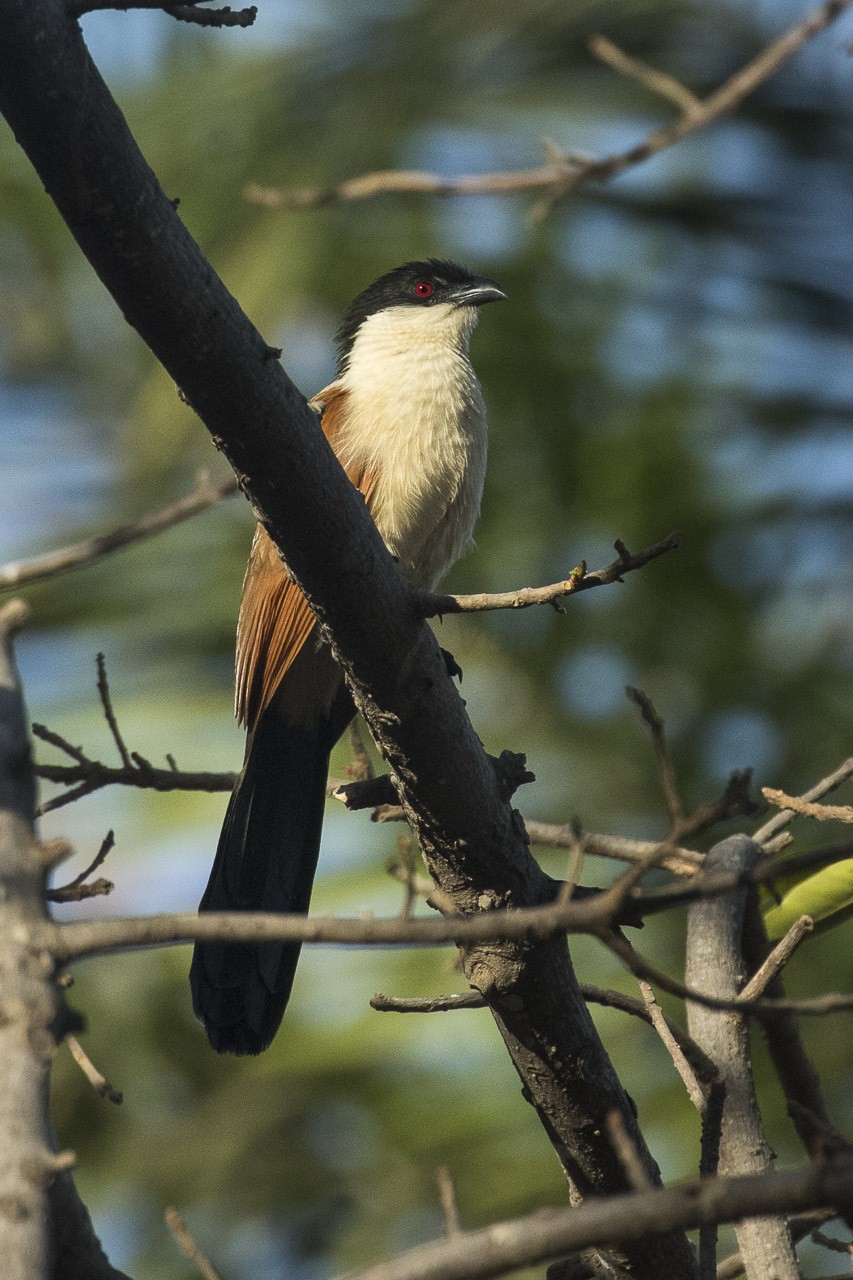
9. Senegal Coucal
This is a medium-sized species at 39 cm (15 in). Its crown, nape and upper parts, bill, legs and long tail are black, the eyes are red, the wings are chestnut, and the underparts are creamy white, with blackish barring on the flanks. The sexes are similar, but juveniles are browner and more heavily barred above, with buff to cinnamon, barred and streaked underparts.
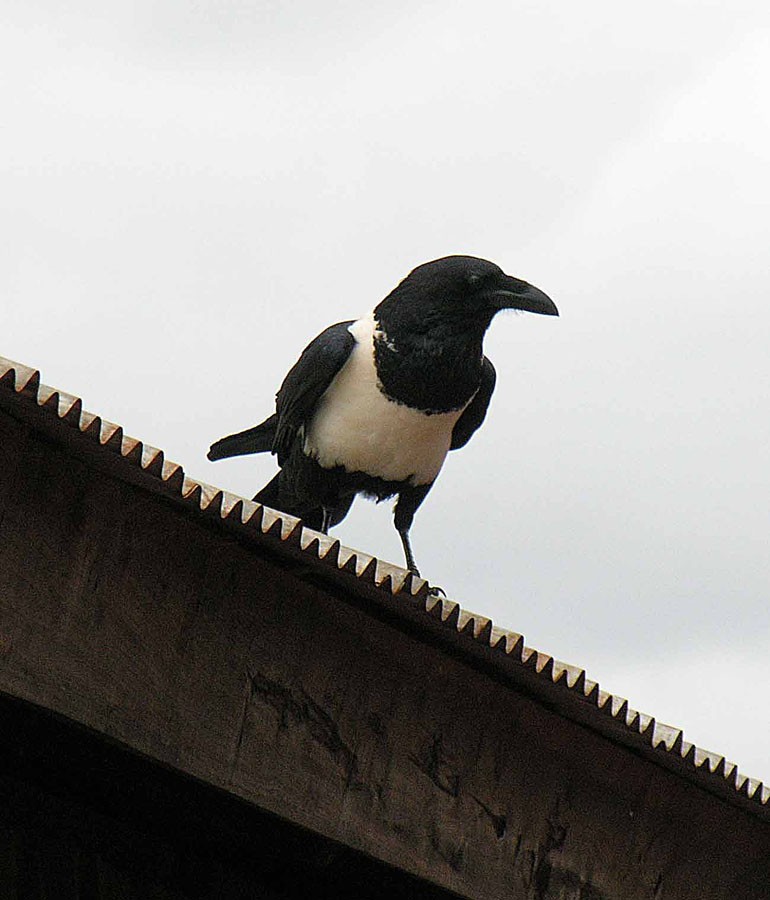
10. Pied Crow
It is approximately the size of the European carrion crow or a little larger (46–50 cm in length) but has a proportionately larger bill, slightly longer tail and wings, and longer legs. As its name suggests, its glossy black head and neck are interrupted by a large area of white feathering from the shoulders down to the lower breast. The tail, bill and wings are black too. The eyes are dark brown. The white plumage of immature birds is often mixed with black. It resembles the white-necked and thick-billed ravens but has a much smaller bill.
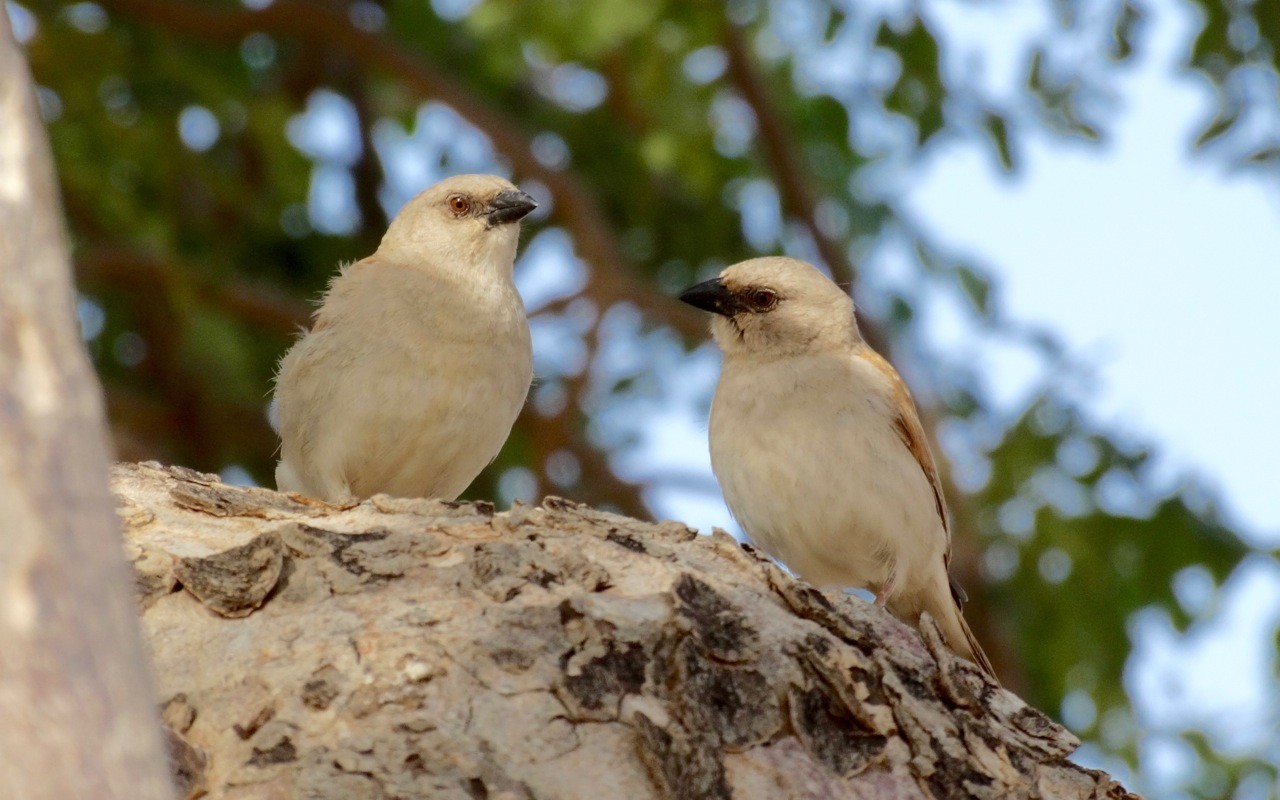
11. Northern Grey-headed Sparrow
The northern grey-headed sparrow (Passer griseus), also known as the grey-headed sparrow, is a species of bird in the sparrow family Passeridae, which is resident in much of tropical Africa. It occurs in a wide range of open habitats, including open woodlands and human habitation, often occupying the same niche as the house sparrow does in Eurasia. The adult northern grey-headed sparrow has a pale grey head with a white moustache stripe, pale brown upperparts, whitish underparts and chestnut wings with a small white shoulder patch. The sexes are similar, but young birds are slightly duller and lack the white wing patch. There are three subspecies, differing in plumage tone, especially with regard to the darkness of the head. This sparrow is mainly resident in its range, but there is some seasonal movement, and flocks of up to 50 birds form outside the breeding season. It builds a cup nest in trees, thatch, or old nests of other birds; 2–4 eggs are laid. This species feeds principally on seeds and grain, like other sparrows, but will readily take insects including termites, especially when feeding young. The calls include cheeps and chirps, and the typical sparrow churring alarm call. The northern grey-headed sparrow is replaced in eastern and southern Africa by very similar birds that are sometimes considered races of this species: Swainson's sparrow, the parrot-billed sparrow, the Swahili sparrow, and the southern grey-headed sparrow. According to phylogenetic studies by Arnaiz-Villena et al., this species is indeed related to the other grey-headed sparrows, and these species together are most closely related within genus Passer to the house sparrow and allies.
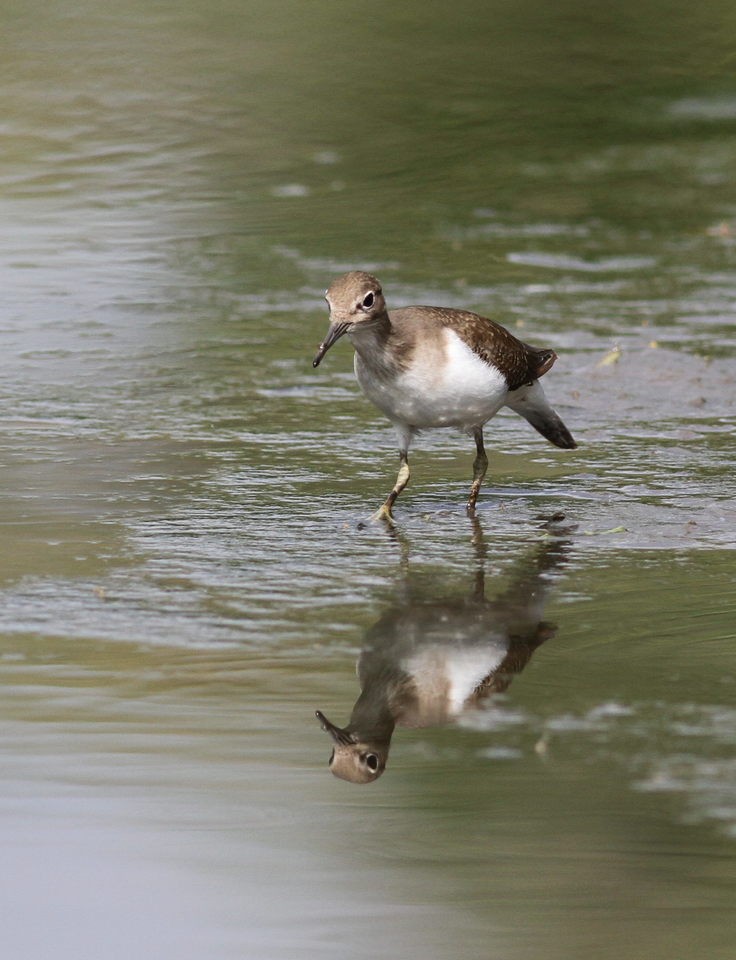
12. Common Sandpiper
While the common Sandpiper is considered a common shorebird around lakes and rivers, it does have a unique trait. The small bird bobs its tail, giving the appearance of wagging. The bird communicates with others by chirping in the air, but is silent when feeding on small crustaceans and invertebrates.

13. Osprey
This large raptor is commonly known as osprey and can be found in every continent apart from Antarctica. It nests near bodies of water as its diet is made up of mostly fish and hunts with its clear vision that can see objects in the water while flying. The Pandion haliaetus usually mates for life.
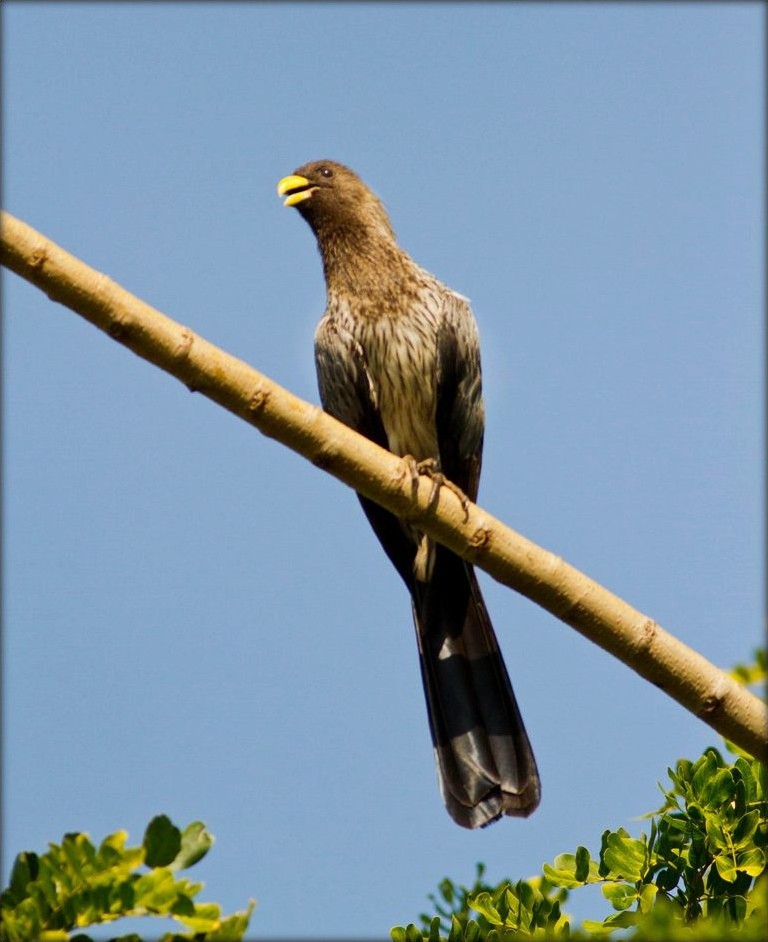
14. Western Plantain-eater
The western plantain-eater (Crinifer piscator), also known as the grey plantain-eater or western grey plantain-eater, is a large member of the turaco family, a group of large arboreal near-passerine birds restricted to Africa. This species is a resident breeder in open woodland habitats in tropical west Africa. It lays two or three eggs in a tree platform nest. These are common, noisy and conspicuous birds, despite lacking the brilliant colours of relatives such as the violet turaco. They are 50 cm long, including a long tail. Their plumage is mainly grey above spotted with brown. The head, erectile crest, neck and breast are brown streaked with silver. The underparts are whitish, heavily streaked with brown. Western plantain-eater has a thick bright yellow bill, and shows a white wing bar in flight. The sexes are identical, but immatures have a black woolly head without silver streaking. This bird is similar to the closely related eastern plantain-eater. The latter species has white tail bars, and lacks the chest bars and dark wing feather shafts of its western relative. This species feeds on fruit, especially figs, seeds and other vegetable matter. Western plantain-eater has a loud cow-cow-cow call, very familiar in west Africa.
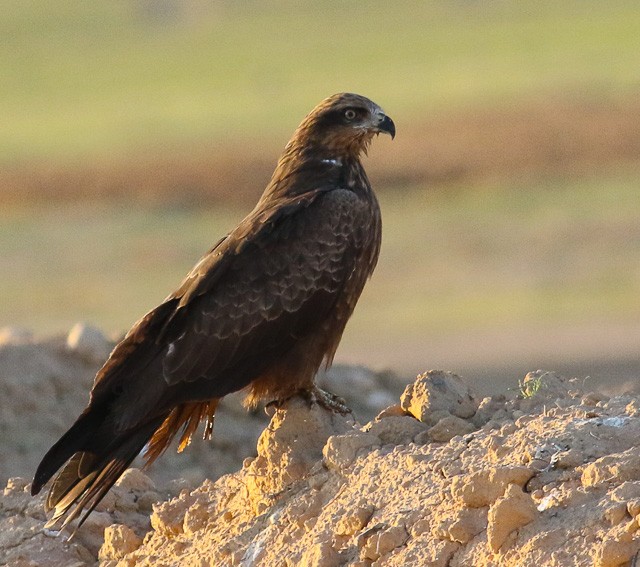
15. Black Kite
Black Kite is a bird of prey known for its aerial skills and hunting ability. Its striking appearance makes it a fascinating species to observe, and it can often be seen soaring through the skies. Black Kite is highly adaptable and can be found in a variety of habitats, making it a common sight in many areas.
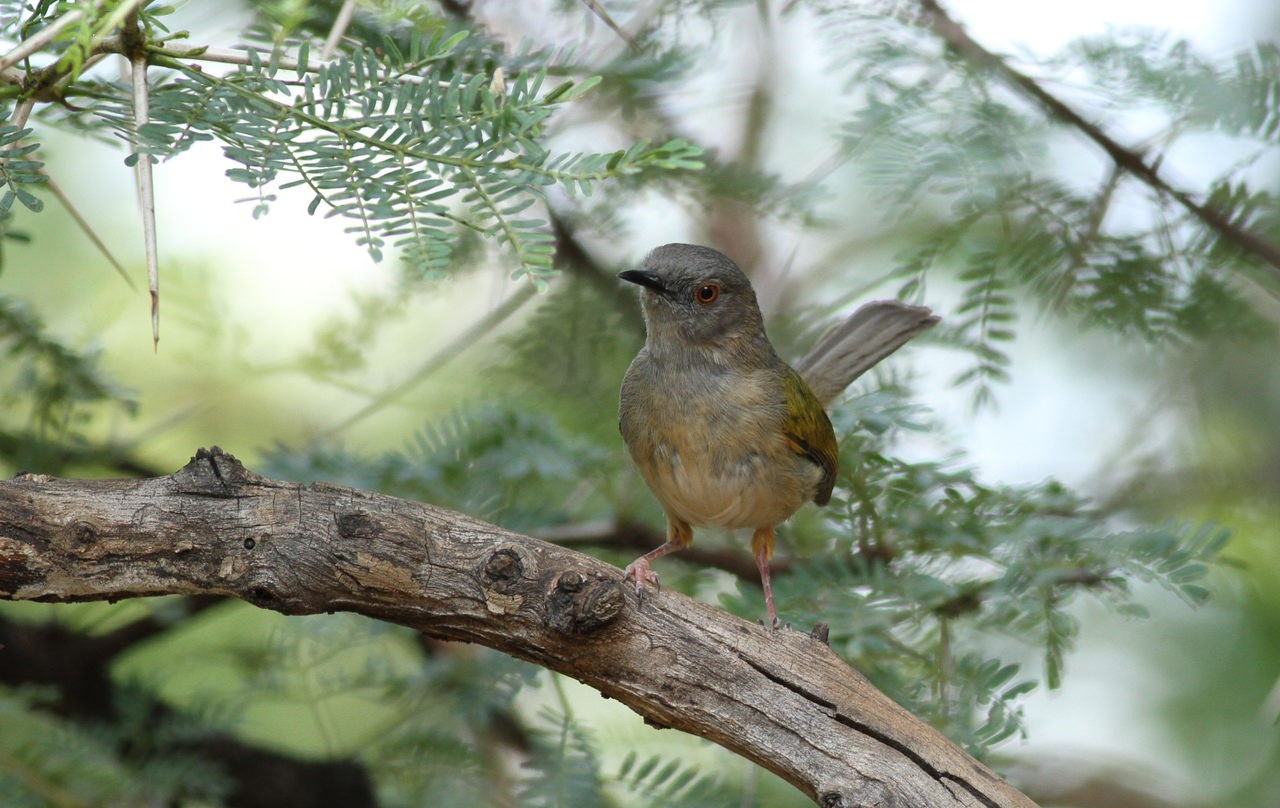
16. Green-backed Camaroptera
The green-backed camaroptera (Camaroptera brachyura), also known as the bleating camaroptera, is a small bird in the family Cisticolidae. This bird is a resident breeder in Africa south of the Sahara Desert. Recent studies suggest this species and the grey-backed camaroptera may be the same species. This skulking passerine is typically found low in dense cover. The green-backed camaroptera binds large leaves together low in a bush and builds a grass nest within the leaves. The normal clutch is two or three eggs. These 11.5 cm long warblers have green upperparts. The wings are olive and the underparts whitish grey. The sexes are similar, but juveniles are paler yellow on the breast. Like most members in the group, green-backed camaroptera is insectivorous. The green-backed camaroptera was described by the French ornithologist Louis Jean Pierre Vieillot in 1821 under the binomial name Sylvia brachyura. The type locality is the Cape of Good Hope. The specific epithet brachyura is from the Ancient Greek brakhus for "short" and -ouros for "-tailed". There are five subspecies: C. b. pileata Reichenow, 1891 – southeast Kenya to southeast Tanzania C. b. fugglescouchmani Moreau, 1939 – northeast Zambia, north Malawi and east Tanzania C. b. bororensis Gunning & Roberts, 1911 – south Tanzania, south Malawi and north Mozambique C. b. constans Clancey, 1952 – southeast Zimbabwe, south Mozambique and northeast South Africa C. b. brachyura (Vieillot, 1821) – south and east South Africa
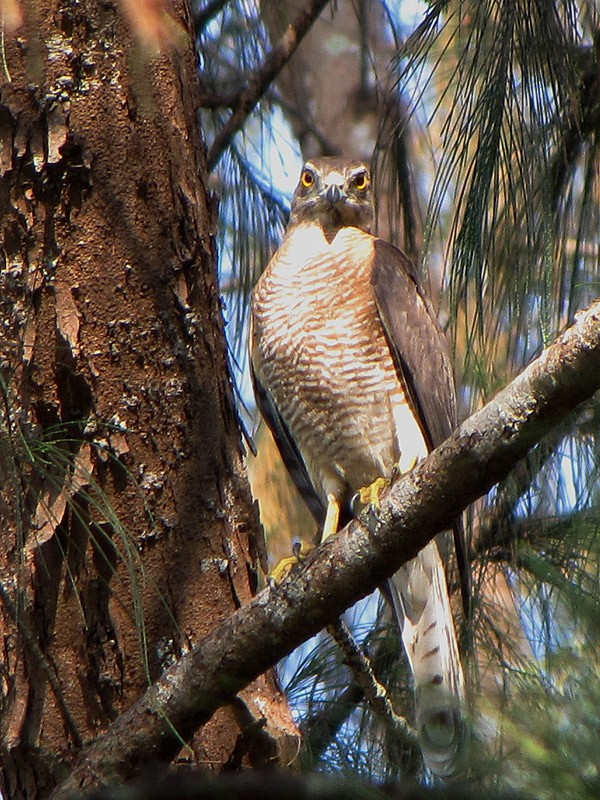
17. Shikra
The Schikrasperber or Schikra (Accipiter badius) belongs to the family of the hawk-like (Accipitridae). The species is considered largely unexplored. It originally occurred in western Central Asia, South Kazakhstan and South Asia. Schikras have also been reported on the African continent.
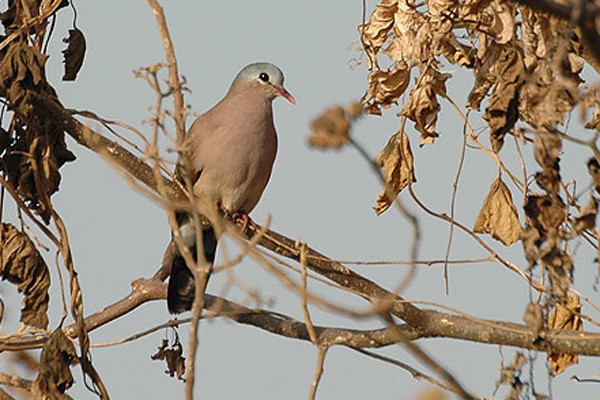
18. Blue-spotted Wood Dove
The blue-spotted wood dove (Turtur afer) is a species of bird in the family Columbidae. It is abundantly present throughout Africa south of the Sahel; it is partially present in East Africa and absent in southern Africa.
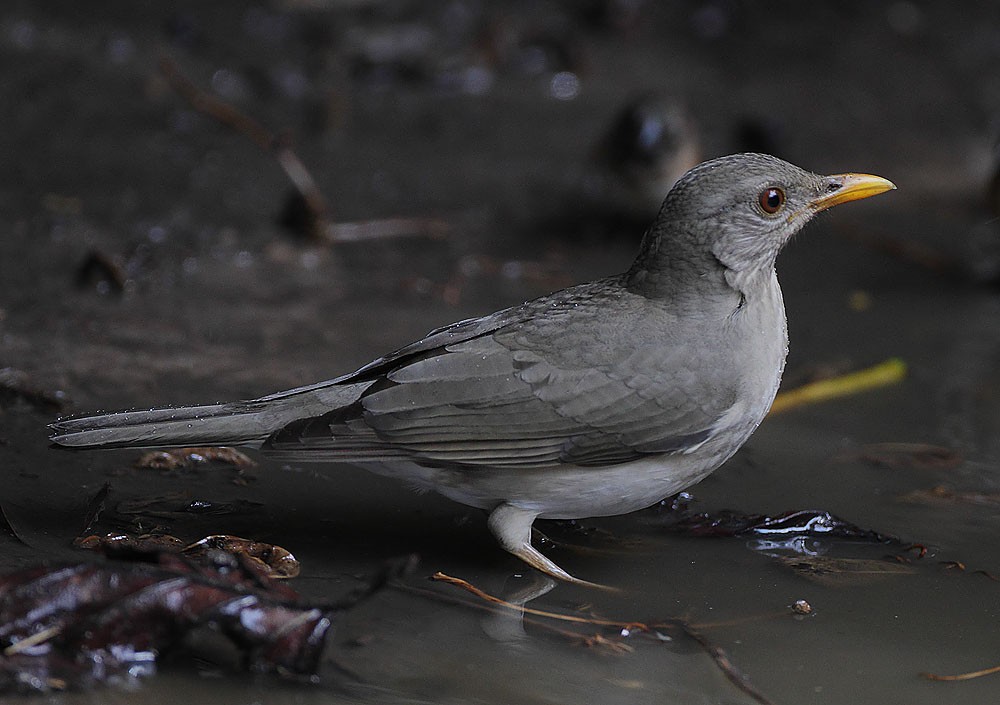
19. African Thrush
The African Thrush has dark olive-grey upperparts. The underparts show a whitish evenly brown- streaked side throat, the breast is greyish brown and the flanks are pale buff-orange with this colour not extending on to the lower breast, the belly and vent are white. It has a yellow-orange bill. It weighs 46–78g and measures 21–23 cm in length.
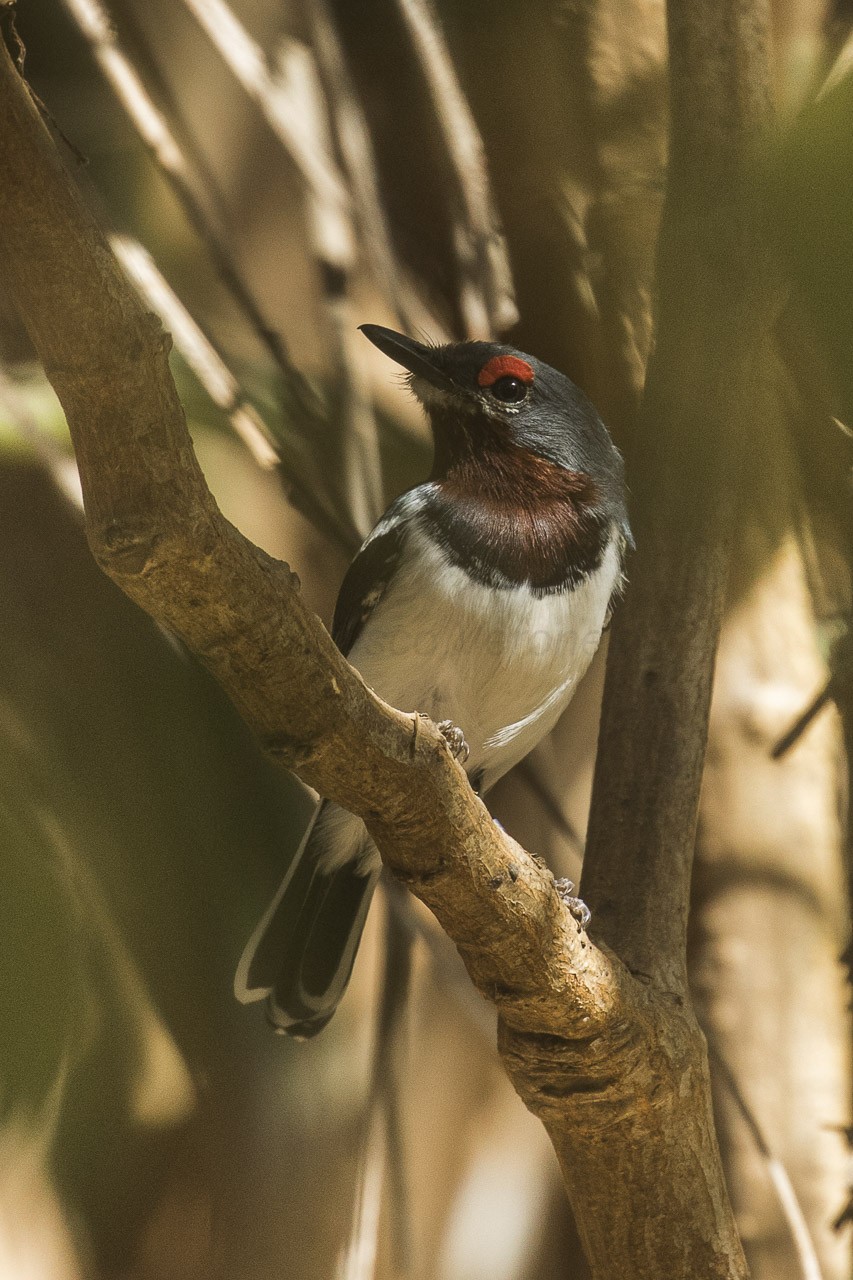
20. Brown-throated Wattle-eye
The brown-throated wattle-eye (Platysteira cyanea), also known as the common wattle-eye or scarlet-spectacled wattle-eye, is a small, insectivorous passerine bird. The wattle-eyes were previously classed as a subfamily of the Old World flycatcher family Muscicapidae, but are now usually separated from that group. This species breeds in west, central and northeast tropical Africa. This common species is found in secondary forest and other woodland areas, including gardens. The eggs are laid in a small neat lichen and cobweb cup low in a tree or bush. The adult brown-throated wattle-eye is a stout bird about 14 cm (5.5 in) long. The breeding male has glossy black upperparts, and white underparts with a neat black breast band. There is a strong white wingbar, and fleshy red wattles above the eye. The females are grey-black above, and also have the white wing bar and red wattles. There is a small patch of white below the bill, and the throat and breast are maroon, separated from the white belly by the black breast band. Young males are washed-out, greyer versions of the female. These active insect-eating birds are found in pairs or small groups. The ringing call of the brown-throated wattle-eye is a very characteristic six note doo-dd-dum-di-do-do.