



Top 20 Most Common Bird in Blantyre
Situated in lush, tropical Southern Africa, Blantyre offers a diverse aviary spectacle. With its mix of forests, grasslands and wetlands, it hosts 20 commonly observed birds. These species exhibit fascinating features like vibrant plumage, distinctive vocalizations, intricate nest construction, and in some cases, highly specialized feeding habits. Such diversity ensures Blantyre remains a vibrant hub of bird life.

Most Common Bird
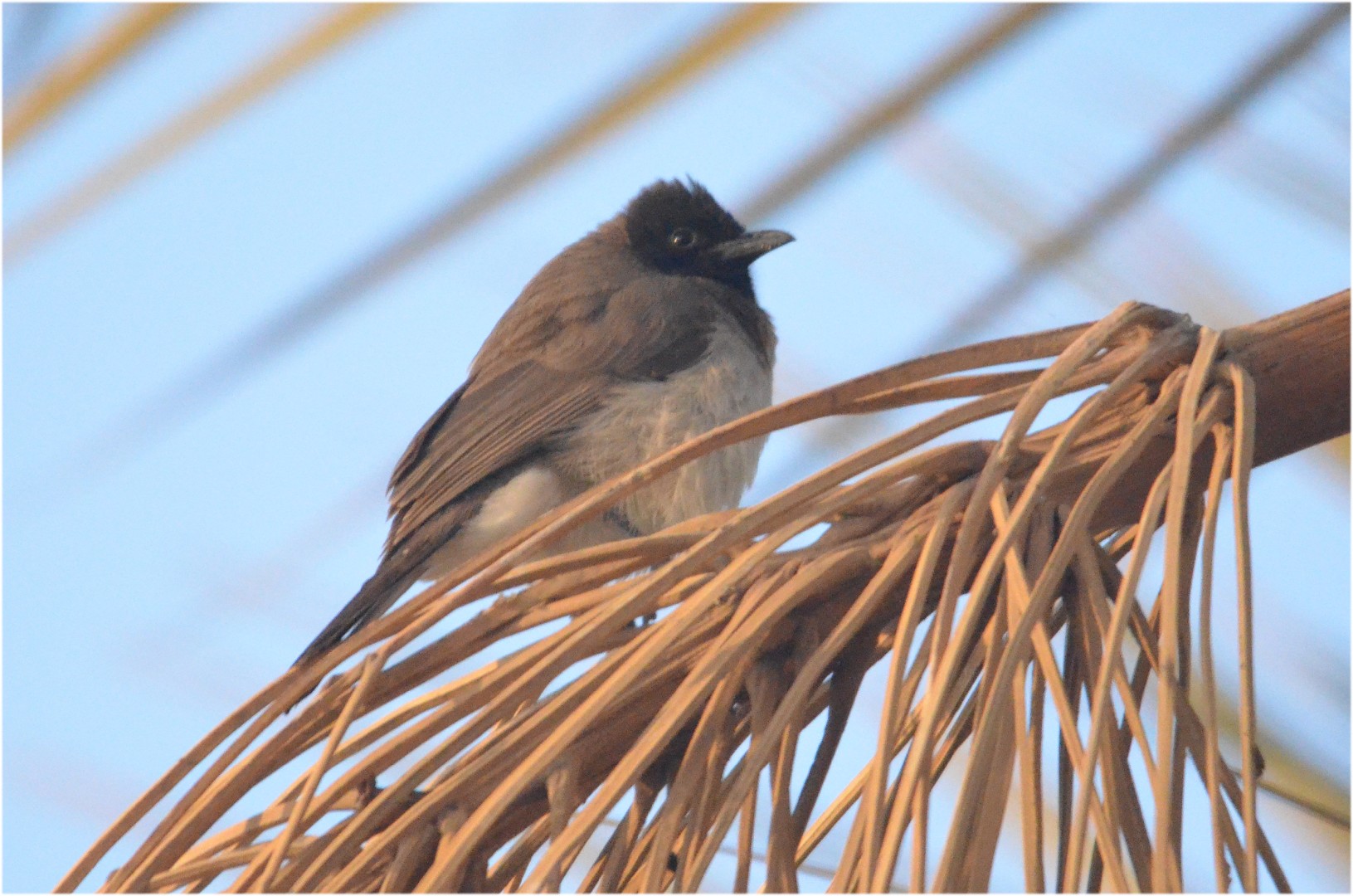
1. Common Bulbul
The bill is fairly short and thin, with a slightly downcurving upper mandible. The bill, legs, and feet are black and the eye is dark brown with a dark eye-ring, which is not readily visible. It is about 18 cm in length, with a long tail. It has a dark brown head and upperparts. Sexes are similar in plumage. 
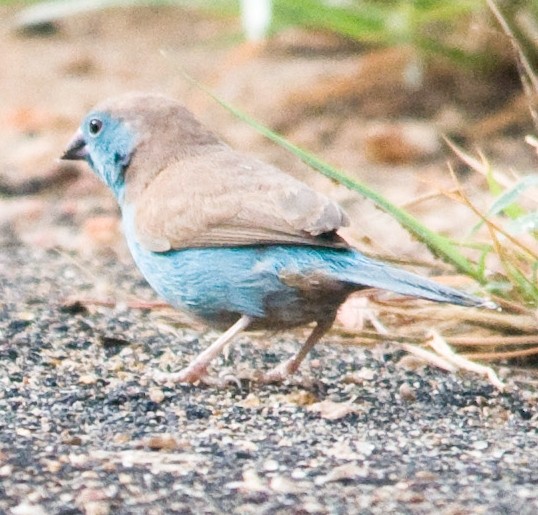
2. Blue-breasted Cordonbleu
The blue waxbill has powder-blue face, breast, rump, and flanks with pale brown upperparts. The female is paler than the male and the blue is confined to the rump, tail, head, and upper breast, with the rest of the underparts being buffy brown. They measure 12–13 cm in length.
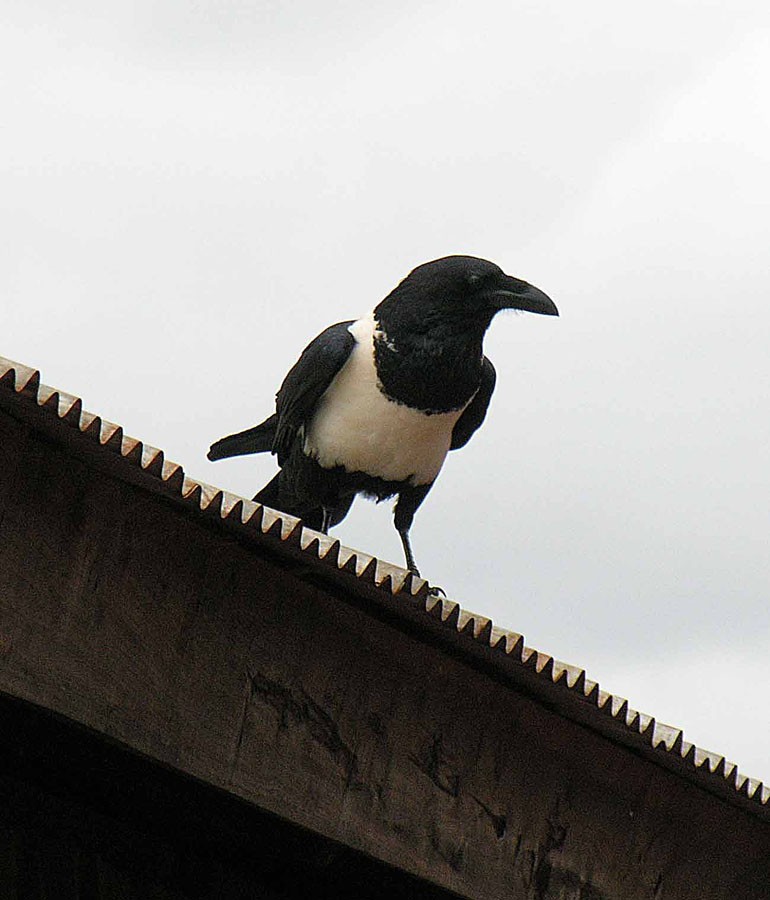
3. Pied Crow
It is approximately the size of the European carrion crow or a little larger (46–50 cm in length) but has a proportionately larger bill, slightly longer tail and wings, and longer legs. As its name suggests, its glossy black head and neck are interrupted by a large area of white feathering from the shoulders down to the lower breast. The tail, bill and wings are black too. The eyes are dark brown. The white plumage of immature birds is often mixed with black. It resembles the white-necked and thick-billed ravens but has a much smaller bill.
4. White-browed Robin-chat
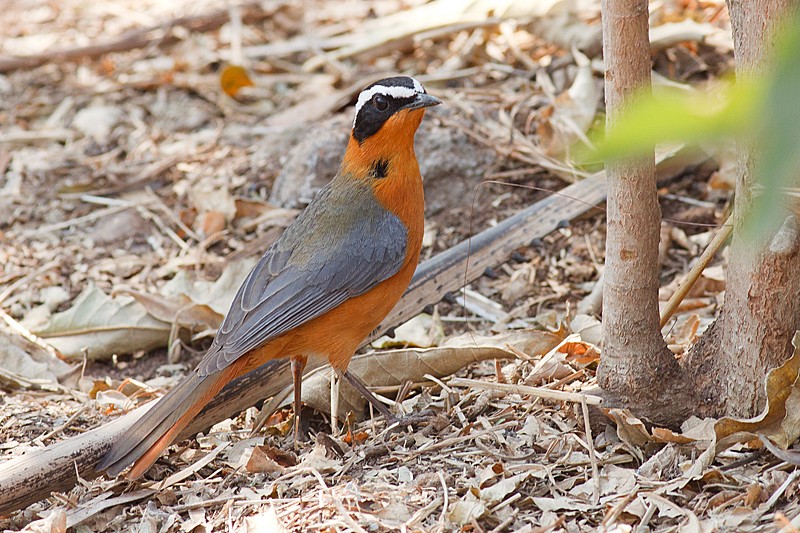
The white-browed robin-chat is 19–20 cm (7.5–7.9 in) long and weighs 29–51 g (1.0–1.8 oz). The crown and face are black, and there is a white supercilium over the dark brown eye. The back is olive grey-brown, and the rump is rufous. The two central tail feathers are olive-brown, and the other feathers are orange-rufous. The flight feathers and wing coverts are grey-brown, and the underwing coverts are rufous. The underparts are bright orange-rufous. The beak is black, and the legs are pinkish brown, brownish grey or dark brown. The female is a little smaller than the male. The juvenile bird has a brown head and rufous-brown marks on its back. Its throat is pale, its breast is pale orange-buff, and its belly is pale orange.
5. White-eared Barbet
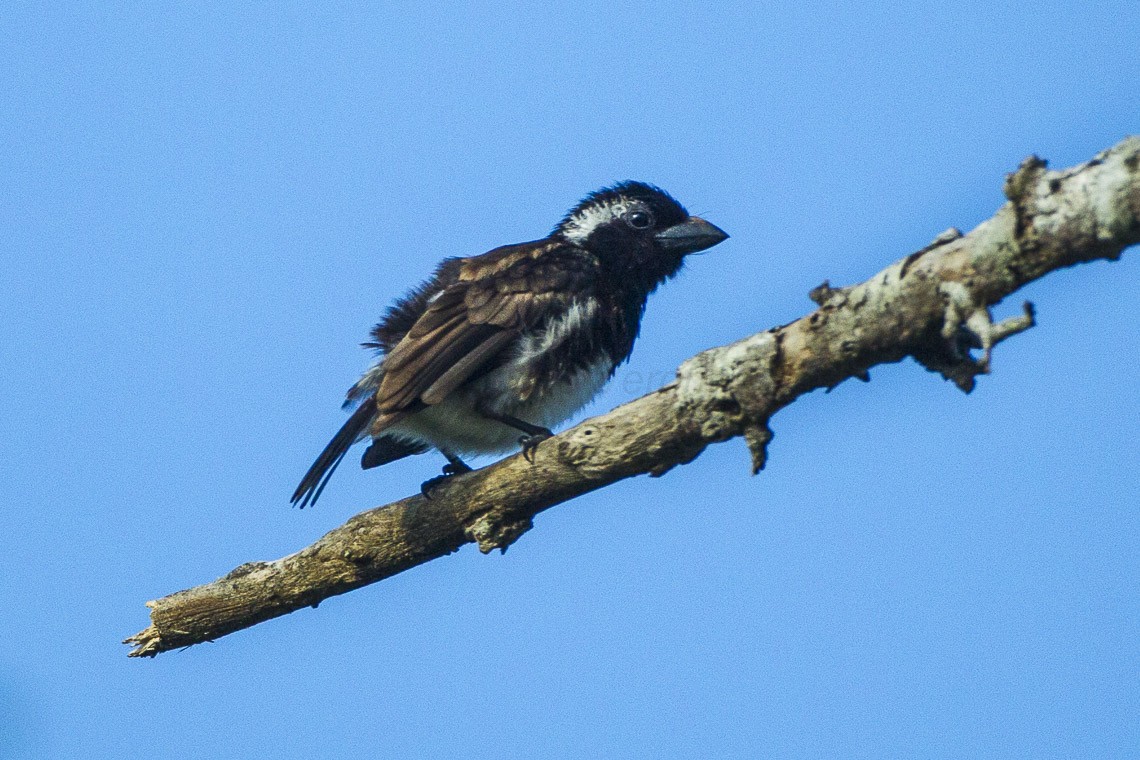
The white-eared barbet (Stactolaema leucotis) is a species of bird in the family Lybiidae (African barbets). It is found in Kenya, Malawi, Mozambique, South Africa, Swaziland, Tanzania, and Zimbabwe.
6. African Palm Swift
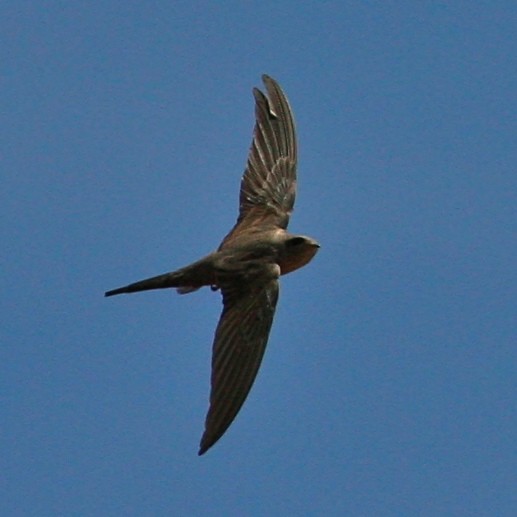
This 16 cm long species is mainly pale brown in colour. It has long swept-back wings that resemble a crescent or a boomerang. The body is slender, and the tail is long and deeply forked, although it is usually held closed. The call is a loud, shrill scream. Sexes are similar, and young birds differ mainly in their shorter tails. Palm swifts have very short legs which they use only for clinging to vertical surfaces, since swifts never settle voluntarily on the ground.
7. Southern Grey-headed Sparrow
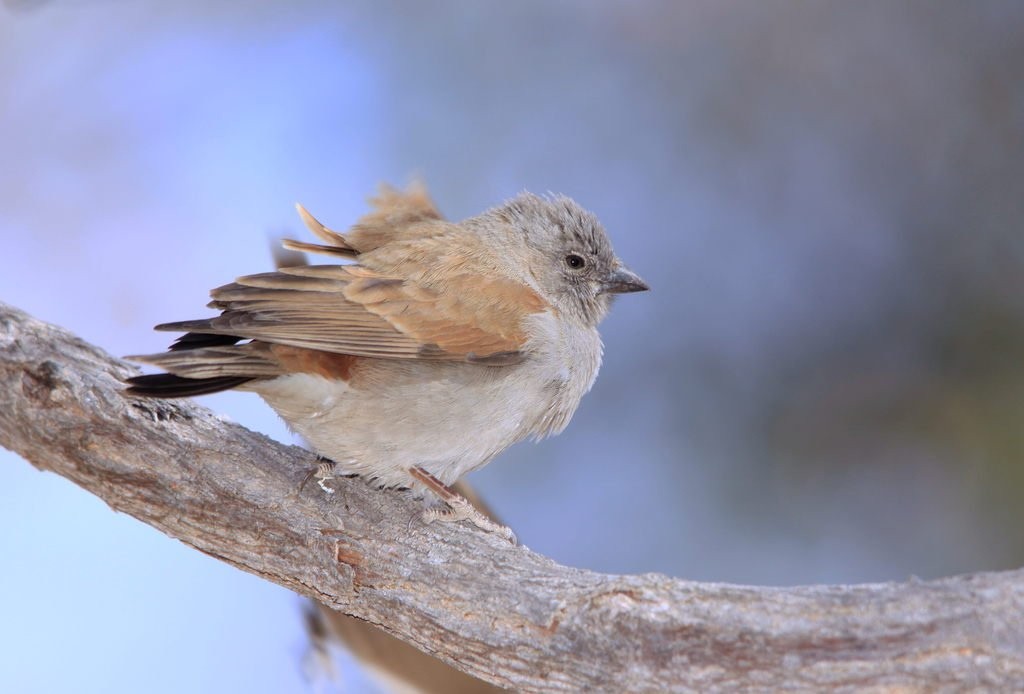
The southern grey-headed sparrow (Passer diffusus) is a passerine bird of the sparrow family Passeridae. It is sometimes treated as a subspecies of the grey-headed sparrow. It is found in savanna and woodland in Angola and Zambia southwards into South Africa, where it is expanding its range and is kept as a caged bird, like its relative the white-rumped seedeater.
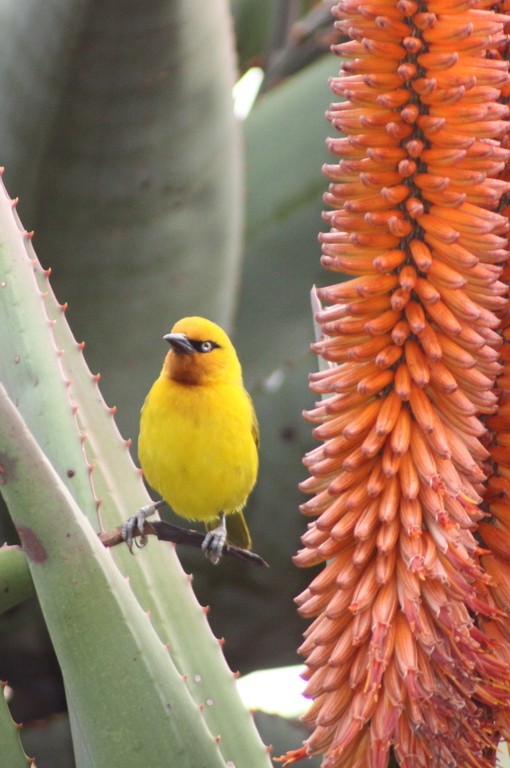
8. Spectacled Weaver
The spectacled weaver (Ploceus ocularis) is a species of bird in the family Ploceidae. It is found widely in woodland, forest edge and gardens of central, eastern and south-eastern Africa, but is absent from the most arid regions (such as the Karoo) and dense, primary rainforest. This common species breeds in solitary pairs, and both sexes are bright yellow, have an olive-yellow back, black "spectacles" and pale eyes. The male has a black throat.
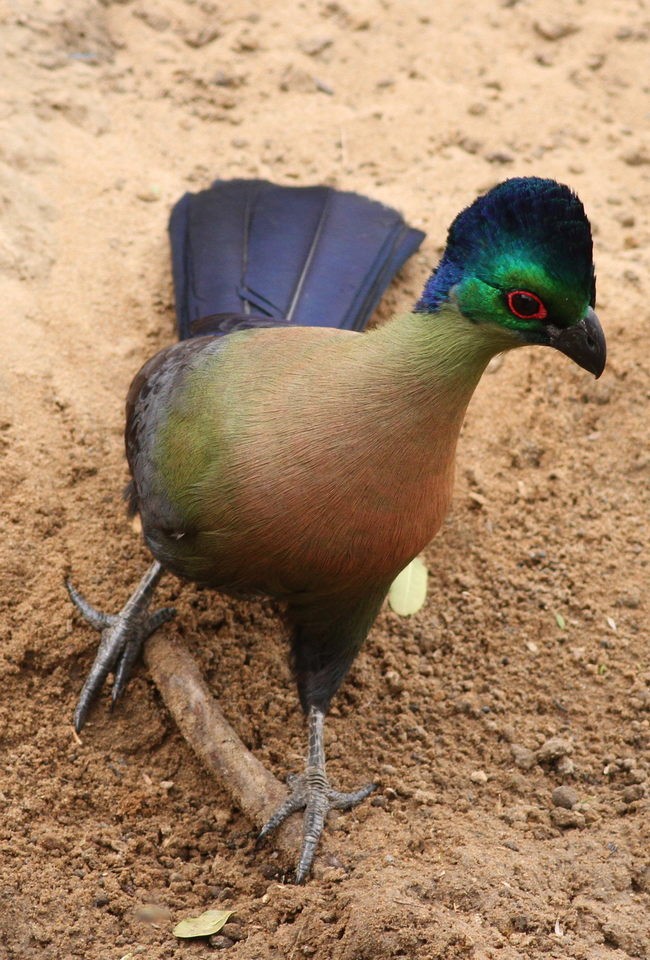
9. Purple-crested Turaco
This bird has a purple coloured crest above a green head, a red ring around their eyes, and a black bill. The neck and chest are green and brown. The rest of the body is purple, with red flight feathers.
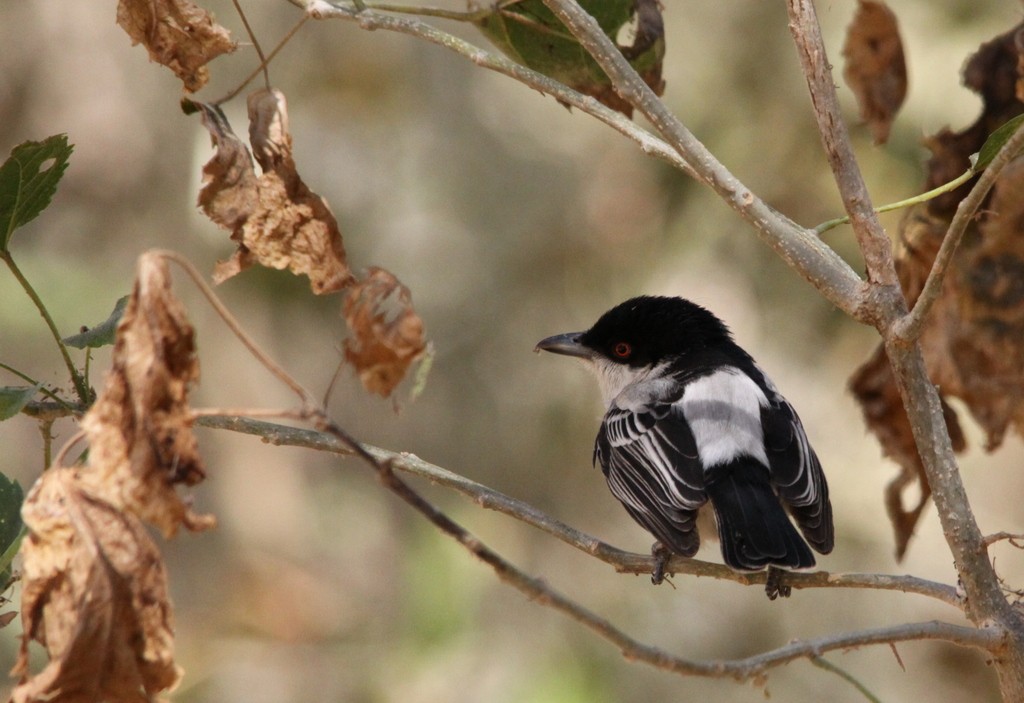
10. Black-backed Puffback
They measure about 17 cm in length, and the sexes are similar though easily distinguishable. Adult males have the upperparts deep blue-black with a slight luster. The black cap subtends the red eye, the upperpart plumage is black-and-white, and the underparts pure white. Females have a black loral stripe and white supraloral feathering, with the ear coverts pale and the crown not solidly black. They also have greyer backs than males, and grey to buffy tones to the white plumage tracts. Immature birds resemble females, but have brownish bills and brown irides, while the upperparts and flanks are still greyer, and the underparts and edges of the wing feathers are yet more buffy. Intraspecific variation is clinal. Range, iris colour, wing markings and the female plumage assist in separating it from other puffback species.
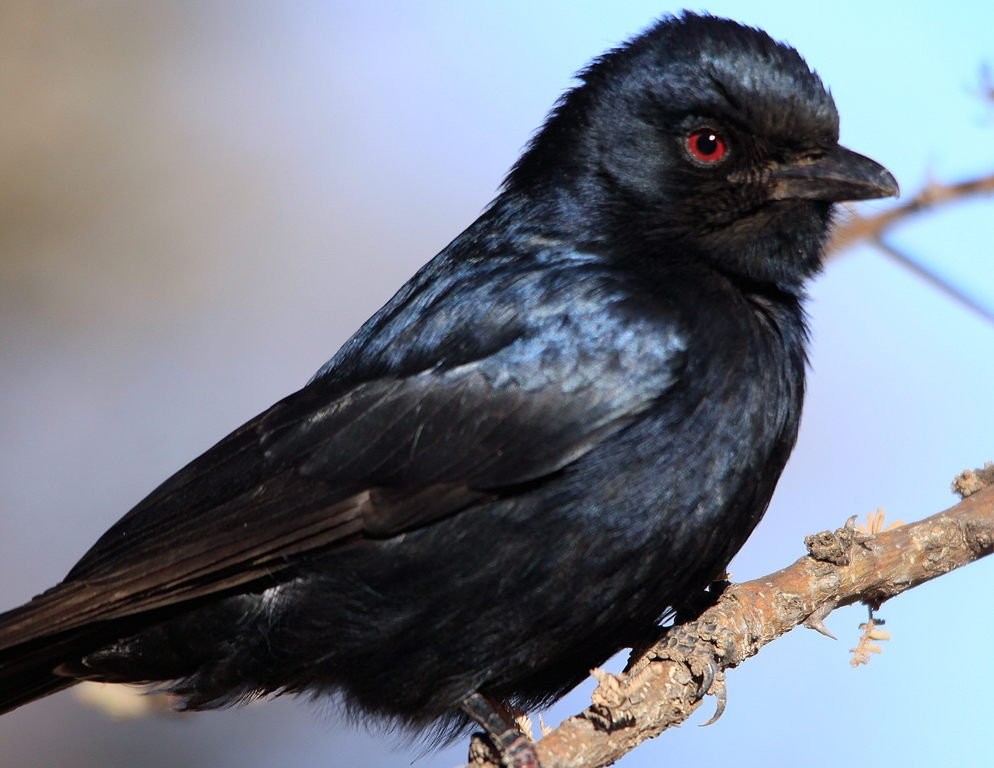
11. Fork-tailed Drongo
The fork-tailed drongo is 25 cm long and has short legs. They are medium sized and usually weigh about 50 grams. Males are mainly glossy black, although their wings are duller. Females are similar but less glossy. It is large-headed with well-developed rictal and nasal bristles, which are used as sensory organs. The rectrices curve outwards, forming the forked tail for which the species is named. The hooked bill is black and heavy, and the eye is red.
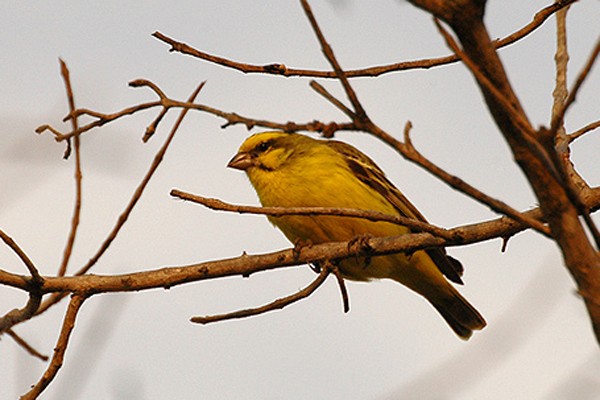
12. Yellow-fronted Canary
The yellow-fronted canary (Crithagra mozambica), also called the yellow-eyed canary, is a small passerine bird in the finch family. It is known elsewhere and in aviculture as the green singing finch. The yellow-fronted canary was formerly placed in the genus Serinus, but phylogenetic analysis using mitochondrial and nuclear DNA sequences found that genus to be polyphyletic. The genus was therefore split and a number of species including the yellow-fronted canary were moved to the resurrected genus Crithagra Swainson 1827. This bird is a resident breeder in Africa south of the Sahara Desert. Its habitat is open woodland and cultivation. It nests in trees, laying three or four eggs in a compact cup nest. It has been introduced to the Hawaiian Islands, where it is found on western Hawaii, southeastern Oahu and Molokai. The yellow-fronted canary is a common, gregarious seedeater. It is 11–13 cm in length. The adult male has a green back and brown wings and tail. The underparts and rump are yellow, and the head is yellow with a grey crown and nape and a black malar stripe. The female is similar, but with a weaker head pattern and duller underparts. Juveniles are greyer than the female, especially on the head. Its song is a warbled zee-zeree-chereeo.
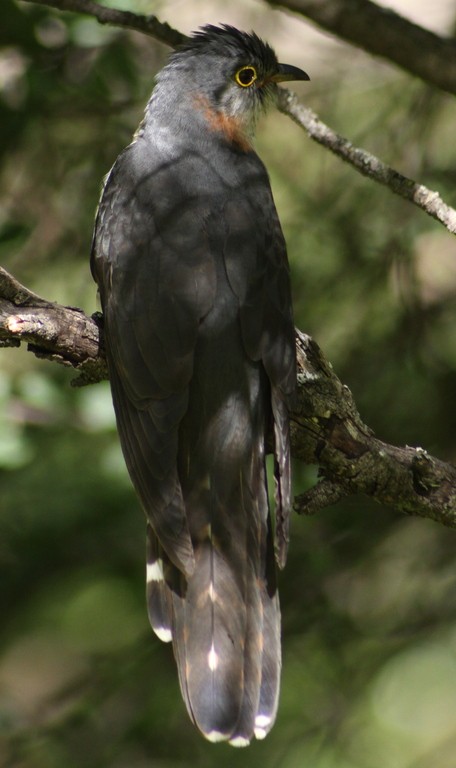
13. Red-chested Cuckoo
The red-chested cuckoo is a medium-size cuckoo about 31 cm (12.2 in) in length. The male has slate-grey upper parts, pale grey throat and sides of head and dark grey tail tipped with white. The breast is rufous or cinnamon, often with barring, and the belly is creamy-white or pale buff. The female is similar but the colour of the breast is duller and with variable amounts of barring.
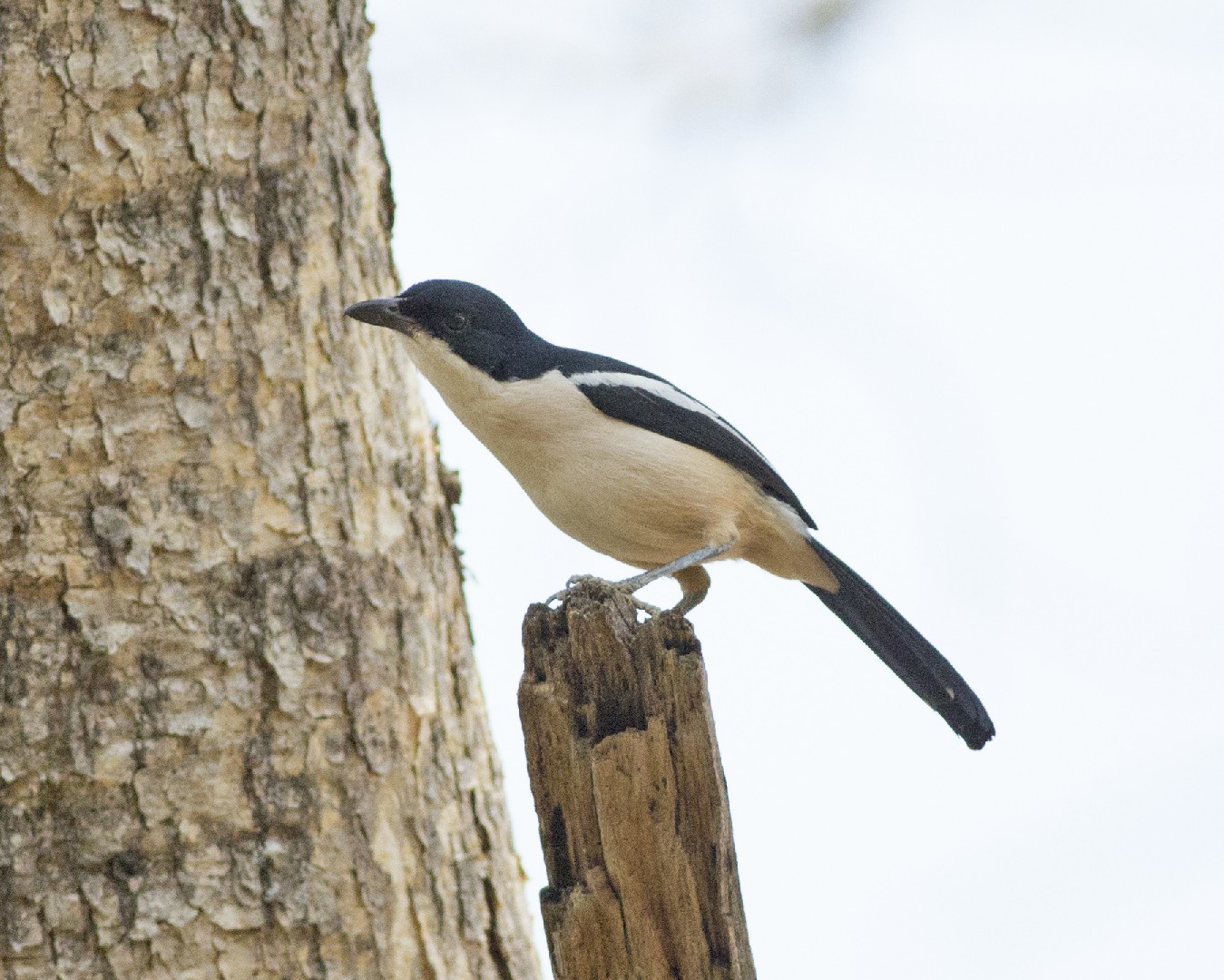
14. Tropical Boubou
The tropical boubou is fairly large for its family (bushshrikes), measuring 23–25 cm in length. Its weight can vary between about 38-70 g, but typically adults weigh between 50 and 60 g. Females are on average a bit smaller than males, but individual variation is so large that for most practical purposes the sexes seem to be of identical size. The wing measures about 98 mm on average (between 85 and 110), the tail is a mere two millimetres longer both on average and as regards variation. The tarsus is c.29–37 mm long, 33 mm on average, while the bill's exposed culmen measures a little over 20 mm in some populations and as much as 25 mm in others. Unlike the other measurements where there is mostly individual variation, the bill length might distinctly vary between subspecies. Not only are males and females the same size, they have identical plumage too. The adults' upper parts and tail are glossy blue-black except for concealed white spots on the rump, visible only when the wings are spread and the rump feathers are erected. The underparts are white, in some populations with a buffy or pinkish tinge on the breast and flanks, which is not always noticeable except in good light. The wings of most subspecies have a white stripe on the wing coverts, in some extending onto the secondary remiges. The tips of the outer tail feathers can be white in some subspecies. The bill is black, the legs and feet bluish grey. The irides are dark reddish brown. Nestlings have pinkish-brown skin and are nude after hatching, later growing sparse down; they apparently have spots inside their bills which they show their parents to get fed. Fledglings are similar to adults but duller, with the brownish head and the upper parts appearing mottled due to yellowish-ochre to tawny feather tips, forming a barring on the lower back and rump. The wing-stripe, if present, is dulled down. The undertail coverts are buff, and there is usually dusky barring on the dull white underside, especially on the flanks. The bill is greyish brown above, paler below. Immature birds independent from their parents have lost most of the mottling (except on the wing coverts) and barring, but their wing stripe and underside are still dull white, shading to brown on the flanks; any white tail feather tips appear at this stage. The northwesternmost populations of major might be confused with Turati's boubou (L. turatii), which has no white wing-band and a buff chin and white belly, while major around the southern edge of the Congo Basin look almost identical to the swamp boubou (L. bicolor), but this is pure white below and its females give a characteristic "ratchet" call in duets. Southeastern birds (mossambicus and especially limpopoensis) resemble the southern boubou (L. ferrugineus) but are black above instead of dark brown and grey – though this may be hard to see at a distance and entirely indistinguishable in the occasionally seen hybrid. When the tropical boubou is sympatric with other Laniarius, they are rarely found in the same habitat.
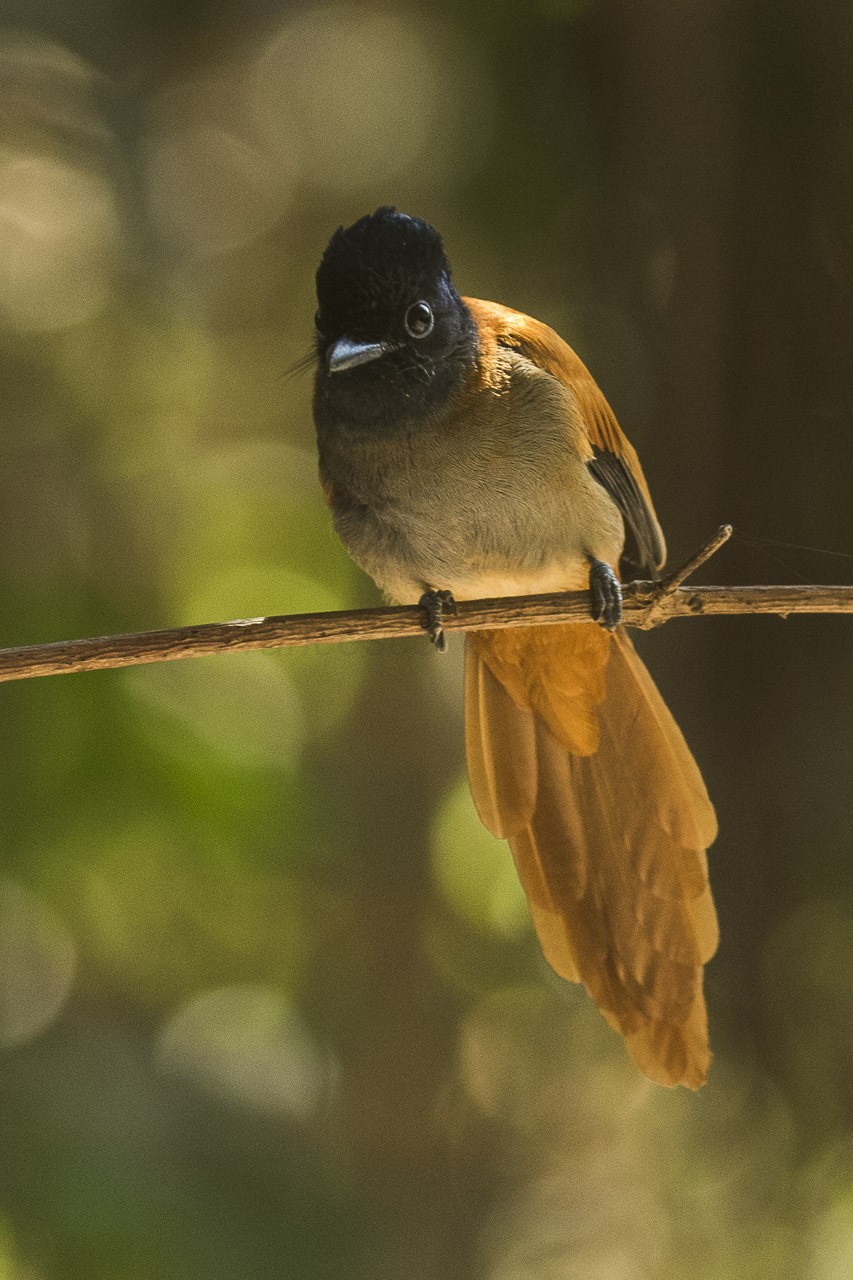
15. African Paradise Flycatcher
The adult male African paradise flycatcher is about 17 cm long, but the very long tail streamers double this. It has a black head, neck and underparts, and chestnut wings and tail. There is a prominent white wingbar. The female has a browner tint to the underparts and lacks the wingbar and tail streamers. Young birds are similar to the female but duller. The males show considerable variation in plumage in some areas. There is a morph of this species in which the male has the chestnut parts of the plumage replaced by white, and some races have black tail streamers. This species readily hybridizes with the genetically similar Rufous-vented paradise flycatcher. The red-bellied paradise flycatcher is also closely related to this species, and hybrids occur with the underparts a mixture of black and red.
16. Red-eyed Dove
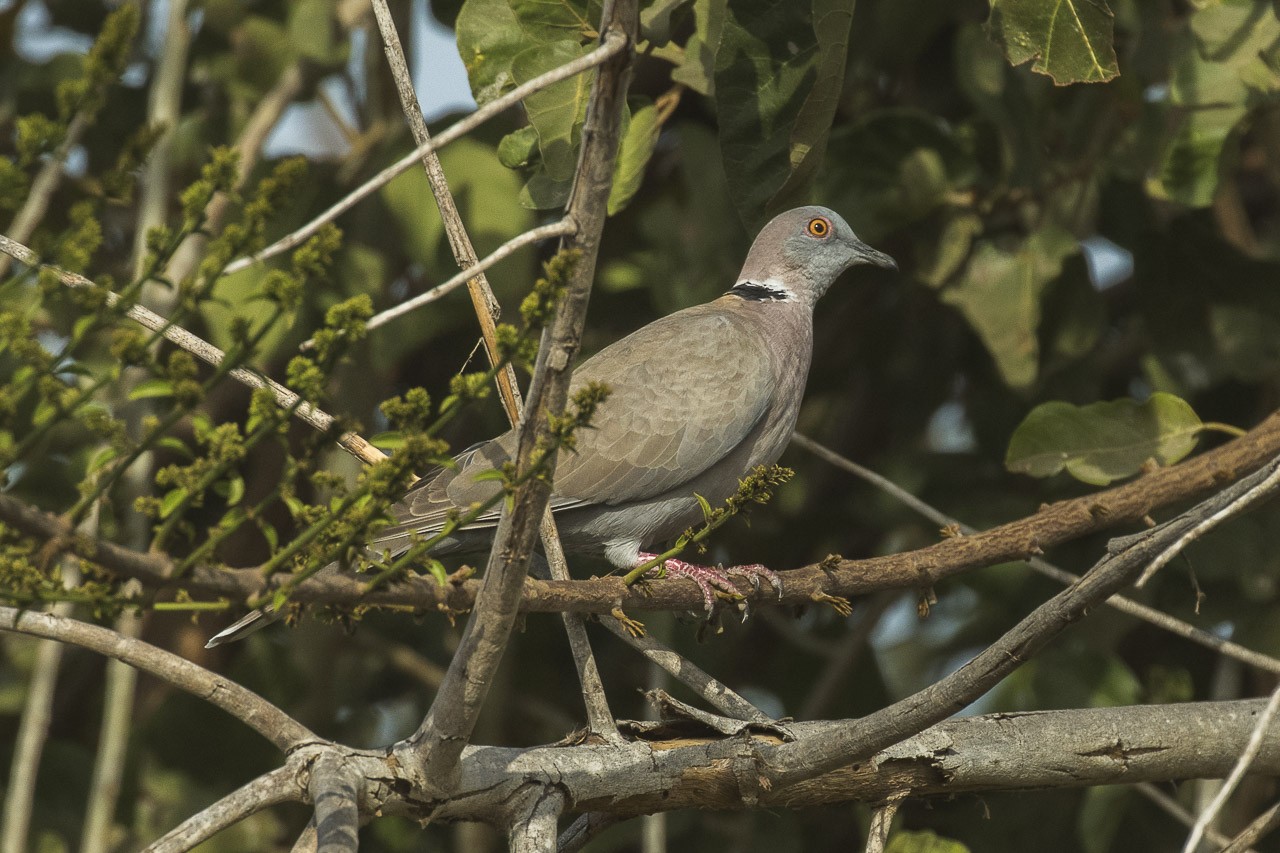
The red-eyed dove is a largish, stocky pigeon, typically 30 cm (12 inches) in length. Its back, wings and tail are pale brown. When flying, it shows blackish flight feathers. The head and underparts are dark vinous-pink, shading to pale grey on the face. There is a black hind neck patch edged with white. The legs and a patch of bare skin around the eye are red. The call is a loud doo-doo-du-du. Sexes are similar, but juveniles are duller than adults, and have scalloping on the body feathers. Red-eyed doves eat grass seeds, grains and other vegetation. They often forage on the ground.
17. Tawny-flanked Prinia
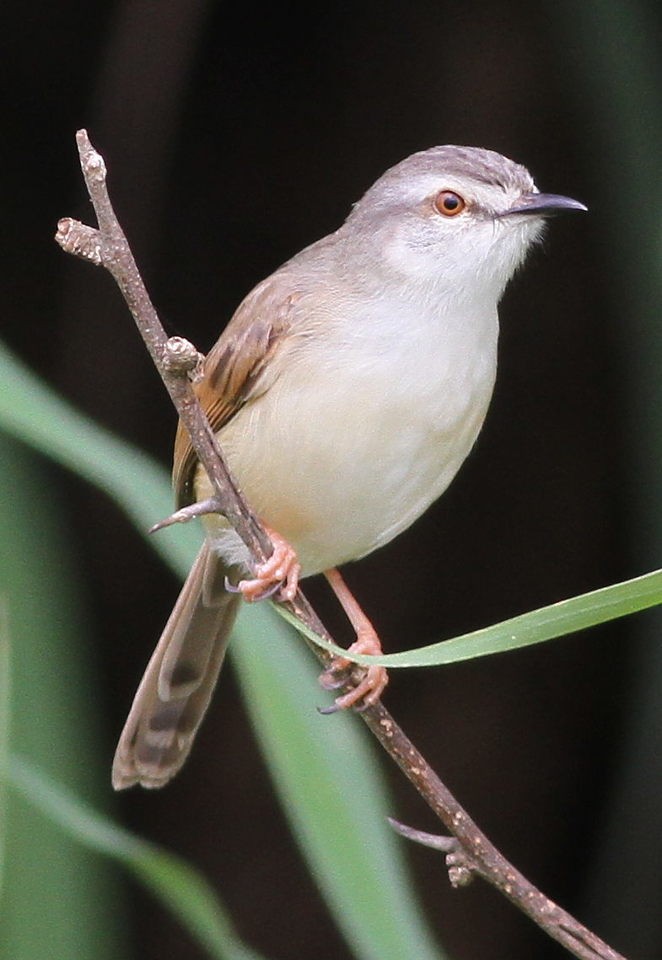
It is 10-13 centimetres in length with a long, narrow, graduated tail and a fairly long, slender bill. The tail is often held erect or waved from side to side. The upperparts are grey-brown with rufous-brown edges to the flight feathers and a rufous tinge to the rump. The throat and breast are whitish while the flanks and vent are warm buff. There is a whitish stripe over the eye and the lores are dark. The tail feathers have a white tip and a dark subterminal band. The sexes are similar in appearance. Non-breeding birds have a longer tail than breeding birds. Juveniles have pale yellow underparts and a yellowish bill. There are many recognised subspecies. The call is short, wheezy and rapidly repeated. The song is a monotonous series of shrill notes. The male often sings from an exposed perch. The pale prinia (P. somalica) of North-east Africa is similar but paler and greyer with whitish flanks. It inhabits drier, more open habitats than the tawny-flanked prinia. The river prinia (P. fluviatilis) of West Africa is also paler and greyer and has a longer tail. It is restricted to waterside vegetation.
18. Collared Sunbird
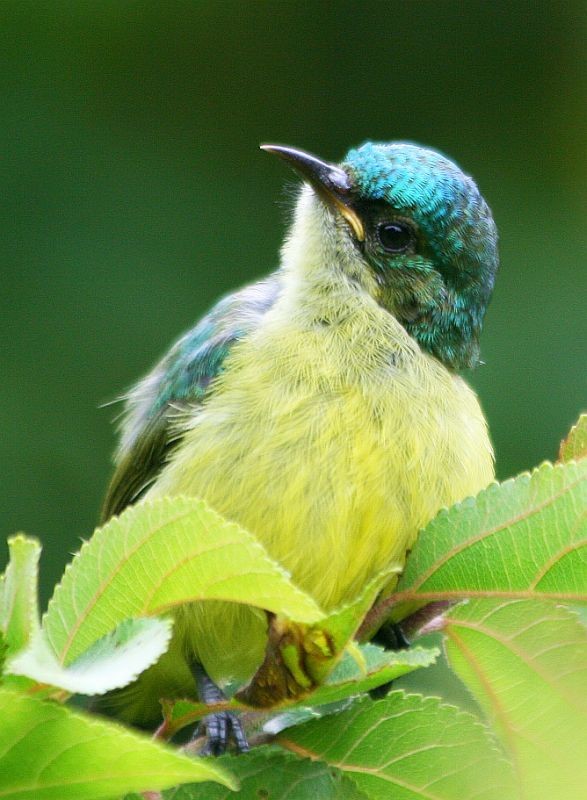
The collared sunbird (Hedydipna collaris) is a bird species of the family Nectariniidae. The sunbirds are a group of very small Old World passerine birds which feed largely on nectar, although they will also take insects, especially when feeding young. Collared sunbird is in fact mainly insectivorous. Sunbird flight is fast and direct on their short wings. Most species can take nectar by hovering like a hummingbird, but usually perch to feed most of the time. The collared sunbird is a common breeder across most of sub-Saharan Africa. Two or three eggs are laid in a suspended nest in a tree. It is a seasonal migrant within its range. Collared sunbirds are tiny, only 9–10 cm long. They have short thin down-curved bills and brush-tipped tubular tongues, both adaptations to nectar feeding. The adult male has glossy green upperparts and head with a yellow belly and narrow purple breast band. The female is a duller green above and entirely yellow below. This species is found in forests near water.
19. Southern Black Flycatcher
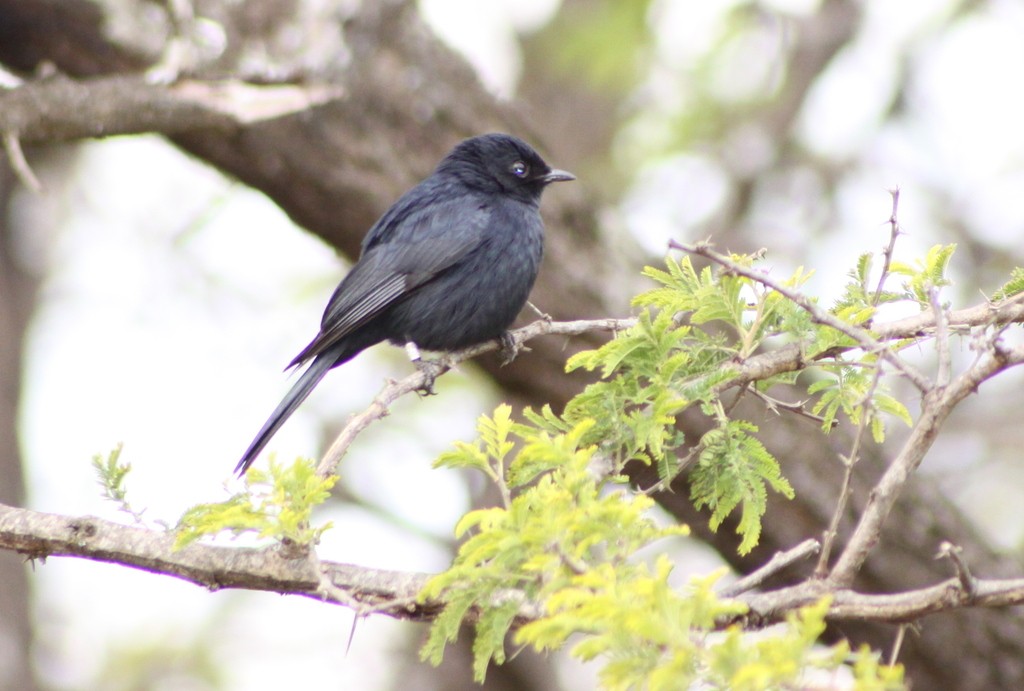
The southern black flycatcher is entirely black, with a black beak and black legs. The iris of the eye is brown and this, along with the square-cut tail, helps distinguish it from the otherwise similar fork-tailed drongo (Dicrurus adsimilis) which has a red iris and long forked tail.
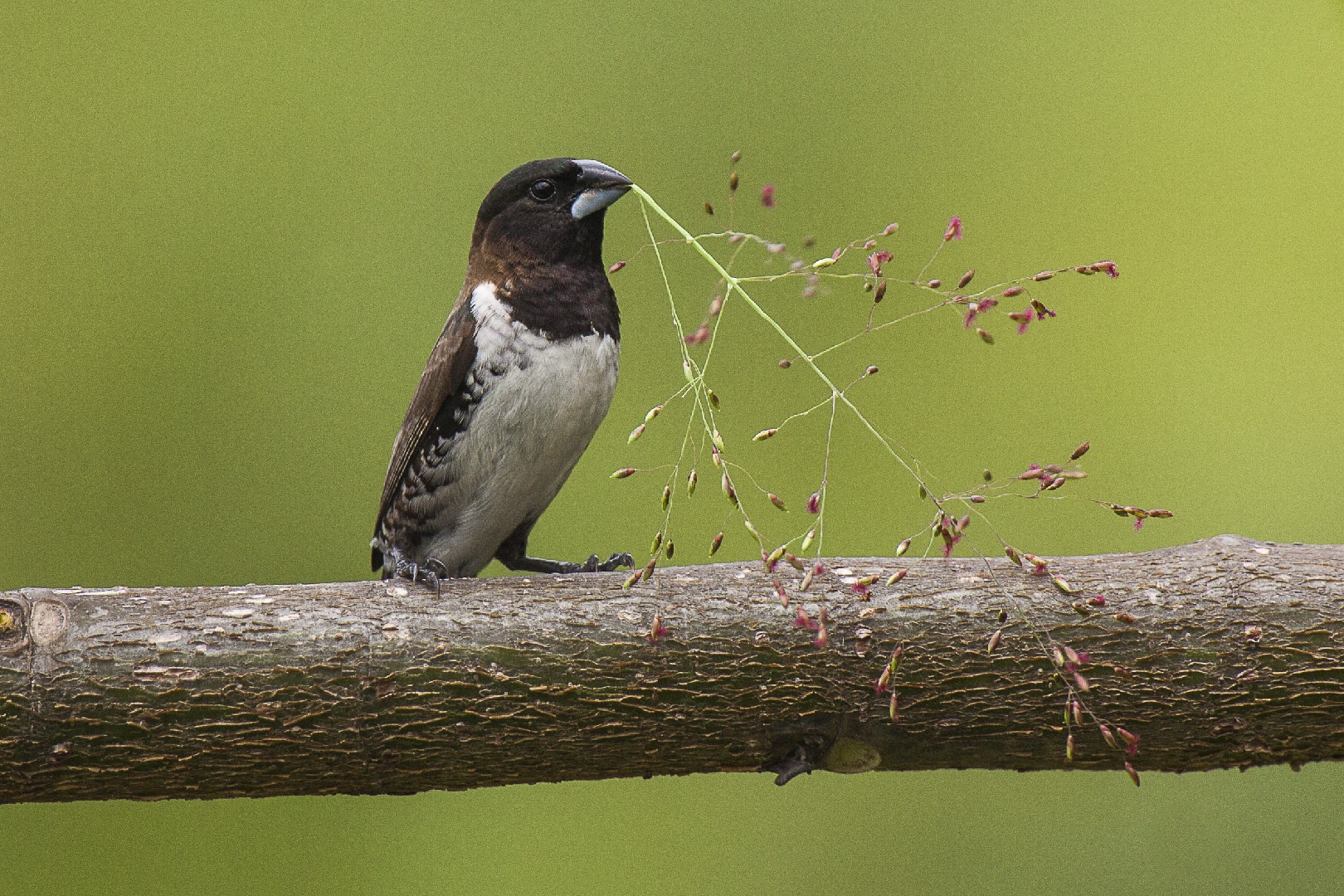
20. Bronze Mannikin
The bronze mannikin is one of the smallest munia species, measuring 9–10 cm in length and weighing 7–12 grams. The adult is a compact bird with a short black tail, and stubby black and pale grey (not distinctly bluish) mandibles. It is black to brownish black on the head, chin, throat and center of the chest, with some purple-green iridescence on the face and sides of the breast. It has greyish brown upper parts and white underparts with irregular barring on the flanks and rump. A small green iridescent patch is present on the outer scapular feathers, besides, especially in the western race, the sides of the lower breast. Wing coverts and remiges are bordered in a paler or warmer tone. The sexes are similar. Immature birds are dun brown above with buff head and underpart plumage. They moult into full adult plumage by age six months, when the males also begin to sing and exhibit breeding behaviour.