



Top 20 Most Common Bird in Otjozondjupa
Otjozondjupa boasts a varied ecosystem that fosters a diverse range of bird species, specifically 20 of its most common birds. These species mesmerize with their vibrant colors, distinct calls, and unique behaviors. Nocturnal owls, migratory flamingos, and high-flying eagles, each exhibiting astute environmental adaptations, reveal the avian richness of this realm.

Most Common Bird
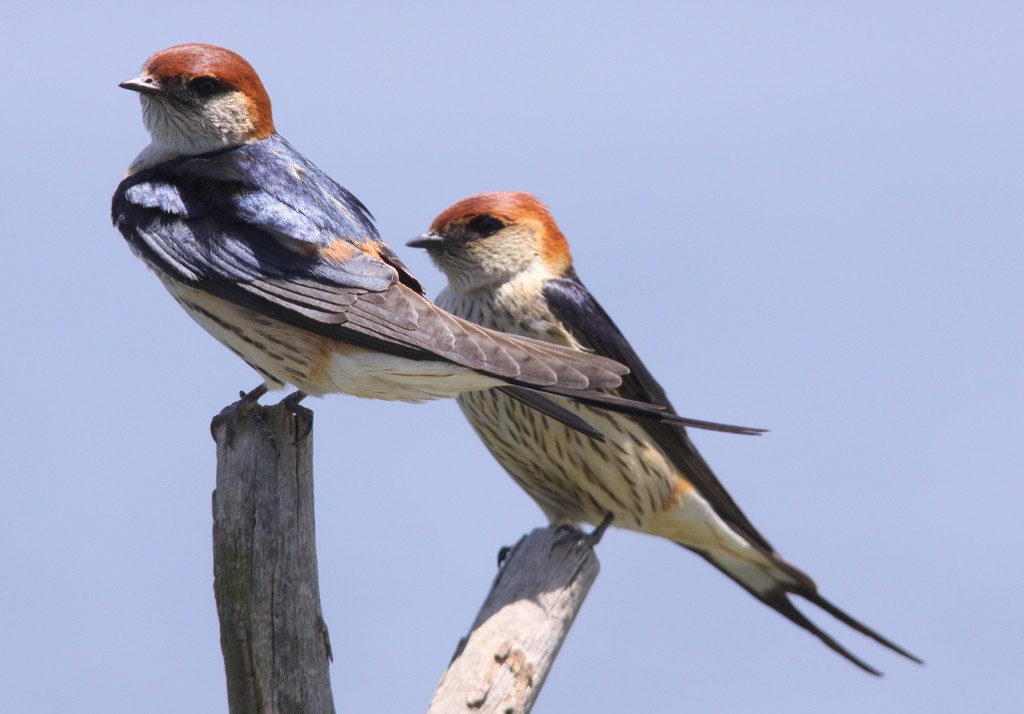
1. Greater Striped Swallow
The greater striped swallow is 18–20 cm (7.1–7.9 in) long. It has dark blue upperparts with a pale orange rump and a chestnut crown, nape and sides of the head. The underparts and underwing coverts are creamy white with dark streaking, and the upper wings and underwing flight feathers are blackish-brown. The blackish tail has very long outer feathers; these are slightly longer in the male than the female. Juveniles are duller and browner, with less contrast and shorter outer tail feathers. The flight is slow and buoyant, and the call is a twittering chissick. This species can be distinguished from the smaller lesser striped swallow, Hirundo abyssinica, in that the latter species has heavier and darker underparts striping, a deeper red rump, and rufous rather than buffy ear coverts. The lesser striped swallow also prefers less open habitats. 
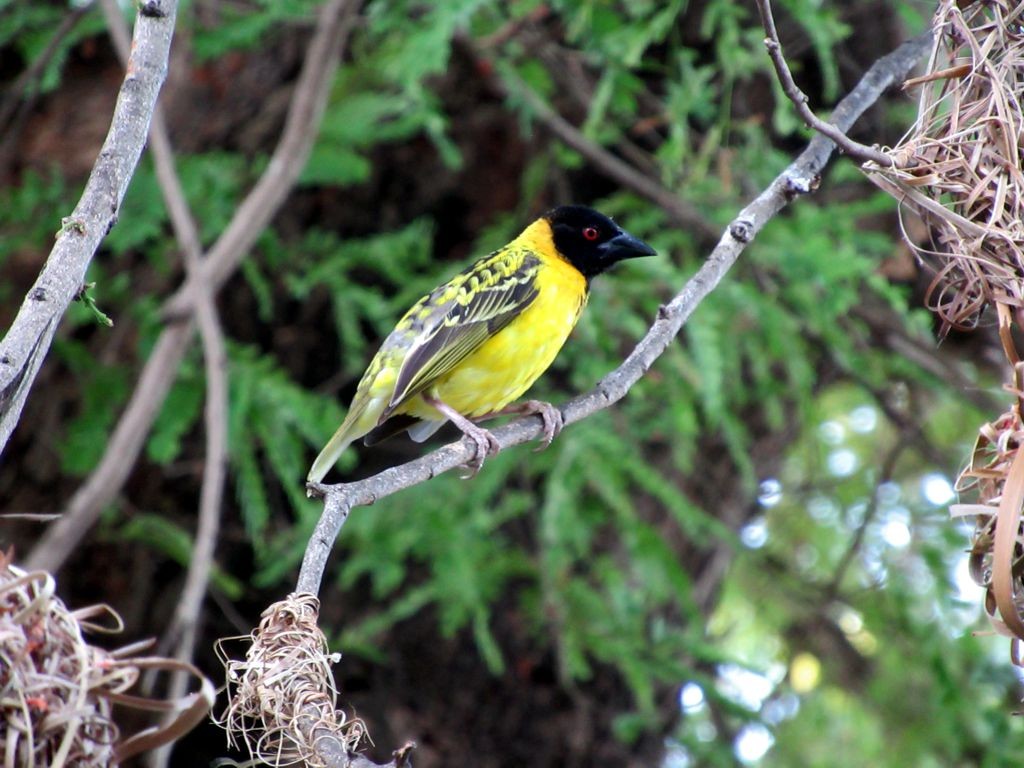
2. Lesser Masked Weaver
The lesser masked weaver (Ploceus intermedius) is a species of bird in the family Ploceidae. It builds its nests in large colonies, often alongside the village weaver and sometimes the red-billed buffalo weaver. This species is commonly parasitised by the Diederik cuckoo. It is found in eastern, south-eastern and southern Africa.
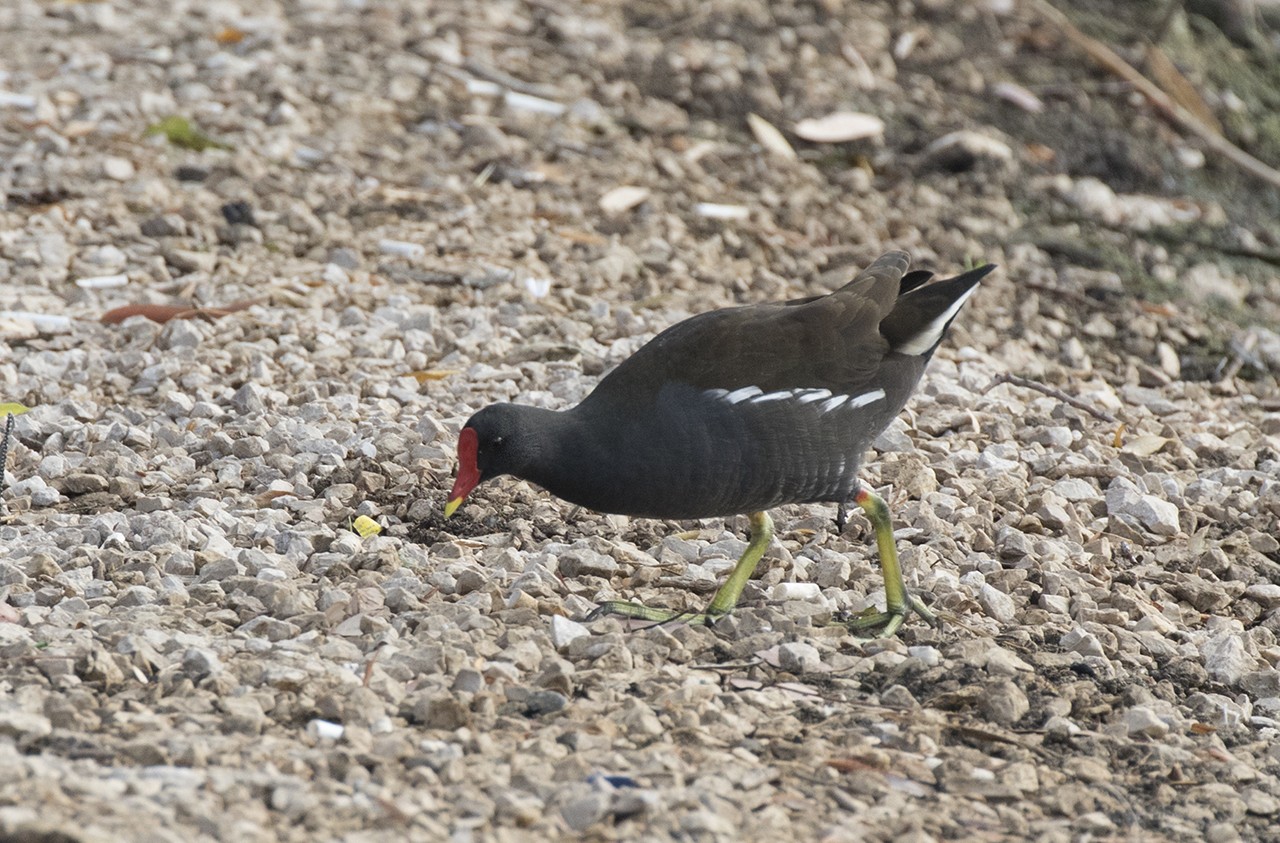
3. Common Moorhen
The common Moorhen is often found in slow-moving or standing-water aquatic ecosystems with dense vegetation coverage where they can hide and forage for food. If vegetation is dense enough, their large feet even enable them to walk across the floating plants. These birds are opportunistic feeders and will eat any food that is currently available.
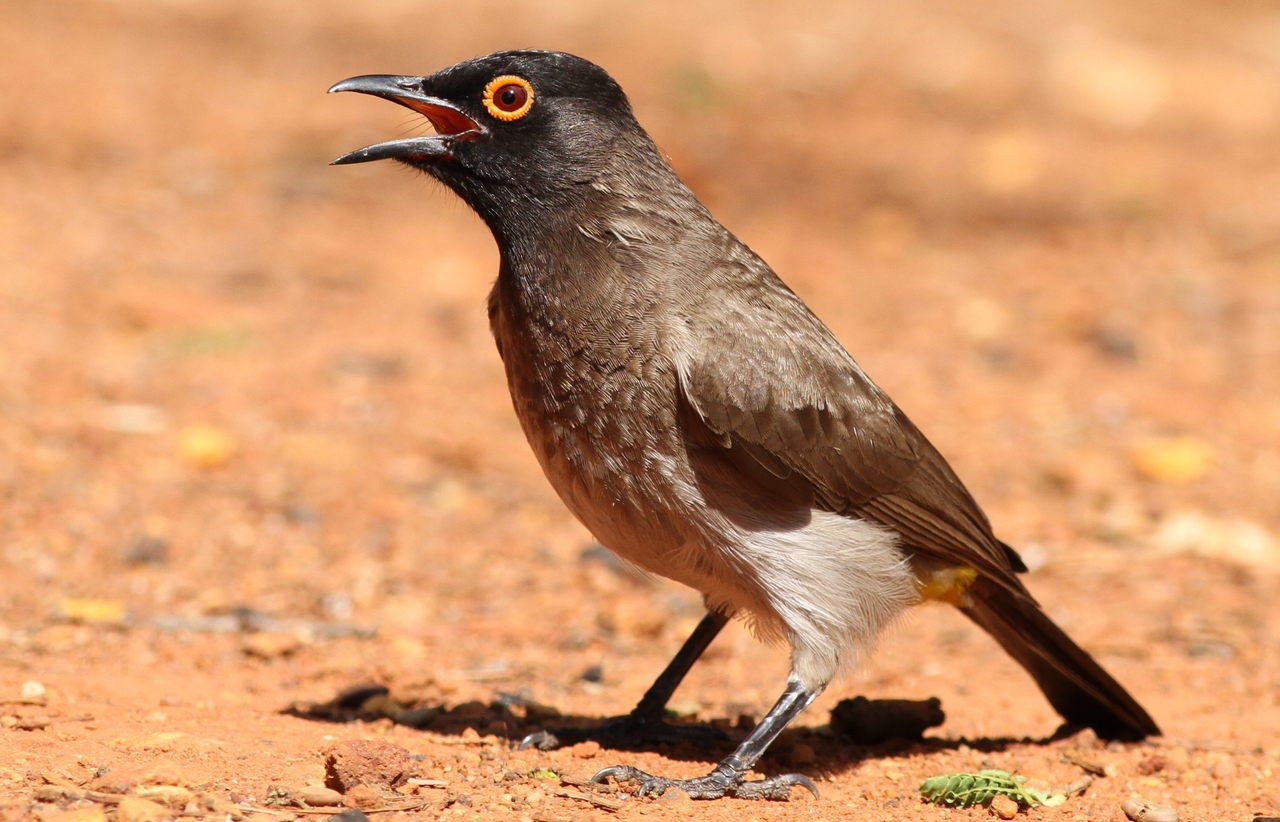
4. African Red-eyed Bulbul
The African red-eyed bulbul ranges from 19-21 centimeters (7-8 inches) in length and weighs 30-48 grams (1-1.7 ounces). Its call is a series of loud fluty notes, usually given only by the male.
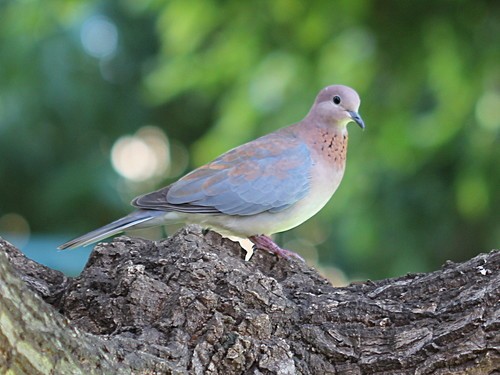
5. Laughing Dove
The laughing Dove is a small dove named after its distinctive laugh-like vocalization. This ground-feeding, non-migratory bird is a regular inhabitant of man-altered environments such as villages, gardens, and orchards. In cities, these doves tend to become quite confident. They pair for life and live in very small communities.
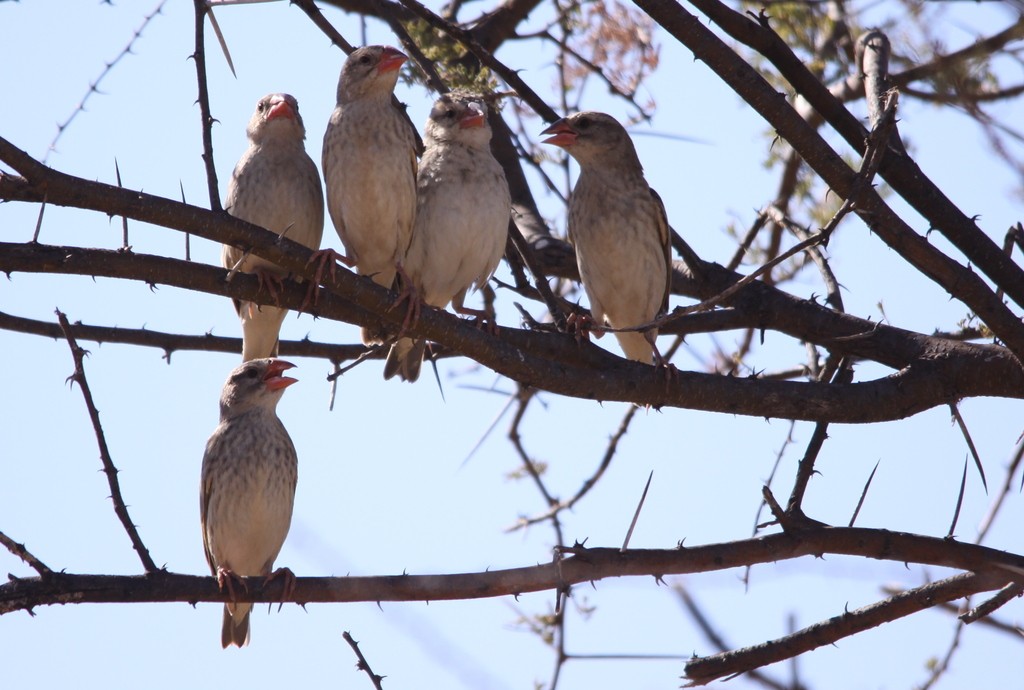
6. Red-billed Quelea
The red-billed quelea is a small sparrow-like bird, approximately 12 cm (4.7 in) long and weighing 15–26 g (0.53–0.92 oz), with a heavy, cone-shaped bill, which is red (in females outside the breeding season and males) or orange to yellow (females during the breeding season). Over 75% of males have a black facial "mask", comprising a black forehead, cheeks, lores and higher parts of the throat. Occasionally males have a white mask. The mask is surrounded by a variable band of yellow, rusty, pink or purple. White masks are sometimes bordered by black. This colouring may only reach the lower throat or extend along the belly, with the rest of the underparts light brown or whitish with some dark stripes. The upperparts have light and dark brown longitudinal stripes, particularly at midlength, and are paler on the rump. The tail and upper wing are dark brown. The flight feathers are edged greenish or yellow. The eye has a narrow naked red ring and a brown iris. The legs are orangey in colour. The bill is bright raspberry red. Outside the breeding season, the male lacks bright colours; it has a grey-brown head with dark streaks, whitish chin and throat, and a faint light stripe above the eyes. At this time, the bill becomes pink or dull red and the legs turn flesh-coloured. The females resemble the males in non-breeding plumage, but have a yellow or orangey bill and eye-ring during the breeding season. At other times, the female bill is pink or dull red. Newborns have white bills and are almost naked with some wisps of down on the top of the head and the shoulders. The eyes open during the fourth day, at the same time as the first feathers appear. Older nestlings have a horn-coloured bill with a hint of lavender, though it turns orange-purple before the post-juvenile moult. Young birds change feathers two to three months after hatching, after which the plumage resembles that of non-breeding adults, although the head is grey, the cheeks whitish, and wing coverts and flight feathers have buff margins. At an age of about five months they moult again and their plumage starts to look like that of breeding adults, with a pinkish-purple bill. Different subspecies are distinguished by different colour patterns of the male breeding plumage. In the typical subspecies, Q. quelea quelea, breeding males have a buff crown, nape and underparts and the black mask extends high up the forehead. In Q. quelea lathamii the mask also extends high up the forehead, but the underparts are mainly white. In Q. quelea aethiopica the mask does not extend far above the bill, and the underparts may have a pink wash. There is much variability within subspecies, and some birds cannot be ascribed to a subspecies based on outward appearance alone. Because of interbreeding, specimens intermediate between subspecies may occur where the ranges of the subspecies overlap, such as at Lake Chad. The female pin-tailed whydah could be mistaken for the red-billed quelea in non-breeding plumage, since both are sparrow-like birds with conical red-coloured bills, but the whydah has a whitish brow between a black stripe through the eye and a black stripe above.
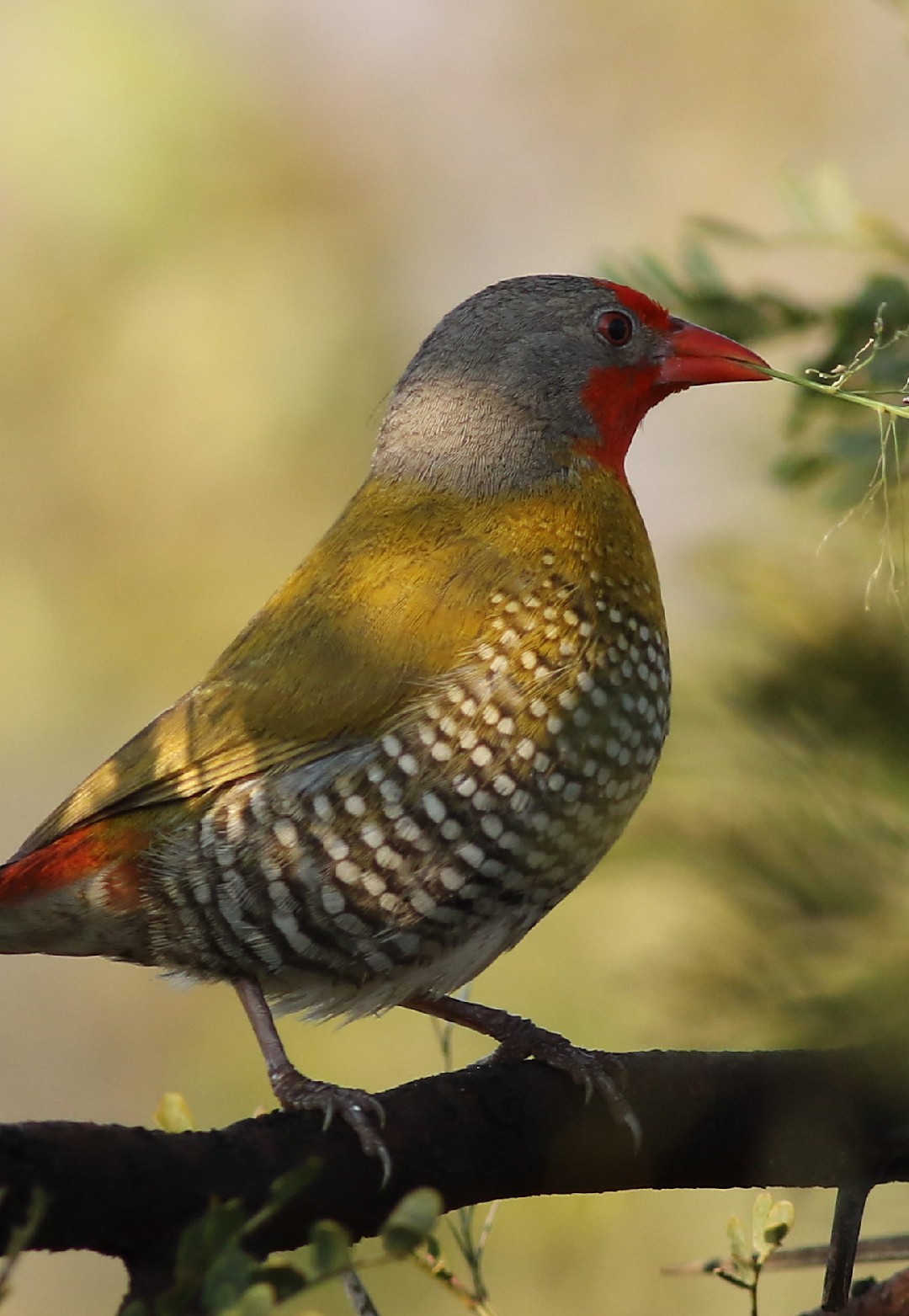
7. Green-winged Pytilia
The green-winged pytilia (Pytilia melba) is a common species of estrildid finch found in Africa. It has an estimated global extent of occurrence of 6,000,000 square kilometres (2,300,000 sq mi). It is widespread throughout Sub-Saharan Africa, though it is more rarely seen in central, far southern and coastal western parts of the continent. It has two subspecies groups, nominate melba in the south and the northerly citerior, which are sometimes treated as separate species. Usually, additional subspecies are recognized within these two groups.
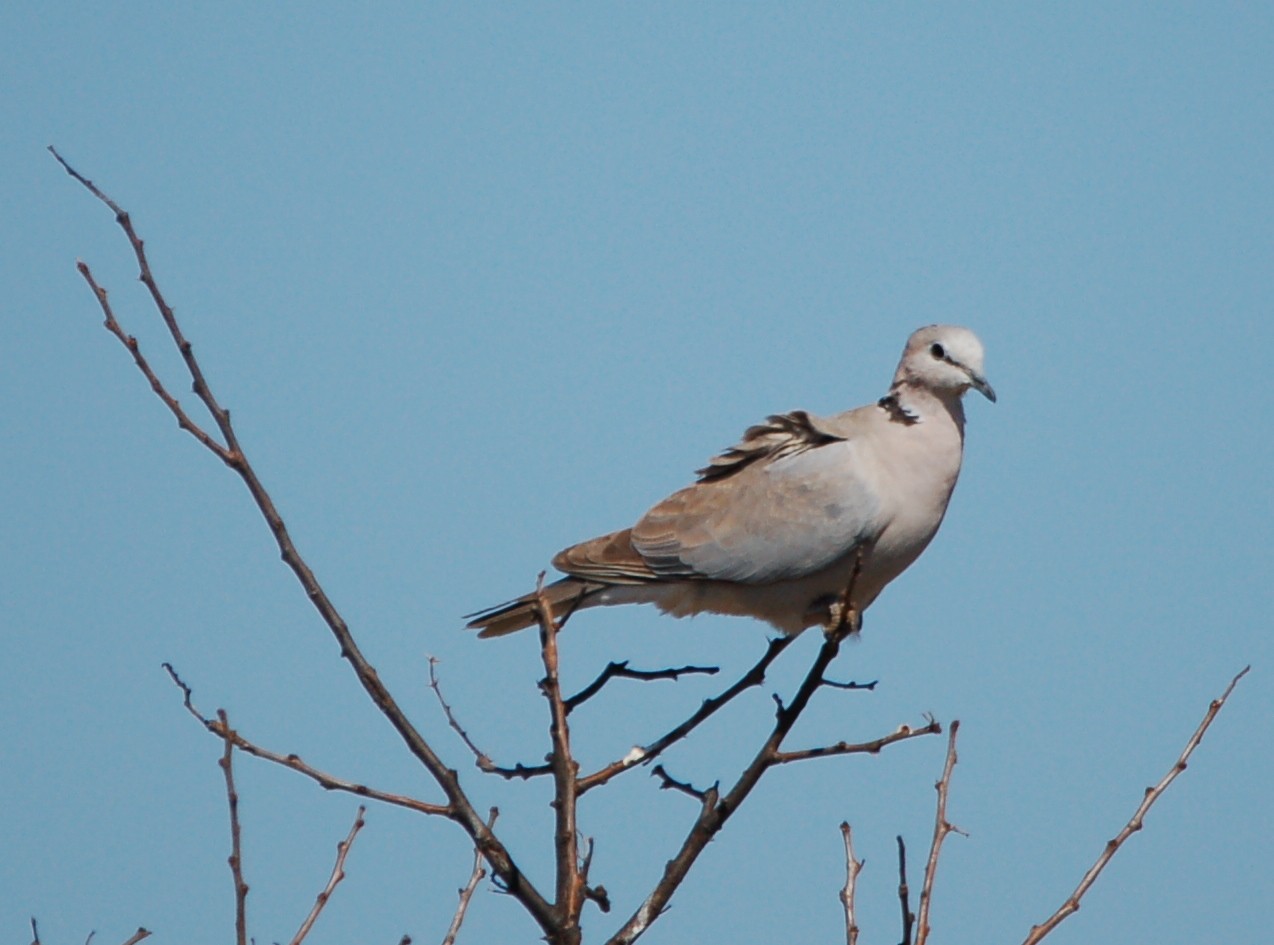
8. Ring-necked Dove
Their body feathers are darkest on the upper side, where they are coloured in dull tones of grey and brown, with shades of lavender on the nape. It is paler below, where a tint of pinkish lavender is usually present. The lower belly and crissum (the undertail coverts surrounding the cloaca) is white. As with related species, they have white fringes and conspicuous white tips to the otherwise slate grey tail feathers. The tail pattern is particularly noticeable during the display flight. Individual plumage variation is high, with some light and others almost sooty. Males and females look alike, although the males are slightly bigger. They measure 25–26.5 cm (9.8–10.4 in) in length and weigh 92–188 g (3.2–6.6 oz). The eyes are almost black, the bill is black and the feet are dark purple. An immature is duller and lacks the semi-collar of an adult. It also has buff edges to all the upper part and wing covert feathers, while the plumage below is broadly edged greyish-white.
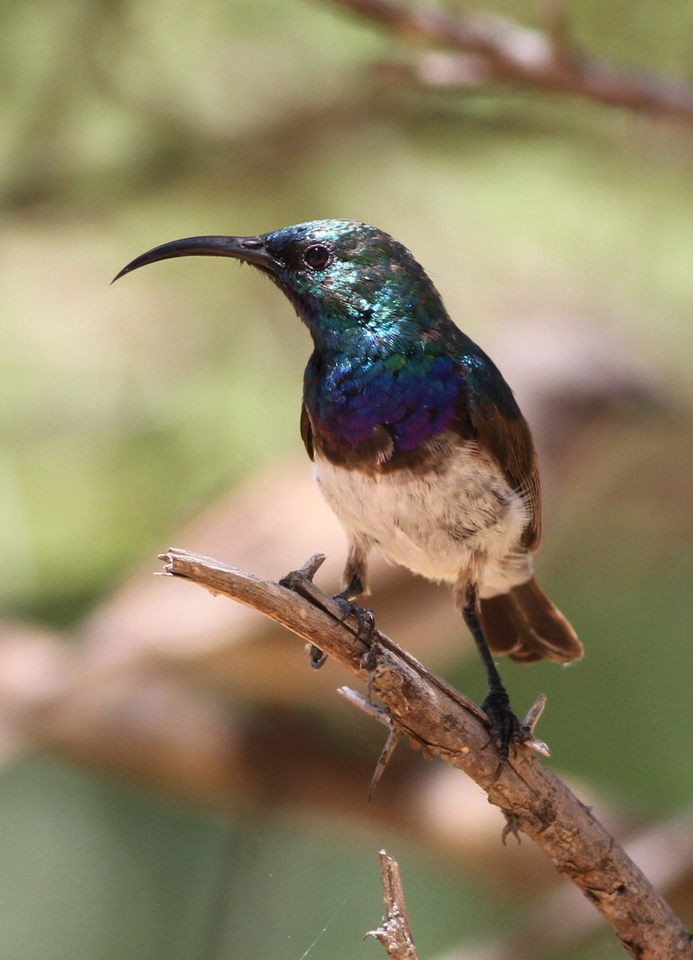
9. White-breasted Sunbird
The white-bellied sunbird (Cinnyris talatala), also known as the white-breasted sunbird, is a species of bird in the family Nectariniidae. It is found in Angola, Botswana, Democratic Republic of the Congo, Malawi, Mozambique, Namibia, South Africa, Swaziland, Tanzania, Zambia, and Zimbabwe. Distribution and habitat Occurs from Angola to southern Tanzania south to southern Africa, where it is common to locally abundant across northern Namibia, northern and south-eastern Botswana, Zimbabwe, Mozambique, Swaziland and north-eastern South Africa. It generally prefers semi-arid savanna woodland, such as Acacia, bushwillow (Combretum) and riparian thickets, Zambezi teak (Baikiaea plurijuga) and mixed miombo (Brachystegia) woodland. Predators and parasites It has been recorded as prey of the following mammals: Felis cattus (Domestic cat) Galerella sanguinea (Slender mongoose) Brood parasites It has been recorded as host of the Klaas's cuckoo. Food It mainly eats nectar supplemented with arthropods, often joining mixed-species foraging flocks in the day, along with other sunbirds at large sources of nectar. In the late afternoon it regularly hawks insects aerially and gleans invertebrates from foliage. The following food items have been recorded in its diet: * Nectar * Arthropods insects aphids ants grasshoppers (Orthoptera) moths (Lepidoptera) spiders Breeding The nest (see image) is built solely by the female in about 5–8 days, consisting of an untidy oval-shaped structure made of dry material such as grass and leaves, bound together with spider web. The outside is decorated with bits of leaves and bark, while the interior is thickly lined with plant down, sometimes along with feathers and wool. It is typically attached to the branches or thorns of a plant, such as a Queen-of-the-night cactus (Cereus jamacaru), prickly-pear cactus (Opuntia) or a tree, sometimes alongside active paper wasp (Belanogaster) nests. Egg-laying season is from June–March, peaking from September–December. It lays 1-3 eggs, which are incubated solely by the female for 13–14 days. The chicks are brooded solely by the female but fed by both parents, leaving the nest after about 14–15 days, after which they continue to roost at the nest for about 4-14 more days. Threats Not threatened, in fact it seems to have benefited from the fragmentation and disturbance of miombo (Bracystegia) woodland in Zimbabwe.
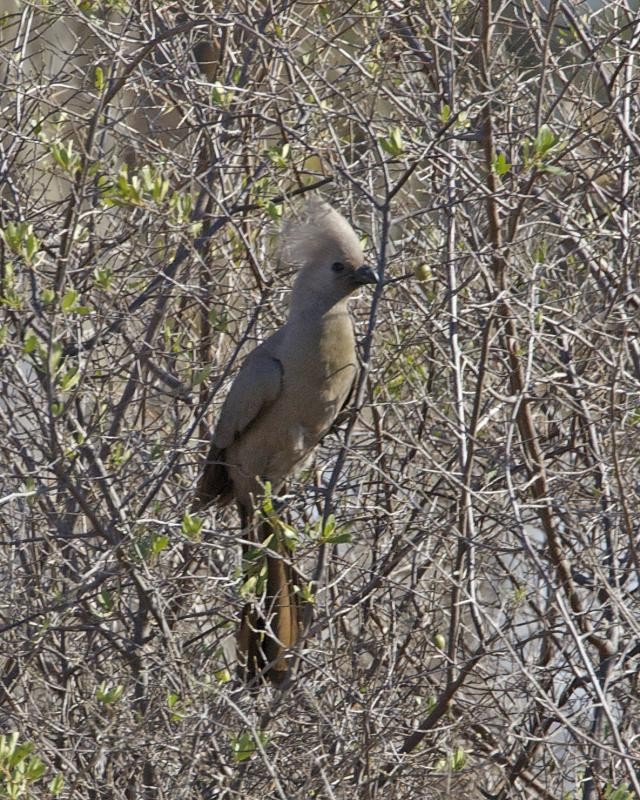
10. Grey Go-away-bird
The sexes are similar. They measure 47–51 cm from bill tip to tail tip, and weigh some 200 to 300 g. They have an almost uniform smoky-grey plumage with long tails and (similar to mousebirds) a wispy, back-swept crest of some 6 to 7 cm in length. The crest can be raised almost vertically when excited. The strong, decurved beak is black and the gape and tongue strikingly pink. The plumage is darkest grey on the chin and throat, and palest around the eyes and on the belly. The breast plumage is washed slightly olive like that of its near relative, the bare-faced go-away-bird.
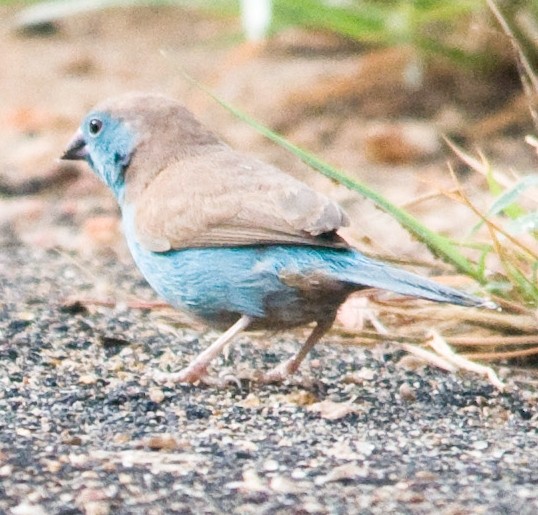
11. Blue-breasted Cordonbleu
The blue waxbill has powder-blue face, breast, rump, and flanks with pale brown upperparts. The female is paler than the male and the blue is confined to the rump, tail, head, and upper breast, with the rest of the underparts being buffy brown. They measure 12–13 cm in length.
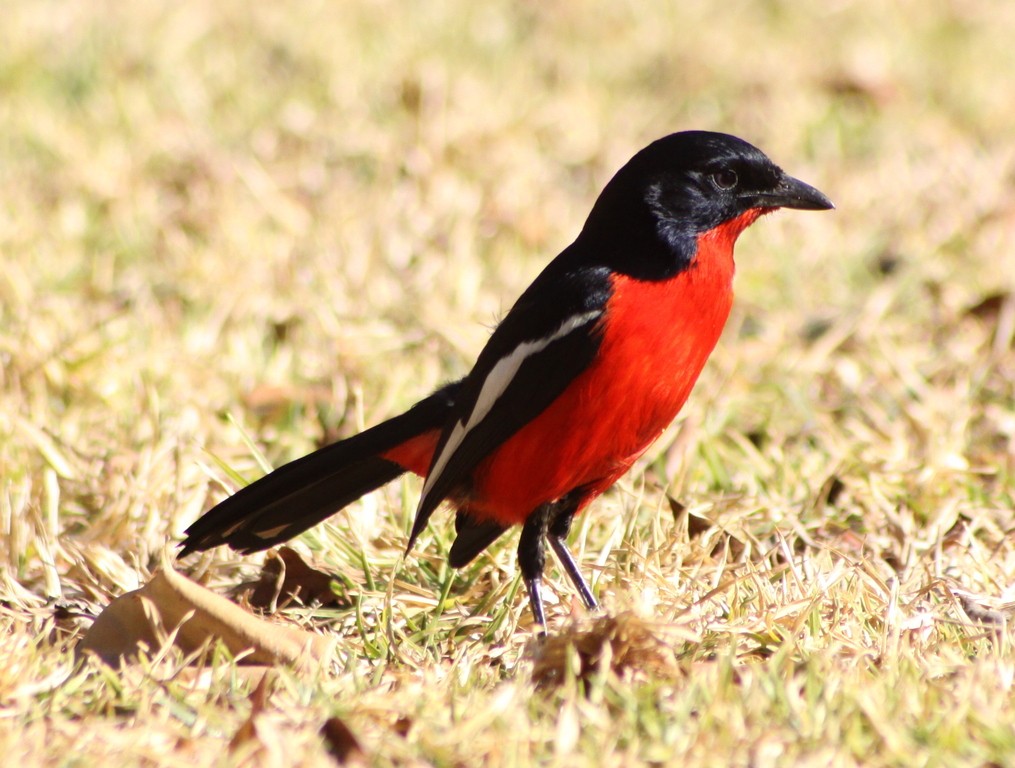
12. Crimson-breasted Gonolek
The sexes have the same colouration and are indistinguishable from each other. The upper parts, including the wings and tail, are black, the wings having a broad white bar. The underparts are vivid scarlet. A yellow-breasted form is occasionally seen, and was at first thought to be a separate species. Young birds have a mottled and barred buff-brown appearance with a pale bill.
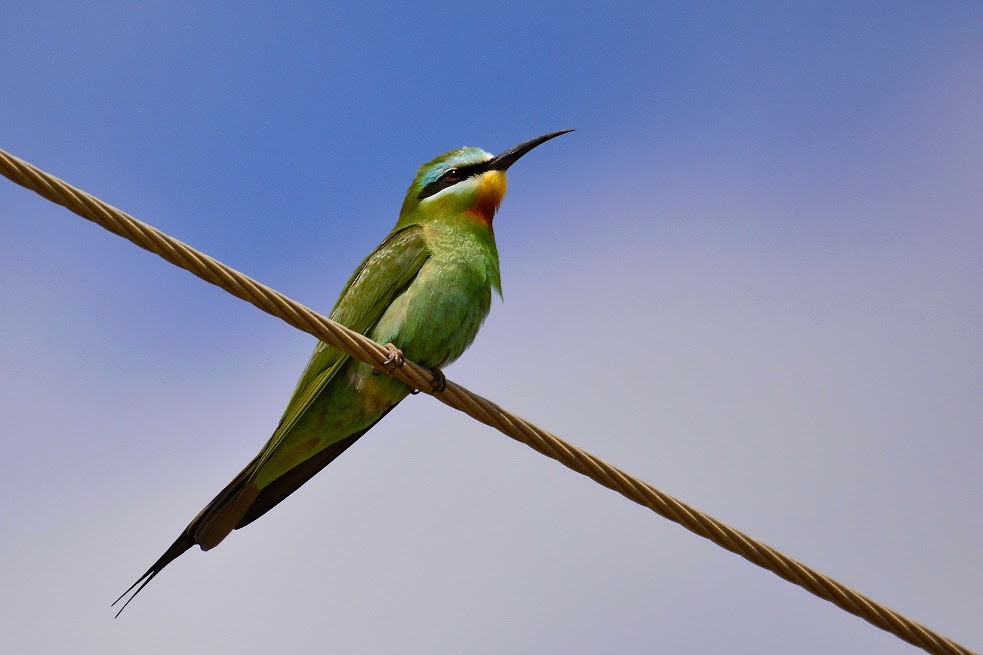
13. European Bee-eater
This species, like other bee-eaters, is a richly coloured, slender bird. It has brown and yellow upper parts, whilst the wings are green and the beak is black. It can reach a length of 27–29 cm (10.6–11.4 in), including the two elongated central tail feathers. Sexes are alike. Female tends to have greener rather than gold feathers on shoulders. Non-breeding plumage is much duller and with a blue-green back and no elongated central tail feathers. Juvenile resembles a non-breeding adult, but with less variation in the feather colours. Adults begin to moult in June or July and complete the process by August or September. There is a further moult into breeding plumage in winter in Africa.
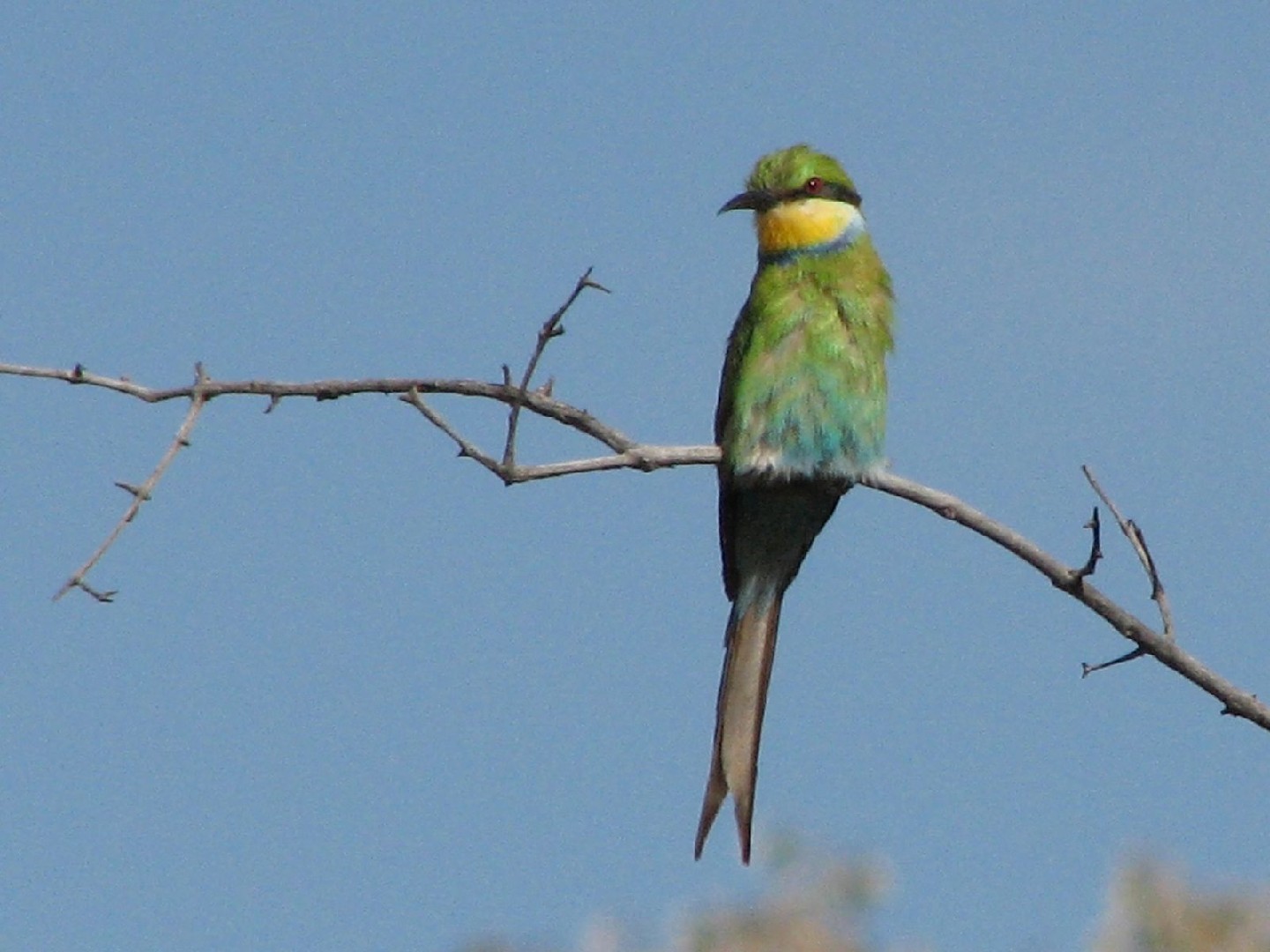
14. Swallow-tailed Bee-eater
The swallow-tailed bee-eater (Merops hirundineus) is a near passerine bird in the bee-eater family, Meropidae. It breeds in savannah woodlands of sub-Saharan Africa. It is partially migratory, moving in response to rainfall patterns. This species, like other bee-eaters, is a richly coloured, slender bird. Its colours and readily visible forked tail make this species unmistakable. It is mainly green with a yellow throat, blue gorget and black eye stripe and beak. It can reach a length of 20–22 cm, including the long forked green or blue feathers. Sexes are alike. This is a species which prefers somewhat more wooded country than most bee-eaters. This attractive bird is readily approached. Just as the name suggests, bee-eaters predominantly eat insects, especially bees, wasps and hornets, which are caught in the air by sorties from an open perch. Swallowtail has a preference for honeybees. These bee-eaters are nesting as pairs or in very small colonies in sandy banks, or similar flat ground. They make a relatively long tunnel in which the 2 to 4 spherical, white eggs are laid. These birds also feed and roost communally.
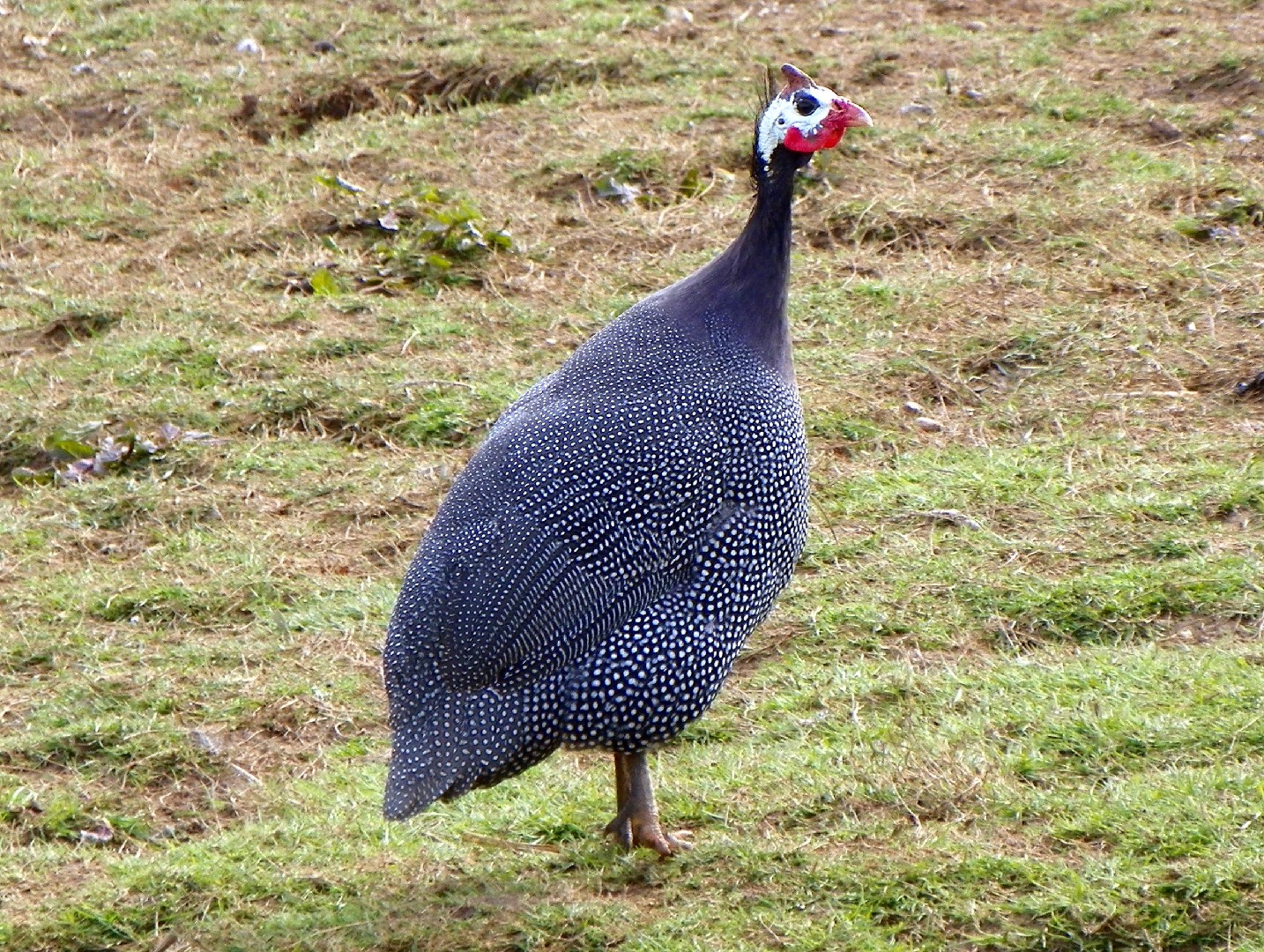
15. Helmeted Guineafowl
Helmeted Guineafowls are large birds with featherless blue heads. They are native to open habitats in Africa, but in the U.S. they're kept in parks, farms, and backyards to combat and control ticks that are known to spread Lyme disease. In an effort to intimidate, the males will bristle their feathers, raise their wings, and run at their opponents while squawking and gaping at the beak. They are neither subtle in their behavior nor subtle in their looks.
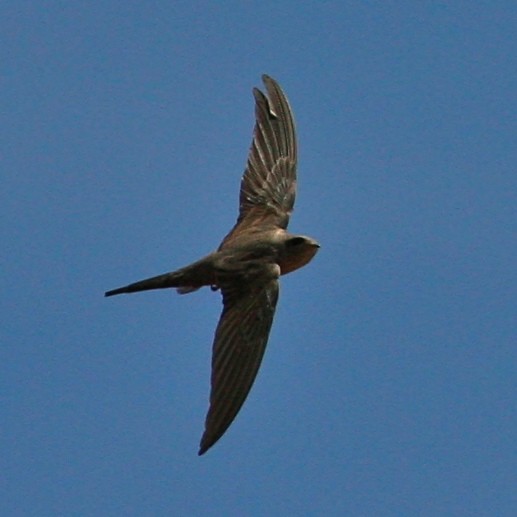
16. African Palm Swift
This 16 cm long species is mainly pale brown in colour. It has long swept-back wings that resemble a crescent or a boomerang. The body is slender, and the tail is long and deeply forked, although it is usually held closed. The call is a loud, shrill scream. Sexes are similar, and young birds differ mainly in their shorter tails. Palm swifts have very short legs which they use only for clinging to vertical surfaces, since swifts never settle voluntarily on the ground.
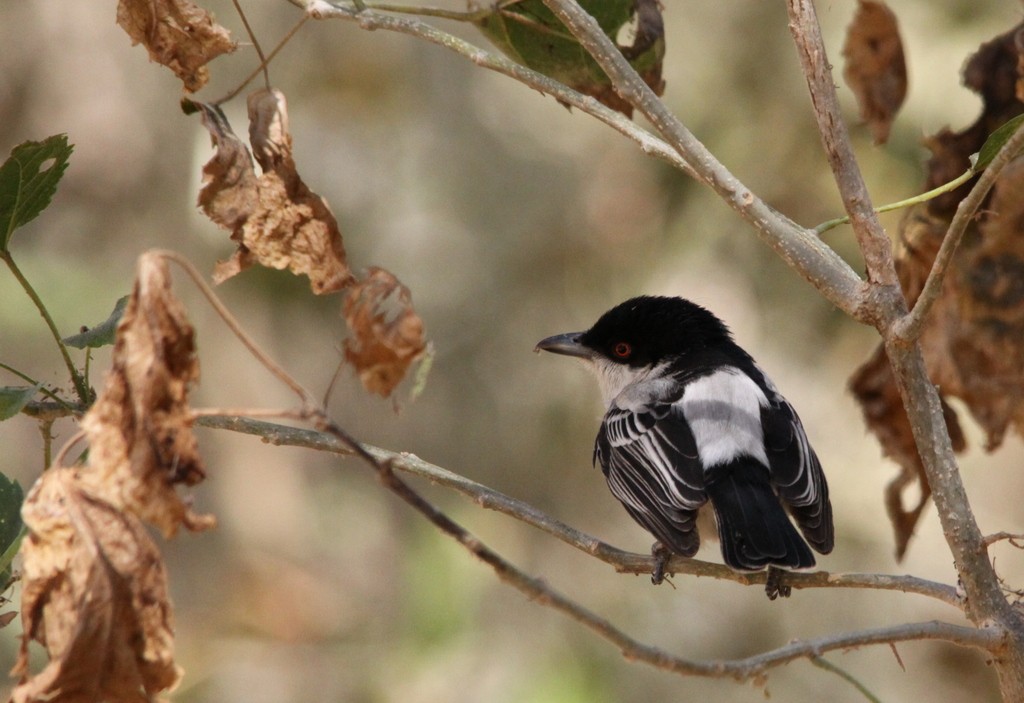
17. Black-backed Puffback
They measure about 17 cm in length, and the sexes are similar though easily distinguishable. Adult males have the upperparts deep blue-black with a slight luster. The black cap subtends the red eye, the upperpart plumage is black-and-white, and the underparts pure white. Females have a black loral stripe and white supraloral feathering, with the ear coverts pale and the crown not solidly black. They also have greyer backs than males, and grey to buffy tones to the white plumage tracts. Immature birds resemble females, but have brownish bills and brown irides, while the upperparts and flanks are still greyer, and the underparts and edges of the wing feathers are yet more buffy. Intraspecific variation is clinal. Range, iris colour, wing markings and the female plumage assist in separating it from other puffback species.
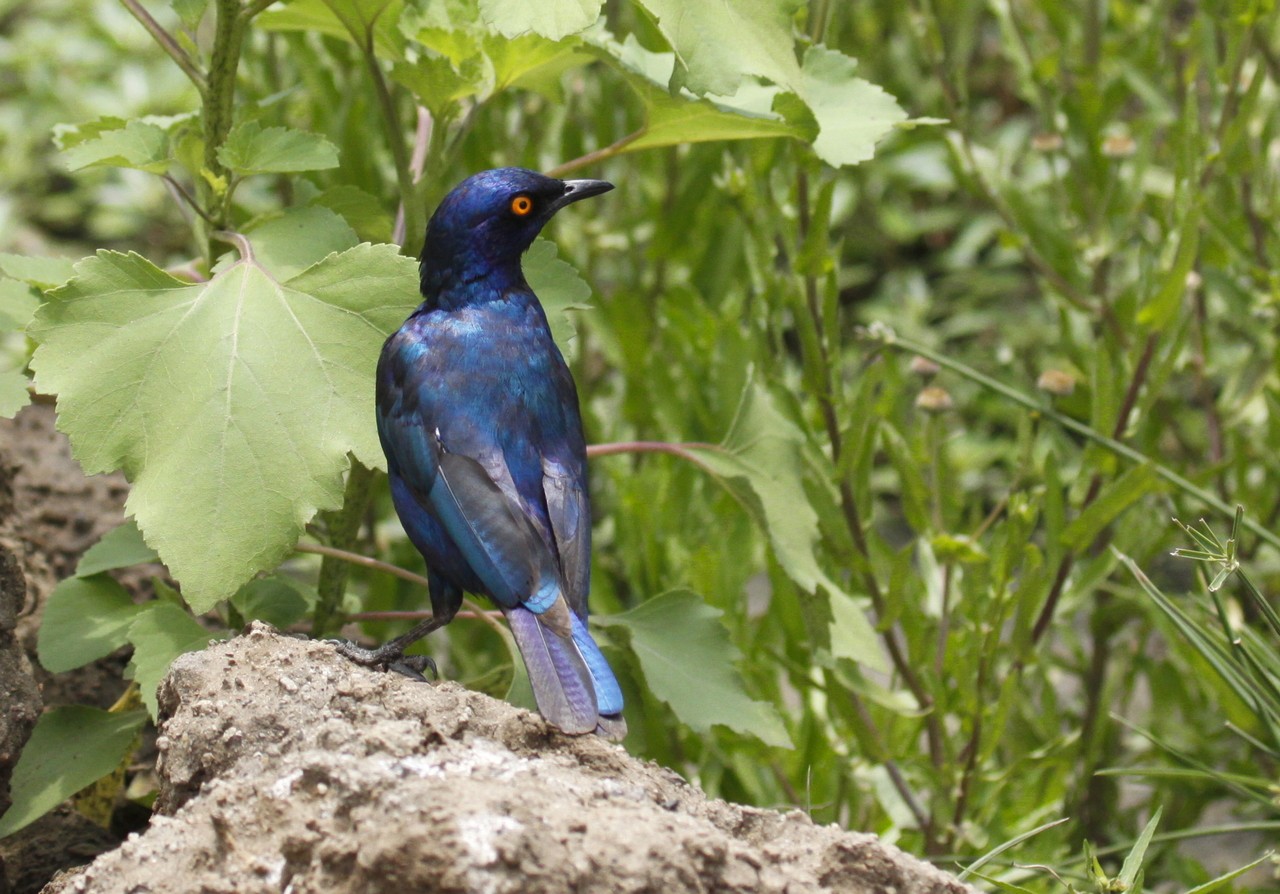
18. Cape Starling
The Cape starling has an adult length of about 25 cm (10 in) and weight of about 100 grams (3.5 oz). The plumage of an adult bird is a fairly uniform bright, glossy colour. The head is blue with darker ear coverts and the upper parts of the body are greenish-blue. It has a lengthy warbling song which may include an imitation of sounds it hears in its environment.
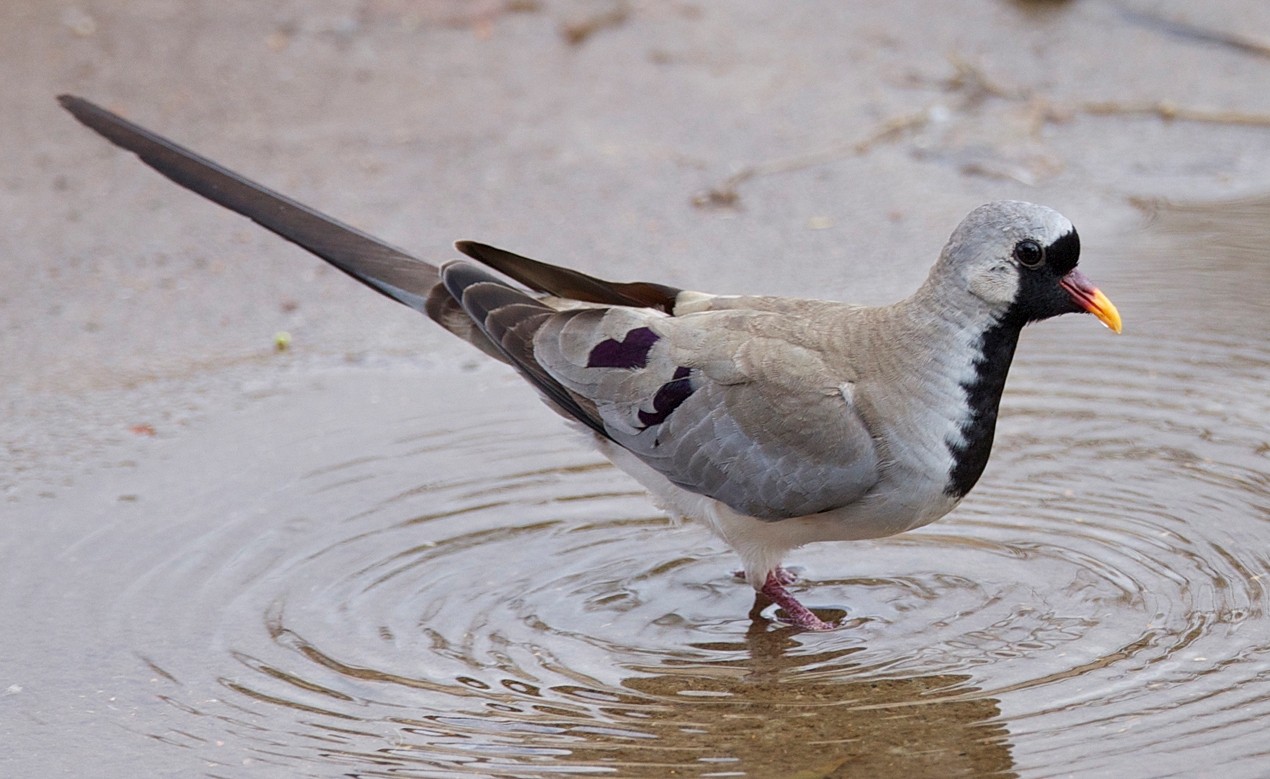
19. Namaqua Dove
The Namaqua dove is a tiny sparrow-sized pigeon, typically 22 cm in length with a 28–33 cm wingspan, and weighing 40g. It has a very long black tapered tail, and the size and shape have led to comparison with the budgerigar. The plumage is mostly grey apart from a white belly, and chestnut primary feathers which are visible in flight. The adult male has a yellow and red beak and a black face, throat and breast. The adult female lacks the black and has a red-based grey bill. Young birds are dark blotched on the wings and shoulders, and otherwise resemble the females. The song is a quiet, short, double hoo, higher on the longer second note kuh-whooo, mournful and frequently repeated.
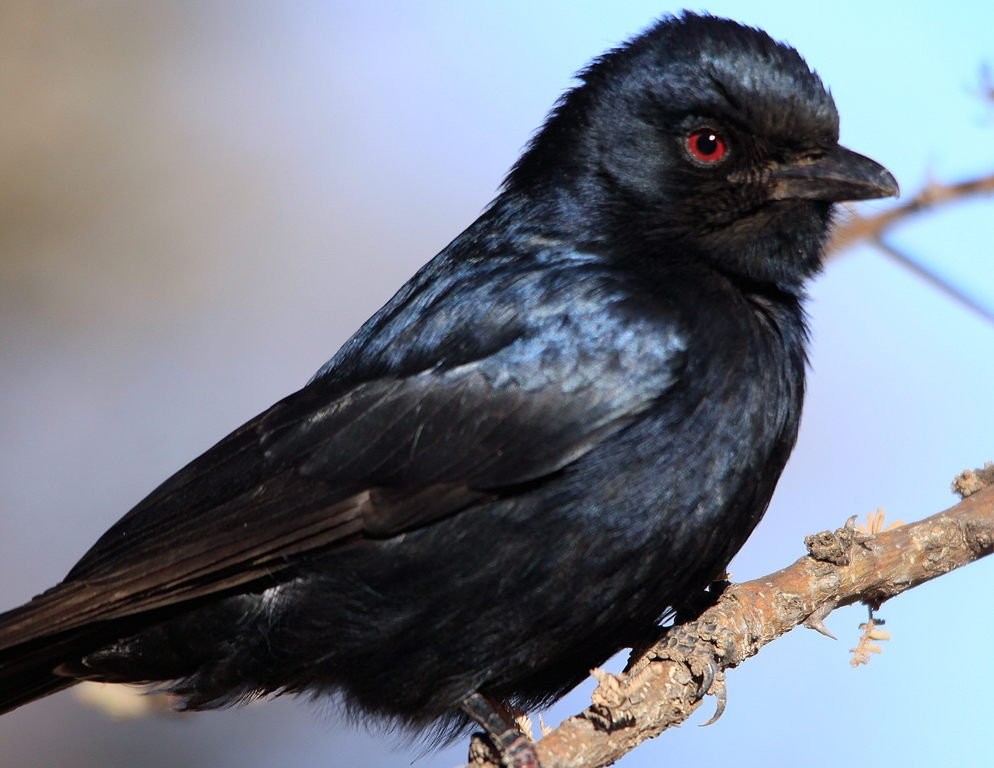
20. Fork-tailed Drongo
The fork-tailed drongo is 25 cm long and has short legs. They are medium sized and usually weigh about 50 grams. Males are mainly glossy black, although their wings are duller. Females are similar but less glossy. It is large-headed with well-developed rictal and nasal bristles, which are used as sensory organs. The rectrices curve outwards, forming the forked tail for which the species is named. The hooked bill is black and heavy, and the eye is red.