



Top 20 Most Common Bird in New Caledonia
New Caledonia is a unique archipelago in the South Pacific enriched with diverse flora and fauna. Renowned for its birdlife, this region hosts varied species of avifauna. The 20 most common birds are recognized for their striking appearances, exceptional behaviors, and adaptive skills acquired to survive in this vibrant ecosystem.

Most Common Bird
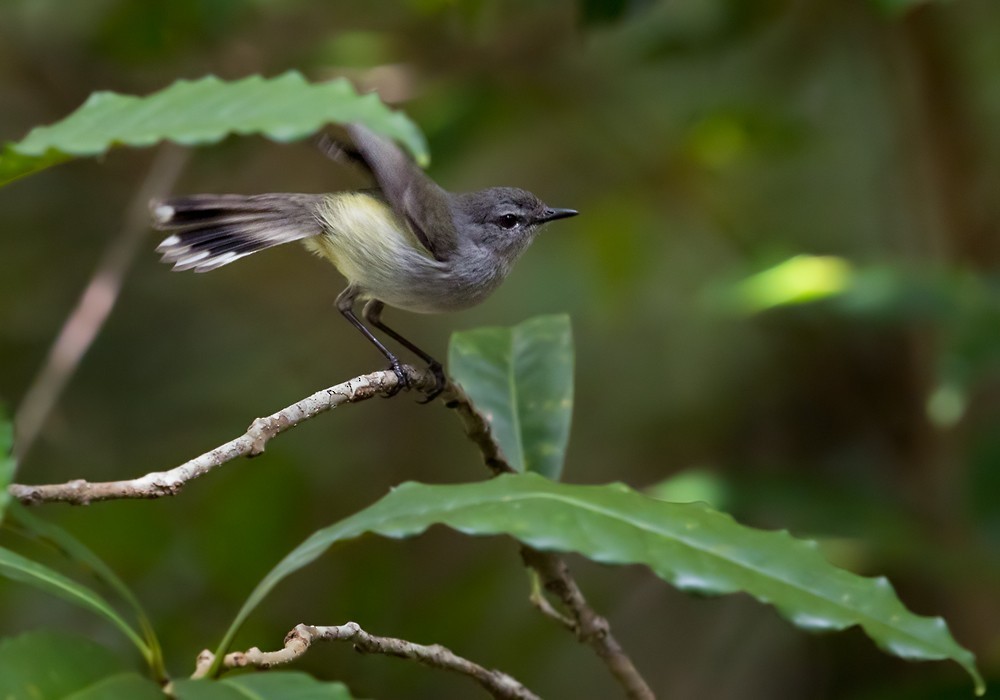
1. Fan-tailed Gerygone
The fan-tailed gerygone (Gerygone flavolateralis) is a species of bird in the family Acanthizidae. It is found in New Caledonia and Vanuatu. 
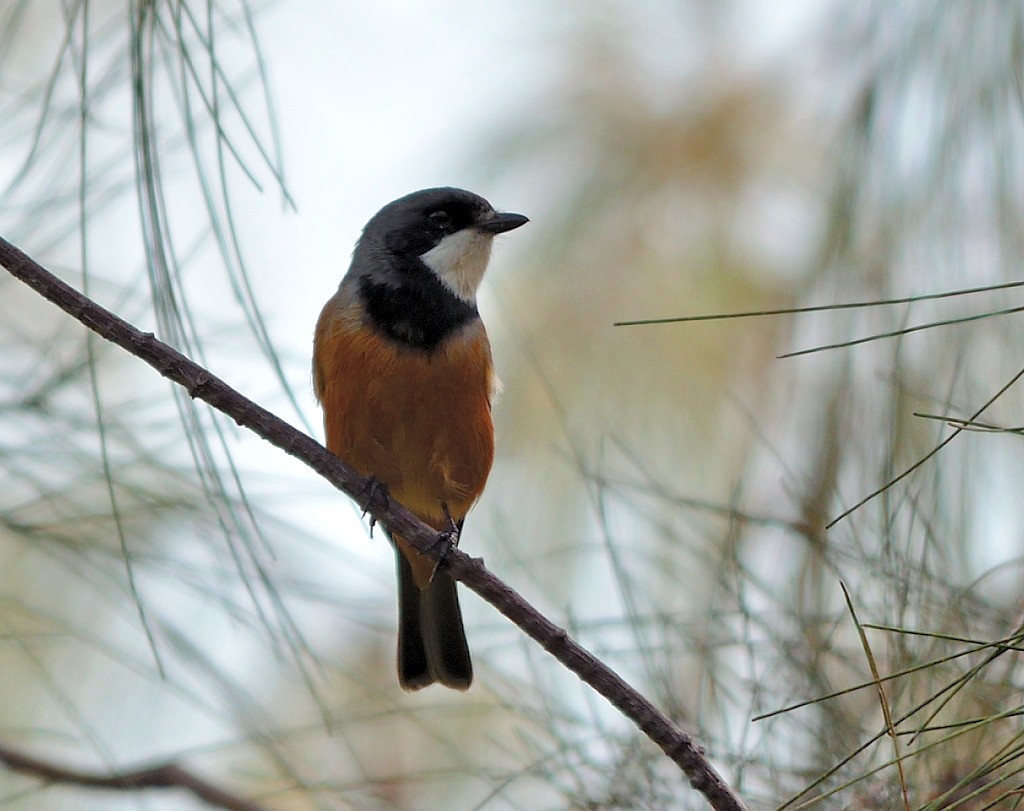
2. Rufous Whistler
Rufous whistlers are large-headed and stocky. They have short beaks and long tails (almost as long as the rest of the bird) which are very narrow and have sharp, forked tips. The species is sexually dimorphic. While females are typically dull brown or grey with streaked underbodies, males are predominantly dark-grey with white throats and (in most cases) a black mask that covers most of their head and some of their neck. These birds are between 16 and 18 centimetres (6.3–7.1 inches) in size, on average, and their normal weight is approximately 25 grams (0.9 ounces). The rufous whistler has a variety of musical calls which consist of a lengthy series of ringing notes.
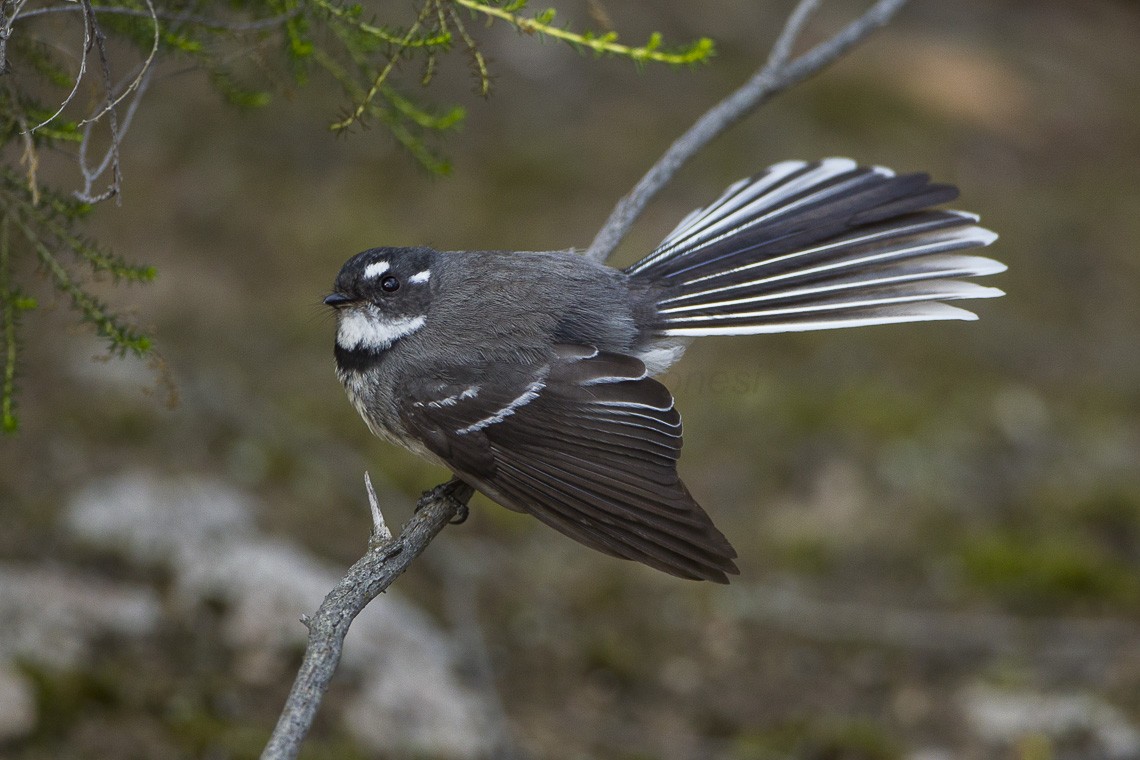
3. Grey Fantail
This fantail is mid-to-dark grey or grey-brown above, lighter (often yellowish/orange) below, with a white throat, white markings over the eye, and (depending on the race) either white-edged or entirely white outer tail feathers. It grows to 16 cm (6.3 in) in length, of which half is the tail, which, as the name implies, is often displayed fanned out. This reveals that the outer tail feathers are light and the centre ones are dark. Some races, such as keasti, have a darker plumage. During waking hours the bird is almost never still. It flits from perch to perch, sometimes on the ground but mostly on the twigs of a tree or any other convenient object, looking out for flying insects. The birds are not shy, and will often flit within a few metres of people, especially in forested areas and suburban gardens. In doing so, it is able to catch any small flying insects that may have been disturbed by human activities such as walking or digging. The bird's call is an almost metallic cheek, either as a single sound or (more often) repeated as a chattering.
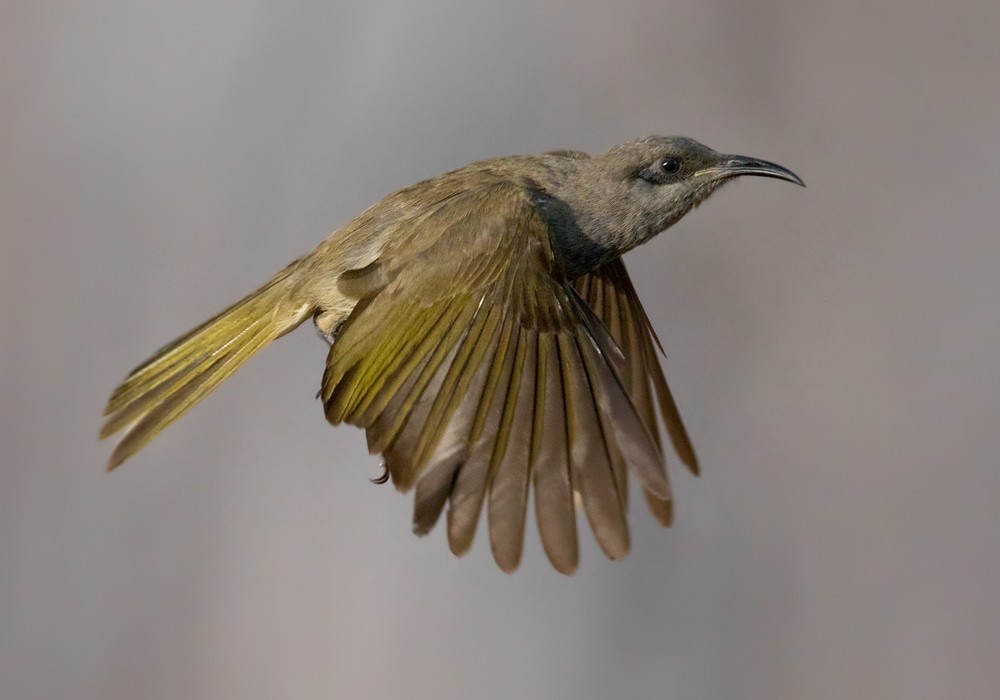
4. Grey-eared Honeyeater
The grey-eared honeyeater is 13 to 17 cm long with the males being larger than the females. The plumage is mainly dull green-brown above and grey with an olive tint below. The cheeks are silvery-grey, and the crown is dark grey. The black bill is long and slightly downcurved; the legs and feet are blue-grey. Juveniles are paler than the adults without the silvery cheeks. They are noisy birds which begin calling before dawn. They have a harsh tchoo-tchoo-tchoo call and a warbling song.
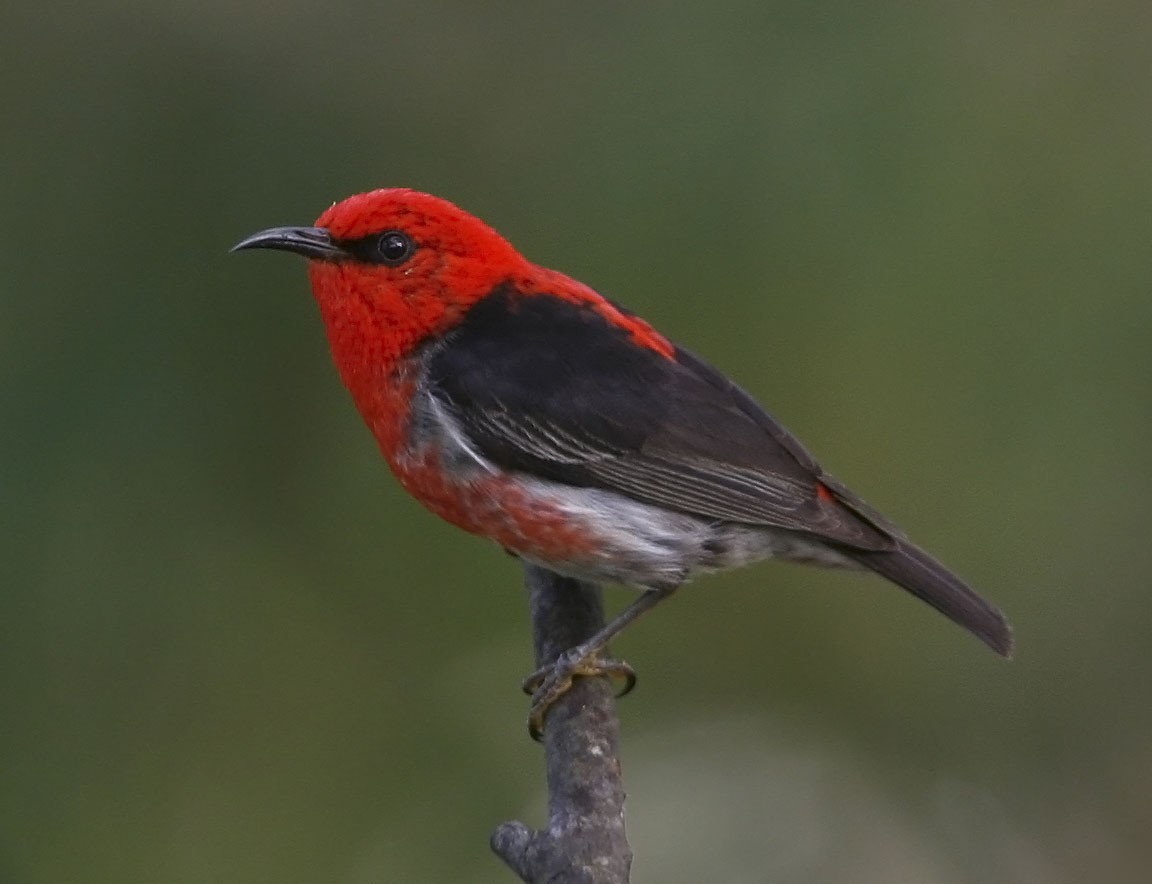
5. Scarlet Myzomela
The smallest honeyeater native to Australia, the scarlet myzomela is a distinctive bird with a compact body, short tail and relatively long down-curved black bill and dark brown iris. It is between 9 and 11 centimetres (3.5 and 4.3 in) long, with an average wingspan of 18 centimetres (7.1 in) and a weight of 8 grams (0.28 oz). It has relatively long wings for its size; when the wings are folded, the longest primary feathers reach over half the length of the tail. It exhibits sexual dimorphism, with the male much more brightly coloured than the female. The adult male has a bright red (scarlet) head, nape and upper breast, with a narrow black stripe from beak to eye and a thin black eye-ring. The red plumage extends as a central stripe down the back and rump. On its breast, the red becomes more mottled with grey towards the belly and flanks, which are grey-white. The sides of the breast are brown-black. The mantle and scapulars are black and the upperwing a dull black, with white edges to the secondary covert feathers. The tail is black above and dark grey below. The underwing is white with a dark grey trailing edge and tip. The female has a brown head and neck, darker on top and lighter and greyer on the sides, with a pale grey-brown throat and chin. It sometimes has pinkish or reddish patches on the forehead, throat and cheeks. The upperparts are brown, sometimes with scarlet patches on the uppertail coverts. The tail is blackish-brown with yellow fringes to all but the central pair of rectrices. The wings are blackish-brown. The female has a yellowish or brownish base to its black bill. Moulting takes place over spring and summer. Young birds have juvenile plumage when they leave the nest; they are similar to females though with more reddish-brown upperparts, light brown rumps and uppertail coverts. Immature males, after moulting from juvenile plumage, have patches of red feathers coming through the juvenile brown plumage. Immature females are very difficult to distinguish from juveniles or adult females. Both sexes attain adult plumage after two moults. It is unknown whether its plumage changes with moults after the scarlet myzomela attains adulthood. The scarlet myzomela is more commonly heard than seen, and has a wider repertoire of notes in its calls than most honeyeaters. The male is more vocal than the female. The main call is a tuneful tinkling call made up of sets of six notes that rise or fall in tone. It has been likened to cork being rubbed on glass. The female chirps as it hops around and upon meeting and playing with the male, and it can also make a squeaking call. Both sexes make a short chiew-chiew as a contact call. Males could be mistaken for the similar looking red-headed myzomela in eastern Cape York Peninsula in northern Queensland where their ranges overlap, though the latter's red colouration is restricted to the head and is sharply demarcated. The latter species also lives in mangroves rather than woodlands. The dusky myzomela resembles the female scarlet myzomela, but is larger with a longer bill and tail, has much darker brown plumage, and lacks the pink tinge to the face and throat.
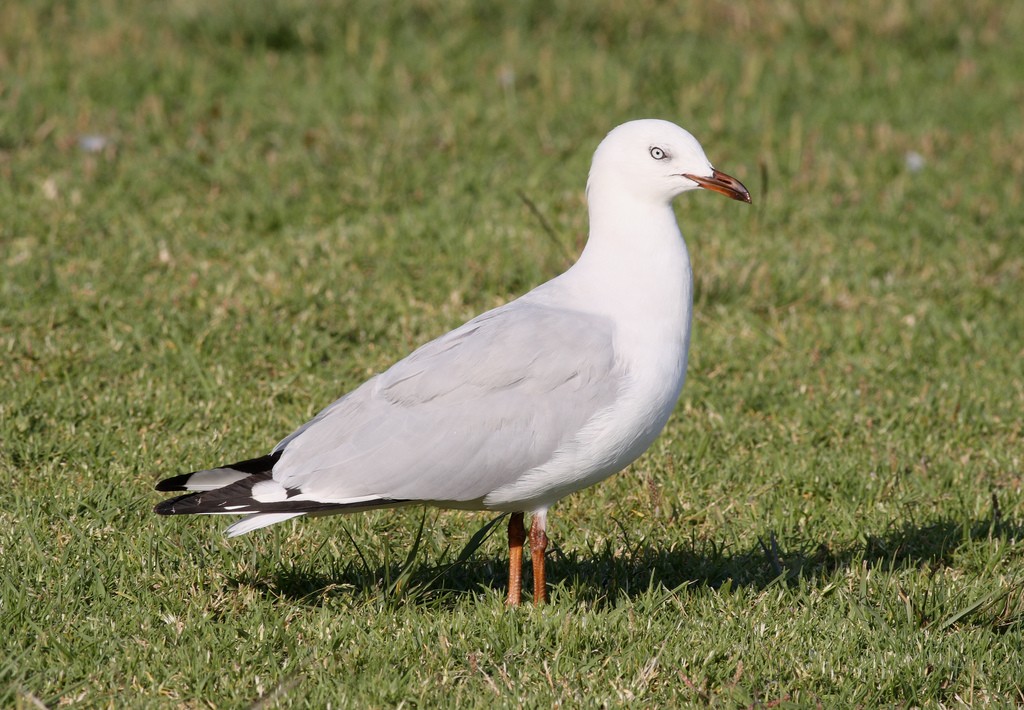
6. Silver Gull
The head, body, and tail are white. The wings are light grey with white-spotted, black tips. Adults range from 40–45 cm in length. Mean wingspan is 94 cm. Juveniles have brown patterns on their wings, and a dark beak. Adults have bright red beaks—the brighter the red, the older the bird.
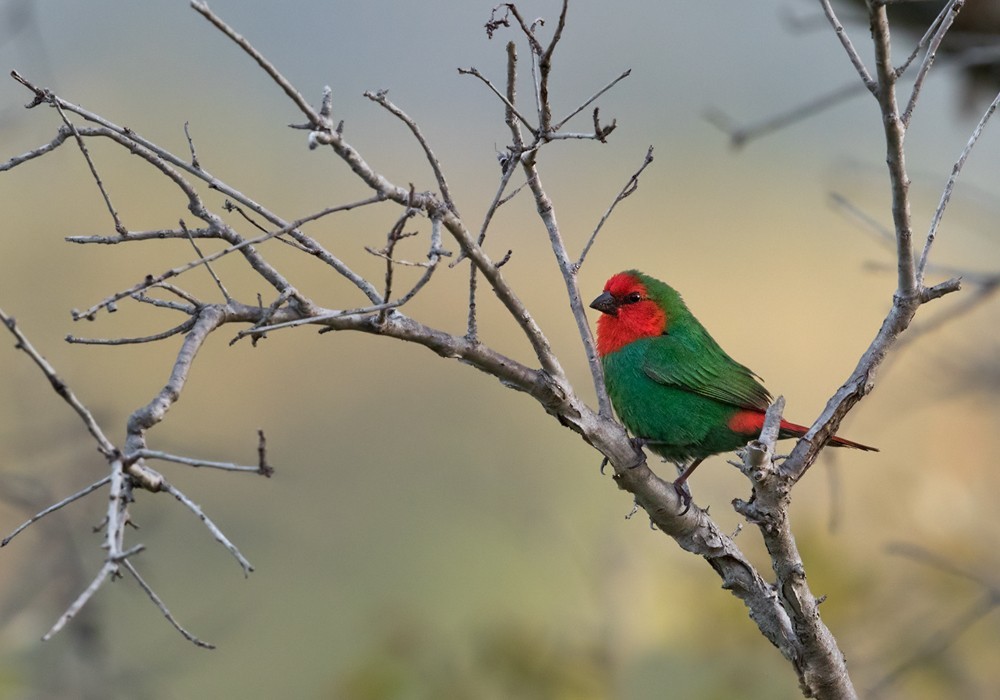
7. Red-throated Parrotfinch
The red-throated parrotfinch (Erythrura psittacea) is a species of estrildid finch found in New Caledonia. It has an estimated global extent of occurrence of 20,000 to 50,000 km². It is found in both subtropical or tropical moist lowland forest and shrubland habitats. The IUCN has classified the species as being of least concern.
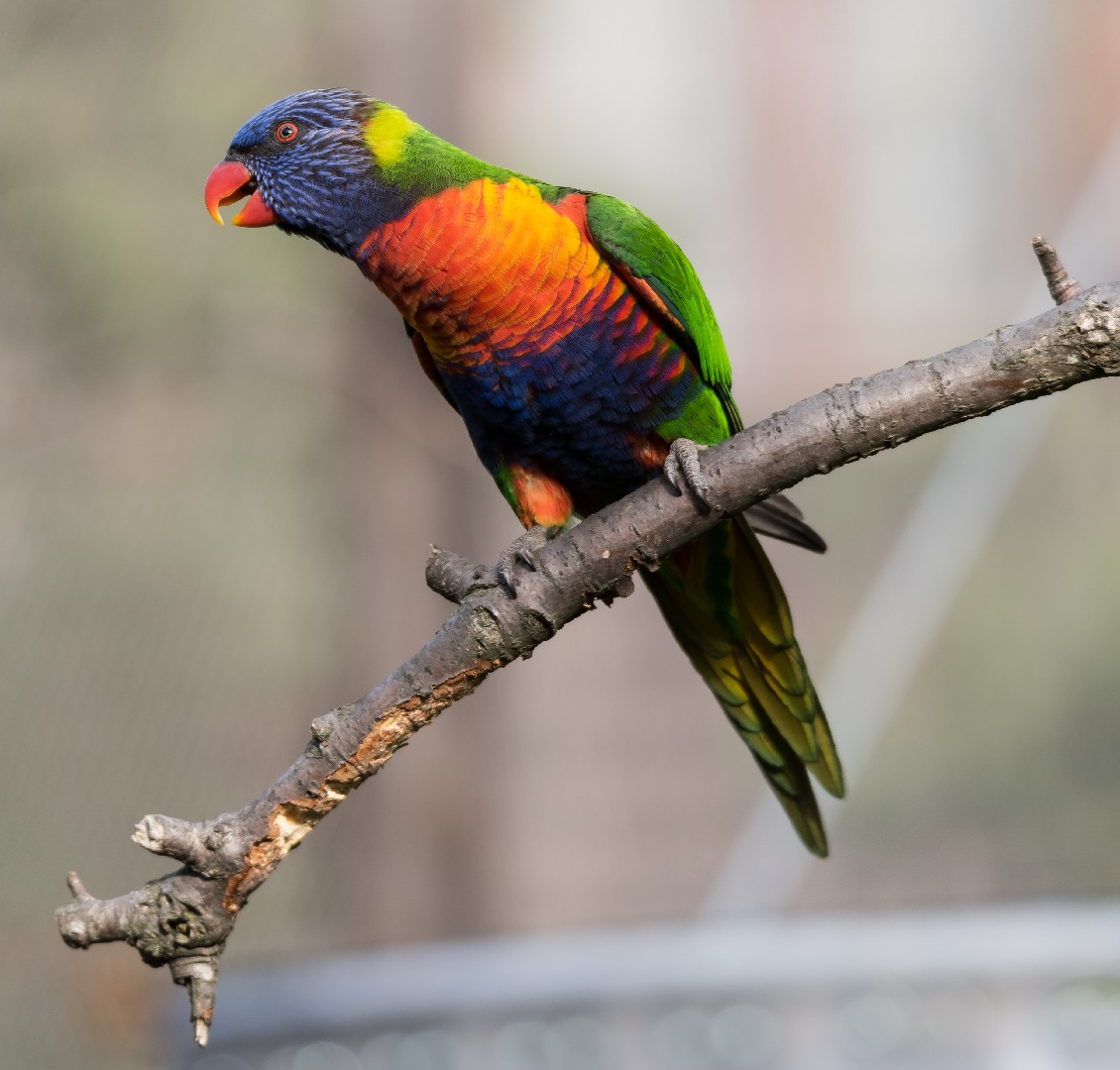
8. Coconut Lorikeet
The coconut lorikeet measures 25–30 cm (10–12 in) in length and weighs around 109–137 g (3.8–4.8 oz). The bill is orange-red, and the head dark blue fading to brown at the neck. It has a yellow collar and green upperparts. The breast is red with blue-black barring, and the belly is green with yellow barring. The tail is green above and barred in green and yellow below. The male's iris is bright red, while in the female it is orange-red.
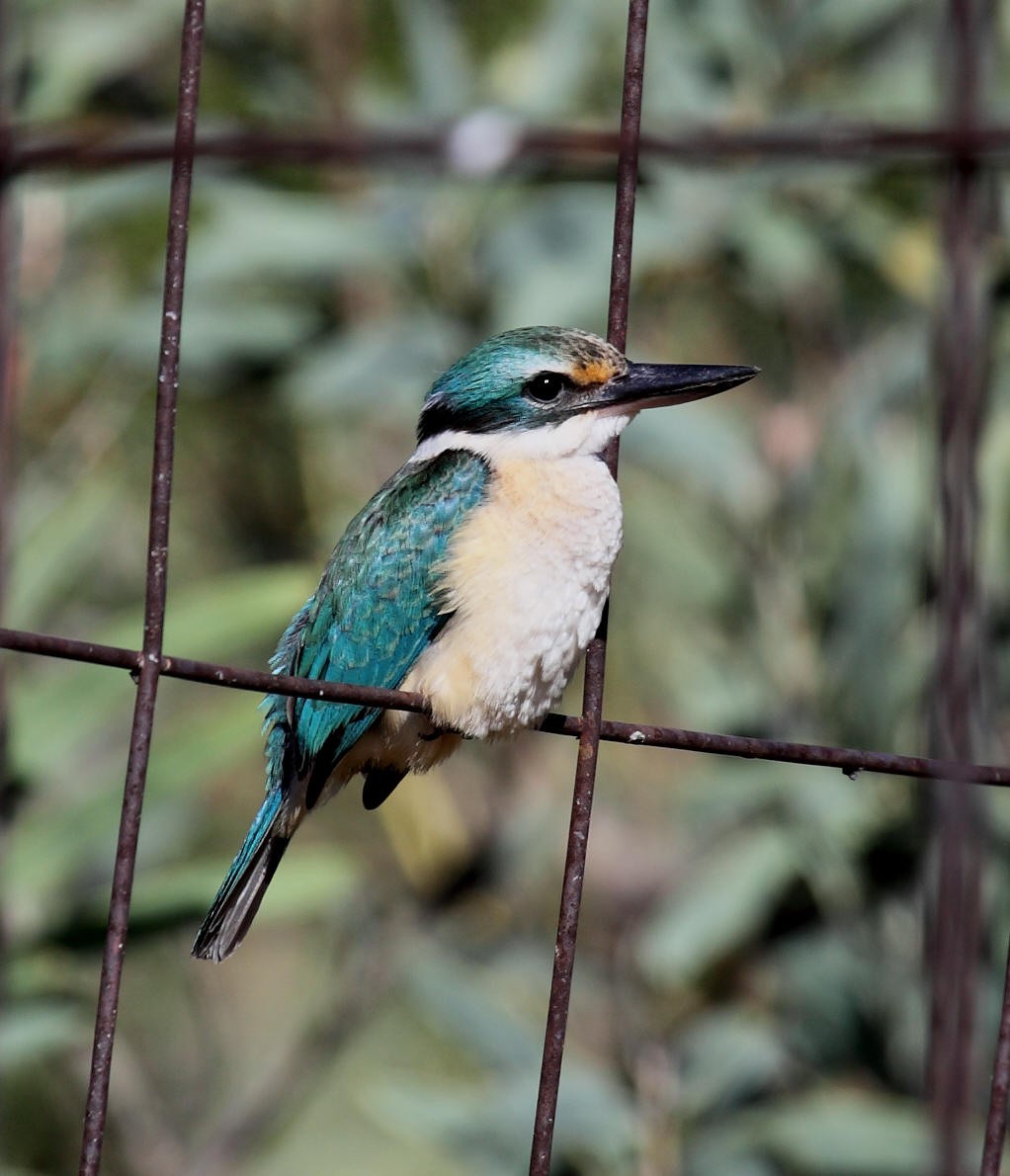
9. Sacred Kingfisher
The sacred kingfisher is a medium-sized kingfisher, measuring 20–23 cm (7.9–9.1 in) long. Males weigh 28–61 g (1.0–2.2 oz) and females 28–56 g (1.0–2.0 oz). They are mostly blue-green to turquoise above, with white underparts and collar feathers, a black mask and buff lores. Both sexes are similar, but females are usually greener, duller and less buff beneath. Juveniles have buff or mottled brown edges on the collar, underparts and upper-wing coverts.
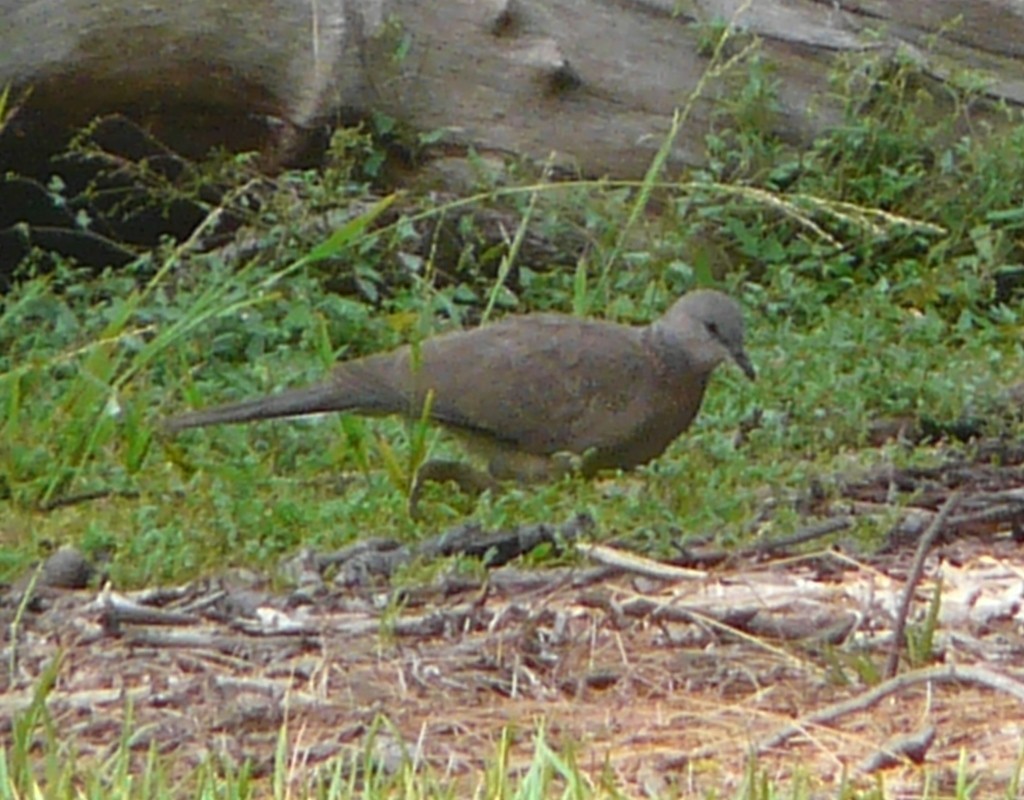
10. Spotted Dove
The spotted Dove is a medium-sized bird that is swift in flight. It prefers to live year-round in warm climates in suburban areas, especially in parks. Their nests are mostly made out of sticks and they like to dine on insects and seeds.

11. Red-vented Bulbul
The red-vented Bulbul is considered a pest by gardeners as it eats fruits and vegetables and spreads seeds to non-native regions. Because of this, these bird is considered an invasive species in some countries. The red-vented Bulbul is loud and can become aggressive to other birds and even humans in their forest, shrubland, and urban habitats.
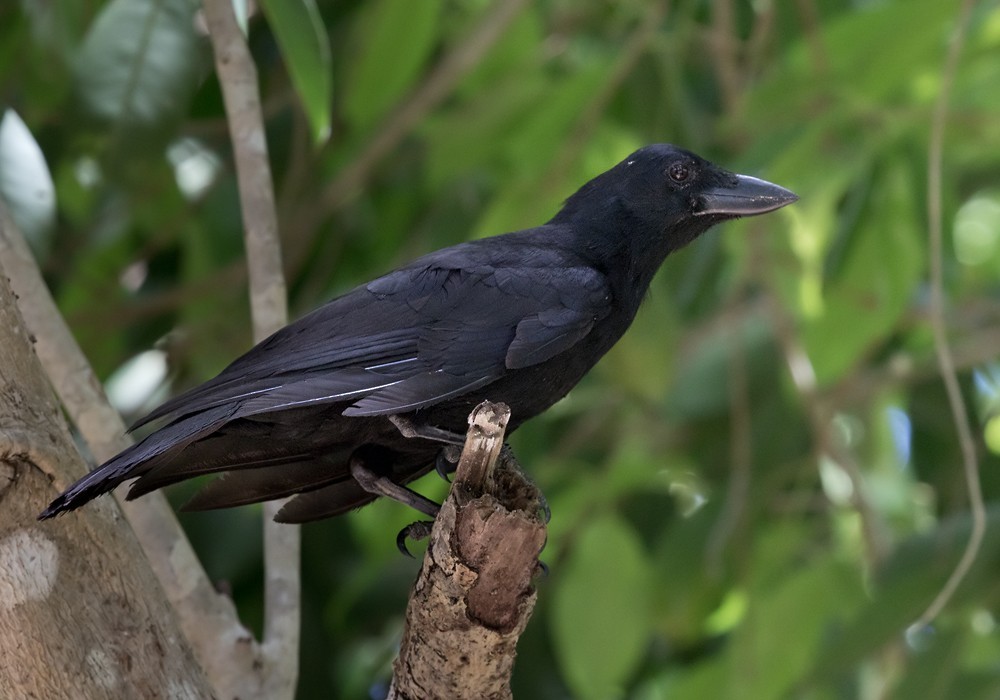
12. New Caledonian Crow
The New Caledonian crow is a moderate-sized crow, (40 cm in length), similar in size to the house crow, but less slender-looking. The bird has an all-black appearance with a rich gloss to its feathers of purple, dark blue and some green in good light. The beak, feet and legs are all black. The beak is moderate in size but is unusual in that the tip of the lower mandible is angled upwards, making it somewhat chisel-like in profile. It has been suggested that this beak morphology evolved due to the selective pressure of needing to hold a tool straight. The vocalization is described as a soft "waa-waa" or "wak-wak", and sometimes as a hoarse "qua-qua" or "waaaark". Across New Caledonia, the bird is often referred to as a 'qua-qua' due to its distinctive call.
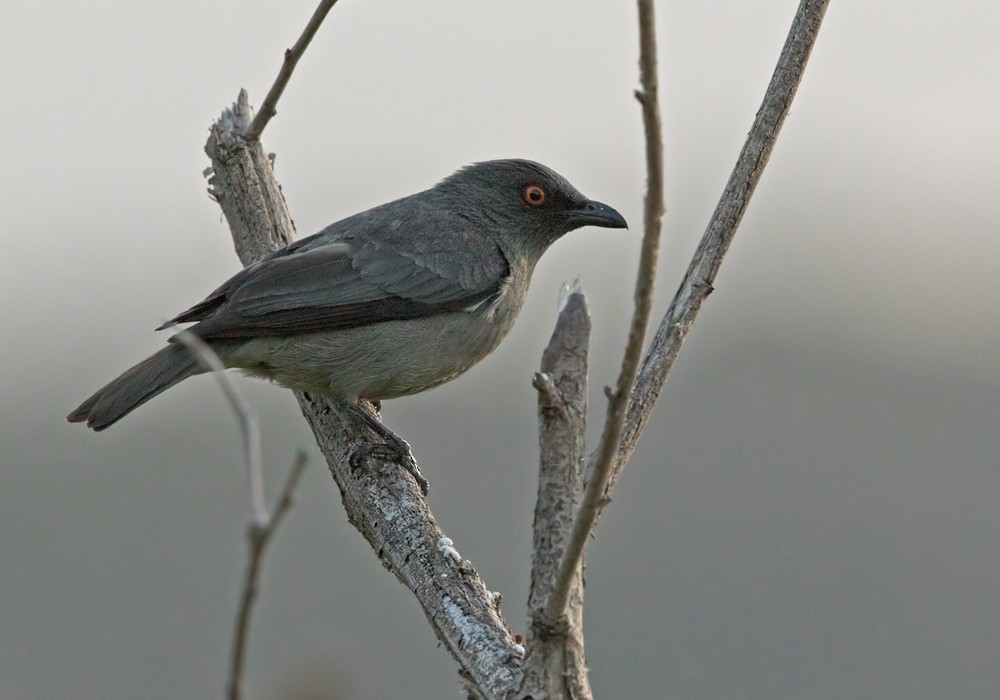
13. Striated Starling
The striated starling (Aplonis striata) is a species of starling in the family Sturnidae. It is endemic to New Caledonia.
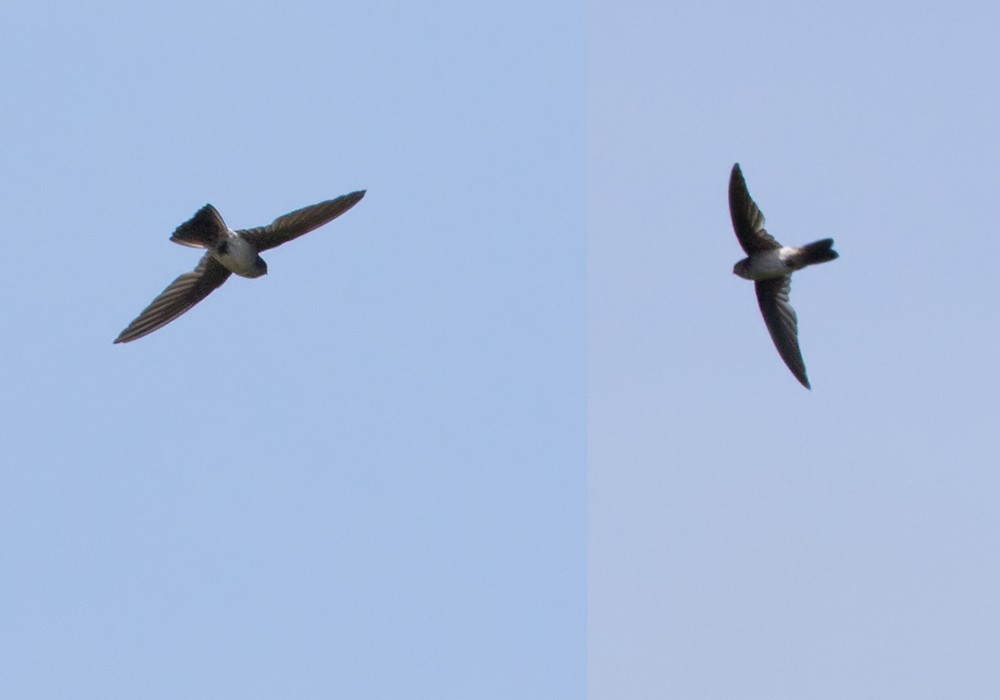
14. White-rumped Swiftlet
The white-rumped swiftlet (Aerodramus spodiopygius) is a species of swift in the family Apodidae. It is found in American Samoa, Fiji, New Caledonia, Papua New Guinea, Samoa, Solomon Islands, Tonga, and Vanuatu. Birds in Australia are now treated as a separate species, Australian swiftlet (Aerodramus terraereginae). Its natural habitats are subtropical or tropical moist lowland forests, subtropical or tropical moist montane forests, and rocky areas.
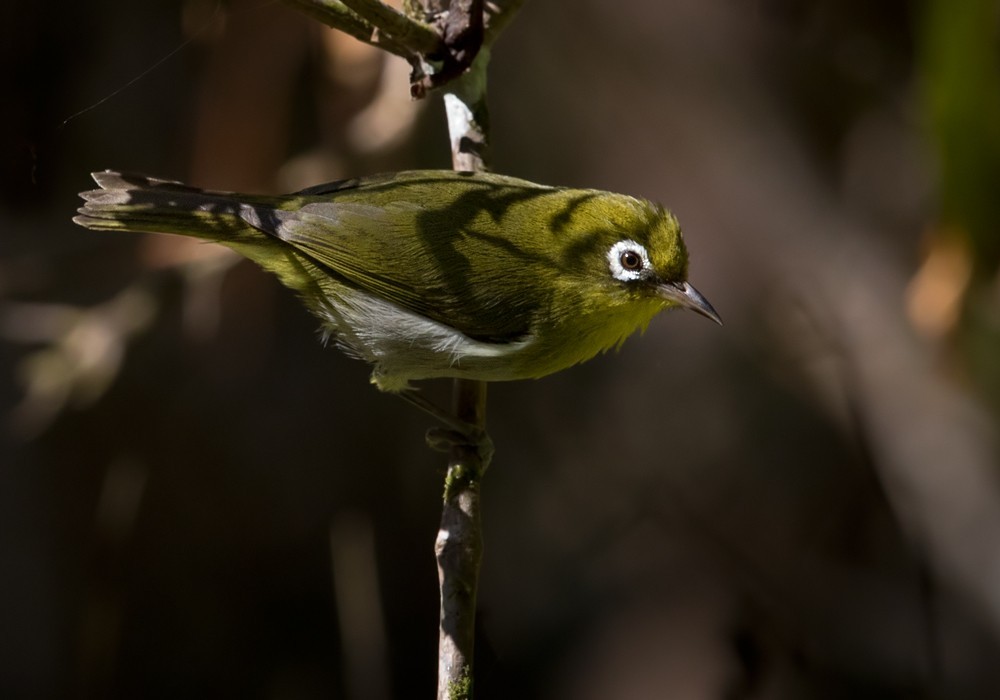
15. Green-backed White-eye
The green-backed white-eye is 11.5–12.5 centimetres (4.5–4.9 in) in length and weighs around 8.5–12 grams (0.30–0.42 oz). The head and back are dark olive green with a wide white eye-ring and black lores (which breaks the eye-ring at the front), the throat and breast are yellow and the undersides are dirty white. The wings are brown and olive green. The bill is slate coloured with white at the base of the lower mandible, and the legs are pale slate coloured as well. Both sexes are alike, but the plumage of juvenile birds has not been described.
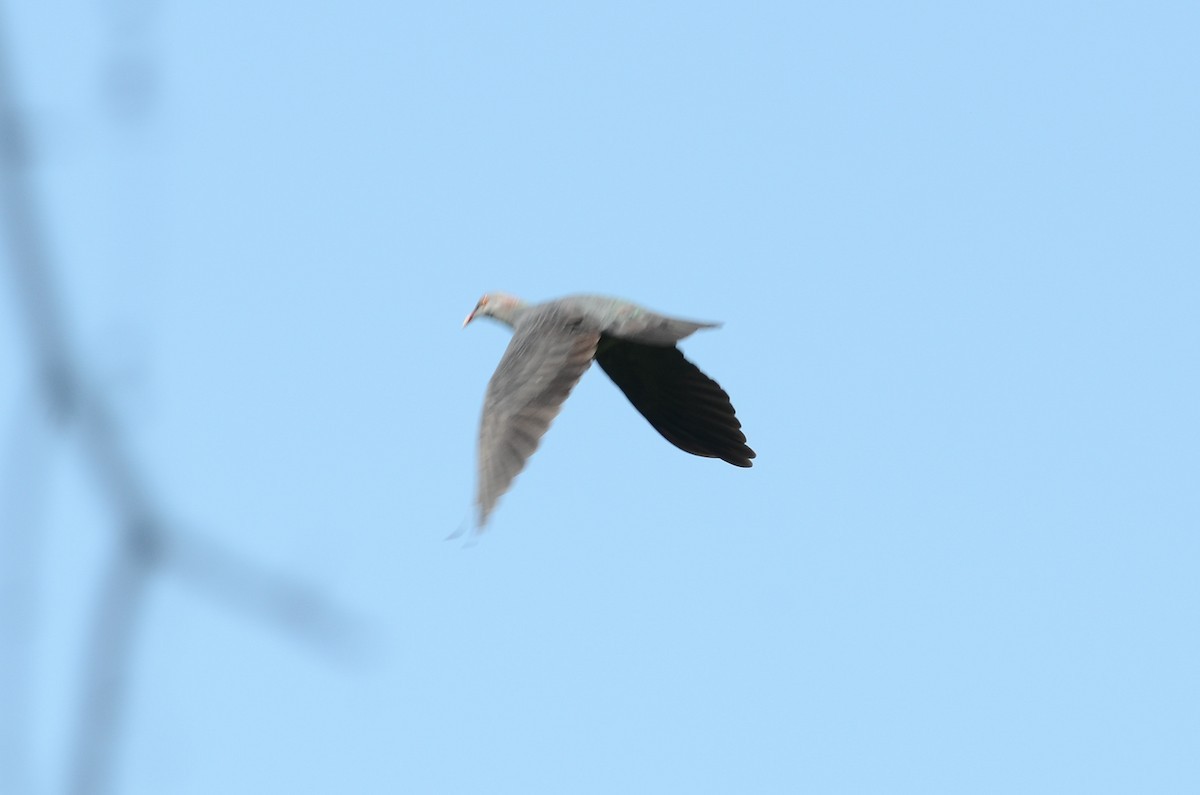
16. Metallic Pigeon
The metallic pigeon, (Columba vitiensis) also known as white-throated pigeon is a medium-sized, up to 37 cm long, bird in the family Columbidae.
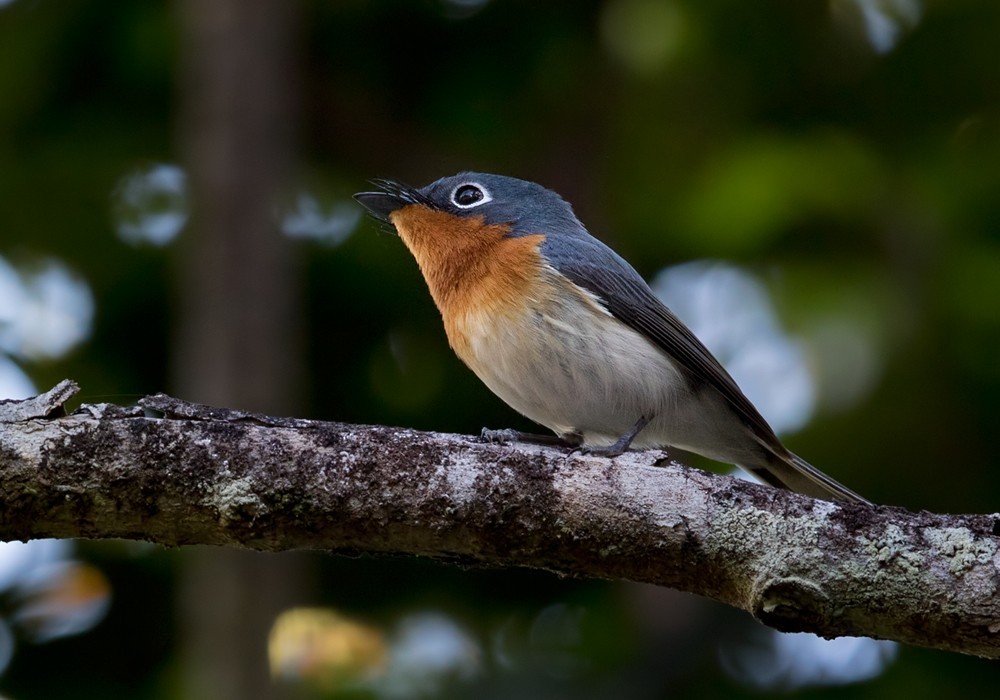
17. Melanesian Flycatcher
The species is 13 to 14 cm (5.1–5.5 in) long and weighs 10 to 12 g (0.35–0.42 oz). The plumage is sexually dimorphic.
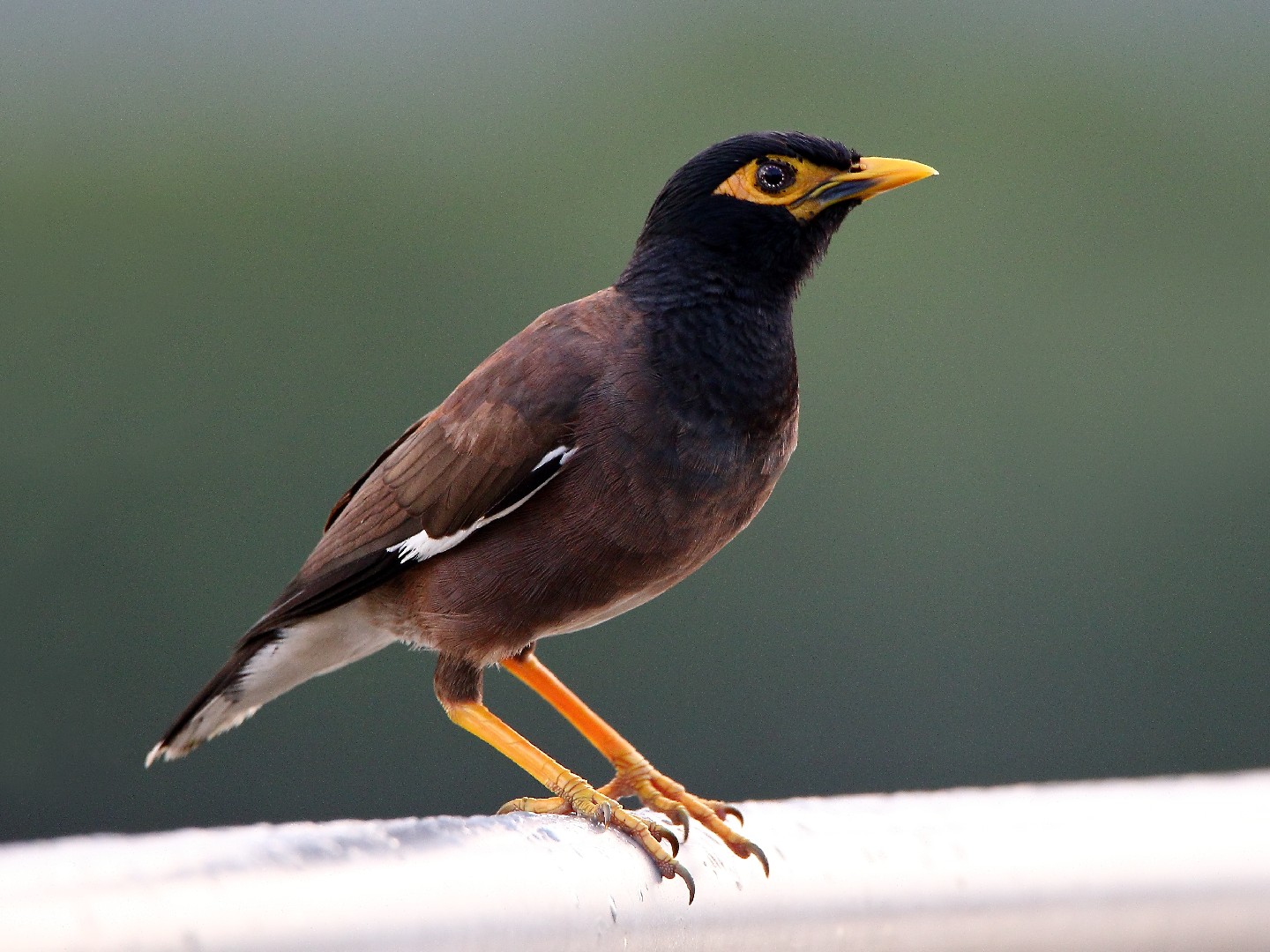
18. Common Myna
The common Myna is a large, stocky starling that prefers to live near humans in towns and suburban areas. It forages among tall grasses for grasshoppers; in fact, its scientific name, Acridotheres tristis, means "grasshopper hunter." The common Myna likes to maintain two roosts at the same time - both a temporary summer roost near the breeding site as well as a year-round roost where the female can sit and brood.
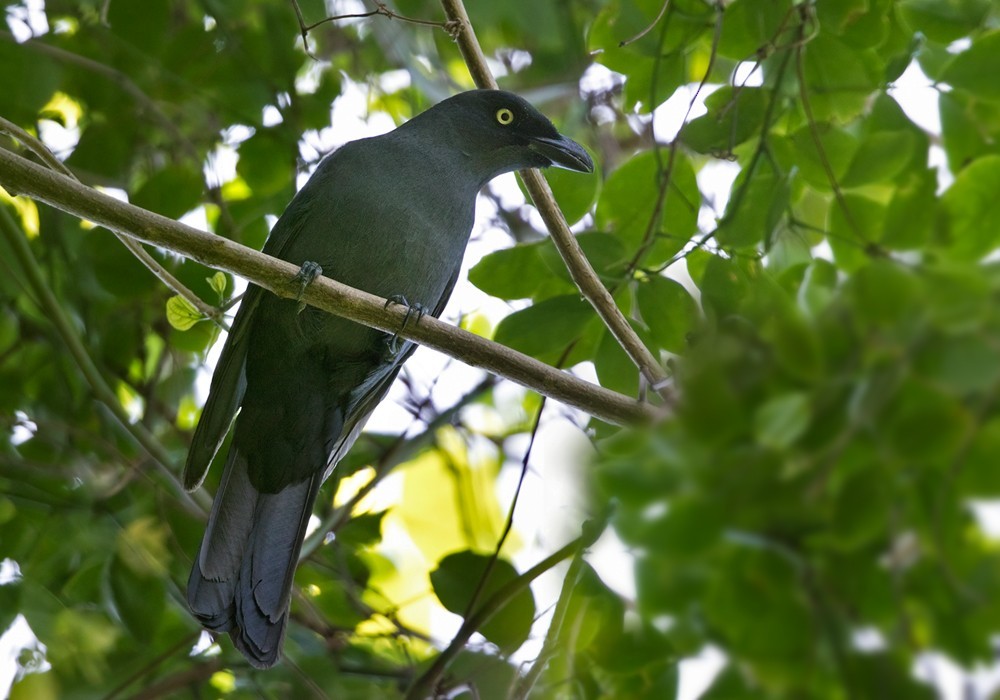
19. South Melanesian Cuckooshrike
The south Melanesian cuckooshrike (Coracina caledonica) is an uncommon species of bird in the cuckooshrike family. It is found in New Caledonia, Bougainville Island, the Solomon Islands, and Vanuatu. The species is a large (32–37 cm) cuckoo-shrike with a long square tail and all over dark grey plumage. The eye of adults is yellow, whereas that of the juvenile is dark. Its natural habitats are subtropical or tropical moist lowland forests and subtropical or tropical moist montane forests.
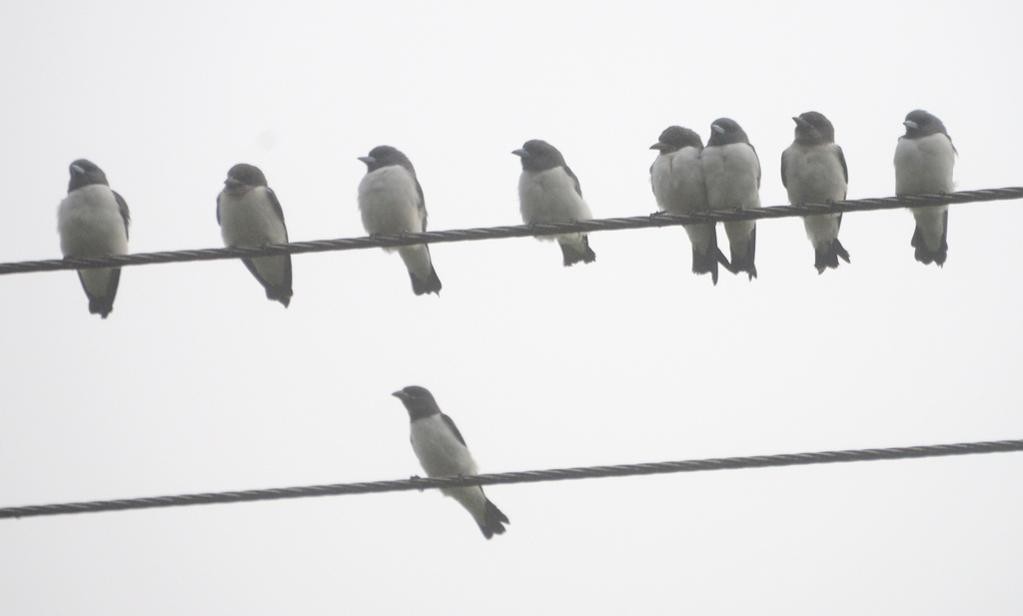
20. White-breasted Woodswallow
The White-breasted Woodswallow's plumage is dark grey on the head and neck, with white underparts, giving the species its common and scientific names, in contrast to the related great woodswallow whose upper side is a more glossy black. The stout bill of a woodswallow is bluish-grey with a black tip. White breasted woodswallows can also be identified by their short, black tail and grey feet. Their completely black tail makes them the only woodswallow lacking white on its tail. Males and females are identical in appearance. Juvenile woodswallows have a more brownish plumage around their head and mantle that is usually heavily striated. Juveniles have a buff tint on their chest and a brownish bill with a dark tip. White breasted woodswallows can grow to a maximum known size of 18cm and weigh between 35–45 grams. All 9 subspecies of Artamus leucorynchus are differentiated by small differences in color, overall size, wing length and bill size.