




Top 20 Most Common Bird in Kagera
Nestled beneath the equator, Kagera boasts a unique blend of landscapes from its verdant highlands to its pulsing wetlands, creating perfect habitats for diverse birdlife. This introduction highlights the 20 most common birds, each remarkable for their unique appearances, intriguing behavior and specialized adaptations, making Kagera a veritable paradise for ornithologists worldwide.

Most Common Bird
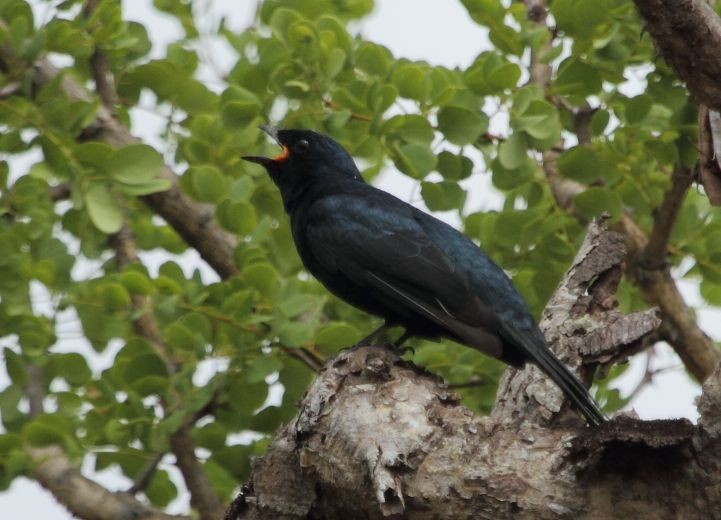
1. Black Cuckooshrike
The black cuckooshrike (Campephaga flava) is a species of bird in the cuckooshrike family Campephagidae. The species is closely related to Petit's cuckooshrike and the red-shouldered cuckooshrike, and forms a superspecies with them. It is also known as the African black cuckooshrike. It is found in Angola, Botswana, Burundi, Democratic Republic of the Congo, Ethiopia, Kenya, Malawi, Mozambique, Namibia, Rwanda, Somalia, South Africa, South Sudan, Swaziland, Tanzania, Uganda, Zambia, and Zimbabwe. Its natural habitats are subtropical or tropical moist lowland forests, dry savanna, and subtropical or tropical dry shrubland. 
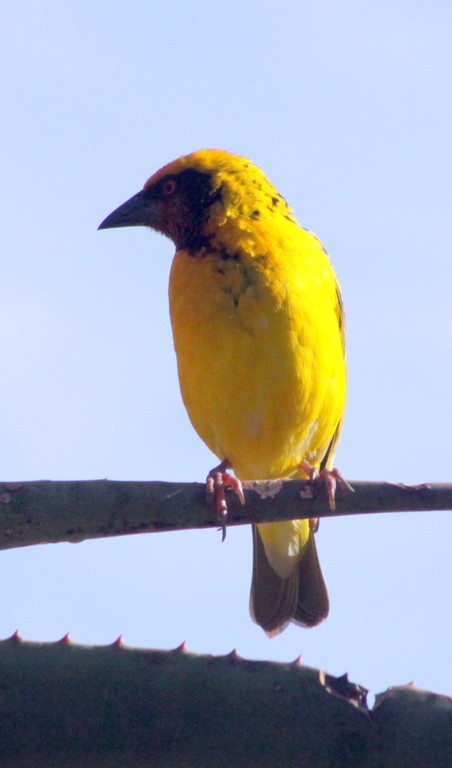
2. Village Weaver
The village weaver is a stocky 15–17 cm bird with a strong conical bill and dark reddish eyes. In the northern part of its range, the breeding male has a black head edged by chestnut (typically most distinct on the nape and chest). Towards the southern part of its range, the amount of black and chestnut diminish, and the breeding males of the southernmost subspecies only have a black face and throat, while the nape and crown are yellow. In all subspecies the breeding male has a black bill, black and yellow upperparts and wings, and yellow underparts. The non-breeding male has a yellow head with an olive crown, grey upperparts and whitish underparts. The wings remain yellow and black. The adult female has streaked olive upperparts, yellow and black wings, and pale yellow underparts. Young birds are like the female but browner on the back.
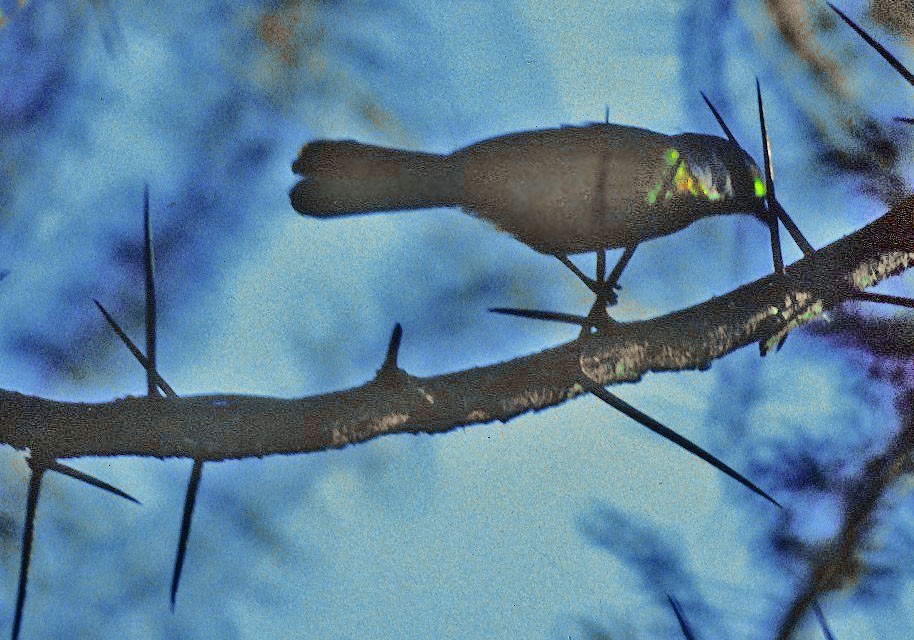
3. Orange-breasted Bushshrike
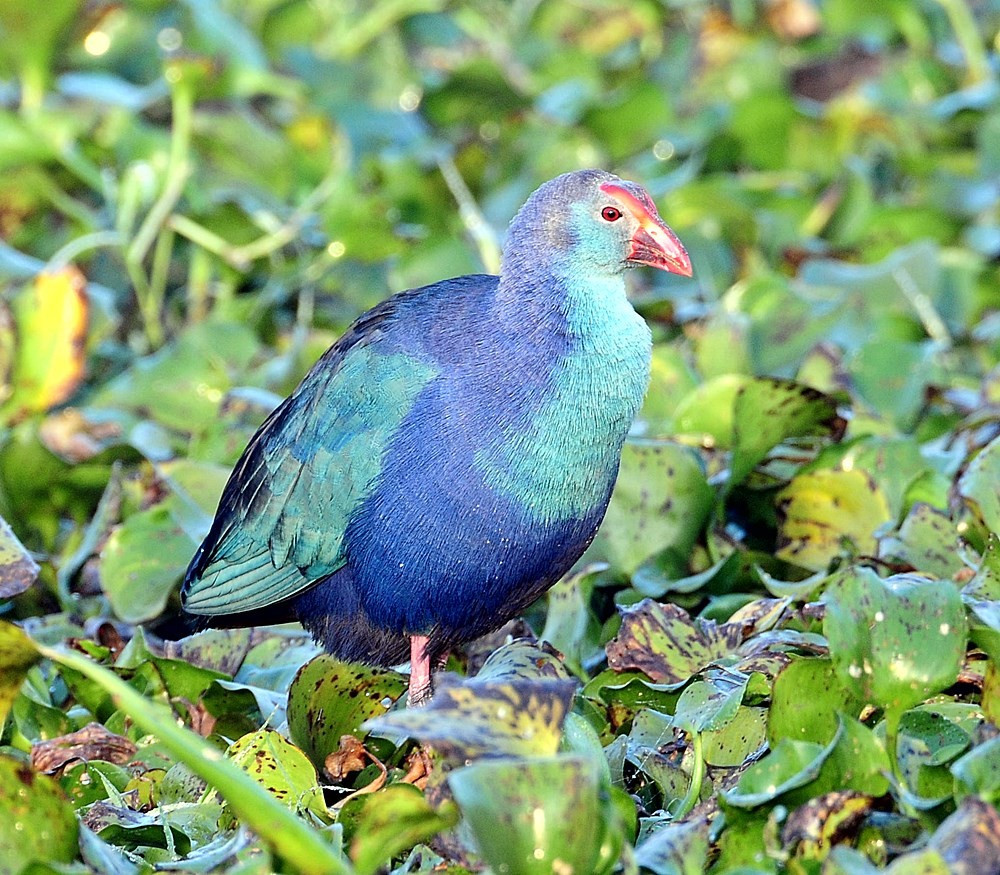
4. Western Swamphen
The western swamphen (Porphyrio porphyrio) is a swamphen in the rail family Rallidae, one of the six species of purple swamphen. From the French name talève sultane, it is also known as the sultana bird. This chicken-sized bird, with its large feet, bright plumage and red bill and frontal shield is easily recognisable in its native range. It used to be considered the nominate subspecies of the purple swamphen, but is now recognised as a separate species. The western swamphen is found in wetlands in Spain (where the largest population lives), Portugal, southeastern France, Italy (Sardinia and Sicily) and northwestern Africa (Morocco, Algeria and Tunisia).

5. Reed Cormorant
This is a small cormorant at 50–55 cm length and an 85 cm wingspan. It is mainly black, glossed green, in the breeding season. The wing coverts are silvery. It has a longish tail, a short head crest and a red or yellow face patch. The bill is yellow. Sexes are similar, but non-breeding adults and juveniles are browner, with a white belly. Some southern races retain the crest all year round.
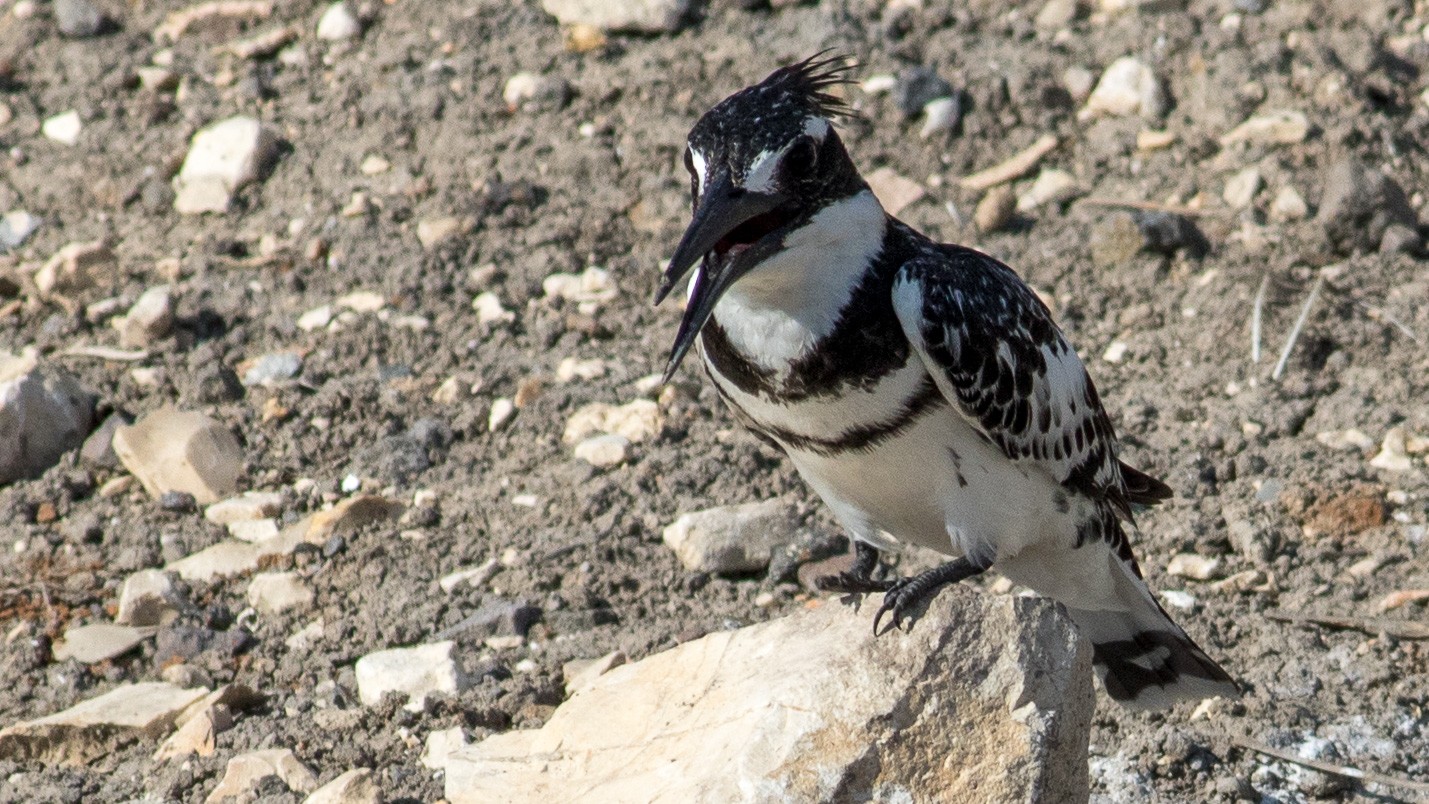
6. Pied Kingfisher
This is a medium-sized kingfisher, about 25 cm (9.8 in) long with a white with a black mask, a white supercilium and black breast bands. The crest is neat and the upperparts are barred in black. Several subspecies are recognized within the broad distribution. The nominate race is found in sub-Saharan Africa, extending into West Asia. The subspecies syriacus is a larger northern bird similar to the nominate subspecies (following Bergmann's rule). Subspecies leucomelanura is found from Afghanistan east into India, Thailand and Southeast Asia. The subspecies travancoreensis of the Western Ghats is darker with the white reduced. The subspecies C. r. insignis is found in Hainan and southeastern China and has a much larger bill. Males have a narrow second breast-band while females have a single broken breast band.
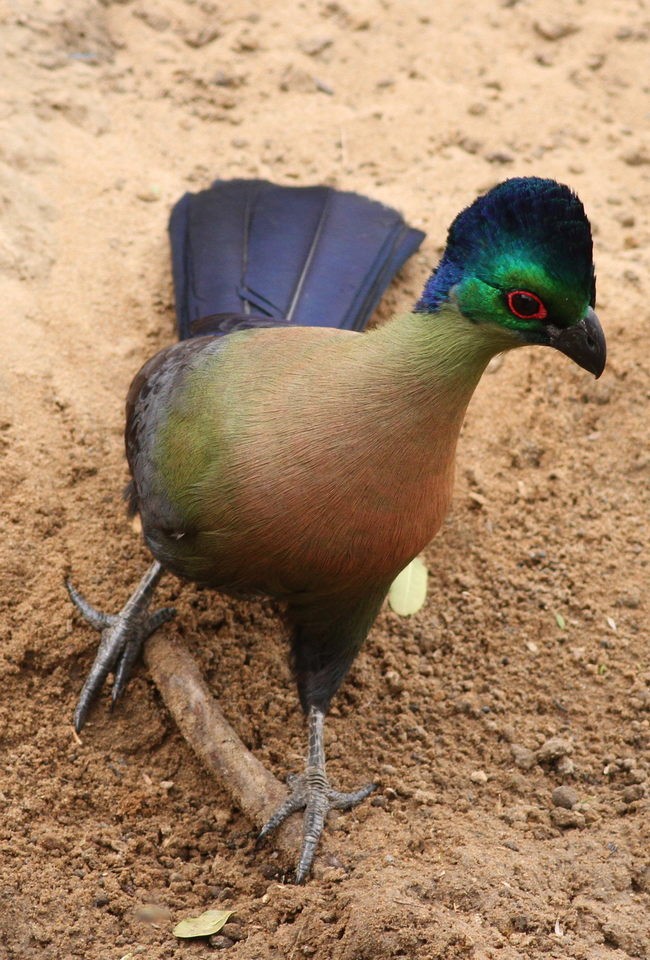
7. Purple-crested Turaco
This bird has a purple coloured crest above a green head, a red ring around their eyes, and a black bill. The neck and chest are green and brown. The rest of the body is purple, with red flight feathers.
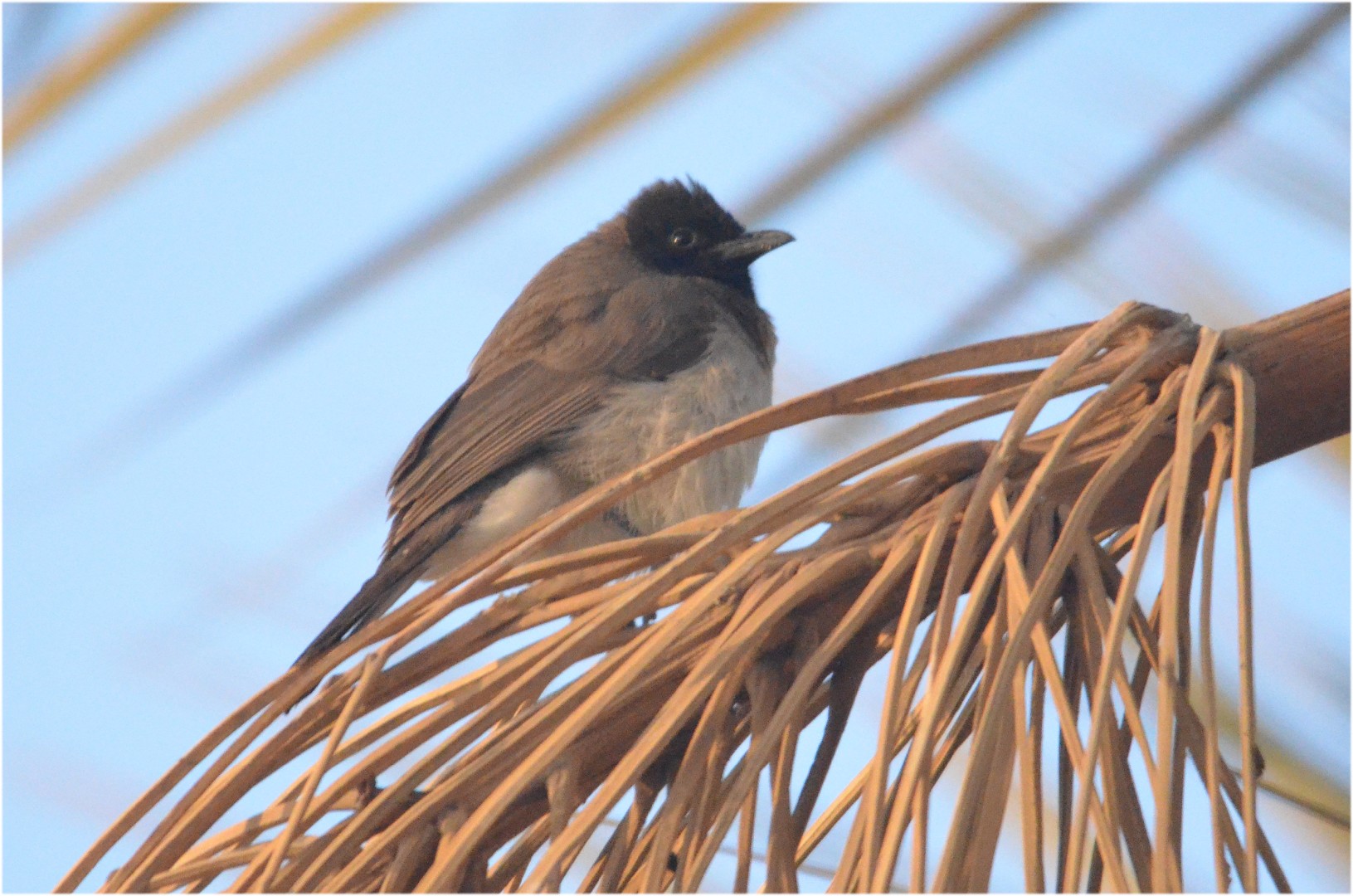
8. Common Bulbul
The bill is fairly short and thin, with a slightly downcurving upper mandible. The bill, legs, and feet are black and the eye is dark brown with a dark eye-ring, which is not readily visible. It is about 18 cm in length, with a long tail. It has a dark brown head and upperparts. Sexes are similar in plumage.
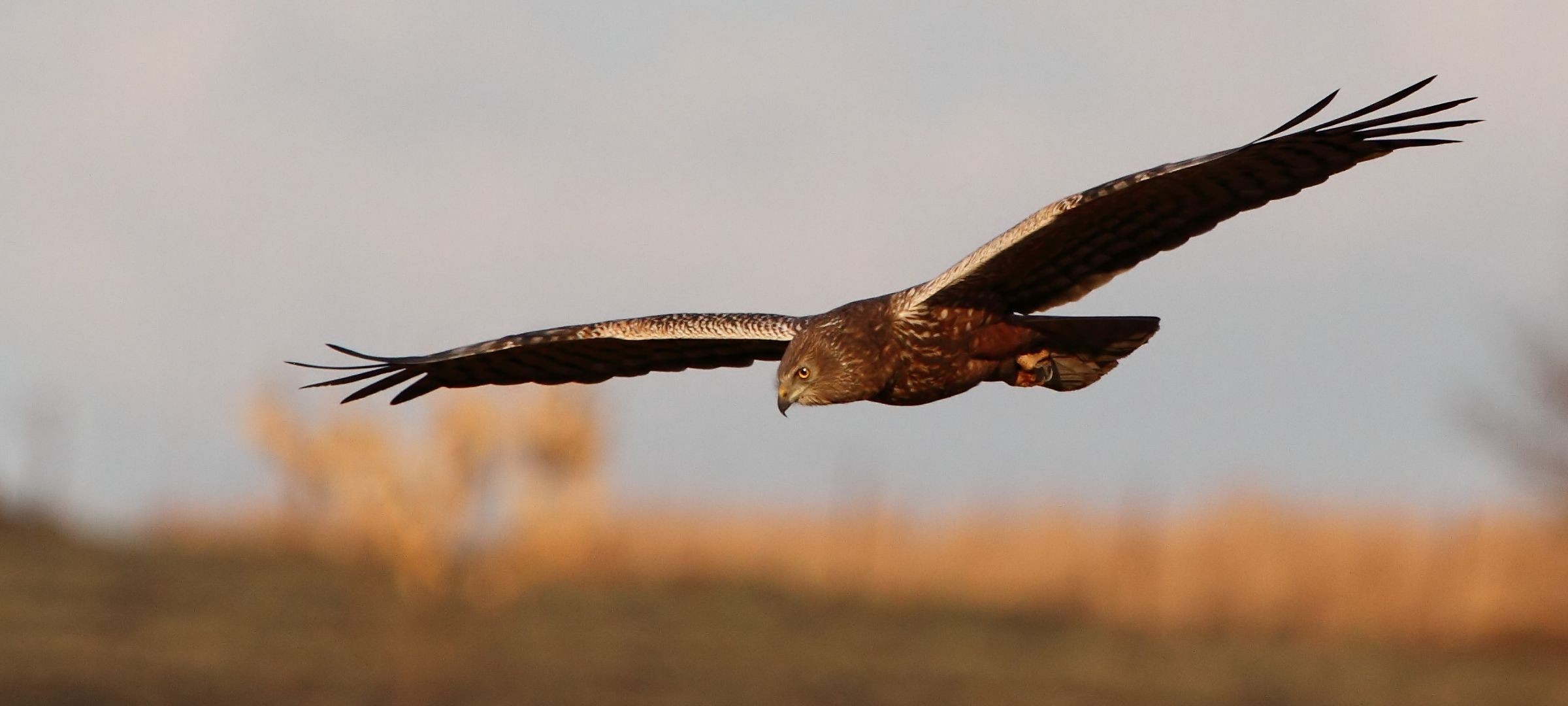
9. African Marsh Harrier
The adult is 44–47 centimetres (17–19 in) long, with females being about 30% heavier than males (Simmons and Simmons 2000). Adults, (like the male bird right) have yellow eyes, but brown eyes when immature. Both sexes are mostly brown with pale streakings on the head, breast, forewing and rufous on the thighs and the belly. Adult males differ from females in that they have a pale grey wash to the dorsal secondaries and primaries. The female's are brown. The juvenile is dark brown and may have a pale breastband and pale markings on the head. The tail and flight feathers have dark barring at all ages, but this is rarely visible in the juvenile birds. It resembles a small Eurasian marsh harrier but is slimmer and paler brown. It could be mistaken for an immature Montagu's harrier or pallid harrier, but the African marsh harrier can be readily distinguished from them by its lack of a white rump. It is usually silent but the male has a high-pitched, two-note display call, and only the female has the far-carrying pseeew-pseeew food and copulation call during breeding.
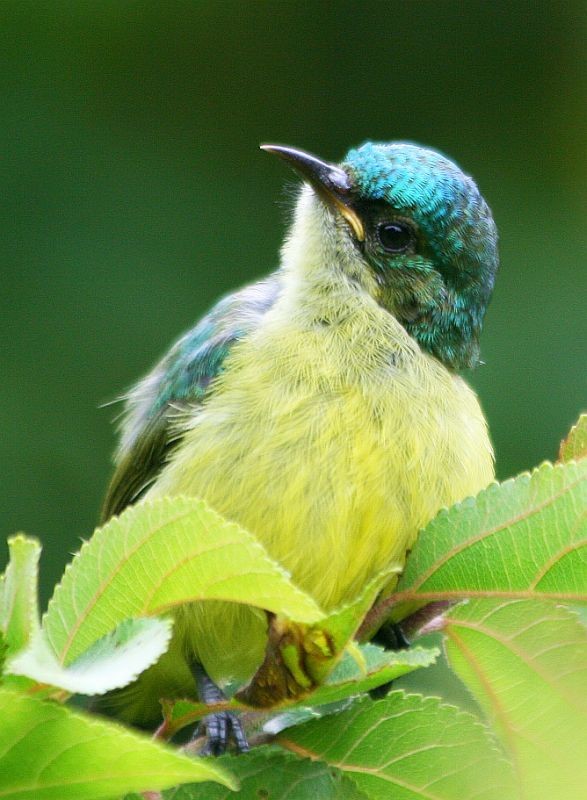
10. Collared Sunbird
The collared sunbird (Hedydipna collaris) is a bird species of the family Nectariniidae. The sunbirds are a group of very small Old World passerine birds which feed largely on nectar, although they will also take insects, especially when feeding young. Collared sunbird is in fact mainly insectivorous. Sunbird flight is fast and direct on their short wings. Most species can take nectar by hovering like a hummingbird, but usually perch to feed most of the time. The collared sunbird is a common breeder across most of sub-Saharan Africa. Two or three eggs are laid in a suspended nest in a tree. It is a seasonal migrant within its range. Collared sunbirds are tiny, only 9–10 cm long. They have short thin down-curved bills and brush-tipped tubular tongues, both adaptations to nectar feeding. The adult male has glossy green upperparts and head with a yellow belly and narrow purple breast band. The female is a duller green above and entirely yellow below. This species is found in forests near water.
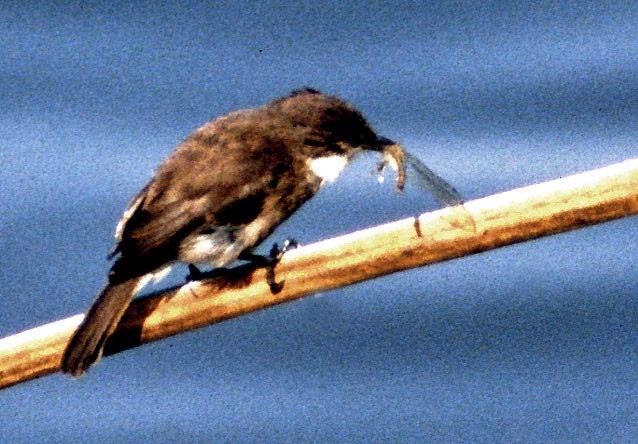
11. Swamp Flycatcher
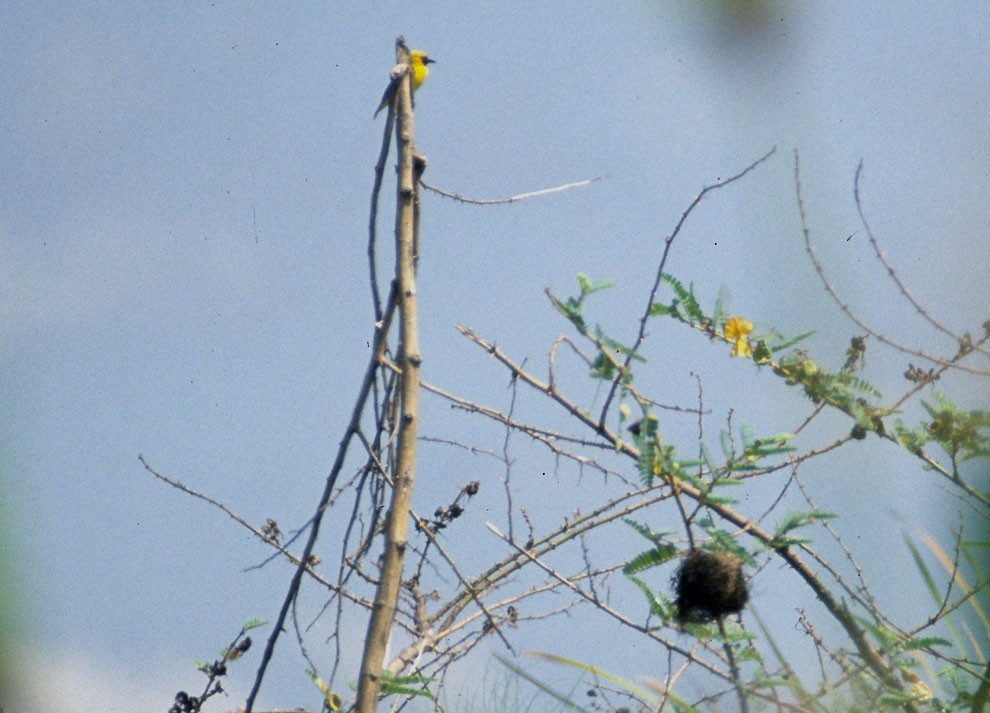
12. Northern Brown-throated Weaver
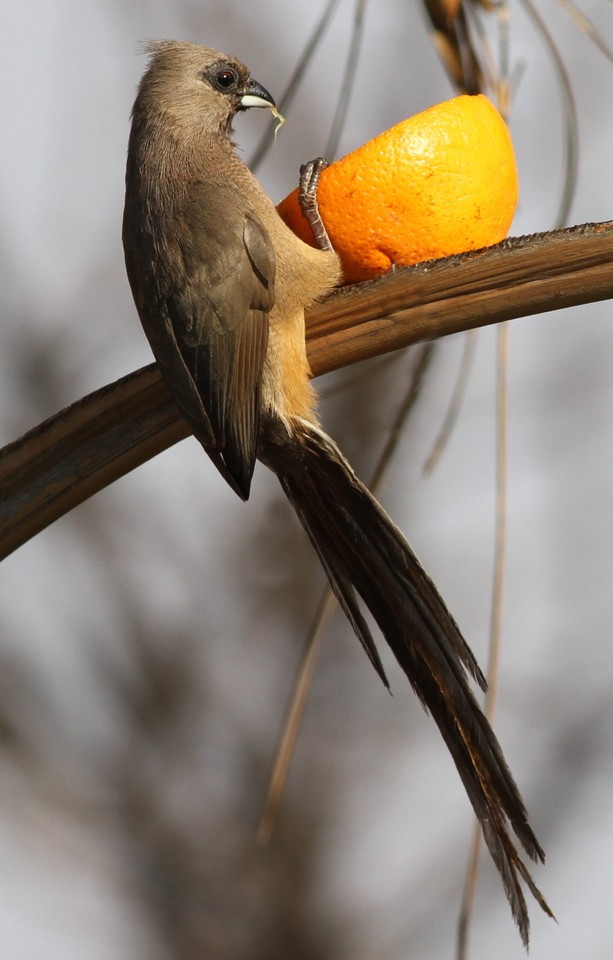
13. Speckled Mousebird
The speckled mousebird is about 35 cm (14 inches) long, with the tail comprising approximately half the length, and weighs about 57 grams (2 oz). It is well-named, because it is dull-mousy brown in overall color on the back and on the head (including a prominent crest). The bill is black on the upper part and is a pinkish color on the lower part. The rare white-headed mousebird can be confused with this species, but the differently colored mandibles and the lack of a bare grey orbital patch render the Speckled species distinctive. The speckled mousebird is not known for its voice, as songbirds are, although it is a noisy creature. They make a warbling tsu-tsu call while in flight, and are known for their tisk-tisk alarm call while in flight.
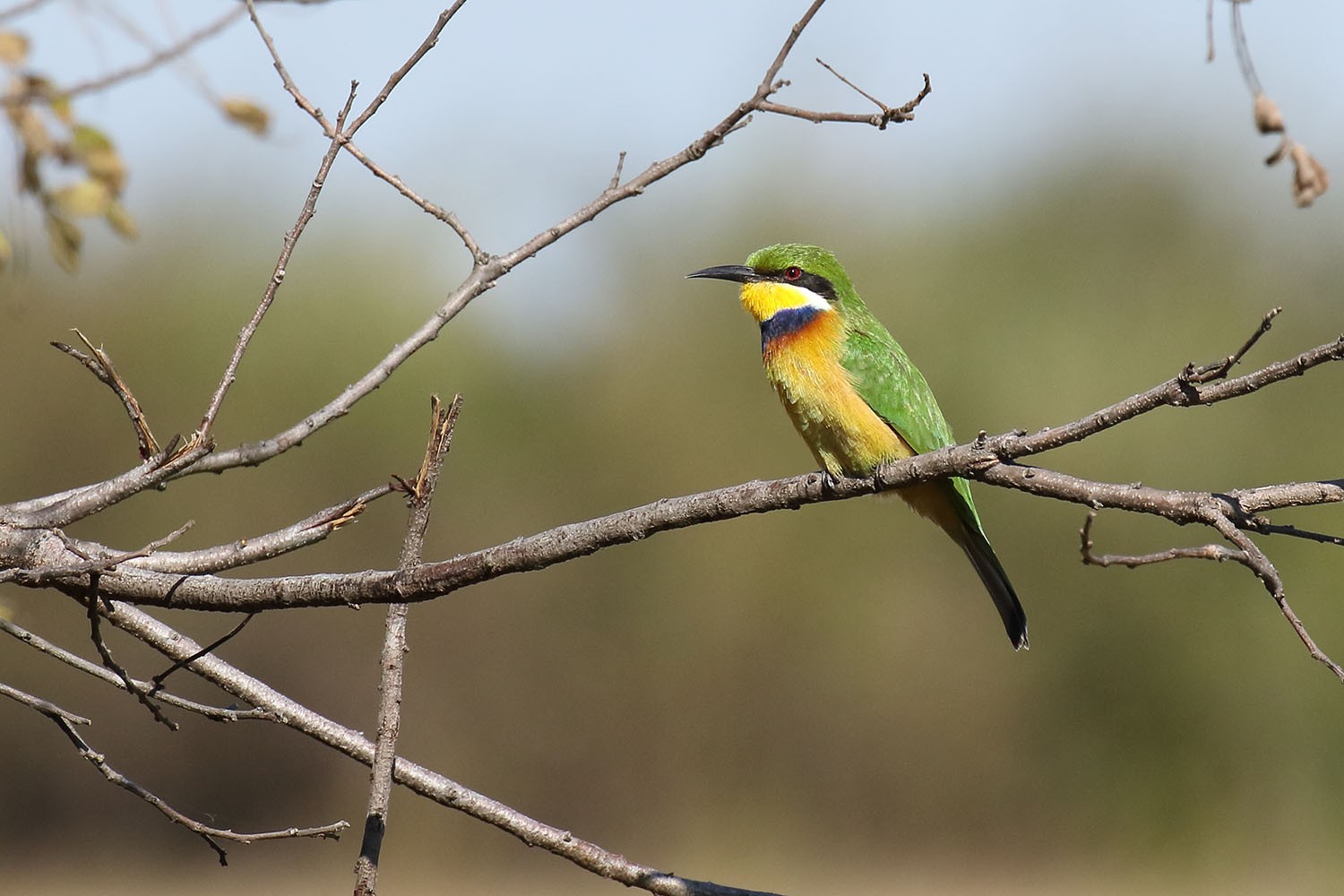
14. Blue-breasted Bee-eater
The blue-breasted bee-eater, Merops variegatus, exhibits several physically defining characteristics of the Meropidae. It has a relatively large head, short neck, bright plumage, long curved slim sharp beak and a broad black eyestripe. M. variegatus weights between 20-26 g and measures between 18–21 cm in length. It is primarily a green bird, with a green crown, green upper parts and light greenish-yellow underparts Primary wings are washed with rufous and secondaries are green with black tips. Overall the wings are rounded at the tip compared to the pointed tips of the migratory species in Meropidae. The tail has twelve rectrices, the outer rectrices are washed with rufous and the center feathers are green. The tail has a subterminal black bar and is tipped with white. Furthermore, the tail has a shallow v -shape and is lacking tail-streamers present in other members of the family. The head of the blue-breasted bee-eater can be distinguished from other members of the family by a combination of characteristics. It has a blue stripe over the black eye stripe, an orange-red iris, a white cheek and a bright yellow throat. Furthermore, like many meropids, they have a wide chest band. Its chest band is made up of two colours, a deep purple-blue gorget above a chestnut coloured breastband. Juveniles of the blue-breasted bee-eater have buff flanks and belly. They have a yellow-buff chin that leads to a light green mottled breast. Juveniles also completely lack a chest band.
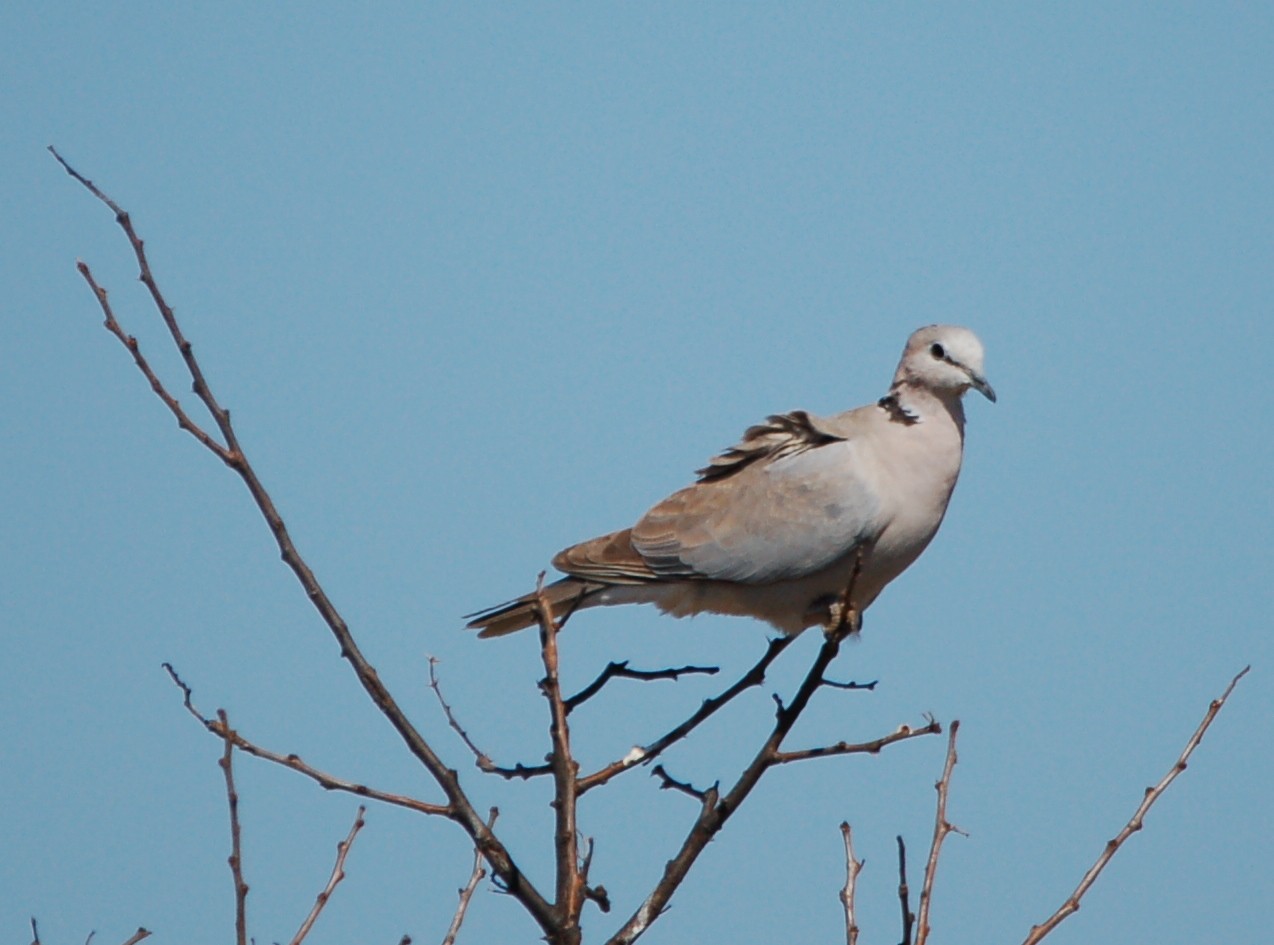
15. Ring-necked Dove
Their body feathers are darkest on the upper side, where they are coloured in dull tones of grey and brown, with shades of lavender on the nape. It is paler below, where a tint of pinkish lavender is usually present. The lower belly and crissum (the undertail coverts surrounding the cloaca) is white. As with related species, they have white fringes and conspicuous white tips to the otherwise slate grey tail feathers. The tail pattern is particularly noticeable during the display flight. Individual plumage variation is high, with some light and others almost sooty. Males and females look alike, although the males are slightly bigger. They measure 25–26.5 cm (9.8–10.4 in) in length and weigh 92–188 g (3.2–6.6 oz). The eyes are almost black, the bill is black and the feet are dark purple. An immature is duller and lacks the semi-collar of an adult. It also has buff edges to all the upper part and wing covert feathers, while the plumage below is broadly edged greyish-white.
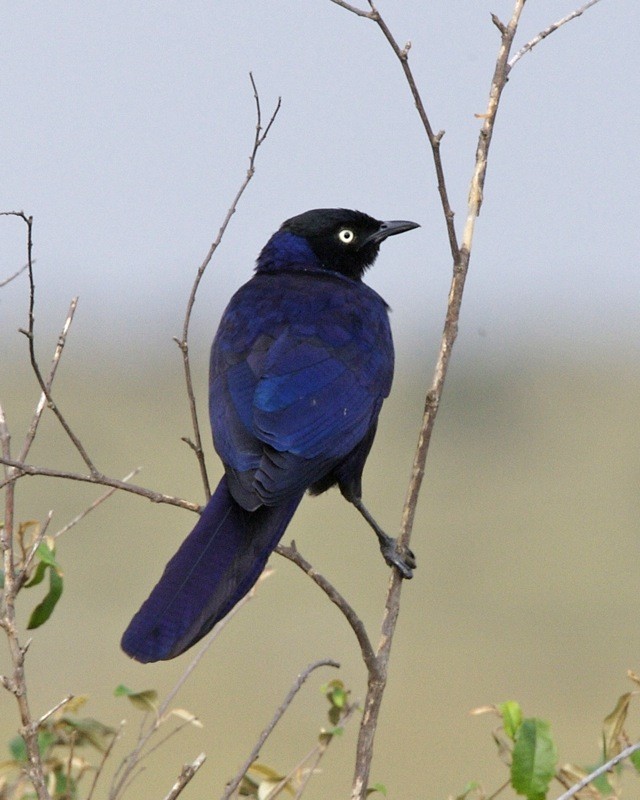
16. Rüppell's Starling
Rüppell's starling (Lamprotornis purpuroptera), also known as Rueppell's glossy-starling or Rueppell's long-tailed starling, is a species of starling in the family Sturnidae. It is found in Burundi, the Democratic Republic of the Congo, Eritrea, Ethiopia, Kenya, Rwanda, Somalia, South Sudan, Sudan, Tanzania, and Uganda.
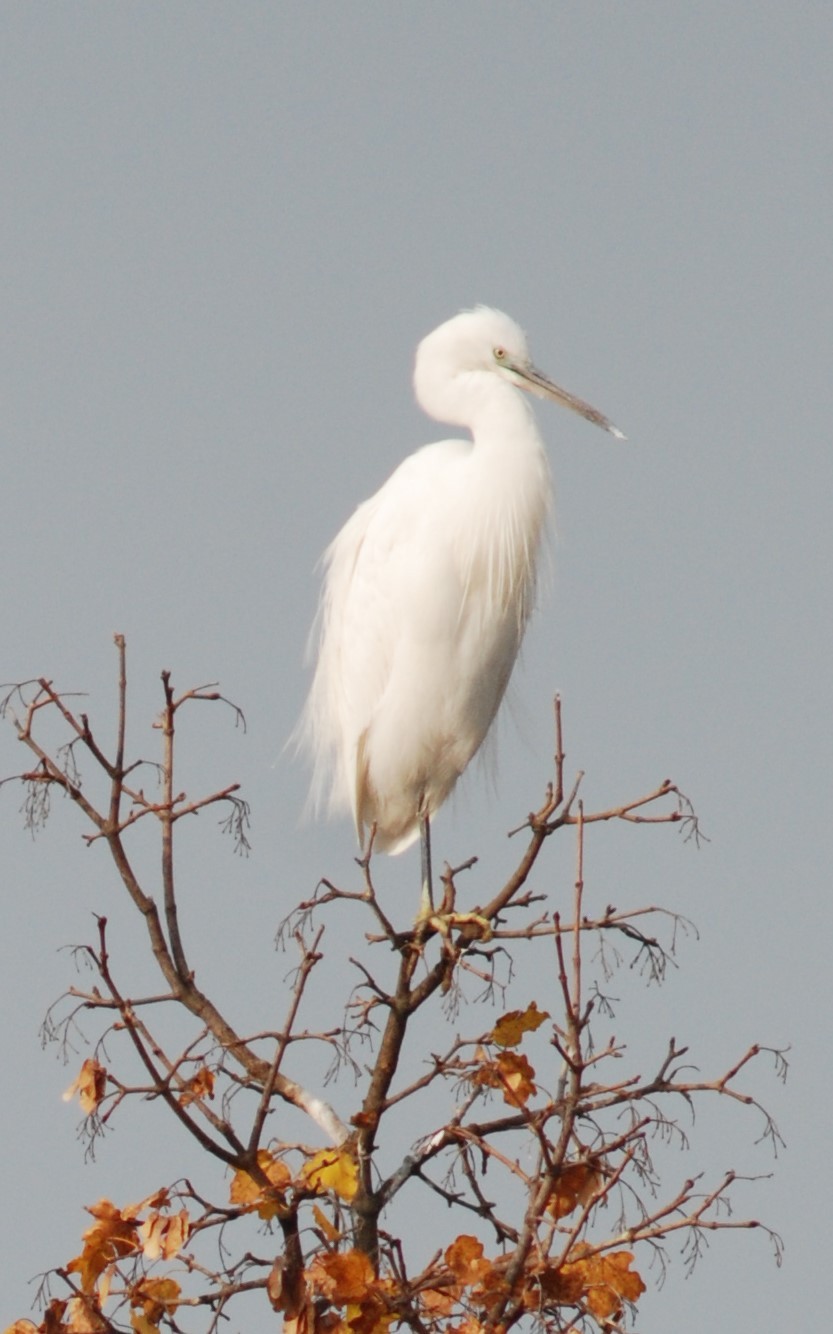
17. Little Egret
The small size of the little Egret makes the bird easily recognizable among larger species that share the same range. The egret is seen almost anywhere there are small fish including marshes, estuaries, and rivers. The bird often searches for food by itself but prefers to build nests in communities, occasionally with other bird species.
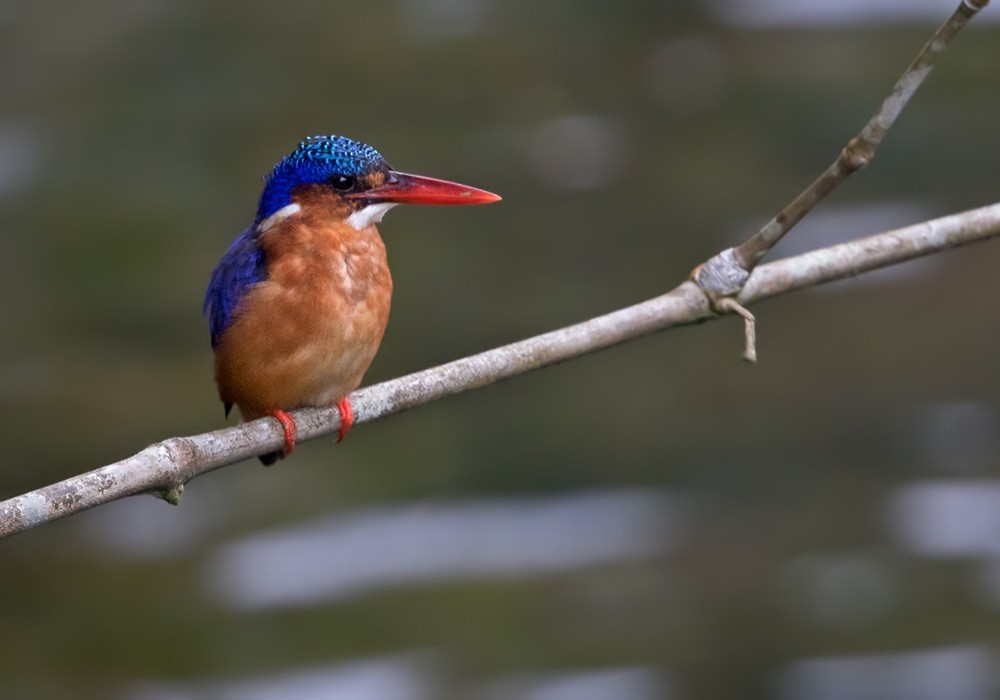
18. Malachite Kingfisher
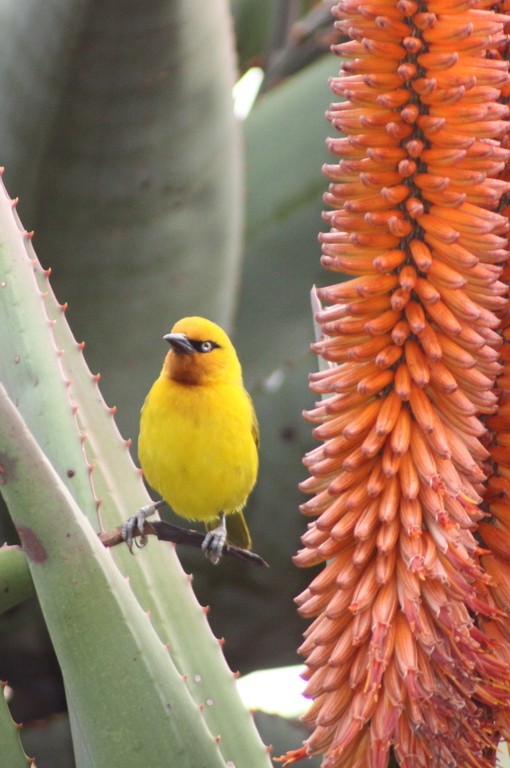
19. Spectacled Weaver
The spectacled weaver (Ploceus ocularis) is a species of bird in the family Ploceidae. It is found widely in woodland, forest edge and gardens of central, eastern and south-eastern Africa, but is absent from the most arid regions (such as the Karoo) and dense, primary rainforest. This common species breeds in solitary pairs, and both sexes are bright yellow, have an olive-yellow back, black "spectacles" and pale eyes. The male has a black throat.
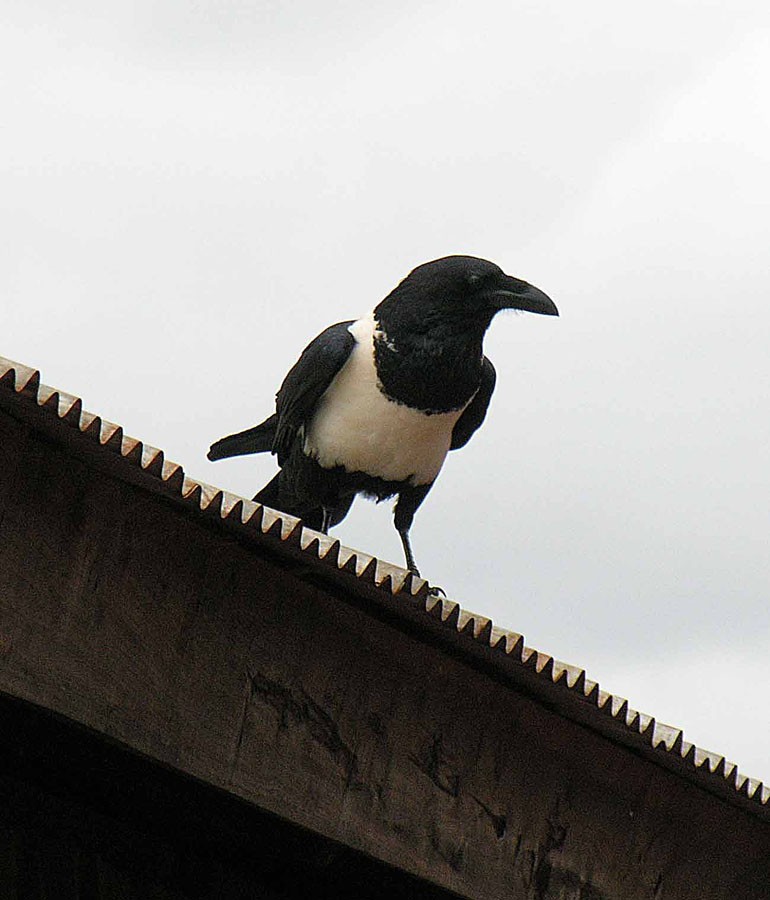
20. Pied Crow
It is approximately the size of the European carrion crow or a little larger (46–50 cm in length) but has a proportionately larger bill, slightly longer tail and wings, and longer legs. As its name suggests, its glossy black head and neck are interrupted by a large area of white feathering from the shoulders down to the lower breast. The tail, bill and wings are black too. The eyes are dark brown. The white plumage of immature birds is often mixed with black. It resembles the white-necked and thick-billed ravens but has a much smaller bill.