



Top 20 Most Common Bird in Copperbelt
Copperbelt provides an exquisite habitat for diverse bird species, due to its rich mosaic of savannah, forest and wetland ecosystems. Out of these, 20 birds are particularly common, notable for their unique colours, behaviours, and environmental adaptations. Each species portrays a splendid testimony to the region's biodiversity and ornithological significance.

Most Common Bird
1. Common Bulbul
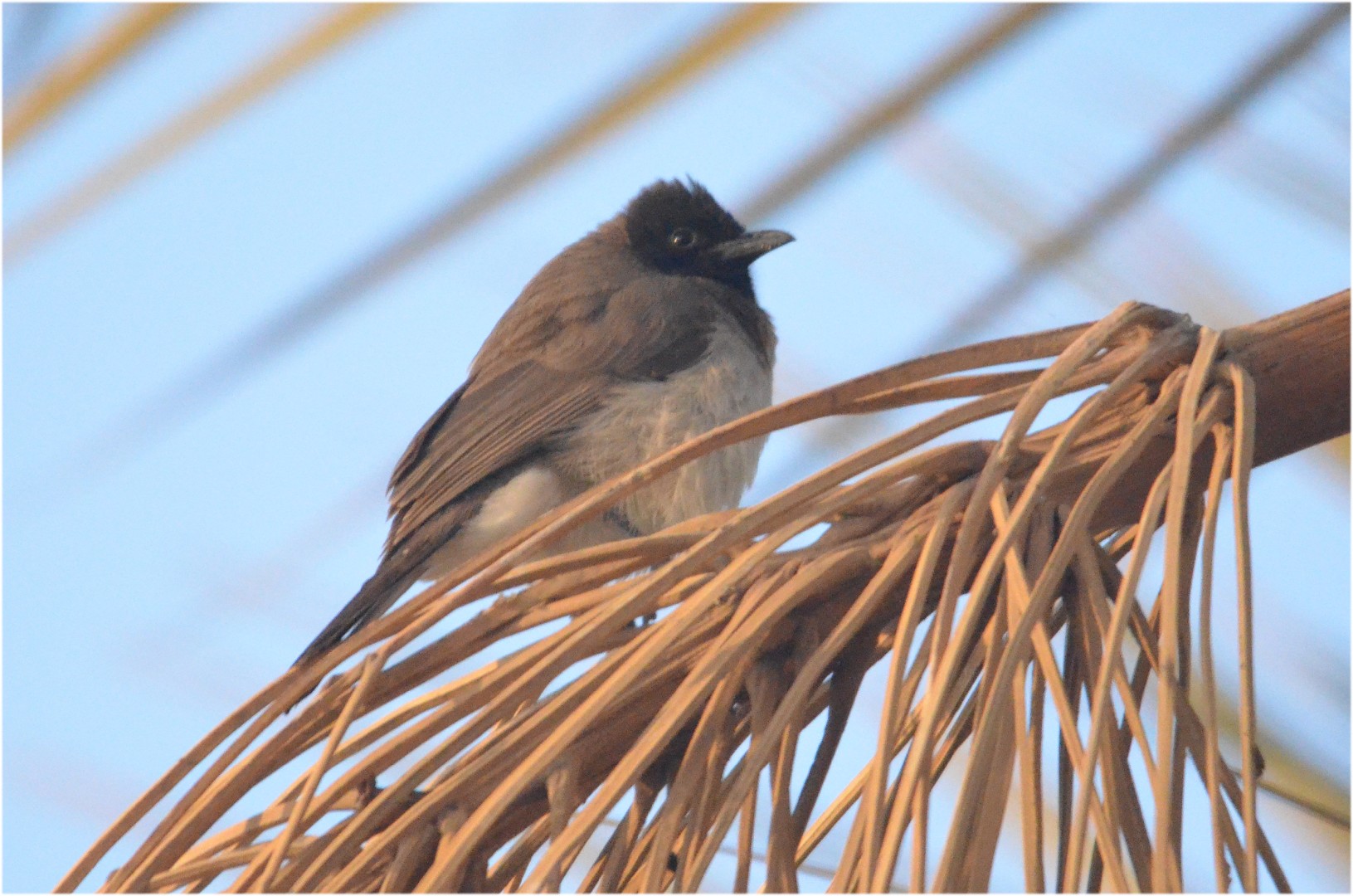
The bill is fairly short and thin, with a slightly downcurving upper mandible. The bill, legs, and feet are black and the eye is dark brown with a dark eye-ring, which is not readily visible. It is about 18 cm in length, with a long tail. It has a dark brown head and upperparts. Sexes are similar in plumage. 
2. Tropical Boubou
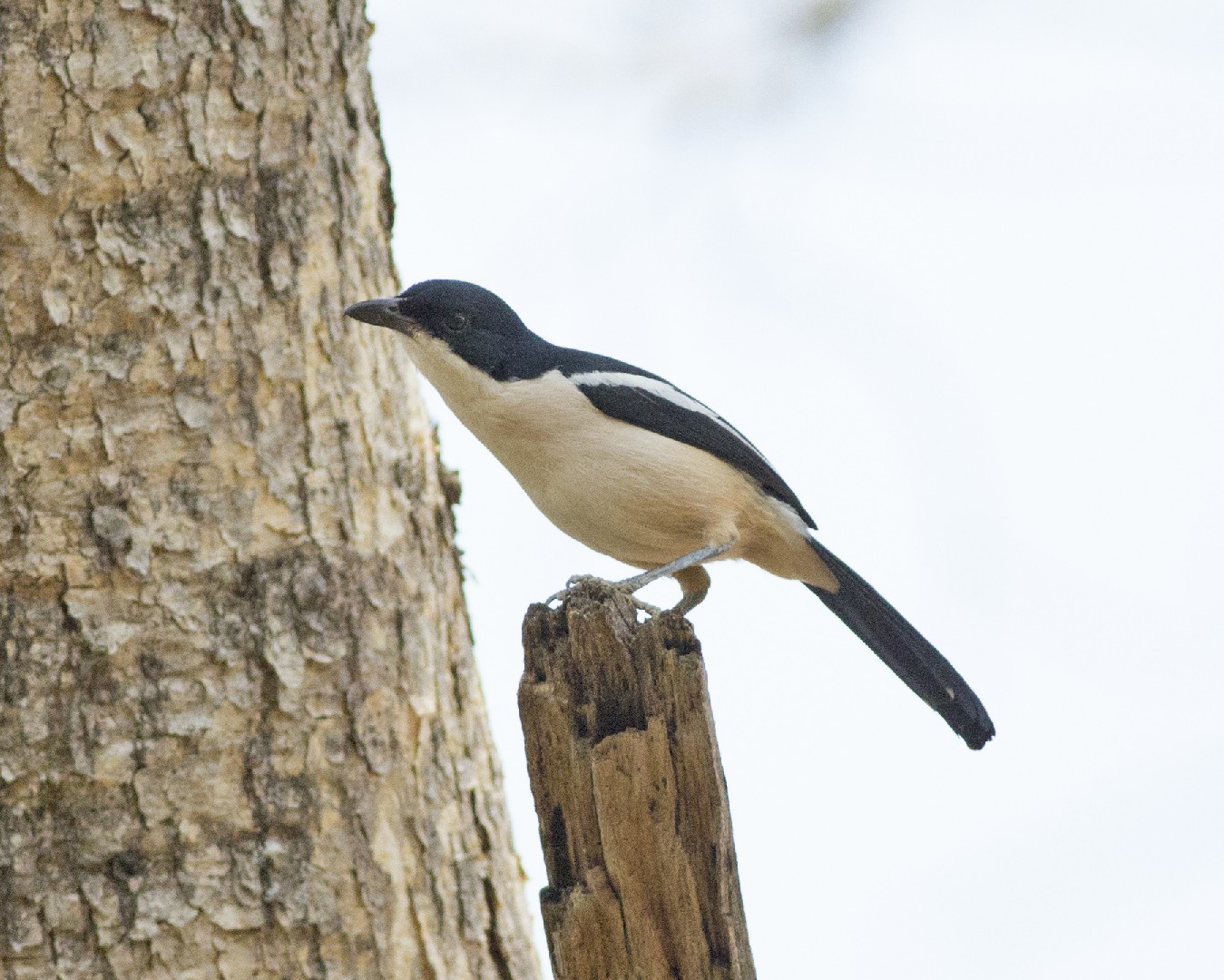
The tropical boubou is fairly large for its family (bushshrikes), measuring 23–25 cm in length. Its weight can vary between about 38-70 g, but typically adults weigh between 50 and 60 g. Females are on average a bit smaller than males, but individual variation is so large that for most practical purposes the sexes seem to be of identical size. The wing measures about 98 mm on average (between 85 and 110), the tail is a mere two millimetres longer both on average and as regards variation. The tarsus is c.29–37 mm long, 33 mm on average, while the bill's exposed culmen measures a little over 20 mm in some populations and as much as 25 mm in others. Unlike the other measurements where there is mostly individual variation, the bill length might distinctly vary between subspecies. Not only are males and females the same size, they have identical plumage too. The adults' upper parts and tail are glossy blue-black except for concealed white spots on the rump, visible only when the wings are spread and the rump feathers are erected. The underparts are white, in some populations with a buffy or pinkish tinge on the breast and flanks, which is not always noticeable except in good light. The wings of most subspecies have a white stripe on the wing coverts, in some extending onto the secondary remiges. The tips of the outer tail feathers can be white in some subspecies. The bill is black, the legs and feet bluish grey. The irides are dark reddish brown. Nestlings have pinkish-brown skin and are nude after hatching, later growing sparse down; they apparently have spots inside their bills which they show their parents to get fed. Fledglings are similar to adults but duller, with the brownish head and the upper parts appearing mottled due to yellowish-ochre to tawny feather tips, forming a barring on the lower back and rump. The wing-stripe, if present, is dulled down. The undertail coverts are buff, and there is usually dusky barring on the dull white underside, especially on the flanks. The bill is greyish brown above, paler below. Immature birds independent from their parents have lost most of the mottling (except on the wing coverts) and barring, but their wing stripe and underside are still dull white, shading to brown on the flanks; any white tail feather tips appear at this stage. The northwesternmost populations of major might be confused with Turati's boubou (L. turatii), which has no white wing-band and a buff chin and white belly, while major around the southern edge of the Congo Basin look almost identical to the swamp boubou (L. bicolor), but this is pure white below and its females give a characteristic "ratchet" call in duets. Southeastern birds (mossambicus and especially limpopoensis) resemble the southern boubou (L. ferrugineus) but are black above instead of dark brown and grey – though this may be hard to see at a distance and entirely indistinguishable in the occasionally seen hybrid. When the tropical boubou is sympatric with other Laniarius, they are rarely found in the same habitat.
3. White-browed Robin-chat
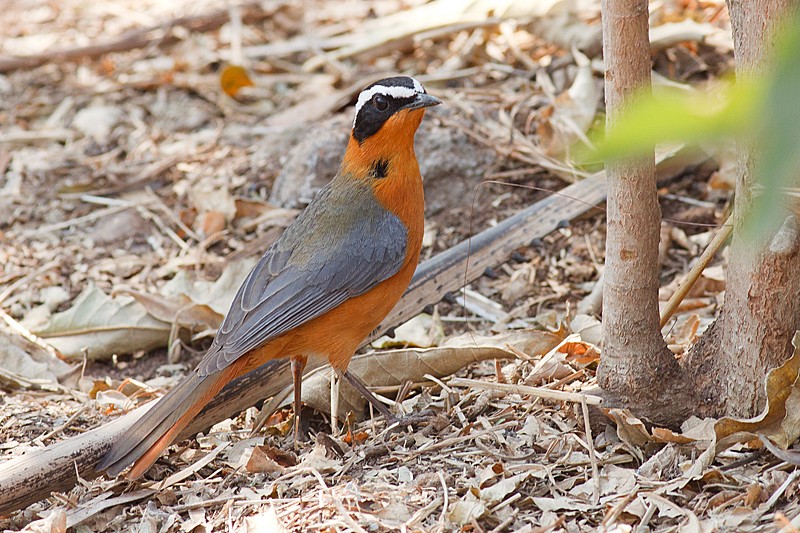
The white-browed robin-chat is 19–20 cm (7.5–7.9 in) long and weighs 29–51 g (1.0–1.8 oz). The crown and face are black, and there is a white supercilium over the dark brown eye. The back is olive grey-brown, and the rump is rufous. The two central tail feathers are olive-brown, and the other feathers are orange-rufous. The flight feathers and wing coverts are grey-brown, and the underwing coverts are rufous. The underparts are bright orange-rufous. The beak is black, and the legs are pinkish brown, brownish grey or dark brown. The female is a little smaller than the male. The juvenile bird has a brown head and rufous-brown marks on its back. Its throat is pale, its breast is pale orange-buff, and its belly is pale orange.
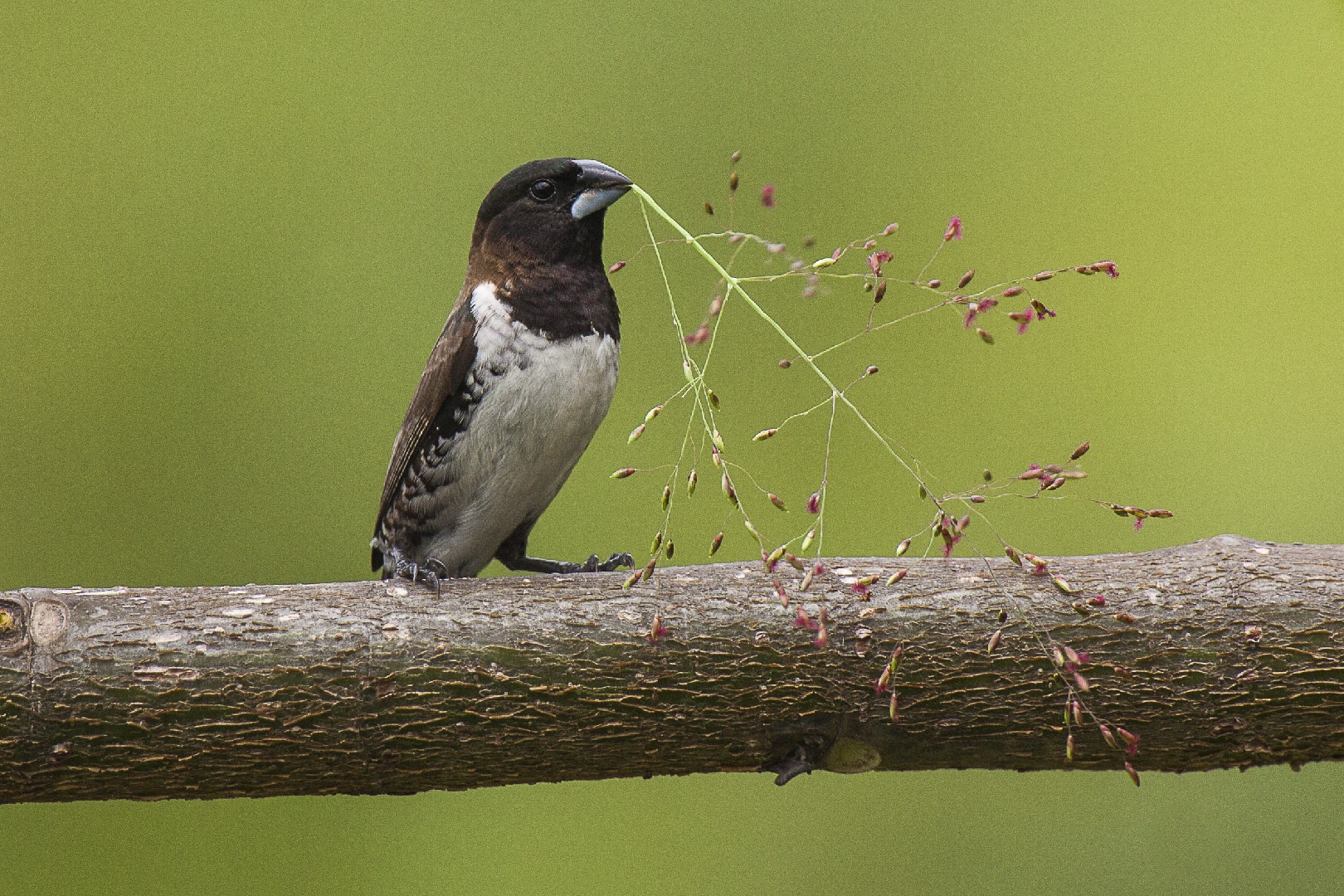
4. Bronze Mannikin
The bronze mannikin is one of the smallest munia species, measuring 9–10 cm in length and weighing 7–12 grams. The adult is a compact bird with a short black tail, and stubby black and pale grey (not distinctly bluish) mandibles. It is black to brownish black on the head, chin, throat and center of the chest, with some purple-green iridescence on the face and sides of the breast. It has greyish brown upper parts and white underparts with irregular barring on the flanks and rump. A small green iridescent patch is present on the outer scapular feathers, besides, especially in the western race, the sides of the lower breast. Wing coverts and remiges are bordered in a paler or warmer tone. The sexes are similar. Immature birds are dun brown above with buff head and underpart plumage. They moult into full adult plumage by age six months, when the males also begin to sing and exhibit breeding behaviour.
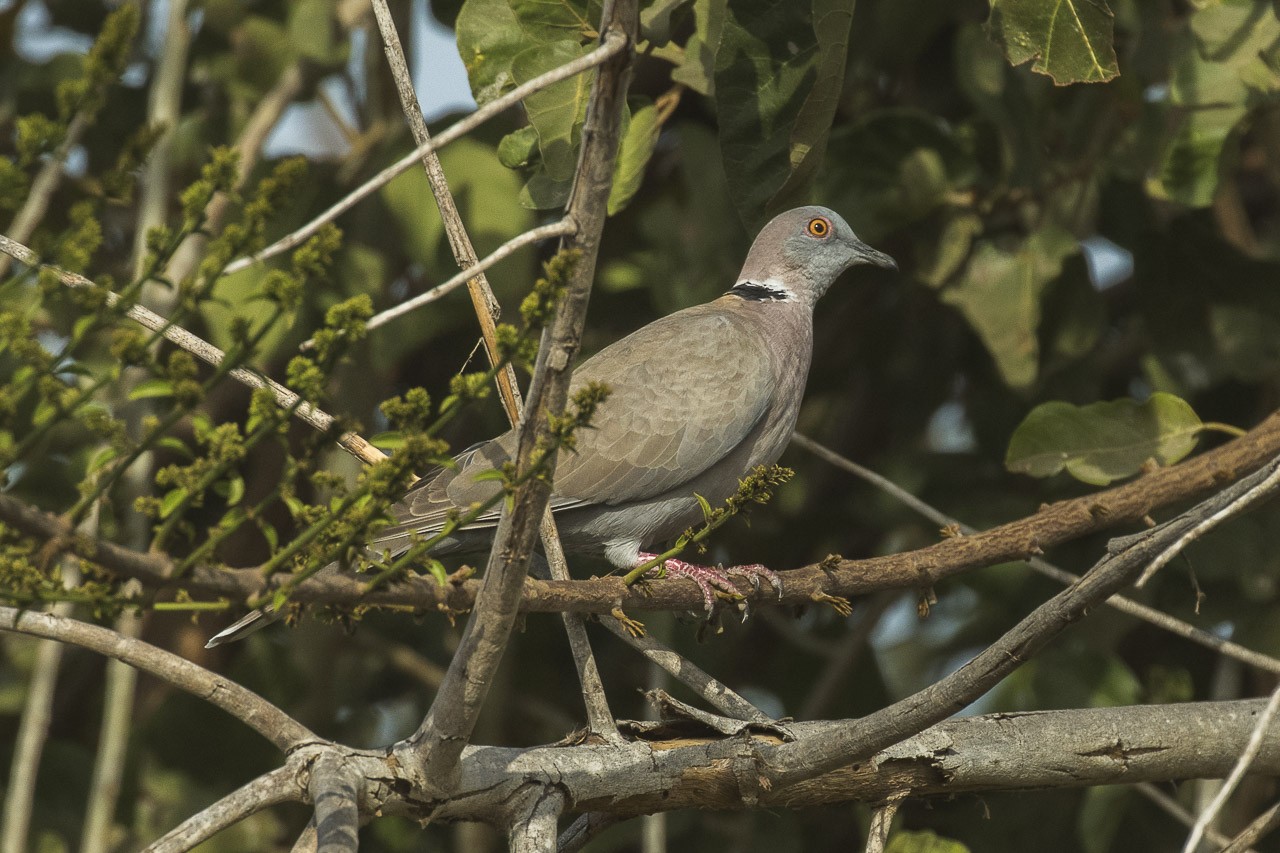
5. Red-eyed Dove
The red-eyed dove is a largish, stocky pigeon, typically 30 cm (12 inches) in length. Its back, wings and tail are pale brown. When flying, it shows blackish flight feathers. The head and underparts are dark vinous-pink, shading to pale grey on the face. There is a black hind neck patch edged with white. The legs and a patch of bare skin around the eye are red. The call is a loud doo-doo-du-du. Sexes are similar, but juveniles are duller than adults, and have scalloping on the body feathers. Red-eyed doves eat grass seeds, grains and other vegetation. They often forage on the ground.
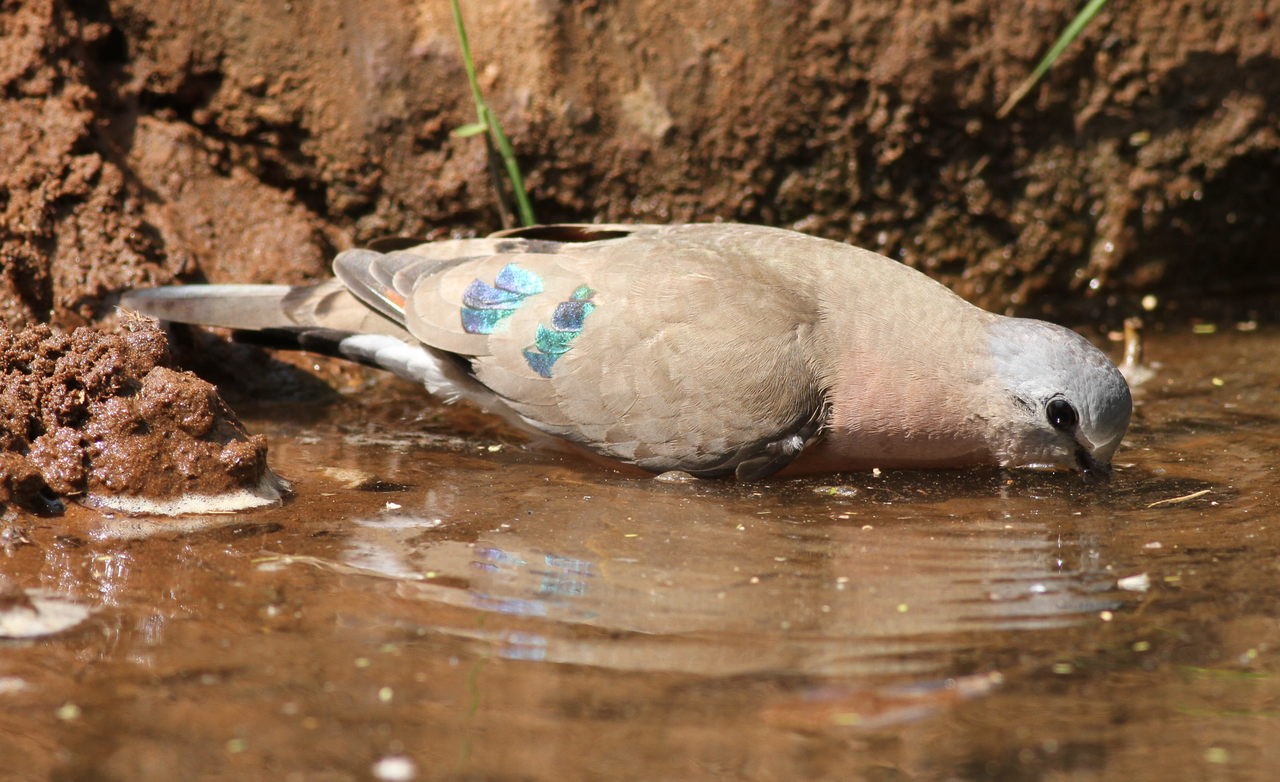
6. Emerald-spotted Wood Dove
Emerald-spotted wood dove is a small plump pigeon, typically 20 cm in length. Its back, hindneck, wings and tail are pale grey brown, and the folded wings have green metallic patches. There are blackish bands on the lower back and tail. The forehead, crown and nape are bluish grey, fading to pinkish grey on the throat. The underparts are mauve-pink, becoming whiter on the belly. The bill of this dove is blackish with a red base. The sexes are similar, but the female may be slightly duller than the male. The immature has duller green spots and buff fringes to the feathers. When flying, black-billed wood dove is told from this species by its bright chestnut underwings. The call is in three parts: two soft long coos, followed by a series of slow descending coos lasting 10 seconds, and concluding with 4 seconds of rapid coos, which decrease in volume. This species shows some geographical variation in plumage, but differences are clinal, and emerald-spotted wood dove is now considered to be monotypic.
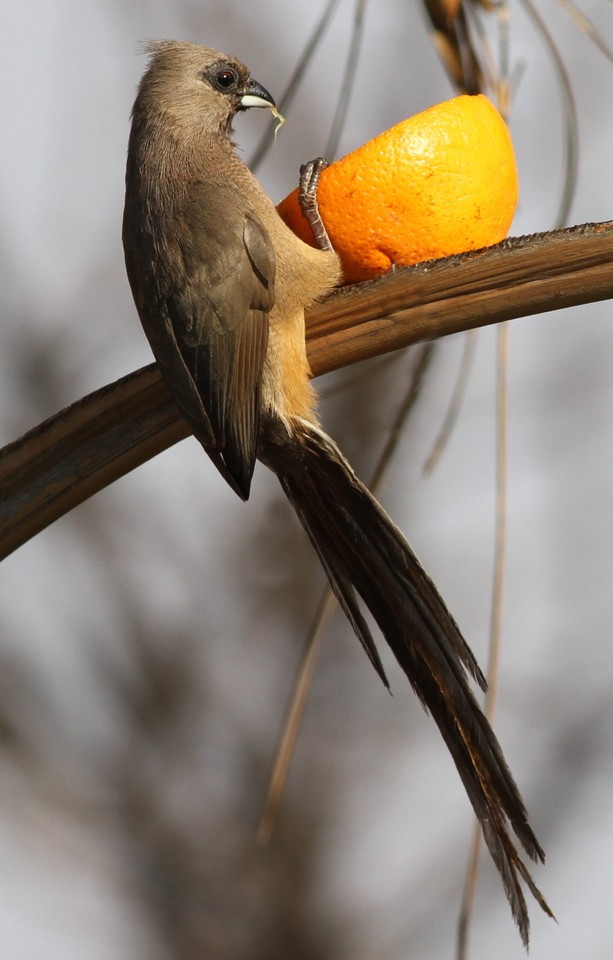
7. Speckled Mousebird
The speckled mousebird is about 35 cm (14 inches) long, with the tail comprising approximately half the length, and weighs about 57 grams (2 oz). It is well-named, because it is dull-mousy brown in overall color on the back and on the head (including a prominent crest). The bill is black on the upper part and is a pinkish color on the lower part. The rare white-headed mousebird can be confused with this species, but the differently colored mandibles and the lack of a bare grey orbital patch render the Speckled species distinctive. The speckled mousebird is not known for its voice, as songbirds are, although it is a noisy creature. They make a warbling tsu-tsu call while in flight, and are known for their tisk-tisk alarm call while in flight.
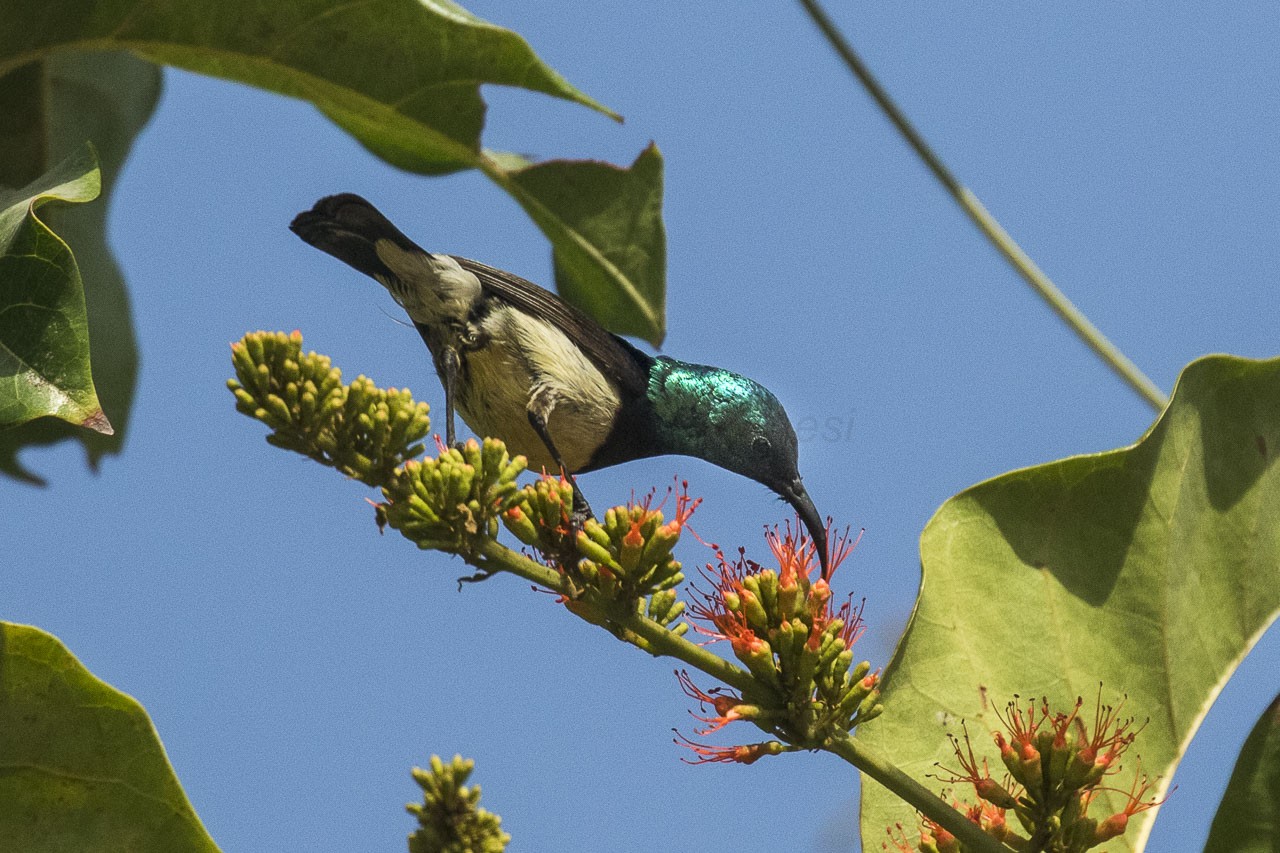
8. Variable Sunbird
The variable sunbird (or yellow-bellied sunbird), Cinnyris venustus (formerly Nectarinia venusta), is a sunbird. The sunbirds are a group of small Old World passerine birds which feed largely on nectar, although they will also take insects, especially when feeding young. Flight is fast and direct on their short wings. Most species can take nectar by hovering like a hummingbird, but usually perch to feed most of the time. The variable sunbird is a fairly common resident breeder in equatorial Africa. Two eggs are laid in a suspended nest in a tree. This species is found in open woodland and cultivation. Variable sunbirds are small, only 10 cm long. They have medium-length thin down-curved bills and brush-tipped tubular tongues, both adaptations to their nectar feeding. The adult male has a glossy green head, throat and nape, and a maroon breast band. In most subspecies, the belly of the male is yellow, but in a few it is orange or white. The female has grey-brown upperparts and yellowish underparts, and an obvious pale supercilium. The eclipse male is like the female, but shows some green, especially on the throat. The call is a clear tew-tew-tew-tew-tew .
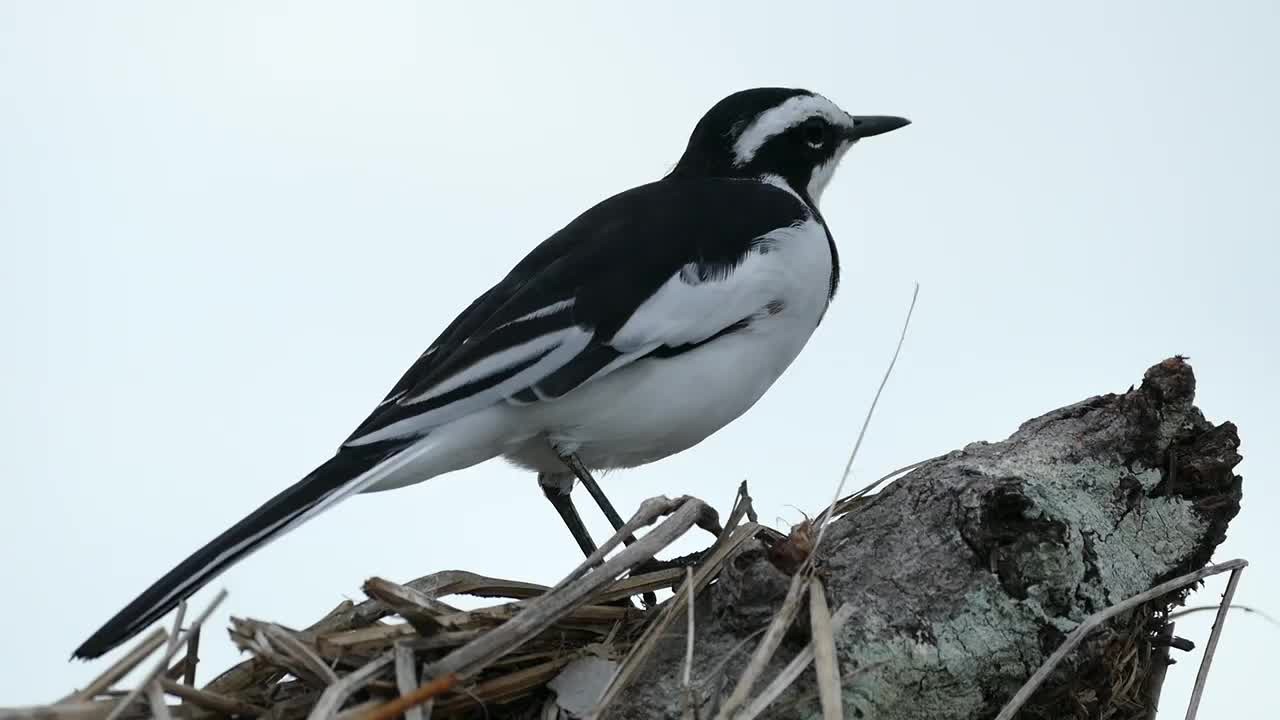
9. African Pied Wagtail
A striking black and white wagtail with black upperparts contrasting with white underparts, a white supercilium and a white patch in the folded wing. Juvenile birds are greyer, while birds of the nominate subspecies show grey flanks. They are 20 cm (7.9 in) long.
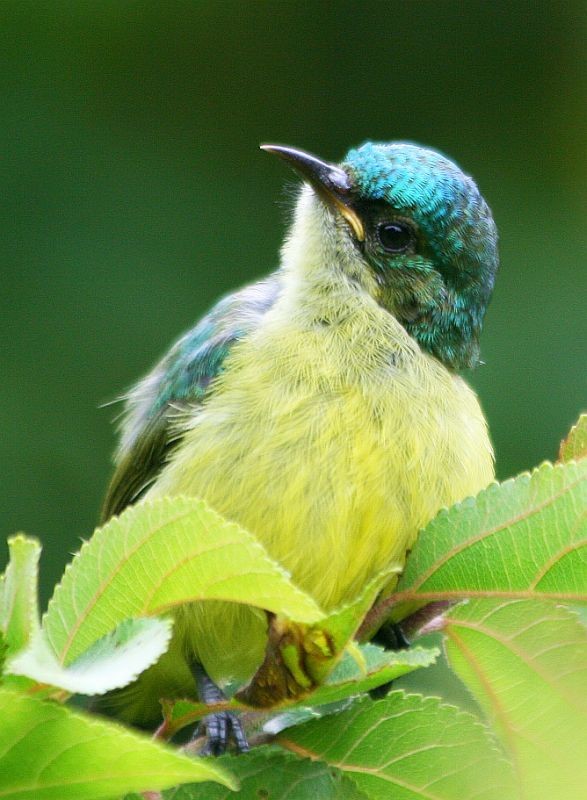
10. Collared Sunbird
The collared sunbird (Hedydipna collaris) is a bird species of the family Nectariniidae. The sunbirds are a group of very small Old World passerine birds which feed largely on nectar, although they will also take insects, especially when feeding young. Collared sunbird is in fact mainly insectivorous. Sunbird flight is fast and direct on their short wings. Most species can take nectar by hovering like a hummingbird, but usually perch to feed most of the time. The collared sunbird is a common breeder across most of sub-Saharan Africa. Two or three eggs are laid in a suspended nest in a tree. It is a seasonal migrant within its range. Collared sunbirds are tiny, only 9–10 cm long. They have short thin down-curved bills and brush-tipped tubular tongues, both adaptations to nectar feeding. The adult male has glossy green upperparts and head with a yellow belly and narrow purple breast band. The female is a duller green above and entirely yellow below. This species is found in forests near water.
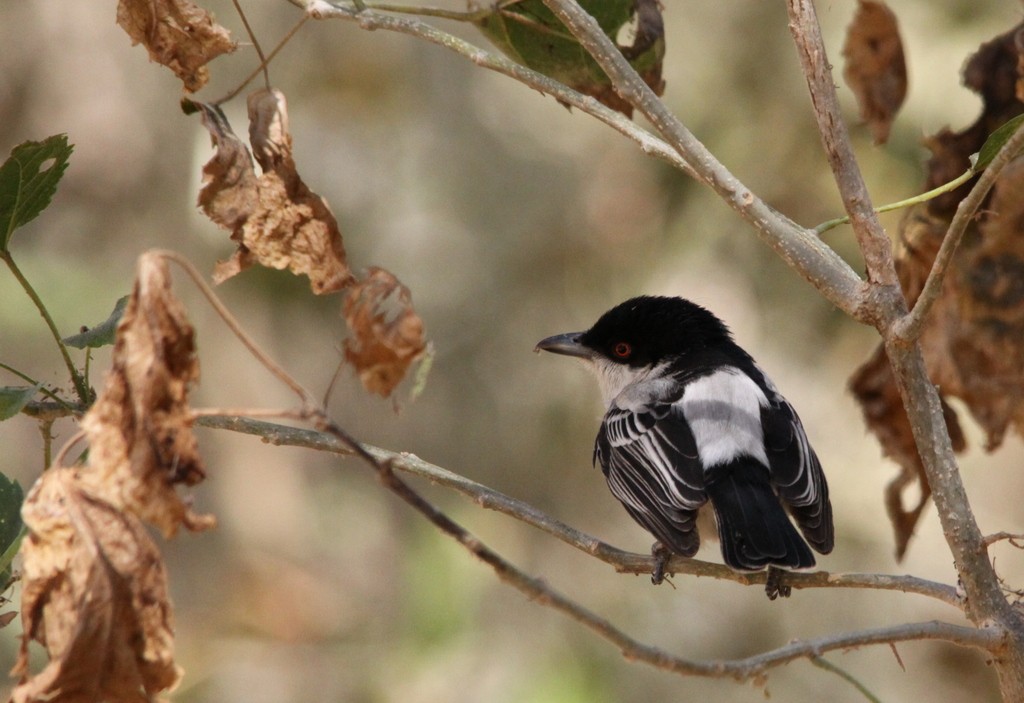
11. Black-backed Puffback
They measure about 17 cm in length, and the sexes are similar though easily distinguishable. Adult males have the upperparts deep blue-black with a slight luster. The black cap subtends the red eye, the upperpart plumage is black-and-white, and the underparts pure white. Females have a black loral stripe and white supraloral feathering, with the ear coverts pale and the crown not solidly black. They also have greyer backs than males, and grey to buffy tones to the white plumage tracts. Immature birds resemble females, but have brownish bills and brown irides, while the upperparts and flanks are still greyer, and the underparts and edges of the wing feathers are yet more buffy. Intraspecific variation is clinal. Range, iris colour, wing markings and the female plumage assist in separating it from other puffback species.
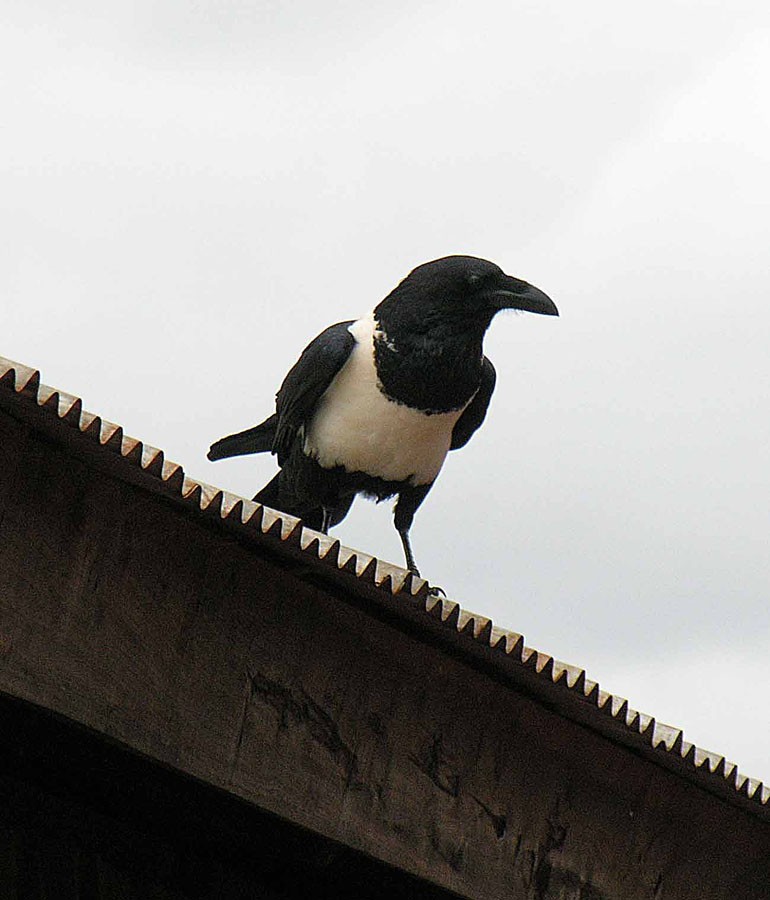
12. Pied Crow
It is approximately the size of the European carrion crow or a little larger (46–50 cm in length) but has a proportionately larger bill, slightly longer tail and wings, and longer legs. As its name suggests, its glossy black head and neck are interrupted by a large area of white feathering from the shoulders down to the lower breast. The tail, bill and wings are black too. The eyes are dark brown. The white plumage of immature birds is often mixed with black. It resembles the white-necked and thick-billed ravens but has a much smaller bill.
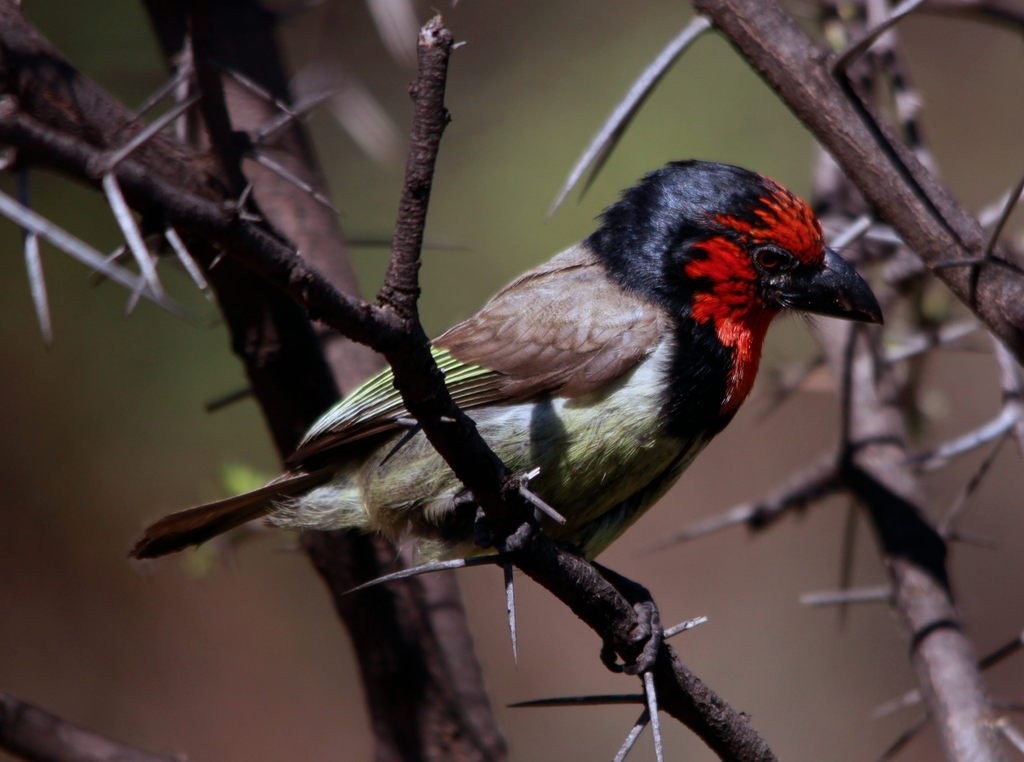
13. Black-collared Barbet
The black-collared barbet usually is about 20–25 cm long, plump-looking and has a large head. It also has the heavy bill fringed with bristles that is characteristic of the genus Lybius. This barbet has a very obvious black collar and head which gives reference to its name. It also has a fire-engine red coloring around the eyes and beak. It has morphologically variable coloring because there is a replacement of a red head with a black head. It also has a more intense color and is larger than other barbets. This bird is also sexually monomorphic, which means that there is generally no phenotypic difference between the males and females of this species. The morphology, size and behavior are basically the same.
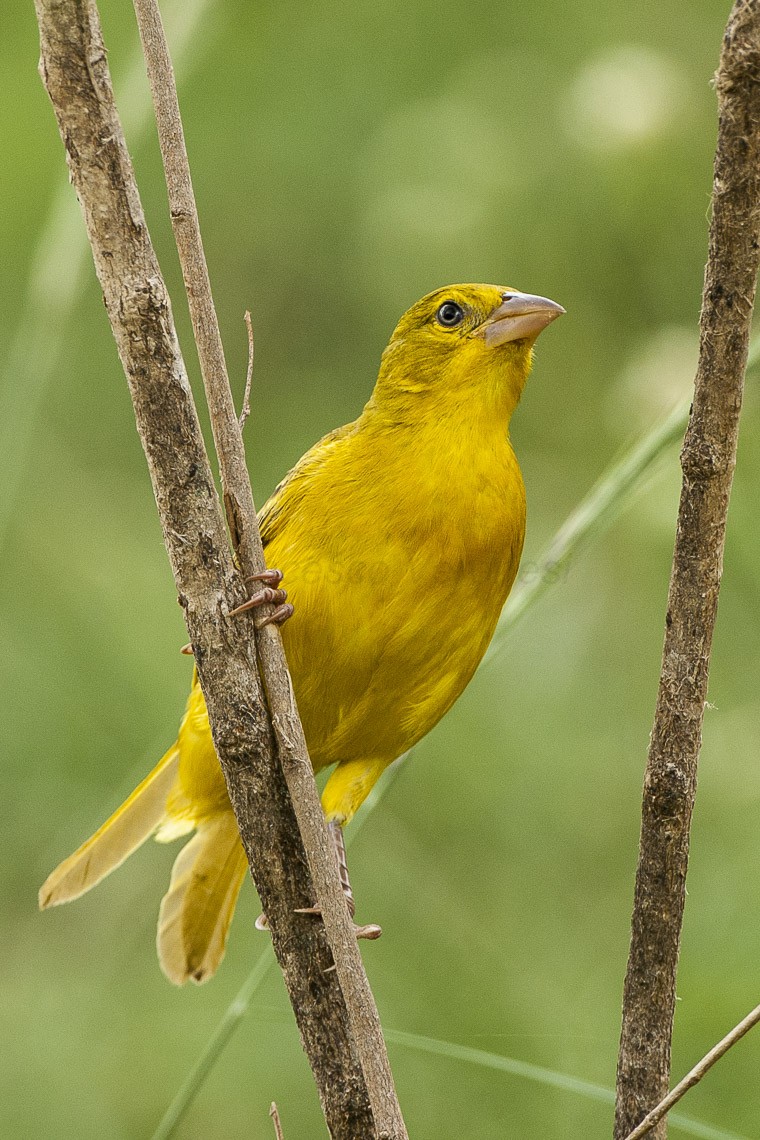
14. Holub's Golden Weaver
Holub's golden weaver (Ploceus xanthops), also known as the African golden weaver, is a species of bird in the family Ploceidae. It is found from Gabon to Uganda and Kenya, south to northern Namibia, northern Botswana and eastern South Africa. The common name commemorates the Czech naturalist Emil Holub.
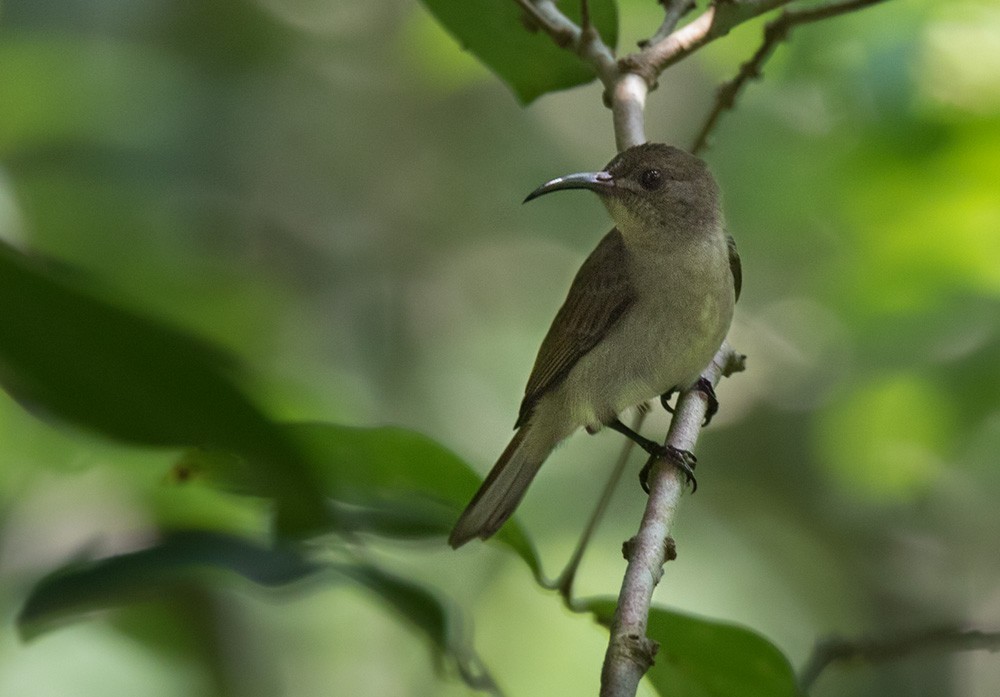
15. Olive Sunbird
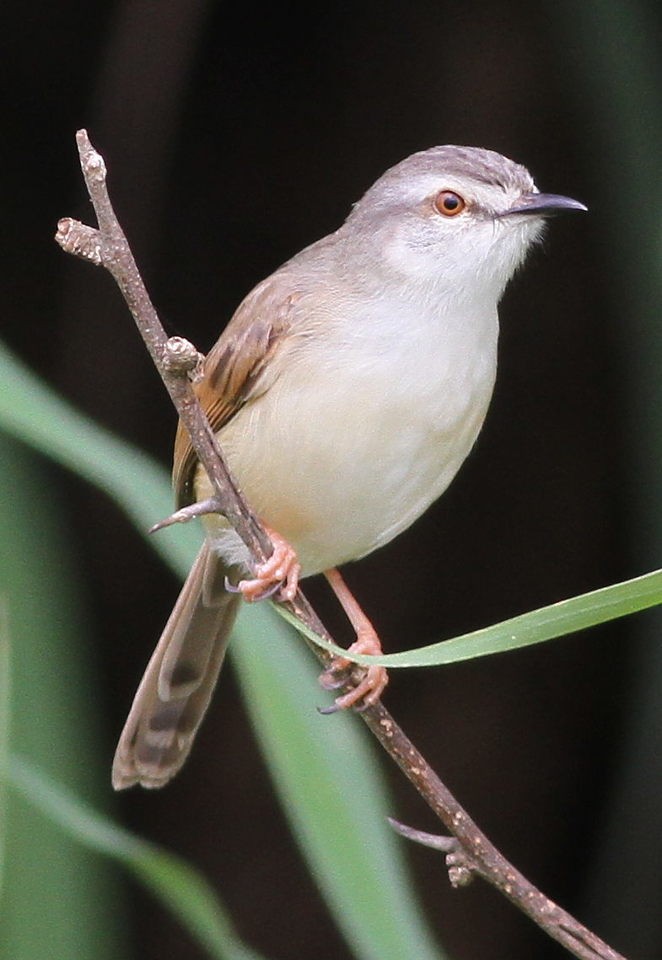
16. Tawny-flanked Prinia
It is 10-13 centimetres in length with a long, narrow, graduated tail and a fairly long, slender bill. The tail is often held erect or waved from side to side. The upperparts are grey-brown with rufous-brown edges to the flight feathers and a rufous tinge to the rump. The throat and breast are whitish while the flanks and vent are warm buff. There is a whitish stripe over the eye and the lores are dark. The tail feathers have a white tip and a dark subterminal band. The sexes are similar in appearance. Non-breeding birds have a longer tail than breeding birds. Juveniles have pale yellow underparts and a yellowish bill. There are many recognised subspecies. The call is short, wheezy and rapidly repeated. The song is a monotonous series of shrill notes. The male often sings from an exposed perch. The pale prinia (P. somalica) of North-east Africa is similar but paler and greyer with whitish flanks. It inhabits drier, more open habitats than the tawny-flanked prinia. The river prinia (P. fluviatilis) of West Africa is also paler and greyer and has a longer tail. It is restricted to waterside vegetation.
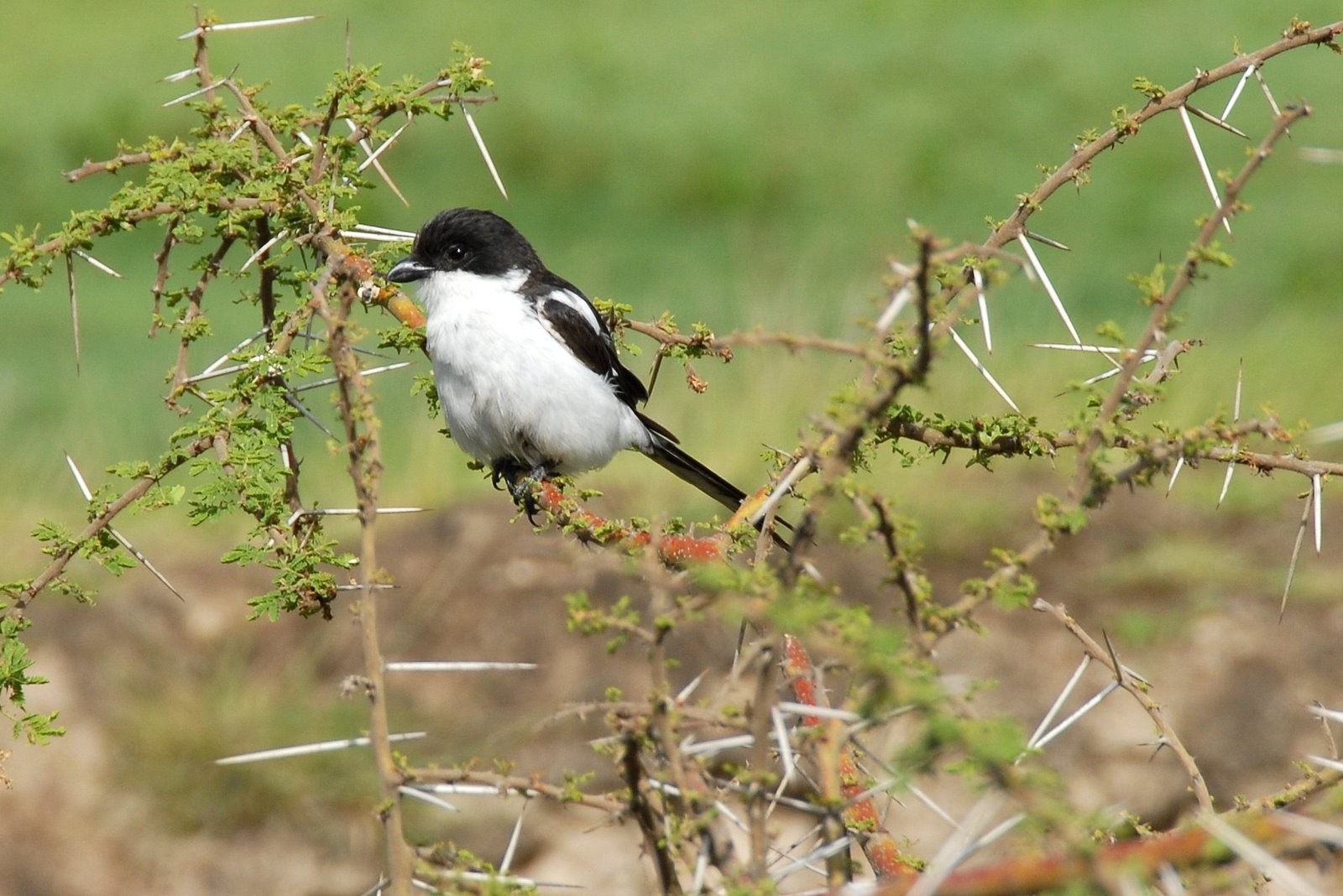
17. Northern Fiscal
The northern fiscal (Lanius humeralis) is a member of the shrike family found through most of Sub-Saharan Africa. It used to be grouped with the southern fiscal (Lanius collaris). Together they were called the common fiscal.
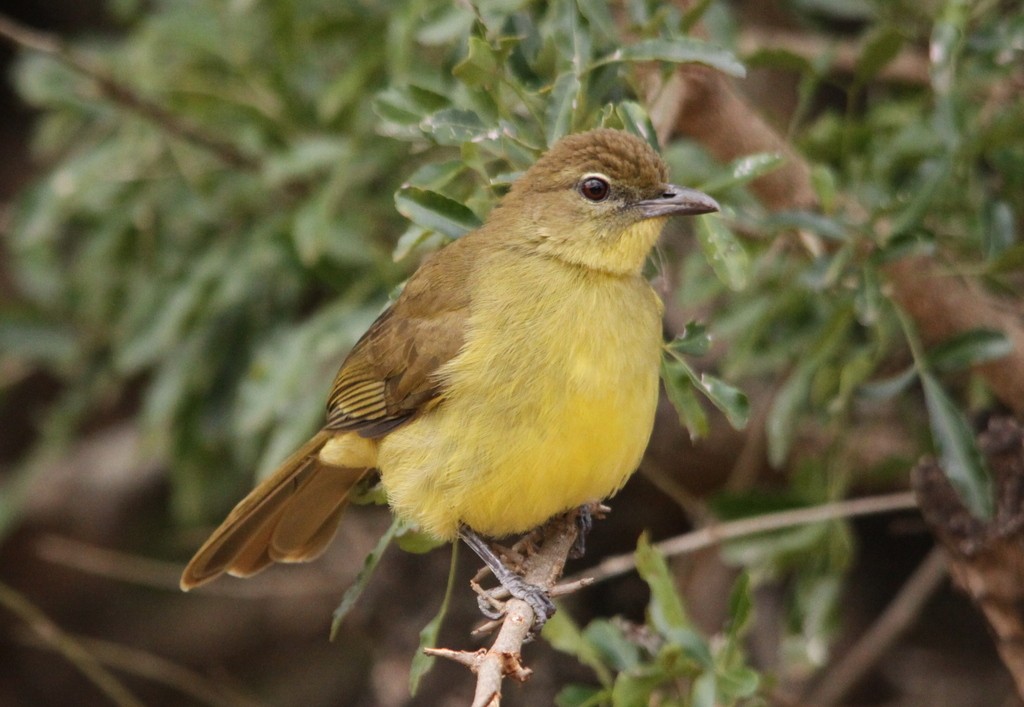
18. Yellow-bellied Greenbul
The yellow-bellied greenbul (Chlorocichla flaviventris) is a species of songbird in the bulbul family, Pycnonotidae. It is found in eastern, southern and west-central Africa. Its natural habitats are subtropical or tropical dry forests, subtropical or tropical moist lowland forests, and dry savanna.
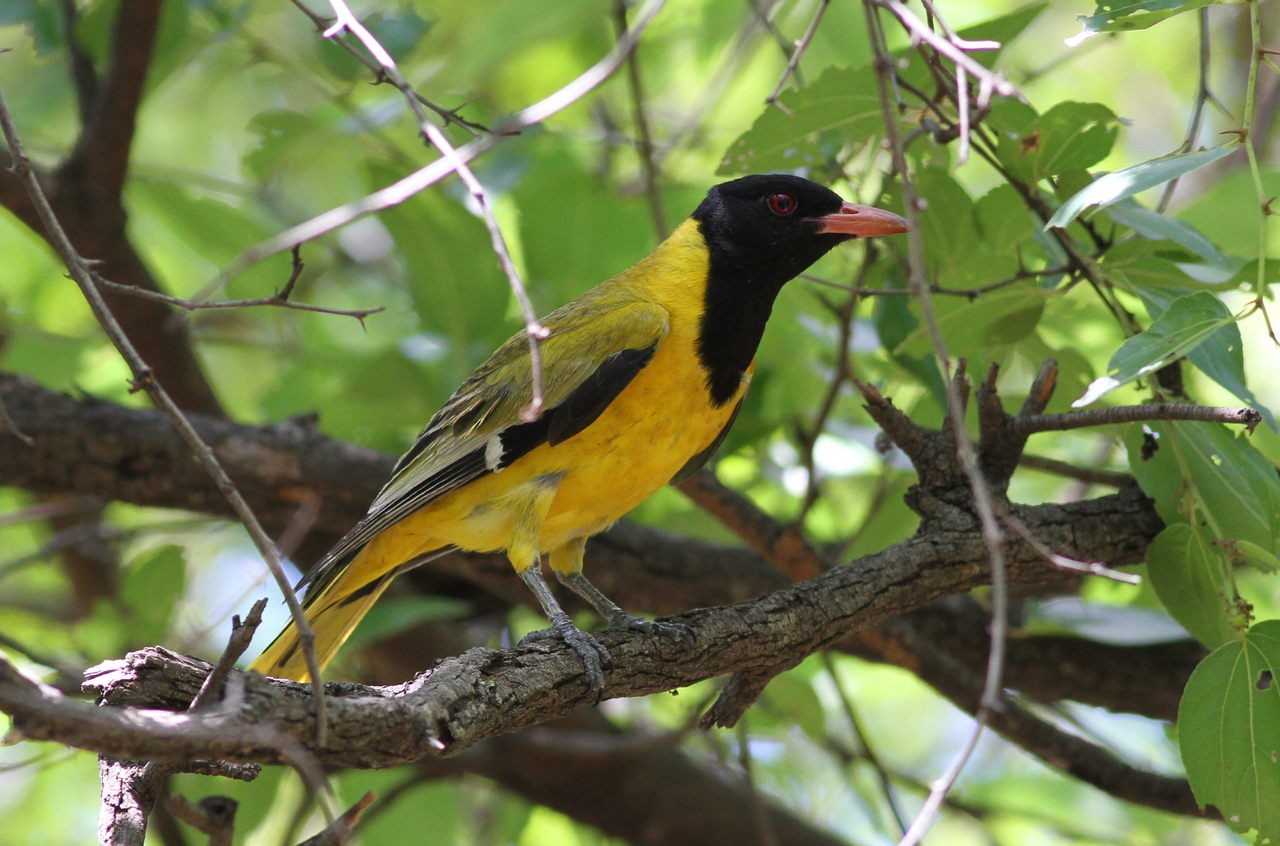
19. African Black-headed Oriole
The black-headed oriole has a bright yellow body, contrasting black head and flesh-coloured beak. The voice is a liquid-sounding warble, accompanied by imitations and whistles.
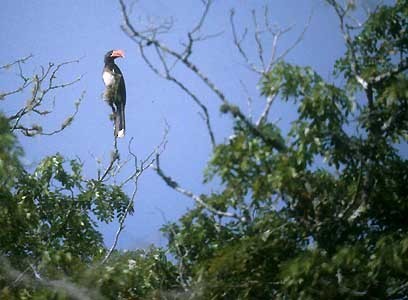
20. Crowned Hornbill