



Top 20 Most Common Bird in South Australia
South Australia exhibits a diverse landscape from coastal towns to the arid outback, providing varied habitats for birdlife. In this region, the 20 most common birds demonstrate unique characteristics including distinct appearances, intriguing behavioral traits and adaptations to their respective environments. Detailed observation and research have revealed astounding insights about these extraordinary avifauna.

Most Common Bird
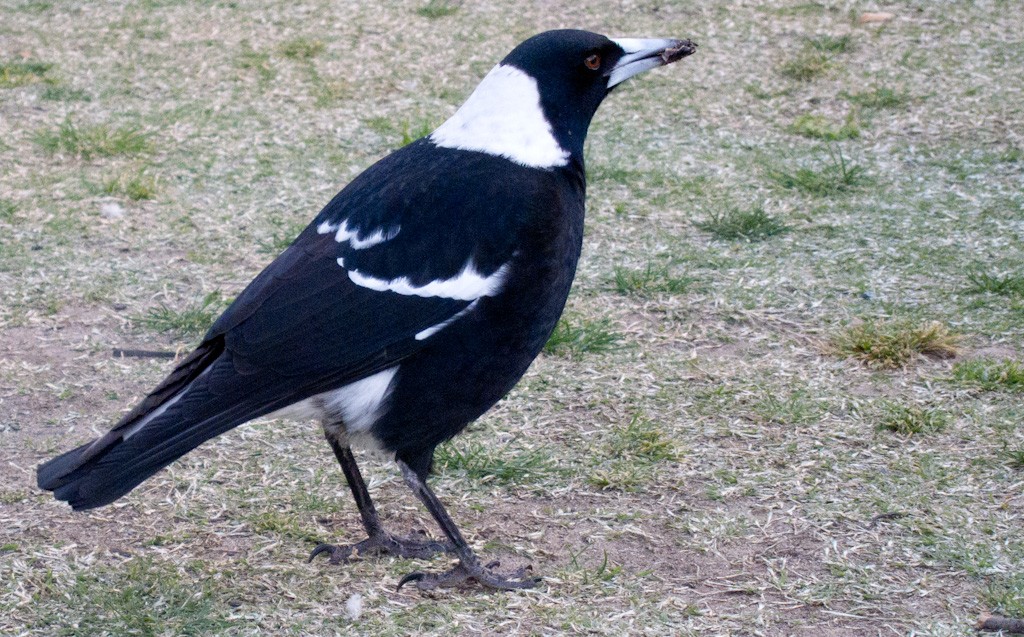
1. Australian Magpie
Despite its name, the australian Magpie bears little resemblance to its North American or European cousins. For one thing, unlike its cousins' piercing squawk, the australian Magpie has a melodic song that is a pleasant addition to the Australian soundscape. It is also black and white, where its cousins have some shiny blue plumage. However, there is at least one similarity: like its cousins, the australian Magpie can terrify humans during nesting season as it dives and swoops at anyone coming near its nest or its fledglings.
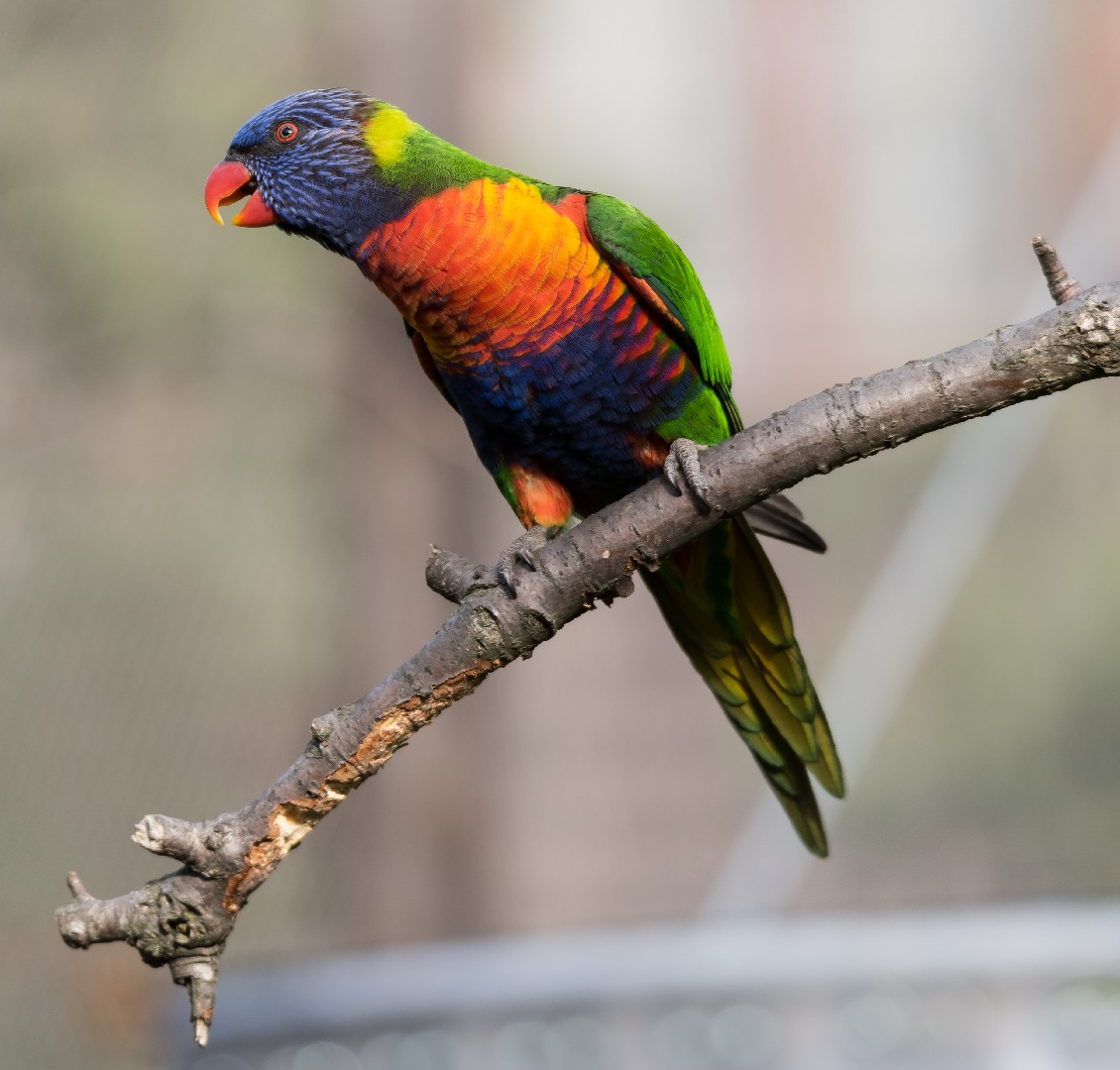
2. Coconut Lorikeet
The coconut lorikeet measures 25–30 cm (10–12 in) in length and weighs around 109–137 g (3.8–4.8 oz). The bill is orange-red, and the head dark blue fading to brown at the neck. It has a yellow collar and green upperparts. The breast is red with blue-black barring, and the belly is green with yellow barring. The tail is green above and barred in green and yellow below. The male's iris is bright red, while in the female it is orange-red. 
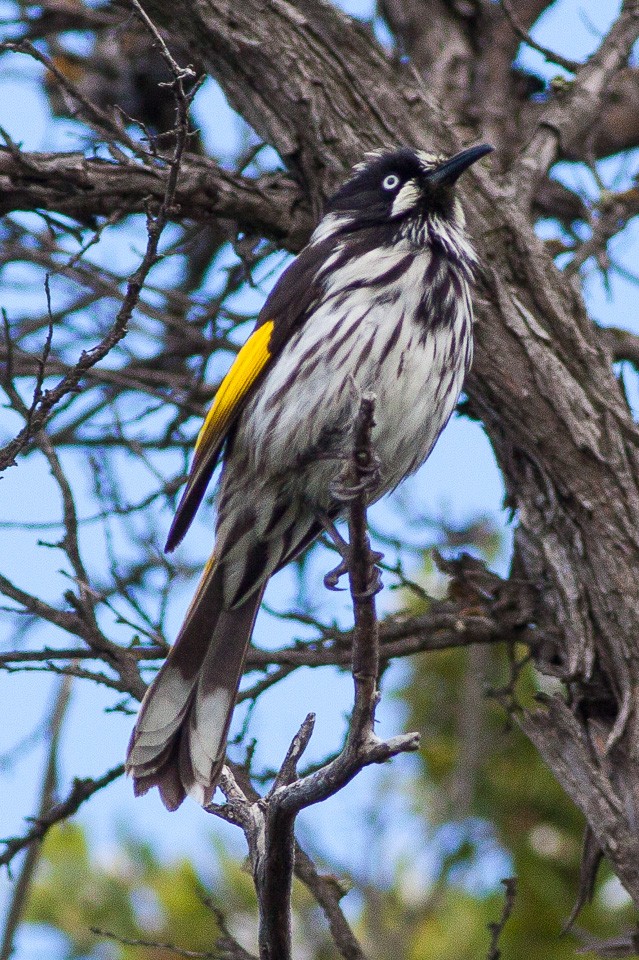
3. New Holland Honeyeater
The bird is around 18 cm (7.1 in) long and is mainly black, with a white iris, white facial tufts and yellow margins on its wing and tail feathers. It is a very active bird and rarely sits long enough to give an extended view. When danger approaches a New Holland honeyeater, such as a bird of prey, a group of honeyeaters will form together and give a warning call. Sexes are similar in looks with the exception that females are, on average, slightly smaller. Young New Holland honeyeaters (<1 year old) have similar colouring but have grey eyes and a yellow gape and 'whiskers' near the nares. They appear to be a socially monogamous bird with no sign of co-operative breeding, but this observation is yet to be examined.
4. Magpie-lark
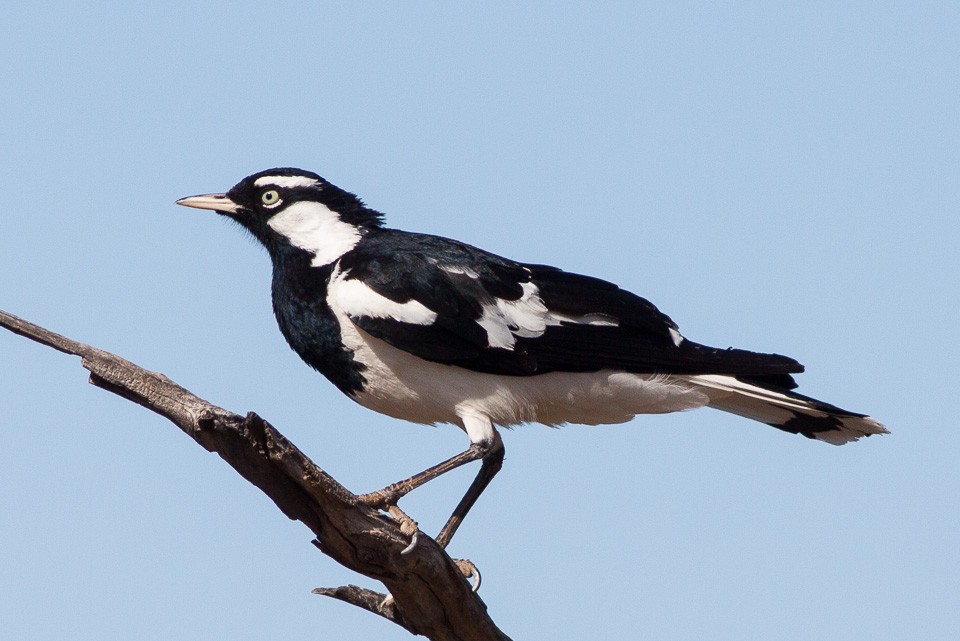
The magpie-lark is of small to medium size, reaching 25 to 30 cm (9.8 to 11.8 in) long when fully grown, or about the same size as a European common blackbird, and boldly pied in black and white; the weight range is 63.9 to 118 g (2.25 to 4.16 oz) for males, and 70 to 94.5 g (2.47 to 3.33 oz) for females. The sexes are similar from a distance but easy to tell apart: the female has a white throat, the male a black throat and a white "eyebrow". Juveniles and immatures of either sex have the white throat of the female and the black eyestripe of the male, and a white belly.
5. Red Wattlebird
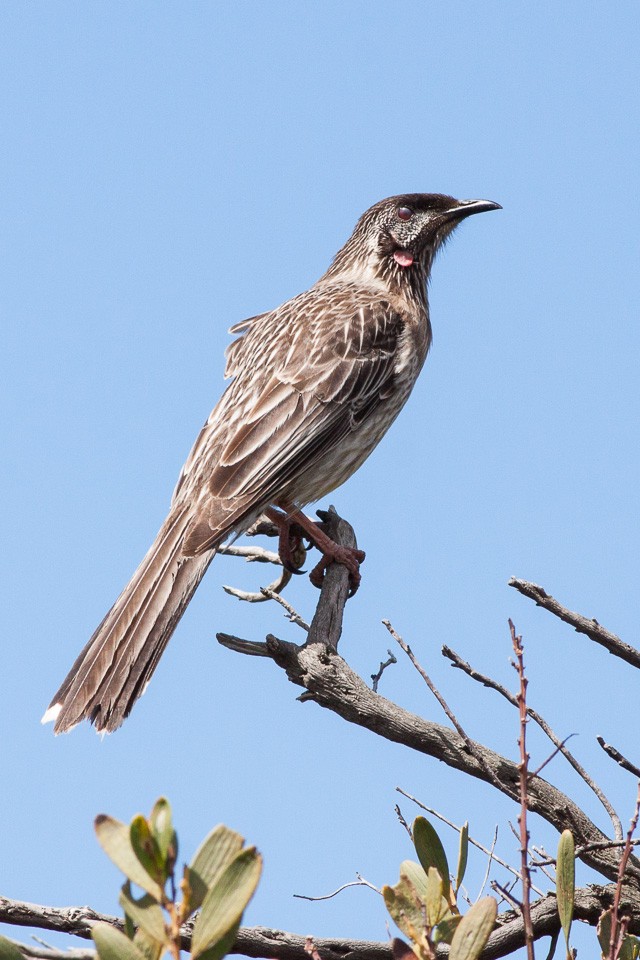
The sexes of the red wattlebird are similar in size and plumage, the length of the adult male ranging from 33 to 37 centimetres (13 to 15 in) and the adult female from 34 to 37 centimetres (13 to 15 in). With an average weight of 100–120 grams (3.5–4.2 oz), the red wattlebird is one of the largest nectar-feeding birds in the world, and the second largest species of honeyeater native to Australia, eclipsed only by the yellow wattlebird. The crown, forehead and upper lores (area between the eyes and nostrils) are dark brown, streaked with pale brown at the front of the crown and white at the rear of the crown. The nape (back of the neck) is slightly paler brown, with white streaks. A whitish triangular marking covers the lower lores and anterior ear covert feathers, bordered below by a dark brown stripe from the lower mandible down to the wattle and around to behind the eye. The throat is dark brown streaked with white. The iris of the eye is orange-red to crimson. The distinctive pinkish-red wattles dangle from the lower rear corner of the ear coverts on either side of the neck, and there is a sliver of pink bare skin at the lower border of the white patch on the face. The chest and belly are streaked white, and there is a bright yellow patch towards the tail. The strong legs and feet are pink or pinkish-brown, and the downward-curving bill is black. The average dimensions of the bill are 23.5 millimetres (0.93 in) long, 6.7 millimetres (0.26 in) wide, and 6.8 millimetres (0.27 in) high at its base. The gape is grey-black, while the inside of the mouth is orange. In common with other honeyeaters, the red wattlebird has a long, specialized tongue to extract nectar from flowers. The tongue can extend well beyond the tip of the bill, and is divided at the end to form a brush-like structure with over a hundred bristles that soak up nectar by capillary action. The red wattlebird begins moulting after the breeding season, starting with the primary flight feathers in November or December, and finishing between the following March and May. The feathers of the breast, back, median and lesser covert feathers are moulted before those of the crown, remiges, and rectrices. Immature red wattlebirds are generally less flamboyant. Juveniles have much less prominent wattles, brown irises, a pale crown, and much less yellow on the belly. They moult into first immature plumage within a few months of leaving the nest. First immature birds are more similar to adults overall, having red irises with brown rings, wattles larger but still smaller than adults, and a greyish pink gape. The red wattlebird is hard to confuse with any other species, though in poor visibility it might be mistaken for the spiny-cheeked honeyeater, or little or western wattlebirds.
6. Little Raven
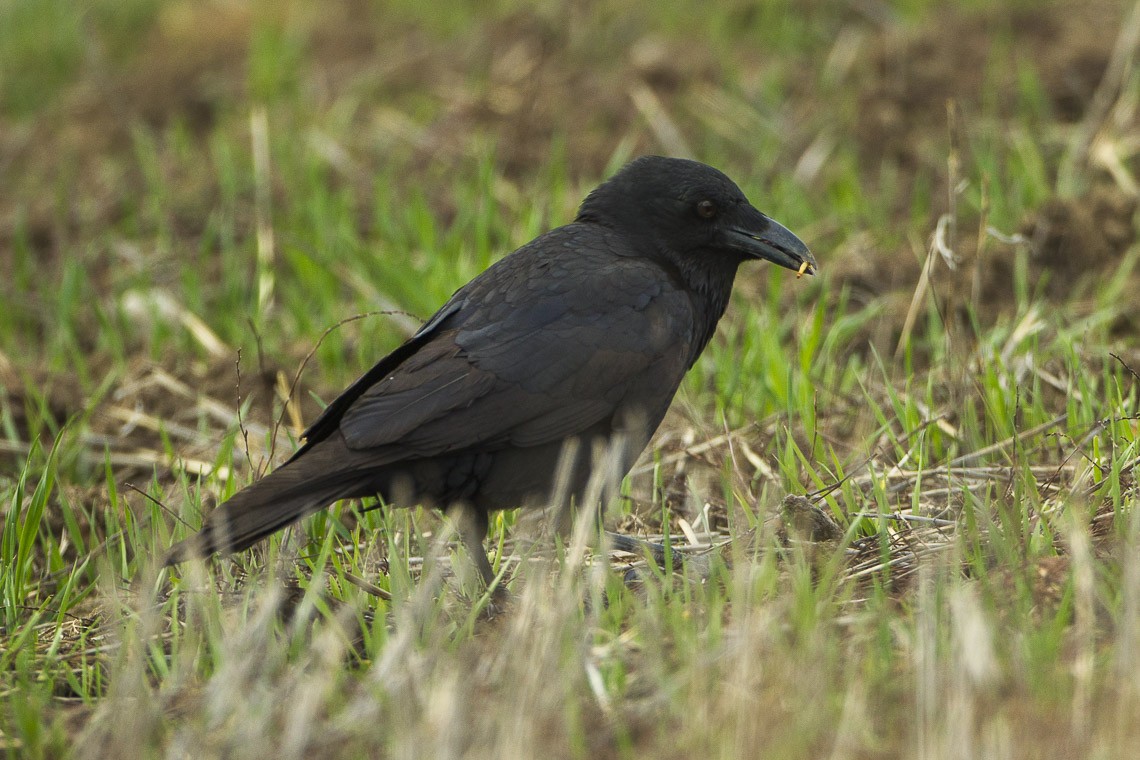
The little raven is a somewhat more sociable species than the Australian raven, often forming large flocks that roam freely over wide areas in search of food. Eye colour varies with age: nestlings up to three months old have blue-grey eyes, juveniles aged from three to eleven months have brown eyes, and immature birds have hazel eyes with blue eyerings around the pupil until age one year and eleven months.
7. Galah
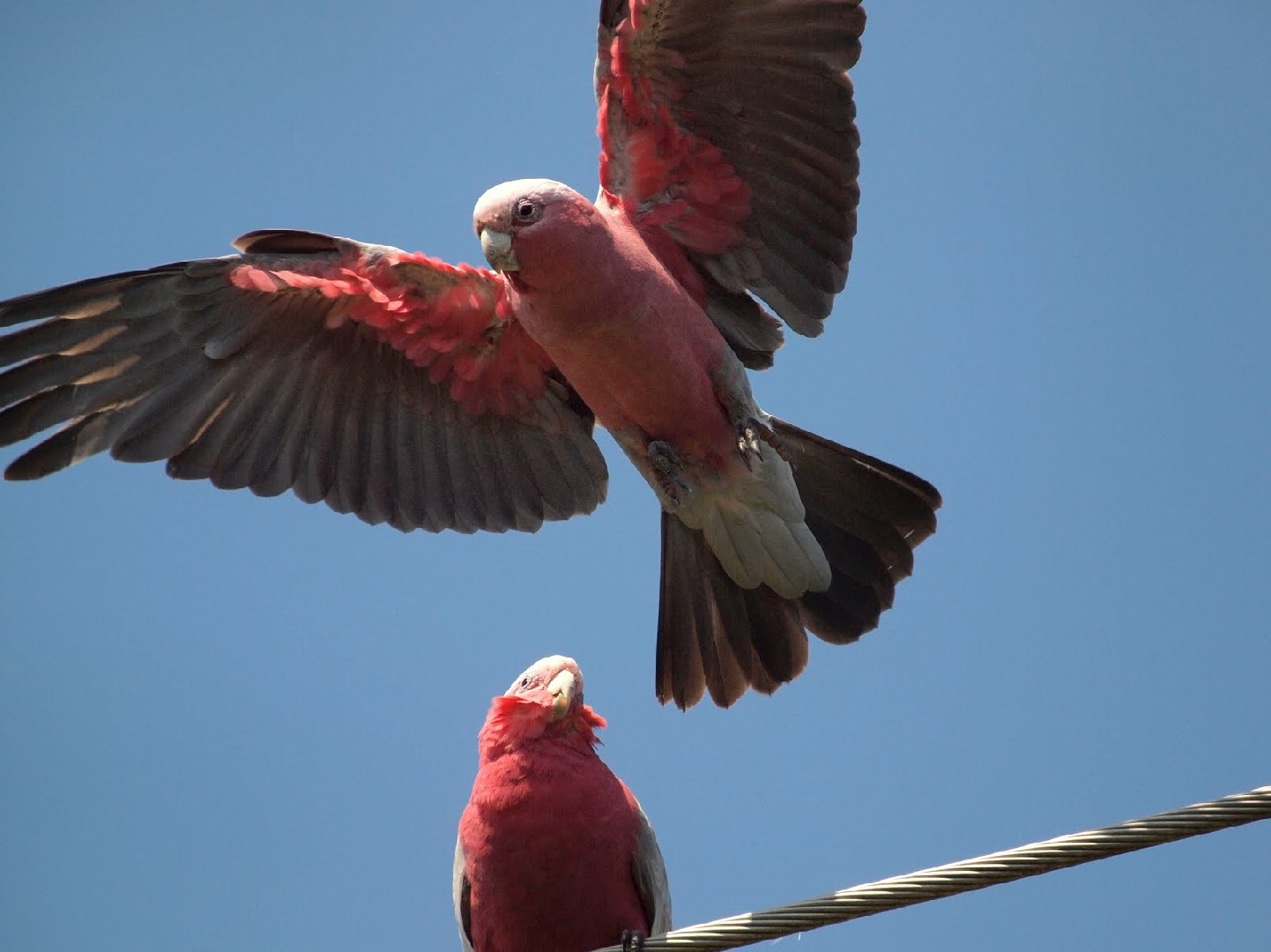
The galah is a small, attractive cockatoo that is often seen in suburban areas. Noisy, playful, and friendly, it has a distinctive high-pitched call. As it likes to feast on agricultural crops, the galah accepted the spread of farming very well. Gathered in large flocks, these parrots can devastate full fields and thus are often considered agricultural pests. Stella, a character from "Angry Birds" is based on this species.
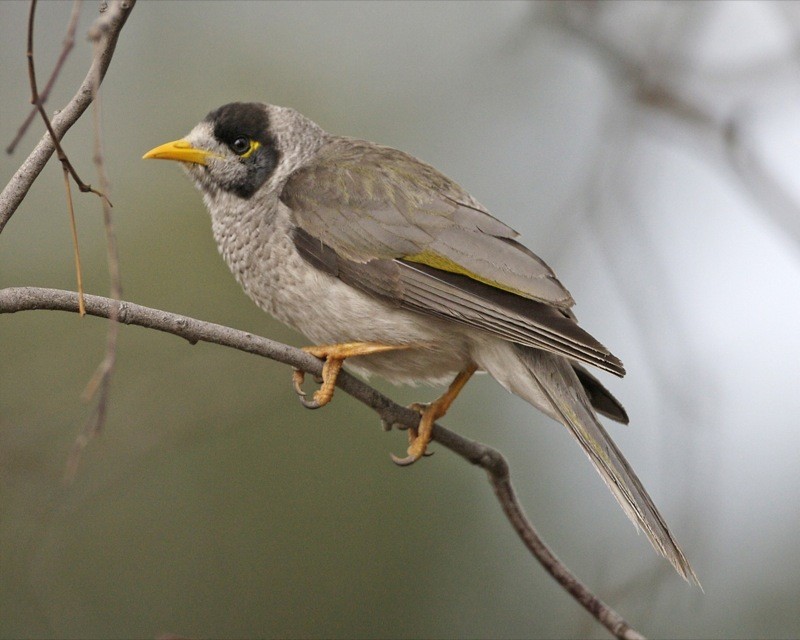
8. Noisy Miner
The small, multicolored noisy Miner is a part of the honeyeater bird family. Deeply protective of its territory, this brave bird will defend its home against basically anything without fear. You can tell this species apart from its inland counterpart, the Yellow-throated Miner, by looking at its head—the crown of the noisy Miner is black.
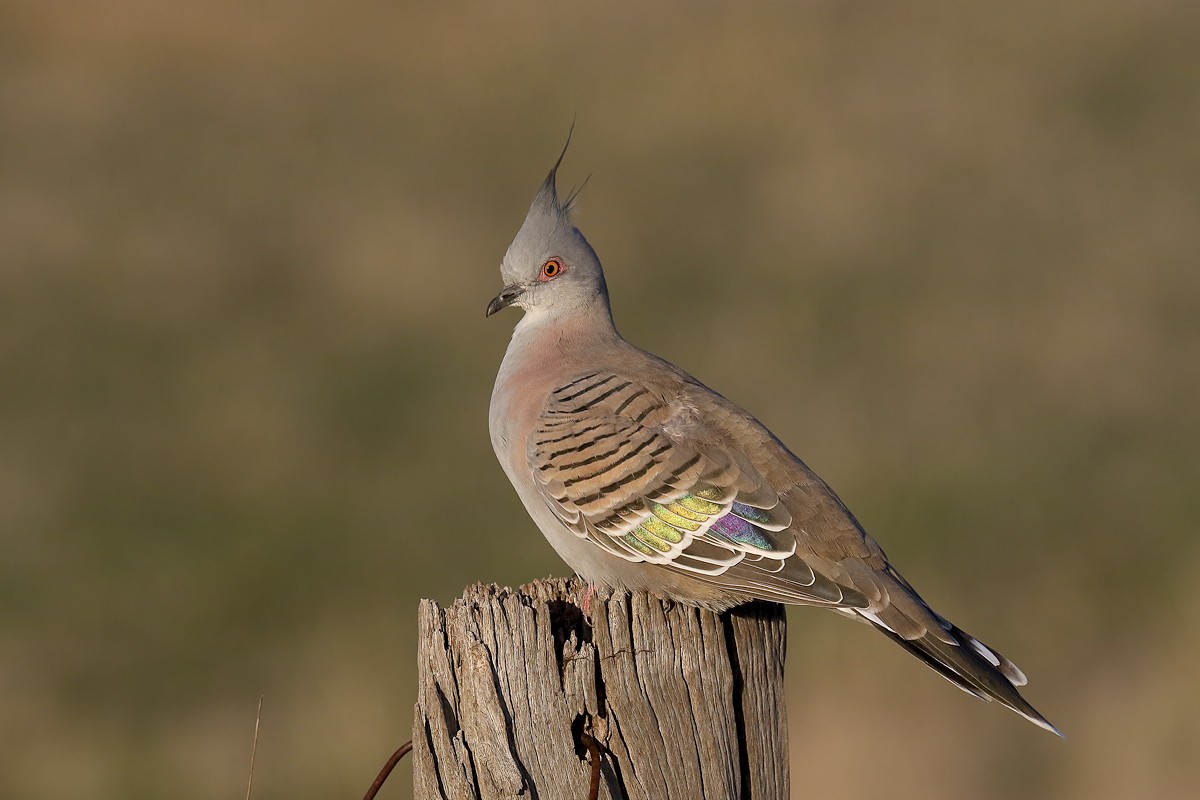
9. Crested Pigeon
The crested Pigeon is a fairly large pigeon that is found near water, both in urban and rural areas. Aside from their distinctive crest, these pigeons are known for the whistling sound they make as they take off. These ground-feeding birds are highly sociable and form large flocks. Friendly towards humans, they can be easily approached.
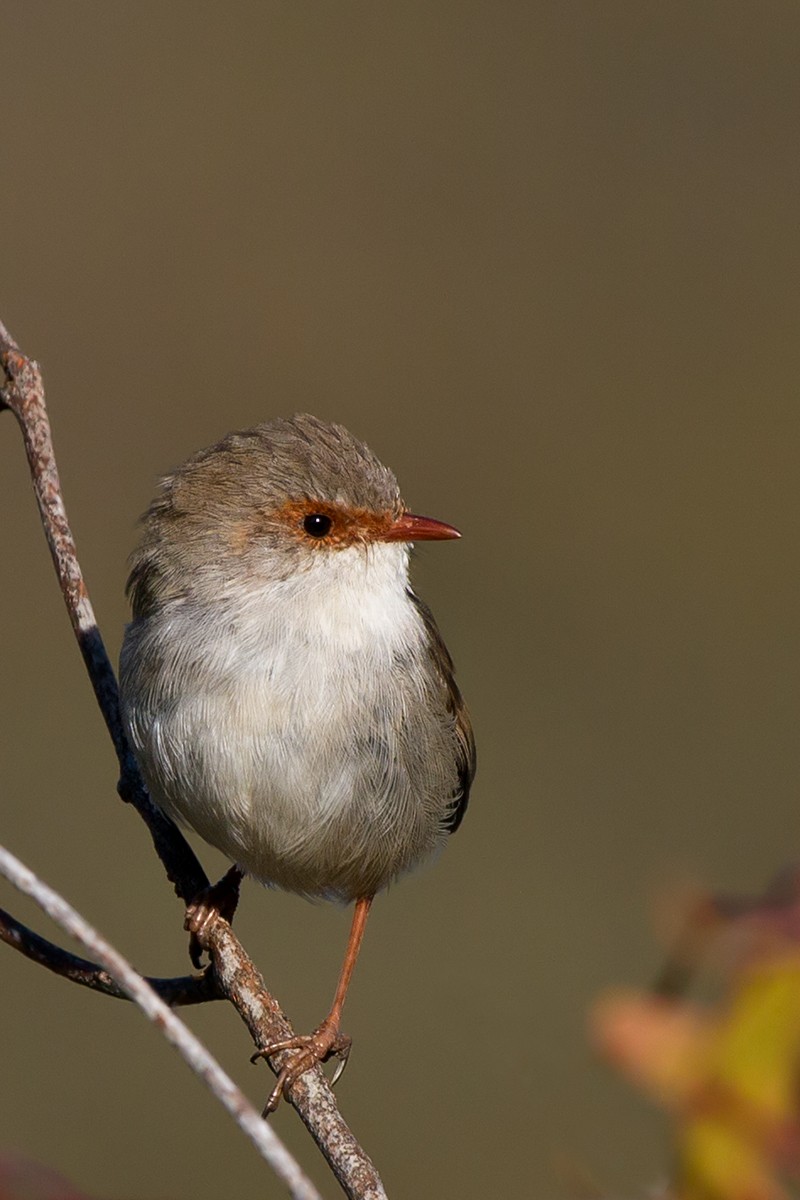
10. Superb Fairywren
The superb fairywren is 14 cm (5 ⁄2 in) long and weighs 8–13 g (0.28–0.46 oz), with males on average slightly larger than females. The average tail length is 5.9 cm (2 ⁄3 in), among the shortest in the genus. Averaging 9 mm (0.4 in) in subspecies cyaneus and 8 mm (0.3 in) in subspecies cyanochlamys, the bill is relatively long, narrow and pointed and wider at the base. Wider than it is deep, the bill is similar in shape to those of other birds that feed by probing for or picking insects off their environs. Like other fairywrens, the superb fairywren is notable for its marked sexual dimorphism, males adopting a highly visible breeding plumage of brilliant iridescent blue contrasting with black and grey-brown. The brightly coloured crown and ear tufts are prominently featured in breeding displays. The breeding male has a bright-blue forehead, ear coverts, mantle and tail, brown wings, and black throat, eye band, breast and bill. Females, immatures, and non-breeding males are a plain fawn colour with a lighter underbelly and a fawn (females and immatures) or dull greyish blue (males) tail. The bill is brown in females and juveniles and black in males after their first winter. Immature males moult into breeding plumage the first breeding season after hatching, though incomplete moulting sometimes leaves residual brownish plumage that takes another year or two to perfect. Both sexes moult in autumn after breeding, with males assuming an eclipse non-breeding plumage. They moult again into nuptial plumage in winter or spring. Breeding males' blue plumage, particularly the ear-coverts, is highly iridescent because of the flattened and twisted surface of the barbules. The blue plumage also reflects ultraviolet light strongly, and so may be even more prominent to other fairywrens, whose colour vision extends into this part of the spectrum.
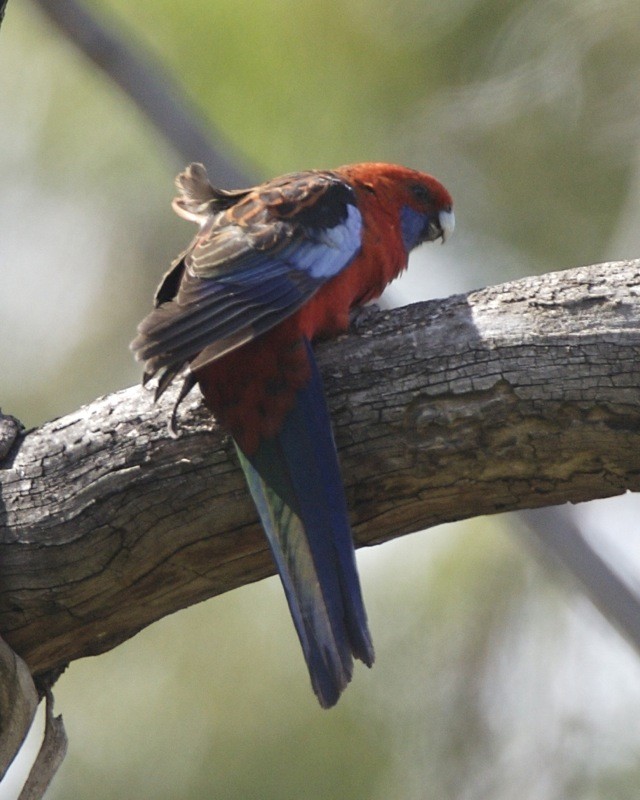
11. Crimson Rosella
Platycercus elegans is a medium-sized Australian parrot at 36 cm (14 in) long, much of which is tail. There are seven subspecies, three of which are actually crimson. The red is replaced by yellow in the case of var. flaveolus and a mixture of red, orange and yellow in the Adelaide rosella. Adults and juveniles generally show strikingly different colouration in south-eastern populations, with predominantly greenish-olive body plumage on the juvenile, most persistent on the nape and breast. Juveniles are said to 'ripen' as they get older and turn from green to red. All races have blue cheeks and black-scalloped blue-margined wings and predominantly blue tail with predominantly red coloration. The crimson rosella's blue tail feathers are one of the favourite decorations of the satin bowerbird. The bill is pale grey and the iris dark brown. There is very little sexual dimorphism in crimson rosellas. The most noticeable difference between genders is that males are up to 15% larger, and have a relatively larger and wider beak.
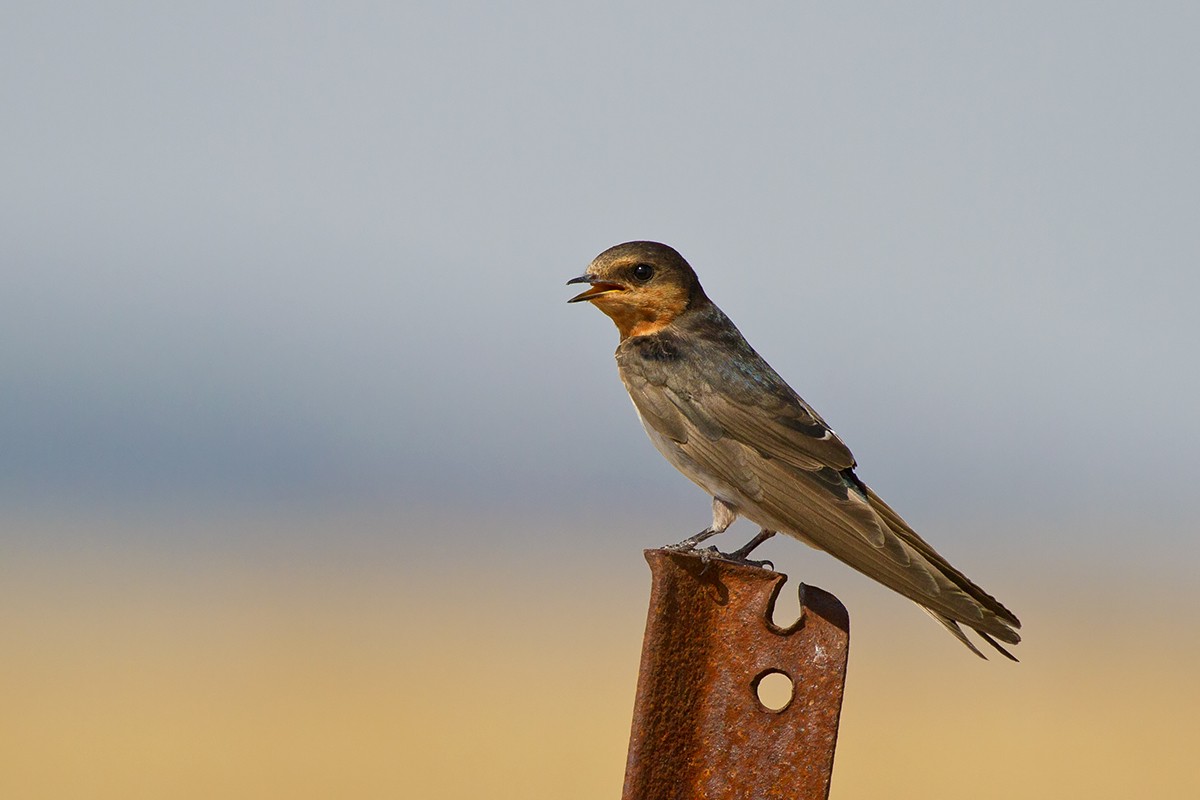
12. Welcome Swallow
The small, quick welcome Swallow can be spotted in open country, largely around water sources. This is the most common swallow of Australia, and got its name from an old sailor’s phrase—mariners who spotted this bird knew they were approaching land. Though native to Australia, today it is commonly spotted in New Zealand.
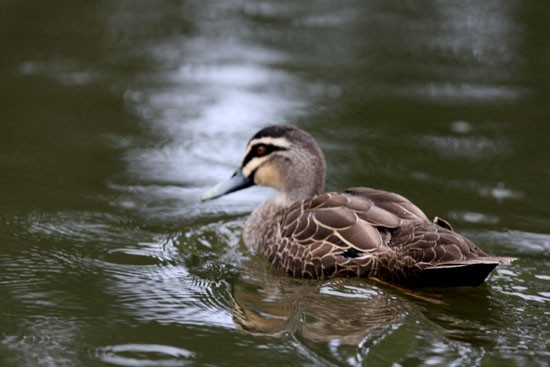
13. Pacific Black Duck
This sociable duck is found in a variety of wetland habitats, and its nesting habits are much like those of the mallard, which is encroaching on its range in New Zealand. It feeds by upending, like other Anas ducks. It has a dark body, and a paler head with a dark crown and facial stripes. In flight, it shows a green speculum and pale underwing. All plumages are similar. The size range is 54–61 cm; males tend to be larger than females, and some island forms are smaller and darker than the main populations. It is not resident on the Marianas islands, but sometimes occurs there during migration. The now extinct Mariana mallard was probably originally derived from hybrids between this species and the mallard, which came to the islands during migration and settled down there. Like its relatives the mallard and American black duck, the Pacific black duck is one of a number of duck species that can quack, with the female producing a sequence of raucous, rapid quacking which decreases in volume. There are three subspecies of Anas superciliosa: rogersi − Mathews, 1912 Australasian duck, breeds in Indonesia, southern New Guinea and Australia pelewensis − Hartlaub & Finsch, 1872 – Island black duck, breeds on the southwest Pacific islands and northern New Guinea superciliosa Gmelin, 1789 − New Zealand grey duck, breeds in New Zealand The New Zealand subspecies has declined sharply in numbers, at least in its pure form, due to competition from and hybridisation with the introduced mallard. Rhymer et al. (1994) say their data "points to the eventual loss of identity of the grey duck as a separate species in New Zealand, and the subsequent dominance of a hybrid swarm akin to the Mariana Mallard." Studies of their three species of parasitic feather lice support this prediction It was assumed that far more mallard drakes mate with grey duck females than vice versa based on the fact that most hybrids show a mallard-type plumage, but this is not correct; it appears that the mallard phenotype is dominant, and that the degree to which species contributed to a hybrid's ancestry cannot be determined from the plumage. The main reasons for displacement of the grey duck seem to be physical dominance of the larger mallards, combined with a marked population decline of the grey duck due to overhunting in the mid-20th century.
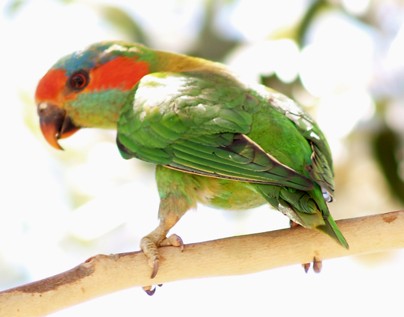
14. Musk Lorikeet
The musk lorikeet is 22 centimetres (8.7 in) long. It is mainly green and it is identified by its red forehead, blue crown and a distinctive yellow band on its wing. Both upper and lower mandibles of the beak are red at the tip and darker near its base.
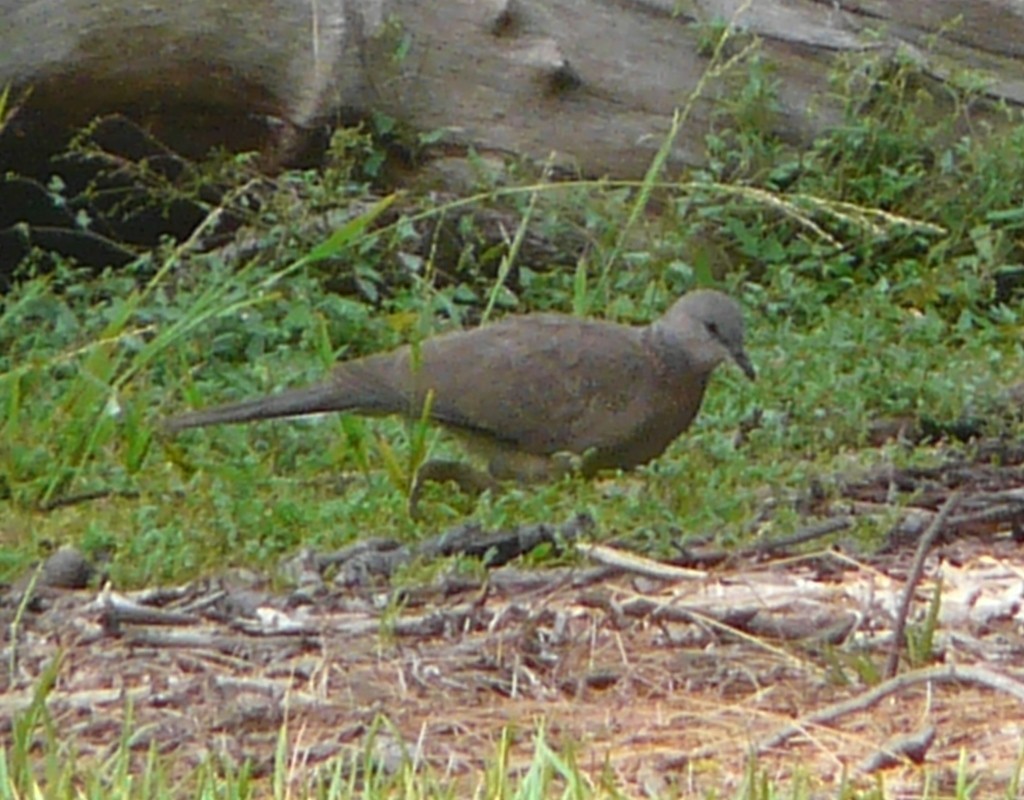
15. Spotted Dove
The spotted Dove is a medium-sized bird that is swift in flight. It prefers to live year-round in warm climates in suburban areas, especially in parks. Their nests are mostly made out of sticks and they like to dine on insects and seeds.
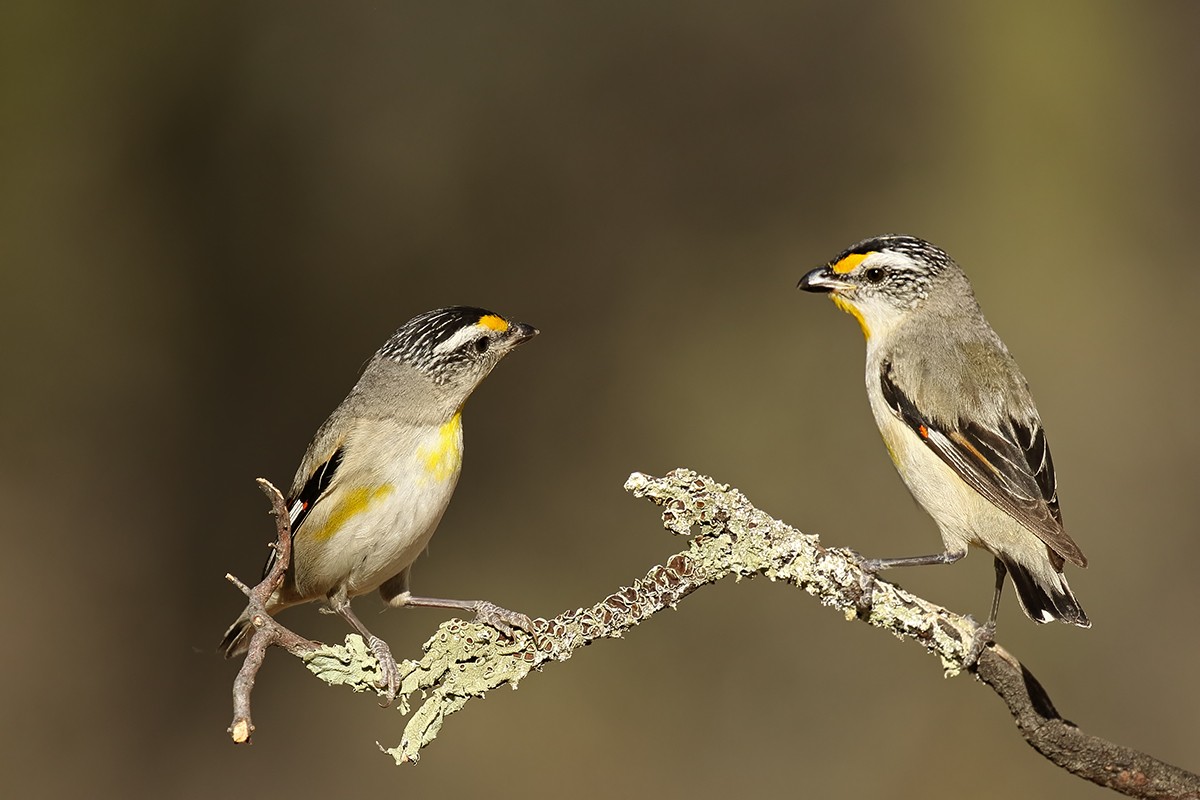
16. Striated Pardalote
The striated pardalote's plumage varies considerably across its range. The crown is black, with subspecies substriatus, striatus and ornatus having white streaks. The eyebrow is white, starting with a yellow mark near the beak. All races have a white stripe on the wing and olive backs. The nominate race has a yellow spot on the wing, whilst the other subspecies have a red dot. The male and female are similar, juveniles have duller plumage. Similar species include the spotted pardalote and the red-browed pardalote.
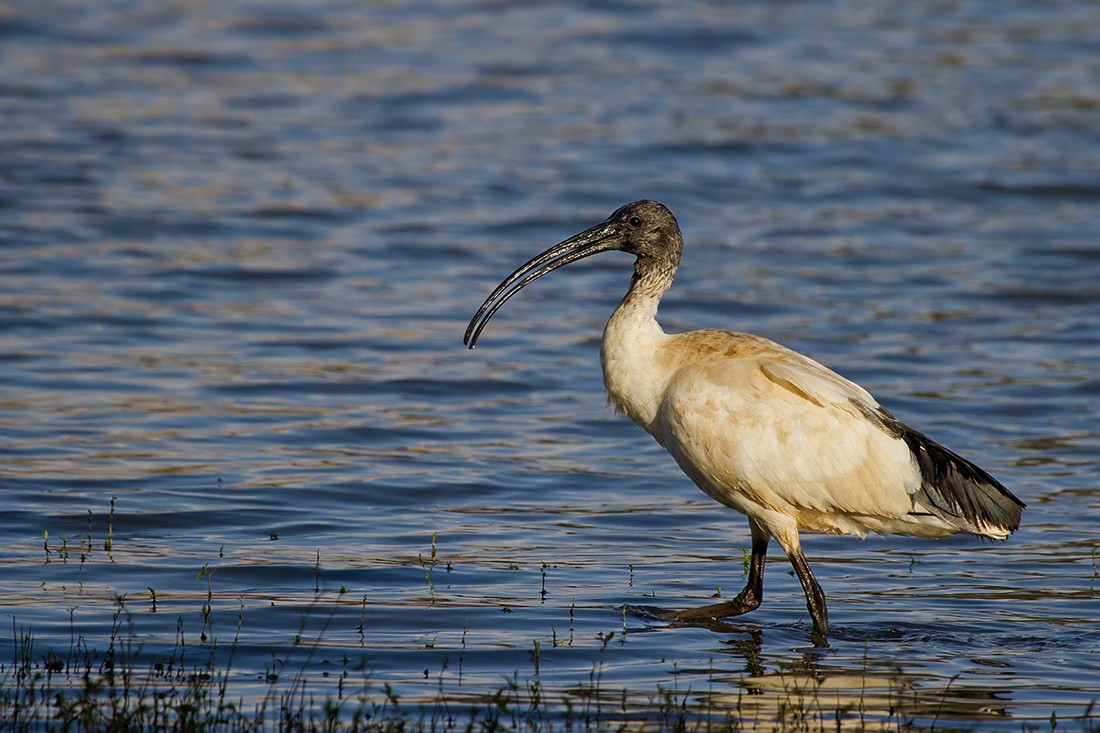
17. Australian White Ibis
The Australian white ibis is a fairly large ibis species, around 65–75 cm (26–30 in) long and has a bald black head and neck and a long black downcurved beak, measuring over 16.7 cm (6.6 in) in the male, and under in the female. There is some sexual dimorphism in size, as the slightly heavier male weighs 1.7–2.5 kg (3.7–5.5 lb) compared to the 1.4–1.9 kg (3.1–4.2 lb) female. As a comparison, the American white ibis generally attains 1 kg (2.2 lb) in weight. The body plumage is white although it may become brown-stained. Inner secondary plumes are displayed as lacy black "tail" feathers. The upper tail becomes yellow when the bird is breeding. The legs and feet are dark and red skin is visible on the underside of the wing. Immature birds have shorter bills. The head and neck are feathered in juveniles. The call is a long croak. The Australian white ibis reaches sexual maturity in three years, and can reach twenty-eight years of age.
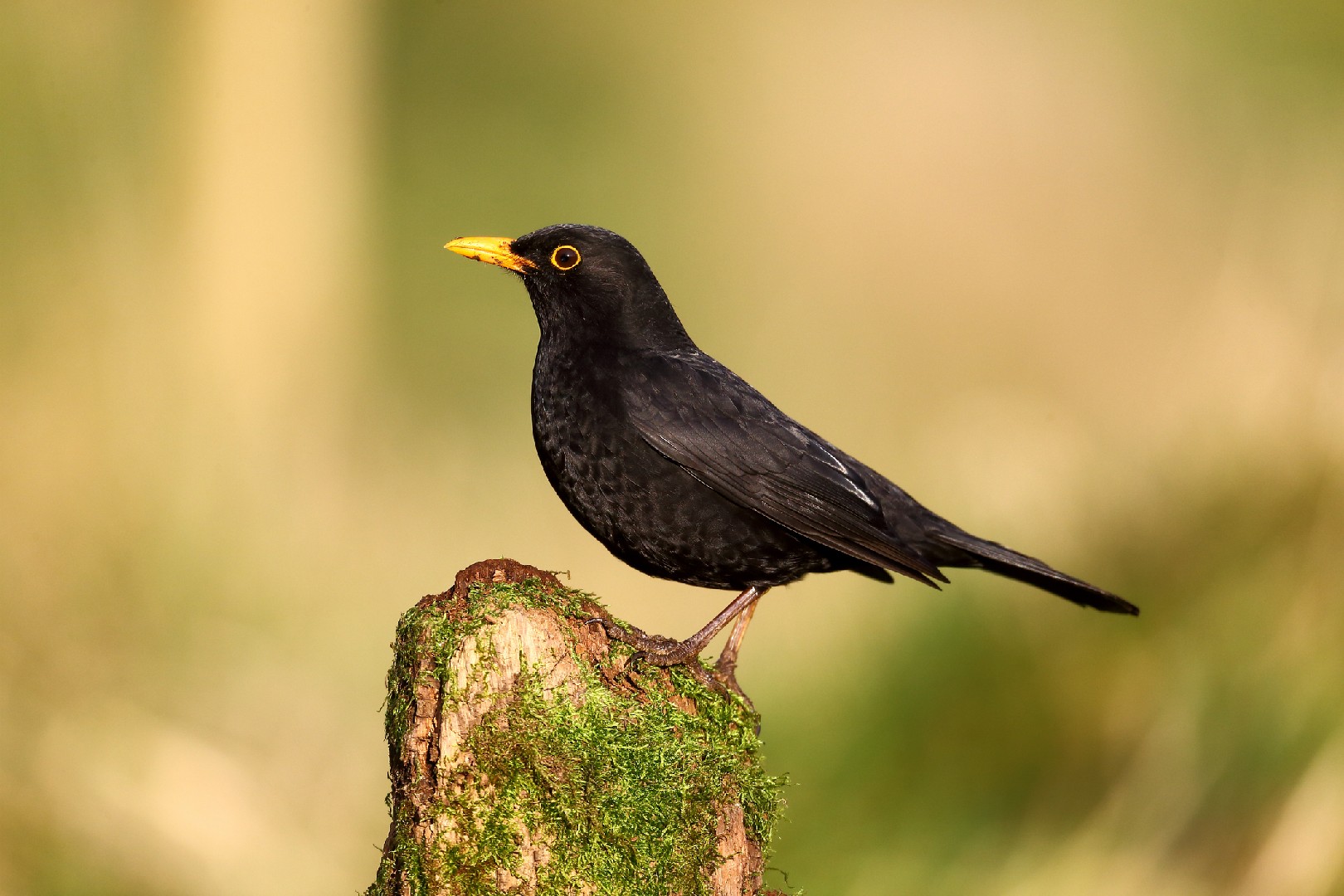
18. Eurasian Blackbird
Unafraid of humans, the dark-winged eurasian Blackbird has gained a great deal of cultural significance, mentioned in popular nursery rhymes and songs across the world. Elegant and with an appealing song, they can be aggressive when they are in their breeding period.

19. Eurasian Coot
The eurasian Coot is a medium-sized, black-plumaged waterbird with a white bill and a distinctive red shield above its bill. It has webbed feet with a white patch on the toes and is often seen in large flocks, diving for food and fiercely defending its territory. Its aggressive nature and distinct features make it a memorable sight for birdwatchers.
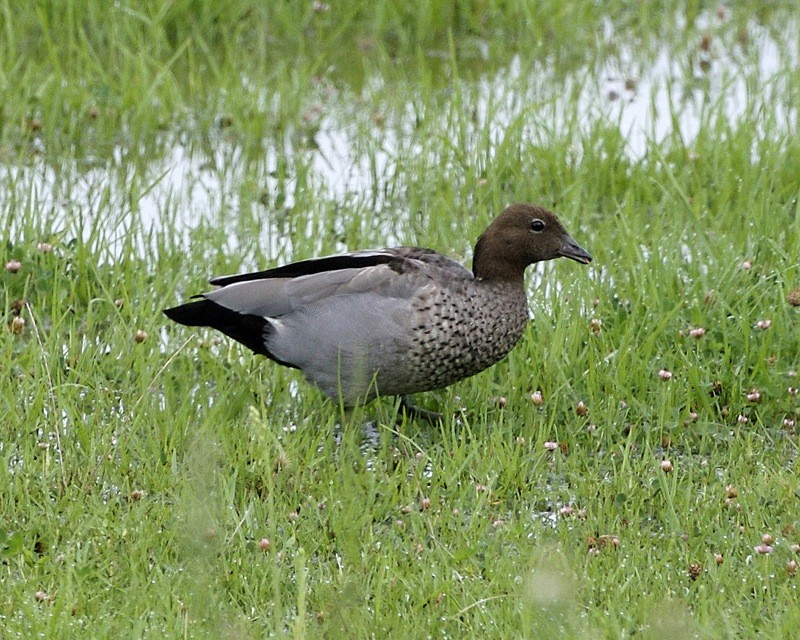
20. Maned Duck
This 45–51 cm duck looks like a small goose, and feeds mostly by grazing in flocks. The male is grey with a dark brown head and mottled breast. The female has white stripes above and below the eye and mottled underparts. Both sexes have grey wings with black primaries and a white speculum. Juveniles are similar to adult females, but lighter and with a more streaky breast.