




Top 20 Most Common Bird in Ocotepeque
In the diverse ecosystems of Ocotepeque, from cloud forests to pine-oak landscapes, resides a variety of avian species. Among the most common are 20 distinct bird species. These birds exhibit unique adaptations, spectacular plumage colors, and fascinating behaviors that reflect the richness of Ocotepeque's biodiversity, each species being vital to maintaining balance in the region's complex ecosystems.

Most Common Bird
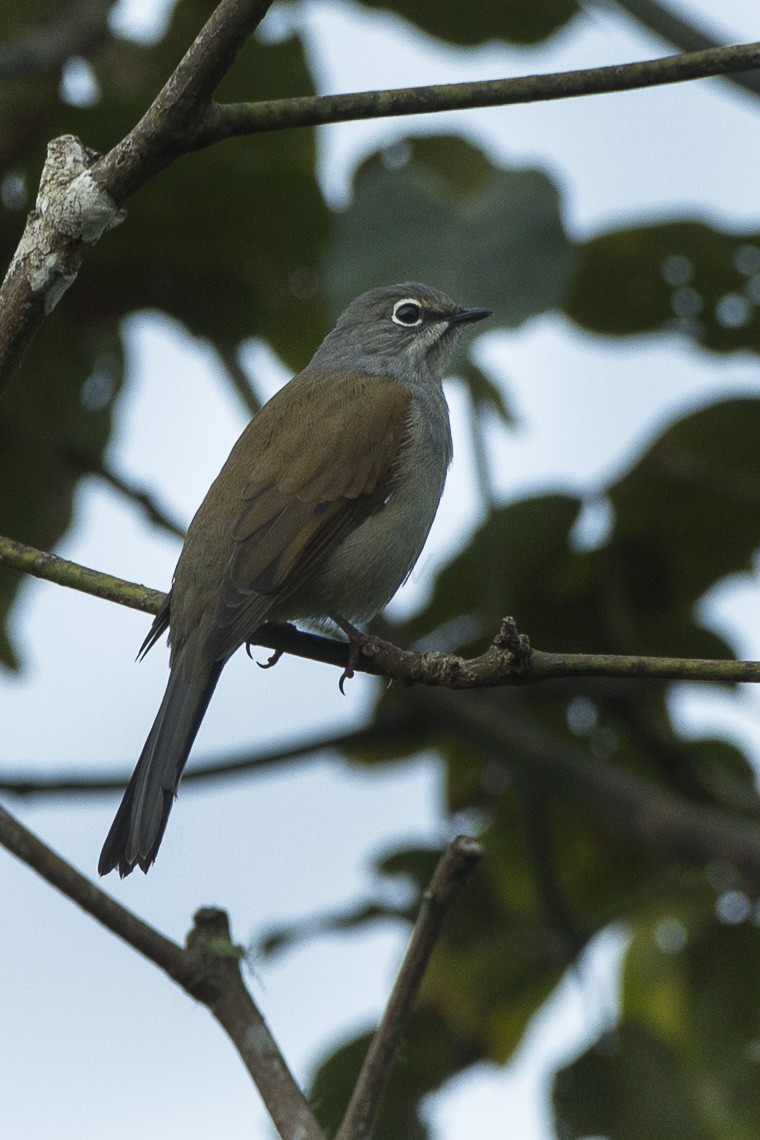
1. Brown-backed Solitaire
The brown-backed solitaire (Myadestes occidentalis) is considered a thrush and is placed in the family Turdidae. It is a medium-sized bird about 21 centimeters (8 inches) long. It is a mostly grayish bird with brown flight feathers (hence the "brown back" when it is perched), a white eye ring and white rectrices (tail) feathers. 
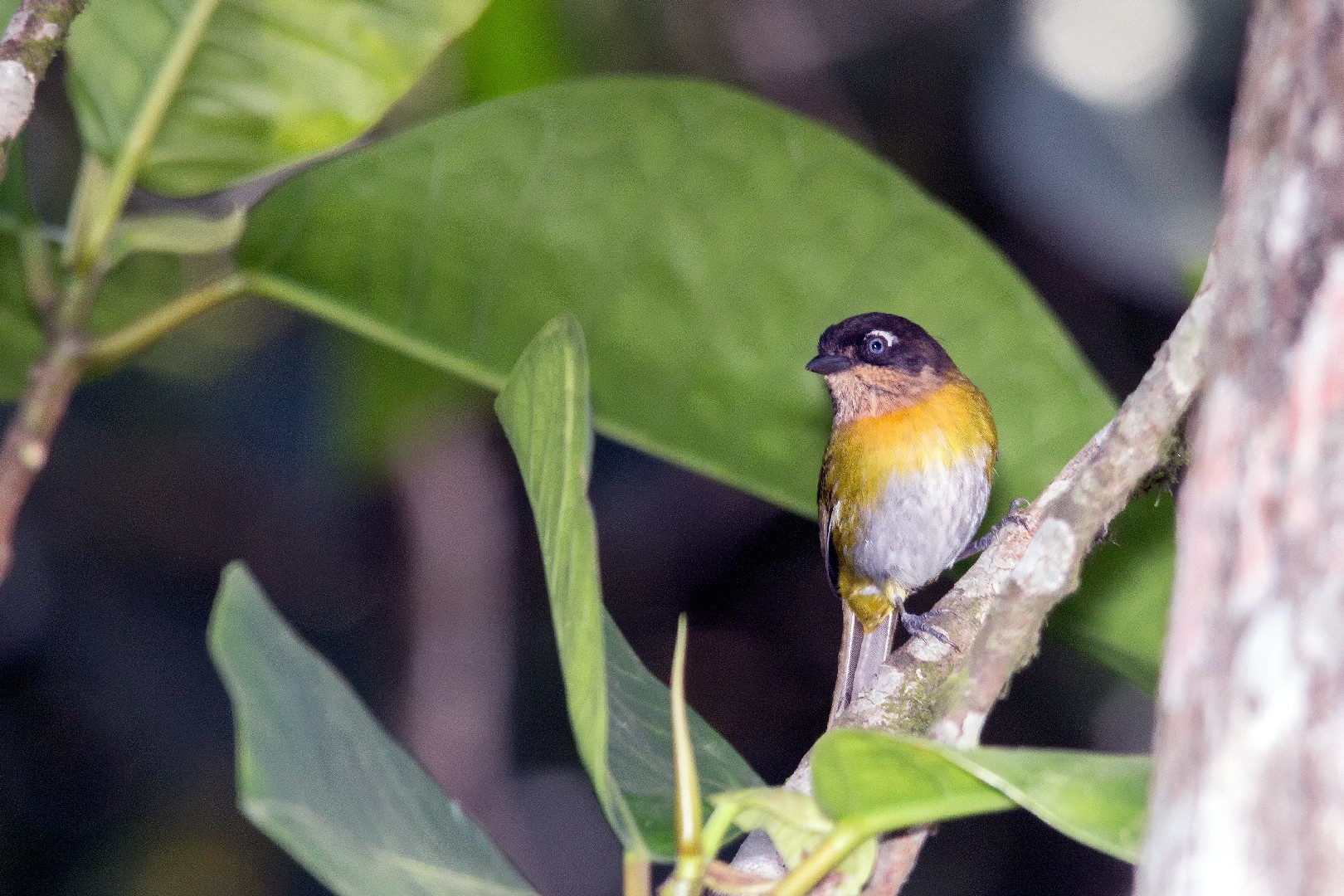
2. Common Chlorospingus
The adult is 13.5 cm (5.3 in) long and weighs 20 g (0.71 oz) on average. They have a brown head with a (usually) thin supercilium and a white spot behind the eye and a light throat. The upperparts are olive and the underparts yellow, becoming white on the belly. Coloration, especially of the cheeks, throat and eye region, is very variable across the wide range, giving weight to the theory that this these birds form a superspecies. Immatures are browner above, darker below, and have a duller olive eye spot. Hatchlings are covered in dark gray down feathers and have bright yellow bills. The call is a squeaky tseeet or chit. Songs vary widely between the populations. The related sooty-capped bush tanager (C. pileatus) has a blacker head with a bold white supercilium rather than an eye spot. This bird is typically found from 400 to 2,300 m (1,300 to 7,500 ft) ASL in Middle America; near the Equator they are common found at altitudes of 2,000–3,500 m (6,600–11,500 ft) ASL. Its habitat – cloud forests with ample undergrowth and adjacent bushy clearings – is dominated by trees and shrubs from such families as Asteraceae, Clusiaceae, Cyatheaceae, Melastomataceae, Rubiaceae and Winteraceae, and epiphytes of the Araceae (e.g. Anthurium) and Orchidaceae. The common bush tanager is usually encountered in small groups or as part of a mixed-species feeding flock, and is rather sedentary. This passerine feeds on insects, spiders small fruits and nectar. The menoponid chewing louse Myrsidea ophthalmici was described from a Venezuelan specimen of this bird; it is not known from other hosts to date. The Venezuelan population of the common bush tanager would, if this taxon is split up, be assigned to a distinct species. There is apparently no dedicated nesting season at least in the hottest parts of its range, but in general it seems that the common bush tanager prefers to breed mainly between October and May. These birds hide their nest below vegetation on a bank or slope, in a hollow or tree trunk, amongst epiphytes, or up in a tree. The bulky cup nest, made from thin twigs and roots, coarse leaves and mosses, is some 10–15 cm (3.9–5.9 in) high and nearly 10 cm (3.9 in) wide. The nest cup, lined with fine leaves and fibers, is almost 5 cm (2.0 in) wide and deep. The nest may be placed over 20 m (66 ft) up in a tree, but usually is located 15 m (49 ft) high or less; in most populations nests are occasionally built less than 1 m (3.3 ft) above and sometimes even right on the ground. The normal clutch is two eggs in most of the range. The northernmost populations, however, sometimes produce clutches of three eggs, while in the southern Andean group one-egg clutches might be frequent or even the norm. This species is regularly double-brooded at least in part of its range. The eggs are off-white and marked with larger puce and smaller maroon spots mainly on the blunt end. They are about 20 mm (0.79 in) long and weigh about 2.4 g (0.085 oz) on average, though eggs in one-egg clutches of Andean birds may measure almost 24 mm (0.94 in) in length and normally weigh around 3 g (0.11 oz), but occasionally more than 3.5 g (0.12 oz) . The female incubates for much of the day, while both parents provide the young with food. As the nestlings near fledging, they are fed every 15 minutes or so on average.
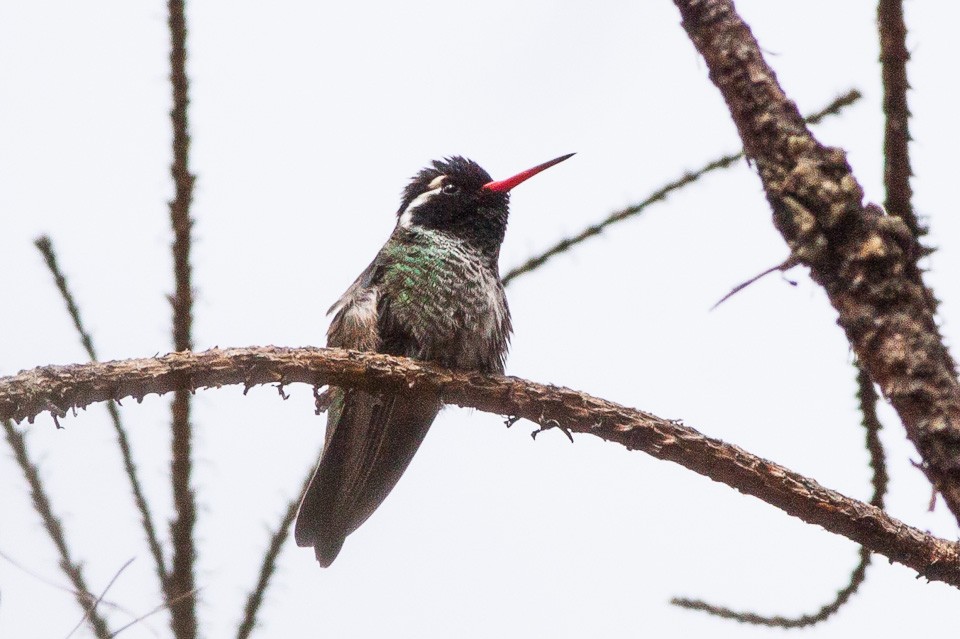
3. White-eared Hummingbird
The white-eared hummingbird (Basilinna leucotis) is a small hummingbird. It is 9–10 cm long, and weighs approximately 3-4 g. Adults are colored predominantly green on their upperparts and breast. The undertail coverts are predominantly white. The tail is bronze green and straight. The most prominent feature is the white eyestripe found in both males and females. The bill of the male is straight and very slender. These hummers occur as far south as Cabo San Lucas in the Baja, Their bill is slightly decurved. It is red in coloration, and shows a black tip. His throat is a metallic turquoise green. His crown and face is violet and black. The female is less colorful than the male. The breeding habitat is in pine oak forests from southeastern Arizona, southern New Mexico, and western Texas through the Sierra Madre Occidental and Sierra Madre Oriental of northern Mexico and the Cordillera Neovolcanica of southern Mexico to southern Nicaragua. It is a common species over much of its range and is classified as Least Concern by the IUCN. It is a rare but regular summer resident in the Madrean sky islands of southeastern Arizona, rarer and less regular in southwestern New Mexico and western Texas in the United States. These birds feed on nectar from flowers and flowering trees using a long extendable tongue and catch insects and other small invertebrates on the wing or by gleaning from bark, leaves, and other surfaces.
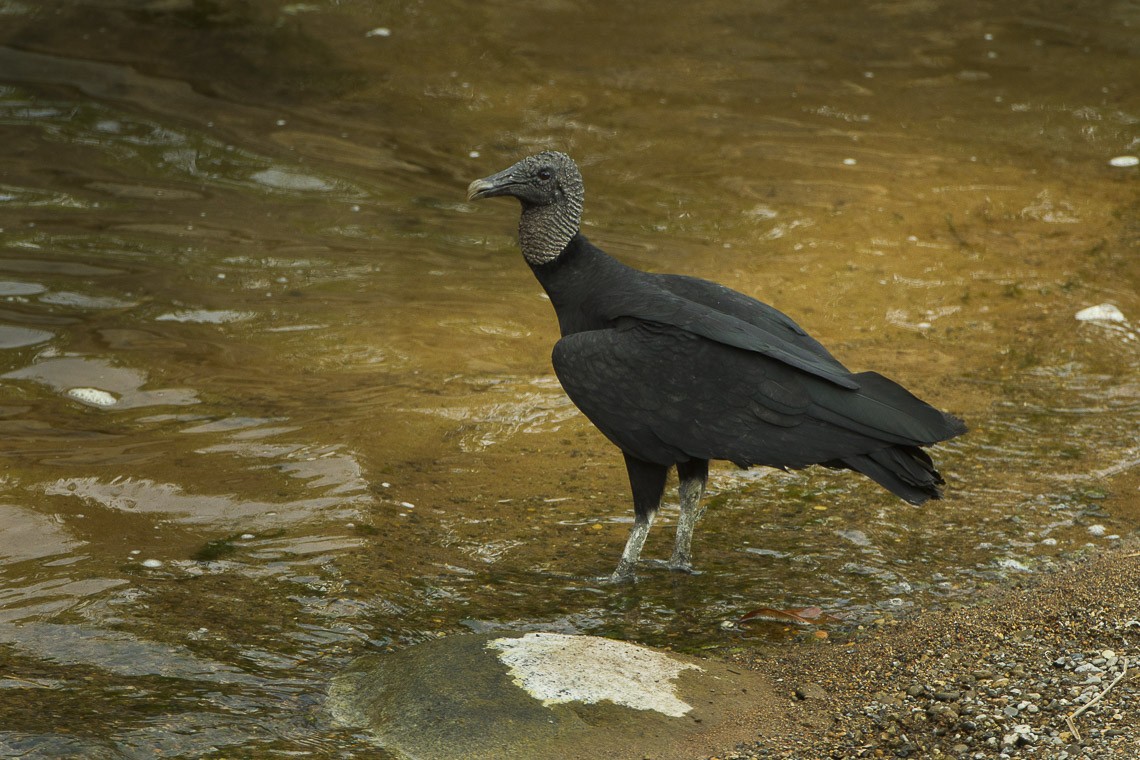
4. Black Vulture
Although quite dapper in appearance, the black Vulture's name comes from the Latin vulturus meaning “tearer" and that is just what that hooked beak is for. These birds are highly social, with fierce family loyalty and will share food with relatives and with their young long after the babies have fledged. Because they lack a voice box, their calls are limited to grunts and hisses.
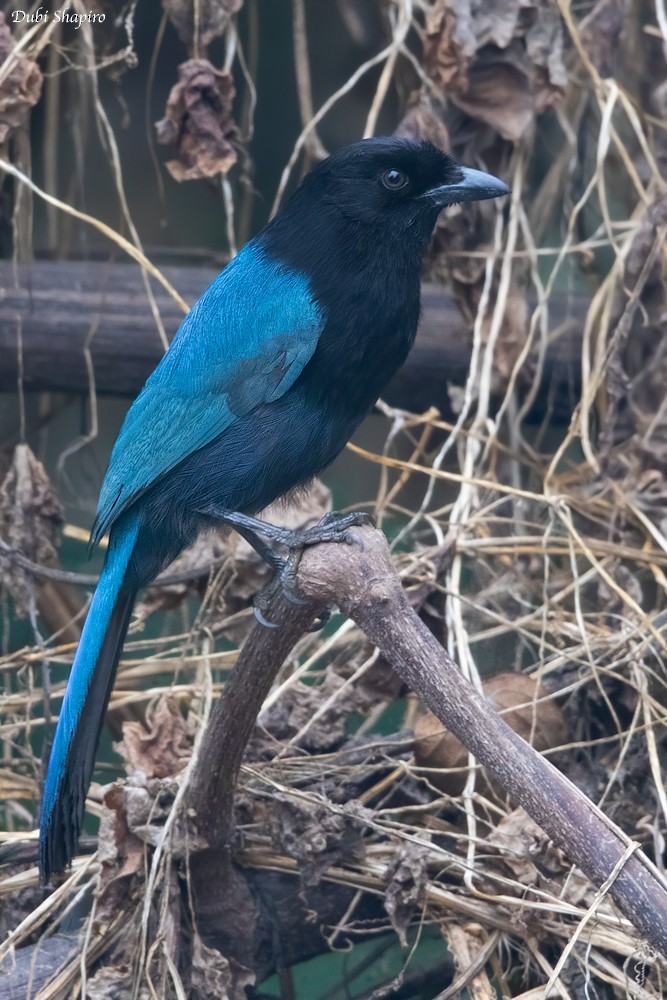
5. Bushy-crested Jay
The adult bushy-crested jay has a length of 28 to 30 cm (11 to 12 in). The tail is long and the central feathers are graduated. The sexes look alike; the head, neck, breast and upper mantle are black while the remaining upper parts are dark blue with a sheen of green or violet. The underparts are plain greenish-blue, the undersides of the wings are grey and the underside of the tail is blackish. The head bears a stubble-like erectile crown of feathers, the beak is black and relatively small, the irises are yellow and the legs black.
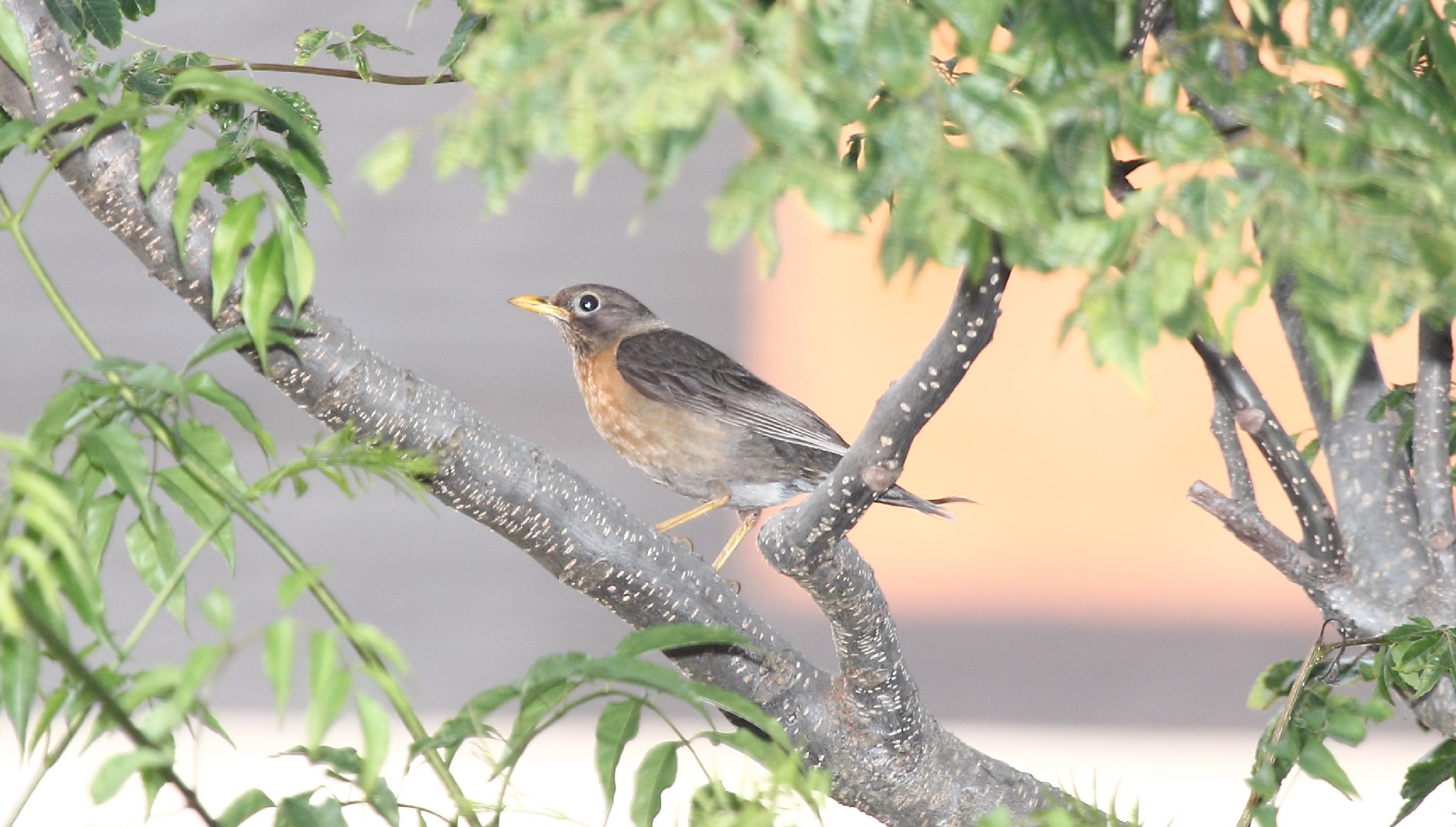
6. Rufous-collared Robin
The rufous-collared thrush (Turdus rufitorques) is a species of bird in the family Turdidae. It is endemic to highlands of Middle America, south of the Isthmus of Tehuantepec, occurring in El Salvador, Guatemala, Honduras, and Chiapas state in Mexico. Its closest relative is the American robin, and like that species, it is found in varied habitats, from towns to forest. It is, however, restricted to highland areas with at least some trees. It is also known as the rufous-collared robin.
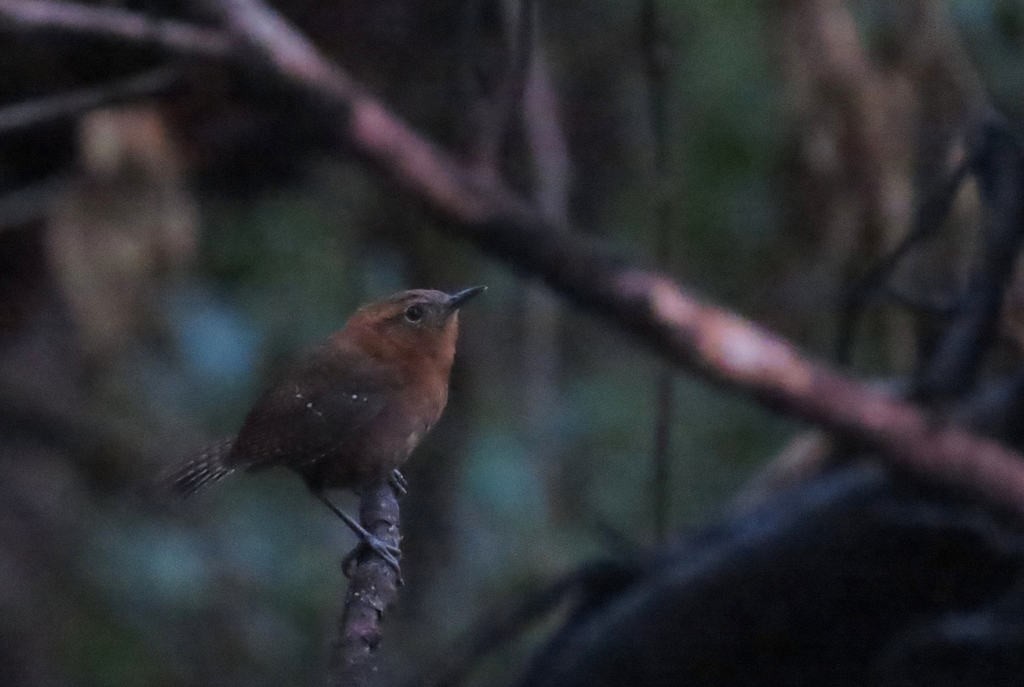
7. Rufous-browed Wren
The rufous-browed wren (Troglodytes rufociliatus) is a species of bird in the family Troglodytidae. It is found in El Salvador, Guatemala, Honduras, Mexico, and Nicaragua. Its natural habitat is subtropical or tropical moist montane forests.
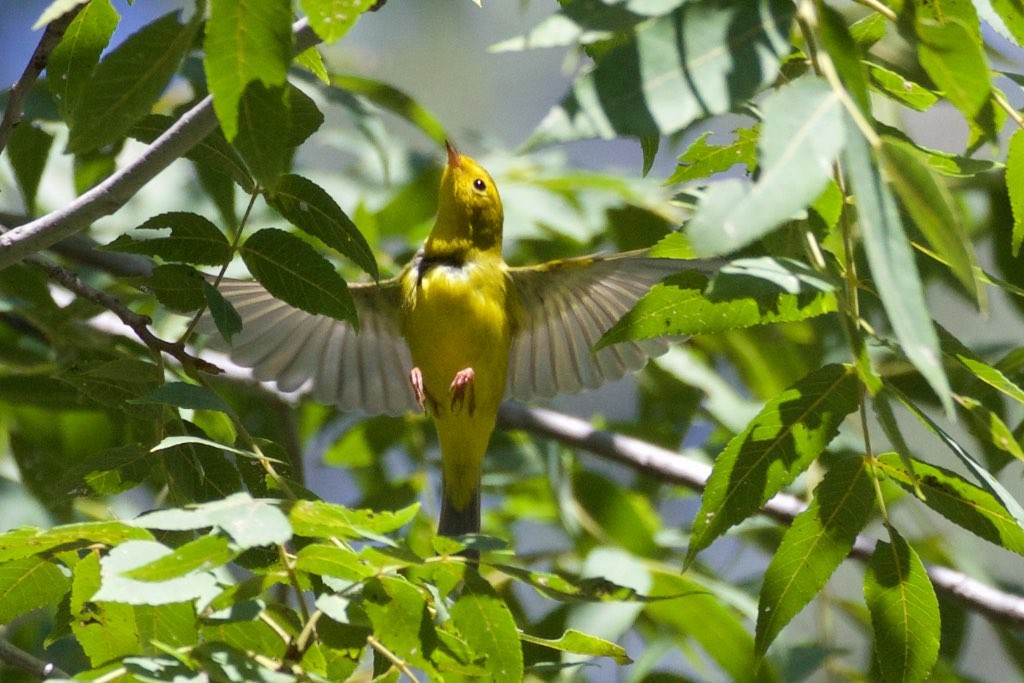
8. Wilson's Warbler
Wilson's warbler is a small passerine, ranging from 10 to 12 cm (3.9 to 4.7 in) in length, with a wingspan of 14–17 cm (5.5–6.7 in) and a mass of 5–10 g (0.18–0.35 oz). It has a plain green-brown back and yellow underparts. The male has a small black cap. Males of the western race C. p. chryseola are greener above and brighter than males of the eastern, nominate race. Individuals from Alaska and the west-central portion of the species' range average slightly larger than those found in eastern and Pacific coastal populations. Its song is a chattering series of loud descending notes. The call is a flat "chuff". The Wilson's warbler resembles the yellow warbler: the latter is readily distinguished by its different shape, yellow wing markings, and yellow tail spots.
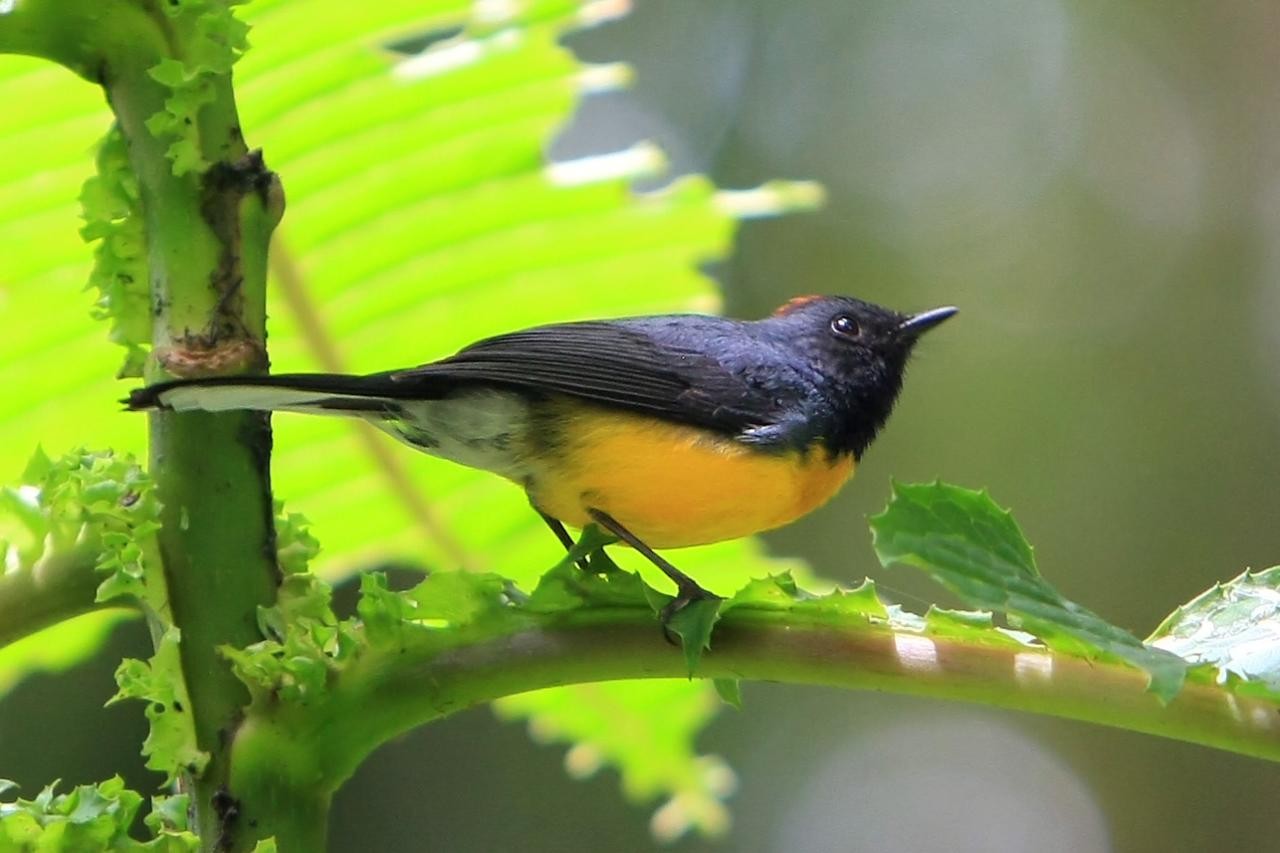
9. Slate-throated Redstart
The slate-throated whitestart is a long-tailed warbler measuring 12 cm (4.7 in) long. It has a deep rufous head, dark back, and contrasting bright yellow breast, belly and white vent and tail tips. The bill is black, and the legs are blackish-gray. While most of its plumage changes little throughout its large range, the underparts grade from yellow in most of its range, to red in the northernmost part.
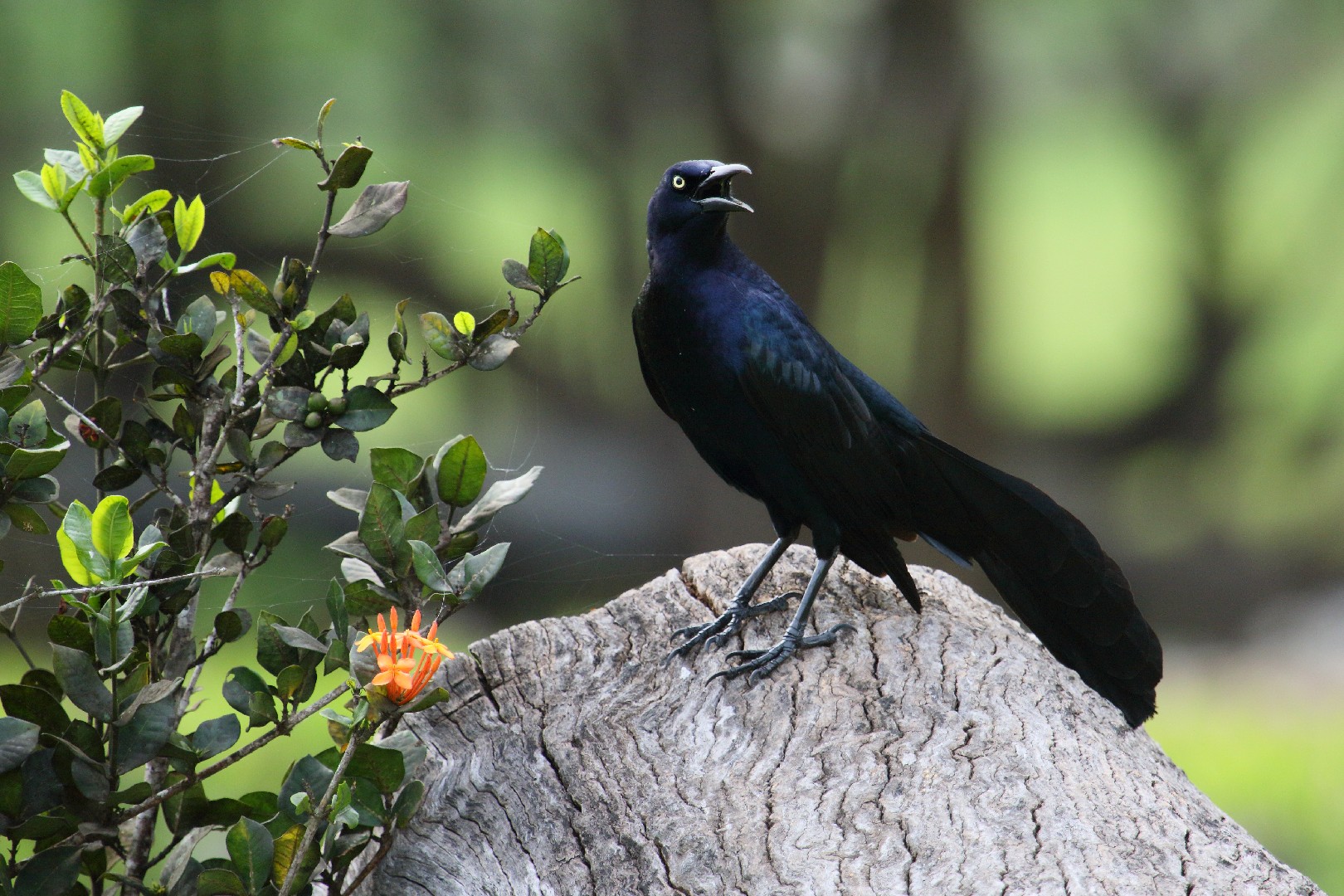
10. Great-tailed Grackle
The medium-sized great-tailed Grackle is notable for its long tail, shaped like a V, and deep black coloring offset by bright yellow eyes. This loud bird can be easily found just by following the sharp sounds of its calls and shrieks. Males in particular shriek and ruffle up their feathers to defend their territory or if they feel threatened.
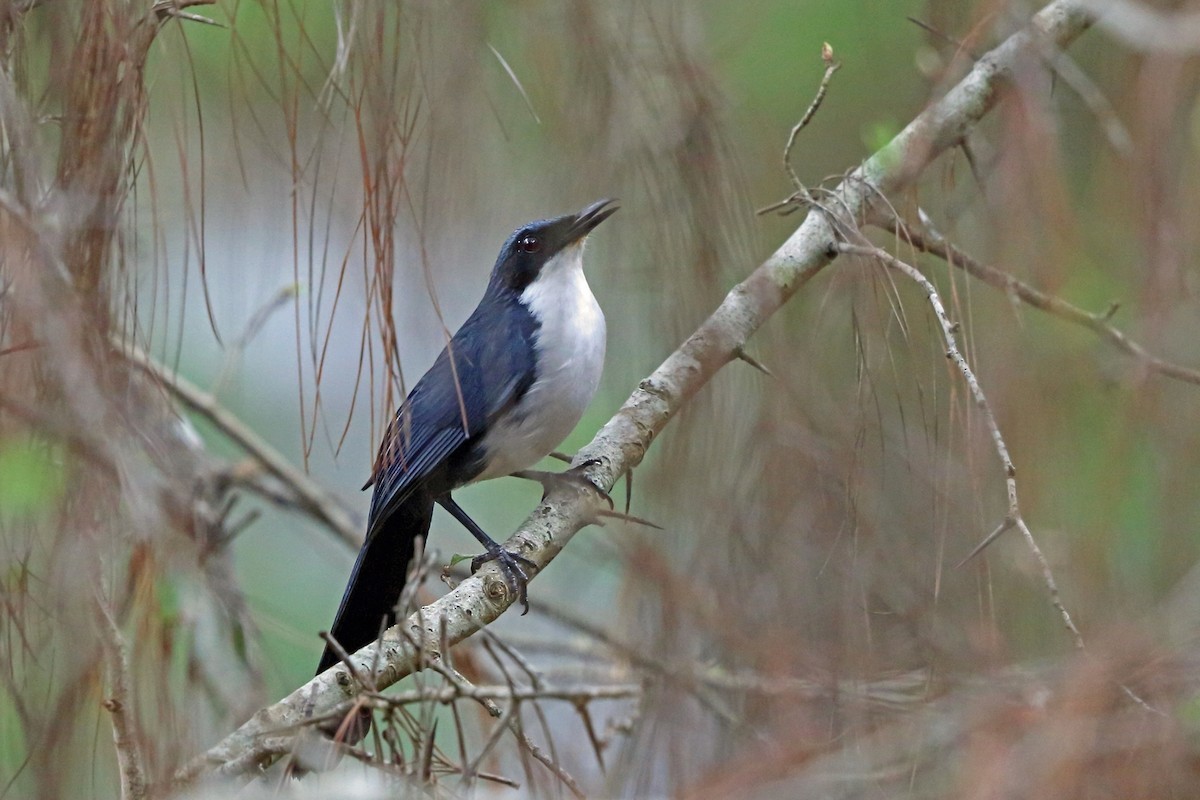
11. Blue-and-white Mockingbird
The blue-and-white mockingbird (Melanotis hypoleucus) is a species of bird in the family Mimidae. It is found in El Salvador, Guatemala, Honduras, and south-eastern Mexico. Its natural habitats are dry scrubland, woodland, second growth and forest edges at 1000–3000 m above sea-level. It is about 25 cm long. It has blue-grey upperparts, white underparts, red eyes and a black mask. The song is high-pitched and rattling.
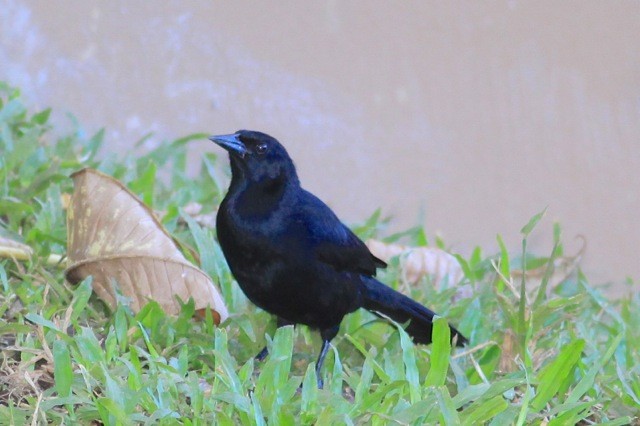
12. Melodious Blackbird
The adult is a medium-sized blackbird with a rounded tail. The male is 25.5 cm (10.0 in) long and weighs 108 g (3.8 oz). The slightly smaller female is 23 cm (9.1 in) long and weighs 95 g (3.4 oz). The adult plumage is entirely black with a bluish gloss, and the bill, legs and feet are also black. The iris is brown. Females are identically plumaged to the males; young birds are brownish black and lack iridescence. There are no subspecies.
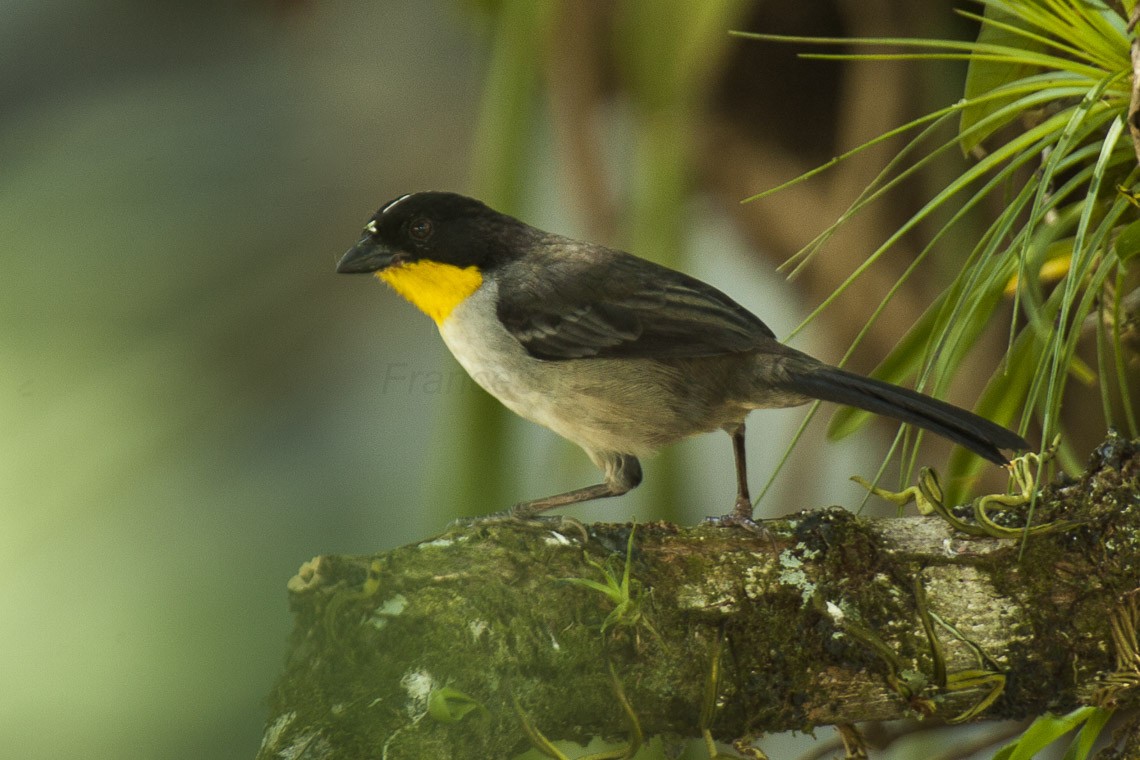
13. White-naped Brushfinch
The white-naped brushfinch (Atlapetes albinucha), also known as the yellow-throated brush finch, is a species of bird in the family Passerellidae. It is found in Colombia, Costa Rica, El Salvador, Guatemala, Honduras, Mexico, Nicaragua, and Panama. Its natural habitats are subtropical or tropical moist montane forests, subtropical or tropical high-altitude shrubland, and heavily degraded former forest.
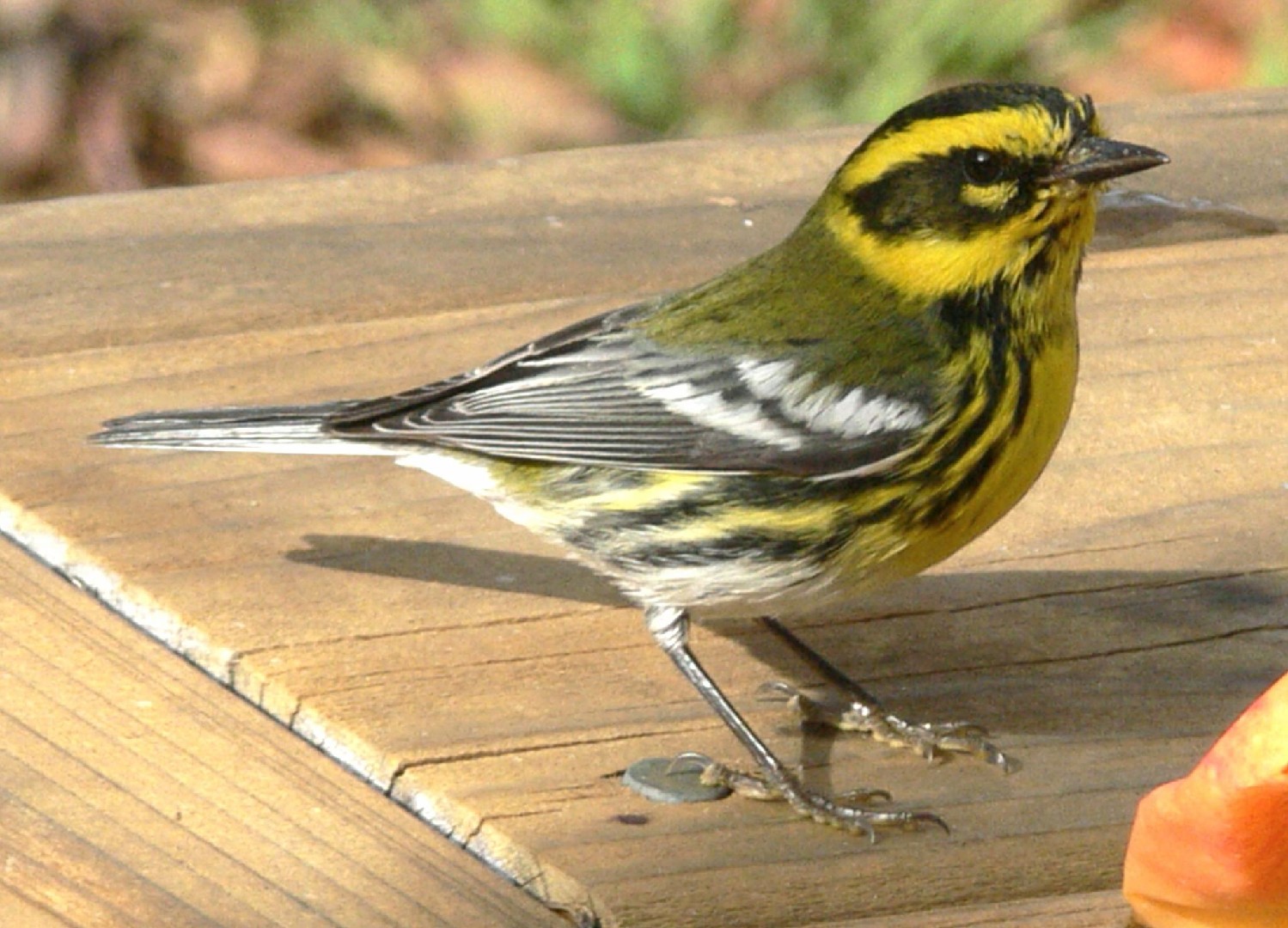
14. Townsend's Warbler
Townsend's warbler has a yellow face with a black stripe across its cheeks extending into an ear patch, a thin pointed bill, two white wing bars, olive upperparts with black streaks on their backs and flanks, and a white belly. Adult males have a black cap, black throat and yellow lower breast; females have a dark cap and a yellow throat. Immature birds are similar to females with a dark green cap and cheeks.
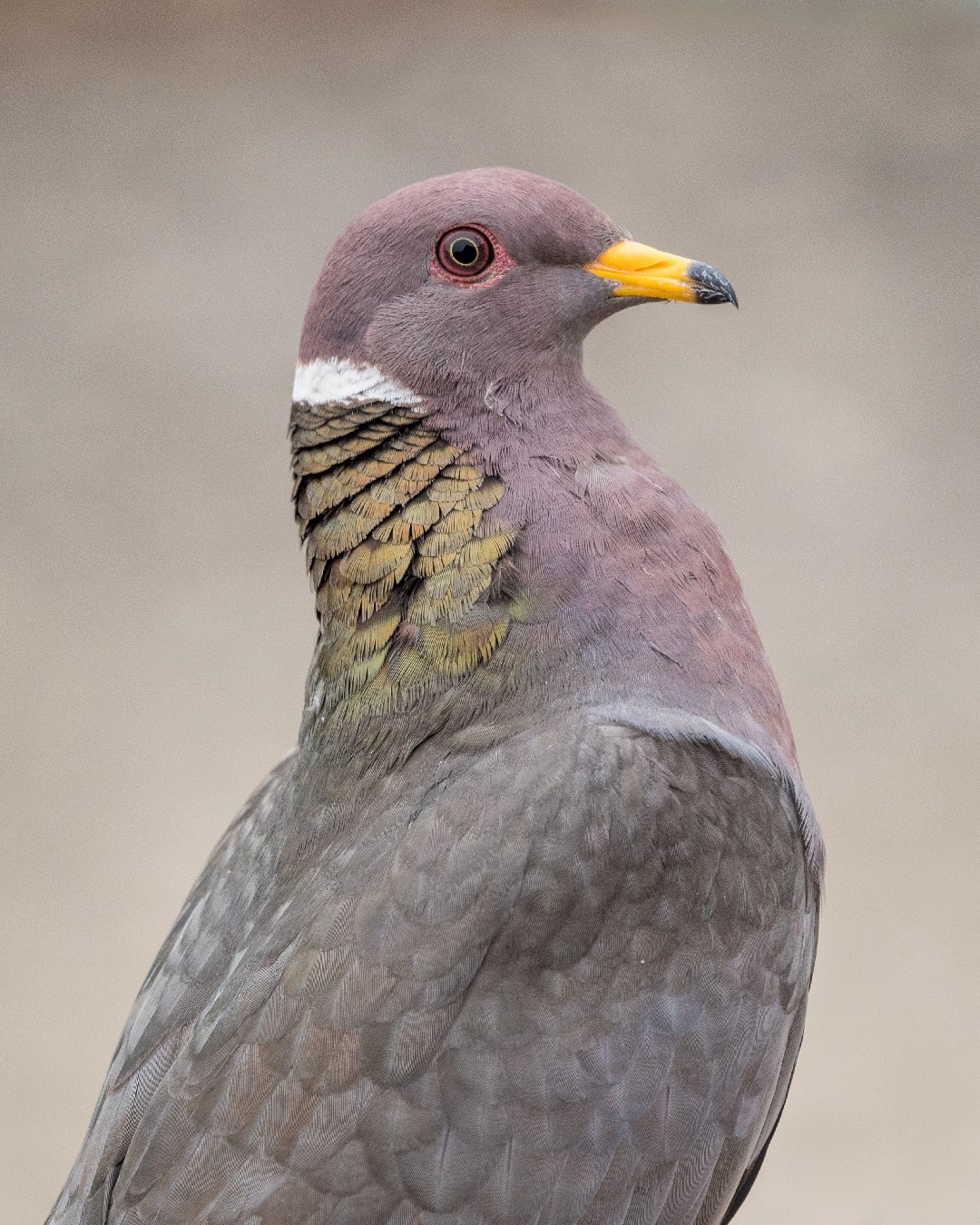
15. Band-tailed Pigeon
The band-tailed Pigeon inhabits mixed coniferous forests as well as suburban backyards and parks. These birds travel in flocks searching for their favorite foods like nuts, seeds, and the occasional fruit; these flocks have been known to consist of several hundred birds at one time! The song of the band-tailed Pigeon is slow and resembles the call of an owl.
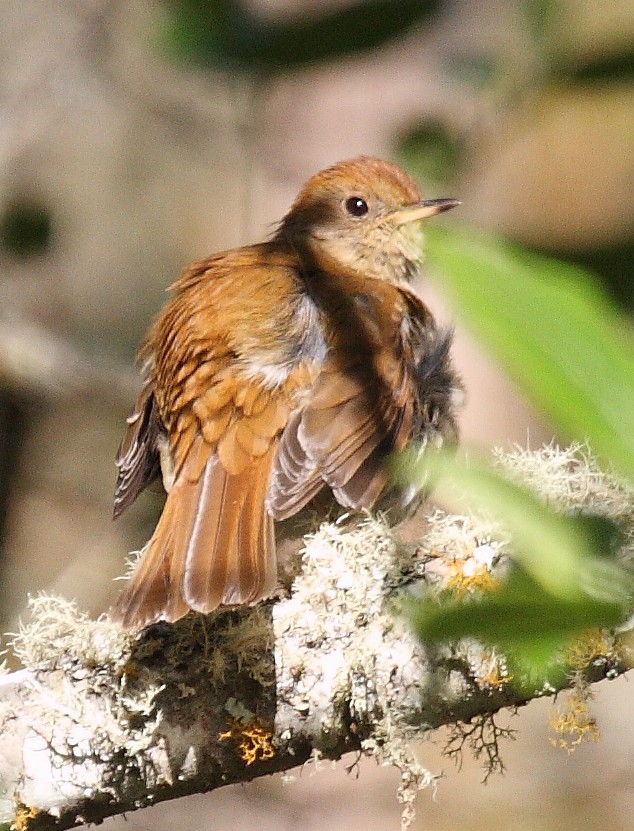
16. Ruddy-capped Nightingale-thrush
This species is 15–18 cm in length and weighs 28 g. The adult has olive-brown upperparts, a rufous crown and nape, pale grey underparts, becoming whitish on the belly, and an orange lower mandible. The juvenile is darker faced, has pale centres to the upperpart feathers, brownish flanks and breast, and dark barring or spots on the belly. Several poorly defined subspecies have been defined differing in the exact tone of the upper and underpart plumage. This bird's song is a beautiful rich and varied whistle, shee-vee-li-ee-ree, and call is a high thin seet or whooeet.
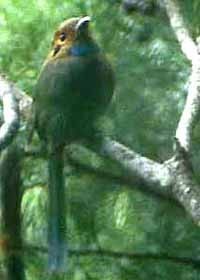
17. Blue-throated Motmot
The blue-throated motmot (Aspatha gularis) is a species of bird in the Momotidae family. It is monotypic within the genus Aspatha. It is found in El Salvador, Guatemala, Honduras, and Mexico, where its natural habitat is subtropical or tropical moist montane forests.

18. Turkey Vulture
The turkey Vulture is a common sight, especially around roads, where they keep a sharp eye out for roadkill. Seeing these large birds in the sky can often make you take a second look to see if it’s an eagle or a hawk. Here’s one quick way to tell the difference. When in flight, a turkey Vulture will circle unsteadily, with its wings lifted to make a V shape. Though they are not appreciated, they do the dirty work of the animal kingdom by cleaning up the countryside as they scavenge.
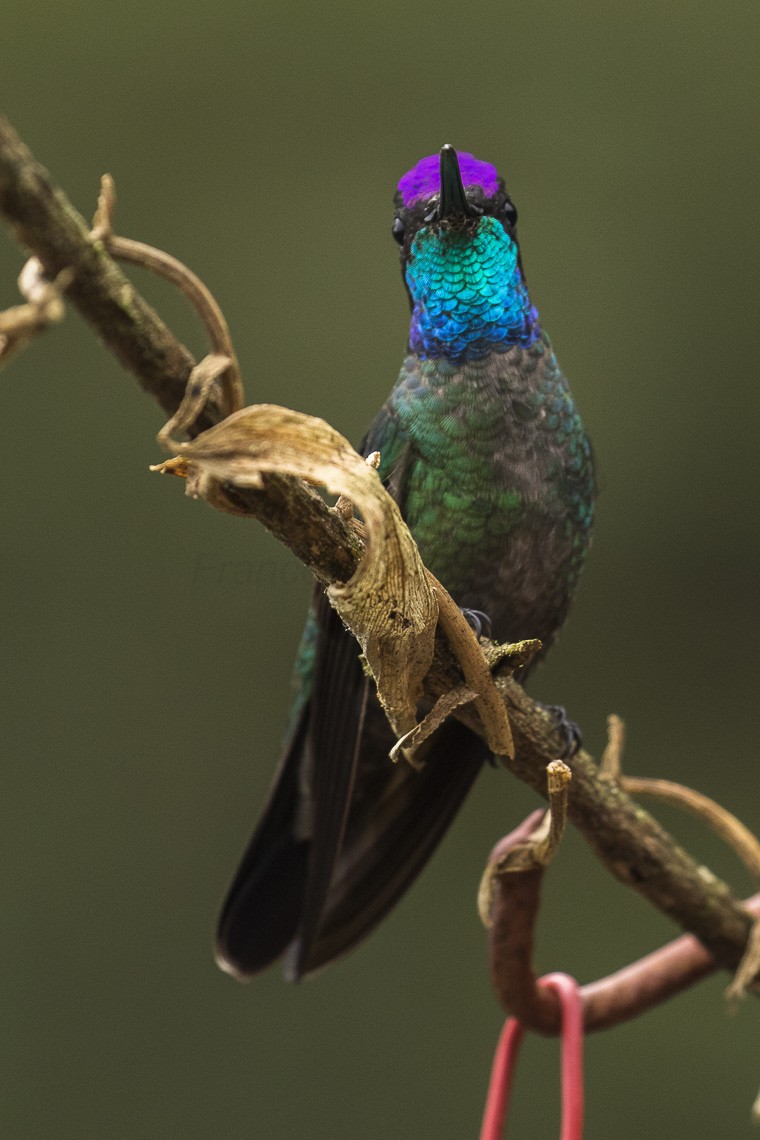
19. Rivoli's Hummingbird
Rivoli's hummingbird species ranges from 11–14 cm (4.3–5.5 in) in length and weighs from 6 to 10 g (0.21 to 0.35 oz), with males typically a little larger than females. The bird has a wingspan of 18 centimetres (7.1 in). Of the hummingbirds found in the United States, Rivoli's hummingbird is one of the two largest species, rivaled in size only by the blue-throated hummingbird. The black bill is long and straight to slightly curved. Both sexes look very dark unless the sun catches the iridescence of the plumage and the brilliant colours flash in the sunlight. The adult male is green-bronze dorsally, becoming more bronzed on the black-tipped tail. The crown is violet, the throat gorget bright blue-green, and the rest of the head black apart from a white spot behind the eye. The chest is green-bronze and the belly grayish. The female is bronze-green dorsally and has a dull grey ventral colouring. There is a white stripe behind her eye. Immature birds are like the female, but darker and browner.
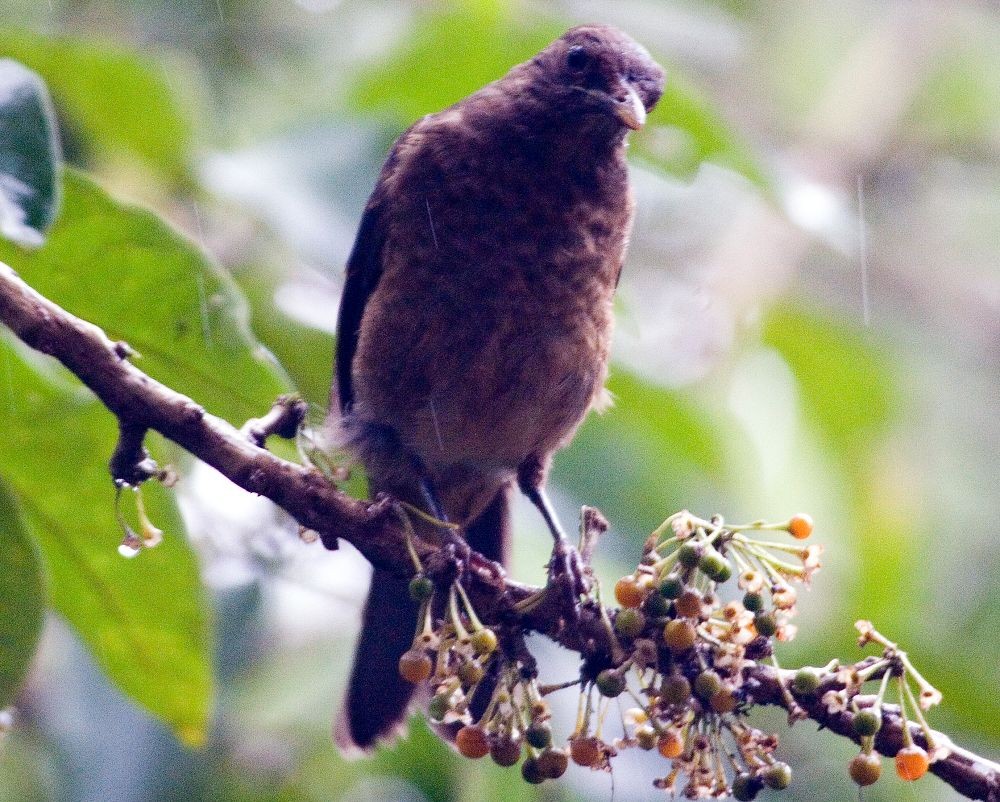
20. Clay-colored Thrush
The clay-colored Thrush is a stunning bird known for its melodious song and distinctive appearance. With its clay-colored upperparts, rusty underparts, and dark brown crown, it stands out in its habitats, which can range from forests to suburban parks. It feeds on various food sources including insects, fruits, and berries. The bird has a melodious song consisting of clear, ringing phrases.