



Top 20 Most Common Bird in Laayoune-Sakia El Hamra
The region of Laayoune-Sakia El Hamra is rich in desert dunes, coastal wetlands, and scarce vegetation, providing diverse habitats for many birds. The 20 most common species are remarkable in various ways: distinct colors, seasonal migrations, or unique songs. Each has adapted impeccably to Laayoune-Sakia El Hamra's varied environments, from its thriving coastlines to its harsh desert interior.

Most Common Bird
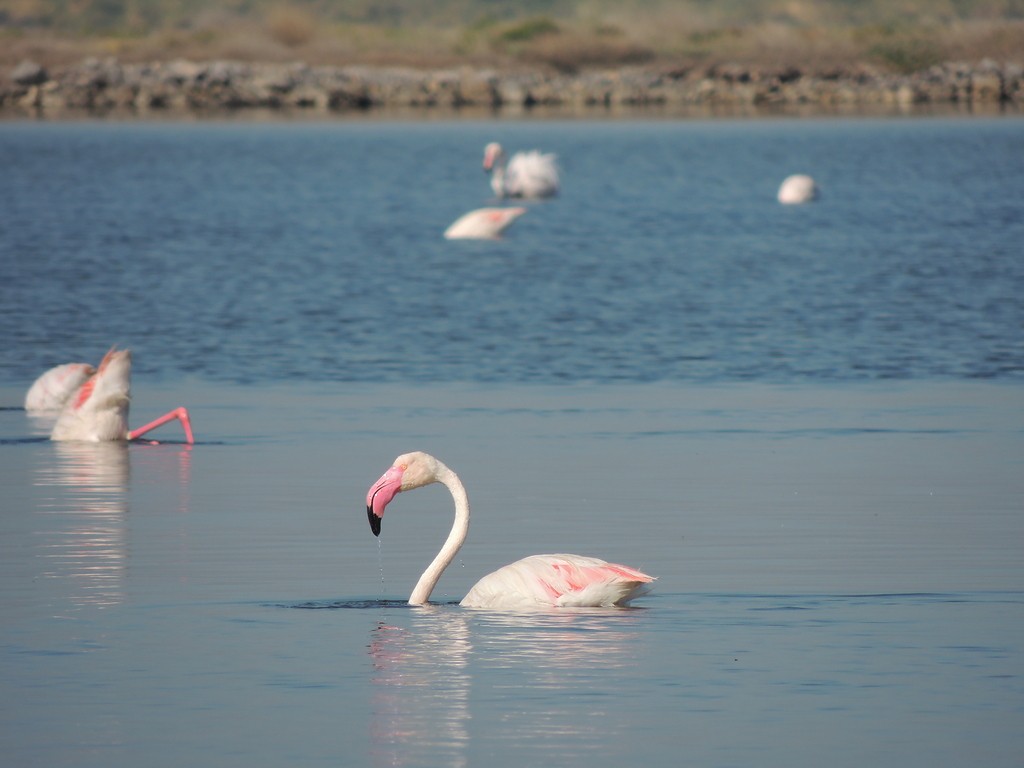
1. Greater Flamingo
The greater flamingo is the largest living species of flamingo, averaging 110–150 cm (43–59 in) tall and weighing 2–4 kg (4.4–8.8 lb). The largest male flamingos have been recorded at up to 187 cm (74 in) tall and 4.5 kg (9.9 lb). Most of the plumage is pinkish-white, but the wing coverts are red and the primary and secondary flight feathers are black. The bill is pink with a restricted black tip, and the legs are entirely pink. The call is a goose-like honking. Chicks are covered in gray fluffy down. Subadult flamingos are paler with dark legs. Adults feeding chicks also become paler, but retain the bright pink legs. The coloration comes from the carotenoid pigments in the organisms that live in their feeding grounds. Secretions of the uropygial gland also contain carotenoids. During the breeding season, greater flamingos increase the frequency of their spreading uropygial secretions over their feathers and thereby enhance their color. This cosmetic use of uropygial secretions has been described as applying "make-up". 
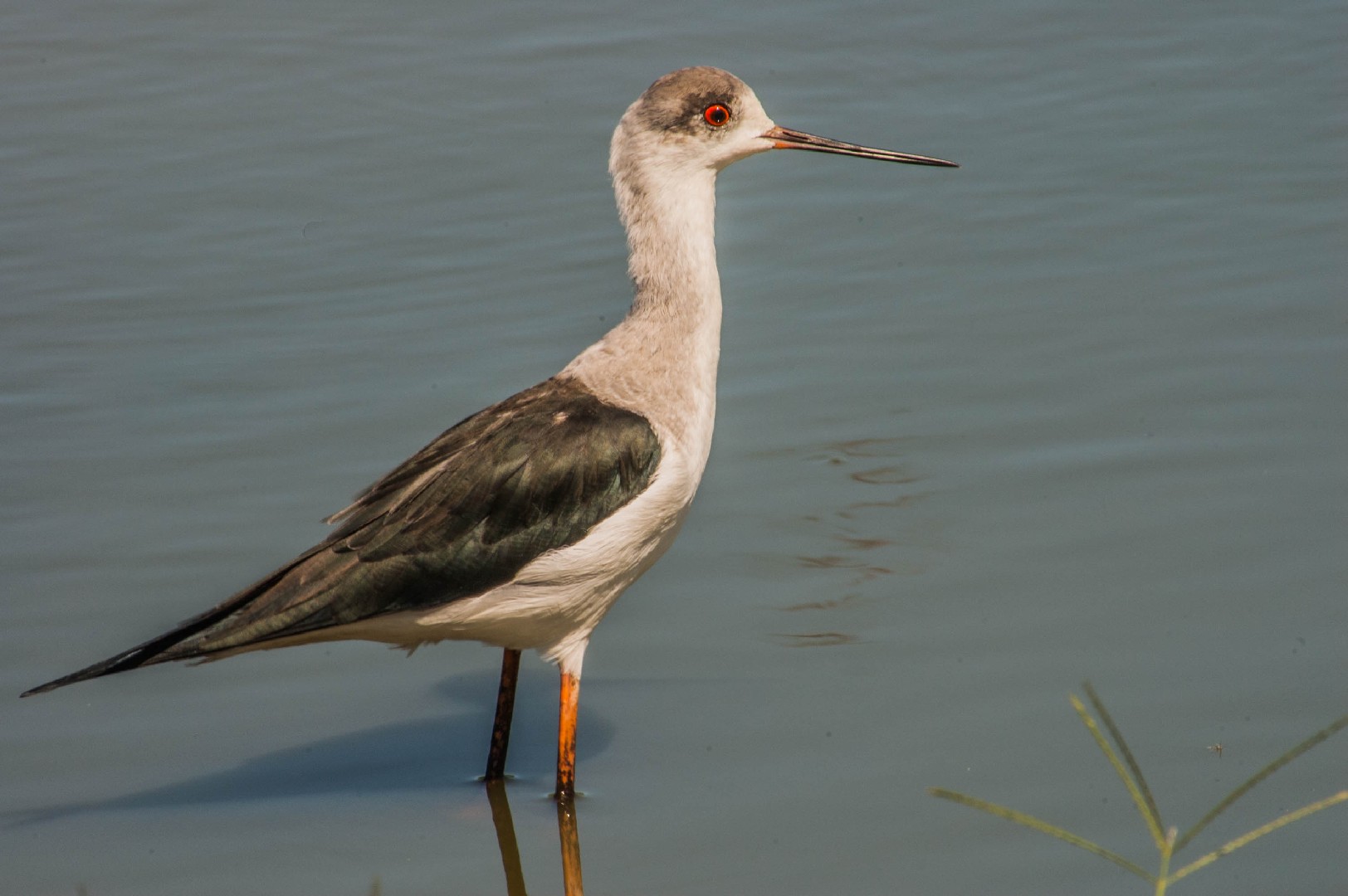
2. Black-winged Stilt
The black-winged Stilt is a shorebird that is seen in a variety of habitats, but it prefers shallow water. It is not uncommon to see this bird in flooded agricultural fields. It utilizes its long bill to search for small crustaceans and invertebrates in the mud, but don’t be surprised to see the bird dip its head in the water in search of food.
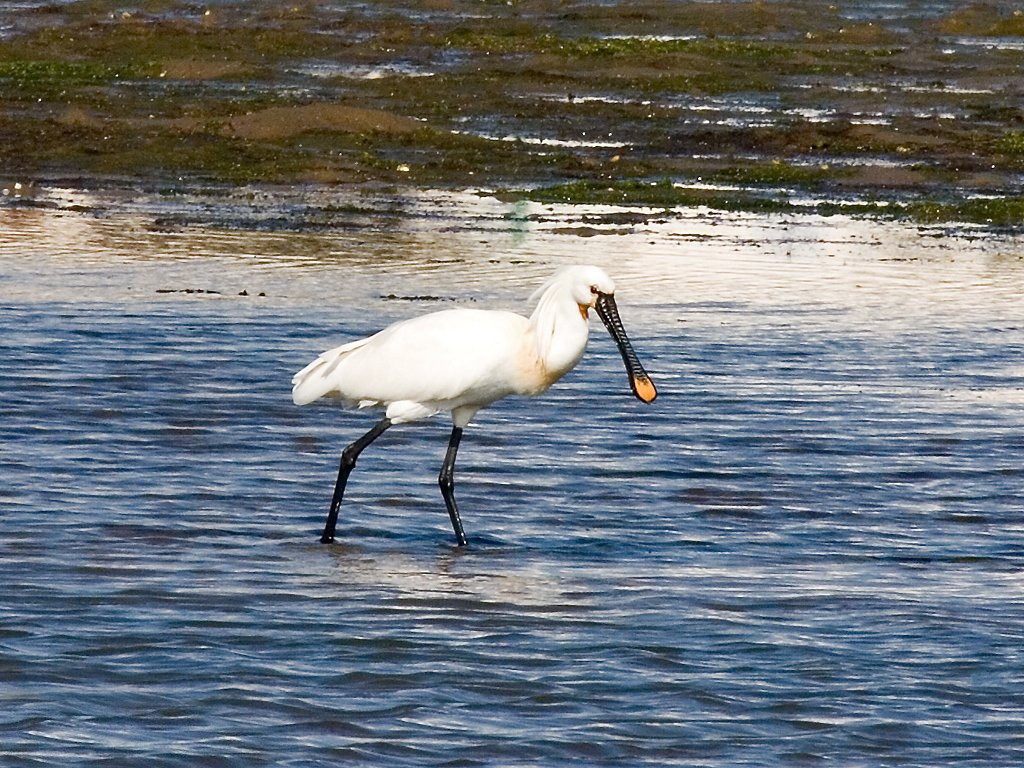
3. Eurasian Spoonbill
This species is almost unmistakable in most of its range. The breeding bird is all white except for its dark legs, black bill with a yellow tip, and a yellow breast patch like a pelican. It has a crest in the breeding season. Non-breeders lack the crest and breast patch, and immature birds have a pale bill and black tips to the primary flight feathers. Unlike herons, spoonbills fly with their necks outstretched. The Eurasian spoonbill differs from the African spoonbill with which in overlaps in winter, in that the latter species has a red face and legs, and no crest. They are mostly silent. Even at their breeding colonies the main sounds are bill snapping, occasional deep grunting and occasional trumpeting noises.
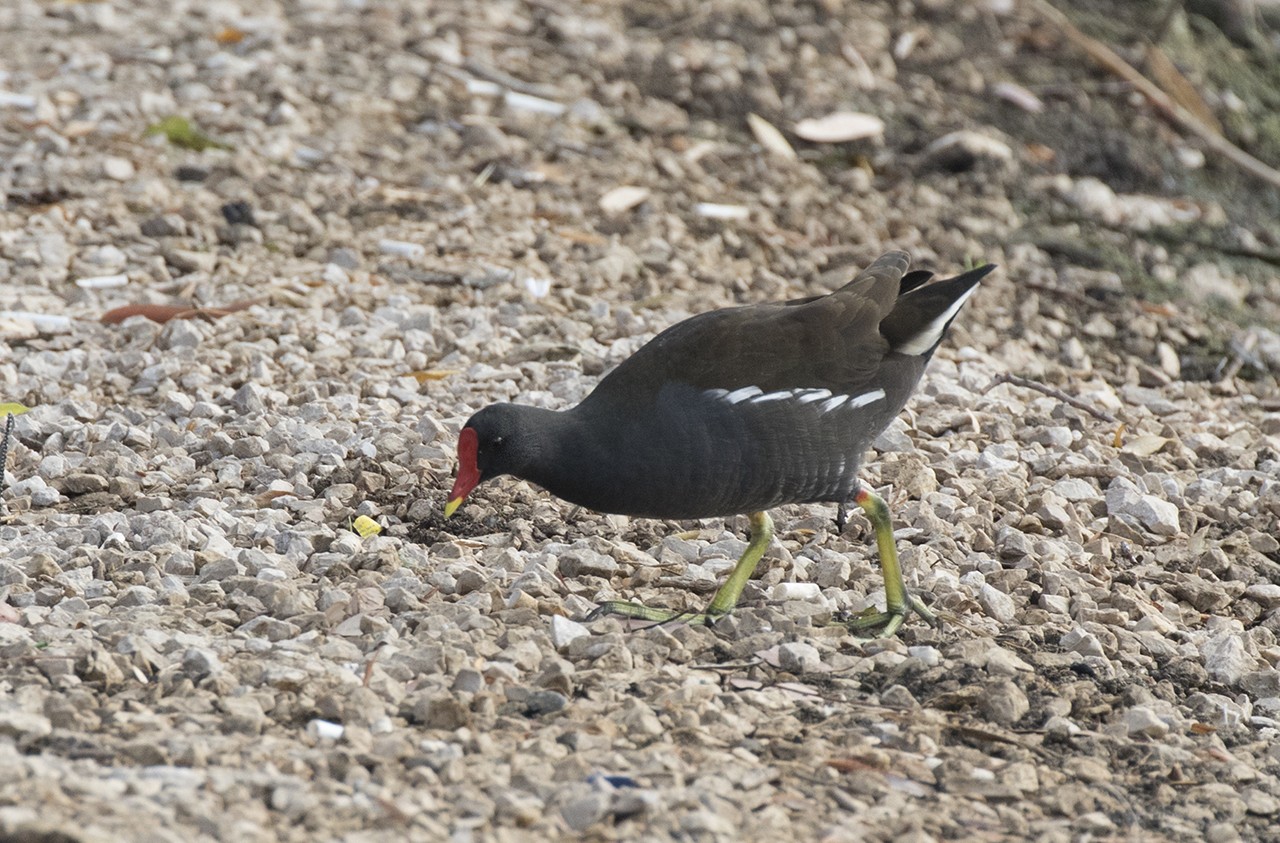
4. Common Moorhen
The common Moorhen is often found in slow-moving or standing-water aquatic ecosystems with dense vegetation coverage where they can hide and forage for food. If vegetation is dense enough, their large feet even enable them to walk across the floating plants. These birds are opportunistic feeders and will eat any food that is currently available.
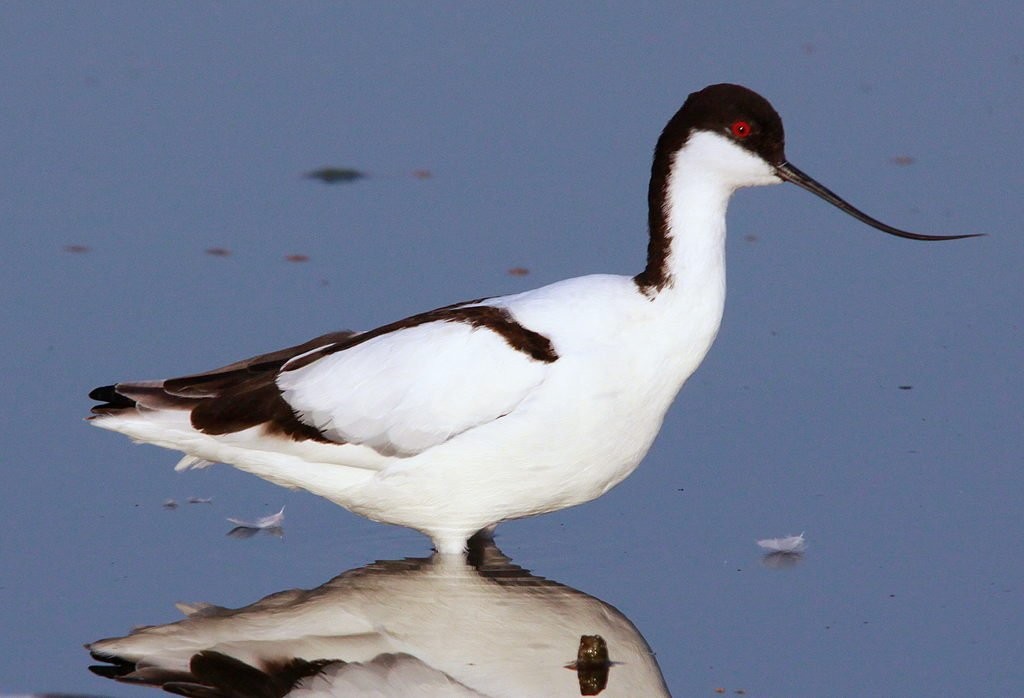
5. Pied Avocet
The pied Avocet's long, upturned bill, striking black and white feathers, and elegant neck make it stand out in any wetland habitat. It is also an important species for preserving wetlands as it indicates a healthy ecosystem. During courtship, the Pied Avocet wows with synchronized group movements that add to its already impressive beauty. When in flight, its bill is held horizontally and its neck extended making it a graceful sight to behold.
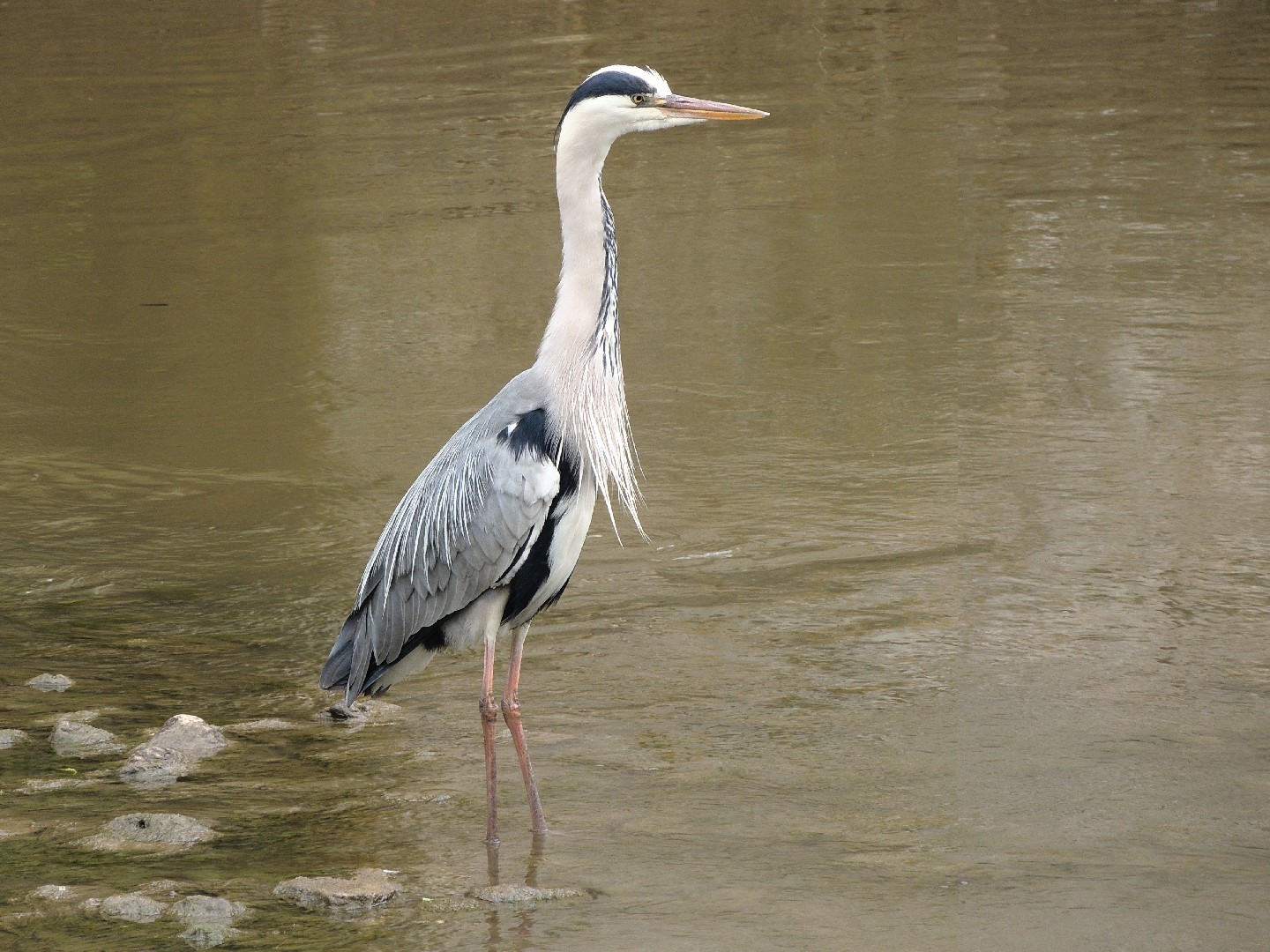
6. Grey Heron
The grey Heron is a very common species to come across in marine, brackish, and freshwater ecosystems; these habitats must have at least four months of warm weather or else these birds will migrate for new breeding grounds. The grey Heron hunts by wading through shallow waters looking for fish and various invertebrates; their natural diet helps control some aquatic species populations.
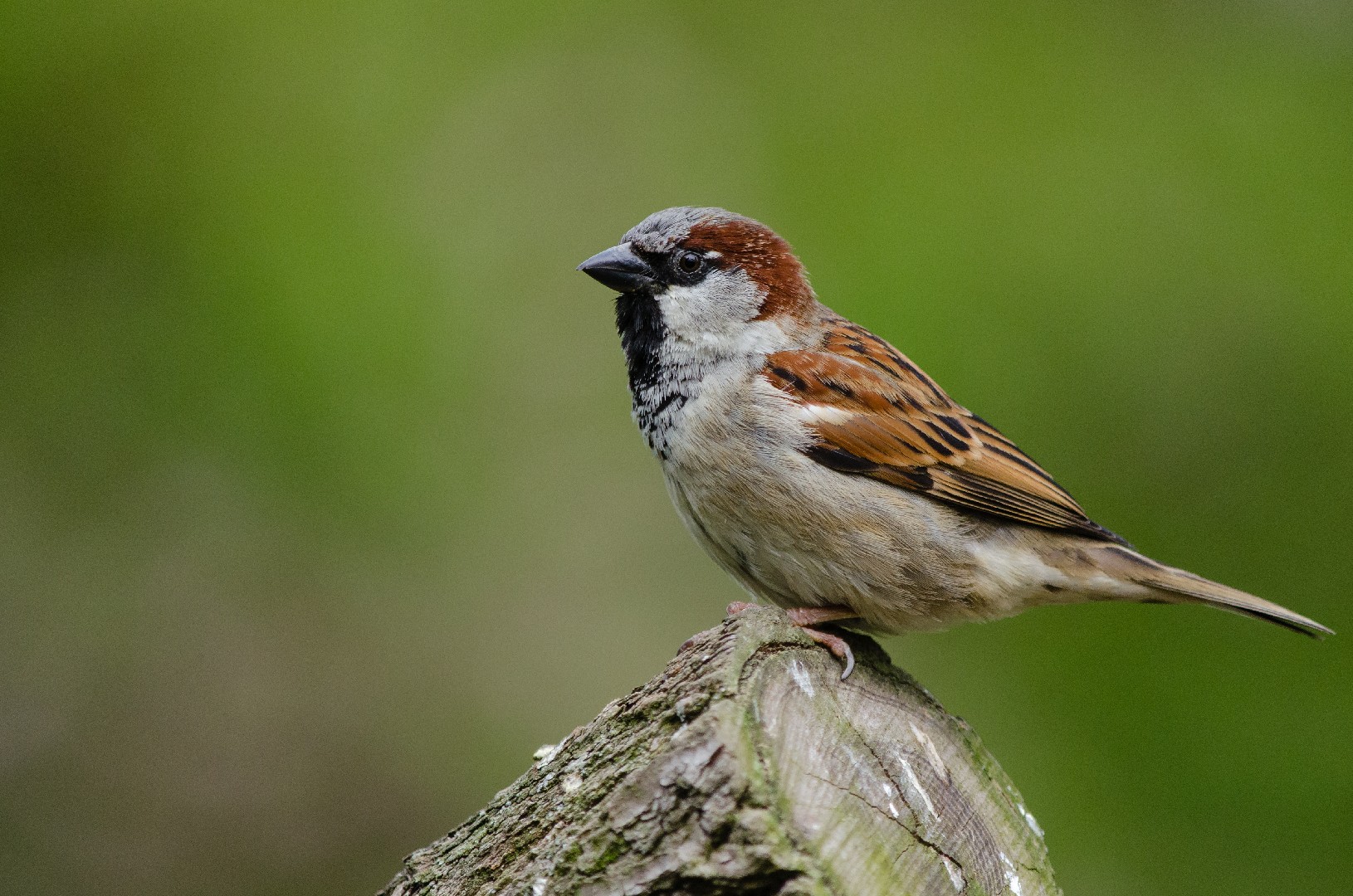
7. House Sparrow
Just as its name implies, the little house Sparrow socializes with humans more than any other bird species. Able to adapt and thrive in almost any habitat, excluding the extremes such as deserts and mountain peaks, this species was once restricted only to North Africa and Eurasia but now is found across the globe. Unfortunately, this opportunistic eater is not completely harmless—it can cause considerable damage to crops.
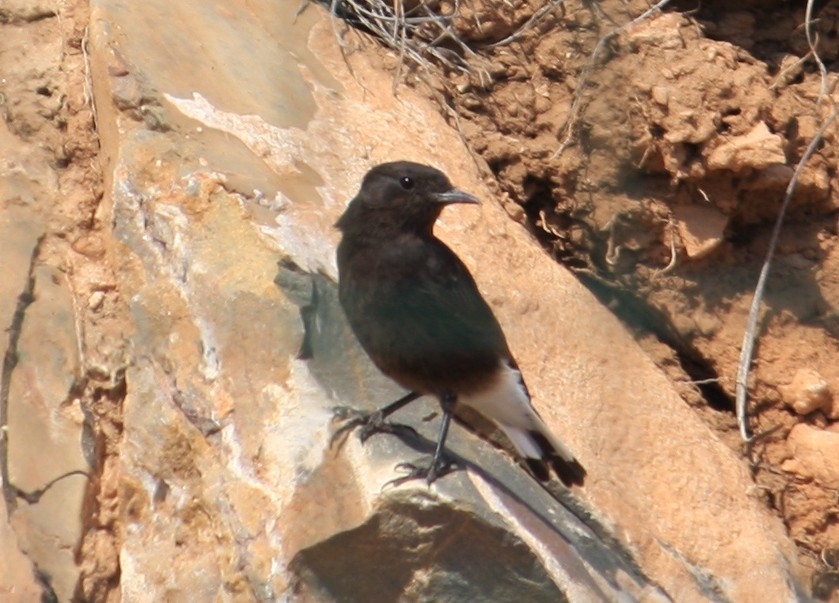
8. Black Wheatear
The black wheatear (Oenanthe leucura) is a wheatear, a small passerine bird that was formerly classed as a member of the thrush family, Turdidae, but is now more generally considered to be an Old World flycatcher of the Muscicapidae. This large 16–18 cm long wheatear breeds on cliffs and rocky slopes in western north Africa and Iberia. It is largely resident and nests in crevices in rocks laying 3-6 eggs. The male of this species is all black except a white rump and mainly white tail. The female is similar, but dark brown rather than black. The similar white-crowned wheatear, Oenanthe leucopyga, also breeds in the African part of the black wheatear's range, but the black wheatear has a black inverted "T" on its white tail, whereas white-crowned has only a black centre to its tail. The black wheatear never has a white crown, but young white-crowned wheatears also lack this feature. The food of this wheatear is mainly insects. It has a loud thrush-like song.
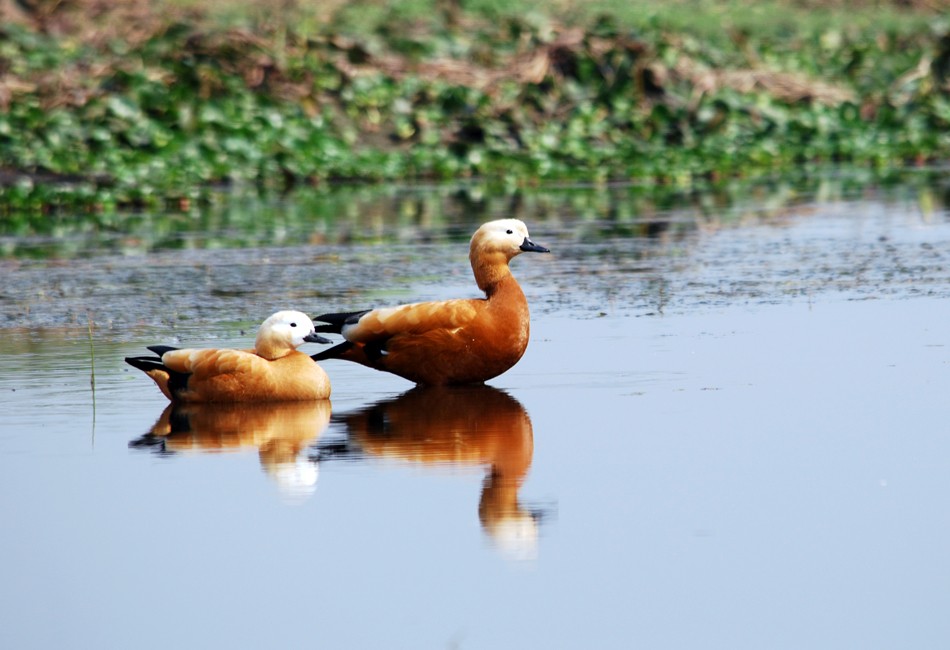
9. Ruddy Shelduck
The ruddy shelduck grows to a length of 58 to 70 cm (23 to 28 in) and has a 110–135 cm (43–53 in) wingspan. The male has orange-brown body plumage and a paler, orange-brown head and neck, separated from the body by a narrow black collar. The rump, flight feathers, tail-coverts and tail feathers are black and there are iridescent green speculum feathers on the inner surfaces of the wings. Both upper and lower wing-coverts are white, this feature being particularly noticeable in flight but hardly visible when the bird is at rest. The bill is black and the legs are dark grey. The female is similar but has a rather pale, whitish head and neck and lacks the black collar, and in both sexes, the colouring is variable and fades as the feathers age. The birds moult at the end of the breeding season and the male loses the black collar, but a further partial moult between December and April restores it. Juveniles are similar to the female but are a darker shade of brown. The call is a series of loud, nasal honking notes, it being possible to discern the difference between those produced by the male and the female. The calls are made both on the ground and in the air, and the sounds are variable according to the circumstances in which they are uttered.
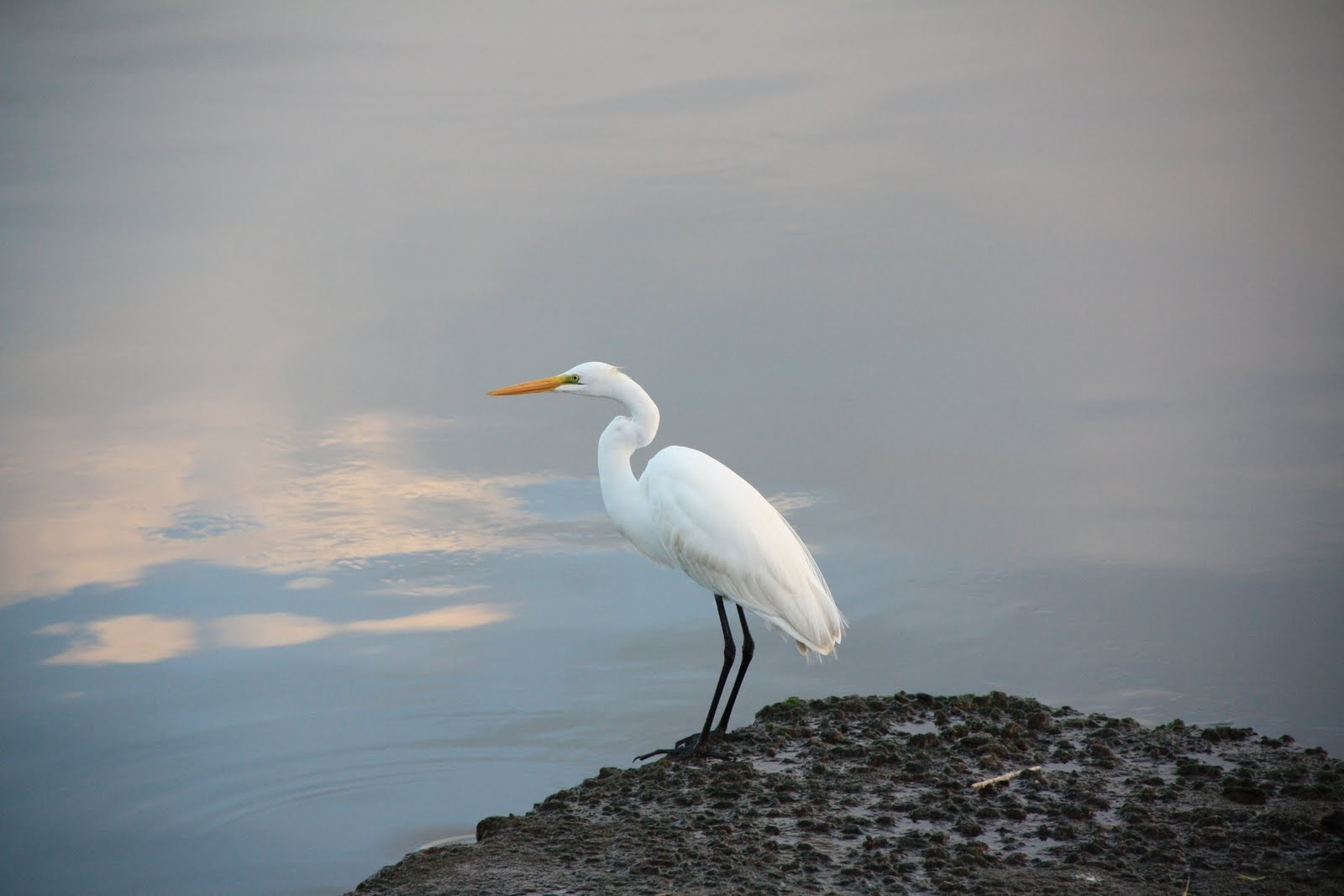
10. Great Egret
These tall birds are quite distinctive with their bright white feathers, black legs, and orange beaks. Great Egrets live near both fresh and saltwater, nesting high in trees to protect their eggs from predatory mammals. They are colonial nesters, living in large groups (colonies), and they find the majority of their food in the nearest body of water.
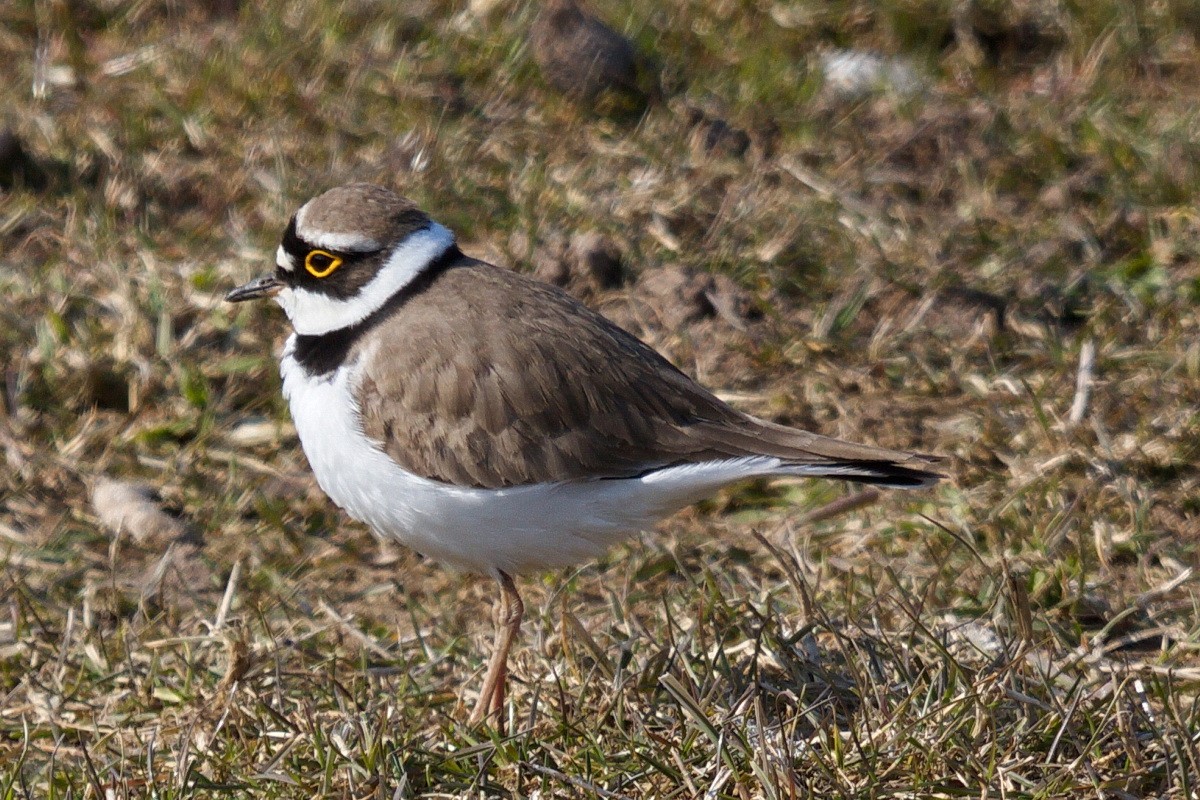
11. Little Ringed Plover
The little Ringed Plover has bright yellow rings around its eyes that help to identify this small plover. It is a small bird that prefers breeding in rocky areas around rivers, lakes, and gravel pits where it searches for insects and aquatic invertebrates. It occasionally migrates to brackish and freshwater habitats but prefers to avoid open coastal areas.
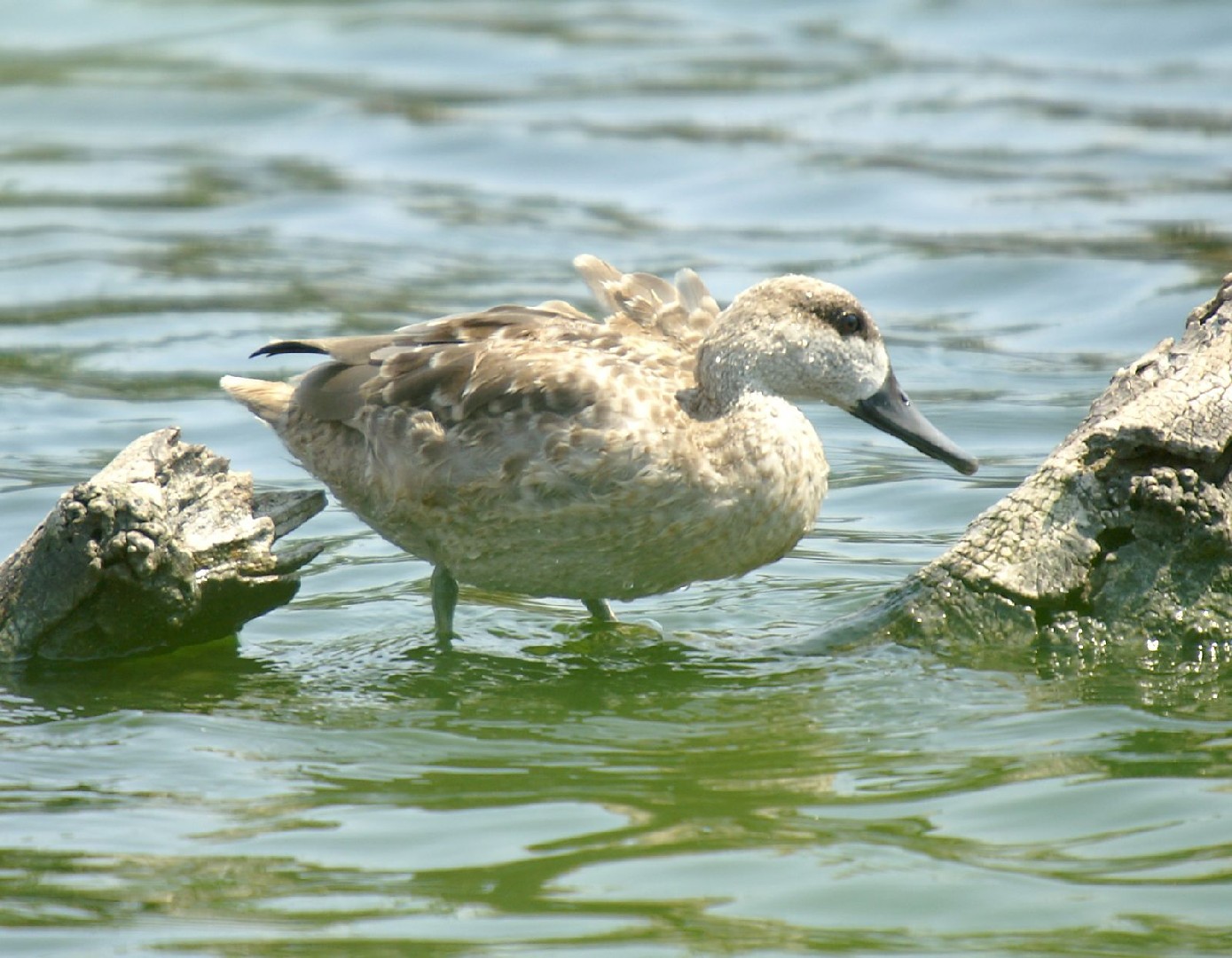
12. Marbled Duck
The marbled duck is approximately 39–42 cm (15–17 in) long. Adults are a pale sandy-brown colour, diffusely blotched off-white, with a dark eye-patch and shaggy head. The female averages smaller than the male, but otherwise the sexes are alike. Juveniles are similar but with more off-white blotches. In flight, the wings look pale without a marked pattern, and no speculum on the secondaries. These birds feed mainly in shallow water by dabbling or up-ending, occasionally diving. Adults feed mostly on seeds (for example, from Scirpus and Ruppia), but also take significant quantities of invertebrates (especially aquatic insect larvae and pupae, tiny crustaceans, and—highly unusual for a duck—ants) and green plants (for example, Potamogeton). Their gizzard allows them to break down seeds and the lamellae in their beak allow them to filter feed on zooplanktonic organisms. Young marbled ducks feed mostly on invertebrates. Although they may take tiny seeds, they lack the large gizzard necessary to break down the larger seeds commonly consumed by adults.
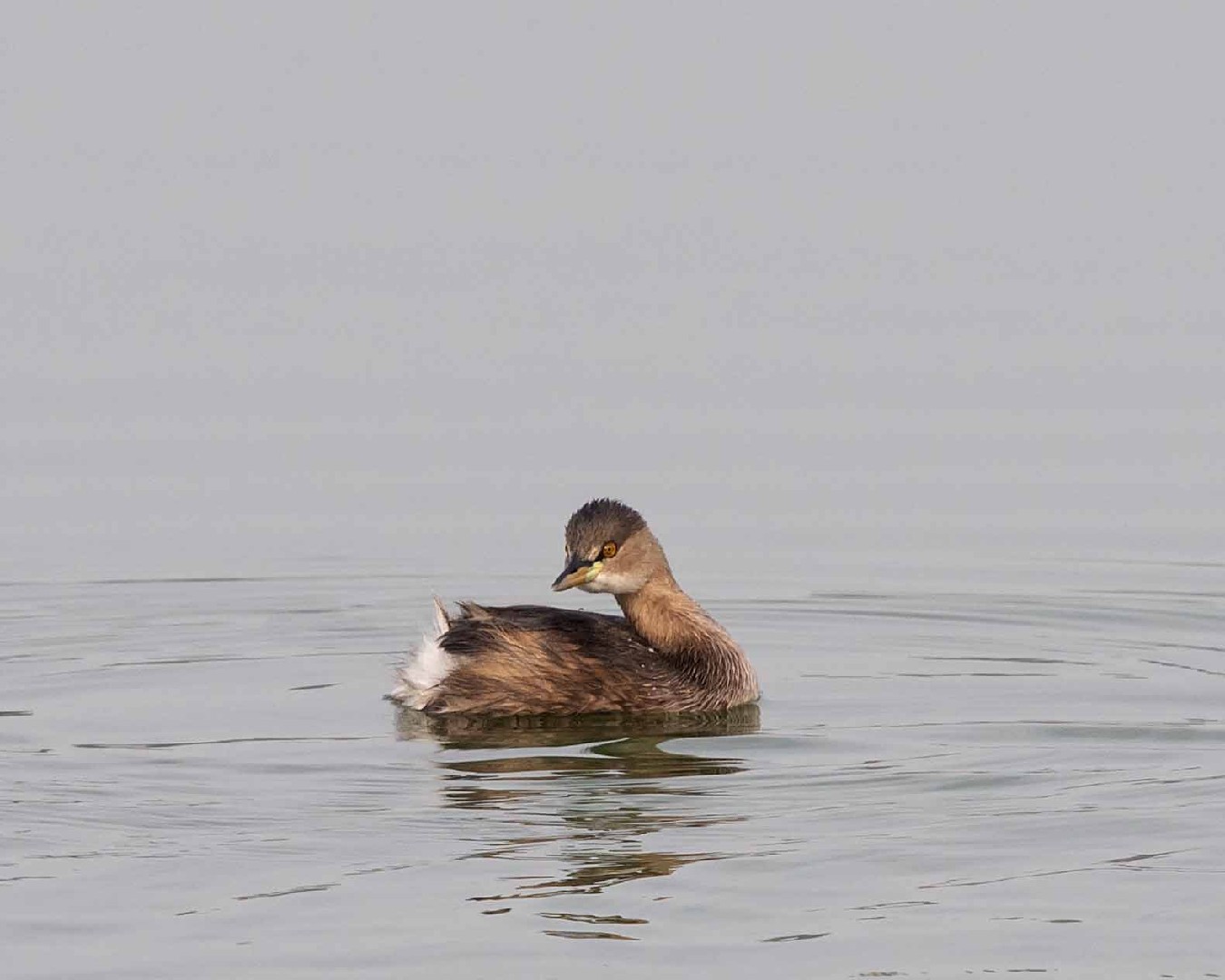
13. Little Grebe
The little Grebe is a diving bird that is easy to miss. Not only is it a small bird with inconspicuous coloring, but it is also shy. The bird prefers hiding in grasses and reeds, instead of being out on the open water. However, the bird is identifiable by its loud trills.
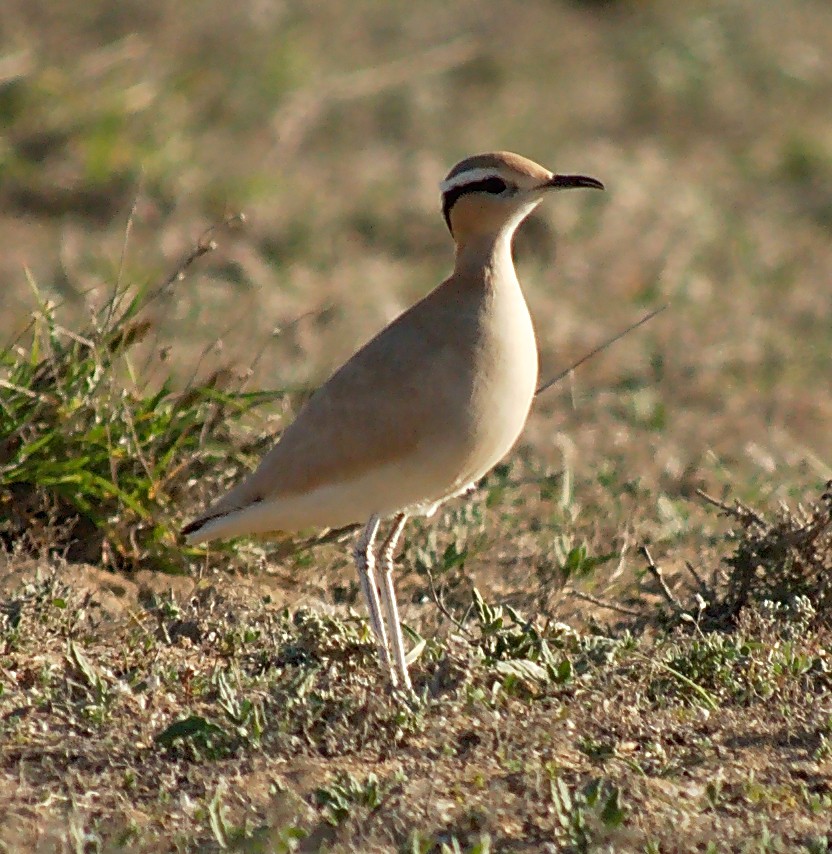
14. Cream-colored Courser
These birds have long legs and long wings. They have slightly downcurved bills. The body plumage is sandy in colour, fading to whitish on the lower belly. The upperwing primary feathers and the underwings are black. The crown and nape are grey, and there is a black eyestripe and white supercilium. In flight, this species resembles a pratincole with its relaxed wingbeats, pointed wings and dark underwings.

15. Eurasian Coot
The eurasian Coot is a medium-sized, black-plumaged waterbird with a white bill and a distinctive red shield above its bill. It has webbed feet with a white patch on the toes and is often seen in large flocks, diving for food and fiercely defending its territory. Its aggressive nature and distinct features make it a memorable sight for birdwatchers.
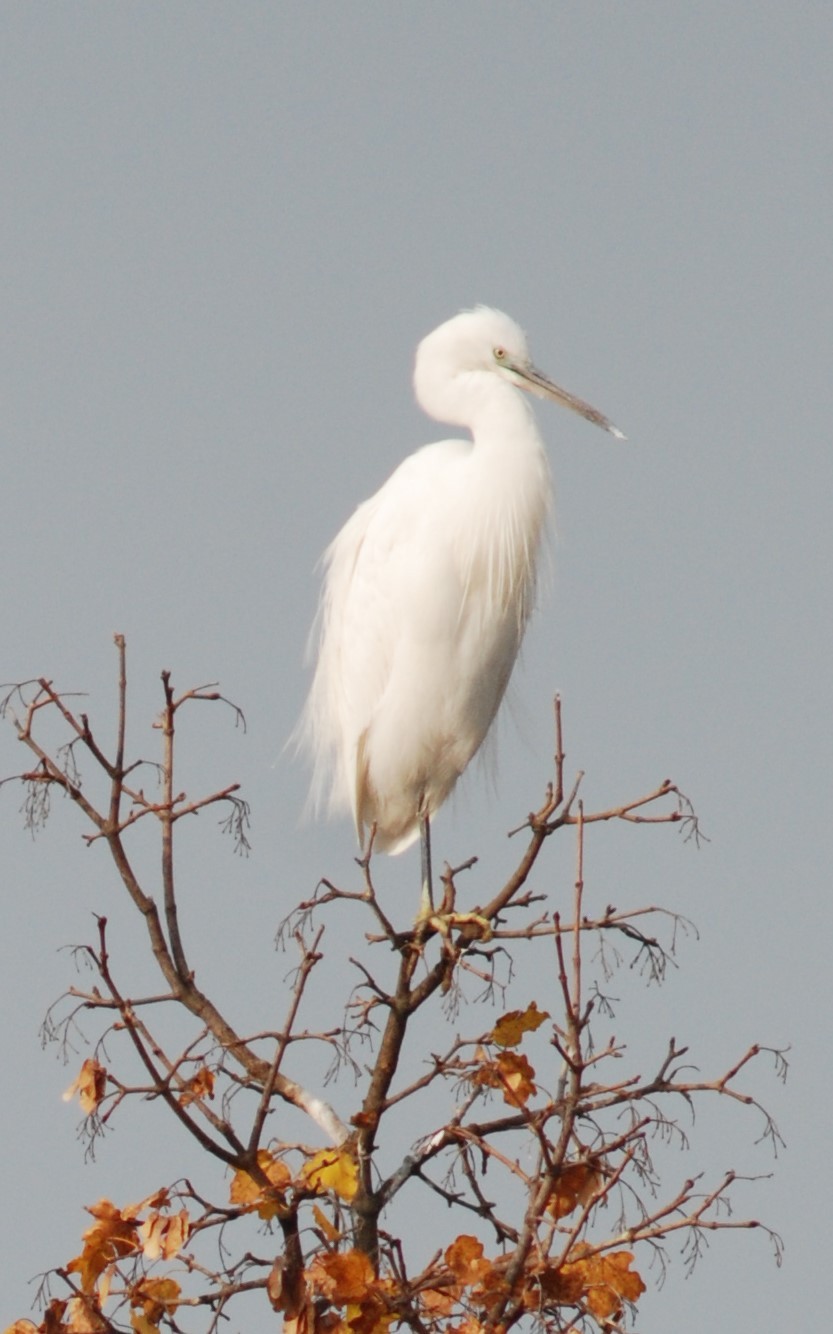
16. Little Egret
The small size of the little Egret makes the bird easily recognizable among larger species that share the same range. The egret is seen almost anywhere there are small fish including marshes, estuaries, and rivers. The bird often searches for food by itself but prefers to build nests in communities, occasionally with other bird species.
17. Glossy Ibis
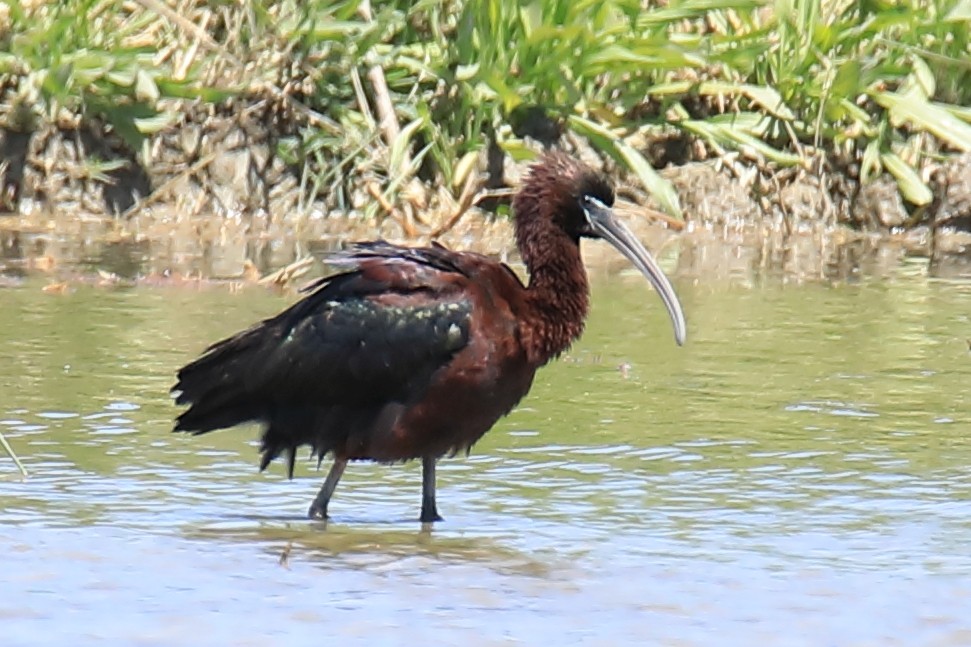
This species is a mid-sized ibis. It is 48–66 cm (19–26 in) long, averaging around 59.4 cm (23.4 in) with an 80–105 cm (31–41 in) wingspan. The culmen measures 9.7 to 14.4 cm (3.8 to 5.7 in) in length, each wing measures 24.8–30.6 cm (9.8–12.0 in), the tail is 9–11.2 cm (3.5–4.4 in) and the tarsus measures 6.8–11.3 cm (2.7–4.4 in). The body mass of this ibis can range from 485 to 970 g (1.069 to 2.138 lb). Breeding adults have reddish-brown bodies and shiny bottle-green wings. Non-breeders and juveniles have duller bodies. This species has a brownish bill, dark facial skin bordered above and below in blue-gray (non-breeding) to cobalt blue (breeding), and red-brown legs. Unlike herons, ibises fly with necks outstretched, their flight being graceful and often in V formation. It also has shiny feathers. Sounds made by this rather quiet ibis include a variety of croaks and grunts, including a hoarse grrrr made when breeding.
18. Rock Pigeon
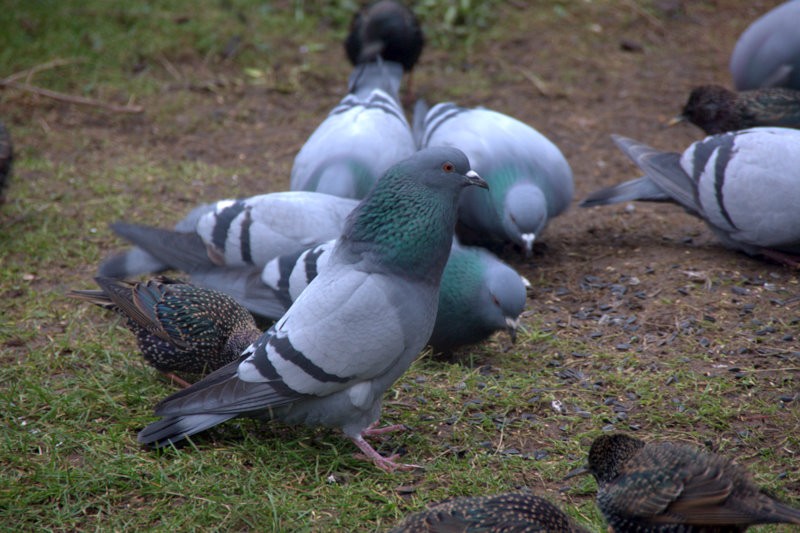
The rock Pigeon is a wild ancestor of all domestic and feral pigeons, inhabiting coasts, cliffs, and caves. Pairs nest in rock crevices, often mating for life. They are known for their ability to fly very long distances to return to their homes, navigating using the sun's position and the earth's magnetic fields. Thanks to this ability, pigeons were used as messengers, particularly during World Wars I and II.
19. Kentish Plover
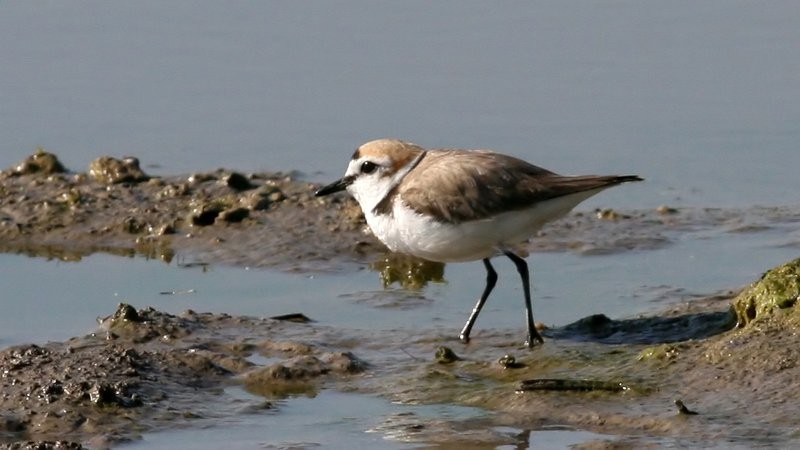
The kentish Plover is a small shorebird found along sandy beaches and marshes. Its unique appearance includes a black band across its forehead, a pale underbelly, and a dark bill. This bird feeds on small crustaceans and insects, and can often be seen darting along the shoreline in search of food. During the breeding season, the Kentish Plover engages in intricate courtship displays and raises its young on sandy beaches.
20. Common Sandpiper
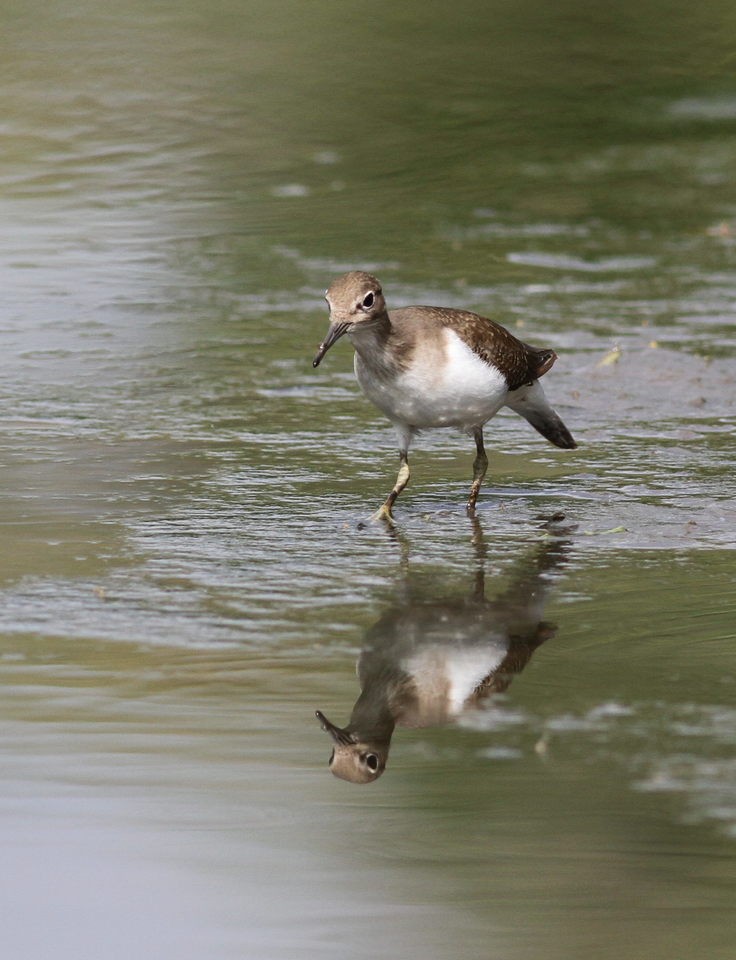
While the common Sandpiper is considered a common shorebird around lakes and rivers, it does have a unique trait. The small bird bobs its tail, giving the appearance of wagging. The bird communicates with others by chirping in the air, but is silent when feeding on small crustaceans and invertebrates.